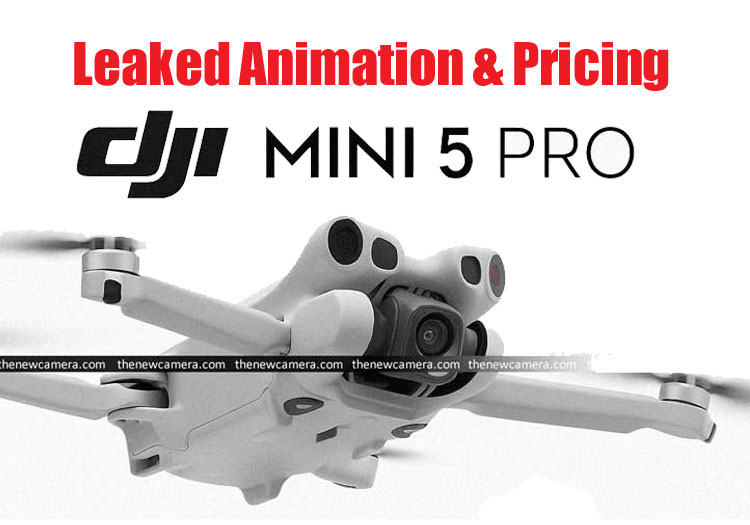
The DJI Mini 5 Pro and the DJI Mini 4 Pro are the two most exciting under-250-gram drones in 2025. If you talk about the best drone in the under-250-gram category, then without doubt, these two are among the best, but which one is best among these two? As we all know, the Mini 5 Pro has already become very popular among drone lovers, although the drone is not easily available on Amazon.com or B&H Store, even after its announcement, due to some regulatory/ongoing ban issues, so in an in-depth comparison on TheNewCamera.com, we have tried to bring out the best possible comparison between the two with all of the available core specifications, and it will surely help you to decide the best DJI drone for 2025 without a doubt. So let’s jump into the comparison.
Overview: DJI Mini 4 Pro vs Mini 5 Pro
The DJI Mini 4 Pro is not new; It was announced back in September 2023. At that time, a 1/1.3-inch sensor and 4K 60FPS HDR video recording were more than enough, and omnidirectional obstacle avoidance. Overall, it was a great sub-249-gram category drone, which is still quite popular.
The new DJI Mini 5 Pro was officially announced on September 17, 2025. It does carry some of the biggest updates that we have ever seen in a sub-249-gram category drone, such as a large 1-inch sensor, the introduction of LiDAR for advanced obstacle avoidance tech, and up to 52 minutes of flight time while using the Plus battery feature.
If you compare the price of the drone right now, we are a bit surprised since most of the accessories whose prices are confirmed come at almost the same price range, with a slight price increase. We have already done the price comparison of these two drones in our previous article. Now, let’s have a look at the performance capability, flight capability, and the major differences between the features of both drones.
Feature
DJI Mini 4 Pro
DJI Mini 5 Pro
Weight
<249g
<249g (standard battery)
Camera Sensor
1/1.3-inch CMOS, 48MP
1-inch CMOS, 50MP
Video Resolution
4K/60fps HDR, 1080p/200fps, 10-bit D-Log M, HLG
4K/120fps, 4K/60fps HDR, 10-bit D-Log M, HLG
Photo Resolution
12MP / 48MP (JPEG/DNG)
50MP (JPEG/RAW)
Aperture & Focus
f/1.7, 1m–∞ focus
f/1.8, Hybrid AF (phase + contrast)
Gimbal Rotation
Pitch: -90° to +60°, Roll: -90° to 0°, Yaw: ±30°
Pitch: -135° to +80°, Roll: -90° to +90°, 225° total rotation
Flight Time
34 min (standard), 45 min (Plus)
36 min (standard), 52 min (Plus)
Transmission Range
20 km (OcuSync 4, FCC)
20 km (OcuSync 4+, FCC)
Obstacle Avoidance
Omnidirectional (binocular vision)
Omnidirectional + forward LiDAR (Nightscape mode)
Max Speed
16 m/s (horizontal)
16 m/s (horizontal)
Wind Resistance
Level 5 (10.7 m/s)
Level 5 (10.7 m/s)
AI Features
ActiveTrack 360°, MasterShots, QuickShots
ActiveTrack 6.0, enhanced MasterShots
Audio Recording
External DJI Mic compatible
Built-in mono mic + external support
Storage
2GB internal + microSD
42GB internal + microSD
Price (Base)
$759 USD
$799 USD / €799
Price (Fly More Combo)
$999 USD
$1,099 USD / €1,099
Dji mini 5 pro drone front camera image + Advanced LiDAR alongside omnidirectional sensors
Deep analysis and specification comparison
1. Camera performance:
DJI Mini 4 Pro:The Mini 4 Pro uses a 1/1.3-inch CMOS sensor (48 MP) that delivers excellent 4K/60fps HDR video and 1080p/200fps cinematic slow-motion, with 10-bit D-Log M and HLG for professional colour grading. Its f/1.7 aperture and 2.4μm pixels perform well in daylight but struggle in low light, so the drone struggles to perform well at night. Yes, the noise is very clearly visible after ISO 3200, and when you are using the D-Log due to the sensor size limitation, the latitude we get in the video file is limited. With the help of the gimbal, it does support true vertical shooting, which is perfect for social media platforms like Instagram and TikTok.
DJI Mini 5 Pro: The camera of the Mini 5 Pro features 1-inch 50MP CMOS sensor with f/1.8 aperture, superior low-light performance (better noise control up to ISO 12800), 14-stop dynamic range, and 10-bit D-Log M/HLG color profiles,a major jump in terms of low light performance, as well as dynamic range when compared to a 1/1.3-inch CMOS sensor. DJI Mini 5 Pro supports 4K video recording at 120fps or even 5.4K/30fps, similar to what we see in the DJI Air 2S. A hybrid autofocus (phase + contrast) and 12-bit RAW could greatly enhance detail. The gimbal tilting up to +90 degrees allows unique upward shots, and onboard audio recording is an added option.
Analysis: All the features make the DJI Mini 5 Pro one of the best cinematic drones that fall under the 249-gram weight class.
2. Flight performance comparison
Mini 4 Pro: Offers 34 minutes (standard battery) or 45 minutes (Battery Plus), a 20 km range (OcuSync 4), and 35.8 mph max speed, which is really impressive. It can handle wind speeds of 23.9 mph with ±0.3 ft accuracy (vision) or ±1.6 ft (GNSS).
Mini 5 Pro:36 minutes with standard battery combo and up to 52 minutes of flight time with a Plus battery and a 25 km range (OcuSync 4+ with multi-beam). Vented motors as well as new propeller design suggest improved thrust, cooling, and less noise while hovering compared to the previous generation, potentially increasing wind resistance to ~26.8 mph.
Analysis: The Mini 5 Pro offers slightly extended flight time despite the fact the drone has now become more power-hungry after the update of the large one-inch sensor, improved image processor, and improved stability in windy conditions, making it ideal for adventurous creators. The Mini 4 Pro remains reliable but is outclassed here when compared with the new DJI Mini 5 Pro.
3. Obstacle Avoidance
Mini 4 Pro:The Mini 4 Pro uses omnidirectional avoidance with binocular vision sensors (0.5–18m range) and a 3D ToF depth sensor, enhanced by APAS for smooth navigation. It struggles to detect objects at night and uses an infrared sensor to help land perfectly.
Mini 5 Pro:LiDAR alongside omnidirectional sensors — from the leaked images, it’s very clear that the drone has dual front-facing LiDAR units for advanced obstacle avoidance as well as ActiveTrack 6.0 for better tracking.
Analysis: Introduction of LiDAR sensors inside the new DJI Mini 5 Pro makes it the best. The obstacle avoidance no longer remains limited like the Mini 4 Pro — it has become more advanced and safer for consumer use.
4. Intelligent Features
Mini 4 Pro: Already advanced at its time, the drone includes ActiveTrack 360°, MasterShots, QuickShots (Dronie, Helix, etc.), Hyperlapse, and Panorama modes. SmartPhoto enhances HDR, and Cruise Control maintains steady speeds.
Mini 5 Pro: Mini 5 Pro’s advanced set of features includes ActiveTrack 6.0, enhanced MasterShots, and onboard audio syncing with the DJI Mic. The Mini 5 Pro features AI-powered tracking improvements and a “48mm med-tele mode” for lossless zoom.
Analysis: Obviously, the Mini 5 Pro drone stands out with its updated core specifications. The most important upgrade apart from the camera itself is the advanced LiDAR obstacle avoidance syste,m as well as advanced AI-based tracking, making it a perfect choice for vloggers and social media creators.
5. Design and Portability
Mini 4 Pro: Folded (148 x 94 x 64 mm) and unfolded (298 x 373 x 101 mm), it’s compact and travel-friendly at <249g.
Mini 5 Pro (Rumored): Similar dimensions, maintaining <249g for regulation-free flying (C0 class, Open A1). Leaked images clearly show a larger camera module and vented motors.
Analysis: Both drones excel in portability, but the Mini 5 Pro’s advanced tech in the same weight class shows remarkable improvement in the engineering of the drone.
6. Price Comparison
Mini 4 Pro: Base (RC-N2): $759 USD
Fly More Combo: $999 USD
Accessories: Standard battery ($99), Battery Plus ($145), propellers ($9), ND filters ($55).
Mini 5 Pro (Rumored): Base: $799–$899 USD
Fly More Combo RC2: $1,099–$1,299 USD
Accessories: Standard battery ($69), Battery Plus ($99), propellers ($19), ND filters ($55).
Yes, the accessory prices are slightly higher. We were expecting a bit of a price jump in the drone pricing but the leaked European price suggests it will fall in the same pricing category, so despite such massive hardware updates, you don’t have to pay extra when compared to the DJI Mini 4 Pro.
Which Drone Is Best for You?
Choose the DJI Mini 4 Pro if: If the Mini 4 Pro drone is available at a heavily discounted price only, since both of them have very little price difference, and specs-wise, the Mini 5 Pro touches new heights.
Best for: Casual users, travelers, social media creators on a budget.
Wait for the DJI Mini 5 Pro if: You love to have video with more DR, higher latitude for color grading, and 4K 120fps mode for cinematic slow-motion.
Low-light performance is important for you, and a one-inch sensor for pro-grade footage.
LiDAR and enhanced tracking are required for complex environments or night flights.
You need longer flight times (up to 50 min) and extended range (25 km).
You’re a vlogger/content creator wanting onboard audio and advanced AI features.
Best for: Content creators, semi-pros, and those planning shoots later in 2025.
Conclusion
The DJI Mini 5 Pro is the best choice since the price difference is very narrow, and the DJI Mini 5 Pro comes packed with performance, affordability, and portability. It has completely redefined ultralight drones with its one-inch sensor, LiDAR, and 50-minute flight time, and it appeals to pro creators who are seeking pro-level features without regulatory hassles.
For the latest updates on the DJI Mini 5 Pro release, pricing, and reviews, follow TheNewCamera.com our social media handles
About the author: The article “DJI Mini 4 Pro vs Mini 5 Pro” was written and updated by thenewcamera.com team on 4:32 pm, Wednesday, 27 August 2025, Greenwich Mean Time (GMT) | Follow us for more updates and get LIVE RUMORS –> FACEBOOK | TWITTER | INSTAGRAM to get live news — > get live Drone news + DJI Rumors
We are all highly excited to hear anything new related to the DJI Mini 5 Pro drone. The upcoming lightweight drone is a powerhouse of performance, loaded with a large camera module featuring a 1-inch sensor for capturing 4K HDR videos. Latest leaked images, video, price, and detailed specifications suggest the official announcement is just a few weeks away from now. The more interesting thing is now a new folding animation video has been confirmed on the platform X, as well as the European retail pricing of the drone has also been revealed. So the Mini 5 Pro is actually shaping up to redefine the ultralight drones. None of the drones ever had a 1-inch sensor at the very same time. The price tag may surprise you, so this article explores the latest rumours, pricing, commercial specifications, and why this drone is a must-watch for 2025. You can stay ahead with thenewcamera.com for fresh drone updates—you just have to bookmark this page. Obviously, you can follow us on our social media accounts specifically.
Recently, a leaked video from the Italian YouTube channel Quadricottero, shared via Mauro Tandoi, has unveiled the first folding animation video of the DJI Mini 5 Pro. Now, unlike the earlier leaks, those were limited to the static images. We do have many on our website if you want to browse [explore the DJI Mini 5 Pro], which actually highlights its portability and compact design. The video was posted on August 26, 2025. The animation confirms the Mini 5 pro sub 249 gram build. As we have already seen, the drone has a CO level ensuring compliance with the Global regulations, like the FAA for recreational Drone rules. In simple terms, you don’t have to take permissions whenever you want to fly your drone.
DJI Mini 5 Pro leaked close up picture showing C0 label proving first drone under 249 grams with a 1 inch sensor.
European Retail Price: Fly More Combo RC2 at €1129
The price of the European Web Store has been leaked today, and surprisingly, it is exactly similar to the DJI Mini 5 Pro flyover combo RC to which is available at €1129, so it exactly matches the current retail price of the Mini 4, which is really a surprise. Since the new DJI Mini 5 Drone is coming with a massive upgrade in the video quality with a large sensor at the very same time, for the first time, the Drone itself will have a LiDAR advanced obstacle avoidance system integrated with it.
In the US, leaks suggest the following pricing:
Base Model (Standard Combo): $799 USD
Fly More Combo: $1,099 USD
The mentioned prices of the Mini 5 Pro make it a very attractive upgrade at this price point. The affordability has been further enhanced by the accessory pricing that we have discussed early, or also the entire combo, which includes the drawing itself and the accessories available at exactly or almost the same price that we have been paying for the older Mini for Pro.
DJI Mini 5 Pro leaked close up picture showing new click on propellors.
Accessory Pricing: Budget-Friendly Options
Take a look at the accessory pricing of the DJ Mini 5 Pro series versus the DJI Mini 5 Pro
Intelligent Flight Battery: $69 (vs. $99 for Mini 4 Pro, 30% cheaper)
Battery Plus: $99 (vs. $145, extends flight time to ~47 minutes)
Two-Way Charging Hub: $49 (unchanged)
Propellers: $19 (up from $9, due to enhanced materials)
ND Filters Set (ND8/32/128): $55 (tailored for 1-inch sensor)
DJI Care Refresh 1-Year Plan: $80 (vs. $79)
DJI Care Refresh 2-Year Plan: $129 (vs. $139)
As you can clearly see, the lower battery cost and the slightly pricier propellers exactly demonstrate DJI’s pricing strategy; they aim to strike a balance between affordability and premium upgrades.
Dji mini 5 pro drone
Key Features: Why the Mini 5 Pro Stands Out
Take a look at the specification dji Mini 5 Pro, it’s actually a regulation-friendly professional drone. Take a look at the detailed specification below
1-Inch CMOS Sensor: A massive upgrade from the Mini 4 Pro’s 1/1.3-inch sensor, obviously with the new large sensor, users will get boosted low-light performance and 4K/120fps video for cinematic slow-motion shots.
LiDAR + Omnidirectional Obstacle Avoidance: Mini 5 Pro features 12 front-facing wide-angle sensors and rear sensors, enabling crash-proof flights even in low-light or indoor settings.
Gimbal Flexibility: 225–330° rotation for dynamic shots, rivaling the DJI Mavic 4S.
Flight Time: Up to 47 minutes with Battery Plus (34 minutes with standard battery), surpassing the Mini 4 Pro’s 34 minutes.
Range: 25 km (15.5 miles), improved from the Mini 4 Pro’s 20 km.
Noise Reduction: New low-noise propeller tips and optional guards for discreet urban and wildlife filming.
Controller-Free Launch: Automatic power-on and palm takeoff for quick, hands-free operation.
Transmission: O4 technology for 20 km FHD video feeds, supporting low-latency streaming.
This features a truly remarkable and massive update over the DJ Mini 4 drone. Analyze the arrival time.
Release Date: September 2025 on the Horizon
It’s not about rumours, we are 100% sure that the DJI Mini 5 Pro is coming in September, and not only that this also exactly matches with the DJI 2-year refresh cycles of their mini series, The Mini 4 Pro was introduced in September 2023
Mini 5 Pro vs. Mini 4 Pro: Should You Upgrade?
Feature
Mini 4 Pro (2023)
Mini 5 Pro (Rumored)
Camera Sensor
1/1.3-inch
1-inch
Video
4K/60fps
4K/120fps
Flight Time
34 minutes
Up to 47 minutes
Range
20 km
25 km
Obstacle Avoidance
Optical
LiDAR + Optical
Gimbal Rotation
Limited
225–330°
Weight
<249 grams
<249 grams
As you can notice, the Mini 5 Pro with the largest sensor, extended flight time, and a newly added LiDAR sensor to the mini series makes a very significant upgrade compared to its predecessor. Those creators who are looking for a professional-grade drone without any regulatory issues, then obviously, the Mini 5 Pro is the best choice in 2025. And the good thing is with the enhanced camera safety features, like as tickle avoidance, you can use this drone for commercial and vlogging also without any worry.
Why the DJI Mini 5 Pro matters
The DJI Mini 5 Pro Drone will actually redefine the ultralight drones in a brand new way just after its arrival, so blending the professional level of features like having a large 1-inch sensor with HDR recording and advanced obstacle avoidance with the LiDAR sensors on board, it all under 249 gram body with a very much competitive pricing and controller-free features make it highly accessible to beginners as well as professionals both.
Anout the author: The article “DJI Mini 5 Pro Unveiled: Leaked Animation, European Pricing, and Game-Changing Features” written and updated by thenewcamera.com team on 8:17 am, Wednesday, 27 August 2025, Greenwich Mean Time (GMT) | Follow us for more updates and Get LIVE RUMORS –> FACEBOOK | TWITTER | INSTAGRAM to get live news — > get live Drone news + DJI Rumors
We have already seen a lot of headlines related to the Hasselblad X2D II 100C Announcement. Specifically, everyone is talking about the new LiDAR auto focusing system as well as the IBIS, so this is quite obvious in every review that you have seen today, and just copy-pasting the same press release. So after looking at more than 4 to 5 complete review videos and reading more than 10 to 15 articles related to the announcement, what I actually found was very interesting and, after exploring to its core, it looks like the Hasselblad team has done something like a sci-fi movie scene for photographers. The X2D Mark II 100C is the only medium format camera in the world that offers 10 stops of sensor-shift image stabilization. Now, lets explore it further
What does 10 stops of sensor-shift IBIS mean?
Having 10 stops of sensor-shift image stabilization means it not only fights with your shaking hands, it also battles with the rotation of the Earth for crystal clear long exposure shots, actually without a need for a tripod, yes, you read exactly the right thing. The X2D Mark II camera is the first medium format camera that is going to redefine nighttime photography with its low-light magical effect.
How does it work: Earth Rotation Correction Feature in the New X2D Mark II Camera
Now how does the X2D II 100C do that? It’s not that simple. At first, the X2D II connects to the Phocus Mobile 2 app before shooting to grab GPS location and compass data. Why? To counteract the planet’s spin, which subtly blurs long exposures (when you set for 1–3 seconds or more) by shifting stars or horizons ever so slightly., Lets explore setp by step so you can understand easily
Motion Detection: The internal Gyroscopes and accelerometers track 5-axis movements (pitch, yaw, roll, X/Y shifts), detecting subtle shakes, including low-frequency ones mimicking Earth’s rotation. bit to achieve 10 Stops of IBIS, X2D II also includes low-frequency movements that could mimic Earth’s rotation over long exposures.
Signal Processing: The camera features Real-time analysis filters out Earth’s rotational effect (~15°/hour) using calibration, GPS, or compass data for precise long-exposure compensation. S
Compensation Calculation: Algorithms compute counter-movements, achieving up to 10-stop stabilization (e.g., Hasselblad X2D II 100C), enabling sharp handheld shots of several seconds.
Sensor Shifting: The sensor moves in 5 axes to counteract shake, optimized for high-resolution sensors like 100MP medium-format.
Image Capture: Stabilized sensor ensures blur-free images with high dynamic range (15.3 stops) and 16-bit color, resetting for each shot.
We are not getting into too many details of this, since it will become way more technical. From this section, you can have a basic understanding of how it works and how much advanced IBIS system X2D II is used.
A Real-World Wow: Testers from Digital Photography Review Team and vision sharp hand-held shots even at two or three seconds of shutter in dream light conditions — they are able to capture silky waterfalls on sunny days or starry skies without lugging a tripod with them. It’s really quite unbelievable that a medium format camera with a big body and big sensor is able to do 10 stops of IBIS.
Surprising Edge Over Rivals: Traditional IBIS is able to handle maximum image stabilization up to 8.5 stops, but having a true 10 stops of image stabilization is first of its kind and none of the camera makers before like Canon, Nikon or Sony, has ever made a camera that features 10 stops of IBIS, and Hasselblad did it with the medium format large sensor.
The Canon R5 Mark II camera is their full-frame camera with 8.5 stops of IBIS, but it doesn’t even touch the details of a medium format sensor. At the very same time, we have full-frame cameras from Sony like the A1, which is limited to 5.5 stops. We do have Fuji, which does have 8 stops, but without this planetary technology. Right now, having ten stops of IBIS is nearly impossible for others, but Hasselblad made it true.
Why This Matters
How does a camera outsmart physics — and at least it was not expected from a medium format camera maker like Hasselblad. So whether you are a landscape photographer or you are a street shooter, or even an astro photography lover, you don’t need any extra gear alongside you — just the camera and the lens are enough.
So this is not just gear news, it’s a peek into the future of photography where the sci-fi tech will become reality. We do hope very soon competitors like Fuji, Canon, Nikon, and Sony will surely adopt this tech. But for now, Hasselblad X2D II is the undisputed king in the IBIS world.
What do you think about this? Is it a game-changer? Let me know your thoughts in the comments section.
*For the X2D II 100C’s 10-stop IBIS (measured per CIPA standards with specific lenses like the XCD 3,5/120 Macro), this allows effective stabilization equivalent to 10 stops at the image center (8 stops at edges
Sony has just rolled out a massive firmware update for its most popular cinema cameras—the Sony FX3 and the Sony FX30. So, this is not a minor tweak. In this article, we are going to explore the major changes that will be made with these firmware updates. We have directly taken official update data from Sony.com, and we are highlighting here the major advantages of the new firmware compared to the previous versions we have in the Sony FX30 and the FX3 cameras.
Yes, the new firmware update that we are getting does bring a major change, which includes user interface improvements, advanced shooting modes, RAW output capabilities, and seamless cloud connectivity. They actually listened and addressed real pain points for pros shooting with Sony FX3 and FX30 cameras in fast-paced environments. These updates will potentially save time, reduce errors, and open new creative doors.
We all know that the Sony FX3 and FX30 are already workhorse cameras, but after this update, they will become, for sure, cinematography monsters. So let’s see the list of updates we have with the new firmware:
1. A Revamped Home Screen: Streamlining Your Pre-Shoot Workflow
One of the biggest advantages with this new update is we have a new dedicated home screen dubbed as BIG6. In the BIG6, you have all the important shoot settings in front. In the BIG6 boxes visible in your frame—starting from the left, it’s FPS; in the next box, there is ISO; and on the extreme right, we have shutter speed.
Now in the bottom part, again starting from the extreme left, we have the lens aperture setting, the LUT you are using, and finally, the white balance.
It is really helpful if you are busy in a high-stakes documentary shoot or doing cinematography. It’s not always easy to jump into the Sony complex camera menu system and bring out and edit each of your workflow settings. So this gives you, on-screen, all the available settings at a single glance, and the chances of error become very low. At the very same time, the camera becomes a run-and-gun camera which directly boosts productivity that allows creators or cinematographers to focus on storytelling, mood of the shot instead of diving into the menu system of your camera.
2. Enhanced Slow & Quick (S&Q) Modes: Greater Creative Control Without the Hassle
Adds a Fixed/Variable mode that supports S&Q shooting settings by directly specifying the shooting frame rate without needing to set the S&Q mode.
Sony has now introduced a fixed and variable mode for S&Q shooting, now letting users specify their frame rates directly without jumping into the dedicated menu. So now you have the freedom to select your maximum frame rate that is available only in S&Q settings, in your existing shooting mode. It means whatever mode you are using, the S&Q maximum frame rate is now available to you.
So this particular update expands the high-frame-rate capabilities of your camera. Once the update is done, you don’t have to switch to different modes and break your shooting flow. You can upskill the setup to a maximum extent available—like directly jumping from 24 FPS to 120 FPS in 4K with the FX30 camera without interrupting the workflow.
3. Focus and Monitoring Upgrades: Precision for Demanding Shoots
The update adds 1.5x and 1.6x magnifications to the De-Squeeze Display. The Focus Magnifier and the Auto Magnifier have now been added to the anamorphic De-Squeeze mode. So whether you are shooting with 1.5x or 1.6x lenses/options for discreet display, you now have the ability to magnify the focus area while you are in Manual Focus mode. That ensures a tack-sharp focus without any guesswork.
Adds support for the Focus Magnifier and Auto Magnifier in MF settings while using the Bright Monitoring feature. The Bright Monitoring integration actually means you can magnify extremely dim light areas—a huge win over older firmware where this was limited. This advantage shines when you are involved in professional workflows/projects, and where precise focus can make or break a shot.
4. RAW Video Output Revolution: Blackmagic RAW via HDMI
Many of the Sony users who were buying these professional cameras were asking why Sony is avoiding Blackmagic RAW. But now, Sony has finally listened to all of you, and you can get Blackmagic RAW from both the FX30 as well as the Sony FX3 via the HDMI port. So it actually opens the door to external recorders like the Blackmagic Video Assist to record the video. The other advantage also includes a massive jump in color grading and post-production.
5. List of Additional Updates Added to Both Cameras
Allows the camera to automatically recognize the USB-LAN conversion adapter (sold separately) and connect to the network when powered on
Allows the remaining capacity of both storage devices to be displayed during movie recording when using Simult. or Auto Switch Media (Relay Recording)
Allows the optical density of pre-registered ND filters to be recorded in the metadata
Allows the filtering of camera images for smartphone transfer and FTP transfer using Clip Flag
Allows the direct upload of camera videos to Creators’ Cloud based on OK/NG/KEEP flags
Settings must be adjusted in the Creators’ App in advance. For more information, please visit the Creators’ App support website.
Ver. 3.1.0 or later of the Creators’ App is necessary.
This service may not be available in some countries or regions.
For more information, please visit the Creators’ Cloud support website.
6. Supports the Following Monitor & Control App Functions:
Manual framing function
Attach Clip Flag
Notes:
Ver. 2.4.0 or later of the Monitor & Control app is necessary.
The Monitor & Control app may not be available in some countries or regions.
7. Security & Stability:
The Security (IPsec) functionality is no longer supported. Please enable and use Access Authentication as it provides more secure protection
WPA and WEP functionalities are no longer supported. You will no longer be able to select WPA or WEP when connecting to Wi-Fi. Please use the more secure WPA2 or WPA3 moving forward
Improves the operational stability of the camera
This firmware is not just a normal firmware update — this is a complete transformation of your Sony FX30 and Sony FX3 camera into a Sony Venice-style professional cinematography camera. It exploits the camera hardware to its maximum potential available, addressing user feedback for a better user interface, creativity, and integration of all the key major features possible at this moment with the available set of hardware performance.
So this major update will give the two Sony cameras a competitive edge over other rivals in the $5,000 cinema camera range available from different brands. And the best part is — the firmware update is available for free; you don’t have to pay a single penny to download it.
We are very much excited to share this update with you, and at the very same time, we are also excited to know — have you installed it? And what are your experiences with this latest update? Let us know in the comments section!
Hope you enjoyed reading this article, At TheNewCamera.com, we’re dedicated to keeping you informed about the latest camera news. The article “Unlock Pro-Level Filmmaking: Sony’s Massive FX3/FX30 Update Is a Must-Have for Creators” was published on 10:31 am, Tuesday, 26 August 2025, Greenwich Mean Time (GMT) by thenewcamera.com team | Follow us on our social pages FACEBOOK | TWITTER | INSTAGRAM to get live Camera News + see moreSony Alpha Rumor
So we have all the set of latest rumours, which include upcoming Mirrorless cameras, action cameras, and drones in September 2025, so you can stay ahead of the curve to know what’s actually coming — and of course, you can bookmark this page for future updates. Now, in September, we will have a major video-centric announcement — the Nikon ZR camera. Additionally, we have a highly anticipated DJI Mini 5 Pro announcement scheduled for September. In the action camera world, we will have the GoPro Max 2 camera announcement. Let’s explore everything in detail to understand the price and specs of these upcoming products.
Nikon ZR: Game-Changing Video Camera
The Nikon ZR is set to arrive on September 10, 2025. It is a video-focused camera that uses a very similar sensor that we have already seen in the Nikon Z6 Mark 3 camera but with elevated specifications. The camera will have a large display screen as per the initial set of rumours, and REDCODE RAW for advanced color science. We will also have a new generation of Nikon N-Log (N-Log2) available in this camera.
Key features: 4K video with enhanced dynamic range, thanks to new developments, a new brick-shaped design for professional use, N-Log2, REDCODE RAW, and more.
Price: $2,799–$3,499 USD (estimated).
Why it matters: It’s the first Nikon dedicated cinematography camera under the Z-mount.
DJI Mini 5 Pro: Compact Drone, Big Performance – September 2025
The DJI Mini 5 Pro will carry a large 1-inch sensor under a sub-250 gram body, with front-facing LiDAR, improved battery life, as well as 4K video recording capability up to 120 frames per second. We have already posted a lot of information related to the DJI Mini 5 Pro and we have the images, core specifications, and the price of the upcoming drone.
Price: $899–$999 USD (base), $1,199–$1,499 USD (Fly More Combo).
Features: Omnidirectional obstacle avoidance, compact design, and high-quality video for content creators.
Why it’s hot: Since it’s the world’s first drone to feature a 1-inch sensor under a 250-gram body.
So, GoPro Max 2: it’s officially coming in early September. The teaser is already out, and since it has an advanced heat sink unit carefully crafted in the front of the body, the camera is expected to have 8K video recording, AI auto-framing, object tracking, and advanced image stabilization.
Why it matters: Excellent option for VR content creation as well as vlogging and creative 360-degree storytelling.
So, the above list is of the confirmed set of cameras and drones coming in the month of September 2025. Now we have the names of the cameras that we are expecting to arrive in September, but we are still waiting for further confirmation on the products mentioned below.
More Rumored Cameras arrival we are expected to arrive in September
Sony A7 V Camera: Sony is about to announce its ultra-popular A7 series. The update is overdue, and the past set of rumours we received in the earlier months of 2025 point to September. So we were expecting the Sony A7 V camera on or before September 2025, and we are still expecting the same. You can browse more details about the Sony A7 V camera here.
The other camera in the announcement pipeline is:
Canon R6 Mark III: Canon R6 Mark III is another model that we are expecting in 2025. We have already published its rumoured specifications, and we have confirmed that it is coming with a 30+ megapixel sensor. The camera is coming with a significant update for photographers as well as videographers, and its early test phase has been completed. Now we are waiting for its official announcement. But for the past 5 years, I have noticed a change in Canon’s announcement pattern. Canon has specifically avoided Aug and September for their Mirrorless camera announcement, so if they follow the same path, the earliest arrival date we can expect is October of 2025.
Let me know if you’d like this turned into a blog post or a YouTube video script next.
The article “Upcoming Cameras and Drones in September 2025: Must-Know Releases for Photographers and Videographers” was written by thenewcamera.com team on 8:11 am, Tuesday, 26 August 2025, Greenwich Mean Time (GMT) | Follow us for more updates and Get LIVE RUMORS –> FACEBOOK | TWITTER | INSTAGRAM to get live news — > get live news + Nikon Rumors 24X7
Nikon’s latest sales data is coming from Japan Yodobashi Camera, a leading Japanese electronic retailer. According to the stats, the top 10 best-selling interchangeable lens cameras — Nikon steals the show since it stands out with 4 models in the ranking, more than any other brand, highlighting its popularity in the lens lineup.
Now in the first rank, we have the Sony A7C II camera, in the second, it’s Fuji, and Canon also has two models in the entire list. This diverse list shows intense competition in the mirrorless camera market of Japan.
Top 10 Best-Selling Cameras
Below is the ranking of the top 10 interchangeable lens cameras based on Yodobashi Camera’s sales data:
To visualize the ranking system properly, we have created a graph of the top 10. The chart shows the number of models secured by each brand.
The Sony A7C II Dominant Run
Sony A7C Mark II camera continues to dominate the market, and it has secured its first position either with the body or with the zoom kit lens not only in August, but it’s better to say it has been a top performer throughout 2025 — leading in January, February, March, July, and August. So what does it reflect? A lot of people love this hybrid camera for its price point and the feature-packed performance.
Fujifilm and Canon Hold the Ground
Fujifilm X-M5 with its 15-45mm kit lens remains in second position even this month. So those people who love retro design and film simulations prefer Fuji cameras.
Canon, with its R50 model, dominates the worldwide ranking — in the USA, it is on top. But in Japan, the R50 with its double zoom kit lens is in its 5th position. The good thing is we also have the Canon R10 camera with the 18-150mm lens at the 7th position. So slowly but steadily, they are making a competitive edge.
The Trend of APS-C Cameras
As you can notice in the list, 7 topmost models are APS-C, so this is a slight shift from full-frame-heavy rankings in previous years — specifically in 2025. That clearly shows the demand for affordable, versatile APS-C cameras in the market, which are dominating the Japanese sales right now in 2025.
So these were the actual figures of the Japanese camera market right now. If you want to explore who is number one in America right now, then you can browse this article.
The article “Nikon Rules Japan! 4 Models Top Yodobashi’s August 2025 Camera Sales Chart!” was written by thenewcamera.com team on 4:10 pm, Monday, 25 August 2025, Greenwich Mean Time (GMT) | Follow us for more updates and Get LIVE RUMORS –> FACEBOOK | TWITTER | INSTAGRAM to get live news — > get live news + Nikon Rumors 24X7
Sources: CAPA CAMERA WEB, Yodobashi Camera Sales Data (August 1–15, 2025)
As the action camera market is heating up, with DJI and Insta360 pushing the boundaries of specifications, we are waiting for GoPro’s next flagship — the GoPro Hero 14 camera. While the official announcement is about to happen, the rumour mills are buzzing with the latest details and specifications of the upcoming camera. So here’s everything that we know so far.
Expected Release Date
Earlier, the Hero 14 was scheduled for a September announcement, but it has been delayed. On September 23, 2025, the GoPro LIT and GoPro MAX2 are coming. The Hero 14 is delayed for now, we are expecting its arrival in 2026. As soon as we receive any updates, we will update this page.
Price
The Hero 14 will be priced between $400 and $450. Hero 13 had a $399 launch price, but we are expecting a significant upgrade in the core specifications of Hero 14, so at least a slight increase is expected. At the same time, in Europe it will cost around €400. GoPro subscribers might enjoy some discounts like unlimited cloud storage or the camera replacement perk.
GoPro Hero 14 Specification (Rumoured)
The GoPro Hero 14 uses a large 1-inch sensor, which will significantly improve the video quality of the camera. At the same time, the sensor and the new image processor will help the camera capture 8K videos at 30 frames per second, alongside 5.3K videos at 240 frames per second.
Video Resolutions:
8K at 30fps
5.3K at 240fps
4K at 120fps
6K at 60fps (intermediate option for flexibility)
Aspect Ratios: 8:7 and 16:9, with software cropping for 21:9. Stabilization: HyperSmooth 7.0 with AI-driven corrections. AI Auto Framing: Automatically detects the subject and crops and reframes in the best possible way. Object Tracking: Advanced object tracking. MOD Lens Support: Enhanced with auto-recognition; options include telephoto, anamorphic, and ND filters. HDR: 10-bit HDR video for vibrant colors. GPS: Improved with faster lock and real-time geotagging. Storage: Single Micro SDXC slot. Photo Features: Auto Exposure Bracketing (AEB) for 3–5 shots for HDR. Zoom: Enhanced digital zoom with AI upscaling. Processor: GP3 chip for faster processing and AI features. Additional Features: Waterproof to 10m, Quik app integration, voice control, 1080p live streaming.
So it looks like the GoPro Hero 14 is going to reclaim the throne in the action camera space with its 8K video, superior HyperSmooth stabilization, and other user-friendly enhancements.
GoPro 2025 – 2026 Roadmap
GoPro CEO Nick Woodman has recently said in an interview at Oppenheimer’s 28th Annual Technology Conference:
According to him, the company plans to expand into the prosumer low-light camera category in 2026:
“Another important area in an adjacent product category… is the higher-end low-light camera category for vloggers, prosumers, and professionals. That’s an exciting opportunity for us to participate in starting next year.”
He also added:
“We believe we have some unique differentiating opportunities… delivering a lot of value in a unique GoPro way to consumers.”
In the commentary, the company noted:
“We expect to introduce two new cameras, including our Max 2 360 camera,” among the list of priorities for the rest of 2025.
This confirms two cameras for late 2025 — the Hero 14 and Max 2 — followed by a dedicated vlogging camera in 2026.
GoPro Max 2 (Late August/Early September 2025): The 360-degree successor to the original Max, teased by GoPro on July 6, 2025. Expect 8K 360 video, AI Auto Framing, object tracking, and enhanced EIS. Priced at $400–$500. Full details on thenewcamera.com.
GoPro Hero 14 (September 2025): The flagship action camera, detailed above, with 8K video and HyperSmooth 7.0.
GoPro 2026 Vlogging Camera (As early as 2026): A prosumer camera with a 1-inch sensor for superior low-light performance, 4K/60fps, 3-axis gimbal, and modular design (e.g., flip-out screens). It aims to challenge the DJI Osmo Pocket 3. See our analysis on thenewcamera.com. and the Patent here
Ultimately, the GoPro Hero 14 is expected to excel with its 8K video, HyperSmooth 7.0, and potentially a large 1-inch sensor. Now, as we have discussed the GoPro 2025 and 2026 lineup, which will be built alongside — starting with the Max 2 and followed by the Hero 14, and finally a dedicated vlogging camera at the beginning of 2026 — it reflects GoPro’s entry into the vlogging market.
September 20, 2025 Update
We have just received exclusive information from our source. On September 23, 2025, GoPro will be announcing GoPro LIT and GoPro MAX2. Hero 14 Announcement is delayed for now till the next update.
Stay tuned for more updates
ABout the author: The article “GoPro Hero 14 Rumors: Price, Release Date, Specs, and GoPro’s Exciting Roadmap” written and updated by thenewcamera.com team on 9:22 am, Monday, 25 August 2025, Greenwich Mean Time (GMT), | Follow us for more updates and Get LIVE RUMORS –> FACEBOOK | TWITTER | INSTAGRAM to get live news — > see more Camera News and DJI Rumors
Buy Canon Lenses, Buy Music CD or Digital Camera at amazon it helps this site, and you do not pay anything extra, it is just a way to help support this site.
New Camera Website, we list all type of new camera information, price review and all type camera rumors, subscribe us or follow us via twitter or facebook.
Disclaimer: We have attempted to select useful information to include on New Camera, and to ensure that the resources we have included on the site -- as well as the way we have described them -- are accurate, fair, and balanced. However, we make no claims, warranties, or other representations concerning the accuracy, completeness, or utility of the information provided, or concerning the abilities or performance of the organizations, agencies, companies, and other resources presented through New Camera