Join More Than 50,000+ Subscribers and get latest camera news and rumors
NEW CAMERA VIDEOS ON YOUTUBE
|
By admin, on October 21st, 2026
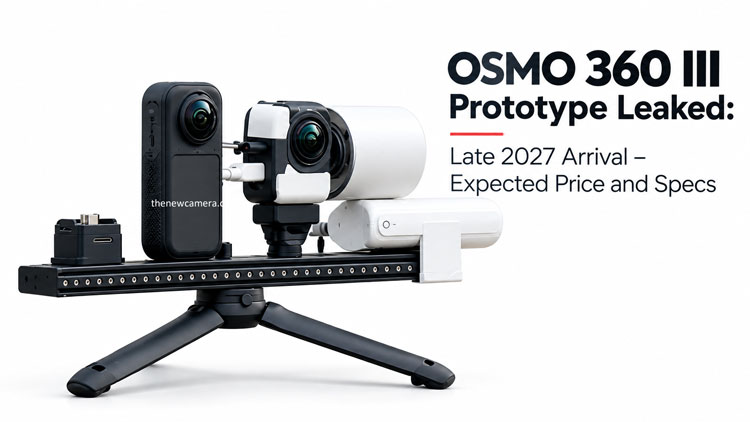
DJI was caught testing a new camera that appears to be an early prototype of the upcoming Osmo 360 II. A fresh image shared by trusted leaker Igor Bogdanov (@Quadro_News) shows an engineering test rig holding two different form-factor modules side by side.
One is a tall black rectangular unit similar to the current Osmo 360 / Osmo 360 II body. The other is a shorter white cylindrical unit with visible dual lenses.
This type of setup is typical of early prototype testing, where DJI evaluates different body sizes and layouts before locking a final design. Quadro_News has a reliable track record with accurate early photos of both the original Osmo 360 and the Osmo 360 II. At this stage, there is no model number, FCC filing, or confirmed specification. The images simply indicate that DJI is already working on different Osmo 360 body variants.
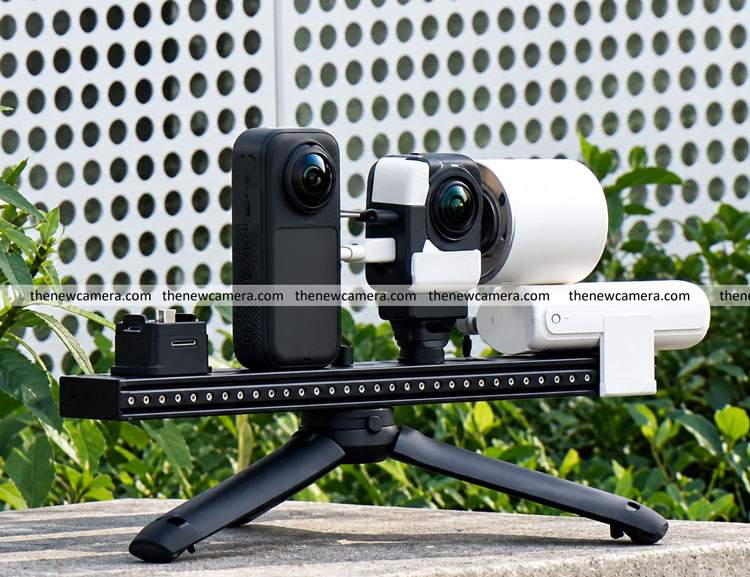 More clear picture – OSMO 360 II Late 2027 Arrival Expected
As per the announcement scheduled of the DJI OSMO series of cameras, the gap between the first Osmo 360 and the Osmo 360 II was roughly 13 months.
- Original Osmo 360 launched at the end of July 2025
- Osmo 360 II launched in China on 13 August 2026 and globally at IFA on 3 September 2026
- The most realistic window for an OSMO 360 III is late 2027, with a more specific target of August–September 2027.
The current testing is early-stage R&D rather than something close to announcement. Companies routinely begin next-generation work while the current model is still new.
Expected Price
The jump from the first Osmo 360 to the Osmo 360 II was meaningful in several markets:
- Original: roughly €480 / £410 (suggested US ~$550)
- Osmo 360 II: China ~¥3,299 (~$460), Europe €589 / £509
That represented an increase of roughly 20–25% in Europe. A third generation arriving in late 2027 would likely continue a modest upward trend.
A realistic Standard Combo expectation for the OSMO 360 III sits in the €650–720 / £550–620 range (or equivalent). This would keep it competitive with Insta360’s flagship while reflecting higher component or processing costs.
US status: Official US availability of new DJI cameras remains uncertain. The Osmo 360 II received FCC authorization but has not received an official US store launch. Any future III would face the same uncertainty.
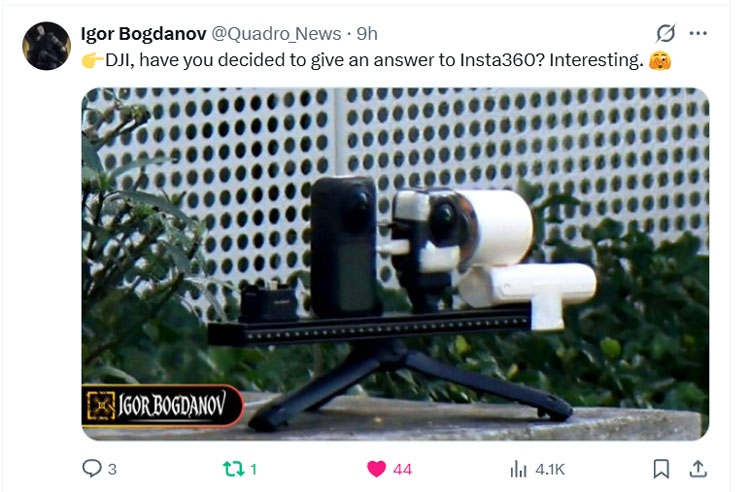 The OG low-res image of the OSMO 360 III camera Expected Specs
The prototype images show dual-lens modules that do not indicate a major change in sensor size. Both the original Osmo 360 and the Osmo 360 II used dual 1/1.1-inch square sensors, and the current test units appear consistent with that platform. The sensor size is therefore expected to remain the same, though this is not yet confirmed.
With the sensor platform likely unchanged, meaningful upgrades on an OSMO 360 III would most likely come in other areas:
- Further improvements in dynamic range and low-light processing (building on the II’s 14.5-stop claim)
- Better sustained frame rates or improved thermal performance at 8K
- Larger battery or more efficient power management for longer 8K recording
- Enhanced AI features (improved SuperNight, tracking, or subject isolation)
- Refinements to the user-swappable lens system introduced on the II
- Better connectivity, magnetic accessory support, or screen brightness
- Incremental gains in audio or durability
In short, the next model is more likely to be a polished evolution focused on real-world usability rather than a complete sensor overhaul.
We will continue monitoring Quadro_News and other sources for further prototype images, FCC filings, or official teases related to a possible OSMO 360 III.
The article “OSMO 360 III Prototype Leaked: Late 2027 Arrival – Expected Price and Specs” was written by thenewcamera.com team at 6:44 pm, Wednesday, 21 October 2026, Greenwich Mean Time | You can also follow us on Our Official Social Media Handles FACEBOOK | TWITTER | INSTAGRAM > get live news — > DJI Rumors | Insta360 News
By admin, on October 20th, 2026
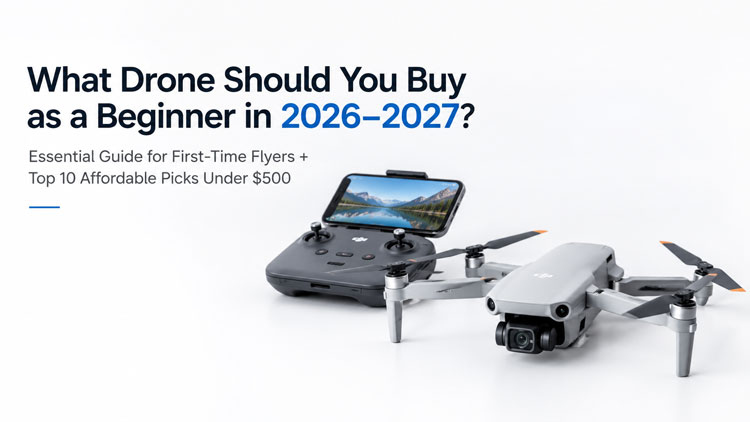
Which drone to buy? We have a few months left in 2026, and 2027 is about to arrive. Over the past few months, we have tested the most popular DJI models intensively, and we have also collected feedback from our subscribers on the most trusted sub-250 g drones they own and are happy with in terms of performance.
Our priority feature list includes: Sub-250 g models now routinely deliver GPS stability, Return-to-Home, usable 4K video, and enough flight time for real learning sessions. The hard part is no longer finding a capable drone — it is matching the right aircraft type to how you actually want to fly.
There are three distinct philosophies under $500 right now:
- Traditional GPS camera drones (DJI Mini 4K, Potensic ATOM series) that teach proper stick skills and produce smoother footage.
- Palm-launch follow drones (DJI Neo / Neo 2) that prioritize ease and self-filming over range or flight time.
- Safety-first designs (DJI Flip) that add full propeller guards and better imaging without leaving the sub-250 g class.
Most first-time buyers over-index on camera resolution and under-index on obstacle sensing, real-world flight time, and how forgiving the aircraft is during the first 10–20 hours. This guide focuses on those trade-offs and should remain relevant through early 2027, barring major regulatory or product shifts.
What Actually Matters for Beginners in 2026–2027
- Weight under 250 g remains the single most useful filter in the US (no FAA registration for recreational use). In India the same weight class (Nano) carries lighter operational rules in green zones, but complete foreign drones have been prohibited for import since February 2022. Grey-market units exist; they carry customs and Digital Sky registration risks. Always verify current rules on Digital Sky before buying or flying.
- GPS + reliable Return-to-Home is non-negotiable for outdoor learning. Optical-flow-only hover is fine indoors; it is not enough for real flights.
- Stabilization quality separates usable footage from disappointing results. A 3-axis mechanical gimbal (Mini 4K, Flip, ATOM 2) is still superior to strong EIS or a 2-axis setup for most beginners. The difference shows up immediately in wind or during turns.
- Obstacle awareness is the highest-value safety feature at this price. Only a few models under $500 offer meaningful forward or omnidirectional sensing (notably the Neo 2). Everything else requires deliberate open-space flying while you build skill.
- Real flight time is usually 70–80% of the rated figure once you add wind, maneuvers, and cold batteries. Extra batteries matter more than the headline number.
- Transmission and control determine how confidently you can fly. DJI’s O2/O4 systems and app remain the most polished; non-DJI options have closed the gap but are not identical.
Top 10 Affordable Picks Under $500 (Late 2026, Relevant into 2027)
Prices are approximate US street pricing as of mid-to-late October 2026 and move with sales. Specs are drawn from manufacturer data and recent reviews.

1. DJI Mini 4K (~$299) — Best overall for learning
~246 g, 3-axis gimbal, 4K/30 (1/2.3″ 12 MP), ~31 min rated, 10 km O2 transmission, GPS + RTH, Level 5 wind resistance, downward sensing only.
This remains the clearest “first real drone” for most people. The 3-axis gimbal produces noticeably smoother video than EIS-only competitors, the hover is stable, and the controller teaches transferable skills. The main limitation is the lack of forward obstacle sensing—you must give it space. Ideal if you want to learn proper flying rather than just generate follow clips.
DJI Mini 4K Available at Amazon

2. DJI Flip (~349sale/~439 MSRP with RC-N3) — Safest high-quality option
Under 249 g, full-coverage foldable prop guards, palm launch, 1/1.3″ sensor (up to 48 MP), 4K/60 HDR, ~31 min, AI tracking, GPS.
The combination of guards + larger sensor is hard to beat for nervous first-timers or anyone flying near people or structures. Image quality is a clear step above the Mini 4K. Wind performance is good for the weight class but the light frame can still get pushed. Best when safety and footage quality both matter.
DJI Flip available for Amazon.com
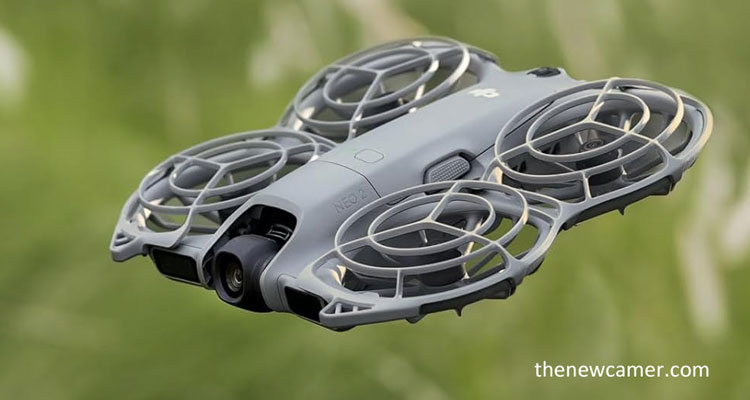
3. DJI Neo 2 (drone only ~259;practicalFlyMore+RC~400–$450) — Best follow/vlog with sensing
~151 g, omnidirectional sensing (vision + forward LiDAR), 2-axis mechanical gimbal, 4K/60 (up to 4K/100 slo-mo), 1/2″ 12 MP, ~19 min, full guards, palm/gesture/voice + optional RC, GPS.
A meaningful upgrade over the original Neo. The sensing and better camera make it far more usable near obstacles, while palm launch keeps the learning curve low. US availability is primarily through authorized resellers rather than always the official DJI US store—check warranty terms. Get the multi-battery + controller package if you want more than short selfie sessions.
DJI Neo 2 Available at Amazon.com

4. DJI Neo (~139–169 base) — Lowest-friction entry
~135 g, full prop guards, palm/gesture control, AI tracking, 4K/30, ~18 min.
Still the easiest way to get airborne and capture selfies with almost zero setup. Range and flight time are limited without the optional RC and extra batteries. Excellent as a first experience or dedicated follow tool; less ideal as a pure learning platform.
DJI Neo Available at Amazon.com
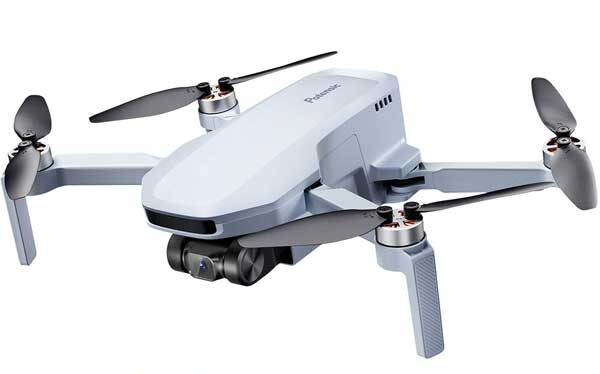
5. Potensic ATOM 2 (~300–360 base) — Strongest non-DJI all-rounder
Sub-249 g, 1/2″ sensor (48 MP), 3-axis gimbal, 4K HDR, ~32 min, AI tracking, up to 10 km, GPS + RTH.
The clearest hardware-value alternative to DJI right now. Sensor and gimbal are competitive, and the feature set is solid for the price. The app and long-term ecosystem polish trail DJI, but for many beginners the difference is smaller than the price gap.
Atom 2 available at Amazon
6. Potensic ATOM SE (~180–250) — Best pure budget GPS value
Sub-249 g, 4K with EIS, ~31 min, GPS + RTH, often sold with dual batteries, Level 5 wind.
If you want reliable GPS flight and return-to-home without paying the DJI premium, this is the practical floor. No 3-axis gimbal means video is less smooth than the Mini 4K or ATOM 2, and transmission is shorter. Still a legitimate starter rather than a toy.
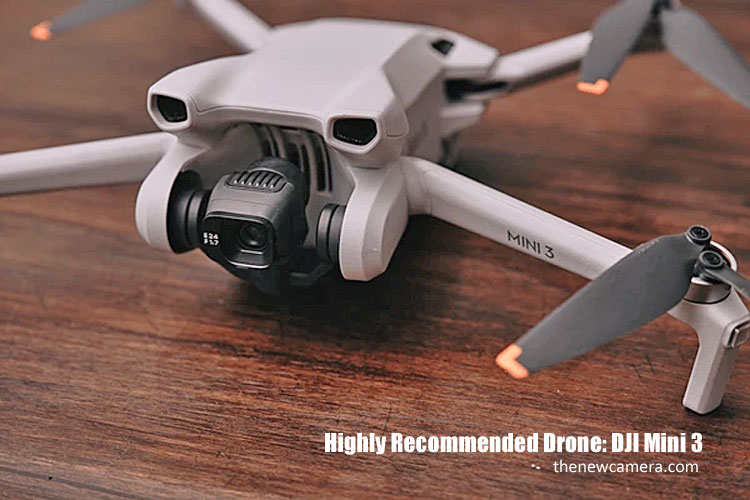
7. DJI Mini 3 (~269deepsaleto~380–$420 typical) — Best camera in the budget when discounted
Under 249 g, larger sensor class, 4K HDR, strong stills, true vertical shooting, ~38 min rated.
An older but still capable platform. When it dips near or under $300 it becomes highly attractive for image quality and flight time. Stock is less consistent than the Mini 4K. Worth checking current pricing.
8–10. Budget GPS alternatives (Holy Stone HS series, select Ruko models, Potensic ATOM LT)
These fill the 150–300 range with GPS, RTH, and 4K in various forms. Quality and consistency vary more than with DJI or current Potensic models. Useful if the top picks are unavailable or if you specifically want maximum affordability and are willing to research recent owner feedback carefully. Avoid pure no-GPS toys under ~$150 for outdoor use.
Final Recommendation
For the majority of first-time flyers who want to actually learn the hobby and get usable footage heading into 2027, the DJI Mini 4K remains the most balanced choice under $500. Choose the Flip if safety and image quality are higher priorities, or the Neo 2 if self-filming and obstacle sensing matter more than flight time. The Potensic models are the strongest reasons to step outside the DJI ecosystem.
Prices and stock change quickly. Verify current listings, firmware support, and local regulations before purchase. Extra batteries and basic practice in open areas will matter more than any single spec on the box.
The article “What Drone Should You Buy as a Beginner in 2026–2027? Essential Guide for First-Time Flyers + Top 10 Affordable Picks Under $500” was written by thenewcamera.com team at 8:08 pm, Tuesday, 20 October 2026, Greenwich Mean Time| You can also follow us on Our Official Social Media Handles FACEBOOK | TWITTER | INSTAGRAM > get live news — > DJI Rumors | Insta360 News
By admin, on October 19th, 2026
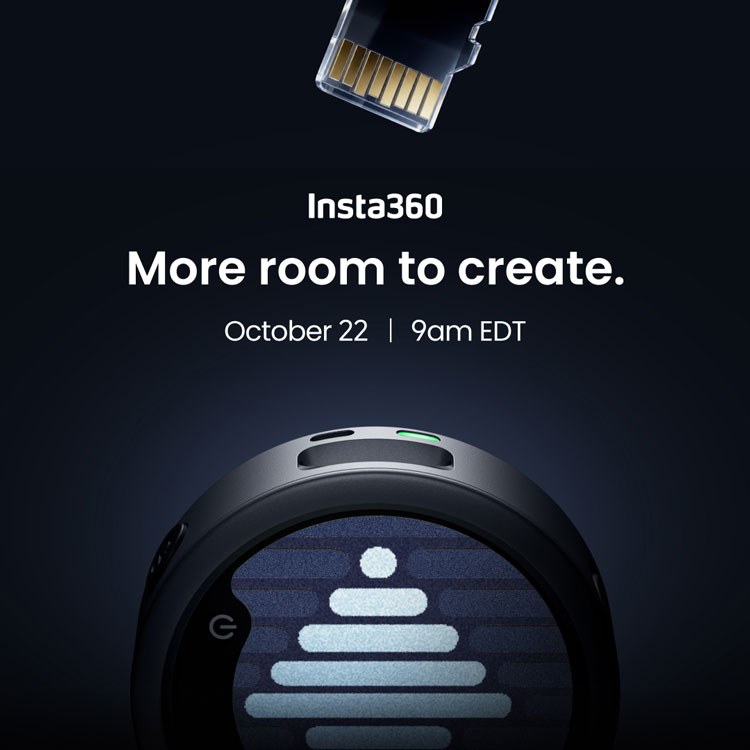
Insta360 has officially confirmed that a new Mic Series model is arriving on October 22, 2026, at 9 am EDT.
We just received confirmation from Insta360’s official Twitter account; they posted the teaser today. With the line, “More room to create 🎙️”, and asked followers to guess the features.
The image shows a circular transmitter with a display and a microSD card floating above it – a clear hint at the product’s storage approach.
Update (4:00 pm, Wednesday, 21 October 2026, Greenwich Mean Time):
Detailed specifications for the new Insta360 Mic (the “light flagship” model) have now surfaced. These details match information already available in Insta360’s product manuals and give a clearer picture of the model ahead of the official October 22 announcement.
Key Specs of the Insta360 Mic (Light Flagship):
- Storage: microSD card (64–512 GB compatible). Unlike the Mic Pro’s fixed 32 GB built-in storage, this uses removable media for expandable internal recording.
- Microphone: Single capsule with 4 selectable pickup modes (Omnidirectional, Cardioid, Figure-8, Super-directional) + 2-level AI noise reduction.
- Recording: 32-bit float internal WAV recording + LTC timecode support.
- Battery: 222 mAh; approximately 13 hours on the transmitter, ~34 hours with the charging case.
- Display: Customizable 6-colour 1.22″ e-ink screen.
- Connectivity: Bluetooth 5.4, up to 400 m transmission range.
- Weight: 19.4 g (transmitter, including dummy card; excludes clip and magnetic plate).
The new Mic keeps the customizable e-ink display, directional pickup modes, AI noise reduction, 32-bit float internal recording, and LTC timecode while switching to expandable microSD storage and a single capsule. It is positioned as the more accessible option between the Mic Air and the full Mic Pro.
What We Know So Far
Insta360’s official product manuals already list a model called “Mic” (distinct from the existing Mic Air and Mic Pro), with a release date of October 15, 2026. The October 22 teaser timing and the memory card in the image strongly match this product.
Key differences based on the manuals:
- Storage: Uses a memory card for internal recording (unlike the Mic Pro’s built-in 32GB storage)
- Microphones: Single microphone (Mic Pro uses a 3-mic array)
- Display: Supports a customizable 6-color E-ink display (similar to Mic Pro)
- Features: Directional pickup modes, auto gain, and 2-level noise cancellation
- Battery: Around 13 hours on the transmitter
- Form factor: Circular design roughly matching the Mic Pro transmitter size (~38mm diameter)
It is positioned as a more accessible “light flagship” option that brings E-ink personalization and internal recording without the full Mic Pro feature set.
.All current models support direct Bluetooth connection to recent Insta360 cameras including the Luna Pro/Ultra, X6, X5, X4 Air, Ace Pro 2, and GO Ultra.
Why This Matters for US Creators
With ongoing limitations on new DJI products in the United States, Insta360 has become a stronger option for many creators who want reliable wireless audio that works directly with their cameras. The addition of a mid-tier model with removable storage could fill a useful gap between the simple Mic Air and the more expensive Mic Pro.
What to expect on October 22: Full specs, pricing, and availability. The official announcement is set for 9am EDT.
We’ll update this story as soon as Insta360 reveals the full details.
The article “Insta360 Teases New Mic Series Model for October 22” was written by thenewcamera.com team at 5:29 pm, Monday, 19 October 2026, Greenwich Mean Time| You can also follow us on Our Official Social Media Handles FACEBOOK | TWITTER | INSTAGRAM > get live news — > DJI Rumors | Insta360 News
By admin, on October 17th, 2026
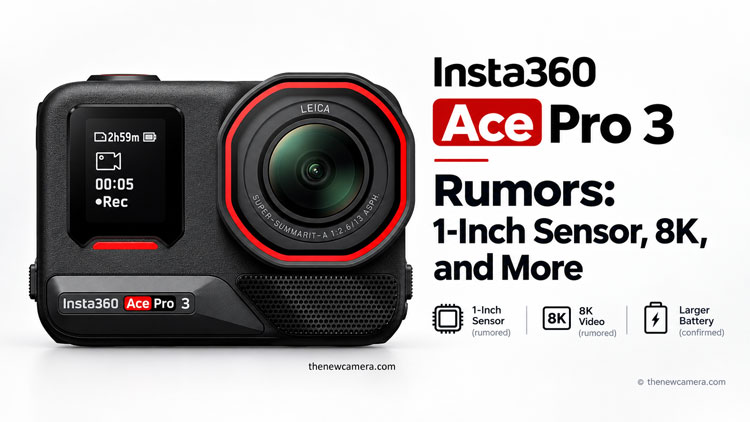
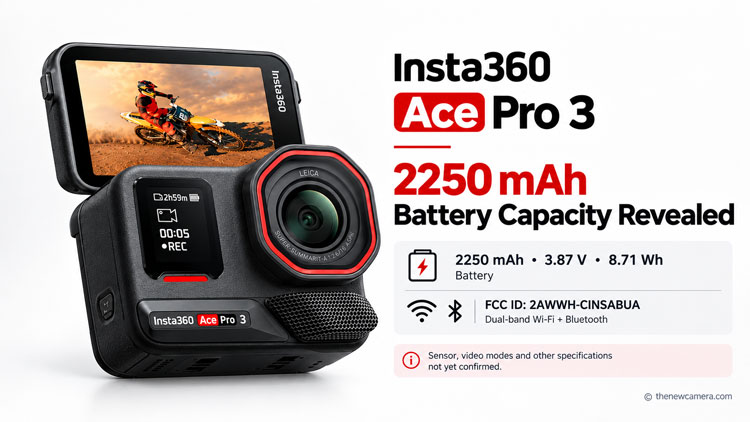
The Insta360 Ace Pro 3 is confirmed. We first reported the FCC filing on 13 October 2026. Regulatory data later revealed a larger battery. The two upgrades the market is expecting most – a 1-inch sensor and stronger 8K video- additionally made the arrival window clearer.
The most important update this time we are going to have is not the upscaled battery, but the 1-inch sensor optimised with colour profiles to give perfection in every shot you capture and all the videos you record.
The Main Expected Upgrades: 1-Inch Sensor and 8K
Although we do have strong hints related to the presence of a large 1-inch sensor and 8K video recording capability with 4K 120fps frame rate, the most consistent rumour for the Ace Pro 3 is a 1-inch (or ~1/1.2-inch) 50MP Leica-tuned sensor.
This would be the natural hardware leap for the series:
- Larger sensor area for better dynamic range and low-light performance
- Continued Leica co-engineering
- Stronger foundation for 8K video and improved PureVideo modes
On the video side, leaks point to 8K recording (with possible higher frame rates than the Ace Pro 2’s 8K30), 4K120 in 10-bit, and 1080p240. These details have been circulating since August 2026 and continue to appear in coverage.
What Is Confirmed
| Detail |
Information |
| Product Name |
Insta360 Ace Pro 3 |
| Model Code |
CINSABUA |
| FCC ID |
2AWWH-CINSABUA |
| Certification Date |
29 September 2026 |
| Battery |
3.87 V, 2250 mAh, 8.71 Wh |
| Connectivity |
Dual-band Wi-Fi (2.4 GHz + 5 GHz) + Bluetooth |
The 2250 mAh battery is a clear step up from the Ace Pro 2’s roughly 1650 mAh cell. No official announcement or teaser has appeared on Insta360’s site yet.
Expected Arrival Window
Based on this pattern, an official announcement is most likely to arrive on or before the end of November 2026. A December launch is still possible but would be slower than recent Ace Pro timing.
Confirmed vs Expected
| Item |
Status |
| Product existence |
Confirmed (FCC) |
| Battery capacity |
Confirmed — 2250 mAh |
| 1-inch sensor |
Expected |
| 8K video |
Expected |
| Official announcement date |
Not confirmed — most likely on or before the end of November 2026 |
TNC Take
The Ace Pro 3 exists. The FCC filing and the 2250 mAh battery are confirmed. A 1-inch sensor and stronger 8K video are the upgrades most observers expect, but they are still unconfirmed. The announcement window has narrowed to on or before the end of November 2026 based on Insta360’s recent Ace Pro pattern.
We will update this page as soon as Insta360 announces the camera or more confirmed details appear.
The article “Insta360 Ace Pro 3 Rumors: 1-Inch Sensor, 8K, and More” was written by thenewcamera.com team at 1:48 pm, Saturday, 17 October 2026, Greenwich Mean Time | You can also follow us on Our Official Social Media Handles FACEBOOK | TWITTER | INSTAGRAM > get live news — > DJI Rumors | Insta360 News
By admin, on October 16th, 2026
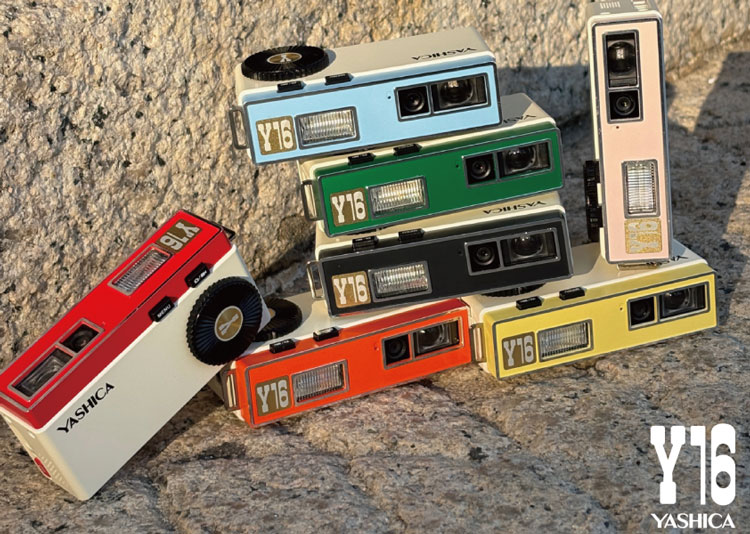
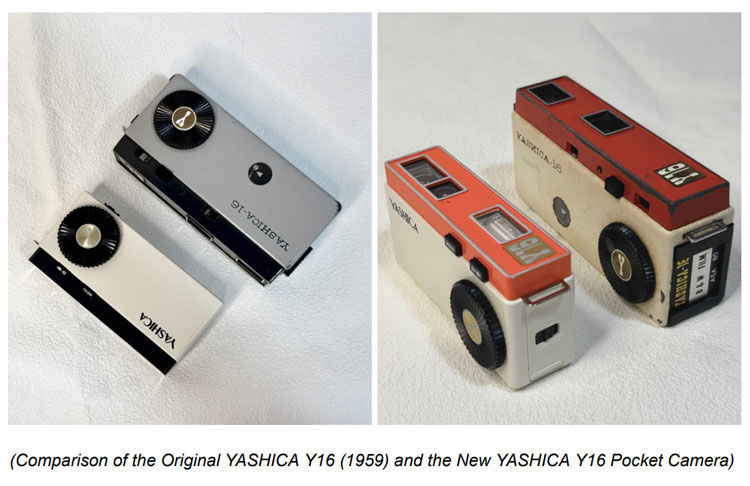
YASHICA has officially launched the YASHICA Y16 Pocket Camera, a palm-sized digital camera inspired by the original YASHICA Y16 16mm film camera from 1959. The design of the camera is very unique; for sure, someone who has already used a Yashica film camera would love to add this to his camera collection. The new model reinterprets the classic slim, colourful design for 2026 while adding digital photo and video capture, a three-level Xenon flash, and an optical viewfinder with eye-sensor technology.
Design and Concept
Not a film camera, the Y16 Pocket Camera measures 9.1 × 4.5 × 2.9 cm and weighs 93g with the battery. It keeps the distinctive flat silhouette of the 1959 original, making it easy to carry in a pocket or small bag. YASHICA positions it as both a photographic tool and a personal accessory, available in seven colourways.
The design is intended for everyday use — city walks, travel, spontaneous moments, and social situations — rather than as a technical replacement for a smartphone or a larger compact camera.
Key Features
Three-Level Xenon Flash
The camera has a built-in Xenon flash with Low, Medium, and High power settings. Recommended shooting distance with flash is approximately 50 cm to 2 m. YASHICA highlights direct-flash photography for portraits, group shots, and low-light scenes.
Optical Viewfinder with Eye Sensor
Raising the camera to the eye automatically turns off the rear LCD, encouraging users to compose through the optical viewfinder. The 1.45-inch rear screen remains available for reviewing images and menu access.
Photo and Video
- Still images: 12MP (default) / 5MP JPEG
- Aspect ratios: 4:3 and 16:9
- Video: 4K at 22fps, 2.7K at 30fps, 1080p at 60fps, and 720p at 60fps/30fps (MP4)
- ISO range: 100–6400 (Auto available)
- Digital zoom: 4x
A physical filter dial gives access to eight creative filters.
Colour Options
The Y16 Pocket Camera is available in seven colours:
- Baby Blue
- Baby Pink
- Butter Yellow
- Green
- Orange
- Red
- Black
Full Specifications
| Feature |
Details |
| Image Sensor |
12MP |
| Focal Length |
f = 4.05mm |
| Aperture |
F/1.8 |
| Focus Range |
45 cm – ∞ |
| Digital Zoom |
4x |
| Viewfinder |
Optical with eye sensor |
| Flash |
Xenon (3 levels; recommended range ~50 cm–2 m) |
| Screen |
1.45″ LCD |
| Photo Format |
JPEG |
| Photo Resolution |
12MP / 5MP |
| Video Format |
MP4 |
| Video Resolution |
4K 22fps; 2.7K 30fps; 1080p 60fps; 720p 60/30fps |
| ISO |
100–6400 / Auto |
| Filters |
8 |
| Battery |
Removable 800mAh, 3.7V lithium |
| Dimensions |
9.1 × 4.5 × 2.9 cm |
| Weight |
93g (with battery) |
| Storage |
microSD (8–256GB; 8GB card included) |
| Connectivity |
USB-C |
Pricing and Availability
- Price: USD 119 (suggested retail)
- Status: Available for pre-order now on yashica.com
- Shipping: Expected to begin late November 2026
At the time of writing, the camera is listed only on the official YASHICA store. Regional pricing (including India) and third-party availability have not been announced.
Quick Take
The YASHICA Y16 Pocket Camera is a design-focused, low-cost digital camera built around a distinctive 1959-inspired body, real Xenon flash, and optical viewfinder. It is aimed at users who want a small, colourful camera for casual shooting and social use rather than maximum image quality or advanced features.
Pre-orders are open now, with first shipments planned for late November 2026.
The article “YASHICA Y16 Pocket Camera Officially Announced: Specs, Price, and Release Details” was written by thenewcamera.com team on4:47 pm, Friday, 16 October 2026, Greenwich Mean Time, Time in Washington, DC, USA| You can also follow us on Our Official Social Media Handles FACEBOOK | TWITTER | INSTAGRAM to get live news — > live Camera News + Canon Rumors 24X7.
By admin, on October 15th, 2026
Updated: 15 October 2026
We first reported the hard confirmation of the Insta360 Ace Pro 3 on 13 October after spotting its FCC filing. Japanese media later covered the same documents and credited The New Camera. Now a new regulatory detail has surfaced from the filing: the battery capacity.
FCC Confirmation Recap
On 29 September 2026, Arashi Vision Inc. received FCC certification for a device explicitly named Insta360 Ace Pro 3.
| Detail |
Information |
| Product Name |
Insta360 Ace Pro 3 |
| Model Code |
CINSABUA |
| FCC ID |
2AWWH-CINSABUA |
| Certification Date |
29 September 2026 |
| Company |
Arashi Vision Inc. |
| Connectivity |
Dual-band Wi-Fi (2.4 GHz + 5 GHz) + Bluetooth |
This remains the first solid public evidence that the Ace Pro 3 exists and has cleared the main U.S. wireless regulatory step. No official announcement or teaser has appeared on Insta360’s site yet.
New Battery Detail
Regulatory label information tied to the same filing shows the following battery specifications:
- Battery: 3.87 V, 2250 mAh, 8.71 Wh
- Input: 5 V 3 A / 5–11 V 5 A max
For comparison, the Ace Pro 2 used a roughly 1650 mAh battery. The Ace Pro 3’s 2250 mAh cell is a meaningful increase in capacity.
That clearly indicates we will get a significant boost in battery life when compared to the old Ace PRO 2 model.
Whether this translates into proportionally longer runtime will depend on the final sensor, processor, and screen, but it is the first concrete hardware number we have beyond the wireless specs.
Expected Announcement Window
Insta360 has followed a clear pattern with the Ace Pro line:
- Ace Pro: November 2023
- Ace Pro 2: October 2024
The FCC certification is already more than two weeks old. Combined with the series’ preference for the October–November window, an official announcement is most likely to arrive on or before the end of November 2026. A December launch is still possible but would be slower than recent flagship timing.
Ace Pro 2 vs Ace Pro 3 (Expected)
| Feature |
Ace Pro 2 (Official) |
Ace Pro 3 (Expected / Rumored) |
| Sensor |
1/1.3-inch |
1-inch or ~1/1.2-inch 50MP (Leica-tuned) |
| Video |
8K30, 4K60 |
8K (possibly higher frame rates), 4K120 10-bit, 1080p240 |
| Stabilization |
FlowState |
FlowState 2.0 |
| Battery |
~1650 mAh |
2250 mAh (confirmed in regulatory data) |
| Lens |
Leica Summarit |
Leica co-engineered (expected) |
| Price |
$399.99 at launch |
$549–599 (rumored) |
The sensor, video modes, and price remain unconfirmed until Insta360 announces them. The battery capacity is the only new figure supported by regulatory documents.
What Remains Unconfirmed
Long-standing rumors continue to circulate a larger Leica-tuned sensor, improved low-light performance, FlowState 2.0, and a $549–599 price point. None of these appear in the FCC documents and should be treated as unconfirmed.
TNC Take
The Ace Pro 3 is real. The FCC filing confirmed the name and model, and the regulatory label now gives us the first clear hardware upgrade: a larger 2250 mAh battery. Everything else -sensor size, exact video modes, and final price – still waits for an official reveal.
Given Insta360’s historical speed from certification to announcement and the Ace series’ Q4 pattern, the wait should not be long. We will update this page as soon as more confirmed details appear.
The article “Insta360 Ace Pro 3 Battery Capacity Revealed: 2250 mAh (Bigger Than Ace Pro 2)” was written by thenewcamera.com team at 5:00 pm Thursday, 15 October 2026 Greenwich Mean Time | You can also follow us on Our Official Social Media Handles FACEBOOK | TWITTER | INSTAGRAM > get live news — > DJI Rumors | Insta360 News
By admin, on October 13th, 2026
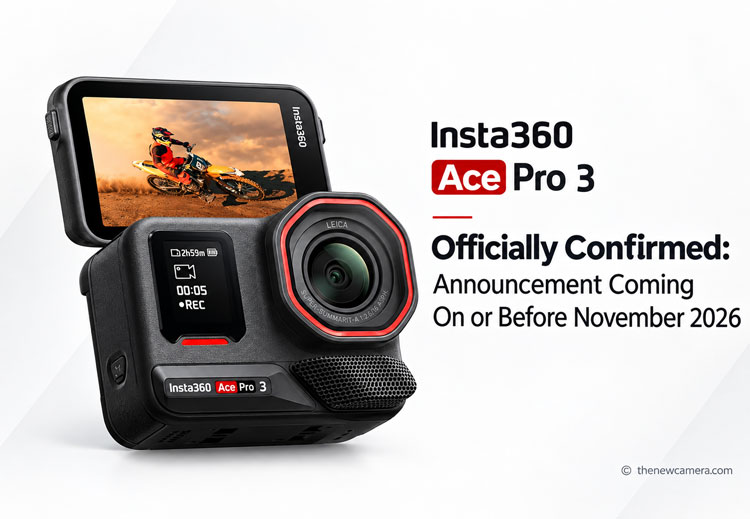
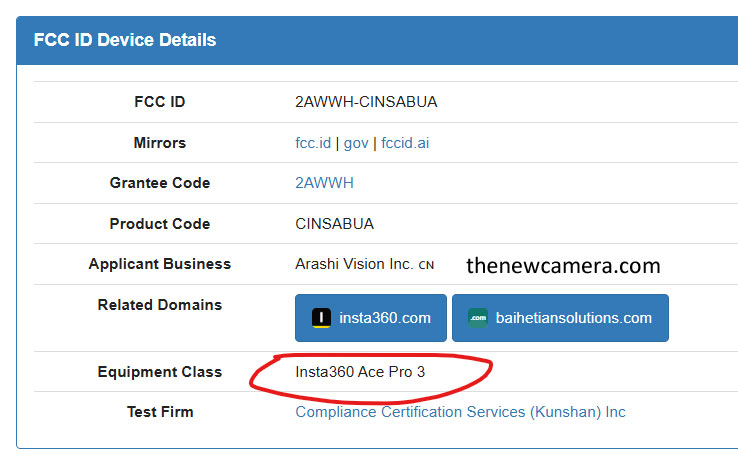
The Insta360 Ace Pro 3 is now officially confirmed. Our team spotted an FCC document related to the Ace Pro 3 filed on 29 September 2026 by Arashi Vision Inc., which received FCC certification for a device explicitly named Insta360 Ace Pro 3 under FCC ID 2AWWH-CINSABUA (model code CINSABUA). This is the first hard public evidence that we have spotted the camera exists and has cleared the main U.S. wireless regulatory step.
FCC Confirmation Details
| Detail |
Information |
| Product Name |
Insta360 Ace Pro 3 |
| Model Code |
CINSABUA |
| FCC ID |
2AWWH-CINSABUA |
| Certification Date |
29 September 2026 |
| Company |
Arashi Vision Inc. |
| Type |
Original Equipment |
| Connectivity |
Dual-band Wi-Fi (2.4 GHz + 5 GHz) + Bluetooth |
| Additional Testing |
Antenna assembly, SAR (body-worn), full radio reports |
The filing confirms a composite wireless device with the radio features expected of a modern Ace-series camera. Extensive body-worn SAR testing further supports the action-camera form factor.
We’ve already seen a pattern between Insta360’s registration dates and product announcements.
Based on Insta360’s consistent FCC-to-announcement pattern, an official reveal is most likely to arrive on or before November 2026.
Analyzing Insta360’s FCC-to-Announcement Pattern
Insta360 rarely waits the full 180-day short-term confidentiality period. Recent major products show a much shorter and more predictable gap:
| Product |
FCC Date |
Announcement Date |
Gap |
| Ace Pro 2 |
21 Oct 2024 |
22 Oct 2024 |
~1 day |
| X5 |
~22 Apr 2025 |
22 Apr 2025 |
~1 day |
| X6 |
3 Jul 2026 |
12 Aug 2026 |
~40 days |
| Luna Ultra |
22 Mar 2026 |
10 Jun 2026 |
~80 days |
For flagship Ace and X-series cameras, the normal window is 2–6 weeks. The Ace Pro 3 filing is already two weeks old (as of mid-October 2026). Combined with the Ace series’ historical preference for Q4 launches (Ace Pro in November 2023, Ace Pro 2 in October 2024), this points to an announcement in late October to mid/late November 2026.
Insta360 Ace PRO 3 Arrival Date “On or Before November 2026”
- The product name is already public in the FCC database — Insta360 is not trying to hide the existence of the Ace Pro 3.
- Recent flagship cameras (especially the Ace line) have moved from FCC grant to announcement inside 1–6 weeks.
- A December launch remains possible but would be slower than most recent Insta360 flagships.
- The Ace series has consistently favored the October–November window in previous generations.
Ace PRO 3 Expected Price
Long-standing rumors (1-inch-class Leica-tuned sensor, 8K video, improved FlowState, $549–$599 range) continue to circulate but are not supported by the FCC documents and should be treated as unconfirmed until Insta360 announces them.
TNC Take
The 29 September 2026 FCC certification for model CINSABUA officially confirms the Ace Pro 3. Given Insta360’s normal speed from certification to reveal and the Ace series’ Q4 pattern, the announcement is expected on or before November 2026.
We will update this page as soon as official teasers or a launch date appear.
The article “Insta360 Ace Pro 3 Officially Confirmed: Announcement Coming On or Before November 2026” was written by thenewcamera.com team at 7:49:49 pm, Tuesday, 13 October 2026, Greenwich Mean Time | You can also follow us on Our Official Social Media Handles FACEBOOK | TWITTER | INSTAGRAM > get live news — > DJI Rumors | Insta360 News
|
KEEP THIS BLOG ALIVE - Support New Camera Buy Canon Lenses, Buy Music CD or Digital Camera at amazon it helps this site, and you do not pay anything extra, it is just a way to help support this site.

|