Join More Than 50,000+ Subscribers and get latest camera news and rumors
NEW CAMERA VIDEOS ON YOUTUBE
|
By admin, on September 9th, 2026
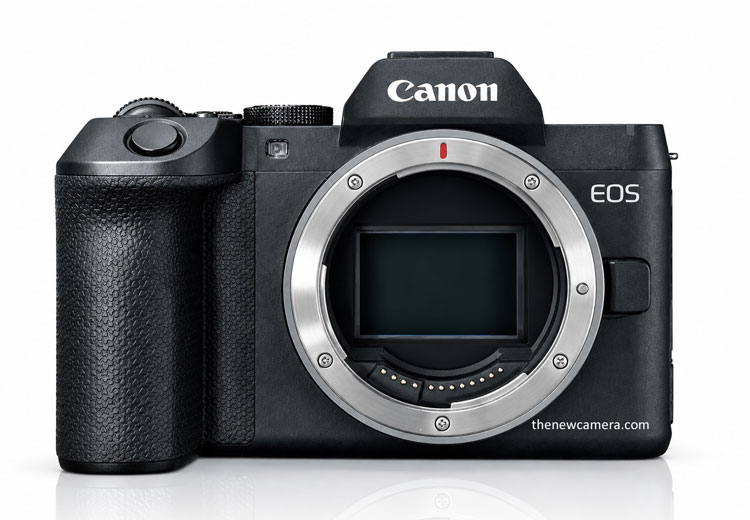
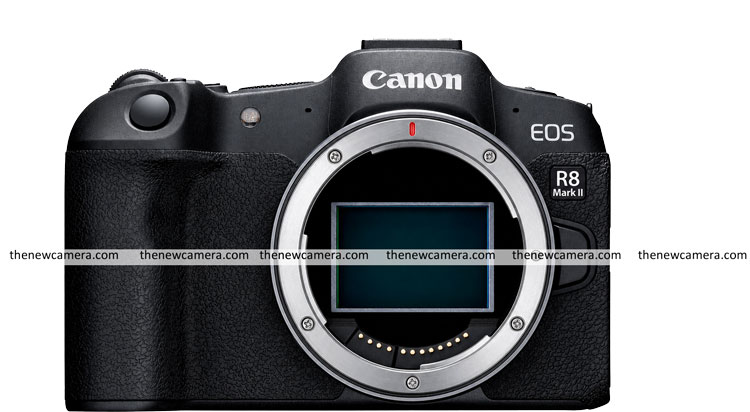
Recently, I published detailed specifications for the upcoming Canon R8 Mark II, and now we have official product images alongside internal black-and-white test shots from reputable sources like Ordinary Filmmaker.
It all started with intense specification leaks followed by the product shot leak, and it is all normal since, as we all know, before the announcement of an official product, generally, we get a detailed set of specifications and images prior to the announcement.
We will also discuss the camera’s design, which is quite impressive: it has a retro pinch that makes the overall look feel pro-grade rather than beginner.
The specification leak from earlier this month told us what Canon may put inside the EOS R8 Mark II. The photos that landed on 8–9 September tell us what the camera may actually look like.
If the 15 September announcement holds, these pictures are six days early.
Related: Canon R8 Mark II Full Specification Leaked (4 September 2026)
What Changed Overnight
The photos do three useful things the spec sheet could not:
- They show a rear joystick. The original R8 never had one.
- They show a dedicated side door for the SD card. On the R8, the card shares the battery compartment.
- They kill the AE-1 tribute rumour. This is a squared, modern compact, and Highly attractive design
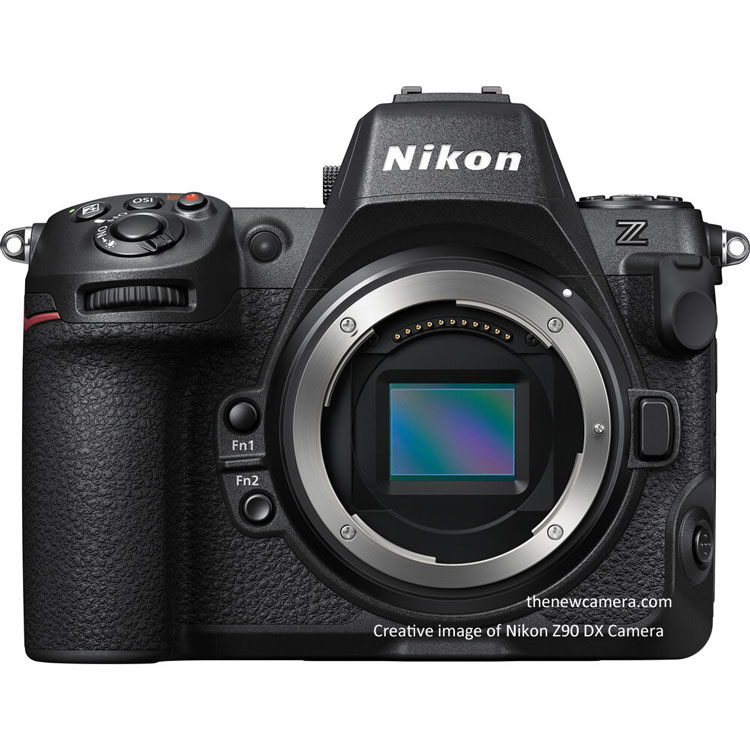
Separately, AI-generated front-on images of an “R8 Mark II” have also started circulating. Those renders are not the same as the certification-style leak photos and should not be treated as product photography.
What the Leaked Body Actually Looks Like
Treat the following as visual analysis of unofficial photos, not a Canon press kit.
Front
Really impressive front design, not exactly what the rumour mill says the RETRO one is, but looks highly authentic and cool .. Mark II drops the softer EOS curves for a straighter, more rectangular shell. The grip leather looks simpler. Early mockups called the grip shallower; the Japanese side-by-side reads the front grip as deeper. Until someone holds a production unit, call the grip “redesigned,” not “better.”
Top Plate
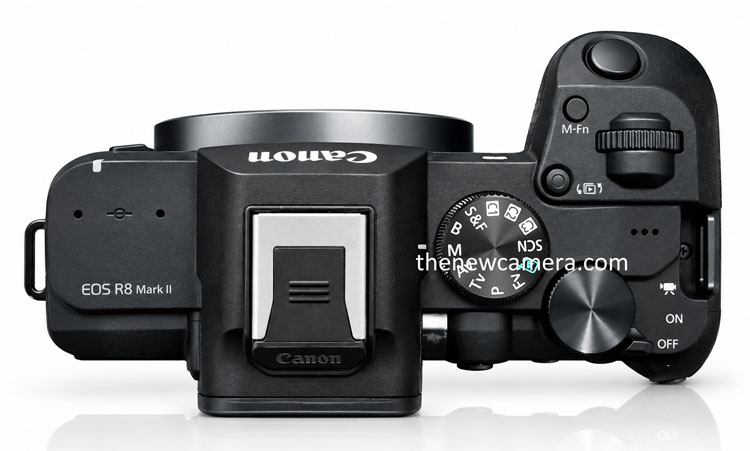
Perfectly designed like their higher-end camera, only the top LCD is missing (but that would be too much for the R8 Series). Controls sit almost entirely on the right. The left shoulder is clean. Dial and button positions are close to the R8, but not identical.
Back
This is the useful angle.
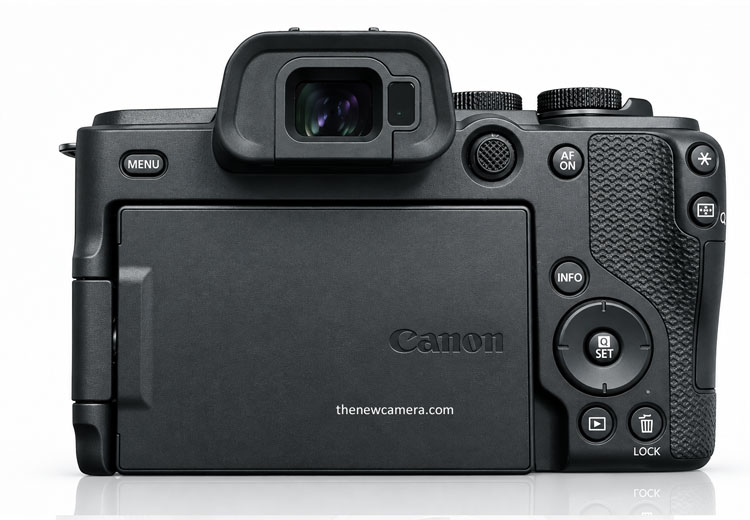
- A joystick sits near the EVF — the same neighborhood Canon used on the EOS R7, which some shooters like and some find cramped.
- The EVF housing sits slightly higher than on the R8.
- The thumb rest is cleaner.
- The rear screen still looks like a vari-angle monitor.
- There is no giant “EOS R8” badge shouting across the body the way some current Canon models do.
Side
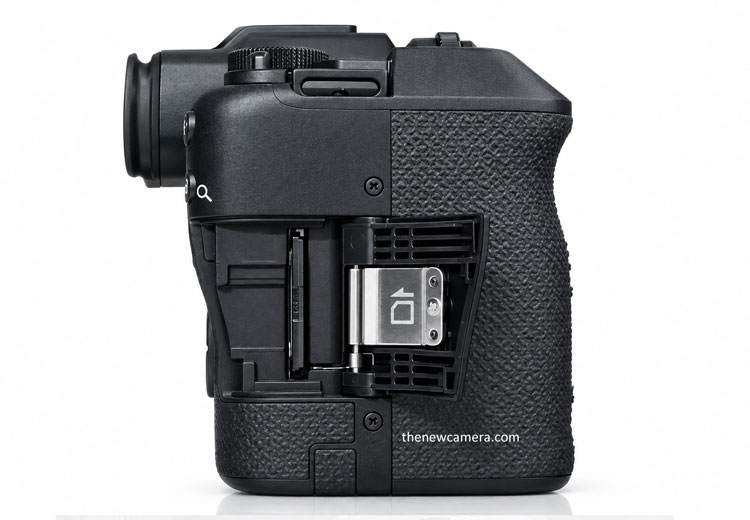
The single SD card finally gets its own door. That is a small change on a spec list and a real handling change in the hand. The battery remains the compact LP-E17 in every leak, so the body is still built around a small cell. An optional extension grip is rumored as a same-day accessory.
The overall impression is a compact full-frame camera that wants to look current, not nostalgic. Anyone who spent 2026 waiting for a digital AE-1 should adjust expectations now.
It is easy to look at a real-looking camera and treat the entire rumour package as locked. Don’t.
Still unofficial but almost confirmed
- “Deep learning” AF extras and new animal tracking
- 20 fps pre-shooting
- Sensor protective curtain
- In-camera LUTs / downloadable color filters
- The odd “create 3D video from 2D images” line
- $1,799 U.S. / €1,879 Europe
- 15 September New York announcement and October shipping
Why IBIS Is Still the Real Story
The original R8 was easy to like and easy to criticise due to its too much kinda of Rebel style design and weak grip, although we do still believe that Dual Pixel AF II and 40 fps electronic shooting were serious in that price range. The missing in-body stabilizer was the reason a lot of buyers stepped up to an R6-series body.
The Mark II really carries a 5-axis system rated around 7.5 stops, that single change does more for travel, available-light, and handheld video than another four megapixels would.
The LP-E17 battery is the other half of that compromise. Same small cell, now asked to run a stabilizer. Expect the usual argument: the camera stays light; the shot count will be the thing to watch in reviews.
Expected Announcement Window
| Item |
Current rumor |
| Announcement |
15 September 2026, New York (late evening U.S. East Coast / early 16 September in the U.K.) |
| Same-day accessories |
Speedlite EL-5 Mark II and a compact ergonomic grip |
| First stock |
October 2026, some lists say first half of the month |
| Related software |
Firmware for EOS R5 Mark II and EOS R6 Mark III tied to a 2D-to-3D JPEG feature — extra-soft until Canon posts a note |
Retailers already stopped restocking the original R8 body at several U.S. shops earlier this summer. That is a classic pre-launch signal. It is not proof of the date.
Source Notes
- Leaked photos: Ordinary Filmmaker / additional Reddit r/canon post “New Canon R8 Mk II leaked images,” recirculated by Canon Rumours on 8 September 2026. Canon Rumours describes the files as certification-style and “100% real.” They are not official Canon images.
- Design comparison: Digital Camera Life (Japan) overlay of the leak photos against the current EOS R8, 9 September 2026.
- Specification list: circulating leak sheet first published in detail around 3–4 September 2026 (Ordinary Filmmaker video; Canon Rumors; earlier thenewcamera.com coverage). Figures remain unofficial.
- This article is an image update. It does not replace the 4 September specification report.
All product names are used for identification. Specifications, pricing, and launch timing can change before Canon’s official announcement.
The article “First Real Canon EOS R8 Mark II Photos Surface” was written by thenewcamera.com team on 7:44 pm, Wednesday, 9 September 2026, Greenwich Mean Time (GMT) | You can also follow us on Our Official Social Media Handles FACEBOOK | TWITTER | INSTAGRAM > more live Camera News + Canon Rumors 24X7
By admin, on September 4th, 2026
The key details in the supplied material are the 24MP full-frame sensor, 7.5-stop IBIS, 40fps electronic shooting, 4K 60p with 6K oversampling, Full HD 180p, Dual Pixel AF II, single SD card slot, LP-E17 battery, new modern design, and €1,880 European price.
If this list holds, the R8 Mark II is no longer a small refresh of the 2023 EOS R8. Canon appears to be repacking the camera with a set of new features to make a sort of Revolutionary update. So that first-time full-frame buyers do not feel forced to upgrade again in 12 months.
What Changed From Earlier Rumours
The key details in the supplied material are the 24MP full-frame sensor, 7.5-stop IBIS, 40fps electronic shooting, 4K 60p with 6K oversampling, Full HD 180p, Dual Pixel AF II, single SD card slot, LP-E17 battery, new modern design, and €1,880 European price
- Sensor stays 24MP full-frame, not 32.5MP.
- Single SD card remains — but it finally gets its own side door.
- Design is described as straight and square/modern, not retro.
- IBIS is in, rated at 7.5 stops.
Canon R8 Mk II Offical Announcement and Availability
According to the leak, Canon will present the EOS R8 Mark II on Tuesday, 16 September 2026 at 2:00 a.m. UK time. That is 21:00 Eastern Time on Monday, 15 September 2026 — which matches the September 15 date already circulating on Canon rumor sites.
Embargo for pre-order coverage is expected to lift on 15 September. Retail availability is listed as the first half of October 2026.
A firmware update for the EOS R5 Mark II and EOS R6 Mark III is also tied to the same window. That update is said to bring the new 2D-to-3D JPEG software feature discussed later in this article.
Canon R8 Mark II vs Canon R8 – Quick Specs Comparison
| Feature |
EOS R8 Mark II |
Original EOS R8 |
| Sensor |
24MP full-frame |
24.2MP full-frame |
| Mechanical shutter |
None |
None |
| EVF |
Yes |
Yes |
| Flash |
Compatible |
Compatible |
| Burst |
40 fps electronic |
40 fps electronic |
| Pre-capture |
0.5 s at 20 fps (10 frames) |
No |
| Max shutter |
1/16,000s |
1/16,000s (e-shutter) |
| IBIS |
7.5 stops |
No IBIS |
| ISO (native) |
100–102,400 (Extended TBD) |
100–102,400 |
| AF system |
Dual Pixel AF II |
Dual Pixel AF II |
| New AF extras |
New animals + face registration |
People / animals / vehicles |
| 4K video |
4K 60p, 6K oversampled |
4K 60p, 6K oversampled |
| Slow motion |
Full HD 180p |
Full HD 180p |
| Video extra |
Defocus transition tool |
— |
| Card |
Single SD, side door |
Single SD in battery door |
| Battery |
LP-E17 |
LP-E17 |
| Design |
Straight / square modern |
Rounded RP-style |
| EU body price |
€1,880 |
€1,699-class launch era |
Sensor, Stills and Image Quality
The camera is described as a 24 megapixel full-frame body with a metal bayonet. There is still no mechanical shutter. Like other recent Canon bodies in this class, sensor curtains close to protect the sensor from dust when the camera is powered off.
An electronic viewfinder is confirmed in the leak, so this is not an EVF-less experiment. Flash shooting is also listed as possible.
Continuous shooting remains 40 frames per second. The more interesting stills change is pre-capture. The R8 Mark II is said to offer up to half a second of pre-capture at 20 fps, giving a 10-frame buffer. That is slower than the 40 fps live burst, but it is a feature the original R8 did not have and one many action, street and wildlife shooters actually use.
Maximum electronic shutter speed is listed at 1/16,000 of a second.
ISO, filters and color
Native ISO is described as 100 to 102,400, but the source wording was “not forced from 100 to 102,400.” That phrase needs official clarification. Until then, assume a conventional R8-class ISO range.
Canon is also adding new in-camera filters. One set reduces contrast and lifts dark areas — a practical way to talk about usable dynamic range and a cleaner noise floor in shadows. Another set increases contrast and intensifies dark areas. Separate color modes for night scenes are mentioned.
Color profiles can be downloaded from the internet. That is new language for an entry-level Canon body and raises the obvious question: is Canon moving some look management onto a cloud / account workflow?
The same leak talks about Canon “Look files” and internal filters with intensity control, so finished photos and videos can be produced in-camera. The presenter compared the idea to Fujifilm film simulations / LUTs. Whether Canon officially calls them LUTs or Look files will be cleared up on announcement day.
Video Specification
Video is where the R8 Mark II starts to look less like a cheap R8 and more like a hybrid that Canon wants to keep relevant against pocket gimbals and mid-range Sony bodies.
- 4K up to 60p with 6K oversampling
- Canon Log 3 only. No Canon Log 2 is mentioned, so do not expect the 15-stop-class Log 2 claim from higher bodies. 13–14 stops tested would still be useful at this price.
- Full HD up to 180 fps
- New video defocus function: a programmable button runs blur / focus transitions with 5 blur levels and 10 transition speeds. Repeatable rack-focus style effects without a follow-focus rig.
- A “warm-up in video recording” item is listed as very controlled. The source did not explain what it does. Leave this as an open question.
In-camera Look files / filters with intensity control apply to video as well as stills.
Autofocus
Autofocus is Dual Pixel CMOS AF version 2 — the generation that arrived with the EOS R5 Mark II. The leak is explicit that there is no DIGIC Accelerator chip. That is the same segmentation we already see on the R6 Mark III: very good tracking, but not the ball-possession / ultra-predictive sports logic of the flagship stack.
Deep learning subject detection continues, with a new animal category beyond the usual people / animals / vehicles set. The leak does not name the extra species. Insects and birds in flight were raised as possibilities, not as confirmed labels.
Face registration is included. Register a person once and the camera prioritizes that face in a crowd. This is already on the R5 Mark II and is one of the more useful real-world AF extras when you are shooting family, weddings or events.
The joystick is described as similar to the original EOS R6 (Mark I, not Mark III) and sits next to the viewfinder.
IBIS and Handling
In-body image stabilization is the upgrade original R8 owners have asked for since 2023. The leaked rating is 7.5 stops. Combined with RF IS lenses this should finally make the compact full-frame body usable for slower shutter handheld work and calmer handheld video.
The rear control to the right of the screen is not a spinning dial. It is a fixed pad with a central SET button plus up / down / left / right keys.
Design language is the other surprise. Earlier 2026 reports talked about a retro AE-1-inspired body. This leak says Canon is abandoning the rounded RP / R8 lines and moving to straight, square, modern surfaces. The source is blunt: it is not a retro camera.
Battery, Storage and the One Thing People Will Argue About
Battery remains the LP-E17. That will be the first comment on every forum thread. The cell is small, already criticized on the original R8, and IBIS plus 4K60 plus a more capable AF stack will not make it last longer. If you already own a bag of LP-E6P packs, this body still will not take them.
Storage is still a single SD slot. The good news is placement: the card now has its own side compartment and door. It is no longer sharing the battery door. That is a small but real handling improvement, especially on a tripod or inside a cage.
Accessories Launching With the Camera
Three extras are expected on the same day.
1. Extension base / grip — €110
A screw-on base that raises the camera so the little finger does not hang off the original compact grip. Texture of the handle is said to be preserved. This is not a battery grip and does not hold extra cells.
2. Speedlite EL-5 Mark II — €480
Radio range improved to 50 metres, with the ability to control more flashes, plus unspecified “other novelties.” Some of those extras may live in camera firmware rather than the flash body itself.
3. 2D-to-3D JPEG software — expected free after registration
This is the unusual item. Using Dual Pixel data, the camera can embed subject distance and depth-of-field information for the main subject and other elements in the scene into a JPEG. New software then turns that 2D JPEG into a short 3D video clip: a small rotation of the scene with the ability to change apparent depth of field.
Think of the documentary trick where a still photo is given a slight 3D pitch. If it works cleanly, travel and editorial shooters will use it. The same feature is said to arrive on the EOS R5 Mark II and EOS R6 Mark III through firmware. The software is expected to follow the Digital Photo Professional model: free, but registered to the camera serial number. That last point is not fully confirmed.
European Pricing
| Item |
Leaked European price |
| EOS R8 Mark II body |
€1,880 |
| Extension base / grip |
€110 |
| Speedlite EL-5 Mark II |
€480 |
| 2D-to-3D software |
Likely free with serial registration |
No official US dollar body price is in this leak. Earlier US-facing reports in August still pointed to roughly $1,799–$1,899. €1,880 is a higher European list figure and should not be converted blindly into a US street price until Canon publishes regional MSRP.
For context, the original EOS R8 launched at $1,699 in February 2023. A higher Mark II price is expected if IBIS, pre-capture and the new video tools are real.
Official word should arrive on 15–16 September 2026, with cameras in stores in the first half of October. We will update this page the moment Canon publishes the real specification sheet.
Source
Primary source for this detailed specification list: Ordinary Filmmaker video “We’ve got the full set of leaked R8 II specs, pricing, announcement date, shipping date…” published 3 September 2026.
Watch: https://youtu.be/Y5jl_4CZeD4
Additional context compared against earlier public reporting from Canon Rumors and previous thenewcamera.com R8 Mark II coverage (24 August 2026). All figures remain unofficial until Canon’s announcement.
The article “Canon R8 Mark II Full Specification Leaked” was written by thenewcamera.com team on 1:51 pm, Thursday, 3 September 2026, Greenwich Mean Time (GMT) | You can also follow us on Our Official Social Media Handles FACEBOOK | TWITTER | INSTAGRAM > more live Camera News + Canon Rumors 24X7
By admin, on August 31st, 2026
We are talking about the camera that is registered with the FCC and about to arrive, and its Confimred tha the Announcement of the camera will happen before January 2027. (The FCC is 18 January 2027, 180 days confidently period ends that day, and the announcement has to be made before 18th January)
Before we jump to details, it’s one of the 5 cameras that have been recently registered by Canon; you can see a detailed list of cameras here
(Based on the facts we are getting from the FCC document)
The short answer
Now, based on the set of features we are getting inside the camera and the size we can clearly estimate which category it will fall into
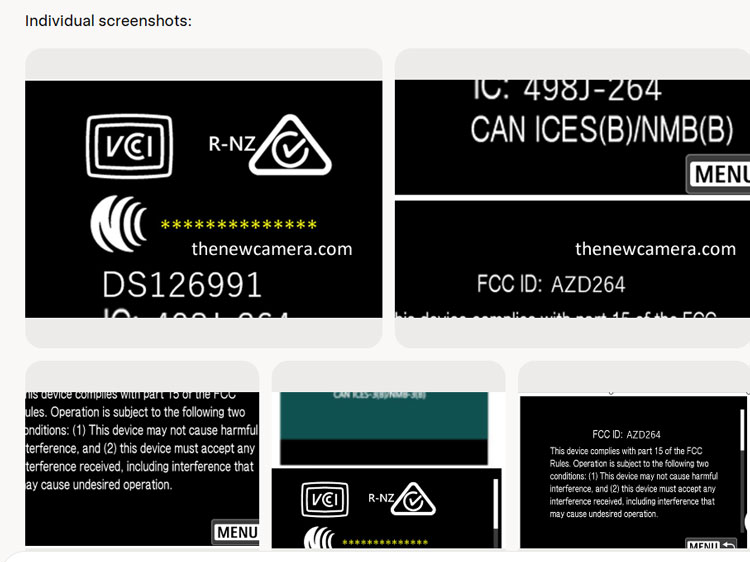
A short, plain-language briefing on factory code DS126991 (FCC ID AZD264): confirmed facts, reasonable inference, expected price, and what is still locked until January 2027.
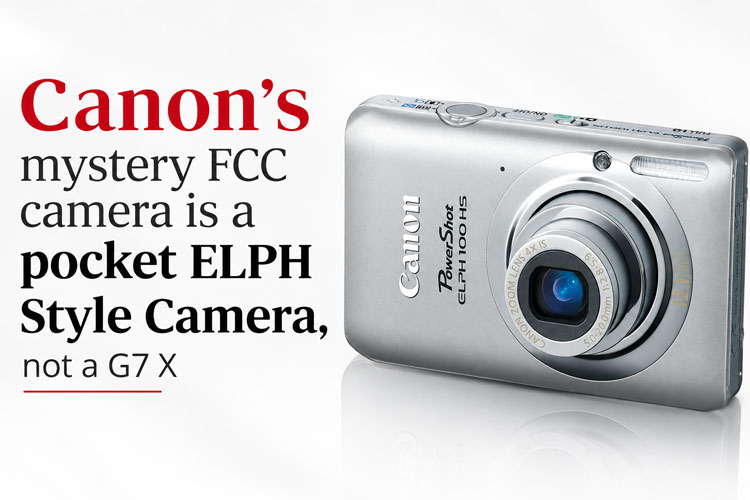
Everything that is public points to an entry-level PowerShot ELPH / IXUS / IXY-class pocket compact – most likely a USB-C refresh of the current cheap ELPH line – not a premium stills compact and not a vlogging gimbal.
Announcement is expected no later than 18 January 2027, which is also the date Canon’s external photos and user manual come off short-term FCC confidentiality.
Fact versus inference
| Status |
What it means |
| Confirmed |
Canon digital camera. Factory model DS126991. FCC ID AZD264. 2.4 GHz Wi-Fi only (2412–2462 MHz). Pocket-size body about 88 × 55 mm. Filing dated 23 July 2026. Photos/manual locked until 18 Jan 2027. |
| Strong inference |
Inexpensive PowerShot / ELPH / IXUS class. No Bluetooth. Wi-Fi + NFC pairing like current ELPH 360 HS A. USB-C likely. Announcement by mid-January 2027. |
| Not known |
Retail name, sensor size, zoom range, 4K or not, battery, India launch, exact price. |
What we know from the FCC file
The public exhibit is not a product brochure. It is a radio certification. Still, it is enough to identify the camera.
- Maker: Canon Inc. Equipment class: digital camera.
- Internal model printed on the e-label screen: DS126991.
- Radio: 2.4 GHz Wi-Fi only. Conducted power about 0.13 W. No 5 GHz Wi-Fi and no Bluetooth in this grant.
- On-screen label path: Menu → Authentication Mark. Typical compact-camera UI, not an EOS R body.
- SAR outline is a small rectangle, about 88.2 mm wide by 55.2 mm tall – Similar to ELPH pocket size, not G7 X (105 × 61 mm) and not V1 (118 × 68 mm).
- External photos, internal photos, test-setup photos and the user manual stay confidential until 18 January 2027.
What it is — and what it is not
| Likely |
Not this camera |
| Entry-level PowerShot ELPH / IXUS / IXY pocket compact |
PowerShot G7 X Mark III or a G7 X successor |
| Wi-Fi + NFC, no Bluetooth |
PowerShot V10 or V1 (both have Bluetooth) |
| USB-C refresh of the ELPH 360 HS A / IXUS 285 HS A idea |
Insta360 Luna Ultra or DJI Osmo Pocket 4P |
| Point-and-shoot for travel, family, everyday snapshots |
EOS R8 II or any interchangeable-lens body (those use other DS codes and 5 GHz + Bluetooth) |
Canon’s current cheap compact, the ELPH 360 HS A (IXUS 285 HS A outside the US), already uses Wi-Fi + NFC and no Bluetooth. Rumor sites tracking DS126991 describe the same radio: inexpensive PCB antenna, 2.4 GHz only, NFC instead of Bluetooth. That is the family this filing belongs to.
What the size actually matches
The SAR report draws the camera as a rectangle about 88.2 mm wide by 55.2 mm tall. That is not a CIPA spec. It is the face of the body as tested for radio exposure. Real shop measurements can be a few millimetres larger once you add the lens ring, buttons and CIPA rounding. Even so, the outline is useful: it is pocket-ELPH size, not G-series size.
| Camera |
Official size (W × H × D) |
Versus ~88 × 55 |
| AZD264 / DS126991 |
~88 × 55 mm (SAR face) |
This camera |
| ELPH 360 HS A / IXUS 285 HS A |
99.6 × 58.0 × 22.8 mm |
Wider; current cheap ELPH |
| ELPH 180 / IXUS 175 |
95.2 × 54.3 × 22.1 mm |
Same height class |
| ELPH 300 HS / IXUS 220 HS |
92.2 × 55.9 × 19.5 mm |
Height almost exact |
| ELPH 520 HS / IXUS 500 HS |
87.1 × 53.9 × 19.2 mm |
Width almost exact |
| Early Digital IXUS / ELPH S100 |
87 × 57 × 27 mm |
Same pocket class |
| G7 X Mark III |
105 × 61 × 41 mm |
Clearly bigger and thicker |
| PowerShot V1 |
118 × 68 × 53 mm |
Much bigger |
| PowerShot V10 |
63 × 90 × 34 mm |
Tall vlog shape — not this |
Read the size this way: credit-card-ish pocket compact. Height around 55 mm is the usual ELPH jeans-pocket height. The outline is smaller than today’s ELPH 360 HS A (about 100 mm wide), so either the new body is a bit slimmer or the SAR drawing is the chassis without the full CIPA envelope. Closest living relatives by footprint are older slim ELPHs and the small IXUS 500 HS, not G7 X or V1.
Why the Wi-Fi looks “weak”
2.4 GHz-only Wi-Fi is normal on this class of Canon. It is not the same radio as a 2026 creator camera.
|
DS126991 |
Luna Ultra |
Pocket 4P |
| Bands |
2.4 GHz only |
2.4 + 5 GHz |
2.4 + 5 GHz |
| Standard |
Wi-Fi 4 class |
Wi-Fi 6 |
Wi-Fi 6 |
| Bluetooth |
No |
Yes |
Yes (LE 5.4) |
| Job |
Send JPEGs to a phone |
Live view + 4K/8K dump |
Live view + 4K dump |
For a few holiday photos to Camera Connect, 2.4 GHz is enough. It is slower, more crowded, and not meant for dumping long video. That is a product-class difference, not a surprise defect.
Expected price
Canon already sells the closest live model, the ELPH 360 HS A, at $379 in the US and about £370 / €360–370 in Europe.
| Scenario |
USD launch |
| Aggressive volume price |
$299–329 |
| Most likely |
$349–379 |
| If they hold a “compact revival” premium |
$399 |
Parallel-import pricing in India can stay much higher even if the official number is lower. G7 X / V1 money ($650–900) and Luna / Pocket 4P money ($600–770) are a different shelf.
This is the short update we have related to the camera.
The article “Canon’s mystery compact is not a G7 X, V1, or creator gimbal. Here is what the FCC file really shows.” was written by thenewcamera.com team on 4:56 pm, Monday, 31 August 2026, Greenwich Mean Time (GMT) | You can also follow us on Our Official Social Media Handles FACEBOOK | TWITTER | INSTAGRAM > — more live Camera News + Canon Rumors 24X7
By admin, on August 28th, 2026

This post actually explores the upcoming Canon cameras’ announcement timeline based on their registration dates and previous announcement patterns by Canon. So, not only the Canon R8 Mark II, which we already know is arriving on September 15, 2026, but we are talking about a set of three more cameras that are about to arrive within the next few months through the first half of 2027. We will be putting down the possible announcement period of all these cameras along with their quotes, so you have a very clear and certified idea of which model is arriving at what timeline.
Information related to the Canon R8 Mark II camera specifications remains very similar at the time I am writing this article. So, the post that we published on August 24 does contain a set of information related to the Canon R8 Mark II camera. If anything significant arises related to the camera, we will be updating it here. But before that, let’s explore the possible arrival dates of Canon’s next generation of cameras.
Have a look at the set of announcement dates of the upcoming cameras. First, we are going to clarify how we are measuring this, based on one of the most recent announcements, the Canon R6 V. Canon maintained roughly a 147-day gap, and this is not news.
Five registered cameras still in the pipeline
Five unreleased Canon bodies have public wireless IDs.
| # |
Registration |
Filed |
Radio type |
Best current read |
Expected announce window |
| 1 |
DS126947 |
15 Apr 2026 |
Dual-band Wi-Fi 4 + Bluetooth |
EOS R8 Mark II |
15 Sep 2026 |
| 2 |
DS126973 |
2 Jun 2026 |
Dual-band Wi-Fi 4 + Bluetooth |
EOS R10 Mark II (APS-C ILC) |
late Oct – early Dec 2026 |
| 3 |
DS126965 |
1 Jul 2026 |
Wi-Fi 5 + Bluetooth |
Higher EOS R body — often guessed as R7 Mark II |
late Nov 2026 – Q1 2027 |
| 4 |
DS126991 |
27 Jul 2026 |
2.4 GHz only, no Bluetooth |
Inexpensive PowerShot / ELPH-class compact |
Dec 2026 – 18 Jan 2027 cap |
| 5 |
DS126986 |
6 Aug 2026 |
Dual-band Wi-Fi 4 + Bluetooth |
Another EOS R / ILC |
early Jan 2027 (4 Jan 2027 cap) |
Rows 2–5 are assignments, not names from Canon. Two clues matter:
- No Bluetooth + 2.4 GHz only on DS126991 is why that ID is being treated as a cheap compact, not a mirrorless body.
- Wi-Fi 5 on DS126965 is why people put a more serious APS-C body (R7 Mark II) there instead of on the June filing.
Canon Rumors has already said the R7 Mark II is not a twin launch with the next R10-class camera, and they have been pointing the R7 Mark II toward Q1 2027 after a long delay. Do not promise three EOS R bodies in September.
What September 2026 actually looks like
Expected announce: 15 September 2026
- EOS R8 Mark II — compact full-frame refresh. Late-August consensus: 24.2MP sensor (not the older 32.5MP rumor), IBIS added, 40fps electronic, single SD card, LP-E17 battery, same size class as the current R8, US body price around $1,800. Product shots are still the missing piece. Do not treat AI renders as official. Full sheet: [your 24 Aug article].
- Speedlite EL-5 Mark II — same-day accessory rumor from 27 August.
- Small bottom grip / plate for the R8 Mark II — extra height for larger hands. Not a battery grip.
- A photography-focused PowerShot has been talked about for September in a separate thread (G7 X-class successor, not the cheap ELPH-style body). That is softer than the R8 Mark II date. Keep it as “possible same month,” not “confirmed 15 September.”
Current EOS R8 body-only stock has already been cut at some US retailers. That is the usual pre-replacement signal. It is not an official discontinuation notice.
Before 15 September we should see product images and a tighter spec list. That is still the next leak, not another date change.
Expected arrival, not just announce day
Announce date ≠ shop date. After the R6 V reveal on 13 May, Canon quoted late June availability — roughly 6 weeks. A mid-September announce usually means cameras in shops in late October to November, in time for the holiday window. That is pattern, not a leak.
Use this as a working calendar:
| Product |
Announce (rumored) |
First stock (pattern) |
| EOS R8 Mark II |
15 Sep 2026 |
late Oct – Nov 2026 |
| EL-5 Mark II + R8 grip |
15 Sep 2026 |
with or just after the body |
| September PowerShot (if it is real this month) |
Sep 2026 |
Oct – Nov 2026 |
| R10 Mark II class (DS126973) |
Q4 2026 |
late 2026 / early 2027 |
| R7 Mark II class (DS126965) |
Q1 2027 |
Q1–Q2 2027 |
| Cheap PowerShot (DS126991) |
by mid-Jan 2027 |
Q1 2027 |
| Extra EOS R body (DS126986) |
by early Jan 2027 |
Q1 2027 |
What changed in this September update
- The R8 Mark II date tightened from “early September / week of the 7th” to 15 September.
- The 32.5MP and dual-SD rumors for that body were walked back. The current sheet is 24.2MP + IBIS + one card.
- “Retro” may be in the shape, not in the launch slogan. There is still no verified product photo.
- Two extra DS numbers (986 and 991) joined the list in late July / early August, which is why the count is now five, not three.
- Only DS126947 is inside the announce window right now.
Before we wrap up
September 2026 is an R8 Mark II month, with a flash and a small grip likely on the same day, and a small chance of a separate PowerShot. It is not a five-camera launch.
Four other bodies are already registered. If Canon keeps the R6 V gap, they land from late Q4 2026 into January 2027. That is the update. Specs for those four are still too thin to write product pages.
We will not republish the R8 Mark II spec article. Next new post goes up when there is a real product image, an official name, or a price that is no longer a range.
Sources cross-checked: Canon Rumors (15 Apr / 2 Jun / 1 Jul / 24 Aug / 27 Aug filings and date notes), TheNewCamera R8 Mark II roundup (24 Aug), R6 V official announce 13 May 2026.
The article “Canon Upcoming Cameras and Expected Arrival Date – September 2026 Update” was written by thenewcamera.com team on 8:09 pm, 7:00 pm, Friday, 28 August 2026, Greenwich Mean Time (GMT). | You can also follow us on Our Official Social Media Handles FACEBOOK | TWITTER | INSTAGRAM > — more live Camera News + Canon Rumors 24X7
By admin, on July 28th, 2026
As of July 28, 2026, we have updated the Canon upcoming camera roadmap and compiled all the possible latest models that are expected to arrive. Based on the current set of rumors, we have the latest news about the upcoming models and Canon’s future policy regarding their growth and development. Other than that, the most important thing is that they have registered several models with the wireless certification agency. Combining all these factors, we have created a list that gives you a detailed brief of which models are expected to arrive next (almost confirmed) and, at the same time, a list of models expected to arrive in the near future
Before we jump to the upcoming models, just have a quick look at Canon’s official statement, where they clearly state they have a more than 50% sales growth target and are expanding production to meet market demand.
Latest Financial Results – Compact Cameras Take Centre Stage
Canon’s Q2 and first-half 2026 results (released July 27) show solid growth in the Imaging Group:
- Imaging Group revenue rose 17.7% in Q2.
- Full-year Imaging Group revenue is projected to increase 13.9%.
- Overall camera sales (interchangeable-lens + compact) are expected to grow 11.6% for the full year.
The standout category is compact cameras. Canon has set a target of more than 50% full-year sales growth in this segment and is expanding production in the second half of 2026 to meet demand. Much of this demand is coming from younger buyers who want a dedicated camera experience beyond smartphones. This financial commitment makes new PowerShot announcements in the second half of 2026 highly likely.
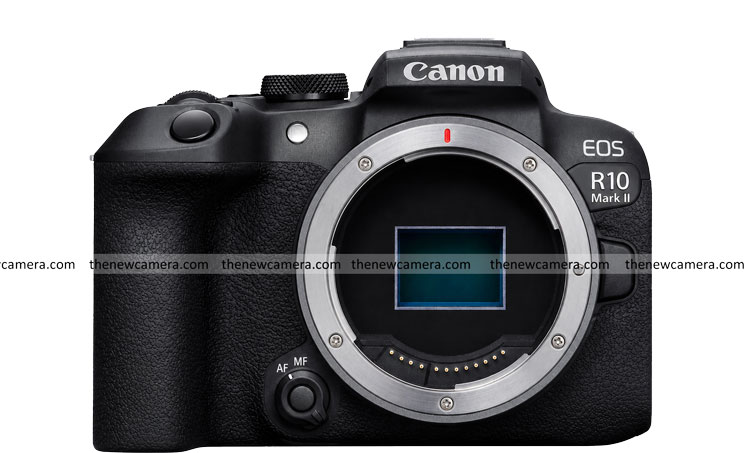
Upcoming Canon Cameras (July 2026)
We have 3 cameras that have already cleared the wireless certification agency test and are expected to arrive within 2026.
| Registration |
Date |
Wireless Details |
Most Likely Model |
Confidence |
| DS126947 |
April 15, 2026 |
Dual-band Wi-Fi |
EOS R8 Mark II |
Very High |
| DS126973 |
June 2, 2026 |
Dual-band (standard) |
EOS R10 Mark II |
High |
| DS126965 |
July 1, 2026 |
80 MHz bandwidth + 256QAM |
Third body (possible R7 II or special edition) |
Medium |
The stronger wireless specification on DS126965 suggests it may be a higher-end or more video-oriented model.
So now, we have the registration dates of the cameras, but even more important than these things is Canon’s typical announcement style. They specifically select certain months of the year to announce their products. Have a look at Canon’s announcement strategy based on the past 5 to 6 years of announcement patterns.
Canon’s Typical Announcement Windows
Canon follows relatively predictable release windows. The strongest historical periods are:
- Late February (around CP+)
- April–May
- Upcoming Late August through mid-September (a frequent window for mid-to-late year bodies ahead of the holiday season)
- November
The late-August to mid-September period currently looks like the prime window for the R8 Mark II / R10 Mark II
Detailed Upcoming Cameras
High-Confidence Releases for 2026
EOS R8 Mark II (DS126947)
-
- Expected announcement: Late August to mid-September 2026
- Expected key upgrades: 32.5MP full-frame sensor (same generation as the R6 Mark III), in-body image stabilisation, dual card slots, refined autofocus, and a more photography-focused feature set.
- Possible special edition: A retro-styled version tied to the 50th anniversary of the AE-1 remains in discussion.
- Expected U.S. pricing: $1,599–$1,799 body only.
- Positioning: A clear step up from the original R8 in stabilization, sensor performance, and handling.
New PowerShot Compact
-
- Expected announcement: Late September 2026
- Sources describe the camera as “nothing like previous G-series models.” It could be a true successor to the popular G7X Mark III (possibly under a new name) or a more stills-oriented compact.
- This release directly supports Canon’s aggressive compact sales growth target.
- Expected U.S. pricing: $799–$1,099.
EOS R10 Mark II (DS126973)
-
- Expected timing: Q4 2026
- Expected improvements include a higher-resolution sensor (possibly 32.5MP), better video capabilities, and refined autofocus. In-body stabilization remains unconfirmed.
- Expected U.S. pricing: Approximately $799–$899 body only.
Medium-Confidence / Early 2027
| Camera |
Expected Window |
Notes |
| EOS R7 Mark II |
February 2027 (CP+) |
Delayed multiple times; stacked-sensor rumors persist but are unconfirmed |
| Third registered body (DS126965) |
Q4 2026 or Q1 2027 |
Could be an early R7 Mark II, hybrid model, or special edition |
| Additional PowerShot / V-series models |
Late 2026–2027 |
Supporting the compact growth push |
Possible Lens Announcements
Body launches in the August–September window frequently arrive with new glass. Current high-probability candidates include:
- RF 24-70mm f/2L (long-rumored)
- Additional VCM or hybrid lenses
- Possible super-telephoto development announcements later in the fourth quarter
Summary Timeline (as of July 28, 2026)
| Period |
Expected Announcement |
Confidence |
| Late Aug – mid-Sep 2026 |
EOS R8 Mark II (+ possible retro edition) |
Very High |
| Late September 2026 |
New PowerShot compact |
High |
| Q4 2026 |
EOS R10 Mark II + possibly the third body |
High |
| February 2027 (CP+) |
EOS R7 Mark II |
Medium |
Canon is focusing on two clear growth areas for the second half of 2026: a refreshed mid-range full-frame body (R8 Mark II) and a meaningful expansion of its compact camera lineup. The company’s official target of more than 50% growth in compact sales makes a late-September PowerShot announcement a logical next step. The long-awaited R7 Mark II continues to look more like an early-2027 product.
The article “Canon Upcoming Cameras 2026 – July 2026 Update” was written by thenewcamera.com team at 2:49 pm, Tuesday, 28 July 2026, Greenwich Mean Time (GMT)
, Greenwich Mean Time (GMT). | You can also follow us on Our Official Social Media Handles FACEBOOK | TWITTER | INSTAGRAM > more live Camera News + Canon Rumors 24X7


By admin, on July 20th, 2026

That’s the clear signal coming from a newly published Japanese patent. But the real story is not just that Canon is exploring this category—the pocket gimbal camera market. If you’ve used a DJI Osmo Pocket or similar camera, you already know the feeling.
You flip the camera from facing forward to selfie mode. The gimbal rotates smoothly… The pocket gimbal camera is a complete package for vloggers, offering a nice, steady gimbal with a camera module that makes the entire content creation process much easier than holding and vlogging with traditional cameras. And that’s why in some of the countries around the globe the pocket gimbal camera sales has rechaed to its peak and almost covered 50% of the video camera market share.
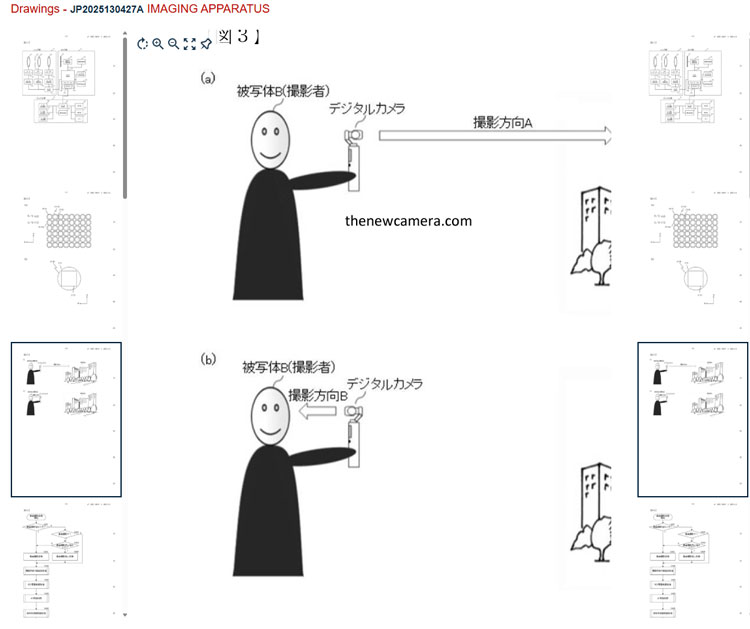
What the Patent Actually Shows
Published as JP2025171609A (filed May 2024, published November 2025), the patent describes a compact imaging device mounted on a 3-axis gimbal. The system can change shooting direction while the user is still holding the camera — the classic pocket-gimbal form factor.
Here’s the interesting part:
The moment the camera starts rotating toward the photographer (selfie mode), it automatically stops down the aperture to a predetermined position. This increases depth of field before the flip is even complete. Once the rotation finishes, the camera can detect the subject faster and switch into high-speed autofocus, followed by continuous tracking.
In simple terms, Canon is trying to make the transition from normal shooting to selfie mode feel almost instant and reliable.
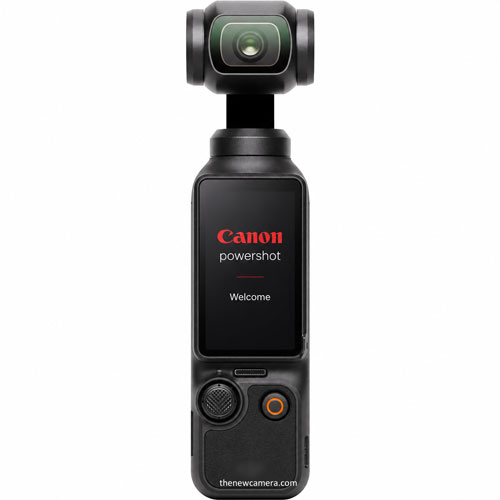
A Clear Shift in Design
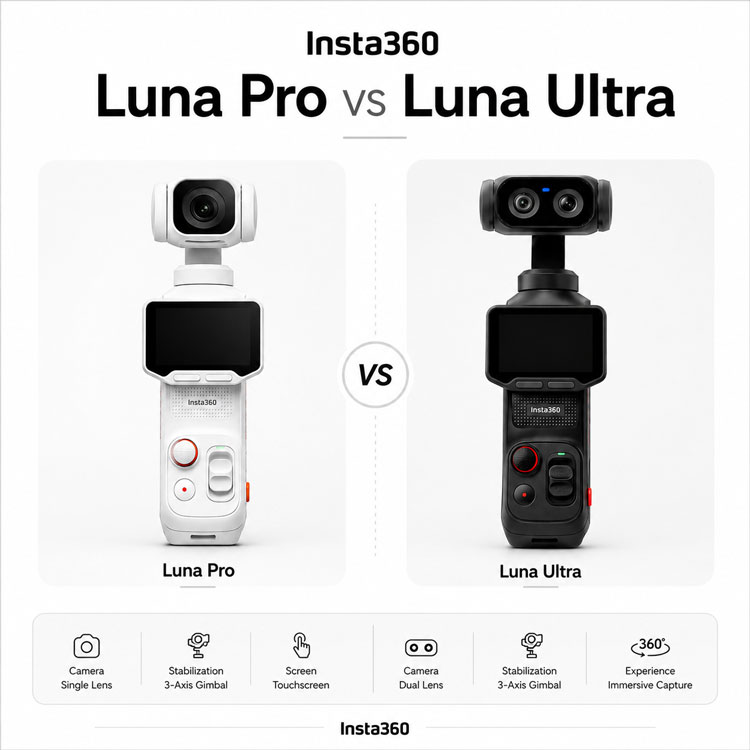
Canon is working on a pocket gimbal camera, and this time the design that has surfaced looks completely different from the pocket gimbal camera that surfaced in earlier patents, since the earlier prototypes that we had seen used interchangeable mirrorless cameras mounted on a gimbal to create the look of an advanced pocket gimbal camera with an interchangeable lens. However, that was almost a year ago. The patent that we have spotted today is completely different from those, and in this patent we can clearly see a pocket gimbal camera prototype that looks very similar to the DJI Pocket 3 or the upcoming DJI Pocket 4. You can also say it resembles the upcoming Insta360 Luna Ultra. Since all these cameras have a single camera module, and the patent that we have seen from Canon also appears to have a single camera module, nothing like the Insta360 Luna Ultra Pro or DJI Pocket 4 Pro with a dual camera module is visible for now.
One thing is sure: Canon is serious about this pocket gimbal camera, and the data sheet that we have already published on our website shows that more than 50% of the video camera market is now covered by these pocket gimbal cameras, with the majority of the market share currently in the hands of DJI. However, due to the ban imposed on DJI in the United States in December 2025, DJI has not been able to introduce new cameras, specifically pocket gimbal cameras, in the United States. Because of this situation, Insta360 is gaining a significant advantage and expanding its consumer market base by introducing the Insta360 Luna Ultra, and in the next few months we are also expected to see the Insta360 Luna Pro.
To take advantage of the situation, Canon may be in a hurry to ensure that it fits the expectations of consumers by introducing a design and concept that people are already familiar with. After looking at this specific patent, there is a very high probability that Canon could introduce a pocket-style gimbal camera, possibly in late 2026 or maybe in 2027, since expecting a patent to become a real product within just a few months, especially from Canon, is not something we should expect. Canon usually takes 2 to 3 years to turn a patent into a real product, but this time, depending on the market situation and market demand, they may have to complete the process much faster than they usually do.
Final Thoughts
The consistency of Canon’s recent filings, combined with the current market gap created by the DJI situation in the US, makes this development worth watching closely. Whether Canon can move faster than its usual timeline remains to be seen, but the direction is becoming clearer.
We’ll continue to track further patents and any official updates.
The article “Canon Is Working on a Pocket Gimbal Camera – And This Latest Patent Reveals Something Interesting” was written by thenewcamera.com team at 9:55 am, Monday, 20 July 2026, Greenwich Mean Time (GMT). | You can also follow us on Our Official Social Media Handles FACEBOOK | TWITTER | INSTAGRAM > more live Camera News + Canon Rumors 24X7


By admin, on July 16th, 2026

At the beginning of July, we analyzed two different Canon camera registrations with their model codes – DS126947 and DS126973. Finally, our analysis concluded that both models belong to the entry-level segment. We reached this conclusion because both registered models used Wi-Fi 4 as their wireless transmission module, and Canon currently uses the Wi-Fi 4 module in most of its entry-level cameras. Other than that, mid-range cameras use Wi-Fi 5, and higher-end models use Wi-Fi 6. So that clearly differentiates these two entry-level models from the others, and it does indicate that the two registered models belong to the affordable series of cameras, which include the Canon R8, Canon R10, Canon R50, as well as the Canon R100.
The more important thing that we cannot ignore at this moment is the high demand for compact cameras. A lot of camera makers are now interested in introducing compact cameras again, and for that reason, Nikon has started working again on their DL series, while Sony has just recently announced the RX10 V camera. That clearly indicates Canon may introduce one of the PowerShot models before the end of 2026. At the very same time, the other model is expected to be the Canon R10 Mark II (DS126973), which is long overdue for an update.
Now, let’s dive deep into the detailed analysis.
Latest Canon Rumours Report Supports This View
On July 13, Canon Rumours published new information that aligns closely with our earlier analysis. According to their sources, Canon’s next APS-C camera will be a successor to the EOS R10, not the R7 Mark II.
It is quite obvious from the little research that we did at the beginning of July that both of them are entry-level models, so at least for now we don’t have any scope for a flagship APS-C or FF Mirrorless camera from Canon.
And hence, that also shows us that no Canon R7 Mark II camera is coming in the next few months. It is safe to say that no Canon R7 Mark II camera is coming in 2026, based on the initial set of registration details we have. The same thing was also stated by Canon Rumors in yesterday’s post.
Btw., this development raises an important question: Why would Canon choose to refresh the R10 before the more advanced R7? Maybe we have some analytical answers
Why the Canon R10 II Makes Sense as Canon’s Priority
There are several logical reasons why Canon may be prioritising an R10 Mark II over an R7 Mark II right now:
- Sales Volume (Most important): As we all know, at the end, the Canon Marketing team controls product lineup, and they directly look after the sales volume of any product. The EOS R10 has been one of Canon’s best-selling mirrorless cameras globally, particularly in the entry-level and enthusiast segment. In markets like the USA, Japan and in India and other emerging regions, the R10 remains a popular choice due to its balance of features and price. Refreshing a high-volume model delivers better business results than updating a lower-volume camera first.
- Registration Evidence: The technical details from the recent registrations (especially the use of Wi-Fi 4) strongly suggest Canon is currently working on entry-level bodies. The R7, being a more premium APS-C camera, would likely use more advanced connectivity hardware.
- Strategic Breathing Room: The original R7 and R10 launched together in May 2022. While the R7 was positioned as the more capable action and wildlife camera, the R10 quietly became the volume seller. Canon may now be treating these two models with different timelines rather than updating them together again for preventing self canabilzation of sales.
Cross-Verification With Previous Rumors
Looking back at earlier reports, there has been consistent speculation about an R10 Mark II arriving in 2026. However, most of those rumors assumed it would launch alongside or around the same time as the R7 Mark II.
The latest information suggests Canon has decoupled the timelines. This is not entirely surprising – Canon has shown in the past that it sometimes prioritizes volume-selling models (such as the R8 and R10) over higher-end refreshes when it makes commercial sense.
Realistic Timeline Outlook
Based on available information, here’s a realistic assessment:
| Model |
Most Likely Timeline |
Confidence |
Notes |
| EOS R10 Mark II |
2026 |
High |
Next APS-C body; 2026 expected |
| EOS R7 Mark II |
First half of 2027 |
Medium |
Delayed from earlier expectations |
| EOS R8 Successor |
Late 2026 |
High |
Expected this year |
| New PowerShot models |
2026 |
High |
Compact camera focus |
It is important to note that these are still rumors. Canon has not made any official statements.
What This Means for Buyers
For photographers considering the current EOS R10, the latest rumors suggest that a Mark II version is unlikely to arrive before 2027. Those who need a camera now should not necessarily wait, especially if they can find the current R10 at a good price.
For those interested in the R7 series, the delay of the R7 Mark II means the current R7 will likely remain Canon’s most advanced APS-C option for the rest of 2026 and into early 2027.
Final Thoughts
When we combine Canon’s recent camera registrations with the latest reports from Canon Rumors, a clearer picture emerges: Canon appears to be focusing on its entry-level APS-C offering first while taking more time to develop the next-generation R7.
Whether this signals a broader shift toward greater product segmentation in the APS-C range remains to be seen. For now, the evidence points to the EOS R10 Mark II being the first APS-C camera Canon chooses to refresh under its evolving strategy.
We will continue monitoring new registrations and credible sources for further updates.
The article “Canon R10 Mark II Expected Before R7 II, Both Likely in 2027” was written by thenewcamera.com team at 4:01 pm, Thursday, 16 July 2026, Greenwich Mean Time (GMT). | You can also follow us on Our Official Social Media Handles FACEBOOK | TWITTER | INSTAGRAM > more live Camera News + Canon Rumors 24X7


|
KEEP THIS BLOG ALIVE - Support New Camera Buy Canon Lenses, Buy Music CD or Digital Camera at amazon it helps this site, and you do not pay anything extra, it is just a way to help support this site.

|