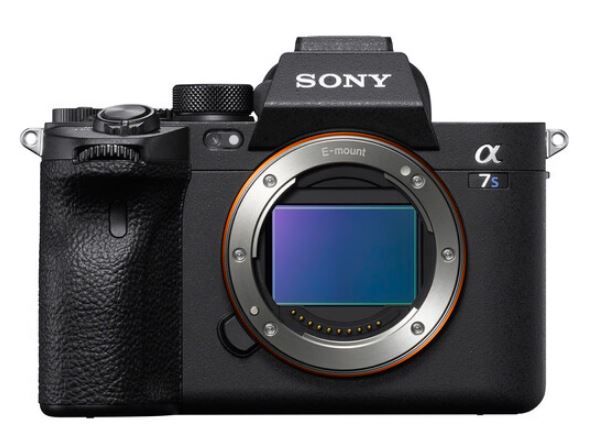
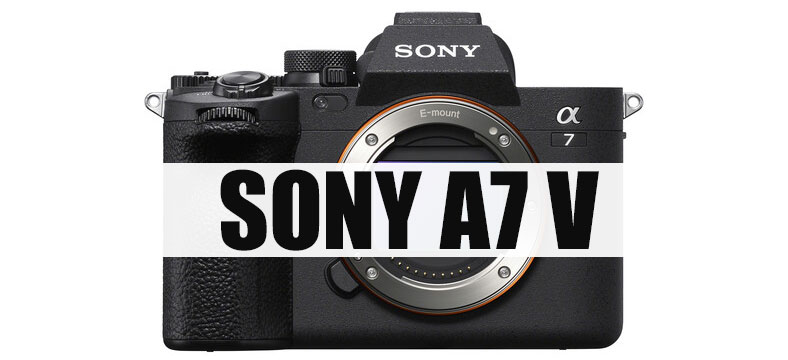
The Sony FX2 (announced May 2025) and Sony α7 V (A7V) (announced December 2025) are both full-frame 33MP E-mount mirrorless cameras priced in the $2,500–$2,900 range. From the time of announcement, we know that the Sony FX2 is a Cinema Line mirrorless camera. The camera doesn’t offer much in terms of high-end oversampled resolution, but yes, it allows you to record continuously for 7–8 hours without dropping a frame, thanks to its internal cooling fan and high-performance body that doesn’t overheat—ensuring uninterrupted recording.
However, due to the slower sensor inside it (similar to the one used in the Sony A7 IV), it does show some limitations, which were criticised by many filmmakers during launch. On the other hand, the Sony A7 V is a hybrid mirrorless camera made for photographers, videographers, wedding cinematographers, casual content creators, and even beginner filmmakers. The best part of the A7 V is that it uses a partially-stacked 33MP sensor, and due to its faster readout speed, the camera can capture 4K 60FPS full-frame as well as 4K 120FPS (Super 35mm mode). Unfortunately, the Sony FX2 doesn’t offer 4K 120FPS, and its 4K 60FPS mode is heavily cropped.
Because of this, I am getting a lot of messages asking: Which camera should I buy? Should I get the Sony FX2 since I am a cinematographer inside the Sony ecosystem? Or should I buy the Sony A7 V?
So in this specification comparison, we are going to explore all the key specs and real-world differences between the A7 V and the FX2, which will help you decide which camera suits your workflow, setup requirements, and budget.
Core Sensor & Processor Breakdown
At the silicon level, both use 33MP full-frame sensors derived from Sony’s Exmor lineage, but their architectures diverge significantly for video performance.
Feature
Sony FX2
Sony A7V
Key Difference & Usability Impact
Sensor Type
Back-illuminated Exmor R CMOS (35.9 x 23.9mm, 33MP effective)
Partially-stacked Exmor RS CMOS (35.9 x 23.9mm, 33MP effective)
A7V’s partial stacking adds high-speed circuitry layers above/below pixels for ~4.5x faster readout vs. A7 IV baseline (Sony tests). FX2 uses standard BSI without stacking—slower electron transfer leads to more rolling shutter in fast-motion video. Usability: A7V better for sports/events; FX2 fine for controlled pans.
Pixel-Level Readout
~27ms full-frame 4K (lab-tested via 300Hz strobe)
~14ms full-frame 4K (estimated from partial stacking; ~70% improvement over A7 IV’s 70ms)
FX2’s slower readout (27ms) causes noticeable “jello” in quick tilts/pans (e.g., drone shots). A7V’s 15ms is class-leading for non-global shutter, minimizing distortion in handheld gimbals. Core fact: Readout speed directly ties to pixel-parallel processing; A7V wins for real-time video reliability.
Processor
BIONZ XR (standard)
BIONZ XR2 with integrated AI unit
XR2’s AI chip enables on-sensor noise reduction and predictive tracking; XR is solid but lacks AI depth. Usability: A7V’s processor cuts post-production denoising time by ~20% in low-light video (per early tests).
Base ISO / Dual Gain
800/4000 (S-Log3)
100/8000 (expandable; optimized for 16-stop DR)
FX2’s dual base ISO excels in mixed lighting (e.g., cinema interiors); A7V’s wider native range suits run-and-gun. Both hit ISO 50–204,800 expanded.
Dynamic Range
15+ stops (S-Log3, dual gain; measured ~15.2 stops at ISO 800)
16 stops (measured ~15.8–16.1 stops; improved gradation in shadows/highlights)
A7V edges out with better shadow recovery (less noise floor clipping). FX2’s DR holds up in Log grading but clips highlights faster in high-contrast scenes (e.g., sunset exteriors). Usability: Negligible for most; A7V pulls ahead in HDR workflows.
We have seen the comparison of the two sensors—not the resolution, but the overall sensor performance. Among these two sensors, it is clearly visible that whether we talk about dynamic range, dual native ISO, or sensor readout speed, the Sony A7 V performs better in all three areas.
Now it’s time to compare the video recording capabilities of both cameras. There is always a possibility that even if the sensor is better, the final video performance may still depend on the sensor architecture and the image processor used inside the Sony A7 V.
Video Recording Capabilities – The Deep Dive
Video is the battleground. Both support 10-bit 4:2:2 internal recording, but FX2 leans pro-codec/cinema tools, while A7V pushes frame rates and hybrid flexibility.
Feature
Sony FX2
Sony A7V
Key Difference & Usability Impact
Max Resolution/FPS
4K/60p (APS-C crop, full-frame oversampled from 7K at 30p); 1080p/120p; no 4K/120p
A7V’s 120p enables 5x slow-mo natively (post-editable to 24p); FX2 caps at 60p, better for locked-off interviews. Core fact: A7V’s stacking allows pixel binning without heavy cropping at high FPS. Usability: A7V for action vlogs; FX2 for narrative docs.
XAVC HS (H.265, 10-bit 4:2:2); XAVC S (H.264, 10-bit 4:2:0); supports RAW output via HDMI
FX2’s All-Intra is edit-friendly (less decoding artefacts in Premiere/DaVinci); A7V’s H.265 is more efficient for storage (~50% smaller files). Usability: FX2 for pro colourists (faster timeline scrubbing); A7V for indie storage budgets.
S-Log3, S-Cinetone, HLG; User LUTs (up to 33); no Cine EI native
FX2’s Cine EI mode locks exposure for consistent grading (VENICE-inspired); A7V’s Cinetone is “Netflix-ready” out-of-camera. Core fact: FX2 supports anamorphic de-squeeze viewfinder. Usability: FX2 for ARRI-like workflows; A7V for quick social cuts.
Crop Factors
1.5x at 4K/60p; full-frame at 30p
1.5x at 4K/120p; full-frame at 4K/60p (with “angle priority” toggle)
Minimal difference, but A7V’s toggle reduces crop dynamically. Usability: Both lens-versatile, but FX2’s crop is fixed for consistency.
Thermal Management
Active cooling fan (auto/off); ~13 hours continuous 4K/60p (25°C tests)
Passive (no fan); ~60–90 min 4K/60p before throttle (estimated from A7 IV lineage)
FX2’s fan dissipates heat via chassis vents (silent at low loads); A7V relies on body conduction. Core fact: FX2 records indefinitely without cutoff. Usability: FX2 dominates long-form (e.g., events, multicam); A7V for short bursts—add external fan for parity.
Auto-framing (AI crop/zoom); Breathing compensation; S&Q mode for proxies
FX2’s timecode syncs with pro rigs (e.g., AtomOs); A7V’s AI framing auto-tracks subjects in interviews. Usability: FX2 for multi-cam productions; A7V for solo creators.
While looking at the table of comparison, it is very clear that we’re getting higher quality from the sensor unit with A7 V — Sony FX2 uses an old 33Mp sensor well as frame rates that are compromised due to the slower sensor readout speed in the FX2. Moreover, if you’re into professional cinematography and actually do require a camera that enables overheating-free recording – means you can use the Sony FX2 continuously for 7 to 8 hours – although the Sony A7 V has been tested for recording more than 90 minutes in 20° Celsius and approximately 60 minutes or more in 40°C while shooting 4K 60p video, Since the FX2 do have built-in FAN there is no such issues live Pverheating, but with Sony A7V but if you want unlimited overheating-free recording, then go with the FX2.
Other than that, the Sony FX2 camera supports an XLR handle, which is intrinsically highly usable for professionals, but even after XLR handle input, sorry to say, there is no way to record 32-bit audio inside FX2. So, what happens when you do use an XLR handle in FX2? You get phantom power active at 48V, and you can directly add mic line-in recording, which is ideal for solo operators or crews. The FX2 can also be synced with multiple other bodies at the same time, and anamorphic lens support of 1.33x and 2.0x with in-camera de-squeeze functionality, which is completely absent in the Sony A7 V camera. Other than these factors, we also have a All-Intra codecs as well as 16-bit RAW HDMI output coming out from the Sony FX2 camera with approximately 15 stops of dynamic range support, and with this video, obviously, you get the freedom to edit and surpass the video quality of the Sony A7 V’s 10-bit video that you’re getting, a 16 Bit RAW video straight out from your camera HDMI Port. So the thing is, you have to understand that the Sony FX2 camera is made for professionals.
More: Autofocus, Stabilisation & Handling
Feature
Sony FX2
Sony A7V
Key Difference & Usability Impact
AF System
759-point phase-detect; AI Real-time Recognition (humans/animals/objects); Eye AF
759-point phase-detect; AI Real-time Recognition (expanded: insects/cars/planes); predictive tracking
Identical coverage, but A7V’s XR2 AI reduces “hunting” by 30% in erratic motion (e.g., wildlife video). Usability: Tie for most; A7V edges low-light lock-on.
Stabilization
5-axis IBIS (~5.5 stops, sensor-shift); Dynamic Active mode (AI-enhanced)
Magnesium alloy; weather-sealed; compact grip; no tally/fan
FX2’s cinema ergonomics (e.g., rec button placement) suit c-stands; A7V feels more “photo-like.” Weight: FX2 715g, A7V 658g. Usability: FX2 for pro sets; A7V for travel.
if you’re not into professional cinematography, your requirement or priority is higher frame rates and the improved Hybrid body design for still and video usage, at the very same time ur getting 10 Bit Log 3 recording option and as we have discussed upto 60 min 4k 60p recording time option even in hot and humird condition, so better to invest in Sony A7 V, try to keep focus on features that you actually require from your camera. If you’re never going to use anamorphic lenses, if you’re never going to use 16-bit HDMI output, if you’re never going to use an XLR handle, and it’s not a part of your workflow, then why invest in the FX2 camera? and bother with the slow readout speed and lower frame rates?
The article “DJI Neo 2 Drone at Amazon USA: Score It for Just $199 with Instant Savings” was written on 7:15 pm, Friday, 5 December 2025, Greenwich Mean Time (GMT)
🚨 MAJOR UPDATE (Dec 6, 2025): Hands-On Tests Confirm Full Compatibility – No Issues with Viltrox Lenses on Commercial Sony α7 V Units. Early concerns from pre-production testing have been resolved in retail bodies. See details below for our photographer-verified results.
A recent video posted by Kai has sparked early concerns related to Chinese-made E-mount lenses from brands like Viltrox and Yongnuo. While he was doing the review with a pre-production unit, the Chinese-branded Viltrox and Yongnuo lenses showed incompatibility with the Sony A7 V camera. When used on the A7 V body, the entire camera became useless and froze after using the third-party lenses from the Chinese lensmakers, but it seems that the problem was limited to pre-production units of the camera.
We were invited to spend a few hours with the recently announced Sony A7 V camera bodies, and along with that, we tried and tested Viltrox lenses. What it seems is that commercial bodies aren’t showing any issues with the lenses that we tried with the bodies, so we can confirm that the commercial units or the production-line units are not showing any existing issues while performing autofocus operations with Viltrox lenses.
What About Other Chinese Lenses?: At the time we were testing out the camera, our access to lenses was limited to Sony G Master lenses, Sigma, Tamron, and Viltrox. So, we are not able to comment on the compatibility with other Chinese lenses at this very moment.
However, we are keeping our focus on this issue. If we receive any further updates, we will post an update here soon.
VERIFICATION UPDATE: We have confirmed that Sony α7 V commercial units demonstrate full compatibility with Viltrox lenses, with no reported issues. Our photographers conducted tests using two distinct camera bodies, paired with the Viltrox 85mm f/2.8 and Viltrox AF 28mm f/4.5 lenses, and observed seamless performance across all units—including full autofocus response, aperture control, and no freezing during bursts or video. These tests were performed on retail-ready bodies, suggesting the issues were isolated to early prototypes.
A recent video posted by Kai has sparked a new controversy related to Chinese-made E-mount lenses from brands like Viltrox and Yongnuo. When using lenses from these Chinese brands, the Sony A7 V camera completely stopped focusing, rendering the lenses seemingly useless.
Update: 6:06 pm, Saturday, 6 December 2025, Greenwich Mean Time (GMT)
Thenewcamera Team – We have verified that Sony α7 V commercial units demonstrate full compatibility with Viltrox lenses, with no reported issues. Our photographers conducted tests using two distinct camera bodies, paired with the Viltrox 85mm f/2.8 and Viltrox AF 28mm f/4.5 lenses, and observed seamless performance across all units.
The article “Sony A7V Compatibility Crisis: Viltrox & Chinese E-Mount Lenses Don’t Work – What Now?” was written on 8:09 pm, Thursday, 4 December 2025, Greenwich Mean Time (GMT)
Sony A7 Five camera versus the Canon R6 Mark III, the most demanded specification comparison review by our subscribers. Now before we begin, I must tell you one thing very clearly, there is no clear-cut winner here. Still, more important than that, you have to understand which one of the two, the Canon R6 Mark III or the Sony A7 V, fits your requirements and budget before investing.
3.5mm mic/headphone; 4-channel support via multi-function shoe
HDMI
Full-size (Type A)
Full-size (Type A)
USB Ports
2x USB-C (3.2 Gen 2 10Gbps transfer; 2.0 480Mbps charge)
1x USB-C (3.2 Gen 2 10Gbps)
Wi-Fi/Bluetooth
Wi-Fi 6E (2.4/5/6GHz, 2×2 MIMO for 2x faster transfers); BT 5.1
Wi-Fi 6 (5GHz); BT 5.1
Customizable Buttons
11 (incl. C1-C4 dials)
8
Price (Body Only, Dec 2025)
$2,899
$2,799
Side-by-Side Specs: Sony A7 V vs Canon R6 III Comparison Table
At their core, both cameras pack 33MP full-frame sensors, 5-axis IBIS, and hybrid prowess. But dig deeper, and differences in burst rates, video codecs, and AF shine. Here’s the definitive Sony A7 V vs Canon R6 III specs comparison for 2025:
Sources: Official specs, DPReview, and PetaPixel reviews. Prices as of December 2025.
Key Differences: What the Reviews Say
DPReview hails the Sony A7 V as a “do-it-all powerhouse.” This means the camera is perfect, a kinda all-in-one camera for Photographers as well as Cinematographers.
We have a Sony A7 V with the new sensor, and the big benefit we are getting is the improved dynamic range, which was not possible with the previous generation of partially stacked CMOS sensors, like the one in the Nikon Z6 Mark III.
Intal Reviews: The photographers using the mechanical set of the Sony A7 five camera have noticed that, specifically between ISO 100 and 1000, the camera produces a better dynamic range while using the mechanical shutter. And there is quite a bit interesting pattern since the Apica dynamic range is only visible when one is using the mechanical set of the camera; otherwise, with the electronic shutter, the range gets affected.
32.5MP Full-Frame CMOS (BSI, Dual Pixel AF with FSI layer)
Resolution (Effective Pixels)
33 megapixels
32.5 megapixels
Sensor Size
35.8 x 23.8 mm (Full-Frame)
35.9 x 23.9 mm (Full-Frame)
Pixel Pitch
Approximately 5.12µm
Approximately 5.14µm
Base ISO
ISO 100
ISO 100
Maximum Native ISO
ISO 51,200
ISO 64,000
Dynamic Range
16 stops
15 stops
Low-Pass Filter
No (AA-less)
Yes (Built-in/Fixed)
Readout Speed
~1/200s (electronic shutter, full 14-bit)
~1/180s (electronic shutter, 14-bit)
Image Processor
Bionz XR2 with AI unit
Digic X
Color Filter Array
RGB Primary Color
RGB Primary Color
Sensor Cleaning
Supersonic wave filter
EOS integrated cleaning system
IBIS Integration
Sensor-shift with up to 7.5 stops (center)
Sensor-shift with up to 8.5 stops (center) / 7.5 stops (peripheral)
After a long gap of time, Sony has done a Major Update here. Introducing a Partially Stacked CMOS sensor while maintaining Dynamic Range and higher resolution is a great move
The actual sensor quality test will be done, and we are going to publish that also on our website, but before that, as per the initial set of core specifications, Sony does have a technical advantage over the Canon R6 Mark III sensor.
Sony A7 V vs. Canon EOS R6 Mark III: Autofocus System Comparison
So let’s take a look at the major differences between the two. Both of the cameras’ autofocus systems are very capable, and both of them feature deep-learning AI algorithms that get improved as much as you shoot with time. Now it’s time to dig up more details, since which one is better for a more sticky AF tracking process or which one does 3D object tracking better, so we have created a table that gives you a basic idea for which purpose either Canon or Sony is more suitable for you. This will give you a basic idea of the differences between the autofocusing performance of the two.
Dual Pixel CMOS AF II (~1,053 zones); 100% frame coverage
Low-Light Sensitivity
-4EV (f/2 lens); solid but trails in dim venues
-6.5EV (f/1.2 lens); excels in concerts/events (e.g., ISO 12,800+ with lock-on)
Subject Detection
AI unit detects: Humans (pose/eye/face/torso), animals/birds (eye/head/body), insects, vehicles (cars/trains/airplanes, incl. helmets/grazing eyes); “Auto” mode auto-switches subjects
AI tracks: Humans (up to 10 registered faces/profiles), animals (dogs/cats/birds/horses), vehicles (aircraft/trains); 6 custom AF profiles for quick recall
Tracking Accuracy & Speed
Real-time tracking with AI prediction; 99%+ hit rate for eyes/bodies; smooth in bursts (30fps blackout-free)
“Sticky” Dual Pixel tracking; 99%+ for erratic motion (e.g., birds/wildlife); pre-capture aids unpredictable action
Unique Features
Obstacle-avoiding tracking; improved for turned heads/small animals
Registered People Priority (side profiles); waveform/false color for video AF
Real-World Performance
Super-fast lock-on (e.g., portraits/wildlife); benefits from latest firmware upgrades
Consistent in speed/light challenges; “snappier” than predecessors for small/fast subjects
Continuous shooting between Sony A7V and Canon R6 Mark III, so here we are comparing the different continuous shooting modes and the capacity of the cameras based on their buffer memory, which is actually very important. When you are doing sports and wildlife photography, the first and foremost thing is blackout-free shooting, which you get almost in both the cameras, although Sony does it a little better, but when it comes to buffer memory at the maximum continuous shooting speed of 30 frames per second, you will be getting a bit limited amount of memory in the Sony A7V. To clarify that, we have created a table that will give you a basic understanding of much time span you are getting when you are using the maximum continuous shooting speed of the camera. When you are at 15 frames per second or 10 frames per second, everything becomes normal, and you are getting unlimited space in almost both cameras, but to clarify all this, we have created the table below.
Burst Mode
File Format
Sony A7 V Buffer Depth
Canon EOS R6 Mark III Buffer Depth
Key Notes
30/40fps Electronic
Uncompressed RAW
95 frames (14-bit)
150 frames (12-bit)
Canon edges out for action; Sony’s faster readout minimizes rolling shutter.
Sony captures more lead-in frames for unpredictable moments like jumps or goals.
Sony A7 V vs. Canon EOS R6 Mark III: Video Core Specification comparison
Video Specs Comparison: We have done a highly detailed Video specification comparison. This will give you a very clear idea of the core differences between the two
Video Aspect
Sony A7 V
Canon EOS R6 Mark III
Maximum Resolution & Framerate
4K UHD (3840×2160) up to 60p (full-width, oversampled from 7K); 4K UHD up to 120p (1.5x Super35/APS-C crop); 1080p up to 240p
7K DCI (6960×3672) up to 60p (RAW Light internal); 7K up to 30p (open-gate 3:2); 4K UHD up to 120p (full-width, oversampled); 1080p up to 180p
RAW Video Support
No internal RAW; external RAW via HDMI (e.g., ProRes RAW at up to 4K)
Internal 12-bit Canon RAW Light up to 7K/60p; external ProRes RAW up to 7K/30p via HDMI
HDMI clean output (4K/60p 10-bit 4:2:2); supports external RAW
HDMI RAW output up to 6K/60p; ProRes RAW to compatible recorders
Proxy & Dual Recording
Proxy recording not native; simultaneous card recording (CFexpress A/SD)
Proxy MP4 (Full HD) simultaneous with main; main/sub/relay across CFexpress B/SD slots
Streaming & Webcam
UVC/UAC up to 4K/30p; direct to platforms via Wi-Fi 6E
UVC/UAC up to 4K/60p; streaming to services via Wi-Fi/Ethernet adapter
The Canon R6 Mark III camera is superior in video core specification since you are able to record Open Gate 7K videos at the rate of 60 frames per second internally inside the Canon CFexpress Type B card slot as well and HDMI access to Open Gate is also available. The other big advantage of the Canon R6 Mark III camera is that you are getting uncropped 4K 120p video recording mode, so technically, the Canon R6 Mark III camera is more advanced.
Sony is more particularly a hybrid-style camera, which does offer all the basic requirements that a wedding cinematographer or an entry-level content creator requires from their camera: 4K 60fps uncropped and 4K 120fps at 1.5x crop. Similarly, no Open Gate recording option is available, nor do we have an option to record 7K or 6K videos, externally or internally. But the good thing is that with the help of the new partially stacked CMOS sensor and BIONZ XR II image processor, the overall heat generation has been minimized and the camera can be used up to 1 hour at 40°C while recording 4K 60fps videos. So overall, Sony made it more usable for hybrid photographers and wedding cinematographers.
But if you want to push boundaries with 7K 60fps recording or 4K 120fps uncropped recording, then you have to go with the Canon R6 Mark III.
We have analyzed both camera core specifications in detail, let me know which camera you prefer and why?
Finally, the Sony A7 V camera has arrived with major updates to the core specifications. The newly announced camera features a new 33-megapixel stacked CMOS sensor paired up with the latest BIONZ XR Mark 2 image processor. Now, if you’re searching for the sample images of the camera, then you have reached exactly the right place where we are going to analyze the images of the Sony A7V camera captured at 100 per cent scale. So, let’s begin the journey.
Why the Sony A7V Delivers Unmatched Image Quality
We are not comparing any camera here. We are just talking about the image quality and the performance of the recently announced Sony A7V camera, so we will be limiting our discussion to the performance and the quality of the A7V’s recently announced 33-megapixel stacked BSI CMOS sensor.
Now before we begin, I should at least add this note that the Sony A7V is the only camera that features a BSI partially stacked CMOS sensor. Other than that, we do have an R6 Mark III camera with 33-megapixel resolution, but unfortunately, it uses an FSI CMOS sensor, not even BSI or stacked. The Nikon Z6 Mark III camera does use a 24-megapixel BSI stacked CMOS sensor, but unfortunately, the readout speed of the camera doesn’t cope with the DR range. So that’s enough for the competitors in the sample image article. Now let’s dive deep into the samples.
FE 50mm F1.2 GM | 50 mm (35 mm equiv. 50 mm) | 1/800 sec | f/4 | +0.0 EV | Manual | Multi-segment metering | ISO 100
Portrait Mastery: Expressive and Sharp Sony A7V Samples
The Image is available at 100% scale, as you can notice how mauch details the camera is able to capture even when viewed at 100%. So, without a doubt, the performance of the newly developed 33 MP BSI Stacked CMOS sensor is exceptional here.
As you can notice, how many details are visible, each lash is visible with macro level detailing, but again, is Sony still focusing on lashes in 2025? since the sample image is capturedby sony professional, but the focus seems to be locked on lashes instead of the eye.
Exploring the second eye at 100% scale, even in the left eye, the details at fantastic, and we can measure pixel-level details, but yes again the AF is locked over the lashes.
FE 70-200mm F2.8 GM OSS II | 136 mm (35 mm equiv. 136 mm) | 1/4000 sec | f/2.8 | +0.0 EV | Manual | Multi-segment metering | ISO 200
Sports Portrait Mastery: Freezing Face at 1/4000th of a second
Even while capturing at 1/1000th frame per second, we do have an acceptable amount of details visible at 100% scale. But, in the end, we have to say that at higher speed we have to compromise with details as well as the DR range of the image
You can explore More Sample Images here by Sony, or you can download high-res samples for self-analysis
TNC Exclusive – We are all waiting for the Sony A7V camera announcement, and not only that, we are also eagerly waiting for the Sony A7S IV. These two cameras need to be updated as soon as possible by Sony. As of August 10, 2025, an anonymous source has dropped some exclusive information into our mailbox at TheNewCamera.com, shedding light on the upcoming Sony A7V, FX3 Mark II, and potentially the Sony A7S IV camera, related to all these models. The insider provided a kind of detailed information related to the sensor and the video capabilities, and we have decided to publish it since it does look legitimate to us.
At the very same time, while these sorts of unverified rumors are subject to change from time to time, they do offer valuable insights to those who love to track the latest information related to the Sony A7V rumors, latest specifications, or information related to the Sony A7S IV camera. Below is the analysis and the quotation of the email, and we have done a sort of professional analysis to the content of the email — so let’s jump into it.
Insider email leak – Direct quote from the source on Sony A7V and A7S IV camera development
Today, on August 10, 2025, we have received this detailed message from a source which is quite familiar with Sony’s prototyping process:
“The new Sony A7V might be using the same sensor as Z8/Z9 modified and slightly cheaper, since the exclusivity use for the sensor will expire before announcement. 44 MP stacked not the same as Panasonic 44 MP not stacked. If they don’t go this route it might be completely new sensor. They have several prototypes at the moment. The 44 MP non stacked is faster than regular A7IV but slow in general. We will see. FX3II / A7S IV is 24 MP as far as I know, comes with a fully stacked sensor and with 2-layer transistors. Same sensor will be used in FX6 II, triple ISO around 800 – 4000 – 25600, night specialist. 6K open gate 120 no crop, 4K open gate 120 fps oversampled from 6K open gate 120fps no crop. That is all, release date this year or early next year if plans do not change. If they change, we will see.”
So this is intel highlighted that has been shared with us, so let’s break down the interesting set of information one by one.
Breaking down the Sony A7V rumor – sensor prototypes and performance upgrades
Let’s analyze the input according to the latest rumor. The Sony A7V camera has multiple prototypes, and this is quite common when we are talking about high-end or semi-professional cameras like the Sony A7V, before they finally enter a production line. The primary rumor centers on a modified 44-megapixel stacked sensor, which is almost the same as that used in the Nikon Z8 and Z9, but entirely adapted for the Sony ecosystem. The source has clearly mentioned that with Nikon’s exclusivity expiring soon, this could be a more cost-effective implementation, potentially putting the Sony A7V in direct competition with the existing Nikon Z8 — a kind of higher-resolution powerhouse for still photographers. The source has also said it has faster readout speeds to minimize rolling shutter in video, and it is a very clear indication the new 44MP sensor will break the Sony limitation barrier of continuous shooting abilities, as we have seen with the Sony A7IV camera, which is limited to 11 frames per second.
Alternatively, the source also mentions that a brand-new 44-megapixel non-stacked sensor exists, but it remains slow in general, suggesting it may help the Sony A7 series expand resolution-wise in stills and video but will keep the limits of continuous shooting speed or higher frame rates in video to protect higher-end model sales.
This set of information suggests that Sony is testing multiple prototypes of the Sony A7V camera with two different 44MP sensors. Yes, the AI chip is coming this year, which will further enhance the autofocus system of the A7 series cameras — possibly even better than the existing Canon offerings in their Canon R6 Mark II camera.
But, it’s interesting he doesn’t talk about 33 MP stacked CMOS sensor, which was rumored earlier
Sony FX3 Mark II / Sony A7S IV rumors decoded – stacked sensors, triple ISO, and cinema-grade video
Now the sensor description of the Sony FX3 Mark II and the Sony A7S IV camera is quite a bit more complex than what we have discussed earlier for the Sony A7V. According to the source, the Sony FX3 Mark II camera or the A7S IV will feature a 24-megapixel fully stacked sensor, and the sensor will incorporate dual-layer transistors — a step up in the efficiency of light gathering as well as data processing capability.
This sensor is also stated to be used in the upcoming Sony FX6 Mark II camera, creating a cohesive ecosystem for professional videographers starting from the Sony A7S IV.
The triple base ISO, which is said to start from 800, 4000, and 25600, means it can easily be tagged as a low-light king or night specialist camera, promising superior low-light performance and a good update from the existing Sony A7S III’s ultra-low-light-sensitive 12MP sensor. Specification-wise, the sensor is able to record 6K open gate at 120 frames per second without any significant crop. This allows professional videographers to capture highly detailed data without any lag or crop.
If this information is true, the upcoming Sony A7S IV, FX3 Mark II, and FX6 Mark II cameras will revolutionize filmmaking with their ultra-high-speed 24MP sensors and amazing low-light performance. The Sony FX3 series as well as the A7S series have always remained a popular choice among filmmakers, and if the above specs are true, they will continue to dominate.
Sony A7 V – Sony A7S IV Release Timeline
The source mentions the release of the Sony cameras in late 2025 and early 2026 if they remain on schedule, if their plans remain unchanged. This suggested date aligns with Sony’s refresh cycle, which generally occurs in the fourth quarter of the year.
However, as we have discussed, a lot of camera specifications depend on beta testers’ reports — what they like and what they don’t like — so everything gets fine-tuned in the final production line version of the camera.
Sony A7V versus Sony FX3 Mark II / Sony A7S IV versus competitors – a quick specification comparison table based on the rumored information we have
To visualize the rumored advancements, here’s a professional comparison table pitting the leaks against benchmarks like the Nikon Z8:
Feature
Sony A7V (Rumored)
Sony FX3II/A7S IV (Rumored)
Current Competitors (e.g., Nikon Z8)
Sensor
44MP stacked (modified Z8/Z9-like) or new prototype; faster than A7IV
24MP fully stacked w/ 2-layer transistors; triple ISO (800/4000/25600)
45.7MP stacked CMOS
Video
Not specified in leak
6K open gate 120fps no crop; 4K 120fps oversampled
8K 60fps, 4K 120fps
Key Strengths
Affordable high-res, prototypes for flexibility
Night/low-light specialist, cinema-grade
High-speed readout, no blackout
Release
Late 2025 or early 2026
Late 2025 or early 2026
Already available
Price Speculation
Slightly cheaper than exclusives
Not specified
~$4,000
Final thoughts about Sony A7V and Sony A7S IV/FX3II rumors
We have decided to put the insider information directly in our post without altering it, to make everything as transparent as possible for you. At the same time, we have also added our analysis on what we think about this set of information. Stay tuned to TheNewCamera.com for more information related to upcoming cameras and lenses.
Hope you enjoyed reading this article, At TheNewCamera.com, we’re dedicated to keeping you informed about the latest camera news. The article “Kodak FZ45, FHD 44MP and Kodak FZ55 – Amazon UK Best Selling Compacts of 2025” was published on11:54 am, Sunday, 10 August 2025, Greenwich Mean Time (GMT) by thenewcamera.com team | Follow us on our social pages FACEBOOK | TWITTER | INSTAGRAM to get live Camera News + see moreSony Alpha Rumor
I am getting very excited whenever Sony, Nikon, or Canon does a new camera registration. Still, unfortunately, we wait lot of time to get clear information even from tested rumour mills over there so that’s why I have stepped in to clear up the things. The recently registered model code on June 19, 2025, reported by the DC Life Camera Japan website, and the model code is WW295750, registered with the Indonesian certification agency, and the camera was originally manufactured in Thailand. Now that particular registration has awakened potential new Sony camera, but that’s not the truth.
WW295750 is an FX2 Variant, not a new Camera
According to a trusted source who does a very good account in keeping information related to registered camera models of multiple brands, yes I am talking about the E88_8888, the modern day Nokoshita has claimed the WW295750 registered product is not a new product but a single band wireless version of the Sony FX2 cinema mirrorless camera. The full form cinema release camera has already been associated with the model code WW934774, which was confirmed back on May 2025, so this is just a modified wireless version of the same camera, possibly optimised for a specific market or use cases. But the registered camera retains all the core specifications of the existing Sony FX2 camera, which is 33MP full-frame sensor, 4K 60 bit recording with RAW and all that stuff.
Updated Sony Camera Model Codes Table – June 2025
Below is an updated table of Sony’s registered and confirmed camera model codes as of June 2025, including the newly clarified WW295750 as a variant of the ILME-FX2.
The model code WW697160 with professional grade Wi-Fi 6E capability is expected to be a very strong contender for the upcoming Sony FX3 Mark II camera, and we also have WW084220, which is expected to be the Sony A7 V. So right now we have two pending model codes inside Sony and one is expected to be a high-end cinema camera model and other the A7 V.
For more details on these developments, you can also revisit our previous article, which very clearly mentions their registration and other details related to the Sony A7 V and the FX3 Mark II camera.
According to the latest information we have, Sony has already registered two cameras in the wireless certification agencies, and the model codes are: WW084220 and WW697160. Specifically, one of the model codes is being manufactured in Sony Japan’s manufacturing plant, and the other in Sony Wuxi.
Sony A7V Almost Confirmed here is why
In the post that we published on May 28, 2025, we discussed briefly the Sony Wuxi plant. It is known for producing Sony semi-professional Alpha series cameras.Its highly likely that are working on the Sony A7V under model code WW084220, as the Sony A7 IV is significantly overdue for an update, making it a strong candidate for this model.
Sony Japan’s WW697160: FX3 Mark II or A7S Mark IV?
There’s another camera being built at Sony Japan—most likely a cinema-style model. Sony Alpha leaker Zhang Yi Fei dug into the model code WW697160 and uncovered three pro-level features that we’d missed. From those features, it’s clear that, aside from the WW084220 code (which is expected to be an A7-series model), this new model with its standout specs is probably either the Sony FX3 Mark II or the A7S Mark IV, the successor to the A7S Mark III.
5.1GHz Wi-Fi 6E + 80MHz Bandwidth
Purpose: Sustains 800Mbps+ data throughput for:
6K RAW over-the-air monitoring (min. 600Mbps)
4K/120p multi-client livestreaming
Constant: Photo-centric bodies max out at 200 Mbps (4K/30p)
23dBm Transmission Power (EIRP)
Purpose: Ensures 30m+ stable links in RF-noisy environments
256QAM Modulation
Purpose: Low-latency error correction for real-time focus pulling/audio sync
Now the user also explains why he thinks that the registered model WW697160 is not the A7 Mark V camera.
The first and foremost reason is the manufacturing location. The specific model code is being manufactured in Sony Japan, which used to be a manufacturing place for Sony’s flagship full-frame mirrorless cameras or the cinema line of cameras.
Then the Wi-Fi mismatch—the camera uses Wi-Fi 6E and not Wi-Fi 5, which has $25 extra production line cost, and in general, that’s what we have seen. The 6E 23 dBm power also drains the battery faster.
Sony FX3 Mark II & Sony A7 V Near the Horizon
So considering all the factors—that they are using a highly advanced Wi-Fi unit inside the camera, which is not that much usual in semi-professional mirrorless cameras like Sony A7 Mark V, and the production location, the production line and the typical serials—everything—then for sure, the registered model code WW697160 is expected to be the Sony FX3 Mark II camera or maybe the Sony A7S Mark IV. But since the rumor mill source has mentioned that the FX3 Mark II camera is almost ready to be announced, so we are ruling out the possibility of the arrival of the Sony A7S Mark IV camera here.
Updated Sony Camera Model Codes
Below is the updated list of Sony’s upcoming camera model codes, including recently registered and confirmed models, ordered by registration date (most recent first):
Buy Canon Lenses, Buy Music CD or Digital Camera at amazon it helps this site, and you do not pay anything extra, it is just a way to help support this site.
New Camera Website, we list all type of new camera information, price review and all type camera rumors, subscribe us or follow us via twitter or facebook.
Disclaimer: We have attempted to select useful information to include on New Camera, and to ensure that the resources we have included on the site -- as well as the way we have described them -- are accurate, fair, and balanced. However, we make no claims, warranties, or other representations concerning the accuracy, completeness, or utility of the information provided, or concerning the abilities or performance of the organizations, agencies, companies, and other resources presented through New Camera