So finally, we have good news after a long gap, and specifically, if you are a DJI camera or drone user living in the United States of America. This is great news for you.
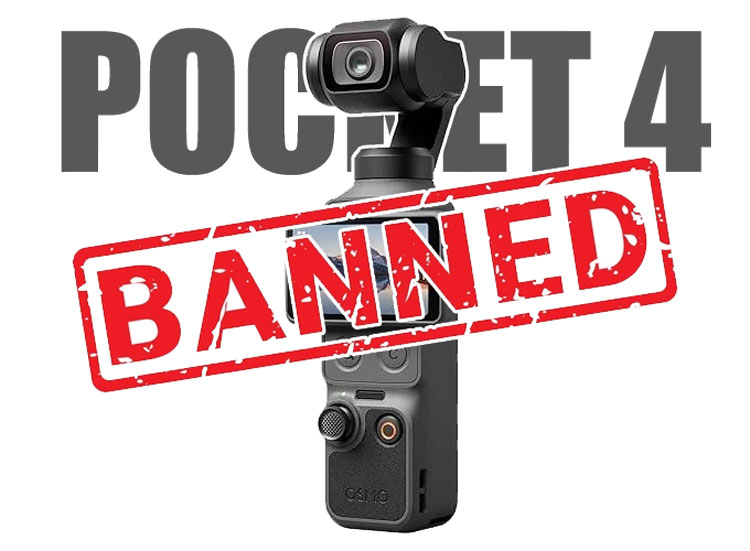
We have read a lot of content starting from before December 2024, when the DJI ban was actually implemented, and as we all know, DJI cleared several products just before the ban in the FCC, which includes the DJI Pocket 4 camera, the DJI Pocket 4 Pro, as well as the DJI LiDAR drones. All these products, and many more, were kept in pending mode and not allowed to be sold in the United States of America.
But let’s come back to the good news: on May 28, 2026, DJI released the results of an independent cybersecurity audit conducted by the U.S.-based firm OnDefend. The report – one of the most thorough ever performed on DJI hardware – examined two current models and found zero critical, high, or medium-risk security issues. No backdoors. No malware. No unauthorised data transmissions outside the United States.
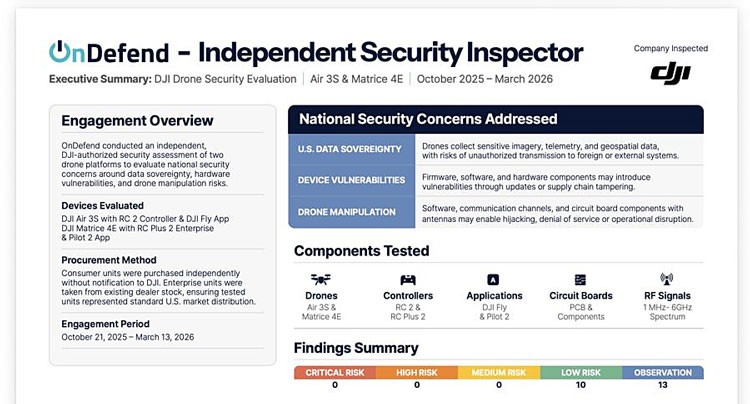
Screenshot from OnDefend report on DJI drone security
What the OnDefend Audit Actually Found
OnDefend, a Jacksonville, Florida-based offensive security company that previously served as an Independent Security Inspector for TikTok’s U.S. data security program, (and now we know the ban from TikTok has been revoked from the USA). Now, they have put the DJI Air 3S (consumer) and Matrice 4E (enterprise) in an intensive testing environment, and all the test procedures took almost five months (October 2025–March 2026).
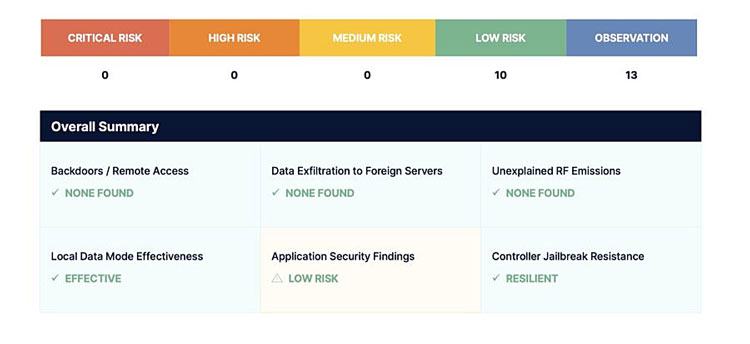
Screenshot from OnDefend report on DJI drone security
How did the Test process start? Transparency, they have mentioned below
Key highlights from the executive summary:
- OnDefend Team purchased DJI Drone Units independently – retail for the Air 3S, dealer stock for the Matrice 4E – to mirror what any American buyer would receive.
- Full-spectrum testing covered software, firmware, hardware, silicon-level analysis, and radio-frequency emissions.
- No evidence of hidden backdoors, data exfiltration to China, supply-chain tampering, or unexplained RF signals.
- Only 10 low-risk findings and 13 observations (mostly configuration tweaks) — none that pose realistic risk to users.
- All app connections resolved to U.S.-based infrastructure.
DJI’s Head of Global Policy, Adam Welsh, called it “the most comprehensive independent security assessment ever undertaken on our products.” The full 16-page executive report is publicly available here.
The Real Story Behind the “Ban”
Let’s cut through the noise. There is no outright ban on existing DJI drones in the United States.
Here’s what actually happened:
- On December 23, 2025, the FCC automatically added DJI (and other foreign-made drones) to its Covered List because no U.S. agency completed the congressionally mandated security review required by the FY2025 NDAA.
- Result: New DJI drone models and critical components can no longer receive FCC equipment authorization. That means manufacturers can’t legally import or sell brand-new, unreleased DJI products in the U.S.
- Existing approved models (anything that already had FCC approval before Dec 23, 2025) remain fully legal to buy, sell, own, fly, and service. The FCC has also extended waivers allowing firmware and software updates for these legacy products through at least January 2027 (with some reports pointing to 2029 in certain cases).
In short: Your current Mavic, Air, Mini, Avata, Inspire, or Osmo Pocket series is safe. The restriction only kicks in for future product launches.
Why This Matters to U.S. Drone Pilots and Photographers Right Now
For working pros shooting real estate, weddings, events, commercial video, or landscape work, DJI still dominates the aerial photography ecosystem. The audit comes at a critical moment because:
- Public comments on DJI’s petition for reconsideration closed on May 11, 2026, with more than 3,000 submissions — roughly 10× the usual volume.
- DJI’s lawsuit against the FCC in the Ninth Circuit is ongoing.
- The new clean audit gives the FCC concrete technical evidence as it reviews the Covered List designation.
Many U.S. drone pilots and content creators have voiced concern that losing access to new DJI innovations will hurt creativity and competitiveness, especially when domestic alternatives like Skydio or Autel still lag in camera quality, flight time, or ecosystem polish for photography-specific use cases.
Bottom Line
The May 28 OnDefend audit doesn’t magically erase the FCC’s Covered List decision, but it does remove the primary technical justification that many assumed existed. For U.S. photographers who have built their businesses around DJI’s reliable, high-quality aerial tools, this is the strongest evidence yet that the restrictions may have been based more on process than proven risk.
We’ll continue tracking the FCC’s response to the petition and the court case. In the meantime, your current DJI drones are still fully operational – and the latest independent analysis says they’re also secure.
What do you think? Drop your thoughts in the comments — especially if you’re a working photographer relying on DJI in 2026. Have you started looking at alternatives, or are you riding with your current fleet?
Article written for TheNewCamera.com |
Sources include official OnDefend/DJI report, PetaPixel coverage (May 28, 2026), and FCC public records.
The article “Independent US Audit Clears DJI Drones – 2026 Ban Update for Photographers” was written by thenewcamera.com team on 5:24 pm, Saturday, 30 May 2026, Greenwich Mean Time (GMT) | You can also follow us on Our Official Social Media Handles FACEBOOK | TWITTER | INSTAGRAM > get live news — > DJI Rumors
DJI Pocket 4 Banned in the United States