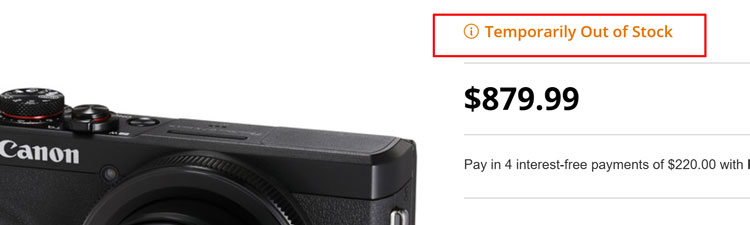
Is the Canon PowerShot G7 X Mark III camera discontinued in 2026? The answer is no, but it’s really hard to find the top-of-the-line G7 X Mark III anywhere in the world right now. Whether you are in the United States or Japan, it’s really hard to find the G7 X camera in retail outlets or online stores. Yes, renewed and second-hand models are available at higher price points, but brand-new models are rarely seen in the market despite the crazydemand for the camera.
The issue reached its peak when Canon announced the Limited-Edition Graphite model of the Canon PowerShot G7 X Mark III, but, despite its April release date, the camera is already on “Notify Me” status. Even B&H Photo Video has clearly stated on the product page that it will be served to the first customers in the queue due to very high demand and limited supply.
In this article, we have tried to find out the exact reasons why the Canon PowerShot G7 X Mark III camera has been delayed and is not in stock, so the reasons…
Why Canon is failing to keep the camera in stock worldwide
(exact reasons based on official statements, retailer data, and production reports as of March 2026):
1. Explosive viral demand far exceeding production capacity —
Starting in 2019, compact camera models went mega-viral over Instagram and TikTok. Content creators and bloggers started preferring a compact camera that could record 4Kvideos in high quality, and guess what the best solution was at the time—and even now—the Canon PowerShot G7 X Mark III, with its image quality and overall performance.
Demand spiked globally (especially among Gen Z for its pocketable size, 4K video, and vlog mode), turning it into a “must-have” compact. Sales far outpaced Canon’s expectations for a 7-year-old camera.
2. Repeated component shortages and production suspensions
Suddenly, despite excessive demand, in March 2025, Canon Japan suspended new orders for the G7 X Mark III (and SX740 HS) due to parts shortages (likely the 1″ stacked CMOS sensor and DIGIC 8 processor, although they continue to fuel the production of new compact like Canon V10, which uses almost all the core specs as of G7X Mk III. [11 May 2023 — The PowerShot V10 V] So, if they can fuel up the production V10, then for sure G7X Mk III product continuation isn’t a major issue for Canon.
Although G7X Mk III Production resumed in September 2025, Canon explicitly stated they were only fulfilling existing backorders and would take “a long time for delivery” with no new orders accepted at that time.
3. Canon closed back-to-back 2–3 factories worldwide (reported by Petapixel [1][2] and thenewcamera.com)
Canon never scaled manufacturing for this old model, due to low demand for compact cameras and in the market, Canon closed back-to-back 2-3 Factories worldwide, Petapixel [1] [2] and we [thenewcamera.com].
Petapixel coverage. In January 202,2 they reported Canon partially then fully closing its Zhuhai, China plant — Canon’s only mainland China camera factory, which primarily assembled small/compact digital cameras
thenewcamera.com coverage: They reported the same Zhuhai closure (alongside Nikon/Sony moves) and earlier Canon sensor factory shutdown in Ayase, Japan (2020)
More detailed research and analysis showed Canon had temporary shutdowns of 5 factories after 2020 worldwide due to low product demand specifically most of them were related to compact camera manufacturing units.
So, technically, even if V10 demand rose, [atlought its an Flop products and despite three + years of its announcement, it has received only 18 reviews, whereas 500 reviews we have both the colours of G7X Mk III camera – a total of 1000 + reviews, despite such a limited supply ] . The G7X Mark III (2019 model) still outsells/engages far more despite its age and past supply constraints. The V10’s much lower review volume after nearly 3 years reinforces low demand
Yes, Canon missed the Compact Camera Boom because it closed a major Chinese Factory in 2020 – 2022. Although back in Jan 2025 Canon chairman and CEO Fujio Mitarai says the company may reorganize its manufacturing efforts, potentially moving additional camera production outside Japan. Means as they have said they will be Outsourcing compact Camera Manufacturing to third-party manufacturers who can fulfill the demand of Canon compacts to the market while maintaining the lowest production cost possible, “We want to go fabless with the printers and lower-end digital cameras we manufacture in Asia,” Mitarai told Nikkei Asia in an interview,
However, even these measures appear insufficient at present. As of March 2026, none of the popular compact models — including the G7 X Mark III and the Canon PowerShot SX740 HS — are readily available in stock at authorised retailers worldwide. The industry is still waiting for a sustainable solution. This represents a clear opportunity for Canon to lead the global compact camera market, yet the company appears to be missing it.
The article “Why the Canon G7 X Mark III Is Still Out of Stock Worldwide in March 2026 (Not Discontinued – Real Reasons)” was written on 6:48 am, Monday, 16 March 2026,Greenwich Mean Time (GMT)
As you know, DJI has itself revealed the drone’s official images and sample videos. At the very same time, the announcement time of the drone is launching on March 26, 2026, at 12 PM GMT (China first, global rollout/shipping early April).
The global availability of the drone in the United States of America will begin on April 9, 2026. Unlike other traditional drone announcements, this time DJI has broken the pattern; DJI itself revealed all the basic core specifications as well as the images and even the sample captures from the product prior to the official announcement. So technically, there is no excitement left. The formal announcement is about to be made on March 26.
With the Avata 360 now confirmed and shipping soon, but the big question is – what’s next in the 2026 DJI roadmap for drones, gimbals, and action cams?
Based on the latest trusted leaks (Igor Bogdanov/@Quadro_News), FCC filings, warehouse stock updates, and thenewcamera.com reports, here’s the complete post-Avata 360 2026 pipeline..
Osmo Pocket 4 Standard: Next from DJI
While multiple sources were hunting the Osmo Pocket 4 camera announcement, specifically, we are talking about the standard edition on March 26, since a few months back, an Amazon Denmark website listing has been leaked by the DJI official store. In that listing, it was very clearly mentioned that the Pocket 4 standard camera was to be announced on March 2026.
Just after that, two or three weeks ago, PhotoRabz, a YouTuber, claimed that the standard Pocket 4 edition is coming on March 26, 2026. But for now, suddenly everything seems to be very much silent related to the standard edition Pocket 4 camera. It seems the standard announcement has been delayed for some of the reasons, and we can expect the option later in April 2026, but that’s the only expectation for now.
But before we wrap up the Pocket 4 standard edition information, let me tell you some very fresh information related to the Pocket standard edition: One of the Tech reviwers and best friend of mine already recieved the unit and also compltedt the review of the device, he is impressed with the optmized battery life other than most of the thing seems identical as of pocket 3.
And most importantly, as we all know, a lot of Major retailers around the globe already have the stock, specifically in the Asian region, the sale is said to start just after the announcement of the camera. We have recently published a video showcasing the Pocket 4 camera attached to a new magnetic flash mount. . The user manual of the Pocket 4 gimbal standard edition has already been leaked, so now we are just waiting for a formal announcement, since everything is there, but DJI is silent on this.
Although we can have a surprise announcement from DJI any time soon, stay tuned and be alert. We will be updating here at thenewcamera.com if we receive any set of new information related to this standard Pocket 4 camera.
A quick recap of the rumoured specification, the Standard Pocket 4 Edition model features: a 1-inch CMOS sensor delivering 4K/120fps in 10-bit D-Log M, AI ActiveTrack 6.0 for effortless subject following, and 200+ minutes of battery life – 20% more than the Pocket 3. The Creator Combo bundles wireless mics, extra batteries, and wide-angle lenses for $649, while the base hits $499. Digital zoom (1x/2x/4x) and gesture controls round out the kit, making it a no-brainer for solo filmmakers.
Expected pricing of the DJI pocket edition
Bundle
Contents
Price (Est.)
Standard
Gimbal camera, battery, case
$499
Creator Combo
+ Wireless mics, extra batteries, wide lens, LED light
$649
DJI Osmo Pocket 4 Pro: The Dual Lens-based Pro Pocket Camera
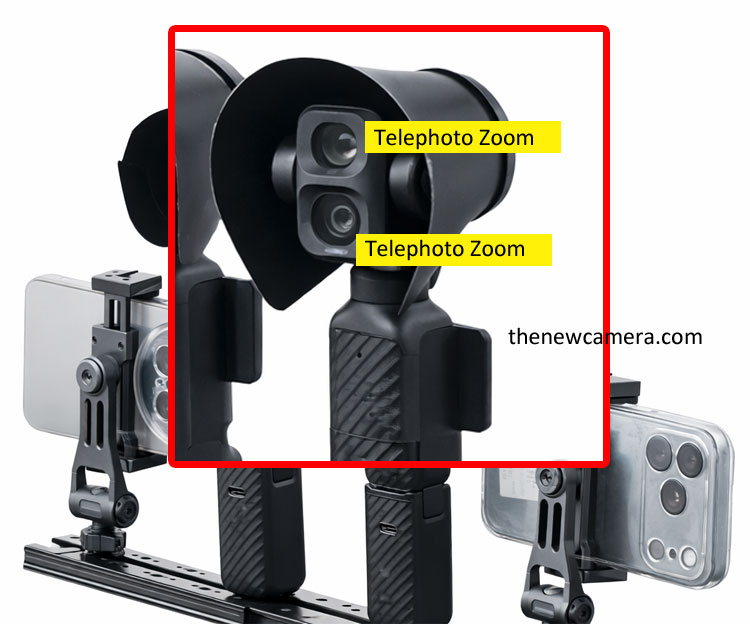
Just after the standard Pocket 4, we have the Pocket 4 Pro in the announcement pipeline, although it’s expected that DJI will keep a healthy gap in between the two announcements, but the price point and set of features of both will appeal to different consumer bases.
Drawing from FCC filings, prototype sightings, and insider leaks, the DJI Osmo Pocket 4 Pro is rumored to pack flagship features in a sub-200g body. Here’s a breakdown of the expected specs:
1,545mAh battery (20% larger than Pocket 3); fast charging; slimmer profile
These upgrades address key pain points from the Osmo Pocket 3, such as limited zoom and battery life, making the Pro a must-have for YouTubers, influencers, and filmmakers. Early leaks also hint at enhanced modular integration, including remote grips and external lights for low-light vlogs.
Yes, we are super excited. Let’s hope this month we will see the DJI Avata 360 and the Pocket 4 Standard edition announcement. As we have mentioned earlier, all the products that appeared in the list have already cleared the FCC registration. As soon as we get any update, we will post it here.
Other Set of Products in the Announcement Pipeline: DJI Drops We’re Eyeing This Spring
Here is the list of DJI products in the announcement pipeline already cleared the FCC listing
Product
Expected Reveal
Key Rumor
Pocket 4 Pro
May-June 2026
Dual camera system (wide + tele, similar to Air3S), model code PP-041
Lito X1
Q2-Q3 2026
Foldable lightweight drone (<250g, no registration needed), 360° obstacle avoidance, O5 transmission for 20km+ range, 30-50 min flight time, voice/motion controls
Lito 1
Q2-Q3 2026
Entry-level Mini successor, 22GB internal storage, wind resistance level 5, app-integrated smart features
Osmo 360 II
2026
Successor to Osmo 360 action cam, enhanced processor and wireless workflows for vlogging/VR, same sensor with upgraded functionality
Mic Mini 2S Transmitter
2026
Compact wireless mic update (model DMMT03), faster ecosystem integration for creators
Mavic 4 Pro
2026
1-inch sensor, LiDAR (unconfirmed in latest leaks)
Osmo Action 7
Late 2026
4K/240fps, $349 (unconfirmed in latest leaks)
Yes, we are super excited. Let’s hope we will have the DJI Avata 360 and the Pocket 4 Standard edition announcement soon. As we have mentioned earlier, all the products that appeared in the list have already cleared the FCC registration. As soon as we get any update, we will post it here.
The article “What Next After DJI Avata 360? 2026 Roadmap – Osmo Pocket 4, Lito X1, Osmo 360 II & More” was written by thenewcamera.com team on 3:37 pm, Sunday, 15 March 2026, Greenwich Mean Time (GMT)| You can also follow us on Our Official Social Media HandlesFACEBOOK | TWITTER | INSTAGRAM to get live news — > DJI Rumors
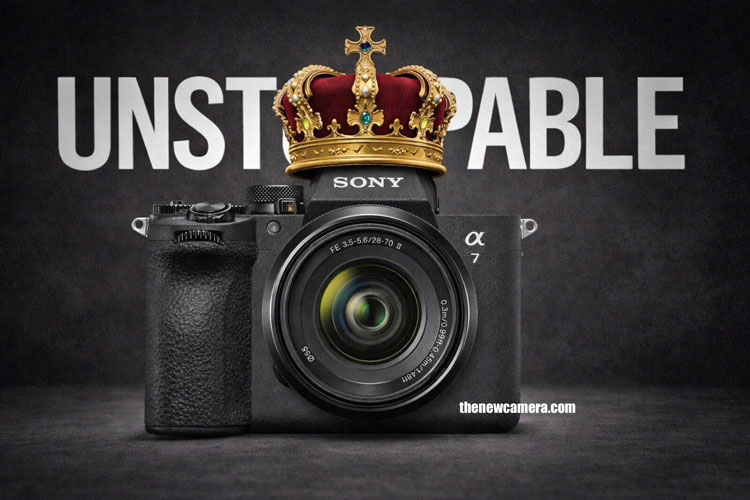
Sony A7V has achieved strong sales numbers consecutively in the third month, which is really a big surprise for us. Also, in the February rankings, the Sony A7V ranked as the number one best-selling camera, according to Map Camera. The information was published on March 13, 2026, on the Map Camera official website and social media handles.
One of Japan’s largest camera retailers confirms the α7V’s unbreakable dominance in 2026. Now, let’s have a look at the rankings of February’s best-selling cameras
Sony has increased the production of the A7V camera to meet the market requirement. In January, the demand was so high that a lot of retail stores and online websites were facing stock shortages of the Sony A7V camera. But despite that, the supply remained continuous and fulfilled the market demand, and maybe that’s one of the reasons why the Sony A7V is topping the chart. Check out our guide to the best lenses for Sony α7V in 2026 to maximize its potential.
February 2026 New Digital Camera Popularity Ranking – Map Camera (Japan)
Sony α7V
Ricoh GR IV Monochrome
Sony α7C II
Fujifilm X100VI
Fujifilm X-E5
Fujifilm X-T30 III
Ricoh GR IIIx
Sony α6700
Nikon Z5II (tied)
Fujifilm X-M5 (tied)
Why the Sony a7V Is Preferred Over Other Cameras in the Same $2,500–$3,000 Price Range
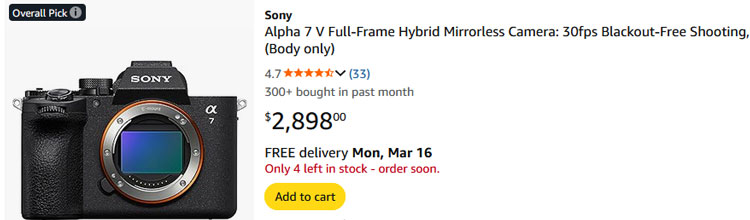
Well, that’s the biggest question: why are people preferring the Sony A7V camera instead of other cameras at the same price? First, I thought the domination of the A7V series is limited to the Asian market only. But the most important thing that I came to know after doing a little research while looking for the best-selling cameras in the United States of America—specifically on March 14, 2026—is that the Sony A7V is the best-selling full-frame camera in the United States on that specific day.
Other than that, the next camera on the list in the full-frame division is the Canon R6 Mark II, and the third camera in full frame is the Sony A7 IV. So again, the mirrorless lineup of cameras in the full-frame division is dominated by Sony in the United States of America.
Reason why Sony is dominating so much in the rankings—what is the exact reason behind that? Let’s try to find out.
The most important factor that we have to understand is the superior performance of the new 33MP sensor paired with the XR2 processor. This combination delivers blackout-free shooting up to 30 frames per second, and the heat management system of the camera body has also improved, so the camera does not show overheating issues when you are recording videos at 30fps or 60fps. And a completely OPEN lens mount with a lot of lens options.
So these are some of the basic reasons why most photographers prefer this camera in this price range. Other than that, we all know the level of AF accuracy we get in Sony cameras, and specifically the Sony A7V camera is loaded with human, animal, bird, insect, and aircraft auto-focus detection, which automatically tracks the subject based on its design.
Ricoh GR IV Monochrome Debuts at #2
Released on February 13, 2026, the new Ricoh GR IV Monochrome scored second place in the overall ranking list of Map camera ranking. Read our short review about the GR IV Mono Edition – Ricoh GR IV Monochrome: The Leica Slayer That’s Making Black-and-White Photography Accessible Again. As a dedicated monochrome-only compact, its early sales are still supply-limited, but I am really very much surprised to see the demand of the unique camera.
Sony α7C II Climbs to 3rd Place
The Sony α7C II continues its impressive rise:
9th place in December 2025 (α7V launch month)
4th place in January 2026
Now 3rd place in February
The surge is driven by last-minute cashback campaign demand and the significant price advantage over the α7V.
Fujifilm Places Four Models in Top 10 for Third Straight Month
Fujifilm maintains a strong presence with its four models in the entire top ten rankings. This clearly shows people are strongly preferring Fuji, in terms of APS-C camera selection
X100VI – 4th
X-E5 – 5th
X-T30 III – 6th
X-M5 – tied 9th
This is the third consecutive month with four Fujifilm models in the rankings — clear proof of the brand’s loyal following in the APS-C segment, even as competition at the very top intensifies.
Nikon Z5II Stays at 9th
The Nikon Z5II once again tied for 9th. Despite being loaded with a lot of features and available at a budget rate, the Z5 II cameras it continues to struggle to break into the upper ranks at Map Camera.
These Map Camera rankings are one of the most trusted barometers of actual buyer trends in Japan and often predict global sales patterns.
The article “Has the Sony a7V Become Unbeatable? Map Camera’s February 2026 Rankings Say Yes” was written on 1:55 pm, Saturday, 14 March 2026, Greenwich Mean Time (GMT)
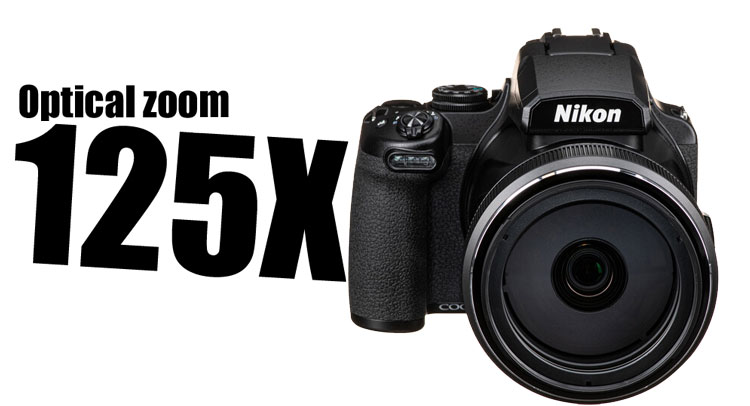
The best superzoom camera in 2026—if you are not so much interested in having a digital or AI-based zoom and instead love to have a real optical zoom lens—capable of up to 125x pure optical zoom. None of the camera makers like Canon or Sony make superzoom cameras now in 2026, but still in 2026, Nikon is still Making Superzooms. We are talking about the Nikon COOLPIX P1100 camera. This camera is the successor to the ultra-popular Nikon COOLPIX P1000, which offers approximately 125x zoom capability and the ability to record 4K Ultra HD videos. If you are interested in having a camera with extreme zoom reach, then for sure the P1100 is one of the best choices.
Nikon P1100 Key Specification
16MP back-illuminated CMOS sensor for solid image quality
4K Ultra HD video recording
Dual Detect Optical Vibration Reduction (VR) for steady handheld shots at extreme zoom
RAW format support for post-processing flexibility
Rotating 3.2-inch LCD screen and electronic viewfinder
Wi-Fi connectivity for easy sharing
Improved USB-C charging and modest updates to subject detection
The Nikon COOLPIX P1100 camera is one of its kind, and there is no real competitor for this level of bridge camera, which offers 100x+ optical zoom, and all of it is real—no AI algorithm involved in recreating or generating images inside the camera.
So if you are interested in bird photography, or someone who loves to have a real compact camera with massive optical zoom without any AI algorithm creating fake images, then you should consider the Nikon P1100.
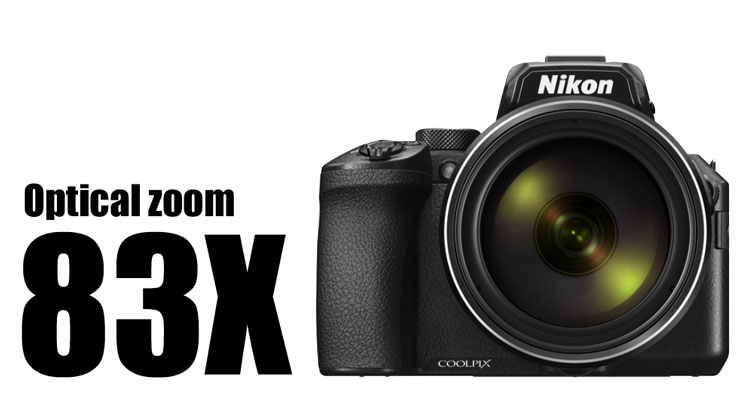
The next camera on the list is the Nikon COOLPIX P950. This 83x optical zoom camera is one of the best options available on a budget and costs less than the Nikon COOLPIX P1100. Yes, you get a bit less zoom, but even then, it is highly usable, and the image quality is great.
The Nikon P950 camera delivers impressive results straight out of the box and is very forgiving for users who are new to superzoom photography.
The P950’s autofocus, subject recognition, and image stabilization perform very well within the limitations of a small-sensor superzoom. With adequate light, the camera is capable of resolving surprising detail at extreme focal lengths. As with any camera operating in the 1000mm+ range, technique matters—good light, proper settings, and camera stability make a significant difference.
Nikon COOLPIX P950 is still a top contender. With an 83x optical zoom (24-2000mm equivalent, extendable to 4000mm with Dynamic Fine Zoom), it offers incredible versatility at a more approachable size and price point. Key highlights include:
16MP sensor with 4K video
Excellent 5.5-stop VR for sharp handheld telephoto shots
RAW shooting, vari-angle LCD, and hot shoe for accessories
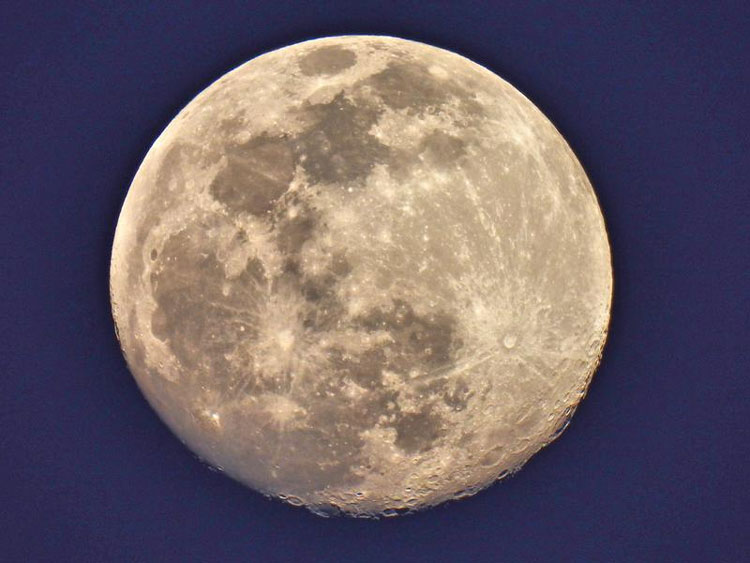
Moon and bird-watching modes tailored for super-telephoto use
Lighter weight (around 1005g) than the P1100, making it easier for travel or extended handheld sessions
It’s frequently called a balanced superzoom for outdoor photographers, delivering sharp results from macro close-ups to extreme telephoto without the extra bulk of the 125x models.
Nikon Coolpix P950 vs P1100 – Key Differences Only
Feature
P950
P1100
Optical Zoom
83x (24–2000 mm equiv.)
125x (24–3000 mm equiv.)
Max Focal Length
2000 mm equiv.
3000 mm equiv.
Aperture at Longest Zoom
f/6.5 (brighter)
f/8
Weight
~1.0 kg
~1.4 kg (heavier due to longer lens)
Size
More compact & portable
Larger & bulkier
Everything else is identical (16 MP 1/2.3″ sensor, 5-stop VR, image quality, USB-C, Bluetooth 5.2, EVF, etc.).
Quick verdict:
Choose P950 is budget-oriented, for lighter weight, better low-light reach at extreme zoom, and portability.
Choose P1100 only if you need the absolute maximum telephoto reach (e.g., distant birds, moon/planets).
Don’t Miss Out—Stock Alert for Nikon Megazoom Fans
These superzoom legends are live and available to buy, If you’re ready to capture impossible shots—from craters on the moon to shy wildlife—act quickly while they’re in stock.
Which one fits your photography style? Drop a comment on thenewcamera.com and share your superzoom experiences! Stay tuned for more camera news, rumors, and deals.
The article “Nikon in Revenge Mode: Third-Party Z-Mount Lenses Vanish from Shelves” was written by thenewcamera.com team on 11:14 am, Sunday, 8 March 2026, Greenwich Mean Time (GMT) | You can also follow us on Our Official Social Media HandlesFACEBOOK | TWITTER | INSTAGRAM > get live news + Nikon Rumors 24X7
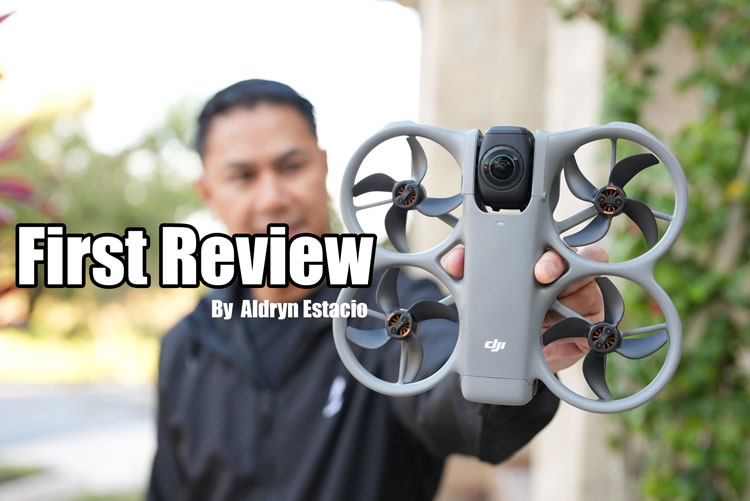
We have the first review of the DJI Avata 360, and this review has been posted before its official announcement. It seems unique and unusual. But yes, we do have the review, so we are sharing some of the important parts of the review here at thenewcamera.com, so you can have an early glimpse of the DJI Avata 360 drone. What did he like and what didn’t he like about the drone?
Design of the DJI Avata 360 – Size, Shape & Comparisons
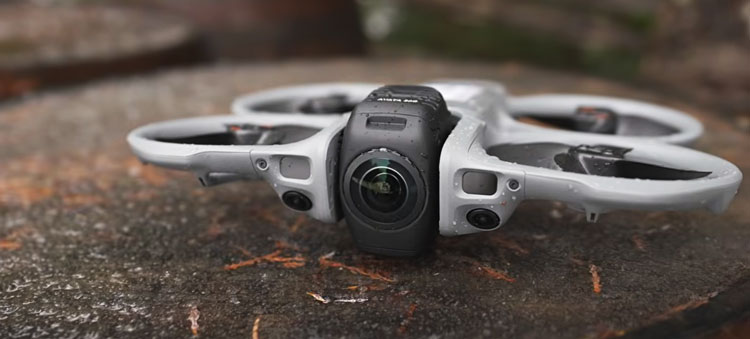
As you can see when placing it next to the DJI Avata 2, the DJI Avata 360 is a little bit bigger but noticeably slimmer. The Avata 2 sticks up a lot taller, while the Avata 360 has that bigger front bump because of the new 360 camera.
Compared to the original Avata 1, this one is definitely larger, but the Avata 1 was a screamer — super loud — and its battery sat up much taller.
One of the most fun combos I tried? The DJI Avata 360 is paired with the Neo 2. It just looks and feels like a perfect match.
The Revolutionary 360 Camera System on the DJI Avata 360
This is the most unique part of the entire drone. Of course, it has a full 360 camera, but how does it actually shoot 360° when one lens is facing you? The second camera is on the opposite side.
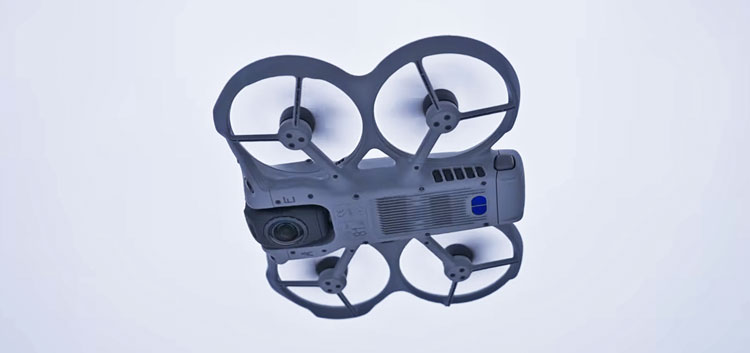
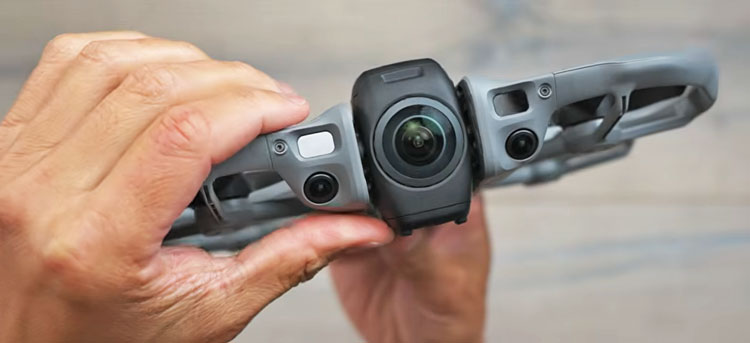
What I loved most: the camera actually rotates during takeoff and landing. It spins from the 360 position so the top camera moves to the bottom and vice versa. There are little protective feet/pads at the bottom, so when you land, you’re never touching the lens itself. It sits perfectly protected.
I really like how compact DJI made the entire camera system is at the front. And yes — full propeller guards all the way around, just like the other Avata models.
Replaceable Lenses – A Huge Upgrade on the DJI Avata 360
Next thing I pulled out of the bag that made me extremely happy: replaceable lenses for the Avata 360. Something every creator wished we had on the Osmo 360. DJI listened — if you crash and scratch the top or bottom lens, you can now simply replace them. Huge win for the DJI Avata 360.
Flying the DJI Avata 360 in Snow & Rain – Weather Confidence
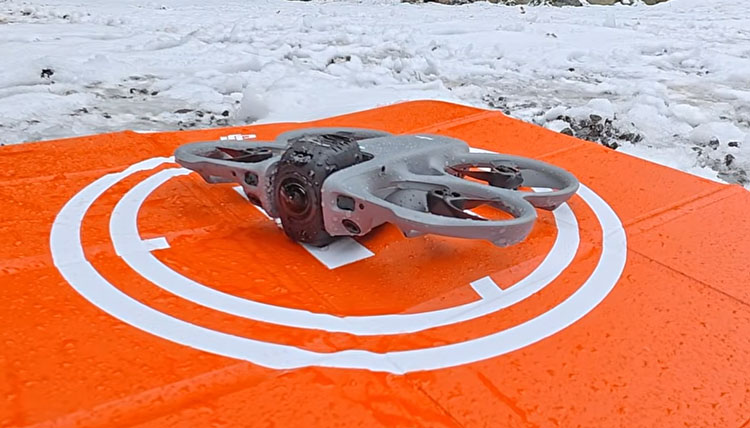
On the second day, we headed out for real flying… and it was snowing and raining heavily all morning. The crazy part? DJI didn’t hesitate at all. They had zero worries about us flying the DJI Avata 360 in the snow or rain.
Of course, the footage wasn’t clear because rain and snow were hitting the lenses, but the fact that DJI trusted the drone so much in those conditions instantly built confidence for all of us. It’s not waterproof or submersible, but their relaxed attitude told us everything we needed to know.
How We Piloted the DJI Avata 360
They gave us the DJI RC 2 controller, and everyone loved it — finally, a standard remote with a built-in screen so you can fly the way you’re used to with other drones.
You can also fly the DJI Avata 360 with:
DJI N3 goggles
RC 3 controllers
Motion Controller 3 (for that immersive FPV experience)
After the first few flights, one thing stood out immediately: the DJI transmission is rock solid — exactly what separates DJI from everyone else. People were pushing the DJI Avata 360 above dense forests, in snow and rain, and the connection never wavered.
When I was down to my last battery and a half, I just did some free flying. The smoothness, the flight characteristics, the overall dynamics — everything feels exactly like you expect from a DJI Avata. Super predictable and confidence-inspiring.
Editing Footage from the DJI Avata 360
Editing is super simple using the same DJI 360 Studio app you already know from the Osmo 360. Just use AI tracking or keyframe options, choose your angles and positions, and export. Easy.
My Honest First Impressions of the DJI Avata 360
Flight-experience-wise, my first impressions are very positive. It just works exactly like you expect a premium DJI drone to work. The transmission in tough weather impressed me the most, and the rotating 360 camera system is genuinely cool.
I’ve now flown the DJI Avata 360 for several weeks here in sunny California too, and the image quality is outstanding. Full specs breakdown, side-by-side comparisons with the Avata 2, Avata 1, and Neo 2 are coming in the full review very soon.
This was the first part of the review – a more intense review on its way and posted later this month
Stay tuned for more updates
The article “DJI Avata 360 First Review: Hands-On Flying Experience with the All-New 360 Camera Drone” was written by the thenewcamera.com team, on 4:43 pm, Friday, 13 March 2026, Greenwich Mean Time (GMT). | You can also follow us on Our Official Social Media HandlesFACEBOOK | TWITTER | INSTAGRAM> get live news — > DJI Rumors
DJI Avata 360 USA Price 2026: Know How Much It Will Cost You in Dollars
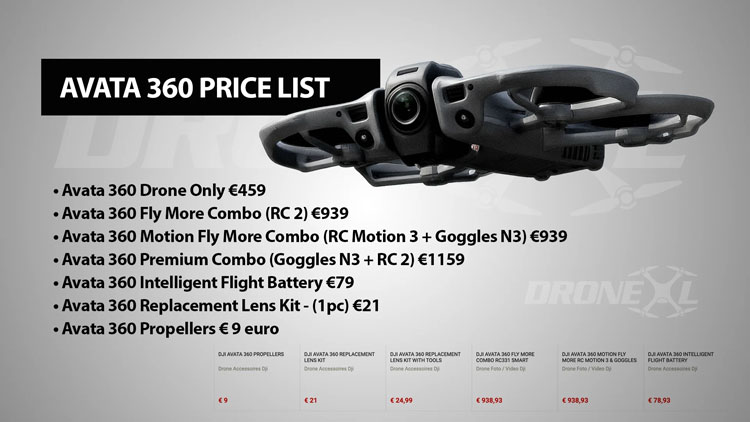
The DJI Avata 360 price list has been leaked by a European retailer. We have converted it into US currency very carefully by keeping all the possible values like tax and other stuff that we have to add in a bundle and final pricing, which is still approximate that you have to pay, and has been mentioned below. So if you’re in the United States of America, this would be the round figure of the pricing of the DJI Avata 360 drone.
Plus: Before writing this, we double-checked the current DJI Products pricing in both Europe and the USA, so you have the full picture before the official launch on March 26.
DJI Avata 360 Full Price List – Europe to USA Dollars
These exact European prices leaked just 2–3 days ago from retailer systems and are widely confirmed across sources. Official global launch: March 26, 2026 (China first), with worldwide shipping starting early April (around April 9).
Here’s the complete conversion at the current 1 EUR = 1.15 USD rate (rounded to nearest dollar):
Now we have a confirmed set of core specifications for the upcoming DJI Avata 360, and these specifications come from highly trusted sources. So whatever you read below about the core specifications of the upcoming drone is 100% true, and yes, it is really impressive, since under budget, we are getting a dual 1/1.1-inch sensor with 64-megapixel resolution, able to record 8K videos on the go at the same time. It also acts as a FPV drone / 360 Drone as per user choice, an all-in-one drone available and super budget-friendly.
DJI Avata 360 Key Specifications (Confirmed)
Here’s exactly what you get straight from the official pipeline:
Dual 1/1.1-inch square CMOS sensors — 64 MP per sensor
200° field of view per lens (perfect fisheye stitching for true 360°)
f/1.9 aperture — excellent low-light performance and creamy depth
Single-axis mechanical gimbal with -60 ° to +60° tilt adjustment
360° digital stabilization layered on top for buttery-smooth spheres
23-minute flight time (real-world tested in a similar Avata chassis)
20 km transmission range (OcuSync-level reliability)
Intelligent features — Active Track, QuickShots, Return-to-Home (RTH)
This combo turns the Avata 360 into the ultimate hybrid: fly it in full 360° spherical mode for immersive VR content or tilt the module forward for classic FPV cinematic runs. Photographers win either way.
This is a first for DJI FPV drones. The DJI Avata 360 features an all-new 8K camera that uses interchangeable lenses. The leak shows a dedicated replacement lens kit priced at just €21. No more sending the entire drone in for repairs after a lens scratch — just swap it yourself in seconds.
Official Release Date Confirmed
China / Asia: March 26, 2026 (DJI Store launch)
Worldwide (US, Europe, India, Australia, etc.): April 9, 2026
Prices may shift slightly with the March 26 reveal or launch promotions, and regional taxes/VAT will apply. Always check the official DJI store in your country on launch day.
Stay tuned for more updates on its Way
The article “DJI Avata 360 USA Price 2026: Know How Much It Will Cost You in Dollars” was written by the thenewcamera.com team, on 3:52 pm, Friday, 13 March 2026, Greenwich Mean Time (GMT). | You can also follow us on Our Official Social Media HandlesFACEBOOK | TWITTER | INSTAGRAM> get live news — > DJI Rumors
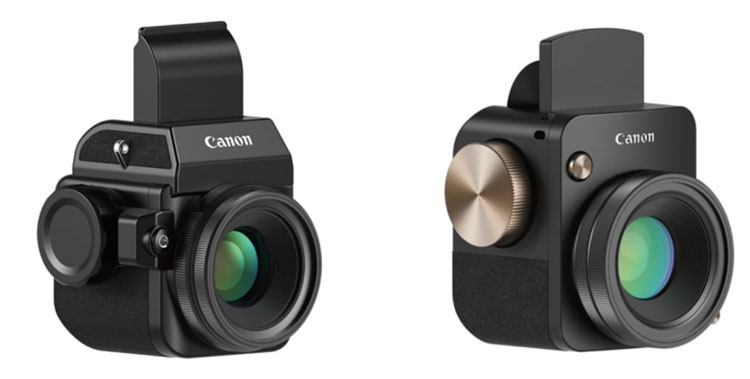
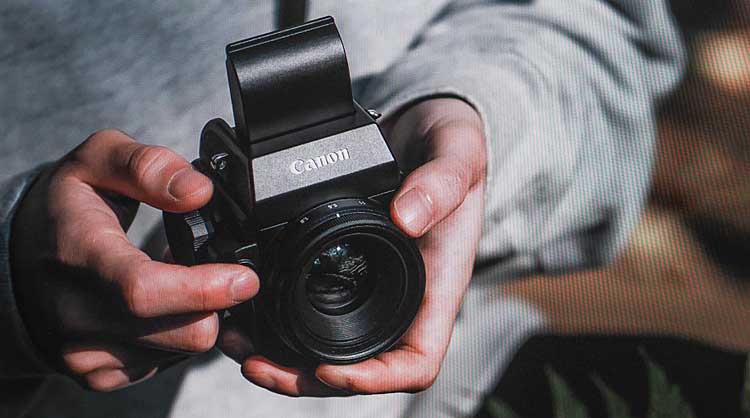
Is Canon really planning something crazy?,but before that we have to discuss about the two unique retro camera models that have been introduced by Canon during the CP+ 2026, so and obviously they have created a lot of buzz out there and got a significant amount of media attention too although I was actually waiting for some new type of photo-type upcoming camera, but these two cameras were the center of attraction of the show.
It was a pair of quirky, waist-level-viewfinder prototypes that look like they time-traveled straight out of the 1960s — yet they’re 100% digital and built by Canon.
Officially called the “Analog Concept Camera,” these boxy retro compacts (or more accurately, palm-sized TLR-style concepts)
But the big question: Is Canon really serious about these two cameras? I’m thinking about the introduction of these two cameras into the consumer market. Let’s discuss further.
Both share the same core DNA: a fixed ~50mm f/1.8-equivalent lens, manual focus only, and — most importantly — a genuine optical waist-level viewfinder.
Two Designs, One Bold Idea
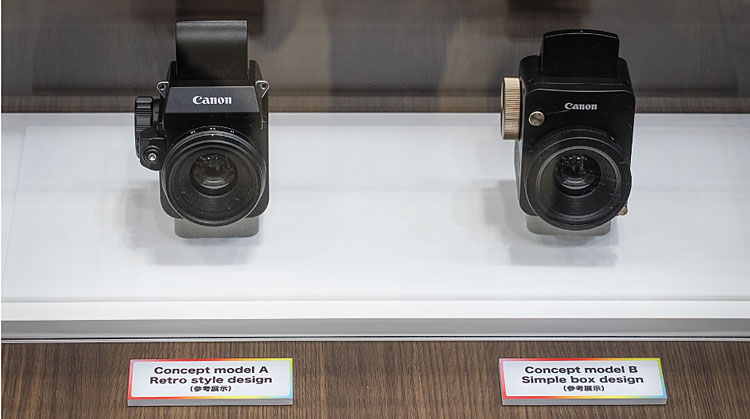
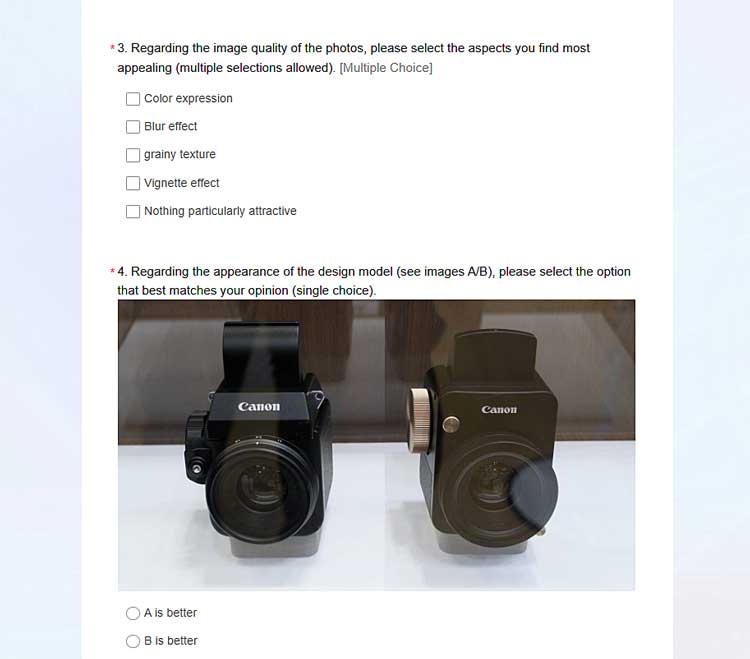
As you can see, Canon has displayed two working Retro prototypes side-by-side behind glass at their CP+ booth:
Concept Model A (Retro Style) – Rugged, angular, vintage-inspired, which reminds me of Hasselblad or Rolleiflex. Think metal dials, textured grips, and that unmistakable classic charm.
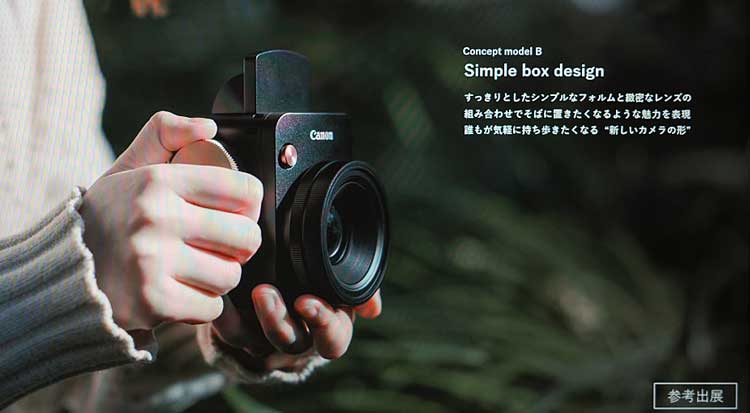
Concept Model B (Simple Box) – Sleeker, more modern, with clean lines and elegant pewter-colored controls. The kind of camera you could slip into a coat pocket and forget you’re carrying.
It’s all about putting focus on shooting experience as well as image quality, since such big bodies loaded with a 50mm F1.8 Eq Fixed MF lens for beautiful bokeh and portrait shoot, as well as a 1-inch CMOS sensor to keep the camera under budget
How Does It Actually Work? (The Clever Bit)
Forget traditional mirrorless tech; it has the same working principle as previous generations of DSLR and SLR cameras.
Light enters the front lens.
A primary flip-up mirror throws the image onto a full-size ground-glass focusing screen (just like classic film TLRs or DSLR cameras).
You compose and focus by looking down; none of the sensors or display is active — you are watching reflected light from the mirror inside the camera
When you pull the shutter lever (yes, a real mechanical lever does“clack”), a second mirror flips up, and the image is captured by a small Type 1 sensor photographing the focusing screen itself.
The result? Since a 50mm lens is attached ot the sensor of the camera, we are expecting better results like a pro portrait camera with natural bokeh, when captured perfectly – no EVF lag, no simulation. It genuinely feels like shooting film.
The Photographer’s Perspective
It’s really a very unique camera to experience with the reason of a 50mm high-quality lens and a decent output from this camera. So if you’re someone who already used a DSLR camera in the past or would love to know how these DSLR or SLR cameras work, then this prototype will be a safe and unforgettable experience for photographers. Those who would love to have their hands on traditional photography, specifically a kind of real-life retro camera.
screen shot of survey shared via Webio
Canon Is Listening — But Beware of Unofficial Surveys
Canon didn’t just put these prototypes on display and walk away. Even during the show, they were actively asking attendees to fill out detailed questionnaires and vote on which design they preferred. This indicates the company is clearly gauging real-world interest about there prototypes, and gathering various sets of information regarding ergonomics, aesthetics, price expectations, and shooting scenarios.
That said, a word of caution to the photography community:
Its look like a lot of people showed interest in the Canon Retro prototypes, and thats why a second phase of a silent survey in China has been started. According to Webio’s post, Canon is secretly doing a survey to collect information regarding public interest in retro camera bodies.
A viral social media post has been circulating with a link to a Chinese third-party survey platform (v.wjx.cn) claiming “Canon launched a small survey — please help!” That link is not official. It carries no Canon branding, no official disclaimers, and has not been mentioned by any reputable source or Canon’s own channels. Canon’s feedback efforts at CP+ were strictly on-site. If you want your voice heard, the safest route is waiting for any future official channels or Canon’s regular feedback forms.
Will These Retro Compacts Actually See the Light of Day?
Canon has made no promises — this is still very much a concept. Even if it gets approved for the production line, we won’t get it before 2027, or may it be delayed further beyond, one thing is clear: Canon is listening to photographers who want something different.
What do you think? Would you buy a Canon waist-level digital retro compact? Drop your thoughts in the comments
Stay tuned to TheNewCamera.com — we’ll keep you updated
The article “Canon Really Wants to Bring These Retro Compacts to Life?” was written by thenewcamera.com team on 1:31 pm, Thursday, 12 March 2026, Greenwich Mean Time (GMT). | You can also follow us on Our Official Social Media HandlesFACEBOOK | TWITTER | INSTAGRAM> more live Camera News + Canon Rumors 24X7
Buy Canon Lenses, Buy Music CD or Digital Camera at amazon it helps this site, and you do not pay anything extra, it is just a way to help support this site.
New Camera Website, we list all type of new camera information, price review and all type camera rumors, subscribe us or follow us via twitter or facebook.
Disclaimer: We have attempted to select useful information to include on New Camera, and to ensure that the resources we have included on the site -- as well as the way we have described them -- are accurate, fair, and balanced. However, we make no claims, warranties, or other representations concerning the accuracy, completeness, or utility of the information provided, or concerning the abilities or performance of the organizations, agencies, companies, and other resources presented through New Camera