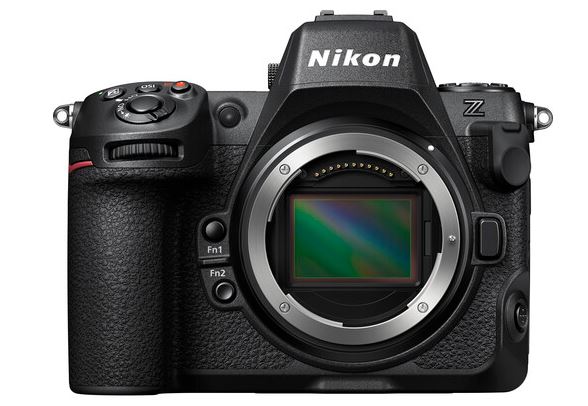
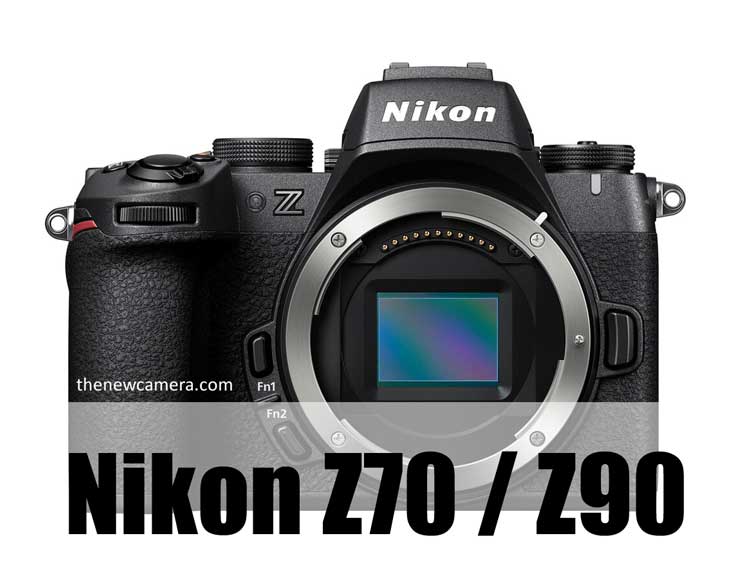
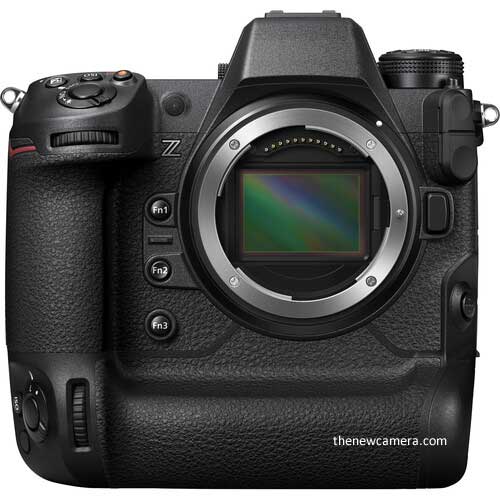
The high-end Nikon APS-C camera that D500 owners have been waiting for since the DSLR days has a new target: November. According to the latest update from Official Nikon Rumors Mill, the Z70 is expected after the NIKKOR Z 120-300mm f/2.8 TC VR S (itself now pointed at the end of October). The same report immediately undercuts the date by noting that the announcement “can be delayed.”
We first saw the name of the Nikon Z70 camera when it appeared on the Apple-compatible camera list. After that, we received strong indications from our sources. The camera was expected to arrive sometime in September 2026, but for some reasons, along with the Z5 II camera announcement, the announcement of the Z70 was rescheduled. Now, we are waiting for additional confirmation before we make our next move, and finally, we have that. According to the trusted rumour mill, the announcement/arrival month of the Nikon Z70 is November 2026. Finally, the wait may soon be over. We are going to have a true professional APS-C mirrorless camera and a potential replacement for the Nikon D500. We have already discussed the possible set of core specifications of the upcoming camera.
The Pattern of Moving Dates
Early reports pointing to September: a source close to Nikon was pointing to a September announcement for the professional DX body (circulating under the names Z70 and Z90). That window closed without an announcement. Before that, the strongest public signal came in August when Apple briefly listed an unreleased “Nikon Z70” on its official ProRes and ProRes RAW Authorized Products page — a listing we covered here: Nikon Z70 Appears on Apple ProRes Page. The entry was later removed.
Why the Conflict Matters
Nikon still does not have a professional APS-C mirrorless body. The Z50 II is a capable camera, but it sits well below the level of a D500 successor in terms of speed, dual-card pro features, and build. Canon has the R7. Sony has options in the a6700 class and above. Fujifilm has the X-H2S. Nikon’s DX lineup stops at the enthusiast level.
The rumoured Z70 has been described for months as the missing piece: a fast, high-end DX body built more like a compact Z8 or mini-Z9, with strong autofocus, high continuous shooting, and video features closer to the ZR family (supported by the ProRes listing). Yet every concrete timeline has slipped. Earlier in the year, Nikon Rumours itself noted that much of Nikon’s 2026 pipeline was sliding, with some items potentially moving into 2027. The Z70 is now part of that pattern.
What We Actually Know
Nothing is official. There are no confirmed specs, no price, no images, and no firm announcement date from Nikon. The consistent rumor picture remains:
Professional DX (APS-C) body positioned above the Z50 II
High-speed shooting and advanced subject-detection autofocus
Likely IBIS (still missing from current Nikon DX cameras)
Serious video capabilities, including internal ProRes / ProRes RAW based on the Apple listing
Possible dual card slots and a more robust build than the Z50 series
Sensor resolution and exact feature set remain unconfirmed. Older rumors have mentioned everything from a ~26MP sensor to higher-resolution stacked options. None of those details have been locked in.
The Lens That Comes First
The same Nikon Rumors report says the next product out the door will be the NIKKOR Z 120-300mm f/2.8 TC VR S. Nikon officially announced this lens as “in development” in May 2026. It includes a built-in 1.4x teleconverter and is aimed at sports and wildlife. Production is expected to be limited, with long waits and a price rumored higher than the current Z 400mm f/2.8 TC VR S.
Bottom Line
The Z70 (or whatever final name it receives) is still the camera that would fill the biggest hole in Nikon’s current lineup. The latest rumor gives it a November window — the most specific date yet — while immediately warning that the date can move again. After the Apple leak, the September source reports, and the broader pattern of 2026 delays, that caveat is doing a lot of work.
All of the above remains unconfirmed until Nikon says otherwise.
The article “Nikon Z70 Coming: The Latest Date Is November” was written by thenewcamera.com team at 6:46 pm, Sunday, 11 October 2026, Greenwich Mean Time | You can also follow us on Our Official Social Media HandlesFACEBOOK | TWITTER | INSTAGRAM> get live news — > DJI Rumors | Insta360 News
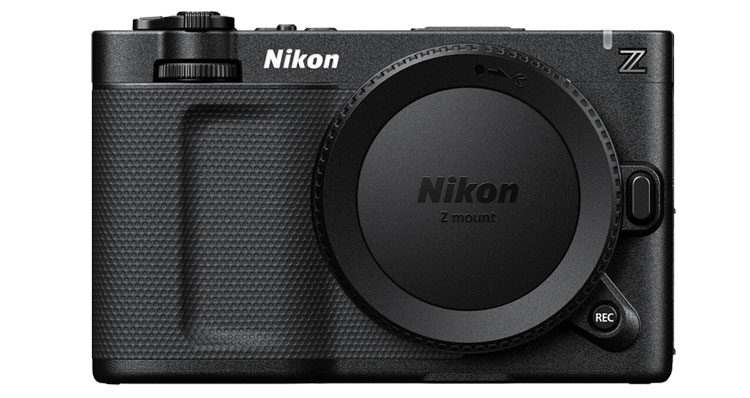
Image of Nikon ZR Camera – Nikon Z5II C expected to feature similar body design
Nikon is planning to announce a new camera called the Z5IIc; obviously, the Z5 name itself makes it clear. It has been designed and developed for new-age content creators, those who love to have professional controls/workflow in their camera without spending a lot.
Nikon is planning to beat the Canon R6V range with their latest announcement. As we all know, Canon didn’t try their best to make a perfect rival to the Nikon Z5II camera, but the price of the Canon R8 Mark II matches the Canon R6 Mark II camera instead of making a perfect competitor. They have accidentally put the arrival of their own R6 Mark II camera in their market.
And technically, the Z5II is still safe in its price since Canon does not have any camera that can directly compete with the Z5II at its price range with what it offers.
Now it’s time for Nikon to announce their camera. Nikon is trying to compete with the CanonR6V with its latest announcement, which is about to arrive. Obviously, the Z5IIC, with a very aggressive price and alongside impressive core specifications directly coming from RED camera makers, is customised for beginners and professional content creators. Nikon wants to dominate the beginner space with their offerings and price.
Arrival date
The announcement is expected next week — the week of 21–27 September 2026.
That is the arrival window for the public reveal, not a confirmed first-sale date. Nikon has not said when units will reach US dealers or Nikon India.
Two signals support the timing:
Nikon Imaging Japan’s NIKON MEETUP calendar already lists Z5IIC in the equipment filter used for dealer events and Plaza sessions. That page is an official Nikon property: https://nij.nikon.com/connect/event/meetup/. Japanese users posted screenshots of the filter on 18 September.
A Nikon Germany listing / asset for Z5IIC appeared and was removed the same day. That usually means a regional CMS or dealer tool was updated early.
Together, those points are stronger than a recycled spec rumor. They still do not equal a finished announcement.
Expected price
No official price has been issued.
Z5IIC is being described as a compact Z5II, not a stacked-sensor Z6III. That usually means:
Body
Current street / offer price (Sept 2026)
Nikon Z5IIC
about $1,699–$1,899 body only
Do not treat those figures as leaked numbers. They are positioning. Compact full-frame bodies often cost a premium over the standard body because of a new chassis, even when the sensor is shared.
Specifications: what is known vs what is not
Unofficial / circulating
Compact full-frame body aimed at Sony’s a7C class
About 24MP FX sensor
IBIS
Built on Z5II internals
Viewfinder either removed, reduced, or built in without the usual EVF hump
Additional video features versus Z5II
If Z5IIC is a compact variant, expect most of that imaging stack to carry over. The open questions are body size, finder, heat, battery life and whether Nikon keeps two card slots.
Why a “C” body would matter
Nikon still does not have a true compact full-frame stills camera. Z5II is capable and relatively small for FX, but it keeps a conventional EVF hump and SLR-like shape. Sony already occupies that compact slot with a7C II / a7CR. Nikon is about to make a new consumer space in the market in FF category
The article “Nikon Z5IIc Price, Specifications and Arrival Date: Announcement Expected Next Week” was written by thenewcamera.com team on
6:42 pm, Friday, 18 September 2026, Greenwich Mean Time (GMT) | You can also follow us on Our Official Social Media HandlesFACEBOOK | TWITTER | INSTAGRAM > get live news + Nikon Rumors 24X7
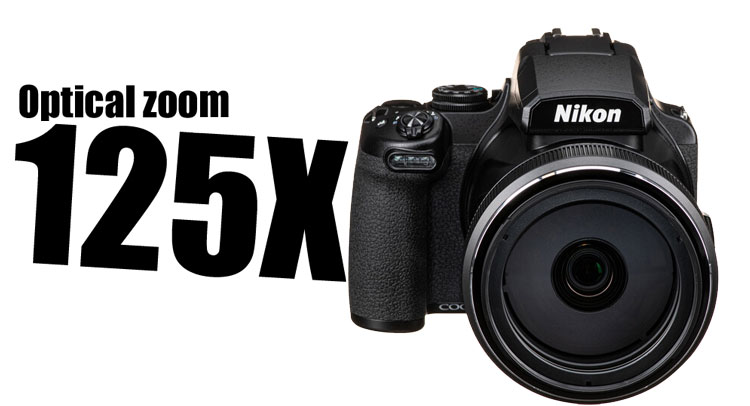
The best superzoom camera in 2026—if you are not so much interested in having a digital or AI-based zoom and instead love to have a real optical zoom lens—capable of up to 125x pure optical zoom. None of the camera makers like Canon or Sony make superzoom cameras now in 2026, but still in 2026, Nikon is still Making Superzooms. We are talking about the Nikon COOLPIX P1100 camera. This camera is the successor to the ultra-popular Nikon COOLPIX P1000, which offers approximately 125x zoom capability and the ability to record 4K Ultra HD videos. If you are interested in having a camera with extreme zoom reach, then for sure the P1100 is one of the best choices.
Nikon P1100 Key Specification
16MP back-illuminated CMOS sensor for solid image quality
4K Ultra HD video recording
Dual Detect Optical Vibration Reduction (VR) for steady handheld shots at extreme zoom
RAW format support for post-processing flexibility
Rotating 3.2-inch LCD screen and electronic viewfinder
Wi-Fi connectivity for easy sharing
Improved USB-C charging and modest updates to subject detection
The Nikon COOLPIX P1100 camera is one of its kind, and there is no real competitor for this level of bridge camera, which offers 100x+ optical zoom, and all of it is real—no AI algorithm involved in recreating or generating images inside the camera.
So if you are interested in bird photography, or someone who loves to have a real compact camera with massive optical zoom without any AI algorithm creating fake images, then you should consider the Nikon P1100.
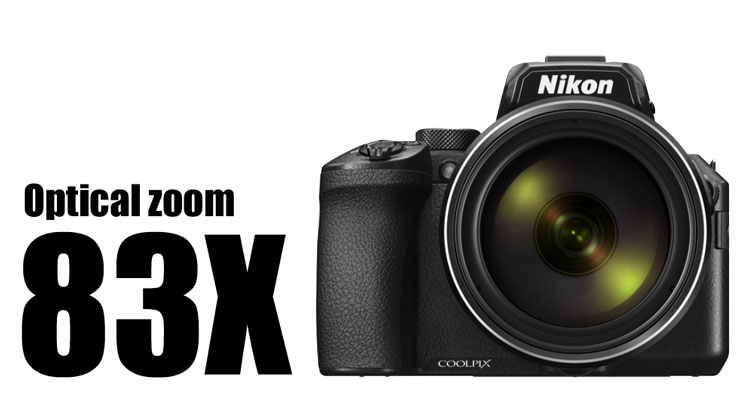
The next camera on the list is the Nikon COOLPIX P950. This 83x optical zoom camera is one of the best options available on a budget and costs less than the Nikon COOLPIX P1100. Yes, you get a bit less zoom, but even then, it is highly usable, and the image quality is great.
The Nikon P950 camera delivers impressive results straight out of the box and is very forgiving for users who are new to superzoom photography.
The P950’s autofocus, subject recognition, and image stabilization perform very well within the limitations of a small-sensor superzoom. With adequate light, the camera is capable of resolving surprising detail at extreme focal lengths. As with any camera operating in the 1000mm+ range, technique matters—good light, proper settings, and camera stability make a significant difference.
Nikon COOLPIX P950 is still a top contender. With an 83x optical zoom (24-2000mm equivalent, extendable to 4000mm with Dynamic Fine Zoom), it offers incredible versatility at a more approachable size and price point. Key highlights include:
16MP sensor with 4K video
Excellent 5.5-stop VR for sharp handheld telephoto shots
RAW shooting, vari-angle LCD, and hot shoe for accessories
Moon and bird-watching modes tailored for super-telephoto use
Lighter weight (around 1005g) than the P1100, making it easier for travel or extended handheld sessions
It’s frequently called a balanced superzoom for outdoor photographers, delivering sharp results from macro close-ups to extreme telephoto without the extra bulk of the 125x models.
Nikon Coolpix P950 vs P1100 – Key Differences Only
Feature
P950
P1100
Optical Zoom
83x (24–2000 mm equiv.)
125x (24–3000 mm equiv.)
Max Focal Length
2000 mm equiv.
3000 mm equiv.
Aperture at Longest Zoom
f/6.5 (brighter)
f/8
Weight
~1.0 kg
~1.4 kg (heavier due to longer lens)
Size
More compact & portable
Larger & bulkier
Everything else is identical (16 MP 1/2.3″ sensor, 5-stop VR, image quality, USB-C, Bluetooth 5.2, EVF, etc.).
Quick verdict:
Choose P950 is budget-oriented, for lighter weight, better low-light reach at extreme zoom, and portability.
Choose P1100 only if you need the absolute maximum telephoto reach (e.g., distant birds, moon/planets).
Don’t Miss Out—Stock Alert for Nikon Megazoom Fans
These superzoom legends are live and available to buy, If you’re ready to capture impossible shots—from craters on the moon to shy wildlife—act quickly while they’re in stock.
Which one fits your photography style? Drop a comment on thenewcamera.com and share your superzoom experiences! Stay tuned for more camera news, rumors, and deals.
The article “Nikon in Revenge Mode: Third-Party Z-Mount Lenses Vanish from Shelves” was written by thenewcamera.com team on 11:14 am, Sunday, 8 March 2026, Greenwich Mean Time (GMT) | You can also follow us on Our Official Social Media HandlesFACEBOOK | TWITTER | INSTAGRAM > get live news + Nikon Rumors 24X7
Nikon is expected to introduce a 26-megapixel partially stacked APS-C sensor alongside the Nikon ZRC camera in 2026. Following this, Nikon is likely to roll out models such as the Nikon Zfc Mark II, the Nikon Z500, and finally the Nikon Z30 II, all powered by the same Res 26MP, but different variations of APS-C sensor architecture. According to Matt, a professional Nikon user and content creator
In this article, we are going to discuss theNikon ZRC, Z500 Nikon Zfc II camera and Z30 II—its possible core specifications as well as the expected arrival timeline.
But before we dive into all these cameras, let’s first understand why we are suddenly discussing these models, and who raised this topic. So, let’s begin by learning more about Matt.
Why Trust Matt Irwin Specifically? He’s a Genuine Nikon Gear Guru—Here’s Why
Mḍ Why trust Matt specifically? Let’s dig into the facts: Matt Irwin isn’t just another YouTuber—he’s a pro photographer with a razor-sharp eye for what’s next in the Nikon world.
Matt Irwin has more than 100,000 subscribers on YouTube, and, most importantly, I am also one of his subscribers. You can even verify that TheNewCamera.com channel is subscribed to Matt Photography.
The best thing about Matt is that he never clicksbait—Straight facts only, no hype.. At the same time, when he discusses upcoming models, he is very clear that he is sharing what he is expecting from Nikon, not making wild claims.
And if something is coming from Matt, then there are certainlyreal facts behind it. He was one of the first people to discuss the development of RED-based Nikon Z cinema technology, long before the Nikon ZR (Z RED camera) was officially announced. In the same way, he discusses industry whispers, but always with context.
He clearly says “I am expecting”, but at the same time, he is deeply rooted and well-connected with Nikon. So whenever Matt talks, you can be confident that something is cooking inside Nikon regarding those models.
Whether these ideas become official products or not, the important thing is this: the concepts do exist inside Nikon, without a doubt.
The list starts with the expected cameras along with their core specifications, what we might think is coming inside them, and the possible arrival timeframe/date.
Introduction of a 26 MP APS-C Hybrid CMOS AF Sensor
According to Matt, first, we have to understand Nikon’s announcement pattern. First, Nikon is going to surprise the market with ZRC + 26MP APS-C, and then repeat a similar strategy that has happened in the past with the Nikon Z9 and Z8 cameras.
Later on, the same sensor of 26MP will be distributed among other top models like the Nikon Z500. Other than that, popular retro models like the Nikon Zfc Mark II, and finally, at the end, to make it available to everyone, there is a high probability that even the Nikon Z30 II may carry the same sensor, with obviously some limitations to protect the higher-end camera models and their sales.
Nikon ZRc: The Budget and the PROs
Before we discuss Matt’s Nikon Z RC model, let me explain. The Nikon Z RC is actually said to be an APS-C version of the ultra-popular Nikon Z R camera. We have already posted an expected set of core specifications of the Nikon Z RC earlier, but our expectations were limited to a budget, entry-level cinema camera that would have better core specifications than the existing Canon R50 V and could compete against the Sony ZV-E10 Mark II. So, somewhere around that, we were expecting a 20 MP sensor-based specification, but as per the sensor readout limits, we already know that 4K 60p without crop is not possible with the existing 20 MP sensor range.
Now, Matt thinks differently, and according to him, a partially 26 MP stacked sensor will appear inside the Nikon Z RC camera, enabling state-of-the-art performance inside a camera body competing not only with entry-level or mid-range models, but also higher-end models like the Sony FX30 and the anticipated Canon R7 Mark II video offerings.
So, let’s have a look at what Matt actually thinks about his vision of the Nikon Z RC camera.
Nikon ZRC: Compact Cinema Powerhouse for Video Creators
Let’s have a look at what Matt actually thinks about his vision of the Nikon Z RC camera.
18 months we may well see a ZRC with from my perspective a partially stacked sensor that’s the same sort of pixel density as the Fujifilm 26 megapixel fully stacked sensor that we find in the XH2S. Basically, it would be the same tech, almost identical, probably the same body as the ZR, but just with a change in the sensor. I think the price point could come down significantly and it’s basically jumping into the same territory as the Sony FX30. It’s a solid idea and it allows people to get into
Matt’s most excited about the Nikon ZRC (Z6R Compact? Or APS-C variant), a “C for compact or C for APS-C” that could merge the Z30’s vlogging vibes with Z6R’s cinema chops. This could be Nikon’s affordable entry into pro video, priced to rival the Sony FX30.
Key Specs for Nikon ZRC
Sensor: 26MP partially stacked APS-C, borrowing from Fujifilm’s playbook for reduced rolling shutter and 4K/120p prowess. “A ZRC with… a partially stacked sensor that’s the same sort of pixel density as the Fujifilm 26 megapixel fully stacked sensor.”
Video Features: Internal RAW video and RED RAW support, like the Z6R. Flip screen, no EVF for that boxy, rig-friendly form. “It still shoots RAW and it still has the Red Raw capabilities… That would be a really killer camera.”
Body & Ergonomics: Slimmer than Z6R, shared Z30/Z6R chassis. “The form factor of the Z30 and the ZR… are a fairly simple box which has a flip screen and no EVF.”
Price Point: $1,200–$1,500 USD, a steal for cinema specs. Matt predicts: “I think you could see a camera like this coming in at something like 1,500, maybe a little bit less.”
Target Audience: Crash cams, A-cam hybrids for creators. “I’ve seen a video creator online recently saying that it is absolutely an A camera as well, which I totally agree with.”
High probability in late 2026, per Matt: “In the next I don’t know 12 to 18 months we may well see a ZRC.” Paired with Nikon’s teased cinema lenses, this could flood the Z ecosystem with APS-C video magic.
Nikon Z500: The APS-C Speed King for Sports & Wildlife
Before we start talking about the Nikon Z500 camera, let me clarify that Matt is talking about a partially stacked sensor introduction inside the Nikon ZRC camera, and he is talking about a fully stacked sensor, similar to what we have seen inside the Fujifilm X-H2S, for the upcoming Nikon Z500 camera.
So, don’t get confused: the ZRC is expected to have a partially stacked sensor, while the Z500 is expected to feature a fully stacked sensor. Entry-level cameras like the Nikon Z30 Mark II are expected to use a hybrid 26MP non-stacked APS-C sensor.
Kicking off with a fake-out (“the Nikon Z500 is the real deal, but it’s not”), Matt circles back to this enthusiast dream: a D500 successor in Z-mount, optimized for action over megapixels.
Rumored Nikon Z500 Specifications
Sensor: 26MP fully stacked APS-C, aping the X-H2S for blackout-free bursts. “That to me is the sensor that you would put in a Nikon Z500… a good balance of extra resolution.”
Performance: 20fps+ RAW bursts, minimal rolling shutter, superior low-light noise. “Speed and fidelity in low light is more important than slightly more megapixels… better noise, better dynamic range, less rolling shutter.”
Body Design: Z6III-inspired grip for telephoto stability, top-tier EVF (5.76M-dot), vari-angle screen like Sony A1 II. “It’s got Nikon’s best EVF… Fantastic EVF, good ergonomics, great weather sealing.”
Price & Use Cases: $1,800–$2,200 USD, aimed at sports, wildlife, birders. “It’s aimed at sports, action, wildlife, and birders… Gives me extra reach.”
Matt’s verdict: “All of the elements are there to put out this camera.” With APS-C trends booming (per Nikon’s Q&A: “market trends show increased popularity of APS-C products”)
Nikon Zfc Mark II: Retro Charm Meets Modern Tech
Yes, the replacement is quite expected. The camera was announced back in 2021.Z fc remains one of the most popular photographer cameras. Now in 2026, we do expect a second generation of the Z fc series camera that may have some updated set of core specifications, maybe similar to Nikon Z50 II’s camera, but Matt thinks it is a bit different. He believes the Z fc Mark II camera will have ground-breaking core specifications.Let’s look over that.
Expected Specs for Nikon ZFC 2
Sensor: A 26-megapixel APS-C stacked sensor, which we have already seen inside the Fujifilm X-H2S, could arrive inside the upcoming Nikon camera.
Stacking Tech: No full stack to keep costs down, but a partially stacked sensor like the Z6III could enhance readout speeds and dynamic range via dual-gain output. “We might not see partially stacked, but we could see perhaps an increase to something like 26 megapixels.”
Autofocus & Speed: Inherited EXPEED 7 processor for faster bursts (up to 11fps?) and improved low-light AF.
Build & Price: Retro dials intact, flip-out screen, and weather-sealing. Entry-level pricing around $900–$1,100 USD to undercut full-frame rivals.
Why It Matters: “The majority of people shooting with APS-C cameras don’t really need much beyond 21 megapixels,” Matt notes, emphasizing pixel density over raw count for everyday creators.
If the full-frame ZF stole some thunder, the ZFC 2 could reclaim the compact, stylish niche.
Nikon Z30 II: Vlogging Stalwart Gets a Refresh?
The Z30, now four years old and rocking outdated EXPEED 6, feels like it’s on borrowed time. Matt sees it as a “variable option,” potentially evolving into a Z32 or folding into the ZRC lineup.
Potential Nikon Z32 Specs
Sensor Upgrade: 26MP non-stacked APS-C for sharper 4K and better low-light. “A Z30 II, which is the same sensor that we might find in a ZFC just a standard 26 megapixel sensor.”
Video & Stills: Enhanced IBIS, 4K/60p, and mic jack. No EVF, keeping it lightweight at ~$800 USD.
Timeline: Lower priority than ZRC. “The Z30 I think, is a variable option… We could see a Z32… waiting in the wings.”
If Nikon prioritizes modularity, expect a Z32 trickle-down from higher-end tech. Vloggers, stay tuned—this could bridge the gap until ZRC steals the show.
Model
Sensor
Key Upgrade
Est. Price (USD)
Zfc Mark II
26MP Partially Stacked APS-C
Retro Dials + 11fps
$900–$1,100
Z30 Mark II
26MP APS-C
4k 60p Uncropped, RED Luts,
$800
Z500
26MP Fully Stacked APS-C
20fps + Pro Grip
$1,800–$2,200
ZRC
26MP Partially Stacked APS-C
6K Video + IBIS, RED RAW + Cinema Box
$1,200–$1,500
So that’s all we have related to the upcoming Nikon camera predictions from Matt, and obviously, all of these look very promising. We do hope and expect that 2026, in particular, will see the introduction of a 26MP APS-C sensor across the Nikon APS-C lineup.
The article “Nikon ZRc, Nikon Z500, Nikon ZFC II and Z30 II Specs & Release Rumors Revealed by Matt” was written by thenewcamera.com team on 12:59 pm, Sunday, 4 January 2026, Greenwich Mean Time (GMT) | You can also follow us on Our Official Social Media HandlesFACEBOOK | TWITTER | INSTAGRAM > get live news + Nikon Rumors 24X7
Nikon’s latest firmware version 3.00 for the Z8 was released on July 1. It seems that there is a malfunction when used in combination with third-party lens adapters and lenses, but the same phenomenon seems to be occurring with Tamron lenses as well.
Thank you for your continued patronage of Tamron products.
We have confirmed that our interchangeable lenses for mirrorless cameras do not function properly when used with the Nikon Z8 (Ver. 3.00) that has been updated to the latest firmware .We are currently conducting verification, and will provide updates on the support information page as soon as we are able to support each lens model.
It has not been mentioned yet which lens causes the malfunction. but in any case, it appears that those who are experiencing problems when using the Z8 with a Tamron lens will have to wait for Tamron to come up with a solution.
If you use Tamron lenses and haven’t updated your Z8 yet, you might want to wait a bit before updating.
Nikon is dominating the Japanese camera market after the arrival of the Nikon Z6 Mark III, the Nikon Z50 Mark II, and the Nikon Z5 Mark II. The Nikon Z5 Mark 2 claimed its TOP spot this month, and the most interesting part is that the 2nd position is now occupied by the Nikon Z50 Mark 2 camera with the double zoom kit lens package. In the third and fourth places, we have the Sony A7C Mark 2 camera — one of the most popular full-frame cameras in Japan — and after that, we have the Canon R6 Mark II, and so on.
CAPA CAMERA WEB has published Yodobashi Camera’s sales rankings for interchangeable lens cameras for the first half of June.
Top 10 Best-Selling Interchangeable Lens Cameras of June 2025
Nikon Z5 II Body
Nikon Z50 II Double Zoom Kit
Sony α7C II Zoom Lens Kit
Sony α7C II Body
Canon EOS R6 Mark II Body
Canon EOS R50 Double Zoom Kit
Sony α1 II Body
Canon EOS R10 RF-S18-150 IS STM Lens Kit
Sony VLOGCAM ZV-E10 II Double Zoom Lens Kit
Sony VLOGCAM ZV-E10 II Power Zoom Lens Kit
Canon will probably release the R6 III and R7 II this year, as per the rumors we have, but the prices are likely to rise significantly, so I think it will be difficult for them to make it into these sales rankings. The Sales of the R1 and R5 II in Japan aren’t that good either… and I feel it will be tough for the R8 in particular, as the Nikon Z5 II, which is in the same price range, is very strong. So, Canon has to refresh its entry-level offerings if it wants to remain in the top-selling camera list (of at least Japan).
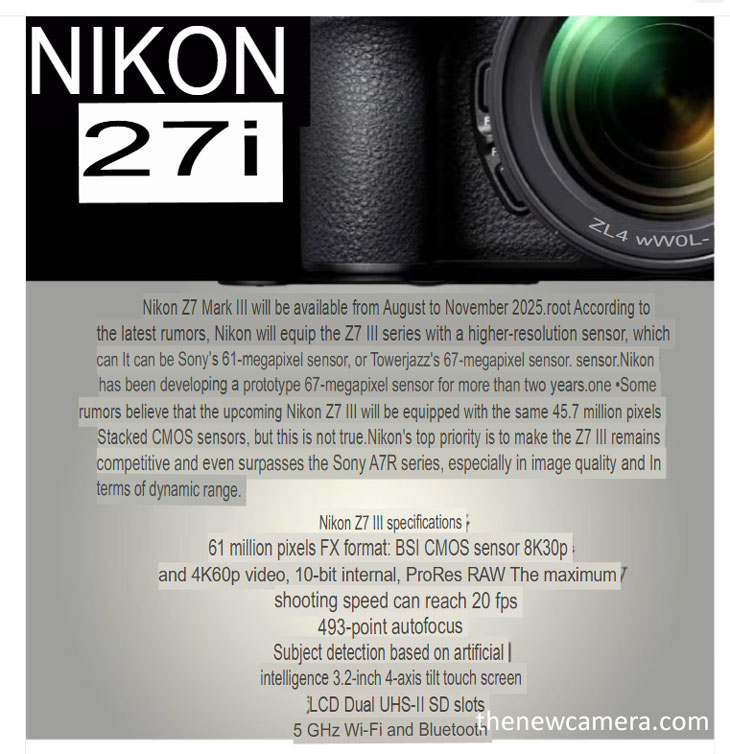
Chinese sources suggest that Nikon’s mysterious model is coming this year. So far, we know that the Nikon Z9 Mark II, Nikon ZR, Nikon Z7 III, and Nikon Z Video cameras are in the announcement pipeline. At the very same time, Nikon is also planning multiple cinema-related announcements. Based on Nikon’s announcement patterns and current rumors, several cameras are expected in late 2025 and early 2026. Take a look list of upcoming cameras
As in the table, you have seen all possible lists of cameras in BOLD, those that are expected to arrive. So, what else can we expect from Nikon? Nikon Z70 or Nikon Z90?
It, almost confirmed now, Nikon is gearing up for the professional ZR series camera, we can expect the introduction of ZR DX lineup of Camera in near future to offer a comprehensive video range to beginner content creators and cinematographers, but that all known to us we are not able to keep the ZR in “Mysterious Model” category.
Nikon ZR DX Range
Video Dedicated DX Mirroless Camera Announcement on its WAY? We already have the Sony ZV series lineup for beginner cinematographers and content creators. Canon recently announced their first V series camera, the Canon R50V., its logical to expect the same kind of move from Nikon. In the entire DX lineup, we have only one camera for content creators, the Nikon Z30, which badly needs an update if Nikon wants to keep a revenue share in entry entry-level content creator market. Apart from this, Nikon Z30, all the DX and FX lines of cameras are made for HYBRID SHOOTERS.
Nikon Z70 / Z90
None of the Nikon APS-C DX Mirrorless camera bodies have IBIS inside them. We do not have any pro model in the Nikon DX lineup after the Nikon D500, the Nikon D500 was announced back in January 2016 and discontinued in January 2022.
Over the past year, we have been getting strong hints about the development of the Nikon Z70 / Z90 camera, and one of the prototypes of the DX Z Mirrorless bodies is also being tested with Global shutter sensors. Be assured, Nikon will not put the Global shutter sensor-based cameras in the market; they will initially use partially or fully stacked CMOS sensors around a 26- 32MP Range paired up with the latest generation of Expeed image processors. Although we are waiting for more confirmation on the set of information we received a while ago.
So, these two are the possibilities under the hood of the Nikon Mysterious Model. What are you waiting for? Which specific model, let me know in the comments box
Buy Canon Lenses, Buy Music CD or Digital Camera at amazon it helps this site, and you do not pay anything extra, it is just a way to help support this site.
New Camera Website, we list all type of new camera information, price review and all type camera rumors, subscribe us or follow us via twitter or facebook.
Disclaimer: We have attempted to select useful information to include on New Camera, and to ensure that the resources we have included on the site -- as well as the way we have described them -- are accurate, fair, and balanced. However, we make no claims, warranties, or other representations concerning the accuracy, completeness, or utility of the information provided, or concerning the abilities or performance of the organizations, agencies, companies, and other resources presented through New Camera