A lot of new generation content creators do not want to hold the camera in their hand in the traditional way, so we have selected the best POV Camera 2026 for capturing raw and immersive footage (POV = Point of View) without the need to hold the camera in your hand. So if you’re looking for the best hands-free camera or the best camera for daily live vlogging, then for sure, these POV tiny action cameras and smart glasses are the perfect choices for you. Apart from all this, the hands-free/POV camera demand is exploding and is projected to hit $1.5B in sales this year alone.
Our list is composed of multiple of and best hands-free devices/cameras that help you capture your daily life vlogs without putting physical effort into recording your videos. The list includes the ultra-light beast, the DJI Osmo Nano. We also have AI-powered wearable sunglasses like the Ray-Ban Meta Generation Three and more, so let’s dive in details to explore the best POV camera for you.
We’ve rounded up the top contenders, blending modular beasts like the DJI Osmo Nano with AI-powered wearables like the Ray-Ban Meta Gen 3. This guide dives deep into camera specs, pros, cons, and real-world performance (aggregated from expert reviews and user tests), so you can snag the ultimate hands-free POV camera for vlogging without the guesswork. All picks are under 60g for true all-day wearability.
Why POV Cameras Are a Must-Have in 2026
The POV / point-of-view cameras are not just simple cameras. They act like a third eye, silently recording all your stuff—the activities that you are doing—in the highest possible quality. At the very same time, what you get is all the raw footage that is a kind of gold mine if you are a content creator or vlogger, so you can easily narrate your words and story over the footage and seamlessly integrate it into your day-to-day life vlogs.
Upgrades this year focus on 4K/60fps stabilisation, AI low-light fixes, and seamless app integration, making them ideal for TikTok creators and pros alike.
1. Insta360 Go Ultra: The Ultimate Tiny Action Cam for Versatile POV
Insta360 Go Ultra is one of the best and most powerful tools for creating content, specifically keeping most of the operations hands-free. It gets simply attached to your clothes or accessories with a magnetic clip and starts recording high-quality 4K videos up to 60 frames per second. The best part of this camera that content creators really appreciate is its low-light video recording capability, with its sensor and superior AI processing of recorded videos. You get ultra-low-light, high-quality footage on the go. Launched in August 2026, the Insta360 Go Ultra redefines compact POV cameras with its thumb-sized form and pro-grade upgrades.
Key Camera Specs
Sensor: 1/1.28-inch CMOS for superior low-light and detail.
Video: 4K/60fps with Active HDR; 1080p/240fps slo-mo for epic action replays.
Photo: 12MP stills with AI noise reduction.
FOV: 156° ultrawide for immersive perspectives.
Stabilization: FlowState gyro-EIS—handles shakes like a gimbal.
Storage/Battery: Swappable microSD (up to 1TB); 70min standalone (170min with Action Pod dock).
Weight/Price: 39g camera unit; $449 (includes Pod with flip touchscreen).
Pros
Blurs lines between wearable and traditional action cam—magnetic mounts stick to helmets, chests, or even pets for endless angles.
Killer low-light performance via AI upgrades; colours pop in dim gyms or dusk hikes.
Action Pod’s 2.2-inch flip screen edits on the fly .
Cons
Internal storage is limited without SD swap; high-res modes chew battery faster outdoors.
No built-in mic wind reduction—pair with an external for windy POVs.
Users rave about its “lifestyle-action” vibe for travel vlogs, earning 4.5/5 on PCMag for stabilisation alone. The best part that I personally like about the Insta360 Go Ultra is its seamless transfer of videos from the Go Ultra to the iPhone 17 Pro. So if you have any generation of iPhone, it doesn’t matter, simply install the app and the videos will transfer to your smartphone.
2. DJI Osmo Nano: Best Modular POV for Dynamic Sports and Vlogs
The DJI Osmo Nano is a recent edition by DJI, which is also able to capture 4K videos up to 60 frames per second and has 120GB onboard memory. The camera houses features like the next-generation 1/1.3-inch sensor, and DJI claims that Nano can deliver 13.5 stops of dynamic range, perfectly capturing shadow and highlight details. And obviously, the DJI ecosystem helps you to easily integrate microphones with the camera. Again, it is more lightweight than the Insta360 Go Ultra and weighs only 52g – perfect for creators who love to have a hands-free camera with the highest quality possible.
Key Camera Specs
Sensor: 1/1.3-inch CMOS for 10-bit color depth and wide dynamic range.
Video: 4K/60fps standard (up to 4K/120fps in burst mode); 1080p/240fps.
Photo: 35MP RAW/JPEG for poster-worthy stills.
FOV: 145° adjustable wide-angle.
Stabilization: RockSteady 3.0+ with horizon lock—ultra-smooth even at speed.
Storage/Battery: 64GB internal + microSD; up to 200min in 1080p (shorter in 4K).
Weight/Price: 52g; $399 (bundles with extra batteries/mounts).
Pros
Modular design integrates with DJI’s Osmo ecosystem
Vivid colours and DR is really good, Best outdoor POV.
Ultra Compact to carry
Cons
Battery drains quick in 4K/60fps (expect 30-45min continuous); overheating in hot climates.
TechRadar calls it “ideal for on-the-go vlogging,” with WIRED adding it to their 2026 best action cams list for its punchy output.
check out recent offers at DJI osmo Nano
3. Ray-Ban Meta Gen 3: Top Smartglasses for Discreet AI-Enhanced POV
The new series of Meta was recently announced in September, and they started to roll out in the first and second weeks of November. Still not widely available for pre-orders in the United States of America. Initially, the Meta lenses do not have the best cameras, like we have mentioned in the above POV cameras, but at the very same time, the best thing that I personally like about the Meta glasses is the battery backup. In the Gen 3 Glasses, you are getting approximately 2-3 hours of battery backup uninterruptedly while you’re recording your videos.
Yes, we are getting a limited resolution up to 3K in 30 FPS, as well as the lowlight performance also has some limitations due to the smaller sensor used inside the meta glasses. you can record up to 5 minutes in HD resolution (1080p/30fps or 1080p/60fps). That’s, a step up from the previous 3-minute cap. However, this extended limit is exclusive to 1080p; the higher 3K Ultra HD mode remains capped at 3 minutes due to increased processing and battery demands. Although these caps don’t apply to Live streaming, you can do it for an hour or so, in low res.
These Rayban Meta Gen 3 Glasses are more inclined towards having an enhanced user experience, that includes hands-free operation of having a video call or sending a chat message, but apart from all this set of features, yes, you can use these Meta glasses as your POV camera for seamless video recording without putting any sort of hard effort, like holding a camera and recording all the time.
Meta’s September 2025 Gen 3 Ray-Bans blend stylish shades with a futuristic camera, making them the best wearable POV camera 2026 for everyday creators who want AI smarts without bulk.
Key Camera Specs
Sensor: 12MP ultrawide for crisp captures.
Video: 3K/30fps (upgraded from prior gens; 3-min clips max).
Photo: 3024×4032 resolution with auto-HDR.
FOV: Ultrawide ~120° for natural eye-level views.
Stabilization: Basic EIS with AI post-processing.
Storage/Battery: 32GB internal; 4hrs audio/1hr video (full day mixed use).
Weight/Price: 48g; $299 (base), $799 (with heads-up display for previews).
Pros
Looks like regular Ray-Bans—discreet for “incognito” street vlogs or events.
AI features like live transcription and object recognition elevate raw POV into smart edits.
Longer battery than Gen 2; waveguide display (premium model) lets you preview shots hands-free.
Cons
Video clips cap at 3 minutes in 3K, frustrating for longer takes.
Camera quality dips in low light; not pro-level detail compared to dedicated cams.
PCMag praises the 3K video leap, while users note it’s “futuristic yet low-impact” for daily wear.
4. Ray-Ban Meta Gen 2: Affordable Smartglasses Alternative for Everyday POV
RayBan Gen 2: If you’re not interested in investing much in Gen 3 smart glasses by Ray-Ban, then the Gen 2 is the best option as an entry-level smart glass that uses exactly the same 12MP sensor which is being used inside the Gen 3 smart glasses. Apart from this, the upper video resolution recording limit is the same as 3K, and the video capping of the Gen 2 has been upscaled with the firmware update. So we are getting the 3K video recording cap limit of three minutes, as well as full HD up to 5 minutes. Maybe in the near future, we may have an extended period of recordings in the Gen 3. But as of now, we do not have much difference in the recording time limit between the.
The Gen 3 is much more devoted to a user-friendly experience by adding personalised messaging with gesture controls as well as one-on-one video chat, which is exclusive to Gen 3 smart glasses. So if you want to experience only how the smart glasses work and how you can use them as your POV camera, then for sure, the N2 is more than enough and you can start with investing a bit less amount, and if you are comfortable with it, then for sure you can upgrade later to 3 or 4, whichever you like.
Key Camera Specs (vs. Gen 3)
Sensor: Same 12MP ultrawide as Gen 3 for consistent sharpness.
Video: 1080p/30fps (vs. Gen 3’s 3K/30fps—noticeable drop in detail for larger screens, but fine for social clips).
Photo: Identical 3024×4032 resolution with auto-HDR.
FOV: Ultrawide ~120°—matches Gen 3 for eye-level immersion.
Stabilization: Basic EIS (slightly less refined AI tweaks than Gen 3).
Storage/Battery: 32GB internal; 3hrs audio/45min video (shorter than Gen 3’s 4hrs/1hr, but doubles Gen 1’s life).
Weight/Price: 48g; $199-$299 (half the price of Gen 3 display model).
Pros (vs. Gen 3)
Way more affordable—saves $200-300 without sacrificing core design or AI basics like voice commands and live streaming.
Proven reliability; same stylish frames and open-ear audio that users love for all-day wear.
Budget entry to Meta’s ecosystem—upgradable via firmware for minor 2025 tweaks like better noise cancel.
Cons (vs. Gen 3)
Lower video res (1080p vs. 3K) means softer footage in post-edits or 4K upscales.
No heads-up display for shot previews—rely on the app; battery edges out quicker during extended video.
Misses Gen 3’s refined low-light AI, so indoor/dusk shots can look noisie
5. Insta360 GO 3S: Compact Tiny Cam Powerhouse for High-Quality Action POV
Budget oriented POV camera, available at best price and specifically For a non-glasses wearable that punches above its weight in camera fidelity, the Insta360 GO 3S (2024 refresh, thriving into 2026) is my personal favorite budget alternative—its 1/2.3-inch sensor delivers pro-like detail in a 35g thumb-drive form, ideal for helmet or chest mounts without the “techy” glasses look.
Key Camera Specs
Sensor: 1/2.3-inch CMOS for Low-noise performance is acceptable.
Video: 4K/30fps with HDR; 2.7K/50fps for smoother action (up from GO 3’s 2.7K max).
Photo: 8MP with AI scene detection.
FOV: 140° wide for dynamic views.
Stabilization: FlowState EIS—gimbal-smooth for runs or rides.
Storage/Battery: microSD up to 1TB; 45min standalone (170min with Action Pod).
Weight/Price: 35g; $399 (kit with magnetic pendant and pod).
Pros
Exceptional value upgrade over GO 3—4K punches close to Ultra’s quality at $50 less.
Waterproof to 16ft and magnetic versatility for creative POV angles (e.g., bike handlebars or pet collars).
Compact enough to forget you’re wearing it; app’s AI edits turn raw clips into TikTok-ready gold.
Cons
Lower frame rates than Ultra (no 60fps in 4K)—feels less fluid in fast sports.
Smaller sensor means, means for better low light performance, invest in GO3 S
Pod screen is tiny (1.2-inch)—frustrating for quick reviews without a phone.
These are the set of all POV cameras based on budget and performance, and you can buy any of them you wish to buy, but just believe we are comparing the specifications of all five recommended cameras here, so you can get an idea of the core differences of all the listed cameras..
POV Camera Comparison Table: Quick Specs at a Glance
Camera Model
Video Max
Sensor/FOV
Battery (Standalone)
Weight
Price
Best For
Insta360 Go Ultra
4K/60fps
1/1.28″ / 156°
70 min
39g
$449
Versatile vlogs & low-light
DJI Osmo Nano
4K/60fps
1/1.3″ / 145°
45 min (4K)
52g
$399
Modular sports setups
Ray-Ban Meta Gen 3
3K/30fps
12MP / 120°
1 hr (video)
48g
$299-$799
AI daily discreet POV
Ray-Ban Meta Gen 2
3K/30fps
12MP / 120°
1 hr (video)
48g
$199-$299
Budget AI glasses
Insta360 GO 3S
4K/30fps
1/2.3″ / 140°
45 min
35g
$399
Tiny action versatility
Buyer’s Guide: How to Choose Your Best POV Camera 2026
For Pro Vloggers: Go Ultra or Osmo Nano—prioritise 4K/60fps and stab for buttery footage. If ur dealing with more lowlight situations, go Ultra; otherwise, Nano is an rounder.
Discreet Wearables: Ray-Ban Meta Gen 3 for cutting-edge AI; drop to Gen 2 if saving cash (now with confirmed 3K video for sharper clips)..
Low-Light Priority: As we have said the Insta360 duo’s AI edges out; test in your environment. Pro tip: Check Black Friday deals—Gen 2 Meta’s dipping to $179, and GO 3S bundles hit $349. Always pair with a waterproof case for adventure-proofing.
Final Verdict: Level Up Your POV Game Today
The Insta360 Go Ultra takes the crown as the best overall POV camera 2026 for its tiny size and massive upgrades. Just after that, we have the DJI OSMO Nano, which also offers incredible updates in core specs and an excellent ecosystem. In wearables, the Gen 3 Meta glasses are best in overall user experience.
Best POV Cameras 2026: Top Hands-Free Picks for Vloggers and Action Creators Update Log
Article update on 6:15 pm, Sunday, 11 January 2026, Greenwich Mean Time (GMT) by thenewcamera.com Team
Insta360 is expanding its horizons. Now they are about to announce their own Polaroid-style camera, but wait, it’s not completely new, we have the Ace Pro 2 body, with a Polaroid grip attached with an instant Printer that allows you to quickly print your memories on the go, very similar to all the other Polaroid-style OR Fuji instant cameras. We have already seen the teaser (below). The official announcement is about to happen on November 12, 2025. It’s better to say it’s an accessory or an extension of your existing Pro two camera, which will allow you to use it as a Polaroid camera/an instant camera..
The Insta360 Polaroid Teaser: Restart of a Golden Era
Insta360 just dropped a teaser on November 6, 2025, on its official X account, with a caption stating that the action cameras are not for extreme sports. Anymore brand-new Insta360 S Pro two bundles on November 12, so this particular line of saying completely explores Insta360’s intention by not limiting itself to the action camera category. They want to expand their range as much as possible, and specifically in 2026, we have already seen that they are about to introduce a new range of consumer 360 drones in the market is starting with the antigravity A1, following up with the antigravity new/nano drone.
Visuals in the teaser reveal a modular grip that ergonomically cradles the Ace Pro 2, complete with a tactile knurled dial ( exposure or mode selector), a dedicated shutter button, and a rocker switch for quick zoom or focus adjustments. The printer module, integrated into the grip’s base, hums to life post-capture, dispensing square-format prints approximately 2×3 inches—thinner and sleeker than traditional film, hinting at Zink (zero-ink) technology rather than chemical-based Polaroid or Instax media. No audio narration beyond ambient “heat” effects and upbeat music underscores the print ejection, but overlaid text promises “enhanced control” and “exciting new accessories,” building hype without spoiling specs.
This isn’t Insta360’s first foray into grips – the earlier Xplorer Grip Kit (launched mid-2025) added basic handles and buttons—but the instant-print option elevates it to full “cosplay as a street photography camera” territory, as one analyst put it.
Insta360 Instant / Polaroid Style Camera Key Features: Expected
Take a look at the specification of the Insta360 Polaroid edition, : Let’s explore the specification now
Core Compatibility: The Creator grip is designed exclusively for Insta360 Ace Pro 2, the camera features 8K recording capability, and resolution of 50 Megapixel (8192 x 6144), which is more than enough to print high-quality instant images on the go. We have 13.5 stops of dynamic range and the camera’s 1/1.3-inch sensor for sharp, vibrant stills before instant output.
Printing Tech: The printer is Zink-based, prints via heat-activated colour crystals embedded in special paper. Prints emerge in seconds, with visible text and colours developing in real-time (as glimpsed in the teaser). Expect “print-only-what-you-want” functionality, allowing post-capture selection via the Ace Pro 2’s flip screen.
Ergonomic Upgrades: The Content creator grip features a premium knurled dial for intuitive settings tweaks. In the grip, we are also getting a responsive shutter release and a zoom rocker. Sure, it will add some bulk weight over the camera, which will be estimated at 200-300g.
Creative Modes: Sure will have AI integration for auto-enhancing prints, the Ace Pro 2 camera, and optimise for the prints. In the near future, we will have multi-size options like Instax Evo hybrids. Waterproofing might extend to the grip, but the printer could be splash-resistant only.
Battery and Storage: Our Ace Pro 2 features a large 1800mAh battery; Zink paper refills sold separately, ensuring recurring revenue like Instax film packs.
Pricing remains under wraps, but expect $150-250 for the kit, positioning it as an affordable add-on to the $400 Ace Pro 2 body. No standalone “Polaroid camera” branding yet – it’s framed as an Ace Pro 2 bundle to leverage the action cam’s ecosystem.
Feature
Details
Comparison to Instax Mini Evo
Sensor/Resolution
8K video, 48MP stills (Ace Pro 2 base)
16MP hybrid sensor
Print Tech
Zink (dry, durable)
Instax film (chemical, vintage look)
Print Size
~2×3 inches (square)
2.1×2.1 inches (credit-card style)
Controls
Knurled dial, shutter button, rocker
Touchscreen + dials
Price (Est.)
$150-250 kit
$200 camera body
Unique Edge
AI editing + action cam ruggedness
Pure analog charm
Taking on the Instax Empire: Why This Matters
Insta360 is selecting its competitor very wisely; they are entering into a space of high revenue with less competition or a set of investments. They have started with Antigravity A1 series 360 drones, since they already have mastered 360 camera tech, and now it’s time to conquer 360 space with the A1 series. Fujifilm’s Q2/H1 FY2025 earnings (released November 6, 2025). The table projected a full FY2025 Instax revenue of ¥160-170 billion. The Instax and Polaroid series have a very large consumer base, even though the fact is that the biggest part of Fuji Imaging division revenue comes from Instax series cameras and print papers, and not from their pro mirrorless camera range.
Do, Finally, Insta360 is expanding its wings, although we are waiting for the Insta360Ace Pro 3 camera. of our sources tipped us close group of pro content creators and reviewers already have the Ace Pro 3 camera. Although as we get more information on the Ace Pro 3, like. Leaked images, announcement date, or specs will post a separate update here on thenewcammera.com
Till then, let’s enjoy the polaroid-style camera from Insta360
GET LIVE NOTIFICATION, Select Your Trusted Source GET LIVE NOTIFICATION Click ON Check BOX for Latest NEWS and Rumors
The article “Insta360 Polaroid Camera Kit: Teasing Instant Prints for the Ace Pro 2 Action Cam” was written by thenewcamera.com team on 11:35 am, Sunday, 9 November 2025, Greenwich Mean Time (GMT) | You can also follow us on Our Official Social Media HandlesFACEBOOK | TWITTER | INSTAGRAM to get live news — > get live get live Camera News + Insta360 Drone Rumors 24X7
Insta360 officially announced the Go Ultra model on August 21, 2025. The new model features a cuboid design and enhanced battery life alongside superior video capabilities that make it one of the best POV cameras to date. The camera is specifically made for adventure content creators and weighs only 52.9 g (alone camera). Although it is slightly heavy, it is packed with more features and power without sacrificing portability, so let’s dive into the full details, including specifications, with the rival DJI OSMO Nano.
Design Upgrades: Compact Yet Feature-Packed
The Insta360 Go Ultra ditches the pill-shaped design of its predecessor and it is now in a stable cuboid body, available in two different shades: one is Midnight Black, and the other is Arctic White. Let’s explore the design highlights of the Go Ultra:
Magnetic mount: The magnetic mount allows you to seamlessly attach the camera even to your clothing. So just like the wireless microphone setups out there, the camera also easily integrates and gets attached with your clothes without putting any extra effort. We also have accessories like the included Magnet Pendant and an Easy Clip.
Front shutter button: We have an LED indicator as well as recording control; video recording can be started with just a touch of a finger.
Hybrid action pod: It is a multipurpose charging dock. It can also be used as a wireless remote control, and it features a 2.2-inch display unit with 180-degree tilting, which helps you to create perfect vlogs while you are travelling.
Waterproofing: The Go Ultra can be dipped 10 M underwater without the need for a case. It has an IPX8 rating.
Dimensions: Standalone: 46×45.7×18.3mm; With Action Pod (closed): 70.4×48.8×33.3mm.
Now this particular modular setup is really very much helpful if you are travelling and love to create content without any hassle or mess, with the camera and charging base in which you have a display screen and it also acts as well as controller it’s a complete package for capturing you and the environment without being noticed, so that’s the best part of the vlogging. The cherry on top thing is that the camera also supports gesture control, so it allows you to do a completely hands-free operation, even sitting far from the camera. At the very same time, we have an AI-powered editing app that automatically detects highlights, adds transitions, and syncs music.
Official Specifications: Power in a Tiny Package
The Go Ultra boasts impressive specs tailored for high-quality content on the go. Here’s a breakdown:
Video Capabilities: 4K at 60fps (highest quality), 1080p at 240fps for slow-motion; supports Active HDR up to 4K30fps, H.264/H.265 encoding, and max bitrate of 180Mbps.
Photo Capabilities: 50MP resolution, HDR Photo, Interval, Starlapse, and Burst.
Sensor and Stabilization: Larger 1/1.28-inch sensor (upgraded from Go 3S’s 1/1.3-inch) with FlowState stabilization and horizon lock for smooth footage.
Audio: Dual microphones with auto wind noise reduction, voice enhancement, and stereo modes; 48kHz, 32-bit AAC format.
Battery Life: Standalone: 500mAh for 70 minutes; With Action Pod (1450mAh): Up to 200 minutes. Fast charging: 80% in 12 minutes for the camera, 18 minutes for the pod.
Storage: No built-in memory; requires a microSD card (up to 2TB supported).
Connectivity: Bluetooth 5.4, Wi-Fi (2.4/5GHz), USB-C 2.0; compatible with select wireless earbuds like DJI Mic 2 and Apple AirPods Pro 2.
Other Features: Gesture control, live streaming, 6-axis gyroscope, ISO 100-6400, shutter speed 1/8000s to 120s, and app-based AI tools.
The great upgrade that we have seen in the new Go Ultra model is really very much appreciable compared to the old Go 3S. At the very same time, this new update will surely help those who use POV cameras in some of the activities like hiking, biking, running, or family vlogs. This is going to enhance the overall performance, including the low-light video. So far this time, the Insta360 hasn’t made any compromises while updating the Go 3S model.
Pricing and Availability
The Insta360 Go Ultra is now available for purchase. You can buy it through the B&H Store as well as at the official Insta360 Store or at Amazon. The camera is now available in selected retailers worldwide. The price of the camera starts from $449.99, and it’s the standard bundle price.
Standard items + Quick Release Mount, Screen Protector, Flexi Strap Mount, Action Mount
Family
$534
Standard items + Quick Release Mount, Mini 2-in-1 Tripod Remote Kit, Toddler Titan Hat Clip
All bundles require a separate microSD card (options like 128GB available at checkout).
How It Compares to the DJI Osmo Nano
Now let’s talk about the compact action camera market since the DJI Osmo Nano official launch is a few weeks away, and that will surely heat up when both are official, and we are going to do a head-on comparison between the two. But before that, we do have the specs sheet of both the cameras, so let’s compare and let’s explore how they are going to perform against each other.
Feature
Insta360 Go Ultra
DJI Osmo Nano (Rumored/Leaked)
Weight (Camera Unit)
52.9g
~40g
Max Video Resolution
4K @ 60fps
4K @ 60fps
Battery Life (Standalone/With Pod)
70 min / 200 min
~60 min / Extended (modular)
Sensor Size
1/1.28-inch
1/1.3-inch sensor
Storage
microSD up to 2TB
Likely internal + microSD (details TBD)
Waterproofing
10m (IPX8)
10m+ (est.)
Display
2.2-inch tilting on Action Pod
Modular screen pod (rumored)
Price (Base)
$449.99
$399–$429 (est.)
Key Edge
Hybrid Action Pod with AI editing and gesture control
Ultra-light focus for minimal setups
In the above comparison, it is very clearly visible that Insta360 Go Ultra edges out with the longer battery performance, as well as thanks to the presence of a larger sensor. We will have better low-light performance and more dynamic range for colour grading purposes. The more dynamic range your sensor has, the better the camera sensor is able to reproduce the colours, specifically in low-light scenarios.
DJI Osmo Nano is for those who prefer lightness and integration to the DJI ecosystem, where you don’t need to buy any additional wireless microphone transmitter, since it is easily integrated inside the camera. On the other side, Go Ultra has integrated display versatility as well as a better sensor.
Why the Insta360 Go Ultra Could Be Your Next Camera
The new Insta360 Go Ultra is a powerful blend of portability and power, actually really refining tiny action cams. Specifically, we have to say POV cameras were made with compromises for solo creators, but this one has the best possible specifications with a slightly larger sensor for better low light performance — all under $449. Bookmark this page for future updates related to the same topic, and of course,e follow us on Facebook, Twitter, and Instagram for more camera news and updates.
Yes, the internet right now is buzzing about the new and latest Insta360 Antigravity A1 announcement, which is set to be officially revealed in January 2026, featuring 8K 360-degree video recording capability. However, a new twist has emerged — at the time we were analyzing the leaked images of the Insta360 Antigravity drones, there was also one more drone — a kind of mysterious prototype — captured in the wild. It could be poised to challenge the entire DJI neo series and reshape the entire budget of entry entry-level underweight category drone market in 2025 with its presence.
The Leaked Image: Closer Look at the Second Drone Model
Here, we have the exclusive image — you can clearly see a compact black drone with Insta360 branding on top, as well as foldable arms and ringed propeller guards, which were spotted while testing in the wild. As usual, drone makers like DJI or Insta360 do a lot of wild testing before announcing their final product.
The drone design suggests a very lightweight build, looking very similar to the DJI Neo. It is very much obvious that it will be a lightweight drone, which falls somewhere in the ultra-lightweight category, similar to DJI’s Neo 150-gram drone series. One thing that is really interesting is that, unlike its bigger brother, which is able to capture 8K 360 video, in this leaked image, we are not able to detect the camera position. So the second model’s camera integration remains speculative — it’s very sleek and portable.
Comparing the Insta360 Antigravity Second Model to the DJI Neo
Insta360 Antigravity’s second model completely aligns with the DJI Neo series which was launched earlier in 2025. So here is the detailed comparison of the two:
So the Insta360 new series or mini series may outshine the DJI Neo with its potential 360-degree camera. As we all know, DJI’s position is very strong in the entry-level budget segment with its Neo series.
Why This Leak Matters: Speculation on Features and Timing
The image was leaked in July 2025 alongside the Antigravity A1 image. Now, as we know, the Antigravity A1 becomes official, and the second Neo-like model suggests a second, ultra-lightweight drone in the same Antigravity series. Yes, we are expecting a 360-degree camera and advanced stabilization — both of these two keywords are tied to Insta360 / Antigravity tech. At the same time, there is no widespread coverage or information related to this same image available yet — thenewcamera.com leads the narrative of this drone leak in 2025.
Insta360 Antigravity Nano Series
Well, we know that DJI holds up to 70 to 80% of the consumer drone market, and Insta360, with its Antigravity brand, is now entering the same market at a great pace. The Antigravity A1 will become officially available to us from January 2026. What’s sure is that this series is coming to target budget drone buyers. Share your thoughts — what are you expecting from this upcoming Insta360 Antigravity Nano/Mini series drone?
Announcing them both alongside may self-cannibalize the sales of the Insta360 Antigravity A1 drone, which is the flagship model right now. So the Mini or the slashed new series competitor is expected to arrive sometime in the second or third quarter of 2026.
Stay tuned, more information coming
ABout the author: The article “Insta360 Antigravity Mystery: Exclusive Leak of the Unannounced Second Drone Model” written and updated by thenewcamera.com team on 9:25 am, Tuesday, 19 August 2025, Greenwich Mean Time (GMT) | Follow us for more updates and Get LIVE RUMORS –> FACEBOOK | TWITTER | INSTAGRAM to get live news — > get live get live Drone news + Insta360 Drone Rumors 24X7
The Antigravity A1 Drone is the world’s first aircraft 360, already creating a lot of buzz in the drone community. Obviously, being the world’s first 360 drone deserves to get that much attention. At the very same time, the drone will become available on online stores starting from January 2026.
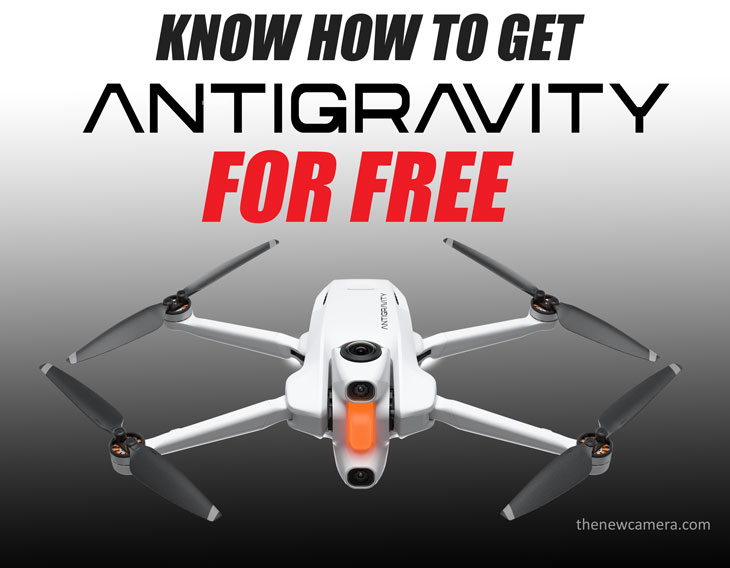
But before that—if you are a social media influencer and have a good following on Instagram, YouTube, or even TikTok—you can apply for a free unit of the InstaGravity 360 8K drone.
This comprehensive guide covers all the details on how influencers can secure their own Antigravity A1 Drone at no cost. We have optimized the entire article to help you navigate easily and also boost your chances for success, so let’s start to explore the steps.
Why the Antigravity A1 Drone Is a Game-Changer for Influencers
The Insta Antigravity A1 Drone offers a very unique perspective control shooting, and the best part is—even after the shooting is done—you can change the perspective wherever you like to. The 8K 360 high resolution offers an intense amount of details. Insta360 starts a new era of drone cinematography.
Another parallel claim made by Insta360 is that the new Antigravity A1 creates FPV-style videos. And hence, you can engage your audience in an intense storytelling environment. Once you have recorded the footage, you can explore the same footage in different ways—since you have recorded a complete 3D spectrum in the highest possible 8K resolution—and later on, you can select your point of view in the video as you like to. You can utilize or explore each of the angles later whenever you like to.
Key Features of the Antigravity A1 That Influencers Will Love
8K 360-Degree Capture: Dual-lens system gives you complete 360 footage very similar to Insta360 X5, perfect for dynamic edits.
Intuitive Grip Controller: Point-to-fly gestures make it beginner-friendly for stunning content creation.
Vision Goggles with Head Tracking: Real-time 360-degree views for an unmatched flight experience.
Lightweight and Portable: At 249g, it’s travel-ready and regulation-compliant in most regions.
Post-Production Flexibility: Reframe footage for multiple angles without quality loss, ideal for social media.
How Influencers Can Get the Antigravity A1 Drone for Free
Antigravity’s co-creation project is where influencers have to take part. It’s an avenue to access the Antigravity A1 Drone without any cost. This program has been announced alongside the drone’s announcement. It carries all the possible initiatives that allow creators worldwide to test the pre-production units, so they can provide their valuable feedback, which will shape the final product.
Insta360 wants you to participate in their beta testing program, and with your valuable feedback, the final product—which is set to arrive in January 2026—will have all the possible modifications as suggested by influencers worldwide.
1. Applying for the Antigravity Co-Creation Project
The co-creation program is actually designed for curious explorers and creative minds—those who love to create content in a unique storytelling way and engage audiences with their exceptional cinematography.
Participants will receive a pre-production unit of the Antigravity A1 to test and create content with—potentially keeping it, depending upon the program terms.
2. What to Include in Your Application:
Platform Details You have to specify your social media platforms (e.g., YouTube, Instagram, TikTok) and provide the follower counts, engagement rate, and analytics links.
Content Focus You have to highlight your niche—for example, if you do reviews specifically related to drones, create travel vlogs, or even if you’re interested in cinematography and love to create creative cinematic videos with drone cameras, you are eligible for getting the A1 8K 360-degree creative drone unit.
Creative Vision That’s the most important part of storytelling. You have to propose unique content ideas you’d love to showcase alongside the A1 drone—like Tiny Planet effects, FPV-style shooting, or any other creative application.
Top contributors will get a share of the $20,000 reward pool, adding extra incentive for you to initiate and participate in this exciting opportunity.
3. How to Maximize Your Shot at a Free A1
Jump in Early: Antigravity’s co-creation window won’t stay open forever—especially with a January 2026 launch on the horizon. Head over to www.antigravity.tech and get your application in today.
Play to Your Strengths: Think about the types of content where the A1 shines—whether that’s sweeping aerial cinematography, in-depth tech breakdowns, or adrenaline-packed adventure vlogs—and tailor your pitch around those.
Show the Numbers: Don’t just say you have high engagement—prove it. Screenshots of Instagram Insights or YouTube Analytics will speak volumes.
Get Imaginative: Stand out with fresh ideas—maybe a 360° fly-through of a historic landmark, or a side-by-side showdown between the A1 and other top drones.
4. What Comes Next (If You’re Selected)
You’ll get your hands on a pre-production Antigravity A1 drone for testing.
You’ll work directly with the Antigravity team, sharing your feedback and crafting content together.
Your input could shape the final retail model, due January 2026.
There’s a slice of a US$20,000 reward pool up for grabs—but whether the drone is yours to keep or just borrow, you’ll want to clarify the fine print before you sign on.
5. Why You’ll Want to Be Part of This
Be First in Line: Imagine being among the world’s first creators to showcase an 8K, 360° aerial powerhouse.
Stand Out: Unique, high-quality footage always turns heads—and this drone is built to deliver.
Boost Your Brand: A partnership with Antigravity/Insta360 looks great on your resume (and your social bio).
Grow Your Following: Cutting-edge gear brings buzz—and more eyes on your work.
6. A Few Things to Keep in Mind
Ownership Details: You’re auditioning for a pre-production unit—make sure you understand whether it’s a loan or a gift before you commit.
It’s Competitive: Lots of talented creators will apply. A standout pitch and strong track record are your best friends here.
Time Commitment: Testing, feedback sessions, video creation—it all takes effort. Be sure you can dedicate the hours needed to do it justice.
Now you are loaded with all the essential knowledge that you must have before submitting your application on the official website. Keep in mind the points we discussed—following these guidelines carefully before filling out the form can increase your acceptance rate by up to 50%.
Thank you very much for reading this article!
ABout the author: The article “How Influencers Can Get the Antigravity A1 Drone for Free: Ultimate Guide to Scoring the World’s First 8K 360 Drone” written and updated by thenewcamera.com team on 8:41 am, Thursday, 14 August 2025, Greenwich Mean Time (GMT)) | Follow us for more updates and Get LIVE RUMORS –> FACEBOOK | TWITTER | INSTAGRAM to get live news — > get live Drone news + DJI Rumors
Insta360 atigravity is now official – here is the official release – Insta360 antigravity A1 official press release – also How Influencers Can Get the Antigravity A1 Drone for Free: Ultimate Guide to Scoring the World’s First 8K 360 Drone. For the first time, Insta360 is entering the drone market with the Antigravity brand. This is very interesting since this is the first drone of Insta360, as well as it falls under 249g and is able to record 8K videos. So this drone will create a completely new user base apart from the existing DJI traditional drones, and specifically, creators, travellers, and aerial footage lovers will surely get this drone to create new and unique content for sure. Now, if you are searching for the latest Insta360 Antigravity drone specifications, features, price, or how it stacks against the DJI drones and their upcoming models, it’s covered here, so let’s explore one by one.
Insta360 Antigravity Drone Launch – August 14, 2025 Details
Insta360 has sparked a wave of excitement among its users and followers who were waiting for a true 360 drone for the first time. With their Antigravity teaser, they have fuelled up the speculations and expectations to the next level. Everywhere you go, you’re going to see drone lovers talking about the Antigravity drone since it’s the first of its kind; otherwise, it’s quite rare to get so much attention for a drone.
Now the official announcement date is confirmed — it’s August 14, 2025, at 9:00 a.m. EDT. The event will happen and will be streamed live on Insta360’s official channels, including their website www.antigravity.tech. At TheNewCamera.com, we will be covering everything related to the announcement, as well as previews, reviews, and comparisons against the existing drones, so stay tuned for more.
Insta360 Antigravity vs DJI Mini 360 – Which One Is Best for You?
We all know about the Antigravity drone — it’s official, and soon its pre-orders will start at B&H Store. But as we know, Insta360 is now stepping into DJI’s domain. And about DJI, They have a huge range of consumer drones, and they dominate the entire global drone market. Yes, they are facing some challenges in the USA due to a potential ban on some specific models unless specifications for security reviews are completed. They are about to complete the process, possibly by the end of December 2025. The customs delays are also disturbing the entire supply chain of DJI drones, creating a kind of market gap. In this specific situation, if Antigravity enters as an option for creators with a user-friendly design, ease of use, and an accessible price, they will surely gain a very good market share.
Now DJI is also preparing to directly compete against the 360 Antigravity drone. The DJI Mini 360, a sub-250g panoramic drone, is about to arrive later in 2025 or in the first quarter of 2026. We have covered the DJI Mini 360 drone in one of our latest articles — if you are interested in knowing more about that, you can look at it here: DJI Mini 360 Price, Specification and Release date – Latest Rumors and Updates 2025
Insta360 Antigravity vs DJI Mini 360
In the specification comparison table below, we have compared the known specifications of the Insta360 Antigravity drone against the DJI Mini 360.
Feature
DJI Mini 360 (Rumored)
Insta360 Antigravity
Weight
Sub-250g
sub 249g
Camera
8K 360-degree
High-res panoramic, 8K 360
Launch
Late 2025
August 2025
Price
Starts from $729
Available from January 2026
Strengths
DJI ecosystem integration, obstacle avoidance
Innovative anti-gravity tech, VR focus
Insta360 Antigravity Drone Features – 8K 360 Capturing Capability with a Lightweight Design
You already have a confirmed set of information/specifications related to the Insta360 Antigravity drone, and here they are:
Ultralight Design – At under 249g, it avoids the requirement of FAA registration before you take off, so it’s one of the best things to have with your drone when it’s under 249g.
8K 360 Capture – That’s a really unique thing for a drone. It’s the world’s first drone to capture 8K 360 aerial footage with its dual-lens system that covers a full spherical video, allowing post-flight reframing to VR, social media, or even professional content creation.
Easy to Handle – Early testers of the prototypes say its design and control are as easy as DJI drones. So being a new player in the field doesn’t mean you have to struggle with controls or learn something completely new.
Smart Safety Features – Obstacle avoidance, payload detection, and other safeguards are there to ensure safe and responsible flights under drone regulations.
Community-Driven Innovation – Insta360 is asking its users to contribute in the development of the Antigravity brand. The Antigravity Hub lets users submit their ideas for features and updates. It’s a collaborative community that inputs user data in raw form and processes it for innovation in upcoming drones.
Leaked Antigravity Drone Specs – What Early Prototypes Reveal
We have published many recent leaks related to the upcoming Insta360 drone. In one of the leaks, we have very clear images of the Insta360 drone being tested in the wild. You can clearly view the image of the Insta360 drone on the backpack of a car.
Beta tester images reveal that the Insta360 Antigravity drone also exhibits FPV-style capabilities. You can see that the user of the Antigravity drone is using potential accessories like goggles to control the flight, similar to DJI Goggles for DJI drones. So not only the drone, a huge range of accessories is about to arrive alongside it.
Antigravity Drone Price [Updated on September 7, 2025]
Bundle Tier
Inclusions
Estimated Price Range (USD)
Notes
Standard Bundle
Drone + Grip controller + Vision goggles
$1,199–$1,399
Entry-level
Fly More Combo
Standard bundle + 2 extra batteries + spare props + carrying case
$1,300–$1,499
Mid-tier bundle aligning
Creator/Pro Kit
Fly More bundle + creative mounts + ND filters + editing software voucher + premium case
$1,500–$1,699
Premium consumer bundle
Enterprise Add-Ons
Pro Kit + commercial extras (e.g., SDK access, extended warranty)
$1,700–$1,999
Niche tier for business users
Why Antigravity Could Redefine Aerial Storytelling in 2025
We have to understand this differently. The first thing is that DJI is already facing a lot of potential challenges in the US market, and for this reason, the Insta360 Antigravity brand will get a deep push. Another important factor is that content platforms like Apple Vision Pro or the Meta Quest actually require 360 content, and having a 360 drone will open new space to produce content for VR platforms. So it’s a kind of boon for Insta360 right now. The market is fully ready to welcome a new drone player with innovative technology.
How to Watch the Insta360 Antigravity Launch Event Live
On August 14, 2025, the Insta360 Antigravity drone will become official, and you can watch hands-on demos, full specifications in detail, as well as pre-ordering details and everything else. The announcement will be streamed live on the Insta360 YouTube official channel as well as on www.antigravity.tech. You can follow TheNewCamera.com for real-time updates on August 14.
The Insta360 Antigravity drone is a new breed in the drone industry. We have never seen a 360 drone before the arrival of the Insta360 Antigravity. Yes, DJI is about to join the party later this year or possibly in Q1 of 2026, but before that, the Insta360 Antigravity release will reshape the drone industry in a different and new way.
ABout the author: The article “Insta360 Antigravity Drone – August 14, 2025 Launch, Specs, Price” written and updated by thenewcamera.com team on 1:46 pm, Tuesday, 12 August 2025, Greenwich Mean Time (GMT) | Follow us for more updates and Get LIVE RUMORS –> FACEBOOK | TWITTER | INSTAGRAM to get live news — > get live Drone news + DJI Rumors
If you are looking for the best 8K 360 action camera in 2025, you have the DJI Osmo 360 as well as the Insta360 X5. In this particular article, we are going to compare both. One features a larger 1-inch sensor, and the other utilises 5th-generation technology — the Insta360 X5 is the fifth generation of the 360 action camera series. So, which one has superior technology and which one will give you clearer, better low-light HDR videos? We will compare both and determine which one is best suited for you.
Table of Contents
Introduction
Still Image Performance Comparison
Video Performance
360 Video Performance
Real-World Performance Insights
Editing and Workflow
Accessories and Ecosystems
Conclusion: Which 8K 360 Camera Wins in 2025?
Who captures better still images — the DJI Osmo 360 or the Insta360 X5?
The Insta360 X5 is actually marketed as an 8K 360-degree action camera, and on the other side, we have the DJI Osmo 360, which uses a larger 1-inch sensor. So let’s have a quick look at the major features of both, and then we will compare.
Still image performance comparison
DJI Osmo 360 — high-resolution powerhouse – Let me explain why. The reason is that the DJI Osmo 360 uses dual 1-inch sensors to deliver stunning 120 MP high-resolution images. The images have the highest possible amount of detail due to the 120 MP resolution, and at the same time, they are captured on the largest sensor area. The shadows and highlights are very well controlled, and the camera also has a Super Night mode that shines in low light and produces ultra-clean images with minimal grain or noise, whatever you call it. So the DJI Osmo 360 is an ideal camera for those who are professional photographers and love to have details with less noise in their JPEG outputs, although that also creates limited flexibility.
Insta360 X5 — the flexible editing master – The Insta360 X5 is limited to 72 MP still images, and most of the processing of the Insta360 X5 is done in-camera. The images of the Insta360 are also vibrant in colour and offer low noise, especially if you use single-lens mode. The Insta360 also offers RAW DNG support. Overall, having a smaller sensor is a bit less effective in low-light scenarios, where the DJI Osmo 360 holds up very well.
Still Image Comparison Table
Feature
DJI Osmo 360
Insta360 X5
Image Sensor
1″-Type CMOS (2 Lenses)
1/1.28″-Type CMOS (2 Lenses)
Sensor Resolution
120 MP (15,520 x 7,760)
72 MP (11,904 x 5,952)
Still Image Format
JPEG
DNG / INSP
Maximum Resolution
120 MP, 30.72 MP (6400 x 4800)
72 MP, 18 MP (5,888 x 2,944)
Verdict — The DJI Osmo 360 is the best high-resolution 360-degree camera, especially if you love to shoot still images in low-light situations, whereas the Insta360 X5 offers RAW images and single-lens versatility. But I will give more marks to DJI at this moment due to the presence of a larger sensor and better low-light sensitivity, combined with high resolution.
Video performance
DJI Osmo 360 — cinematic versatility – The DJI Osmo 360 camera offers 8K video recording up to 50 frames per second and 4K videos up to 120 frames per second in single-lens mode. It delivers cinematic footage with 10-bit D-Log M, enabling professional grading in the recorded file. As you know, the DJI Osmo 360 uses a larger 1-inch sensor, and that leads to cleaner low-light 360 footage. Even the shadows have details, and the bright areas (highlights) also exhibit a greater amount of detail due to the better dynamic range of the sensor.
Insta360 X5 — quick and vibrant – The Insta360 X5 records 8K videos at 30 fps, further enhanced by PureVideo AI noise reduction. When we use this specific software, which is available in the Insta360 5th generation camera, it cleans up noise in the entire video. It performs exceptionally well in low-light environments, especially when using single-lens mode. The second thing we have is Adaptive Tone Mode, which balances the colour instantly. Since Insta360 has been making 360 cameras for years and this is their 5th generation camera, in-camera software noise reduction is very refined — Insta360 X5 performs really very well.
Video Comparison Table
Feature
DJI Osmo 360
Insta360 X5
Max Video Resolution
7680 x 3840 (8K) @ 25/30/48/50 fps
7680 x 3840 (8K) @ 30/25/24 fps
Video Format
MP4 (H.265/HEVC), 10-bit D-Log M
MP4 (H.265/H.264), 180 Mb/s
Frame Rates
Up to 240 fps (3840 x 960)
Up to 120 fps (4K)
Single-Lens Modes
4K120 (170° FOV), 5K60 (155° FOV)
4K60, MaxView 4K30 (170° FOV)
Verdict — As you know, the DJI Osmo 360 camera features a larger sensor as well as higher frame rates while recording 4K videos. And you also get broader dynamic range, giving you more opportunity to work with shadows and highlights while color grading. On the other side we have the Insta360 X5 — it excels for quick, vibrant footage with AI enhancements. So if you want fast footage that looks really good out of the camera, then Insta360 X5 should be your priority.
360 video performance
DJI Osmo 360 — professional-grade immersion – The DJI Osmo 360 camera has the advantage of recording 8K videos at 50 frames per second, paired with HorizonSteady and RockSteady 3.0 image stabilization. With the help of these advanced EIS systems, the DJI Osmo 360 is able to deliver ultra-smooth footage.
The only issue someone may face is external stitching in the workflow.
Insta360 X5 — seamless creativity – The Insta360 X5’s 8K video recording mode is limited to 30 frames per second, although it also delivers smooth footage while recording 360 video. The other advantages we get are AI reframing modes, time-lapse, and 8K TimeShift. All these are vibrant modes developed over time depending on user demand. The most important thing is the in-camera stitching of multiple files, which simplifies the editing process — something that is missing in the DJI Osmo 360. They may bring it with an update or maybe in the next version. Some people find it useful to edit manually, but for those who love fast-paced editing, the Insta360 is the call.
360 Video Comparison Table
Feature
DJI Osmo 360
Insta360 X5
Field of View
360°
360° (170° per lens)
Max Resolution
7680 x 3840 (8K) @ 25/30/48/50 fps
7680 x 3840 (8K) @ 30/25/24 fps
Stitching Method
External program required
In-camera or app-based
Special Features
HorizonSteady, RockSteady 3.0
AI reframing, 11K time-lapse
Verdict — Overall, the DJI Osmo 360 is professional-friendly, offering a larger sensor and faster frame rates for more control over the workflow. At the same time, the Insta360 X5 prioritises creators’ time and gives you basic in-camera stitching modes and preloaded software features that help you speed up your workflow.
Real-world performance insights
Low light and weather performance
DJI Osmo 360 — The camera features a larger 1-inch sensor and Super Night mode, producing clean and grain-free footage in rainy, overcast nights, especially when you face situations with strong shadows and highlights.
Insta360 X5 — PureVideo mode. The Insta360 X5 is powered by dual AI processors, and that’s why, despite having a smaller sensor, it is able to deliver clear and vibrant low-light footage when used in single-lens mode — and it does it very effectively.
Battery life
DJI Osmo 360 – Features a 1950 mAh battery offering around 100 minutes of recording time while using 8K video.
Insta360 X5 – Features a 2400 mAh battery that delivers 88 minutes of backup while recording 8K and approximately 185 minutes of backup while recording 5.7K in Endurance mode.
Standby battery power consumption is better managed in the Insta360 X5. The Osmo 360 needs an update to improve its battery efficiency performance.
Audio performance
DJI Osmo 360 — Features 4-channel AAC audio capability and has DJI Mic / Mic 2 compatibility, so you don’t need any extra receiver. You just buy the DJI wireless microphones and they will automatically pair with the DJI Osmo 360 camera.
Insta360 X5 — Has Wind Guard and intelligent audio mode so your sound is clear in windy conditions, but it doesn’t support any external microphone like the Osmo 360 does.
Battery and Audio Comparison Table
Feature
DJI Osmo 360
Insta360 X5
Battery Capacity
1950mAh, ~100 min at 8K
2400mAh, ~88 min at 8K, ~185 min Endurance
Battery Test
92% after filming, 84% overnight
97% after filming
Audio
4-channel AAC, DJI Mic support
Wind Guard, intelligent audio
Verdict — Insta360 X5 offers better battery life due to better battery management during standby mode. In audio, DJI Osmo 360 excels because of its external microphone capability. In low light, the camera with the larger sensor will perform better.
Editing and workflow
DJI Osmo 360 — DJI Studio and Mimo provide excellent subject tracking and locking onto moving or running subjects. 3D object tracking works flawlessly in DJI Studio or the Mimo app. But while editing the DJI Osmo 360 files, the limited reframing options and odd file naming in DJI Studio sometimes hinder the workflow. Although we do have an option to use the Adobe Premiere plugin – that’s a plus point.
Insta360 X5 — Insta360 Studio’s underwater colour tuning is exceptional, turning everything into vivid, true-to-life colours. Other than this, ND filter correction and AI Frame automatically frame your shots accurately. Since the Insta360 X5 is the 5th generation of the Insta360 series, in this time they have developed their app very well, so a user can easily process files without any hassle.
Verdict — The Insta360 X5 editing suite is much more mature and user-friendly. The DJI Osmo 360 excels in tracking and low-light performance, and it also has the basic editing tools a camera should have, but over time it will evolve — not as simple as Insta360 Studio right now.
Accessories and ecosystems
DJI Osmo 360 — We have already listed the top 10 best accessories for the DJI Osmo 360 camera, including a battery grip that enhances performance. This is just the beginning — very soon we will have multiple third-party accessories for this camera. Ecosystem-wise, DJI is mature and offers cross-system connectivity, including integration of their wireless mics with the camera.
Insta360 X5 — Right now, there are lots of third-party accessories available for the Insta360 X5, so you can easily mount your X5 on a motorcycle, bike helmet, or anywhere else. Since a lot of third-party accessories are available, accessories-wise the Insta360 X5 is a clear winner — but ecosystem-wise, DJI Osmo wins.
Conclusion — which 8K 360 camera wins in 2025?
The DJI Osmo 360 delivers exceptional still images and 8K50 video with its larger 1-inch sensor, so you will be getting professional-grade quality output from this tiny camera in ultra-low light or bright conditions. However, when it comes to editing, external stitching of multiple files may not be convenient for some users since it takes more time. On the other hand, the Insta360 X5 does in-camera stitching, and the app also supports AI-driven editing.
Final verdict
DJI Osmo 360 — One of the best professional 360 cameras ever made. It requires a bit more time in editing, but the overall footage, low-light performance, and cinematic video quality are the best, irrespective of the complex workflow. If you can handle it, this is the best.
Insta360 X5 — Best for vloggers and content creators who do not want to spend much time in editing and love to have simple, easy-to-set-up 360 video for day-to-day travel coverage. Best for easy editing and a simple workflow.
So that’s the detailed comparison between the two cameras. Let me know if you have questions. Thank you very much for reading this article — stay updated with thenewcamera.com.
At TheNewCamera.com, we’re dedicated to keeping you informed about the latest camera news. The article “DJI Osmo 360 vs Insta360 X5 – 2025 Comparison” was published on7:04 pm, Friday, 8 August 2025, Greenwich Mean Time (GMT) by thenewcamera.com team | Follow us on our social pages FACEBOOK | TWITTER | INSTAGRAM to get live Drone News+
Buy Canon Lenses, Buy Music CD or Digital Camera at amazon it helps this site, and you do not pay anything extra, it is just a way to help support this site.
New Camera Website, we list all type of new camera information, price review and all type camera rumors, subscribe us or follow us via twitter or facebook.
Disclaimer: We have attempted to select useful information to include on New Camera, and to ensure that the resources we have included on the site -- as well as the way we have described them -- are accurate, fair, and balanced. However, we make no claims, warranties, or other representations concerning the accuracy, completeness, or utility of the information provided, or concerning the abilities or performance of the organizations, agencies, companies, and other resources presented through New Camera


 BOX for Latest NEWS and Rumors