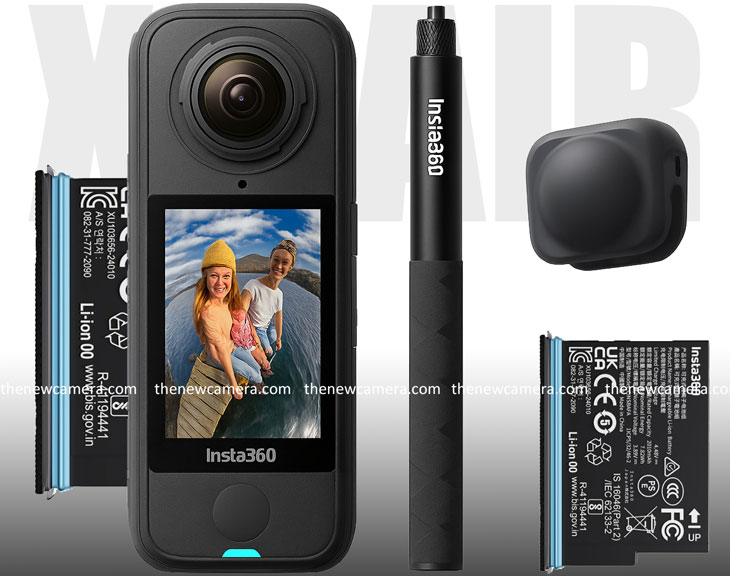
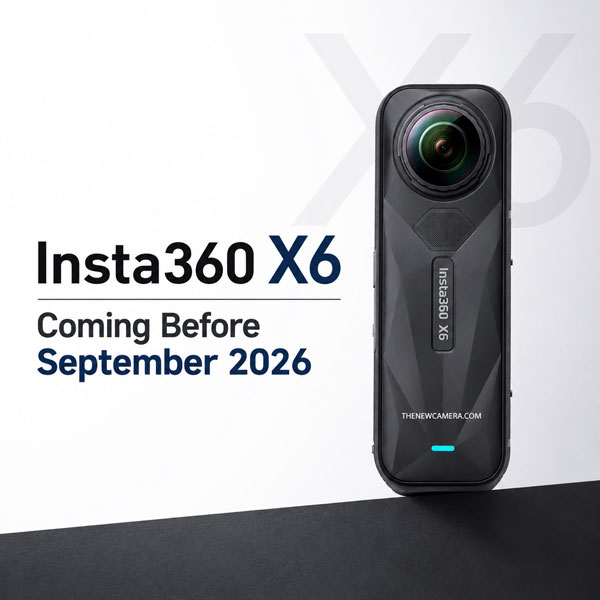
The Insta360 X6 rumours are heating up fast after the camera cleared full FCC certification on July 3, 2026. With our previous coverage on the certification details and tightening launch window, many US creators are now asking the practical question: Should I buy the X5 now, or wait for the X6? So let’s explain here why the camera is coming before Sep of 2026, and should you wait for it or not, depending on price factor and features or X5 is still a better option.
Historical launch pattern of the Insta360 X series
Model
Regulatory / FCC Timeline
Official Announcement
Gap
Insta360 X3
FCC cleared in August 2022
September 8, 2022
~3–5 weeks
Insta360 X4
FCC & regulatory approvals in March 2024
April 16, 2024
~4–6 weeks
Insta360 X5
FCC & global certifications in March 2025
April 22, 2025
~4–6 weeks
Insta360 X6
FCC Grant: July 3, 2026
Predicted: Late August – Early/Mid September 2026
~6–10 weeks (estimated)
Why the Insta360 X6 Is Expected Before September 2026 – Detailed Timeline Analysis
Let us, explain step by step why the Insta360 X6 is coming in late August to early/mid-September 2026. Let’s start with the FCC grant, and then we will move forward.
FCC Grant Date: July 3, 2026. The filing includes detailed test reports for Wi-Fi (2.4 & 5 GHz), Bluetooth, and SAR (Specific Absorption Rate) compliance — everything needed for legal US sales.
Historical Precedent from Insta360:
Both the X4 and X5 followed a very consistent pattern: FCC certification → announcement in 4–8 weeks → shipping shortly after.
This timeline has held steady across recent flagship releases.
Multi-Region Certification Pattern: Clearances in the USA, China (March), UAE (March), and India, followed by the US in early July, mirror the exact sequence used for previous models. This coordinated approach usually signals a global launch is weeks away, not months. As usual, they need to clear up the stock of the existing models to make the new ones.
Industry Norms: Consumer electronics companies (like Insta360) rarely sit on FCC-approved products for long. From the Date of Registration of the product, they generally announce the product within the FCC Deadline period.
Current Consensus Across Sources: Photography sites, Reddit communities (r/Insta360), and YouTube analysts all align on a late August to September 2026 window. No major delays have been reported.
Bottom line for US readers:
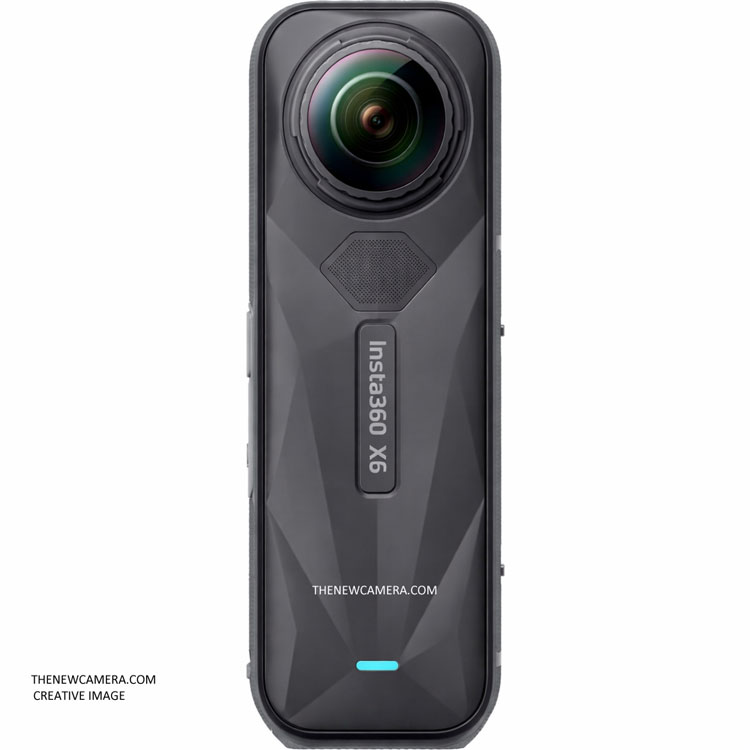
Insta360 X5 is, without a doubt, one of the best 360 cameras for Moto bloggers and for those who love to capture everything while they are moving. The next-generation X6 will have a drastic set of improvements, as usual for Insta360′s products. And since we do have confirmation about the arrival of the product, that clearly indicates the announcement is near. As soon as the announcement date approaches, we will have more and more information, for example, images as well as the detailed core specifications of the upcoming camera.
Insta360 X5 vs X6 Rumored Specs Comparison
Feature
Insta360 X5 (Shipping Now)
Insta360 X6 (Rumored)
360 Video
8K at 30fps
8K at 60fps
Single Lens Video
5.7K60fps
5.7K120fps (expected)
Sensors
Dual 1/1.28-inch
Larger (1-inch or improved)
Still Photos
72MP
100MP+
Low Light & HDR
Very Good
Significantly Better (rumored)
Battery Life
Excellent (~3 hrs)
Similar or slightly better
US Launch Price (est.)
$499–$549 street
$549–$599 MSRP
Who Should Buy the X5 Right Now
You have shoots, vacations, or client work in the next 6–10 weeks.
You want immediate access to a fully mature camera with widespread accessories and proven performance.
You prefer saving money — the X5 is widely available at competitive prices today.
Who Should Wait for the X6
You shoot a lot of fast-action or low-light 360 content where 8K60 and better sensors will make a real difference.
You don’t mind waiting until late August or September.
You want the newest flagship with future-proof features.
Final Recommendation
If you need a 360 camera this summer, buy the X5 now — it’s an outstanding product that won’t disappoint.
If you can wait 6–10 weeks and want maximum performance, hold for the X6.
We’ll update this article the moment Insta360 makes the official announcement. Drop your plans in the comments — are you buying the X5 or waiting for the X6?
Last updated: July 10, 2026
Sources: Official FCC database, Insta360 historical patterns, cross-verified industry reports.
The article “Insta360 X6 Coming Before September 2026” was written by thenewcamera.com team on 9:28 am, Friday, 10 July 2026, Greenwich Mean Time (GMT) | You can also follow us on Our Official Social Media HandlesFACEBOOK | TWITTER | INSTAGRAM> get live news — > DJI Rumors
Insta360 is expanding its horizons. Now they are about to announce their own Polaroid-style camera, but wait, it’s not completely new, we have the Ace Pro 2 body, with a Polaroid grip attached with an instant Printer that allows you to quickly print your memories on the go, very similar to all the other Polaroid-style OR Fuji instant cameras. We have already seen the teaser (below). The official announcement is about to happen on November 12, 2025. It’s better to say it’s an accessory or an extension of your existing Pro two camera, which will allow you to use it as a Polaroid camera/an instant camera..
The Insta360 Polaroid Teaser: Restart of a Golden Era
Insta360 just dropped a teaser on November 6, 2025, on its official X account, with a caption stating that the action cameras are not for extreme sports. Anymore brand-new Insta360 S Pro two bundles on November 12, so this particular line of saying completely explores Insta360’s intention by not limiting itself to the action camera category. They want to expand their range as much as possible, and specifically in 2026, we have already seen that they are about to introduce a new range of consumer 360 drones in the market is starting with the antigravity A1, following up with the antigravity new/nano drone.
Visuals in the teaser reveal a modular grip that ergonomically cradles the Ace Pro 2, complete with a tactile knurled dial ( exposure or mode selector), a dedicated shutter button, and a rocker switch for quick zoom or focus adjustments. The printer module, integrated into the grip’s base, hums to life post-capture, dispensing square-format prints approximately 2×3 inches—thinner and sleeker than traditional film, hinting at Zink (zero-ink) technology rather than chemical-based Polaroid or Instax media. No audio narration beyond ambient “heat” effects and upbeat music underscores the print ejection, but overlaid text promises “enhanced control” and “exciting new accessories,” building hype without spoiling specs.
This isn’t Insta360’s first foray into grips – the earlier Xplorer Grip Kit (launched mid-2025) added basic handles and buttons—but the instant-print option elevates it to full “cosplay as a street photography camera” territory, as one analyst put it.
Insta360 Instant / Polaroid Style Camera Key Features: Expected
Take a look at the specification of the Insta360 Polaroid edition, : Let’s explore the specification now
Core Compatibility: The Creator grip is designed exclusively for Insta360 Ace Pro 2, the camera features 8K recording capability, and resolution of 50 Megapixel (8192 x 6144), which is more than enough to print high-quality instant images on the go. We have 13.5 stops of dynamic range and the camera’s 1/1.3-inch sensor for sharp, vibrant stills before instant output.
Printing Tech: The printer is Zink-based, prints via heat-activated colour crystals embedded in special paper. Prints emerge in seconds, with visible text and colours developing in real-time (as glimpsed in the teaser). Expect “print-only-what-you-want” functionality, allowing post-capture selection via the Ace Pro 2’s flip screen.
Ergonomic Upgrades: The Content creator grip features a premium knurled dial for intuitive settings tweaks. In the grip, we are also getting a responsive shutter release and a zoom rocker. Sure, it will add some bulk weight over the camera, which will be estimated at 200-300g.
Creative Modes: Sure will have AI integration for auto-enhancing prints, the Ace Pro 2 camera, and optimise for the prints. In the near future, we will have multi-size options like Instax Evo hybrids. Waterproofing might extend to the grip, but the printer could be splash-resistant only.
Battery and Storage: Our Ace Pro 2 features a large 1800mAh battery; Zink paper refills sold separately, ensuring recurring revenue like Instax film packs.
Pricing remains under wraps, but expect $150-250 for the kit, positioning it as an affordable add-on to the $400 Ace Pro 2 body. No standalone “Polaroid camera” branding yet – it’s framed as an Ace Pro 2 bundle to leverage the action cam’s ecosystem.
Feature
Details
Comparison to Instax Mini Evo
Sensor/Resolution
8K video, 48MP stills (Ace Pro 2 base)
16MP hybrid sensor
Print Tech
Zink (dry, durable)
Instax film (chemical, vintage look)
Print Size
~2×3 inches (square)
2.1×2.1 inches (credit-card style)
Controls
Knurled dial, shutter button, rocker
Touchscreen + dials
Price (Est.)
$150-250 kit
$200 camera body
Unique Edge
AI editing + action cam ruggedness
Pure analog charm
Taking on the Instax Empire: Why This Matters
Insta360 is selecting its competitor very wisely; they are entering into a space of high revenue with less competition or a set of investments. They have started with Antigravity A1 series 360 drones, since they already have mastered 360 camera tech, and now it’s time to conquer 360 space with the A1 series. Fujifilm’s Q2/H1 FY2025 earnings (released November 6, 2025). The table projected a full FY2025 Instax revenue of ¥160-170 billion. The Instax and Polaroid series have a very large consumer base, even though the fact is that the biggest part of Fuji Imaging division revenue comes from Instax series cameras and print papers, and not from their pro mirrorless camera range.
Do, Finally, Insta360 is expanding its wings, although we are waiting for the Insta360Ace Pro 3 camera. of our sources tipped us close group of pro content creators and reviewers already have the Ace Pro 3 camera. Although as we get more information on the Ace Pro 3, like. Leaked images, announcement date, or specs will post a separate update here on thenewcammera.com
Till then, let’s enjoy the polaroid-style camera from Insta360
GET LIVE NOTIFICATION, Select Your Trusted Source GET LIVE NOTIFICATION Click ON Check BOX for Latest NEWS and Rumors
The article “Insta360 Polaroid Camera Kit: Teasing Instant Prints for the Ace Pro 2 Action Cam” was written by thenewcamera.com team on 11:35 am, Sunday, 9 November 2025, Greenwich Mean Time (GMT) | You can also follow us on Our Official Social Media HandlesFACEBOOK | TWITTER | INSTAGRAM to get live news — > get live get live Camera News + Insta360 Drone Rumors 24X7
The Insta 360 X4 Air is a lightweight budget 360 camera; even though it’s a beginner camera, it does have a swappable battery system like the Insta 360 X4, but it has 70% less weight with a built-in battery that allows you to record 8K videos up to 1 hour and 30 minutes, for a total runtime. The Insta 360 X4 Air has a tagline of – “Pack light, shoot 8K” – delivering flagship-level performance in a Budget body that’s primed for vlogs, and on-the-go adventures. In this article, we will cover in detail the Insta360 X4 Air: from its detailed set of core specifications, as well as its pricing, to how it stacks up against the original X4 (Specs comparison between both cameras). Stay ahead of the curve – the worldwide launch is set for October 28, 2025.
What Is the Insta360 X4 Air? A Quick Overview
The Insta360 X4 Air is a next-gen 360° camera, specifically designed for beginners looking for a budget 8 K 360 camera, offering maximum portability and creative freedom. The X4 air isn’t similar in terms of core specification compared to the original (OG) X4 camera. The Insta360 X4 Air prioritizes portability and budget, but at the same time, despite being tagged as an entry-level or beginner’s 360 Camera, it does record HQ 8K videos. As we mentioned at the beginning, this is ideal for users who prioritise lightness over modularity. At just 165g and with dimensions of 46 x 113.8 x 37 mm, it’s about 70% smaller than its predecessor, perfect for mounting on drones or clipping to everyday gear.
Specification-wise, in the Insta360 X4 Air, we have dual 1/1.8-inch CMOS sensors to capture 8K 360° video, Insta360’s popular FlowState stabilisation for buttery-smooth footage, and the signature Invisible Selfie Stick effect for impossible angles. On the other hand, despite having a lightweight body, the X4 AIr is it gains in robustness with reinforced waterproofing up to 15 meters, compared to 10m for the X4.
Insta360 X4 Air Full Specifications
The X4 Air is said to feature Dual 1/1.8-inch CMOS sensors, an f/1.95 aperture, with 8K Video recording capability. Here is the full specification of the Insta360 X4 Air
Bluetooth Low Energy 5.2, 802.11ac Wi-Fi, USB 3.0 Type-C, microSD card slot
Battery
2,010 mAh built-in (swappable), up to 90 minutes runtime, full charge in 57 minutes (9V/2A)
Durability
15m splash resistance
Dimensions & Weight
46 x 113.8 x 37 mm, 165g
Colors
Arctic White, Graphite Black
Other Features
Simplified button layout, app integration for reframing and AI editing
If ur looking for a versatile tool, then for sure Insta 360 is an excellent choice for creating 8k videos, but what are the major differences between the Insta360 X4 Air and the OG , lets find out, starting from the sensor size, the X4 Air has slightly smaller sensor size (compared to the X4’s 1/1.2-inch), but despite of that, it still delivers sharp 8K output with low-light tweaks via software.
Insta360 X4 Air vs. Insta360 X4: Key Differences
Form factor, portability, budget vs video quality, which one do you prefer more? Here’s a side-by-side comparison to help you decide:
Size & Weight: The Insta360 X4 Air is 70% more compact compared to the X4 (OG) (165g vs. X4’s ~203g)
Sensor Size: 1/1.8-inch on Air vs. larger 1/1.2-inch on X4 – expect slightly better low-light on the original at low-light and night shoot, for sunny day shoot, both sensors are highly usable
Battery: The Lightweight X4 Air’s built-in 2010mAh lasts 90 minutes (best for shorter city-to-city ride/street vlogs capture) (swappable for sleeker profile); X4 offers longer runtime (~135 minutes) with hot-swappable batteries (wth X4 original, you have to just swap batteries after 135 min and continue recording).
Durability: Both handle splashes, but X4 edges out with 10m waterproofing (Air is splash-only without a case).
Price: Air starts lower (~$350 launch price est. vs. X4’s $500 launch price), targeting budget-conscious users.
Shared Strengths: 8K 360° video, FlowState gimbal-like stabilisation, and Invisible Selfie Stick on both.
If you’re upgrading from an X3 or older, the Insta360 X4 Air’s refinements make it a no-brainer for lightweight shoots and also come in budget. For professional style, longer hours of shooting get the X4 and X5
Pricing and Availability: When Can You Get the Insta360 X4 Air?
Excitement is building, but patience is key:
Launch Date: Insta X4 Air Official announcement date October 28, 2025 – worldwide rollout, excluding Canada and the US initially (those markets follow shortly after).
Pricing:
~$350 launch price est (USA)
Base Model: €399.99 (~$350 USD estimated).
Starter Pack (with additional accessories, including mounts): €429.99.
Where to Buy: Pre-orders to pop up on Insta360’s official site and retailers like Amazon and B&H Photo soon after announcement.
Insta360 X4 Air is a perfect balance of price and features. If ur looking for a budget and lightweight 360 camera, then for X4 Air can be a perfect choice for you. Since the 8K 360° becomes the gold standard for VR and social media, it’s an awesome tool to start your 360 vlog journey.
ABout the author: The article “Insta360 X4 Air: Leaked Specs, Pricing, and Release Date for the Ultimate Compact 8K 360° Action Camera” written by thenewcamera.com team on 6:05 am, Wednesday, 22 October 2025, Greenwich Mean Time (GMT) | Follow us for more updates and Get LIVE RUMORS –> FACEBOOK | TWITTER | INSTAGRAM to get live news — > get live Drone news + DJI Rumors
According to the latest information, Insta 360 Ace Pro 2, Lens guard will have a cosmetic redesign and will be announced soon. We have been holding this for more than a week, just to get the Final image of the camera with the new lens guard. It does have a minor tweak in the lens guard design section; other than that, the internal specification will remain the same. A new series of Ace Pro 2 will now arrive with the cometically updated lens guard, upgrading the overall look of the Ace Pro 2 action camera. Hence, if you are an existing owner of the Ace Pro 2 Camera, then no need for an update. Just keep your Ace Pro 2 until the Ace Pro 3 comes out, so you are an existing owner of the Ace Pro to Camera, then no need for an updated camera for now.
Update #2: The latest firmware update includes a Lens Master category with the naming of a filter they don’t sell, the Black Mist Filter. Don’t get confused with the mist filter here; we are talking about Black Mist Filter, which is also available via third-party sellers. So, not only a cosmetic update over the guard design, but a new series of Ace Pro 2 will have more lens filter options soon.
Key Updates in the Insta360 Ace Pro 2
Just before the lens guard cosmetic update, Insta360 Ace Pro 2 has received a refreshed variant of the Arctic White Limited Edition, which was introduced back in September 2025. This edition also features exactly the same core specification as we have seen in the OG original Ace Pro 2, which includes 8K sensor resolution and high-grade co-engineering with Leica, powered by dual AI chips. With the help of the AI chip, the Ace Pro 2 can capture clear night shots with the help of the latest image and video processing AI algorithms. On the rear side, we also have a 2.5 Inch tilting display screen, highly useful for creating vlogs on the go for solo content creators, and waterproofing up to 12 meters (39 feet). All these specifications look very impressive even at the end of 2025, and I don’t think so, for now we need a major update in the core specification of the camera.
Notable aspects of this update include:
Lens Guard Enhancements: The design incorporates a more durable round lens guard to minimise issues like gasket loss and prevent fog in the camera, an cosmtaic update not only to upscale the look but also to upscale the user experience of the existing camera.
Accessory Integration: While most gear remains compatible, some older filters or caps may need minor adjustments, such as custom 3D-printed solutions, to fit perfectly.
Firmware Additions: Recent updates introduce a “Lens Master” section with advanced filter options, hinting at future accessory expansions not yet available from Insta360.
The Rationale Behind the Refresh: Patents and Competition
The timing of this Ace Pro 2 cosmetic update may be linked to broader strategic moves. Insta360 has navigated patent challenges with competitors like GoPro in the past, particularly around stabilisation technologies, many of which have been resolved in their favour. The shift to a rounded lens design will make them distinguish it from rivals, and so reduce the risk of potential legal overlaps.
Insta360 Ace Pro 3: Arrival Date
We have recently got an arctic white series update for Ace Pro 2, and this month, in October, we have a facelift edition, although these are not major updates, minor tweaks, but that also indicates for now, Insta360 is still busy upscaling its Ace Pro 2 camera. AT the very same time, the camera can record 8K resolution and can compete against the latest glaship action cameras.
Now Hero 14 announcement is overdue, and the DJI Action 6 is rumoured to arrive this month. And after these major updates, we do believe Insta Ace Pro 3 will make its entry in the battlefield, and this is a common practice between the brands to stay ahead in the competition by tweaking their camera specs by scrutinising competitor specs and releasing their final versions to lead the market.
Speculation around the Insta360 Ace Pro 3 centres on a late 2025 debut, potentially it’s delayed for now
Drawing from release patterns:
Ace Pro: Late 2023
Ace Pro 2: 2024
Ace Pro 3: Expected late 2025, or early 2026
Stay tuned, we will post an update as soon as we get any
GET LIVE NOTIFICATION, Select Your Trusted Source GET LIVE NOTIFICATION Click ON Check BOX for Latest NEWS and Rumors
The article “Breaking: Insta360 Ace Pro 2 Redesigned Lens Guard Confirmed – Ace Pro 3 Coming 2026?” was written by thenewcamera.com team on 4:52 pm, Sunday, 19 October 2025, Greenwich Mean Time (GMT) | You can also follow us on Our Official Social Media HandlesFACEBOOK | TWITTER | INSTAGRAM to get live news — > get live get live Camera News + Insta360 Drone Rumors 24X7
Insta360 has recently dropped a teaser, and it looks like they are preparing to announce a new colour variant of their popular Ace Pro 2 model which is scheduled to arrive on September 8, 2025, at exactly 20:00 IST. The upcoming event hints at a White Edition so most probably the Ace Pro 2 White Edition will be announced.
Feature
Specification
Body Color
White
Sensor
1/1.3″ 8K Sensor
Resolution
8K30fps / 4K60fps HDR
Lens
Leica SUMMARIT Lens
Screen
2.5″ Flip Touchscreen
AI Processing
Dual AI Chips
Background on Ace Pro 2
The Insta360 Ace Pro 2 was actually announced back in October 2024 [available on Amazon]. It was a big announcement from Insta360 since it was their first action camera with a 1/1.3-inch sensor and Leica lens paired with dual AI chips. The best part of the camera was its ability to record 8K videos without any significant overheating. The camera also comes with an Xplorer Kit custom-tailored for street photography purposes. Although as an action camera it is highly usable for creating high-quality video content.
The Teaser Reveal
An official teaser image from Insta360 featuring text which can be translated as “New Colour Rebirth” also showcases a surfer framed by a white structure against the vibrant ocean. This recent activity also aligns with the company’s recent trend of offering colour variants, such as the Satin White Limited Edition of the X5 announced on August 5, 2025. The next event is set for September 8, 2025.
Insta360 Ace Pro 3 Rumours
Insta360 Ace Pro 3’s scheduled arrival time is said to be somewhere around the end of 2025, but even before posting today I researched the FCC ID database and was not able to find any registration related to the Ace Pro 3 model. So the chances of Ace Pro 3 arriving in the month of September or October are low.
So most probably it’s the Ace Pro 2 model in White Edition coming on September 8, 2025. We are also waiting for some updates that may bring out new capturing styles or enhance the capability of the existing Ace Pro 2 camera. If the White variant offers more than just a colour update, it would be a great thing without a doubt.
Stay tuned on thenewcamera.com for the latest news and live rumours related to upcoming Insta360 action cameras and anti-gravity drones.
GET LIVE NOTIFICATION, Select Your Trusted Source GET LIVE NOTIFICATION Click ON Check BOX for Latest NEWS and Rumors
The article “Insta360 Ace Pro 2 White Edition Coming on Sep 8, 2025 – Latest Rumors” was written by thenewcamera.com team on4:09 am, Saturday, 6 September 2025, Greenwich Mean Time (GMT)| You can also follow us on Our Official Social Media HandlesFACEBOOK | TWITTER | INSTAGRAM to get live news — > get live get live Camera News + Insta360 Drone Rumors 24X7
Insta360 officially announced the Go Ultra model on August 21, 2025. The new model features a cuboid design and enhanced battery life alongside superior video capabilities that make it one of the best POV cameras to date. The camera is specifically made for adventure content creators and weighs only 52.9 g (alone camera). Although it is slightly heavy, it is packed with more features and power without sacrificing portability, so let’s dive into the full details, including specifications, with the rival DJI OSMO Nano.
Design Upgrades: Compact Yet Feature-Packed
The Insta360 Go Ultra ditches the pill-shaped design of its predecessor and it is now in a stable cuboid body, available in two different shades: one is Midnight Black, and the other is Arctic White. Let’s explore the design highlights of the Go Ultra:
Magnetic mount: The magnetic mount allows you to seamlessly attach the camera even to your clothing. So just like the wireless microphone setups out there, the camera also easily integrates and gets attached with your clothes without putting any extra effort. We also have accessories like the included Magnet Pendant and an Easy Clip.
Front shutter button: We have an LED indicator as well as recording control; video recording can be started with just a touch of a finger.
Hybrid action pod: It is a multipurpose charging dock. It can also be used as a wireless remote control, and it features a 2.2-inch display unit with 180-degree tilting, which helps you to create perfect vlogs while you are travelling.
Waterproofing: The Go Ultra can be dipped 10 M underwater without the need for a case. It has an IPX8 rating.
Dimensions: Standalone: 46×45.7×18.3mm; With Action Pod (closed): 70.4×48.8×33.3mm.
Now this particular modular setup is really very much helpful if you are travelling and love to create content without any hassle or mess, with the camera and charging base in which you have a display screen and it also acts as well as controller it’s a complete package for capturing you and the environment without being noticed, so that’s the best part of the vlogging. The cherry on top thing is that the camera also supports gesture control, so it allows you to do a completely hands-free operation, even sitting far from the camera. At the very same time, we have an AI-powered editing app that automatically detects highlights, adds transitions, and syncs music.
Official Specifications: Power in a Tiny Package
The Go Ultra boasts impressive specs tailored for high-quality content on the go. Here’s a breakdown:
Video Capabilities: 4K at 60fps (highest quality), 1080p at 240fps for slow-motion; supports Active HDR up to 4K30fps, H.264/H.265 encoding, and max bitrate of 180Mbps.
Photo Capabilities: 50MP resolution, HDR Photo, Interval, Starlapse, and Burst.
Sensor and Stabilization: Larger 1/1.28-inch sensor (upgraded from Go 3S’s 1/1.3-inch) with FlowState stabilization and horizon lock for smooth footage.
Audio: Dual microphones with auto wind noise reduction, voice enhancement, and stereo modes; 48kHz, 32-bit AAC format.
Battery Life: Standalone: 500mAh for 70 minutes; With Action Pod (1450mAh): Up to 200 minutes. Fast charging: 80% in 12 minutes for the camera, 18 minutes for the pod.
Storage: No built-in memory; requires a microSD card (up to 2TB supported).
Connectivity: Bluetooth 5.4, Wi-Fi (2.4/5GHz), USB-C 2.0; compatible with select wireless earbuds like DJI Mic 2 and Apple AirPods Pro 2.
Other Features: Gesture control, live streaming, 6-axis gyroscope, ISO 100-6400, shutter speed 1/8000s to 120s, and app-based AI tools.
The great upgrade that we have seen in the new Go Ultra model is really very much appreciable compared to the old Go 3S. At the very same time, this new update will surely help those who use POV cameras in some of the activities like hiking, biking, running, or family vlogs. This is going to enhance the overall performance, including the low-light video. So far this time, the Insta360 hasn’t made any compromises while updating the Go 3S model.
Pricing and Availability
The Insta360 Go Ultra is now available for purchase. You can buy it through the B&H Store as well as at the official Insta360 Store or at Amazon. The camera is now available in selected retailers worldwide. The price of the camera starts from $449.99, and it’s the standard bundle price.
Standard items + Quick Release Mount, Screen Protector, Flexi Strap Mount, Action Mount
Family
$534
Standard items + Quick Release Mount, Mini 2-in-1 Tripod Remote Kit, Toddler Titan Hat Clip
All bundles require a separate microSD card (options like 128GB available at checkout).
How It Compares to the DJI Osmo Nano
Now let’s talk about the compact action camera market since the DJI Osmo Nano official launch is a few weeks away, and that will surely heat up when both are official, and we are going to do a head-on comparison between the two. But before that, we do have the specs sheet of both the cameras, so let’s compare and let’s explore how they are going to perform against each other.
Feature
Insta360 Go Ultra
DJI Osmo Nano (Rumored/Leaked)
Weight (Camera Unit)
52.9g
~40g
Max Video Resolution
4K @ 60fps
4K @ 60fps
Battery Life (Standalone/With Pod)
70 min / 200 min
~60 min / Extended (modular)
Sensor Size
1/1.28-inch
1/1.3-inch sensor
Storage
microSD up to 2TB
Likely internal + microSD (details TBD)
Waterproofing
10m (IPX8)
10m+ (est.)
Display
2.2-inch tilting on Action Pod
Modular screen pod (rumored)
Price (Base)
$449.99
$399–$429 (est.)
Key Edge
Hybrid Action Pod with AI editing and gesture control
Ultra-light focus for minimal setups
In the above comparison, it is very clearly visible that Insta360 Go Ultra edges out with the longer battery performance, as well as thanks to the presence of a larger sensor. We will have better low-light performance and more dynamic range for colour grading purposes. The more dynamic range your sensor has, the better the camera sensor is able to reproduce the colours, specifically in low-light scenarios.
DJI Osmo Nano is for those who prefer lightness and integration to the DJI ecosystem, where you don’t need to buy any additional wireless microphone transmitter, since it is easily integrated inside the camera. On the other side, Go Ultra has integrated display versatility as well as a better sensor.
Why the Insta360 Go Ultra Could Be Your Next Camera
The new Insta360 Go Ultra is a powerful blend of portability and power, actually really refining tiny action cams. Specifically, we have to say POV cameras were made with compromises for solo creators, but this one has the best possible specifications with a slightly larger sensor for better low light performance — all under $449. Bookmark this page for future updates related to the same topic, and of course,e follow us on Facebook, Twitter, and Instagram for more camera news and updates.
Insta360 atigravity is now official – here is the official release – Insta360 antigravity A1 official press release – also How Influencers Can Get the Antigravity A1 Drone for Free: Ultimate Guide to Scoring the World’s First 8K 360 Drone. For the first time, Insta360 is entering the drone market with the Antigravity brand. This is very interesting since this is the first drone of Insta360, as well as it falls under 249g and is able to record 8K videos. So this drone will create a completely new user base apart from the existing DJI traditional drones, and specifically, creators, travellers, and aerial footage lovers will surely get this drone to create new and unique content for sure. Now, if you are searching for the latest Insta360 Antigravity drone specifications, features, price, or how it stacks against the DJI drones and their upcoming models, it’s covered here, so let’s explore one by one.
Insta360 Antigravity Drone Launch – August 14, 2025 Details
Insta360 has sparked a wave of excitement among its users and followers who were waiting for a true 360 drone for the first time. With their Antigravity teaser, they have fuelled up the speculations and expectations to the next level. Everywhere you go, you’re going to see drone lovers talking about the Antigravity drone since it’s the first of its kind; otherwise, it’s quite rare to get so much attention for a drone.
Now the official announcement date is confirmed — it’s August 14, 2025, at 9:00 a.m. EDT. The event will happen and will be streamed live on Insta360’s official channels, including their website www.antigravity.tech. At TheNewCamera.com, we will be covering everything related to the announcement, as well as previews, reviews, and comparisons against the existing drones, so stay tuned for more.
Insta360 Antigravity vs DJI Mini 360 – Which One Is Best for You?
We all know about the Antigravity drone — it’s official, and soon its pre-orders will start at B&H Store. But as we know, Insta360 is now stepping into DJI’s domain. And about DJI, They have a huge range of consumer drones, and they dominate the entire global drone market. Yes, they are facing some challenges in the USA due to a potential ban on some specific models unless specifications for security reviews are completed. They are about to complete the process, possibly by the end of December 2025. The customs delays are also disturbing the entire supply chain of DJI drones, creating a kind of market gap. In this specific situation, if Antigravity enters as an option for creators with a user-friendly design, ease of use, and an accessible price, they will surely gain a very good market share.
Now DJI is also preparing to directly compete against the 360 Antigravity drone. The DJI Mini 360, a sub-250g panoramic drone, is about to arrive later in 2025 or in the first quarter of 2026. We have covered the DJI Mini 360 drone in one of our latest articles — if you are interested in knowing more about that, you can look at it here: DJI Mini 360 Price, Specification and Release date – Latest Rumors and Updates 2025
Insta360 Antigravity vs DJI Mini 360
In the specification comparison table below, we have compared the known specifications of the Insta360 Antigravity drone against the DJI Mini 360.
Feature
DJI Mini 360 (Rumored)
Insta360 Antigravity
Weight
Sub-250g
sub 249g
Camera
8K 360-degree
High-res panoramic, 8K 360
Launch
Late 2025
August 2025
Price
Starts from $729
Available from January 2026
Strengths
DJI ecosystem integration, obstacle avoidance
Innovative anti-gravity tech, VR focus
Insta360 Antigravity Drone Features – 8K 360 Capturing Capability with a Lightweight Design
You already have a confirmed set of information/specifications related to the Insta360 Antigravity drone, and here they are:
Ultralight Design – At under 249g, it avoids the requirement of FAA registration before you take off, so it’s one of the best things to have with your drone when it’s under 249g.
8K 360 Capture – That’s a really unique thing for a drone. It’s the world’s first drone to capture 8K 360 aerial footage with its dual-lens system that covers a full spherical video, allowing post-flight reframing to VR, social media, or even professional content creation.
Easy to Handle – Early testers of the prototypes say its design and control are as easy as DJI drones. So being a new player in the field doesn’t mean you have to struggle with controls or learn something completely new.
Smart Safety Features – Obstacle avoidance, payload detection, and other safeguards are there to ensure safe and responsible flights under drone regulations.
Community-Driven Innovation – Insta360 is asking its users to contribute in the development of the Antigravity brand. The Antigravity Hub lets users submit their ideas for features and updates. It’s a collaborative community that inputs user data in raw form and processes it for innovation in upcoming drones.
Leaked Antigravity Drone Specs – What Early Prototypes Reveal
We have published many recent leaks related to the upcoming Insta360 drone. In one of the leaks, we have very clear images of the Insta360 drone being tested in the wild. You can clearly view the image of the Insta360 drone on the backpack of a car.
Beta tester images reveal that the Insta360 Antigravity drone also exhibits FPV-style capabilities. You can see that the user of the Antigravity drone is using potential accessories like goggles to control the flight, similar to DJI Goggles for DJI drones. So not only the drone, a huge range of accessories is about to arrive alongside it.
Antigravity Drone Price [Updated on September 7, 2025]
Bundle Tier
Inclusions
Estimated Price Range (USD)
Notes
Standard Bundle
Drone + Grip controller + Vision goggles
$1,199–$1,399
Entry-level
Fly More Combo
Standard bundle + 2 extra batteries + spare props + carrying case
$1,300–$1,499
Mid-tier bundle aligning
Creator/Pro Kit
Fly More bundle + creative mounts + ND filters + editing software voucher + premium case
$1,500–$1,699
Premium consumer bundle
Enterprise Add-Ons
Pro Kit + commercial extras (e.g., SDK access, extended warranty)
$1,700–$1,999
Niche tier for business users
Why Antigravity Could Redefine Aerial Storytelling in 2025
We have to understand this differently. The first thing is that DJI is already facing a lot of potential challenges in the US market, and for this reason, the Insta360 Antigravity brand will get a deep push. Another important factor is that content platforms like Apple Vision Pro or the Meta Quest actually require 360 content, and having a 360 drone will open new space to produce content for VR platforms. So it’s a kind of boon for Insta360 right now. The market is fully ready to welcome a new drone player with innovative technology.
How to Watch the Insta360 Antigravity Launch Event Live
On August 14, 2025, the Insta360 Antigravity drone will become official, and you can watch hands-on demos, full specifications in detail, as well as pre-ordering details and everything else. The announcement will be streamed live on the Insta360 YouTube official channel as well as on www.antigravity.tech. You can follow TheNewCamera.com for real-time updates on August 14.
The Insta360 Antigravity drone is a new breed in the drone industry. We have never seen a 360 drone before the arrival of the Insta360 Antigravity. Yes, DJI is about to join the party later this year or possibly in Q1 of 2026, but before that, the Insta360 Antigravity release will reshape the drone industry in a different and new way.
ABout the author: The article “Insta360 Antigravity Drone – August 14, 2025 Launch, Specs, Price” written and updated by thenewcamera.com team on 1:46 pm, Tuesday, 12 August 2025, Greenwich Mean Time (GMT) | Follow us for more updates and Get LIVE RUMORS –> FACEBOOK | TWITTER | INSTAGRAM to get live news — > get live Drone news + DJI Rumors
Buy Canon Lenses, Buy Music CD or Digital Camera at amazon it helps this site, and you do not pay anything extra, it is just a way to help support this site.
New Camera Website, we list all type of new camera information, price review and all type camera rumors, subscribe us or follow us via twitter or facebook.
Disclaimer: We have attempted to select useful information to include on New Camera, and to ensure that the resources we have included on the site -- as well as the way we have described them -- are accurate, fair, and balanced. However, we make no claims, warranties, or other representations concerning the accuracy, completeness, or utility of the information provided, or concerning the abilities or performance of the organizations, agencies, companies, and other resources presented through New Camera



 BOX for Latest NEWS and Rumors