Join More Than 50,000+ Subscribers and get latest camera news and rumors
NEW CAMERA VIDEOS ON YOUTUBE
|
By admin, on September 24th, 2025
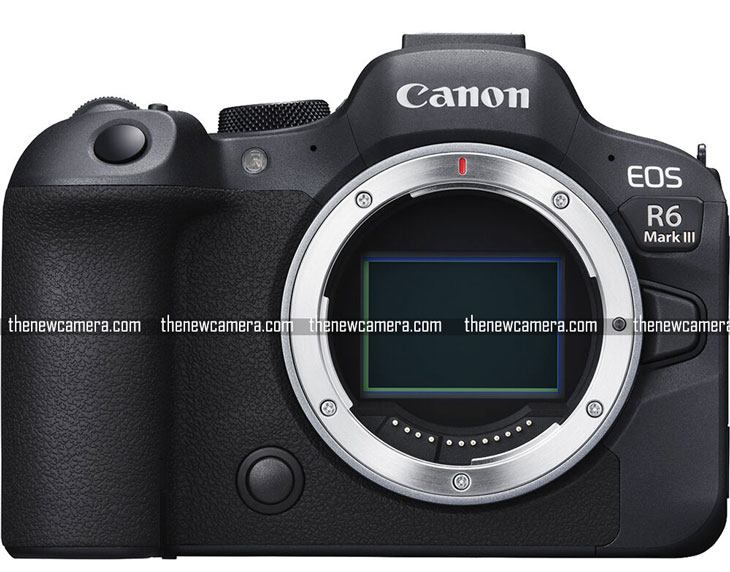
According to the latest rumors coming out from the Canon rumor mill, Canon will be announcing Cameras and Lenses in the month of November 2025. In fact, the Canonrumor mill shared two dates. for November: November 16, 2025, and November 26, 2025. A new camera is expected to be announced on one of these dates.
What kind of camera will it be? While it’s still too early to say for sure whether it’s the EOS R6 Mark III, sources have stated with a high degree of confidence that the EOS R6 Mark III is Canon’s next full-frame camera. Rumor mill also believes that the sensor in the EOS R6 Mark III will be the same as or close to the Cinema EOS C50.
But, adding the same sensor won’t cannibalize the sales of the Canon C50? If Canon R6 Mk III is coming with the same sensor, for sure they will use cripple hammer in the video spec of the camera, to keep the sales of C50, despite the arrival of R6 III camera with the same sensor.
Regarding new lenses, there are four lenses scheduled for announcement in the near future. It’s unclear what lenses will be released. The RF 300-600mm F4-5.6L IS is a likely candidate, as final testing and marketing for its release are already underway.
Thenewcamera.com take
There have been several theories about Canon’s next new product announcement, such as the end of the year or next year, but this rumor is said to be 99% accurate, so there seems to be a lot of hope. We don’t yet know what new product will be announced, but the EOS R6 Mark III seems to be a strong candidate. Since the announcement will be made in two parts, we can also expect the announcement of some kind of lens.
At TheNewCamera.com, we’re dedicated to keeping you informed about the latest camera news. The article “Canon Major Announcement in November 2025” was published on 12:29 pm, Wednesday, 24 September 2025 (GMT-4), Time in Washington, DC, USA by thenewcamera.com team | Follow us on our social pages FACEBOOK | TWITTER | INSTAGRAM to get live Camera News + Canon Rumors 24X7.
Source Canonrumor.com


By admin, on September 24th, 2025

If you’re searching for where to buy a DJI Nano in the USA, you have come to the right place, as we have all the latest details related to the availability of the DJI Nano in the USA, as well as shipping date information. The DJI Nano was a highly anticipated camera, and a lot of my subscribers were waiting. It’s an upscaled camera from the previous generation, with drastically improved low-light performance. So, the DJ I Osmo Nano is generally searched as the DJ I Nano. The camera has been officially announced on September 23, 2025, and its a very lightweight POV camera that packs a very impressive core specific is an inside able to record 4K 60 FPS video features a 1/1.3 in sensor and a magnetic mounting option that can be attached to any of your Steel surfaces without the need for any external mounting device. Okay, let’s get to the point. I have created this guy to be very specific here. I am going to break down everything you need to know before purchasing the DJI Nano in the US, including the stock status and delivery timeline, so you can get a complete idea of where and how to purchase your next action POV camera.
Quick Overview of the DJI Osmo Nano
Before diving into buying options, take a quick look at the Core specification of the DJI Nano camera, a weight of only 52 grams.
- Sensor and Video: 1/1.3-inch CMOS sensor supporting up to 4K/60fps (3840×2160), 2.7K/60fps, and 1080p/60fps, with slow-motion at 4x (120fps) in 4K and 8x (240fps) in 1080p. It also offers 10-bit D-Log M colour
- Battery and Endurance: Up to 200 minutes of recording time when paired with the Multifunctional Vision Dock (90 minutes standalone), tested at 1080p/24fps with stabilisation on. Fast charging reaches 80% in about 20 minutes via USB-C
- Storage and Durability: Built-in storage options of 64GB or 128GB, expandable via microSD up to 1TB. The camera is waterproof up to 10 meters (IPX4 when docked) and operates in temperatures from -20°C to 45°C
- Additional Features: Dual microphones for stereo audio, integration with the DJI Mimo app for AI editing and sharing, RockSteady 3.0 stabilisation, HorizonLock, and gesture controls for hands-free operation
As we all know, the DJI offers a unique ecosystem where you can easily integrate your wireless mics with the camera and record your clear audio without the need to add any extra receiver with your camera.

Availability Details for the DJI Nano in the USA
DJI Nano is available from September 23, 2025—the official global launch date— at Amazon.com. The link I have shared below is to the DJI store itself on Amazon USA, and only Amazon USA is an authorised dealer to sell DJI products, as of now. You can also check out this fact on the DJI USA online authorised dealers page. Even if you are thinking of buying the DJI Nano in the USA, always try to buy from an authorised dealer or trusted resellers like Be and as Store or Adorama, when the stock is available
Where to Buy DJI Nano in the USA
Yes, we do have several trusted retailers, which also include Adorama and B&H, but for now, as per the DJ I official USA website, Amazon.com is the authorised seller for the DJ eye products, so let’s start with Amazon and in the listening, we will also add the links of the B&H store and the Adorama
| Retailer |
Models Available |
Price Range |
Notes |
| Amazon.com |
Standard Combo (64GB), 128GB variants |
$299 (64GB) – $329 (128GB) |
Sold and shipped by Amazon; Prime members get next-day delivery in eligible areas. |
| Adorama. com |
Standard Combo (128GB) |
$429.99 |
Free shipping; monthly financing options available. |
| B&H Photo Video |
Likely Osmo Nano (check DJI Osmo section) |
$299 – $429 |
Extensive DJI inventory; in-store pickup in NYC or nationwide shipping. |
If you order through the official DJI store on Amazon, you get free shipping on all ur DJI products. You can enjoy a discount if ur an Amazon Prime member or through an Amazon store card
Shipping Date Information
Shipping for the DJI Osmo Nano in the USA starts immediately post-launch, with most retailers fulfilling orders within days. Here’s what to expect:
- Amazon: Due to massive pre-orders at the time of announcement, you have to face a little bit of delay. I am writing this article on September 24, and the shipping date I am getting today is October 8. For now, it’s 10 to 15 days of delay due to massive demand. But, just after a month or so, when demand gets neutralised, Prime members can get Next-day shipping in many areas, making it one of the quickest options
- B&H Store: Generally takes 3 to 4 days to ship the product. Check product status here
- Adorama Store: Generally takes 3 to 4 days to ship the product. Check product status here
The DJI OSMO Nano has finally been announced, and we were covering the news for rumours from its FCCID registration / leaked images, etc, and we are glad that all the information we have shared with you came out to be true.
-
About the author
- Written By thenewcamera.com team
- The article “Where to Buy DJI Nano in the USA, Availability Details, Shipping Date Information” was written on 7:07 am, Wednesday, 24 September 2025 (GMT-4), Time in Washington, DC, USA
- Follow us for more updates and get LIVE RUMORS –> FACEBOOK | TWITTER | INSTAGRAM to get live Drone news + DJI Rumors

By admin, on September 23rd, 2025
 Main post image of Best Cameras Under $50 in 2025: Top 4 Picks for Beginners, Vloggers & Everyday Snaps Now are you searching for the best cameras under $50 that’s really a bit hard to find But believe us we have find some of the good options out there those who are highly popular among users at the very same time the look absolutely retro style vintage compact cameras, yes we have included 4 camera in our list but the favourite one of mine is the number one we have mentioned in the list
Sincere beginner and looking for a super budget camera that shoots HD videos as well as gives you budget-friendly control of settings, and specifically, if you are a blogger or creating a YouTube channel, these can be really helpful during the start. Obviously, later on, you can appreciate your equipment as per your budget and requirements.
We have selected some of the highest-rated Amazon.com USA compact cameras that are specifically priced under $50. Obviously, the price cancelled it since we are creating these guides near the Amazon Prime day, but at the very same time, if you love to try compacts, then the Under $50 range of cameras gives you a real compact experience without breaking the bank
Quick Comparison: Best Cameras Under $50
Let’s have a quick look at the list of cameras we have selected. These cameras are the best cameras under $50 for 2025. We have sorted out these cameras based on price, user feedback and features of the camera.
| Rank |
Model & Title |
Key Features |
Price (as of Sept 2025) |
Avg. Rating |
Best For |
Buy Link |
| 1 |
Retro Dual Screen Compact Digital Camera – Best Overall Under $50 |
Retro design, Dual display, 64 Mp camera module with AF, HD video, basic zoom, compact design, easy point-and-shoot |
~$39.99 |
4.4 Star (81 ratings) |
Everyday casual shots |
Buy on Amazon |
| 2 |
Ultra-Compact Digital Camera for Photography Beginners with Autofocus & Anti-Shake – Best for Steady Shots |
80 MP camera module and up to 6K recording, Autofocus, anti-shake, beginner-friendly |
~$44.99 |
4.2 Star (user ratings) |
Stable photos for learners |
Buy on Amazon |
| 3 |
Digital 4K Camera for Photography & Vlogging for YouTube Beginners – Best for Content Creators |
50MP camera module, 4K video, 2.8″ Vari-angle 180° display screen, 16x zoom, 32GB SD included |
~$49.99 |
4.9 (210 rating) |
Vlogging & content creation |
Buy on Amazon |
| 4 |
5K 80MP Digital Camera with Fill Light & 18X Zoom – Dual Screen Vlogging Camera |
80MP, 5K video, dual screens, WiFi, fill light, 32GB card + 2 batteries |
~$68.99 |
4.2 Star (119 rating) |
Advanced vlogging on a budget |
Buy on Amazon |
We have created this list on September 23, 2025, so the price can fluctuate with time. All the cameras that we have mentioned in the list are under $50. They give the value of money as well as simplicity.
How We Selected the Best Cameras Under $50
To rank these best cameras under $50, we considered:
- Price vs. Features: Must stay under $50 with at least HD/4K video and basic zoom.
- User-Friendliness: Autofocus, flip screens, and included accessories for beginners.
- Portability & Durability: Compact builds for on-the-go use.
- Potential Feedback: Drawing from comparable budget cameras (e.g., 4+ star averages on 100+ reviews for similar specs).
The most important thing is how a consumer feels after purchasing the camera, and the best part of the sky is we have selected only those cameras that have the highest positive feedback at the Amazon.com USA store under $50 price category, so all these four cameras are the best in their category with the highest scoring.
Detailed Reviews: Top Best Cameras Under $50

1. Retro Dual Screen Compact Digital Camera – Best Overall Under $50
Retro Dual Screen Compact Camera: Our top pick for the best cameras under $50 is this Retro compact model. The look is fantastic, and it features a dual display screen for instant composition grab. Ideal for beginner photographers who want to try a compact on a budget.
Key Features:
- 64 MP Camera module with AF
- Basic HD photo/video modes.
- 8x digital zoom for closer captures.
- USB charging for quick top-ups.
- Anti-scratch lens for durability.
Pros:
- Ultra-affordable entry point.
- Intuitive controls—no learning curve.
- Long battery for all-day use (up to 2 hours continuous).
Cons:
- No advanced video (sticks to 720p max).
- Limited low-light capabilities.
User Ratings & Appreciation: The camera got a 4.4 Star rating from more than 80 customers. Those who have tried and tested the Retro compact camera. All this positive feedback from users is a clear indicator of high satisfaction for budget buyers.
If you’re new to photography, this is your gateway to the best cameras under $50.

2. Ultra-Compact Digital Camera for Photography Beginners with Autofocus & Anti-Shake – Best for Steady Shots
Ultra compact Dual Display camera: Slightly pricier than our retro compact camera, honestly, do not run for resolution. Personally, I love the retro camera design. But, if you want something ultra compact for your hands, then for sure this is highly suitable, this tiny compact cam earns its spot among the best cameras under $50 with the tech inside that punches above its weight.
Key Features:
- 80MP photos and 5K video resolution.
- Dual 2.8″ screens (front for selfies, rear for review).
- WiFi connectivity for instant sharing.
- Fill light for better low-light performance; 16x zoom; 32GB card + 2 batteries included.
Pros:
- Exceptional resolution for the budget.
- Fill light saves edits in dim settings.
- Extra battery extends runtime to 4+ hours.
Cons:
- WiFi setup can be finicky for non-techies.
- Bulkier than ultra-compacts.
User Ratings & Appreciation: More than 220 users have given a 4.2 Star rating to this product. The perfect dual-screen camera is an excellent beginner photography tool for those who love to have a compact under $50. The camera is positioned as the 2nd-best camera under $50 upgrade.

3. Digital 4K Camera for Photography & Vlogging for YouTube Beginners – Best for Content Creators
Now, the third camera in our list is a different camera from the DUAL display setups. It’s a 4K video recording camera with a vari-angle display screen. That’s a super budget camera available under $50, and now let’s explore the features, pros and cons of the camera
Key Features:
- 50MP stills and 4K video at 30fps.
- 2.8″ 180° Vari-angle LCD for selfies.
- 16x digital zoom with face detection.
- Includes a 32GB SD card
Pros:
- High-res output rivals pricier models.
- Flip screen ideal for TikTok/YouTube.
- Lightweight for extended shoots.
Cons:
- Audio is basic (use an external mic for better quality).
- Plastic build feels entry-level.
User Ratings & Appreciation: The Digital 4K camera has received a 4.9 Star rating from more than 200+ customers on Amazon.com, so people who are buying the camera for its price point are highly satisfied with the features they are getting. Users also appreciate the included SD card for creative freedom, making it a favourite vlog cam among the best cameras under $50 for beginners.

4. 5K 80MP Compact Digital Camera with Fill Light & 18X Zoom – Dual Screen Vlogging Camera– Best for Low-Light Vlogging
The ultra-compact 80MP camera features a very unique bar-style design, which looks very unique and innovative. This dual-screen beast brings pro touches like built-in lighting and continuous LED light for video and still shooting.
Key Features:
- 80MP photos and 5K video resolution.
- Dual 2.8″ screens (front for selfies, rear for review).
- WiFi connectivity for instant sharing.
- Fill light for better low-light performance;
- 16x zoom;
- 32GB card + 2 batteries included.
Pros:
- Exceptional resolution for the budget.
- Fill light
- Extra battery 4+ hours.
Cons:
- WiFi setup can be finicky / non-stable
- Bulkier than ultra-compacts.
User Ratings & Appreciation: We have selected only the highest-rated camera on our list, the 5K 80MP Compact Digital Camera with Fill Light & 18X Zoom, which has received a 4.7-star rating from 124 customers at Amazon.com USA
In the world of the best cameras under $50, we have selected some of the best compact cameras available at Amazon.com under $50. All these cameras in our list are being loved by the users, those who are purchasing the camera. If you want to have a retro-looking compact for photography or a vari-angle compact for vlogging, specifically those who love to try super budget models, they should try at least once.
-
About the author
- Written By thenewcamera.com team
- The article “Best Cameras Under $50 in 2025: Top 4 Picks for Beginners, Vloggers & Everyday Snaps” was written on 1:01 am, Sunday, 21 September 2025 (GMT-4), Time in Washington, DC, USA
- Follow us for more updates and get LIVE RUMORS –> FACEBOOK | TWITTER | INSTAGRAM to get live Drone news + DJI Rumors


By admin, on September 22nd, 2025

Sony is pushing the boundaries with its latest Sony A7V camera. As we approach the announcement date of the camera, recent leaks have emerged, showcasing the latest images of the highly anticipated A7V camera. According to the leaked image from Sony Alpha Rumors, it provides a detailed glimpse of the camera’s rear portion, showing the controls and the EVF. Additionally, a screenshot is included, which reveals the resolution of the upcoming camera. So here at thenewcamera.com we are tracking the Sony A7V rumours very closely, now starting from the early disperses till its release timeline, we are covering the development of the upcoming camera.
In our previous detailed coverage, Sony A7V Rumours: Release Date, Specs, Price & Everything We Know in September 2025, let’s dive into the latest leaks, and analyse what the NEW CAMERA images reveal.

Breaking Down the Leaked Images: What Do They Tell Us?
The leaked photos, captured from a prototype unit, let’s talk about that leaked images of the prototype and the most important image is the one which clearly displays the LCD screen with JPEG image size in the menu and where the large option size is clearly highlighted as “L: 33M,” with additional choices including “M: 14M” and “S: 8.2M.” That confirms the presence of a 33-megapixel full-frame sensor inside the Sony A7V camera. At the very same time, it has been noted by the source that the prototype was running on a very early firmware, so the display data could be placeholders and are subject to change.

The second image focuses on the top-down view of the camera body, which clearly shows the A7V Camera model designation near the mode dial button of the camera. At the very same time, controls are very visible, specifically the custom buttons like the C1, C2, and C3 custom buttons, AF-ON, AEL, and the multi-selector joystick controller. The source doesn’t mention the introduction of a hand grip, as we have in the Alpha A1 series camera, so it will remain stuck to its compact design, like the earlier 7 series models with a compact hand grip.
This visual and the set of information confirm our earlier report from reliable sources related to the Sony A7V camera announcement on or before September 2025 which was speculated on an October or November reveal. At the very same time, we do understand that earlier we were getting rumours related to the 33 megapixel partially stacked CMOS sensor. After that, we have also received a series of rumors from the rumor mills that suggested a probability of a 44 megapixel sensor inside A7V. We do know a camera maker tests several prototypes of the camera before its final release. At the end, it all depends on the marketing team, which specific prototype they will pick for the production line, and for now it looks like the 33 megapixel prototype is finalized for the A7V model.
Thenewcamera.com takes on the 33 megapixel Sony A7V camera
It’s always good to have a very stable resolution in your camera, if you want to go higher resolution, we do have the Sony A7R series. Still, at the very same time the big issue with the Sony A7 IV camera was the 33 megapixel slow sensor which was a big reason behind the slow continuous shooting speed, visible rolling shutter effect even while shooting at 10 fps, doing an excessive DX crop even while recording 4K 60fps video which is completely unacceptable in 2025 for a price range at which the camera is coming off. Specifically if you look at the competitors right now like we have the Canon R6 Mark III, available at lesser price, even the Canon R8 records uncropped 4K 60FPS video at half price, Nikon Z6 III and ZR both can record uncropped 4K 60 FPS video and also offer 4K 120 FPS recording option with a crop.
So, if Sony can add a partially stacked CMOS sensor for faster readout inside the body of the Sony A7V camera it would be a great hit. At the very same time, they have to unlock the continuous capture speed, and should allow the camera to record uncropped 4K 60fps video. If they are going to cap the values to protect the higher-end camera sales then it would be a great mess. They will surely lose a big consumer base of the A7 series.
Potential Specs at a Glance: What Sony Might Pack In
Drawing from leaks and Sony’s historical playbook, here’s a speculative rundown of the Sony A7V’s key features:
| Feature |
Speculation |
Comparison to A7 IV |
| Sensor |
33MP Full-Frame CMOS (possibly partially stacked) |
Same resolution, faster readout due to partially stacked CMOS tech |
| Processor |
Bionz XR with AI Chip |
Finally, the OG A7 series will get AI chip |
| Autofocus |
AI-Based Real-Time Recognition (humans, animals, birds, vehicles, insects) |
759 phase-detect points, same as A7IV, but with better tracking performance |
| Burst Shooting |
20 fps Continuous capture |
Slight improvement, but capping will remain to protect higher-end model sales |
| Video |
4K 60p uncropped, 10-bit 4:2:2, S-Log3 |
Finally uncropped 4K 60FPS, better heat management than A7IV |
| Stabilization |
8-stop IBIS with Active Mode |
Improved for handheld video |
| Viewfinder/Screen |
5.76M-dot EVF, 3.2″ 4-way articulating touchscreen |
Higher res EVF; more flexible screen |
| Build & Connectivity |
Magnesium alloy body, dual slots, USB-C 3.2, Wi-Fi 6 |
Enhanced weather sealing; faster data transfer |
| Price |
Around $3,000 (body only) |
$500 increase, justified by AI and video tweaks |
What do you think about the specs? Will you buy the Sony A7V camera or move towards a different option like Canon R6 Mark III, Nikon ZR or Z6 III?
Why This Matters: Positioning the Sony A7 V in a Competitive Landscape
Sony needs to be very careful this time since the Canon R6 Mark III camera is coming with the Canon C50 sensor. We already have the Nikon Z6 Mark III, which is continuously getting boosts from Nikon itself and is upgrading its core specifications time to time, and the recent addition is the Nikon ZR. Those who love cinematography or are professional content creators can easily pick this camera, which has a very RED camera factor inside it. So the competition is now getting tougher for Sony. It’s not like 2018, when you could just launch the Sony A7 Mark III camera with subtle core specifications and it became a big market hit. This very moment in 2025, you have to be very competitive. Just forget about capping the core specifications or crippling them to protect your higher-end camera sales. If you have to protect your existing A7 series consumer base and if you wish to add new people inside it, you have to be very aggressive with the core specs, just like the competitors.
Bhai, adding a refined 33 megapixel stacked CMOS sensor and a dedicated AI chip will revive the existing AF performance of the Sony A7 IV camera. I do believe that Sony can appeal to hybrid creators who demand a balanced performance in both stills and video. As always, we will keep monitoring the further announcements and leaks, and if these images are really reliable and true, then the first official announcement is very near to us. Stay tuned to thenewcamera.com for the updates.
If you want to get more updates related to Canon’s upcoming compact camera. GET LIVE NOTIFICATION, Select Your Trusted Source GET LIVE NOTIFICATION Click ON Check  BOX for Latest NEWS and Rumors BOX for Latest NEWS and Rumors
-
About the author
- Written bythenewcamera.com team
- The article “Sony A7 V Leaks: First Real-World Images Surface, Hinting at 33MP Sensor and AI Upgrades – In-Depth Analysis” was written on 4:07 pm, Monday, 22 September 2025 (GMT-4), Time in Washington, DC, USA
- Follow us for more updates and get LIVE RUMORS –> FACEBOOK | TWITTER | INSTAGRAM to get live Camera News + see more Sony Alpha Rumor
source and image credit: sonyalpharumor.com
By admin, on September 21st, 2025

DJI Action 6 is one of the most anticipated action cameras of 2025. DJI Action 5 Pro was already a very popular camera. Now, as per the initial reports we have published on our website, the Action 6 camera is coming with major upgrades inside. Recently, we received new images from a tester that show pairing the DJI Action 6 camera with a smartphone.
Exclusive Leak: DJI Action 6 Smartwatch Integration Revealed
One of the standout features rumored for the DJI Action 6 is its enhanced connectivity with the smartwatch you wear, so pairing up with a smartwatch will give you seamless extra control and data syncing during activities. Exclusive leaked images show the DJI Osmo Action 6 pairing up with a smartwatch, and you can clearly see the display showing “Osmo Action 6” on the watch screen.
The smartwatch will act as a remote control, so you can start or stop your camera recording. Also, you can switch to different modes without physically touching the camera. The best part is that while recording, the camera will overlay the recorded GPS data and integrate it into your videos in real time. Smartwatch connectivity in the camera depends on Bluetooth for data sharing.
The smartwatch integration is not new in the DJI ecosystem; those who have already used the Action 5 Pro camera know that overlay data is already supported in Apple Watch and Garmin, so for sure the Action 6 camera will take a step further in synchronization with these devices and provide more control over the data. Hence, this will make the DJI camera a top choice among athletes and professionals who love to monitor their data and adjust the camera on the fly, and the best part is all the essential data, like GPS, heartbeat, and oxygen monitor data, are available on the screen overlay.
 Pic shared by our source shows Action 6 camera integration with the Smartwatch Common Data Overlay Options (Applicable to Both Apple Watch and Garmin)
Take a look at the common data sync options available on both devices, the Apple Smartwatch and the Garmin:
-
Speed: Real-time or average speed from GPS tracking.
-
Heart Rate: BPM readings straight from the watch’s sensor.
-
Distance: Total covered.
-
Direction/Heading: Compass-based orientation.
-
Altitude/Elevation: Height changes and gain/loss.
-
Trajectory/Path: GPS route mapping / Map view.

Sample Image to Show You How the Overlay Looks with a Garmin Watch on Action 5 Pro
Garmin-Specific Notes
With Garmin smartwatches (e.g., Forerunner, Fenix, or Descent series) we are getting some extra sets of data, which the latest generation of Apple Watches doesn’t deliver:
-
Power/Cadence: For cycling or running (if the watch supports it).
-
Pace: Split times or average pace.
-
Dive Data: Depth, temperature, and ascent/descent rates for underwater activities.
Rumored Specifications of the DJI Action 6
Okay, now let’s finally discuss the set of specifications related to the Action 6 camera. These sets of information, including camera specs from FCC filings, supply chain reports, and insider images, provide a comprehensive overview of the camera’s features. The DJI Action 6 is expected to feature major hardware improvements compared to the Action 5 Pro. Take a look at the rumored core specifications of the camera:
-
Sensor and Image Quality: A larger 1-inch CMOS sensor for superior low-light performance, higher dynamic range (over 13.5 stops), and improved detail capture alongside 10-bit D-Log M.
-
Video Capabilities: Support for 8K at 30fps, 5.3K at 60fps, 4K at 120fps for slow motion, and 1080p at 240fps.
-
Stabilization and Features: Advanced RockSteady 4.0 with AI-enhanced HorizonSteady for 360° leveling.
-
Storage and Connectivity: 47-64GB built-in storage, expandable via microSD. Enhanced Bluetooth 5.1 for smartwatch and wireless mic pairing, Wi-Fi 6 for faster data transfers and live streaming, and USB-C with potential DisplayPort support.
-
Design Upgrades: A bulkier housing to accommodate the new sensor.
Expected Release Date for the DJI Action 6
As per the latest set of information, we have the announcement date as mid-October 2025. Pre-orders will start soon, and worldwide shipping will start from late October / early November 2025. That’s the initial set of information we have related to the arrival date. If any new updates arrive or the camera gets delayed, we will update you soon here.
Pricing and Availability
The DJI Action 6 will have very competitive pricing. Take a look at the expected price range of the camera:
-
Standard Combo: $329-$429 (includes camera, basic mounts, and one battery).
-
Adventure Combo: $479-$579 (adds extra batteries, protective case, and rugged mounts).
The DJI Osmo Action 6 camera is an extreme sports and action camera made for professionals, offering a higher level of video quality and advanced sync with smartwatches like Apple Watch and Garmin. As more leaks emerge—you can keep an eye on DJI’s official channels and our website thenewcamera.com for live updates—we’ll do our best to track the recent developments. If you’re willing to purchase an action camera, holding off until October might be worth it. Which feature of the upcoming Action 6 camera do you like the most? Share in the comments!
If you want to get more updates related to Canon’s upcoming compact camera. GET LIVE NOTIFICATION, Select Your Trusted Source GET LIVE NOTIFICATION Click ON Check BOX for Latest NEWS and Rumors
The article “DJI Action 6: Exclusive First Look at Smartwatch Integration” was written by thenewcamera.com team on 12:25 pm, Saturday, 20 September 2025 (GMT-4), Time in Washington, DC, USA | You can also follow us on Our Official Social Media Handles FACEBOOK | TWITTER | INSTAGRAM to get live news — > getlive Drone news + DJI Rumors
By admin, on September 21st, 2025

The DJI Mic Mini is an ultra-light wireless microphone that is capable of delivering professional-grade sound, and that’s all super budget. Now, with the Amazon 2025 Prime Day around the corner, yes, even before the sales start, DJI has started an exclusive and early deal in their DJI Mic Mini series. In this article, we have rounded up all the best deals available related to DJI Mic Mini on Amazon USA. So, if you’re a solo creator and looking for a budget wireless mic or even a dual mic setup for podcasting, the deals won’t last long or forever. So, let’s dive in and explore the best deals and why the DJI Mic Mini is a must-have in 2025.

Why Choose the DJI Mic Mini?
The DJI Mic Mini was announced by DJI in late 2024. It has been especially designed for solo content creators who need an ultra-lightweight audio transmitter and receiver with high-quality audio input. Weighing only 10 grams per transmitter, the DJI Mic Mini is the lightest wireless mic available on the market and it is again highly usable for travel vlogs, interviews, or podcasting as well as for creating reels for YouTube, Instagram, and TikTok. Before we jump to the deals, let’s have a look at the core specifications of the DJI Mic Mini:
- Audio Quality: 48kHz sampling, 120 dB SPL, +two-level noise cancellation
- Transmission Range: 400m
- Battery Life: 48 hours with the charging case
- Versatility: Compatible with iPhones, Androids, cameras, and DJI’s ecosystem (e.g., Osmo Action 5 Pro, Pocket 3) via Bluetooth or direct connection.
- Features: Automatic limiting prevents clipping, charging case doubles as storage.
Now, the DJI Mic Mini is completely integrated into the DJI ecosystem, and when you are having the Osmo Pocket 4 or the Action 5 Pro, then you actually don’t need any transmitter. Even if you have only the receiver unit, you can easily record your sound on the go. Other than that, it has easy connectivity with Android and iOS devices as well as cameras with a 3.5 mm jack built into the receiver.

Top DJI Mic Mini Deals for 2025
So, we have selected the best deals available for the DJI Mic Mini on Amazon.com, and all the prices mentioned below are based on the latest listings we have in September 2025. The prices and the stock may vary from time to time, so the best thing is to click on the deals and lock them as soon as possible.
| Product Variant |
Configuration |
Current Deal Price (Approx.) |
Original Price |
Savings |
Buy Link |
| DJI Mic Mini |
2 TX + 1 RX + Charging Case |
$109 |
$169 |
36% off |
Buy on Amazon |
| DJI Mic Mini |
1 TX + 1 RX |
$59 |
$89 |
~34% off |
Buy on Amazon |
| DJI Mic Mini |
2 TX + 1 RX + Charging Case |
(~$109–$129) |
$169 |
Up to 36% off |
Buy on Amazon |
| DJI Mic Mini Transmitter |
Single Transmitter Add-On |
~$39 |
$59 |
~34% off |
Buy on Amazon |
Pro Tip: Prime members may get early access to deals, and if you use an Amazon card while purchasing these, you will get an extra discount or gift check up to $80, so that’s an insane amount of savings you can keep for yourself while purchasing the mic.
Why These Deals Are Worth It
- Record-Low Prices: The 2 TX + 1 RX bundle at $109 – the lowest price ever.
- Creator-Friendly: Excellent performance, 4.5+ star rated by 3000+ members of Amazon USA, the mic transmitter got 5k+ ratings.
- Stock Concerns: DJI products can sell out quickly, so act quickly if you really need it.
Which DJI Mic Mini Deal Should You Choose?
- Solo Vloggers: The 1 TX + 1 RX kit ($59) is perfect if you are doing things all alone, which means solo vlogging and content creation.
- Podcasters/Interviewers: The 2 TX + 1 RX bundle ($109) an excellent package if you’re planning podcasting sessions. Supports dual mics for interviews.
- Existing Owners: Grab the single transmitter (~$39), which means it is a standalone microphone.
- Device Check: Multi-device support, if your device has a 3.5mm, USB-C, or Lightning port, or use the included adapters.
Without a doubt, the DJI Mic Mini is a compact powerhouse for creators and beginner cinematographers, and with Amazon’s current discounts—potentially amplified during Prime Day 2025—you can save up to 36% on this must-have audio tool. Whether you’re capturing vlogs, interviews, or livestreams, these deals make it easier to achieve pro-level audio on a budget. Don’t wait—head to Amazon now to grab your DJI Mic Mini before stock runs out or prices climb. For more tech deals, keep an eye on Amazon’s Prime Day page!


By admin, on September 20th, 2025

GoPro action camera fans are super excited. GoPro today has posted a teaser where we can clearly see they are hinting at a major announcement on September 23, 2025, at 6:00 AM PT. As usual in the traditional teaser-style video, there are two cameras hidden in the silhouettes and obviously a tagline “9.23.25 | 6 AM PT | gopro.com.” Now we do know exactly what’s coming next from GoPro on September 23, so let’s explore that.

Lit HERO and MAX 2 Leaks, Specs, and What to Expect
A source recently sent an image, better to say a screenshot of accidentally uploaded upcoming GoPro cameras from the GoPro official website. Obviously, the camera in the middle, the HERO 13 Black, is already available from September 2024, but the most interesting part is the camera on the extreme left—it is the upcoming camera and the name is GoPro HERO Lit. It’s an update to the GoPro 4K camera, now with LED lights in the front. The camera on the extreme right side is GoPro MAX 2, a 360 camera from GoPro and an updated version of the original GoPro MAX, now coming with a large 1-inch sensor, and we have already shared a lot of details related to the camera in our previous post.

GoPro Lit HERO: A Bright, Affordable Entry into 4K Action
GoPro wants to expand its consumer base, and obviously, that’s why they are introducing a budget and reliable 4K action camera—the GoPro Lit. Without a doubt, the GoPro series already has a very established HERO lineup, but at the same time, they have to expand their consumer base and specifically create new products against the upcoming ultra-compact 4K POV cameras like the Osmo Nano, which is also about to arrive on the same day, this September 23, as well as Insta360 GO Ultra. Now take a look at the set of specifications we have related to the upcoming GoPro Lit HERO camera.
Rumored Specs and Features:
- Video Resolution: 4K at 30fps, 2.7K at 60fps for fluid slow-motion, and 1080p at 120fps.
- Photo Resolution: 12MP stills, loaded with burst modes for action shots.
- Low-Light Enhancements: New updated sensor, LED lights in the front of the camera body for brighter footage in dim conditions, and HDR support.
- Stabilization: Basic HyperSmooth technology to minimize shake during hiking or biking.
- Design and Durability: Waterproof to 10 meters (33 feet) without a case, compact size.
- Battery Life: Up to 2 hours of continuous recording.
- Connectivity: Wi-Fi and Bluetooth for quick app pairing and sharing via the Quik app.
- Price and Availability: Expected around $199–$299.
- Pre-orders start post-announcement, with shipping in October 2025.

GoPro MAX 2: Elevating 360 Video with 8K Resolution and AI Tools
The star of the show, the MAX 2, is the latest 360 camera from GoPro and offers 8K video recording capability. We have been covering the information on the MAX 2 for more than a few weeks and have published a lot of details related to the upcoming camera. Now it’s time to have a quick look at what’s coming inside the MAX 2.
Key Rumored Specs and Features:
| Category |
Details |
| Video Resolution |
8K 360-degree at 30fps, 5.7K at 60fps, with single-lens mode up to 4K. |
| Lenses and Design |
Replaceable glass lenses for easy repairs and customization; rugged, waterproof build to 5 meters; classic GoPro mounting with 1/4-inch thread. |
| Stabilization |
Advanced FlowState-like EIS with horizon lock for seamless footage in extreme sports. |
| Processor and AI |
New GP chip for faster processing; AI-powered Reframe tools for automatic subject tracking and dynamic editing in the Quik app. |
| Battery and Heat Management |
1,800mAh battery; improved cooling system with vents for longer recording sessions without overheating. |
| Audio and Connectivity |
Four microphones for spatial audio; Bluetooth, Wi-Fi, and GPS for geotagging. |
| Additional Features |
Camera FX effects, cloud integration for editing, and compatibility with GoPro mods. |
| Price and Availability |
$400–$500, undercutting rivals like the Insta360 X5 ($549). Expected immediate availability post-reveal. |
Specifically, we have seen that GoPro has kept the design of the upcoming MAX 2 camera; to make it compatible for High-Res recording and manage internal heat, they have updated the design carefully by adding heat sink layers to the outer body of the camera, which makes it durable as well as heat-resistant at the same time. At the same time, GoPro’s CEO already hinted at the two different sets of camera announcements within 2025, and now we have it.
GoPro CEO Nick Woodman has recently said in an interview at Oppenheimer’s 28th Annual Technology Conference: – In the commentary, the company CEO noted:
“We expect to introduce two new cameras, including our Max 2 360 camera,” among the list of priorities for the rest of 2025.
It also silently indicates that the HERO 14 announcement has been delayed for now, and maybe it is coming sometime in the first quarter of 2026. As per the initial set of information, GoPro was expected to announce only two cameras in late 2025, but again, stay tuned for more information. If anything arises on our desk or message box, we will post it as soon as possible.
If you want to get more updates related to Canon’s upcoming compact camera. GET LIVE NOTIFICATION, Select Your Trusted Source GET LIVE NOTIFICATION Click ON Check BOX for Latest NEWS and Rumors
The article “GoPro Sep 23 Announcement Details: Lit HERO and MAX 2 Leaks, Specs, and What to Expect” was written by thenewcamera.com team on 12:25 pm, Saturday, 20 September 2025 (GMT-4), Time in Washington, DC, USA | You can also follow us on Our Official Social Media Handles FACEBOOK | TWITTER | INSTAGRAM to get live news — > getlive Drone news + DJI Rumors
|
KEEP THIS BLOG ALIVE - Support New Camera Buy Canon Lenses, Buy Music CD or Digital Camera at amazon it helps this site, and you do not pay anything extra, it is just a way to help support this site.

|