Join More Than 50,000+ Subscribers and get latest camera news and rumors
NEW CAMERA VIDEOS ON YOUTUBE
|
By admin, on August 27th, 2025

Nikon has done a tremendous job with this update. They have integrated dedicated EHANCED bird mode autofocus, and that was quite obvious since the camera is using the latest generation of partially stacked CMOS sensor and Expeed 7 image processor. But what they have additionally added is an auto capture mode so you have to just set your Nikon Z6 Mark 3 camera on tripod in a bird sanctuary and just pre configure the auto detect setting, and take a nap while your camera shoots the flying birds, This setting is highly usable and specifically very effective in while ur doing Birdography near ponds and lakes, acutomatically capturing them when they are taking off the flight will be an amazing experience in the auto mode.
Specifically, when we discuss key accuracy, the latest update has further fine-tuned the Bird AF Mode; the algorithm is now more effective in capturing fast and small bird moments. They specifically worked on capturing hummingbirds in flight, as they’re very quick in flight, and raptors, in motion. With this upscaled algorithm, we now have a more precise AF mode at work, making the camera foolproof for capturing birds in flight.
 The updated bird detection should increase the Z6III’s accuracy when it’s tracking small, fast birds, or species that don’t look all that similar to other birds. Another major update is Focus Limiter, with this you can define the exact focus area the camera should not take care specific distance, for example ignore the foreground branches 15 to 20 m away from the cam, you have to just put a sort of distance in the settings of the camera the software based tool works in its own way, camera does autofocus mapping and here you go, it is also very much useful when you are shooting wedding in overcrowded situation.
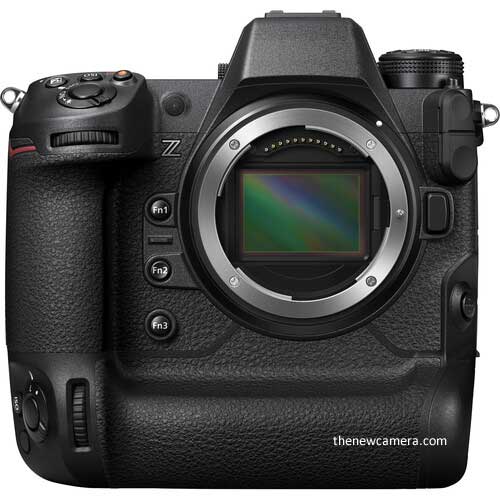
So , these are the major updates, and obviously, the Nikon Z6 III (with Firmware 2.0) has become the best Nikon camera for both photography in 2025.
Download the update from here – Nikon’s Official website You can download it for free now.
Let’s have a look at the regular press release of the Nikon Z6 Mark 3 firmware 2.0 update.
The article “Nikon Z6 III Firmware 2.0: Revolutionizing Bird Photography with Hands-Free Auto Capture for Flying Birds” was written by thenewcamera.com team on 7:05 pm, Wednesday, 27 August 2025, Greenwich Mean Time (GMT) | Follow us for more updates and Get LIVE RUMORS –> FACEBOOK | TWITTER | INSTAGRAM to get live news — > get live news + Nikon Rumors 24X7
Nikon Z6 III Firmware 2.0 Official Press Release
NIKON RELEASES FIRMWARE VERSION 2.00 FOR THE NIKON Z6III FULL-FRAME MIRRORLESS CAMERA
MELVILLE, NY (August 27, 2025) – Nikon Inc. is pleased to announce the release of firmware version 2.00 for its full-frame/FX-format mirrorless camera, the Nikon Z6III. This marks the first major update since the launch of the Z6III and introduces several features equivalent to those found in the flagship Nikon Z9 and Nikon Z8.
With its already incredible high-speed performance, this firmware update adds the long-awaited [Birds] mode to subject detection, offering an enhanced shooting experience for both still and videos. Plus, the Auto Capture function now enables automatic shooting under pre-configured conditions, supporting flexible shooting styles tailored to various situations.
Additionally, for the first time for a Nikon product, the Z6III supports the Nikon Authenticity Service*1 – a solution primarily aimed at media organizations and creators who require a high level of trustworthiness in their work. The service is compatible with the C2PA (Coalition for Content Provenance and Authenticity) standard, clearly recording provenance information from shooting through to editing to ensure greater transparency and reliability of content.
Nikon will continue to enhance its products through firmware updates that address user needs, while also fostering an environment in which all photographers and creators can engage in creative and professional activities with confidence and peace of mind.
Improved Subject Detection with Dedicated [Birds] Mode
A dedicated [Birds] mode has been added to the Z6III’s subject-detection options. When [Birds] mode is selected, the camera automatically tracks birds in flight with great precision, keeping them in focus even against complex, high-contrast backgrounds such as forests and rocky mountains. This allows photographers to concentrate on framing images, helping to meet their expectations. There is also a [Focus limiter setting] that can be assigned to a custom control to limit the shooting distance range, for more accurate focusing on the desired subject. In addition, the [JPEG fine] image quality setting can now be selected when Pre-Release Capture, which records images for up to one second before the shutter-release button is fully pressed, is used during full-frame shooting at 60 fps. This makes it possible to capture the moment a bird takes flight with superior image quality.
C2PA Compliance With Image Provenance Function
Nikon is committed to developing an image provenance function that supports confirmation of image authenticity, aiming to protect individuals and enterprises in the imaging industry from any unfavorable results caused by falsification and/or image manipulation, and to realize a society in which creative and business activities can be conducted with greater peace of mind. Z6III firmware version 2.00 includes an image provenance function that complies with the C2PA standard and is part of the Nikon Authenticity Service. By making a prior request through Nikon Imaging Cloud, users can load the digital certificate necessary for recording provenance data onto the Z6III.
The image provenance function adds metadata – such as information about the equipment used and data that makes it easy to verify whether the image has been tampered with, including a digital signature – to captured image files. This enables users to prove that a photo was taken with a Nikon camera.*2 If the image is then edited repeatedly using C2PA-compliant editing software, additional provenance information can be embedded in the image alongside the original shooting data, making it possible to prove that no misleading edits have been made.*3 In addition, image provenance data can be viewed in Nikon Imaging Cloud.
*1 There are some restrictions on shooting when the image provenance function is enabled.
*2 Provenance information is not embedded in images that are edited in-camera.
Auto Capture Function Expands Shooting Possibilities in Any A Variety Of Situations
Firmware version 2.00 adds the Auto Capture function, which enables automatic shooting with pre-configured conditions. This allows users to specify the subject type, direction of movement, and shooting distance range*4 to capture previously difficult scenes, such as those that require shooting in places or positions where photographers would disturb their subject. The function is also equipped with a scheduling feature that allows the user to specify the day and time to initiate Auto Capture in advance, reducing battery consumption between camera setup and the start of shooting. In combination with a USB-to-Ethernet adapter*5, it enables high-speed data transfer even to remote destinations, meeting the high demands of professional environments.
Expanded Functions and Improvements to Operability
- An [Automatic monitor display switch] function for disabling the eye sensor when the vari-angle monitor is deployed has been added, a first for the Nikon Z series.
- A function that allows users to exit the zoom view with a half-press of the shutter-release button when the focus mode is set to manual has been added.
- Pixel shift shooting can now be used in combination with focus shift shooting or AE bracketing settings for more precise photographic expression than ever before.
- A [Recall shooting functions] option that allows users to recall previously stored settings – including shooting mode, shutter speed, aperture value, and ISO sensitivity – with the press of a button has been added to the roles that can be assigned to a custom control.
- Adds support for USB streaming (UVC/UAC), which allows the camera to be used as a webcam by simply connecting it to a computer or smartphone.
- By default, firmware updates are now installed automatically after the camera connects to Nikon Imaging Cloud (a note about setting the camera’s date and time has been added to the instructions for connecting to the cloud to prevent connection errors between Nikon Imaging Cloud and the camera).
- Operation has been simplified by automatically displaying an update confirmation dialog on the camera monitor after registering an imaging recipe in Nikon Imaging Cloud.
Nikon Z6III owners can visit the website here to learn more about the new firmware. Nikon will continue to enhance its products through firmware updates that address user needs, while also fostering an environment in which all photographers and creators can engage in creative and professional activities with confidence and peace of mind.


By admin, on August 26th, 2025

So we have all the set of latest rumours, which include upcoming Mirrorless cameras, action cameras, and drones in September 2025, so you can stay ahead of the curve to know what’s actually coming — and of course, you can bookmark this page for future updates. Now, in September, we will have a major video-centric announcement — the Nikon ZR camera. Additionally, we have a highly anticipated DJI Mini 5 Pro announcement scheduled for September. In the action camera world, we will have the GoPro Max 2 camera announcement. Let’s explore everything in detail to understand the price and specs of these upcoming products.
Nikon ZR: Game-Changing Video Camera
The Nikon ZR is set to arrive on September 10, 2025. It is a video-focused camera that uses a very similar sensor that we have already seen in the Nikon Z6 Mark 3 camera but with elevated specifications. The camera will have a large display screen as per the initial set of rumours, and REDCODE RAW for advanced color science. We will also have a new generation of Nikon N-Log (N-Log2) available in this camera.
- Key features: 4K video with enhanced dynamic range, thanks to new developments, a new brick-shaped design for professional use, N-Log2, REDCODE RAW, and more.
- Price: $2,799–$3,499 USD (estimated).
- Why it matters: It’s the first Nikon dedicated cinematography camera under the Z-mount.
See the Latest post about the Nikon Zr: Nikon ZR Coming in September 2025, Price and more…
 Dji mini 5 pro drone DJI Mini 5 Pro: Compact Drone, Big Performance – September 2025
The DJI Mini 5 Pro will carry a large 1-inch sensor under a sub-250 gram body, with front-facing LiDAR, improved battery life, as well as 4K video recording capability up to 120 frames per second. We have already posted a lot of information related to the DJI Mini 5 Pro and we have the images, core specifications, and the price of the upcoming drone.
- Price: $899–$999 USD (base), $1,199–$1,499 USD (Fly More Combo).
- Features: Omnidirectional obstacle avoidance, compact design, and high-quality video for content creators.
- Why it’s hot: Since it’s the world’s first drone to feature a 1-inch sensor under a 250-gram body.
See the Latest post about the DJI Mini 5 drone: DJI Mini 5 Pro Price Leak – Exclusive Reveal of Battery Plus, Full Price list, and Release Date Rumors

GoPro Max 2: 360 Action Camera on Its Way
So, GoPro Max 2: it’s officially coming in early September. The teaser is already out, and since it has an advanced heat sink unit carefully crafted in the front of the body, the camera is expected to have 8K video recording, AI auto-framing, object tracking, and advanced image stabilization.
- Price: $400–$500 USD
- Key Features: 1-inch sensor, object tracking, durable design.
- Why it matters: Excellent option for VR content creation as well as vlogging and creative 360-degree storytelling.
So, the above list is of the confirmed set of cameras and drones coming in the month of September 2025. Now we have the names of the cameras that we are expecting to arrive in September, but we are still waiting for further confirmation on the products mentioned below.
See the Latest post about the GoPro MAX 2: GoPro Max 2 Price, Specification, and Release date
More Rumored Cameras arrival we are expected to arrive in September
Sony A7 V Camera: Sony is about to announce its ultra-popular A7 series. The update is overdue, and the past set of rumours we received in the earlier months of 2025 point to September. So we were expecting the Sony A7 V camera on or before September 2025, and we are still expecting the same. You can browse more details about the Sony A7 V camera here.
The other camera in the announcement pipeline is:
Canon R6 Mark III: Canon R6 Mark III is another model that we are expecting in 2025. We have already published its rumoured specifications, and we have confirmed that it is coming with a 30+ megapixel sensor. The camera is coming with a significant update for photographers as well as videographers, and its early test phase has been completed. Now we are waiting for its official announcement. But for the past 5 years, I have noticed a change in Canon’s announcement pattern. Canon has specifically avoided Aug and September for their Mirrorless camera announcement, so if they follow the same path, the earliest arrival date we can expect is October of 2025.
Let me know if you’d like this turned into a blog post or a YouTube video script next.
The article “Upcoming Cameras and Drones in September 2025: Must-Know Releases for Photographers and Videographers” was written by thenewcamera.com team on 8:11 am, Tuesday, 26 August 2025, Greenwich Mean Time (GMT) | Follow us for more updates and Get LIVE RUMORS –> FACEBOOK | TWITTER | INSTAGRAM to get live news — > get live news + Nikon Rumors 24X7


By admin, on August 23rd, 2025

Finally, we got confirmation that Nikon is set to redefine the consumer cinema market camera with its Nikon ZR, Z-mount powerhouse cinema camera fused with the RED Digital Camera cinematic technology, according to the set of latest rumours we have from a tipster –
Nikon’s Z cinema camera launch is fixed for next month!
Although tispter doesn’t share the camera name, the only known Z cinema camera rumor is Nikon ZR, and we have published specs related to Nikon’s first consumer-grade cinema mirrorless camera in the past. Check them here
Nikon ZR – What We Know So Far
Nikon ZR camera announcement timeline completely aligns with the registration of the Nikon N2410 model in April 2025, as reported on our site (July 28, 2025). With 5GHz Wi-Fi support, the N2410 is a premium model, and its 3–4-month post-registration timeline points to a September reveal. Since, as we know, camera makers like Nikon take roughly 3 to 4 months of time to announce a camera once it gets registered in the wireless certification agency.
While the tipster withheld the camera’s name and full specs, as I have said, he was very confident with his line – it will dominate the existing Sony FX2 cinema camera with its core specification. The ZR—rumoured since May 2025 as the “Z RED” cinema camera—fits the profile. Here’s a roundup of the latest rumoured specifications:
Nikon ZR Rumoured Specification
- 24.5MP Partially-Stacked CMOS Sensor: Nikon ZR will use the Nikon Z6 Mark III sensor.
- A large display screen: The ZR will have a large display screen, making it comfortable for professional video workflow.
- Enhanced RED technology inside, which means we will have REDCODE RAW and advanced colour science. Obviously, more details will be revealed with time.
Then again, our New ZR camera is a great push from Nikon in the zone of dedicated cinema cameras. While the official set of specifications remains under wraps, this initial set of hints looks really exciting. The upcoming Nikon ZR is said to be a consumer-grade Cinema Mirrorless camera. Its presence will potentially disrupt existing consumer cinema offerings of Canon and Sony.
Nikon ZR Price
- The same tipster suggested that a price range in between $2,799–$3,499 USD, which looks fairly low compared to the previous rumored price of the Nikon ZR camera,
Stay tuned for more
As the announcement date approaches, that is September 2025, TheNewCamera.com will bring you live coverage including confirmed specifications, pricing, and hands-on insights. You can explore more information related to the Nikon ZR and the registered models.
The article “Nikon ZR coming in Q4 of 2025” was written by thenewcamera.com team on 4:01 pm, Friday, 16 May 2025, Greenwich Mean Time (GMT) | Follow us for more updates and Get LIVE RUMORS –> FACEBOOK | TWITTER | INSTAGRAM to get live news — > get live news + Nikon Rumors 24X7
Canon New Compact Cinema EOS Camera: What to Expect in September 2025

By admin, on August 22nd, 2025

Nikon has finally announced the new NIKKOR Z 24-70 f/2.8 Mark II lens. The lens features a second-generation build that primarily optimizes the autofocus system of this lens, which is now more lightweight, faster, better for tracking, and much more optimized for Nikon’s upcoming cinema series of cameras. At the very same time, the optical performance of the Nikon 24-70 f/2.8 Mark II has also been improved, so it is a versatile upgrade for both still and video shooters. Whether you are a wedding photographer, videographer, fashion or event shooter, all your professional storytelling needs will be met with the updates from inside to outside of this lens. In this guide, we have covered everything that you would need to know.
Price and Where to Buy
The Nikon Z 24-70 f/2.8 S Mark II carries a Manufacturer’s Suggested Retail Price of $2,799.95, which is approximately $700 higher than the current discounted price of the original version, which is often available for around $2,096 with rebates. So, you see, the new lens will cost you more since it comes with a brand-new optical design. It has been completely redesigned, now more lightweight, and the autofocus motor has been upscaled for better tracking performance as well as video format use. The optical resolving quality is said to be much improved.
For the best deals, you can check out the major retailers often when they offer bundle deals, free shipping, as well as extended warranties. So here is the comparison of top options we have:
| Retailer |
Price |
Availability |
Notes/Extras |
| Nikon USA |
$2,799.95 |
Mid-September (pre-order) |
Official store; includes a 1-year warranty, potential bundles with Z cameras. |
| B&H Photo |
$2,799.95 |
Mid-September (pre-order) |
Free expedited shipping; expert support; often bundles with filters or bags. |
| Adorama |
$2,799.95 |
Mid-September (pre-order) |
VIP360 membership for free 2-day shipping; frequent promotions. |
| Amazon |
$2,799.95 |
Mid-September (pre-order) |
Prime benefits: easy returns; check for early bird discounts. |
| Best Buy |
$2,799.95 |
Mid-September |
In-store pickup options; Geek Squad protection plans available. |
If you’re on a budget, then obviously the Z 24-70 f/2.8 is still the best option, and there is also a possibility that after the announcement of the new version, we may see some deeper discounts on the existing price of this lens.
Overview of the Specifications
The NIKKOR Z 24-70mm f/2.8 S II is designed as a “pro’s zoom redefined.” The lens is now much lighter, and at the very same time, the autofocus is improved, as well as the optical performance, as per the initial report from the lens reviews. One of the lightest full-frame 24-70 f/2.8 lenses available, and it has approximately a 16% reduction in its original weight compared to 805 grams of the first-generation lens. At the very same time, it keeps its overall length constant at 142 mm, so it is also a kind of gimbal-friendly lens. Once you optimise it, even if you are zooming in and zooming out, you don’t have to recalibrate the gimbal every time.
One of the key upgrades includes Nikon’s newly developed Silky Swift Voice Coil Motor:
- The new autofocus motor is 5x faster than the previous generation of autofocus motors, which are used in the premium lenses.
- Now we have 40% reduced scan times and approximately 60% improvement in 3D object tracking while zooming—very much ideal for sports and wildlife photography.
So these are the two major improvements we have in the new 24-70 f/2.8 S II lens.
Here’s a quick specs table:
| Feature |
Details |
| Focal Length |
24-70mm |
| Maximum Aperture |
f/2.8 (constant) |
| Lens Construction |
14 elements in 10 groups (2 ED, 3 aspherical) |
| Autofocus System |
Silky Swift VCM (5x faster AF, quieter operation) |
| Minimum Focus Distance |
0.24m (24mm) / 0.33m (70mm) |
| Maximum Magnification |
0.21x (24mm) / 0.32x (70mm) |
| Filter Size |
77mm |
| Weight |
675g |
| Dimensions |
84mm diameter x 142mm length |
| Diaphragm Blades |
11 (rounded) |
| Coatings |
Meso Amorphous Coat (anti-reflective), ARNEO Coat (flare suppression) |
| Weather Sealing |
Yes, dust and drip resistant |
| Included Accessories |
HB-117 Lens Hood, LC-77B Front Cap, LF-N1 Rear Cap, CL-C2 Case |
| Compatibility |
Nikon Z-mount full-frame mirrorless cameras |

Sample Images
The lens sample images are now available. You can explore those samples for yourself, too. I have added the link to Google Drive, where you can download the higher-resolution samples captured from the new lens.

Initial impressions suggest the exceptional performance throughout the entire frame as well as the zoom range, so it has been much improved from its predecessor. The distortions that we generally see are very minimal. At the very same time, the creamy bokeh as background is redefined with its 11-blade aperture. The internal zoom is now much more stable and perfect for handheld shooting.
User Reviews and Early Impressions
From social buzz on X (formerly Twitter), photographers are excited:
“Lightest in class and fastest AF—game-changer for events!” (@petapixel).
Nikon Creators are hyped for the internal zoom matching the Trinity lenses. Limited reviews note it’s “Nikon’s best AF performer,” ideal for Z8/Z9 users.
The Nikon Z 24-70 f/2.8 S II really sets a new standard for the standard zoom. It has blended professional-grade performance for everyday usability, and the Z ecosystem is now expanding more and more, so it is now compatible with more high-resolution sensors and upcoming cinema cameras. Also, the autofocus tracking performance is now 5x faster. So overall, this is the best all-rounder 24-70 kit zoom lens Nikon has ever made to date.
ABout the author: The article “GoPro 2026 Vlogging Camera: Will It Crush DJI Osmo Pocket 3?” written and updated by thenewcamera.com team on 6:07 pm, Thursday, 21 August 2025, Greenwich Mean Time (GMT) | Follow us for more updates and Get LIVE RUMORS –> FACEBOOK | TWITTER | INSTAGRAM to get live news — >–> see more Camera News and Nikon Rumors 24X7

By admin, on July 31st, 2025
 creative image of Nikon Z MC DX 35mm F1.8 We have some very exciting rumors related to the upcoming Nikon DX lenses, and these are not just standard DX lenses — these are Pro-DX lenses. According to the latest renders we have from the rumor mill, Nikon is about to announce a 35mm f/1.8 Macro as well as a 16-50mm f/2.8 equivalent lens. These two lenses are in the announcement pipeline and will elevate the DX camera user experience to the next level. Let’s discuss the set of information we have related to the upcoming lenses.
Both of these lenses are coming for professionals or high-end APS-C DX camera users. Although, you can even use these lenses on your Nikon Z30, Z50, Zfc, or any of the existing APS-C DX cameras.
The Nikon Z DX MC 35mm f/1.8 Macro – A Versatile Prime Lens for Close-Ups and Portraits
The 35mm f/1.8 Macro lens will be an amazing prime lens for DX camera users. With the f/1.8 fast aperture, the lens will be an excellent tool for low-light photography, as well as creating creamy bokeh background blur. At the very same time, with the help of a 1:1 capture ratio, you can capture extreme close-ups of your subjects — ideal for capturing macro and portraits.
Nikon Z DX MC 35mm f/1.8 Lens Specification [Expected]
- Normal-length prime lens is designed for DX-format Nikon Z-mount cameras and provides a 52.5mm equivalent focal length.
- Bright f/1.8 maximum aperture for working in low-light conditions and also affords increased control over depth of field for working with selective focus techniques.
- ED and aspherical lens elements provide optimal correction of coma and chromatic aberration, and a fluorine coating reduces dirt, water, and smudges from sticking to the surface of the lens.
- Rounded seven-blade diaphragm promotes a pleasing out-of-focus quality that benefits the use of shallow depth of field and selective focus techniques.
Advanced Autofocus:
- Fast, accurate, and virtually silent STM autofocus system with suppressed hunting and breathing.
- Electromagnetic diaphragm mechanism in the lens barrel provides highly accurate electronic diaphragm or aperture blade control when using auto exposure during continuous shooting.
- Unique front-focusing design minimizes the size and weight of the lens for easy and comfortable carrying.
Nikon Z DX MC 35mm f/1.8 Lens Price
- Estimated Price of Nikon DX f/1.8 Lens: $400 to $500 USD
Nikon’s pricing trend for their lenses starts from the Nikon 24mm f/1.7 budget prime lens, available at $297. Then the Nikon 50mm f/2.8 Z MC Macro for full-frame cameras is available at $650 USD. But obviously, the DX version will be cheaper due to a smaller image circle and, of course, a more affordable design. So, we are expecting the price of the upcoming 35mm F1.8 Macro to be between $400 – $500.
Nikon DX 16-50mm f/2.8 – A Premium Zoom Lens for All-Purpose Shooting
The Nikon 16-50mm f/2.8 zoom lens — we don’t know at this moment whether it includes VR inside it, since it’s less likely to have VR in such a short focal length. The 16-50 will be one of the favorite lenses for professionals, since you’re getting an equivalent focal length of 24-75mm on full-frame — and obviously, with a constant f/2.8 aperture.
Nikon Z DX 16-50mm f/2.8 Specification [Expected]
- Focal Length: 16-50mm, equivalent to 24-75mm full-frame (Standard zoom covers wide-angle to portrait-length focal lengths)
- Bright constant f/2.8 maximum aperture affords consistent illumination throughout the zoom
- Greater control over depth of field for working with selective focus techniques
- Three aspherical elements are used to reduce spherical aberrations and distortion
- Three extra-low dispersion elements greatly reduce color fringing and chromatic aberrations
- A Super Integrated Coating has been applied to individual elements to suppress internal reflections, flare, and ghosting for improved contrast and color accuracy when working in strong lighting conditions
- Rounded nine-blade diaphragm promotes a pleasing out-of-focus quality
Nikon Z DX 16-50mm f/2.8 Price
The expected price range of 16-50mm F2.8 Lens is $700 – USD $900
The lens is expected to be a bit more expensive than the existing kit lens. We are getting a constant f/2.8 aperture in the lens, and if the Tamron 17-70mm f/2.8 lens costs around $800 USD, it should be priced similarly. Although in the Tamron we are getting a broader range as well as OIS, since this is a native lens, we can expect a bit higher price tag or similar to the Tamron 17-70mm price.
Nikon Z Lenses Roadmap 2025
Yes, we have spotlight on DX Lenses, but these lenses are also in the announcement pipeline of Nikon, according to the Rumor mill,
- 14-24mm or 14mm: an f/4 version of the existing 14-24mm f/2.8 for astrophotography.
- 24-105mm: A versatile standard zoom, potentially with an f/4-5.6 aperture
- 100-300mm or 120-300mm f/2.8: A high-end telephoto zoom priced around $8,000, May Fall Under the Z Cine Lens Category
- 85mm f/1.4: A portrait lens to complete Nikon’s f/1.4 trio, alongside the 35mm f/1.4 and 50mm f/1.4.
Stay tuned for more updates
ABout the author: The article “Nikon 35mm F1.8 Macro and 16-50mm F2.8 Price and Specifications – Upcoming DX Lenses 2025 Update” written and updated by thenewcamera.com team on 6:56 pm, Thursday, 31 July 2025,Greenwich Mean Time (GMT) | Follow us for more updates and Get LIVE RUMORS –> FACEBOOK | TWITTER | INSTAGRAM to get live news — > get live news + Nikon Rumors 24X7
source – Nikonrumor.com
By admin, on July 28th, 2025
Update on: 6:36 pm, Friday, 26 December 2025, Greenwich Mean Time (GMT)
The Nikon ZR camera has already been mentioned in our earlier article. The Nikon Z9 Mark II is currently expected to arrive in 2026, alongside the Nikon Z7 Mark III camera. The full-frame camera announcement timeline for both models is expected to be almost the same.
The Nikon Z9 Mark II is expected to carry a 45MP enhanced sensor. At this moment, it is still not entirely clear what “enhanced” exactly means, since it is already a stacked sensor, while the Nikon Z7 Mark III is expected to feature a higher-resolution sensor, possibly 61MP or even 80MP. Nikon wants to clearly define and separate its lineup.
If someone wants a higher-resolution sensor for better dynamic range, landscape photography, or commercial work, they can opt for the Nikon Z7 Mark III. On the other hand, if someone wants speed, reliability, resolution, and all-in-one flagship-level performance, they can go with the Nikon Z9 Mark II.
Some unverified YouTube channels are spreading rumors that the Nikon Z9 Mark II will arrive with a higher-resolution sensor, which could overlap with the Z7 series. This is not true. The Nikon Z7 Mark III has its own clear position, and it is expected to arrive in 2026.
It’s already 3 months since the registration of the Nikon N2410 Model (the camera was registered back in April 2025). Generally, camera makers like Nikon announce their products 3 – 4 months after registration in the wireless certification agency, so we can expect the Nikon Camera announcement of August – September 2025
N2410 registration details show that it’s not an entry-level model. It supports 5 gigahertz of Wi-Fi bandwidth, so if a camera supports 5 gigahertz of Wi-Fi bandwidth, then without a doubt, it’s an FX series or DX series premium camera.
Based on Rumors – The Next Announcement: Nikon
If we take a look at the list of upcoming Nikon cameras in 2025 and 2026, then we have two different sets of probabilities:
- Z9 Mark II camera: The first probability is the development announcement of the Nikon Z9 Mark II camera in late 2026. Its announcement is expected to happen before the 2026 Winter Olympics.
- Nikon ZR / Z video camera: The name is not confirmed yet, said to use the same partially stacked CMOS sensor that we have seen in the Nikon Z6 III camera. Right now, check more details about the Nikon ZR
- Nikon Z7 III is long long-rumored camera, and it’s also in the announcement pipeline of Nikon, the camera is also expected to arrive with a 61MP sensor. More details here
So, as per the latest set of rumors, we have all three of these cameras expected to arrive in Q4 of 2025 and Q1 of 2026, as we get any information related to that we will post it soon.
Nikon Next Registration N24XX

One more Nikon camera in the registration pipeline: According to the latest rumours we have from a trusted source E88_8888, Nikon is about to register a new camera in the Chinese wireless certification agency. Once the model code and other details are revealed, we will be publishing a post soon on our website.
Stay tuned for more updates
ABout the author: The article “Nikon Next Announcement in August – September 2025” written and updated by thenewcamera.com team on 9:42 am, Monday, 28 July 2025, Greenwich Mean Time (GMT) | Follow us for more updates and Get LIVE RUMORS –> FACEBOOK | TWITTER | INSTAGRAM to get live news — > get live news + Nikon Rumors 24X7
By admin, on July 27th, 2025

Canon R6 Mark II versus the Nikon Z5 II — selecting the best camera for your requirements is quite a challenging task, as both are very rich in features. And as we all know, the Nikon Z5 II is an incredible camera, and it was announced in April 2025. On the other side, we have the Canon R6 II, which is a Mid-range Mirrorless camera that was launched back in November 2022. It is a very high-performing hybrid camera. So, in this particular specification comparison, we are going to compare the major specifications of both the cameras — so let’s dive in.
Design Specifications
| Specification |
Canon EOS R6 Mark II |
Nikon Z5 II |
| Lens Mount |
Canon RF |
Nikon Z |
| Media/Memory Card Slot |
Dual Slot: SD/SDHC/SDXC (UHS-II) |
Dual Slot: SD/SDHC/SDXC (UHS-II) |
| Video I/O |
1x Micro-HDMI Output |
1x Micro-HDMI Output |
| Audio I/O |
1x 3.5 mm TRS Stereo Headphone Output
1x 3.5 mm TRS Stereo Microphone Input |
1x 3.5 mm TRS Stereo Headphone Output
1x 3.5 mm TRS Stereo Microphone Input |
| Power I/O |
1x USB-C Input |
1x USB-C Input/Output |
| Other I/O |
1x 2.5 mm Sub-Mini Remote Input
1x USB-C (USB 3.2 / 3.1 Gen 2) Data Output |
1x 3.5 mm Remote Input
1x USB-C (USB 3.2 / 3.1 Gen 1) Data Input/Output |
| Wireless |
2.4 / 5 GHz Wi-Fi 5 (802.11ac), Bluetooth 5.0 |
2.4 / 5 GHz Wi-Fi 5 (802.11ac), Bluetooth 5.0 |
| Mobile App Compatible |
Yes: Canon Camera Connect (Android & iOS) |
Yes: SnapBridge (Android & iOS) |
| Global Positioning |
GPS via Connected Smartphone |
GPS via Connected Smartphone |
| Monitor Size |
3.0″ |
3.2″ |
| Monitor Resolution |
1,620,000 Dot |
2,100,000 Dot |
| Monitor Type |
Articulating Touchscreen LCD |
3-Way Tilting Touchscreen LCD |
| Viewfinder Type |
Electronic (OLED) |
Electronic (OLED) |
| Viewfinder Size |
0.5″ |
0.5″ |
| Viewfinder Resolution |
3,690,000 Dot |
3,690,000 Dot |
| Viewfinder Eye Point |
23 mm |
21 mm |
| Viewfinder Coverage |
100% |
100% |
| Viewfinder Magnification |
Approx. 0.76x |
Approx. 0.8x |
| Diopter Adjustment |
-4 to +2 |
-4 to +2 |
| Battery |
1x LP-E6NH Rechargeable Lithium-Ion, 7.2 VDC, 2130 mAh (Approx. 760 Shots) |
1x EN-EL15c Rechargeable Lithium-Ion (Approx. 380 Shots) |
| Shoe Mount |
1x Intelligent Hot Shoe |
1x Hot Shoe |
| Tripod Mounting Thread |
1x 1/4″-20 Female (Bottom) |
1x 1/4″-20 Female (Bottom) |
| Dimensions (W x H x D) |
5.4 x 3.9 x 3.5″ / 138.4 x 98.4 x 88.4 mm |
5.3 x 4 x 2.8″ / 134 x 100.5 x 72 mm |
| Weight |
1.3 lb / 588 g (Body Only) |
1.5 lb / 700 g (With Battery, Recording Media) |
| Operating Conditions |
Not Specified |
32 to 104°F / 0 to 40°C up to 85% Humidity |
| Package Weight |
2.765 lb |
2.555 lb |
| Box Dimensions (LxWxH) |
11.9 x 8.9 x 4.9″ |
7.9 x 7.8 x 5.1″ |
Design and Build Quality
Both of the camera bodies are made from aluminium alloy, and both of them are weather-sealed cameras. So you can use them in rain/dust environments — don’t have to worry. But yeah, you have to choose weather-sealed lenses too.
The noticeable difference in both of these cameras is the Nikon Z5 II body is slightly heavier and you are getting a 3.2-inch large display screen with a higher-resolution display. Other than that, both of them are professionally built for pro users.
Photography Specifications
| Specification |
Canon EOS R6 Mark II |
Nikon Z5 II |
| Sensor Resolution |
Actual: 25.6 MP
Effective: 24.2 MP (6000 x 4000) |
Actual: 25.28 MP
Effective: 24.5 MP (6048 x 4032) |
| Image Sensor |
35.9 x 23.9 mm (Full-Frame) CMOS |
35.9 x 23.9 mm (Full-Frame) CMOS |
| Sensor Crop |
Crop Factor: 1x
Additional Modes: 1.6x |
Crop Factor: 1x |
| Image Stabilization |
Sensor-Shift, 5-Axis |
Sensor-Shift, 5-Axis |
| TYPE |
FSI |
BSI |
| Capture Type |
Stills & Video |
Stills & Video |
| Shutter Type |
Mechanical Focal Plane Shutter and Electronic Rolling Shutter |
Mechanical Focal Plane Shutter and Electronic Rolling Shutter |
| Shutter Speed |
Electronic: 1/16000 to 30 Seconds
Mechanical: 1/8000 to 30 Seconds |
1/8000 to 30 Seconds |
| Bulb/Time Mode |
Bulb Mode |
Bulb & Time Mode |
| ISO Sensitivity |
Native: 100 to 102,400 (50 to 204,800 Extended) |
Photo Native: 100 to 64,000 (50 to 204,800 Extended) |
| Metering Method |
Center-Weighted Average, Evaluative, Partial, Spot |
Center-Weighted Average, Highlight Weighted, Matrix, Spot |
| Exposure Modes |
Aperture Priority, Manual, Program, Shutter Priority |
Aperture Priority, Auto, Manual, Program, Shutter Priority |
| Exposure Compensation |
-3 to +3 EV (1/3, 1/2 EV Steps) |
-5 to +5 EV (1/3, 1/2 EV Steps) |
| Metering Range |
-3 to 20 EV |
-4 to 17 EV |
| White Balance |
Presets: Auto, Cloudy, Color Temperature, Custom, Daylight, Flash, Fluorescent (White), Shade, Tungsten |
Presets: Auto, Cloudy, Color Temperature, Direct Sunlight, Flash, Fluorescent, Incandescent, Preset Manual, Shade |
| Continuous Shooting |
Up to 40 fps (75 Raw / 190 JPEG) |
Up to 30 fps |
| Interval Recording |
Yes |
Yes |
| Self-Timer |
2/10-Second Delay |
2/5/10/20-Second Delay |
| Aspect Ratio |
1:1, 3:2, 4:3, 16:9 |
1:1, 3:2, 16:9 |
| Image File Format |
C-RAW, HEIF, JPEG |
HEIF, JPEG, Raw |
| Bit Depth |
14-Bit |
14-Bit |
| Focus Type |
Auto and Manual Focus |
Auto and Manual Focus |
| Focus Mode |
Continuous-Servo AF, Manual Focus, Single-Servo AF |
Continuous-Servo AF, Full-Time Servo, Manual Focus, Single-Servo AF |
| Autofocus Points |
Contrast Detection, Phase Detection: 1053 AF Zones |
Phase Detection: 273 |
| Autofocus Sensitivity |
-6.5 to +21 EV |
-10 to +19 EV |
| Built-In Flash/Light |
No |
No |
| Maximum Sync Speed |
1/250 Second |
1/200 Second |
| Flash Compensation |
-3 to +3 EV (1/3, 1/2 EV Steps) |
-3 to +1 EV (1/3, 1/2 EV Steps) |
| Dedicated Flash System |
eTTL |
iTTL |
| External Flash Connection |
Shoe Mount |
Shoe Mount |
Image Quality Comparison
Both of these cameras feature 24MP full-frame CMOS sensors, but we do have technological differences between them. The Canon R6 Mark II camera features an FSI CMOS sensor and the Nikon Z5 Mark II uses a BSI CMOS sensor. Now, if you are going to compare both of them side by side, even in the base ISO range, you will clearly notice the Nikon Z5 Mark II can capture more details in the images, and here is the reason:
First Image Compared at the base ISO 100, in RAW mode. The pencil sketches in the Nikon Z5 II image file is clearly visible

2nd Image Compared at the base ISO 100, in JPEG mode. The pencil sketches in the Nikon Z5 II image file is clearly visible

The Nikon Z5 II does not have an optical low-pass filter, and the camera maker has done very well in controlling the moiré pattern. So the MORE details that you are getting from the Nikon Z5 II at base ISO range are really very noticeable. On the other side, we have the Canon R6 Mark II with an optical low-pass filter over the sensor. Maybe the reason Canon is not able to manage the moiré patterns at the base level, so they use a strong low-pass filter to avoid that, and due to the presence of a strong OPLF (optical low pass filter), the details get lost.

The Nikon Z5 II camera, equipped with BSI technology, can capture clearer images at higher ISO settings. For example, suppose you compare the two cameras at ISO 51200. What we will notice is that the Nikon Z5 II sensor preserves a bit more colour compared to the Canon R6 II, where the colour lines and boundaries merge into each other.
If you are going to compare the image quality of both the cameras, then the Nikon Z5 Mark II is a clear winner since the camera is using a BSI CMOS sensor with a good sensitivity range. At the very same time, due to the absence of optical low-pass filter, the camera can capture a bit more detail at the base ISO range.
Autofocus Performance Comparison
The Nikon Z5 Mark II camera uses a hybrid-style focus sensor manufactured by Sony, designed by Nikon engineers. In the sensor, we have 273 hybrid autofocus points fabricated. With the help of these 273 autofocus points, the camera acquires and tracks its subject.
The Canon R6 Mark II camera sensor uses Dual Pixel CMOS autofocus sensor technology. In Canon’s 24MP sensor, we have 1053 AF zones, which can be divided further into points, and the number of DPAF points you can say is more than 4000.
So even if we technically compare the two cameras, then the Canon R6 Mark II does have an upper hand with the number of autofocusing points. And at the very same time, Canon and Sony are the market leaders in terms of autofocusing performance, but Nikon is not far behind. The new generation Nikon EXPEED 7 image processor helps them to acquire the same AI AF as the Nikon Z8 camera.
So now the Nikon Z5 Mark II camera has a dedicated product review mode just like Sony’s product showcase mode, and at the very same time, we have 9 different types of automatic subject detection modes inside the camera that automatically track subjects.
Autofocus sensitivity — due to the presence of a better low-light handling BSI CMOS sensor, the Nikon Z5 Mark II camera can track subjects up to -10 EV autofocus sensitivity, whereas Canon can detect subjects up to -6.5 EV sensitivity.
The autofocus performance doesn’t end here. The continuous shooting speed of both cameras, the Canon can push its boundaries up to 40 frames per second, whereas the Nikon Z5 II camera remains limited to 30 frames per second in JPEG easy mode. At the very same time, while you are tracking and shooting, Canon’s large number of autofocusing points will surely help you a lot more.
Due to the number of autofocusing points and AF zones, the tracking performance of the Canon R6 Mark II camera will remain better compared to the Nikon Z5 Mark II. But if you are shooting in low-light scenarios without the help of any external light, then the autofocus sensitivity of the Nikon Z5 Mark II will be more helpful to you.
So, if you are more into sports and wildlife photography, then having the Canon R6 Mark II will be more helpful to you.
Video Specifications Comparison
| Specification |
Canon EOS R6 Mark II |
Nikon Z5 II |
| Capture Type |
Video |
Video |
| Internal Recording |
H.264/H.265/MPEG-4 4:2:2 10-Bit
UHD 4K (3840 x 2160) at 23.98/25/29.97/50/59.94 fps [60 to 340 Mb/s]
1920 x 1080 at 23.98/25/29.97/50/59.94/100/150 fps [12 to 270 Mb/s] |
H.264/MOV/MP4
UHD 4K (3840 x 2160) at 23.98/25/29.97/50/59.94 fps
1920 x 1080p at 23.98/25/29.97/50/59.94/100/120 fps |
| Video Output |
Raw via HDMI
6144 x 4032 up to 59.94 fps |
8-Bit via HDMI
UHD 4K (3840 x 2160) up to 29.97 fps |
| Fast-/Slow-Motion Support |
Slow-Motion Only |
No |
| Gamma Curve |
Canon Log 3, HDR-PQ |
NLog, RED Luts |
| Recording Limit |
No |
2-Hour 5-Minute Maximum |
| IP Streaming |
No |
No |
| Built-In Microphone |
Stereo |
Stereo |
| Audio Recording |
LPCM Audio 24 Bit
AAC Audio |
MOV, Raw: 24-Bit 48 kHz AAC Audio
MP4: 16-Bit 48 kHz LPCM Audio |
Video Performance of the Camera
For the video part, we have to prefer Canon R6 Mark II — and the reason is very simple: we are getting uncropped 4K 60 FPS footage from the camera. And the maximum resolution of the Canon R6 Mark II camera goes up to 6K 60 frames per second.
The Nikon Z5 II, being an entry-level camera, remains limited to uncropped 4K 30 FPS recording. And while you are recording 4K 60 FPS videos with the Z5 II, you have to face a 1.5x crop — the DX crop.
Both of the cameras are able to record 10-bit 4K videos, and with Nikon, you’re also getting N-RAW support available at 4K.
So, overall, for high-quality video work, you can prefer the R6 Mark II camera with higher frame rates and resolution.
Price Comparison
If you compare the price of both the cameras, then Canon R6 Mark II camera comes at approx. $2000, and the Nikon Z5 II is approximately available at $1700 with offers. At the very same time, the lenses of both the cameras are a little different, and with the Nikon Z5 II, we get a lot of third-party lens makers. But unfortunately, the R6 Mark II camera (or any other Canon full-frame) third-party lensesn’t have that…
Nikon Z5 II vs Canon R6 II – Pros and Cons
Canon EOS R6 Mark II
Pros:
- Faster continuous shooting (40 fps vs. 30 fps) with larger burst buffers.
- Superior autofocus system with 1053 AF Zones
- No video recording time limit and supports 10-bit 4:2:2 internal recording.
- 6K raw video output via HDMI and advanced gamma curves (Canon Log 3, HDR-PQ).
- Lighter body (588 g vs. 700 g)
- Faster USB-C data transfer (USB 3.2 Gen 2).
Cons:
- FSI Sensor, limited dynamic range, and ISO performance
- Smaller monitor (3.0″ vs. 3.2″) with lower resolution (1.62M vs. 2.1M dots).
- Less flexible exposure compensation (±3 EV vs. ±5 EV).
- Weaker autofocus sensitivity in low light (-6.5 EV vs. -10 EV).
- Slightly lower viewfinder magnification (0.76x vs. 0.8x).
Nikon Z5 II
Pros:
- BSI sensor with improved DR range
- Larger, higher-resolution monitor (3.2″, 2.1M dots) with 3-way tilting LCD.
- Better low-light autofocus sensitivity (-10 EV vs. -6.5 EV).
- More flexible exposure compensation (±5 EV vs. ±3 EV).
- Higher viewfinder magnification (0.8x vs. 0.76x).
- Additional metering mode (Highlight Weighted) and more self-timer options.
- Slightly smaller and lighter packaging.
Cons:
- Slower continuous shooting (30 fps vs. 40 fps) with unspecified burst buffers.
- Fewer autofocus points (273 vs. 1053).
- Limited video capabilities (8-bit HDMI, 2-hour 5-minute recording limit, no slow-motion).
- Shorter battery life (380 shots vs. 760 shots).
- Slower USB-C data transfer (USB 3.2 Gen 1)
Verdict:
Canon R6 Mark II is superior in video core specification and autofocusing performance, but comes at a price. Nikon Z5 II features a subtle core specification with superior image quality, and the lens ecosystem is more affordable than of Canon RF Fullframe.
-
Choose the Canon R6 Mark II if you need top-tier video features, fast autofocus, and extended battery life.
-
Choose the Nikon Z5 II if you’re on a budget and prioritize stills with solid low-light autofocus and Image Quality
Get the Nikon Z5 II camera from B&H Store | Adorama.com | Amazon.com
Follow us on our social pages FACEBOOK | TWITTER | INSTAGRAM to get live Camera News + Nikon Rumors 24X7
Nikon Z5 II vs Nikon Z6 II | Nikon Z5 II vs Canon R8 | Nikon Z5 II vs Nikon Zf | Nikon Z5 II vs Sony A7 III
image credit: dpreview.com


|
KEEP THIS BLOG ALIVE - Support New Camera Buy Canon Lenses, Buy Music CD or Digital Camera at amazon it helps this site, and you do not pay anything extra, it is just a way to help support this site.

|