Join More Than 50,000+ Subscribers and get latest camera news and rumors
NEW CAMERA VIDEOS ON YOUTUBE
|
By admin, on July 30th, 2025
Let’s start with Sigma. Sigma is set to announce three new lenses in August 2025, and following that, we have the Viltrox announcement, as well as Leica’s new lens. Let’s explore all of them.
 Creative image of 200mm lens Sigma Super Prime Lenses Coming in August 2025
Sigma is about to announce 3 new lenses, starting from the APS-C: the Sigma RF 12mm f/1.4 DC DN. This lens is specifically designed for Canon RF mount cameras. If you want to create high-quality content vlogs, then the 12mm f/1.4 is ready for you. It will generate approximately 19mm focal length, equivalent to a full-frame camera. As usual, with f/1.4 aperture, the lens will deliver excellent low-light performance and creamy background blur.
The other two lenses in the announcement list are the Sigma 35mm f/1.2 DG Mark II Art and the Sigma 200mm f/2 DG Art lens. So these two lenses are without a doubt phenomenal, and the 200mm f/2 is a new entry in the Sigma super-telephoto prime series. These two lenses are initially available for L and E mounts, and will later expand to other mounts.
After this Sigma lens source, let’s discuss about the Viltrox and Leica upcoming lenses

Viltrox AF 15mm f/1.7 – A Perfect Vlogging / Ultra-Wide Lens for Content Creators and Photographers
Now Viltrox’s 15mm f/1.7 lens is recently announced by Viltrox. It weighs only 190 grams and belongs to Viltrox’s Air series. Soon it will become available to the worldwide market. Let’s discuss the set of features the lens has.
Viltrox’s 15mm f/1.7 Major Features
The 15mm f/1.7 lens is specifically designed for content creators, and it will surely shake up the market captured by the Sigma 16mm f/1.4 for a long time, since the 15mm f/1.7 arrives at half the price of Sigma 16mm f/1.4—or even lesser than that in some countries.

Now, finally, let’s talk about the Leica APO SL 135mm f/2 Lens
So the Leica upcoming lens is not a rumour—it’s a confirmed set of information coming out from Peter Karbe, Senior Managing Expert of Optics at Leica. He confirmed it on July 28, 2025, in an interview to The Camera from Wetzlar that the new APO SL 135mm lens is developed for the SL camera line and will be announced soon. That’s all the sort of information we have related to the SL system.
Canon is also due to announce a brand new lens in late August to September alongside their new cameras. The R6 Mark III—we’ll post an update as soon as we get any new information related to the upcoming new lenses.
source – SAR and LR.com
By admin, on July 29th, 2025

DJI has covered more than 50% of the video camera market share of Japan, and with one single product – the DJI Osmo Pocket 3 – that’s really a big surprise. Let’s analyze the recent report published by the BCN+R authority retail stores of Japan. If you look at the history, then when the DJI Osmo Pocket 3 was announced back in October 2023, just after the announcement, it had covered approximately 11.3% of the video camera market share.
Osmo Pocket 3 Holds Top Spot in Japan Since November 2023
Now after its announcement in October 2023, just after a month, in November, the video camera market share — from 11.3% — increased to 26.8%, and from November 2023, the Osmo Pocket 3 reached the number one spot for the best video camera in Japan, and from that day to June 2025, it’s still at the number one position.
DJI’s 50.3% Share Challenges Canon, Sony in Video Market
The recent report says it has covered approximately 50.3% of the manufacturer’s share in the Japanese video camera market, which is indeed a big surprise as well as an alarming sign for all mirrorless makers like Canon, Nikon, Sony, and Panasonic. Since all these companies and others are sitting on the rest of the 50% side, and here, only one single product has gained a 50+ market share of the entire market.
Let me know your thoughts about this

Follow us on our social pages FACEBOOK | TWITTER | INSTAGRAM, If you have time –>see more Camera News and DJI Rumors
source bcnretail.com


By admin, on July 29th, 2025

The long-rumoured Insta360 Anti-Gravity drone is now official, and Anti-Gravity is the new sub-brand of Insta360, established by Insta360 itself to manufacture and release drones. The newest drone of the Anti-Gravity series is announced today. It’s sub-249 grams, and it promises to capture 360° 8K video footage. which falls under the micro category, and it bypasses many country registration requirements. BC Nie, Head of Marketing, emphasizes, “We’re empowering real emotion, enabling freedom and creativity for everyone.”
The drone is scheduled to arrive officially in August 2025. Before that, we may have several teasers, and this is one of the first official teasers of the Insta360 drone.
Also, we have already published the leaked images of the drone—you can check them here. Recently, a leaked video of the test prototype drones of Insta360 has also been revealed.
Why Insta360 is Shifting to the Drone Market
DJI is facing U.S. government restrictions, and most of its drones are not available throughout the U.S. Specifically, drones that fall under sub-category 249 are the ONLY drones permitted for sale in the U.S. The same type of restriction is being faced by DJI in the Indian market, too. It’s a golden opportunity for Insta360 drones to expand their consumer base and market reach, catering to those who are willing to buy drones but are unable to access them due to existing restrictions.
 Insta 360 drone image Introducing Antigravity: The Future of Aerial Exploration and Storytelling
Today marks the official launch of Antigravity, a new drone brand with a bold mission: to redefine aerial exploration and storytelling.
Incubated by Insta360 in collaboration with third parties, Antigravity isn’t content with simply releasing another drone into an already crowded sky. Instead, it’s creating an entirely new category — combining the world’s first 360 drone with true immersive capture. All packed into a sub-249g form factor, with 8K resolution to match.
The brand envisions a future where drones enable immersive and intuitive experiences that reflect the curiosity, creativity, and spontaneity of the people using them. Whether capturing a family hike, a weekend road trip, or a new perspective on everyday life, Antigravity empowers people to explore and create while experiencing life as it happens.
“Today, most drones are tools. With Antigravity, we’re aiming higher,” says BC Nie, Head of Marketing at Antigravity. “While others compete on specs, we’ve flipped the script, reimagining what a drone should be able to do. The result is something that empowers real emotion and enables experiences like freedom, creativity, and discovery for everyone.”
The Idea: 360 Immersive Flight
At the heart of Antigravity’s design philosophy is the concept of 360 immersive flight. The brand aims to own this space completely, and replace the technical complexity inherent in both drone flying and 360-degree videography with expressive, story-first experiences that are easy to master yet exceptionally powerful.
Inspired by You. Made for Everyone.
Antigravity drones are made for the curious and the adventurous. Creators. Travelers. Families. People with bold ideas but with limited time to learn complex flight controls and aerial content creation. It’s for anyone who’s ever wanted a drone, but felt it would be too big of an investment for something they may never be able to use to its full potential.
Ease of use is the starting point for all Antigravity products. Users don’t need experience. They don’t need a checklist — the drones are operated intuitively. While the rest of the industry is designing products for experts, Antigravity is building drones for everyone; beginners, experts, and everyone in between.
A Collaborative Approach to Product Design
Antigravity is also redefining how products are designed by making community and collaboration a core part of its ethos. Through the Antigravity Hub, the company’s co-creation program, enthusiasts and community members are invited to help shape the future of Antigravity’s products and features.
Every idea is read and considered, and those that inspire future products or features will be rewarded accordingly. Every contribution will be helpful in understanding what matters to users. Antigravity products are not designed in isolation. They’re inspired by the people who believe in what they can become.
Technology Has Caught Up
Antigravity — and its upcoming first product — launches at a pivotal moment when hardware, software, and user expectations have finally aligned. After years of quiet development, the technology is ready to support a new kind of drone experience. This drone is set to revolutionize the industry, introducing several world-firsts in drone design that enable pilots to experience and capture the world in ways that weren’t possible before.
The drone has been designed to reflect Antigravity’s commitment to building a product ecosystem with unique personality, meaningful features, and a clear sense of purpose. To ensure that Antigravity drones are used solely for exploration and storytelling, all drones will include smart safety features such as payload detection to prevent misuse or unauthorized modifications.
Antigravity’s first drone will be unveiled in August 2025. More information is available at www.antigravity.tech.
By admin, on July 28th, 2025
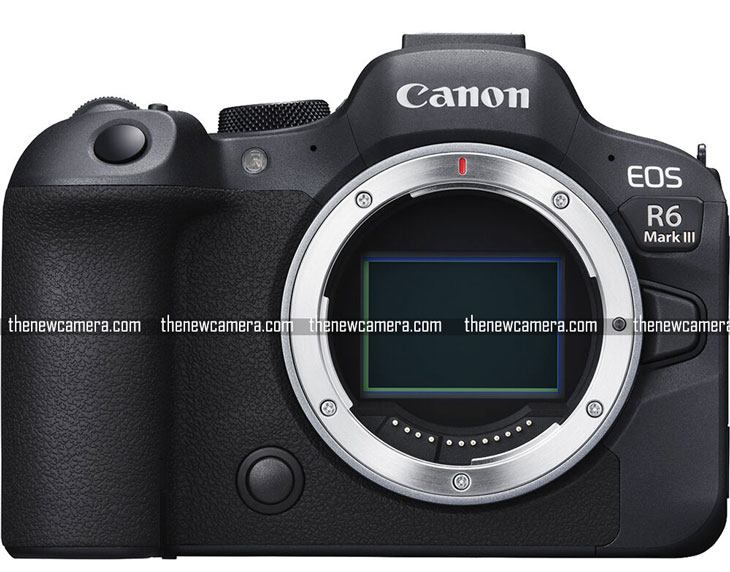
What’s Next from Canon – Canon R6 Mark III, R7 Mark II or R10 Mark II So, first let’s talk about the key points, then we will dive into the details.
- Earlier, it was expected that the Canon R7 Mark II camera would arrive in late August 202,5, targeting sports and wildlife photographers with its advanced set of features. We had a lot of rumours related to that in the past, even the leaked specifications, but for now, the rumour mills are silent on this.
- The second most popular camera, also expected to arrive in the late months of 2025, is the Canon R6 Mark III. As we were the first to tell you, according to the real testers of the prototype, the camera does have a 30+ megapixel sensor inside it.
- The next model is potentially the Canon R10 Mark II camera or the Canon R8 V. While the Canon R8 V is expected to arrive in the first or second quarter of 2026, the Canon R10 Mark II is due for an update. However, as usual, Canon will select only one APS-C camera for its announcement, to avoid cannibalising its sales.
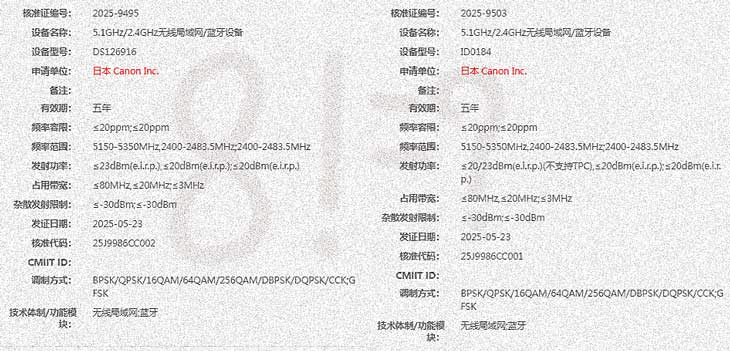
Canon Registered Model and Timelines
- DS126922: EOS R5 II (Dual-band Wi-Fi 6 & Bluetooth)
- DS126928: EOS R1 (Dual-band Wi-Fi 6 & Bluetooth)
- DS126941: EOS R50 V (Dual-band Wi-Fi 5 & Bluetooth)
- DS126904: PowerShot V1 (Dual-band Wi-Fi 5 & Bluetooth)
- ID174: Unknown (Dual-band Wi-Fi 5)
- ID179: Unknown (Dual-band Wi-Fi 5)
- ID0814: Unknown (Dual-band Wi-Fi 5)
- DS126916: Unknown (Dual-band Wi-Fi 5 & Bluetooth)
- DS126936: Unknown (Dual-band Wi-Fi 5 & Bluetooth)
Out of all the registered cameras in 2025, we have 3 cinema cameras and 2 mirrorless models from Canon. We generally keep track of Canon-registered cameras every month, and if you look at our previous two posts of May (May 2025 Update) and July (July 2025 Update), you will find that Canon registered several cameras in those two months. . Both of them have Dual WiFi 5 (we are talking about DS models / Mirrorless only) – Wireless Transfer Unit, generally higher-end cameras like Canon R5 II and Canon R1 use Dual-band Wifi 6, so these two registered models are not High-End full-frame cameras., So we are ruling out the earlier rumored cameras like Canon R1 / R1x variants, OR the Canon R3 Mark II. No, high-end Mirrorless in the announcement pipeline as of now.
As usual, camera makers like Canon typically take at least 3 to 4 months to announce their products once they’re registered in wireless certification agencies. And if they go through the same rule they always follow, we will have at least two Mirrorless announcements from Canon between August and November 2025
Now let’s talk about the Cameras we are expecting next from Canon
Canon Next Mirrorless Announcements
Canon R7 Mark II – The camera that has been registered in May 2025 is expected to be the Canon R7 Mark II with a model code DS126922. The camera is overdue for an update, and we are expecting its arrival from August to November 2025. That’s the initial hint that we have received from the industry experts. The camera is specifically designed for sports and wildlife photography, for those who are looking for a high-performance camera without putting cost to full-frame options.
Canon R6 Mark III – Canon R6 Mark III is another model that we are expecting in 2025. We have already published its rumoured specifications, and we are confirmed that it is coming with a 30+ megapixel sensor. The camera is coming with a significant update for photographers as well as videographers, and its early test phase has been completed. Now we are waiting for its official announcement. As usual, August and September are usually one of the favourite months in the year for Canon for its product announcements, so let’s hope that this August and September, we will witness the arrival of the Canon R6 Mark III camera.
Additional Cameras
Canon R10 Mark II – The Canon R10 Mark II camera was announced in May 2022 and is now due for a refresh. It needs energy and an update, so we are channelising information related to this camera too. As soon as we get any update on it, we will publish it soon.
Canon R8V Camera – The Canon R8V camera is rumoured to arrive in the first half of 2026. If Canon announces it early, it will be a surprise announcement for us.
Stay Updated with TheNewCamera.com
At TheNewCamera.com, we’re dedicated to keeping you informed about the latest camera news. The article “Canon Registered one More Model – DS126936 – July 2025 Update” by thenewcamera.com team | Follow us on our social pages FACEBOOK | TWITTER | INSTAGRAM to get live Camera News + Canon Rumors 24X7.
By admin, on July 28th, 2025

Finally, a closer view and full video of the upcoming Insta360 Prototype Drone, thanks to Igor Bogdanov, the drones have a 360 camera placed just like we have in the Insta360 camera to capture the 360 view. Although this is an image and video of a prototype under test. The design that you see now will completely change once the drone gets approved for production.
Finally, the first video of the upcoming Insta360 Drone leaked
More Specifications of Insta360 Drones [Read full post here ]
- 360-Degree Camera: Yes, it’s almost confirmed that the Pro model with dual fisheye lenses is designed to capture immersive 360-degree footage and will be a flagship model of Insta360 drones. You can easily reframe the shots as per your requirement.
- Innovative Design: The professional model’s arms and motors are strategically placed to remain completely invisible while recording footage.
- Modular: The drone features a modular design, and it is visible from the pictures. The drone has attachable propeller guards and modular components, suggesting its main focus is on easy repairability and portability.
- Weight: The weight of both drones is expected to fall under the micro category [Under 250 Grams]. This is a critical factor to avoid strict drone regulations in many countries.
- Additional Features: Insta360 already has a lot of technology ready to be implemented in the drone — this includes AI-powered editing tools, advanced image stabilization, and FlowState technology already used in the X5.
Antigravity Drone Price [Updated on September 7, 2025]
| Bundle Tier |
Inclusions |
Estimated Price Range (USD) |
Notes |
| Standard Bundle |
Drone + Grip controller + Vision goggles |
$1,199–$1,399 |
Entry-level |
| Fly More Combo |
Standard bundle + 2 extra batteries + spare props + carrying case |
$1,300–$1,499 |
Mid-tier bundle aligning |
| Creator/Pro Kit |
Fly More bundle + creative mounts + ND filters + editing software voucher + premium case |
$1,500–$1,699 |
Premium consumer bundle |
| Enterprise Add-Ons |
Pro Kit + commercial extras (e.g., SDK access, extended warranty) |
$1,700–$1,999 |
Niche tier for business users |
Follow us on our social pages FACEBOOK | TWITTER | INSTAGRAM, If you have time –>see more Camera News and DJI Rumors
By admin, on July 28th, 2025
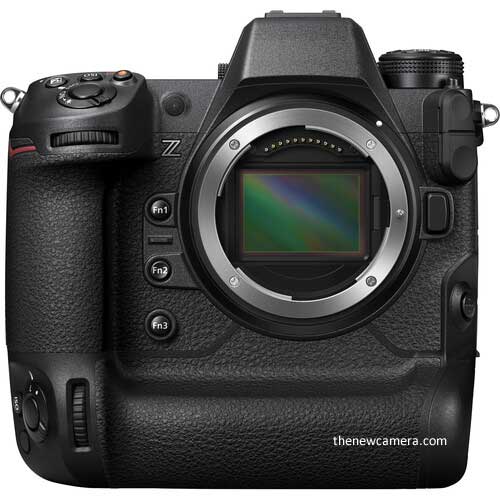
Update on: 6:36 pm, Friday, 26 December 2025, Greenwich Mean Time (GMT)
The Nikon ZR camera has already been mentioned in our earlier article. The Nikon Z9 Mark II is currently expected to arrive in 2026, alongside the Nikon Z7 Mark III camera. The full-frame camera announcement timeline for both models is expected to be almost the same.
The Nikon Z9 Mark II is expected to carry a 45MP enhanced sensor. At this moment, it is still not entirely clear what “enhanced” exactly means, since it is already a stacked sensor, while the Nikon Z7 Mark III is expected to feature a higher-resolution sensor, possibly 61MP or even 80MP. Nikon wants to clearly define and separate its lineup.
If someone wants a higher-resolution sensor for better dynamic range, landscape photography, or commercial work, they can opt for the Nikon Z7 Mark III. On the other hand, if someone wants speed, reliability, resolution, and all-in-one flagship-level performance, they can go with the Nikon Z9 Mark II.
Some unverified YouTube channels are spreading rumors that the Nikon Z9 Mark II will arrive with a higher-resolution sensor, which could overlap with the Z7 series. This is not true. The Nikon Z7 Mark III has its own clear position, and it is expected to arrive in 2026.
It’s already 3 months since the registration of the Nikon N2410 Model (the camera was registered back in April 2025). Generally, camera makers like Nikon announce their products 3 – 4 months after registration in the wireless certification agency, so we can expect the Nikon Camera announcement of August – September 2025
N2410 registration details show that it’s not an entry-level model. It supports 5 gigahertz of Wi-Fi bandwidth, so if a camera supports 5 gigahertz of Wi-Fi bandwidth, then without a doubt, it’s an FX series or DX series premium camera.
Based on Rumors – The Next Announcement: Nikon
If we take a look at the list of upcoming Nikon cameras in 2025 and 2026, then we have two different sets of probabilities:
- Z9 Mark II camera: The first probability is the development announcement of the Nikon Z9 Mark II camera in late 2026. Its announcement is expected to happen before the 2026 Winter Olympics.
- Nikon ZR / Z video camera: The name is not confirmed yet, said to use the same partially stacked CMOS sensor that we have seen in the Nikon Z6 III camera. Right now, check more details about the Nikon ZR
- Nikon Z7 III is long long-rumored camera, and it’s also in the announcement pipeline of Nikon, the camera is also expected to arrive with a 61MP sensor. More details here
So, as per the latest set of rumors, we have all three of these cameras expected to arrive in Q4 of 2025 and Q1 of 2026, as we get any information related to that we will post it soon.
Nikon Next Registration N24XX

One more Nikon camera in the registration pipeline: According to the latest rumours we have from a trusted source E88_8888, Nikon is about to register a new camera in the Chinese wireless certification agency. Once the model code and other details are revealed, we will be publishing a post soon on our website.
Stay tuned for more updates
ABout the author: The article “Nikon Next Announcement in August – September 2025” written and updated by thenewcamera.com team on 9:42 am, Monday, 28 July 2025, Greenwich Mean Time (GMT) | Follow us for more updates and Get LIVE RUMORS –> FACEBOOK | TWITTER | INSTAGRAM to get live news — > get live news + Nikon Rumors 24X7

By admin, on July 27th, 2025

Canon R6 Mark II versus the Nikon Z5 II — selecting the best camera for your requirements is quite a challenging task, as both are very rich in features. And as we all know, the Nikon Z5 II is an incredible camera, and it was announced in April 2025. On the other side, we have the Canon R6 II, which is a Mid-range Mirrorless camera that was launched back in November 2022. It is a very high-performing hybrid camera. So, in this particular specification comparison, we are going to compare the major specifications of both the cameras — so let’s dive in.
Design Specifications
| Specification |
Canon EOS R6 Mark II |
Nikon Z5 II |
| Lens Mount |
Canon RF |
Nikon Z |
| Media/Memory Card Slot |
Dual Slot: SD/SDHC/SDXC (UHS-II) |
Dual Slot: SD/SDHC/SDXC (UHS-II) |
| Video I/O |
1x Micro-HDMI Output |
1x Micro-HDMI Output |
| Audio I/O |
1x 3.5 mm TRS Stereo Headphone Output
1x 3.5 mm TRS Stereo Microphone Input |
1x 3.5 mm TRS Stereo Headphone Output
1x 3.5 mm TRS Stereo Microphone Input |
| Power I/O |
1x USB-C Input |
1x USB-C Input/Output |
| Other I/O |
1x 2.5 mm Sub-Mini Remote Input
1x USB-C (USB 3.2 / 3.1 Gen 2) Data Output |
1x 3.5 mm Remote Input
1x USB-C (USB 3.2 / 3.1 Gen 1) Data Input/Output |
| Wireless |
2.4 / 5 GHz Wi-Fi 5 (802.11ac), Bluetooth 5.0 |
2.4 / 5 GHz Wi-Fi 5 (802.11ac), Bluetooth 5.0 |
| Mobile App Compatible |
Yes: Canon Camera Connect (Android & iOS) |
Yes: SnapBridge (Android & iOS) |
| Global Positioning |
GPS via Connected Smartphone |
GPS via Connected Smartphone |
| Monitor Size |
3.0″ |
3.2″ |
| Monitor Resolution |
1,620,000 Dot |
2,100,000 Dot |
| Monitor Type |
Articulating Touchscreen LCD |
3-Way Tilting Touchscreen LCD |
| Viewfinder Type |
Electronic (OLED) |
Electronic (OLED) |
| Viewfinder Size |
0.5″ |
0.5″ |
| Viewfinder Resolution |
3,690,000 Dot |
3,690,000 Dot |
| Viewfinder Eye Point |
23 mm |
21 mm |
| Viewfinder Coverage |
100% |
100% |
| Viewfinder Magnification |
Approx. 0.76x |
Approx. 0.8x |
| Diopter Adjustment |
-4 to +2 |
-4 to +2 |
| Battery |
1x LP-E6NH Rechargeable Lithium-Ion, 7.2 VDC, 2130 mAh (Approx. 760 Shots) |
1x EN-EL15c Rechargeable Lithium-Ion (Approx. 380 Shots) |
| Shoe Mount |
1x Intelligent Hot Shoe |
1x Hot Shoe |
| Tripod Mounting Thread |
1x 1/4″-20 Female (Bottom) |
1x 1/4″-20 Female (Bottom) |
| Dimensions (W x H x D) |
5.4 x 3.9 x 3.5″ / 138.4 x 98.4 x 88.4 mm |
5.3 x 4 x 2.8″ / 134 x 100.5 x 72 mm |
| Weight |
1.3 lb / 588 g (Body Only) |
1.5 lb / 700 g (With Battery, Recording Media) |
| Operating Conditions |
Not Specified |
32 to 104°F / 0 to 40°C up to 85% Humidity |
| Package Weight |
2.765 lb |
2.555 lb |
| Box Dimensions (LxWxH) |
11.9 x 8.9 x 4.9″ |
7.9 x 7.8 x 5.1″ |
Design and Build Quality
Both of the camera bodies are made from aluminium alloy, and both of them are weather-sealed cameras. So you can use them in rain/dust environments — don’t have to worry. But yeah, you have to choose weather-sealed lenses too.
The noticeable difference in both of these cameras is the Nikon Z5 II body is slightly heavier and you are getting a 3.2-inch large display screen with a higher-resolution display. Other than that, both of them are professionally built for pro users.
Photography Specifications
| Specification |
Canon EOS R6 Mark II |
Nikon Z5 II |
| Sensor Resolution |
Actual: 25.6 MP
Effective: 24.2 MP (6000 x 4000) |
Actual: 25.28 MP
Effective: 24.5 MP (6048 x 4032) |
| Image Sensor |
35.9 x 23.9 mm (Full-Frame) CMOS |
35.9 x 23.9 mm (Full-Frame) CMOS |
| Sensor Crop |
Crop Factor: 1x
Additional Modes: 1.6x |
Crop Factor: 1x |
| Image Stabilization |
Sensor-Shift, 5-Axis |
Sensor-Shift, 5-Axis |
| TYPE |
FSI |
BSI |
| Capture Type |
Stills & Video |
Stills & Video |
| Shutter Type |
Mechanical Focal Plane Shutter and Electronic Rolling Shutter |
Mechanical Focal Plane Shutter and Electronic Rolling Shutter |
| Shutter Speed |
Electronic: 1/16000 to 30 Seconds
Mechanical: 1/8000 to 30 Seconds |
1/8000 to 30 Seconds |
| Bulb/Time Mode |
Bulb Mode |
Bulb & Time Mode |
| ISO Sensitivity |
Native: 100 to 102,400 (50 to 204,800 Extended) |
Photo Native: 100 to 64,000 (50 to 204,800 Extended) |
| Metering Method |
Center-Weighted Average, Evaluative, Partial, Spot |
Center-Weighted Average, Highlight Weighted, Matrix, Spot |
| Exposure Modes |
Aperture Priority, Manual, Program, Shutter Priority |
Aperture Priority, Auto, Manual, Program, Shutter Priority |
| Exposure Compensation |
-3 to +3 EV (1/3, 1/2 EV Steps) |
-5 to +5 EV (1/3, 1/2 EV Steps) |
| Metering Range |
-3 to 20 EV |
-4 to 17 EV |
| White Balance |
Presets: Auto, Cloudy, Color Temperature, Custom, Daylight, Flash, Fluorescent (White), Shade, Tungsten |
Presets: Auto, Cloudy, Color Temperature, Direct Sunlight, Flash, Fluorescent, Incandescent, Preset Manual, Shade |
| Continuous Shooting |
Up to 40 fps (75 Raw / 190 JPEG) |
Up to 30 fps |
| Interval Recording |
Yes |
Yes |
| Self-Timer |
2/10-Second Delay |
2/5/10/20-Second Delay |
| Aspect Ratio |
1:1, 3:2, 4:3, 16:9 |
1:1, 3:2, 16:9 |
| Image File Format |
C-RAW, HEIF, JPEG |
HEIF, JPEG, Raw |
| Bit Depth |
14-Bit |
14-Bit |
| Focus Type |
Auto and Manual Focus |
Auto and Manual Focus |
| Focus Mode |
Continuous-Servo AF, Manual Focus, Single-Servo AF |
Continuous-Servo AF, Full-Time Servo, Manual Focus, Single-Servo AF |
| Autofocus Points |
Contrast Detection, Phase Detection: 1053 AF Zones |
Phase Detection: 273 |
| Autofocus Sensitivity |
-6.5 to +21 EV |
-10 to +19 EV |
| Built-In Flash/Light |
No |
No |
| Maximum Sync Speed |
1/250 Second |
1/200 Second |
| Flash Compensation |
-3 to +3 EV (1/3, 1/2 EV Steps) |
-3 to +1 EV (1/3, 1/2 EV Steps) |
| Dedicated Flash System |
eTTL |
iTTL |
| External Flash Connection |
Shoe Mount |
Shoe Mount |
Image Quality Comparison
Both of these cameras feature 24MP full-frame CMOS sensors, but we do have technological differences between them. The Canon R6 Mark II camera features an FSI CMOS sensor and the Nikon Z5 Mark II uses a BSI CMOS sensor. Now, if you are going to compare both of them side by side, even in the base ISO range, you will clearly notice the Nikon Z5 Mark II can capture more details in the images, and here is the reason:
First Image Compared at the base ISO 100, in RAW mode. The pencil sketches in the Nikon Z5 II image file is clearly visible

2nd Image Compared at the base ISO 100, in JPEG mode. The pencil sketches in the Nikon Z5 II image file is clearly visible

The Nikon Z5 II does not have an optical low-pass filter, and the camera maker has done very well in controlling the moiré pattern. So the MORE details that you are getting from the Nikon Z5 II at base ISO range are really very noticeable. On the other side, we have the Canon R6 Mark II with an optical low-pass filter over the sensor. Maybe the reason Canon is not able to manage the moiré patterns at the base level, so they use a strong low-pass filter to avoid that, and due to the presence of a strong OPLF (optical low pass filter), the details get lost.

The Nikon Z5 II camera, equipped with BSI technology, can capture clearer images at higher ISO settings. For example, suppose you compare the two cameras at ISO 51200. What we will notice is that the Nikon Z5 II sensor preserves a bit more colour compared to the Canon R6 II, where the colour lines and boundaries merge into each other.
If you are going to compare the image quality of both the cameras, then the Nikon Z5 Mark II is a clear winner since the camera is using a BSI CMOS sensor with a good sensitivity range. At the very same time, due to the absence of optical low-pass filter, the camera can capture a bit more detail at the base ISO range.
Autofocus Performance Comparison
The Nikon Z5 Mark II camera uses a hybrid-style focus sensor manufactured by Sony, designed by Nikon engineers. In the sensor, we have 273 hybrid autofocus points fabricated. With the help of these 273 autofocus points, the camera acquires and tracks its subject.
The Canon R6 Mark II camera sensor uses Dual Pixel CMOS autofocus sensor technology. In Canon’s 24MP sensor, we have 1053 AF zones, which can be divided further into points, and the number of DPAF points you can say is more than 4000.
So even if we technically compare the two cameras, then the Canon R6 Mark II does have an upper hand with the number of autofocusing points. And at the very same time, Canon and Sony are the market leaders in terms of autofocusing performance, but Nikon is not far behind. The new generation Nikon EXPEED 7 image processor helps them to acquire the same AI AF as the Nikon Z8 camera.
So now the Nikon Z5 Mark II camera has a dedicated product review mode just like Sony’s product showcase mode, and at the very same time, we have 9 different types of automatic subject detection modes inside the camera that automatically track subjects.
Autofocus sensitivity — due to the presence of a better low-light handling BSI CMOS sensor, the Nikon Z5 Mark II camera can track subjects up to -10 EV autofocus sensitivity, whereas Canon can detect subjects up to -6.5 EV sensitivity.
The autofocus performance doesn’t end here. The continuous shooting speed of both cameras, the Canon can push its boundaries up to 40 frames per second, whereas the Nikon Z5 II camera remains limited to 30 frames per second in JPEG easy mode. At the very same time, while you are tracking and shooting, Canon’s large number of autofocusing points will surely help you a lot more.
Due to the number of autofocusing points and AF zones, the tracking performance of the Canon R6 Mark II camera will remain better compared to the Nikon Z5 Mark II. But if you are shooting in low-light scenarios without the help of any external light, then the autofocus sensitivity of the Nikon Z5 Mark II will be more helpful to you.
So, if you are more into sports and wildlife photography, then having the Canon R6 Mark II will be more helpful to you.
Video Specifications Comparison
| Specification |
Canon EOS R6 Mark II |
Nikon Z5 II |
| Capture Type |
Video |
Video |
| Internal Recording |
H.264/H.265/MPEG-4 4:2:2 10-Bit
UHD 4K (3840 x 2160) at 23.98/25/29.97/50/59.94 fps [60 to 340 Mb/s]
1920 x 1080 at 23.98/25/29.97/50/59.94/100/150 fps [12 to 270 Mb/s] |
H.264/MOV/MP4
UHD 4K (3840 x 2160) at 23.98/25/29.97/50/59.94 fps
1920 x 1080p at 23.98/25/29.97/50/59.94/100/120 fps |
| Video Output |
Raw via HDMI
6144 x 4032 up to 59.94 fps |
8-Bit via HDMI
UHD 4K (3840 x 2160) up to 29.97 fps |
| Fast-/Slow-Motion Support |
Slow-Motion Only |
No |
| Gamma Curve |
Canon Log 3, HDR-PQ |
NLog, RED Luts |
| Recording Limit |
No |
2-Hour 5-Minute Maximum |
| IP Streaming |
No |
No |
| Built-In Microphone |
Stereo |
Stereo |
| Audio Recording |
LPCM Audio 24 Bit
AAC Audio |
MOV, Raw: 24-Bit 48 kHz AAC Audio
MP4: 16-Bit 48 kHz LPCM Audio |
Video Performance of the Camera
For the video part, we have to prefer Canon R6 Mark II — and the reason is very simple: we are getting uncropped 4K 60 FPS footage from the camera. And the maximum resolution of the Canon R6 Mark II camera goes up to 6K 60 frames per second.
The Nikon Z5 II, being an entry-level camera, remains limited to uncropped 4K 30 FPS recording. And while you are recording 4K 60 FPS videos with the Z5 II, you have to face a 1.5x crop — the DX crop.
Both of the cameras are able to record 10-bit 4K videos, and with Nikon, you’re also getting N-RAW support available at 4K.
So, overall, for high-quality video work, you can prefer the R6 Mark II camera with higher frame rates and resolution.
Price Comparison
If you compare the price of both the cameras, then Canon R6 Mark II camera comes at approx. $2000, and the Nikon Z5 II is approximately available at $1700 with offers. At the very same time, the lenses of both the cameras are a little different, and with the Nikon Z5 II, we get a lot of third-party lens makers. But unfortunately, the R6 Mark II camera (or any other Canon full-frame) third-party lensesn’t have that…
Nikon Z5 II vs Canon R6 II – Pros and Cons
Canon EOS R6 Mark II
Pros:
- Faster continuous shooting (40 fps vs. 30 fps) with larger burst buffers.
- Superior autofocus system with 1053 AF Zones
- No video recording time limit and supports 10-bit 4:2:2 internal recording.
- 6K raw video output via HDMI and advanced gamma curves (Canon Log 3, HDR-PQ).
- Lighter body (588 g vs. 700 g)
- Faster USB-C data transfer (USB 3.2 Gen 2).
Cons:
- FSI Sensor, limited dynamic range, and ISO performance
- Smaller monitor (3.0″ vs. 3.2″) with lower resolution (1.62M vs. 2.1M dots).
- Less flexible exposure compensation (±3 EV vs. ±5 EV).
- Weaker autofocus sensitivity in low light (-6.5 EV vs. -10 EV).
- Slightly lower viewfinder magnification (0.76x vs. 0.8x).
Nikon Z5 II
Pros:
- BSI sensor with improved DR range
- Larger, higher-resolution monitor (3.2″, 2.1M dots) with 3-way tilting LCD.
- Better low-light autofocus sensitivity (-10 EV vs. -6.5 EV).
- More flexible exposure compensation (±5 EV vs. ±3 EV).
- Higher viewfinder magnification (0.8x vs. 0.76x).
- Additional metering mode (Highlight Weighted) and more self-timer options.
- Slightly smaller and lighter packaging.
Cons:
- Slower continuous shooting (30 fps vs. 40 fps) with unspecified burst buffers.
- Fewer autofocus points (273 vs. 1053).
- Limited video capabilities (8-bit HDMI, 2-hour 5-minute recording limit, no slow-motion).
- Shorter battery life (380 shots vs. 760 shots).
- Slower USB-C data transfer (USB 3.2 Gen 1)
Verdict:
Canon R6 Mark II is superior in video core specification and autofocusing performance, but comes at a price. Nikon Z5 II features a subtle core specification with superior image quality, and the lens ecosystem is more affordable than of Canon RF Fullframe.
-
Choose the Canon R6 Mark II if you need top-tier video features, fast autofocus, and extended battery life.
-
Choose the Nikon Z5 II if you’re on a budget and prioritize stills with solid low-light autofocus and Image Quality
Get the Nikon Z5 II camera from B&H Store | Adorama.com | Amazon.com
Follow us on our social pages FACEBOOK | TWITTER | INSTAGRAM to get live Camera News + Nikon Rumors 24X7
Nikon Z5 II vs Nikon Z6 II | Nikon Z5 II vs Canon R8 | Nikon Z5 II vs Nikon Zf | Nikon Z5 II vs Sony A7 III
image credit: dpreview.com


|
KEEP THIS BLOG ALIVE - Support New Camera Buy Canon Lenses, Buy Music CD or Digital Camera at amazon it helps this site, and you do not pay anything extra, it is just a way to help support this site.

|