Join More Than 50,000+ Subscribers and get latest camera news and rumors
NEW CAMERA VIDEOS ON YOUTUBE
|
By admin, on July 16th, 2025

Nikon has rolled out firmware version 3.01 for the Nikon Z8 mirrorless camera. It’s actually a bug fix to the issues that had been raised with the update of firmware version 3.0. The bugs affected the functionality of third-party lenses from manufacturers like Tamron, Viltrox, Meike, 7Artisans, and Sirui Optics.
The Nikon firmware 3.0 was a big, groundbreaking update. We have covered that article in detail. Just after that, Nikon also issued an advisory related to the firmware update of the Nikon 3.0.
Major issues with the firmware 3.0
Shortly after the update, many photographers reported significant compatibility issues with third-party lenses, and we have also received several messages related to the update from our users. The Nikon Z8 was highly affected by some issues, and some of these are:
- Autofocus malfunction: Third-party lenses failing to focus properly when attached to the camera.
- Aperture issues: In some lenses, if autofocus is working properly, then the lens is not responding to the aperture. The aperture of the lens has been frozen after the update or lost control over it.
- Complete incompatibility: In some of the lenses, users have lost all the controls — neither focus nor aperture was responding, and it was a big trouble to them.
Reported Issues with Third-Party Lenses on Nikon Z8 Firmware 3.0
| Manufacturer |
Reported Issues |
Official Response |
| Tamron |
Autofocus failure, aperture control loss |
Working on lens firmware updates |
| Viltrox |
General compatibility issues |
Advised detaching lenses before updating |
| Meike |
Limited functionality |
Issued a cautionary notice |
| 7artisans |
Potential malfunctions |
Recommended to avoid updating until resolved |
| Sirui Optics |
Incompatibility with Z8 |
Urged users to wait for further updates |
After mass reporting of such issues, Nikon has acknowledged the bugs and assured us of a quick solution. Soon after that, on July 16th, they released a firmware update which will soon be available for download to users that will fix most of the issues users are facing with third-party lenses.
Now, the specific details related to firmware 3.01 are very limited for now, but the update promises to fix all the issues that users are facing related to third-party lenses. This specific move reflects Nikon’s commitment to user experience and how active they are in resolving the issues.
Here is the step-by-step method to download the firmware 3.01 of Nikon Z8
| Step |
Action |
| 1 |
Visit the Nikon Download Center. – https://downloadcenter.nikonimglib.com/en/download/fw/550.html |
| 2 |
Choose your operating system. |
| 3 |
Click “View download page” for the latest firmware (e.g., Z_8_0210.bin).[whatever the updated file is available] |
| 4 |
Accept terms, download the .bin file. |
| 6 |
Copy Z_8_0210.bin [whatever the updated file is available] to the root directory of a formatted memory card. |
| 5 |
Insert the card into the camera Slot 1, and turn on the camera. |
| 6 |
Go to MENU > SETUP MENU > Firmware version. |
| 8 |
Select “Update” and follow the on-screen instructions. |
| 9 |
Confirm update completion, and restart the camera. |
Get you Nikon Z8 From Here – online B&H Store | Adorama | Amazon.com |
See more Nikon Z8 Comparison – – Panasonic S1R II vs Nikon Z8 | Nikon Z8 vs Leica SL3-S
The article “Big Relief! Nikon Z8 Firmware 3.01 Fixes Third Party Lens Compatibility” written and updated by thenewcamera.com team on 4:33 am, Wednesday, 16 July 2025, Greenwich Mean Time (GMT)| Follow us for more updates and Get LIVE RUMORS –> FACEBOOK | TWITTER | INSTAGRAM to get live news — > get live news + Nikon Rumors 24X7

By admin, on July 15th, 2025

Sony has announced the long-awaited RX1R III camera, updating their camera nearly 10 years after the introduction of the RX1R Mark II. The camera features a 61-megapixel BSI CMOS sensor paired with the Sony BIONZ XR image processor, approximately eight times faster than its previous generation, the RX1R Mark 2. Also, an AI chip has been integrated, and the auto-boxing feature has been upgraded to the next level.
Since it’s a compact FF camera, we are getting a 35mm F2 Zeiss lens. Although it’s a fixed lens, the camera does offer digital crop and other creative zoom controls. The camera is able to record 4K videos up to 30 frames per second, 10-bit internally and full HD videos up to 120 frames per second.
Sony RX1R III Specification
61MP Full-Frame Exmor R BSI Sensor
ZEISS Sonnar T* 35mm f/2 Lens
BIONZ XR & AI Processing Unit
693-Point PDAF & Real-Time Tracking AF
4K 30p 10-Bit & FHD 120p Video
2.36m-Dot 0.7x OLED EVF
3.0″ 2.36m-Dot Touchscreen LCD
Step Crop Modes and Creative Looks
Updated Design, Improved Battery Life
SD UHS-II Slot; USB-C, HDMI, Mic Ports
The RX1R III will be available in July 2025 for approximately $5,099.99 and CAD 6,299.99. The TG-2 for approximately USD 299.99 and $349.99 CAD, the LCS-RXL for approximately $249.99 and CAD 224.99, and the LHP-1 for approximately $199.99 and $249.99, in August 2025. They will be sold directly through Sony and at a variety of Sony’s authorized dealers throughout North America.
Sony RX1R III B&H Store
Sony R1R Mark III Press Release
Sony Electronics Introduces The RX1R III: The Flagship Full-Frame Premium Compact Camera With A Fixed Lens
SAN DIEGO, July 15, 2025 – Sony Electronics Inc. announces the RX1R III, the eagerly anticipated third generation of its RX1R series, featuring a 61-megapixel1 35 mm full-frame Exmor R™ CMOS image sensor, the latest BIONZ XR™ image processing engine, and a ZEISS® Sonnar T* 35 mm F2 lens.
“The RX1R III combines Sony’s design savvy with the latest innovations in imaging technology to produce a new flagship in our RX1R camera series that offers uncompromising full-frame quality in a premium compact camera body,” said Yang Cheng, Vice President of Imaging Solutions, Sony Electronics Inc. “The RX1R series has resonated greatly among discerning photographers, and we’re proud to now deliver the next generation of this popular camera model.”
A Focus On High-Quality Photography
The combination of the 61-megapixel1 full-frame Exmor R™ back-illuminated CMOS image sensor and the BIONZ XR™ image processing engine delivers high resolution and sensitivity, with low noise and a wide dynamic range. The sensor surface features AR (Anti-Reflection) coating and omits the optical low-pass filter to achieve superior image quality.
The integrated lens offers excellent image quality. By optimizing the position of the lens and the imaging surface one by one at the micron level, RX1R III achieves high optical performance in a compact form factor.
Dedicated To Creative Freedom
To ensure you always get your shot accurately and without effort, RX1R III is equipped with the latest AI-processing unit, a valued feature of top-of-the-line professional Sony AlphaTM cameras. The AI-processing unit can accurately recognize the shape and movement of subjects, human bodies, heads, and the position of eyes, tracking subjects even when their faces are not visible, and is available for both still images and videos2. Up to 693 densely arranged3 phase-detection AF (Auto-Focus) points cover approximately 78% (for still image shooting) of the image capture’s area.
While the camera has a fixed lens, users can tap into the versatility of three prime lenses thanks to the Step Crop Shooting4 function, which allows users to switch between focal lengths equivalent to 35 mm, 50 mm, and 70 mm5 via assigned buttons or dials. When shooting in RAW format, users can reselect the focal length during post-production. The lens’s macro ring enables instant switching to macro mode, allowing users to get as close as 20 cm (maximum magnification: 0.26x).
For creators who enjoy unique and personalized visuals, RX1R III offers twelve built-in Creative Looks. Adjustments to hue, saturation, brightness, contrast, and sharpness can be applied not only to still images but also to videos. Most notable among the Creative Looks6, FL2 allows the capturing of a nostalgic expression with subdued colors, and FL3 allows for a more vibrant image.
Streamlined Design & Reliable Hardware
Made of lightweight yet highly rigid magnesium alloy, the RX1R III design balances aesthetics and functionality. While maintaining excellent operability, the dials and Multi-Interface (MI) Shoe are embedded into the camera body and the top surface of the body features a flat design. The grip design and surface texture provide a secure and comfortable hold.
RX1R III is equipped with an electronic viewfinder featuring an approximately 2.36 million-dot XGA OLED with high resolution and high contrast, offering a magnification of approximately 0.70x.
RX1R III uses the rechargeable battery pack NP-FW50, allowing the capture of up to 300 still images7. It features a USB Type-C® port that allows rapid charging when connected to USB Power Delivery8 -compatible devices, or the addition of external power sources, such as mobile batteries, for extended shooting sessions.
Social Responsibility
Aligned with Sony’s ambitious ‘Road to Zero’ initiative, this product supports the company’s vision for achieving a zero environmental footprint by 2050. The Sony Group’s manufacturing facilities for imaging products, including the RX1R III, are operating at 100% renewable energy. The RX1R III packaging uses Sony’s proprietary environmentally friendly Original Blended Material9 instead of plastic10.
The camera system incorporates comprehensive accessibility options, including a Screen Reader function11 and Display Magnification, to support visually impaired users across an expanded range of menu items.
Optional Accessories
TG-2 is a dedicated thumb grip that attaches to the Multi Interface (MI) Shoe to provide stable holding and operability, including when operated with one hand. When attached to the body, the metal material and high-quality paint finish provide exceptional design unity.
LCS-RXL is a compact body case dedicated to this camera model intended to protect the camera from scratches and dirt and enhance its elegance with its refined texture material. The body case allows access to all ports—USB, HDMI, battery, memory card, and tripod attachment—without removal. The grip design improves the holding experience.
LHP-1 is a lens hood made specifically for this camera. It features a robust construction using lightweight and high-strength aluminum material, protecting the lens from impact and dirt. The bayonet mount allows for quick and secure attachment.
Pricing & Availability
The RX1R III will be available in July 2025 for approximately $5,099.99 USD and $6,299.99 CAD. The TG-2 for approximately $299.99 USD and $349.99 CAD, the LCS-RXL for approximately $249.99 USD and $224.99 CAD, and the LHP-1 for approximately $199.99 USD and $249.99 CAD, in August 2025. They will be sold directly through Sony and at a variety of Sony’s authorized dealers throughout North America.
By admin, on July 13th, 2025

According to the latest rumours coming from the webio / rumour mills, the Sony FX8 camera is said to feature 12K resolution, which we have also reported before, and it is expected to arrive in September 2025, possibly at the IBC conference. Now let’s break down the details — the list of rumoured specifications expected to arrive inside the Sony FX8 camera:
Sony FX8 Camera Specification
- The new full-frame product, named FX8, will feature a resolution of 12K, which is four times that of the FX9.
- It uses a 16:9 cropped 12K full-frame (3:2 aspect ratio, 96MP total pixels) CMOS image sensor.
- It doesn’t have internal RAW or X-OCN recording capabilities. Like the FX6, it outputs full-frame crop 3.8K 16-bit RAW to a third-party recorder via SDI at a maximum of 120fps.
- The only recording format available is XAVC, which offers 8K30p or 4K60p recording in full-frame and S35 modes.
- Full-frame crop 3.8K mode provides 4K120p recording.
- The readout specifications are not as good as the URSA Cine 12K, as the processor limits it, but it is still a reliable and easy-to-use camcorder that offers high-speed 4K (for FX6 users) and full-frame/Super35 dual-format 8K30p/4K60p (for FX9 users) for creative freedom.
About Sony FX8: Sony FX8 is said to be a professional filmmaker’s cinema camera set to join the Sony FX line, alongside the Sony FX6 and FX9. The camera will undergo a significant upgrade in its core specifications, offering very tough competition to the Blackmagic URSA Cine 12K camera.
Follow us on our social pages FACEBOOK | TWITTER | INSTAGRAM, –>If you have time, see more Sony Alpha Rumor Latest Camera News
source/credit webio

By admin, on July 12th, 2025

Panasonic Lumix S1 II vs. Nikon Z6 III – Which One Is the Best Camera for Photo and Video? Let’s explore which one is the Best Camera for you. Here is the verdict / quick recommendation whcihexplained in the later part of the video
Choose Nikon Z6 III for:
- For Photography, Nikon Z6 III is more recommended
- For 4K vlogging, travel, and run-and-gun videography, the Nikon Z6 Mark III is highly recommended
- Excellent for recording slow-mo video, starting from Full HD 240 FPS and 4K up to 120 FPS
- Projects prioritizing sharp 4K footage and high frame rates.
Choose Panasonic Lumix S1 II for:
- 6K cinematic video with Open Gate and ARRI LogC3 for High-End post-production flexibility.
- 6K documentary, When you actually need the 6K quality, Panasonic S1 II is more recommended
- for thermal management, built-in FAN, and advanced 32 BIT audio.
- Anamorphic in-camera De Squeez Frame.io integration.

| Feature |
Nikon Z6 Mark III |
Panasonic S1 II |
| Lens Mount |
Nikon Z |
L-Mount |
| Dimensions (W x H x D) |
5.5 x 4 x 2.9″ (138.5 x 101.5 x 74 mm) |
5.29 x 4.03 x 3.61″ (134.37 x 102.36 x 91.69 mm) |
| Weight |
23.6 oz / 670 g (Body Only) |
1.58 lb / 717 g (Body Only), 1.76 lb / 798 g (With Battery, Media) |
| Battery |
EN-EL15c Rechargeable Lithium-Ion (~360 shots) |
Rechargeable Lithium-Ion, 7.2 VDC, 2200 mAh |
| Operating Conditions |
32 to 104°F / 0 to 40°C, up to 85% Humidity |
14 to 104°F / -10 to 40°C, 10 to 80% Humidity |
| Media/Memory Card Slot |
Slot 1: CFexpress Type B / XQD, Slot 2: SD/SDHC/SDXC (UHS-II) |
Slot 1: CFexpress Type B, Slot 2: SD/SDHC/SDXC |
| Wireless |
2.4 / 5 GHz Wi-Fi 5 (802.11ac), Bluetooth 5.0 |
5 GHz Wi-Fi 5 (802.11ac) |
| Mobile App |
Nikon Imaging Cloud (Android/iOS, file access, firmware updates) |
Lumix Lab (Android/iOS) |
| Monitor |
3.2″, 2,100,000 Dot, Articulating Touchscreen LCD, Top Status Display |
3″, 1,840,000 Dot, Free-Angle Tilting Touchscreen LCD |
| Viewfinder |
Electronic, 0.5″, 5,760,000 Dot, 0.8x Magnification, -4 to +2 Diopter |
Electronic (OLED), 5,760,000 Dot, 0.78x Magnification, -4 to +2 Diopter |
| Video I/O |
1x HDMI Output |
1x HDMI Output |
| Audio I/O |
1x 3.5 mm TRS Stereo Headphone Output, 1x 3.5 mm TRS Stereo Microphone Input |
1x 3.5 mm TRS Stereo Headphone Output, 1x 3.5 mm TRS Stereo Microphone Input |
| Power I/O |
1x USB-C Input |
1x USB-C Input |
| Other I/O |
1x Nikon DC2 Data Input, 1x USB-C Data Output (Shared with Power Input) |
1x USB-C Data Output (Shared with Power Input) |
Still image comparison between Panasonic S1 Mark II, Nikon Z6 Mark III in JPEG mode – Image quality-wise, the Nikon Z6 Mark 3 camera can capture with more detail compared to the Panasonic S1 Mark II, and even considering the price and AI autofocus mode, the best investment should be the Nikon Z6 Mark 3.

Video Core Specification Comparison
| Feature |
Nikon Z6 III |
Panasonic Lumix S1 II |
| Max Video Resolution |
6K (6048 x 3402) @ 60p (RAW) |
6K (5952 x 3968) @ 29.97p, 5.1K (5088 x 3392) @ 60p (Open Gate) |
| 4K Frame Rates |
4K UHD (3840 x 2160) @ 120p |
4K (3840 x 2160) @ 119.88p, C4K (4096 x 2160) @ 119.88p |
| Slow Motion |
Full HD (1920 x 1080) @ 240p |
Full HD (1920 x 1080) @ 239.76p |
| RAW Recording |
N-RAW, ProRes RAW HQ (12-bit) |
Apple ProRes RAW (10-bit) |
| Compression Options |
ProRes 422 HQ (10-bit), H.265/HEVC, H.264/AVC (8/10-bit) |
Apple ProRes, H.264/MPEG-4 AVC, H.265/HEVC, HEIF (10-bit) |
| Log Recording |
N-Log, HDR (HLG) |
V-Log, ARRI LogC3 (with DMW-SFU3A upgrade) |
| Audio |
Linear PCM (48 KHz, 24-bit), AAC (48 KHz, 16-bit), 3.5mm mic/headphone |
LPCM (48/96 KHz, 24/32-bit), AAC (48 KHz, 16-bit), XLR via DMW-XLR2 |
| Max Recording Time |
2 hours 5 minutes |
Not specified (internal fan for extended recording) |
| Stabilization |
5-axis IBIS (8 stops) |
5-axis IBIS (8 stops), Active I.S., cropless mode |
| Additional Features |
Waveform, focus peaking, zebra, time code, e-VR, dual-format proxy |
Real Time LUT, Frame.io C2C, anamorphic desqueeze, full HDMI output |
| Weight |
1.5 lbs (675 g) |
1.76 lbs (800 g) |
| Dimensions |
5.47 x 4.02 x 2.91 in |
5.28 x 4.04 x 3.63 in |
Nikon Z6 Mark 3 and Panasonic S1 Mark II camera – Which is best for your videographic needs?

Nikon Z6 III captures more details in a video clip compared to the Panasonic S1 II
Based on videographic requirements, which camera is the best one for you? The Nikon Z6 Mark 3 camera delivers excellent 4K video quality, and the details are very sharp. You can also see the samples that have been attached to this page. The 4K details captured by the Nikon Z6 III are remarkably sharp. Panasonic Lumix S1 Mark II camera 4k samples, doesn’t carry that many details that which we can notice in the Nikon Z6 III camera.
What users are saying, those who have both the camera

The Nikon Z6 Mark 3 camera can capture 4K videos up to 120 frames per second, so that’s the best option we have if you wish to capture high-quality dance moves or action sequences in slow motion. The Nikon Z6 Mark 3 camera also offers the latest Nikon RED LUTs to put a cinematic feel inside your camera. The camera also offers waveform functionality and timecode support.
Why should you buy the Nikon Z6 Mark 3? If you are a content creator, travel blogger, street filmmaker, or even wedding cinematographer, and your requirement is limited to 4K video recording, then of course, the Nikon Z6 Mark 3 is more recommended for you.

At first, we were also confused when we saw the samples, since the Z6 III details are less compared to the Nikon Z6 III at 6K mode., but keep in mind since Nikon has unlocked the RAW mode of the camera, and the samples are clipped from RAW files not the in-camera processed mp4 that’s why the details visually less compared to the Panasonoc processed 6k MP4 file.

In 5k mode, when both are set at H.265, 10 bit, then as you can see, the Nikon Z6 III renders more details compared to the Panasonic S1 II camera.
Panasonic S1 Mark II Lacks RAW 6K Recording
The big problem with the Panasonic S1 Mark II camera is no RAW video recording mode is available at 6K and that creates a big confusion while comparing the clips of the camera that the S1 Mark II is generating a higher amount of detail, but the fact is the Z6 Mark III camera is giving us complete RAW footage, that’s why the details are soft in the initial inspection that can create confusion to any of us.
5K Comparison Shows Nikon Z6 III Advantage
But again, in 5K video recording mode, when you compare both the files or the clips of the camera, where none of them are recording in RAW format, then you can clearly see that Z6 Mark III camera details are much clearer.
Nikon Z6 III Offers 6K 60fps and 4K 120fps – But Misses Key Features
And since only the Nikon Z6 III camera is able to give us exclusively 6K 60 fps mode as well as 4K 120 fps mode, what we are missing inside the Z6 III is the anamorphic de-squeeze function as well as 32-bit float audio.
Which One Should You Buy – Final Recommendation
So to be very clear, for photography purposes, Nikon Z6 Mark III camera is the best option. Other than that, in videography purposes, if you’re going to shoot in anamorphic lenses and you have to use the in-camera de-squeeze functionality as well as you’re connected to post-production and your requirement is actually 32-bit float audio, in this specific scenario I am going to recommend you Panasonic S1 Mark II camera. Otherwise, Nikon Z6 Mark III is the best camera available at a lesser price and you should go with that camera.
Best camera for high-quality slow-motion video
Nikon Z6 Mark 3 is the straightforward answer. With this camera, you can record high-quality Full HD videos up to 240 frames per second. You can use it later in 10x slow-motion mode, delivering ultra-smooth, super slow-motion footage for a cinematic look. Other than that, the camera also offers 4K video recording up to 120 frames per second. So again, you are getting an option to record high-quality slow-motion footage—although you have to face a crop while recording at 120 FPS, but at least you get the option.
There is no such option present in the Panasonic S1 Mark II. It has advantages in its 6K mode, but yes—even in the 6K mode—it’s missing the 60fps frame rate which the Z6 Mark 3 is able to deliver.
Best camera for higher resolution Video
Please note, the Panasonic S1 Mark II does not offer RAW recording in 6K, whereas the Nikon Z6 Mark III offers full 6K RAW video, which gives more flexibility in post-production even if initial clips may look softer.
The Nikon Z6 Mark III offers 6K 60fps and 4K 120fps with internal RAW, but lacks 32-bit float audio and anamorphic de-squeeze support, making the S1 Mark II still a better choice if audio and anamorphic workflows are a priority.
Verdict – Best Camera for You
Choose Nikon Z6 III for:
- For Photography, Nikon Z6 III is more recommended
- For 6k 60FPS / NRAW video Nikon Z6 III
- For 4K vlogging, travel, and run-and-gun videography, the Nikon Z6 Mark III is highly recommended
- Excellent for recording slow-mo video, starting from Full HD 240 FPS and 4K up to 120 FPS
- Projects prioritizing sharp 4K footage and high frame rates.
Choose Panasonic Lumix S1 II for:
- 6K cinematic video with Open Gate and ARRI LogC3 + 32-bit Audio
- for thermal management, built-in FAN, and advanced 32 BIT audio.
- Anamorphic in-camera De Squeez Frame.io integration.
Stay Updated with TheNewCamera.com
At TheNewCamera.com, we’re dedicated to keeping you informed about the latest camera news. The article “Panasonic Lumix S1 II vs. Nikon Z6 III – Which one is the Best Camera for Photo and Video?” by thenewcamera.com team on 9:04 am Saturday, 12 July 2025 Greenwich Mean Time (GMT) | Follow us on our social pages FACEBOOK | TWITTER | INSTAGRAM to get live Camera News + Canon Rumors 24X7.
Credit Image Dpreview.com
By admin, on July 3rd, 2025

We have included the Nikon P1000, P1100, P950, P900, Canon SX70 HS, Panasonic FZ80, and Sony RX10 IV. We will dive into the core specifics now of all the cameras and you will understand very easily the best zoom camera for you according to your needs and budget. If you prioritize image quality, then we have different cameras. If you prioritize the maximum zoom range, then of course we have a different set of camera recommendations for you. Now explore the details.
Top Zoom Cameras of 2025
Below is the list of selected the best zoom cameras available in 2025. We have selected all 5 cameras based on their performance and budget, recent reviews and comparisons:
-
Nikon Coolpix P1100
-
Key Features: 125x optical zoom (24-3000mm), 16MP BSI-CMOS sensor, 4K/30p video, 5-axis vibration reduction (VR), fully articulated 3.2″ LCD, 2.36M-dot OLED viewfinder.
-
Best For: Extreme zoom photography, including wildlife, sports, and astrophotography.
-
Price: Approximately $1100 / £1049.
-
Nikon Coolpix P950
-
Key Features: 83x optical zoom (24-2000mm), 16MP BSI-CMOS sensor, 4K/30p video, 5-axis VR, 3.2″ articulated LCD.
-
Best For: Long zoom with better portability than the P1100.
-
Price: Approximately $800 / £660.
-
Canon PowerShot SX70 HS
-
Key Features: 65x optical zoom (21-1365mm), 20.3MP CMOS sensor, 4K/30p video, 4-stop image stabilization (IS), vari-angle LCD.
-
Best For: Versatile zoom with excellent portability for travel photography.
-
Price: Approximately $650 / £570.
-
Panasonic Lumix FZ80
-
Key Features: 60x optical zoom (20-1200mm), 18MP 1/2.3″ CMOS sensor, 4K/30p video, optical image stabilization, 30fps burst in 4K Photo Mode.
-
Best For: Budget-friendly zoom camera with strong video capabilities.
-
Price: Approximately $440 / £350 (used).
-
Sony RX10 IV
-
Key Features: 25x optical zoom (24-600mm), 20.1MP 1″ Exmor RS CMOS sensor, 4K/120p video, fast autofocus (0.03 seconds), 24fps continuous shooting.
-
Best For: High-end zoom with superior image and video quality.
-
Price: Approximately $1600.
Detailed Review
We have selected the list of the best zoom cameras available in 2025, and let’s explore them.
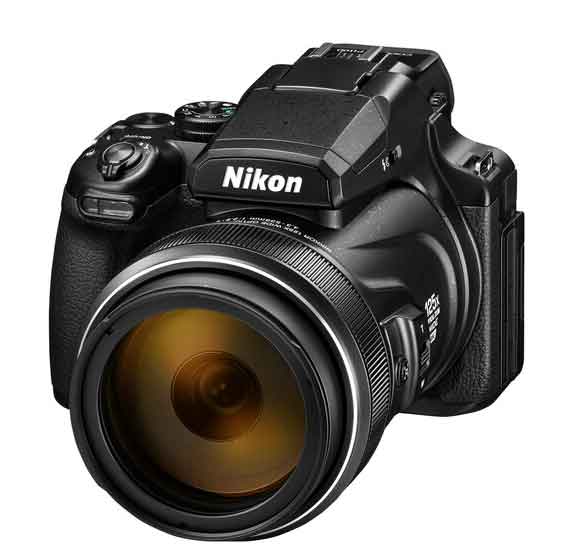
1. The Nikon P1100 – Best Superzoom Camera 2025
The Nikon P1100 was announced in February 2025. It features the world’s longest optical zoom lens ever used in a bridge camera. You get a total of 125x optical zoom lens which gives you enormous ability to zoom distant subjects. You can clearly capture wildlife, birds, and even the moon with this camera.
- Specifications:
- Sensor: 16MP 1/2.3″ BSI-CMOS
- Zoom: 24-3000mm (125x optical), f/2.8-8
- Video: 4K/30p, 1080/60p with clean HDMI output
- Stabilization: 5-axis VR (up to 5 stops)
- Display: 3.2″ fully articulated LCD (921,000 dots), 2.36M-dot OLED viewfinder
- Weight: 1410g
- Connectivity: Wi-Fi, Bluetooth
- Pros:
- Unmatched 125x zoom range, ideal for extreme telephoto shots.
- 250X Dynamic Zoom for Moon Shots
- 5-axis image stabilization ensures steady shots at long focal lengths.
- Fully articulated screen for flexible shooting angles.
- AI-enhanced autofocus with bird-watching mode for precise subject tracking.
- Raw support for post-processing flexibility.
- Cons:
- Bulky and heavy (1410g), reducing portability.
- Small 1/2.3″ sensor limits low-light performance and image quality at high ISOs.
- Higher price point compared to other bridge cameras.
Performance: The Nikon P1100 camera is able to do 125x optical zoom and approximately 250x dynamic zoom, which includes optical plus digital, meaning hybrid zooming. The camera uses Nikon’s latest AI-driven autofocus technology, which is very helpful in capturing and tracking moving birds. The camera is heavier and bulkier, so it resembles a DSLR camera. Although due to the small sensor size, some image noise may appear at higher ISO settings. If you want a larger sensor zoom camera, then we do have options like the Sony RX10 IV, but it comes at a hefty price.
Who is it for: The Nikon P1100 camera is ideal for those who love to have the world’s best mega zoom camera in their hand.

2. The Nikon P950 – Best Nikon Budget Zoom Camera
The Nikon P950 offers 83x optical zoom and it is slightly more affordable compared to the Nikon P1100, so if your budget is not that much, you can still get a decent zoom camera — the P950.
- Specifications:
- Sensor: 16MP 1/2.3″ BSI-CMOS
- Zoom: 24-2000mm (83x optical), f/2.8-6.5
- Video: 4K/30p
- Stabilization: 5-axis VR
- Display: 3.2″ articulated LCD
- Weight: 1005g
- Price: $800 / £660
- Pros:
- 83X Long zoom range suitable for wildlife and sports.
- Lighter and more portable than the P1100.
- 4K video and 5-axis stabilization for steady shots.
- AI-enhanced scene recognition for easier shooting.
- Cons:
- Less zoom than the P1100.
- Small sensor limits low-light performance.
Performance: The Nikon P950 strikes a balance between the superzoom camera and the budget. With the P950, you are getting approximately 83x optical zoom, and overall, you are getting 160x of dynamic zoom from the camera. Again, the autofocus is very well capable of shooting and tracking subjects, and overall is the second-best camera after the Nikon P1100 in the line of bridge cameras.
Who is it for: Photographers who love to have a budget bridge camera with extensive zoom range capabilities — Nikon P950 is the best choice.
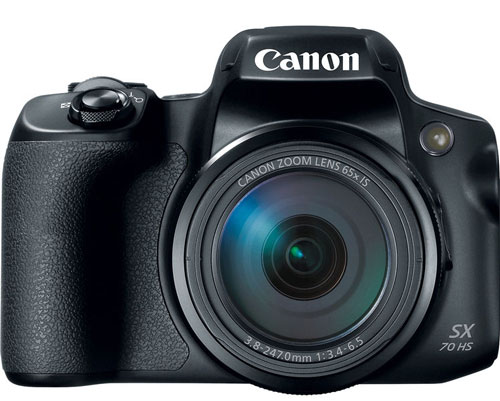
3. Canon SX70 HS – Best Canon Superzoom Camera
Available under budget, the Canon SX70 HS is able to zoom up to 65x, which is, of course, less than the Nikons we have discussed earlier. But that’s the only mega zoom camera we have inside Canon.
- Specifications:
- Sensor: 20.3MP 1/2.3″ CMOS
- Zoom: 21-1365mm (65x optical), f/3.4-6.5
- Video: 4K/30p
- Stabilization: 4-stop IS
- Display: Vari-angle LCD
- Weight: 610g
- Price: $650 / £570
- Pros:
- Wide-angle lens (21mm) for landscapes and group shots.
- Lightweight and portable at 610g.
- 4K video and vari-angle screen for flexible shooting.
- AI-powered autofocus for reliable subject tracking.
- Cons:
- Shorter zoom range than Nikon models.
- No 5-axis stabilization, less effective at long focal lengths.
- Build quality feels less premium.
Performance: Canon SX70 HS is a work-horse camera made for regular usage. Although not weather-sealed, but build quality is very good. It uses a 20.3 MP sensor, which delivers quite a good result in available light conditions. If you love to buy a Canon zoom camera, then without a doubt SX70 HS is the best choice. But if you talk about the overall best zoom camera, then we do have better options than the SX70 HS — the Nikon P950 and the Nikon P1100.
Who is it for: The Canon SX70 HS is made for travel photographers and lightweight zoom camera lovers.
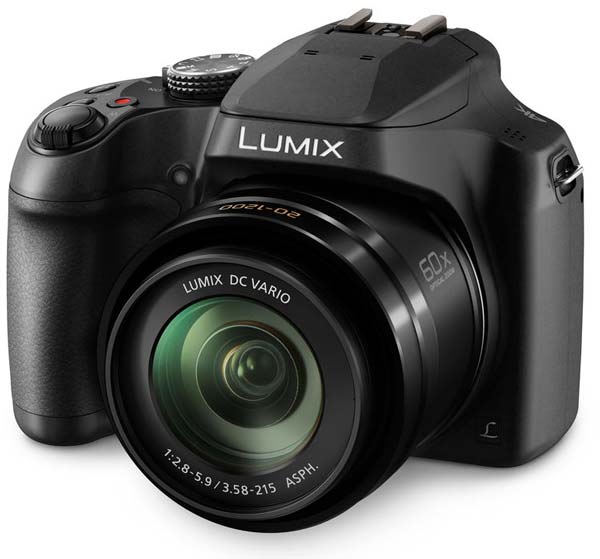
Panasonic FZ80 – Best Beginner Zoom Camera
Although my favourite was Panasonic FZ1000 Mark II, it is hardly available anywhere. The next best camera after the FZ1000 Mark II is the FZ80. It is one of the best budget 60x optical zoom cameras available right now.
- Specifications:
- Sensor: 18MP 1/2.3″ CMOS
- Zoom: 20-1200mm (60x optical), f/2.8-5.9
- Video: 4K/30p, 30fps burst in 4K Photo Mode
- Stabilization: Optical Image Stabilizer (OIS)
- Weight: 691g
- Price: $440 / £350 (used)
- Pros:
- Affordable price point for a zoom camera.
- 4K video and 4K Photo Mode for capturing fast action.
- Wide-angle lens (20mm) for versatile shooting.
- AI-enhanced scene detection for ease of use.
- Cons:
- Shorter zoom range compared to competitors.
- Basic build quality.
- Limited low-light performance.
Performance: The Panasonic FZ80 offers excellent value. The camera uses a high-quality 18 Megapixel CMOS sensor, captures 4K video at 30 frames per second, and the zoom is sufficient for casual usage. But if you want more, then of course we do have options like the Nikon P950 and the P1100.
Who It’s For: Budget-conscious photographers
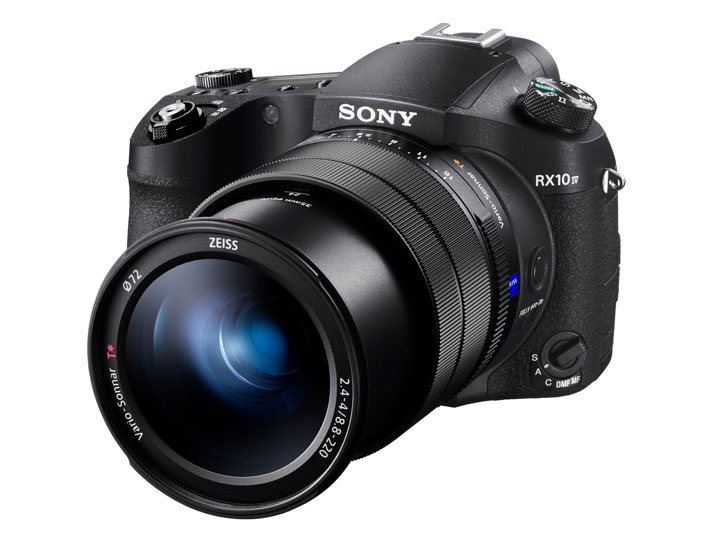 Sony RX10 IV Sony RX10 IV – Best Professional Zoom Camera
That’s the best zoom camera a camera maker has ever made. Despite its limited 25x optical zoom range, the camera features a 20 Megapixel high-quality 1-inch hybrid CMOS autofocus sensor with a focusing speed of 0.03 seconds, which is non-noticeable. At the very same time, the camera was loaded with AI algorithms so it could easily detect and shoot subjects. But due to the very slow response from the market, Sony decided to withdraw the RX10 series cameras. Since mostly these are out of production right now. But if you can get a copy of this camera, you will be blessed to have the RX10 IV.
- Specifications:
- Sensor: 20.1MP 1″ Exmor RS CMOS
- Zoom: 24-600mm (25x optical), f/2.4-4
- Video: 4K/120p, 24fps continuous shooting
- Stabilization: SteadyShot
- Weight: 1095g
- Price: $1600
- Pros:
- Larger 1″ sensor for better image quality and low-light performance.
- Fast autofocus (0.03 seconds) with AI-driven tracking.
- High-quality Zeiss lens and 4K/120p video for professional results.
- Robust build quality.
- Cons:
- Shorter zoom range than other bridge cameras.
- Expensive compared to competitors.
Performance: The camera features exceptional image quality with the highest possible details and a very high-quality 25x optical zoom lens made by the company. It was able to capture 4K videos up to 120 frames per second and continuous shooting up to 24 frames per second with sensor-shift SteadyShot IS. If your priority is image quality and you love to have the best & fastest focusing superzoom camera, get the RX10 Mark IV.
Comparison Table
| Camera Model |
Zoom Range (mm) |
Sensor Size |
Video |
Weight (g) |
Price (approx.) |
Key Strength |
| Nikon P1100 |
24-3000 (125x) |
1/2.3″ |
4K/30p |
1410 |
$1100 |
Longest zoom range |
| Nikon P950 |
24-2000 (83x) |
1/2.3″ |
4K/30p |
1005 |
$800 |
Balanced zoom and portability |
| Canon SX70 HS |
21-1365 (65x) |
1/2.3″ |
4K/30p |
610 |
$650 |
Lightweight, wide-angle lens |
| Panasonic FZ80 |
20-1200 (60x) |
1/2.3″ |
4K/30p |
691 |
$440 (used) |
Affordable, strong video features |
| Sony RX10 IV |
24-600 (25x) |
1″ |
4K/120p |
1095 |
$1600 |
Superior image quality |
| Nikon P1000 |
24-3000 (125x) |
1/2.3″ |
4K/30p |
1415 |
$997 |
Extreme zoom, slightly cheaper |
| Nikon P900 |
24-2000 (83x) |
1/2.3″ |
1080p |
1005 |
$600 (used) |
Budget-friendly long zoom |
Buying Guide: Choosing the Right Zoom Camera
When selecting a zoom camera in 2025, Kindly consider the following factors to make your purchase a successful pruhase
- Zoom Range:
- For extreme Super Zoom requirements the best cameras are (e.g., birdwatching, moon photography), the Nikon P1100 or P1000 offers the longest 125x zoom.
- For general-purpose use, lightweight body Canon SX70 HS (65x) or Panasonic FZ80 (60x) are the best choice.
- If image quality is at the highest priority and even more important than zoom, the Sony RX10 IV’s 25x zoom is sufficient for most scenarios.
- Image Quality:
- Cameras with 1/2.3″ sensors (Nikon, Canon, Panasonic) are adequate for daylight but struggle in low light.
- The Sony RX10 IV’s 1″ Large sensor offers Sharp images and Excellent low-light performance
- Video Capabilities:
- All listed cameras except the P900 offer 4K video,
- The Sony R10 IV is the only camera that offers 4K/120p for slow-motion footage.
- The Panasonic FZ80’s 4K Photo Mode is very usable for timelapse
- Portability:
- The Canon SX70 HS (610g) and Panasonic FZ80 (691g) are the lightest, ideal for travel.
- The Nikon P1100 and P1000 are bulky (over 1400g), very similar to DSLRS
- Budget:
- Budget-conscious buyers should consider the Panasonic FZ80 or Nikon P900
- Mid-range options include the Canon SX70 HS and Nikon P950.
- The Sony RX10 IV and P1100 are both premium choices
- AI Features:
- Sony RX10 IV features AI for autofocus, scene recognition, and image processing. The Nikon P1100 has built-in bird-watching mode


By admin, on July 2nd, 2025

Nikon Z9 Mark II camera is coming with Pre-Capture RAW and more and updated core specs, but before that, let’s have a look we have already posted a few things related to the Nikon Z9 Mark II camera, starting from the fact that
- we already have a confirmed set of information. Next, after the Nikon ZR announcement, the next announcement from Nikon is the Nikon Z9 Mark II camera.
- And this will happen alongside the Canon R1, which is also expected to arrive before the 2026 Winter Olympics.
- Nikon is also working on N-Log2, which is about to be introduced in the Nikon ZR and will be followed up with the Nikon Z9 Mark II camera.
- Several Nikon cameras with the EXPEED 7 image processor will get the N-Log2 update.
- The Z9 Mark II camera will also get a new image processor — the EXPEED 8.
So this is the bunch of information we have already published related to the Nikon Z9 Mark II camera. Now we have more glimpses of information, specifically related to the Pre-Capture RAW mode is coming to Nikon Z9 II — the feature that is a kind of must-have for professionals, specifically those who love wildlife and sports photography.
The Pre-Capture RAW Mode
The Nikon Z9 is the flagship camera right now, but it’s stuck with JPG pre-capture at 30 frames per second, leaving serious professional photographers a bit disappointed since the Nikon Z8 recently received a major firmware update (v3.0), in which users can easily enable pre-capture in their camera.
The big question: Why is the Nikon Z9 flagship falling behind the Z8? Experts like Thom Hogan and Jan Wagener are sounding alarms over this — is Nikon playing their favourite game or planning something huge? Let’s dive into the details.
Is Nikon risking fan loyalty for a big reveal?
“Nikon’s top-end camera is behind the times!” That’s the bold warning from photography expert Thom Hogan in his June 12, 2025, article “The Z9 Dissonance” on bythom.com. He’s upset that the $4,000 Z8 got pre-capture RAW, while the $5,500 Z9 didn’t. Hogan says, “The goodwill Nikon built with early Z9 updates… will be erased unless we see a Z9 6.0 firmware soon.” He thinks Nikon’s saving big features for the Z9 II, but this could upset Z9 fans who paid top dollar.
Nikon Z9 II with Global Shutter Sensor?
Experts like Robert G Allen (May 2025) say the Z9 II, coming late 2025, will bring 40 fps RAW shooting, a faster sensor, and pre-capture RAW. This isn’t just a camera—it’s a revolution! Rumors of a hybrid global shutter add fuel to the fire. The Z9 II aims to crush competitors, making it a dream for pros shooting action.
Nikon Z9 II specification from most authentic sources / People who are directly connected with the brand, still there is a BIG chance they may be talking about a working prototype of the flagship camera that may or may not get selected for production line.
Nikon Z9 II Specification [Updated]
- 45 MP Global Shutter Sensor [Rumored]
- Pre-Capture RAW mode support [Confirmed]
- New EXPEED 8 image processor [Confirmed]
- 40 FPS RAW burst shooting (rumored)
- 240 FPS full resolution JPEG
- Faster image sensor (rumored)
- Possible hybrid global shutter (rumored)
- N-Log2 support [Confirmed]
- Launch expected late 2025 (Development announcement)
- Will launch alongside Canon R1
- Aimed at wildlife and sports professionals
The Nikon Z8 is a fan favorite. With the same 45.7MP sensor as the Z9 but cheaper and smaller, it’s a hit. Its pre-capture RAW at 15 fps has Z9 owners jealous. Will the Z9 II be worth its higher price? Wegener warns, “The biggest dilemma Nikon faces is the Z8 and people expecting a Z8 II… Many will say, ‘Great camera, but I’ll wait for the Z8 II.’” If the Z9 II is a small upgrade, like the Canon R5 Mark II, fans might hold out for a cheaper Z8 II. Nikon must make the Z9 II a showstopper.
Do share your thoughts with us
The article “Nikon Z9 Mark II Specification [Updated], Coming with Pre-Capture RAW” written and updated by thenewcamera.com team on7:33 am, Wednesday, 2 July 2025, Greenwich Mean Time (GMT) | Follow us for more updates and Get LIVE RUMORS –> FACEBOOK | TWITTER | INSTAGRAM to get live news — > get live news + Nikon Rumors 24X7
source/content credit – Sir Thom Hogan | Robertllen | Jan Wegener
By admin, on June 29th, 2025

Photographers and content creators, if you are traveling to China or using one of their domestic or international flights, you must be aware of their new air safety rules and regulations. According to them, the Chinese aviation department has issued an advisory that the power bank you’re carrying, or the camera batteries,s or any kind of battery that your devices are using must have a 3C certificate on it.
Sony over the CCC battery issue
Now with this context, Sony has recently issued a press release stating that the batteries that they have manufactured starting from August 1, 2024, have the 3C certification, and the batteries that were made before August 1, 2024, do not have that certification mark.
Sony camera batteries are not classified as power banks, so power banks are primarily the focus of the ban. However, if you are travelling to the airport and going through the regulations, it is recommended to have a newer generation of batteries in your camera.
Canon and Nikon updates
Canon and Nikon have not released any official statement regarding the 3C certification for their camera batteries. We are still awaiting a response from both the camera makers and will update this article as soon as they issue any response related to this 3C issue.
Read the Full Translated version

Just sent out a message this morning about the need for 3C certification for batteries on planes, and Sony’s official message has arrived. Use with peace of mind!
Can Sony camera batteries be taken on a plane? Sony’s Q&A time is here.
After the Civil Aviation Administration’s new regulations were issued, Sony answers three questions that everyone is concerned about!
✈️ Question 1: Does Sony camera batteries have 3C certification? 🔵 According to the “Announcement on the Implementation of Compulsory Product Certification Management for Lithium-ion Batteries and Other Products (Announcement No. 10 of 2023)” issued by the State Administration for Market Regulation in March 2023, lithium-ion battery products manufactured or imported after August 1, 2024, must obtain 3C certification and bear the 3C mark. Sony’s related camera battery products have all obtained 3C certification in accordance with the above requirements and comply with relevant national laws, regulations, and standards.
✈️ Question 2: Why doesn’t my Sony camera battery have 3C certification (or certification mark)? 🔵 According to the “Announcement on the Implementation of Compulsory Product Certification Management for Lithium-ion Batteries and Other Products (Announcement No. 10 of 2023)” issued by the State Administration for Market Regulation in March 2023, lithium-ion battery products manufactured or imported after August 1, 2024, must obtain 3C certification and bear the 3C mark. Sony’s related products have all obtained 3C certification in accordance with the above requirements and comply with relevant national laws, regulations, and standards. Related battery products manufactured or imported before this date are not within the 3C certification catalog and do not need to obtain 3C certification. However, Sony’s related products all comply with relevant national laws, regulations, and standards, and users can use them with confidence.
✈️ Question 3: Can Sony camera batteries be taken on a plane/will they be detained by airport security? 🔵 According to the announcement issued by the Civil Aviation Administration on June 26, 2025, starting from June 28, passengers are prohibited from carrying power banks without 3C marks, with unclear 3C marks, or recalled models or batches on domestic flights. Sony’s camera batteries do not fall within the definition of “power bank”. We will continue to pay attention to the updates of the Civil Aviation Administration’s implementation details. Due to the different implementation standards of different airports, the actual management requirements are subject to the local airport regulations. To ensure your smooth journey, it is recommended that you confirm the specific requirements with the airline and the departure airport of your flight in advance. Thank you for your understanding~
Sony always starts from the needs of users. Sony’s original camera batteries provide stable power and battery life for the camera, allowing users to shoot and upgrade firmware with peace of mind and enjoy the fun of shooting. Learn more by visiting the Sony official website.
Source – webio/camerabeta
Follow us on our social pages FACEBOOK | TWITTER | INSTAGRAM to get live Camera News +
|
KEEP THIS BLOG ALIVE - Support New Camera Buy Canon Lenses, Buy Music CD or Digital Camera at amazon it helps this site, and you do not pay anything extra, it is just a way to help support this site.

|