Join More Than 50,000+ Subscribers and get latest camera news and rumors
NEW CAMERA VIDEOS ON YOUTUBE
|
By admin, on June 24th, 2025

According to the latest rumours coming out from the rumour mill, Nikon is working on N-Log 2 — an advanced version of its existing N-Log video profile. Nikon is leveraging the expertise of RED Digital Cinema colour profiles, which they acquired last year, in their personal or very own Z-mount mirrorless camera system. Although they have not officially confirmed the N-Log 2, as the rumors suggest, they are almost at the horizon of its announcement.
Background of the N-Log 2
An advanced Nikon Log profile — that’s as simple as you read it. And if you want to extract the maximum quality out of your camera sensor, you have to use the Log profile of your camera. Take a look at the comparison table below, so you will get an idea of how the N-Log 2 will improve the overall video performance of the camera:
Comparison Table: N-Log vs. N-Log 2
| Feature |
N-Log |
N-Log 2 |
| Bit Depth |
Suitable for 8-bit or 10-bit |
Optimised for 12-bit or higher |
| Shadow Performance |
More prone to noise in shadows |
Better shadow detail, less noise |
| Highlight Roll-off |
Moderate highlight retention |
Superior highlight roll-off |
| Grading Flexibility |
Limited due to lower DR |
High flexibility, more data for grading |
| Use Case |
Entry-level or less demanding shoots |
Professional cinema, high-DR scenes |
| Compatibility |
Widely supported in Nikon cameras |
Available in higher-end models |
Nikon N-Log 2 Rumours: What We Know So Far
Development with RED expertise
Nikon is reportedly working with RED Digital Cinema’s advanced technology for their upcoming N-Log 2 video profile. RED is already known for its high-end cinema cameras — we all know Komodo-X, Raptor, and all those. So the professional-grade video expertise will help to officially scale the overall performance of Nikon’s consumer and prosumer Z-mount mirrorless cameras.
Improved Dynamic Range
N-Log 2 will also hit a new baseline ISO range in the cameras. At the same time, it will extract more and more detail as we have seen in 10-bit video recording. N-Log 2 will be more suitable for 12-bit and 16-bit videos. It will exceed competitors like C-Log 3, which is limited to 14 stops of dynamic range.
Which Nikon Cameras Will Get the N-Log 2 Update?
No official confirmation from Nikon yet, but rumor mills believe that the Expeed 7 image processor is able to handle the N-Log 2 update. So, cameras using the Expeed 7 image processor will enjoy the update.
Compatible Nikon Cameras
N-Log 2 is expected to be compatible with the following Nikon mirrorless cameras:
| Camera Model |
N-Log Support |
N-RAW Support |
Notes |
| Nikon Z9 |
Yes |
Yes |
Flagship model, professional-grade |
| Nikon Z8 |
Yes |
Yes |
High-end hybrid camera |
| Nikon Z6 III |
Yes |
Yes |
Mid-range, video-focused |
| Nikon Z5 II |
Yes |
Yes |
Entry-level full-frame |
This broad compatibility ensures that N-Log 2 will benefit a wide range of users, from professional videographers using the Z9 to hobbyists with the Z5 II.
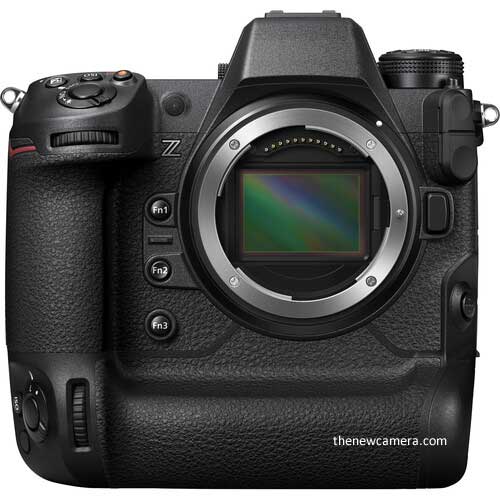
Future Prospects: Nikon ZR and Beyond
As we all know, Nikon is working on the Nikon ZR series cinema models, which will have compact cage-like designs similar to the Sony FX3. These will feature large rear display screens, and the design will be mostly inspired by RED Digital Cinema cameras. It will use the Nikon Z6 III camera sensor, making it a perfect tool for professional cinematography. While still unconfirmed, we are expecting the Nikon ZR to bring N-Log 2 inside it.
And just after that, we are expecting the arrival of the Nikon Z9 Mark II camera before the Winter 2026 Olympics — and even in that, we are expecting the presence of N-Log 2.
The article “Nikon N-Log 2: Latest Rumors and Updates” written and updated by thenewcamera.com team on 4:55 pm, Tuesday, 24 June 2025 Greenwich Mean Time (GMT)| Follow us for more updates and Get LIVE RUMORS –> FACEBOOK | TWITTER | INSTAGRAM to get live news — > get live news + Nikon Rumors 24X7
source / credit nikonrumor.com
By admin, on June 23rd, 2025

The Tamron 16-30mm lens is about to arrive. The leaked images and specifications are now available on the web., Look at the spec list of Tamron’s new wide-angle zoom, the 16-30mm F2.8 Di III VXD G2. Tamron will soon announce the 16-30mm F/2.8 Di III VXD G2 for the Z mount. Tamron currently has seven Z-mount lenses. Here is the information about this lens:
Tamron 16-30mm F2.8 Di III VXD G2 Lens for Nikon Z Mount Specification
– Lens construction: 12 elements in 16 groups
– Image stabilization: None
– Lens hood: HA064
– Total length: 104mm
– Aperture blades: 9
– Compatible sensor size: Full size
– Minimum shooting distance: 19cm
– Weight: 450g
– Dust and water resistance: Compatible (with sealing)
– Product number: A064Z
– Filter diameter: 67mm
It seems that Tamron will release a new wide-angle zoom lens. It is interesting to note that the model name Tamron is expanding its constant-aperture-based FF lenses by adding variable options in front of users. We already have lenses like the Tamron / Nikkor Z 17-28mm F2.8 Lens
The specs are slightly larger and heavier than the 17-28mm F/2.8, but considering that the wide-angle side is 1mm wider and the telephoto side is 2mm wider, this is probably within the acceptable range.

Detailed Technical Specifications:
- Mount type: Nikon Z
- Optical zoom: 1.88x
- Minimum focal length: 16 mm
- Maximum focal length: 30 mm
- Focal length (35mm equiv.): 16-30 mm
- Zoom lens aperture: 2.8
- Lens aperture – shortest focal length (F): 2.8
- Lens aperture – longest focal length (F): 2.8
- Maximum aperture (F): 16
- Lens construction: 16 elements / 12 groups
- Optical stabilizer: No
- Lens hood type: HA064
- Lens length: 104 mm
- Number of aperture blades: 9
- Suitable for genre: Landscape, Architecture / Interior
- Division by focal length: Wide-angle
- Suitable for sensor format: Full Frame
- Lens type: Zoom
- Minimum focusing distance: 19 cm
- Weight: 450 g
- Sealing (Dust/Moisture): Yes
- Product Number: A064Z
- Brand: Tamron
- Filter Diameter: 67 mm
- Send feedback
Tamron 16-30mm F2.8 Di III VXD G2 Official Press Text
Building on the success of the highly acclaimed TAMRON 17-28mm F/2.8 Di III RXD (model A046), the second generation G2 lens comes in the form of the advanced 16-30mm F/2.8 Di III VXD G2 (model A064), this time also for users of Nikon Z-mount mirrorless cameras. While expanding the zoom range, it maintains a compact and lightweight design and delivers exceptional image quality. In addition, it offers improved autofocus performance and has been updated to the latest lens design, improving overall operability. It is also compatible with TAMRON Lens Utility, allowing you to customize convenient functions for both stills and video shooting.
A Trio of Lenses with a Universal Range
With the introduction of the ultra-wide-angle 16-30mm F2.8 G2, the G2 is now a great addition to the standard zoom 28-75mm F/2.8 G2 (model A063). Together, these lenses cover a versatile range of 16mm to 75mm, making them ideal for most scenes. Experience the perfect combination of performance and functionality that makes professional photography more accessible than ever before.
Lightweight and Compact
Lightweight, compact and designed for mobility – it’s ideal for travel and everyday photography and video content creation. Despite the major improvements, the new lens retains the incredibly lightweight and compact design of its predecessor. This highly portable zoom can be used to capture high-quality photos in a variety of situations. The AF drive uses TAMRON’s fastest and most precise VXD linear motor mechanism. It excels at tracking fast-moving subjects, making it ideal for skateboarding and other dynamic scenes.
G2 Second Generation
A new generation of lenses with improved performance, faster focusing, better image stabilization, and a higher-quality finish. All G2 lenses are compatible with the TAP-IN bracket.
Di III – Mirrorless Systems
These lenses are designed exclusively for mirrorless cameras and cannot be used with digital SLR cameras.
VXD
The VXD autofocus is a world premiere: It is the first linear focus motor developed by Tamron for superior autofocus performance. Two VXD modules, operating in a floating system and controlled by electronic pulses, ensure fast and precise focusing on both near and far subjects. The new motor also ensures improved AF tracking, for example when shooting sports. The autofocus operates so quietly that you can shoot even in situations that require complete peace and quiet.
MR – Splashproof
Tamron lenses have a weather-resistant casing that optimally protects the sensitive interior from wind and weather. The robust outer casing is effectively sealed against moisture at all critical points (e.g. between the focus ring and the bayonet connection). This ensures reliable operation even in the most adverse outdoor shooting conditions.
Special XLD optical elements
Like LD, it prevents chromatic aberration and other defects. However, XLD is a much more sophisticated system that is mostly used in telephoto zooms.
Special LD optical elements
Color aberration is a common optical defect that manifests itself in many ways. We often talk about the so-called chromatic aberration, which occurs more often in wide-angle lenses. LD elements are made of special optical glasses with extremely low light dispersion, which effectively compensate for chromatic aberration, which is especially noticeable when using telephoto lenses at the extreme position.
IF – Internal Focusing
With lenses with internal focusing, the length of the lens does not change during focusing and the filter ring does not rotate with it. This makes handling easier, especially with longer telephoto lenses, and also for shooting with polarizing and gradation filters. Other advantages include a shorter focusing distance throughout the focus area and less light loss in the corners of the image (vignetting) and less focus-related aberrations.
BBAR / BBAR G2
The BBAR coating prevents reflection and scattering of light hitting the lens surface. This avoids loss of brightness and contrast and prevents “ghosting”. The BBAR coating also contributes to natural color reproduction. Since 2019, the advanced BBAR G2 coating has been used.
FLR
The fluoride coating permanently protects the front lens from contamination. Oil and water droplets do not adhere to the surface, which is therefore very easy to clean.
Tamron Lens Utility
The new “TAMRON Lens Utility” software has been specially developed for configuring compatible lenses. TAMRON Lens Utility can be operated from a computer by connecting the lens from its connector port via TAMRON’s USB-C cable. Users can customize functions and update firmware via the lens. With individual settings, the lens can be optimally adapted to the respective shooting situation, such as still photography or video recording.
Firmware Update
Focus A-B: Set 2 focus positions (A and B) and automatically shift the focus between A and B.
Focus Preset: Set the desired focus position and press the button to move the focus to the recorded point.
AF/MF Select: Select the AF and MF function using the focus adjustment button
Focus / Iris: Switch the function of the focus ring from focus adjustment to aperture adjustment.
Astro Focus Lock (Astro FC-L) supports precise astrophotography: The focus is automatically set to infinity to maintain the focus point for astrophotography. The focus ring is disabled until Astro FC-L is released to prevent focus deviation due to incorrect operation.
Follow us on our social pages FACEBOOK | TWITTER | INSTAGRAM to get live Camera News + Nikon Rumors 24X7.
Source / Content / Image credit – Nikonrumor.com

By admin, on June 16th, 2025
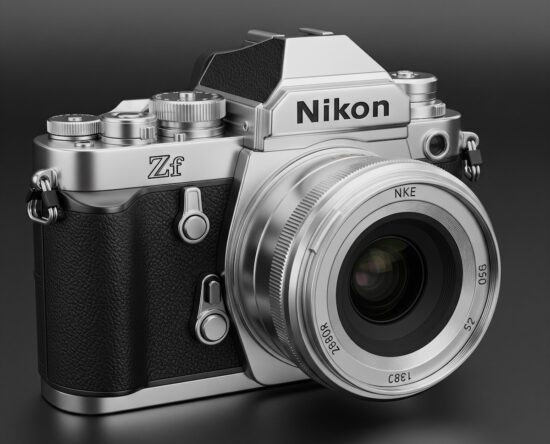
Finally, the mystery is revealed—the camera is the Silver edition of the Nikon Zf camera. The exact announcement date of the camera is not known yet. Still, the camera will arrive before the Nikon ZR camera, which is rumored to be a video-centric cinema mirrorless camera, using the Nikon Z6 Mark III camera sensor and lots of RED technology inside it.
I’ve heard many people are waiting for the silver Zf model, so the arrival of the silver/chrome model is likely to be very welcome. I’m looking forward to the high-quality silver/chrome body. Note that the image in the original article is an AI-generated image, not a leaked image.
Follow us on our social pages FACEBOOK | TWITTER | INSTAGRAM to get live Camera News + Nikon Rumors 24X7.
source NR[nikonrumor]
By admin, on June 11th, 2025
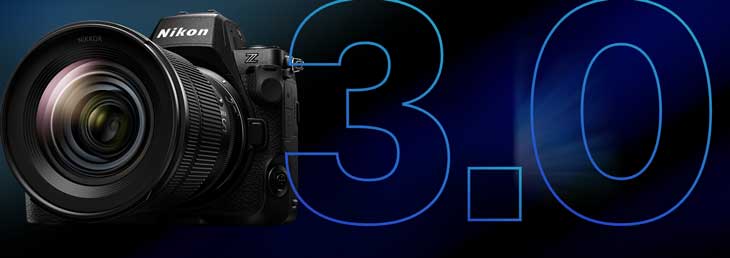
Nikon issued a major firmware update to the Nikon Z8 Camera, firmware 3.0, a free update packed with powerful new features and performance enhancements for our compact pro model. Designed to help you get even more out of your Z8, this update brings major upgrades across photography, video, and workflow.
1. World First – Pixel Shift + Focus Shift Technology now in Nikon Z8
The Z8 is now the world’s first camera to combine pixel shift with focus shift or pixel shift with auto exposure bracketing into your workflow. This unlocks both greater depth of field and resolution, perfect for commercial, fine art, and architectural photography. Using Nikon’s NX Studio software, you can merge pixel shift clusters. Then stack focus layers using your preferred software to create images with clarity and resolution up to 180 megapixels. Pixel shift also reduces moray, improves color accuracy, and lowers noise, giving you cleaner, more detailed results. With pixel shift and AE bracketing, the Z8 creates a pixel shift cluster at every exposure bracket, which you can then merge for high resolution and enhanced dynamic range.
2. Enhanced Autofocus: Precision and Speed
Autofocus gets a boost, too. Expanded custom wide area AF options can now be set completely at the edge of the frame and with smaller increments for more precise design of your AF point. To help you nail focus, there’s now a onetouch 400% magnification option, plus a builtin focus limiter that lets you define near and far focus ranges, speeding up autofocus and helping the camera lock on more efficiently.
3. Creative Control: Flexible Color Picture Profiles
Firmware 3.0 puts your creative intent front and center with new compatibility with flexible color picture controls. Import NP3 files created in NX Studio. Load them onto your Z8 and shoot with your custom looks applied in real time, capturing your vision exactly as you see it. For filmmakers shooting in an log, a more accurate view assist now displays enhanced highlights and contrast that more closely resembles our new Rec 709 L.
4. Workflow Upgrades: Voice Memos and Networking
For photojournalists, you can now record voice memos using an external mic for clear audio annotations even on the move. This update also makes the Z8 fully compatible with Nikon’s powerful advanced networking solution, NX Field. With NX Field, you can trigger and control up to 10 remote cameras via LAN. Adjust nearly every setting remotely and send files directly to an FTP server. Ideal for sports, news, and event coverage.
5. Download Nikon Z8 Firmware 3.0 Now
These updates redefine what’s possible with the Z8, whether you’re in the studio or out in the field. Download firmware 3.0 soon on Nikon’s website or through the Snapbridge app and start exploring what’s new.
Update Nikon Z8 Firmware 3.0 is available for download
Update – Nikon Z8 firmware is finally available for download starting July 1. As per the latest press release from Nikon.com, it has been confirmed that the Z8 firmware 3.0 will be available from July 1st, 2025.
How to Download the Nikon Z8 Firmware?
Here is the step-by-step method to download the firmware of Nikon Z8
| Step |
Action |
| 1 |
Visit Nikon Download Center. – https://downloadcenter.nikonimglib.com/en/download/fw/550.html |
| 2 |
Choose your operating system. |
| 3 |
Click “View download page” for latest firmware (e.g., Z_8_0210.bin).[whatever the updated file is available] |
| 4 |
Accept terms, download the .bin file. |
| 6 |
Copy Z_8_0210.bin [whatever the updated file is available] to the root directory of a formatted memory card. |
| 5 |
Insert card into camera Slot 1, turn on camera. |
| 6 |
Go to MENU > SETUP MENU > Firmware version. |
| 8 |
Select “Update” and follow on-screen instructions. |
| 9 |
Confirm update completion, restart camera. |
Click here to explore more about Nikon Z8 3.0
Get you Nikon Z8 From Here – online B&H Store | Adorama | Amazon.com |
See more Nikon Z8 Comparison – – Panasonic S1R II vs Nikon Z8 | Nikon Z8 vs Leica SL3-S
Nikon added Shutter angle and Waveform Monitor in Nikon Z6 III and Nikon Z8
By admin, on June 7th, 2025
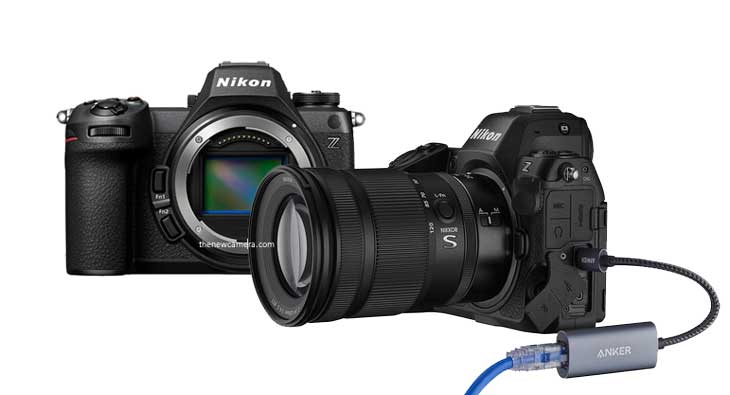
Sigma is working on super zoom lenses, the latest patent revealed that Sigma is working on a pair of 800 mm lenses. One of the lenses is 400 to 800 mm with a constant f/8 aperture, and the other is 180 to 800 mm with f/5.8 – 8.4 aperture. From the optical construction, it is very clearly visible that they are trying to make more compact super zoom lenses, which are easy to carry and fall in the budget pocket range.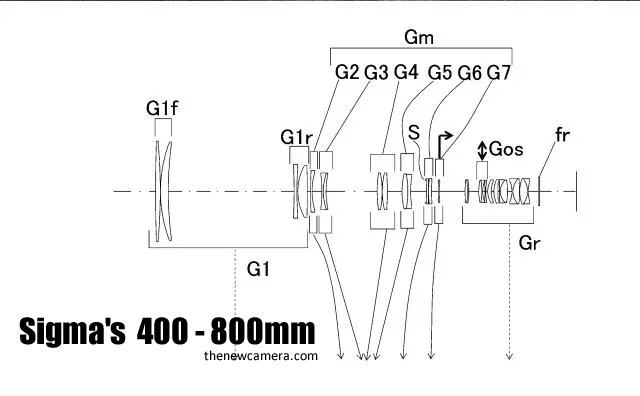
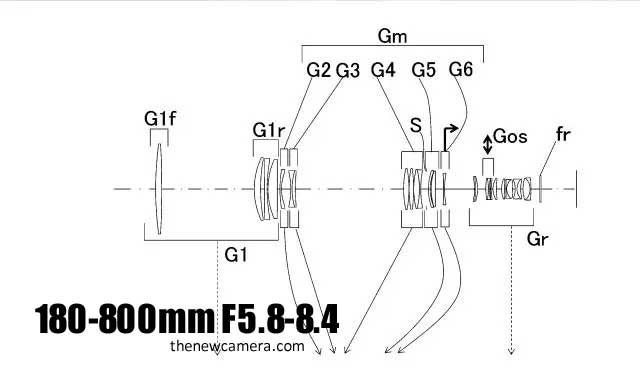
Examples include 800mm zoom lens optical systems such as the 400-800mm F8 and 180-800mm F5.8- 8.4. Although the maximum aperture is large, the overall length is shorter than the 300-600mm F4, making it more portable.
The article “Sigma Developing Two 800mm Super Zoom Lenses – Sigma Latest News” was published at 8:23 am, Saturday, 7 June 2025, Greenwich Mean Time (GMT)). By thenewcamera.com Team. You can Follow us on our social pages FACEBOOK | TWITTER | INSTAGRAM to get live Camera News + + Sigma Rumors 24X7.
source / credit asobinet japan
Sigma 17-40mm F1.8 Lens Coming for APS-C Mirrorless
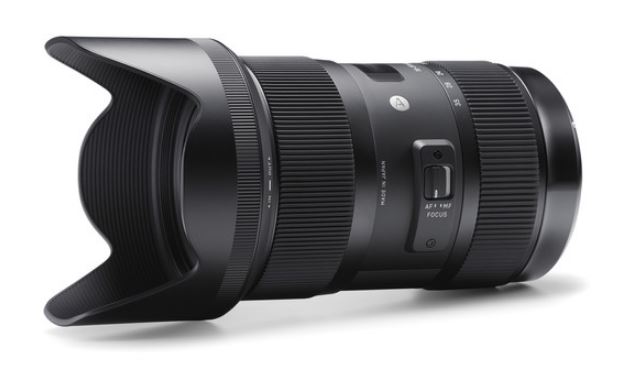
Sigma RF-S Lenses Coming June 2025: 17-40mm F1.8 & 12mm F1.4 for Canon APS-C
By admin, on May 30th, 2025
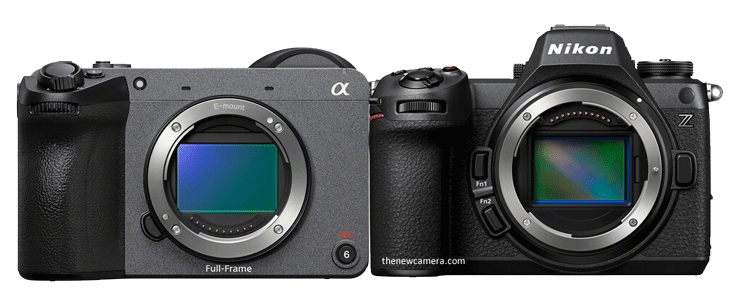
Sony FX2 versus the Nikon Z6 Mark III camera, let’s explore the differences between the two point by point
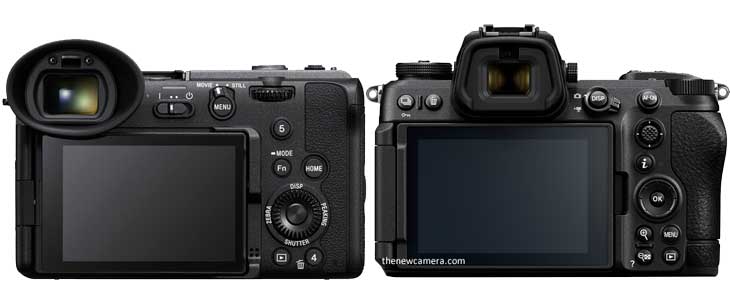
The Nikon Z6 Mark III camera is slightly larger, with a photography-friendly body and controls. The Sony FX2 does have a deep hand grip, but it has a somewhat boxy design. The thing that makes a big difference between the two, specifically in the design part, is that Sony is made for cinematography purposes and carries a lot of tripod threads all over the body to mount it perfectly in cinema rigs. The other advantage we have with the Sony FX2 camera is the moving viewfinder.
Nikon Z6 III and the Sony FX2 — both of them support dual card slots, one dedicated for CFexpress and one SD card slot. The Nikon Z6 Mark III monitor is slightly larger and of higher resolution, so users may experience better LCD quality with the Z6 Mark III camera. At the very same time, the electronic viewfinder is also a 5.76 million-dot unit compared to a 3.6 million-dot electronic viewfinder in Sony, but yeah, we are getting better display units in the Nikon Z6 Mark III.
The wireless functionality of the two is almost the same, but Nikon does have GPS support via smartphone to enable geotagging functionality for travel purposes, documentary work, or maybe for photojournalism purposes. The FX Mark 2 camera misses out. Although the humidity tolerance and the weatherproof criteria of both cameras match each other, so we literally do have almost the same build quality in both cameras.
Design Comparison
| Feature |
Sony FX2 |
Nikon Z6 III |
| Lens Mount |
Sony E |
Nikon Z |
| Material of Construction |
Magnesium Alloy |
Magnesium Alloy |
| Dimensions (W x H x D) |
5.1 x 4.1 x 3.1″ / 129.7 x 103.7 x 77.8 mm |
5.5 x 4 x 2.9″ / 138.5 x 101.5 x 74 mm |
| Weight |
1.3 lb / 594 g (Body Only), 1.5 lb / 679 g (With Battery, Recording Media) |
23.6 oz / 670 g (Body Only) |
| Shoe Mount |
1x Intelligent Hot Shoe |
1x Hot Shoe |
| Tripod Mounting Thread |
2x 1/4″-20 Female (Bottom) |
1x 1/4″-20 Female (Bottom) |
| Accessory Mounting Thread |
3x 1/4″-20 on Camera Body |
Not specified |
| Operating Conditions |
32 to 104°F / 0 to 40°C |
32 to 104°F / 0 to 40°C up to 85% Humidity |
| Media/Memory Card Slot |
Slot 1: CFexpress Type A / SD (UHS-II)
Slot 2: SD/SDHC/SDXC (UHS-II) |
Slot 1: CFexpress Type B / XQD
Slot 2: SD/SDHC/SDXC (UHS-II) |
| Wireless |
2.4 GHz Bluetooth 5.0, 2.4 / 5 GHz Wi-Fi (802.11a/b/g/n/ac) |
2.4 / 5 GHz Wi-Fi 5 (802.11ac), Bluetooth 5.0 |
| Mobile App Compatible |
Yes: Android & iOS (Sony |
Creators’ App |
| Global Positioning |
No |
GPS (via Connected Smartphone) |
| Monitor |
3″ Tilting Touchscreen LCD, 1,036,800 Dot |
3.2″ Articulating Touchscreen LCD, 2,100,000 Dot |
| Viewfinder |
Electronic (OLED), 3,686,400 Dot / Titling EVF |
Electronic, 5,760,000 Dot, 0.5″ |
Best Camera for Photographers
Sony FX2 camera offers higher resolution at 33 megapixels, but at the very same time, the Nikon Z6 Mark 3 camera offers 24.5 megapixel resolution, which is of course limited. But if you talk about sensor architecture, then the Nikon Z6 Mark 3 camera is using a partially stacked CMOS sensor.
Video Recording: Nikon Z6 III Excels
Of course, the Sony FX2 camera is able to create highly detailed 4K 30fps footage from a 7K oversampled file. At the very same time, when you are recording videos at 4K 60 frames per second or 4K 120 frames per second with the Nikon Z6 Mark 3 camera—and of course, to be noted—4K 120 FPS is not possible with the Sony FX2 despite being in a higher price range. Other than that, even when you are trying to record 4K @ 60 frames per second, at that time you have to face a 1.5x crop in the Sony FX2. So with the FX2, we have limitations attached in the higher frame rate, and 4K 120 is not possible.
Continuous Shooting Speed Comparison
The same advantage we also get in the continuous shooting speed of the camera, where we are able to get up to 20 FPS RAW, and up to 60 frames per second in full resolution, and up to 120 frames per second in the DX crop mode. Thankfully, the Sony FX2 camera is using a mechanical shutter, but despite that, the continuous shooting speed of the camera remains limited to 11 frames per second.
Autofocus: Sony FX2’s Precision
When you dive into autofocus performance, each system really brings something different to the table. Sony’s FX2 boasts a whopping 759 phase-detection points (compared with Nikon’s 299 “hybrid” points), which means it can lock onto—and keep track of—moving subjects across with Sony’s famous AI AF. That’s a huge advantage when you’re shooting fast-paced street scenes or busy event coverage.
Nikon Z6 III’s Low-Light Autofocus
On the other hand, Nikon’s autofocus shines in low-light situations. With a sensitivity down to –10 EV (versus Sony’s 4 EV), the Z6 III can find and focus on subjects in near-darkness—perfect for late-night cityscapes, dimly lit weddings, or cozy indoor gatherings.
Autofocus Tracking: Nikon Closing the Gap
Recent reviews peg the Z6 III’s subject recognition and tracking as nearly on par with Sony’s vaunted system, so you’re not really “giving up” much by choosing Nikon—especially if you need that extra push in challenging light. Still, many pros continue to call Sony the gold standard for sheer reliability, so it really comes down to what kind of shooting you do most often.
Image Stabilization: Nikon’s Edge
Sensor-shift image stabilization of the Nikon Z6 Mark 3 is more helpful, since you can link your autofocus point with the VR system of the camera, and you will be getting a true 7.5 stops of stabilization all the time, even if you are focusing in the corner of the frame. Sony’s Active Image Stabilization is highly effective in video mode, but when you are talking about stills, it’s the traditional-style IBIS system we are getting.
Why Choose Nikon Z6 III for Pros
Nikon Z6 Mark III camera, due to its partially stacked CMOS sensor and Expeed 7 image processor, the autofocus calculation is being done at the rate of 120 frames per second in-camera. So the autofocus and the auto exposure refresh rate is actually 120 FPS. And due to the introduction of a new artificially intelligent autofocus algorithm inside the camera, the overall photographic experience is now elevated to the next level.
So if you are a professional photographer, then the Nikon Z6 Mark 3 will be a perfect choice for your requirements.
Photographic Features Compared
| Feature |
Sony FX2 |
Nikon Z6 III |
| Sensor Resolution |
Actual: 34.1 MP, Effective: 33 MP |
Actual: 26.79 MP, Effective: 24.5 MP (6048 x 4032) |
| Image Sensor |
35.9 x 23.9 mm (Full-Frame) CMOS |
35.9 x 23.9 mm (Full-Frame) Partially Stacked CMOS |
| Image Stabilization |
Sensor-Shift, 5-Axis, Active IS |
Sensor-Shift, 5-Axis, AF points can be linked to VR |
| ISO Sensitivity |
Native 100-51,200 (50-204,800 Extended) |
Photo: Native 100-64,000 (50-204,800 Extended) |
| Shutter Type |
Mechanical Focal Plane and Electronic Rolling Shutter |
Mechanical Focal Plane and Electronic Rolling Shutter |
| Shutter Speed |
1/8000 to 30 Seconds (Photo) |
1/8000 to 15 Minutes (Mechanical), 1/16000 to 15 Minutes (Electronic) |
| Continuous Shooting |
Not specified in the provided data (10 fps per web sources) |
Up to 20 fps at Maximum Resolution |
| Autofocus Points |
Photo: Phase Detection: 759 |
Photo, Video: Contrast Detection, Phase Detection: 299 |
| Autofocus Sensitivity |
4 to +20 EV |
-10 to +18 EV |
| White Balance |
2500 to 9900K |
2500 to 10,000K, Presets: Auto, Cloudy, Color Temperature, Direct Sunlight, Flash, Fluorescent, Incandescent, Shade |
| Image File Format |
Not specified (JPEG, Raw per web sources) |
HEIF, JPEG, Raw |
| Bit Depth |
Not specified (14-bit per web sources) |
14-Bit |
Best Camera for Video
When it comes to video, the Z6 III feels like a powerhouse that’s ready to stretch your creativity. Imagine being able to capture in gorgeous ProRes RAW—right inside the camera—at up to 6K/60p. With the help of the stacked CMOS sensor, the camera can record 6K 60fps videos. Despite being a consumer hybrid mirrorless camera, the Nikon Z6 Mark III is able to deliver 6K resolution, that is really a big surprise.
That means you’ve got room to push and pull your colors, tweak contrast, and hold onto every bit of shadow and highlight detail without worrying about external recorders or cables.
Nikon Z6 Mark III Slow-Motion Capabilities
And if you need silky-smooth slow-mo or a little extra resolution, you can jump into uncropped 4K/120p or even 1080p/240p modes. While shooting 4K 120 frames per second, you have to face a 1.5x DX crop, and when you are shooting 4K @ 60 frames per second, there is a negligible amount of crop, which remains unnoticeable.
Sony FX2 Video Features
Sony’s FX2 isn’t slouching, though. It delivers clean, 10-bit H.264/H.265 internally and will give you oversampled 4K/30p for sharp, detailed footage. If you really need that ProRes RAW goodness, you can use an external recorder via HDMI—but that means more gear hanging off your rig. And when you want to push the frame rate higher in 4K—meaning if you want to record your 4K videos at 60 frames per second—you have to face a 1.5x crop, and there is no 120 frames per second option available in the Sony FX2 while recording 4K videos.
Sony FX2 Live-Streaming Advantages
Where Sony shines is in its live-streaming chops: built-in RTMP/RTMPS and SRT support make it a dream camera for one-person streaming setups, whereas the Z6 III leaves you hunting for a separate encoder. Both cameras give you flexible picture profiles—N-Log on Nikon holds up beautifully alongside Sony’s S-Log 3 and S-Cinetone—but in professional circles, S-Log and Cinetone have built a bit more of a buzz.
Audio and Rolling Shutter Comparison
Don’t forget audio: both record in 24-bit LPCM, but Sony’s extra channels give you more mics or ambient tracks to play with. And if rolling shutter is a worry, Nikon’s stacked sensor really pulls ahead—its readout is faster, so you’ll see far less “jello” when you whip the camera side-to-side at 4K/60p or 120p.
Nikon Z6 III vs. Sony FX2: Which to Choose?
In short, if you’re a solo shooter who loves to color-grade, chase cinematic slow-mo, and keep your rig light, the Z6 III’s internal RAW and high-speed modes deliver. If you’re streaming live, mixing multiple audio sources, or don’t mind an external recorder for 16-bit RAW, the FX2’s built-in streaming and flexible codecs have you covered.
Video Comparison
| Feature |
Sony FX2 |
Nikon Z6 III |
| RAW |
16 BIT via HDMI |
12 Bit internally |
| MAX RES. |
4K 60p |
6K 60p N-RAW, 6K 30p ProRes RAW |
| Internal Recording Modes |
H.264/H.265 8/10-Bit:
UHD 4K (3840 x 2160) at 23.98/25/29.97/50/59.94 fps
DCI 4K (4096 x 2160) at 23.98/24/25/29.97/50/59.94 fps
|
ProRes RAW/ProRes RAW HQ/Raw: 6048 x 3404 at 23.98/25/29.97/50/59.94 fps
4032 x 2268 at 23.98/25/29.97/50/59.94 fps 3984 x 2240 at 23.98/25/29.97/50/59.94/100/120 fps
UHD 4K (3840 x 2160) at 23.98/25/29.97/50/59.94/100/120 fps
|
| Format and codes |
16 Bit RAW, 10-Bit 4:2:2 XAVC S-I |
12 Bit RAW, |
| 4k 60 FPS |
Yes, 1.5X Crop |
Yes, No crop at 4k 60FPS |
| 4K 120 FPS |
No |
Yes, 1.5X Crop |
| External Recording Modes |
4:2:2 8/10-Bit via HDMI:
DCI 4K (4096 x 2160)
UHD 4K (3840 x 2160)
HD (1920 x 1080)
Raw 16-Bit: 4672 x 2628 |
HDMI: UHD 4K (3840 x 2160) |
Dual Native ISO
|
Dual Base 800/4000 |
Dual Native ISO 800 |
| Built-in Fan |
Yes |
No |
| Video IS |
Very effective / Active IS + Gyro |
Mechanical IBIS + EVR |
| Fast-/Slow-Motion Support |
Yes |
Slow-Motion Only |
| Gamma Curve |
HDR-HLG, Rec709, S Cinetone, Sony S-Log 3, Standard |
HDR-HLG, Nikon N-Log |
| Anomorphic Lenses support |
Yes |
No |
| Audio Recording |
2/4-Channel 24-Bit 48 kHz LPCM
2-Channel 16-Bit 48 kHz LPCM |
16-Bit 48 kHz AAC Audio
2-Channel 24-Bit 48 kHz LPCM Audio |
| IP Streaming |
RTMP, RTMPS, SRT: 1280 x 720 to 3840 x 2160 at 25p, 29.97p, 50p, 59.94p |
No |
Buy Nikon Z6 Mark III from Amazon.com | B&H Camera store
Buy Sony FX2 From B&H Store
also see
Which one is the Best Camera for Recording Video – Panasonic Lumix S1 II vs. Nikon Z6 III?
Best Lenses for Nikon Z6 III
By admin, on May 28th, 2025
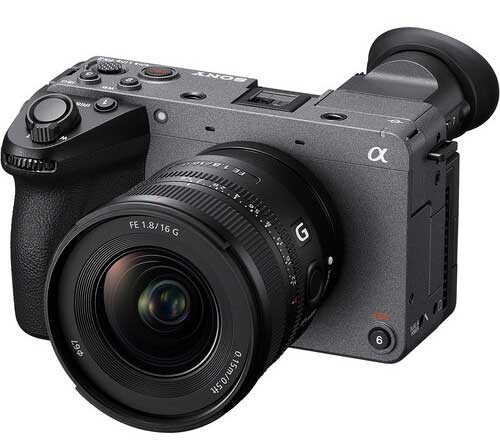
Sony announced the Sony FX2 camera. The camera is a mixture of the Sony A7 IV 33MP sensor and FX3 body. Now we have an AI chip inside the camera. The autofocus speed has been increased by up to 30%, and the tracking has been improved dramatically compared to the Sony Camera AIV. We have lots of new modes that include auto framing, framing stabilizer, and AI tracker that make the entire camera a kind of powerhouse Swiss Army knife.
Video capabilities also extend its boundaries to the maximum extent. Now we have certain angle DCI 4K and true 24fps recording. For professionals and videographers, we have an anamorphic recording mode in-camera, discreetly, as well as 24-bit audio recording capability with the help of XLR input.
Sony FX2 Specification
- Sensor: 33MP full-frame BSI CMOS (from a7 IV)
- Video:
- 4K up to 30p (7K full-width oversampled)
- 4K up to 60p (1.5x APS-C crop)
- DCI 4K with true 24p
- Autofocus: AI-based, 30% better recognition, auto-framing, AI tracker
- Shutter: Mechanical, movie/stills switch
- Viewfinder: 3.68M-dot tilting EVF, 0.7x magnification
- Storage: 1x CFexpress Type A/SD, 1x SD (redundant recording)
- ISO: Dual native (800, 4000), clean up to 25,600, usable at 51,200
- Extended Features:
- Shutter angle
- 4K30 UVC streaming (USB-C)
- Focus breathing compensation
- Dynamic active stabilization
- S-Log Photo mode
- 4K JPEG shot mark grabs
- Active cooling (unlimited recording)
- HDMI Type A, headphone/mic jacks
- Dual 1/4-20 tripod holes
- FX3/FX30 XLR handle compatible
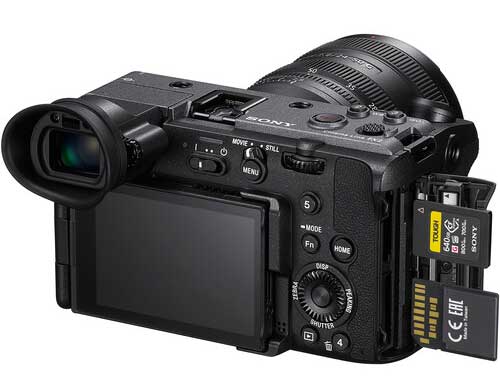
Focus breathing compensation as well as dynamic active image stabilization also help this camera to explore a new dimension of usability and portability. However, the FX2 retains the Sony A7 IV 4K 60fps crop limitation. That’s really disappointing. Sony can add a line-skipping 4K 60 APS-C mode in their camera so users can have the uncropped version of 4K 60p recording by having a bit of loss in quality.
The price of the camera is expected to be somewhere around $2698. B&H Store
Sony Electronics Introduces the FX2 Compact Camera, Expanding Cinema Line’s Versatility for Creatives
The new FX2 has the look and operability of Cinema Line cameras with the ability to shoot high-resolution photos and comes equipped with an articulating eyepiece
Sony Electronics Inc. is proud to announce today the latest addition to its established Cinema Line family, the FX2. The FX2 will offer a seamless entry point into the broader Cinema Line range, giving greater cinematic expression to independent creators or small crews needing a versatile camera.
“The hybrid cinema camera was created based on user feedback and is engineered with unique features to support filmmaking, a new eyepiece, and enhancements for versatile production needs. The FX2 is intended to continue the Cinema Line’s goal of preserving authentic emotion in every shot and empower creators across all areas of content production,” says Theresa Alesso, President, Imaging Products and Solutions Americas, Sony Electronics Inc.
FX2 Features: Full-frame Photo and Video Capabilities
The FX2 comes with a full-frame sensor that delivers stunning imagery and beautiful bokeh effects. Equipped with a 33.0 effective megapixel1 back-illuminated Exmor R™ sensor with up to 15+ stops of wide latitude using S-Log3, it captures impressive detail in both highlights and shadows.
Designed for versatile shooting environments, the FX2 offers Dual Base ISO at 800 and 4000, ensuring optimal performance in both bright and low-light conditions. Its ISO sensitivity for video can be extended up to 102400, making it ideal for challenging lighting scenarios. The camera supports a wide range of recording formats—including 4:2:2 10-bit All-Intra—and records in high-quality options, such as XAVC S-I DCI 4K at 24.00p, providing professionals with the tools needed for flexible, high-end production workflows.
The FX2 can also continuously record for up to 13 hours in 4K 60p2 thanks to its internal cooling fan and effective heat dissipation structure. The FX2 offers variable frame rate settings, allowing up to 60 fps in 4K (for a maximum 2.5x slow-motion effect) and up to 120 fps in Full HD (for up to 5x slow motion). It supports Log shooting in Cine EI, Cine EI Quick, and Flexible ISO modes, offering versatile workflows for different production needs. To further the cinematic expression of the camera, creators can import up to 16 user LUTs for on-camera preview, enabling precise color monitoring on set.
Filmmakers can also easily and quickly create in-camera cinematic looks, with S-Cinetone™ set as the default, along with a range of Picture Profile and Creative Look presets. A de-squeeze display function is available, supporting both 1.3x and 2.0x anamorphic lenses for accurate framing.
Improved Usability for Comfortable Solo Operation
The FX2 features the same compact, flat-top design as Sony’s Cinema Line FX3 and FX30 cameras, ensuring familiarity and compatibility across setups. Built-in mounting points (UNC 1/4-20 x3) support a cageless configuration, offering greater flexibility for rigging. An optional top handle (ILME-FX2) enhances mobility and control, especially during handheld or dynamic shooting. Its lightweight, portable build—measuring approximately 5 1/8 x 3 1/8 x 4 1/8 in and weighing approximately 1 lb 8.0 oz—makes it ideal for solo operators or small crew productions.
The camera offers advanced focus features designed for precision and creativity. Its new Real-time Recognition AF (auto focus) delivers fast and reliable performance with improved accuracy for human subjects, although its intelligent subject recognition extends to animals, birds, vehicles, and insects, with an Auto mode available for effortless detection. For even more control, tools like focus breathing compensation, AF Assist, and customizable autofocus transition speed and sensitivity give creators the flexibility to fine-tune focus for expressive, cinematic imagery. The FX2 comes with Active Mode and Dynamic active Mode, which is new to the Cinema Line, and are both designed to ensure smooth and steady handheld shooting.
The Auto Framing feature automatically crops and tracks a subject to keep them in a prominent position when the camera is mounted on a tripod, producing footage that looks like it was shot by an experienced operator. The Framing Stabilizer function automatically keeps the subject in the same position within the frame, which can be useful, for example, when the camera operator is moving alongside the subject.
From a still image perspective, the camera features an additional log shooting option with a newly added ‘Log shooting’ menu. This feature allows creators to shoot high-resolution 33MP stills, optimized for color grading in post-production. The FX2 also offers smooth operation with a MOVIE/STILL mode lever, allowing for a quick switchover between still and movie shooting. Depending on the selected mode, the displayed menu items will automatically adjust. Additionally, mode selection is made easy with a long press of the Fn button, which recalls and changes the shooting mode.
FX2 Features: Improved but Familiar Hardware Inherited From Sony’s Cinema Cameras
The FX2 is equipped with a new high-resolution 3.68-million-dot tiltable EVF3 (electronic view finder) designed specifically for video production, offering a wide viewing angle and enhanced immersion thanks to its included deep eyepiece. Complementing the EVF is a 3.0-type vari-angle touchscreen LCD, making it easy to frame shots from virtually any angle. Intuitively arranged controls on the top panel and grip, along with tally lamps for clear recording status, support efficient on-set operation. The camera also introduces a customizable “BIG6” home screen that provides quick access to essential shooting parameters, such as FPS, ISO, shutter speed (angle or speed), Look presets, white balance, iris, and neutral-density (ND) filter settings. Addressing the growing demand for vertical content creation, the FX2 supports vertical menu display during shooting—ideal for social media formats. The handle-equipped model further enhances professional usability with two XLR/TRS terminals and a 3.5mm stereo mic jack, enabling 4-channel, 24-bit digital audio capture.
The camera offers extensive expandability and connectivity options, including an HDMI Type-A terminal capable of outputting up to 4K 60p 4:2:2 10-bit video and 16-bit RAW4 for high-end recording and monitoring. For seamless data transfer and remote control, it supports dual-band Wi-Fi (2.4 GHz and 5 GHz5) as well as wired LAN via a compatible adapter6. Additionally, the USB Type-C port enables SuperSpeed USB up to 10Gbps data transfers and supports USB Power Delivery (PD)7, while built-in USB and network streaming support enables live broadcasting and remote production workflows.
Social Responsibility
Aligned with Sony’s global environment plan, ‘Road to Zero’, this product supports the company’s vision for achieving a zero environmental footprint by 2050. The manufacturing process reflects this commitment through facilities powered entirely by renewable energy sources8.
The camera system incorporates comprehensive accessibility options, including a Screen Reader function9 and Display Magnification, to support visually impaired users across an expanded range of menu items. Additional intuitive controls enhance usability for all shooters, featuring:
- Real-time recognition autofocus that reduces manual adjustments
- Streamlined touch interface operations for direct menu navigation
- Tactile button design with clear differentiation
These inclusive design elements ensure professional imaging tools remain accessible to creators of all abilities while maintaining full operational capability
The FX2 will be available early August for a suggested retail price of $2,699.99 USD and $3,499.99 CAD body only or $3,099.99 USD and $3,999.99 CAD with XLR handle. It will be sold directly through Sony and at a variety of Sony’s authorized dealers throughout North America.
|
KEEP THIS BLOG ALIVE - Support New Camera Buy Canon Lenses, Buy Music CD or Digital Camera at amazon it helps this site, and you do not pay anything extra, it is just a way to help support this site.

|