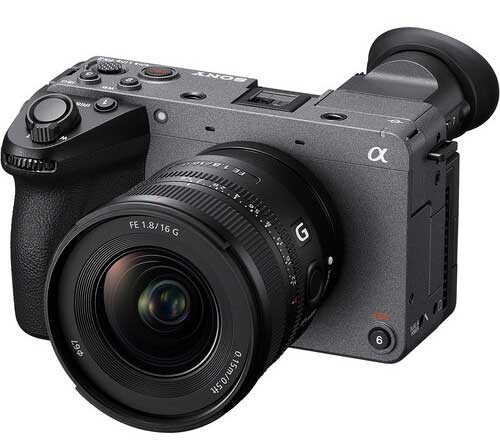
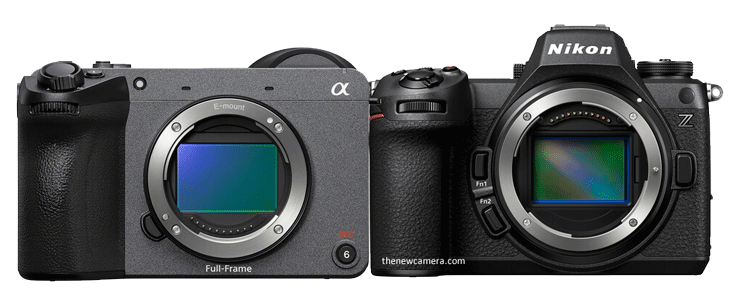
Philip Bloom is one of my favorite filmmakers and content creators. I started watching videos when he published the GH5 review few years back. Today he published the Sony FX2 Camera review in his channel and I loved watching the whole video, here are the come important parts of the video and pros and cons according to Philip Bloom
Sony FX2 Review: Pros, Cons, and Performance
I have mostly talked about the things it isn’t rather than what it is. Mainly because we’ve seen this camera before as it is an A74 combined with an FX3 and with features from the newer cameras like the A12. But that’s mostly a good thing. But it’s just really the A74 parts with the rolling shutter and the 4K 50p 60p crop that lets it down for me because otherwise it really is a lovely camera and it’s easy to forget that with all the negativity we’ve seen about it. Sony cameras have the best video autofocus, the most customizable buttons and menus for easy operation. They’re just so easy to use. Everything you need to operate it is just there without the need to stop recording and delve into the menus. When I use my Canon R52, for example, it drives me nuts because it’s really maddening to use. There’s so little that I can customize for video and with continued frustrations with things like not being able to hot swap memory cards without stopping recording. I haven’t used the latest Nikon and Lumix cameras to compare, but they do look very good. I would really love to try them. The Lumix S12 especially looks like a huge leap forward for them with excellent autofocus and no crop in 4K 50p and 60p. Although there is a crop when you go higher and lots more video features than we have in Sony cameras currently. But the problem is I just can’t get my hands on them to test sadly which is actually the case for most cameras these days. I have tried.
Pros of Sony FX2:
Has the best autofocus, including animal autofocus for video, effective for birds and cats.
Best video autofocus used on any camera.
Cheapest full-frame cinema line FX camera at £2,700.
Microphone and headphone jacks are at the bottom of the left side, not behind doors.
Two 1/4-20 holes for mounting tripod plates.
Includes an EVF, which tilts for shooting in different positions.
33-megapixel sensor, better for photos than the FX3’s 12-megapixel sensor.
Works like a true Alpha stills camera, with easy switching between video and stills modes.
SNQ setting replaced with fixed and variable frame rate mode, selectable from the main menu or big six menu screen.
Big six menu screen from Sony Venice for quick access to key settings (frame rate, ISO, shutter angle/speed, aperture, picture profile, white balance).
Shot mark button can create a JPEG of a frame.
Easy to use without needing to stop recording to access menus.
Cons of Sony FX2:
Very controversial and unexpected release, not what people wanted.
Uses the same sensor as the A74, with poor rolling shutter performance and 1.5x crop for 4K 50p/60p.
1/4-20 holes for accessories are awkwardly placed, requiring a cage for proper accessory mounting.
EVF tilt gets in the way of accessories due to diopter placement; screen doesn’t tilt, only flips out, causing issues when shooting low.
Vent near the EVF can emit an electrical smell when heated.
LCD screen is the old flip-out, low-resolution panel, lagging behind competitors.
No true 24p recording, unlike FX3 and FX30.
Joystick placement is awkward, especially when using the EVF, and too flush for easy use.
No XAVC-HS support for 25p and 30p recording.
HDMI output in log modes is limited to 1080p; no clean 4K output in dedicated log modes.
Histogram measures viewing LUT or camera assist, not log recording.
Cleaner video display screen doesn’t indicate face priority autofocus mode.
HDMI output set to camera display is windowed, not full screen, and turns off LCD/EVF, disabling touch tracking.
Essentially a combination of A74 and FX3, with A74’s outdated sensor limitations.
No 32-bit float audio as hyped before the announcement
Sony FX2 Future Upgrades and EVF Insights
I really hope that the EVF on the FX2 isn’t an aberration and future FX mirrorless style cameras like this have it as well, just a refined version of it. One that can tilt fully without getting way of accessories. So, yeah, diapter on the other side and maybe removable. The camera itself, it’s a very good camera. It’s not a great camera. It’s just it does feel like the life of it isn’t as long as it could have been had they put in a newer sensor because having a camera that crops for 4K 50 and 60 in 2025 for that amount of money just it just doesn’t feel right. But uh other than that it’s really nice and I’m going to miss it mostly. I’m going to miss the EVF.
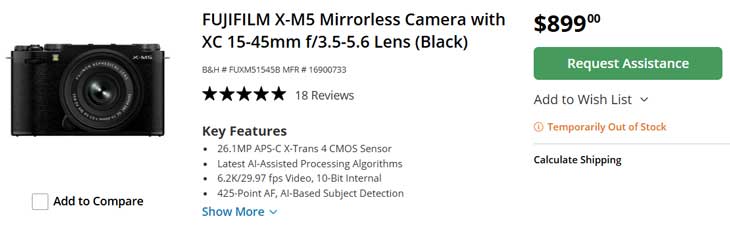
So if you are looking for the best compact camera under the $1000 price range, then we have done a detailed comparison between the recently announced Fujifilm X-Half camera compared with the Canon V1 and the Sony ZV-1 Mark II. We have also included a mirrorless camera that falls under the same price range, with an additional lens to give you a clear understanding of what the difference will be if you opt for a mirrorless camera in the same price range instead of a compact. So you have all the test results in front of you — we will be analysing it as fairly as possible, but you are also free to comment on what you feel is related to the test.
Image Quality Comparison
As we can see from the first image analysis, captured at ISO 200, among the compacts, the ZV-1 Mark II camera, with its one-inch sensor, is performing very well.After that, we also have the PowerShot V1 camera, which is able to capture details in a proper manner. In the third position, we have the Fuji X-Half camera. Although at the top we do have the ZV-E10, since it has the largest sensor in the group and also falls in the same price range or even lower, that’s why we have included it to notice the real difference between them, despite the form factors they are in.
Keep an eye on pencil sketches, the pencil lines are very clearly visible in ZV-E10 image, after that we have the Sony ZV-1 Mk II, and then in the Canon V1 and the Fuji X-Half.
Image Quality TEST at ISO 12800
If we have to rank them accordingly, then of course the top camera is the Sony ZV-E10, after that we have the Sony ZV-1 Mark II, in third we have the Canon V10, and in the fourth position we have the Fuji X-Half.
Best Camera Ranking
Rank
Camera Name
Sensor Type
Form Factor
Performance at ISO 200
1
Sony ZV-E10
APS-C (largest)
Mirrorless
Best performance overall
2
Sony ZV-1 Mark II
1-inch sensor
Compact
Very good performance
3
Canon PowerShot V10
1-inch sensor
Compact
Proper detail capture
4
Fujifilm X-Half
Unspecified (small)
Compact
Least impressive among the group
Let’s find out which lens is being used by whom, in the comparison table below, let’s clear up the things.
Lens Comparison Table
Camera
Lens Focal Length (Equivalent)
Maximum Aperture
Optical Zoom
Notes
Fujifilm X-Half
33mm (Prime)
f/2.8-16
None
Fixed focal length, JPEG-only
Canon PowerShot V1
16-50mm (Zoom)
f/2.8-4.5
3.1x
Wide-angle zoom, video-focused
Sony ZV-1 Mark II
18-50mm (Zoom)
f/1.8-4.0
2.7x
Bright, wide-end, compact design
Sony ZV-E10
Optional / Used 55mm F1.8 Lens during test
F1.8
None / Optional
APS-C, interchangeable lenses
From the table, it’s very clear that Fuji has spent less effort in selecting the lens for the X-Half Sensor,despite having a PRIME lens, the aperture value starts from F2.8, which shows how terrible the lens is being used. Sony, having a 2.7X Zoom lens, the aperture range is a lot better despite having a larger number of lens elements, which clearly shows the quality of the zoom lens, and in Canon again, yes, they are using a zoom lens, but the aperture starts from F2.8, showing use of a slower zoom lens.
If you are a Fuji lover, then we have a Better Alternative in the Same Price Range
DJI Osmo Mobile 8 spotted in FCC filing, a model code is DJI Osmo Mobile 8 (Model: DS308, FCC ID: 2ANDR-DS308). Now since it has been confirmed by a recent FCC filing, so obviously sparks and excitement that once the camera gets registered in FCC then usually its official announcement happens in next 3 months, since FCC hides the external images and internal test images of the cameras up to 180 days, so if they fail to do so then all the data, images, specs that has been registered will become available to public in general. DJI announces their products within 180 days.
Expected features of the DJI Osmo Mobile 8 gimbal
The Osmo Mobile 7 series uses ActiveTrack 7.0 and a multifunctional module. The Osmo Mobile 8 is expected to offer an advanced set of features, and some of them are:
Next-generation stabilization: an upgraded 3-axis image stabilization for ultra-smooth capture. Inclusion of dynamic vlogging and cinematic modes.
Advanced AI tracking: ActiveTrack 8.0 with improved subject detection and gesture control.
LiDAR integration: So there were Osmo Mobile 7 Pro will have the LiDAR integration, but now we are expecting it for the Osmo Mobile 8.
Compact and portable, lightweight foldable design, very similar to the Mobile 7P.
Extended battery life of up to 10 to 12 hours of continuous use, without any interruption, exceeding the Osmo 7’s 10-hour battery life.
Multifunctional modular upgrade: pairing a piece live with integrated lighting, wireless mic reception to the device connected to it, smart tracking and of course there is high possibility that it can even sync with third-party apps.
Expected arrival time
November 2025: The Osmo 8 Smartphone Mobile gimbal will arrive in November 2025. The date we are mentioning here is based on the DJI announcement pattern followed over the past 2 years.
And what I possibly think they would love to align their announcement with the latest iPhone arrival, so September will be the month that we are expecting the official arrival of the Osmo Mobile 8.
Expected price
The pricing is a very crucial part of any product, but fortunately, the DJI Osmo Mobile series doesn’t cost your bank.
The DJI Osmo 8 standard model will cost somewhere around $99 to $199.
The Pro model will cost you $159 to $179 with advanced features and a multifunctional module as an option.
So these are the latest updates related to the Osmo Mobile 8, and of course, if it arrives with what we are expecting, then it will be a kind of a game changer for smartphone vlogging, and obviously videography. Let’s hope for the best, and we will update this post as we get any new information.
DJI Osmo Nano is an action-packed, tiny camera that is set to launch in August 2025. The DJI Osmo Nano 2025 edition is perfect for content creators and those who love to have a tiny bodycam to record their entire day-to-day workout routine or their street experiences while they are travelling. The camera has magnetic pins on the back so it can be easily attached while wearing its attachment unit.
Features of the DJI Osmo Nano
Modular magnetic design: So it can be detached and reattached easily, making it versatile for everyday use over clothes.
Ultra-compact design: Ideal for POV shots, which is called the point of view, where you can show your own perspective to the world very clearly and neatly.
Advanced image stabilisation: The tiny Osmo Nano is rumoured to feature DJI’s latest stabilisation tech inside it, so it would be a great thing to have DJI image stabilisation inside a tiny action POV camera.
DJI Osmo Nano Release Date
Based on the FCC filings and the set of rumoured specifications and information we have, the DJI Osmo Nano is expected to be officially announced in late September 2025
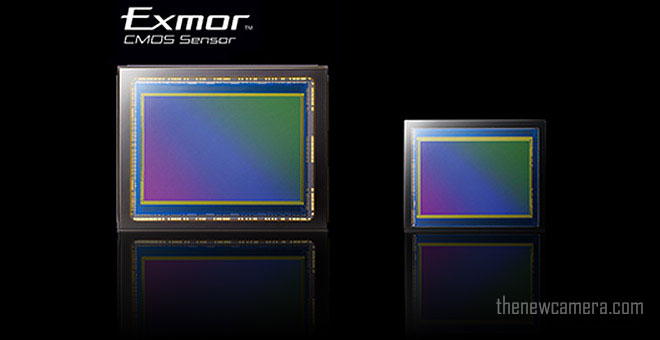
List of Sony Sensors that may get used inside Upcoming Sony’s own Mirrorless cameras. So, without a doubt, the market leader in sensor manufacturing for mirrorless full-frame cameras as well as smartphones. Although we are not talking about the smartphone sensors here, we do have an updated list of camera sensors — the sensors that might be used in upcoming mirrorless camera bodies, or some of them are already being used in existing mirrorless cameras. Some of the sensors are reserved for future Mirrorless bodies
1. Sony Micro Four Thirds (M4/3) Sensors
Here is the list of the Latest M4/3 format sensors – we have two sensors in the list and both are new ready to get used in upcoming M4/3 format based cameras
IMX492LQJ
Resolution: 47.08M effective pixels
Technology: Color square pixel array
Performance: Capable of 31.3 frames per second (FPS) for still shots and 8K video recording
Potential Use: Likely to be used in high-resolution M4/3 cameras from Panasonic or OM System
IMX594CQR
Resolution: 41MP
Performance: Capable of recording DCI 4K video
Potential Use: Suitable for M4/3 cameras focused on video, such as Panasonic’s Lumix GH series
2. Sony APS-C Sensors
Sony’s APS-C sensor is primarily being used by Fuji in their camera, so now we have a 43 MP Stacked CMOS sensor, the latest one, a perfect upgrade for the Fuji X-H2 camera. The IMX510 sensor is already available in the market for a while
IMX671AQR
Resolution: 43MP
Technology: Stacked DRAM, up to 16-bit depth for still images
Performance: Capable of 8K 12-bit video recording
IMX510
Resolution: 32MP
Technology: APS-C sensor (introduced in 2018)
Performance: Limited data available; likely supports high-resolution stills
3. Sony Full-Frame Sensors
Full-frame sensors are the backbone of Sony’s Alpha series and also of Nikon’s. Nowadays Panasonic is also heavily dependent on Sony sensors
IMX521CQR
Resolution: 15.3MP (with Quad Bayer design, potentially up to 61MP)
Technology: Quad Bayer structure for enhanced dynamic range and resolution
Performance: Capable of 4K/60p video with HDR mode
IMX311
Resolution: 48.9MP
Technology: Back-illuminated (BSI) CMOS, active pixel technology
Performance: Up to 24 FPS in still picture mode
Potential Use: Suitable for high-resolution full-frame cameras from Sony, Nikon, or Panasonic
Medium-format sensors are used in high-end cameras from brands like Fuji and Hasselblad.
247MP Medium-Format Sensor (New for 2025)
Resolution: 247MP
Technology: CMOS, designed for medium-format cameras
Performance: Capable of shooting 16-bit images at over 5 FPS
Potential Use: Intended for high-end medium-format cameras, such as those from Fuji (GFX series) or Hasselblad. May appear in new medium-format systems launching in 2025 or beyond.
Source: PetaPixel, 2024
Sensor Specifications Table
Sensor Model
Resolution
Sensor Size
Max FPS
Technology
IMX492LQJ
47.08MP
M4/3
31.3
Color Square Pixel
IMX594CQR
41MP
M4/3
–
–
IMX671AQR
43MP
APS-C
–
Stacked DRAM, 16-bit
IMX510
32MP
APS-C
–
–
IMX521CQR
15.3MP (up to 61MP)
Full-Frame
–
Quad Bayer
IMX311
48.9MP
Full-Frame
24
BSI CMOS
IMX313
48.97MP
Full-Frame
24
BSI CMOS
IMX409
55MP
Full-Frame
13.2
BSI, Square Pixel
IMX410
24.6MP
Full-Frame
19
BSI CMOS
IMX554DQC
30MP
Full-Frame
36.6
BSI, Square Pixel
IMX366
44MP
Full-Frame
26
BI
IMX455
61MP
Full-Frame
9
BI
247MP Sensor
247MP
Medium-Format
5+
CMOS
This updated list incorporates the latest information on Sony sensors as of July 2025, including new full-frame and medium-format sensors, we will continue to update this page as soon as we get any new information.
Updated on 3:08 pm, Friday, 25 July 2025, Greenwich Mean Time (GMT) by thenewcamera.com team Get LIVE RUMORS –> FACEBOOK | TWITTER | INSTAGRAM to get live news — > –>see moreSony Alpha Rumor
The Insta360 Antigravity A1 was officially announced on August 14, 2025, and is one of the world’s first 8K 360-degree drones. Now, with Insta360’s expertise in 360-degree cameras, it’s quite obvious to expect groundbreaking features inside the new drone. It is designed for creators and professionals. While the final pricing is yet to be confirmed, since we have the official announcement — or better to say, the global launch — in January 2026, we have compiled all the possible latest information related to the upcoming 360 drone, including its estimated Insta360 Antigravity A1 prices, official specifications, and how it stacks up against the existing competitors like DJI. So here’s everything you need to know.
Release Date and Availability
Announcement Date: August 14, 2025 (official reveal)
Pre-Order Date: Expected to start in January 2026
Shipping Date: Global shipping begins January 2026
Antigravity A1 Drone Price
Bundle Tier
Inclusions
Estimated Price Range (USD)
Notes
Standard Bundle
Drone + Grip controller + Vision goggles
$1,199–$1,399
Entry-level
Fly More Combo
Standard bundle + 2 extra batteries + spare props + carrying case
$1,300–$1,499
Mid-tier bundle aligning
Creator/Pro Kit
Fly More bundle + creative mounts + ND filters + editing software voucher + premium case
$1,500–$1,699
Premium consumer bundle
Enterprise Add-Ons
Pro Kit + commercial extras (e.g., SDK access, extended warranty)
$1,700–$1,999
Niche tier for business users
As of August 18, 2025, Insta360 has not yet revealed the final pricing for the Antigravity A1, but we do have early estimates based on the industry, existing online drone lineup, and 360 cameras, as well as experts’ opinion. So here is the expected price range of the main bundles:
Why Antigravity Could Redefine Aerial Storytelling in 2025
Industry Insight: Just after the announcement of the Insta360 A1 drone, I stumbled across the web, and, starting from The Verge, they have suggested the Antigravity A1 shouldn’t cost $2000. While in a Reddit discussion and in some of the YouTube creators’ videos, I have found that a $999–$1,299 price for the Standard Bundle Kit, is what they are claiming for the upcoming drone.
Value Proposition: The Creator/Professional Kit targets Insta360’s existing camera users, as well as it also offers bundled savings valued at a $500 premium but feeling like a $200 to $300 add-on.
Stay Updated: Final pricing and the regional details are expected closer to the January 2026 pre-order phase, and you can bookmark this page — thenewcamera.com — or follow us on Facebook, Twitter, and Instagram for the latest updates.
Official Specification and Features of the Insta360 Antigravity A1
The Antigravity A1 combines Insta360’s 360-degree camera expertise. The drone has one of the newest and most innovative designs. The drone never had a 360 ° camera on it before, and it has been designed in such a way that the drone becomes completely invisible, and you get a 360° viewing angle in 8K resolution.
Weight: Under 249 grams – so that’s a perfect weight when you want to fly the drone everywhere you want without taking any permission, since most countries do not have any restrictions on drones which weigh under 249g.
Camera: Insta360 features dual 360-degree 8K recording cameras, which can record smooth 8K 30FPS video with FlowState image stabilization and AI-powered editing tools.
Stitching: Advanced algorithms for invisible drone effect in live video feed and final footage
The Invisible Drone Effect: That’s the best part of the 360 recording. Some users also say while using the DJI goggles they feel like Superman, since with the drone perspective you can explore everything everywhere in 8K resolution — and that gives the true “Superman Effect.”
Flight Performance:
Flight Experience: Immersive 360-degree flight with FreeMotion technology
Control: Intuitive point-to-fly controls via Grip controller
Live View: 360 immersive live view with head tracking via Vision goggles
Editing Flexibility: Fly first, frame later; allows post-flight reframing and editing in any aspect ratio without quality loss
FreeMotion Technology: Enables immersive flying experiences, compatible with Insta360’s Vision goggles and Grip controller for intuitive control
Modular Design: So we have the attached propeller guards and a complete modular compartment that can be easily repaired. Portability is also easy.
Safety Features for Your Drone: We have attached propeller guards to the Antigravity A1, and a return-to-home feature is also included — so if you lose the signal, the drone will automatically return home. At the same time, obstacle avoidance and precise landing capabilities are already in place.
Additional Features: So we have AI-enhanced editing, advanced image stabilization, and compatibility with the existing Insta360 software ecosystem.
How Does It Compare to DJI Drones?
Insta360 Antigravity A1 enters a competitive market dominated by the DJI Mini and Air series. So let’s have a quick comparison:
Weight and Portability: 249 grams — the Antigravity A1 exactly matches the DJI offerings at the very same price point, making it equally travel-friendly and easy to carry.
Camera: Now we have the Antigravity A1 drone, which is capable of recording 8K 360° video. At this moment, none of the DJI drones are able to do so. But yes, we do have some rumours related to DJI’s upcoming 360 drone. So it may not compete directly, but it will be a great option for us. Right now in the standard DJI 4K offering, we have the Mini 4 Pro, which is also affordable at a very reasonable price point
So now we have the big question: Will the Insta360 Antigravity Drone A1 — and not only the A1, since others are also coming just behind the A1 — challenge DJI’s dominance?
For the latest updates, check Insta360’s official blog or thenewcamera.com
Post last updated on October 16, 2025
Updated Content structure and Price
ABout the author: The article “Insta360 Antigravity Drone, Price, Specs, Camera, Release Date: Official Details” written and updated by thenewcamera.com team on 12:38 am, Wednesday, 1 October 2025, Greenwich Mean Time (GMT) | Follow us for more updates and Get LIVE RUMORS –> FACEBOOK | TWITTER | INSTAGRAM to get live news — > get live get live Drone news + Insta360 Drone Rumors 24X7
The Nikon ZF camera was launched back in 2023, and it was one of its kind of camera with extensive manual control and retro look, so it’s actually a blend of retro aesthetics with modern performance. As we know, the Nikon Z6 Mark III camera has already been announced with a partially stacked CMOS sensor, and the Nikon Z9 Mark II camera is expected to arrive with Nikon’s latest image processor on or before the 2026 Winter Olympics, according to the latest set of rumours we have. So what we are expecting right now is that the ZF Mark II will have the best of both worlds – a new sensor and a new image processor. Let’s explore it further.
Nikon ZF Mark II Specification
24.5MP FX-Format Partially Stacked CMOS Sensor
EXPEED 8 Image Processor
6K 60p N-RAW, 4K 120p ProRes RAW
6K 60p and 4K 120p Video, 10-Bit Internal
Up to 20 fps RAW, 60 fps JPEG Shooting
273-Point AF, AI-Based Subject Detection with Bird Mode
Blackout-Free 5.76M-Dot OLED Viewfinder
3.2″ Fully Articulating Touchscreen LCD
Optional Vertical Grip, CFexpress Type B and UHS-II SD Slots
5 GHz Wi-Fi, Bluetooth 5.0, and GNSS
The Sensor of the Nikon ZF Mark II Camera
The Nikon ZF Mark II camera usually picks up the sensor from the Z6 line and since the Nikon Z6 Mark 3 has been already announced a year ago with a partially stacked CMOS sensor, it has raised the expectation that the next variation of the ZF series camera — the ZF Mark II — will use the same sensor to enhance the overall performance. As we all know, the partially stacked CMOS sensor allows 3.5x faster readout speed compared to a conventional CMOS sensor being used inside the Nikon ZF and the Z6 Mark II camera.
Expeed 8 Image Processor Inside the Nikon ZF Mark II
With the introduction of the Nikon Z9 Mark II camera in the first half of 2026, Nikon will then unleash its powerful Expeed 8 image processor to lower-end cameras, and what we do believe is that ZF Mark II does have a very high chance of adopting it — specifically if it arrives in late September 2026 or in the first quarter of 2027.
6K 60fps RAW and 4K 120fps ProRes RAW
The Nikon ZF Mark II camera is expected to inherit the same video core specifications that we have already witnessed in the Z6 Mark 3 camera. Capability to record 6K 60fps videos and 4K 120fps videos in 10-bit H.265 is highly expected. Alongside with the 4K 120fps recording, the camera is expected to support Full HD 240fps recording for extreme slow-motion videos.
AI Autofocus Including Bird Detect Mode
Pairing the partially stacked CMOS sensor with an even faster image processor will elevate the autofocusing performance of the Nikon ZF Mark II camera to the next level. Since with the introduction of a new image processor, a camera maker always introduces a new autofocus algorithm alongside the image decoding algorithm, what we are expecting here is that the camera will surpass the autofocus capability and even the image quality of the existing Nikon Z6 Mark 3 and the ZF camera.
Additional Expected Features of the Nikon ZF Mark II Camera
In-Camera Pixel Shift Mode: The Nikon Expeed 8 image processor will end the requirement of stitching pixel shift mode images outside the camera.
Extended Dynamic Range Mode: This specific mode of the Nikon cameras is under development and we are expecting to see it soon in upcoming Nikon cameras including the Nikon ZF Mark II. And this is not new to the camera industry — the Panasonic S1H Mark II camera is already using this particular mode to officially scale the overall dynamic range performance of the camera by slowing down the sensor readout speed.
Arrival Date of the Nikon ZF Mark II
Based on a 3 to 4 year refresh cycle as well as preserving the sales of other models including the Nikon Z6 Mark 3, we are expecting the potential release of Nikon ZF Mark II camera in September 2026. So this particular date aligns with the Nikon Z9 Mark II camera release as well as having a good gap from Nikon Z6 Mark 3 camera, which will preserve the sales of the mid-range full-frame model.
And it has to be September 2026, since if we go on schedule, then the Nikon Z6 Mark 4 predicted announcement date is June 2027 — if everything goes as per schedule inside Nikon.
Nikon Z6 and Zf Announcement Dates
Camera Name
Announcement Date
Nikon Z6
August 23, 2018
Nikon Z6 II
October 14, 2020
Nikon Z6 III
June 17, 2024
Nikon Zf
September 20, 2023
Nikon Zf II
September 2026 (Predicted)
Nikon Z6 IV
June 2027 (Predicted)
The Nikon ZF Mark II Camera Price
The Nikon ZF was announced at $1999, and the Nikon Z6 Mark III camera is now selling at $2199 (the announcement price of the Nikon Z6 III is $2,496). So, Nikon ZF Mark II will have $2699 announcement price tag as per our initial expectation.
The Nikon ZF series camera has a separate fan base inside Nikon, specifically people who love retro-inspired design. Now, we are expecting that the arrival of the Nikon ZF Mark II camera will redefine modern performance in a retro aesthetic body. But at the very same time, they also have to preserve the sales of the Nikon Z6 Mark 3 camera. If the camera arrives in September 2026, the peak sales period of the Nikon Z6 Mark 3 camera will be over at that time. As well as with a new sensor and a bit higher price tag, it will redefine its position in the Nikon lineup.
Do share your thoughts with us.
The article “Nikon ZF Mark II Specification Expectation, Arrival Date and Price” written and updated by thenewcamera.com team on 7:53 am, Monday, 21 July 2025, Greenwich Mean Time (GMT)| Follow us for more updates and Get LIVE RUMORS –> FACEBOOK | TWITTER | INSTAGRAM to get live news — > get live news + Nikon Rumors 24X7
Buy Canon Lenses, Buy Music CD or Digital Camera at amazon it helps this site, and you do not pay anything extra, it is just a way to help support this site.
New Camera Website, we list all type of new camera information, price review and all type camera rumors, subscribe us or follow us via twitter or facebook.
Disclaimer: We have attempted to select useful information to include on New Camera, and to ensure that the resources we have included on the site -- as well as the way we have described them -- are accurate, fair, and balanced. However, we make no claims, warranties, or other representations concerning the accuracy, completeness, or utility of the information provided, or concerning the abilities or performance of the organizations, agencies, companies, and other resources presented through New Camera