What’s Next from Canon – Canon R6 Mark III, R7 Mark II or R10 Mark II So, first let’s talk about the key points, then we will dive into the details.
Earlier, it was expected that the Canon R7 Mark II camera would arrive in late August 202,5, targeting sports and wildlife photographers with its advanced set of features. We had a lot of rumours related to that in the past, even the leaked specifications, but for now, the rumour mills are silent on this.
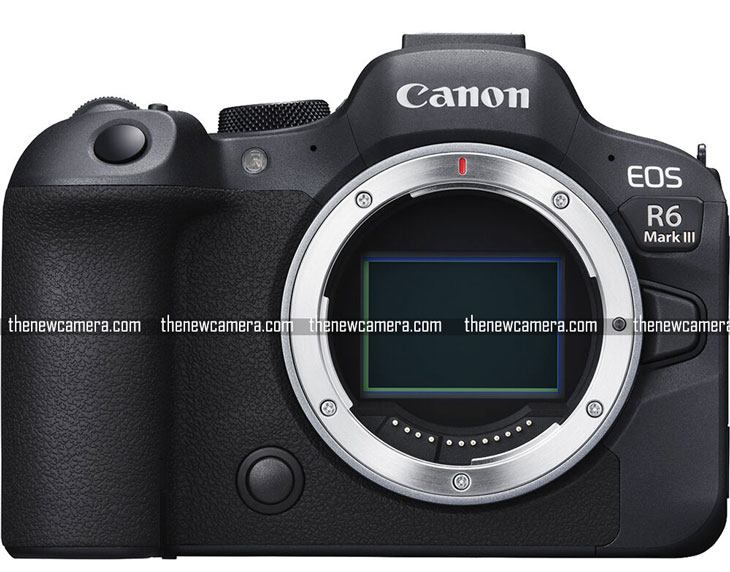
The second most popular camera, also expected to arrive in the late months of 2025, is the Canon R6 Mark III. As we were the first to tell you, according to the real testers of the prototype, the camera does have a 30+ megapixel sensor inside it.
The next model is potentially the Canon R10 Mark II camera or the Canon R8 V. While the Canon R8 V is expected to arrive in the first or second quarter of 2026, the Canon R10 Mark II is due for an update. However, as usual, Canon will select only one APS-C camera for its announcement, to avoid cannibalising its sales.
Canon Registered Model and Timelines
DS126922: EOS R5 II (Dual-band Wi-Fi 6 & Bluetooth)
DS126928: EOS R1 (Dual-band Wi-Fi 6 & Bluetooth)
DS126941: EOS R50 V (Dual-band Wi-Fi 5 & Bluetooth)
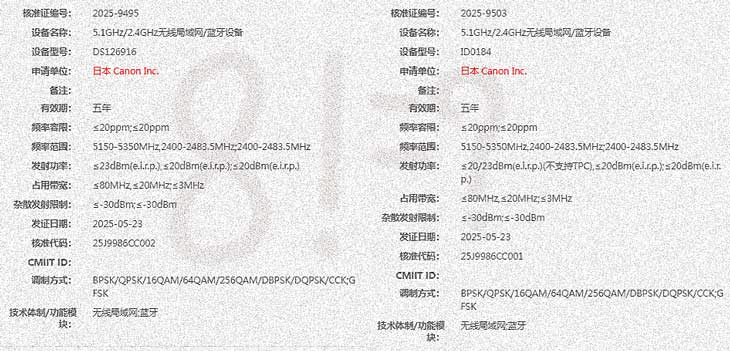
Out of all the registered cameras in 2025, we have 3 cinema cameras and 2 mirrorless models from Canon. We generally keep track of Canon-registered cameras every month, and if you look at our previous two posts of May (May 2025 Update) and July (July 2025 Update), you will find that Canon registered several cameras in those two months. . Both of them have Dual WiFi 5 (we are talking about DS models / Mirrorless only) – Wireless Transfer Unit, generally higher-end cameras like Canon R5 II and Canon R1 use Dual-band Wifi 6, so these two registered models are not High-End full-frame cameras., So we are ruling out the earlier rumored cameras like Canon R1 / R1x variants, OR the Canon R3 Mark II. No, high-end Mirrorless in the announcement pipeline as of now.
As usual, camera makers like Canon typically take at least 3 to 4 months to announce their products once they’re registered in wireless certification agencies. And if they go through the same rule they always follow, we will have at least two Mirrorless announcements from Canon between August and November 2025
Now let’s talk about the Cameras we are expecting next from Canon
Canon Next Mirrorless Announcements
Canon R7 Mark II – The camera that has been registered in May 2025 is expected to be the Canon R7 Mark II with a model code DS126922. The camera is overdue for an update, and we are expecting its arrival from August to November 2025. That’s the initial hint that we have received from the industry experts. The camera is specifically designed for sports and wildlife photography, for those who are looking for a high-performance camera without putting cost to full-frame options.
Canon R6 Mark III – Canon R6 Mark III is another model that we are expecting in 2025. We have already published its rumoured specifications, and we are confirmed that it is coming with a 30+ megapixel sensor. The camera is coming with a significant update for photographers as well as videographers, and its early test phase has been completed. Now we are waiting for its official announcement. As usual, August and September are usually one of the favourite months in the year for Canon for its product announcements, so let’s hope that this August and September, we will witness the arrival of the Canon R6 Mark III camera.
Additional Cameras
Canon R10 Mark II – The Canon R10 Mark II camera was announced in May 2022 and is now due for a refresh. It needs energy and an update, so we are channelising information related to this camera too. As soon as we get any update on it, we will publish it soon.
Canon R8V Camera – The Canon R8V camera is rumoured to arrive in the first half of 2026. If Canon announces it early, it will be a surprise announcement for us.
Stay Updated with TheNewCamera.com
At TheNewCamera.com, we’re dedicated to keeping you informed about the latest camera news. The article “Canon Registered one More Model – DS126936 – July 2025 Update” by thenewcamera.com team | Follow us on our social pages FACEBOOK | TWITTER | INSTAGRAM to get live Camera News + Canon Rumors 24X7.
Finally, a closer view and full video of the upcoming Insta360 Prototype Drone, thanks to Igor Bogdanov, the drones have a 360 camera placed just like we have in the Insta360 camera to capture the 360 view. Although this is an image and video of a prototype under test. The design that you see now will completely change once the drone gets approved for production.
Finally, the first video of the upcoming Insta360 Drone leaked
360-Degree Camera: Yes, it’s almost confirmed that the Pro model with dual fisheye lenses is designed to capture immersive 360-degree footage and will be a flagship model of Insta360 drones. You can easily reframe the shots as per your requirement.
Innovative Design: The professional model’s arms and motors are strategically placed to remain completely invisible while recording footage.
Modular: The drone features a modular design, and it is visible from the pictures. The drone has attachable propeller guards and modular components, suggesting its main focus is on easy repairability and portability.
Weight: The weight of both drones is expected to fall under the micro category [Under 250 Grams]. This is a critical factor to avoid strict drone regulations in many countries.
Additional Features: Insta360 already has a lot of technology ready to be implemented in the drone — this includes AI-powered editing tools, advanced image stabilization, and FlowState technology already used in the X5.
Antigravity Drone Price [Updated on September 7, 2025]
Bundle Tier
Inclusions
Estimated Price Range (USD)
Notes
Standard Bundle
Drone + Grip controller + Vision goggles
$1,199–$1,399
Entry-level
Fly More Combo
Standard bundle + 2 extra batteries + spare props + carrying case
$1,300–$1,499
Mid-tier bundle aligning
Creator/Pro Kit
Fly More bundle + creative mounts + ND filters + editing software voucher + premium case
$1,500–$1,699
Premium consumer bundle
Enterprise Add-Ons
Pro Kit + commercial extras (e.g., SDK access, extended warranty)
Update on: 6:36 pm, Friday, 26 December 2025, Greenwich Mean Time (GMT)
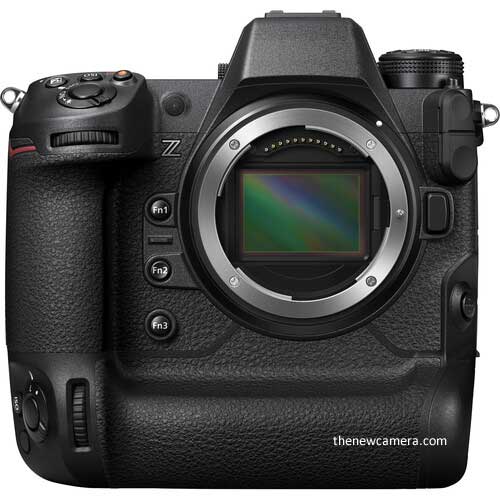
The Nikon ZR camera has already been mentioned in our earlier article. The Nikon Z9 Mark II is currently expected to arrive in 2026, alongside the Nikon Z7 Mark III camera. The full-frame camera announcement timeline for both models is expected to be almost the same.
The Nikon Z9 Mark II is expected to carry a 45MP enhanced sensor. At this moment, it is still not entirely clear what “enhanced” exactly means, since it is already a stacked sensor, while the Nikon Z7 Mark III is expected to feature a higher-resolution sensor, possibly 61MP or even 80MP. Nikon wants to clearly define and separate its lineup.
If someone wants a higher-resolution sensor for better dynamic range, landscape photography, or commercial work, they can opt for the Nikon Z7 Mark III. On the other hand, if someone wants speed, reliability, resolution, and all-in-one flagship-level performance, they can go with the Nikon Z9 Mark II.
Some unverified YouTube channels are spreading rumors that the Nikon Z9 Mark II will arrive with a higher-resolution sensor, which could overlap with the Z7 series. This is not true. The Nikon Z7 Mark III has its own clear position, and it is expected to arrive in 2026.
It’s already 3 months since the registration of the Nikon N2410 Model (the camera was registered back in April 2025). Generally, camera makers like Nikon announce their products 3 – 4 months after registration in the wireless certification agency, so we can expect the Nikon Camera announcement of August – September 2025
N2410 registration details show that it’s not an entry-level model. It supports 5 gigahertz of Wi-Fi bandwidth, so if a camera supports 5 gigahertz of Wi-Fi bandwidth, then without a doubt, it’s an FX series or DX series premium camera.
Based on Rumors – The Next Announcement: Nikon
If we take a look at the list of upcoming Nikon cameras in 2025 and 2026, then we have two different sets of probabilities:
Z9 Mark II camera: The first probability is the development announcement of the Nikon Z9 Mark II camera in late 2026. Its announcement is expected to happen before the 2026 Winter Olympics.
Nikon ZR / Z video camera: The name is not confirmed yet, said to use the same partially stacked CMOS sensor that we have seen in the Nikon Z6 III camera. Right now, check more details about the Nikon ZR
Nikon Z7 III is long long-rumored camera, and it’s also in the announcement pipeline of Nikon, the camera is also expected to arrive with a 61MP sensor. More details here
So, as per the latest set of rumors, we have all three of these cameras expected to arrive in Q4 of 2025 and Q1 of 2026, as we get any information related to that we will post it soon.
Nikon Next Registration N24XX
One more Nikon camera in the registration pipeline: According to the latest rumours we have from a trusted source E88_8888, Nikon is about to register a new camera in the Chinese wireless certification agency. Once the model code and other details are revealed, we will be publishing a post soon on our website.
Stay tuned for more updates
ABout the author: The article “Nikon Next Announcement in August – September 2025” written and updated by thenewcamera.com team on 9:42 am, Monday, 28 July 2025, Greenwich Mean Time (GMT) | Follow us for more updates and Get LIVE RUMORS –> FACEBOOK | TWITTER | INSTAGRAM to get live news — > get live news + Nikon Rumors 24X7
Canon R6 Mark II versus the Nikon Z5 II — selecting the best camera for your requirements is quite a challenging task, as both are very rich in features. And as we all know, the Nikon Z5 II is an incredible camera, and it was announced in April 2025. On the other side, we have the Canon R6 II, which is a Mid-range Mirrorless camera that was launched back in November 2022. It is a very high-performing hybrid camera. So, in this particular specification comparison, we are going to compare the major specifications of both the cameras — so let’s dive in.
Both of the camera bodies are made from aluminium alloy, and both of them are weather-sealed cameras. So you can use them in rain/dust environments — don’t have to worry. But yeah, you have to choose weather-sealed lenses too.
The noticeable difference in both of these cameras is the Nikon Z5 II body is slightly heavier and you are getting a 3.2-inch large display screen with a higher-resolution display. Other than that, both of them are professionally built for pro users.
Photography Specifications
Specification
Canon EOS R6 Mark II
Nikon Z5 II
Sensor Resolution
Actual: 25.6 MP
Effective: 24.2 MP (6000 x 4000)
Actual: 25.28 MP
Effective: 24.5 MP (6048 x 4032)
Image Sensor
35.9 x 23.9 mm (Full-Frame) CMOS
35.9 x 23.9 mm (Full-Frame) CMOS
Sensor Crop
Crop Factor: 1x
Additional Modes: 1.6x
Crop Factor: 1x
Image Stabilization
Sensor-Shift, 5-Axis
Sensor-Shift, 5-Axis
TYPE
FSI
BSI
Capture Type
Stills & Video
Stills & Video
Shutter Type
Mechanical Focal Plane Shutter and Electronic Rolling Shutter
Mechanical Focal Plane Shutter and Electronic Rolling Shutter
Shutter Speed
Electronic: 1/16000 to 30 Seconds
Mechanical: 1/8000 to 30 Seconds
1/8000 to 30 Seconds
Bulb/Time Mode
Bulb Mode
Bulb & Time Mode
ISO Sensitivity
Native: 100 to 102,400 (50 to 204,800 Extended)
Photo Native: 100 to 64,000 (50 to 204,800 Extended)
Presets: Auto, Cloudy, Color Temperature, Direct Sunlight, Flash, Fluorescent, Incandescent, Preset Manual, Shade
Continuous Shooting
Up to 40 fps (75 Raw / 190 JPEG)
Up to 30 fps
Interval Recording
Yes
Yes
Self-Timer
2/10-Second Delay
2/5/10/20-Second Delay
Aspect Ratio
1:1, 3:2, 4:3, 16:9
1:1, 3:2, 16:9
Image File Format
C-RAW, HEIF, JPEG
HEIF, JPEG, Raw
Bit Depth
14-Bit
14-Bit
Focus Type
Auto and Manual Focus
Auto and Manual Focus
Focus Mode
Continuous-Servo AF, Manual Focus, Single-Servo AF
Continuous-Servo AF, Full-Time Servo, Manual Focus, Single-Servo AF
Autofocus Points
Contrast Detection, Phase Detection: 1053 AF Zones
Phase Detection: 273
Autofocus Sensitivity
-6.5 to +21 EV
-10 to +19 EV
Built-In Flash/Light
No
No
Maximum Sync Speed
1/250 Second
1/200 Second
Flash Compensation
-3 to +3 EV (1/3, 1/2 EV Steps)
-3 to +1 EV (1/3, 1/2 EV Steps)
Dedicated Flash System
eTTL
iTTL
External Flash Connection
Shoe Mount
Shoe Mount
Image Quality Comparison
Both of these cameras feature 24MP full-frame CMOS sensors, but we do have technological differences between them. The Canon R6 Mark II camera features an FSI CMOS sensor and the Nikon Z5 Mark II uses a BSI CMOS sensor. Now, if you are going to compare both of them side by side, even in the base ISO range, you will clearly notice the Nikon Z5 Mark II can capture more details in the images, and here is the reason:
First Image Compared at the base ISO 100, in RAW mode. The pencil sketches in the Nikon Z5 II image file is clearly visible
2nd Image Compared at the base ISO 100, in JPEG mode. The pencil sketches in the Nikon Z5 II image file is clearly visible
The Nikon Z5 II does not have an optical low-pass filter, and the camera maker has done very well in controlling the moiré pattern. So the MORE details that you are getting from the Nikon Z5 II at base ISO range are really very noticeable. On the other side, we have the Canon R6 Mark II with an optical low-pass filter over the sensor. Maybe the reason Canon is not able to manage the moiré patterns at the base level, so they use a strong low-pass filter to avoid that, and due to the presence of a strong OPLF (optical low pass filter), the details get lost.
The Nikon Z5 II camera, equipped with BSI technology, can capture clearer images at higher ISO settings. For example, suppose you compare the two cameras at ISO 51200. What we will notice is that the Nikon Z5 II sensor preserves a bit more colour compared to the Canon R6 II, where the colour lines and boundaries merge into each other.
If you are going to compare the image quality of both the cameras, then the Nikon Z5 Mark II is a clear winner since the camera is using a BSI CMOS sensor with a good sensitivity range. At the very same time, due to the absence of optical low-pass filter, the camera can capture a bit more detail at the base ISO range.
Autofocus Performance Comparison
The Nikon Z5 Mark II camera uses a hybrid-style focus sensor manufactured by Sony, designed by Nikon engineers. In the sensor, we have 273 hybrid autofocus points fabricated. With the help of these 273 autofocus points, the camera acquires and tracks its subject.
The Canon R6 Mark II camera sensor uses Dual Pixel CMOS autofocus sensor technology. In Canon’s 24MP sensor, we have 1053 AF zones, which can be divided further into points, and the number of DPAF points you can say is more than 4000.
So even if we technically compare the two cameras, then the Canon R6 Mark II does have an upper hand with the number of autofocusing points. And at the very same time, Canon and Sony are the market leaders in terms of autofocusing performance, but Nikon is not far behind. The new generation Nikon EXPEED 7 image processor helps them to acquire the same AI AF as the Nikon Z8 camera.
So now the Nikon Z5 Mark II camera has a dedicated product review mode just like Sony’s product showcase mode, and at the very same time, we have 9 different types of automatic subject detection modes inside the camera that automatically track subjects.
Autofocus sensitivity — due to the presence of a better low-light handling BSI CMOS sensor, the Nikon Z5 Mark II camera can track subjects up to -10 EV autofocus sensitivity, whereas Canon can detect subjects up to -6.5 EV sensitivity.
The autofocus performance doesn’t end here. The continuous shooting speed of both cameras, the Canon can push its boundaries up to 40 frames per second, whereas the Nikon Z5 II camera remains limited to 30 frames per second in JPEG easy mode. At the very same time, while you are tracking and shooting, Canon’s large number of autofocusing points will surely help you a lot more.
Due to the number of autofocusing points and AF zones, the tracking performance of the Canon R6 Mark II camera will remain better compared to the Nikon Z5 Mark II. But if you are shooting in low-light scenarios without the help of any external light, then the autofocus sensitivity of the Nikon Z5 Mark II will be more helpful to you.
So, if you are more into sports and wildlife photography, then having the Canon R6 Mark II will be more helpful to you.
Video Specifications Comparison
Specification
Canon EOS R6 Mark II
Nikon Z5 II
Capture Type
Video
Video
Internal Recording
H.264/H.265/MPEG-4 4:2:2 10-Bit
UHD 4K (3840 x 2160) at 23.98/25/29.97/50/59.94 fps [60 to 340 Mb/s]
1920 x 1080 at 23.98/25/29.97/50/59.94/100/150 fps [12 to 270 Mb/s]
H.264/MOV/MP4
UHD 4K (3840 x 2160) at 23.98/25/29.97/50/59.94 fps
1920 x 1080p at 23.98/25/29.97/50/59.94/100/120 fps
Video Output
Raw via HDMI
6144 x 4032 up to 59.94 fps
8-Bit via HDMI
UHD 4K (3840 x 2160) up to 29.97 fps
Fast-/Slow-Motion Support
Slow-Motion Only
No
Gamma Curve
Canon Log 3, HDR-PQ
NLog, RED Luts
Recording Limit
No
2-Hour 5-Minute Maximum
IP Streaming
No
No
Built-In Microphone
Stereo
Stereo
Audio Recording
LPCM Audio 24 Bit
AAC Audio
MOV, Raw: 24-Bit 48 kHz AAC Audio
MP4: 16-Bit 48 kHz LPCM Audio
Video Performance of the Camera
For the video part, we have to prefer Canon R6 Mark II — and the reason is very simple: we are getting uncropped 4K 60 FPS footage from the camera. And the maximum resolution of the Canon R6 Mark II camera goes up to 6K 60 frames per second.
The Nikon Z5 II, being an entry-level camera, remains limited to uncropped 4K 30 FPS recording. And while you are recording 4K 60 FPS videos with the Z5 II, you have to face a 1.5x crop — the DX crop.
Both of the cameras are able to record 10-bit 4K videos, and with Nikon, you’re also getting N-RAW support available at 4K.
So, overall, for high-quality video work, you can prefer the R6 Mark II camera with higher frame rates and resolution.
Price Comparison
If you compare the price of both the cameras, then Canon R6 Mark II camera comes at approx. $2000, and the Nikon Z5 II is approximately available at $1700 with offers. At the very same time, the lenses of both the cameras are a little different, and with the Nikon Z5 II, we get a lot of third-party lens makers. But unfortunately, the R6 Mark II camera (or any other Canon full-frame) third-party lensesn’t have that…
Nikon Z5 II vs Canon R6 II – Pros and Cons
Canon EOS R6 Mark II
Pros:
Faster continuous shooting (40 fps vs. 30 fps) with larger burst buffers.
Superior autofocus system with 1053 AF Zones
No video recording time limit and supports 10-bit 4:2:2 internal recording.
6K raw video output via HDMI and advanced gamma curves (Canon Log 3, HDR-PQ).
Lighter body (588 g vs. 700 g)
Faster USB-C data transfer (USB 3.2 Gen 2).
Cons:
FSI Sensor, limited dynamic range, and ISO performance
Smaller monitor (3.0″ vs. 3.2″) with lower resolution (1.62M vs. 2.1M dots).
Less flexible exposure compensation (±3 EV vs. ±5 EV).
Weaker autofocus sensitivity in low light (-6.5 EV vs. -10 EV).
Slightly lower viewfinder magnification (0.76x vs. 0.8x).
Nikon Z5 II
Pros:
BSI sensor with improved DR range
Larger, higher-resolution monitor (3.2″, 2.1M dots) with 3-way tilting LCD.
Better low-light autofocus sensitivity (-10 EV vs. -6.5 EV).
More flexible exposure compensation (±5 EV vs. ±3 EV).
Higher viewfinder magnification (0.8x vs. 0.76x).
Additional metering mode (Highlight Weighted) and more self-timer options.
Slightly smaller and lighter packaging.
Cons:
Slower continuous shooting (30 fps vs. 40 fps) with unspecified burst buffers.
Fewer autofocus points (273 vs. 1053).
Limited video capabilities (8-bit HDMI, 2-hour 5-minute recording limit, no slow-motion).
Shorter battery life (380 shots vs. 760 shots).
Slower USB-C data transfer (USB 3.2 Gen 1)
Verdict:
Canon R6 Mark II is superior in video core specification and autofocusing performance, but comes at a price. Nikon Z5 II features a subtle core specification with superior image quality, and the lens ecosystem is more affordable than of Canon RF Fullframe.
Choose the Canon R6 Mark II if you need top-tier video features, fast autofocus, and extended battery life.
Choose the Nikon Z5 II if you’re on a budget and prioritize stills with solid low-light autofocus and Image Quality
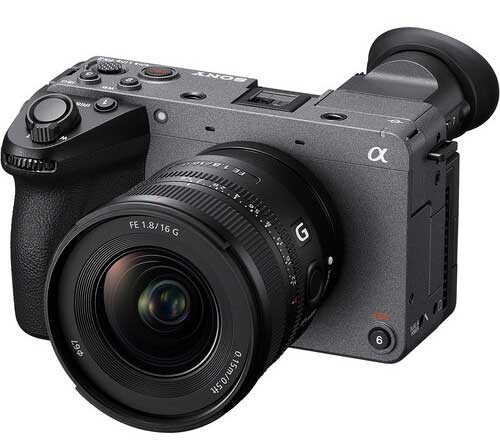
Philip Bloom is one of my favorite filmmakers and content creators. I started watching videos when he published the GH5 review few years back. Today he published the Sony FX2 Camera review in his channel and I loved watching the whole video, here are the come important parts of the video and pros and cons according to Philip Bloom
Sony FX2 Review: Pros, Cons, and Performance
I have mostly talked about the things it isn’t rather than what it is. Mainly because we’ve seen this camera before as it is an A74 combined with an FX3 and with features from the newer cameras like the A12. But that’s mostly a good thing. But it’s just really the A74 parts with the rolling shutter and the 4K 50p 60p crop that lets it down for me because otherwise it really is a lovely camera and it’s easy to forget that with all the negativity we’ve seen about it. Sony cameras have the best video autofocus, the most customizable buttons and menus for easy operation. They’re just so easy to use. Everything you need to operate it is just there without the need to stop recording and delve into the menus. When I use my Canon R52, for example, it drives me nuts because it’s really maddening to use. There’s so little that I can customize for video and with continued frustrations with things like not being able to hot swap memory cards without stopping recording. I haven’t used the latest Nikon and Lumix cameras to compare, but they do look very good. I would really love to try them. The Lumix S12 especially looks like a huge leap forward for them with excellent autofocus and no crop in 4K 50p and 60p. Although there is a crop when you go higher and lots more video features than we have in Sony cameras currently. But the problem is I just can’t get my hands on them to test sadly which is actually the case for most cameras these days. I have tried.
Pros of Sony FX2:
Has the best autofocus, including animal autofocus for video, effective for birds and cats.
Best video autofocus used on any camera.
Cheapest full-frame cinema line FX camera at £2,700.
Microphone and headphone jacks are at the bottom of the left side, not behind doors.
Two 1/4-20 holes for mounting tripod plates.
Includes an EVF, which tilts for shooting in different positions.
33-megapixel sensor, better for photos than the FX3’s 12-megapixel sensor.
Works like a true Alpha stills camera, with easy switching between video and stills modes.
SNQ setting replaced with fixed and variable frame rate mode, selectable from the main menu or big six menu screen.
Big six menu screen from Sony Venice for quick access to key settings (frame rate, ISO, shutter angle/speed, aperture, picture profile, white balance).
Shot mark button can create a JPEG of a frame.
Easy to use without needing to stop recording to access menus.
Cons of Sony FX2:
Very controversial and unexpected release, not what people wanted.
Uses the same sensor as the A74, with poor rolling shutter performance and 1.5x crop for 4K 50p/60p.
1/4-20 holes for accessories are awkwardly placed, requiring a cage for proper accessory mounting.
EVF tilt gets in the way of accessories due to diopter placement; screen doesn’t tilt, only flips out, causing issues when shooting low.
Vent near the EVF can emit an electrical smell when heated.
LCD screen is the old flip-out, low-resolution panel, lagging behind competitors.
No true 24p recording, unlike FX3 and FX30.
Joystick placement is awkward, especially when using the EVF, and too flush for easy use.
No XAVC-HS support for 25p and 30p recording.
HDMI output in log modes is limited to 1080p; no clean 4K output in dedicated log modes.
Histogram measures viewing LUT or camera assist, not log recording.
Cleaner video display screen doesn’t indicate face priority autofocus mode.
HDMI output set to camera display is windowed, not full screen, and turns off LCD/EVF, disabling touch tracking.
Essentially a combination of A74 and FX3, with A74’s outdated sensor limitations.
No 32-bit float audio as hyped before the announcement
Sony FX2 Future Upgrades and EVF Insights
I really hope that the EVF on the FX2 isn’t an aberration and future FX mirrorless style cameras like this have it as well, just a refined version of it. One that can tilt fully without getting way of accessories. So, yeah, diapter on the other side and maybe removable. The camera itself, it’s a very good camera. It’s not a great camera. It’s just it does feel like the life of it isn’t as long as it could have been had they put in a newer sensor because having a camera that crops for 4K 50 and 60 in 2025 for that amount of money just it just doesn’t feel right. But uh other than that it’s really nice and I’m going to miss it mostly. I’m going to miss the EVF.
So if you are looking for the best compact camera under the $1000 price range, then we have done a detailed comparison between the recently announced Fujifilm X-Half camera compared with the Canon V1 and the Sony ZV-1 Mark II. We have also included a mirrorless camera that falls under the same price range, with an additional lens to give you a clear understanding of what the difference will be if you opt for a mirrorless camera in the same price range instead of a compact. So you have all the test results in front of you — we will be analysing it as fairly as possible, but you are also free to comment on what you feel is related to the test.
Image Quality Comparison
As we can see from the first image analysis, captured at ISO 200, among the compacts, the ZV-1 Mark II camera, with its one-inch sensor, is performing very well.After that, we also have the PowerShot V1 camera, which is able to capture details in a proper manner. In the third position, we have the Fuji X-Half camera. Although at the top we do have the ZV-E10, since it has the largest sensor in the group and also falls in the same price range or even lower, that’s why we have included it to notice the real difference between them, despite the form factors they are in.
Keep an eye on pencil sketches, the pencil lines are very clearly visible in ZV-E10 image, after that we have the Sony ZV-1 Mk II, and then in the Canon V1 and the Fuji X-Half.
Image Quality TEST at ISO 12800
If we have to rank them accordingly, then of course the top camera is the Sony ZV-E10, after that we have the Sony ZV-1 Mark II, in third we have the Canon V10, and in the fourth position we have the Fuji X-Half.
Best Camera Ranking
Rank
Camera Name
Sensor Type
Form Factor
Performance at ISO 200
1
Sony ZV-E10
APS-C (largest)
Mirrorless
Best performance overall
2
Sony ZV-1 Mark II
1-inch sensor
Compact
Very good performance
3
Canon PowerShot V10
1-inch sensor
Compact
Proper detail capture
4
Fujifilm X-Half
Unspecified (small)
Compact
Least impressive among the group
Let’s find out which lens is being used by whom, in the comparison table below, let’s clear up the things.
Lens Comparison Table
Camera
Lens Focal Length (Equivalent)
Maximum Aperture
Optical Zoom
Notes
Fujifilm X-Half
33mm (Prime)
f/2.8-16
None
Fixed focal length, JPEG-only
Canon PowerShot V1
16-50mm (Zoom)
f/2.8-4.5
3.1x
Wide-angle zoom, video-focused
Sony ZV-1 Mark II
18-50mm (Zoom)
f/1.8-4.0
2.7x
Bright, wide-end, compact design
Sony ZV-E10
Optional / Used 55mm F1.8 Lens during test
F1.8
None / Optional
APS-C, interchangeable lenses
From the table, it’s very clear that Fuji has spent less effort in selecting the lens for the X-Half Sensor,despite having a PRIME lens, the aperture value starts from F2.8, which shows how terrible the lens is being used. Sony, having a 2.7X Zoom lens, the aperture range is a lot better despite having a larger number of lens elements, which clearly shows the quality of the zoom lens, and in Canon again, yes, they are using a zoom lens, but the aperture starts from F2.8, showing use of a slower zoom lens.
If you are a Fuji lover, then we have a Better Alternative in the Same Price Range
DJI Osmo Mobile 8 spotted in FCC filing, a model code is DJI Osmo Mobile 8 (Model: DS308, FCC ID: 2ANDR-DS308). Now since it has been confirmed by a recent FCC filing, so obviously sparks and excitement that once the camera gets registered in FCC then usually its official announcement happens in next 3 months, since FCC hides the external images and internal test images of the cameras up to 180 days, so if they fail to do so then all the data, images, specs that has been registered will become available to public in general. DJI announces their products within 180 days.
Expected features of the DJI Osmo Mobile 8 gimbal
The Osmo Mobile 7 series uses ActiveTrack 7.0 and a multifunctional module. The Osmo Mobile 8 is expected to offer an advanced set of features, and some of them are:
Next-generation stabilization: an upgraded 3-axis image stabilization for ultra-smooth capture. Inclusion of dynamic vlogging and cinematic modes.
Advanced AI tracking: ActiveTrack 8.0 with improved subject detection and gesture control.
LiDAR integration: So there were Osmo Mobile 7 Pro will have the LiDAR integration, but now we are expecting it for the Osmo Mobile 8.
Compact and portable, lightweight foldable design, very similar to the Mobile 7P.
Extended battery life of up to 10 to 12 hours of continuous use, without any interruption, exceeding the Osmo 7’s 10-hour battery life.
Multifunctional modular upgrade: pairing a piece live with integrated lighting, wireless mic reception to the device connected to it, smart tracking and of course there is high possibility that it can even sync with third-party apps.
Expected arrival time
November 2025: The Osmo 8 Smartphone Mobile gimbal will arrive in November 2025. The date we are mentioning here is based on the DJI announcement pattern followed over the past 2 years.
And what I possibly think they would love to align their announcement with the latest iPhone arrival, so September will be the month that we are expecting the official arrival of the Osmo Mobile 8.
Expected price
The pricing is a very crucial part of any product, but fortunately, the DJI Osmo Mobile series doesn’t cost your bank.
The DJI Osmo 8 standard model will cost somewhere around $99 to $199.
The Pro model will cost you $159 to $179 with advanced features and a multifunctional module as an option.
So these are the latest updates related to the Osmo Mobile 8, and of course, if it arrives with what we are expecting, then it will be a kind of a game changer for smartphone vlogging, and obviously videography. Let’s hope for the best, and we will update this post as we get any new information.
Buy Canon Lenses, Buy Music CD or Digital Camera at amazon it helps this site, and you do not pay anything extra, it is just a way to help support this site.
New Camera Website, we list all type of new camera information, price review and all type camera rumors, subscribe us or follow us via twitter or facebook.
Disclaimer: We have attempted to select useful information to include on New Camera, and to ensure that the resources we have included on the site -- as well as the way we have described them -- are accurate, fair, and balanced. However, we make no claims, warranties, or other representations concerning the accuracy, completeness, or utility of the information provided, or concerning the abilities or performance of the organizations, agencies, companies, and other resources presented through New Camera