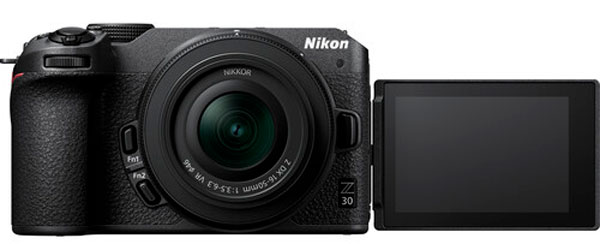
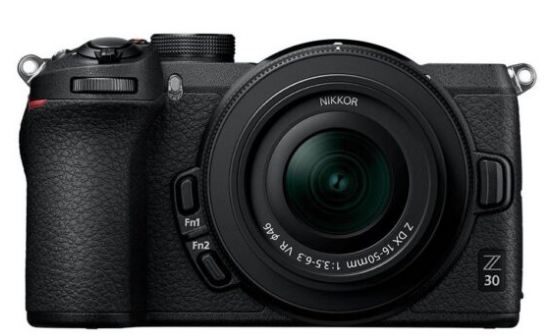
Nikon Z30 was announced by Nikon and it features almost the same internal core specs as of the Nikon Z50 camera. We are getting a perfect 20MP low-light sensor and expeed 6 image processor from Z50.
Nikon Z30 camera was finally announced, the camera features, a 20 MP Sensor and mostly the same core specs we have seen inside the Nikon Z50 camera. So, you can say it’s a Nikon Z50 camera optimized for vlogging and the EVF was removed to save up the production line cost.
the camera is targeted at content creators, everyone knows the content creator market is growing tremendously. If they don’t have product vloggers they will lose a big market share. At the same time it doesn’t mean the camera isn’t fit for photographers, but u know if ye photographers design-wise Nikon Z50 is still more preferable.
So, if ur in vlogging and not able to get ZV-E10 due to a sensor shortage issue, Nikon ZV-E10 ops, sorry Nikon Z30 is the best solution for you.
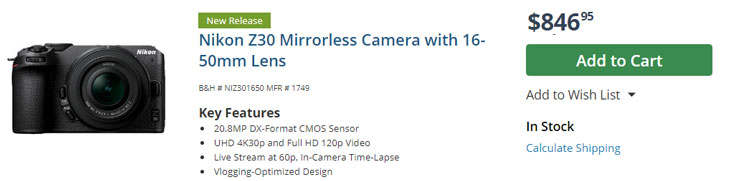
The Z30 is available body-only for $709.95 or with the collapsible 16-50mm F3.5-6.3 VR lens for $849.95. A two-lens kit that adds the 50-250mm F4.5-6.3 VR takes the price to $1149.95. A ‘Creators Accessory Kit’ comprising a Røde Videomicro shotgun mic, ML-L7 bluetooth remote control unit and Smallrig mini tripod/selfie grip, is $149.
Nikon Z30 Press Release
The first step to next-level video content: The Nikon Z 30 is MADE for creators
Whether it’s a Hustle or a Hobby, You and the Nikon Z 30 Will Get it Done
MELVILLE, NY (June 29, 2022) Nikon Inc.’s newest Z 30 mirrorless camera is designed specifically for video content creators, vloggers and streamers. This small, lightweight, feature packed camera applies Nikon’s expertise in all things imaging, giving creators the ability to easily produce the kind of video content that gets noticed.
With the Nikon Z 30, it’s simple to consistently create professional-looking 4K UHD video to get the look you want, with sharp focus, beautiful blurred backgrounds and appealing audio- all on the first take. Swivel front-facing LCD and REC lamp? Got it. Mic input? Better low light performance? Of course. Even though it’s got an affordable price and simple controls, the Z 30 is packed with more advanced features that level up with you, helping to take your content and your channel further.
“A real camera with interchangeable lenses is a big leap in a creator’s personal evolution,” said Jay Vannatter, Executive Vice President, Nikon Inc. “We want to support creators by taking the guesswork out of how to get the best production value, which helps them to take their creativity further and grow their communities.”
Creator-Centric Features That Make Sense:
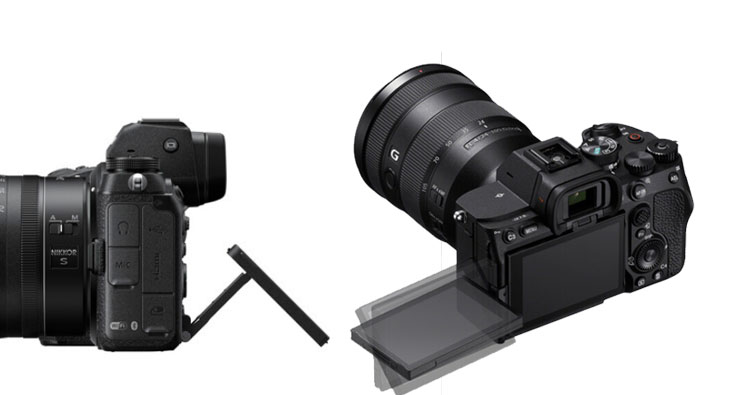
Front-facing Vari-Angle touchscreen-LCD lets you see yourself in the scene as you compose your shots, confirm the frame, adjust focus and make sure you are always camera-ready. The bright 3.0-inch high-res screen will also feel familiar with the ability to swipe, pinch and zoom through playback and menus, while it also tilts to easily frame unique angles from below the hip or from above.
The Nikon Z 30 and NIKKOR Z lenses help you create soft, blurred backgrounds that are a hallmark of higher quality content. The main subject remains sharp, in order to draw your viewer’s attention toward you or anything you want them to see, whether it’s a face or prominent product shot.
Reliably fast and sharp autofocus keeps you in focus, precisely following as you move around the scene, with the added benefit of Eye Detection AF.
REC lamp acts as a tally light, illuminating on the front of the camera to confirm recording and peace of mind.
Higher quality audio enhances your content thanks to a built-in stereo microphone, plus an additional input for using a more powerful external stereo or directional microphone.
Get it all in one take with more than two hours (125 minutes1) of recording time, which is ideal for longer videos such as an extensive DIY.
Superior low light performance gives you the freedom to shoot indoors, when it’s cloudy or at night, for clear and sharp video, with minimal noise and fast focus. Even in low light, the full-time focus will continuously track you while walking with the screen in self-portrait mode. The ISO range goes up to 25600 for video and 51200 for photos, enabling sharp rendering of details and textures in lower light.
Sharp video quality at up to 4K 30P UHD with plenty of room to punch in, or Full HD up to 120P to easily create dramatic slow-motion. What you see is what you get, as the Z 30 captures 4K with no additional crop so you don’t lose any of your frame.
Get the look you want with the Picture Control Auto function, which adjusts the video settings according to the scene. There are also 20 different types of Creative Picture Controls to add creative flair to video, and eliminate the need for extra color grading.
Using Nikon’s precise color profiling, scenes and skin tones are reproduced naturally and accurately straight out of camera, with a genuinely inviting vibe that’s never cold or clinical.
Record on widely available SD cards, which come in a variety of large sizes.
Keep the camera running using an external USB-C power source, a great feature that can eliminate the need to swap batteries during a shoot. The camera also works with Nikon’s free Webcam Utility streaming software to integrate for streaming or web conferences.
Minimalist, lightweight design that is easy to carry and vlog with. This is the smallest and lightest Z series mirrorless camera ever made. The form factor and weight is made for content creation, vlogging and streaming. It’s balanced and comfortable to hold for long periods of time and small enough to pack. Simple dials give you complete control of settings like aperture and shutter speed for a desired effect.
Always connected to your phone (iOS or Android)2 for easy automatic transfer of images using the free Nikon SnapBridge App. If your workflow is editing and posting from your phone, you can also connect to wirelessly send videos from the Z 30 to your device. Using the app, you can also use your phone as a remote control to start and stop your recording, when you are in front of the camera.
Superb Still-Camera Features
Create better thumbnails and cross-promote posts for your other channels that drive to your video content using the Z 30. The 20 megapixel APS-C /DX-format CMOS sensor captures super-sharp and high-res still images, in any kind of light. Whether you’re shooting a once in a lifetime landscape shot, a cooking close up , the Milky Way at midnight or a gorgeous portrait, users have the option to use fully automatic modes or get creative with advanced settings. The Z 30 is also incredibly fast, with the ability to capture people and pets at up to 11 fps3. What’s more, if you love what you’re seeing in the LCD, you can even snap a selfie while recording video.
Creativity Has No Limits with NIKKOR Z Lenses
The Z 30 is an interchangeable lens mirrorless camera that opens up an exciting world of possibilities with a wide array of NIKKOR Z lenses, from super–wide lenses for interiors, small spaces and landscapes, incredibly close macro for tiny details on products, or far away action with a telephoto lens. NIKKOR Z glass is specially designed to address the needs of video creators with silent operation, and by minimizing the breathing effect during focusing, while delivering gorgeously rendered colors for a true-to-life experience. Creators can choose a growing collection of more than 30 NIKKOR Z lenses, including:
NIKKOR Z DX 16-50mm f/3.5-6.3 VR (included in all Z 30 kits, except when body is sold separately): The Z 30 comes with this extremely small yet versatile zoom lens, that’s great for wide angles, especially when talking directly to the camera. It also features built-in VR (vibration reduction) image stabilization to help create smooth footage and sharp images, even when handheld.
NIKKOR Z DX 50-250mm f/4.5-6.3 VR (included in Z 30 Two Lens Kit): Lightweight long zoom lens option with built-in VR that’s great for shots that require extra reach, such as sports and animals.
NIKKOR Z 40mm f/2 and 28mm f/2.8: Super-compact “walk-around” primes that are perfect for flattering portraits, casual shooting, travel and discrete street snaps.
NIKKOR Z MC 50mm f/2.8: A fantastic macro lens lets you get closer to the things you love to get all of the details. Great for food shots, product shots, nature images and more.
Pricing and Availability
The new Nikon Z 30 will be available in mid-July 2022 in a variety of kit configurations; As a body only for $709.95 SRP, with a NIKKOR Z DX 16-50mm f/3.5-6.3 lens for $849.95 SRP*, or as a two lens kit with the NIKKOR Z DX 50-250mm f/4.5-6.3 for $1199.95 SRP*. The camera will also be available with the NIKKOR Z DX 18-140mm f/3.5-6.3 lens for $1149.95 SRP* starting in November. Nikon will also offer a Creators Accessory Kit for $149.95 SRP*, which will include a SmallRig Tripod Grip, the Nikon ML-L7 bluetooth remote control, plus the Rode VideoMicro Microphone. A hot shoe-mounted Wind Muff for the built-in microphone will also be available for $9.95 SRP*.
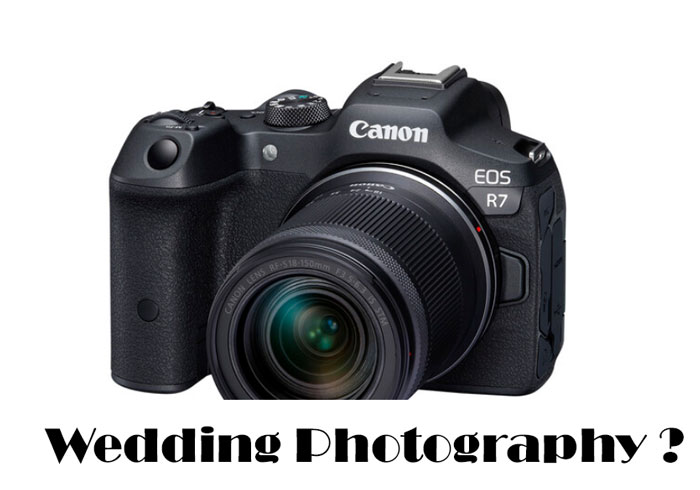
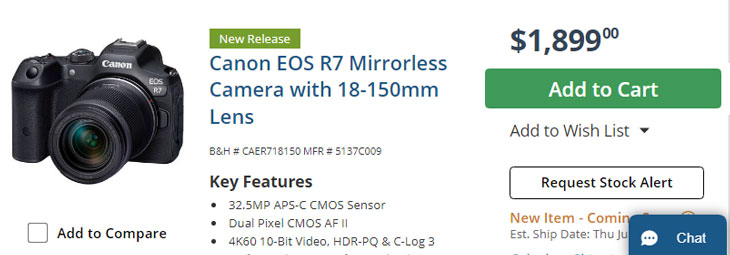
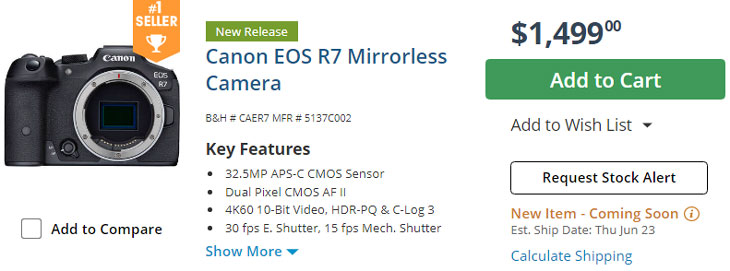
Canon R7 is weather sealed camera with dual card slots, an updated 32-megapixel CMOS sensor, and enhanced video core specification the overall core spec looks very promising. In the video mode, we have a log profile open for cinematographers and the option to record a 10-bit internal video. Canon has given whatever the best core specs possible, at this price point
Should you buy Canon R7 for Wedding Photography?
Everything looks so attractive when you see the core specs of the camera, but its coming at a higher price range. So, instead of getting Canon R7 camera kindly look at the alternatives, we have to help you.
1. The only thing that resists me from recommending Canon R7 camera to you is its price range
You are paying for features that you would never utilize as a wedding photographer. For example, 15 FPS or 30 FPS continuous shooting speed with animal eye or Bird eye AF will get never utilized.
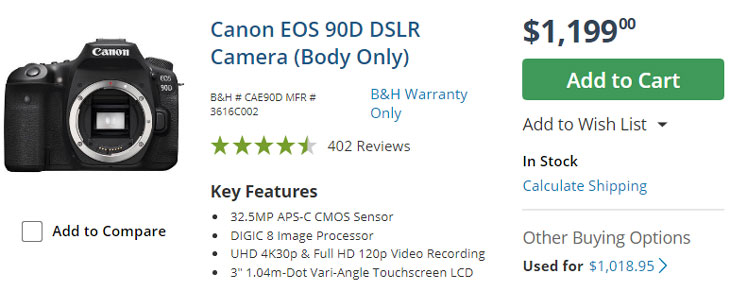
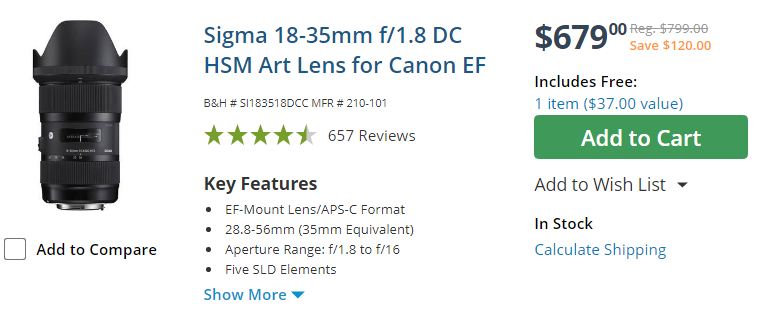
2. If You are an Only a Photographer then we do have a better Canon Combo for you
3. We Know DSLRs are in Cannabilization mode
So, what that means is we should stop using our brains too, the only thing I would request to anyone who is reading this article is to make the decision consciously.
4. As a photographer what matters to me is the image quality
OR you can say the overall output, with 90D and 18-35mm Lens you will have the best APS-C combo in your hand.
5. The Canon Fullframe Advantage approx the Same price range
6. Other Fullframe options
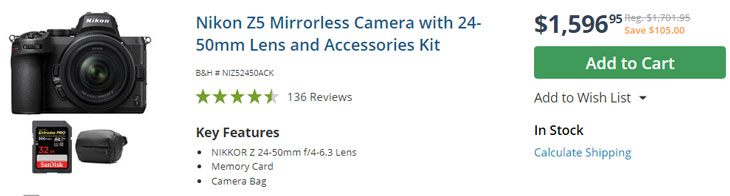
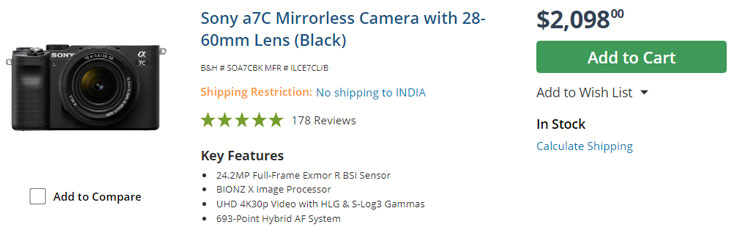
Nikon Z6 Mark II, Sony A7C, and Sony A7 III cameras are available when you are able to slightly increase your budget
I know that in that price range Canon doesn’t have any NEW full-frame camera
So take a decision concisely based on your requirements and budget and pick the best camera you want to have for wedding photography.
Fujifilm Finally Announced, 17-70mm lens for Fuji X-Mount cameras. That’s the direct advantage of opening up of lens mount we can clearly see. In the same way, I request both Canon and Nikon both to open up their Mirrorless mounts for the third-party lens makers.
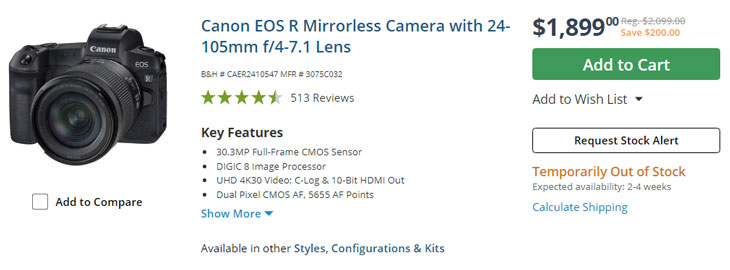
As we know the Canon EOS R camera uses a 30MP Fullframe sensor and the Sony A7 IV was recently announced with a 33MP sensor. Similarly, If Nikon follows the same trend as Canon and Sony, we are sure they will do. The next Nikon update to Z6 may Bring a 30MP Fullframe Sensor inside.
Keep in mind the below specs, is a wish-list of TNC list not coming out from any source
Nikon Z6 Mark III Expected core specification
30-33MP FX-Format CMOS Sensor
EXPEED 7 Image Processor
5-Axis In-Body Vibration Reduction
UHD 4K60 uncropped Video; N-Log & 10-Bit internal
HDR (HLG), ProRes RAW
New AI-Based Subject Detection from Nikon Z9
Real-time Tracking and Real-time Eye AF
Dual Memory Card Slots
Announcement Aug-Oct 2022
Body price under $2500
Why a 30MP Sensor inside the Nikon Z6 Mark III Camera?
Both EOS R and Sony A7 4 camera, feature a 30 and 33 MP sensor respectively
We know that the Canon EOS R update is arriving, with a 30 MP sensor inside it. And the other competitor A74 already has inside it, Now Nikon has no other way left and they have to introduce the sensor of a 30 MP resolution inside the upcoming Nikon Z6 Mark 3 camera
Getting a 30MP Sensor from Sony isn’t easy, Since Sony already has an A74 with a 33MP Sensor on the market. Let’s see What Nikon will do now? Let’s hope for the best
Why Expeed 7 inside the Nikon Z6 Mark III Camera?
Nikon will use its Expeed 7 image processor inside the Nikon Z6 Mark 3 camera. As you can see nowadays even Canon Mid-Range APS-C Mirrorless cameras are using Digic X image processors, and the camera market is now becoming more competitive
With the introduction of a new image processor, the camera makers also introduce new image recording algorithms as well as new AI AF algorithms. If Nikon wants to follow up on the market competition they have to use Nikon Z9 Expeed 7 Image processor.
Nikon Z6 Mark III AutoFocus System ?
Nikon will introduce the Z9 AI AF system to the Nikon Z6 Mark III Camera. To improve the overall AF performance of the Nikon Z6 Series cameras.
Type of AF modes expected to arrive inside the Z6 Mark III – 9 types of simultaneous subject detection in both stills and videos. We will experience a big technological upgrade in the AF performance of the camera compared to the existing Z6 Mark II.
Before we put our expectations for the desired continuous shooting speed. We have to see what the competitors are offering right now
Canon R6 offers 14fps of Mech shutter speed and 20fps of elec. Shutter. Sony A7 IV Limite to 10FPS only. We are not expecting a faster burst speed in the Z6 Mark III camera, since this time we do also have a higher resolution to process.
Nikon Z6 Mark III Video Specs?
10-bit internal video recording, they have to introduce it, Nikon has no other way left. 4K 60p Oversampled file, 10 Bit internal Recording, and a Vari-angle display screen. Recording modes include NLog, NLog2, AppleProRes, HLG(HDR), and of course, H.265 carrier also included for 10 Bit MP4 files.
If you consider all the videography features that we are expecting here, then for sure we will have a major upgrade compared to the existing Nikon Z6 mark to camera
Let’s compare the Sony A7 IV vs Nikon Z7 Mark II, We are covering the Major difference between the two. And based on the Major differences, you should decide which camera should you buy.
You have to select your next camera based on
your requirements and
budget.
Either if you are a photographer, cinematographer, or content creator. You should buy your next camera based on your actual requirements and budget.There are a lot of people who buy cameras based on specs that they actually don’t use 90% of the time. So, just don’t get into those websites and videos, that only show the differences.
If you read the entire article, I will clear all your confusion and you can easily decide after that which Camera you should buy. In the first part, we will discuss the best camera for photographers between the Sony A7 IV and Nikon Z7 Mark II. And in the 2nd part of this article, we will discuss the best camera for cinematographers and content creators.
1. Best Camera for Photographers
Design Difference
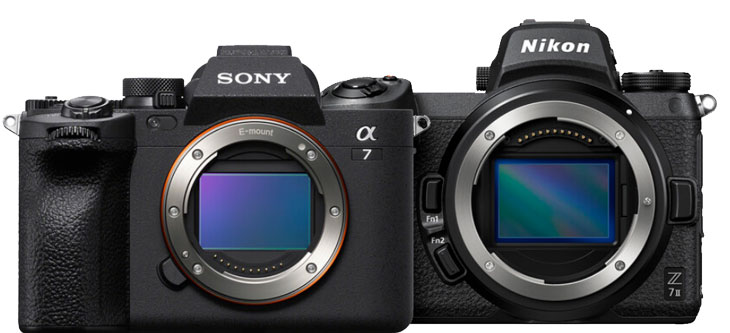
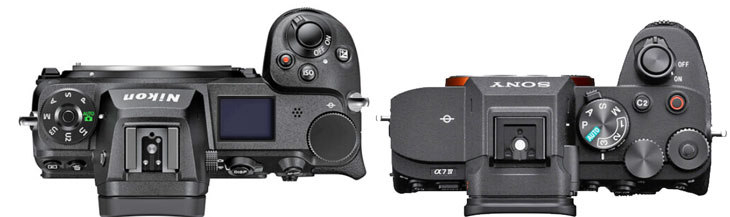
Simple advice before we jump to any further discussion Nikon Professional DSLRs users should buy Nikon Z7 Mark II. If you are a Nikon user, you have already used Nikon professional DSLRs then it’s better to Buy the Nikon Camera again. The overall design, handgrip, and button placement all match with Nikon Professional Series DSLRs. Nikon professional DSLR shooters feel very comfortable with the body design of the camera. The top LCD display screen is the first major noticeable difference you will notice between the two. Nikon Z7 Mark II features a TOP LCD Display unit that A7 IV doesn’t have. Sony is in the 4th generation of its A7 Series Mirrorless cameras. The Sony A7 IV does miss out on the Top LCD Display Unit but features High Res.
Design-wise both are perfect for professionals and very well built. With Sony A7 IV Camera you get longer battery life and Vari-angle Display. For content creators too, the Sony A7 IV with the vari-angle display is the only choice
Actual: 46.89 Megapixel
Effective: 45.7 Megapixel (8256 x 5504)
Sensor Type
35.9 x 23.9 mm (Full-Frame) CMOS
35.9 x 23.9 mm (Full-Frame) CMOS
Image Stabilization
Sensor-Shift, 5-Axis
Sensor-Shift, 5-Axis
Built-In ND Filter
None
None
Capture Type
Stills & Video
Stills & Video
Core Specs comparison
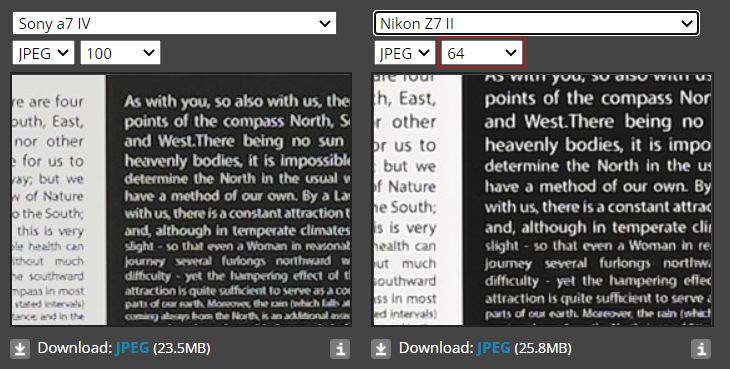
Let’s discuss the major difference we have in the core specs of both cameras. The most important thing for a Photographer in a Camera is the image quality. In general, a camera that is capable to revolve MAX amount of details in a given scene is considered to be a very usable camera. AT base ISO range is very clearly visible and Nikon is able to grab more details compared to the Sony A7 IV camera.
It actually depends, When your priority is only the image quality, then we have different recommendations. If your priority is Image Quality as well as a Fast AF system, or You are a Hybrid Shooter and wish to have a perfect camera for Photo and Video then we have an entirely different set of recommendations.
We will only discuss the major differences between the two, not all the differences will be discussed in this video, to confuse you.
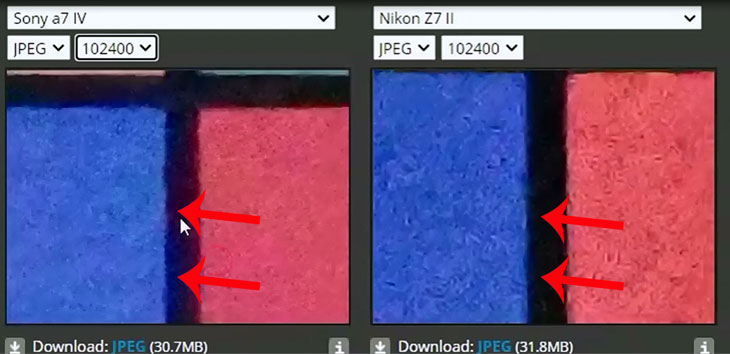
As you can see from the high ISO test files, the Nikon Z7 Mark II camera is preserving more color details compared to the Sony A7 IV camera.
2. Nikon Z7 Mark II vs Sony A7 IV High ISO Test
Nikon Z7 Mark II is not only able to capture more details compared to the Sony A7 IV but the NOISE of Z7 Mark II is also VERY WELL MAINTAINED at a Higher ISO Range During the test, it was very clearly visible that Nikon Z7 Mark II low-light performance is almost as good as that of the Sony A7 IV Camera. Closely notice the color block corners of the Sony A7 IV on the left side. Nikon Z7 II is able to preserve details better even at ISO 102400. Specifically the Jpeg Engine inside the Z7 Mark II camera doing a great job.
Best Camera for Photographers – If you care about details in your image – The Nikon Z7 Mark II
I am really very impressed with the image quality of the Nikon Z7 Mark II when compared to the Sony A7 IV, during the entire test. What I really care about the camera is image quality, when I have to pick a camera for photography purposes only.
Presets: Auto, Cloudy, Color Temperature, Color Temperature Filter, Custom, Daylight, Flash, Fluorescent (Cool White), Fluorescent (Day White), Fluorescent (Daylight), Fluorescent (Warm White), Incandescent, Shade, Underwater
Presets: Auto, Cloudy, Color Temperature, Direct Sunlight, Flash, Fluorescent, Incandescent, Preset Manual, Shade
Continuous Shooting
Up to 10 fps at 33 MP for up to 828 Frames (Raw) / Unlimited Frames (JPEG)
Up to 10 fps at 45.7 MP for up to 50 Frames
Interval Recording
Yes
Yes
Self-Timer
2/5/10-Second Delay
2/5/10/20-Second Delay
Focus Type
Auto and Manual Focus
Auto and Manual Focus
Focus Mode
Continuous-Servo AF, Direct Manual Focus, Manual Focus, Single-Servo AF
Continuous-Servo AF, Full-Time Servo, Manual Focus, Single-Servo AF
Autofocus Points
Phase Detection: 759
Contrast Detection: 425
Phase Detection: 493
Autofocus Sensitivity
-4 to +20 EV
But, what’s the actual use of Sony’s Class-leading AutoFocus when the burst speed of the camera remains limited to 10fps with a lower-resolution sensor Nikon Z7 Mark II camera also features the same 10FPS shooting speed but with 45MP files.
Nikon Z7 Mark II Buffer depth – Buffer Depth RAW 77 files @ 45m and 200 JPEG. Sony A7 IV has a larger buffer depth of 800 RAW + JPEG Images
3. Why limited to 10 FPS in Sony A7IV?
Sony A7 IV features a class-leading AF system, despite a lower Megapixel than Nikon Z7 Mark II and Bionz XR image processing engine, the AF speed is locked at 10 FPS. So, in this scenario how we can openly recommend the Sony A7 IV to sports shooters or wildlife photographers.
Since Nikon Z7 mark II AF is now much improved, we are getting more details and very well-controlled noise at a high ISO range. it’s better to use Nikon Z7 Mark II with HQ lenses.
4. Reasons why you should buy the Sony A74 Camera as a photographer
S-cinetone Sony Picture Profile resembles Canon color science
Canon users face Color science issues when they shift the brand. Instead of Nikon Z7 Mark II, Sony A7 IV with S-Cinetone PP is more recommended. Updated Menu Design – Limited operability of Sony Cameras isn’t an issue in Sony A7 IV camera with updated user interface and Menu designs. Latest Tamron 28-75mm F2.8 Lens resolves the Sony’s A7 IV 33 MP Sensor resolution perfectly. So, the overall cost of a camera and lens is lower compared to the Nikon Z7 II.
SonyA7 IV is more budget-friendly compared to Nikon. 45 MP Sensor resolution of Nikon Z7 Mark II camera, isn’t easily digestible by Nikor 28-75mm F2.8 (the RXD version) You need to invest in High-Quality Lenses, no other option left in Nikon. Or they should open the mount ASAP.
5. Finally conclusion for photographers
If you are limited under a certain budget then for sure the Sony A7IV with its affordable Lens ECO system is highly useful to you. If budget isn’t an issue then go with Nikon Z7 Mark ii.
As you can see in the above comparison the Nikon Z7 Mark II camera captures more details than Sony and maintain low noise at a higher ISO. For Photographers, those who love details Nikon Z7 Mark II is highly recommended.
Nikon AF system is now improving with every announcement and Sony must understand this. The only reason I am recommending Sony A7 IV against Nikon Z7 Mark II to photographers is the ECO system and the S-cinetone picture profile.
6. Best Lenses for Z7 Mark II Camera
For Photographers – Buy Better Lenses for Z7 Mark II Camera
Tamron 1st gen of 28-75mm F2.8 Re-branded lens isn’t recommended for Nikon Z7 Mk2
In short – Invest in better lenses to get Max out from your Nikon Z7 Mark II camera
If possible get the Trio – 14-24mm F2.8, 24-70mm F2.8, and 70-200mm F2.8 in Nikon.
The overall cost of the Nikon Z7 mark II is higher than that of the Sony A7 IV with its affordable lens ECO system
Internal Video Capture
Recording Modes
H.265/XAVC HS 4:2:2 10-Bit
UHD 4K (3840 x 2160) at 23.98p/50p/59.94p [50 to 200 Mb/s] H.265/XAVC HS 4:2:0 10-Bit
UHD 4K (3840 x 2160) at 23.98p/50p/59.94p [30 to 150 Mb/s] H.264/XAVC S-I 4:2:2 10-Bit
UHD 4K (3840 x 2160) at 23.98p/25p/29.97p/50p/59.94p [240 to 600 Mb/s]
Full HD (1920 x 1080) at 23.98p/25p/29.97p/50p/59.94p [89 to 222 Mb/s] XAVC S 4:2:2 10-Bit
UHD 4K (3840 x 2160) at 23.98p/25p/29.97p/50p/59.94p [100 to 200 Mb/s]
Full HD (1920 x 1080) at 23.98p/25p/29.97p/50p/59.94p [50 Mb/s] XAVC S 4:2:0 8-Bit
UHD 4K (3840 x 2160) at 23.98p/25p/29.97p/50p/59.94p [60 to 150 Mb/s]
Full HD (1920 x 1080) at 23.98p/25p/29.97p/50p/59.94p/100p/119.88p [16 to 100 Mb/s]
H.264/MOV/MP4 4:2:0 8-Bit
UHD 4K (3840 x 2160) at 23.98p/25p/29.97p/59.94p
Full HD (1920 x 1080) at 23.98p/25p/29.97p/50p/59.94p/100p/119.88p
4:2:2 10-Bit via HDMI
UHD 4K (3840 x 2160) at 23.98p/25p/29.97p/50p/59.94p
Full HD (1920 x 1080) at 23.98p/50p/59.94p
Full HD (1920 x 1080) at 50i/59.94i 4:2:0 8-Bit via HDMI
UHD 4K (3840 x 2160) at 23.98p/25p/29.97p/50p/59.94p
Full HD (1920 x 1080) at 23.98p/50p/59.94p
Full HD (1920 x 1080) at 50i/59.94i
4:2:2 10-Bit via HDMI
UHD 4K (3840 x 2160)Full HD (1920 x 1080)
IP Streaming
None
None
7. Video Comparison – Sony A7 IV vs Nikon Z7 Mark II
Higher bit rates mean more quality – Sony A7 IV is more capable as a Video camera with higher bit rates – Sony 600mbps vs Nikon 144mbps
Pixel Binning OR Over-sampling in Nikon Z7 Mark II ?
Due to its higher pixel count, the Z7 II cannot read out its whole sensor quickly to produce high-quality oversampled files, we are talking about line-by-line reading as Sony does. Even while recording the 4K 24, 30 fps video the Nikon Z7 Mark II using somehow a mixture of Pixel Binning and Oversampled files.
Sony A7 IV does 7K full sensor readout
Sony A7 IV does a full sensor 33MP sensor readout. As well as in The Video. 3D AF tracking is also better than the Nikon Z7 Mark II. Sony A7 IV does 4K 30p 10-bit 4:2:2 recording, 4k 60p utilizes Super 35 crop/ APS-C area of the sensor (via 4.6k readout).
Overheating issue of Sony A7 IV
For content creators, the Sony Camera is the only option with a Vari-angle display screen. Sony A7 IV is a perfect Video camera, but it gets Overheat in Indian Summers. When the temp is around 35 to 40 degrees. IF anyone from Sony watching this video, kindly listen to the voice of your consumer-based of Asian Region and Kindly release a FIX for Overheating issue.
8. Best Video Camera
Undoublty the Sony A7 IV camera is a better option than the Nikon Z7 mark II. But, before buying A7 IV you should know the limitations too.
At Sony, We have options like Sony A7C and Sony A7S III for capturing uninterrupted video. If you want to buy a Video Camera in Nikon then you can also go with the Nikon Z6 Mark II. The Video quality of the Z6 Mark II is, even more, better than that of the Nikon Z7 Mark II. At Sony, We have cameras like the Sony A7S III and the Support of Third Party Lens makers is phenomenal
Buy Canon Lenses, Buy Music CD or Digital Camera at amazon it helps this site, and you do not pay anything extra, it is just a way to help support this site.
New Camera Website, we list all type of new camera information, price review and all type camera rumors, subscribe us or follow us via twitter or facebook.
Disclaimer: We have attempted to select useful information to include on New Camera, and to ensure that the resources we have included on the site -- as well as the way we have described them -- are accurate, fair, and balanced. However, we make no claims, warranties, or other representations concerning the accuracy, completeness, or utility of the information provided, or concerning the abilities or performance of the organizations, agencies, companies, and other resources presented through New Camera