This is really very exciting news coming out. We have a listing of the new NIKKOR 28–75mm lens, which has been spotted at the B&H store. Now, this is unique since it’s in pre-order status, which indicates two things: either the lens is on its way, a new version of the existing 28–75mm f/2.8 lens, which is absolutely one of the most popular lenses among Nikon users, or this listing that we have spotted is just a kind of sign before an official announcement is about to happen soon. Let’s have a look at the details.
The Leak: What We Know So Far
First of all, we have a good price difference between the new and the older model, where the older model is selling for $200 less. At the same time, the overall pricing of the 28–75mm f/2.8 series lens is far more reasonable than native lenses. The older model is selling at $996, which is approximately $200 less than the recently released model, which is available at $1,196, a noticeable bump from the original 2021 model’s street price of around $997
Marked as a “New Release” and available for preorder, the page highlights several key features that align closely with advanced optical designs, but at the same time, we were not able to spot any significant difference between the two, the new and the previous model. The core specs of both look almost the same.
Z-Mount Lens/FX Format: Designed for Nikon’s full-frame mirrorless cameras, ensuring compatibility with the Z6, Z7, Z8, Z9, and beyond.
Aperture Range: f/2.8 to f/22: Constant f/2.8 aperture for excellent low-light performance and creamy bokeh.
Super ED and ED Elements: Improved chromatic aberration control for sharper images edge-to-edge.
Three Aspherical Elements: Enhanced correction for distortions and spherical aberrations, promising better overall image quality.
Compact and Lightweight Design: At just 4.8 inches long and weighing 1.2 pounds, it’s ideal for everyday carry.
We are again waiting for further updates on this. Maybe B&H will update the page later
Ties to Tamron: A G2 Refresh?
If we look at the history, the tamron first started releasing their second-generation (G2) version in 2021 for Sony E-mount, featuring a faster VXD linear motor for autofocus, better close-focusing capabilities (minimum focus distance of 0.18m at 28mm), and refined optics for superior sharpness and contrast.
Fast-forward to 2024, when Tamron launched a native Z-mount G2 variant directly. Loaded with their G2 formula? The inclusion of Super ED elements and aspherical optics mirrors Tamron’s upgrades; there are very few details available about the new Nikon Lens, although it’s coming under the G2 tag.
So, we are not expecting a major upgrade in the lens configuration for now
What’s Next?
Nikon Rumours and other sites are buzzing with this leak, but until Nikon confirms, treat it as speculation. B&H has a history of accidental listings (remember the Z6 III tease?), so this could be pulled soon. If you’re tempted, hit that preorder button—but keep an eye on stock alerts.
Stay tuned to TheNewCamera.com for updates as we dig deeper into this potential release. What do you think? Drop your thoughts in the comments below!
Images courtesy of B&H Photo Video and Nikon.
GET LIVE NOTIFICATION, Select Your Trusted Source GET LIVE NOTIFICATION Click ON Check BOX for Latest NEWS and Rumors
The article “Nikon Rumors: New NIKKOR Z 28-75mm F2.8 Lens Spotted on B&H – Is a Refresh Imminent?” was written by thenewcamera.com team on 5:07 am, Sunday, 22 February 2026, Greenwich Mean Time (GMT). | You can also follow us on Our Official Social Media HandlesFACEBOOK | TWITTER | INSTAGRAM> get live news + Nikon Rumors 24X7
The Sony A7 V camera, successor of the Sony A7 IV, arrives with a massive upgrade in terms of sensor as well as the internal core specifications of the camera. In this guide, we focus on the US market availability of the best lenses for the Sony A7 V camera, with prices in USD specifically sourced from major retailers such as Amazon, B&H Photo, and Adorama. Not only that, we have incorporated the latest pricing of the lenses and dedicated sections in the article specifically for budget buyers. This article summarises the best available lenses for the Sony A7 V camera. Whether you are looking within a specific budget or you are only looking for performance irrespective of budget, this guide is made for all.
Not to make this guide more comprehensive, more detailed, and more budget-friendly while keeping the lens quality top-notch, we have also added the best third-party lens brands, which include Sigma, Tamron, Viltrox, and Samyang. All these lenses are listed based on expert reviews and Amazon.com and B&H Store users’ feedback and trust.
Best All-Rounder Lens for Sony A7V Under $2000
If you want any one of these two lenses, then for sure you do not need to invest in any other single lens out there, specifically unless you are a sports photographer and need the longest focal length possible to meet that requirement.
Now, which one should you pick? As you know, the Tamron 35–150mm covers a very hard-to-cover range with an ultra-bright aperture. So, if your budget allows, the best thing to buy is the Tamron 35–150mm, since you’re using a full-frame sensor. Don’t think that 35mm is going to crop too much—it is roughly equivalent to a 24mm lens on an APS-C camera, so you are getting enough wide coverage along with an excellent zoom range.
Tamron 35-150mm, It is highly recommended for capturing weddings, portraits, and professional fashion shoots for clients. The next lens on our list is the Sigma 24–70mm f/2.8. This latest lens covers a standard zoom range and comes at a much lower price compared to the Tamron 35–150mm. So, if you’re not able to buy the Tamron, then the next best option is obviously the Sigma 24–70mm f/2.8. Otherwise, I would highly recommend going with the Tamron.
Top Pick: Tamron 35-150mm f/2-2.8 Di III VXD (~$1599 on Amazon US)Tamron is obviously one of the best and favorite lens brands for professional photographers out there, since you’re getting a very unique 35–150mm range with an ultra-bright f/2–f/2.8 aperture, which is highly beneficial for separating your subject from the environment, taking cinematic portraits, as well as capturing the entire frame composed of people and objects. It is a multipurpose and versatile lens, specifically highly suitable for full-frame cameras like the Sony A7 V. Pros: Bright aperture, fast VXD AF synced with A7 V’s tracking, weather-sealed, USB-C updates. Cons: Minor flare.
Alternative: Sigma 24-70mm f/2.8 DG DN II Art (~$1199 at B&H Photo) Budget all-rounder rivalling Sony’s GM. Pros: Sharp, minimal breathing for video, de-click aperture. Cons: No in-lens stabilisation (use A7V IBIS). Frequent US discounts on Amazon.
Best Lenses for Sony A7V Video Under $2500
Smooth AF and low breathing for cinematic US shoots., Search correctly, create content love to suit landscapes, ultra Vikash with a camera and don’t want to compromise on the quality, then, obviously, the best one available for you is the Soni 16 to 35
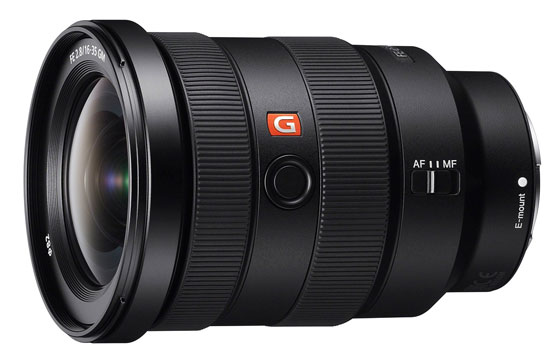
Sony FE 16-35mm f/2.8 G Master II (~$2298 on Amazon) Wide zoom for vlogs/landscapes. Pros: Reduced breathing, silent XD motors, gimbal-friendly weight. Cons: Premium price. Check B&H for US bundles with ND filters.
Tamron 17-28mm f/2.8 Di III RXD ($850-900): Budget Lens and an excellent alternative to Sonys 16-35mm f/2.8G, Very sharp in the center with good corner performance; better flare resistance and less chromatic aberration than Tamron; compact (450g) and affordable; fast, quiet AF; good for astro with controlled coma.
Best Sigma Lenses for Sony A7V Under $1500
Here is the word- and name-corrected version only, with only important words bolded and no change to the meaning of the statement:
Now, when entering the high-performance plus budget zone, Sigma is where you are going to get some of the industry’s best third-party lenses at a very reasonable price tag. So, we are listing the best lenses available from Sigma, starting with the Sigma 24–70mm, which is the best all-rounder lens.
Next, we have the Sigma 150–600mm. Obviously, the autofocus is not as fast as Sony’s 200–600mm lens, but yes, the sharpness is there—very sharp, even at the telephoto end and 600mm. So, let’s explore the Sigma lens list.
Lens
Key Pros
Key Cons
US Price (Approx.)
Sigma 24-70mm f/2.8 DG DN II Art
Fast HLA AF, sharp across frame, video-friendly with de-click ring and minimal breathing
All leverage A7V’s Eye AF; check Sigma’s US site for firmware updates. Sigma lenses are often on sale during US holidays like Prime Day.
Best Tamron Lenses for Sony A7V Under $1500
Obviously, when someone asks about Tamron, the only lens that comes to my mind—specifically the one I recommend for a full-frame Sony camera—is the 35–150mm f/2–f/2.8. That is the best Tamron lens ever made, and it is highly usable, being used by professionals worldwide, so that stays on top of my list always.
Other than that, if you’re looking for a budget solution, then we have the Tamron 28–75mm f/2.8 G2 lens. After that, we also have the Tamron 70–180mm, which is specifically meant to be portable, covering telephoto, portraits, and similar use cases. So yes, Tamron has a lot of options out there. Let’s explore the best ones that I like. All the lenses that we are discussing here supports quick VXD autofocus and vibration compensation (VC) that is ideal for the A7V’s hybrid use
Lens
Key Pros
Key Cons
US Price (Approx.)
Tamron 35-150mm f/2-2.8 Di III VXD
All-in-one versatility, bright aperture for low-light, fast AF, weather-sealed
Tamron’s partial Sony ownership ensures seamless A7V compatibility; look for US warranty bundles.
Best Viltrox Lenses for Sony A7V Under $1000
Viltrox is obviously a Chinese lens company, but it is one of the best among other cheap chinese lenses. Apart from all these, I really do appreciate Viltrox a lot after using and testing their lenses. I would love to see them create an O (ZERO) D lens in the future, but for now, I would like to recommend a set of lenses that deliver high-quality output and are available within a budget. That’s why we are listing these lenses and their details in the table below, so you can review them and, if you wish to purchase them, do so easily.
Lens
Key Pros
Key Cons
US Price (Approx.)
Viltrox AF 16mm f/1.8 FE
Wide-angle for landscapes/astro, bright aperture, built-in LCD for settings
Viltrox lenses shine in US budget builds; check for firmware updates to fix any A7V compatibility issues reported in early 2026.
Best Samyang Lenses for Sony A7V Under $1000
As for Samyang lenses, after using them, what I found practically is that the AF is not as fast as Sigma, Tamron, or Sony native lenses. Those are way faster. The AF is slightly slow, so you can use these lenses for portraits, fashion shoots, street, landscapes, and architecture. Despite the fact that they are a bit slow in autofocus performance, the image quality that comes out from Samyang is exceptionally good. Now, one more thing to be noted: most of the Samyang lenses feel a bit heavy in hand (especially the Zoom lenses like the 24-70mm) I don’t know why—maybe due to the optical elements they are using—but yes, they do feel slightly heavy, so keep this factor in mind before buying if you have to hold your camera for a long period of time.
Lens
Key Pros
Key Cons
US Price (Approx.)
Samyang AF 35mm f/1.4 FE II
Versatile street prime, sharp with natural colors, weather-sealed
The Sony A7 V camera is obviously one of the best full-frame Sony cameras ever made for users. When you are using the best camera with the best lenses, you also have the right to know whether your lenses come under warranty or not. So, if you’re getting lenses like the Sony G Master lenses, they come with a warranty as well as OSS (Optical SteadyShot) in supported lenses.
Tamron and Sigma also have service centres. But if you’re planning to buy brands that are more affordable, like Samyang, then you should know that in some cases the warranty coverage is limited and service centres are not available everywhere. Specifically, with some Chinese-made lenses, you may not get the level of warranty coverage that you should.
Other than that, third-party brands that are already partnered with Sony, like Sigma, Tamron, and Samyang, do provide support if you need it. Specifically, Sigma and Tamron are the best third-party brands when it comes to after-sales support if any issues occur.
Now that we are entering 2026, this is a golden era of Drone cameras available for around $700, specifically within the USA. The DJI ban is effective as of December 23, 2025, but just before that, DJI not only updated its entry-level drone, with the Neo 2, but also added the Avata 360 to the FCC registration to make it eligible for future sales within the USA.
If you are considering avoiding DJI drones, keep in mind that, under $700, almost all Drones with Excellent Built-in Cameras, generally seen on Amazon.com and B&H Photo, are not manufactured in the USA. Most of the sub-$1000 brands you see are linked with Chinese boards and circuits. And some of them are completely manufactured in China. As of December 23, many models are not directly affected, but as per the ban, only USA-made drones are allowed for new FCC registrations after December 23
Budget market realities: Most sub-$700 drones on Amazon and B&H (e.g., Potensic Atom 2 at $300, Ruko F11 at $369) utilize Chinese components/assembly, even if rebranded. Non-US options like French Parrot Anafi or Israeli/UK models (e.g., Ryze Tello, but it’s a DJI-partnered) rarely hit under $700 without Chinese ties. Ag-focused non-Chinese (e.g., US-based Anzu Raptor) start at $2k+.
What is actually written in the FCC Covered List?
Uncrewed aircraft systems (UAS) and UAS critical components produced in a foreign country†† and all communications and video surveillance equipment and services listed in Section 1709(a) (1) of the FY25 National Defense Authorization Act (Pub. L. 118-159)
That clearly means any drone, even the assembled ones, produced in a foreign country, the FCC registration is prohibited from Dec 23, but all the drones registered before Dec 23 at FCC are still eligible for sale across the USA.
Made-in-USA drones like Skydio and others—which have eye-opening prices, like we have to at least pay $950 for Skydio 2+ drone – Yes, that’s the entry segment drone, but since it’s manufactured in the USA, it does have a Sky-High Price.
List of Best DJI Camera Drones Under $700
It’s better to buy the best option available in the market right now; you will miss the opportunity once the stock runs out.
Budget pro, tri-directional obstacle sensing, and 4K/60fps video
Are These Drones Legal to Buy After the December 23, 2025, Ban?
Yes, it is 100% legal to buy DJI drones in the United States of America. Even after the ban became effective from December 23, 2025, and after that DJI is not able to register new products with the FCC, the products that are already registered with the FCC are fully eligible to be sold in the United States of America.
There is no retroactive ban involved. So you can buy them, and you can fly them without any doubt or problem.
And if you have any confusion about this, then we have created a list of DJI-approved drones, and at the end, you will get very clear clarification on why these specific DJI drones are eligible, which is clearly explained in that article.
Final Thoughts: Secure Your Aerial Edge in 2026
So before we finish the article, there is a recommendation line. If you are a beginner content creator and you have to operate your drone solo, then the best drone is the DJI Neo 2. It can be easily controlled using hand gestures, and the Follow Me mode of the Neo 2 will capture each and every moment while you are working in a scenario. So, for a solo content creator, the DJI Neo 2 drone is the best choice.
If you are a beginner cinematographer, then it’s best to get the DJI Mini 4K drone, since you get approximately 31 minutes of flight time on the standard battery. It is highly important to have a drone that can stay in the air for a longer duration.
Apart from these recommendations, there are three other drones that you can buy based on your specific requirements. These include the DJI Mini 4 Pro, which can cover up to 20 km aerial transmission range, making it the best in terms of coverage. In the next position, we have the DJI Flip, an ultra-portable and foldable drone designed for travel content creators. Finally, there is the DJI Mini 3 Pro, which is slightly cheaper than the Mini 4 Pro, offering a professional handling experience within a controlled budget.
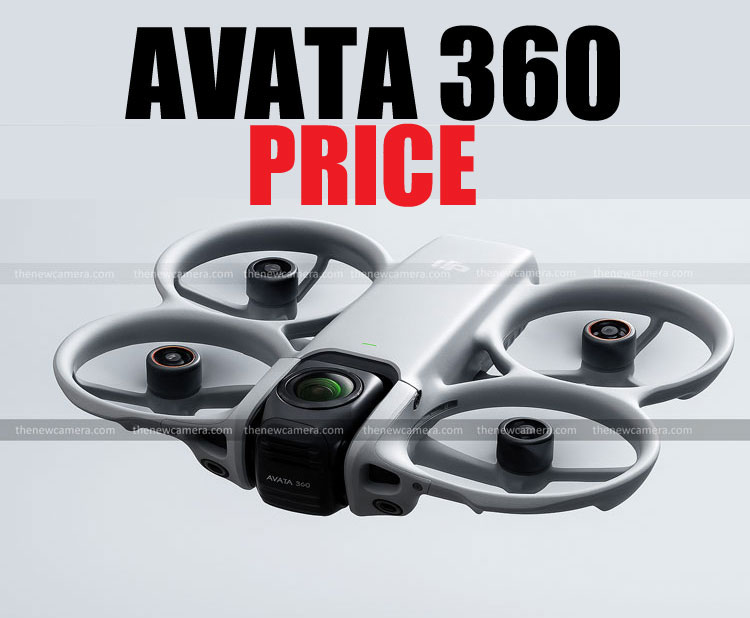
Finally, we now have the exact pricing of the DJI Avata 360 drone. Since the pricing table is officially out and was accidentally leaked by DJI China stores, it clearly indicates that the official announcement is very near. In this article, we will discuss the pricing of the DJI Avata 360 in China, as well as the estimated pricing in the United States of America.
Please keep in mind that we are trying to keep the United States pricing as realistic as possible, based on the USD to CNY conversion ratio and other important factors such as taxes, duties, and regional pricing differences etc.
The pricing table below includes all bundles, and one of the most important things you need to understand is that the DJI Avata 360 is a green-flag model. This means it has already cleared FCC registration before December 23, 2025, making it fully eligible for sale in the United States of America.
DJI Avata 360 Price Leak: China Bundles Exposed
The Chinese pricing of the DJI 360 does not look very competitive or reasonable when compared to the Insta360 Antigravity A1 drone. However, DJI is a market leader in the drone manufacturing segment, and as we all know, it had already captured more than 70–80% of the United States drone market share before December 23, 2025.
Keeping all these factors in mind, it is clear that DJI is going to keep the pricing very aggressive, and at the same time, the specifications are expected to be slightly better than what we have already seen in the Antigravity A1 drone.
Before we discuss the detailed specifications of the DJI 360, let’s first jump into the pricing of the drone.
Base Drone Only: ¥2,988 CNY (~$426 USD) – Drone + charger. Ideal for tinkerers.
Standard Combo (w/ DJI RC 2 Controller): ¥3,988 CNY (~$569 USD) – Adds FPV remote for solo flights.
Fly More Combo: ¥5,688 CNY (~$811 USD) – Everything above + 2 extra batteries, prop sets, hub, and bag. Best value at 20% savings.
Add-ons? DJI Care Refresh starts at ¥398 (~$57) for one replacement – a must for crash-prone FPV.
These align with Weibo rumors: Base at ¥2,988, combos scaling up. At this pricing, Chinese shoppers score a steal – but U.S. buyers? Read on.
DJI Avata 360 US Price: Estimated Markup and What You’ll Pay
It is quite obvious that the official pricing will become available once the DJI Avata 360 receives an official announcement from DJI. At the very same time, we have tried our best to estimate and suggest the most realistic pricing of the DJI Avata 360 for the U.S. market, based on the currently available information.
No official DJI Avata 360 US price yet on DJI’s store, but history (e.g., Avata 2’s 20-30% global hike) predicts pain. Using today’s 1 CNY = $0.1427 rate, direct conversions are low – but expect 15-40% premiums for tariffs, FCC certs, and retail cuts.
Bundle
China (CNY/USD Converted)
Est. US Price
Premium Over China
Base
¥2,988 / $426
$489
+$63 (15%)
Standard Combo
¥3,988 / $569
$680
+$111 (20%)
Fly More Combo
¥5,688 / $811
$999
+$188 (23%)
What You’ll Pay in the USA: So, the overall Fly More combo is a great option, offering all Fly More benefits. As we have mentioned above, the Budget you pay in getting the combo is $999 – matching Avata 2’s entry point but with 360° magic. Base might hit $489 if DJI keeps it aggressive and in budget to beat the competitors.
Is the DJI Avata 360 Worth the Hype (and Price)?
Absolutely, the DJI Avata 360, first of all, is FCC approved. It will soon become available in the USA if you’re into immersive 360° FPV. This Drone not only Beats Avata 2’s 1/1.3-inch sensor with spherical freedom but also the Antigravity A1 with its larger sensor size, and under 250g means no FAA registration hassle. And as we have already discussed, since it’s the green zone aka already got the FCC certificate, so will soon become available to the USA also.
Subscribe to TheNewCamera for live DJI leaks, drone reviews, and 2026 buyer’s guides. Follow us on X for instant updates.
The article “DJI Avata 360 Price Leaked: China Pricing Starts at $426 US Buyers Brace for $999 Fly More Combo” was written by thenewcamera.com team on 9:59 am, Thursday, 1 January 2026, Greenwich Mean Time (GMT). | You can also follow us on Our Official Social Media HandlesFACEBOOK | TWITTER | INSTAGRAM to get live news — > DJI Rumors
What’s inside the Sony a7 V camera? In a fresh teardown of the Sony a7 V, a camera expert reveals the real story. By keeping the budget factor in mind, Sony has introduced numerous innovations. Specifically, the overheating system and internal panels have been improved, addressing a major pain point that was a serious issue with its predecessor.
Why the Sony A7 V Teardown Matters: From Plastic to Pro-Grade Build
The teardown done by carefully peeling out layer by layer of the Sony a7 V camera, and extensive engineering done by Sony engineers was clearly visible, which is really amazing to see how well they have added each layer of circuitry one after another.
Teardown specialist verdict: “Solid.”
Let’s break down the top five highlights, complete with direct quotes from the teardown.
1. Full Magnesium Alloy Body: Turning the Chassis into a Heat-Dissipating Beast
Sony has ditched the older model design previously used in the Sony A7 series. Earlier, the Sony A7-series cameras featured a mix of plastic and metal construction across most models. However, while unlocking the body, it has been found that the camera now uses a full magnesium alloy chassis, built to deliver uninterrupted performance without the fear of overheating..
Quote: “The back cover material is different—previous M-series used mostly plastic, but now it’s magnesium alloy, finally on par with the S and R series: full magnesium alloy body! The back shell has thermal conductive silicone pads attached, positioned right over the processor. This means the entire metal back cover acts as a massive ‘heat sink.'”
The experts’ take: enhancement of the overall heat management unit inside the camera was actually required in the Sony A7 series. As we all know, many Sony A7 IV -camera users are in deep trouble after purchasing the camera, specifically cinematographers who are unable to record 4K videos for more than 20 minutes. This upgrade, paired with thermal pads glued precisely over the CPU, transforms the camera’s back panel into an active, cooling system. No more Sony a7 IV–style thermal throttling after 20 minutes of 4K video
2. BIONZ XR2 Processor: Integrated AI That Rivals Apple’s M1 in a Mid-Range Body
Sony a7 V is the only camera right now that is using the BIONZ XR2 image processor, which has an integrated AI chip, the XR2 processor itself (up to 30% better than the Alpha 7 IV), and is more energy-efficient than the BIONZ XR image processor + AI chip used inside the A7 IV camera.. This results in up to 21% better battery life via EVF (630 shots vs. 520 on the a7 IV) or 29% via LCD (750 vs. 580)
Well, I am not getting into too much technical detail. What the teardown expert has said is that the overall improvement in the new camera looks impressive.
Quote: “The processor and Micron’s LPDDR5 memory are PoP stacked together. The AI processing unit is integrated into the main processor—more advanced than the external AI chip in the A7R5, similar to Apple’s M1: a full-featured SoC… already ahead of their own flagships.”
Why it matters for you: Having a major improvement in the image processor directly results in upscaling in the autofocus algorithms, as well as the overall performance of the camera, which is also greatly improved.
Flagship AI features (think real-time subject tracking for birds in flight or human pose detection), and the best part is that under $2,500 for the body, you are getting a boosted autofocus accuracy by up to 30% over the Sony a7 IV—without jumping to a $6,000 Sony a1.
3. Smartphone-Level Mainboard: AT&S Craftsmanship for Bulletproof Reliability
I’m really glad to know that the Sony a7 Vmotherboard cover is actually manufactured by the same AT&S, which also makes iPhone motherboards. So, when it comes to reliability and build quality, we can obviously trust the Sony a7 V camera, since it’s coming from the world of top-tier PCB manufacturers.
Quote: “The PCB comes from AT&S… a world-top PCB manufacturer that also makes iPhone motherboards… The A7M5 is fully ‘smartphone-ized’ high-performance, representing the highest craftsmanship in the current camera industry.”
It’s densely packed with high-density interconnects, ditching messy traces for iPhone-like efficiency.
4. Partially Stacked CMOS Sensor: Crushing Rolling Shutter with 7.5-Stop IBIS
Yes, that’s the star upgrade we have inside the camera. A partially stacked 33MP full-frame sensor, which was exclusive to Nikon and Panasonic till now, has been further improved by Sony. Since it is a partially stacked sensor, it also preserves dynamic range just like a normal BSI CMOS sensor.
As a result, neither are you going to face the infamous “jello” distortion effect, nor are you going to lose essential shadow and highlight details while capturing images from your camera.
Quote: “This is the legendary ‘partially stacked CMOS’ with 7.5-stop stabilization… double-speed partially stacked CMOS… genuinely fix the previous gen’s… obvious rolling shutter.”
Why it matters for you: Sony a7 IV owners know the frustration: electronic shutter shots of sports or drones turning into wavy messes. Having a sensor readout speed slower than 25 ms really disturbs the frame captured at higher frame rates, so it was really very much essential for Sony to introduce a faster readout–based sensor in the Sony a7 V camera, and they have clearly done that in a very beautiful manner, even while preserving the dynamic range of the sensor at the very same time.
The continuous shooting speed of the camera has also been pushed to 40 frames per second, plus 10 FPS of mechanical burst, so overall it’s an excellent upgrade that we have seen inside the Sony a7 V.
Additionally, with 7.5 stops of IBIS, handheld gimbal-free footage rivals dedicated rigs. It’s the fix that makes the Sony a7 V a versatile full-frame camera for wildlife or event coverage, with no pricier body required.
5. Flagship Tech Trickle-Down: Wireless, Stabilization, and More in One Package
Tying it all together, the A7 V borrows elite features like 2×2 MIMO Wi-Fi (for A1-speed transfers) and refined IBIS, all on that premium AT&S board.
Quote: “Full magnesium alloy body for heat sharing, trickle-down flagship wireless transfer and stabilization, and speed flip-doubled partially stacked CMOS, AT&S top-tier mainboard with BIONZ XR2 fully integrated SoC… These internal pile-ups of materials genuinely solved the previous generation’s pain points of poor heat dissipation, slow image transfer, and obvious rolling shutter effect.”
It’s a value bomb: internals that outpace some Sony flagships in efficiency.
Final Verdict: The Sony A7 V Is the Smart, “Solid” Choice for 2025 Creators
That was really kind of an eye-opener teardown, where we can very clearly see the parts and improvements that have been rightly done inside the Sony A7 series camera. This set of improvements not only brings us more reliability and peace of mind when buying this camera, but also lets us purchase it without a second thought.
Obviously no .” No revolutionary redesign, but fixes to overheating, lag, and distortion make it soar. If you’re eyeing the top mirrorless camera under $3,000, this is it—especially with firmware updates promising even more AI magic.
Score by teardown expert: 9.2/10 for internals alone. Grab one before stock dips, and pair it with our recommended Sony A7 V lenses for peak performance.
What’s your biggest A7 V question—heat, AF, or video? Drop it in the comments! Subscribe to TheNewCamera.com for weekly updates
According to the latest set of rumours, Chinese lensmaker Viltrox is finally preparing to announce Canon RF-S Mount lenses in 2026, They are going to start announcing lenses for Canon APS-C cameras like the Canon R50, Canon EOS R10, R50, and R7. Viltrox will bring down loads of affordable, high-performance primes to the RF ecosystem. And then Fullframes.
Update: December 21, 2025
So it’s not a rumour anymore; we have now received confirmation just after the post we published that Viltrox RF lenses are coming for Canon in 2026. Our source was 100% correct, and just after this, we received another confirmation that they will be delivering the EPIC series 1.33x anamorphic cine lenses for Canon’s full-frame RF mount. These include the compact 35mm T2.0, 50mm T2.0, and 75mm T2.0 models, designed for widescreen storytelling with a 2x squeeze factor, high resolution, and color matching to legacy Kowa glass. Crucially, all these lenses are coming with full authorization from Canon, which clearly proves that Viltrox has now become an official partner of Canon, and very soon they will be adding RF / RF-S lenses to the system, starting with anamorphic full-frame lenses. The information was confirmed by the Vertran Rumour website Photorumors.com
One of the best parts of Viltrox is that most of their lenses are under $300. So once they start the production of Canon RF-S Mount lenses, the users will get a lot of options to choose from. But again, the Canon licensing practice is very tricky; most of the time, they try to avoid the focal length approval they already made or have in the market. So, most probably, we do have high hopes for the APS-C RF-S Mount; in that space, Canon has the least amount of RF-S lenses. Other than that, in the full-frame zone, it would be interesting to see what Viltrox will have to offer us.
Image of Viltrox 85mm F1.8 II Lens: The Lens 85mm series lenses were announced alongside with Canon R series back in 2018, but later on the 2nd gen of 85mm F1.8 II was banned by Canon. Since Viltrox was creating lenses for Canon via reverse engineering, not by taking proper licenses,- Canon asked Viltrox to STOP selling RF lenses (August 29th, 2022)
Why Viltrox RF-S Lenses Matter for Canon Users
Yeah, I know that Canon does have very tight control over the RF mount, specifically the full-frame lenses, but the APS-C segment (RF-S) has seen some expansion, and lensmakers like Sigma and Tamron are adding lens options for APS-C users starting from 2024. Like Sigma and Tamron are adding lens options for APS-C users starting from 2024. And we do hope and expect that in 2026, Viltrox will join the List of third-party lens manufacturers of the RF-S Mount.
Now, Viltrox already has a very good track record for making excellent optical-quality lenses with very good autofocus performance. A lot of users have been using the Viltrox lenses in Sony E mount as well as Nikon Z mount for more than 7 years without any issues.
Potential Viltrox RF-S Lens Lineup: What Could Be Coming Soon
We have a list of ultra-popular lenses available for multiple brands. These prime lenses start from $200, specifically, we are talking about the Air Series lenses, a total of 12 APS-C lenses are about to arrive, starting from ultra-wide to short telephoto
Viltrox AF 9mm f/2.8 Air: Compact ultra-wide for landscapes and vlogging.
Viltrox AF 13mm f/1.4: Expansive view with creamy bokeh—perfect for astrophotography.
Viltrox AF 15mm f/1.7 Air: Lightweight wide-angle for travel shooters.
Viltrox AF 23mm f/1.4: Street photography staple (EOS M favorite, RF-S inbound?).
Viltrox AF 25mm f/1.7 Air: Everyday normal lens with pancake vibes.
Viltrox AF 27mm f/1.2 Pro: Pro-grade brightness for portraits and events.
Viltrox AF 33mm f/1.4: Versatile normal prime (another EOS M hit).
Viltrox AF 35mm f/1.7 Air: Budget-friendly all-rounder.
Viltrox AF 56mm f/1.4: Portrait perfection with subject isolation.
Viltrox AF 56mm f/1.7 Air: Affordable telephoto alternative.
Viltrox AF 56mm f/1.2 Pro: Bokeh beast for pros on a budget.
Viltrox AF 75mm f/1.2 Pro: Short tele for flattering headshots.
This lineup would really fill some significant gaps in Canon’s RF-S offerings, particularly in the sub-$400 prime category. While Viltrox’s lenses might not take the crown from Sigma or Canon’s L-series glass, their “Pro” models have received a lot of love for their solid build quality and dependable autofocus—think sturdy metal barrels, USB firmware updates, and weather-sealed options in the high
BTW, which one of the Primes do you want to see soon for RF-S Mount Mirrorless cameras?
When Viltrox Lenses Come for Canon RF Mount
If Viltrox really pulls this off, we can look forward to a bunch of affordable RF-S prime lenses that will make pro-level low-light shooting accessible to everyone. Recent Set of Rumours Suggests Viltrox will officially announce New Lenses for Canon RF-S Mount, starting from the First Half of 2026.
The Insta360 is not only working on 1 or 2 drones; they are working on multiple drones and flight machines with 360 capturing capability, and in this article, we are going to discuss some of them that we have sorted out.
The Antigravity A1 drone was successfully announced on December 4, 2025, and it has created a lot of buzz in the media. Specifically, this beast of an under-250-g drone has officially become the world’s first drone to capture 360 videos in 8K. The AI-powered drone is just not a drone. It’s a panoramic powerhouse, specifically designed for content creators, filmmakers, and those who love to capture everything in the greatest detail possible.
If you’re googling Insta360 drones 2026 or best upcoming 360° drones, you’ve landed in the right spot.
Antigravity A1 Announcement Breakdown: DJI Neo Compatitor in the announcement pipeline
In the announcement pipeline, we have a DJI Neo series competitor, which is already being tested, and the prototype has been spotted multiple times
compact black drone with Insta360 branding on top, as well as foldable arms and ringed propeller guards, which were spotted while testing in the wild. As usual, drone makers like DJI or Insta360 do a lot of wild testing before announcing their final product. The drone design suggests a very lightweight build, looking very similar to the DJI Neo. It is very much obvious that it will be a lightweight drone, which falls somewhere in the ultra-lightweight category, similar to DJI’s Neo 150-gram drone series. One thing that is really interesting is that, unlike its bigger brother, which is able to capture 8K 360 video, in this leaked image, we are not able to detect the camera position. So the second model’s camera integration remains speculative — it’s very sleek and portable. More about this drone here
But the real magic? Patents that solve drone woes head-on
From the patent, we were able to find that. But the good thing is that Insta360 is right now only focusing on 360 drones, not normal ones, so DJI is quite a bit safe right now in its territory and doesn’t have any direct competition.
Patent Flying Saucer Concept-Based Mini 360 Drone
So we have a completely new design here. It’s not the regular drone you are thinking about; it looks like a flying saucer with a central wing assembly mount that positions the fuselage and props outside the panoramic lens field of view.
So that’s quite a nice idea. If you want to capture a 360 view of your room or indoor space, and you don’t want a hefty setup. – One of the most unique designs I have ever seen for a drone. The patent document claims 30% more flight time than the regular drones with this unique design.
Text from patent – up to 30% more flight time per patent claim. Paired with asymmetric arm groups (Patent CN202510xxx 1a top dome lens, 2a bottom gear, 3a arms), the A1’s first lens clears the upper arms for skyward views, while the second evades lower props for ground-level glory. Result? Reduced occlusion by 40%, minimal protrusion for crash-proofing, and footage that’s ready for Insta360 360° drone editing straight out of the air.
Gesture Magic Coming to Insta360 Drones: Wave, Snap, Fly
The Antigravity A1 drone doesn’t support hand gestures/movements; no hand-free support or the palm launch is available as of now. The Antigravity A1 drone uses a grip controller for its free motion mode, so you can point the controller or change the direction in the flight.
So specifically, the hand gesture support and controls are being developed for the upcoming compact drones, one that we have already discussed. Some new ultra-compact drones are coming; Insta360 is actively working on multiple prototypes of small, handy drones for indoor use.
Hands-free piloting is specifically coming with compact drones just gotten smarter. Drawing from Insta360’s Human-Computer Interaction embodiment (2025 filing), the upcoming compact drones from the Antigravity series will detect and respond to gestures across multiple users in real-time video frames. It scans N detection boxes, cherry-picks M targets for hand Localisation, and cross-references historical frames for rock-solid recognition – slashing compute time by 30% while boosting accuracy.
Patent icons spell it out: OK hand (takeoff), peace sign (record), thumbs up/down (hover/land), pointing fingers (directional pan), fist bump (emergency stop), and four-finger spread (zoom). In group shoots, it filters distractions for seamless HMI, making the A1 ideal for collaborative upcoming Insta360 drone adventures. No remotes needed – just gesture from afar, and watch it obey.
Fold & Fly: Rotatable Arms for Pocket-Sized Portability
Ultralight-weight drones are coming; they’re highly portable, easily fit in your pocket, the ultralight body carries a cylindrical-style design and housing, and a lens mounted over it captures the 360 view. These drones seem to be the most pocketable / ultra-compact 360 drone ever built.
Bulk be gone. The Panorama UAV Utility Model patent showcases the A1’s genius: a rotatable arm assembly (130: boom base, 131/132: folding joints) that pivots from flight-ready horizontal to storage-vertical, snug against the central body (120: cylindrical housing, 111: lens mount). A fixing component (410) locks it tight, with prop guards (310) folding in for a 60% size slash.
Schematics reveal top/bottom cameras (220) nestled safely, protected from travel dings or crushes. This compact design—echoing the bottom-view skid mounts (labels 1/2) for stable landings—means backpack-ready hauls without sacrificing lift. Users rave about the “pro-level UX,” preventing arm snaps and easing transport for on-the-go creators eyeing Insta360 foldable drones 2026.
Deployable Power: Emergency Pro Mapping That Turns Drones into Heroes
When fun meets function, the A1 shines. The Emergency Mapping Equipment Utility Model outfits the underbelly with an installation box, through-hole access, and dual electric telescopic rods for instant payload drops—like rapid-scan sensors for rescue ops or real estate surveys.
Integrated with 8K lenses, it fuses 360° visuals into 3D maps, all while the lightweight frame (100: fuselage outline) keeps things agile. Insta360’s patents position the A1 as a multitool: playful for reels, pro for payloads in the near-future Insta360 drone ecosystem.
So, these are the patents we have from inta360,.Stay tuned for more updates coming
The article “Insta360 Upcoming Drones 2026 – Lightweight 360 Prototype and New Patents” was written on 11:02 am,Monday, 8 December 2025, Greenwich Mean Time (GMT)
Buy Canon Lenses, Buy Music CD or Digital Camera at amazon it helps this site, and you do not pay anything extra, it is just a way to help support this site.
New Camera Website, we list all type of new camera information, price review and all type camera rumors, subscribe us or follow us via twitter or facebook.
Disclaimer: We have attempted to select useful information to include on New Camera, and to ensure that the resources we have included on the site -- as well as the way we have described them -- are accurate, fair, and balanced. However, we make no claims, warranties, or other representations concerning the accuracy, completeness, or utility of the information provided, or concerning the abilities or performance of the organizations, agencies, companies, and other resources presented through New Camera