Join More Than 50,000+ Subscribers and get latest camera news and rumors
NEW CAMERA VIDEOS ON YOUTUBE
|
By admin, on January 3rd, 2026

Now that we are entering 2026, this is a golden era of Drone cameras available for around $700, specifically within the USA. The DJI ban is effective as of December 23, 2025, but just before that, DJI not only updated its entry-level drone, with the Neo 2, but also added the Avata 360 to the FCC registration to make it eligible for future sales within the USA.
If you are considering avoiding DJI drones, keep in mind that, under $700, almost all Drones with Excellent Built-in Cameras, generally seen on Amazon.com and B&H Photo, are not manufactured in the USA. Most of the sub-$1000 brands you see are linked with Chinese boards and circuits. And some of them are completely manufactured in China. As of December 23, many models are not directly affected, but as per the ban, only USA-made drones are allowed for new FCC registrations after December 23
Budget market realities: Most sub-$700 drones on Amazon and B&H (e.g., Potensic Atom 2 at $300, Ruko F11 at $369) utilize Chinese components/assembly, even if rebranded. Non-US options like French Parrot Anafi or Israeli/UK models (e.g., Ryze Tello, but it’s a DJI-partnered) rarely hit under $700 without Chinese ties. Ag-focused non-Chinese (e.g., US-based Anzu Raptor) start at $2k+.
What is actually written in the FCC Covered List?
Uncrewed aircraft systems (UAS) and UAS critical components produced in a foreign country†† and all communications and video surveillance equipment and services listed in Section 1709(a) (1) of the FY25 National Defense Authorization Act (Pub. L. 118-159)
That clearly means any drone, even the assembled ones, produced in a foreign country, the FCC registration is prohibited from Dec 23, but all the drones registered before Dec 23 at FCC are still eligible for sale across the USA.
Made-in-USA drones like Skydio and others—which have eye-opening prices, like we have to at least pay $950 for Skydio 2+ drone – Yes, that’s the entry segment drone, but since it’s manufactured in the USA, it does have a Sky-High Price.
List of Best DJI Camera Drones Under $700
It’s better to buy the best option available in the market right now; you will miss the opportunity once the stock runs out.
| Spot |
Model |
Price |
Specs |
Air Time on Stand. Battery |
Killer Perks |
| 1 |
Mini 4K |
$299 |
1/2.3, 12MP, 4K/30 |
31 |
Best Entry Level for a wedding cinematographer |
| 2 |
Neo 2 |
$259 |
1/2, 12MP, 4K/60 (100 slo) |
19 |
Best for Beginner Content Creators / Gesture Handling |
| 3 |
Mini 4 Pro |
$679 |
1/1.3, 48MP, 4K/60 HDR (100 slo) |
34 |
BestLong Range Coverage – 20km |
| 4 |
Flip |
$439 |
1/1.3, 48MP, 4K/60 HDR, bit-deep |
31 |
a compact, foldable camera drone |
| 5 |
Mini 3 Pro |
$559 |
1/1.3, 48MP, 4K/60 HDR, vert pure |
34 |
Budget pro, tri-directional obstacle sensing, and 4K/60fps video |
Are These Drones Legal to Buy After the December 23, 2025, Ban?
Yes, it is 100% legal to buy DJI drones in the United States of America. Even after the ban became effective from December 23, 2025, and after that DJI is not able to register new products with the FCC, the products that are already registered with the FCC are fully eligible to be sold in the United States of America.
There is no retroactive ban involved. So you can buy them, and you can fly them without any doubt or problem.
And if you have any confusion about this, then we have created a list of DJI-approved drones, and at the end, you will get very clear clarification on why these specific DJI drones are eligible, which is clearly explained in that article.
Final Thoughts: Secure Your Aerial Edge in 2026
So before we finish the article, there is a recommendation line. If you are a beginner content creator and you have to operate your drone solo, then the best drone is the DJI Neo 2. It can be easily controlled using hand gestures, and the Follow Me mode of the Neo 2 will capture each and every moment while you are working in a scenario. So, for a solo content creator, the DJI Neo 2 drone is the best choice.
If you are a beginner cinematographer, then it’s best to get the DJI Mini 4K drone, since you get approximately 31 minutes of flight time on the standard battery. It is highly important to have a drone that can stay in the air for a longer duration.
Apart from these recommendations, there are three other drones that you can buy based on your specific requirements. These include the DJI Mini 4 Pro, which can cover up to 20 km aerial transmission range, making it the best in terms of coverage. In the next position, we have the DJI Flip, an ultra-portable and foldable drone designed for travel content creators. Finally, there is the DJI Mini 3 Pro, which is slightly cheaper than the Mini 4 Pro, offering a professional handling experience within a controlled budget.
Stay tuned with thenewcamera.com. Stay updated.


By admin, on January 1st, 2026
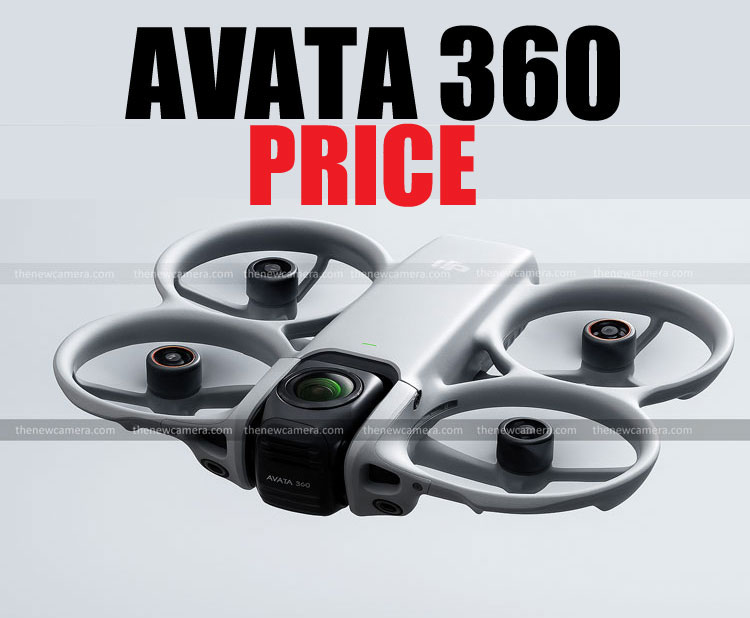
Finally, we now have the exact pricing of the DJI Avata 360 drone. Since the pricing table is officially out and was accidentally leaked by DJI China stores, it clearly indicates that the official announcement is very near. In this article, we will discuss the pricing of the DJI Avata 360 in China, as well as the estimated pricing in the United States of America.
Please keep in mind that we are trying to keep the United States pricing as realistic as possible, based on the USD to CNY conversion ratio and other important factors such as taxes, duties, and regional pricing differences etc.
The pricing table below includes all bundles, and one of the most important things you need to understand is that the DJI Avata 360 is a green-flag model. This means it has already cleared FCC registration before December 23, 2025, making it fully eligible for sale in the United States of America.

DJI Avata 360 Price Leak: China Bundles Exposed
The Chinese pricing of the DJI 360 does not look very competitive or reasonable when compared to the Insta360 Antigravity A1 drone. However, DJI is a market leader in the drone manufacturing segment, and as we all know, it had already captured more than 70–80% of the United States drone market share before December 23, 2025.
Keeping all these factors in mind, it is clear that DJI is going to keep the pricing very aggressive, and at the same time, the specifications are expected to be slightly better than what we have already seen in the Antigravity A1 drone.
Before we discuss the detailed specifications of the DJI 360, let’s first jump into the pricing of the drone.
- Base Drone Only: ¥2,988 CNY (~$426 USD) – Drone + charger. Ideal for tinkerers.
- Standard Combo (w/ DJI RC 2 Controller): ¥3,988 CNY (~$569 USD) – Adds FPV remote for solo flights.
- Fly More Combo: ¥5,688 CNY (~$811 USD) – Everything above + 2 extra batteries, prop sets, hub, and bag. Best value at 20% savings.
Add-ons? DJI Care Refresh starts at ¥398 (~$57) for one replacement – a must for crash-prone FPV.
These align with Weibo rumors: Base at ¥2,988, combos scaling up. At this pricing, Chinese shoppers score a steal – but U.S. buyers? Read on.
DJI Avata 360 US Price: Estimated Markup and What You’ll Pay
It is quite obvious that the official pricing will become available once the DJI Avata 360 receives an official announcement from DJI. At the very same time, we have tried our best to estimate and suggest the most realistic pricing of the DJI Avata 360 for the U.S. market, based on the currently available information.
No official DJI Avata 360 US price yet on DJI’s store, but history (e.g., Avata 2’s 20-30% global hike) predicts pain. Using today’s 1 CNY = $0.1427 rate, direct conversions are low – but expect 15-40% premiums for tariffs, FCC certs, and retail cuts.
| Bundle |
China (CNY/USD Converted) |
Est. US Price |
Premium Over China |
| Base |
¥2,988 / $426 |
$489 |
+$63 (15%) |
| Standard Combo |
¥3,988 / $569 |
$680 |
+$111 (20%) |
| Fly More Combo |
¥5,688 / $811 |
$999 |
+$188 (23%) |
What You’ll Pay in the USA: So, the overall Fly More combo is a great option, offering all Fly More benefits. As we have mentioned above, the Budget you pay in getting the combo is $999 – matching Avata 2’s entry point but with 360° magic. Base might hit $489 if DJI keeps it aggressive and in budget to beat the competitors.
Is the DJI Avata 360 Worth the Hype (and Price)?
Absolutely, the DJI Avata 360, first of all, is FCC approved. It will soon become available in the USA if you’re into immersive 360° FPV. This Drone not only Beats Avata 2’s 1/1.3-inch sensor with spherical freedom but also the Antigravity A1 with its larger sensor size, and under 250g means no FAA registration hassle. And as we have already discussed, since it’s the green zone aka already got the FCC certificate, so will soon become available to the USA also.
Subscribe to TheNewCamera for live DJI leaks, drone reviews, and 2026 buyer’s guides. Follow us on X for instant updates.
Sources: Igor Bogdanov @Quadro_News
The article “DJI Avata 360 Price Leaked: China Pricing Starts at $426 US Buyers Brace for $999 Fly More Combo” was written by thenewcamera.com team on 9:59 am, Thursday, 1 January 2026, Greenwich Mean Time (GMT). | You can also follow us on Our Official Social Media Handles FACEBOOK | TWITTER | INSTAGRAM to get live news — > DJI Rumors

By admin, on December 31st, 2025

In this article, we’re diving into the exact DJI drones, Pocket cameras, action cameras, and gimbals still green-lit for US sales—100% legal to buy and own. List of drones Update on 2:37 pm, Monday, 26 January 2026, Greenwich Mean Time (GMT). Additionally, we’ll highlight upcoming 2026 releases with pre-ban FCC approvals, allowing you to future-proof your kit with confidence.
DJI has covered more than 70%-80% of the US drone market, and this brand is likely to be significantly impacted, not only itself but also its user drone consumer base. DJI was known for bringing democracy to aerial videography and photography. After the entrance of high-quality DJI drones, aerial photography and videography became common, specifically in the United States of America. Previously, it was largely exclusive to a specific segment of cinematographers.
In this ultimate DJI ban 2026 guide, we’re unpacking approved models for US sales, eligible Pocket series, and cleared action cams. Sourced from FCC grant records, official approvals, and vetted rumors, this intel is crafted for The New Camera’s community of visual storytellers—helping you snag deals before they’re gone.
Quick Ban Recap: The FCC Covered List blocks new approvals for DJI products with Wi-Fi, Bluetooth, or radio technology after December 23, 2025, citing national security. It’s non-retroactive—your current gear is FAA-legal forever. But new imports? Paused until stock depletes (expect a 1–2 year buffer). Prices are already climbing 20–50% on resale sites like eBay. Pro tip: Act fast on Amazon clearances before they’re gone.
On January 7, 2026, the FCC has revised and made some amendments to the Covered List, and this is really very important to know. Before that, almost all foreign-produced drones were banned, but after the amendments they have made, they have actually loosened the tight grip to some extent. Foreign-produced drones are generally not acceptable, since we do know that creating drones under $500 is literally impossible for U.S. drone makers, as the manufacturing cost inside the USA is high.
So the FCC has done something, and according to them, specifically models like Parrot, or any brand that has 65% U.S.-manufactured content by cost, can qualify.
This means that at least 65% of the total manufacturing cost of the drone (or its components) must come from parts, labor, and materials produced or performed within the United States.
So anything that qualifies under this category is approved inside the United States of America, but yes, DJI is still banned. However, their previously approved models are still eligible to be sold or purchased inside the United States of America.
And specifically, this new rule, which has been implemented on January 7, 2026, is active until January 1, 2027.
On January 9, 2026, the U.S. Commerce Department withdrew a proposed rule from September 2025 that would have imposed additional restrictions on Chinese-made drones, citing potential harm to U.S. stakeholders and ongoing diplomatic efforts. This withdrawal avoids extra hurdles for DJI, but does not alter the existing FCC limitations.
Current Approved DJI Drones Eligible for Sale in USA 2026
We have the list, and all these products are FCC-approved and eligible for use inside the USA. No ban or any restriction has been implemented on them. So technically, whatever rules and regulations are being applied to a USA drone are almost the same for FCC-approved DJI drones that have been listed below. This makes it a completely green-flag scenario and 200% eligible/legal to buy in the USA. These products are available at all major retail outlets, including Amazon.com, while stock lasts.
Good news for drone pilots: All DJI models with FCC grants before the cutoff are greenlit for import and sale. This covers the bulk of the current lineup, from entry-level Mini drones for hobbyist aerial photography to enterprise-grade Matrice drones for professional surveying. No flying bans here—only potential stock shortages as 2026 unfolds.
| Model |
FCC Grant Date |
Key insights about the DJI line-up |
| DJI Mini 4 Pro |
Sep 2023 |
All Models Up to Air 3S are Eligible |
| DJI Air 3S |
Oct 2024 |
All Models Up to Air 3S are Eligible |
| DJI Mavic 3 Pro |
Apr 2023 |
All Models Up to the Mavic 3 Pro are Eligible |
| DJI Avata 2 |
Apr 2024 |
All Models Up to Avata 2 & Avata 360 are Eligible |
| DJI Neo 2 |
Nov 2025 |
All Models Up to Neo 2 are Eligible |
| DJI Matrice 350 RTK |
Pre-2025 |
All Models Up to Matrice 350 RTK are Eligible |
| DJI Inspire 3 |
Pre-2025 |
All Models Up to Inspire 3 are Eligible |
These DJI drones approved in the USA in 2026 represent ~70% of the market—grab them while supplies last.
DJI Pocket Series Models: Eligible for Vlogging in 2026
The good news is that the all-time favourite Pocket 3 (grant date: October 2023) is approved and available for sale. Other than that, there is even better news. We had already cleared the FCC listing a while ago. We have reported that a lot of leaked images, prototypes, and NDA letters have been published on our website, TheNewCamera.com. Apart from all this, what we are trying to say here is that not only is Pocket 3 eligible to be sold in the USA, but even the Pocket 4 camera is also eligible, since it has already received FCC certification.
|
Approved Model |
Approved FCC Grant Date |
| Pocket Gimbal Camera |
DJI Osmo Pocket 4 |
Nov 2025 |
| Pocket Gimbal Camera |
DJI Osmo Pocket 3 |
Oct 2023 |
| Action Camera |
DJI Osmo Action 6 |
Nov 2025 |
| Action Camera |
DJI Osmo Action 5 Pro |
Sep 2024 |
| Action Camera |
DJI Osmo Action 4 |
Aug 2023 |
| 360 Camera |
DJI Osmo 360 |
Jul 2025 |
| Mini Action Camera |
DJI Osmo Nano |
Aug 2025 |
The Pocket 4 has secured FCC approval (ID: 2ANDR-OP04, granted November 2025), making it eligible for US market entry without violating the December 23 cutoff for new certifications—positioning it squarely in the “greenlit” category alongside legacy models.
So the good thing is that if you have a habit of using the Pocket series camera for content creation purposes, then you don’t have to worry. Not only Pocket 3, but Pocket 4 is also approved by the FCC and will soon become available once it gets officially announced.
- DJI Osmo Pocket 3 (Approved, Released Oct 2023): 1-inch CMOS, 4K/120fps, 166-minute battery (with grip), ActiveTrack 6.0—your pocket studio for run-and-gun vlogs. Still ~$519; stock flying off shelves.
- DJI Osmo Pocket 4 (FCC Cleared Nov 26, 2025): Standard variant confirmed eligible—slimmer design, 1-inch 50MP sensor, 6K video, 4K/120fps slow-mo, Wi-Fi 6. Launching January 2026 (~$599 estimated). Pro dual-lens version? Blocked for now—wide + tele for seamless zooms.
For The New Camera audience, the Pocket series shines in low-light storytelling. Pair the Pocket 3 with a wireless mic for untethered narratives—timeless gear amid the chaos.
DJI Action Cameras Approved for USA Adventures in 2026
The DJI Action 6 camera, which has recently been announced, is fully available for sale in the United States of America, and the best part is the recent update. DJI has enabled 8K video recording capability inside the new Action 6 camera, making it more advanced compared to its competitors, especially at its price point.
- DJI Osmo Action 6 was officially announced on November 18, 2025, with FCC certification (ID: 2ANDR-AC00624) granted well before the December 23 Covered List
- The firmware update (V01.02.05.21, released December 25) indeed unlocks native 8K video at 24/25/30fps on its 1/1.1-inch square sensor with variable f/2.0-f/4.0 aperture, outpacing rivals like the GoPro Hero 13 Black (max 5.3K) in resolution at a competitive $379 price point.
Have a look at the list of eligible DJI action cameras that can be sold in the USA even after December 23, 2025.
- DJI Osmo Action 6 (FCC Cleared Nov 2025): 4K/120fps, 12MP sensor, 160-min battery, RockSteady 3.0+ EIS, 10-bit color—rivaling GoPro for underwater or MTB edits. Released late 2025; ~$349. Depleting fast—prices up 25% already.
- DJI Osmo Action 5 Pro (Approved, Released Sep 2024): Dual OLED screens, 4K/120fps HDR, 47GB built-in storage—supercharged for horizon-level action vids. Still ~$449; a safe bet for 2026 kits.
These approved DJI action cameras USA 2026 are ecosystem-friendly with Pocket gimbals.
The best part is that the DJI action cameras, as well as the Pocket cameras, are all part of the DJI ecosystem. So even if you buy the Action 6 camera or the Action 5 Pro camera, or if you already have or are planning to buy a Pocket 3, or are waiting for the upcoming Pocket 4 camera, all of these are fully compatible with the DJI wireless microphone, which has been recently updated and is available at a very affordable price.
So you only have to buy the DJI mini transmitter, which is available at a very reasonable price.
Upcoming DJI Models Already Cleared FCC: What’s Dropping in 2026
DJI hustled to beat the buzzer—several future releases have FCC stamps, ensuring USA availability. Here’s the upcoming DJI models’ approved 2026 lineup:
| Model |
Category |
FCC Clearance Date |
| DJI Avata 360 |
Drone (FPV) |
Nov 19, 2025 |
| DJI Mavic 5 |
Drone (Prosumer) |
Pre-Dec 23, 2025 |
| DJI Lito X1 |
Gimbal Accessory |
Nov 29, 2025 |
| DJI RS 5 Pro |
Gimbal |
Nov 2025 |
| DJI Osmo FrameTap |
Remote Control |
Dec 17, 2025 |
| DJI Osmo Mobile 8P |
Smartphone Gimbal |
Dec 16, 2025 |
| DJI Mic Mini 2 |
Audio |
Dec 3, 2025 |
| DJI Power 1000 Mini |
Power Station |
Nov 2025 |
These clearances are a win for innovators—DJI Pocket 4 and Avata 360 top our watchlist for visual effects pros. No word on Pocket 5 or Action 7 yet; they’re post-ban casualties.
What the DJI USA Ban 2026 Means for The New Camera Creators
The ban on DJI was implemented on December 23, 2025, but it is not retroactive. Retroactive means that even the earlier or previous-generation FCC-approved products would be affected, but that did not happen. The ban, in its best-case scenario, applies only to new approvals, and already cleared FCC products will remain available for sale in the United States of America.
As a creator, switching from DJI to another brand isn’t urgent for now. But in the near future, in the coming one or two years, if you find any other brand more comfortable, you can surely switch if DJI is not able to find another way to break through or overcome this ban.
Final Thoughts: Secure Your DJI Kit Before 2026 Stock Vanishes
Yes, it is really important to restock DJI drones and their components since the ban has been implemented, and specifically, customs are proactive in scanning drones and their spare parts coming from other countries. Yes, most of these products are eligible to be sold in the United States of America, but customs may create delays in the supply chain of drones, even those that are green-flagged inside the USA.
So, these are my personal thoughts and suggestions: if you are into a drone-based workflow, and your work requires a drone, specifically if you are a cinematographer, such as working in weddings, events, sports, or similar fields that require drone usage, then you must stock up as soon as possible.
Stay visual, stay inspired. – The New Camera
GET LIVE NOTIFICATION, Select Your Trusted Source GET LIVE NOTIFICATION Click ON Check  BOX for Latest NEWS and Rumors BOX for Latest NEWS and Rumors
The article “List of Approved DJI Drones, Pocket Series Models and Action Cameras: DJI USA Ban Update 2026” was updated by thenewcamera.com team on 2:37 pm, Monday, 26 January 2026, Greenwich Mean Time (GMT) | You can also follow us on Our Official Social Media Handles FACEBOOK | TWITTER | INSTAGRAM to get live news — > DJI Rumors
Cross-Verification Note: This guide draws from official FCC database grants (e.g., via fccid.io), DJI’s November/December 2025 announcements, and real-time updates from trusted outlets like DroneDJ, UAV Coach, and DroneXL as of December 31, 2025. All listed models hold pre-December 23 FCC approvals, ensuring legal U.S. eligibility— we’ve double-checked each ID for accuracy. For the latest stock alerts, visit Amazon or DJI’s site; regulations can evolve, so consult fcc.gov for filings.
By admin, on December 27th, 2025

Here in this article, we are coming up with all the latest and upcoming cameras, specifically the top 10 cameras of the year 2026. All major camera makers, starting from Canon, Nikon, Sony, and Panasonic, are gearing up for new camera announcements. In the previous year, we already saw the introduction of a partially stacked CMOS sensor inside the iconic Nikon Z6 Mark III camera body. It’s not only Nikon—almost all brands are in the race to introduce partially stacked or stacked sensors in their upcoming camera bodies, specifically to boost performance and speed.
Now, if you’re looking forward to 2026 announcements, whether you are waiting for cinema and mirrorless cameras with newly advanced stacked sensors or high-resolution cameras for landscape photography, this guide covers it all.
At TheNewCamera.com, we have compiled the most credible camera rumours of 2026, specifically from highly trusted insiders like Canon Rumours, Nikon Rumours, Sony Alpha Rumours, and Fuji Rumours, along with reputed platforms such as PetaPixel and Digital Photography Review. All this information is cross-verified against real-time X discussions, patent filings, and the expected specifications, merged with timelines, pricing, and estimated arrival dates of the cameras. This provides updated guidance on the top 10 upcoming cameras of 2026.
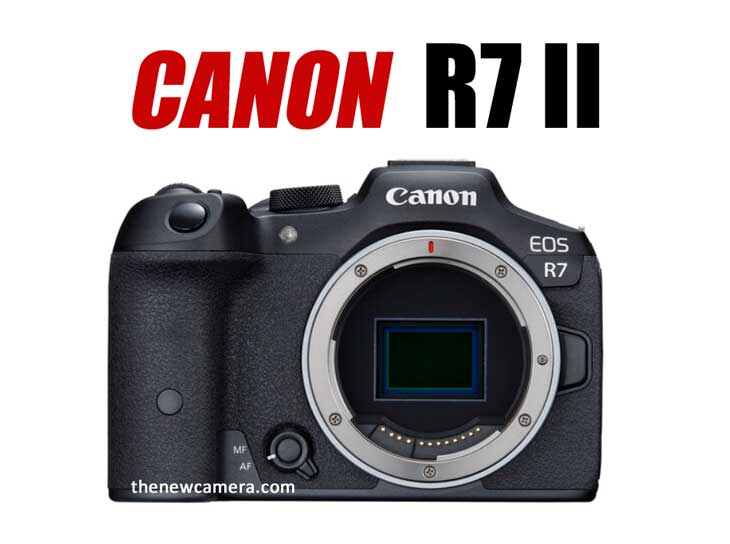
1. Canon R7 Mark II: 40MP Stacked APS-C Beast for Hybrid Speed Demons
The long-awaited Canon flagship APS-C camera, the Canon EOS R7 Mark II, is expected to arrive in the first half of 2026. Earlier, the camera was expected to arrive in late 2025, but it was delayed due to undisclosed reasons. However, now we are very confident based on multiple rumours that the Canon R7 Mark II is indeed coming.
The Canon R7 Mark II camera is expected to feature a brand-new 40-megapixel stacked CMOS sensor, specifically aimed at landscape shooters, sports shooters, photojournalists, wedding and event photographers, wildlife photographers, commercial photographers, and bloggers who love to create content and shoot casual shorts using a professional camera.
Expected Key Specs for Canon EOS R7 Mark II
- Sensor: 40MP stacked BSI APS-C CMOS (15% resolution uplift; 80% rolling shutter reduction for fluid panning).
- Processor: Enhanced DIGIC X (AI for subject prioritisation and upscaling).
- Autofocus: Dual Pixel CMOS AF II (6,400 points; deep-learning for humans/animals/vehicles/aircraft; 100% coverage).
- Burst Shooting: 40 fps electronic (blackout-free 14-bit RAW); 15 fps mechanical.
- Video: 8K/60p RAW internal (oversampled sharpness); 4K/120p 10-bit Log/HDR; 6K ProRes external.
- Stabilisation: 5-axis IBIS up to 8 stops (lens-sync for tele stability).
- Viewfinder & Display: 3.69m-dot OLED EVF (120 fps); 3-inch 1.62m-dot vari-angle touchscreen.
- Build & Connectivity: Weather-sealed magnesium; dual UHS-II SD; Wi-Fi 6E/Bluetooth 5.0; USB-C 3.2.
- Battery & Size: LP-E6NHP (1,000+ shots); ~612g.
Buyer’s Tip: For upcoming cameras 2026 under $2,000, kit it with the RF 100-400mm—perfect R7 upgrade for cropping pros.
Earlier, the camera was rumoured to arrive with a 33-megapixel stacked CMOS sensor, but now we also have some fresh rumours, specifically related to a 40MP sensor being spotted in Canon EOS R7 Mark II prototypes. That’s why trusted sources claim that Canon is actively testing this configuration.
As we always say, camera makers always test multiple prototypes of flagship camera bodies before finalising the production model. Based on current information, we are expecting Canon to choose the 40-megapixel sensor for the Canon R7 Mark II camera body.
If any new updates arrive related to the Canon EOS R7 Mark II or any other upcoming cameras, we will be posting them here on TheNewCamera.com.
Now, let’s move on to our second most expected camera of 2026.

2. Nikon Z9 II: Coming After March 2026
The iconic Nikon Z9 Mark II camera is coming in 2026. The Nikon Z9 camera was announced back in October 2021, just before the Beijing Winter Olympics in February 2022. As we all know, Nikon strategically timed the Z9 announcement ahead of the Olympics, and in a similar manner, there were strong rumours that the Nikon Z9 Mark II would arrive before the Milan–Cortina Winter Olympics 2026, which are set to begin in early 2026.
It is well known that after the announcement of the Nikon Z8 (May 2023), which carries approximately 95% of the same core specifications as the Nikon Z9, the sales of the Z9 have been significantly cannibalised after its announcement. As a result, the Z9 flagship is no longer generating the same level of sales momentum as before.
To create a clear and strong difference between the Nikon Z8 and Nikon’s true flagship model, Nikon is expected to release the Nikon Z9 Mark II with extensive upgrades and updates.
Nikon Z9 II Specification [Updated]
- 45 MP Global Shutter Sensor [nEXT GEN Stacked CMOS Sensor]
- Pre-Capture RAW mode support [Confirmed]
- New EXPEED 8 image processor [Confirmed]
- 40 FPS RAW burst shooting (rumoured)
- 240 FPS full resolution JPEG
- Faster image sensor (rumored)
- Possible hybrid global shutter (rumored)
- N-Log2 support [Confirmed]
- Launch expected late 2025 (Development announcement)
- Will launch alongside Canon R1
- Aimed at wildlife and sports professionals
Although we are also getting some hazy reports and unverified rumours related to a higher-resolution sensor–based Nikon Z9 Mark II camera, we are waiting for further updates before publishing a new set of detailed specifications related to the Nikon Z9 Mark II. For now, we will be publishing the same information that we received back in 2025.
Nikon Z9 II Arrival Date
However, for some reason, the launch of Z9 II has been delayed until March 2026, which was expected to arrive in late 2025. The Announcement timeline is now shifted sometime in between Q2 and Q4 of 2026. (Better to say you can expect the Z9 II official announcement in the 2026 financial year)

3. Sony A7R VI: 80-100MP AI Resolution Titan for Pixel Perfectionists
The Sony A7R series is a megapixel monster lineup, and technically, it has always proven to be among the best and highest-resolution full-frame cameras in the market. However, the Sony A7R V now desperately needs an update, as it was originally announced back in October 2022. But that’s not the main issue.
The real concern is that it is still using a sensor architecture similar to the Sony A7R IV, which was announced on July 16, 2019. Technically, this makes the sensor more than 6–7 years old, which is quite dated by today’s standards.
According to the latest rumours coming from trusted sources like Sony Alpha Rumours, the Sony A7R VI camera may hit a new resolution benchmark with a full-frame sensor somewhere around 80 megapixels to 100 megapixels. The announcement is expected sometime in mid-2026, and if delayed, it may arrive in Q4 2026.
Now, it’s time to take a look at the expected set of specifications that are rumoured to arrive with the Sony A7R VI camera.
Expected Key Specs for Sony A7R VI
- Sensor: 80MP (100MP rumoured) Exmor R BSI full-frame (back-illuminated; 15+ stop DR).
- Processor: BIONZ XR II
- Autofocus: Real-time Eye AF (759 points; 30+ subjects at 10 fps).
- Burst Shooting: 12 fps mechanical/electronic (0.5-sec precapture).
- Video: 8K/60p 10-bit oversampled; 4K/120p S-Log3; AI stabilization.
- Stabilization: 5-axis IBIS up to 8.5 stops (breathing compensation).
- Viewfinder & Display: 9.44m-dot OLED EVF (120 fps); 3-inch 2.36m-dot articulating.
- Build & Connectivity: Sealed; dual CFexpress A/SD; USB 3.2/Wi-Fi 6.
- Battery & Size: NP-FZ100 (530 shots); ~723g.
It’s really exciting to see the core specifications of the Sony A7R VI camera. If these rumors turn out to be true, then for sure, the Sony A7R VI is going to break all existing records of high-resolution full-frame cameras with its massive megapixel count.
We will update you as soon as we receive any latest information or confirmed updates related to the upcoming Sony A7R VI camera.

4. Fujifilm X-Pro 4: 40MP Stacked Rangefinder Renaissance for Street Poets
Okay, we are not completely sure about the final name yet. However, we do have confirmation that the X-Pro3 successor is coming in 2026, and this is not the first time we have reported on this particular rumour. This rumour was initially reported back in March 2025, when a Fujifilm representative officially confirmed that they are working on a successor to the Fujifilm X-Pro series camera.
“He noted that a simple upgrade with the latest processor or just a 40-megapixel sensor would be boring, indicating a major shift or upgrade in the upcoming X-Pro series camera.”
The most important part is that during the interview, the General Manager of Fujifilm Professional Imaging Group clearly mentioned this development. Even in the post we published back on March 24, 2025, once again, we should clarify that the camera may not be named X-Pro4 or X-Pro5. Instead, it could be named X-Pro6, since it is arriving after a very long gap. However, the final naming depends on Fujifilm’s marketing team and will be confirmed later. The good thing is that even at that time, we clearly mentioned that the camera is coming in 2026.
It has already been six years, and people are waiting for an update after the Fujifilm X-Pro3.
What specifications are we expecting? 40MP 6th generation Redefined Stacked CMOS sensor for speed, that’s we are expecting from the next X-Pro camera.
Fuji X-Trans CMOS 6 HR Sensor and X-Processor 6 Image Processor
We would love to see a major upgrade in sensor resolution introduced inside the X-Pro series. However, as the General Manager of Fujifilm stated, a simple 40MP sensor upgrade or just a new image processor would feel like a boring update. This clearly indicates that the next-generation X-Pro camera is expected to arrive with a brand-new sensor and processor. For now, speculating on the exact sensor type or image processor would not be accurate.
He also noted that a simple upgrade with the latest processor or just a 40-megapixel sensor would be boring, indicating a major shift or significant upgrade in the upcoming X-Pro series camera.
Yes, we are closely monitoring Fuji Rumours and other reliable sources that regularly publish updates on their websites. Apart from that, such interviews provide valuable insight into the upcoming Fujifilm models. Specifically, we are waiting for the next X-Pro series camera, and any update that reaches us will be posted on TheNewCamera.com.
The X-Pro3’s bold 2019 design split opinions, but the X-Pro successor is expected to unite users in early 2026 as Fujifilm’s hybrid viewfinder icon. Targeting documentary and street photographers, in the first half of 2026, around $1,799 could introduce 6th-generation stacked sensor technology and IBIS, further refining the “photography-first” experience.

5. Canon Retro Camera 2026: AE-1 Legacy with 32.5MP Modern Heart
We have recently covered in-depth details about the upcoming Canon retro camera in our December 7, 2025 post. The upcoming Canon retro camera is expected to use the same 32.5-megapixel sensor that we have already seen inside the Canon EOS R6 Mark III / Canon EOS R50 camera.
All of these are initial reports, but since they are coming from trusted sources, they are considered highly reliable.
Canon retro camera humour is not New. It is wobbling up from past year and as per the initial report, the camera is expected to arrive on AE-1’s 50th anniversary, Canon executives At CP+ 2025, Manabu Kato, a key Canon figure, shared: “I’m really glad to hear that you’re an AE-1 enthusiast because I also like that camera. … So if we were to do that with the design of the AE-1, would it really achieve the kind of ergonomics and usability that we need in a Canon camera? That’s the big question.” Yes, he clearly hinted at the Canon AE1 retro camera arrival, but will it really happen? At least we are expecting sometime in April 2026
The Canon AE-1 was originally released in April 1976, so its 50th anniversary falls exactly on April 2026.
With high hopes and fingers crossed, and Canon isn’t the first camera maker to try RETRO design for the first time, Nikon has its own retro line of cameras, like the ZF/ZFC and Fuji, already highly popular with their retro style Mirrorless and compact cameras,
Expected Key Specs for Canon Retro Styled Camera
- Sensor: 32.5MP full-frame CMOS (R6 III-based; retro profiles).
- Processor: DIGIC X (stills-tuned).
- Autofocus: Dual Pixel (1,053 points; eye/animal).
- Burst Shooting: 12 fps electronic.
- Video: 4K/30p (minimalist).
- Stabilization: 5-axis IBIS up to 8 stops.
- Viewfinder & Display: 2.36m-dot rangefinder OLED; 3-inch vari-angle under leatherette.
- Build & Connectivity: AE-1 ergonomics; single UHS-II SD; Wi-Fi 6/Bluetooth.
- Battery & Size: LP-E17 (~450 shots); ~485g.
Toasting the AE-1’s 50th, Canon’s retro mirrorless revives ’70s aesthetics in April 2026. For film nostalgics, it’s R6 III guts in vintage shell at ~$1,999—photo-focused, outselling Nikon’s Zf via RF lenses.

6. Nikon Z7 III: 61-80MP High-Res Revival for Landscape & Studio Savants
The Nikon Z7 Mark III camera prototype was spotted on August 27th, 2022, reportedly featuring a 67-megapixel sensor. This accidental leak happened just before the announcement of the Nikon Z8 camera, making it very clear that Nikon has been testing multiple high-resolution camera prototypes for a long time.
However, the official announcement has been delayed, and these delays can occur at various levels.
- One of the most prominent reasons (predecessor sales + cannibalisation fears) for such delays often occurs when the marketing team does not approve a camera, typically due to the sales performance of its predecessor / Z8’s announcement overlap in the high-res hybrid space, which makes this a credible hurdle and the fear of internal product cannibalisation.
- The Nikon-RED tie-in as a resource drain- Other contributing factors may include the Nikon and RED Cinema collaboration, which could be another reason why, after the Nikon Z8 announcement, Nikon’s research and development team became heavily involved in the development and announcement of the ZR series cameras. This shift logically diverts R&D from stills-focused bodies like the Z7 III, especially since ZR aims to democratise pro cinema features (e.g., internal RAW recording) as an affordable entry to Nikon’s lineup, potentially supplanting pricier options like the Z9 for video workflows, making cinema-grade features accessible to a wider audience.
Nikon’s Z7 II lags in speed, but the Z7 III is expected to refresh in mid-2026 as a 61-80MP photography-focused model. At ~$3,499 post-CES, it targets DSLR defectors with vari-angle screens and refined colour science.
Expected Key Specs for Nikon Z7 III
- Sensor: 61MP / 80MP options – non-stacked BSI full-frame (15+ stop DR).
- Processor: EXPEED 8
- Burst Shooting: 10 fps Mech shutter at Full Res / RAW HQ.
- Video: 8K/30p (stills priority).
- Stabilisation: 7.5-stop IBIS.
- Build & Connectivity: Sealed; CFexpress B/SD; Wi-Fi 6E.
- Battery & Size: EN-EL15c (~500 shots); ~675 g.
These are the initial set of core expected specifications, which should provide you with a clear idea. This is not a camera made for sports shooters. If you are a nature lover, prefer a maximum dynamic-range–based sensor, and want high-resolution images for commercial shoots, then you may prefer to wait for the Nikon Z7 Mark III.
As soon as we get any updates related to Nikon Z7 III, we will update here

7. Sony A7S IV: 24MP Video Colossus with Global Shutter Tease
According to the source, the Sony FX3 Mark II camera or the Sony A7S IV will feature a 24-megapixel fully stacked sensor, and the sensor will incorporate dual-layer transistors — a step up in the efficiency of light gathering as well as data processing capability.
This sensor is also stated to be used in the upcoming Sony FX6 Mark II camera, creating a cohesive ecosystem for professional videographers starting from the Sony A7S IV.
The triple base ISO, which is said to start from 800, 4000, and 25600, means it can easily be tagged as a low-light king or night specialist camera, promising superior low-light performance and a good update from the existing Sony A7S III’s ultra-low-light-sensitive 12MP sensor. Specification-wise, the sensor is able to record 6K open gate at 120 frames per second without any significant crop. This allows professional videographers to capture highly detailed data without any lag or crop.
If this information is true, the upcoming Sony A7S IV, FX3 Mark II, and FX6 Mark II cameras will revolutionize filmmaking with their ultra-high-speed 24MP sensors and amazing low-light performance. The Sony FX3 series as well as the A7S series have always remained a popular choice among filmmakers, and if the above specs are true, they will continue to dominate.

8. Canon R3 Mark II: Canon Global QShutter Candidate
The Canon EOS R3 Mk II camera is rumoured to arrive in 2026, as both Canon and Nikon traditionally align their flagship announcements with major Olympic events. As we have already discussed above, theNikon Z9 Mark II is also expected to arrive in 2026, and Canon is expected to introduce the Canon EOS R3 Mark II around the same period. Although the announcement of both cameras is expected after March of 2026.
The Mark II version of the Canon R3 is often treated as a technology playground for Canon, where the company tests intensive and next-generation technologies before fully implementing them in the Canon EOS R1.
The Canon R3 was announced back in September 2021, one of the cameras that introduced Eye/Iris Control AF and that has impressed everyone as a flagship camera. The price is way too high, costing around $5999, specifically built for wildlife, sports, events, and photojournalism.
Canon R3 Mark II Rumoured Specification
- Global Shutter Sensor: 24MP
- DIGIC X Mark II: DIGIC X was first announced on January 6, 2020. As of December 11, 2025, it is approximately 5 years and 11 months old (or nearly 6 years). It debuted in the Canon EOS-1D X Mark III, Canon’s flagship professional DSLR at the time.
- Eye-Control AF 2.0: Building on the original’s magic, with deeper AI for subject detection in chaotic scenes—sports, birds-in-flight, you name it.
- EVF Upgrade: A 5.76M-dot OLED like the R1, but tuned for the gripped form factor.
- Video: Leaks are quiet here, but expect 6K/120p raw internals, with pro codecs for filmmakers doubling as stills shoot
As the Canon EOS R3 was the first camera to feature Eye Control Autofocus in a modern mirrorless system, in a very similar fashion, Canon is expected to use the Canon R3 platform to introduce a global shutter sensor inside its flagship camera lineup. Once this technology is successfully tested and adopted by the mass consumer base, the final version of the same sensor may later be used inside the Canon EOS R1 Mark II.
For now, there is a strong set of rumours suggesting that Canon is actively testing a global shutter sensor for its next-generation ultra-fast flagship camera, the Canon EOS R3 Mark II.

9. Nikon ZRC: APS-C Version of Nikon ZR Camera
Nikon Z RC rumours are now heating up, and fresh leaks suggest that the Nikon video powerhouse’s budget entry-level APS-C dedicated expert video camera is set to arrive in 2026. If we discuss the camera ZRC, it carries forward the video-first DNA of the ultra-popular Nikon Z50 II, featuring an ultra-portable body design similar to that of the Nikon Z30. To reduce production costs and simplify the production line, it does not feature any mechanical shutters or electronic viewfinders. The camera is equipped with 4K 60p recording capability, the same as found in the Nikon Z50 II, and supports 10-bit internal recording simultaneously. Red colour profile supports professional recording demands. If the whispers hold, expect a Nikon Z RC release date in Q4 2026, priced at a creator-friendly $649-799 body-only—mirroring the Canon EOS R50V launch tag for maximum market disruption.
Nikon ZRC Key rumoured design perks:
- Front weather-sealing for light-duty adventures.
- ZR-inspired dials and a dedicated video button for intuitive handling.
- Front / Rear Tally lamp to signal recording—bye-bye awkward cuts.
- SD slot and USB-C PD charging for seamless workflows.
- Battery? The same EN-EL25a as the Z50 II, promising ~330 CIPA shots or 75 minutes of 4K video.
Nikon ZRC Key rumoured design perks:
- Front weather-sealing for light-duty adventures.
- ZR-inspired dials and a dedicated video button for intuitive handling.
- Front / Rear Tally lamp to signal recording—bye-bye awkward cuts.
- SD slot and USB-C PD charging for seamless workflows.
- Battery? The same EN-EL25a as the Z50 II, promising ~330 CIPA shots or 75 minutes of 4K video.
The Nikon Z RC price rumour? A body-only $649.99-$799spot-on spot-on with the Canon EOS R50 V’s April 2025 debut. Kit with the 16-50mm VR lens? Around $849. This aggressive pricing slots it below the Z50 II while undercutting Sony and Canon in the APS-C video wars.
As for the Nikon Z RC release date, leaks point to Q3/Q4 of 2026. With bundles including extra batteries.

10. Canon R8V: APS-C Version of Nikon ZR Camera
Canon has announced its own V series of cameras, starting from the Canon V1 compact camera. Recently, Canon announced the R50 V camera on March 26, 2025. So they are slowly expanding their V series to compete against Sony.
Now what’s next? We are expecting the arrival of the Canon R8 V camera as part of their expansion to its V series. The Canon R8 is expected to have the same image sensor and image processor, but it will surpass the video capabilities of the R6 Mark II camera.
So let’s discuss the possible specifications, arrival date, and the price of the upcoming Canon R8 V camera. It will be a game-changer camera for professional content creators and beginner filmmakers.
Canon R8V Rumoured Specification
- Sensor: 24.2MP full-frame CMOS (same as EOS R8/R6 II) with fast ~1/68s readout to minimise rolling shutter.
- Processor: DIGIC X for advanced autofocus and high-quality video output.
- 6K 60 Opengate FPS RAW
- 4K/60p uncropped, oversampled from 6K – sharp, detailed footage.
- 4K/120p (1.2x crop) – better slow motion than R6 II’s Full HD/120p.
- Canon Log 3, 10-bit 4:2:2 (H.265), HDR PQ, and 2.35:1 aspect ratio for professional colour grading
- Four-channel 24-bit audio – cinema-level sound, inherited from R50V.
- Unlimited 4K recording thanks to better cooling, unlike R8’s 2-hour cap.
- IBIS (5–6 stops), combined with lens IS for up to 7.5 stops – a big upgrade over R8’s lack of stabilisation.
- Dual Pixel CMOS AF II with deep-learning subject tracking (people, animals, vehicles).
- No Eye Control AF to stay below R6 III’s premium tier.
Canon’s 2025 roadmap was already packed with Canon R50 V and PowerShot V1 announcements. We also have a list of rumoured cameras like the Canon R6 Mark III, which will arrive in the 4th quarter of 2025. For details, you must look at the list of Canon’s upcoming cameras in 2025.
Q2 / Q3 of 2026 — somewhere between April to September of 2026 — is the perfect timeline, and it also aligns with Canon R8’s 3-year refresh cycle, which was launched back in April 2023. So, introducing an R8 V in mid-2026 is the best possible timing.
If Canon prioritises the creator market, they may launch it sooner.

Best Pro Cameras to Buy in 2026 Under $500: Full Frame, APS-C, and Micro Four Thirds for Savvy Shooters

By admin, on December 25th, 2025

Updated: January 22, 2026 – As we move deeper into 2026, the situation remains unchanged: no new DJI models can gain FCC approval, but all existing, pre-approved drones are safe, supported, and perfectly legal to own and fly. Stock is moving faster than anticipated on the best sub-249g options, and recent deals have pushed prices even lower—making right now the smartest time to secure proven DJI quality before shelves empty.
On December 22, 2025, the DJI was added to the FCC Covered list , which means that it is now prohibited from announcing new products. However, the good thing is that it’s not a retroactive ban. In this article, we are going to recommend why buying a DJI drone is a smart choice in 2026, specifically under $500. According to the latest guidelines issued by the FCC, you can still purchase existing drones available in stock, and you don’t have to worry about your purchase if you already own a DJI drone or plan to purchase a DJI drone for your workflow. According to FCC Guidelines, “retailers can continue to sell, import, or market models approved earlier this year or previously through the FCC process.” Similarly, “Currently approved DJI models can continue to be imported, sold, and marketed without restriction.” . Technically, you need to understand that the FCC has granted permission to DJI to sell its existing stock to retailers. The drones that you already own are completely okay to fly. No new rules prevent them from being grounded, and it’s reassuring to know that this is not a retroactive ban, as we previously discussed in our article. If it were a retroactive ban, then everything from the day of the announcement would have been grounded. But this is good news we have for now. The ban has been implemented, but it is in the best-case scenario, which is a non-retroactive ban. If you’re looking for a budget-friendly option under $500 for capturing the best aerial shots possible with the best equipment in the market , then obviously this is for you . Drawing from official FCC documents, expert analyses, and our hands-on reviews at TheNewCamera.com , we are bringing you the latest and most updated information here.
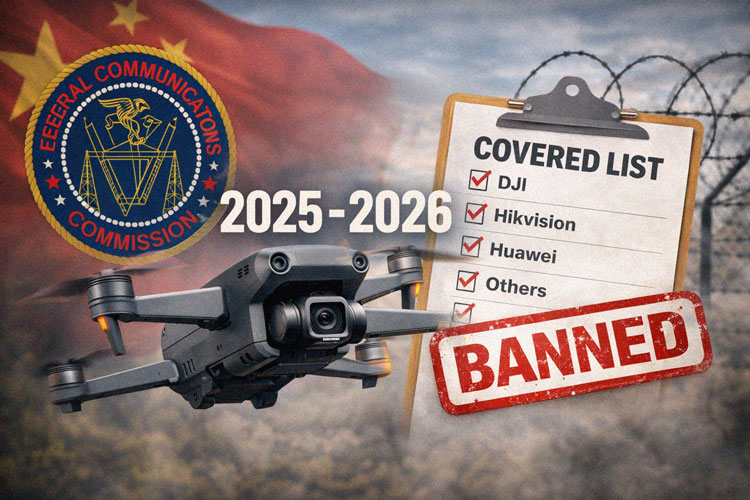
The FCC DJI Ban 2025 – 2026 and Covered List Update: A Non-Retroactive Ban and Big Relief for DJI Drone Users
So, we have some good news and some bad news.
- The good news is what we have discussed already. The DJI has escaped the retroactive ban,
- but the bad news is that there are no drones under $500 are completely immune to the FCC Covered List restrictions (i.e., fully NDAA/Blue UAS-compliant with U.S.-sourced critical components and manufacturing). These restrictions block new foreign-produced models/components from FCC certification, impacting imports, sales, and future support.
Take a look at what is written in the DJI Covered list as text
Uncrewed aircraft systems (UAS) and UAS critical components produced in a foreign country†† and all communications and video surveillance equipment and services listed in Section 1709(a)(1) of the FY25 National Defense Authorization Act (Pub. L. 118-159)
The Non-Retroactive Ban is over. Almost all the Consumer-grade drones under $500 and no one is safe (sub-250g minis with 4K cameras, gimbals, long flight times) rely on global (primarily Asian) supply chains for affordable components like sensors, motors, and transmitters—making full U.S. decoupling impossible at this price. If I clarify things, it means importing any part of the drone from another country is strictly prohibited, and if a drone is found to be using parts from China or any other country during the FCC clearance test, it will not get the clearance / will not pass the test as per the rules. There may be some loopholes—manufacturers may alter the assembly location with some tweaks and software, or similar workarounds—but for now, the import of any part of the drone from any other country is strictly prohibited strating from December 22, 2025.
As we have already discussed, no drone maker in the United States of America makes a Made-in-USA drone under $500. All under-$500 drones, either their parts or the entire drone itself, are coming from China or other Asian countries like Singapore, Taiwan, etc.
So with the non-retroactive ban, yes, you can buy all those Chinese drones even in 2026, so why not? We invest in the best of the best—DJI itself, specifically those models which are already available in the U.S. market for a limited period of time, / till the stock lasts.
True U.S.-made/NDAA-compliant drones (e.g., from Skydio, Teal, Inspired Flight, Freefly) target enterprise, public safety, or defense markets. Entry-level prices start at $1,000+ (often $5,000–$35,000+), with advanced AI, thermal sensors, and secure supply chains driving costs.
What the “DJI Ban” Actually Means: Summary
- The FCC added foreign-produced drones and critical components to its Covered List, blocking new models from receiving FCC authorization. This halts official imports, sales, and launches of unreleased or future DJI drones in the U.S.
- Existing/pre-approved models like the DJI Mini 4K (released earlier) and even the newer DJI Neo 2 (launched November 2025, with some pre-ban stock) remain legal to buy (while inventory lasts), own, and fly. No grounding, remote bricking, or FAA restrictions on current DJI drones.
- Retailers can sell remaining stock of authorized models, and third-party/gray-market imports may appear (e.g., Neo 2 on Amazon via resellers at ~$259–$459).
Conclusion: No budget drone under $500 is fully “immune” right now— Best is to do a smart investment, at least get the best out of the money you’re investing into, no other chines drones makers able to compete against the DJI Brand drones under $500 category specifically if we talk about the DJI Mini 4K or the Recentely announced NEO 2 Drone, the DJI Drones flight modes, stability, video quality and eco system is best in class.
Real-World Fallout: How the Ban Reshapes the Drone Market for Creators
Yes, we are not actually witnessing the deep impact on DJI drones for now, but for sure, these ban policies are going to create a great ripple effect in the market, and as 2026 moves on, we are going to see severe stock issues in drones, combo kits, and batteries.
And the good thing is, the ban is not limited only to DJI and Autel. It is imposed on all foreign land–based drone manufacturers—those who are not manufacturing their drones in the United States of America. This clearly means all such drones are affected by this ban, and sooner or later, it is going to reflect in their upcoming announcements and stock status.
The DJI brand is proactive in whistleblowing and allowing their users to stock existing drones, while other drone brands like Autel or small Chinese drone makers remain dormant.
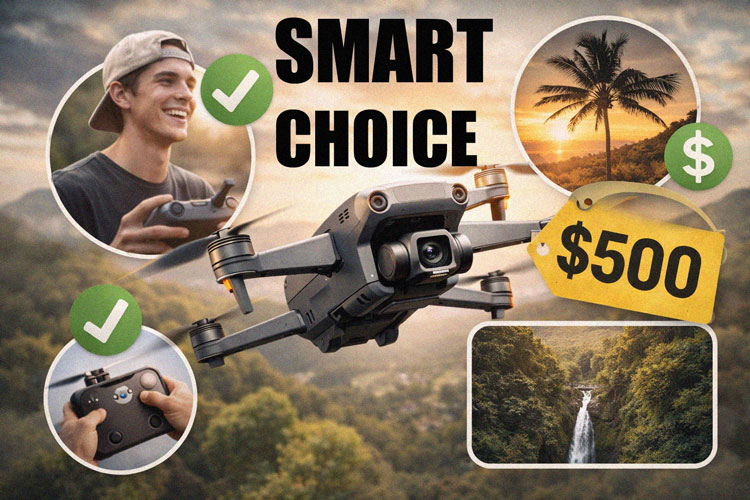
Why Buying a DJI Drone Under $500 Now Is Your Smartest Aerial Investment in 2026
It’s time to make an informed decision based on the facts we have presented and the in-depth analysis we have conducted in this article. According to the facts, this is the optimal time to invest in DJI drones.
If you are living in the United States of America, specifically those drones that are already available at retailers like Amazon.com, are completely legal to buy, and all the drones that you already own or are going to buy from Amazon.com are not affected by the ban.
And since the ban is impacting all Chinese manufacturers, the best thing to do is to buy the best drones available in the market, instead of investing in lower-quality channel brands that are not able to compete with DJI in terms of pricing or features.
Stock up on proven DJI performers under $500 before they’re gone. These aren’t relics—they’re current-generation powerhouses for drone photography, blending portability, battery life, and image quality that U.S. newcomers can’t yet match at this price.
Exemptions are rare (DoD/DHS only), so act quickly; our projections, based on sales trends, suggest thatstock could dwindle by Q3 or Q4 of 2026.

Top Pick: DJI Mini 4K – Best Beginner Drone in 2026
At around $299, the Mini 4K delivers 4K/30fps video with a 12MP sensor, 31-minute flights, and GPS precision – Ban-proof and beginner-friendly drone. The DJI Mini 4K is the best value DJI drone under $500.The DJI Mini 4K makes a great first impression right out of the box—setup is quick, the app walks you through all the basics, and takeoff/landing is almost effortless thanks to the automated controls.
Standout Features
- Affordable 4K: This drone has a 1/2.3-inch sensor, which is able to record 4K videos up to 30 frames per second, with 12MP resolution for photos. Overall, it’s a perfect drone for social media but not as good as the DJI Flip’s sensor. Limited low-light performance means you’ll need to be cautious about night shooting.
- Flight Specifications: Approximately 31 minutes of maximum flight time. It also has Level 5 wind resistance and approximately 10km transmission range. Downward sensing is also included for safe hovering.
- Beginner Perks: No FAA registration required, automatic takeoff/landing, and QuickShot modes.
Downsides
- Smaller sensor struggles in low light. You can take amazing daylight videos and evening shots, but for nightscapes, consider the Mini 3 or DJI Flip.
- No vertical capture mode, so you cannot record vertical videos for Instagram or TikTok. It captures only horizontal/landscape videos and images.
DJI mii 4k Buy Now: Amazon ($419)

Runner-Up: DJI Mini 3 – Endurance King for Extended Sessions
Now, specifically for those creators who need extra airtime, the DJI Mini 3 arrives at $419 and shines as one of the best DJI drones under $500 for marathon-type sessions. The DJI Mini 3 was announced in 2022 but is still in demand even in 2025, offering unbeatable battery life for its price.
Key Highlights
- Battery and flight: You get a total flight time of up to 38 minutes in standard mode and approximately 51 minutes with the Plus battery (sold separately). It can handle Level 5 wind with a resistance of 4000m max altitude, which ensures stable flight in varied conditions.
- Camera performance: 1/1.3-inch sensor for 12MP photos and perfect 4K HDR videos. This DJI Mini 3 is capable of true vertical shooting, rotating the gimbal up to 90 degrees – perfect for creating social media content.
- Features: We have a downward sensor for precise landing and 10km of transmission control. We also have modes like Panorama, QuickShots, and auto return. The overall weight of the drone is under 249 grams, which folds compactly for travel purposes.
- User experience: Beginner-friendly with the DJI Fly app, and there’s also an optional RC-N1 controller for precise control.
Potential Cons
- It lacks forward obstacle avoidance – the Mini 3 Pro has that, and so does the DJI Flip mentioned earlier.
- Be careful while using the Plus battery as it pushes the weight over 250 grams, triggering registration.
- Compared to the Mini 4K, it offers better low-light performance and longer flight time – great for landscape photographers.
Buy Now: Amazon ($419)
Value Gem: DJI Neo – Compact Creator’s Companion
The DJI Neo, available at $199, can be called the ultimate entry-level beginner’s drone, available at a super budget price. This is the best DJI drone under $500 for first-time users or beginners, specifically interested in fun and learning how to fly.
Why It’s Beginner-Friendly
- Simple Operation: The DJI Neo is a hand-launch drone and is pre-programmed for that. You can easily fly your drone with just your palm. It can fly in circle or a boomerang motion. No controller required – use the app or activate it via voice, and it will track your movement.
- Camera: The camera has a 1/2-inch sensor capable of recording 4K videos at 30 frames per second and capturing 12MP images. The videos and images are highly usable for social media.
- Compact Design: The drone weighs 135 grams and provides approximately 18 minutes of flight time. Downward sensing enables easy takeoff and landing.
Limitations
- Short battery life, no forward obstacle avoidance, and limited range without a dedicated controller.
- Ideal for those who are new and budget-conscious. Obviously, the DJI Mini 4K is a better choice if you can spend more.
specification is specifically like the camera quality, flight time, and the unique features that a Drone must have
Final Takeoff: Secure Your Edge in the Post-Ban Skies
As we have said, make a smart investment, and the models that we have listed on this page are completely Ban-proof, as we have discussed multiple times. We have written this after deep research that the December 22 ban on DJI is a non-retroactive ban, and the models that are already announced and available in the USA, in the hands of consumers and in the stock of retailers, are ban-proof.
You can buy and use them till the stock lasts. The 2025 DJI ban reshapes drone access but doesn’t diminish DJI’s legacy.
For under $500, you’re investing in battle-tested technology that fuels your passion for aerial storytelling—legal, reliable, and ready to fly.
Head to TheNewCamera.com for exclusive deals on these models.
ABout the author: The article “Understand the DJI Ban 2026: Why Its a Smart Decision to Buy a DJI Drone Under $500” written and updated by thenewcamera.com team on 5:20 am, Thursday, 22 January 2026, Greenwich Mean Time (GMT)This post was last updated on October 13, 2025, at 6:23 AM GMT (2025-10-13T06:23:00Z). | Follow us for more updates and Get LIVE RUMORS –> FACEBOOK | TWITTER | INSTAGRAM to get live news — > get live Drone news + DJI Rumors
Good news for owners and future buyers: DJI continues rolling out firmware updates in January 2026 for existing models, proving long-term support is still strong. No bricking, no grounding—just the same reliable, class-leading performance that makes DJI the clear winner in the sub-$500 category. With stock levels tightening and no true U.S.-made alternatives at this price and quality, picking up a Mini-series drone today remains one of the smartest moves you can make in aerial photography.
These changes are truly minimal (a few new sentences + price tweaks), refresh the date, heighten the gentle urgency without alarmism, and reinforce the original pro-DJI, value-focused tone. No need to rewrite large sections—the article already nails the explanation and recommendation.
By admin, on December 24th, 2025

In this article, we will share the best Sony cameras and lenses for 2025. If you are a blogger or a wedding photographer, this curated camera and lens lineup will help you navigate the Sony camera options. I have been a professional photographer for over 10 years. At the start of my career, when I was a student, and for more than 15 years, I have been running TheNewCamera.com. The The New Camera YouTube channel is approximately eight years old, where I regularly test and recommend camera gear. It all started with the Sony A7 III camera back in 2018, and after that, I have tried and tested many Sony cameras. Still, most of the content that we shoot is with the Sony ZV-E10 II and the Sony A7 IV.
So, if you’re looking to buy a Sony camera in 2026, or looking for new lenses, whether you are only a photographer, love to shoot photos, or you are into videography and want a perfect camera to shoot videos, I will take you through my recommendations based on over a decade of professional experience that I have gained through shooting photographs and creating videos.
Best Sony Cameras
So here we are talking about the best cameras available in 2026, specifically within Sony, across different price ranges, as well as a clear set of requirements for photographers and content creators/videographers moving forward, depending upon the type of budget you have.
So before you dive into the guide, the best approach is to narrow down your priorities—the things that you actually need from a camera to complete your workflow. Having a clear idea of what you want will surely help you make a very wise choice within a perfect budget.
Select, read into the guide, and dive into the details of the best Sony cameras available at various budgets in 2026.
Buying Tip for Photographers: Don’t rush to buy APS-C. You can get Fullframe Sensor Under $600
Don’t rush towards new models, specifically within Sony, because the older models are still very capable, especially for photographers. If you are into photography and looking for the best cameras, bodies like the Sony A7 II or Sony A7R are still highly capable, even when paired with a traditional 50mm f/1.8 lens, which is budget-friendly and can deliver next-level performance.
Here, we are specifically talking about photographers. These camera bodies generally become available in the $500 to $600 price range on Amazon.com, obviously in used condition. But the best part is that all these bodies are covered under Amazon’s return policy, so if you are not satisfied, you can return them without any hassle.
At the time of writing this article, the Sony A7R camera is available at $597, which puts it under the $600 category. This camera uses a 36MP full-frame sensor, with a standard ISO range from 100 to 25,600, and it also supports Full HD video. You need to understand that no other camera delivers this level of image quality at this price range, while still maintaining a full-frame sensor.
Another important point is to invest in lenses. You can start with a 50mm f/1.8 lens from any brand, Like the Meike 50mm f/1.8 with 4.6 rating from 187 customers, which is not very expensive, and then gradually upgrade your lens lineup based on your requirements and budget.
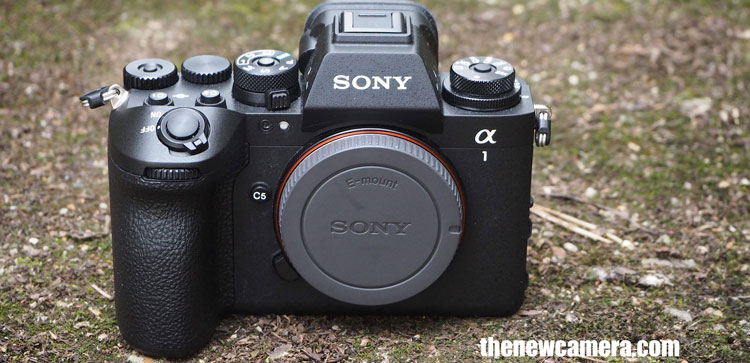
Best Sony Camera of 2026: Sony A1 and A1 II
The best flagship camera from Sony is the Sony A1 II. We need to make it very clear that if budget is not an issue, then the Sony A1 is the current flex camera from Sony. It features a 50-megapixel stacked CMOS sensor and is capable of recording 8K video.
This makes it a true flex camera, designed for both videographers and photographers, and ideal for hybrid use cases.
Price: A1 ~$3,999 used; A1 II ~$7,000
Sensor: 50MP stacked full-frame
Key Specs: 8K/30p, 4K/120p, 30fps, AI chip (A1 II).
Sony’s pinnacle: 8K for future-proofing, god-tier AF. A1 II adds ergonomics/AI.
Pros:
-
- Do-everything: 8K video, 50MP stills.
- Global shutter vibes (minimal rolling shutter).
- Wedding workhorse.
Cons:
-
- Budget-buster.
- Overkill for most.
Who It’s For: Pros with deep pockets. My studio A1 nails everything.
Sony A1 Budget Flagship
If you’re looking for budget alternatives, and specifically interested in getting a budget flagship camera, then we do have some good used deals on the Sony Alpha A1 full-frame camera—and here we are specifically talking about photographers.
Since the Sony A1 uses the same 50-megapixel stacked CMOS sensor as the A1 II, and while the A1 II is much improved on the video side with better overheating control and video optimisations, if you are a photographer, believe me, you will get the same image output from the A1 as from the A1 II.
On Amazon.com, you can find used Sony Alpha A1 cameras priced at around $4,094 in very good condition, and they are covered by Amazon’s guarantee, so you can return them if you are not satisfied.
Another good deal is available at B&H, where there are two used Sony A1 cameras listed. One is in like-new condition for $4,199, and the other is available for $3,999.
So, if you’re interested in getting a flagship “flex” camera at a discounted price, these are excellent deals, and once again, this recommendation is specifically for photographers.

Best Sony Camera for High Resolution: Sony A7RV
The super high-end king comes with a 61-megapixel stacked CMOS sensor, and it is the only Sony Alpha-series camera, other than the Sony A1, that can shoot 8K video.
Essentially, the Sony A7R V is the ideal camera for capturing commercial shoots, landscape photography that demands high dynamic range, and extreme detail. If you are a professional photographer, a pixel-peeper, and love to have the best-in-class high-resolution full-frame sensor in your hands, then the Sony A7R V is made for you.
Price: ~$3,900
Sensor: 61MP full-frame
Key Specs: 8K/24p (crop), 4K/60p, 4-axis flip screen, AI subject detection.
The “R” means resolution: crop-proof landscapes, wildlife, or wedding details. Video’s sharp but not low-light champ.
Pros:
-
- Massive files for heavy editing/cropping.
- Flip screen for vlogging.
- IBIS + high-res sensor = tack-sharp.
Cons:
-
- Noisy above ISO 3200.
- Huge files eat storage.
Who It’s For: Landscape/sports shooters. Paired with A7 V for events.
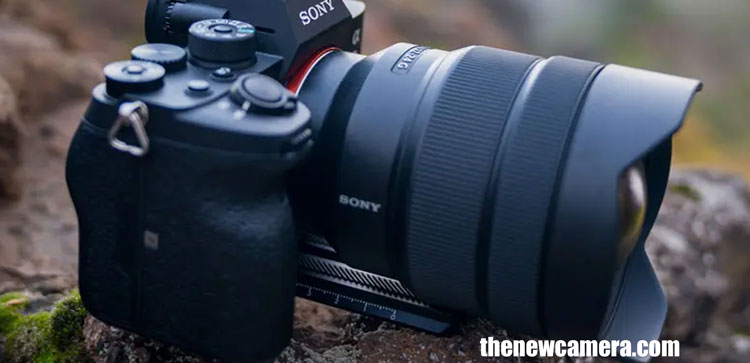
Budget High Resolution Mirrorless: Sony A7R IV, here are some options
The best part is that the Sony A7R IV uses the same 61-megapixel stacked CMOS sensor, but it cannot record 8K video like the Sony A7R V. So, the point is that if you are a photographer, there is no real need to invest in the Sony A7R V unless you have extra budget. It makes more sense to buy the Sony A7R IV right now.
If you are looking for a more budget-friendly option, the Sony A7R IV (renewed) is available for under $2,000. At the same time, used units are also available below $2,000, but my recommendation is to go with the renewed option, as it has already passed multiple quality checks and is generally more reliable and secure than buying a used unit.
Although both renewed and used options are covered under Amazon’s return policy, so if you find any defect, you can return the product easily and get a refund. In the end, it all depends on your budget—if the budget allows the A7R series, go for it; otherwise, there are plenty of solid alternatives available.

Best Sony for Photo Video Hybrid Shooters: Sony A7V
The Sony A7 V is a recent announcement from Sony and features a newly developed 33-megapixel partially stacked CMOS sensor, paired with the BIONZ XR II image processor. This new image processor carries a built-in, dedicated AI chip, which takes the overall performance and camera intelligence to the next level.
You are getting a very high dynamic range, with an ISO range from 100 to 25,600, especially when using the mechanical shutter, thanks to its dual-gain output (DGO) sensor design, which works not only while shooting video but also when capturing still images.
On the video side, you get oversampled 4K recording, with support for 4K 60p and up to 4K 120p modes, along with 7.5 stops of in-body image stabilization. On top of that, the battery performance is rated for up to 750 shots, or around 1 hour and 20 minutes of 4K 24/30p recording in 10-bit 4:2:2 mode.
Overall, this camera redefines the Sony A7 series lineup quite drastically and brings in multiple meaningful upgrades. While you won’t find fancy 6K or Open Gate recording here—features that are usually reserved for dedicated professional cinema cameras—in terms of real-world usability, this is one of the best hybrid cameras Sony has ever announced to date.
Price: ~$2,900
Sensor: 33MP partially stacked full-frame
Key Specs: 4K/120p (crop), 4K/60p no crop, 30fps burst, AI AF.
Sony’s newest mirrorless blows minds with lightning AF and blackout-free bursts. Half the A1 II price, near-identical performance.
Pros:
-
- No-crop 4K/60p—wide cinematic looks.
- 30fps photos rival flagships.
- Best price/performance in Sony history.
Cons:
-
- No open-gate or internal RAW.
- No 6K+ video.
Who It’s For: Serious hybrids. My current favourite—upgraded everything from the A7 IV.
So this is all about the Sony A7 V. If you are looking for a budget solution, you need to understand that in the same price range, you can get the Sony A7R IV for approximately $2,000.
So, instead of investing in the Sony A7 V, if you are a photographer, I would highly recommend getting the Sony A7R IV, which features a 61-megapixel stacked CMOS sensor. As we have discussed already, the Sony A7R IV (renewed) is available for under $2,000. At the same time, used units are also available below $2,000
Coming to budget options, obviously, we have many other camera. $2000 price range, which include the Soni 7C Ma 2 also, but again, if you are a happy shooter, the best fit for you is the Sony A7 R4 camera.
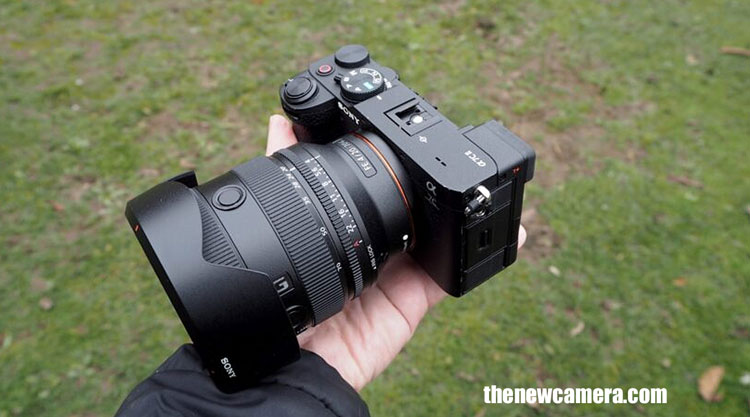
Best Sony Camera for Travel: Sony A7CII
The Sony A7C II is a great travel camera and is roughly the size of an APS-C body, yet it packs a 33-megapixel full-frame sensor, the same sensor we have seen in the Sony A7 IV. Due to its compact and travel-friendly design, it is widely loved by travel photographers and professional content creators.
This is one of the reasons why it is consistently among Sony’s best-selling cameras, especially in the Asian market. Its popularity comes from the fact that it is extremely compact while still being able to record 4K 60p video in 10-bit and 120p in Full HD.
The autofocus system is another major highlight, thanks to AI-based subject recognition, which makes tracking faster and more accurate. On top of that, the up to 7 stops of in-body image stabilisation allow for remarkably smooth handheld shots, and the inclusion of S-Cinetone delivers natural, pleasing skin tones straight out of the camera.
While it does have only a single card slot, the Sony A7C II delivers big performance in a small body, making it a fantastic option for travel shooters, content creators, and photography enthusiasts alike.
Price: Sony A7C II ~$2,200
Sensor: 33MP full-frame
Key Specs: 4K/60p (1.5x crop), 10-bit, AI AF, flip screen.
These share a stellar 33MP sensor for detailed 4K and tack-sharp photos. The A7 IV is the hybrid king (central EVF); A7C II is compact for video (side EVF).
Pros:
-
- Concert/wedding-ready AF—my second body for 100+ gigs.
- Gorgeous bokeh and color straight out.
- Battery grips for all-day shoots.
Cons:
-
- 4K/60p crop kills wide-angle.
- No 120fps full-frame.
Who It’s For: First full-frame buyers. A7 IV for photos; A7C II for portability. B-roll from my A7 IV always stuns.
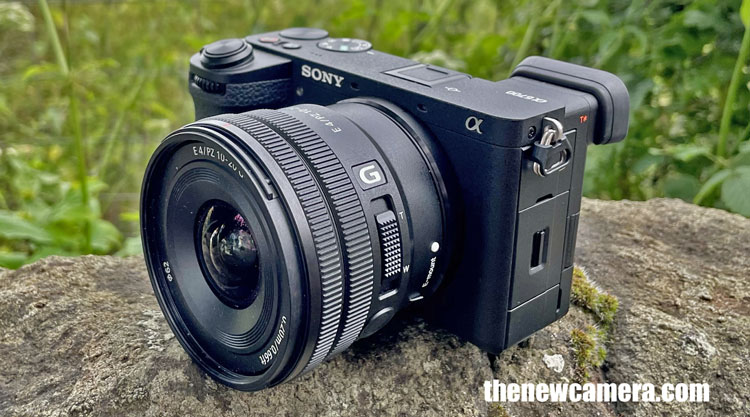
Best Sony Camera APS-C For PROS: Sony A6700
The Sony A6700 camera uses the same 26-megapixel sensor that we have seen in the Sony FX30 and the Sony ZV-E10 Mark II. After using it, I found it to be a real beast and one of my personal favourites, especially if you’re looking for a hybrid camera that excels in both photography and videography.
The major difference you will notice when using the Sony A6700 compared to the ZV-E10 Mark II is that the A6700 has a much better heat-management system. For prolonged video recording, the A6700 body performs more reliably, especially in hot weather conditions, compared to the ZV-E10 II series.
Another big advantage of the Sony A6700 is the built-in EVF and its camera body design, which is clearly aimed at photographers. If you are into photography, prefer a camera with a mechanical shutter, and want a solid hand-grip that makes the entire shooting experience more comfortable, then the Sony A6700 comes highly recommended.
Price: ~$1,400–$1,500
Sensor: APS-C, 26MP (same as ZV-E10 II)
Key Specs: EVF, IBIS, 4K/120p, AI autofocus, weather-sealed.
Sony’s latest A6000-series (successor to the legendary A6000) adds a viewfinder and IBIS for steady handheld shots. It’s a photo-video beast in a tiny body.
Pros:
-
- 4K/120p for epic slow-mo without full-frame bulk.
- IBIS enables slower shutters for sharp photos.
- Underrated gem—best APS-C hybrid value.
Cons:
-
- $300 more than ZV-E10 II for EVF/IBIS.
- Menu system is Sony’s typical labyrinth.
Who It’s For: Photographers dipping into video. I used it for concerts—autofocus nailed every beat.
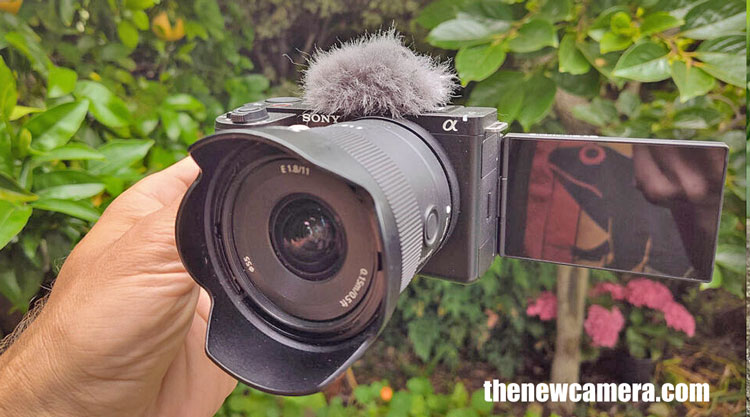
Best Sony Vlogging Camera: Sony ZV10 II
The best part is that Sony has recently upgraded the firmware of the Sony ZV-E10 Mark II camera. With this major firmware update, the camera is now able to shoot 4K at 120fps, which was not possible earlier. However, you do have to face a 1.5× crop while shooting 4K 120fps. When shooting 4K 60fps, there is no crop at all.
Yes, the camera is ready for serious use, but the overall heat sink unit and heat management of the ZV-E10 Mark II are not very strong. So, if you are living in a hot and humid country or region, especially during summer conditions, you should definitely consider a different camera.
That said, we have been using this camera for more than 2 to 3 years in our studio, and since we work in an air-conditioned environment, we have never faced overheating issues.
Price: ~$1,000–$1,100
Sensor: APS-C, 26MP (10-bit)
Key Specs: Same as above + 4K/60p, 1k 120p, vertical menu flip, improved touchscreen, better low-light.
Last year’s refresh brings 10-bit color (richer grading) and 4K/60p for silky slow-mo. The sensor matches pricier models, and low-light is a game-changer for night shoots.
Pros:
-
- First Sony with vertical UI—Reels made easy.
- 4K/120p with 1.5x crop; great for action.
- Touch controls feel modern.
Cons:
-
- $300 premium over original—worth it only if you edit heavily.
- Still no EVF or IBIS.
Who It’s For: Social creators craving better image quality. In tests, slow-mo b-roll popped—ideal for dynamic content.
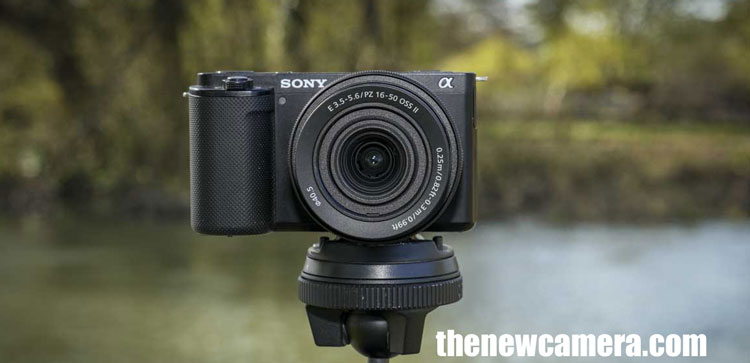
Best BUDGET Sony Vlogging Camera: Sony ZV10
If you’re looking for a more budget-friendly option, then we do have a highly trusted camera, the Sony ZV-E10. This camera is being used by many creators worldwide, and we have one in our studio. It has been a very reliable performer from day one.
If you want to shoot 4K 24p or 4K 30p videos for your YouTube channel, the Sony ZV-E10 is still highly usable. Apart from that, even for handheld vlogging, this Sony camera supports gyro-based image stabilisation.
Although the new-generation APS-C cameras like the Sony A6700 feature Dynamic Active IBIS that works directly inside the camera, with the ZV-E10, you need to use Sony Catalyst Browse software later, after shooting, to stabilise your footage using gyro data.
Overall, even in 2026, if you’re looking for a budget content-creator camera, the Sony ZV-E10 remains one of the best beginner mirrorless options available.
Price: ~$700 (body-only)
Sensor: APS-C, 24MP
Key Specs: E-mount (lenses sold separately), 4K/30p, 1080p/120fps, flip screen, no viewfinder, 8-bit color.
Released in 2021 but still a bestseller (our affiliate top pick), the ZV-E10 is the gateway to Sony’s ecosystem. It crushes thumbnails and vlogs with sharp 4K, plus decent photos. Auto modes make it idiot-proof.
Pros:
-
- Affordable entry to E-mount lenses (start with a 16-50mm kit).
- No 30-min video limit—perfect for long takes.
- Vertical flip for TikTok/Reels.
Cons:
-
- Older 8-bit sensor; colors look dated in log profiles.
- Screen-only composition (no EVF).
Who It’s For: Beginners building a kit. I recommend it as your first Sony—invest in lenses, not body.
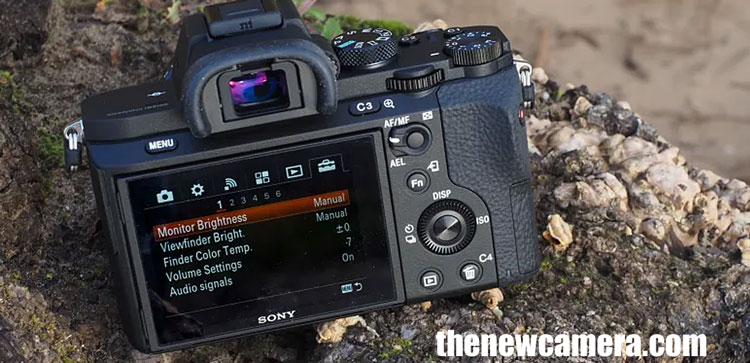
Best Sony Full-Frame Camera on a Budget: Sony A7II
Maybe you know you want a full-frame sensor but you’re on a budget. Beginners looking for a great budget option should check out The Sony a7 II camera was released in 2014, and currently, most used models in good condition are available for around $500 on Amazon.com. And as I have said, the best thing with Amazon.com is that you get a replacement warranty with it. If you don’t like the product, you can replace it.
There are multiple sellers there — the reputed ones — who are selling the Sony a7 II in good condition. Just look for the ratings, sort it out, and now you have your camera in your hand.
The camera has so many great qualities, including:
- 24mp full-frame sensor
- IBIS (Internal Image Stabilization)
- The versatile Sony e-mount
- Tilt screen
We are using multiple Sony cameras, starting with the Sony A7 II, as well as the A7 III, and also crop bodies, on our YouTube channel, The New Camera. And when I’m not shooting with my Sony cameras, I am using the iPhone 17 Pro.
The best part is that you can use most of the lenses without any worry since the Sony E-mount is completely open. Mostly in the studio, I use the Sony 50mm f/1.8 with the A7 III, the cheapest prime available for the camera. And specifically with the Sony ZV-E10 II, I am using the Sigma 16mm f/1.4.
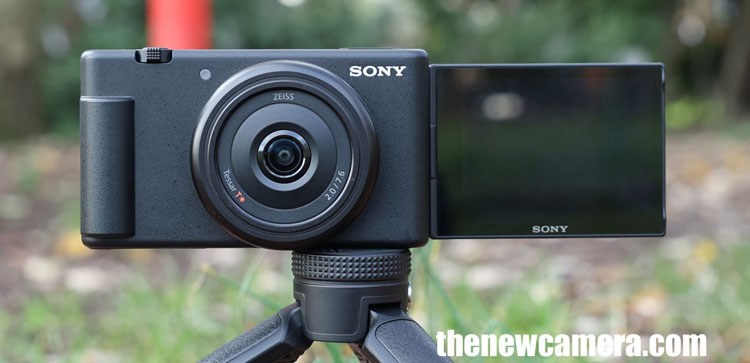
The Most Affordable Entry-Level Vlogging Camera: Sony ZV-1F
If you are looking for a compact point-and-shoot camera from Sony, then the Sony ZV-1F is the obvious answer. You won’t get the same level of image quality that we usually see from Sony mirrorless cameras paired with prime lenses, but for on-the-go use, it is a lightweight and budget-friendly solution.
Price: ~$500
Sensor: 1-inch, 20MP
Key Specs: Fixed 20mm f/2.0 lens (wide-angle only), 4K/30p video, 1080p up to 120fps, flip-out touchscreen, built-in mic with windscreen, USB-C webcam mode.
Pros:
-
- Pocketable and beginner-friendly—no menu dives required.
- Excellent stabilisation for handheld walks.
- Product Showcase mode auto-focuses on objects you hold up (genius for reviews).
Cons:
-
- No zoom (digital crop degrades quality).
- Autofocus hunts in low light or edges—switch to manual for fixes.
- No RAW photos; JPEG-only limits editing.
Who It’s For: Smartphone upgraders or TikTokers. Pair with a $50 grip for run-and-gun. Skip if you need Zoom or pro photos.
So, it’s best to invest in the Sony ZV-E10 with a prime lens. Otherwise, if you are on a very limited budget, you can go with the Sony ZV-1F.
The Sony ZV-1F is Sony’s cheapest new camera in 2026, making it ideal for casual creators who want dedicated camera gear without complexity. Its ultra-wide 20mm fixed lens is perfect for immersive vlogs or talking-head videos, with no extra lenses required. In my testing, the 4K footage looks punchy straight out of the camera, with vibrant colors, making it well-suited for social media content.
So, if you’re looking for a cheap compact camera that can shoot 4K video and allow you to upload videos easily to your vlog or blog, then yes, this is a valid option. However, if you can spend a bit more, I would strongly recommend not investing in 1-inch sensor compact cameras with variable zoom lenses. We have already tested these combinations, and they are not able to deliver the sharpness and image quality that you can achieve even with a Sony ZV-E10 paired with a prime lens.
I hope you found my guide useful, and if you have any questions about a specific camera, leave a comment below! What camera and lenses do you plan to go with? How does the digital viewfinder change the way you shoot?
By admin, on December 20th, 2025
 Creative Image: Starting from Pocket 4 PRO, Standard Pocket 3, and Standard Pocket 4 The DJI Osmo Pocket series has revolutionised handheld content creation, and many professional content creators today utilise the Osmo Pocket 3 camera, which features a 1-inch sensor and 4K video recording capabilities, along with advanced AI autofocus tracking.
According to recent leaked images, the DJI Osmo Pocket 4 appears to show two different prototypes being tested in the wild alongside the Pocket 3. Now, these two distinct variants of the Pocket 4 appear to have two different types of cameras.
One variant features the long-rumoured dual-lens setup, a larger camera module with a heavier head, which can be clearly seen and noticed. The other variant has a single camera module with clearly visible buttons below the display screen and appears to be less portable.
If you remember the leaked picture from the Barcelona shoot, it actually resembles the single-lens Pocket 4 variant, which features a single camera unit with dual buttons below the display.
As of December 19, 2025, no official announcement has been made by DJI; however, leaks suggest a potential announcement in early 2026.
 Recently shared image of Pocket 4 / Pro Leaked Prototypes Spotted: Pocket 3 Next to Two Pocket 4 Variants
The Leaked image provides the clearest picture of the DJI Pocket 4 camera yet, but interestingly, we are witnessing two different variations of the Pocket 4 camera, which are very clearly visible. Both prototypes are being tested in the wild, as seen above.
- The Middle Device (Reference): It is very clearly visible that the middle camera is the Pocket 3, and we can clearly identify it by the rotating mechanism, the type of screen, and the standard camera unit that we have seen multiple times before. However, the two different variations on the left and right sides are clearly new and do not have any logo, trademark, DJI, or Osmo name on their bodies, which also suggests that they are prototypes, not production-line models.
- The Left Prototype (The Rumoured “Pro”): The next model is the most discussed and most talked-about, mainly because of its dual-lens setup and heavier head, which is obviously and significantly bulkier than the previous-generation Pocket 3 gimbal. This specific Pocket 4 Pro clearly resembles multiple previous leaks that were reported by trusted leakers like Jasper Allen. Without a doubt, DJI’s dual-lens Pocket 4 model is already in the announcement pipeline, and we are almost certain to witness its official announcement in 2026.
- The Right Prototype (The “Standard” Successor): This unit closely resembles the Pocket 3 form factor but appears to house a larger lens element. This fits the description of the rumoured single-camera setup featuring an upgraded sensor / Image processor.
Whether we look left or right, both Pocket 4 prototypes feature a redesigned gimbal. The Pocket 4 standard upgrade, located on the extreme right side of the image, features a slimmer gimbal design with additional buttons below the display, as previously mentioned. On the extreme left side, we see the Pocket 4 Pro, possibly the most advanced and heaviest upgrade of the Pocket 3, featuring a heavier gimbal, a single button below the display, which is clearly visible, along with a larger size, a heavier gimbal head, and a bigger camera unit.
So overall, not only are the camera units different, but we also see variations in the chassis and gimbal design of the camera.
 Image of Standard Pocket 4 Standard edition – leaked images surfaced on the web, and according to the source, the picture is coming straight out from a promotional video shoot in Barcelona. The image you see below is a screenshot of a behind-the-scenes (BTS) video. The image is really one of the clearest pics of the Pocket 4 prototype and also hints at some refinements in the design and overall layout of the camera, as you can notice the button control layout has been changed slightly  Latest DJI Pocket 4 Standard Retail BOX Leaked – Announcement is expected soon DJI Osmo Pocket 4 (Standard Version): Rumored Specifications and Features
The DJI Osmo Pocket 4 Standard camera is expected to feature a single-sensor-based camera module, possibly using the same 1-inch sensor with approximately 50-megapixel resolution that we have already seen in the Pocket 3.
However, apart from that, it is expected to receive major upgrades in the internal core specifications of the camera. Take a look at the rumoured specifications of the Pocket 4 Standard upgrade.
Key rumoured specifications for the DJI Osmo Pocket 4 (standard):
- Sensor: Upgraded 1-inch CMOS loaded with 50 million pixels for superior detail and low-light performance.
- Video Capabilities: Features 6K video recording, 4K at 120 frames per second, and advanced slow-motion options.
- Weight: Approximately 190 grams, maintaining portability.
- Battery: Around 20% larger capacity than the Pocket 3 for extended shooting sessions.
- Other Upgrades: Improved stabilization, 10-bit D-Log M color profile, and Wi-Fi 6 connectivity.
This variant aims to deliver flagship image quality in a simpler, more affordable package without the complexity of multiple lenses.

DJI Osmo Pocket 4 Pro: Dual-Lens Setup for Optical Zoom and Versatility
The DJI Osmo Pocket 4 Pro camera module, featuring a dual-lens setup, is being referred to as “Pro” since it is very clear from testing that DJI is evaluating two different Pocket-series camera variants for release. There is a high probability that we may see a standard model followed by a Pro model announcement, one after another.
The dual-camera setup appears to be very similar to that of the DJI Air 3S drone. Take a look at the specifications of the DJI Osmo Pocket 4 Pro camera.
- Dual-Lens System: A primary wide-angle lens paired with a telephoto lens for true optical zoom (potentially 2x-4x without quality loss).
- Sensor Details: Primary 1-inch sensor combined with a secondary sensor (possibly 1/1.3-inch or square format optimized for Ultrawide shoot).
- Video Enhancements: Up to 4K at 120fps for ultra-slow-motion, alongside 6K/60fps options.
- Potential Accessories: Rumors point to a new remote control accessory (similar to a “frame tap” style handler) designed for the Pro model. This would allow remote operation of the longer focal length telephoto lens from a distance, ideal for vlogging or dynamic shots where holding the gimbal isn’t practical.
The dual-lens approach addresses a common Pocket 3 limitation: reliance on digital zoom. It could enable seamless switching between wide and telephoto perspectives, making the Pro variant a game-changer for professional creators.

For Now, Only 1 Pocket 4 Coming on Jan 2026: Here is why
Before we discuss the announcement timeline of the DJI Osmo Pocket 4 / Pocket 4 Pro, which have appeared during field testing, first of all, we must make it clear, as we have already said earlier, that a company tests several prototypes before a product enters the production line.
The FCC ID 2ANDR-OP04 is tied to the grantee SZ DJI Osmo Technology Co., Ltd. So, for now, we have only 1 (one) FCC registration related to the DJI Osmo Pocket 4 series camera. As I am writing this post on December 19, 2025, and while keeping this data fully up to date, we have not found any separate Pocket 4 Pro registration so far.
 Retailer leaked the Stock of Pocket 4, they are just waiting for the DJI green flag / Announcement to start selling the Pocket 4 camera DJI Pocket 4 Arrival Date
This sets a very clear indication that, as of now, there is only one Pocket 4 camera in the pipeline. So, it is up to DJI which camera variant they are about to introduce. Sources suggest that the Standard Pocket 4 Edition will arrive early, before the PRO at the end of Feb-March 2026.Its confirmed now only single lens varient based camera is coming the standard version and the Dual Lens version varient is not coming anytime soon for now
There are some rumors that the PRO Edition of Pocket 4 will arrive after April 2026, not in April 2026. And we are also tracking that rumor/information, and will post an update as soon as we get any new information.
Announcement is Delayed, here’s why
A full DJI Pocket 4 release in December 2025 is off the table. And the announcement is delayed till Feb-March of 2026. It’s really a bit disappointing for all of us who were waiting to pre-order Pocket 4 before Christmas.
Why the delay? The exact reason, as mentioned by photorabz, is that the Accessories are the culprit (One Frame TAP?). As we all know, the Pocket 3 depends on a lot of external accessories, which include wireless mics, extra batteries, and modular mounts – DJI’s ecosystem thrives on these add-ons, and rushing them could lead to quality issues.
Stay tuned to thenewcamera.com for the latest updates – an official announcement could drop soon. If you’re in the market now, the Osmo Pocket 3 remains an outstanding choice with deep discounts amid these rumors.
GET LIVE NOTIFICATION, Select Your Trusted Source GET LIVE NOTIFICATION Click ON Check BOX for Latest NEWS and Rumors
The article “DJI Osmo Pocket 4 2026 Rumours: Arrival Date, Leaked Prototypes Reveal Standard and Pro Variants” was written by thenewcamera.com team on 9:49 am, Saturday, 20 December 2025, Greenwich Mean Time (GMT) | You can also follow us on Our Official Social Media Handles FACEBOOK | TWITTER | INSTAGRAM to get live news — > DJI Rumors


|
KEEP THIS BLOG ALIVE - Support New Camera Buy Canon Lenses, Buy Music CD or Digital Camera at amazon it helps this site, and you do not pay anything extra, it is just a way to help support this site.

|