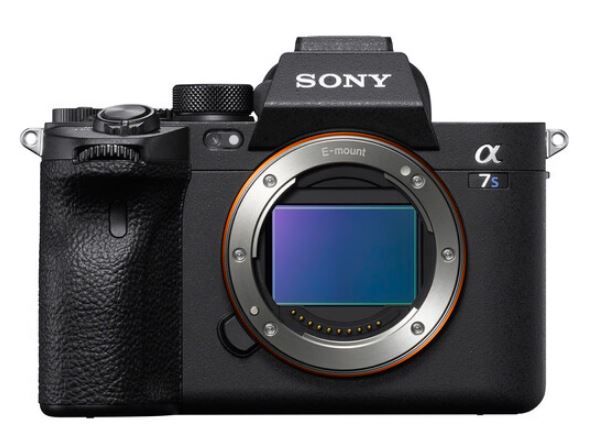
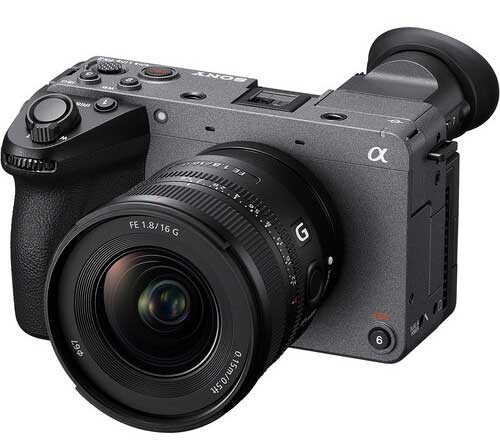
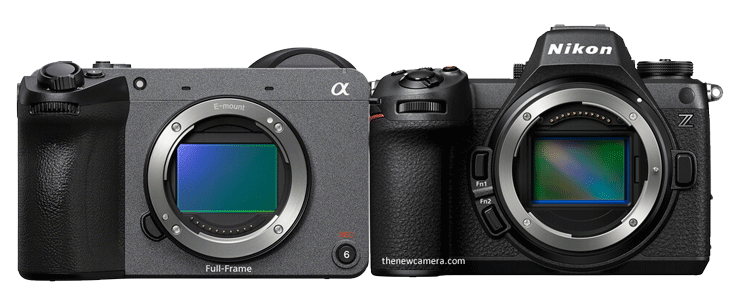
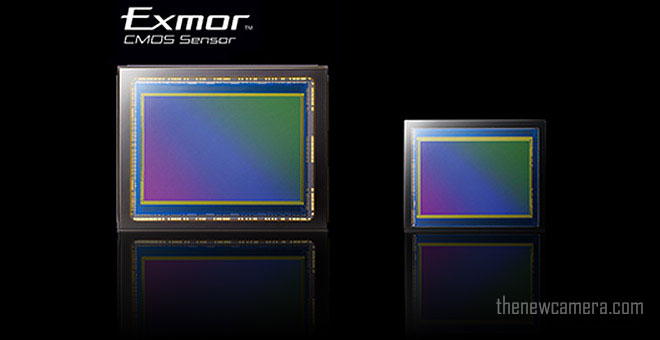
The excitement is now at an all-time high, as Sony is hosting an event called Be Alpha in Barcelona on October 16, 2025. If you look at Sony’s past announcement patterns, this could be the venue for unveiling the next A7 Series flagship camera, so in this article, we are going to discuss the possibility of the arrival of the Sony A7V at the October 16 event and the latest set of information we have related to the camera.
What We Know About the Sony ‘Be Alpha’ Event in Barcelona
Sony’s ‘Be Alpha’ events have a history of major announcements. Now, why are we saying so? Since the Sony A7 IV was announced back on October 21, it was a kind of similar event, or we can say a Barcelona gathering at that time. It is quite obvious to at least consider the possibility that this is the A7V camera during the event.
Sony A7V Oct-Nov 2025 Timeline:
So, even before this Barcelona event news happened, the announcement timeline window that we were getting (as we have discussed in our previous post too) is between October to November 2025. So, we are expecting the arrival of the Sony A7V on or before November 2025, and in between October and November, obviously, the Oct 16, Barcelona event looks like a sweet spot for Sony.
Sony A7 V Leaks: First Real-World Images Surface, Hinting at 33MP Sensor and AI Upgrades – In-Depth Analysis « NEW CAMERA
Sony A7V Release Date: When Can We Expect It?
Take a look at the set of information we have published earlier on our website, related to the arrival date of the Sony A7V camera.
Announcement Timeline: Expected in October or November 2025, potentially at the Barcelona event on October 16.
Shipping Date: Early 2026, likely Q1, to allow for production and distribution.
So these are the initial set of information we have related to the announcement timeline of the Sony A7V camera. Right now, we do not have any confirmed set of core specifications coming out from highly trusted sources. We do have several rumored specifications related to the Sony A7V that include the possibility of a 33MP modified sensor or a 44MP sensor that may arrive inside the Sony A7V camera body.
See the latest information related to the Sony A7V camera that surfaced on the web. Now, before we jump to the set of information, let me tell you one thing: at thenewcamera.com, we are continuously tracking information related to the Sony A7V camera, whether it comes from insider email leaks or any other source. We are continuously analyzing and posting the specifications on our website. In this article, we have calibrated with all the possible sets of credible information that is available to us till date that is October 2025, so if you are searching for the Sony A7V specification, then obviously this is the ultimate resource for you, where we have kept everything in text, starting from the release date, features, pricing and the release date.
Latest Sony A7V Rumors: What’s New in October 2025?
Let’s discuss the recent information that has surfaced regarding the Sony A7V camera announcement. The Sony A7V camera is expected to be released in October or November 2025.
Analysis of Recent Information:See the timeline that the source has said is not different from the rumors that we are getting from the past, that in late 2025 or maybe in the first quarter of 2026, the announcement is possible; however, the rumor mill still failed to give us any specific date or confirmed specification. To this date, neither specs nor an exact date are available.
Specifically, if we see the insider leaked letter that we published a while ago, it also mentions the late 2025 or early 2026 timeline, but again, this particular information was shared by Andrea of Sony Alpha Rumors, who obviously shares correct information most of the time. I am going to rate this info 8/10.
However, the delay is occurring specifically due to the new tariff imposed by the US government, as well as the high demand for existing models; these are the two big reasons behind the delay of the announcement of the Sony A7V camera.
Sony A7V Release Date: Timeline Breakdown
Announcement Date: October/November 2025, Shipping expected from Q1 2026.
Sony’s constant delay in the announcement of the Sony A7V camera model is creating market fatigue, most of our subscribers those who are waiting for the A7V camera specifically for their cinematography/professional content creation work are now inclined to use the Nikon ZR camera, since they are very much impressed with the new design, specifically the display screen as well as the video core specification. Sony should announce the A7V asap, to avoid consumer base migration to a different brand.
Sony A7V Specs: Rumoured
The A7V is positioned as an “evolution” with a bigger upgrade.
Sensor: New ~44MP BSI CMOS (non-stacked variant), Dedicated AI Chip, enhanced AF.
Performance: 20fps bursts, Mechanical, RAW, triple base ISO (800/4000/25600) for Log3 / Log2 / HLG-HDR.
Autofocus & Stabilization: AI Real-Time Body + Face Tracking, BIONZ XR processor, 8-stop IBIS.
The 44MP has been mentioned via insider leaks and rumour mills.
Sony A7V Price: Expectations and Market Positioning
Sony A7V at around $2,799-$3,000 USD body-only.
Will have a notable hike from the A7IV’s $2,499. Regional: ~€3,400 / ¥400,000.
To visualize the rumored advancements, let’s do a specs comparison
Feature
Sony A7IV (2021)
Sony A7V (Rumored)
Sensor
33MP BSI CMOS
44MP New BSI (Stacked Option)
Burst Shooting
10fps
20fps
Video
4K/60p
6K/30p (8K Potential)
AF
Real-Time Tracking
AI-Enhanced
Price
$2,499
~$2,799-$3,000
Why the Sony A7V Could Dominate 2025
The Sony A7V camera can emerge as a powerhouse for photographers as well as video creators. Earlier, it was expected that the A7V camera would arrive in mid-2025, but some unconditional delay is occurring, and that’s completely not normal. Maybe we have a major technical upgrade inside the camera, and that will continue to dominate the sales for the next 2 to 3 years. Just like the Sony A7III camera did in 2018, it dominated the sales and helped Sony to become the mirrorless market leader.
You can share your thoughts in the comment section. If you have any tips or rumours, you can also use our email. Stay tuned for real-time updates. Subscribe below.
If you want to get more updates related to Canon’s upcoming compact camera. GET LIVE NOTIFICATION, Select Your Trusted Source GET LIVE NOTIFICATION Click ON Check BOX for Latest NEWS and Rumors
The article “Sony A7V Rumors: Release Date, Specs, Price & Everything We Know in October 2025” was written on 6:59 am, Thursday, 2 October 2025, Greenwich Mean Time (GMT)
Sony has just rolled out a massive firmware update for its most popular cinema cameras—the Sony FX3 and the Sony FX30. So, this is not a minor tweak. In this article, we are going to explore the major changes that will be made with these firmware updates. We have directly taken official update data from Sony.com, and we are highlighting here the major advantages of the new firmware compared to the previous versions we have in the Sony FX30 and the FX3 cameras.
Yes, the new firmware update that we are getting does bring a major change, which includes user interface improvements, advanced shooting modes, RAW output capabilities, and seamless cloud connectivity. They actually listened and addressed real pain points for pros shooting with Sony FX3 and FX30 cameras in fast-paced environments. These updates will potentially save time, reduce errors, and open new creative doors.
We all know that the Sony FX3 and FX30 are already workhorse cameras, but after this update, they will become, for sure, cinematography monsters. So let’s see the list of updates we have with the new firmware:
1. A Revamped Home Screen: Streamlining Your Pre-Shoot Workflow
One of the biggest advantages with this new update is we have a new dedicated home screen dubbed as BIG6. In the BIG6, you have all the important shoot settings in front. In the BIG6 boxes visible in your frame—starting from the left, it’s FPS; in the next box, there is ISO; and on the extreme right, we have shutter speed.
Now in the bottom part, again starting from the extreme left, we have the lens aperture setting, the LUT you are using, and finally, the white balance.
It is really helpful if you are busy in a high-stakes documentary shoot or doing cinematography. It’s not always easy to jump into the Sony complex camera menu system and bring out and edit each of your workflow settings. So this gives you, on-screen, all the available settings at a single glance, and the chances of error become very low. At the very same time, the camera becomes a run-and-gun camera which directly boosts productivity that allows creators or cinematographers to focus on storytelling, mood of the shot instead of diving into the menu system of your camera.
2. Enhanced Slow & Quick (S&Q) Modes: Greater Creative Control Without the Hassle
Adds a Fixed/Variable mode that supports S&Q shooting settings by directly specifying the shooting frame rate without needing to set the S&Q mode.
Sony has now introduced a fixed and variable mode for S&Q shooting, now letting users specify their frame rates directly without jumping into the dedicated menu. So now you have the freedom to select your maximum frame rate that is available only in S&Q settings, in your existing shooting mode. It means whatever mode you are using, the S&Q maximum frame rate is now available to you.
So this particular update expands the high-frame-rate capabilities of your camera. Once the update is done, you don’t have to switch to different modes and break your shooting flow. You can upskill the setup to a maximum extent available—like directly jumping from 24 FPS to 120 FPS in 4K with the FX30 camera without interrupting the workflow.
3. Focus and Monitoring Upgrades: Precision for Demanding Shoots
The update adds 1.5x and 1.6x magnifications to the De-Squeeze Display. The Focus Magnifier and the Auto Magnifier have now been added to the anamorphic De-Squeeze mode. So whether you are shooting with 1.5x or 1.6x lenses/options for discreet display, you now have the ability to magnify the focus area while you are in Manual Focus mode. That ensures a tack-sharp focus without any guesswork.
Adds support for the Focus Magnifier and Auto Magnifier in MF settings while using the Bright Monitoring feature. The Bright Monitoring integration actually means you can magnify extremely dim light areas—a huge win over older firmware where this was limited. This advantage shines when you are involved in professional workflows/projects, and where precise focus can make or break a shot.
4. RAW Video Output Revolution: Blackmagic RAW via HDMI
Many of the Sony users who were buying these professional cameras were asking why Sony is avoiding Blackmagic RAW. But now, Sony has finally listened to all of you, and you can get Blackmagic RAW from both the FX30 as well as the Sony FX3 via the HDMI port. So it actually opens the door to external recorders like the Blackmagic Video Assist to record the video. The other advantage also includes a massive jump in color grading and post-production.
5. List of Additional Updates Added to Both Cameras
Allows the camera to automatically recognize the USB-LAN conversion adapter (sold separately) and connect to the network when powered on
Allows the remaining capacity of both storage devices to be displayed during movie recording when using Simult. or Auto Switch Media (Relay Recording)
Allows the optical density of pre-registered ND filters to be recorded in the metadata
Allows the filtering of camera images for smartphone transfer and FTP transfer using Clip Flag
Allows the direct upload of camera videos to Creators’ Cloud based on OK/NG/KEEP flags
Settings must be adjusted in the Creators’ App in advance. For more information, please visit the Creators’ App support website.
Ver. 3.1.0 or later of the Creators’ App is necessary.
This service may not be available in some countries or regions.
For more information, please visit the Creators’ Cloud support website.
6. Supports the Following Monitor & Control App Functions:
Manual framing function
Attach Clip Flag
Notes:
Ver. 2.4.0 or later of the Monitor & Control app is necessary.
The Monitor & Control app may not be available in some countries or regions.
7. Security & Stability:
The Security (IPsec) functionality is no longer supported. Please enable and use Access Authentication as it provides more secure protection
WPA and WEP functionalities are no longer supported. You will no longer be able to select WPA or WEP when connecting to Wi-Fi. Please use the more secure WPA2 or WPA3 moving forward
Improves the operational stability of the camera
This firmware is not just a normal firmware update — this is a complete transformation of your Sony FX30 and Sony FX3 camera into a Sony Venice-style professional cinematography camera. It exploits the camera hardware to its maximum potential available, addressing user feedback for a better user interface, creativity, and integration of all the key major features possible at this moment with the available set of hardware performance.
So this major update will give the two Sony cameras a competitive edge over other rivals in the $5,000 cinema camera range available from different brands. And the best part is — the firmware update is available for free; you don’t have to pay a single penny to download it.
We are very much excited to share this update with you, and at the very same time, we are also excited to know — have you installed it? And what are your experiences with this latest update? Let us know in the comments section!
Hope you enjoyed reading this article, At TheNewCamera.com, we’re dedicated to keeping you informed about the latest camera news. The article “Unlock Pro-Level Filmmaking: Sony’s Massive FX3/FX30 Update Is a Must-Have for Creators” was published on 10:31 am, Tuesday, 26 August 2025, Greenwich Mean Time (GMT) by thenewcamera.com team | Follow us on our social pages FACEBOOK | TWITTER | INSTAGRAM to get live Camera News + see moreSony Alpha Rumor
TNC Exclusive – We are all waiting for the Sony A7V camera announcement, and not only that, we are also eagerly waiting for the Sony A7S IV. These two cameras need to be updated as soon as possible by Sony. As of August 10, 2025, an anonymous source has dropped some exclusive information into our mailbox at TheNewCamera.com, shedding light on the upcoming Sony A7V, FX3 Mark II, and potentially the Sony A7S IV camera, related to all these models. The insider provided a kind of detailed information related to the sensor and the video capabilities, and we have decided to publish it since it does look legitimate to us.
At the very same time, while these sorts of unverified rumors are subject to change from time to time, they do offer valuable insights to those who love to track the latest information related to the Sony A7V rumors, latest specifications, or information related to the Sony A7S IV camera. Below is the analysis and the quotation of the email, and we have done a sort of professional analysis to the content of the email — so let’s jump into it.
Insider email leak – Direct quote from the source on Sony A7V and A7S IV camera development
Today, on August 10, 2025, we have received this detailed message from a source which is quite familiar with Sony’s prototyping process:
“The new Sony A7V might be using the same sensor as Z8/Z9 modified and slightly cheaper, since the exclusivity use for the sensor will expire before announcement. 44 MP stacked not the same as Panasonic 44 MP not stacked. If they don’t go this route it might be completely new sensor. They have several prototypes at the moment. The 44 MP non stacked is faster than regular A7IV but slow in general. We will see. FX3II / A7S IV is 24 MP as far as I know, comes with a fully stacked sensor and with 2-layer transistors. Same sensor will be used in FX6 II, triple ISO around 800 – 4000 – 25600, night specialist. 6K open gate 120 no crop, 4K open gate 120 fps oversampled from 6K open gate 120fps no crop. That is all, release date this year or early next year if plans do not change. If they change, we will see.”
So this is intel highlighted that has been shared with us, so let’s break down the interesting set of information one by one.
Breaking down the Sony A7V rumor – sensor prototypes and performance upgrades
Let’s analyze the input according to the latest rumor. The Sony A7V camera has multiple prototypes, and this is quite common when we are talking about high-end or semi-professional cameras like the Sony A7V, before they finally enter a production line. The primary rumor centers on a modified 44-megapixel stacked sensor, which is almost the same as that used in the Nikon Z8 and Z9, but entirely adapted for the Sony ecosystem. The source has clearly mentioned that with Nikon’s exclusivity expiring soon, this could be a more cost-effective implementation, potentially putting the Sony A7V in direct competition with the existing Nikon Z8 — a kind of higher-resolution powerhouse for still photographers. The source has also said it has faster readout speeds to minimize rolling shutter in video, and it is a very clear indication the new 44MP sensor will break the Sony limitation barrier of continuous shooting abilities, as we have seen with the Sony A7IV camera, which is limited to 11 frames per second.
Alternatively, the source also mentions that a brand-new 44-megapixel non-stacked sensor exists, but it remains slow in general, suggesting it may help the Sony A7 series expand resolution-wise in stills and video but will keep the limits of continuous shooting speed or higher frame rates in video to protect higher-end model sales.
This set of information suggests that Sony is testing multiple prototypes of the Sony A7V camera with two different 44MP sensors. Yes, the AI chip is coming this year, which will further enhance the autofocus system of the A7 series cameras — possibly even better than the existing Canon offerings in their Canon R6 Mark II camera.
But, it’s interesting he doesn’t talk about 33 MP stacked CMOS sensor, which was rumored earlier
Sony FX3 Mark II / Sony A7S IV rumors decoded – stacked sensors, triple ISO, and cinema-grade video
Now the sensor description of the Sony FX3 Mark II and the Sony A7S IV camera is quite a bit more complex than what we have discussed earlier for the Sony A7V. According to the source, the Sony FX3 Mark II camera or the A7S IV will feature a 24-megapixel fully stacked sensor, and the sensor will incorporate dual-layer transistors — a step up in the efficiency of light gathering as well as data processing capability.
This sensor is also stated to be used in the upcoming Sony FX6 Mark II camera, creating a cohesive ecosystem for professional videographers starting from the Sony A7S IV.
The triple base ISO, which is said to start from 800, 4000, and 25600, means it can easily be tagged as a low-light king or night specialist camera, promising superior low-light performance and a good update from the existing Sony A7S III’s ultra-low-light-sensitive 12MP sensor. Specification-wise, the sensor is able to record 6K open gate at 120 frames per second without any significant crop. This allows professional videographers to capture highly detailed data without any lag or crop.
If this information is true, the upcoming Sony A7S IV, FX3 Mark II, and FX6 Mark II cameras will revolutionize filmmaking with their ultra-high-speed 24MP sensors and amazing low-light performance. The Sony FX3 series as well as the A7S series have always remained a popular choice among filmmakers, and if the above specs are true, they will continue to dominate.
Sony A7 V – Sony A7S IV Release Timeline
The source mentions the release of the Sony cameras in late 2025 and early 2026 if they remain on schedule, if their plans remain unchanged. This suggested date aligns with Sony’s refresh cycle, which generally occurs in the fourth quarter of the year.
However, as we have discussed, a lot of camera specifications depend on beta testers’ reports — what they like and what they don’t like — so everything gets fine-tuned in the final production line version of the camera.
Sony A7V versus Sony FX3 Mark II / Sony A7S IV versus competitors – a quick specification comparison table based on the rumored information we have
To visualize the rumored advancements, here’s a professional comparison table pitting the leaks against benchmarks like the Nikon Z8:
Feature
Sony A7V (Rumored)
Sony FX3II/A7S IV (Rumored)
Current Competitors (e.g., Nikon Z8)
Sensor
44MP stacked (modified Z8/Z9-like) or new prototype; faster than A7IV
24MP fully stacked w/ 2-layer transistors; triple ISO (800/4000/25600)
45.7MP stacked CMOS
Video
Not specified in leak
6K open gate 120fps no crop; 4K 120fps oversampled
8K 60fps, 4K 120fps
Key Strengths
Affordable high-res, prototypes for flexibility
Night/low-light specialist, cinema-grade
High-speed readout, no blackout
Release
Late 2025 or early 2026
Late 2025 or early 2026
Already available
Price Speculation
Slightly cheaper than exclusives
Not specified
~$4,000
Final thoughts about Sony A7V and Sony A7S IV/FX3II rumors
We have decided to put the insider information directly in our post without altering it, to make everything as transparent as possible for you. At the same time, we have also added our analysis on what we think about this set of information. Stay tuned to TheNewCamera.com for more information related to upcoming cameras and lenses.
Hope you enjoyed reading this article, At TheNewCamera.com, we’re dedicated to keeping you informed about the latest camera news. The article “Kodak FZ45, FHD 44MP and Kodak FZ55 – Amazon UK Best Selling Compacts of 2025” was published on11:54 am, Sunday, 10 August 2025, Greenwich Mean Time (GMT) by thenewcamera.com team | Follow us on our social pages FACEBOOK | TWITTER | INSTAGRAM to get live Camera News + see moreSony Alpha Rumor
Philip Bloom is one of my favorite filmmakers and content creators. I started watching videos when he published the GH5 review few years back. Today he published the Sony FX2 Camera review in his channel and I loved watching the whole video, here are the come important parts of the video and pros and cons according to Philip Bloom
Sony FX2 Review: Pros, Cons, and Performance
I have mostly talked about the things it isn’t rather than what it is. Mainly because we’ve seen this camera before as it is an A74 combined with an FX3 and with features from the newer cameras like the A12. But that’s mostly a good thing. But it’s just really the A74 parts with the rolling shutter and the 4K 50p 60p crop that lets it down for me because otherwise it really is a lovely camera and it’s easy to forget that with all the negativity we’ve seen about it. Sony cameras have the best video autofocus, the most customizable buttons and menus for easy operation. They’re just so easy to use. Everything you need to operate it is just there without the need to stop recording and delve into the menus. When I use my Canon R52, for example, it drives me nuts because it’s really maddening to use. There’s so little that I can customize for video and with continued frustrations with things like not being able to hot swap memory cards without stopping recording. I haven’t used the latest Nikon and Lumix cameras to compare, but they do look very good. I would really love to try them. The Lumix S12 especially looks like a huge leap forward for them with excellent autofocus and no crop in 4K 50p and 60p. Although there is a crop when you go higher and lots more video features than we have in Sony cameras currently. But the problem is I just can’t get my hands on them to test sadly which is actually the case for most cameras these days. I have tried.
Pros of Sony FX2:
Has the best autofocus, including animal autofocus for video, effective for birds and cats.
Best video autofocus used on any camera.
Cheapest full-frame cinema line FX camera at £2,700.
Microphone and headphone jacks are at the bottom of the left side, not behind doors.
Two 1/4-20 holes for mounting tripod plates.
Includes an EVF, which tilts for shooting in different positions.
33-megapixel sensor, better for photos than the FX3’s 12-megapixel sensor.
Works like a true Alpha stills camera, with easy switching between video and stills modes.
SNQ setting replaced with fixed and variable frame rate mode, selectable from the main menu or big six menu screen.
Big six menu screen from Sony Venice for quick access to key settings (frame rate, ISO, shutter angle/speed, aperture, picture profile, white balance).
Shot mark button can create a JPEG of a frame.
Easy to use without needing to stop recording to access menus.
Cons of Sony FX2:
Very controversial and unexpected release, not what people wanted.
Uses the same sensor as the A74, with poor rolling shutter performance and 1.5x crop for 4K 50p/60p.
1/4-20 holes for accessories are awkwardly placed, requiring a cage for proper accessory mounting.
EVF tilt gets in the way of accessories due to diopter placement; screen doesn’t tilt, only flips out, causing issues when shooting low.
Vent near the EVF can emit an electrical smell when heated.
LCD screen is the old flip-out, low-resolution panel, lagging behind competitors.
No true 24p recording, unlike FX3 and FX30.
Joystick placement is awkward, especially when using the EVF, and too flush for easy use.
No XAVC-HS support for 25p and 30p recording.
HDMI output in log modes is limited to 1080p; no clean 4K output in dedicated log modes.
Histogram measures viewing LUT or camera assist, not log recording.
Cleaner video display screen doesn’t indicate face priority autofocus mode.
HDMI output set to camera display is windowed, not full screen, and turns off LCD/EVF, disabling touch tracking.
Essentially a combination of A74 and FX3, with A74’s outdated sensor limitations.
No 32-bit float audio as hyped before the announcement
Sony FX2 Future Upgrades and EVF Insights
I really hope that the EVF on the FX2 isn’t an aberration and future FX mirrorless style cameras like this have it as well, just a refined version of it. One that can tilt fully without getting way of accessories. So, yeah, diapter on the other side and maybe removable. The camera itself, it’s a very good camera. It’s not a great camera. It’s just it does feel like the life of it isn’t as long as it could have been had they put in a newer sensor because having a camera that crops for 4K 50 and 60 in 2025 for that amount of money just it just doesn’t feel right. But uh other than that it’s really nice and I’m going to miss it mostly. I’m going to miss the EVF.
List of Sony Sensors that may get used inside Upcoming Sony’s own Mirrorless cameras. So, without a doubt, the market leader in sensor manufacturing for mirrorless full-frame cameras as well as smartphones. Although we are not talking about the smartphone sensors here, we do have an updated list of camera sensors — the sensors that might be used in upcoming mirrorless camera bodies, or some of them are already being used in existing mirrorless cameras. Some of the sensors are reserved for future Mirrorless bodies
1. Sony Micro Four Thirds (M4/3) Sensors
Here is the list of the Latest M4/3 format sensors – we have two sensors in the list and both are new ready to get used in upcoming M4/3 format based cameras
IMX492LQJ
Resolution: 47.08M effective pixels
Technology: Color square pixel array
Performance: Capable of 31.3 frames per second (FPS) for still shots and 8K video recording
Potential Use: Likely to be used in high-resolution M4/3 cameras from Panasonic or OM System
IMX594CQR
Resolution: 41MP
Performance: Capable of recording DCI 4K video
Potential Use: Suitable for M4/3 cameras focused on video, such as Panasonic’s Lumix GH series
2. Sony APS-C Sensors
Sony’s APS-C sensor is primarily being used by Fuji in their camera, so now we have a 43 MP Stacked CMOS sensor, the latest one, a perfect upgrade for the Fuji X-H2 camera. The IMX510 sensor is already available in the market for a while
IMX671AQR
Resolution: 43MP
Technology: Stacked DRAM, up to 16-bit depth for still images
Performance: Capable of 8K 12-bit video recording
IMX510
Resolution: 32MP
Technology: APS-C sensor (introduced in 2018)
Performance: Limited data available; likely supports high-resolution stills
3. Sony Full-Frame Sensors
Full-frame sensors are the backbone of Sony’s Alpha series and also of Nikon’s. Nowadays Panasonic is also heavily dependent on Sony sensors
IMX521CQR
Resolution: 15.3MP (with Quad Bayer design, potentially up to 61MP)
Technology: Quad Bayer structure for enhanced dynamic range and resolution
Performance: Capable of 4K/60p video with HDR mode
IMX311
Resolution: 48.9MP
Technology: Back-illuminated (BSI) CMOS, active pixel technology
Performance: Up to 24 FPS in still picture mode
Potential Use: Suitable for high-resolution full-frame cameras from Sony, Nikon, or Panasonic
Medium-format sensors are used in high-end cameras from brands like Fuji and Hasselblad.
247MP Medium-Format Sensor (New for 2025)
Resolution: 247MP
Technology: CMOS, designed for medium-format cameras
Performance: Capable of shooting 16-bit images at over 5 FPS
Potential Use: Intended for high-end medium-format cameras, such as those from Fuji (GFX series) or Hasselblad. May appear in new medium-format systems launching in 2025 or beyond.
Source: PetaPixel, 2024
Sensor Specifications Table
Sensor Model
Resolution
Sensor Size
Max FPS
Technology
IMX492LQJ
47.08MP
M4/3
31.3
Color Square Pixel
IMX594CQR
41MP
M4/3
–
–
IMX671AQR
43MP
APS-C
–
Stacked DRAM, 16-bit
IMX510
32MP
APS-C
–
–
IMX521CQR
15.3MP (up to 61MP)
Full-Frame
–
Quad Bayer
IMX311
48.9MP
Full-Frame
24
BSI CMOS
IMX313
48.97MP
Full-Frame
24
BSI CMOS
IMX409
55MP
Full-Frame
13.2
BSI, Square Pixel
IMX410
24.6MP
Full-Frame
19
BSI CMOS
IMX554DQC
30MP
Full-Frame
36.6
BSI, Square Pixel
IMX366
44MP
Full-Frame
26
BI
IMX455
61MP
Full-Frame
9
BI
247MP Sensor
247MP
Medium-Format
5+
CMOS
This updated list incorporates the latest information on Sony sensors as of July 2025, including new full-frame and medium-format sensors, we will continue to update this page as soon as we get any new information.
Updated on 3:08 pm, Friday, 25 July 2025, Greenwich Mean Time (GMT) by thenewcamera.com team Get LIVE RUMORS –> FACEBOOK | TWITTER | INSTAGRAM to get live news — > –>see moreSony Alpha Rumor
Sony recently announced the camcorder PXW-Z300, the latest generation of Sony camcorder cameras, which feature AI autofocus tracking similar to that seen on the Sony A7R V and the latest generation of professional mirrorless cameras. The camera uses 1/2 inch 4K 3 CMOS Exmor sensors. With these three sensors, you get highly detailed video and a 17x optical zoom lens, which enhances the overall video quality while shooting for news, documentaries, sports, or live production.
Sony PAW – Z3000 Camcorder / Pro Handycam Price
Price – Expected $8000
Sony PAW – Z3000 Shipping information
The official worldwide announcement is in September, and Shipping of the camera will start from mid-October 2025
Sony PXW-Z300 Features Explained
Superior image quality with three CMOS sensors: The PXW-Z300 utilizes three distinct 1/2-inch BSI CMOS sensors. These RGB sensors help you to extract the maximum amount of light and colours, and with the help of the BIONZ XR image processor, it deliver stunning 4K 60p output. The camera offers multiple recording formats, which include MXF file recording, MP4K HD in 10-bit 4:2:2 Long GOP 4K in 4:2:0, and even though it keeps an MP4 proxy.
What’s the 17x Optical Zoom Lens
The PXW-Z300 features a professional 17x zoom lens with a constant f/1.9 aperture, so you can imagine the level of video quality that you are getting from this camera. One more thing to be noted: with the help of constant aperture lenses, the exposure remains constant irrespective of the focal length you are using. So, either you are zooming in or zooming out during the shot, the exposure will remain the same.
An additional 1.5x zoom has been added in the 4K video recording mode to help you reach closer without sacrifice of image quality.
It has approximately 5 stops of optical image stabilization system in the camera and inclusion of variable electronic ND filter, with a neutral density range of 1/4 to 1/128 of a second.
The PXW-Z300 is the world’s first camcorder that features a content authentication system to fight fake and digitally manipulated videos.
Enhanced Connectivity and Workflow
5G and cloud integration: The camera supports live streaming through RTMP/RTMPS protocol, SRT protocol, fast file transfer via Sony C3 portal or wired CI media.
On the side, we also have a V-mount so you can securely attach a smartphone with your camera and use it as an external display if you wish to.
You also have the Sony Monitor and Control App: With the help of the Control App, you can enable multi-camera shooting as well as remote shooting with setting adjustment and specific angle confirmation with the help of a smartphone or display.
The camera also supports XLR input and features a multi-interface hot shoe, compatible with four-channel audio recording. You can also use your UWP series wireless microphone.
The Z300 is custom-tailored for professionals, specifically photojournalists who cover live news happening anywhere in the highest possible quality.
Buy Canon Lenses, Buy Music CD or Digital Camera at amazon it helps this site, and you do not pay anything extra, it is just a way to help support this site.
New Camera Website, we list all type of new camera information, price review and all type camera rumors, subscribe us or follow us via twitter or facebook.
Disclaimer: We have attempted to select useful information to include on New Camera, and to ensure that the resources we have included on the site -- as well as the way we have described them -- are accurate, fair, and balanced. However, we make no claims, warranties, or other representations concerning the accuracy, completeness, or utility of the information provided, or concerning the abilities or performance of the organizations, agencies, companies, and other resources presented through New Camera


 BOX for Latest NEWS and Rumors