
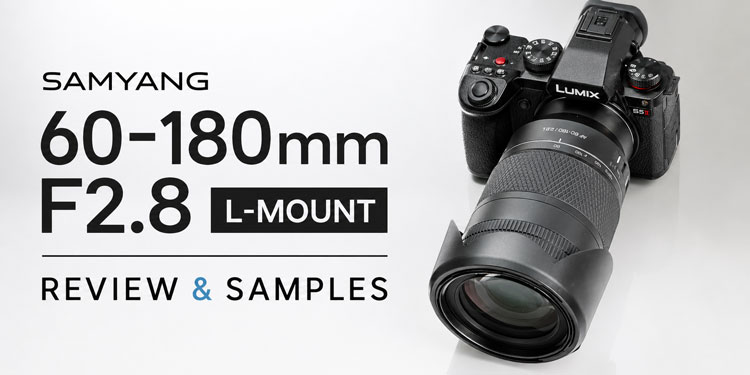
L-Mount shooters have been stuck with a bad choice: pay up and wear a 3-pound 70-200, or pretend a 28-70 can do telephoto work. Before Begin Let me clarify this is a non-sponsored post. LK Samyang’s new AF 60-180mm F2.8 L is the first lens that actually breaks that stalemate. It is a constant F2.8 zoom. It weighs 728g — 1.6 pounds. It sells for $1,199 in the U.S., $100 more than the Sony E-mount version and hundreds less than Sigma, Panasonic, or Leica’s 70-200s. No optical stabilization. The barrel extends when you zoom. And after one afternoon on a Panasonic S5II, it already made the frame that answers the only question most people have: can a cheap, light tele zoom isolate a face in a crowd at 180mm?
Yes. Look at this.
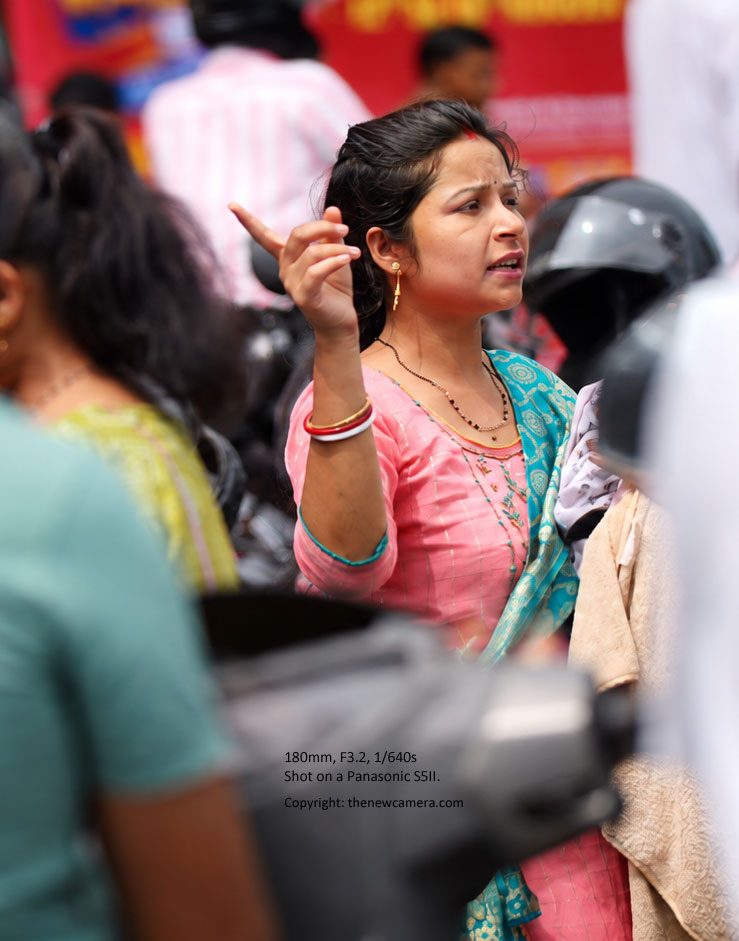
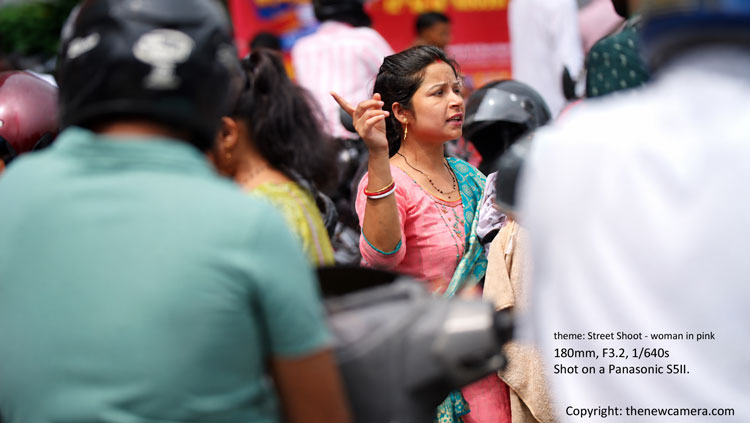
Caption: Samyang 16-180mm F2.8 – @180mm, F3.2, 1/640s on a Panasonic S5II. This is the sample image. Lens AF lock speed is amazingly fast while capturing faces during street shoot
Quick specs (so you can keep scrolling)
- Lens: LK Samyang / Schneider-Kreuznach AF 60-180mm F2.8
- Mount: L-Mount full frame (also Sony E)
- U.S. price: $1,199 L-Mount / $1,099 E-Mount (B&H)
- Weight: 728g L / 730g E — 1.6 lb
- Aperture: F2.8 constant, 9 blades
- Optics: 17 elements / 14 groups (7 ED, 2 aspherical, 1 HR)
- Min focus: 13.8 in / 0.35m at 60mm; 31 in / 0.79m at 180mm
- Max magnification: 0.26×
- Filter: 77mm
- OIS: none (use IBIS)
- Weather sealing: yes
- Camera for these samples: Panasonic Lumix S5II
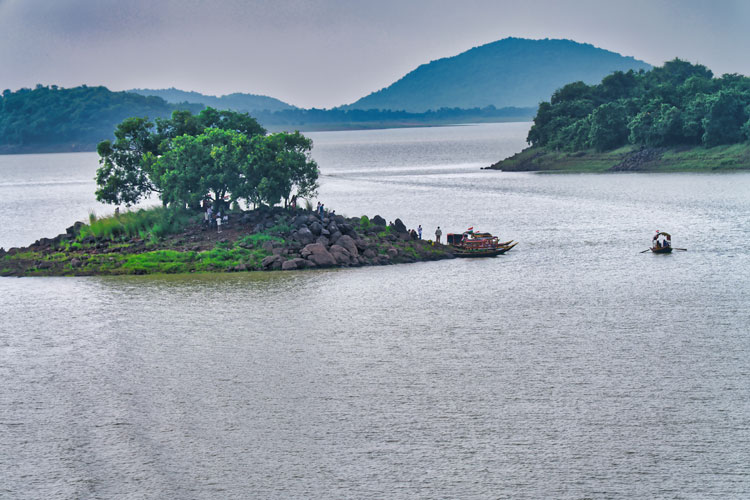
These are field samples, not lab charts. They were shot at Maithon, a reservoir in eastern India – think lake town, rental boats, haze, and a street that never empties. Flat light until evening. That is a better test than a brick wall in an air-conditioned studio.
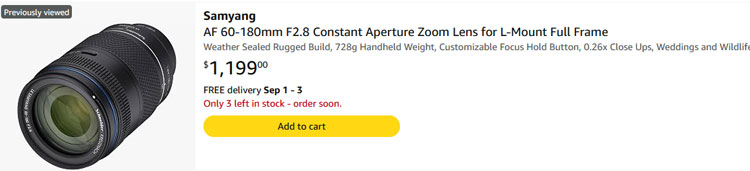
What you’re actually buying
Everybody writes “70-200” on a press release. In the hand, the extra 10mm at the short end is the more useful number. Sixty millimeters is still an environmental lens. You can stand on a boat landing, keep a hull, a ramp, and three people in life jackets in the same frame, and not feel like you stepped into a longer prime. At the other end, 180mm is enough to pull a face out of traffic or a flag off a moving boat.
The spec sheet is honest about the compromises. Linear stepping motor. Floating focus. USB-C on the barrel for firmware. Weather seals at the moving parts. No OIS.
On an S5II that last point matters. The body has good in-body stabilization, but at 180mm you are still asking a sensor-shift system to tidy up a long, slightly front-heavy zoom. The street frame that opens this review was 1/640 at F3.2. That is not heroic. It is the correct way to use a lens that does not stabilize itself.
Sample images: sharpness, isolation, and that 180mm street shot
The woman in pink is the picture I would send anyone who asked what this lens does. She is not posed. She is mid-sentence, finger up, jewelry catching the only decent light on the block. The mint-green shirt and the white sleeve in the foreground are not mistakes. They are what 180mm does to a crowd: it turns other people into weather.
Look at the jewelry before you look at the bokeh. The chain, the earring, the red-and-white bangles – those edges are where a mid-priced zoom usually goes soft first when you shoot through heat and dust. Here they hold. The fabric of the blouse keeps its grid. The teal border of the scarf does not smear into the pink.
This frame is F3.2, a third of a stop down from wide open, and the subject is not at minimum focus. That is how most people will actually use 180mm: a person, a little distance, a mess behind them.
Autofocus did the unglamorous job. The S5II’s subject detection had a face to lock, and the lens did not hunt in a way the file records. You cannot judge tracking from one still. You can only say the still is sharp where it needed to be sharp.

Caption: Mother Love. 180mm, F3.2, 1/640s, Panasonic S5II.
Sample images: color on a gray lake
Flat light is a mean test for color. Everything wants to go olive. The two tourist boats — “Babu Boat,” Ghat 3 and Ghat 8, “I Love Maithon” painted on the seats like a joke that became a brand – are useful because they are loud on purpose. Green hull, red bench, yellow stern, sunflower decals.
The lens does not hype them. That is a compliment. Oversaturated greens are the usual sin of contrasty telephotos on overcast water. They turn grass fluorescent and leave the hulls looking like toys. Here the paint stays in the world. You can read the lettering without leaning in.
If you are shopping this zoom as a cheaper 70-200, this is the file that answers the sharpness-at-normal-distance question better than the street shot. Nothing is moving. The subject is a set of straight lines and hard colors. They survive.
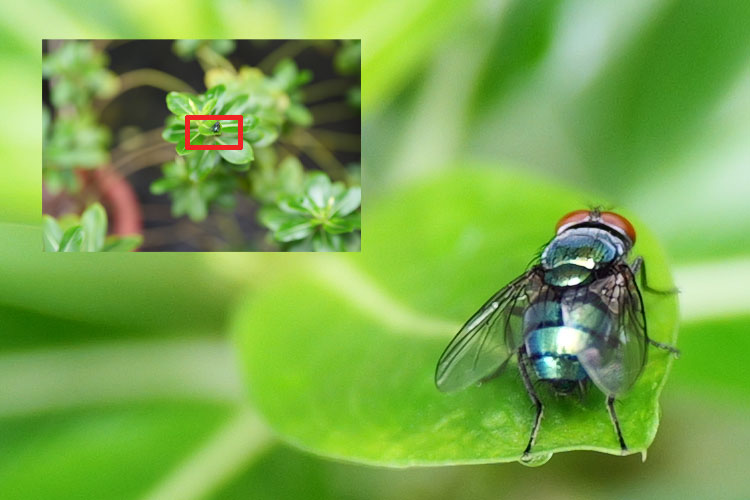
Captred Housefly on a Leaf, @60mm F2.8 S5 II, Scaled at 100%
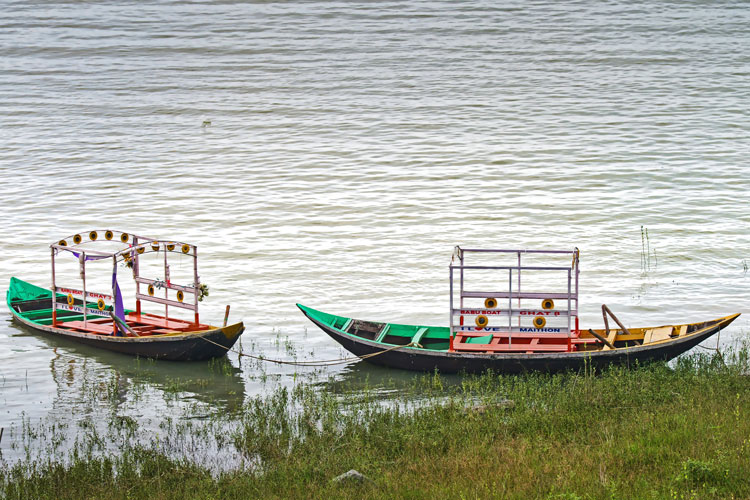
Caption: Mid-range color test. If the lettering goes, the lens has already told you what it is.
Sample images: telephoto compression
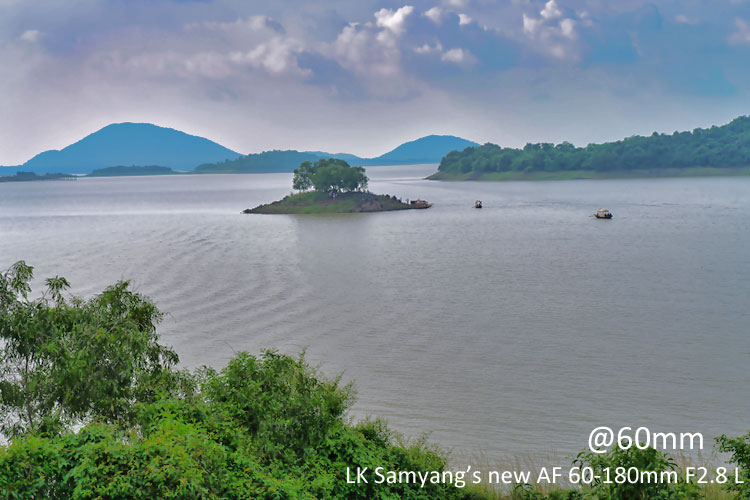
The small rocky spit in the reservoir is the most “this is why you buy a zoom” picture in the set. A wide lens would have made a postcard: water, a lump of land, some sky. At the long end of 60-180 the trees sit on the rocks, the people become a scale marker, the moored boat tucks into the shore, a second boat crawls away, and the hills behind them step forward.
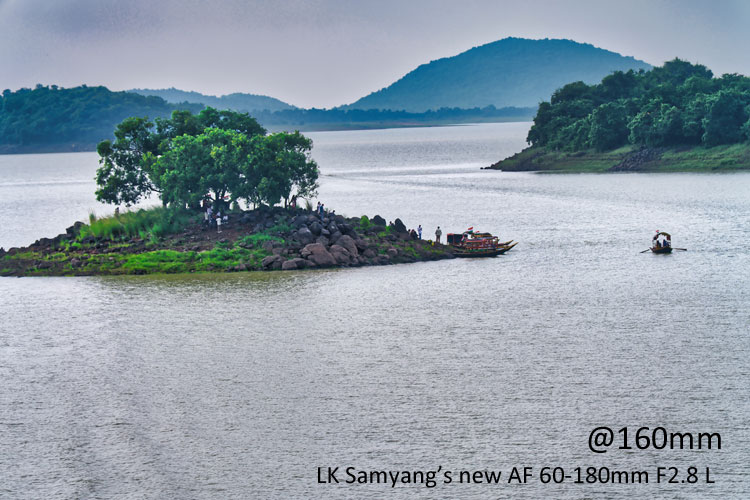
That stacking is what you pay for. Not bokeh. Not the word professional. The ability to make distance feel arranged.
The haze is honest – humid-country air, not a mist filter. The far ridge goes blue-gray the way it should. Contrast falls off with distance instead of being punched back by in-camera Clarity. If you like crunchy landscapes, add that later. The file does not force the decision.
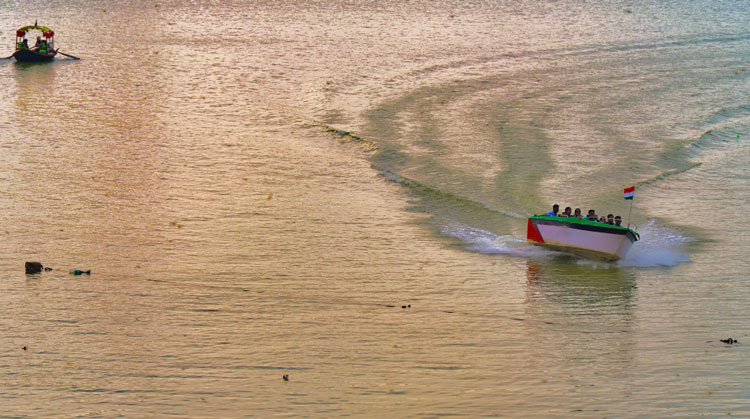
One frame has to move, or this is only a review of parked things. The speedboat with the Indian flag is that frame: orange and green hull, Yamaha on the transom, seven people, a white wake that has not yet decided to be elegant. The lens kept the boat together. Faces in the seats are small, but they are faces, not smudges. The flag is a sharp rectangle, which is harder than it looks when the thing is fluttering.
This is not a sports-AF test. It is one still, not a burst. What it shows is that an S5II and this zoom can freeze a rental boat at lake speed without the file feeling nervous. If you shoot football or birds, you will want a longer test. If you shoot the kind of life that happens on water — hired boats, flags, someone standing up when they should not — this is already relevant.
This is 60-180mm used as a notebook, not a portrait lens. You need enough reach to stand on the bank and not become part of the boarding. You need enough width that the ramp, the boat, and the people still belong to each other. You need the colors of cheap steel and rental life jackets to stay ugly in the correct way. The file does that.
Then the weather finally did something. Cloud opened enough for a strip of sun to lay itself on the water. A small boat sat in the glitter like a period. The dock became a silhouette. Two figures on the rocks were doing the only sensible thing, which was looking at the light.
Tele zooms are often poor at this hour. They crush the sky into plastic or leave the land as a black step. This frame keeps both. The highlight on the water has a shape. The far trees are a line, not a smudge. The little boat is dark enough to read as a boat.
Dynamic range here is more camera than lens — the S5II’s sensor is doing the heavy lifting — but a bad optic would have already veined the bright water with purple or washed the midtones. It does not.
What these pictures cannot tell you
It would be dishonest to turn a handful of frames into a full optical scorecard. There is no brick wall. There is no focus-shift test at F2.8 through the zoom. There is no video AF pull. There is no rain, even though the barrel is sealed. There is no night street with point lights to judge coma. Some E-mount reviewers have already called the zoom ring stiff; these files do not speak to that. They were made by someone who had already decided to take pictures instead of taking notes.
What they do say, with some confidence:
- At 180mm, subject isolation in a crowd is the real feature, not a marketing line.
- Color holds on loud, painted subjects without going sour in haze.
- The long end compresses a landscape the way you hope a 70-200 will.
- AF on the S5II is trustworthy on people and on a boat that is not trying to escape.
- You will want shutter speed at the long end. This lens will not save a 1/80 handheld hero shot.
Samyang 60-180mm F2.8 vs Sigma 70-200 (and the rest) L-Mount does not get a Tamron 70-180. The comparison that actually matters is Sigma’s 70-200mm F2.8 DG DN OS Sports, with the Panasonic and Leica 70-200s in the next chair.
Those lenses internally zoom, have optical stabilization, and feel like tools you throw in a wet bag. They also weigh about 2.9 to 3.7 pounds. The Samyang is half that weight class. You feel it at the end of a staircase.
What you give up is not mysterious:
- No OIS, so video walk-and-talks and dusk handheld work depend on the body
- Extending barrel, so more moving surface area than an internal-zoom design
- 180mm, not 200mm
In stills at Maithon, none of those absences showed up as a missing photograph. They will show up if your work is indoor ceremony aisles at 1/100, or if you live on a monopod at a football game.
Against primes, the math is simpler. An 85mm and a 135mm will usually be sharper and prettier wide open. They will not give you the spit of land, the speedboat, and the dock without walking a mile and missing the light. This zoom is a coverage argument, not a bokeh argument.
Who should buy the Samyang 60-180mm F2.8 L
Buy it if:
- You shoot Panasonic S5II / S9, Leica SL, or Sigma L-Mount bodies
- You want F2.8 reach without wearing a 70-200
- You travel, shoot people, or work events where weight is the real enemy
- $1,199 is the number that makes the lens leave the store
Skip it if:
- You already own the Sigma 70-200 Sports
- You need built-in stabilization for video or slow shutter work
- You need internal zoom and 200mm for sports
- You want a lab-perfect optic more than a lens you will actually carry
Field scorecard
Treat these as notes from one afternoon, not laboratory marks.
- Handling / weight: 9 — this is the reason to buy it
- Isolation at 180mm: 9 — the street file is the evidence
- Color: 8 — natural in haze, no neon grass
- Landscape compression: 9 — exactly what a short tele zoom is for
- AF with S5II stills: 8 — trustworthy on people and a hired boat
- Stabilization: 4 — none in the lens; plan shutter speeds
- Value on L-Mount: 9 — the best part of the product
Verdict
The LK Samyang AF 60-180mm F2.8 is not the best F2.8 tele zoom you can put on an L-Mount body. It is the one you will actually take to a lake on a gray day, and then into a street where nobody is waiting for you to change lenses.
The Maithon files are modest pictures. That is why they are useful. They show a lens that keeps faces, paint, distance, and a little weather in the same afternoon without asking to be treated like laboratory equipment.
On the S5II, at 180mm, in a crowd, it already made the photograph I would keep. The rest of the set is the walk back to the car. For a 1.6-pound zoom at $1,199, that is a decent day’s work.
The article “Don’t Buy a 3-Pound L-Mount 70-200 Until You See These Samyang 60-180mm F2.8 Samples” was written by thenewcamera.com team on 4:22 pm, Thursday, 27 August 2026, Greenwich Mean Time (GMT). | You can also follow us on Our Official Social Media Handles FACEBOOK | TWITTER | INSTAGRAM > get live news — > DJI Rumors | Insta360 News