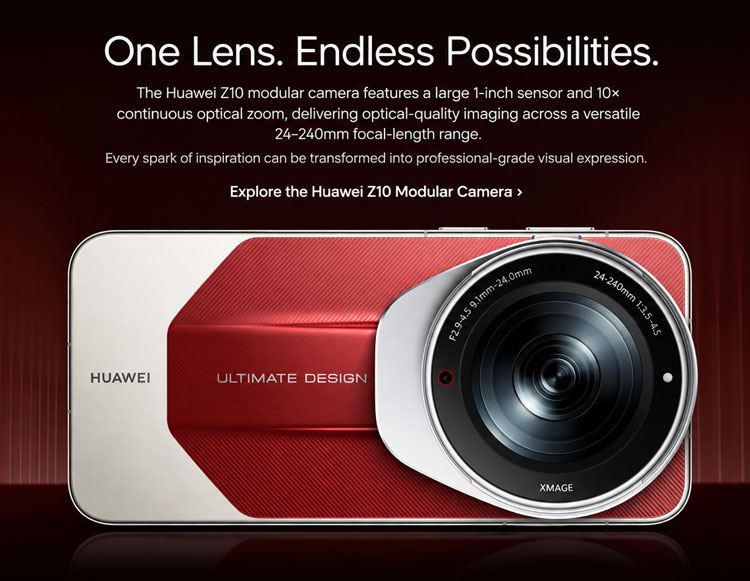
Huawei is trying to do something that Sony did a few years back, but this is said to be one of the finest QX series-style cameras ever made, so we should look at the Z10. Then they have solved the biggest problem of the external cameras that eventually makes it unusable, and the biggest issue is the lack of connectivity. The Sony QX series, with 1-inch/APS-C sensors, was very good, but due to the slow data transmission, a single image capture would take 5 to 15 seconds of time to complete the entire process.
Today, the released camera connects to a smartphone in a DSLR-style, and while mounting it, it connects to the power supply contact points as well as the data supply contact points of the smartphone. So while you are using the Z10 camera module with a 1-inch sensor, it seamlessly acts as a camera lens module without any visible lag, and with that, you can do wonders since, according to the claims made by Huawei, it surpasses the image quality of today’s APS-C sensor-based cameras. One of the most important parts, the image processing, is done by the Huawei smartphone itself, and with the help of AI engines, it upscales the overall image/video quality captured by the lens.
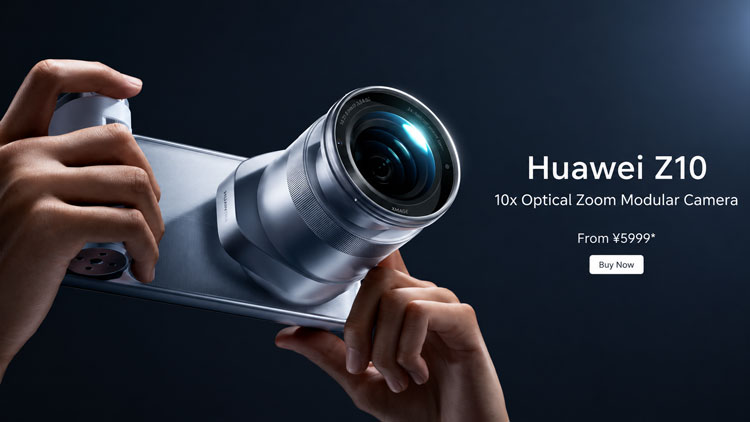
Huawei launched it on 1 October 2026 as the 睿影 Z10 modular camera for the Mate 90 Pro Max Collector’s Edition and Mate 90 RS Ultimate Design only. It is not a teleconverter sitting in front of the phone’s own sensor. It is a self-contained camera: lens, sensor, motors and focus system in one module, with the phone used for power, ISP, storage and the camera UI.
What it actually is
50MP 1-inch RYYB sensor (larger than the phone’s own main camera)
19 elements in 6 groups, including ultra-low-dispersion and aspherical glass, plus OIS and autofocus
Laser AF, anti-flicker sensor, third-generation Red Maple colour sensor, control ring
HyperClick mount: mechanical lock plus metal contacts for power and data, no Wi-Fi
About 346 g, ¥5,999 in China (roughly $850–900). Global availability is not confirmed
The Verge’s description is accurate: this is almost a camera that happens to use the phone for processing and the screen.
Why the Sony QX series failed
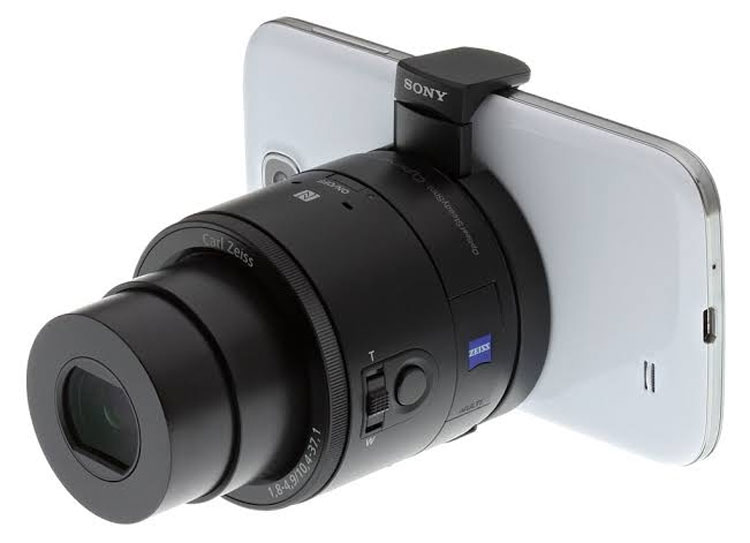
Sony’s lens-style cameras (QX10, QX100, QX30, and the APS-C QX1) launched in 2013–14. The QX100 was the closest ancestor: 1-inch 20MP sensor, Zeiss 28–100 mm f/1.8–4.9, its own battery, clipped to the phone.
They died for reasons reviewers documented at the time, not because the sensor was bad.
Connection was Wi-Fi plus NFC. Pairing took 5–20 seconds, and you often had to do it again after leaving the app.
Live view lagged. Fast movement froze the feed or crashed PlayMemories Mobile. Crowded Wi-Fi made it worse.
The phone was locked to Sony’s app. No native camera, limited manual control, no RAW on the early models, and both batteries drained fast because of the constant stream.
Image quality was fine for 2013, but phones improved every year while the QX stayed a second device you had to charge, pair and carry.
CNET called shooting with the QX10 “extremely frustrating” because of lag and reconnects. That UX, not the Zeiss glass, is what the category could not survive.
Where the Z10 is actually better
The hard-contact mount is the real difference. Data and power go over pins, so the preview lag and pairing ritual that defined the QX do not apply. Chinese coverage describes the module taking over the phone’s native camera app, with the same UI and third-party apps able to call it through the system interface.
Optically it also outranges the QX100: 10× continuous zoom to 240 mm instead of 3.6× to 100 mm, with a larger entrance pupil at the long end than Sony’s RX100 VII class 1-inch zooms. Because every focal length uses the same 1-inch sensor, there is no jump when the phone would normally switch from main to periscope to crop. Huawei’s ISP and XMAGE processing sit on top of real optical data instead of a tiny phone sensor plus a clip-on converter.
That is a cleaner architecture than vivo/OPPO teleconverters, which only add glass in front of the phone’s existing telephoto.
Why it is still not “the future”
Three limits keep it a niche tool.
It only fits two collector-level Mate 90 variants. Everyone else is locked out, and the phones themselves are China-market for now. At roughly $900 on top of an already expensive flagship, it costs as much as a used RX100 VII or an APS-C kit lens.
At 346 g the module alone is heavier than many compact cameras. Collapsed it is about the size of a 50 mm prime; extended it is a small cannon. You are no longer carrying a phone. You are carrying a phone with a camera bolted to it, which is fine for concerts, sport and travel days, and pointless for pocket use.
Independent image tests are still thin – it launched today. Huawei’s own MTF claims against 18–200 mm lenses should be treated as marketing until side-by-side files exist. A dedicated 1-inch superzoom or a small mirrorless still wins on battery life, viewfinder, grip and file flexibility.
So the Z10 is the first external phone camera that does not repeat Sony’s connectivity mistake. For Mate 90 owners in China who want 24–240 mm optical reach without a second body, it is a real tool. For photography as a whole, the future is still better sensors and lenses inside devices people already carry — or a proper camera when the shot needs one.
TNC Take: Huawei’s Ruiying Z10 is a real camera bolted to a phone, not a clip-on lens: 50MP 1-inch sensor, 24–240 mm continuous optical zoom, f/2.0–4.5, about 346 g. It connects by metal contacts, so it avoids the Wi-Fi lag that killed Sony’s QX series. It only fits the Mate 90 Pro Max Collector’s Edition and Mate 90 RS, costs ¥5,999 (about $895), and went on sale in China on 1 October 2026. There is no US date. Huawei has not announced a global or US launch for the Z10 or the Mate 90 phones it needs. An official US release is unlikely: these phones use Kirin chips and HarmonyOS under ongoing US restrictions, and recent Mate flagships have stayed out of the American market. Grey-import units may show up later, but that is not a launch.
The article “Huawei just built the camera Sony QX lenses failed to be” was written by thenewcamera.com team on 6:35 pm, Thursday, 1 October 2026, Greenwich Mean Time | You can also follow us on Our Official Social Media HandlesFACEBOOK | TWITTER | INSTAGRAM> get live news — > DJI Rumors | Insta360 News
Okay, we have some fresh information about the upcoming DJI Dock 4 for the DJI Matrice 5TD. Not only that, but we also have a fresh set of images of the upcoming drone, Neo 2 as well as the DJI Matrice 5TD.
DJI Matrice 5TD image leaked earlier too, back on July 26th, 2026. We shared highly detailed images in high res of the drone; obviously, at that time it was in the testing phase, and now it’s almost ready for announcement in Q4 of 2026.
DJI Matrice 5
On 25 September 2026, Igor Bogdanov / @Quadro_News posted three labelled images and one line that actually moves the story: there will be a DJI Dock 4, and it will be used in stores soon.
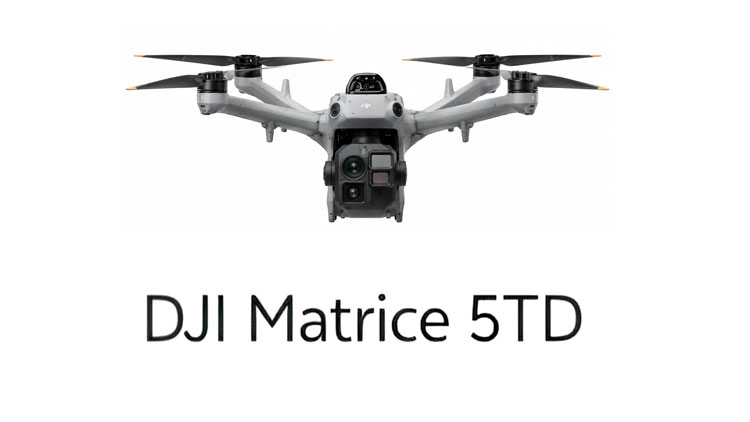
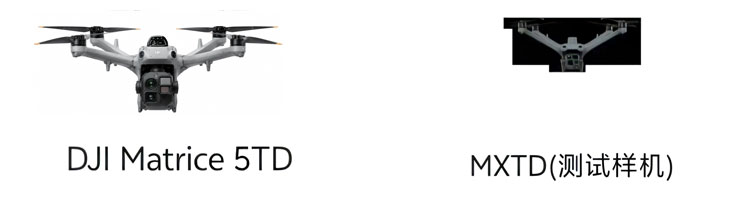
Matrice 5TD is the product name. It is printed under the clean white photo, and it was already on the 22 September card as DJI Matrice 5TD, model code M5TD. That is the name built like Matrice 4TD: a dock-ready thermal aircraft. MXTD is the test label. The darker photo is marked MXTD (测试样机), and 测试样机 means test prototype. It is an internal or filing code, not the name DJI would put on a box.
What the recent post says about the upcoming products
The 25 September image is a front, in-flight style shot on white, watermarked by Igor Bogdanov, with the words DJI Matrice 5TD under the drone. What is visible:
A white compact enterprise quad, arms out, not a Matrice 400-class airframe.
A multi-window gimbal under the nose.
A small dark dome on top of the body. That could be RTK, an obstacle sensor, or both. The photo does not say which.
The same general size class as the Matrice 4 series, not the heavy Matrice 300 / 350 / 400 line.
This is a different kind of image from the 26 July Matrice 5 set. Those July frames were taped prototypes with manufacturing labels. This one is a finished-looking, named product shot. That is why it matters.
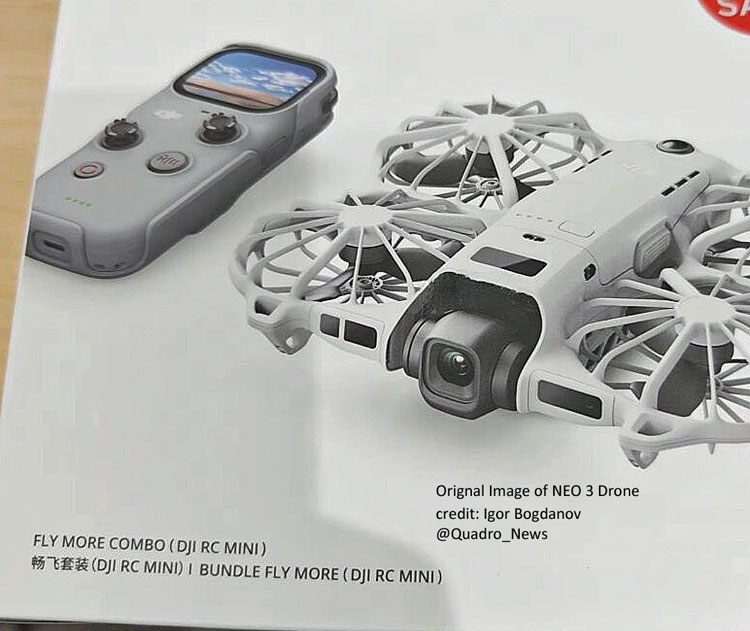
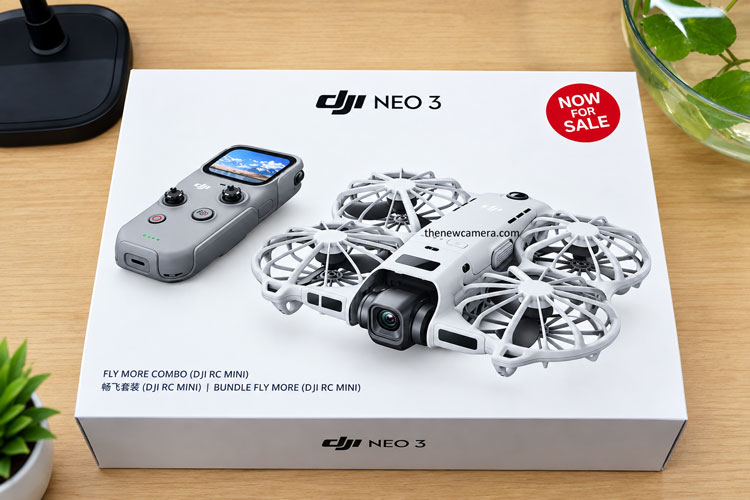
The Neo 3 frame in the same post is the drone we already covered from the retail box and the 21 September production filing. It is context. It is not the story.
DJI’s dock naming is already a pattern, not a guess we invented.
Generation
Dock
Aircraft
2024
Dock 2
Matrice 3D / 3TD
Feb 2025
Dock 3
Matrice 4D / 4TD
Now, unconfirmed
Dock 4
Matrice 5TD is the name on the leak
On the current line, D is the dock-ready aircraft and T is the thermal version. Matrice 4TD is the thermal drone that lives in Dock 3. Matrice 5TD is the same kind of name, one generation on.
That does not prove Dock 4 only flies the 5TD. Dock 3 launched with both a 4D and a 4TD. A non-thermal Matrice 5D is possible and not shown here.
What is confirmed, and what is not
DJI Dock 4 is planned and will be used in stores soon. The igor same post shows the first labeled DJI Matrice 5TD photo and an MXTD airframe marked as a test prototype. The 5TD name and model code M5TD were already on his 22 September card; flight time, sensors, and weight are still unconfirmed. For US buyers this is not a purchase path – new DJI docks remain blocked from fresh FCC authorization, and “stores soon” does not mean a US shelf.
What would move the story from a name to a product is a photo of the dock, a charge-time or IP figure, or a dealer listing. Until one of those appears, the record is this: Dock 4 is confirmed by the leak, it is described as store-bound, and the aircraft shown beside that claim is a labeled Matrice 5TD, with an MXTD airframe marked as a test prototype.
The article “DJI Dock 4 Confirmed for Stores – First Labelled Matrice 5TD Photo Also Leaks” was written by thenewcamera.com team on 4:54 pm, Saturday, 26 September 2026, Greenwich Mean Time (GMT) | You can also follow us on Our Official Social Media HandlesFACEBOOK | TWITTER | INSTAGRAM> get live news — > DJI Rumors | Insta360 News
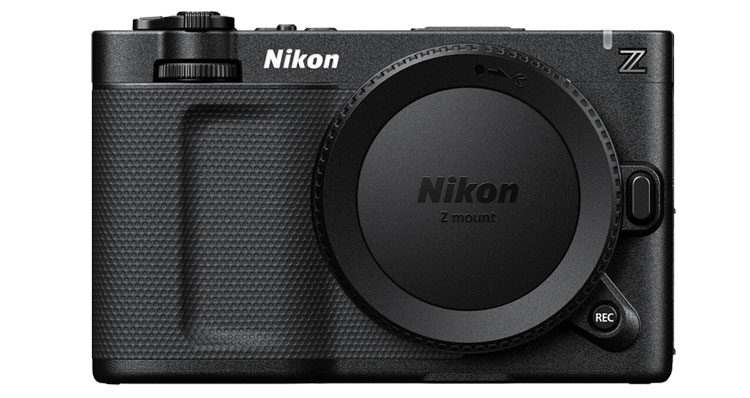
Image of Nikon ZR Camera – Nikon Z5II C expected to feature similar body design
Nikon is planning to announce a new camera called the Z5IIc; obviously, the Z5 name itself makes it clear. It has been designed and developed for new-age content creators, those who love to have professional controls/workflow in their camera without spending a lot.
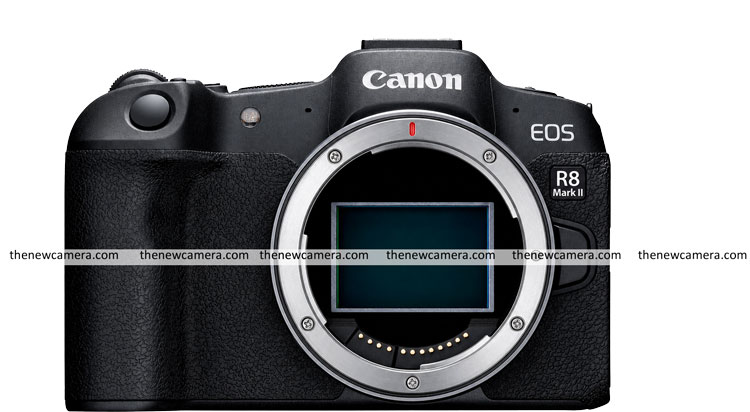
Nikon is planning to beat the Canon R6V range with their latest announcement. As we all know, Canon didn’t try their best to make a perfect rival to the Nikon Z5II camera, but the price of the Canon R8 Mark II matches the Canon R6 Mark II camera instead of making a perfect competitor. They have accidentally put the arrival of their own R6 Mark II camera in their market.
And technically, the Z5II is still safe in its price since Canon does not have any camera that can directly compete with the Z5II at its price range with what it offers.
Now it’s time for Nikon to announce their camera. Nikon is trying to compete with the CanonR6V with its latest announcement, which is about to arrive. Obviously, the Z5IIC, with a very aggressive price and alongside impressive core specifications directly coming from RED camera makers, is customised for beginners and professional content creators. Nikon wants to dominate the beginner space with their offerings and price.
Arrival date
The announcement is expected next week — the week of 21–27 September 2026.
That is the arrival window for the public reveal, not a confirmed first-sale date. Nikon has not said when units will reach US dealers or Nikon India.
Two signals support the timing:
Nikon Imaging Japan’s NIKON MEETUP calendar already lists Z5IIC in the equipment filter used for dealer events and Plaza sessions. That page is an official Nikon property: https://nij.nikon.com/connect/event/meetup/. Japanese users posted screenshots of the filter on 18 September.
A Nikon Germany listing / asset for Z5IIC appeared and was removed the same day. That usually means a regional CMS or dealer tool was updated early.
Together, those points are stronger than a recycled spec rumor. They still do not equal a finished announcement.
Expected price
No official price has been issued.
Z5IIC is being described as a compact Z5II, not a stacked-sensor Z6III. That usually means:
Body
Current street / offer price (Sept 2026)
Nikon Z5IIC
about $1,699–$1,899 body only
Do not treat those figures as leaked numbers. They are positioning. Compact full-frame bodies often cost a premium over the standard body because of a new chassis, even when the sensor is shared.
Specifications: what is known vs what is not
Unofficial / circulating
Compact full-frame body aimed at Sony’s a7C class
About 24MP FX sensor
IBIS
Built on Z5II internals
Viewfinder either removed, reduced, or built in without the usual EVF hump
Additional video features versus Z5II
If Z5IIC is a compact variant, expect most of that imaging stack to carry over. The open questions are body size, finder, heat, battery life and whether Nikon keeps two card slots.
Why a “C” body would matter
Nikon still does not have a true compact full-frame stills camera. Z5II is capable and relatively small for FX, but it keeps a conventional EVF hump and SLR-like shape. Sony already occupies that compact slot with a7C II / a7CR. Nikon is about to make a new consumer space in the market in FF category
The article “Nikon Z5IIc Price, Specifications and Arrival Date: Announcement Expected Next Week” was written by thenewcamera.com team on
6:42 pm, Friday, 18 September 2026, Greenwich Mean Time (GMT) | You can also follow us on Our Official Social Media HandlesFACEBOOK | TWITTER | INSTAGRAM > get live news + Nikon Rumors 24X7
iPhone 18 Pro has been announced, and as an iPhone 17 Pro user, I was thinking of upgrading the smartphone, but before that I wanted to do a little bit of research about the upgrade, specifically in the camera division. Most of my content is created with full-frame cameras or crop bodies, or sometimes I also use the recently announced Insta360 Luna Ultra for creating my content. But at the very same time, the iPhone 17 Pro was also an integral part of my content creation before the arrival of the Insta360 Luna Ultra, and most of my content was from it whenever I had to produce a quick news byte. Generally, I was using and still use, the iPhone 17 Pro front camera as my primary camera for shooting content.
Now, after the announcement of the iPhone 18 Pro and its variants, a big question was on my mind: does it come with a major upgrade, as many social media influencers and Apple’s marketing team have advertised? So I wanted to do a bit of research to find out where I’d see that upgrade, and whether the upgrades are really worth it, or if my existing iPhone 17 Pro is still as good as the iPhone 17 Pro successor. The 18 Pro and the variants didn’t receive that many updates, which mainly inclined me to purchase a new phone.
So, I’m just putting down the summary, the major parts of my analysis, what I have done before making the decision, and at the end, I’m going to discuss what I have decided. I’m going for an update. I will stick with my iPhone 17 Pro unless an update arrives in the front and rear cameras, which I use the most. So, let’s analyse what update actually arrived inside the iPhone 18 Pro.
The one-sentence version
Apple upgraded only the rear main camera (the Main (1X) camera module, not the telephoto or ultrawide). The ultra-wide, telephoto, and the front camera are the same hardware as iPhone 17 Pro. The new trick is a mechanical variable aperture on the 1x main lens, plus real manual controls in the stock Camera app.
Phones reach stores on 18 September 2026, so this is based on Apple’s official specs, the launch event, and early analysis — not long-term owner reviews.
What changed vs iPhone 17 Pro
Hardware
Camera
iPhone 17 Pro
iPhone 18 Pro
Did it change?
Rear main (1x)
48MP, fixed f/1.78
48MP, variable f/1.48 / f/1.8 / f/2.8 / f/4.0. Apple calls the sensor new
Yes — this is the upgrade
Rear ultra-wide (0.5x)
48MP, 13mm, f/2.2
48MP, 13mm, f/2.2
No
Rear telephoto (4x / 8x)
48MP, 100mm / 200mm, f/2.8
48MP, 100mm / 200mm, f/2.8
No
Front / selfie
18MP Center Stage, f/1.9
18MP Center Stage, f/1.9
No
Pro and Pro Max use the same camera hardware.
The main camera now has a mechanical iris.Apple said on stage it uses six laser-cut blades, each thinner than a human hair. They move between four stops: f/1.48, f/1.8, f/2.8 and f/4.0. Last year that lens was stuck wide open at f/1.78.
Opening to f/1.48 lets in about 45% more light than f/1.78. That lines up with Apple’s claim of around 50% better low-light performance at the widest setting. Closing to f/4 keeps more of a group photo or landscape sharp with optics, not only software blur.
Do not read “new sensor” as a bigger sensor. Apple’s spec sheet still lists the same pixel size as last year: 2.44 µm quad-pixel / 1.22 µm individual.
Software
Feature
What it does
Who notices it
Pro Controls
Manual aperture, shutter speed, white balance and a histogram in the built-in Camera app
People who used Halide or other third-party apps
Photographic Styles 3
Adds texture and grain, including skin texture
Anyone who dislikes the default smooth-skin look
Updated main-camera processing
Apple says the main camera pipeline is updated for sharper stills
1x / 2x / 3x shooters
Cinematic after capture
Add the shallow-depth video look after you shoot. Rear Cinematic now goes to 4K60. Front stays 4K30
Video creators
4K HDR time-lapse
Spec sheet now lists time-lapse up to 4K Dolby Vision
Video creators
Smart focus tracking
Locks a subject and keeps focus even if they leave and re-enter the frame
Kids, sports, talking-head video
Apple Reference Image
Signed original of what the main camera sensor captured
People who care about proving a photo is authentic
Better Audio Mix
Cleaner voices plus music isolation
Video, not stills
Front camera Pro Controls include shutter speed, white balance and histogram. They do not include aperture, because the selfie lens is still fixed.
Which module fires at which zoom
You pick
Focal length
Module used
What it actually is
0.5x
13mm
Ultra Wide
Full ultra-wide lens
1x
24mm
Main
Full main lens
2x
48mm
Main
Center crop of the 48MP main sensor
3x
about 72mm
Main
Slider between 2x and 4x. Still the main camera. The tele lens cannot shoot wider than 4x
4x
100mm
Telephoto
Full telephoto lens
8x
200mm
Telephoto
Center crop of the 48MP tele sensor
10x–40x
—
Telephoto
Digital zoom. Quality drops
Apple’s preset buttons are 0.5x, 1x, 1.2x, 1.5x, 2x, 4x and 8x. There is no dedicated 3x button. 3x is the in-between slider.
Remember it this way:
0.5x = ultra-wide.
1x / 2x / 3x = main.
4x and above = telephoto.
So which module actually got the upgrade?
Module
Used at
Hardware update?
Main (wide)
1x, 2x, 3x
Yes — variable aperture. Apple also cites a new sensor and updated processing
Ultra Wide
0.5x
No — same as 17 Pro
Telephoto
4x, 8x and higher
No — same as 17 Pro
Front / selfie
Selfies and video calls
No — same as 17 Pro
What that means for your photos
If you mostly shoot…
Will 18 Pro look better?
Normal photos at 1x
Yes. This is the real upgrade
2x portraits (main-camera crop)
Slightly yes. Same upgraded main sensor
3x slider between 2x and 4x
Slightly yes, especially in lower light
4x portraits, concerts, distant subjects
No hardware gain. Same tele lens as 17 Pro
8x and tighter zoom
No hardware gain. Same tele crop as 17 Pro
Ultra-wide / landscapes at 0.5x
No hardware gain
Selfies
No hardware gain
What the new aperture actually does
Every iPhone main camera from the 14 Pro through the 17 Pro shot at a fixed f/1.78. The phone could not physically open or close the lens. Exposure was handled with shutter speed, ISO and software.
iPhone 18 Pro can physically change the opening:
Aperture
Lets in
Best for
f/1.48
Most light
Night, indoor, creamier background blur
f/1.8
A bit less
Everyday shots
f/2.8
Less light
More of the scene in focus
f/4.0
Least light
Groups, landscapes, sharper backgrounds
The phone can pick the stop automatically. In Pro Controls you can pick it yourself. Apple also opened an API so third-party camera apps can drive the iris.
Be honest about depth of field. This is still a small phone sensor. Moving from f/1.48 to f/4 is useful, but it is not the same as stopping down a full-frame 24mm lens. The more useful everyday wins are extra light at f/1.48, and being able to close the iris in bright sun so video shutter speed stays natural.
Should you upgrade from iPhone 17 Pro?
It all depends on whether you’re using the main camera module too much, which ranges between 1x, 2x and 3x, as we have explained already in the above part of the article, that 1x is the original 24mm focal length that the camera module is using, and other than that, when you are switching to 4x, then ur using the 100mm dedicated portrait camera module that didn’t get any upgrade like the 0.5x ultra-wide camera module.
Skip if your favourite shots are 4x / 8x zoom, ultra-wide, or selfies.
Those modules did not change. Last year’s jump — the 48MP telephoto — was the zoom upgrade. This year is a main-camera year.
iPhone 18 Pro is not a new triple-camera system. It is last year’s triple-camera system with a faster, mechanically adjustable main lens and a Camera app that finally behaves like a tool.
If you understand that 1x / 2x / 3x share one upgraded module, and 4x / 8x share one unchanged module, you already understand the camera story better than most launch coverage.
Notes: Specs checked against Apple’s iPhone 18 Pro pages and iPhone 17 Pro spec sheet, 11 September 2026. Independent lab photo tests were not widely available at the time of writi
he article “iPhone 18 Pro Camera Upgrade, Explained Simply” was written by thenewcamera.com team on 8:02 pm, Friday, 11 September 2026, Greenwich Mean Time (GMT) | You can also follow us on Our Official Social Media HandlesFACEBOOK | TWITTER | INSTAGRAM >more live Camera News + Canon Rumors 24X7
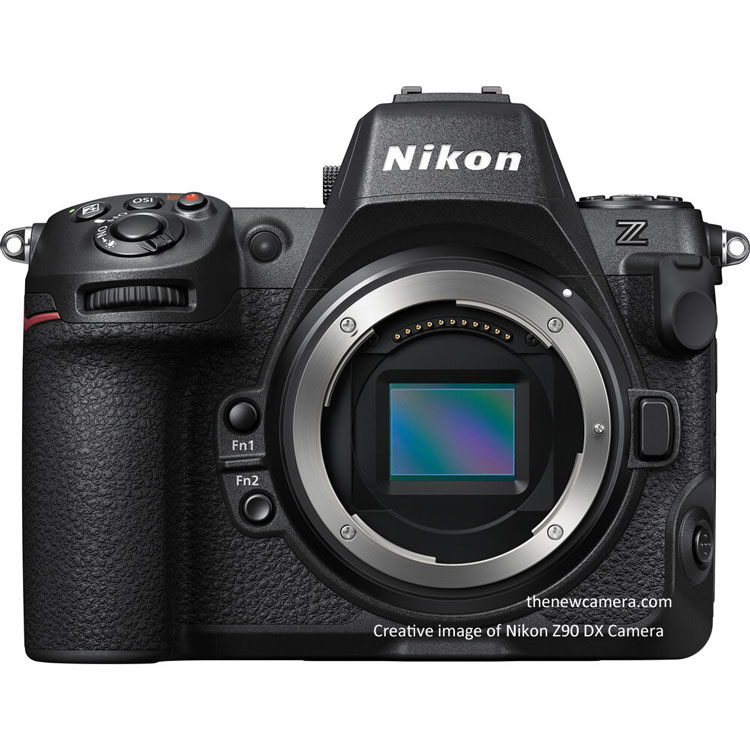
We have just received a fresh confirmation from a source regarding Nikon’s long-rumoured professional APS-C camera.
According to the latest information shared with us, Nikon’s pro-level APS-C / DX camera is now lined up for a September 2026 announcement. The same source also said that no other Nikon camera announcement is expected this year besides this one.
That last part is important. Nikon has already gone through 2026 without launching a new interchangeable-lens body; they are too busy in … (yes, we do have information that will be revealed soon).
This update is 100% accurate; the professional APS-C camera is the one product Nikon is holding back for later this month. Production Line body sent to pros, and more bodies are about to be sent to infulencers before the 2nd week of Sep.
The source was hesitant about the name
The source used the name. Keep the name Nikon Z90. As usual, since he is also deeply connected with Nikon, hesitated before sharing details.
That matches what we have been seeing for months.
For a long time, this camera has been circulating under different names:
Nikon Z90
Nikon Z70
Nikon Z80
Nikon Z500
Mini-Z9 / Mini-ZR / D500 successor
As we all know, that the Z70 name became much stronger after Apple briefly listed an unreleased Nikon Z70 on its official ProRes / ProRes RAW authorised products page in August. That listing was later removed.
So we are treating this as a professional APS-C Nikon Z-mount body coming in September-October 2026, not as a locked official name. Z90 is the name the source used. Z70 is still the name with the strongest public leak so far.
What kind of camera is this?
This is not another Z50 II or Z30-class body.
The camera being described is Nikon’s flagship APS-C / DX model — the one D500 users have been waiting for since Nikon moved fully into mirrorless.
Based on the current rumor picture, this is expected to sit clearly above the existing DX lineup:
Professional APS-C body
High-speed shooting
Strong autofocus
Built more like a compact Z8 / mini-Z9 than a beginner DX camera
Video features closer to the ZR family
Nikon still has no true flagship APS-C mirrorless camera. Canon already has the R7 class, and Sony has the A6700 class. That gap is exactly why this rumor has never died.
Lenses are also in the pipeline
The same source confirmed that lenses are also in the pipeline.
That part is easier to believe. Nikon already added two important DX lenses in late 2025:
NIKKOR Z DX 16-50mm f/2.8 VR
NIKKOR Z DX MC 35mm f/1.7
A professional APS-C body only makes sense if Nikon also has more DX glass coming behind it. We expect at least some additional DX lenses to be tied to this launch, even if Nikon does not announce the full lens set on the same day.
Why September makes sense
A September window has already been floating around for this camera. Nikon has also scheduled server maintenance on September 15, which rumor sites usually watch closely because those windows often sit near product announcements.
If the source is right, this could be the first real Nikon body announcement of 2026.
TNC Take
We are more confident about the product than the name.
A professional APS-C Nikon camera in September 2026 now looks very possible. The source saying “this is the only Nikon announcement left this year” also fits Nikon’s unusually quiet 2026 calendar.
Until Nikon publishes the press release, we will keep calling it Nikon’s pro APS-C camera, with Z90 as the name used by the source and Z70 as the strongest leaked designation so far.
Stay tuned. If September is the month, we should not have to wait much longer.
Stay Tuned. Stay Updated.
The article “Nikon Z70 / Z90 – A Pro APS-C Camera Expected Before September 2026” was written by thenewcamera.com team on 1:51 pm, Thursday, 3 September 2026, Greenwich Mean Time (GMT) | You can also follow us on Our Official Social Media HandlesFACEBOOK | TWITTER | INSTAGRAM > get live news + Nikon Rumors 24X7
Image of DJI International page – to be uploaded on Sep 3
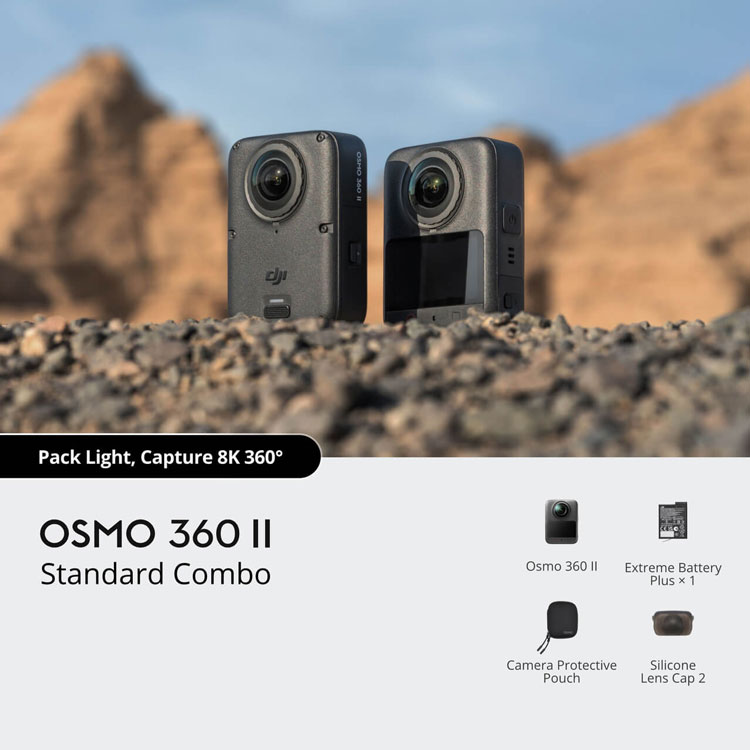
For 360 content creators in the United States of America, that’s the biggest question right now. Will the DJI Osmo 360 Mark II become available in the United States of America? Yes, we have seen the camera listed on US online retail websites, which has been described below in the latter part of the article, but wait, you should not take quick action to buy it. We never encourage you to buy an early listing that generally appears randomly. The best thing is that you should wait, and we are going to confirm in our post that the camera has arrived with its proper pricing, but before that, the camera is real, and the sale has already started in China, starting from August 13, 2026. In Japan, it has been stated that the camera will be available from September 2, 2026, and DJI’s own teaser has been locked to September 3, 2026, 7 AM Eastern Standard Time, which gives us very clear information that after the first week of September, the camera will become widely available across the globe.
If you are sitting in the United States right now, this is the only question that matters: can you actually check out an Osmo 360 II on a US website, and if not, should you just buy the Insta360 X6?
The camera is real. China has been selling it since 13 August 2026. Japan is dated 2 September. DJI’s own teaser is locked to 3 September 2026, 7:00 AM Eastern. What is still missing is an official US dollar price and a DJI Store US product page. Amazon has a listing. It is not DJI’s price.
That empty American page is not the same story as Pocket 4 / Pocket 4P. Those cameras never got an FCC grant. This one did.
OSMO 360 II US Status Tonight — One Table
Question
Answer as of 30 August 2026
B&H / Adorama official listing
Soon to Become Available
FCC authorization
Yes — FCC ID 2ANDR-OQ0022512, granted 21 Dec 2025
Legal to import / sell a previously authorized model?
Covered List blocks new grants, not this one
Will DJI put it on store.dji.com/us on 3 Sep?
Unknown. That is the whole article
What US buyers can order today
Insta360 X6 at $699.99, first-gen Osmo 360 used / leftover stock
DJI OSMO 360 II FCC Granted Before DJI 2025 Ban- Why This Camera Is Different From Pocket 4
A lot of US readers are mixing two DJI problems into one sentence. Separate them.
Problem A — Covered List (22 December 2025) The FCC put DJI on the Covered List. After that date, new equipment authorizations for DJI radios are frozen. That is why Osmo Pocket 4, Pocket 4P, Osmo Mobile 8P, Lito, and Mic Mini 2S never got a normal US launch.
Problem B — this specific camera The Osmo 360 II grant is dated 21 December 2025. That is one day before the cutoff. FCC ID 2ANDR-OQ0022512, filed to SZ DJI Osmo Technology Co., Ltd. Previously authorized models can still be imported and sold. DJI is allowed to sell this camera in America. They have simply not listed it.
So if 3 September comes and goes with no US SKU, that is a business decision, not an FCC lock. Same pattern as the first Osmo 360 in July 2025: DJI skipped its own US store, and B&H / Adorama / later Amazon filled the gap at $549.99 Standard / $699.99 Adventure.
Watch those three retailers on Wednesday morning, not only store.dji.com.
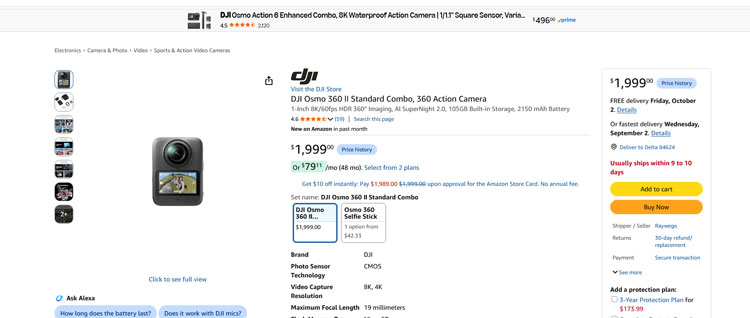
Yes, the DJI OSMO 360 II is listed at AMAZON.COM for USA buyers, but wait this is not the real price you have to pay.
Amazon US is indexing a page titled DJI Osmo 360 II Standard Combo. The spec line is real II language: 8K/60, AI SuperNight 2.0, 105GB, 2150mAh. So this is not a mislabeled gen-1 body.
Amazon listing tonight
What the camera actually sells for
Price
$1,999.00
China Standard Combo ¥3,299 (~$460)
Sold by
Raywego (third party)
DJI / official stores
Ships from DJI or Amazon?
No
—
Delivery
“Usually 9 to 10 days” / free delivery as late as 2 October
China is shipping now
“Visit the DJI Store” link
Amazon brand-page chrome
Does not mean DJI is the seller
$1,999 is about 4× the China price and about 3.5× what Gen 1 listed for in America ($549.99). If DJI follows the same spread as last year, a real US Standard Combo lands near $499–$549, not two thousand dollars.
This is the same first-print trick we already tracked on thenewcamera.com for the Osmo Pocket 4P.
We flagged the first Amazon US listings on 29 July — third-party stock, not DJI. Opening asks sat near $980 for the Standard Combo and $1,290–$1,390 for the Vlog Combo. By 16 August those same Amazon US pages had dropped to $663.21 Standard and $767.31 Vlog. That drop is on our own pages:
The $980 number was never DJI’s US price. It was the opening gray-market ask, and it did not hold. $1,999 on the Osmo 360 II tonight is that same first print.
Expect the 360 II page to run the same three steps:
First listing = high ($1,999 tonight).
More sellers pile on → the number walks down.
If DJI, Amazon, B&H or Adorama post an official SKU after the 3 Sep, 7 AM Eastern teaser, the $1,999 listing dies overnight.
One extra reason a drop is more likely here than on Pocket 4P: the 360 II already has an FCC grant. Pocket 4P never did, so it could only get cheaper through importers. This camera can get cheaper and get a real US store button.
Do not buy the Raywego listing. Screenshot it, date it, wait. We will update this same page when the number moves. If Wednesday morning still has no official SKU, the cleaner US checkout remains the Insta360 X6 at $699.99.
Expected US Price (Dollars)
DJI has not typed a USD MSRP. The honest way to estimate it is the published Asia prices plus what gen 1 actually sold for in the US.
Bundle
China
Hong Kong
First-gen US street
Expected Osmo 360 II US
Confidence
Standard Combo
¥3,299 (~$460)
HK$3,899 (~$499)
$549.99
$499 – $549
Medium-High
Adventure Combo
¥3,999 (~$560)
HK$4,699 (~$599)
$699.99
$599 – $649
Medium
Gray-market / China-ship eBay
—
—
—
$650 – $800 + no US warranty
Already visible
If DJI repeats the gen-1 playbook, Americans will not get the China $460 number. They will get something closer to $549 on a US invoice.
Gray-market Standard Combos are already floating near $685–$699 shipped from China. That is a bad deal. You pay X6 money, lose DJI Care, and still wait on a package. Do not do that this week.
The Date Americans Should Circle
Date
What happens
Why a US buyer cares
2 Sep 2026, 21:00 JST
DJI Japan on-sale time
First non-China storefront with a public clock
3 Sep 2026, 7:00 AM EDT
DJI teaser/event
4:00 AM Pacific / 7:00 AM New York. This is the US-facing timestamp
3 Sep 2026
25% Section 232 tariff on imported drones starts
Osmo 360 II is a camera, not a drone. Tariff should not hit it the same way Mini 5 Pro does. Still a messy week at customs
If 7 AM Eastern on 3 September produces a US price, this page gets an update the same hour. If it only produces another international store and another 404 in America, that is also an answer.
Buy the Insta360 X6 today if:
You need the camera in hand this week
You want a US retailer, US returns, and a warranty you can call
20m waterproofing and the bigger battery matter more than 8K60
Do not buy:
The Amazon $1,999 Raywego listing — that is a third-party page, not DJI’s US price
First-gen Osmo 360 at full $549 unless it is heavily discounted — the II fixes the scratched-lens problem
China-ship eBay “Osmo 360 II Standard Combo” at $680–$800 — that is X6 money with none of the US protections
Do not assume DJI Care / warranty on a gray-market body. Gen 1 already taught that lesson.
Bottom Line for US Buyers
The Osmo 360 II is not banned from America. It cleared the FCC one day before the door shut. DJI has still not given US buyers an official price. The only Amazon button tonight is a $1,999 third-party listing. That is not the number to write about as “US price.”
3 September, 7:00 AM Eastern is the date. Until that hour, the only flagship 360 camera an American can order without drama is the Insta360 X6 at $699.99.
We will update this page the moment B&H, Adorama, Amazon, or store.dji.com/us posts a dollar price.
The article “DJI Osmo 360 II US Release Date, Price & Availability: Can Americans Buy It? (August 30, 2026 Update)” was written by thenewcamera.com team on 7:50 pm, Sunday, 30 August 2026, Greenwich Mean Time (GMT) | You can also follow us on Our Official Social Media HandlesFACEBOOK | TWITTER | INSTAGRAM to get live news — > get live get live Camera News + Insta360 Drone Rumors 24X7
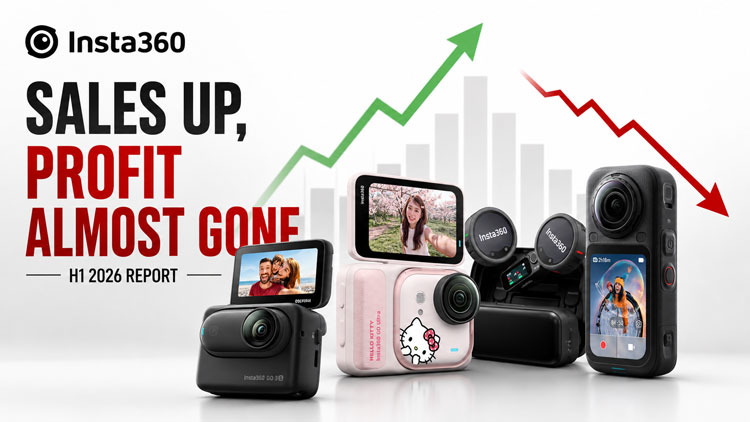
Insta360 is selling a lot of cameras, but they are not able to generate as much profit as they made in the previous year. And believe me, the sales are quite high, which means the numbers are more and higher, but the profit has reached its lowest point, specifically when compared to the previous year’s first-half profit.
Insta360, listed in China as 影石创新 (688775.SH), published its first-half 2026 report on the evening of 27 August. The headline is simple: the company sold a lot more cameras and made almost no money.
That is really a big contrast. We are going to explain this situation in this article in a detailed way, so let’s begin.
than Keep in mind that these profit figures and sales numbers are before the Luna Ultra and Luna Pro announcements. These two announcements hit differently and have become two of the top-selling pocket gimbal cameras in most stores across the United States of America. Since the DJI Pocket 4 Pro has now been banned not only in the USA, but the Asian market is also very keen towards the new Ultra. So, the second-half sales numbers will be quite a bit different than the first half.
1. The numbers check out
The figures circulating after the report match the official filing.
For January–June 2026, Insta360 reported:
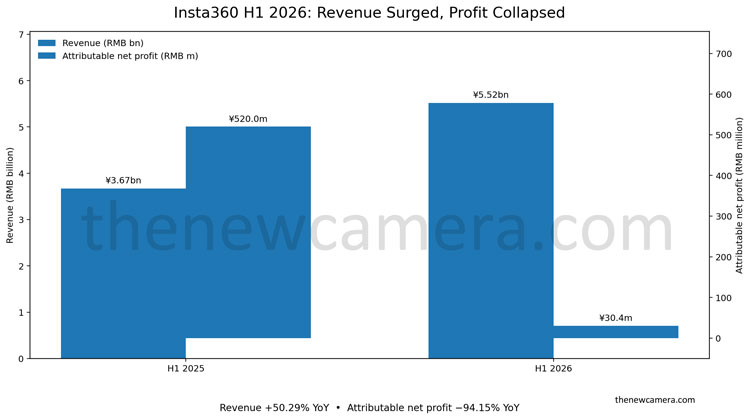
Revenue: RMB 5.517 billion, up 50.29% year on year
Net profit attributable to shareholders: RMB 30.41 million, down 94.15%
Profit excluding non-recurring items: a loss of RMB 15.34 million, down 103.12%
Operating cash flow: an outflow of RMB 2.761 billion, down 1,245.12%
Weighted average ROE: 0.53%
Basic and diluted EPS: RMB 0.08, down 94.41%
Exact filing amounts were RMB 5,516,546,762.11 of revenue and RMB 30,407,322.67 of attributable net profit. Media outlets rounded revenue to 55.17亿元. Caixin, IT之家, 证券时报 and MarketScreener all reprinted the same set.
The company is still growing on the top line. Profit and cash generation are not.
2. How much profit did they actually make?
The graph clearly shows the **profit **they made in the first half of 2026, and it is quite disappointing, but we believe profit after the introduction of the new series will be different. But for that, we have to wait until March 2027
2026 is not finished. The only audited window so far is the first six months. In that period, shareholders of the listed company were attributed about RMB 30.4 million. At recent rates that is roughly $4.5 million, or about ₹43 crore.
Put beside sales, that profit is tiny. Revenue was about ₹7,840 crore. The company kept about half a percent of sales as attributable net profit.
Even that ₹43 crore overstates the quality of earnings.
After stripping one-off items, H1 was a loss of about RMB 15.3 million (~₹22 crore).
The whole group, including minority partners, lost about RMB 94 million.
Pre-tax profit was a loss of about RMB 90 million.
The parent company can show a small profit while the group loses money because some new businesses — notably early-stage lines such as panoramic drones — booked large losses that were allocated to minority shareholders.
The year also split in two. Q1 still made about RMB 85 million. Q2 lost about RMB 54 million. Insta360 went from “growing but less profitable” to its first quarterly loss since listing in a single quarter.
3. Profit did not rise versus last year. It collapsed.
The clean comparison is first half versus first half.
H1 2025
H1 2026
Change
Attributable net profit
RMB 520 million
RMB 30.4 million
−RMB 490 million (−94%)
Roughly in rupees
₹739 crore
₹43 crore
−₹696 crore
Core / 扣非 profit
profit of RMB 492 million
loss of RMB 15.3 million
−103%
They made about 6% of last year’s first-half profit. Sales were up by half. Profit was down by nineteen-twentieths.
Full-year 2026 profit is still unknown. The 2025 annual profit was much larger — on the order of RMB 929 million — but that is last year’s completed result, not this year’s.
4. Did they just cut prices to buy market share?
Price competition is part of the story. It is not the whole story.
Well, there’s one of the most important parts of this article. According to their own text from the official source of information, Gross margin fell by about 10 percentage points, to roughly 41% from about 51%, which is very low compared to what they should have to generate to make a lot of money. One of the major reasons behind that is the cheap, competitive products available in the market that they have to compete with. Yes, we are talking about DJI, one of the strongest alternatives and a bigger brand than Insta360.
Although DJI is now banned in the USA, and Insta360 has a big relief over that, that’s why we are saying the second half of the results will be quite a bit different. But right now, other than that, Insta360 has also added pocket gimbal series cameras to its portfolio, so it is going to boost the overall sales record of the company.
Other reasons Why Insta 360 Profit is down:
Memory chips got expensive. Cameras need a lot of storage. Chip prices stayed high. Insta360 also spent nearly RMB 2 billion buying chips ahead of time. That was a supply bet. It also drained cash and hurt near-term profit.
They spent heavily to build the next product cycle. R&D was about RMB 1.04 billion, almost 19% of sales. New categories, especially panoramic drones, are still in the spend-first stage.
Mix changed. More new lines and accessories can dilute the old, fatter 360-camera margins.
So the H1 picture is not “they dumped cameras cheap, and that is all.” It is some price and promotion pressure + much higher component costs + a large investment bill. That combination can produce exactly this result: revenue up 50%, profit almost gone, cash flow deeply negative.
5. Why Ultra and Pro make the next chapter different — and why they do not settle it yet
The H1 report is a poor snapshot of the product line Insta360 is selling now.
Luna Ultra, the 8K Leica dual-lens gimbal camera, launched on 10 June 2026. H1 includes only about three weeks of Ultra sales.
X6, the new flagship 360 camera, launched on 12 August.
Luna Pro, the 4K vertical gimbal camera, launched on 20 August.
X6 and Pro are not in the H1 accounts at all.
Launch demand for Ultra was real. It sold out in minutes on Chinese platforms. The white version vanished quickly in Japan. There were queues. It reached bestseller lists and later appeared in a Costco bundle in the United States. Insta360 also kept Ultra off the main summer discount event, which is usually a sign that management wants to protect flagship price.
The honest split is this:
H1 = old mix + a short Ultra burst + expensive chips + heavy investment.
H2 = Ultra in volume + X6 + Pro, still against the same cost and competition problems.
Insta360’s verified H1 2026 result is not a mystery. It sold about RMB 5.52 billion of product and attributed only RMB 30 million of profit to shareholders. Core operations lost a little money. Cash flowed out by RMB 2.76 billion. Versus the same period last year, profit fell 94%.
That is consistent with a company paying up for chips, spending on R&D and new categories, and fighting DJI for share. It is not proof that the business is broken, and it is not proof that Ultra and Pro have already fixed it.
The next story is narrower: can the new gimbal and 360 lineup turn demand into margin, or will H2 repeat the same pattern — more sales, almost no profit? The H1 report cannot answer that. The October quarter can.
The article “Insta360’s H1 2026: Sales Up, Profit Almost Gone – And Why Ultra/Pro May Change the Next Chapter” was written by thenewcamera.com team on 10:17 am, Saturday, 29 August 2026, Greenwich Mean Time (GMT) | You can also follow us on Our Official Social Media HandlesFACEBOOK | TWITTER | INSTAGRAM> get live news — > DJI Rumors | Insta360 News
Buy Canon Lenses, Buy Music CD or Digital Camera at amazon it helps this site, and you do not pay anything extra, it is just a way to help support this site.
New Camera Website, we list all type of new camera information, price review and all type camera rumors, subscribe us or follow us via twitter or facebook.
Disclaimer: We have attempted to select useful information to include on New Camera, and to ensure that the resources we have included on the site -- as well as the way we have described them -- are accurate, fair, and balanced. However, we make no claims, warranties, or other representations concerning the accuracy, completeness, or utility of the information provided, or concerning the abilities or performance of the organizations, agencies, companies, and other resources presented through New Camera




 We have just received a fresh confirmation from a source regarding Nikon’s long-rumoured professional APS-C camera.