Join More Than 50,000+ Subscribers and get latest camera news and rumors
NEW CAMERA VIDEOS ON YOUTUBE
|
By admin, on July 14th, 2025

Take a look at the latest camera sales ranking published by the Map Times for June and mid-July 2025. In this particular list, we have the Fuji X-Half camera as the top-selling camera of this month. Surprisingly, the next two cameras in the list are again the Fuji X100 VI and Fuji XM-5. It looks like Fuji is running some cashback programs specifically in Japan, maybe? Only Japanese users can answer this question.
Another factor is that Fuji’s production line often faces stock shortage issues across its entire camera lineup. Currently, there’s a huge possibility that the stock levels can meet user demands, which is why they’re ranking at the top.
Top 5 Best-Selling Cameras at Map Camera for June 2025
1. Fujifilm X-Half (X-HF1)
2. Fujifilm X100VI
3. Fujifilm X-M5
4. Nikon Z5 II
5. Ricoh GR IIIx
6. Nikon Z50 II
7. Sony α7C II
8. Fujifilm X-T5
9. Canon R6 Mark II
10. Ricoh GR III
Fuji is dominating the sales ranking of July – July 2025. And Nikon, Canon, and Sony are far behind Fuji in the June-July sales volume of cameras in Japan.
Follow us for more updates and get LIVE RUMORS –> FACEBOOK | TWITTER | INSTAGRAM to get live news — > get live camera news + –> See More+ Explore more Open Box Camera Deals and Camera Deals USA
source MAP camera Japan
Previous month rankings below
Fujifilm X100 VI Reclaims Top Spot, Nikon Z5II Slips to Second – MAP Camera Rankings

By admin, on July 12th, 2025

Panasonic Lumix S1 II vs. Nikon Z6 III – Which One Is the Best Camera for Photo and Video? Let’s explore which one is the Best Camera for you. Here is the verdict / quick recommendation whcihexplained in the later part of the video
Choose Nikon Z6 III for:
- For Photography, Nikon Z6 III is more recommended
- For 4K vlogging, travel, and run-and-gun videography, the Nikon Z6 Mark III is highly recommended
- Excellent for recording slow-mo video, starting from Full HD 240 FPS and 4K up to 120 FPS
- Projects prioritizing sharp 4K footage and high frame rates.
Choose Panasonic Lumix S1 II for:
- 6K cinematic video with Open Gate and ARRI LogC3 for High-End post-production flexibility.
- 6K documentary, When you actually need the 6K quality, Panasonic S1 II is more recommended
- for thermal management, built-in FAN, and advanced 32 BIT audio.
- Anamorphic in-camera De Squeez Frame.io integration.

| Feature |
Nikon Z6 Mark III |
Panasonic S1 II |
| Lens Mount |
Nikon Z |
L-Mount |
| Dimensions (W x H x D) |
5.5 x 4 x 2.9″ (138.5 x 101.5 x 74 mm) |
5.29 x 4.03 x 3.61″ (134.37 x 102.36 x 91.69 mm) |
| Weight |
23.6 oz / 670 g (Body Only) |
1.58 lb / 717 g (Body Only), 1.76 lb / 798 g (With Battery, Media) |
| Battery |
EN-EL15c Rechargeable Lithium-Ion (~360 shots) |
Rechargeable Lithium-Ion, 7.2 VDC, 2200 mAh |
| Operating Conditions |
32 to 104°F / 0 to 40°C, up to 85% Humidity |
14 to 104°F / -10 to 40°C, 10 to 80% Humidity |
| Media/Memory Card Slot |
Slot 1: CFexpress Type B / XQD, Slot 2: SD/SDHC/SDXC (UHS-II) |
Slot 1: CFexpress Type B, Slot 2: SD/SDHC/SDXC |
| Wireless |
2.4 / 5 GHz Wi-Fi 5 (802.11ac), Bluetooth 5.0 |
5 GHz Wi-Fi 5 (802.11ac) |
| Mobile App |
Nikon Imaging Cloud (Android/iOS, file access, firmware updates) |
Lumix Lab (Android/iOS) |
| Monitor |
3.2″, 2,100,000 Dot, Articulating Touchscreen LCD, Top Status Display |
3″, 1,840,000 Dot, Free-Angle Tilting Touchscreen LCD |
| Viewfinder |
Electronic, 0.5″, 5,760,000 Dot, 0.8x Magnification, -4 to +2 Diopter |
Electronic (OLED), 5,760,000 Dot, 0.78x Magnification, -4 to +2 Diopter |
| Video I/O |
1x HDMI Output |
1x HDMI Output |
| Audio I/O |
1x 3.5 mm TRS Stereo Headphone Output, 1x 3.5 mm TRS Stereo Microphone Input |
1x 3.5 mm TRS Stereo Headphone Output, 1x 3.5 mm TRS Stereo Microphone Input |
| Power I/O |
1x USB-C Input |
1x USB-C Input |
| Other I/O |
1x Nikon DC2 Data Input, 1x USB-C Data Output (Shared with Power Input) |
1x USB-C Data Output (Shared with Power Input) |
Still image comparison between Panasonic S1 Mark II, Nikon Z6 Mark III in JPEG mode – Image quality-wise, the Nikon Z6 Mark 3 camera can capture with more detail compared to the Panasonic S1 Mark II, and even considering the price and AI autofocus mode, the best investment should be the Nikon Z6 Mark 3.

Video Core Specification Comparison
| Feature |
Nikon Z6 III |
Panasonic Lumix S1 II |
| Max Video Resolution |
6K (6048 x 3402) @ 60p (RAW) |
6K (5952 x 3968) @ 29.97p, 5.1K (5088 x 3392) @ 60p (Open Gate) |
| 4K Frame Rates |
4K UHD (3840 x 2160) @ 120p |
4K (3840 x 2160) @ 119.88p, C4K (4096 x 2160) @ 119.88p |
| Slow Motion |
Full HD (1920 x 1080) @ 240p |
Full HD (1920 x 1080) @ 239.76p |
| RAW Recording |
N-RAW, ProRes RAW HQ (12-bit) |
Apple ProRes RAW (10-bit) |
| Compression Options |
ProRes 422 HQ (10-bit), H.265/HEVC, H.264/AVC (8/10-bit) |
Apple ProRes, H.264/MPEG-4 AVC, H.265/HEVC, HEIF (10-bit) |
| Log Recording |
N-Log, HDR (HLG) |
V-Log, ARRI LogC3 (with DMW-SFU3A upgrade) |
| Audio |
Linear PCM (48 KHz, 24-bit), AAC (48 KHz, 16-bit), 3.5mm mic/headphone |
LPCM (48/96 KHz, 24/32-bit), AAC (48 KHz, 16-bit), XLR via DMW-XLR2 |
| Max Recording Time |
2 hours 5 minutes |
Not specified (internal fan for extended recording) |
| Stabilization |
5-axis IBIS (8 stops) |
5-axis IBIS (8 stops), Active I.S., cropless mode |
| Additional Features |
Waveform, focus peaking, zebra, time code, e-VR, dual-format proxy |
Real Time LUT, Frame.io C2C, anamorphic desqueeze, full HDMI output |
| Weight |
1.5 lbs (675 g) |
1.76 lbs (800 g) |
| Dimensions |
5.47 x 4.02 x 2.91 in |
5.28 x 4.04 x 3.63 in |
Nikon Z6 Mark 3 and Panasonic S1 Mark II camera – Which is best for your videographic needs?

Nikon Z6 III captures more details in a video clip compared to the Panasonic S1 II
Based on videographic requirements, which camera is the best one for you? The Nikon Z6 Mark 3 camera delivers excellent 4K video quality, and the details are very sharp. You can also see the samples that have been attached to this page. The 4K details captured by the Nikon Z6 III are remarkably sharp. Panasonic Lumix S1 Mark II camera 4k samples, doesn’t carry that many details that which we can notice in the Nikon Z6 III camera.
What users are saying, those who have both the camera

The Nikon Z6 Mark 3 camera can capture 4K videos up to 120 frames per second, so that’s the best option we have if you wish to capture high-quality dance moves or action sequences in slow motion. The Nikon Z6 Mark 3 camera also offers the latest Nikon RED LUTs to put a cinematic feel inside your camera. The camera also offers waveform functionality and timecode support.
Why should you buy the Nikon Z6 Mark 3? If you are a content creator, travel blogger, street filmmaker, or even wedding cinematographer, and your requirement is limited to 4K video recording, then of course, the Nikon Z6 Mark 3 is more recommended for you.

At first, we were also confused when we saw the samples, since the Z6 III details are less compared to the Nikon Z6 III at 6K mode., but keep in mind since Nikon has unlocked the RAW mode of the camera, and the samples are clipped from RAW files not the in-camera processed mp4 that’s why the details visually less compared to the Panasonoc processed 6k MP4 file.

In 5k mode, when both are set at H.265, 10 bit, then as you can see, the Nikon Z6 III renders more details compared to the Panasonic S1 II camera.
Panasonic S1 Mark II Lacks RAW 6K Recording
The big problem with the Panasonic S1 Mark II camera is no RAW video recording mode is available at 6K and that creates a big confusion while comparing the clips of the camera that the S1 Mark II is generating a higher amount of detail, but the fact is the Z6 Mark III camera is giving us complete RAW footage, that’s why the details are soft in the initial inspection that can create confusion to any of us.
5K Comparison Shows Nikon Z6 III Advantage
But again, in 5K video recording mode, when you compare both the files or the clips of the camera, where none of them are recording in RAW format, then you can clearly see that Z6 Mark III camera details are much clearer.
Nikon Z6 III Offers 6K 60fps and 4K 120fps – But Misses Key Features
And since only the Nikon Z6 III camera is able to give us exclusively 6K 60 fps mode as well as 4K 120 fps mode, what we are missing inside the Z6 III is the anamorphic de-squeeze function as well as 32-bit float audio.
Which One Should You Buy – Final Recommendation
So to be very clear, for photography purposes, Nikon Z6 Mark III camera is the best option. Other than that, in videography purposes, if you’re going to shoot in anamorphic lenses and you have to use the in-camera de-squeeze functionality as well as you’re connected to post-production and your requirement is actually 32-bit float audio, in this specific scenario I am going to recommend you Panasonic S1 Mark II camera. Otherwise, Nikon Z6 Mark III is the best camera available at a lesser price and you should go with that camera.
Best camera for high-quality slow-motion video
Nikon Z6 Mark 3 is the straightforward answer. With this camera, you can record high-quality Full HD videos up to 240 frames per second. You can use it later in 10x slow-motion mode, delivering ultra-smooth, super slow-motion footage for a cinematic look. Other than that, the camera also offers 4K video recording up to 120 frames per second. So again, you are getting an option to record high-quality slow-motion footage—although you have to face a crop while recording at 120 FPS, but at least you get the option.
There is no such option present in the Panasonic S1 Mark II. It has advantages in its 6K mode, but yes—even in the 6K mode—it’s missing the 60fps frame rate which the Z6 Mark 3 is able to deliver.
Best camera for higher resolution Video
Please note, the Panasonic S1 Mark II does not offer RAW recording in 6K, whereas the Nikon Z6 Mark III offers full 6K RAW video, which gives more flexibility in post-production even if initial clips may look softer.
The Nikon Z6 Mark III offers 6K 60fps and 4K 120fps with internal RAW, but lacks 32-bit float audio and anamorphic de-squeeze support, making the S1 Mark II still a better choice if audio and anamorphic workflows are a priority.
Verdict – Best Camera for You
Choose Nikon Z6 III for:
- For Photography, Nikon Z6 III is more recommended
- For 6k 60FPS / NRAW video Nikon Z6 III
- For 4K vlogging, travel, and run-and-gun videography, the Nikon Z6 Mark III is highly recommended
- Excellent for recording slow-mo video, starting from Full HD 240 FPS and 4K up to 120 FPS
- Projects prioritizing sharp 4K footage and high frame rates.
Choose Panasonic Lumix S1 II for:
- 6K cinematic video with Open Gate and ARRI LogC3 + 32-bit Audio
- for thermal management, built-in FAN, and advanced 32 BIT audio.
- Anamorphic in-camera De Squeez Frame.io integration.
Stay Updated with TheNewCamera.com
At TheNewCamera.com, we’re dedicated to keeping you informed about the latest camera news. The article “Panasonic Lumix S1 II vs. Nikon Z6 III – Which one is the Best Camera for Photo and Video?” by thenewcamera.com team on 9:04 am Saturday, 12 July 2025 Greenwich Mean Time (GMT) | Follow us on our social pages FACEBOOK | TWITTER | INSTAGRAM to get live Camera News + Canon Rumors 24X7.
Credit Image Dpreview.com
By admin, on July 8th, 2025

It’s a delightful discovery. The Fuji X-Pro3 was announced back in 2019. Photographer Zach Hodges discovered a fascinating Easter egg after capturing 100,000 photos with his camera. He said that after 3 years of heavy use and capturing more than approximately 100,000 shots from his X-Pro3 camera, he was shocked when he powered on his camera and the screen lit up with the message: “Thank you for the 100,000 shots.”

Followed by scrolling credits roll featuring the Fuji X-Pro series design team, the photographer moved quickly to capture these credits with his smartphone.
Fuji later confirmed that this particular feature was intentionally embedded inside the camera to thank the loyal users who pushed the camera to its limits, and one of the biggest surprises was that even most of the Fujifilm employees were unaware of this particular hidden feature, making it more special to everyone.
He said: “I’ve used countless cameras, but the X-Pro3 is the only machine that truly made me emotionally invested.” He looks forward to the future X-Pro4 / X-pro6, but before that, he will continue to use this X-Pro3, which has accompanied him for many years, and taking another 100,000 photos is no problem.
The article “Fuji X-Pro3 Hides a Secret That Unlocks After 100,000 Shots” written and updated by thenewcamera.com team on6:03 am, Tuesday, 8 July 2025, Greenwich Mean Time (GMT) | Follow us for more updates and Get LIVE RUMORS –> FACEBOOK | TWITTER | INSTAGRAM to get live news — > See More Fuji Rumors + Camera News

By admin, on July 3rd, 2025

According to the latest rumor coming from one of the most trusted and authentic sources of information,n howtofly, Sony is testing a new full-frame macro lens, the FE 100mm F2.8 Macro GM OSS.

Stay tuned – We will post an update soon. Also see – Sony A7 V Announcement Before September 2025.
follow us on our social pages FACEBOOK | TWITTER | INSTAGRAM, –>If you have time –>see more Sony Alpha Rumor Latest Camera News
source – howtofly twitter
By admin, on July 3rd, 2025

We have included the Nikon P1000, P1100, P950, P900, Canon SX70 HS, Panasonic FZ80, and Sony RX10 IV. We will dive into the core specifics now of all the cameras and you will understand very easily the best zoom camera for you according to your needs and budget. If you prioritize image quality, then we have different cameras. If you prioritize the maximum zoom range, then of course we have a different set of camera recommendations for you. Now explore the details.
Top Zoom Cameras of 2025
Below is the list of selected the best zoom cameras available in 2025. We have selected all 5 cameras based on their performance and budget, recent reviews and comparisons:
-
Nikon Coolpix P1100
-
Key Features: 125x optical zoom (24-3000mm), 16MP BSI-CMOS sensor, 4K/30p video, 5-axis vibration reduction (VR), fully articulated 3.2″ LCD, 2.36M-dot OLED viewfinder.
-
Best For: Extreme zoom photography, including wildlife, sports, and astrophotography.
-
Price: Approximately $1100 / £1049.
-
Nikon Coolpix P950
-
Key Features: 83x optical zoom (24-2000mm), 16MP BSI-CMOS sensor, 4K/30p video, 5-axis VR, 3.2″ articulated LCD.
-
Best For: Long zoom with better portability than the P1100.
-
Price: Approximately $800 / £660.
-
Canon PowerShot SX70 HS
-
Key Features: 65x optical zoom (21-1365mm), 20.3MP CMOS sensor, 4K/30p video, 4-stop image stabilization (IS), vari-angle LCD.
-
Best For: Versatile zoom with excellent portability for travel photography.
-
Price: Approximately $650 / £570.
-
Panasonic Lumix FZ80
-
Key Features: 60x optical zoom (20-1200mm), 18MP 1/2.3″ CMOS sensor, 4K/30p video, optical image stabilization, 30fps burst in 4K Photo Mode.
-
Best For: Budget-friendly zoom camera with strong video capabilities.
-
Price: Approximately $440 / £350 (used).
-
Sony RX10 IV
-
Key Features: 25x optical zoom (24-600mm), 20.1MP 1″ Exmor RS CMOS sensor, 4K/120p video, fast autofocus (0.03 seconds), 24fps continuous shooting.
-
Best For: High-end zoom with superior image and video quality.
-
Price: Approximately $1600.
Detailed Review
We have selected the list of the best zoom cameras available in 2025, and let’s explore them.
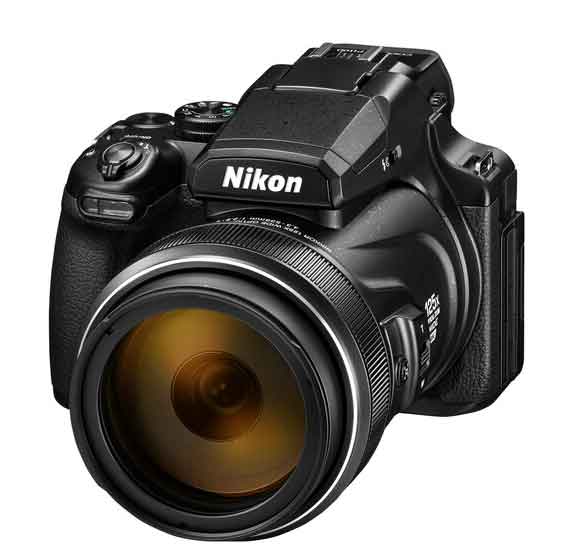
1. The Nikon P1100 – Best Superzoom Camera 2025
The Nikon P1100 was announced in February 2025. It features the world’s longest optical zoom lens ever used in a bridge camera. You get a total of 125x optical zoom lens which gives you enormous ability to zoom distant subjects. You can clearly capture wildlife, birds, and even the moon with this camera.
- Specifications:
- Sensor: 16MP 1/2.3″ BSI-CMOS
- Zoom: 24-3000mm (125x optical), f/2.8-8
- Video: 4K/30p, 1080/60p with clean HDMI output
- Stabilization: 5-axis VR (up to 5 stops)
- Display: 3.2″ fully articulated LCD (921,000 dots), 2.36M-dot OLED viewfinder
- Weight: 1410g
- Connectivity: Wi-Fi, Bluetooth
- Pros:
- Unmatched 125x zoom range, ideal for extreme telephoto shots.
- 250X Dynamic Zoom for Moon Shots
- 5-axis image stabilization ensures steady shots at long focal lengths.
- Fully articulated screen for flexible shooting angles.
- AI-enhanced autofocus with bird-watching mode for precise subject tracking.
- Raw support for post-processing flexibility.
- Cons:
- Bulky and heavy (1410g), reducing portability.
- Small 1/2.3″ sensor limits low-light performance and image quality at high ISOs.
- Higher price point compared to other bridge cameras.
Performance: The Nikon P1100 camera is able to do 125x optical zoom and approximately 250x dynamic zoom, which includes optical plus digital, meaning hybrid zooming. The camera uses Nikon’s latest AI-driven autofocus technology, which is very helpful in capturing and tracking moving birds. The camera is heavier and bulkier, so it resembles a DSLR camera. Although due to the small sensor size, some image noise may appear at higher ISO settings. If you want a larger sensor zoom camera, then we do have options like the Sony RX10 IV, but it comes at a hefty price.
Who is it for: The Nikon P1100 camera is ideal for those who love to have the world’s best mega zoom camera in their hand.

2. The Nikon P950 – Best Nikon Budget Zoom Camera
The Nikon P950 offers 83x optical zoom and it is slightly more affordable compared to the Nikon P1100, so if your budget is not that much, you can still get a decent zoom camera — the P950.
- Specifications:
- Sensor: 16MP 1/2.3″ BSI-CMOS
- Zoom: 24-2000mm (83x optical), f/2.8-6.5
- Video: 4K/30p
- Stabilization: 5-axis VR
- Display: 3.2″ articulated LCD
- Weight: 1005g
- Price: $800 / £660
- Pros:
- 83X Long zoom range suitable for wildlife and sports.
- Lighter and more portable than the P1100.
- 4K video and 5-axis stabilization for steady shots.
- AI-enhanced scene recognition for easier shooting.
- Cons:
- Less zoom than the P1100.
- Small sensor limits low-light performance.
Performance: The Nikon P950 strikes a balance between the superzoom camera and the budget. With the P950, you are getting approximately 83x optical zoom, and overall, you are getting 160x of dynamic zoom from the camera. Again, the autofocus is very well capable of shooting and tracking subjects, and overall is the second-best camera after the Nikon P1100 in the line of bridge cameras.
Who is it for: Photographers who love to have a budget bridge camera with extensive zoom range capabilities — Nikon P950 is the best choice.
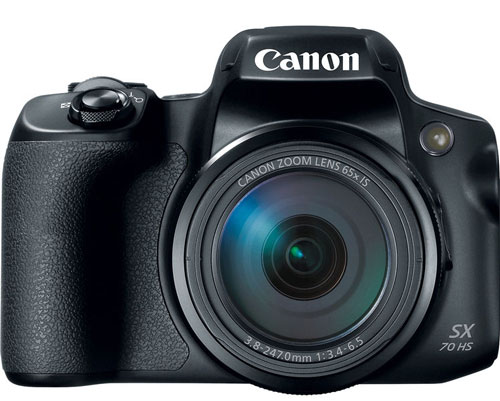
3. Canon SX70 HS – Best Canon Superzoom Camera
Available under budget, the Canon SX70 HS is able to zoom up to 65x, which is, of course, less than the Nikons we have discussed earlier. But that’s the only mega zoom camera we have inside Canon.
- Specifications:
- Sensor: 20.3MP 1/2.3″ CMOS
- Zoom: 21-1365mm (65x optical), f/3.4-6.5
- Video: 4K/30p
- Stabilization: 4-stop IS
- Display: Vari-angle LCD
- Weight: 610g
- Price: $650 / £570
- Pros:
- Wide-angle lens (21mm) for landscapes and group shots.
- Lightweight and portable at 610g.
- 4K video and vari-angle screen for flexible shooting.
- AI-powered autofocus for reliable subject tracking.
- Cons:
- Shorter zoom range than Nikon models.
- No 5-axis stabilization, less effective at long focal lengths.
- Build quality feels less premium.
Performance: Canon SX70 HS is a work-horse camera made for regular usage. Although not weather-sealed, but build quality is very good. It uses a 20.3 MP sensor, which delivers quite a good result in available light conditions. If you love to buy a Canon zoom camera, then without a doubt SX70 HS is the best choice. But if you talk about the overall best zoom camera, then we do have better options than the SX70 HS — the Nikon P950 and the Nikon P1100.
Who is it for: The Canon SX70 HS is made for travel photographers and lightweight zoom camera lovers.
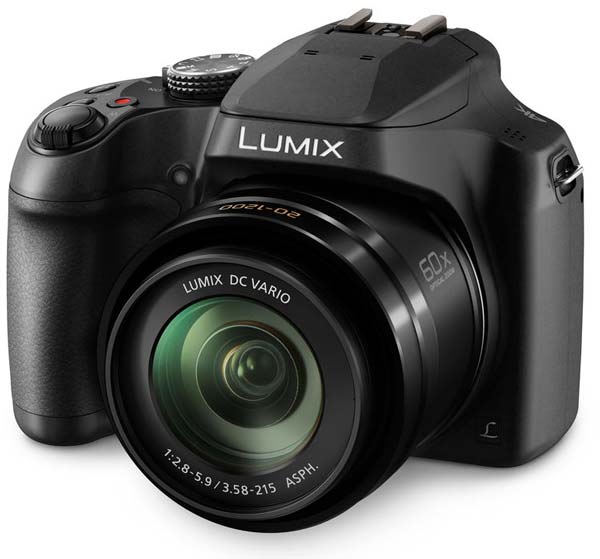
Panasonic FZ80 – Best Beginner Zoom Camera
Although my favourite was Panasonic FZ1000 Mark II, it is hardly available anywhere. The next best camera after the FZ1000 Mark II is the FZ80. It is one of the best budget 60x optical zoom cameras available right now.
- Specifications:
- Sensor: 18MP 1/2.3″ CMOS
- Zoom: 20-1200mm (60x optical), f/2.8-5.9
- Video: 4K/30p, 30fps burst in 4K Photo Mode
- Stabilization: Optical Image Stabilizer (OIS)
- Weight: 691g
- Price: $440 / £350 (used)
- Pros:
- Affordable price point for a zoom camera.
- 4K video and 4K Photo Mode for capturing fast action.
- Wide-angle lens (20mm) for versatile shooting.
- AI-enhanced scene detection for ease of use.
- Cons:
- Shorter zoom range compared to competitors.
- Basic build quality.
- Limited low-light performance.
Performance: The Panasonic FZ80 offers excellent value. The camera uses a high-quality 18 Megapixel CMOS sensor, captures 4K video at 30 frames per second, and the zoom is sufficient for casual usage. But if you want more, then of course we do have options like the Nikon P950 and the P1100.
Who It’s For: Budget-conscious photographers
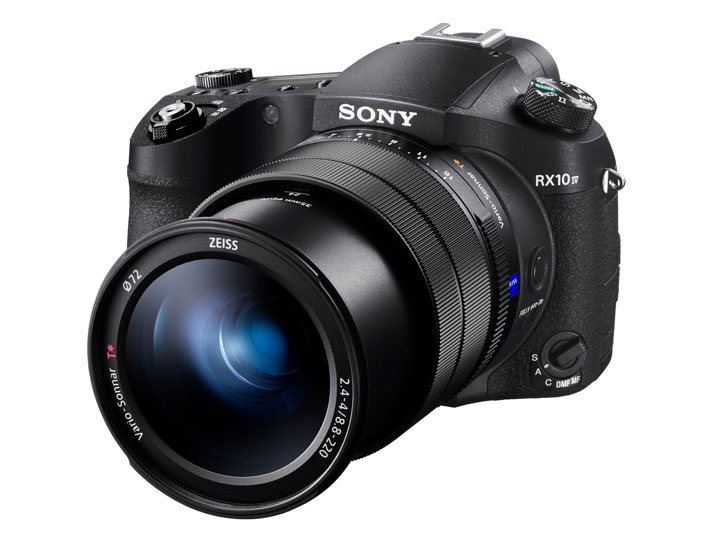 Sony RX10 IV Sony RX10 IV – Best Professional Zoom Camera
That’s the best zoom camera a camera maker has ever made. Despite its limited 25x optical zoom range, the camera features a 20 Megapixel high-quality 1-inch hybrid CMOS autofocus sensor with a focusing speed of 0.03 seconds, which is non-noticeable. At the very same time, the camera was loaded with AI algorithms so it could easily detect and shoot subjects. But due to the very slow response from the market, Sony decided to withdraw the RX10 series cameras. Since mostly these are out of production right now. But if you can get a copy of this camera, you will be blessed to have the RX10 IV.
- Specifications:
- Sensor: 20.1MP 1″ Exmor RS CMOS
- Zoom: 24-600mm (25x optical), f/2.4-4
- Video: 4K/120p, 24fps continuous shooting
- Stabilization: SteadyShot
- Weight: 1095g
- Price: $1600
- Pros:
- Larger 1″ sensor for better image quality and low-light performance.
- Fast autofocus (0.03 seconds) with AI-driven tracking.
- High-quality Zeiss lens and 4K/120p video for professional results.
- Robust build quality.
- Cons:
- Shorter zoom range than other bridge cameras.
- Expensive compared to competitors.
Performance: The camera features exceptional image quality with the highest possible details and a very high-quality 25x optical zoom lens made by the company. It was able to capture 4K videos up to 120 frames per second and continuous shooting up to 24 frames per second with sensor-shift SteadyShot IS. If your priority is image quality and you love to have the best & fastest focusing superzoom camera, get the RX10 Mark IV.
Comparison Table
| Camera Model |
Zoom Range (mm) |
Sensor Size |
Video |
Weight (g) |
Price (approx.) |
Key Strength |
| Nikon P1100 |
24-3000 (125x) |
1/2.3″ |
4K/30p |
1410 |
$1100 |
Longest zoom range |
| Nikon P950 |
24-2000 (83x) |
1/2.3″ |
4K/30p |
1005 |
$800 |
Balanced zoom and portability |
| Canon SX70 HS |
21-1365 (65x) |
1/2.3″ |
4K/30p |
610 |
$650 |
Lightweight, wide-angle lens |
| Panasonic FZ80 |
20-1200 (60x) |
1/2.3″ |
4K/30p |
691 |
$440 (used) |
Affordable, strong video features |
| Sony RX10 IV |
24-600 (25x) |
1″ |
4K/120p |
1095 |
$1600 |
Superior image quality |
| Nikon P1000 |
24-3000 (125x) |
1/2.3″ |
4K/30p |
1415 |
$997 |
Extreme zoom, slightly cheaper |
| Nikon P900 |
24-2000 (83x) |
1/2.3″ |
1080p |
1005 |
$600 (used) |
Budget-friendly long zoom |
Buying Guide: Choosing the Right Zoom Camera
When selecting a zoom camera in 2025, Kindly consider the following factors to make your purchase a successful pruhase
- Zoom Range:
- For extreme Super Zoom requirements the best cameras are (e.g., birdwatching, moon photography), the Nikon P1100 or P1000 offers the longest 125x zoom.
- For general-purpose use, lightweight body Canon SX70 HS (65x) or Panasonic FZ80 (60x) are the best choice.
- If image quality is at the highest priority and even more important than zoom, the Sony RX10 IV’s 25x zoom is sufficient for most scenarios.
- Image Quality:
- Cameras with 1/2.3″ sensors (Nikon, Canon, Panasonic) are adequate for daylight but struggle in low light.
- The Sony RX10 IV’s 1″ Large sensor offers Sharp images and Excellent low-light performance
- Video Capabilities:
- All listed cameras except the P900 offer 4K video,
- The Sony R10 IV is the only camera that offers 4K/120p for slow-motion footage.
- The Panasonic FZ80’s 4K Photo Mode is very usable for timelapse
- Portability:
- The Canon SX70 HS (610g) and Panasonic FZ80 (691g) are the lightest, ideal for travel.
- The Nikon P1100 and P1000 are bulky (over 1400g), very similar to DSLRS
- Budget:
- Budget-conscious buyers should consider the Panasonic FZ80 or Nikon P900
- Mid-range options include the Canon SX70 HS and Nikon P950.
- The Sony RX10 IV and P1100 are both premium choices
- AI Features:
- Sony RX10 IV features AI for autofocus, scene recognition, and image processing. The Nikon P1100 has built-in bird-watching mode


By admin, on July 3rd, 2025
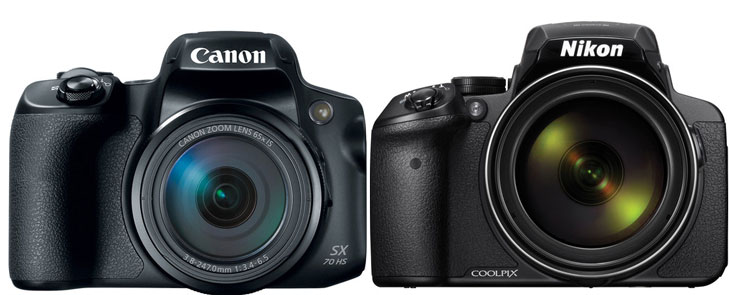
So we have done an in-depth comparison between the Canon SX70 HS camera and the Nikon P950. These are both the best superzoom cameras available right now with DSLR-like functionality without the bulkier design. You can use the megazoom cameras for wildlife, sports, travel, and casual photography.

Nikon P950: Best Super Zoom Compact Camera
The Nikon P950 uses an 83x optical zoom lens, which is the longest zoom bridge camera available right now. If you also count the digital zoom, then the Nikon P950 offers approximately 166x Dynamic Fine Zoom. That makes it the best superzoom camera of 2025.
The Canon SX70 HS offers 65x optical zoom, which is, of course, impressive but not as good as the Nikon’s 83x optical zoom. Now, if you consider the digital zoom also, then in Canon you are getting a maximum of 130x ZoomPlus mode, which is undoubtedly inferior to the 166x Dynamic Zoom of the Nikon P950.
Verdict: The Nikon P950 is the best among the two if you consider the best superzoom camera with maximum optical reach.
Detailed Specification Comparison of – Canon SX 70 HS vs Nikon P950
here’s a side-by-side comparison of the key specifications for the Canon SX70 HS and Nikon P950:
| Feature |
Canon SX70 HS |
Nikon P950 |
| Sensor |
20.3MP 1/2.3″ CMOS |
16MP 1/2.3″ BSI CMOS |
| Processor |
DIGIC 8 |
EXPEED |
| Lens |
65x optical zoom, 21-1365mm (35mm equiv.), f/3.4-6.5 |
83x optical zoom, 24-2000mm (35mm equiv.), f/2.8-6.5 |
| Image Stabilization |
5-axis, 5 stops |
Dual Detect Optical VR |
| Viewfinder |
2.36m-dot OLED EVF |
2.36m-dot OLED EVF |
| Display |
3-inch vari-angle LCD, ~922k dots (assumed) |
3.2″ 921k-dot vari-angle LCD |
| Video |
4K at 30p, 4K time-lapse |
4K at 30p, Full HD at 60p |
| Continuous Shooting |
10 fps |
7 fps |
| Connectivity |
Wi-Fi, Bluetooth |
Wi-Fi, Bluetooth, GPS |
| Raw Support |
Yes |
Yes |
| ISO Range |
100-3200 (expandable to 6400) |
100-6400 (expandable to 12800) |
| Battery Life |
~325 shots |
~360 shots |
| Weight |
610g |
1000g |
| Other Features |
Zoom Framing Assist, 0cm closest focus, 130x ZoomPlus |
Hot shoe, 1cm macro focus, 166x Dynamic Fine Zoom |
Image Quality: Canon Wins in Resolution, Nikon in ISO
Canon has the resolution advantage, and Nikon has the better ISO range. Canon uses a 20.3-megapixel CMOS sensor that offers a bit higher resolution when compared to the Nikon P950’s 16-megapixel BSI CMOS sensor. The result is quite visible—if you want to crop your image, then Canon is of course slightly more usable.
Now, the Nikon P950 sensor offers better low-light performance since the ISO range of the Nikon P950 camera is from 100 to 6400, which is further expandable up to 12800. Canon does have some limitations in the ISO range—the standard ISO range of the Canon SX70 HS camera is from 100 to 3200, and the maximum expandable ISO range is up to 6400.
Verdict: Nikon P950 seems to offer better or more optical reach as well as a sensor that performs well in low-light conditions.
Video Performance: 4K Support in Both, Extras Differ
Video performance: Both cameras, Canon SX70 HS and the Nikon P950, offer 4K video recording support up to 30 frames per second. So that’s an amazing thing—that you can use both of these cameras to record beautiful wildlife videos while utilising their maximum optical reach. The Canon also includes a 4K time-lapse capability, so it’s kind of a bonus thing for creative videographers. You have to just set the camera and forget it. After a while, the camera will automatically create a 4K time-lapse movie of the entire scene. However, Nikon offers Full HD mode up to 60 frames per second, which provides smoother slow-motion footage experience. Canon Full HD remains limited to 30fps.
Both cameras offer optical image stabilization, so you get stable handheld shots from both the cameras.
Verdict: Both of them offer 4K videos at 30 frames per second. Canon SX70 HS offers time-lapse video recording capability, whereas Nikon P950 offers slow-motion recording experience.
Continuous Shooting, Viewfinder & Display and more
Canon faster continuous shooting speed: Canon offers a faster continuous shooting speed of 10 frames per second when compared to Nikon P950’s 7 frames per second. So Canon is faster and better suited for action, sports, and wildlife photography.
Viewfinder and display unit: Both cameras feature a 2.36 million-dot electronic viewfinder, which provides a very good viewport, and the display screen of Nikon P950 is slightly larger at 3.2 inches, whereas Canon is limited to 3 inches. Although both of them offer the same display screen resolution of 921k-dot LCD.
Image stabilization: Both of them do have optical image stabilization inside. Canon claims to have 5 stops of image stabilization performance, whereas the Nikon P950 uses Dual Detect Optical Vibration Reduction, which is of course highly effective in handling the superzoom lenses.
Connectivity & GPS tagging: The Nikon P950 offers Wi-Fi, Bluetooth, and GPS tagging in your pics, so you can capture or geotag your photos while you are travelling. Now, Canon SX70 HS remains limited to Wi-Fi and Bluetooth connectivity. So yes, you can transfer your images to the app from both the cameras, but geotagging remains exclusive to the Nikon P950.
Handling and weight: The Nikon P950 is larger and heavier, approximately 1000 grams. The reason is very simple—since you are getting a massive optical zoom lens of 83x, that makes it a quite heavy machine. Now in Canon, the weight remains limited to 610 grams, which is of course lighter and more compact compared to the Nikon.
Conclusion: Nikon P950 Is the Best Zoom Camera
Nikon P950 wins here, since you are getting 83X optical zoom vs 65X of Canon, as well as Nikon offers 166x Dynamic Fine Zoom and Canon remains limited to 130x ZoomPlus mode.
Get Nikon P950 Camera from Amazon.com | B&H Store
Buy Canon SX70 HS from B&H Store | Amazon.com
By admin, on July 2nd, 2025

Nikon Z9 Mark II camera is coming with Pre-Capture RAW and more and updated core specs, but before that, let’s have a look we have already posted a few things related to the Nikon Z9 Mark II camera, starting from the fact that
- we already have a confirmed set of information. Next, after the Nikon ZR announcement, the next announcement from Nikon is the Nikon Z9 Mark II camera.
- And this will happen alongside the Canon R1, which is also expected to arrive before the 2026 Winter Olympics.
- Nikon is also working on N-Log2, which is about to be introduced in the Nikon ZR and will be followed up with the Nikon Z9 Mark II camera.
- Several Nikon cameras with the EXPEED 7 image processor will get the N-Log2 update.
- The Z9 Mark II camera will also get a new image processor — the EXPEED 8.
So this is the bunch of information we have already published related to the Nikon Z9 Mark II camera. Now we have more glimpses of information, specifically related to the Pre-Capture RAW mode is coming to Nikon Z9 II — the feature that is a kind of must-have for professionals, specifically those who love wildlife and sports photography.
The Pre-Capture RAW Mode
The Nikon Z9 is the flagship camera right now, but it’s stuck with JPG pre-capture at 30 frames per second, leaving serious professional photographers a bit disappointed since the Nikon Z8 recently received a major firmware update (v3.0), in which users can easily enable pre-capture in their camera.
The big question: Why is the Nikon Z9 flagship falling behind the Z8? Experts like Thom Hogan and Jan Wagener are sounding alarms over this — is Nikon playing their favourite game or planning something huge? Let’s dive into the details.
Is Nikon risking fan loyalty for a big reveal?
“Nikon’s top-end camera is behind the times!” That’s the bold warning from photography expert Thom Hogan in his June 12, 2025, article “The Z9 Dissonance” on bythom.com. He’s upset that the $4,000 Z8 got pre-capture RAW, while the $5,500 Z9 didn’t. Hogan says, “The goodwill Nikon built with early Z9 updates… will be erased unless we see a Z9 6.0 firmware soon.” He thinks Nikon’s saving big features for the Z9 II, but this could upset Z9 fans who paid top dollar.
Nikon Z9 II with Global Shutter Sensor?
Experts like Robert G Allen (May 2025) say the Z9 II, coming late 2025, will bring 40 fps RAW shooting, a faster sensor, and pre-capture RAW. This isn’t just a camera—it’s a revolution! Rumors of a hybrid global shutter add fuel to the fire. The Z9 II aims to crush competitors, making it a dream for pros shooting action.
Nikon Z9 II specification from most authentic sources / People who are directly connected with the brand, still there is a BIG chance they may be talking about a working prototype of the flagship camera that may or may not get selected for production line.
Nikon Z9 II Specification [Updated]
- 45 MP Global Shutter Sensor [Rumored]
- Pre-Capture RAW mode support [Confirmed]
- New EXPEED 8 image processor [Confirmed]
- 40 FPS RAW burst shooting (rumored)
- 240 FPS full resolution JPEG
- Faster image sensor (rumored)
- Possible hybrid global shutter (rumored)
- N-Log2 support [Confirmed]
- Launch expected late 2025 (Development announcement)
- Will launch alongside Canon R1
- Aimed at wildlife and sports professionals
The Nikon Z8 is a fan favorite. With the same 45.7MP sensor as the Z9 but cheaper and smaller, it’s a hit. Its pre-capture RAW at 15 fps has Z9 owners jealous. Will the Z9 II be worth its higher price? Wegener warns, “The biggest dilemma Nikon faces is the Z8 and people expecting a Z8 II… Many will say, ‘Great camera, but I’ll wait for the Z8 II.’” If the Z9 II is a small upgrade, like the Canon R5 Mark II, fans might hold out for a cheaper Z8 II. Nikon must make the Z9 II a showstopper.
Do share your thoughts with us
The article “Nikon Z9 Mark II Specification [Updated], Coming with Pre-Capture RAW” written and updated by thenewcamera.com team on7:33 am, Wednesday, 2 July 2025, Greenwich Mean Time (GMT) | Follow us for more updates and Get LIVE RUMORS –> FACEBOOK | TWITTER | INSTAGRAM to get live news — > get live news + Nikon Rumors 24X7
source/content credit – Sir Thom Hogan | Robertllen | Jan Wegener
|
KEEP THIS BLOG ALIVE - Support New Camera Buy Canon Lenses, Buy Music CD or Digital Camera at amazon it helps this site, and you do not pay anything extra, it is just a way to help support this site.

|