Join More Than 50,000+ Subscribers and get latest camera news and rumors
NEW CAMERA VIDEOS ON YOUTUBE
|
By admin, on June 29th, 2025

Photographers and content creators, if you are traveling to China or using one of their domestic or international flights, you must be aware of their new air safety rules and regulations. According to them, the Chinese aviation department has issued an advisory that the power bank you’re carrying, or the camera batteries,s or any kind of battery that your devices are using must have a 3C certificate on it.
Sony over the CCC battery issue
Now with this context, Sony has recently issued a press release stating that the batteries that they have manufactured starting from August 1, 2024, have the 3C certification, and the batteries that were made before August 1, 2024, do not have that certification mark.
Sony camera batteries are not classified as power banks, so power banks are primarily the focus of the ban. However, if you are travelling to the airport and going through the regulations, it is recommended to have a newer generation of batteries in your camera.
Canon and Nikon updates
Canon and Nikon have not released any official statement regarding the 3C certification for their camera batteries. We are still awaiting a response from both the camera makers and will update this article as soon as they issue any response related to this 3C issue.
Read the Full Translated version

Just sent out a message this morning about the need for 3C certification for batteries on planes, and Sony’s official message has arrived. Use with peace of mind!
Can Sony camera batteries be taken on a plane? Sony’s Q&A time is here.
After the Civil Aviation Administration’s new regulations were issued, Sony answers three questions that everyone is concerned about!
✈️ Question 1: Does Sony camera batteries have 3C certification? 🔵 According to the “Announcement on the Implementation of Compulsory Product Certification Management for Lithium-ion Batteries and Other Products (Announcement No. 10 of 2023)” issued by the State Administration for Market Regulation in March 2023, lithium-ion battery products manufactured or imported after August 1, 2024, must obtain 3C certification and bear the 3C mark. Sony’s related camera battery products have all obtained 3C certification in accordance with the above requirements and comply with relevant national laws, regulations, and standards.
✈️ Question 2: Why doesn’t my Sony camera battery have 3C certification (or certification mark)? 🔵 According to the “Announcement on the Implementation of Compulsory Product Certification Management for Lithium-ion Batteries and Other Products (Announcement No. 10 of 2023)” issued by the State Administration for Market Regulation in March 2023, lithium-ion battery products manufactured or imported after August 1, 2024, must obtain 3C certification and bear the 3C mark. Sony’s related products have all obtained 3C certification in accordance with the above requirements and comply with relevant national laws, regulations, and standards. Related battery products manufactured or imported before this date are not within the 3C certification catalog and do not need to obtain 3C certification. However, Sony’s related products all comply with relevant national laws, regulations, and standards, and users can use them with confidence.
✈️ Question 3: Can Sony camera batteries be taken on a plane/will they be detained by airport security? 🔵 According to the announcement issued by the Civil Aviation Administration on June 26, 2025, starting from June 28, passengers are prohibited from carrying power banks without 3C marks, with unclear 3C marks, or recalled models or batches on domestic flights. Sony’s camera batteries do not fall within the definition of “power bank”. We will continue to pay attention to the updates of the Civil Aviation Administration’s implementation details. Due to the different implementation standards of different airports, the actual management requirements are subject to the local airport regulations. To ensure your smooth journey, it is recommended that you confirm the specific requirements with the airline and the departure airport of your flight in advance. Thank you for your understanding~
Sony always starts from the needs of users. Sony’s original camera batteries provide stable power and battery life for the camera, allowing users to shoot and upgrade firmware with peace of mind and enjoy the fun of shooting. Learn more by visiting the Sony official website.
Source – webio/camerabeta
Follow us on our social pages FACEBOOK | TWITTER | INSTAGRAM to get live Camera News +
By admin, on June 27th, 2025

Nikon is dominating the Japanese camera market after the arrival of the Nikon Z6 Mark III, the Nikon Z50 Mark II, and the Nikon Z5 Mark II. The Nikon Z5 Mark 2 claimed its TOP spot this month, and the most interesting part is that the 2nd position is now occupied by the Nikon Z50 Mark 2 camera with the double zoom kit lens package. In the third and fourth places, we have the Sony A7C Mark 2 camera — one of the most popular full-frame cameras in Japan — and after that, we have the Canon R6 Mark II, and so on.
CAPA CAMERA WEB has published Yodobashi Camera’s sales rankings for interchangeable lens cameras for the first half of June.
Top 10 Best-Selling Interchangeable Lens Cameras of June 2025
-
Nikon Z5 II Body
-
Nikon Z50 II Double Zoom Kit
-
Sony α7C II Zoom Lens Kit
-
Sony α7C II Body
-
Canon EOS R6 Mark II Body
-
Canon EOS R50 Double Zoom Kit
-
Sony α1 II Body
-
Canon EOS R10 RF-S18-150 IS STM Lens Kit
-
Sony VLOGCAM ZV-E10 II Double Zoom Lens Kit
-
Sony VLOGCAM ZV-E10 II Power Zoom Lens Kit
Canon will probably release the R6 III and R7 II this year, as per the rumors we have, but the prices are likely to rise significantly, so I think it will be difficult for them to make it into these sales rankings. The Sales of the R1 and R5 II in Japan aren’t that good either… and I feel it will be tough for the R8 in particular, as the Nikon Z5 II, which is in the same price range, is very strong. So, Canon has to refresh its entry-level offerings if it wants to remain in the top-selling camera list (of at least Japan).
Watch Nikon Z5 II Comparison here
Nikon Z5 II vs Nikon Z6 II | Nikon Z5 II vs Canon R8 | Nikon Z5 II vs Nikon Zf | Nikon Z5 II vs Sony A7 III
Get the Nikon Z5 II camera from B&H Store | Adorama.com | Amazon.com
ALso see
Best lenses for Nikon Z5 II Camera

Follow us on our social pages FACEBOOK | TWITTER | INSTAGRAM to get live Camera News + Nikon Rumors 24X7
By admin, on June 26th, 2025
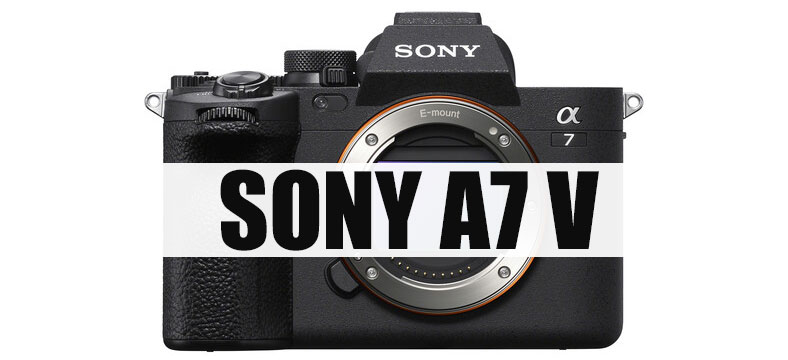
According to the latest rumors we have, we have a Sony A7 V camera coming on or before September 2025. I was really waiting for this sort of confirmation for a long time, and now we have just received the confirmation.
Sony A7V Sensor Resolution
Sensor resolution-related confusion still exists, since even today, Sony Alpha Rumor (*1) posted a rumored specs of the camera via a Chinese source. Today, take a look.
I saw some prototypes,
44mpx 20fps non-stacked sensor 100% confirmed.
same body as A1II
same screen as A1II
AI chip
New improved evf compared to A7IV – could not confirm
Better heat management
44 megapixel sensor is not new, we all know back from November 2023 that Sony does have an IMX366 sensor with 44 MP resolution, and there is a high possibility that they can use this sensor in the A7 V camera.
Also, we have clearly mentioned, Sony does have the working prototypes of A7 Bodies with a 44MP Sensor – A Part of the Content of our post published on November 13th, 2024
As for the core specifications I was expecting from the Sony A7V camera, the arrival of a 33-megapixel stacked sensor, the presence of an AI chip, and a new generation of the BIONZ X image processor. But, Recent rumors suggest that Sony is testing prototypes with the IMX366 sensor, which has a 44-megapixel resolution. The good thing about this sensor is that despite being a non-stacked sensor, the readout speed is very fast. The camera will be paired with Sony’s latest BIONZ X image processor and AI chip. This is not the first time we have gotten hints of a 44 Mp sensor, check here Unbelievable! Sony A7 V May Feature a 44-Megapixel Sensor

Another set of rumors that is continuously roaming over the internet is the use of a 33MP stacked Exmor sensor inside the upcoming Sony A7 Mark V camera. So, we have to still wait for the final confirmation related to the resolution, Sony A75 will carry inside it — a 33 MP stacked Exmor sensor or 44 MP non-stacked BSI CMOS sensor.
follow us on our social pages FACEBOOK | TWITTER | INSTAGRAM, –>If you have time –>see more Sony Alpha Rumor Latest Camera News
source (1) SAR Website
Also, check some latest camera deals – Camera deals USA
By admin, on June 25th, 2025

Canon has announced its own V series of cameras, starting from the Canon V1 compact camera. Recently, Canon announced the R50 V camera on March 26, 2025. So they are slowly expanding their V series to compete against Sony.
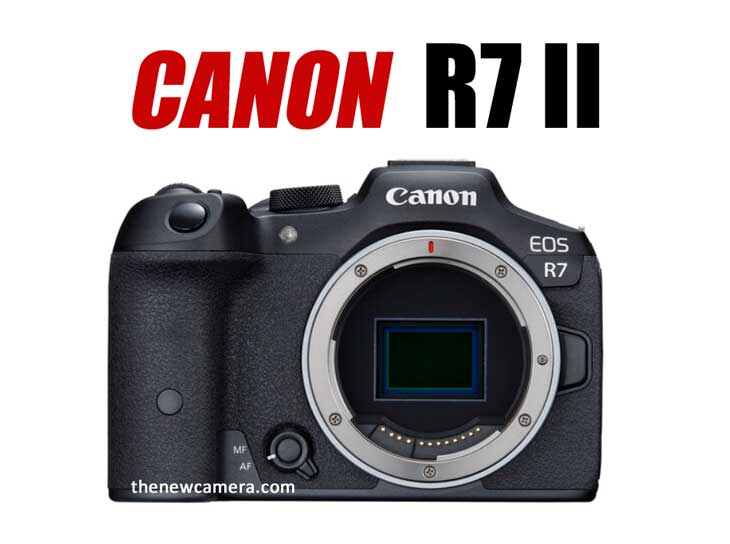
Now what’s next? We are expecting the arrival of the Canon R8 V camera as part of their expansion to its V series. The Canon R8 is expected to have the same image sensor and image processor, but it will surpass the video capabilities of the R6 Mark II camera.
So let’s discuss the possible specifications, arrival date, and the price of the upcoming Canon R8 V camera. It will be a game-changer camera for professional content creators and beginner filmmakers.
Canon R8V Specifications [Expected]
- Sensor: 24.2MP full-frame CMOS (same as EOS R8/R6 II) with fast ~1/68s readout to minimise rolling shutter.
- Processor: DIGIC X for advanced autofocus and high-quality video output.
Video Capabilities:
- 4K/60p uncropped, oversampled from 6K – sharp, detailed footage.
- 4K/120p (1.2x crop) – better slow motion than R6 II’s Full HD/120p.
- Canon Log 3, 10-bit 4:2:2 (H.265), HDR PQ, and 2.35:1 aspect ratio for professional colour grading
- Four-channel 24-bit audio – cinema-level sound, inherited from R50V.
- Unlimited 4K recording thanks to better cooling, unlike R8’s 2-hour cap.
Stabilization:
- IBIS (5–6 stops), combined with lens IS for up to 7.5 stops – a big upgrade over R8’s lack of stabilisation.
Autofocus:
- Dual Pixel CMOS AF II with deep-learning subject tracking (people, animals, vehicles).
- No Eye Control AF to stay below R6 III’s premium tier.
Body & Design:
- Cube-style, EVF-free, ~498g [Approx] lightweight design based on R50V.
- 3″ vari-angle touchscreen (1.62M dots) with tap-to-cycle subject detection.
- Front record button, vertical tripod mount, livestream shortcut, simplified video controls.
- No joystick or top LCD screen.
- Single UHS-II SD card slot, no weather sealing – trimmed for creators, not hybrid pros.
Connectivity:
- USB-C 3.2 (plug-and-play 4K/60p webcam), micro-HDMI, mic/headphone jacks, Wi-Fi, Bluetooth, Canon Live Switcher support.
Shutter & Performance:
- Electronic first curtain shutter, up to 1/8000s.
- 6fps stills burst – fine for casual use, not suited for fast action.
Power:
- LP-E17 / LP-E6NH battery. We are expecting enhanced battery life
- No grip support – a key difference from R6 II.
Lens Mount:
- RF mount – works with budget RF lenses and premium L-series optics.

Why Canon R8V is better than the R6 Mark II in video specifications
Since Canon R8 V falls into a different zone, it will not cannibalise the sales of the Canon R6 Mark II camera, even if it has improved video core specifications. People who are interested in content creation and photography will buy the R8 V camera. Otherwise, for photographers and hybrid users, the R6 Mark II will remain a perfect choice.
- The cube-style design will protect Canon R6 Mark II camera sales: The R8 V cube-style, EVF-free design, completely inspired by the previously announced R50 V camera, ensures it targets professional video creators and content makers.
- No electronic viewfinder: It will surely push photographers and hybrid shooters away from this camera, since most of them love to have an EVF so they can compose their shot even in daylight scenarios very precisely.
- Simplified controls: No joystick or top LCD display screen like we have in the Canon R6 Mark II. With limited physical controls, specifically made for video workflow, and having the entire menu design very similar to Canon USA cinema-style cameras.
- Limited still capture: Canon will cap the continuous capture cycle to 6 frames per second, preserving all possible advantages of a hybrid camera inside the Canon R6 Mark II.
Canon R8V arrival date
Canon’s 2025 roadmap was already packed with Canon R50 V and PowerShot V1 announcements. We also have a list of rumoured cameras like the Canon R6 Mark III, which will arrive in the 4th quarter of 2025. For details, you must look at the list of Canon’s upcoming cameras in 2025.
Q2 / Q3 of 2026 — somewhere between April to September of 2026 — is the perfect timeline, and it also aligns with Canon R8’s 3-year refresh cycle, which was launched back in April 2023. So, introducing an R8 V in mid-2026 is the best possible timing.
If Canon prioritises the creator market, they may launch it sooner.
Canon R8V Price
The Canon R8 was launched at $1,499 (body only), and the R50V is priced at $649.99, ~$300 below the R10’s $979. If Canon follow the same pricing pattern, the Canon R8V price would be
-
Body Only: $1,799 [Approx], a $300 premium over the R8 for IBIS, 4K/120p, and creator tools.
-
Kit Options:
Canon R8V with such core specifications and price can directly compete against cameras like Sony ZV-E1 ($2,199, 4K/120p, IBIS) at a higher price range. But, Canon still have to focus in their full-frame RF Mirrorless lineup since people are waiting for more affordable options from third-party lens makers.
At TheNewCamera.com, we’re dedicated to keeping you informed about the latest camera news. The article “Canon R8V: Specification, Arrival Date, and Price Expectations” was first published on 4:53 pm, Wednesday, 25 June 2025, Greenwich Mean Time (GMT) by thenewcamera.com team | Follow us on our social pages FACEBOOK | TWITTER | INSTAGRAM to get live Camera News + Canon Rumors 24X7.
By admin, on June 24th, 2025

According to the latest rumours coming out from the rumour mill, Nikon is working on N-Log 2 — an advanced version of its existing N-Log video profile. Nikon is leveraging the expertise of RED Digital Cinema colour profiles, which they acquired last year, in their personal or very own Z-mount mirrorless camera system. Although they have not officially confirmed the N-Log 2, as the rumors suggest, they are almost at the horizon of its announcement.
Background of the N-Log 2
An advanced Nikon Log profile — that’s as simple as you read it. And if you want to extract the maximum quality out of your camera sensor, you have to use the Log profile of your camera. Take a look at the comparison table below, so you will get an idea of how the N-Log 2 will improve the overall video performance of the camera:
Comparison Table: N-Log vs. N-Log 2
| Feature |
N-Log |
N-Log 2 |
| Bit Depth |
Suitable for 8-bit or 10-bit |
Optimised for 12-bit or higher |
| Shadow Performance |
More prone to noise in shadows |
Better shadow detail, less noise |
| Highlight Roll-off |
Moderate highlight retention |
Superior highlight roll-off |
| Grading Flexibility |
Limited due to lower DR |
High flexibility, more data for grading |
| Use Case |
Entry-level or less demanding shoots |
Professional cinema, high-DR scenes |
| Compatibility |
Widely supported in Nikon cameras |
Available in higher-end models |
Nikon N-Log 2 Rumours: What We Know So Far
Development with RED expertise
Nikon is reportedly working with RED Digital Cinema’s advanced technology for their upcoming N-Log 2 video profile. RED is already known for its high-end cinema cameras — we all know Komodo-X, Raptor, and all those. So the professional-grade video expertise will help to officially scale the overall performance of Nikon’s consumer and prosumer Z-mount mirrorless cameras.
Improved Dynamic Range
N-Log 2 will also hit a new baseline ISO range in the cameras. At the same time, it will extract more and more detail as we have seen in 10-bit video recording. N-Log 2 will be more suitable for 12-bit and 16-bit videos. It will exceed competitors like C-Log 3, which is limited to 14 stops of dynamic range.
Which Nikon Cameras Will Get the N-Log 2 Update?
No official confirmation from Nikon yet, but rumor mills believe that the Expeed 7 image processor is able to handle the N-Log 2 update. So, cameras using the Expeed 7 image processor will enjoy the update.
Compatible Nikon Cameras
N-Log 2 is expected to be compatible with the following Nikon mirrorless cameras:
| Camera Model |
N-Log Support |
N-RAW Support |
Notes |
| Nikon Z9 |
Yes |
Yes |
Flagship model, professional-grade |
| Nikon Z8 |
Yes |
Yes |
High-end hybrid camera |
| Nikon Z6 III |
Yes |
Yes |
Mid-range, video-focused |
| Nikon Z5 II |
Yes |
Yes |
Entry-level full-frame |
This broad compatibility ensures that N-Log 2 will benefit a wide range of users, from professional videographers using the Z9 to hobbyists with the Z5 II.
Future Prospects: Nikon ZR and Beyond
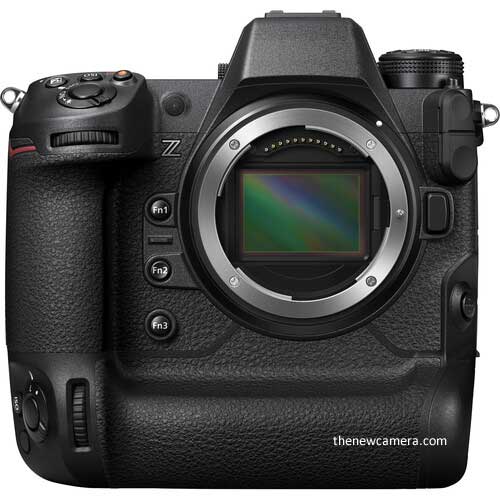
As we all know, Nikon is working on the Nikon ZR series cinema models, which will have compact cage-like designs similar to the Sony FX3. These will feature large rear display screens, and the design will be mostly inspired by RED Digital Cinema cameras. It will use the Nikon Z6 III camera sensor, making it a perfect tool for professional cinematography. While still unconfirmed, we are expecting the Nikon ZR to bring N-Log 2 inside it.
And just after that, we are expecting the arrival of the Nikon Z9 Mark II camera before the Winter 2026 Olympics — and even in that, we are expecting the presence of N-Log 2.
The article “Nikon N-Log 2: Latest Rumors and Updates” written and updated by thenewcamera.com team on 4:55 pm, Tuesday, 24 June 2025 Greenwich Mean Time (GMT)| Follow us for more updates and Get LIVE RUMORS –> FACEBOOK | TWITTER | INSTAGRAM to get live news — > get live news + Nikon Rumors 24X7
source / credit nikonrumor.com
By admin, on June 24th, 2025

Most of us as photographers or content creators own a lot of cameras—some of them are in use and some of them are on our shelves or of no use. So the straightforward thing is, if you want to exchange your old or existing middle-aged cameras or lenses, the best thing is to enter into the trade-in old camera gear program and exchange your old gear for a new one by getting the best price possible.
Here is the step-by-step guide and detailed overview on trading in your old gear at B&H store. Also, there are some tips on how to maximize your old camera trade-in value. So let’s jump into the content.
How to Trade in Your Old Camera Gear or Lenses at B&H Store
This is very simple. The entire program is highly user-friendly and offers multiple methods to initiate the process. Whether you go for an online approach or you prefer an in-store visit, all options are open.
Online Quote Form: Once you visit the B&H trade-in page and fill out the online quote form and you provide all the possible details of your equipment—which may include cameras or lenses—the B&H team will respond promptly with an offer that you can accept or decline. So it is completely hassle-free, and at least you will know the best possible refund or the money you will get for your existing camera or lenses. Now, if you accept the offer, you will receive instructions on how to ship your gear with free shipping provided within the USA. However, the trade-in program is not possible for people living outside the USA at this moment.
Email: Send a detailed description of your gear if you don’t want to fill the form. In your email, include all the possible details with images captured from the front, back, top, and rear side of the camera or lenses to the B&H trade-in email address. A representative will reply to you with the quote shortly.
Phone: You can directly call the B&H Used Department at 800-606-6969 and you can discuss your equipment details during the call. You can also take their help on how to proceed further and what will be the overall value of your equipment once you share the details and images with them.
The best thing is an in-person visit to the B&H New York City store at 366 W. 34th Street. An onsite evaluation is the best, where you can also do some negotiation and ask them to increase the value if you are not satisfied. An in-person visit or meeting is the best thing you can do for your old gear.
So once you accept the quote, the B&H team inspects the gear to ensure it matches the described condition and the images or details that you sent are real. Once the check-in process is completed, the payment is issued to you via a B&H gift card or check—whatever mode of payment you selected. If you want to buy new gear, you can opt for the B&H gift card. If you want cash, you can choose the check method.
Click here to visit the B&H Trade-in Program
Tips to Maximize Your Trade-In Value of Old Gear
These are the best possibilities that can increase or maximize the value of your old gear you are about to list in the trade-in program:
- Ensure the gear is in good condition: Clean your equipment thoroughly. Remove all dust, smudges, and fingerprints. Ensure all the gear functions properly and include the original accessories like lens caps, battery, charger, and strap if available.
- Be honest about the condition of your gear: While submitting the details, be honest with the condition of your gear. Always submit the right details with images.
- Time the trade-in with a purchase: When you are planning to buy new gear from the B&H store, the trade-in program will be the best way to clear up your old stock of cameras that you are not using.
- Compare the quotes: While B&H representatives are known for offering the best value for your products via the trade-in program, I would recommend you also try the KEH Store or MPB. These stores also offer trade-in programs, so you can have a clear idea where your product is being valued the best.
- Consider selling privately if your gear is in mint condition: For example, if you purchased the camera or lenses for review purposes only and then had to buy another set for the next review season, then the best thing is to sell your products to your subscribers with a little discount—since they know the gear is in mint condition and not overused.

Additional Considerations
Inspection Process: B&H inspects all traded gear within 3 business days, so it will take approximately 48 to 72 hours to test the submitted equipment thoroughly. Although you will get a quote at the beginning, the overall inspection is a key factor. If they find something that is not as described, they can put a revised quote in front of you or they may decline the trade-in and return the gear to you.
Payment Options: Once your gear is approved in the trade-in program, you can choose to receive payment via a B&H gift card, store credit, or a check. But at the end, you have to give them a government-issued photo ID before they deposit the payment into your account.
Customer Experience: A lot of our subscribers, who are regular visitors to our website, have participated in the trade-in program and their experiences were very good. You can also read feedback from open and independent sources like Reddit forums. Many of them praise B&H for their fair pricing and smooth processing experience. So you’ll get a good idea of the correct state of pricing for your product.
Professional Offers: B&H occasionally runs pro-special trade-in promotional offers, so always keep an eye on them. If one is running right now, you can take advantage of it to get more discounts and maximize your return.
B&H Photo and Video’s trade-in program accepts old gear, and it is a very reliable and efficient way to trade your old gear for cash or credit for new equipment—whatever you wish. So if you follow the steps we have recommended, you can easily replace your old gear with new ones or get cash in hand.
The article “How to Trade In Old Camera Gear at B&H Photo Video for Maximum Value” was published at 9:23 am, Tuesday, 24 June 2025, Greenwich Mean Time (GMT). By thenewcamera.com Team. You can follow us on our social pages FACEBOOK | TWITTER | INSTAGRAM to get live Camera News + Sigma Rumors 24X7.
By admin, on June 23rd, 2025

The Tamron 16-30mm lens is about to arrive. The leaked images and specifications are now available on the web., Look at the spec list of Tamron’s new wide-angle zoom, the 16-30mm F2.8 Di III VXD G2. Tamron will soon announce the 16-30mm F/2.8 Di III VXD G2 for the Z mount. Tamron currently has seven Z-mount lenses. Here is the information about this lens:
Tamron 16-30mm F2.8 Di III VXD G2 Lens for Nikon Z Mount Specification
– Lens construction: 12 elements in 16 groups
– Image stabilization: None
– Lens hood: HA064
– Total length: 104mm
– Aperture blades: 9
– Compatible sensor size: Full size
– Minimum shooting distance: 19cm
– Weight: 450g
– Dust and water resistance: Compatible (with sealing)
– Product number: A064Z
– Filter diameter: 67mm
It seems that Tamron will release a new wide-angle zoom lens. It is interesting to note that the model name Tamron is expanding its constant-aperture-based FF lenses by adding variable options in front of users. We already have lenses like the Tamron / Nikkor Z 17-28mm F2.8 Lens
The specs are slightly larger and heavier than the 17-28mm F/2.8, but considering that the wide-angle side is 1mm wider and the telephoto side is 2mm wider, this is probably within the acceptable range.

Detailed Technical Specifications:
- Mount type: Nikon Z
- Optical zoom: 1.88x
- Minimum focal length: 16 mm
- Maximum focal length: 30 mm
- Focal length (35mm equiv.): 16-30 mm
- Zoom lens aperture: 2.8
- Lens aperture – shortest focal length (F): 2.8
- Lens aperture – longest focal length (F): 2.8
- Maximum aperture (F): 16
- Lens construction: 16 elements / 12 groups
- Optical stabilizer: No
- Lens hood type: HA064
- Lens length: 104 mm
- Number of aperture blades: 9
- Suitable for genre: Landscape, Architecture / Interior
- Division by focal length: Wide-angle
- Suitable for sensor format: Full Frame
- Lens type: Zoom
- Minimum focusing distance: 19 cm
- Weight: 450 g
- Sealing (Dust/Moisture): Yes
- Product Number: A064Z
- Brand: Tamron
- Filter Diameter: 67 mm
- Send feedback
Tamron 16-30mm F2.8 Di III VXD G2 Official Press Text
Building on the success of the highly acclaimed TAMRON 17-28mm F/2.8 Di III RXD (model A046), the second generation G2 lens comes in the form of the advanced 16-30mm F/2.8 Di III VXD G2 (model A064), this time also for users of Nikon Z-mount mirrorless cameras. While expanding the zoom range, it maintains a compact and lightweight design and delivers exceptional image quality. In addition, it offers improved autofocus performance and has been updated to the latest lens design, improving overall operability. It is also compatible with TAMRON Lens Utility, allowing you to customize convenient functions for both stills and video shooting.
A Trio of Lenses with a Universal Range
With the introduction of the ultra-wide-angle 16-30mm F2.8 G2, the G2 is now a great addition to the standard zoom 28-75mm F/2.8 G2 (model A063). Together, these lenses cover a versatile range of 16mm to 75mm, making them ideal for most scenes. Experience the perfect combination of performance and functionality that makes professional photography more accessible than ever before.
Lightweight and Compact
Lightweight, compact and designed for mobility – it’s ideal for travel and everyday photography and video content creation. Despite the major improvements, the new lens retains the incredibly lightweight and compact design of its predecessor. This highly portable zoom can be used to capture high-quality photos in a variety of situations. The AF drive uses TAMRON’s fastest and most precise VXD linear motor mechanism. It excels at tracking fast-moving subjects, making it ideal for skateboarding and other dynamic scenes.
G2 Second Generation
A new generation of lenses with improved performance, faster focusing, better image stabilization, and a higher-quality finish. All G2 lenses are compatible with the TAP-IN bracket.
Di III – Mirrorless Systems
These lenses are designed exclusively for mirrorless cameras and cannot be used with digital SLR cameras.
VXD
The VXD autofocus is a world premiere: It is the first linear focus motor developed by Tamron for superior autofocus performance. Two VXD modules, operating in a floating system and controlled by electronic pulses, ensure fast and precise focusing on both near and far subjects. The new motor also ensures improved AF tracking, for example when shooting sports. The autofocus operates so quietly that you can shoot even in situations that require complete peace and quiet.
MR – Splashproof
Tamron lenses have a weather-resistant casing that optimally protects the sensitive interior from wind and weather. The robust outer casing is effectively sealed against moisture at all critical points (e.g. between the focus ring and the bayonet connection). This ensures reliable operation even in the most adverse outdoor shooting conditions.
Special XLD optical elements
Like LD, it prevents chromatic aberration and other defects. However, XLD is a much more sophisticated system that is mostly used in telephoto zooms.
Special LD optical elements
Color aberration is a common optical defect that manifests itself in many ways. We often talk about the so-called chromatic aberration, which occurs more often in wide-angle lenses. LD elements are made of special optical glasses with extremely low light dispersion, which effectively compensate for chromatic aberration, which is especially noticeable when using telephoto lenses at the extreme position.
IF – Internal Focusing
With lenses with internal focusing, the length of the lens does not change during focusing and the filter ring does not rotate with it. This makes handling easier, especially with longer telephoto lenses, and also for shooting with polarizing and gradation filters. Other advantages include a shorter focusing distance throughout the focus area and less light loss in the corners of the image (vignetting) and less focus-related aberrations.
BBAR / BBAR G2
The BBAR coating prevents reflection and scattering of light hitting the lens surface. This avoids loss of brightness and contrast and prevents “ghosting”. The BBAR coating also contributes to natural color reproduction. Since 2019, the advanced BBAR G2 coating has been used.
FLR
The fluoride coating permanently protects the front lens from contamination. Oil and water droplets do not adhere to the surface, which is therefore very easy to clean.
Tamron Lens Utility
The new “TAMRON Lens Utility” software has been specially developed for configuring compatible lenses. TAMRON Lens Utility can be operated from a computer by connecting the lens from its connector port via TAMRON’s USB-C cable. Users can customize functions and update firmware via the lens. With individual settings, the lens can be optimally adapted to the respective shooting situation, such as still photography or video recording.
Firmware Update
Focus A-B: Set 2 focus positions (A and B) and automatically shift the focus between A and B.
Focus Preset: Set the desired focus position and press the button to move the focus to the recorded point.
AF/MF Select: Select the AF and MF function using the focus adjustment button
Focus / Iris: Switch the function of the focus ring from focus adjustment to aperture adjustment.
Astro Focus Lock (Astro FC-L) supports precise astrophotography: The focus is automatically set to infinity to maintain the focus point for astrophotography. The focus ring is disabled until Astro FC-L is released to prevent focus deviation due to incorrect operation.
Follow us on our social pages FACEBOOK | TWITTER | INSTAGRAM to get live Camera News + Nikon Rumors 24X7.
Source / Content / Image credit – Nikonrumor.com

|
KEEP THIS BLOG ALIVE - Support New Camera Buy Canon Lenses, Buy Music CD or Digital Camera at amazon it helps this site, and you do not pay anything extra, it is just a way to help support this site.

|