DJI drones have transformed aerial videography, but on December 22, 2025, a strict ban was imposed on DJI and all foreign-made drones. This halted FCC registration and authorization for new imports. However, recent amendments have introduced changes, and in this article, we’ll discuss them.
We’ll cover the DJI ban timeline, the latest FCC changes from January 7, 2026, exemptions until January 1, 2027, and how they affect DJI drone users and the industry. At the end, we’ll assess whether these changes alter the overall DJI ban situation.
Let’s dive into the details and explore the recent updates from the FCC and other U.S. government departments.
Understanding the DJI Drone Ban: Background and Timeline
We’ll start with the December 2025 ban, then cover the January 7, 2026, update from the Department of War (DoW), and finally the January 9–10 developments.
Key Timeline of the 2026 DJI Ban
December 22, 2025: The FCC adds all foreign-produced UAS and critical components to its “Covered List,” banning new equipment authorizations. This prevents importation, marketing, or sale of new foreign drones in the U.S. Critical components include flight controllers, cameras, batteries, sensors, communications systems, software, and ground stations.
January 7, 2026 (Latest Update): Following a Department of War (DoW) determination, the FCC updates the Covered List with temporary exemptions until January 1, 2027. This includes Blue UAS-cleared drones and those meeting Buy American standards (65% U.S. content).
January 9-10, 2026: The U.S. Commerce Department withdraws a broader drone restriction proposal, avoiding retroactive impacts on existing fleets.
Post-2027 Outlook: Exemptions expire on January 1, 2027, unless extended. Industry experts predict potential broader bans, pushing for U.S.-made alternatives.
These changes balance security with industry needs, but DJI remains largely restricted unless adapted. As of January 12, 2026, no further FCC updates have been announced, per official sources.
Latest FCC Changes: January 7, 2026 Exemptions Explained
The FCC’s January 7, 2026, update introduces temporary exemptions, providing “breathing room” for the drone market. According to the official FCC Fact Sheet (DOC-417528A1), “Today, the FCC updated its Covered List to remove certain Uncrewed Aircraft Systems (UAS) and UAS critical components determined by the Department of War (DoW) to not pose national security risks.”
Official FCC Quote on the Update
From the FCC Fact Sheet: “The FCC updated the Covered List to exempt certain UAS and UAS critical components until January 1, 2027, based on DoW’s determination. The updated Covered List now reads: ‘Uncrewed aircraft systems (UAS) and UAS critical components produced in a foreign country—except, until January 1, 2027, (a) UAS and UAS critical components included on the Defense Contract Management Agency’s (DCMA’s) Blue UAS Cleared List, and (b) UAS critical components that qualify as “domestic end products” under the Buy American Standard, 48 CFR 25.101(a)—and all communications and video surveillance equipment and services listed in Section 1709(a)(1) of the FY25 National Defense Authorization Act (Pub. L. 118-159).'”
This exemption applies to:
Buy American Standard: Requires at least 65% of the total cost (materials, labor, overhead) from U.S.-manufactured content. Even Chinese-designed drones could qualify with U.S. production shifts.
Blue UAS Cleared List: Drones vetted by the DoW for cybersecurity, hardware, and supply chain security. Mostly U.S. or allied-made, but a pathway for secure foreign models.
FCC Chairman Carr stated: “President Trump is unleashing American drone dominance. And I welcome the Department of War’s important work to restore American airspace sovereignty.”
Let’s Understand the 65% Rule
The U.S. government has a rule known as the 65% threshold for a product to qualify as a domestic end product under Buy American standards. At least 65% of the total cost of its components must come from parts mined, produced, or manufactured in the United States, with final assembly also in the U.S.
If a drone’s total component cost is $100, at least $65 must come from U.S.-sourced parts. This 65% threshold applies to items delivered in calendar years 2024 through 2028 (rising to 75% starting in 2029). Note that this is for federal procurement and Buy American Act purposes—such as government contracts and drone ban exemptions—and not the stricter FTC “Made in USA” labeling standard for consumer products, which requires “all or virtually all” of the product to be U.S.-made with negligible foreign content.
The Blue UAS Cleared List
The Blue UAS Cleared List, managed by the U.S. Department of War (formerly the Department of Defense) through the Defense Innovation Unit (DIU) and Defense Contract Management Agency (DCMA), includes vetted unmanned aircraft systems (UAS) that meet strict cybersecurity, supply chain, and national security standards.
Qualified Drone Manufacturers on Blue UAS Cleared List
Qualified Company Names as of January 2026
AeroVironment
Easy Aerial
Nokturnal AI
Teal
AgEagle Aerial Systems
Edge Autonomy
Parrot
Teledyne FLIR
Anduril Industries
FlightWave Aerospace Systems
PDW
Thunder Tiger Corporation
Ascent AeroSystems
Freefly Systems
Quantum Systems
Titan Dynamics
Auterion
Hoverfly Technologies
Red Cat
Vantage Robotics
Inspired Flight Technologies
Renegade UxS
Wingtra
Kraus Hamdani Aerospace
Shield AI
Zepher Flight Labs
ModalAI
Skydio
Zone 5 Technologies
Mountain Horse Solutions
Skyfront
Neros Technologies
Conclusion
The exemptions provide temporary relief until January 1, 2027, for UAS and components on the Blue UAS Cleared List or (for components) those qualifying as domestic end products under the 65% Buy American rule. Drone manufacturers can pursue either pathway to become eligible for FCC registration and sales in the U.S.
After qualifying via one of these routes, officials review potential threats, data transmission, and security aspects. Once cleared, the drone or component can be sold in the United States. There is already a list of manufacturers and drone models that have cleared this process, but it is limited, and no Chinese manufacturers like DJI are approved for NEW Drones (Drones Announced before Dec 22 / Reg at FCC remain available for sale in USA). This creates challenges for new drones from Chinese brands. However, models that received certification before the ban remain available for sale, so you can buy those right now. For DJI users, this means continued restrictions on new imports unless the company shifts to U.S. production or secures Blue UAS approval—otherwise, the push toward American alternatives will intensify.
The article “DJI Drone Ban Update 2026: Latest FCC Exemptions – What It Means for DJI Users” was written on 12:35 pm,Monday, 12 January 2026, Greenwich Mean Time (GMT)
The Sony A7 V camera, successor of the Sony A7 IV, arrives with a massive upgrade in terms of sensor as well as the internal core specifications of the camera. In this guide, we focus on the US market availability of the best lenses for the Sony A7 V camera, with prices in USD specifically sourced from major retailers such as Amazon, B&H Photo, and Adorama. Not only that, we have incorporated the latest pricing of the lenses and dedicated sections in the article specifically for budget buyers. This article summarises the best available lenses for the Sony A7 V camera. Whether you are looking within a specific budget or you are only looking for performance irrespective of budget, this guide is made for all.
Not to make this guide more comprehensive, more detailed, and more budget-friendly while keeping the lens quality top-notch, we have also added the best third-party lens brands, which include Sigma, Tamron, Viltrox, and Samyang. All these lenses are listed based on expert reviews and Amazon.com and B&H Store users’ feedback and trust.
Best All-Rounder Lens for Sony A7V Under $2000
If you want any one of these two lenses, then for sure you do not need to invest in any other single lens out there, specifically unless you are a sports photographer and need the longest focal length possible to meet that requirement.
Now, which one should you pick? As you know, the Tamron 35–150mm covers a very hard-to-cover range with an ultra-bright aperture. So, if your budget allows, the best thing to buy is the Tamron 35–150mm, since you’re using a full-frame sensor. Don’t think that 35mm is going to crop too much—it is roughly equivalent to a 24mm lens on an APS-C camera, so you are getting enough wide coverage along with an excellent zoom range.
Tamron 35-150mm, It is highly recommended for capturing weddings, portraits, and professional fashion shoots for clients. The next lens on our list is the Sigma 24–70mm f/2.8. This latest lens covers a standard zoom range and comes at a much lower price compared to the Tamron 35–150mm. So, if you’re not able to buy the Tamron, then the next best option is obviously the Sigma 24–70mm f/2.8. Otherwise, I would highly recommend going with the Tamron.
Top Pick: Tamron 35-150mm f/2-2.8 Di III VXD (~$1599 on Amazon US)Tamron is obviously one of the best and favorite lens brands for professional photographers out there, since you’re getting a very unique 35–150mm range with an ultra-bright f/2–f/2.8 aperture, which is highly beneficial for separating your subject from the environment, taking cinematic portraits, as well as capturing the entire frame composed of people and objects. It is a multipurpose and versatile lens, specifically highly suitable for full-frame cameras like the Sony A7 V. Pros: Bright aperture, fast VXD AF synced with A7 V’s tracking, weather-sealed, USB-C updates. Cons: Minor flare.
Alternative: Sigma 24-70mm f/2.8 DG DN II Art (~$1199 at B&H Photo) Budget all-rounder rivalling Sony’s GM. Pros: Sharp, minimal breathing for video, de-click aperture. Cons: No in-lens stabilisation (use A7V IBIS). Frequent US discounts on Amazon.
Best Lenses for Sony A7V Video Under $2500
Smooth AF and low breathing for cinematic US shoots., Search correctly, create content love to suit landscapes, ultra Vikash with a camera and don’t want to compromise on the quality, then, obviously, the best one available for you is the Soni 16 to 35
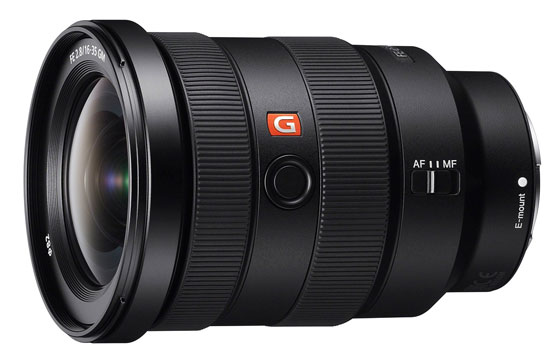
Sony FE 16-35mm f/2.8 G Master II (~$2298 on Amazon) Wide zoom for vlogs/landscapes. Pros: Reduced breathing, silent XD motors, gimbal-friendly weight. Cons: Premium price. Check B&H for US bundles with ND filters.
Tamron 17-28mm f/2.8 Di III RXD ($850-900): Budget Lens and an excellent alternative to Sonys 16-35mm f/2.8G, Very sharp in the center with good corner performance; better flare resistance and less chromatic aberration than Tamron; compact (450g) and affordable; fast, quiet AF; good for astro with controlled coma.
Best Sigma Lenses for Sony A7V Under $1500
Here is the word- and name-corrected version only, with only important words bolded and no change to the meaning of the statement:
Now, when entering the high-performance plus budget zone, Sigma is where you are going to get some of the industry’s best third-party lenses at a very reasonable price tag. So, we are listing the best lenses available from Sigma, starting with the Sigma 24–70mm, which is the best all-rounder lens.
Next, we have the Sigma 150–600mm. Obviously, the autofocus is not as fast as Sony’s 200–600mm lens, but yes, the sharpness is there—very sharp, even at the telephoto end and 600mm. So, let’s explore the Sigma lens list.
Lens
Key Pros
Key Cons
US Price (Approx.)
Sigma 24-70mm f/2.8 DG DN II Art
Fast HLA AF, sharp across frame, video-friendly with de-click ring and minimal breathing
All leverage A7V’s Eye AF; check Sigma’s US site for firmware updates. Sigma lenses are often on sale during US holidays like Prime Day.
Best Tamron Lenses for Sony A7V Under $1500
Obviously, when someone asks about Tamron, the only lens that comes to my mind—specifically the one I recommend for a full-frame Sony camera—is the 35–150mm f/2–f/2.8. That is the best Tamron lens ever made, and it is highly usable, being used by professionals worldwide, so that stays on top of my list always.
Other than that, if you’re looking for a budget solution, then we have the Tamron 28–75mm f/2.8 G2 lens. After that, we also have the Tamron 70–180mm, which is specifically meant to be portable, covering telephoto, portraits, and similar use cases. So yes, Tamron has a lot of options out there. Let’s explore the best ones that I like. All the lenses that we are discussing here supports quick VXD autofocus and vibration compensation (VC) that is ideal for the A7V’s hybrid use
Lens
Key Pros
Key Cons
US Price (Approx.)
Tamron 35-150mm f/2-2.8 Di III VXD
All-in-one versatility, bright aperture for low-light, fast AF, weather-sealed
Tamron’s partial Sony ownership ensures seamless A7V compatibility; look for US warranty bundles.
Best Viltrox Lenses for Sony A7V Under $1000
Viltrox is obviously a Chinese lens company, but it is one of the best among other cheap chinese lenses. Apart from all these, I really do appreciate Viltrox a lot after using and testing their lenses. I would love to see them create an O (ZERO) D lens in the future, but for now, I would like to recommend a set of lenses that deliver high-quality output and are available within a budget. That’s why we are listing these lenses and their details in the table below, so you can review them and, if you wish to purchase them, do so easily.
Lens
Key Pros
Key Cons
US Price (Approx.)
Viltrox AF 16mm f/1.8 FE
Wide-angle for landscapes/astro, bright aperture, built-in LCD for settings
Viltrox lenses shine in US budget builds; check for firmware updates to fix any A7V compatibility issues reported in early 2026.
Best Samyang Lenses for Sony A7V Under $1000
As for Samyang lenses, after using them, what I found practically is that the AF is not as fast as Sigma, Tamron, or Sony native lenses. Those are way faster. The AF is slightly slow, so you can use these lenses for portraits, fashion shoots, street, landscapes, and architecture. Despite the fact that they are a bit slow in autofocus performance, the image quality that comes out from Samyang is exceptionally good. Now, one more thing to be noted: most of the Samyang lenses feel a bit heavy in hand (especially the Zoom lenses like the 24-70mm) I don’t know why—maybe due to the optical elements they are using—but yes, they do feel slightly heavy, so keep this factor in mind before buying if you have to hold your camera for a long period of time.
Lens
Key Pros
Key Cons
US Price (Approx.)
Samyang AF 35mm f/1.4 FE II
Versatile street prime, sharp with natural colors, weather-sealed
The Sony A7 V camera is obviously one of the best full-frame Sony cameras ever made for users. When you are using the best camera with the best lenses, you also have the right to know whether your lenses come under warranty or not. So, if you’re getting lenses like the Sony G Master lenses, they come with a warranty as well as OSS (Optical SteadyShot) in supported lenses.
Tamron and Sigma also have service centres. But if you’re planning to buy brands that are more affordable, like Samyang, then you should know that in some cases the warranty coverage is limited and service centres are not available everywhere. Specifically, with some Chinese-made lenses, you may not get the level of warranty coverage that you should.
Other than that, third-party brands that are already partnered with Sony, like Sigma, Tamron, and Samyang, do provide support if you need it. Specifically, Sigma and Tamron are the best third-party brands when it comes to after-sales support if any issues occur.
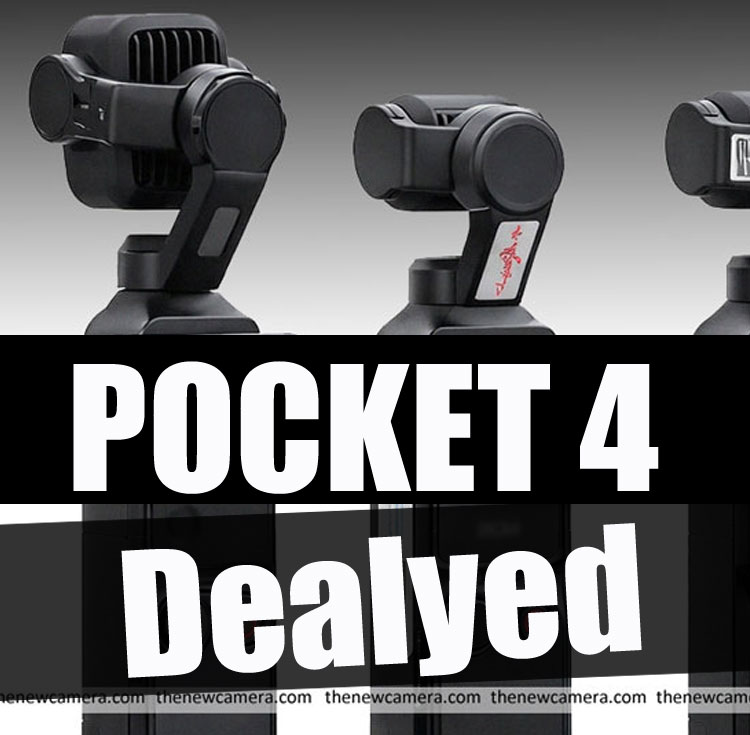
We have recently published that the DJI Pocket 4 camera is delayed, and we are trying to cover extensively all possible information related to the Pocket 4 camera release here at TheNewCamera.com. Now, the anticipation for the DJI Osmo Pocket 4 has reached a new height, since just recently a premature listing appeared on the Amazon Germany website, giving us our first official glimpse into what could be the DJI Osmo Pocket 4.
First Official DJI Osmo Pocket 4 Listing Spotted
Actually, this is the first time we have seen an official Pocket 4 listing. Obviously, this was accidental and was live for only a limited period of time. The page has now been pulled, but the screenshots shared by an eagle-eyed user and our subscriber reveal detailed specifications, features, and potential availability of the Pocket 4 camera, which we are going to discuss in detail in the article below.
Based on the detail from bernsteinius (nstein) that the Amazon.de listing initially displayed a March availability date when he discovered it (before it switched to “not available” and was pulled)
DJI Osmo Pocket 4 Release Date Rumors: March 2026?
While this Amazon placeholder—sponsored by DJI itself—lends credibility to the March 2026 hint, remember it’s not an official confirmation. DJI has a history of using such listings as teasers before pulling them, so we’ll keep monitoring for any updates. If you’re planning to upgrade from the Osmo Pocket 3, this could mean pre-orders open soon after an announcement.
We are expecting its arrival sometime between March 2026 to the latest leaked date, which we have very clearly mentioned in our previous post. Now, just recently, a premature listing appeared on Amazon.de (Germany), giving us our first official glimpse into what could be the DJI Osmo Pocket 4. It has been spotted on the Amazon DE website.
Although the listings are now removed, the Pocket 4 camera appeared via DJI. Special thanks to our subscriber, Bernsteinius, for sharing the information with us. We do have the screenshots of the DJI Care Refresh listing. When the listing was uploaded, it was showing March 2026 as the availability date, and later on, it was removed and rolled back.
Leaked DJI Osmo Pocket 4 Specs from Amazon Listing
So these are the initial set of specifications that we are getting from the DJI Care Refresh listing. These details were available via the Amazon marketplace listing page, and you can also see the following:
Specification: “DJI Osmo Pocket 4” listed as a vlogging camera with a 2.5 cm CMOS sensor (equivalent to about 1 inch), 4K/120fps video, 3-axis stabilization, fast focusing, face/object tracking, and YouTube compatibility. It includes DJI Care Refresh packaging and is marked “Derzeit nicht verfügbar” (currently not available).
A Note of Caution on the Leaked Specs
Keep in mind, the specifications that we see on the DJI Care Refresh page or in the product screenshots are the result of a premature listing. I would recommend, especially to those who are reading this article, not directly believe that these specs are confirmed for the camera. We still have to wait for further confirmation, but at this point in time, it has been made very clear to us by getting the same type of information from multiple sources over the past 3 to 4 days that the announcement of the Pocket 4 camera is expected in February or March 2026. Recent leaks suggest this is for the standard single-lens model, while a rumored “Pro” version with dual cameras (wide + telephoto) could arrive later in May or June 2026 due to accessory delays. The delay may extend up to April, but not beyond that, so the most highly probable month for the Pocket 4 announcement is again March 2026.
GET LIVE NOTIFICATION, Select Your Trusted Source GET LIVE NOTIFICATION Click ON Check BOX for Latest NEWS and Rumors
The article “DJI Pocket 4 Leaked on Amazon: Latest Release Date and Specifications” was written by thenewcamera.com team on 1:55 pm, Sunday, 11 January 2026, Greenwich Mean Time (GMT)
| You can also follow us on Our Official Social Media HandlesFACEBOOK | TWITTER | INSTAGRAM to get live news — > DJI Rumors
The DJI Osmo Pocket 4 is coming with ground-breaking technological upgrades over the Pocket 3, as detailed in our recent coverage. Leaked images from trusted sources confirm a lens-based dual-camera design for the upcoming model.
However, multiple delays have pushed back the DJI Pocket 4 announcement. It was initially expected in December 2025, but postponed due to unfinished accessories. A January 2026 date was then floated, but as we enter mid-January 2026 with no official word, hints from YouTuber Photorabz and our exclusive sources now point to a timeline from late January to early spring, potentially mid-March to April for the advanced variant.
The delay is unexpected, especially since leaked NDA documents surfaced months back in September 2025.
Initial Rumors and the Road to Delay: From December 2025 to Early 2026
As covered in our previous article—DJI Pocket 4 Front View Leaked – Dual Camera Design Exposed—the initial delay was confirmed via leaks and insider tips. With mid-January here and no updates, the DJI Pocket 4 release has slipped further, leaving fans eager for this highly anticipated vlogging camera.
We’ve relied on trusted insiders, but fresh tips from Photorabz (via his candid video recorded at Athens Airport after a holiday) include a shared screenshot confirming the end-of-January delay.
Key points from his video:
His source shared the following insight with him
Photorabz Insights: Two Versions and Further Postponements Confirmed
Photorabz, drawing from a DJI supplier friend and Chinese content creators, shared:
The end-of-January 2026 timeline has been delayed.
DJI plans two versions: a standard model (evolutionary upgrades from Pocket 3) and an advanced dual-camera variant with seamless optical zoom and better low-light performance.
The dual-lens model is now slated for around April 2026.
He mentioned two models – the standard Pocket 4 and a non-standard version—with one eyed for April, but no further details.
Latest Updated: Late Feb to April 2026 Timeline
Building on Photorabz’s report, our exclusive sources clarify without naming a “Pro” edition. They confirm the delay beyond January, with the innovative wide + telephoto dual-camera Pocket 4 now expected from late February to April 2026.
This is the current timeframe based on the latest updates. We’ll post any new developments here.
As writers for TheNewCamera.com, we’re monitoring DJI Osmo Pocket 4 developments through leaks, insiders, and official channels. While rumors from Photorabz and our sources are exciting, we’re awaiting DJI’s confirmation. Stay tuned—the wait for this game-changing gimbal camera might be worth it. What are your thoughts on the dual-camera DJI Pocket 4? Share in the comments below
GET LIVE NOTIFICATION, Select Your Trusted Source GET LIVE NOTIFICATION Click ON Check BOX for Latest NEWS and Rumors
The article “DJI Osmo Pocket 4 Delayed Once More: Latest Rumored Release Date for 2026” was written by thenewcamera.com team on 2:49 pm,Saturday, 10 January 2026, Greenwich Mean Time (GMT) | You can also follow us on Our Official Social Media HandlesFACEBOOK | TWITTER | INSTAGRAM to get live news — > DJI Rumors
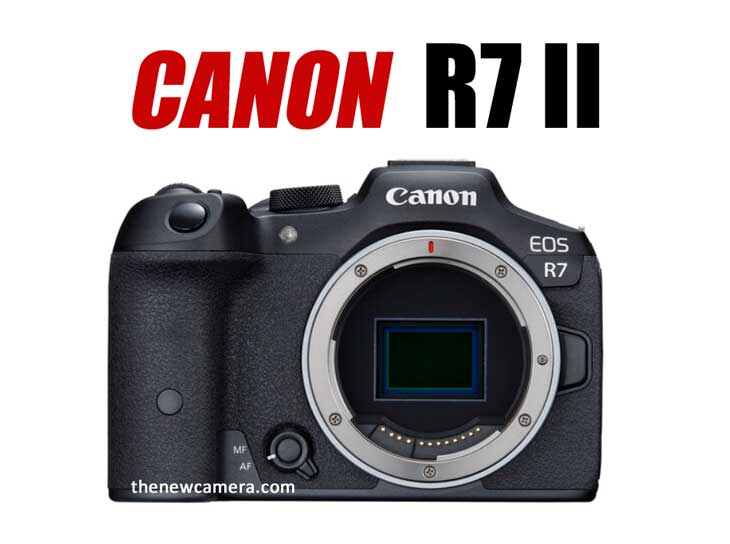
We have already discussed the possibility of the Canon EOS R7 Mark II camera with a 40MP stacked BSI CMOS sensor in our previous post. We have already shared the latest leaked core specifications of the upcoming Canon R7 Mark II camera, which provided a strong hint that a 40MP BSI CMOS sensor will be included in the Canon flagship APS-C camera body.
Now, a fresh rumour is coming from the rumour mill, and according to that, the upcoming Canon R7 Mark II camera will use a 39-megapixel APS-C BSI CMOS sensor (with conflicting info on whether it’s stacked), and this rumour was published on CanonRumors.com. It has been mentioned that the sensor is 39 megapixels with BSI tech, but there’s uncertainty around stacking, and the information is coming from a new/unverified source. Canon Rumours has published a detailed report, and here are the specifications below. Note: These specs are unverified and subject to change, as per Canon Rumors.
We do know that camera makers test several prototypes of a camera before announcing their final product. Meanwhile, that’s why in the past, we have already received strong rumours related to a 40MP stacked BSI CMOS sensor. I personally believe Canon will use a stacked CMOS sensor, potentially around 40MP, for the upcoming Canon R7 Mark II camera.
Canon EOS R7 Mark II Price Rumours
No official pricing yet, but leaks suggest around $1,799 body-only—similar to the original R7’s launch price. Kits with RF-S lenses could range from $1,999 to $2,299. This positions it as an affordable pro-APS-C camera, undercutting full-frame models like the EOS R6 Mark III ($2,499).
These are the latest updates we have related to the Canon R7 II as of January 09, 2026. Bookmark this page for updates, and subscribe to TheNewCamera.com for the latest camera news, reviews, and deals.
What do you think of these Canon EOS R7 Mark II rumors? Share in the comments below!
We have two fresh images of the Avata 360 drone, and the best part is that these images reveal a lot about the drone’s functionality, which we will discuss in the latter part of the article. Other than that, we are already providing extensive coverage of the DJI Avata 360 here at TheNewCamera.com, and the price of the DJI Avata 360 has also recentlybeen revealed. Now, what is actually new in the latest leaked images, and what do they actually reveal? So, let’s jump into the details.
The leaked images, posted by trusted leaker Igor Bogdanov (@Quadro_News), leave us with no doubt about their integrity. At the very same time, the first image that we are discussing here, where the DJI RC 2 is active, reveals very fine details, which make us more excited.
The drone is connected to a DJI RC controller (resembling the RC 2) via cable, displaying a live feed. It features a gray cinewhoop-style frame with full spherical propeller guards for safe indoor and proximity flying. Labels indicate DJI branding and an advanced transmission module, likely O4, for enhanced range.
Interestingly, the camera module in the image clearly shows a tiltable camera module, so that one of the lenses points forward. This suggests that the Avata 360 is not only intended as a 360-degree camera drone, but can also be used as a regular FPV drone, similar to the Avata 2. In that scenario, the pilot can simply operate with a forward-facing view during flight, as with existing Avata models. DJI thus potentially combines two use cases in a single platform.
Now, the second image displays the entire kit, where we have the battery charging hub and spare batteries. It looks like someone who purchased a kit of the Avata 360 drone just unboxed it in front and captured the image.
Pricing and Bundles: China Leads, US Follows
Leaks confirm affordable China pricing, with US estimates adding a premium:
DJI Care ~$57. FCC pre-approval ensures US sales despite bans.
Arrival Time
As per the initial set of information, the Avata 360 will arrive in Q1 of 2026
These are the updates we have related to the Avata 360. As soon as we get a confirmed set of core specifications related to the upcoming drone, or any other updates, we will be publishing them here. Stay tuned for future updates.
GET LIVE NOTIFICATION, Select Your Trusted Source GET LIVE NOTIFICATION Click ON Check BOX for Latest NEWS and Rumors
The article “DJI Pocket 4 Front View Leaked: Dual Camera Design Exposed” was written by thenewcamera.com team on 10:31 am, Wednesday, 7 January 2026, Greenwich Mean Time (GMT)) | You can also follow us on Our Official Social Media HandlesFACEBOOK | TWITTER | INSTAGRAM to get live news — > DJI Rumors
The DJI Pocket 4 rumors are heating up, as a fresh leak has been dropped. The new image gives us, for the first time, a front view of the upcoming DJI Osmo Pocket 4 camera. The innovative dual camera setup present inside the Pocket 4 is clearly visible, and the design of the camera looks very similar to the DJI Air 3 drone camera.
The information has been shared by reliable leaker @Quadro_News on X (formerly Twitter). The image of the Osmo Pocket 4 camera has been captured from a real-world testing scenario. Possibly, the entire setup and the person testing the camera completely match the previous setup that was leaked earlier, but at that time, only the rear view was available.
In the blurry but revealing photo, a person (face pixelated for privacy) holds the device horizontally, showcasing two prominent camera housings on top. The primary lens sits alongside a secondary module, likely incorporating a wide-angle and telephoto (3x optical zoom) combo based on earlier rumors.
For the super ultra-wide shots, and for 2× and 3× telephoto, we now have a Dual dedicated sensor with improved low-light performance and enhanced zooming capability.
So it’s not normal that such a major design shift has been made from the DJI Osmo Pocket 3 to the Pocket 4. This design shift has been primarily done to improve the low-light performance of the camera, as well as to upgrade the zooming performance of the Pocket series camera.
But the big question is: will the DJI ban affect the Osmo Pocket 4 release in the United States of America? Well, we have already answered this. The Osmo Pocket 4 camera cleared its FCC registration back in November 2025, and since this was done before the December 23 ban, the Pocket 4 is eligible to be sold in the United States of America.
What Does the DJI Osmo Pocket 4 Dual Camera Leak Reveal?
From the image and surrounding rumors:
Dual Camera Configuration: One lens appears standard (wide-angle for everyday shooting), while the other could offer 2x optical zoom (around 40mm equivalent), reducing the need for digital cropping. This setup mirrors advancements in drone cameras like the DJI Air 3S
Design Upgrades: The body looks slimmer and more ergonomic than the Pocket 3, with a bulkier gimbal head for stability. Carbon-fiber-like textures on the camera shafts add a premium feel.
Additional Details: A horizontal bar (possibly a microphone or accessory mount) and a small display or control panel are visible below the cameras. The overall form factor remains pocketable, true to the series’ name.
DJI Osmo Pocket 4 Release Date and Price: Latest Updates
Initially, the DJI Pocket 4 was rumored to arrive on December 18, but yes, the announcement was postponed, and the exact reason stated was a lack of accessories that were supposed to arrive alongside the Osmo Pocket 4 announcement. The next expected announcement window was January, but now it looks like DJI is not in the mood to announce the Pocket 4 even in January. It is now expected to arrive sometime in mid-March, as per the fresh reports we are receiving.
Pricing is speculated to be around $599-$ 699 for the Pocket 4 model—competitive with the Pocket 3’s launch price.
Some of the Previous DJI Rumors and more here
DJI Pocket 4 already clreared the ICC listening and the details that we have already pro related to that registration back in November 2025 ( DJI Pocket 4 Spotted at FCC ID article):
Compared to past leaks on our site, like the unofficial teaser video showing the dual-cam in action, Yes, that was one of the first unofficial teaser videos shared by a reliable source, but at the very same time, in that video too, no front camera view was visible. For the first time, we have seen the front face of the DJI Osmo Pocket camera.DJIO
GET LIVE NOTIFICATION, Select Your Trusted Source GET LIVE NOTIFICATION Click ON Check BOX for Latest NEWS and Rumors
The article “DJI Pocket 4 Front View Leaked: Dual Camera Design Exposed” was written by thenewcamera.com team on 10:31 am, Wednesday, 7 January 2026, Greenwich Mean Time (GMT)) | You can also follow us on Our Official Social Media HandlesFACEBOOK | TWITTER | INSTAGRAM to get live news — > DJI Rumors
Buy Canon Lenses, Buy Music CD or Digital Camera at amazon it helps this site, and you do not pay anything extra, it is just a way to help support this site.
New Camera Website, we list all type of new camera information, price review and all type camera rumors, subscribe us or follow us via twitter or facebook.
Disclaimer: We have attempted to select useful information to include on New Camera, and to ensure that the resources we have included on the site -- as well as the way we have described them -- are accurate, fair, and balanced. However, we make no claims, warranties, or other representations concerning the accuracy, completeness, or utility of the information provided, or concerning the abilities or performance of the organizations, agencies, companies, and other resources presented through New Camera




 BOX for Latest NEWS and Rumors