Canon is working on a wireless microphone; we now have the images of the microphone as well as the core details. Originally, the Mic and the transmitter were registered back in 2024; the code name of the wireless Mic is WM-E1-R. It is a compact Bluetooth device tailored for Canon EOS RF cameras. Typically, it has been developed for the expansion of Canon’s wireless microphone system for content creators, giving an excellent alternative option to the existing third-party wireless mic options available in the market. So let’s explore the set of features that are known, as well as the pricing that you may have to pay, and obviously,y the images.
What We Know About the Canon WM-E1-R Wireless Microphone
We now have the leaked image of the wireless mics. The leaked images show a sleek, black, oval-shaped device with the Canon logo and “WM-E1-R” labeling, alongside a square-shaped companion unit that is actually an advanced receiver. These align with FCC IDs AZD250 and AZD251, corresponding to models DS586233 (master unit) and DS586234 (slave unit). Filed by Canon Inc. in Japan, the certifications were granted on June 10, 2024. As we have mentioned earlier, the Receiver is fully compatible with the Canon Multifunctional hotshoe of RF system cameras.
Key highlights from the FCC documentation include:
Device Type: Wireless Lavalier Microphone, suitable for audio-visual equipment, broadcast, and consumer use.
Technology: Bluetooth with GFSK modulation for reliable, low-power wireless communication.
Antenna: Integrated PCB pattern antenna for compact design.
Power Source: Battery-powered, with transmission ceasing during USB charging to comply with regulations.
SAR Compliance: Tested for Specific Absorption Rate (SAR) with values of 0.13 W/kg (AZD250) and 0.37 W/kg (AZD251), well below the 1.6 W/kg limit.
Testing Standards: Passed FCC Part 15 Subpart C for emissions, bandwidth, output power, and more.
Labelling: Due to the small size, the FCC ID is in the user manual and packaging, not on the device itself.
The overall design of the transmitter looks very similar to the Rode Wireless Mic design. And typically, the receiver, the WM-E1-R, is designed for the Canon Multi-Function Shoe of Canon EOS R cameras, but at the very same time, it also has a 3.5mm jack input port. In case you want to plug and play in a traditional way with other cameras, too, it remains compatible.
Features and Potential Use Cases for Canon Wireless Microphones
Based on the filings and leaked photos, the Canon WM-E1-R promises professional-grade audio in a portable form factor. Here’s what stands out:
Wireless Freedom: Bluetooth LE ensures low latency and stable connections up to a reasonable range, perfect for filmmakers, podcasters, and YouTubers who need mobility.
Compact Design: The microphone’s small size makes it discreet for lavalier use, clipping onto clothing without bulk.
Compatibility: Tailored for Canon’s ecosystem, it could pair seamlessly with cameras like the EOS R5, R6, or R10, enhancing video audio quality over built-in mics.
Battery Life and Charging: USB connectivity for charging, with smart power management to avoid interference.
Industry Applications: Listed for consumer, broadcast, and commercial use, it’s versatile for everything from home videos to professional shoots.
For videographers as well as professional content creators, those who are typically looking for a native Canon integration, reducing setup time and improving reliability. For sure, the WM E1 R will work the best.
Why Hasn’t Canon Announced the WM-E1-R Yet?
Despite the FCC approval in mid-2024 and now in Q1 of 2026, it’s really interesting to see why Canon has remained silent on the WM-E1-R and delayed its announcement. Certifications like 3C (China) and FCC often precede launches by months, so an announcement could come in 2026. Canon’s current microphone lineup on their official site includes wired options like the DM-E1D and DM-E100, leaving a gap for wireless solutions.
The wireless mic of Canon will help to expand the ECO system of the Canon Mirrorless camera. With strong and reputable competitors like DJI, Hollyland and Rode already dominating the wireless mic market, Canon might be positioning the WM-E1-R as a premium, ecosystem-specific alternative. Although nowadays a lot of budget option has become available
Pricing and Availability Speculations
Take a look what we expect the priccing of the upcoming wireless mic should be
DM-E100 retails around $160.
The WM-E1-R could land between $200-$300,
depending on whether it’s sold as a kit with receiver and transmitter. Availability might align with Canon’s next camera announcements, potentially bundled with models like the EOS R series.
Stay tuned to TheNewCanera.com for updates. If you’re in the market for Canon gear, check out our reviews of the best Canon microphones and EOS cameras.
The leaked Canon WM-E1-R wireless microphone excites with its Bluetooth tech, compact build, and FCC-backed compliance. Though not yet announced, it fills a need for high-quality, wireless audio in Canon’s ecosystem. For photographers and videographers, this could elevate content creation without third-party hassles. Bookmark TheNewCanera.com for the latest on Canon releases, leaks, and reviews—your go-to source for camera news!
We are on the verge of the DJI Avata 360 announcement, the 360 drone. We have covered almost all the possible updates and a reliable set of information related to the upcoming drone, but now it’s about to arrive within a few weeks. The drone pricing we leaked back in January still seems valid, and many websites are still re-sharing it. Now, let’s jump into the content to explore all the latest possible details of the upcoming 360 drone.
Breaking DJI Avata 360 Leaks: Instructional Video from Beta Software
The leak is sourced to an Italian drone pro, Quadricottero, who is one of the early beta testers of the DJI Avata 360. One thing to be noted, there are a lot of people on Twitter who claim they are testing the DJI Avata 360 drone. Still, without any authentic information, we are not sharing or publishing any of their information. Most importantly, this Italian drone enthusiast Quadricottero’s information has also been republished and shared on the DroneXL website, which is obviously one of the most reputable websites for news and information related to drones. Now let’s talk about the point.
A breakthrough in DJI Avata 360 rumours comes from a leaked 16-second instructional video discovered in the DJI Goggles beta software. This low-resolution clip (32×32 pixels) demonstrates the battery insertion and activation process for the Avata 360, signalling that the drone is in the hands of early testers and reviewers. The video also includes the first official box image and a side-by-side comparison with the DJI Avata 2, revealing the Avata 360 as slightly larger than its 377-gram predecessor.
This leak, sourced from Italian drone enthusiast Quadricotteron and early beta testers, dismisses earlier fake or AI-generated content, focusing on verified real footage. For drone enthusiasts tracking DJI Avata 360 video leaks, this is a clear indicator of an imminent launch, with YouTubers already preparing reviews.
DJI Avata 360 Release Date: Delayed to March 2026, China First Announcement
As per the latest set of information, we have that the DJI Avata 360 is to arrive in March 2026. The most important part of the announcement is that the drone will be announced in mainland China, and global availability is expected shortly after its official announcement. So it seems to be quite aligned with DJI’s latest pattern of regional announcements, followed by a global announcement later.
DJI Avata 360 Specifications: 8K Panorama, Enhanced Compatibility, and More
Building on our earlier reports, the DJI Avata 360 specs highlight its role as a versatile hybrid drone combining FPV agility with 360-degree capture. Key features from the latest leaks include:
Camera System: 8K/60fps HDR panorama video, tiltable module allowing single-lens FPV mode for forward-facing views similar to the Avata 2.
Propellers and Design: 4-blade propellers (up from 3 on the Avata 2),
cinewhoop-style frame with full spherical guards for safe indoor flying, and a grey body with DJI branding.
Obstacle Avoidance: 4-6 front sensors (no rear sensors confirmed), enhancing safety during dynamic flights.
Transmission and Compatibility: O4 system for stable, long-range signal; fully compatible with DJI Goggles N3, Motion Controllers, and the DJI RC 2 (introduced with the Air 3S and Mini 4 Pro)—no upgrade to OcuSync O5.
Battery and Flight Time: Upgraded battery life for extended sessions, though exact times remain unconfirmed.
Additional Modes: Smart features like obstacle sensing, follow-me tracking, and automated paths, making it accessible for beginners and pros alike.
Positioned as an “Antigravity killer,” the Avata 360 outperforms competitors in value and functionality, blending two devices into one compact powerhouse.
DJI Avata 360 Pricing: Bundles Starting from $499?
Pricing rumors for the DJI Avata 360 draw from Chinese leaks, with estimated global figures mirroring the Avata 2’s launch strategy. Here’s a breakdown:
Bundle Type
Chinese Price (¥)
Estimated US Price ($)
Inclusions
Drone Only
2,988
499
Base drone
With DJI RC 2
3,988
699
Drone + RC 2 Controller
Fly More Combo (with RC 2)
5,688
999
Drone, RC 2, 3 Batteries, Charging Hub, Case
With Goggles N3 Combo
N/A
1,200
Drone, Goggles N3, Accessories
These are domestic Chinese prices; expect slight increases in the US/EU. Preorder listings from retailers like US Drone Supply have shown varying figures, but official DJI pricing will clarify upon release. DJI Care is estimated at around $57.
DJ Avtar has pre-qualified for FCC registration, which we have already updated, Avata 360 will soon land in USA too. Stay updated with TheNewCamera.com for the latest DJI news, including official announcements and reviews. What do you think of the DJI Avata 360 delay and features? Share in the comments below! For preorder tips and comparisons, check our guides on DJI drones.
The article “DJI Avata 360 News: New Video Reveals Battery Setup, March 2026 Release Date Confirmed” was written on 1:58 pm, Thursday, 19 February 2026, Greenwich Mean Time (GMT)
Reports are buzzing that the Canon EOS R3 Mark II camera has popped up in testing at the Milan Winter Olympics. It’s not positioning itself as just a high-res version of the EOS R1—instead, it’s more of an experimental beast, packing the industry’s first dual native resolution back-illuminated stacked CMOS sensor as its big innovation.
These updates are coming from the Chinese social media handle Camera Beta. Now, according to this handle, they have seen or witnessed the presence of the Canon R3 Mark II camera during the Olympics, and in the page, they have also shared the core specifications of the camera.
Understanding the Dual Resolution Feature
One thing is really very confusing that the upcoming camera can capture 24MP images as well as 54MP images handheld, so he is confused about this feature and he has been concerned that it has a dual native resolution capability of the sensor, but why I personally think that Canon is doing their expertise in handheld higher resolution capturing capability, and with that they can push resolution up to 2X, means from 24MP they can jump to 54MP without putting your camera on a tripod or anything which is stable, you can do it handheld.
Analysis of Canon’s Handheld High-Resolution Technology: So instead of naming it as dual gain resolution or whatever the term they have pointed for it, it is better to say Canon has enhanced the handheld higher resolution shooting capability which can be doubled for the sensor resolution with the help of a new image processor. But this is the sort of analysis we are able to do with the available set of information what the source is claiming about the R3 Mark II camera.
Key Innovations in Sensor Technology: This new camera lets you switch between two native resolutions: 54 million pixels or 24 million pixels. That means you can crank out high-speed continuous shooting at 40 frames per second in the higher res mode, or bump it up to a blistering 90 frames per second in the lower one. It uses an upgraded Bayer array that smartly merges adjacent pixels when you’re in 24MP mode, giving about an 80% sensitivity boost over the original EOS R3. Throw in triple native ISO tech, and you’ve got killer high-ISO performance that stands out.
Advanced Autofocus System On the autofocus front, it’s got a four-pixel CMOS AF system with four photodiodes per pixel. That setup delivers dual cross-type autofocus across every single one of those 54 million pixels, handling phase detection in horizontal, vertical, and even diagonal directions for super-precise tracking.
Video Capabilities for Professionals: For video shooters, it’s a dream: in-camera recording of 9K at 60p or 6K at 120p in RAW format, all while keeping full-pixel autofocus locked in.
So for now, take a look at what they have said, and we have also organised the entire core specification of the camera, according to the information shared by Camera Beta itself.
Canon EOS R3 Mark II Specifications Breakdown
Based on the provided details, here’s a breakdown of the key specs extracted and organized for clarity. Note that this is derived from reports and rumors, so official confirmation from Canon would be needed for accuracy.
Category
Specification
Details
General
Model Name
Canon EOS R3 Mark II
General
Status
In testing (spotted at Milan Winter Olympics); experimental product, not a high-res version of EOS R1
Switchable: 54 megapixels (high-res mode) or 24 megapixels (speed mode)
Sensor
Bayer Array
Upgraded; merges adjacent pixels in 24MP mode for ~80% sensitivity boost over original EOS R3
Sensor
ISO Technology
Triple native ISO for exceptional high-ISO performance
Shooting Performance
Continuous Shooting
40 fps at 54MP; 90 fps at 24MP
Autofocus
System
Four-pixel CMOS AF with four photodiodes per pixel
Autofocus
Coverage
Dual cross-type AF across all 54 million pixels
Autofocus
Detection
Phase detection in horizontal, vertical, and diagonal directions for precise tracking
Video Capabilities
Recording
In-camera 9K 60p RAW and 6K 120p RAW
Video Capabilities
Autofocus
Full-pixel autofocus maintained during video recording
These are the initial updates we have related to the upcoming Canon EOS R3 Mark II. If we get any new info, we will be updating it here
As usual, Camerabeta isn’t always counted among the list of highly trusted sources, so take it with a grain of salt till we get further confirmation about the information.
The article “Canon R3 Mark II Rumors February 2026: Dual Native Resolution Sensor Tested at Milan Winter Olympics” was written on 7:48 pm, Tuesday, 17 February 2026, Greenwich Mean Time (GMT)
The DJI Osmo Pocket 4 is no longer just rumors – it’s here in the real world!. We have real-life footage of the DJI Pocket 4 camera, and this is what the leaker says. The leaker is an official DJI store in Kuala Lumpur, Malaysia, and according to them, a customer holding the DJI Pocket 4 camera visited their store. They had it with them and created a video, which they posted on their official Instagram handle.
So this is the story behind this leak. But apart from all this, yes, we finally have the first official DJI Pocket 4 camera images. Those videos look very authentic, and finally we have it, and it also looks like the announcement is very close to us.
In this post, we have embedded the video. We have also added pics from the video, so if the video is taken down after a while, the pics should remain visible and available to you.
A customer recently visited DronesKaki Bukit Bintang in Fahrenheit 88, Kuala Lumpur, Malaysia, and showed off the DJI Pocket 4 to the store staff. As described in the post: “A customer came to show us the DJI Pocket 4! It’s a cool gimbal camera with an LED light.”
This 33-second Instagram Reel, uploaded on February 15, 2026, by the official DJI-authorized retailer DronesKaki, captures the first hands-on DJI Pocket 4 footage outside of China leaks. It’s perfect for vloggers eyeing the DJI Pocket 4 release date, DJI Osmo Pocket 4 specs, and DJI Pocket 4 Malaysia availability. We’ve embedded the video, broken down the highlights, compared it to the Pocket 3, and included the latest leaked specs.
DJI Pocket 4 Hands-On Video: What the Malaysian Customer Demo Shows
DronesKaki, a trusted DJI Enterprise Authorized Store at Bukit Bintang, Fahrenheit 88, Kuala Lumpur, shared the Reel on Instagram. The caption nails it: “A customer came to show us the DJI Pocket 4! It’s a cool gimbal camera with an LED light. Location: DronesKaki Bukit Bintang, Fahrenheit 88 Kuala Lumpur. #droneskaki #dji #djipocket3 #djipocket4”
In the video:
Ultra-Compact Gimbal: The Pocket 4’s signature 3-axis stabilization shines as the customer pans smoothly through the store—zero shakes, even on the move.
Built-in LED Light: The standout new feature! This front-facing LED provides instant fill light for low-light vlogs, selfies, or indoor shoots. No extra accessories needed.
Intuitive Controls: Flip-out 2-inch OLED screen, physical joystick, and quick buttons for seamless operation.
Vlogging Vibes: Perfect for travel creators—pocketable, powerful, and now even better in the dark.
Comments are flooding in: “Does this camera have 6K 30fps?” and “What are the video settings?”—users are already hyped for the upgrades.
People are confused about the capabilities of the camera, specifically when we talk about the specifications. But we all know that in one of our previous posts, we published the details of the leaked listing of the DJI Pocket 4 camera, which was accidentally listed on the Amazon Denmark website.
According to that listing, the DJI Pocket 4 standard version is limited to 4K 240FPS and does not allow 6K recording. But that is what we saw in the listing. It may have been a kind of dummy listing or whatever. According to the same listing, the shipping of the camera will start from March 2026.
DJI hasn’t officially announced the DJI Pocket 4 yet, but this Malaysia sighting matches leaks from Amazon listings, retail boxes, and FCC filings. The standard model (shown here) is an evolutionary upgrade, while a Pro version with dual cameras is rumored for later.
Here’s the DJI Pocket 4 specs breakdown:
Feature
DJI Osmo Pocket 4 (Standard)
DJI Osmo Pocket 3
Sensor
1-inch CMOS (enhanced, 2.5cm equiv.)
1-inch CMOS
Video
4K/120fps (up to 6K/30fps rumors)
4K/120fps
Stabilization
Advanced 3-axis gimbal + AI tracking
3-axis gimbal
Screen
2-inch rotatable OLED (brighter)
2-inch OLED
Battery
1,545mAh (~200+ mins)
1,300mAh (166 mins)
New Features
LED light (optional), fast AF, Wi-Fi 6
Basic AF, Wi-Fi 5
Weight/Size
~179g, slightly refined ergonomics
179g
Price (Est.)
$549–$699 (Base); $699–$749 (Combo)
$549 (Base)
These specs make the DJI Pocket 4 ideal for 2026 vlogging: smoother slow-mo, better low-light (thanks to the LED), and longer shoots.
The Creator Combo (leaked in January) includes extra batteries, a case, and more—expected at launch.
DJI Pocket 3 vs Pocket 4: Upgrade Worth It?
The DJI Osmo Pocket 4 refines the Pocket 3 without reinventing the wheel. Key wins:
Low-Light King: LED light + enhanced sensor = pro results in dim cafes or evenings.
Frame Rate Boost: 4K/240fps for cinematic slow-mo—double the Pocket 3.
Battery Life: 20%+ longer for all-day vlogs.
Ease of Use: Better tracking and controls for solo creators.
Hold your Pocket 3 if you bought recently. New buyers? Go for the Pocket 4—it’s the best pocket gimbal camera coming in 2026.
Release Date: Late February to March 2026 (imminent, per warehouse stock and retailer sightings).
In Malaysia: Already at DronesKaki Bukit Bintang! Check their site or Shopee for pre-orders.
Global Rollout: Amazon, DJI Store, and B&H by Q1 2026.
Insta360 Luna (a dual-lens rival) is launching soon—competition is fierce!
Why This DJI Pocket 4 Video is Huge for Creators
This first real-world DJI Pocket 4 footage from Malaysia proves it’s ready for prime time. From street vlogs to YouTube intros, the LED light and gimbal make it unbeatable.
What’s your take? DJI Pocket 4 upgrade from Pocket 3? Comment below!
Share for more DJI Pocket 4 news. Subscribe to thenewcamera.co for specs, reviews, and launch alerts.
The article “DJI Pocket 4 Video Leaked” was written by thenewcamera.com team on 6:39 am, Tuesday, 17 February 2026, Greenwich Mean Time (GMT)
| You can also follow us on Our Official Social Media HandlesFACEBOOK | TWITTER | INSTAGRAM to get live news — > DJI Rumors
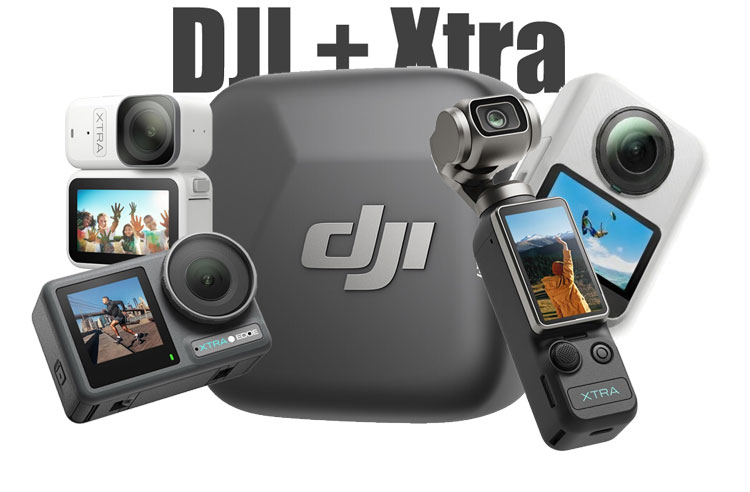
If you’ve been eyeing an Xtra camera but held back because of “no wireless mic support”… stop scrolling. Since a major firmware update was dropped in February 2026, every single Xtra camera — including Xtra Muse, Xtra Atto, Xtra Edge Pro, Xtra Edge, and Xtra Sphera360 can now connect wirelessly to DJI Mic Mini and DJI Mic 2.
So technically, this firmware update solves everything – specifically for a DJI user, those who were actually a little confused about getting an Xtra Muse or Xtra action camera due to ecosystem synchronicity. But right now, we have the same – the same – ecosystem as DJI, supporting the Xtra range of cameras.
And now the Xtra Muse becomes an excellent deal compared to the DJI Osmo Pocket 3, thanks to full ecosystem support.
The Firmware Update Creators Have Been Waiting For
The Xtra Muse is an almost exact copy of the DJI Osmo Pocket 3, but the only missing link was the ecosystem. A wireless mic pairing was not available with the Xtra Muse before the firmware update. Now, after the update, the camera has become an amazing alternative to the Pocket 3 at a lower price.
With this update, take a look wat hat you are getting:
DJI Mic Mini pairs instantly via Bluetooth.
DJI Mic 2 works with full 32-bit float audio — the same pro-level protection against clipping you get on real DJI gear.
Live audio meters pop up on-screen, exactly like the Pocket 3 or Osmo Action.
In short: Xtra just became a full member of the DJI audio ecosystem – at half the price.
Every Xtra Camera That Now Has Native DJI Mic Support
Model
What It’s For
Killer Specs
DJI Mic Compatibility
Xtra Muse
Pocket vlogging & travel
1″ CMOS, 4K/120fps, 3-axis gimbal
Mic Mini + Mic 2 (32-bit float)
Xtra Atto
Tiny POV & hands-free
54g, 4K/60fps, 220-minute battery
Mic Mini + Mic 2
Xtra Edge Pro
Rugged action & adventure
1/1.3″ sensor, 4K/120fps, tough build
Mic Mini + Mic 2
Xtra Edge
Everyday action cam
Compact, reliable all-rounder
Mic Mini + Mic 2
Xtra Sphra360
Immersive 360° content
True 8K panoramic, 1″ equiv. sensors
Mic Mini + Mic 2
Whether you’re filming solo vlogs with the Muse, running trails with the Atto, or capturing mind-blowing 360 with the Sphera360, your audio just went pro.
How to Connect the DJI Mic Mini to Any Xtra Camera (Takes 20 Seconds)
Creators are calling this the easiest pairing they’ve ever done. Here’s exactly how:
Update firmware (see next section).
Turn on your DJI Mic Mini (or Mic 2 transmitter).
On the Xtra camera: Settings → Wireless Mic → Connect.
Put the mic in pairing mode.
Tap Pair on the camera screen.
Done. Audio bars (1–5) appear immediately.
It feels 100% like using a native DJI camera. Many say the clean green Xtra menu actually looks better.
How to Get the New Firmware (Super Simple)
Pro tip: This update is only available through the Xtra app right now — not on the website.
Download/open the Xtra app on your phone.
Connect your camera via Wi-Fi or cable.
Look for the firmware notification (it started rolling out late last night).
If you don’t see it, force-close the app and reopen.
Update takes 2–3 minutes. Once done, the “Wireless Mic” menu magically appears.
This is all about the Xtra update — you can now have full synchronicity with DJI Mic Mini and DJI Mic 2, and that’s the best part of this firmware update. From now on, there’s no further hesitation in picking an Xtra product, since they are available at a much more affordable price compared to the DJI Osmo Pocket 3.
The Insta360 camera was first publicly unveiled on February 11, 2026, by Insta360 CEO Liu Jingkang at an event, and we have covered it very well here. Now, recently, a demo video of the Insta360 Luna camera has been leaked, and in the demo video, you can clearly see that the camera is not only able to capture clear and high-quality videos, but it is also able to deliver an excellent amount of depth in portraits, just like a professional sensor camera. It may be due to the sensor used in the camera, which helps it create an excellent amount of depth.
Thenewcamera.com was the first website to publish the images of the Insta360 Luna pocket camera. In the images, the entire camera is based on a modular concept; you can clearly see the entire camera gimbal unit that can be disassembled and then reassembled as per your convenience. That means the solo camera unit can also work if you separate it from the gimbal, so it is a highly advanced camera with excellent video recording capability. Let’s discuss in detail.
Exclusive Insta360 Luna Teaser Video Demo: Prioritizing Content Breakdown
The teaser video tells everything about the upcoming Insta360 camera. It does include footage from the camera, so how excellent the camera is in generating background blur. this short clip (~30-60 seconds) demonstrates real-time AI processing. The device itself is blurred for a teaser effect, shifting focus to the output quality rather than hardware reveals. This smart move prioritizes content impact, showing how Luna delivers professional results without overwhelming users.
Overall, the video highlights accessible AI features, superior 4K-like footage quality, and practical value for content creators, positioning Luna as an innovative, user-ready device through dynamic demonstration rather than static leaks.
Insta 360 Luna pocket camera core specification leaked by one of the highly trusted sources on February 13, 2026, leaked by @Quadro_News, combining that information, as well as the information we have from highly trusted sources. Here is the complete set of course specification of the upcoming camera.
Dual-Lens Innovation: Wide-angle main lens plus telephoto for 3x optical zoom, with auto/manual switching via touchscreen or joystick.
AI-Powered Processing: Always-on main SoC/ISP paired with a secondary Pre-ISP for low-light magic—noise reduction, brightness boosts, and shadow recovery triggered by a light sensor.
Video Prowess: 4K up to 240fps slow-mo, 10-bit color for pro-grade dynamic range, and AI tools like auto-tracking and editing.
Gimbal and Extras: 3-axis stabilization with AI smarts, ~180-minute battery (1,500mAh), USB-C charging, rotating screen, and optional ND filters.
Variants: Customizable colors and modules for tailored setups.
These specs shine in real-world use, as highlighted in the exclusive demo below.
DJI Osmo Pocket 4 Rumors: Still Silent, But Leaks Persist
DJI’s radio silence (per @Quadro_News’ February 13 update) contrasts the Luna’s buzz. FCC docs from December 2025 point to a late February–April 2026 launch, possibly delayed to Q2. Variants include a single-lens standard model and dual-lens Pro (wide + 70mm telephoto, 3x zoom). Rumored specs: 1-inch 50MP sensor, 4K/240fps (maybe 6K), AI gimbal, 1,545mAh battery, and $699–$899 pricing
Insta360 Luna vs DJI Osmo Pocket 4: Specs Comparison with Video Insights
Prioritizing content from the demo, here’s how they stack up:
4K/240fps (up to 6K?); waiting for further confirmation
Stabilization
3-axis + AI; tracking flawless in motion clips
3-axis + AI; reliable but not visualized
Battery
~180 mins; sustains long demos
~180 mins
Price & Release
$499–$699; March/Q2 2026
$699–$899; Feb–April 2026
Content Priority
Exclusive video emphasizes real-world bokeh
Leaks only—no dynamic content yet
The Luna’s demo content gives it a clear priority for visual creators, while DJI banks on brand loyalty.
Verdict: Prioritize Luna Content or Wait for DJI?
We have already published a lot of information related to the DJI Osmo Pocket 4—the standard edition as well as the Pro edition. Now, one of the most important things is that the DJI Pro edition FCC ID has also been revealed, and it confirms its United States of America availability. As we all know, the FCC gives a grant of 180 days to companies to announce their products. In that context, the standard version was registered back in November, and the Pro edition was registered at the end of December 2025. So obviously, the standard version will arrive a bit earlier. Most probably, we will have the announcement of the DJI Osmo Pocket 4 standard edition in March 2026, and the Pro will arrive one or two months after that.
But the most important part here is how the Insta360 Luna is coming. That’s the most interesting part. As we know, the DJI standard edition comes with a single camera module, so it won’t generate as much depth as we have seen in the Insta360 pocket camera. So the direct competitor of Insta360 Luna is the DJI Osmo Pocket 4 Pro.
What are your thoughts on the video’s specifics? Share more content details for further tweaks. Subscribe for updates on “pocket gimbal camera leaks”!
The article “Insta360 Luna Pocket Camera Teaser Video: Beats DJI Osmo Pocket 4?” was written by thenewcamera.com team on 5:06 pm, Sunday, 15 February 2026, Greenwich Mean Time (GMT) | You can also follow us on Our Official Social Media HandlesFACEBOOK | TWITTER | INSTAGRAM to get live news — > DJI Rumors
One of the most important things that people want to know is when the Canon EOS R10 Mark II camera is actually coming. The question seems to be logical. Also, since the Canon EOS R10 is now as old as an R7 mirrorless camera, and the Canon EOS R7 was announced together on 24 May 2022.
But right now, we do have some strong rumours related to the Canon EOS R7 Mark II camera. The reason behind those rumours is a Canon FCC ID registration of a pro mirrorless camera, which seems to be highly identical to an APS-C flagship camera, considering the core specifications, the battery the camera is using and all that stuff.
So, the big question is actually when the R10 Mark II camera will arrive. Will it arrive before the R7 or after that? Let’s discuss it first.
Canon EOS R7 Mark II vs R10 Mark II: Which Comes First?
If you compare the two, then for sure, according to the recent FCC ID filing, the Canon R7 Mark II camera announcement looks more prominent. For now, no other FCC IDs have emerged till February 2026, so even if Canon registers a camera after March or April, the announcement is expected sometime in the second half of 2026.
During the DSLR time, the mid-range camera update cycle was approximately two years, and obviously, the flagship APS-C cameras were taking approximately four years of time. But right now, both the mid-range Canon EOS R10 and the Canon EOS R7 were announced approximately four years back. Due to uncertainty in the market and a bit lower demand for hybrid cameras, as people are putting more focus on video-oriented compact mirrorless solutions, as well as photographers preferring full-frame high-end hybrid cameras, in that context, it seems like Canon is about to update the Canon EOS R7 instead of the R10 for now.
FCC ID Analysis: No New Camera Filings Until February 2026
A key piece of evidence comes from FCC ID listings, which often foreshadow camera announcements. As of February 2026, Canon has no new “Digital Camera” registrations beyond the December 17, 2025, filing for AZD260 (model code DS126933 / HVIN DS126933). This filing is widely linked to the Canon EOS R7 Mark II, thanks to leaked certification documents from UL Verification Services.
Recent FCC Entries:
AZD260: Digital Camera (Dec 17, 2025) – Tied to the R7 Mark II.
AZD30387-2: Wireless LAN Module (May 15, 2025) – For Wi-Fi/Bluetooth integration.
AZD30400: Wireless LAN Module (Mar 13, 2025) – Similar module for host products.
The absence of fresh camera-specific FCC IDs suggests that if Canon registers a new one in early 2026 (e.g., February or March), the Canon EOS R10 Mark II announcement wouldn’t hit until Q4 2026 or later. FCC certifications typically require 3-6 months of lead time for testing and disclosure
Expected Specs for Canon EOS R10 Mark II
Since there has been a lot of delay in the mid-range level series camera, Canon EOS R10, we are now expecting a bigger jump in the core specifications of the upcoming camera. While official details are under wraps, Canon EOS R10 Mark II specs rumours point to evolutionary upgrades rather than revolutionary changes.
Let’s discuss what we are expecting from Canon R10 Mark II
Sensor: Expected to reuse the 32.5MP APS-C sensor from the original R7, ensuring sharp images without the premium price tag.
Performance: Faster continuous shooting mechanical up to 15 fps, improved autofocus, and enhanced video capabilities, but no in-body image stabilisation (IBIS) or weather sealing to keep it compact and budget-friendly.
Design: Retains the single card slot and lightweight body of the R10, ideal for entry-level users upgrading from DSLRs.
Other Features: Better battery life, 4K video improvements, and seamless integration with Canon’s RF-S lenses.
That’s what we are least expecting from R10 Mark II, since the competitors like A6700 and ZV-E10 II now using 26 MP APS-C BSI CMOS sensor, it seems to be quite an bit logical update from the existing 24 MP sensor.
Why the Delay? Canon’s 2026 Strategy Explained
It all depends upon the Canon marketing team. It was quite obvious that the entry-level models, the Canon EOS R50 and the Canon EOS R100, were taking over the market (July 2025) even in the USA. We have reported several times that the R50 is leading the market, so without a doubt, the R10 camera sales are not at that point. It is better to say the market response wasn’t as strong, and that’s why they have intentionally delayed the updates.
If a series becomes more popular, they are going to add more variants and obviously schedule updates to it. For example, the R50 series now has the Canon EOS R50V, and possibly this year or next year, we will have the R50 Mark II. But again, it all depends on market popularity and sales. If a model doesn’t perform as much as expected, then it gets delayed.
Other than that, that is the only reason why a camera maker decides to delay or discontinue a model.
The article “Canon R10 Mark II Rumors: 2026 Release Date, Specs, and FCC Insights” was written by thenewcamera.com team on 5:05 am, Sunday, 15 February 2026, Greenwich Mean Time (GMT) | You can also follow us on Our Official Social Media HandlesFACEBOOK | TWITTER | INSTAGRAM to get more live Camera News + Canon Rumors 24X7
Buy Canon Lenses, Buy Music CD or Digital Camera at amazon it helps this site, and you do not pay anything extra, it is just a way to help support this site.
New Camera Website, we list all type of new camera information, price review and all type camera rumors, subscribe us or follow us via twitter or facebook.
Disclaimer: We have attempted to select useful information to include on New Camera, and to ensure that the resources we have included on the site -- as well as the way we have described them -- are accurate, fair, and balanced. However, we make no claims, warranties, or other representations concerning the accuracy, completeness, or utility of the information provided, or concerning the abilities or performance of the organizations, agencies, companies, and other resources presented through New Camera