DJI is non-stop working to introduce new drones for consumers, and they have recently registered two brand-new drones that never existed before, as per the CMIIT registration. In this article, we are going to discuss the type of drones they have registered and the possible set of information we have related to the upcoming DJI drones in 2026.
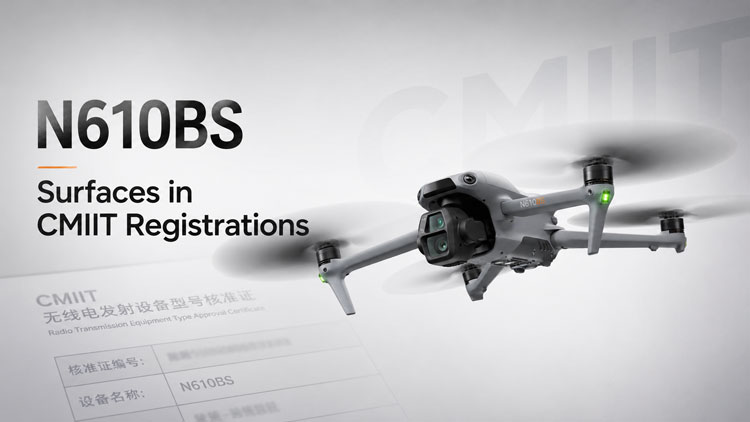
DJI has continued filing new radio certifications in China this year, and one recent entry stands out because it belongs to a drone that hasn’t been officially announced yet.
The model code N610BS (and its variant N610BS-BD) recently appeared in CMIIT records. While DJI has already launched several new models in 2026, this particular registration points to something that’s still under wraps.
What Do We Know About N610BS?
From the available CMIIT Data, what we came to know after a short analysis is that N610BS was filed in a noticeably different way compared to DJI’s recent consumer drones. It was categorised more like a higher-level or professional model, and the BD variant even received its own separate certificate number (2026-7820).
Now, it’s time to explain why we think that the drone that has been registered at CMIIT ID is different from the existing DJI drones
A few things make this registration interesting:
The model code starts with “N”, which doesn’t follow DJI’s recent naming patterns.
The filing style suggests it’s positioned above basic consumer drones.
Very little technical information has been made public so far.
Right now, N610BS remains a mystery. However, the way it has been registered gives us some clues about where DJI might be heading with its next models.
Summary of DJI Prefix Patterns (Updated)
Series
Prefix
Example
Type
Matrice
M
M4T
Enterprise
Lito
DG
DGN12C
Entry-level Consumer
Air
CZ
CZ3SCL
Mid-range Consumer
Mini
MT
MT4MFVD
Lightweight Consumer
Neo
DF
DF1A0424
Ultra-light Consumer
Avata
QF
QF3W4K
FPV Consumer
N610BS
N
N610BS
Unknown / Unannounced
Could N610BS be an extension of the existing drone model?
This is the first question that comes to mind for many people. And that’s why we created the table above, which clears up all the confusion and confirms that DJI will introduce a new category of Drones in 2026, apart from Lito.
What Could N610BS Actually Be?
While it’s still early, here are the most likely possibilities:
A new prosumer-level drone positioned above the current Air series.
A more specialised model aimed at advanced users or specific use cases.
A potential new tier between DJI’s consumer and enterprise offerings.
What This Means for Buyers (Especially in the US)
For US buyers, this development is worth watching closely.
If N610BS is indeed a new mid-to-high-level drone, it could influence how DJI positions and prices the upcoming Air 4. However, there’s an important point to consider: even if DJI launches new drones in China or other markets, bringing them to the US has become significantly more complicated due to ongoing regulatory and political issues.
At the moment, there’s no confirmed information about FCC certification or US availability for N610BS. This means even if the drone launches globally in late 2026, American buyers might have to wait longer – or it may not become available at all in the near term.
Final Thoughts
The appearance of N610BS in recent CMIIT registrations is one of the more credible signs that DJI is working on at least one unannounced drone beyond the rumored Air 4.
While we don’t know the exact specifications or positioning yet, the filing style suggests it could be a meaningful addition to DJI’s future lineup — possibly targeting more advanced users.
As more information surfaces through additional CMIIT or FCC filings, we should get a clearer picture of what N610BS actually is. For now, it remains one of the most interesting upcoming DJI drones to keep an eye on in the second half of 2026.
We’ll continue monitoring developments and share updates as new information becomes available.
The article “DJI Upcoming Drones 2026: N610BS Surfaces in CMIIT Registrations” was written by thenewcamera.com Team on 4:53 am Sunday, 28 June 2026, Greenwich Mean Time (GMT) | You can also follow us on Our Official Social Media HandlesFACEBOOK | TWITTER | INSTAGRAM | get live news — > DJI Rumors
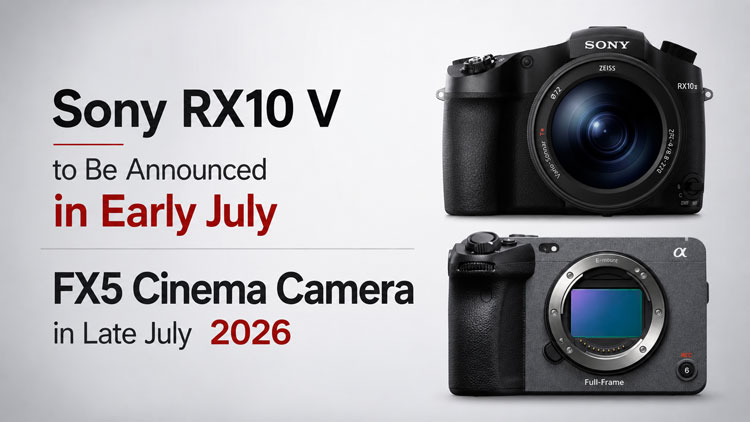
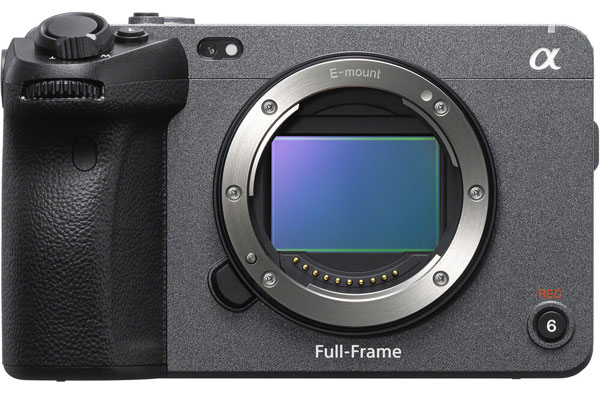
Sony will announce the RX10 V superzoom bridge camera in early July and the new FX5 cinema camera featuring a global shutter sensor and open-gate 5K recording in late July 2026. According to the latest rumours we have from reliable sources, these two announcements are about to happen next month. Let’s bring out more details. What do we know so far about these two upcoming cameras?
According to the SAR website, reliable sources have confirmed that Sony will announce two new cameras starting in the month of July 2026. We will have a premium/professional bridge camera update, the Sony RX10 V, and later in the month, we will have a Sony cinema camera named the Sony FX5.
This marks the return of Sony’s long-discontinued RX10 series after nearly nine years and introduces a new model in the Cinema Line that many did not expect.
RX10 V: A Modern Take on Sony’s Classic Superzoom
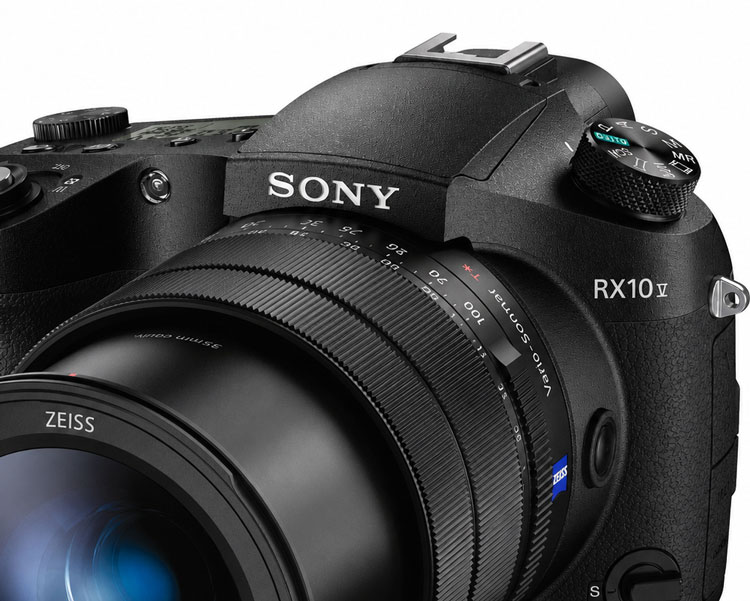
More than nine years ago, the RX 10 IV, launched in 2017, the RX series compacts from Sony featuring a 1-inch Hybrid CMOS sensor were built for pros looking for a compact solution without sacrificing quality. It was highly regarded for its 20.1MP 1-inch sensor and versatile 24-600mm f/2.4-4 Zeiss lens. The RX100 series always offers an excellent all-in-one solution for travel, wildlife, and hybrid shooters. After Sony discontinued the model, many photographers have been waiting for a successor.
We are waiting for the core specs of the RX10 V camera, as soon as it becomes available to us, we will be updating this post.
What upgrades are likely?
Most enthusiasts expect meaningful improvements in a 1-inch sensor and autofocus (including better subject detection), video capabilities, and processing power. If Sony brings current-generation autofocus and stronger 4K (or higher) video performance to the 24-600mm zoom, the RX10 V could become one of the most capable all-in-one cameras available.
For Indian photographers, a modern RX10 V would be particularly useful for travel, nature, and event shooting, where changing lenses is not practical.
FX5: Sony’s New Cinema Camera with Global Shutter
Yes, we are waiting for FX3 II as per the rumours. But we do have some strong rumours related to FX camera replacement. Instead of a simple FX3 II, Sony is launching the FX5 – a more advanced Cinema Line camera. Early details point to some very interesting upgrades:
A new global shutter sensor (different from the one used in the α9 III)
Open-gate 5K recording in 3:2 aspect ratio
A body that is slightly larger than the current FX3
Several new features (exact details still emerging)
Why global shutter and open-gate matter:
Global shutter technology removes rolling shutter distortion. This is a major advantage when shooting fast-moving subjects, panning shots, or in environments with LED lights and flickering sources. It gives a cleaner, more film-like result.
Open-gate 5K 3:2 recording provides extra resolution and flexibility. Creators can reframe shots in post-production, easily create vertical content for social media, or maintain higher quality when cropping.
The FX5 is being viewed by many as a “mini Venice” style camera — bringing higher-end cinema features into a more accessible body. It is expected to sit above the FX3 but below Sony’s higher-end Venice and FX9 models. The slightly larger body may also bring better ergonomics, improved cooling, and more professional I/O options.
Possible New Lens
Sources have also hinted at a new lens announcement around the same time. While details remain unconfirmed, one strong possibility is the long-rumored 16-28mm f/2.0 GM wide-angle zoom.
What This Means for Creators
Camera
Best For
Key Rumored Advantage
Likely Appeal
RX10 V
Travel, Wildlife, Hybrid
Modern AF + long zoom in one body
All-in-one convenience for travel & events
FX5
Filmmakers, PRO YouTubers
Global shutter + open-gate 5K, Made for the pros
For professional use only
For Indian creators, the RX10 V offers a practical all-in-one solution, while the FX5 brings professional cinema features (global shutter and open-gate) at a potentially more accessible price point than higher-end models.
Timeline & What Comes Next
Early July 2026 — RX10 V announcement
Late July 2026 — FX5 announcement (separate day)
We expect more detailed specifications, possible hands-on previews, and pricing information to emerge in the coming weeks. As always, availability in India through authorized channels usually follows global announcements within a few weeks to months.
Our Take
Sony’s July announcements look more interesting than many expected. The return of the RX10 series after such a long gap shows Sony is paying attention to the bridge camera segment again. At the same time, the FX5 appears to be a meaningful step forward in the Cinema Line rather than just an incremental FX3 update.
But, we have to be extra careful with these rumors, although a reputed website is saying it’s almost confirmed, but we have to be more conscious and wait for further confirmation. We will be posting an update asasp we get over this topic
What features are you hoping to see in the RX10 V or FX5? Let us know in the comments below.
GET LIVE NOTIFICATION, Select Your Trusted Source GET LIVE NOTIFICATION Click ON Check BOX for Latest NEWS and Rumors
The article “Confirmed: Sony RX10 V to Be Announced in Early July, FX5 Cinema Camera in Late July 2026” was written by thenewcamera.com team on 5:43 am, Saturday, 27 June 2026, Greenwich Mean Time (GMT). | You can also follow us on Our Official Social Media HandlesFACEBOOK | TWITTER | INSTAGRAM >see more Sony Alpha Rumor Latest Camera News
Insta360 Luna Ultra has been announced, but we again have the modular camera prototype images of the camera, which are coming straight out from one of the most trusted leakers, Igor. Take a look at what he said and shared in his latest tweet.
Tech leaker Igor Bogdanov (@Quadro_News) shared three clean studio shots today, captioning them as:
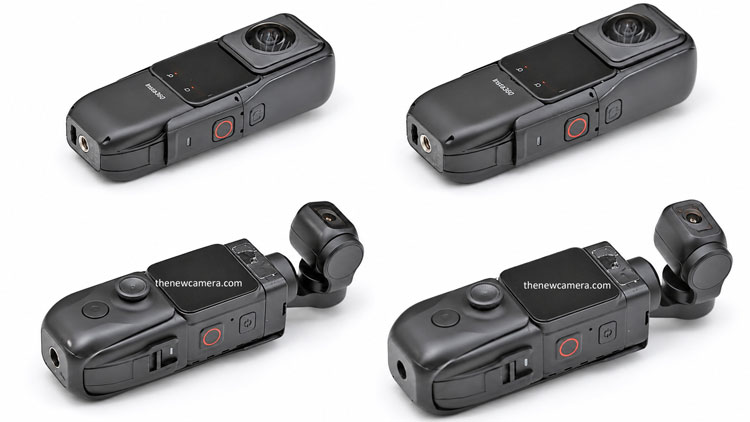
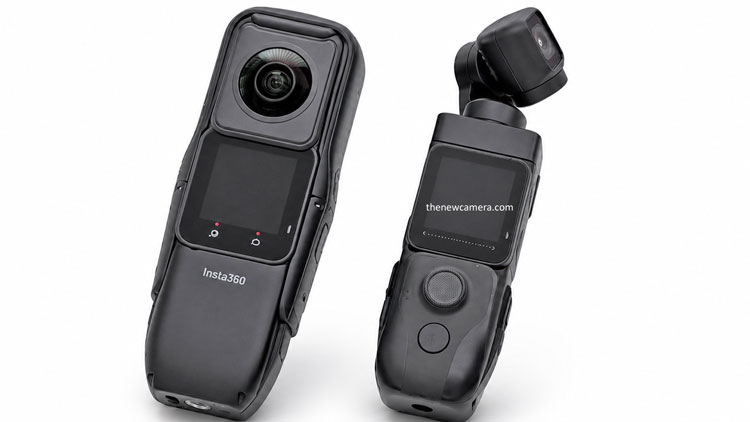
“Photo of the early prototype of the Insta360 modular camera, from which Luna came.”
Before jumping into more details and images, let me clarify one thing. This is not the first time we are looking at the modular prototypes of the Insta360 camera. Back in January 2026, we published the modular prototype images for the first time on the web here at TheNewCamera.com.
The wording is important. Igor didn’t say these were early Luna prototypes. He referred to them as prototypes of “the Insta360 modular camera” — suggesting that Luna is a product that came out of a larger modular development program inside Insta360.
A Story We’ve Been Following Since January 2026
As I have said earlier, this isn’t the first time we’ve seen these kinds of images. Back in January 2026, thenewcamera.com exclusively published prototype photos of Insta360’s upcoming pocket camera. Those images already showed a highly modular system – with snap-together modules, interchangeable lenses (including Leica optics), and multiple camera heads that could attach to a gimbal or be used standalone.
At the time, the camera had no official name. What we saw then was clearly part of the same modular vision that has now taken shape as the Luna series.
What These New Photos Reveal
The latest images shared today appear to show an even earlier stage of development. We can see:
A vertical pocket-style body with a large lens
A gimbal unit paired with a small detachable camera module
A standalone small square sensor module
These early experiments show Insta360 was exploring multiple directions before narrowing down the final design. Interestingly, some of these early prototypes appear more modular than the Luna Ultra that launched on June 10, 2026.
The Exciting Part: Is This the Beginning, Not the End?
Here’s where it gets interesting.
The fact that Insta360 was working on a broader “modular camera” platform (as Igor described it) raises an exciting possibility: the modular development may still be ongoing.
As we all know, the Luna Ultra is the first generation of Insta360’s pocketable camera, and as we have discussed, this is just the beginning and not the end. This means Insta360 had multiple modular prototypes even before the official announcement of the current Insta360Luna Ultra camera, and it clearly indicates that in the near future we may see drastic improvements in the modular functionality of upcoming pocket gimbal cameras.
This opens up an exciting question for the future:
Could future Luna models (Luna Ultra 2 or next-generation versions) bring back more advanced modular features? Think swappable lenses, multiple detachable modules, or even more creative configurations.
If Insta360 continues down this path, Luna might not just be a single camera – it could evolve into a modular ecosystem, similar to how Insta360 previously experimented with the ONE R and its interchangeable lens modules.
Why This Matters
Insta360 didn’t just build another pocket gimbal camera. From the above images its very clear that they spent years developing a modular foundation. The Luna Ultra we have today is the first major product to come out of that effort, and obviously, more are on the way.
These early prototype photos are more than just nostalgia. They show us where Luna came from – and hint at where it might still go.
Insta360 has a history of pushing modular design further than most brands. If they continue developing this direction, the best chapters of the Luna story might still be ahead of us.
What do you think – would you like to see Insta360 bring back deeper modularity in future Luna models (like swappable lenses or more detachable parts)? Let us know in the comments.
The article “Insta360 Luna Ultra 2 Early Prototypes Leak – Is This the Future of Modular Luna?” was written by thenewcamera.com Team on 4:54 pm, Friday, 26 June 2026, Greenwich Mean Time (GMT) | You can also follow us on Our Official Social Media HandlesFACEBOOK | TWITTER | INSTAGRAM | get live news — > DJI Rumors
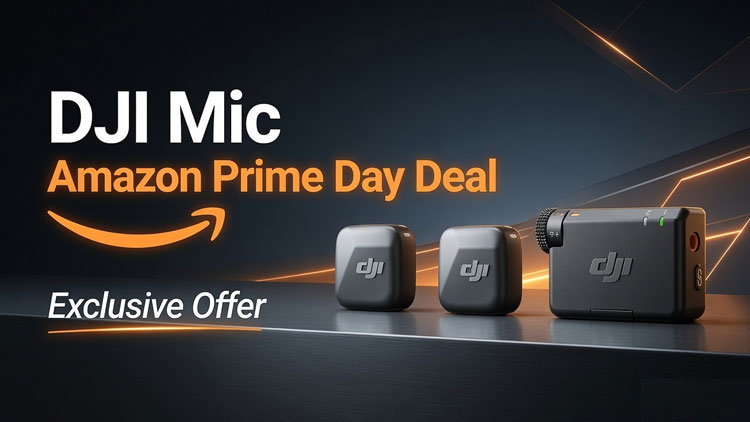
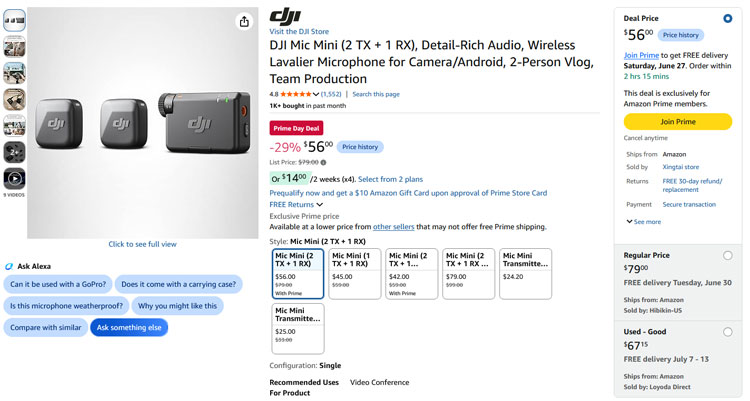
As we all know, the DJI Mic Mini is one of the most advanced DJI mics for smartphones and Mirrorless / DSLR cameras. And now it’s available at the lowest price of the year. As of June 26, 2026, the DJI Mic Mini (2 TX + 1 RX) wireless lavalier microphone kit has dropped to $56 on Amazon. According to the price history chart on the product page, this is currently the lowest price of the year for this 2-person kit.
We are getting an approx 29% discount from the regular $79 price, making it one of the strongest budget wireless microphone deals we’ve seen in 2026, especially with Prime Day timing.
Current Deal Highlights
Price: $56 (lowest price of the year)
Discount: 29% off ($23 savings)
Deal Type: Prime Day exclusive pricing (Prime members get the best rate + fast delivery)
Seller: Third-party seller (fulfilled by Amazon in most cases)
As you can clearly see in the price history chart of the DJI mic, the price has never gone lower than this in the past 12 months. At this price, the DJI Mic Mini becomes an extremely compelling option for vloggers and content creators.
What’s Included
This kit contains:
2 × Ultralight DJI Mic Mini Transmitters (~10g each)
1 × DJI Mic Mini Receiver
Cables and accessories for camera and mobile use
Note: This $56 version is the core 2 TX + 1 RX kit. Bundles that include the charging case are priced higher.
Key Specifications
Weight: Transmitters weigh just ~10g (extremely discreet)
Range: Up to 400 meters (line of sight)
Battery Life: Up to 11.5 hours per transmitter + 10.5 hours on receiver (noise cancellation off). With charging case: up to 48 hours total
Audio: 48kHz sampling, noise cancellation, automatic limiting (up to 120 dB SPL)
Compatibility: Cameras (3.5mm), Android, iPhone (adapter), and direct OsmoAudio connection with compatible DJI devices like Osmo Pocket 3
Mounting: Magnetic clips + windscreens included
Take a look at the pros and cons of the DJI Mic Mini
Pros and Cons
Pros
One of the smallest and lightest wireless mic systems available
Very good audio quality with effective noise cancellation for the price
Excellent battery life
Simple and reliable pairing with cameras and phones
Outstanding value at the current lowest price of the year
Cons
No internal recording (biggest drawback compared to DJI Mic 2)
Audio can sound slightly less bright than premium models
Magnet clip is convenient but the tiny transmitters can be easy to misplace
Quick Verdict on Comparison:
If you want maximum portability and the best price, go with the Mic Mini at $56. Choose the Mic 2 only if internal recording is important for your workflow.
Who Should Buy It at This Price?
This deal is perfect for:
Vloggers and YouTubers doing 2-person content or interviews
Run-and-gun shooters who prioritize small size and simplicity
DJI ecosystem users (especially with Osmo Pocket 3 or Action cameras)
Beginners and intermediate creators on a budget
Anyone looking for reliable wireless audio without spending $150+
It is not ideal for professional work where you need a backup recording track in case of signal issues.
Final Verdict
At $56 — the lowest price of the year — the DJI Mic Mini (2 TX + 1 RX) is one of the best budget wireless microphone options available in 2026.
The lack of internal recording remains its main limitation, but for most vloggers, YouTubers, and content creators who can monitor audio or work in controlled environments, this is an outstanding deal.
If you’ve been waiting for a good price on a compact 2-person wireless mic kit, this Prime Day offer is worth grabbing.
Note for Indian readers: This is an Amazon.com (US) deal. Check Amazon.in for local pricing and availability, as it often differs significantly.
Important: Deals move fast during Prime Day. Verify the live price, stock, and delivery options before purchasing. The price history confirms this is the lowest point of the year.
Disclosure: This post contains affiliate links. Purchases made through these links may earn us a small commission at no extra cost to you.
The article “DJI Pocket 3 Just CRASHED to Record Low Prices: Amazon Prime Day Sales Live” was written by thenewcamera.com Team on 4:21 pm, Thursday, 25 June 2026, Greenwich Mean Time (GMT) | You can also follow us on Our Official Social Media HandlesFACEBOOK | TWITTER | INSTAGRAM | get live news — > DJI Rumors
Don’t blink – these deals could vanish any minute. So finally, we have some groundbreaking deals on the DJI Pocket 3 since Amazon Prime sales are active, but for a limited time, and these deals are massive. So, we have compiled all possible sets of discounted bundles for the Pocket 3 camera, grouped in the article below.
The compact 1-inch sensor vlogging king is seeing some of its deepest discounts of the year right now, with the base model hitting an eye-watering $378 (was $499) and popular Creator Combos also slashed hard.
We’ve rounded up the hottest live Prime Day links for you below
Current Prime Day Deals on DJI Osmo Pocket 3 (Live Links)
Here are the specific bundles seeing massive discounts:
Osmo Pocket 3 (standalone) → $378 (was $499) — Save $121 (~24% off) — one of the lowest prices we’ve seen
Creator Combo → Around $512 (was $629) in recent tracking — solid savings on the loaded bundle
Prices and stock are moving extremely fast during Prime Day. These amzn.to links take you straight to the current offers.
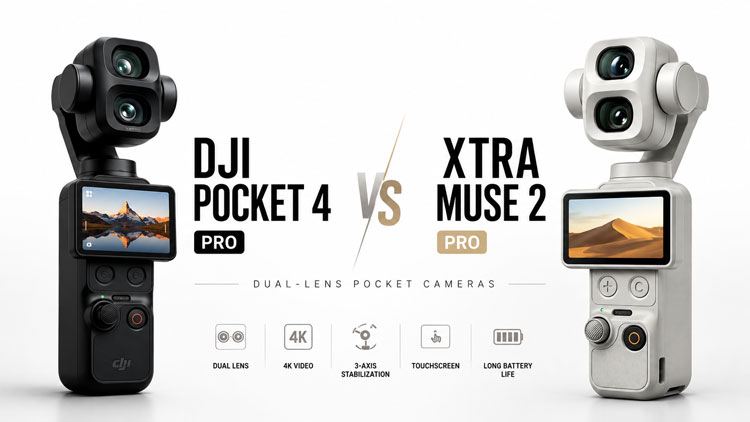
So that was our intention: to bring you clarity on the latest deals for the DJI Pocket 3 camera. We do know that the Pocket 4, as well as the Pocket 4 Pro, are not available in the United States of America. Yes, their alternatives are expected to arrive in the first half of July 2026, and yes, we are talking about the Xtra Muse 2 Pro camera. But at the very same time, if you’re looking for a budget-friendly alternative, the DJI Pocket 3 remains one of the strongest options available right now.
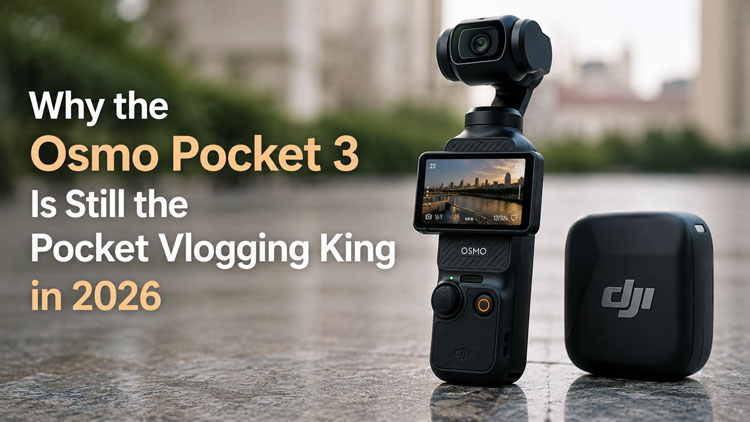
Why the Osmo Pocket 3 Is Still the Pocket Vlogging King in 2026
The Osmo Pocket 3 isn’t just another compact camera — it’s a complete content creation powerhouse in your palm.
Key specs that matter:
1-inch CMOS sensor (massive upgrade from Pocket 2’s 1/1.7″)
4K/120fps uncropped slow-motion video
3-axis mechanical gimbal stabilization (butter-smooth even while running or dancing)
2-inch rotatable touchscreen (shoot horizontal or vertical effortlessly)
D-Log M + 10-bit color for serious grading flexibility
Excellent low-light performance and dynamic range
Magnetic accessory ecosystem + wide-angle lens support
Built-in directional mics + seamless DJI Mic integration (especially in Creator Combos)
It’s the ultimate tool for solo creators, travel vloggers, YouTubers, BTS shooters, product reviewers, and anyone who wants pro-level stabilized footage without lugging around a full rig.
Creator Combo vs Standalone – Which Should You Grab?
With the Creator Combo, you also get an extended battery and a mini tripod for handling the camera. So overall, having a Creator Combo is a very smart decision. However, if your budget does not allow for it and you end up with the standalone version of the camera, try to get at least one transmitter.
It will improve your audio quality since the DJI Pocket 3 camera supports DJI wireless microphones and transmitters without the need for any extra receiver hardware. It will automatically sync with the camera, so either you should go with the standalone version and a separate transmitter that fits your budget or, ideally, go with the Creator Combo.
Standalone ($378 range): Perfect if you already have audio solutions or want the lightest possible setup. You still get the full 1-inch sensor magic and gimbal.
Creator Combo (the one most people should consider at these prices): Includes the camera + DJI Mic 2 transmitter, wide-angle lens, battery handle, mini tripod, protective cover, wrist strap, and carrying bag. The wireless mic alone makes a huge difference for clear dialogue in vlogs, interviews, and talking-head content.
Real-World Performance That Keeps Creators Coming Back
The DJI Pocket 3 does have a large 1-inch sensor, undoubtedly the best pocket gimbal camera available at this price point, coming straight from DJI branding. Other than that, if you are willing to buy the Pocket 4 camera, keep in mind the Pocket 3 and Pocket 4 share the same sensor and lens module, so overall the video quality of both will remain the same.
And the big issue is that in the United States of America, the Pocket 4 is not available; the best investment would be to buy the DJI Pocket 3 camera.
Other than that, if you really need a massive upgrade and already own a DJI Pocket 3 camera, then you should wait for the Xtra Muse 2 Pro camera, which is about to arrive in the first half of July 2026.
Should You Buy During Prime Day 2026?
Yes — if:
You’ve been waiting for a sub-$400 entry into serious pocket vlogging
You want the Creator Combo kit without paying full price
You create YouTube, Instagram, TikTok, or client work and value stabilization + audio quality
You want one of the best “run-and-gun” cameras available before potential new model launches
Wait if:
You only need it for casual use (your phone might still be fine)
You’re waiting for a hypothetical Pocket 4 (rumors exist, but the 3 is extremely mature and discounted now)
Pro tip: These deals are live during Prime Day (typically running through late June into early July in recent patterns). Popular bundles sell out or prices jump back up quickly once the event ends.
Final Verdict: One of the Best Prime Day Camera Deals of 2026
The DJI Osmo Pocket 3 at these prices is a no-brainer for most creators. The 1-inch sensor + mechanical stabilization + excellent tracking in such a tiny body is still unmatched in its category.
Whether you grab the standalone at ~$378 or go all-in on a Creator Combo via the links above, you’re getting a future-proof content creation tool at a price that won’t last.
Which bundle are you eyeing? Drop a comment below — we’d love to hear what kind of content you’ll be shooting with it!
Prices and availability can change rapidly during Prime Day. Always double-check the final price on Amazon before purchasing. This post contains affiliate links.
The article “DJI Pocket 3 Just CRASHED to Record Low Prices: Amazon Prime Day Sales Live” was written by thenewcamera.com Team on 4:21 pm, Thursday, 25 June 2026, Greenwich Mean Time (GMT) | You can also follow us on Our Official Social Media HandlesFACEBOOK | TWITTER | INSTAGRAM | get live news — > DJI Rumors
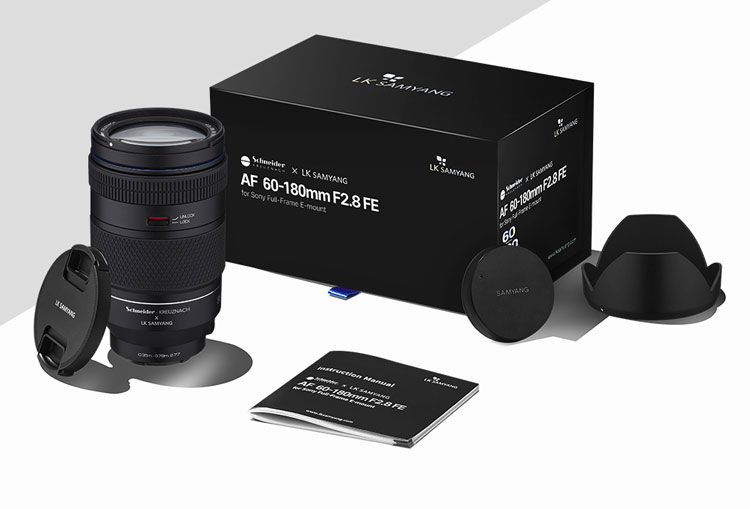
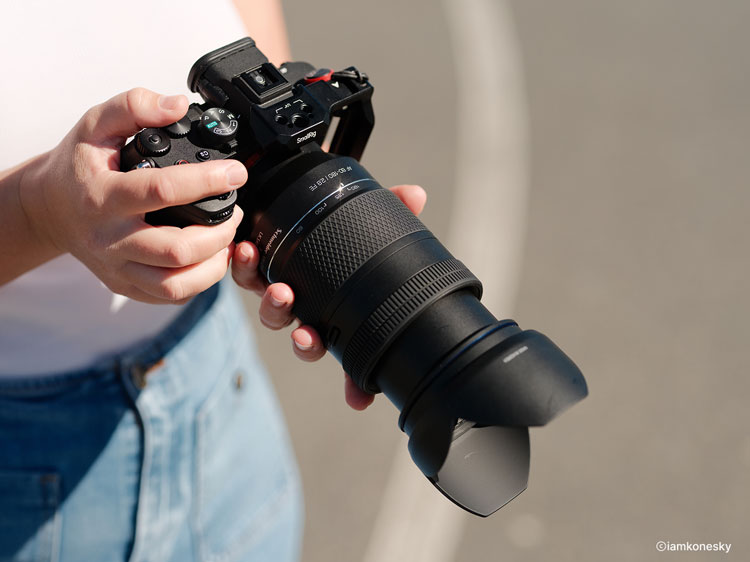
June 25, 2026 – LK Samyang has officially announced the AF 60-180mm f/2.8 FE, the final lens in its Compact Zoom Series. Co-developed with Schneider-Kreuznach, the new telephoto zoom gives Sony full-frame shooters a significantly lighter and more affordable constant-aperture option compared to Sony’s own FE 70-200mm f/2.8 GM OSS II.
Now we have Trio completed with this launch, Samyang completes a three-lens system that covers 14mm to 180mm at f/2.8 while keeping the total weight of all three lenses at just 1.67 kg – a major advantage for photographers who want professional zoom coverage without carrying heavy gear.
Key Specifications
Focal Length: 60-180mm
Maximum Aperture: Constant f/2.8
Weight: 730g
Length: 149mm (at 60mm) / 174.4mm (at 180mm)
Maximum Magnification: 0.26x (1:3.8)
Autofocus: Linear Stepping Motor (STM)
Other Features: Weather sealing, AF/MF switch, Zoom Lock
Mount: Sony E-mount (FE)
Why This Lens Matters for Sony Users
Most Sony full-frame users who need telephoto reach currently rely on the Sony FE 70-200mm f/2.8 GM OSS II, which delivers excellent performance but comes with a significant downside: it weighs 1,045g and the cost burns the pocket. Many photographers find it too heavy for all-day carry, travel, or run-and-gun shooting.
It is approximately 315g lighter than the Sony 70-200mm f/2.8 GM II
It starts slightly wider at 60mm
It is expected to be priced significantly lower than Sony’s GM lens
This combination of reduced weight and more accessible pricing makes the Samyang lens particularly appealing for travel photographers, event shooters, hybrid creators, and anyone looking to build a high-performance but lighter Sony kit.
Completing the Ultra-Light Compact Zoom System
Have a look at the trio we have from the Samyang, The 60-180mm f/2.8 joins Samyang’s existing Compact Zoom Series to create a complete 14-180mm f/2.8 system:
Lens
Weight
Role
Combined Weight
AF 14-24mm f/2.8 FE
445g
Ultra-wide
–
AF 24-60mm f/2.8 FE
494g
Standard zoom
–
AF 60-180mm f/2.8 FE
730g
Telephoto
1.67 kg
Full System
–
14-180mm f/2.8
1.67 kg
With all three lenses together weighing just 1.67 kg, easy to carry in your camera bag without shoulder pain, as well as as we have said earlier without creating a big hole in your pocket. Sony users can now cover an extremely versatile focal range with constant f/2.8 performance at a much lower price tag
Design and Real-World Usability
The lens includes several practical features for everyday shooting:
Fast and quiet Linear Stepping Motor autofocus, suitable for both stills and video
Weather sealing for reliability in outdoor conditions
AF/MF switch for quick manual focus control
Zoom Lock switch to prevent unwanted zoom extension during transport
These features make it well-suited for hybrid shooters using Sony cameras such as the A7 IV, A7R V, A7S III, and A1.
Who Should Consider This Lens?
This lens is a good fit if you:
Want a lighter and more affordable alternative to the Sony 70-200mm f/2.8 GM II
Shoot travel, events, portraits, or hybrid content
Value reducing kit weight without sacrificing constant f/2.8 performance
Already own or plan to buy the Samyang 14-24mm and 24-60mm f/2.8 lenses
Sample Images & Full Review Coming Soon
We have requested a review unit of the LK Samyang AF 60-180mm f/2.8 FE. Once we receive the lens, we will add real-world sample images along with our detailed hands-on review and impressions.
Availability and Pricing
The LK Samyang AF 60-180mm f/2.8 FE is now officially launched and goes on sale starting June 25, 2026. It will be available through major U.S. retailers including B&H Photo and Adorama.
While official pricing has not been announced, based on the pricing of the previous lenses in Samyang’s Compact Zoom Series, the AF 60-180mm f/2.8 is expected to land in the $1,000 – $1,200 range. This would make it substantially more affordable than the Sony FE 70-200mm f/2.8 GM OSS II while offering meaningful savings in both weight and cost.
We will update this article with official U.S. pricing and pre-order links as soon as the information is released.
The article “LK Samyang AF 60-180mm F2.8 FE Officially Launched – A Lightweight Alternative to Sony 70-200mm f/2.8 GM II” was written by thenewcamera.com Team on7:21 am, Thursday, 25 June 2026, Greenwich Mean Time (GMT) | You can also follow us on Our Official Social Media HandlesFACEBOOK | TWITTER | INSTAGRAM | get live news — > DJI Rumors
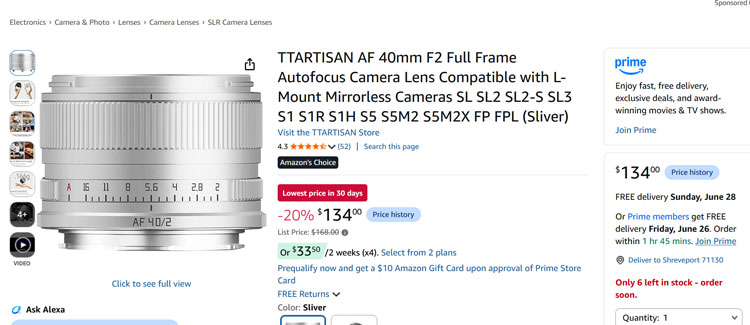
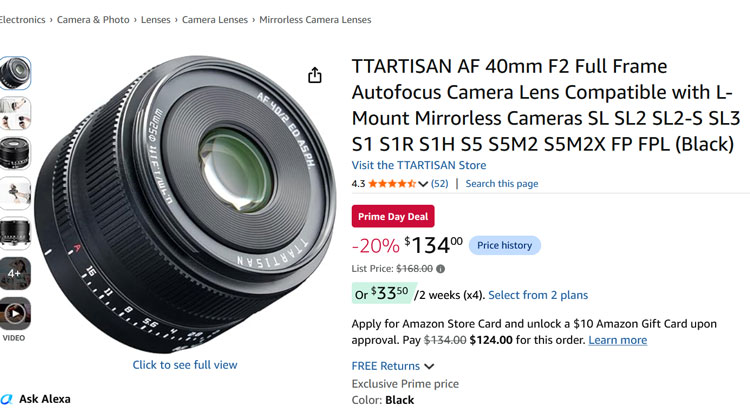
Amazon Prime Video deals June 2026, which have already started and will run for a limited time only(June 23–26), and the TTArtisan AF 40mm f/2 is one of the more interesting budget full-frame lenses to watch during the sale.
One of the best things is that the compact metal prime lens is budget-friendly and offers good build quality and usability. Since the announcement, it has become one of the most popular prime lenses among photographers and content creators, offering strong value at a low price. Here’s everything you need to know before buying during Prime Day.
US Price: Usually sells for around $168. (Price updated continuously )
Even without a any sort of big discount, it remains one of the cheapest ways to get a full-frame autofocus prime with good build quality. If it drops even $20–30 during Prime Day, it becomes excellent value.
Excellent all-metal build and premium feel for the price
Extremely compact and lightweight
Dedicated aperture ring (rare at this price)
Good center sharpness and contrast
Pleasant character with nice bokeh at f/2
Very good value for everyday and street photography
Cons:
No weather sealing
Visible vignetting and softer corners at f/2
Can flare in strong backlight
Autofocus is usable but slower than native Sony or Nikon lenses
How Does It Compare?
Vs Sony 40mm f/2.5 G: TTArtisan is cheaper, has an aperture ring, and feels more premium in hand, but Sony has better autofocus and weather sealing.
Vs Nikon 40mm f/2: Very similar in concept. TTArtisan offers better build quality at a lower price but slightly weaker AF performance.
Who Should Buy It?
This lens is ideal if you want:
A small, high-quality walkaround prime for street, travel, portraits, or daily use
A metal lens with an aperture ring without spending ₹50,000+
Something lightweight for Sony A7C series, A7 IV, Nikon Zf, or Panasonic S5/S9
Skip it if you need weather resistance or the fastest, most reliable autofocus.
Final Verdict
At its regular price, the TTArtisan AF 40mm f/2 already offers strong value. During Prime Day 2026, it’s worth keeping an eye on — especially if the price drops.
Buy Canon Lenses, Buy Music CD or Digital Camera at amazon it helps this site, and you do not pay anything extra, it is just a way to help support this site.
New Camera Website, we list all type of new camera information, price review and all type camera rumors, subscribe us or follow us via twitter or facebook.
Disclaimer: We have attempted to select useful information to include on New Camera, and to ensure that the resources we have included on the site -- as well as the way we have described them -- are accurate, fair, and balanced. However, we make no claims, warranties, or other representations concerning the accuracy, completeness, or utility of the information provided, or concerning the abilities or performance of the organizations, agencies, companies, and other resources presented through New Camera