DJI officially announced the Lito X1 and Lito 1 drones in April 2026. These new drones are the entry-level ones, specifically announced to replace the Mini series. But, these models are not available for pre-order in the United States of America, either at Amazon.com or the B&H Store.
We have to bring clarity to this. Here is the complete, fully cross-verified truth based on official DJI statements, FCC records, court filings, and post-launch reporting from multiple major outlets.
Short Answer: Yes – The DJI Lito Series Is Effectively Banned in the USA
Thats really disappointing news for anyone who is waiting for the Lito 1 and X1 drone arrival. As per the initial report we have, despite pre-ban FCC certifications (granted in November and December 2025), DJI has confirmed the Lito 1 and Lito X1 will not be sold or imported into the U.S. market.
No official listings exist on DJI.com/us, Amazon US, B&H Photo, Best Buy, Adorama, or any authorised U.S. retailer. The drones are launching worldwide – but not in America.
Why the Confusion? Pre-Launch FCC Approvals (What We Reported on thenewcamera.com)
On thenewcamera.com, we were among the first to report the FCC clearances in late 2025:
DJI Lito X1 — FCC ID SS3-DGP14, approved November 27, 2025
DJI Lito 1 — FCC ID SS3-DGN12, approved December 11, 2025
These approvals came before the FCC’s critical December 22/23, 2025, cutoff when DJI was added to the Covered List under Section 1709 of the 2025 National Defence Authorisation Act.
At the very same time. We also correctly reported the same situation for the DJI Avata 360 (FCC ID SS3-DVN3NT, approved November 19, 2025), which did reach U.S. shelves after a short delay. This led many (including us) to believe the Lito series would follow the same path.
Post-Launch Reality: DJI’s Official Statement (April 23–24, 2026)
Within hours of the April 23 launch, DJI explicitly told media outlets:
“The DJI Lito series will not be available in the U.S. market as the application for authorisation is still pending.”
So, that’s really a huge disappointment when we have read this, and also cross-verified with the source. Gizmodo (April 23, 2026): Direct quote from DJI spokespersonGizmodo
Cross-verified confirmation from multiple independent sources:
DroneXL and DroneDJ (April 22–24 coverage of DJI’s Ninth Circuit filing)
The Verge, Digital Camera World
DroneLife: “New DJI drones launch globally, but not in the U.S.”
This is the exact same language DJI used for the Osmo Pocket 4 (which also had pre-cutoff filings but was blocked).
Logical Breakdown: Why Pre-Ban FCC Approval Wasn’t Enough This Time
FCC Covered List (December 22, 2025): Bars new equipment authorizations for DJI products deemed a national security risk.
“Grandfathered” vs. “Final Authorization” Gap: Early FCC IDs allow testing/import filings, but full marketing/import approval requires an additional step that the FCC is no longer granting post-cutoff.
DJI’s Court Filing (April 15, 2026): DJI told the 9th U.S. Circuit Court of Appeals that 25 new products (including the Lito series) are now in “regulatory limbo,” costing the company over $1.5 billion in lost 2026 U.S. sales.
Difference from Avata 360: The Avata 360 received complete final authorization before the deadline. The Lito series has not — at least not yet.
Result: Even though the hardware passed initial FCC testing, DJI cannot legally import or sell the Lito 1 or Lito X1 in the United States right now.
Quick Facts Table – Lito 1 vs Lito X1
Feature
DJI Lito 1
DJI Lito X1
U.S. Availability (April 2026)
FCC ID
SS3-DGN12 (Dec 11, 2025)
SS3-DGP14 (Nov 27, 2025)
Granted pre-ban
Full U.S. Authorization
Still pending
Still pending
Not granted
Official U.S. Launch Status
Not available
Not available
DJI confirmed
Weight
Under 249g (no FAA registration)
Under 249g (no FAA registration)
—
Camera
1/2-inch CMOS, 48MP, 4K
1/1.3-inch CMOS, 48MP, 4K/100fps
—
Obstacle Sensing
Full omnidirectional
Omnidirectional + forward LiDAR
—
Transmission
OcuSync 5 (up to 20km)
OcuSync 5 (up to 21km)
—
Internal Storage
22GB
42GB
—
What This Means for U.S. Drone Pilots & Buyers in 2026
No official purchase options — Grey-market imports from Europe/Asia may appear on eBay or third-party sites, but they carry high risks: no U.S. warranty, potential future firmware blocks, and no DJI Care Refresh eligibility.
Existing DJI drones remain fully legal — Mini 4 Pro, Mini 4K, Neo, Avata 2, Air 3S, etc., are still fully supported and flyable.
Future DJI releases — Almost certainly blocked unless DJI wins its ongoing court appeal against the FCC Covered List.
FAA registration & flying rules — Unchanged. Any sub-250g drone you already own or legally import does not require registration.
What Should U.S. Buyers Do Right Now?
Stick with currently available DJI models that already have full FCC authorization and U.S. stock.
Monitor DJI’s legal battle — A favorable ruling could open the door for grandfathered models like the Lito series later in 2026.
Consider alternatives — Autel, Potensic, or Holy Stone entry-level drones (some now have improved U.S.-friendly options).
Buy from reputable U.S. retailers while current inventory lasts — prices on Mini series and Avata 2 are already dropping due to the ban news.
Final Verdict for U.S. Pilots
The DJI Lito 1 and Lito X1 would have been excellent beginner/travel drones — but the FCC restrictions have closed the door for now.
If you were planning to buy one, pivot to the best currently available U.S.-legal DJI drone that matches your needs (Mini 4 Pro remains the top recommendation for most pilots).
Have questions about which current DJI drone to buy in the U.S. in 2026? Drop your budget and use case in the comments below. We’ll update this article as soon as any new authorization news breaks.
Sources cross-verified April 24, 2026: Official DJI statements (via Gizmodo/The Verge), FCC public records, DJI Ninth Circuit filing (April 15), DroneXL, DroneDJ, PetaPixel, TechRadar, thenewcamera.com archives.
Share this if you’re a U.S. drone pilot affected by the ban. Stay informed — subscribe for real-time FCC and DJI U.S. availability updates.
DJI Lito Fly More Combo Unboxed: The No-Registration Drone Americans Have Been Waiting For
Nikon Z9 Mark II camera rumours are not new. However, we have published an article back on January 7, 2026, where we clearly denied the possibility of the announcement of the Z9 Mark II camera during the Winter Olympics. At that time, most of the major rumor mills and outlets were claiming that the camera was about to arrive during the Winter Olympics games, but we had short confirmation at that time via trusted sources. The camera isn’t coming that soon. The expected announcement date that we discussed in that post was the fourth quarter of 2026 at its earliest arrival possibility.
New update: a new update is coming from the popular Nikon YouTuber Matt Irwin (thatnikonguy), who has reported that the current Nikon Z9 is now completely out of stock and listed as “on backorder” on Nikon Australia’s official website – and similar stock issues are appearing globally.
Such a stock shortage issue for a flagship camera isn’t a common one, and even if it happens, camera makers like Nikon and Canon issue an apology letter for not fulfilling the market demand. We have seen multiple examples in the past. It’s a clear indication that the production line has been occupied by something else.
Why the Nikon Z9 Stock Situation Matters
The Nikon Z9, launched in late 2021, has been Nikon’s flagship mirrorless camera for over four and a half years. At a price point of approximately AUD $10,000 in Australia, it is not the kind of camera that Nikon normally leaves unavailable for long.
Matt Irwin estimates
He estimates we could see the Nikon Z9 II hardware in customers’ hands within a maximum of 6 months, with a possible development announcement coming at any time.
Importantly, Matt believes no Nikon Z8 Mark II camera is NOT coming soon, the Nikon Z8 will continue to sell strongly for another 1–2 years, meaning the current stock clearance is focused specifically on clearing the Z9 line for its replacement, not a general sensor shortage.
What’s Next from Nikon in 2026
2026 is shaping up to be one of the most exciting years for the Nikon Z system:
Z9 II is likely arriving soon
Multiple ZR firmware updates
New cinema lenses on the horizon
Possible first look at the next-generation Expeed 8 processor
Nikon ZR Gets Major Firmware Love – Official Confirmation from NAB 2026
Nikon itself is proactively working to enhance the user experience. Nikon has openly confirmed that multiple firmware updates are already in development for the Nikon ZR cinema-style camera.
Speaking at NAB 2026, Nikon representative “Jeff with a G” told creators:
Nikon is actively listening to customer feedback.
The company is working on a couple of major updates for the ZR (not just one).
Key improvements confirmed include:
New Log 3G10 profile paired with H.265
Significant improvements to the existing H.265 codec (addressing widespread user complaints)
Focus peaking in red while using N-Log and RED NE
“And so much more.”
Additional possibilities mentioned include ProRes 422 LT and potentially RED NE LT versions, depending on processing capability.
Why This Matters for Creators
At its current street price of around USD $2,000–2,150 (AUD ~$3,000), the Nikon ZR already offers extraordinary value with internal Nikon RAW, ProRes RAW, and RED RAW recording in a compact body. These upcoming firmware updates will make it an even stronger tool for filmmakers, YouTubers, and documentarians.
Yes, we are tracking the Nikon Z9 II camera announcement news, as soon as we get any latest updates we will be publishing here soon.
Stay tuned, browse more Nikon Rumors – We will post an update soon as we get it
The article “Nikon Z9 II Expected in 3-6 Months: Major ZR Firmware Updates Confirmed” was written by thenewcamera.com team on 4:22 pm, Thursday, 23 April 2026, Greenwich Mean Time (GMT) | You can also follow us on Our Official Social Media HandlesFACEBOOK | TWITTER | INSTAGRAM > get live news + Nikon Rumors 24X7
Sony already has their dedicated ZV series lineup of camera strating from ZV-E10 to ZV-E1. Canon were far behind in this race, but they have started their journey by introducing V10, later on R50V for beginners and entry-level cinematographers. Just after the announcement of the Nikon ZR Camera, we have received strong hints from a highly reliable source that Canon has already started planning to announce something better to compete with the existing Nikon ZR.
Well, we have to admit that our website, TheNewCamera.com, is the first site in the world to publish what we say – First complete concept of Canon Fullframe V series camera back on June 2025, take a look exactly what we have written in that groundbreaking exclusive report we wrote verbatim:
“We are expecting the arrival of the Canon R8 V camera as part of their expansion to its V series… It will be a game-changer camera for professional content creators and beginner filmmakers.”
But, the information was very limited, the only thing that was certain at that time is an Fulframe V series camera was under development.
Why did we select the Canon R8 V camera name back in 2025?
The reason behind selecting the Canon R8 V camera name is that Canon already has a dedicated cinema lineup of cameras, the V series is a beginner’s series, for those who create content or have just started their cinematography journey, and want to have everything under budget. And that’s why we have decided to air the Canon R8V article, a name that never existed before in the media.
If we look at the entry-level lineup, Canon has already selected the R50 series to introduce cinema-style cameras for beginner content creators and cinematographers. In the very same manner, we thought that Canon may pick the R8V camera with primary specifications to introduce a budget cinema camera among photographers, content creators, and beginner cinematographers.
But, at the same time, they have to compete with Nikon ZR, and they have to make it future-proof for the upcoming Sony A7C III, and maybe that’s the reason we are now having Strong Rumors related to Canon R6V arrival instead of Canon R8V.
And that’s why back in 2025, nearly ten months later, the latest CanonRumors updates (April 19 – 20, 2026) have validated almost every core element of our original analysis, while introducing a fascinating wrinkle regarding the final model name.
Canon R6V vs R8V: Intelligent Breakdown of the Latest Naming Rumours
Early leaks and model-code registrations left room for interpretation. CanonRumors initially described the new full-frame V-series camera as something “you’d expect for an EOS R6 V or EOS R8 V,” with the admin leaning toward R8 V as the most logical fit alongside the popular APS-C EOS R50 V. However, in a dedicated follow-up article titled “We’re Getting an EOS R6 V, not an EOS R8 V” (updated April 20, 2026), founder Craig Blair issued a clear correction, stating:
“It’s going to be an EOS R6 V, not R8 V… ‘EOS R6 V’ should give a much clearer picture of what to expect this week.”
From a market-strategy perspective, both names remain plausible until the official announcement. An R8 V would emphasise its accessible creator positioning, while an R6 V would borrow prestige from the respected R6 series and better signal hybrid capabilities closer to the R6 Mark III. CanonRumors now strongly favors R6 V after reviewing internal mockups and NDA information. We are continuing to cross-verify every new registration and leak — model naming has surprised the industry before – but the latest reporting points firmly toward the EOS R6 V as the most probable designation.
We have already published the Canon R8V camera core specification in the past. We still believe those specs to date, now it’s time to explore the core specification of the Canon R6V
Canon R6V Expected Specification
Every major source now agrees on the following core features for the upcoming full-frame V-series hybrid:
Sensor & Core Imaging
32.5-megapixel full-frame CMOS sensor (shared architecture with the EOS R6 Mark III and upcoming Cinema EOS C50) — a significant upgrade over the 24MP class we initially anticipated in 2025.
Upgraded stills performance that will feel familiar to R6-series users while delivering excellent detail for both photography and hybrid workflows.
Video Performance (Major Creator Leap)
12-bit RAW video recording — a professional-grade format that dramatically improves color-grading flexibility.
7K 60p 12-Bit Internal RAW Light Video
Open Gate 7K 60p, High-Speed 4K 120p
Body Design & Ergonomics (Creator-Optimised)
Vented body (side vents) for improved heat management and longer continuous recording — not actively cooled, keeping costs and weight in check.
No built-in EVF — a deliberate decision that keeps the camera ultra-compact and lightweight, ideal for gimbal, vlogging, and run-and-gun use (mirroring the R50 V philosophy).
3-inch LCD with higher resolution than the R50 V’s 1.62-million-dot screen for sharper field monitoring.
Thicker and heavier than the R50 V, with button placement very similar to the Cinema EOS C50 and an additional main dial for better control.
Full-size HDMI port and dual card slots ( CF Express Type B + SD for cost and size efficiency).
Why This Camera Matters: Deep Market Analysis
Canon is executing a very deliberate V-series expansion strategy — one that TheNewCamera.com first mapped out in June 2025. By bringing true full-frame depth-of-field, superior low-light performance, 12-bit RAW video, and improved heat dissipation into a compact, creator-optimized body, Canon is targeting the exact gap between Sony’s ZV-E1-style creator tools and its own higher-end Cinema EOS / R5 II lineup.
Whether it ultimately launches as the EOS R6 V or EOS R8 V, this model is clearly designed for the huge community of APS-C V-series owners ready to step up without jumping into pro-level pricing or bulk. The vented design and larger LCD directly address real-world pain points (overheating and monitoring precision) that hybrid creators complain about daily.
Canon R6V Coming on May 13, 2026
Canon is expected to officially unveil the new full-frame V-series camera very soon (originally teased for this week, but CanonRumors now notes NDAs are signed and the exact date is imminent but not yet confirmed – latest update pins it to on or around May 13, 2026 with the RF 20-50mm f/4L IS USM PZ lens). A separate retro-inspired EOS R8 Mark II is also in the pipeline shortly afterwards.
TheNewCamera.com has been covering this story since day one — months before it became mainstream. As soon as the official press release lands, we will deliver the complete hands-on analysis, full specifications, pricing details, and real-world creator impact right here.
Stay tuned — because when it comes to accurate Canon V-series intelligence and being first with the full-frame V-series concept, TheNewCamera.com remains the source serious creators trust.
The full-frame hybrid you’ve been waiting for is finally arriving — and we told you about it first.
Stay tuned to TheNewCamera.com — we’ll keep you updated
The article “Canon Really Wants to Bring These Retro Compacts to Life?” was written by thenewcamera.com team on2:01 pm, Wednesday, 22 April 2026, Greenwich Mean Time (GMT). | You can also follow us on Our Official Social Media HandlesFACEBOOK | TWITTER | INSTAGRAM> more live Camera News + Canon Rumors 24X7
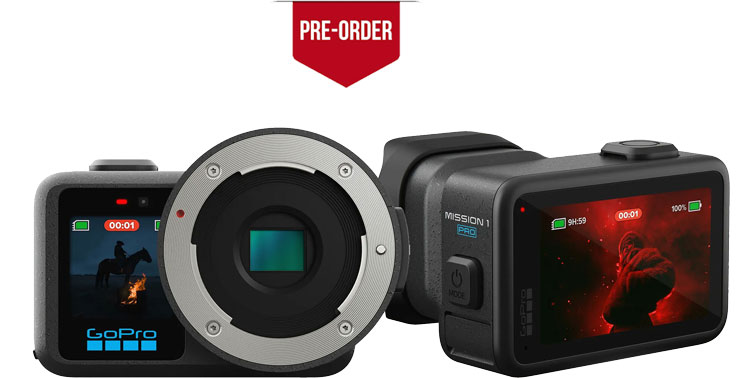
So, finally, we have the GoPro Mission 1 and Mission 1 Pro and Mission 1 PRO ILS cameras, and both of these cameras are now open for pre-orders. Before we jump to pre-order details and the shipping date of the camera, take a look at the impressive core specification of the duo.
For specifications and pre-order availability dates of these cameras, the Mission 1, Mission 1 Pro, and ILS use a max 50-megapixel resolution 1-inch CMOS sensor paired with the GP3 image processor and deliver true 8K Open Gate video recording, video recording in 16:9 format, as well as slow-motion video recording at 240 frames per second. Overall, when you are switching to full HD video recording mode, the frame rate goes up to 960. Housed in a tough, waterproof body.
Hero has introduced breakthrough technology this time, and as a result, we do believe that market demand will reach its maximum. GoPro users who were waiting for the GoPro Hero 14 will surely invest in the new Mission 1 and Pro cameras. And specifically, those who already own Micro Four Thirds format lenses will also try to get their hands on the recent ILS mirrorless camera. Since the new Mission 1 Pro
Free bonus: Every pre-order includes a Point-and-Shoot Grip (valued at $100) while supplies last. This handy accessory turns the camera into an easy point-and-shoot setup for quick handheld shots.
Where to Pre-Order Right Now
If you are living in the United States of America, then the following options are open for you, and you can buy the GoPro camera from the official GoPro Store or the most popular online camera dealer in the United States of America, the B&H Store.
Official GoPro Website (gopro.com)
Pre-orders are live today.
Instant $100 subscriber discount
Free grip included
Ships on or before May 28, 2026 Head to gopro.com to reserve yours and lock in the bundle.
B&H Photo Video
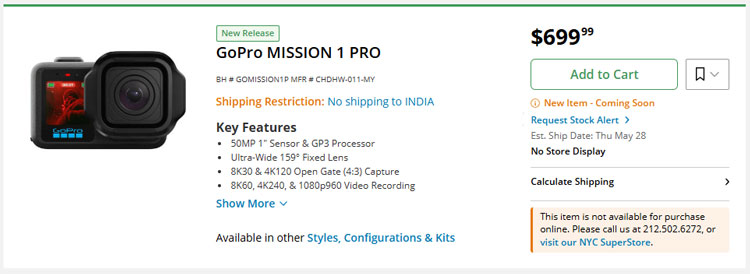
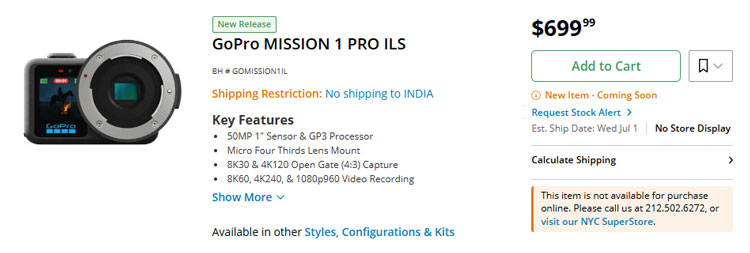
B&H has the MISSION 1 Pro (and other variants) listed for pre-order:
Important: Not available for online purchase yet. B&H pre-orders officially open May 21 at 12:00 AM ET.
To secure one now, call B&H at 212.444.5091 (or 800.831.2434 / 800.606.6969) or visit their NYC SuperStore.
No store display available yet. Free 2-Day Shipping on qualifying orders.
Shipping & Availability Timeline
All early pre-orders (GoPro.com and B&H) will begin shipping on or before May 28, 2026, with wider in-store availability rolling out the same week. Advanced variants like MISSION 1 Pro ILS (interchangeable lens) and Creator Editions arrive later in Q3 2026.
Why These Cameras Matter
The MISSION 1 series bridges the gap between GoPro’s legendary action durability and high-end cinema tools. Key upgrades include:
14 stops of dynamic range + superior low-light performance
10-bit GP-Log2 color science and 32-bit float audio
AI smart-capture modes
Enhanced waterproofing (66 ft / 20 m)
Full ecosystem of new accessories
Perfect for adventure filmmakers, content creators, and pros who want 8K cinema quality without the bulk of a traditional rig.
Who Should Pre-Order Today?
GoPro subscribers (biggest savings + free grip)
Anyone wanting guaranteed May 28 delivery
Creators ready to shoot stunning Open Gate 8K footage this summer
Ready to reserve?
GoPro.com is the fastest way to lock in the discount and free grip right now. For B&H shoppers, use the link above and call to get on the list before the May 21 rush.
Prices shown are US; regional pricing and offers may vary. Free grip offer is limited and while supplies last. Check each retailer for the latest details.
The article “GoPro MISSION 1 & MISSION 1 Pro Pre-Orders Open – B&H Photo Details Added” was written by thenewcamera.com team on 7:33 pm,Wednesday, 15 April 2026, Greenwich Mean Time (GMT) | You can also follow us on Our Official Social Media HandlesFACEBOOK | TWITTER | INSTAGRAM> get live news — > DJI Rumors
I am writing this update on June 16, 2026, since it has been almost 2+ months from the detailed prototype photo that has been leaked, and obviously the Insta360 team does have the M4/3 mount-based mirrorless camera prototype, the Z One / also called Insta360 Z1, that we have seen in this image, but for now, it seems that they are only focusing on the announcement and management of the production line-up of Insta360 Luna Ultra and Pro cameras. Later on this year, we are expecting the arrival of this camera alongside the Ace Pro 3.
Finally, we have a clear image of the upcoming Insta360 Mirrorless camera, and its name is Insta360 Z ONE (internal name/prototype name, it’s not confirmed yet). It is the company’s first-ever interchangeable lens camera that has surfaced recently in a leak. The Z1 uses a M4/3 format sensor, and as per the latest insider tips, the camera is officially about to arrive soon. We trust this particular leak so much since the information has been shared by one of the most trusted sources, Igor. Now that’s not all — let’s also discuss the overall design and visible clues in more detail.
We have crystal-clear top-plate and side-view images showing the sleek white body with the official “Z ONE”, and — most excitingly — an Olympus M.Zuiko Digital 14-42mm f/3.5-5.6 kit lens mounted. This is the clearest confirmation yet that Insta360 is entering the mirrorless market with a proper MFT mount.
We at TheNewCamera.com first broke the story back in January 2026 when Insta360 CEO Jingkang Liu (JK Liu) accidentally revealed the same white prototype in a Weibo post. Now, four months later, the rumors have turned into hard evidence. Here’s everything we know about the Insta360 Z ONE so far — complete with design breakdown, leaked specs, expected features, and why this could be the most exciting MFT camera in years.
Insta360 Z ONE Design: Compact, Modern, and Unmistakably Insta360
If the camera carries the “Insta360 DNA,” which means it uses the same image and video processing AI algorithms, then for sure, with the larger sensor size and high-quality MFT lenses, it will soon dominate the compact, lightweight mirrorless camera category
No electronic viewfinder (EVF) — keeping the camera ultra-compact and beginner/vlogger-friendly.
Large flip-up touchscreen with an interface that looks like an evolved version of the Insta360 Ace Pro action camera UI.
Physical control dials on top — including dedicated wheels for aperture and exposure compensation. This is a first for Insta360 and a huge step toward “real camera” usability.
Hot shoe, dual microphones, and a front command dial for quick adjustments.
White finish with subtle “Z ONE” and “XA INSIDE” lettering on the top plate.
Some earlier prototype shots showed a tan/beige rugged casing (possibly a “Desert Edition” skin or testing cover), but the production-intent version is clearly the clean white design you see in the Quadro_News leak.
The camera feels like a spiritual successor to the tiny Panasonic GM1 or Olympus PEN series – pocketable, lightweight, and perfect for travel, vlogging, and everyday shooting. No bulky grip, no protruding EVF – just pure, modern minimalism.
Actual Image of the camera shared by the source: Credit Igor Bogdanov @Quadro_News ·
Leaked Specs: 20MP MFT Sensor Confirmed?
While Insta360 hasn’t officially announced anything, multiple reliable sources (including 43rumors and Reddit’s r/M43 community) point to these key specs for the Insta360 Z ONE:
Sensor: Micro Four Thirds (5280 × 3956 pixels) – significantly larger than Insta360’s usual action-cam sensors.
Lens Mount: Active Micro Four Thirds — full compatibility with existing MFT lenses (autofocus and aperture control expected).
Lens in leak: Olympus M.Zuiko 14-42mm f/3.5-5.6 (classic kit zoom). Earlier rumors mentioned an f/1.8 prime option.
Video focus: Massive heat sinks visible in the design strongly suggest high-frame-rate video (possibly 4K/120p or better) without overheating.
Stabilization: Expect Insta360’s legendary FlowState digital stabilization — possibly combined with in-body image stabilization (IBIS), though this is still unconfirmed.
Screen: Large fully articulating flip-up touchscreen with Ace Pro-style controls.
Build: Compact mirrorless form factor — no EVF, physical dials, hot shoe.
This is Insta360’s first true mirrorless body, and the company’s expertise in video, stabilization, and AI editing could make the Z ONE a hybrid powerhouse for both stills and cinematic video.
Why the Insta360 Z ONE Is a Game-Changer for Micro Four Thirds
The MFT system has been quietly struggling for years. Panasonic and OM System have focused on flagship pro bodies (GH7, OM-1 II), leaving the compact segment almost abandoned.
Enter Insta360 and — just days ago — GoPro with its own MFT action camera. Suddenly, two of the biggest action/360 brands are betting big on Micro Four Thirds interchangeable lenses.
The Insta360 Z ONE fills the exact gap enthusiasts have been begging for: a truly small, stylish, feature-packed MFT mirrorless that doesn’t cost a fortune or feel like a pro tank.
Photographers on Reddit are already split — some call the design “fresh and modern,” others say it looks “hideous” — but almost everyone agrees: this is amazing news for MFT.
Expected Launch, Price & Availability
No official date yet, but the rapid progression from CEO leak (January 2026) to clear hands-on photos (April 17, 2026) suggests fall 2026 launch.
Price speculation: Likely $599–$799 body-only — aggressive enough to shake up the entry-level mirrorless segment.
What We’re Waiting For
Official confirmation of IBIS
Exact video specs (8K? 4K/120p?)
Battery life and overheating performance
Full lens ecosystem support at launch
We’ll keep you updated the second more details drop.
What do you think of the Insta360 Z ONE?
Is this the compact MFT savior we’ve been waiting for, or are you waiting for full specs before getting excited? Drop your thoughts in the comments below — we read every single one.
Insta360 Pocket Camera Rumors 2026 (the other camera from the CEO leak)
Stay tuned to TheNewCamera.com for the fastest Insta360 Z ONE updates
The article “DJI Lito 1 and DJI Lito X1: Official Launch Date April 23, 2026 – Latest Leaked Images, Specs & Price Rumors” was written by thenewcamera.com team on 7:33 pm,Wednesday, 15 April 2026, Greenwich Mean Time (GMT) | You can also follow us on Our Official Social Media HandlesFACEBOOK | TWITTER | INSTAGRAM> get live news — > DJI Rumors
We have almost all the details and images of the upcoming DJI Lito X1 and Lito 1 drones and lots of new pics. The announcement of these drones is scheduled for April 23, 2026. Just before that, we got all the possible set of information about the core specification and bundle images from a highly trusted source, the coming drones will be in the entry-level segment with key features.
DJI Lito 1 and Lito X1 launch on April 23, 2026. Latest Igor Bogdanov leaks: 249g sub-250g drone, 48MP camera (1/1.3″ sensor on X1), omnidirectional LiDAR/vision avoidance, 4K/100fps video, 36 minutes flight time, 15km range.
What’s inside the DJI Lito Bundle Box?
The bundle feels premium right out of the box. Here’s exactly what you get (confirmed from the retail packaging):
DJI Lito drone (folded, ultra-compact)
DJI RC 2 screen controller (the good one with built-in display)
Three intelligent flight batteries (45-minute flight time each, according to leaks)
Two-way charging hub
Shoulder carrying bag
10 spare propellers (5 pairs) + screws
Screwdriver
USB-C charging and data cables
Quick-start guides
DJI Lito X1 and Lito 1 Announcement Time
The DJI Lito 1 and DJI Lito X1 are set to launch on April 23, 2026, at 12:00 PM GMT.
Instead of putting the core specifications separately, we are placing them side-by-side, so you can compare and understand the basic differences that exist between these two drones, and decide wisely which drone you should pick according to your use and budget.
DJI Lito 1 vs Lito X1: Side-by-Side Specs Comparison {#specs}
Feature
DJI Lito 1 (Budget Model)
DJI Lito X1 (Premium Model)
Weight
249g (sub-250g drone)
249g (sub-250g drone)
Camera Sensor
48MP, 1/2″ sensor, f/1.8 aperture
48MP, 1/1.3″ larger sensor
Video Resolution
High-res stills + RAW support
4K/100fps, 2.7K vertical video
Photo Format
48MP RAW (DNG)
48MP RAW (DNG)
Obstacle Avoidance
Omnidirectional vision system
Omnidirectional LiDAR (more advanced)
Flight Time
36 minutes
36 minutes
Max Transmission Range
Up to 15 km
Up to 15 km
Best For
Beginners, travel vloggers
Pro content creators, TikTok/Instagram verticals
Source: Latest leaks from Igor Bogdanov (April 2026).
DJI Lito X1 and X1 Price
DJI Lito 1 (base model): ≈ $329 – $399
DJI Lito X1 (premium model): ≈ $699 – $759
Pre-orders are likely to open immediately after the April 23 event, with deliveries starting in late April / early May 2026.
Design, Camera & Obstacle Avoidance Highlights
Leaked images show a premium foldable design with:
Ultra-compact body (even smaller than current Mini when folded)
Signature orange-tipped propellers
Larger 3-axis gimbal housing (especially on X1)
Refined battery latch and improved heat dissipation
Camera upgrades focus on social-media creators: 48MP RAW (DNG) photos + vertical video modes make the Lito series perfect for travel vlogs and short-form content.
Obstacle avoidance is the biggest leap — the Lito X1’s omnidirectional LiDAR is far more accurate in low-light and complex environments than vision-only systems on older Minis.
Stay tuned moe updates coming…
The article “DJI Lito Fly More Combo Unboxed: The No-Registration Drone Americans Have Been Waiting For” was written by thenewcamera.com team on 1:57 pm, Friday, 17 April 2026, Greenwich Mean Time (GMT) | You can also follow us on Our Official Social Media HandlesFACEBOOK | TWITTER | INSTAGRAM> get live news — > DJI Rumors
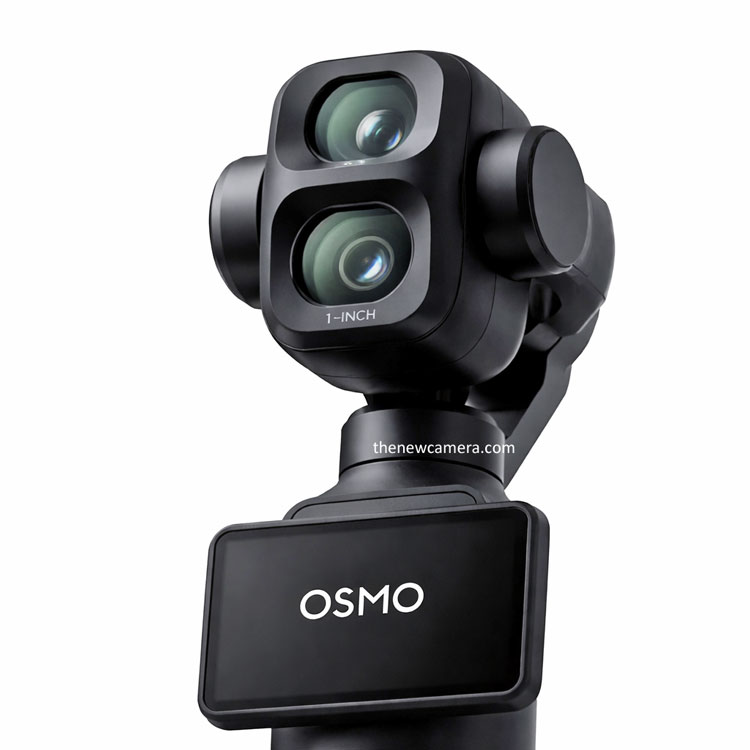
Finally, we have clear videos of the upcoming DJI Pocket 4 Pro camera, so now it’s not a secret anymore, and we have crystal-clear video as well as images of the Pocket 4 Pro, as they have been shared earlier in our articles. The upcoming Pocket 4 Pro camera will have a large 1-inch sensor in the ultra-wide lens, as well as a dedicated 3× optical zoom-based module for capturing distant subjects.
Just hours ago, trusted DJI and Insta360 insider Igor Bogdanov (@Quadro_News) dropped two stunning teaser videos that appear to officially confirm the DJI Osmo Pocket 4P — a bold dual-camera upgrade to the popular Osmo Pocket series.
Insta360 Luna is also in the announcement lineup, but it is still in preparation mode. Meanwhile, DJI has already announced the standard Pocket 4 camera and is now teasing the Pocket 4 Pro — the professional version. This shows the aggressive strategy of DJI to beat its competitor, and it’s a really well-planned strategy. Due to intense market competition, consumers will get enhanced devices from camera makers.
At this moment, we don’t know the exact timing of DJI’s Pocket 4 PRO camera announcements, nor what Insta360 is planning with the Luna. How the market will respond will depend on the price, features, and performance of the camera. But in the end, the real winner is the consumer, since we are getting more and more options at various budgets with enhanced and upgraded hardware and core specifications in handheld pocket gimbal cameras.
Creative Image of DJI Pocket 4 PRO
The leaks arrive at the perfect time, intensifying the upcoming battle with Insta360 Luna, and suggest DJI is pushing boundaries with a true dual-lens pocket gimbal camera featuring a 1-inch main sensor and dedicated 3x telephoto lens — all while maintaining the ultra-compact form factor that made the Osmo Pocket 3 a vlogging favorite.
What the Teaser Videos Reveal About the DJI Osmo Pocket 4P
The first 16-second video kicks off with the iconic white DJI logo and quickly reveals two distinct camera modules side-by-side on the motorized gimbal head:
1-inch sensor main camera on the right (promising superior low-light performance and dynamic range)
3x telephoto lens on the left (enabling true optical zoom without heavy digital cropping)
The modules then elegantly merge into the familiar Osmo Pocket body. The device — clearly labeled OSMO POCKET 4P — rotates under dramatic lighting, showcasing the sleek integration. “OSMO” is embossed on the base, and the video closes with bold text:
Confirmed Key Upgrades Expected in the DJI Osmo Pocket 4P (Pro)
Let’s discuss the confirmed updates. Here, we are getting insights into the Pocket 4 Pro camera, and specifically this time with visuals and images. We can clearly see that we are getting a large 1-inch sensor paired with a 3× optical zoom camera module.
True optical 3x zoom — Switch seamlessly between wide and telephoto without quality loss
Superior low-light performance thanks to the large 1-inch main sensor
Enhanced creative flexibility for portrait/vertical video, interviews, and cinematic shots
Expanded ecosystem control via wireless pairing with the Osmo Mobile 8P and its mini remote
Better portrait/vertical shooting modes and hybrid zoom capabilities
Insta360 Luna
Why the Timing Matters: DJI Osmo Pocket 4P vs Insta360 Luna
These teaser videos are no coincidence. We know this type of teaser is going to hamper the pre-orders or sales of the standard Pocket 4 camera, which was announced recently on April 16, 2026. But DJI is now super aggressive, and they don’t want to lose a single consumer they have built over the past 3 to 4 years in the pocket gimbal camera segment, and that’s why they are leading the competition. They are about to announce the dual-camera setup–based DJI Pocket 4 Pro professional camera just before the Insta360 Luna arrives in the market.
What’s Next for the DJI Osmo Pocket 4P?
The videos look like official-grade renders or very early pre-production footage. Full specifications, pricing, and exact release date are still under wraps, but the rapid back-to-back drops from a highly reliable leaker, combined with “coming soon” messaging, point to an imminent announcement — possibly within the next few weeks.
We’ll continue tracking every new leak, rumor, and official update right here.
The article “DJI Pocket 4 Pro Teaser Leaked” was written by thenewcamera.com team on 8:09 pm, Thursday, 16 April 2026, Greenwich Mean Time (GMT) | You can also follow us on Our Official Social Media HandlesFACEBOOK | TWITTER | INSTAGRAM> get live news — > DJI Rumors
Buy Canon Lenses, Buy Music CD or Digital Camera at amazon it helps this site, and you do not pay anything extra, it is just a way to help support this site.
New Camera Website, we list all type of new camera information, price review and all type camera rumors, subscribe us or follow us via twitter or facebook.
Disclaimer: We have attempted to select useful information to include on New Camera, and to ensure that the resources we have included on the site -- as well as the way we have described them -- are accurate, fair, and balanced. However, we make no claims, warranties, or other representations concerning the accuracy, completeness, or utility of the information provided, or concerning the abilities or performance of the organizations, agencies, companies, and other resources presented through New Camera