Sony A7R VI & FE 100-400mm f/4.5 GM Lens Rumoured for May 13, 2026 Announcement: Full Specs, Pricing, and What It Means for Photographers. We have confirmation that Sony is gearing up for its major announcement on May 13, 2026. At London time 3 PM, alongside a Sony FE 100-400mm f/4.5 GM Master lens.
This is really exciting news, but we still need multiple confirmations. Specifically, we are waiting for official teasers from Sony itself before the announcement, which will be the maker’s final confirmation of the camera’s arrival.
Confirmed: Sony A7R VI Announcement Date is May 13, 2026
So, how did we come to this date? At first, the date matches the already registered Alpha Universe event, which is scheduled to take place in the United States of America between May 14 and 15. Now, this is not only a coincidence that the arrival date of the Sony A7R VI matches the date that has already been publicly posted by Alpha Universe.
So now the big question is, is the A7R VI camera really coming on that specific date, or is this just a claim made by the rumour mill? Well, it will become very clear in just a few days, but the good thing is the SonyAlphaRumors claim is now backed by PhotoRumors, which now does make us believe that yes, there is a probability with higher chances of the A7R VI camera’s arrival on that specific date, but still, we are waiting for further confirmations and teasers from official sources to confirm the same.
Multiple independent sources now align on May 13, 2026, as the official reveal date. This matches an already-registered Alpha Universe event in the US on May 14–15.
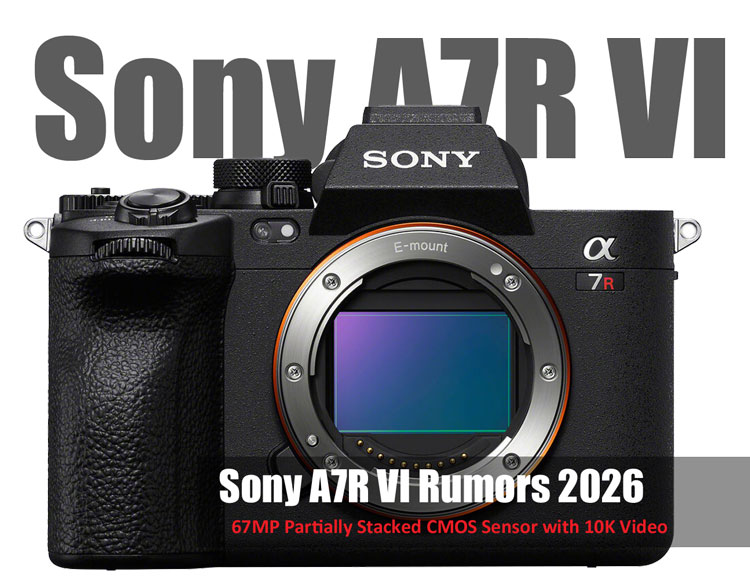
Sony A7R VI Rumoured Specs: 67MP Fully Stacked Sensor That Could “Kill” the A1 II
Let’s discuss the core specification of the upcoming camera. According to the rumor mill, the upcoming camera feature? A ~67 megapixel fully stacked (or heavily stacked) full-frame Exmor RS sensor — the second stacked sensor in Sony’s Alpha line after the A1 II, but with significantly higher resolution.
Here’s what trusted sources are reporting:
Sensor: ~67MP fully/partially stacked CMOS with ultra-fast readout (~60 fps full sensor in 14-bit mode)
Burst shooting: Up to 30 fps 14-bit RAW with AF/AE tracking and RAW pre-capture
IBIS: Up to 8.5 stops of compensation
Video: 4K 120p, 10-bit, plus possible 8K/30p or even higher modes (sources are still confirming exact video limits)
EVF: 9.44 million-dot OLED with latest upgrades from the A7R V
Autofocus: Latest AI processing engine with major improvements in subject recognition and tracking
Body design: All-new ergonomics (no left-side dial like the A1 II)
Processor: BIONZ XR2 + High-Bandwidth LSI
Dynamic range: Up to 16 stops in mechanical shutter via Dual Conversion Gain HDR
In short, the Sony A7R VI is rumored to combine the resolution of the A7R V with the speed and video prowess of the A1 II – at a much more accessible price point.
Sony A7R VI Price: Ballpark €5,000–5,500 / ~$4,999–$5,099
Yes, what we expected for now, and it’s a jump from the current A7R V (which sells for ~$3,000–$3,300 street price today).
Sources close to the launch indicate the Sony A7R VI body-only will land around $4,999–$5,099 in the US and slightly above €5,000 in Europe.
While that sounds steep, remember: you’re essentially getting A1 II-level performance + 67MP resolution for roughly $2,000 less than the current A1 II. Many photographers are already calling this the “A1 II killer” for stills-first hybrid shooters.
New Sony FE 100-400mm f/4.5 GM Lens: Not a Mark II – A Completely New Design
Alongside the A7R VI comes a brand-new constant-aperture telephoto: the Sony FE 100-400mm f/4.5 GM.
Important note: This is not a replacement for the existing 100-400mm f/4.5-5.6 GM. It’s a fresh G Master design with:
Constant f/4.5 aperture across the entire zoom range
Internal zoom mechanism (no extending barrel — better balance, weather sealing, and handling)
Super lightweight construction (sources describe it as “impressively light” for its class)
Premium GM optics and build quality
Expected price: Around €5,000 / ~$5,000 — premium pricing that reflects the internal zoom engineering and constant aperture. It will sit above the current variable-aperture 100-400mm GM and even the 50-150mm f/2 GM in cost.
This lens pairs perfectly with the high-resolution A7R VI for wildlife, sports, and travel photographers who want reach without sacrificing sharpness or speed.
Why This Launch Matters (And Why You Should Care)
The combination of a 67MP stacked sensor, blazing speed, pro video specs, and a brand-new lightweight constant-aperture telephoto makes this one of Sony’s most exciting launches in years. Whether you shoot landscapes at maximum detail, wildlife at distance, or hybrid video/content, the Sony A7R VI could finally deliver the “do-it-all” flagship many have been waiting for.
Bookmark this page and turn on notifications. As soon as Sony confirms anything, you’ll read it here first.
What do you think — is the Sony A7R VI the upgrade you’ve been waiting for, or are you holding out for something else? Drop your thoughts in the comments below. Are you planning to pre-order on day one?
GET LIVE NOTIFICATION, Select Your Trusted Source GET LIVE NOTIFICATION Click ON Check BOX for Latest NEWS and Rumors
The article “Sony 16MP Partially Stacked Sensor in FX3 II and A7S IV – Latest Sony Rumors February 2026” was written by thenewcamera.com team on 1:35 pm, Friday, 20 February 2026, Greenwich Mean Time (GMT). | You can also follow us on Our Official Social Media HandlesFACEBOOK | TWITTER | INSTAGRAM >see more Sony Alpha Rumor Latest Camera News
All information in this article is based on trusted industry sources (SAR – sonyalphaRumor website) and leaks as of April 30, 2026. Official specs and pricing will be confirmed by Sony on May 13
The Insta360 Luna is finally here, and we have the detailed hands-on images of the upcoming camera. Fortunately, we also have some early reviews of the Luna series camera, which have been added to this article and have been published.
But before jumping into the content and more details, let me clarify that Insta360 is one of the best handheld gimbal cameras I have seen since the DJI Pocket series. With the first announcement (yet to hit stores), they made a deep impact on the handheld camera world. And since the FCC certification for Pocket 4 and Pocket 4 Pro is pending for now, the Insta360 Luna will have more room to grow. Although XTramuse 2 PRO is also in the announcement pipeline, expected to arrive in May- June 2026.
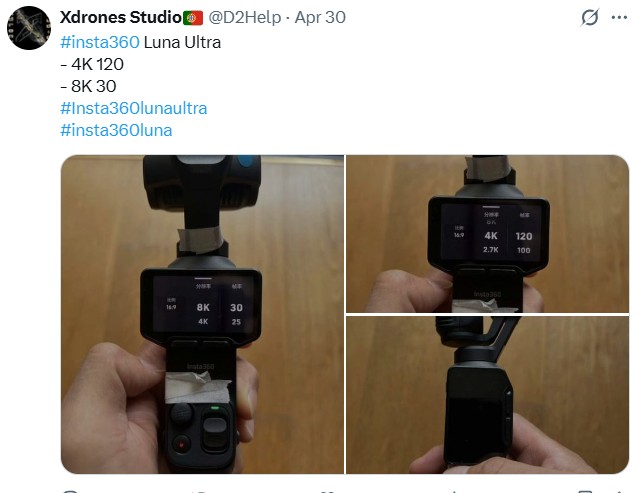
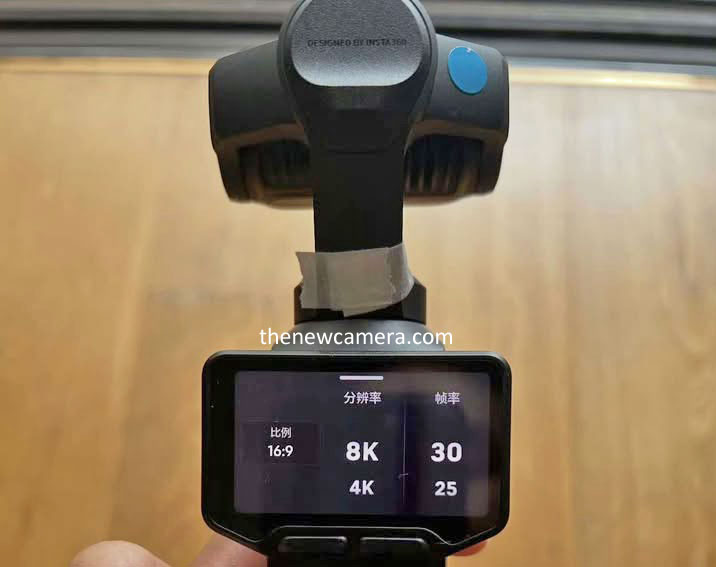
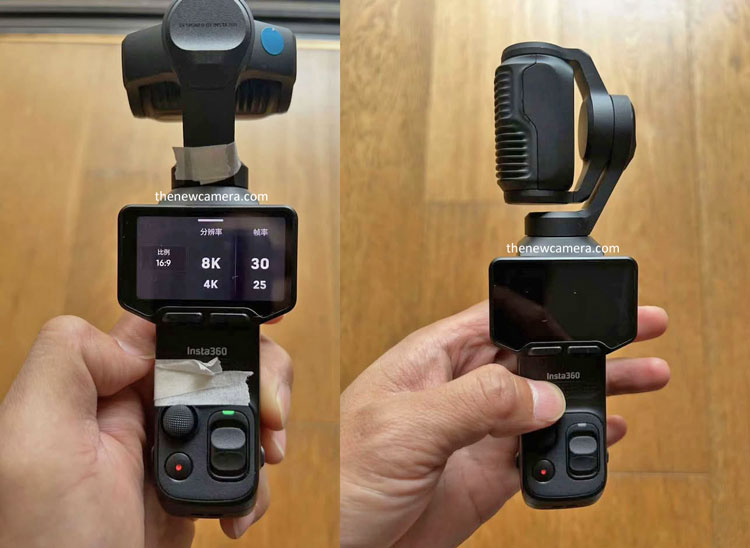
The Insta360 Luna is officially here — or at least its early prototype is. Fresh hands-on photos of what appears to be a pre-production Insta360 Luna (likely the dual-lens Luna Ultra or single-lens Luna Pro) have surfaced, giving us the clearest look yet at Insta360’s bold new pocket gimbal camera series.
Co-engineered with Leica and previewed at NAB Show 2026, the Luna series is shaping up to be the strongest challenger yet to DJI’s Osmo Pocket 4 lineup. These exclusive prototype images show the camera in action – screen on, menu visible, gimbal mechanism exposed — complete with classic pre-production white tape.
Here’s everything the photos reveal about the Insta360 Luna hands-on experience, specs, design, and what it means for vloggers, creators, and filmmakers in 2026.
First Look: Insta360 Luna Prototype Design & Build
The image not only gives detailed insight into the construction of the Insta360 Luna
Insta360 Luna Screen Menu Breakdown: Real Specs Leaked
One of the most exciting parts of these hands-on shots is the on-screen menu in Chinese, which gives us the first concrete look at video capabilities:
Aspect ratio: 16:9 (standard cinematic)
Resolutions:
8K (likely marketing or future firmware — early hands-on videos mention 4K as primary)
4K
2.7K
Frame rates (highly competitive):
Up to 120 fps at 4K/2.7K (smooth slow-motion)
100 fps options
Standard 30/25 fps modes
Additional Key design highlights visible in the prototype photos:
Rotatable touchscreen – A crisp 2-inch OLED display (estimated 1000 nits brightness from early leaks) that flips and rotates for easy framing in selfie or low-angle shots.
Modular gimbal head – The top module detaches or twists, hinting at the “Twist Modular Design” mentioned in recent leaks. This could allow for creative mounting or future accessories.
Leica-tuned lens housing – The top module proudly reads “DESIGNED BY INSTA360” with a distinctive blue accent button (likely power or mode selector).
Physical controls – Dedicated record button with glowing red indicator light, joystick-style wheel, and a textured grip for one-handed operation.
This aligns perfectly with official NAB 2026 previews: the Luna series features a 1-inch sensor, f/1.8 bright aperture, 10-bit iLog colour, and up to 14 stops of dynamic range. The 8K listing suggests Insta360 is pushing boundaries beyond the DJI Osmo Pocket 4’s 4K/240fps claims.
Insta360 Luna Ultra Early Reviews
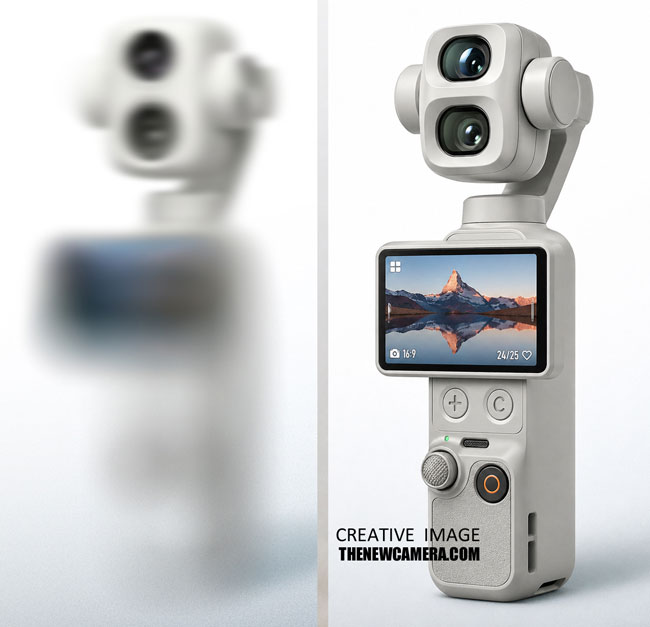
The dual-camera version (Luna Ultra) includes a wide-angle lens plus a telephoto module for seamless zoom — early leaks point to 3x–6x optical/lossless zoom with variable focal lengths. The single-lens Luna Pro targets direct Osmo Pocket 4 competition.
Final Thoughts: Is the Insta360 Luna a Game-Changer?
Yes its without an donut. These prototype photos prove the Insta360 Luna is a very strong contender and an excellent camera. The visible 8K video recording capability was never possible with Pocket series cameras, even with their newest addition, the Pocket 4 camera.
The announcement is about to happen on May 2026, shipping details and pre-order links will be posted alongside the official announcement
What do you think? Will the Insta360 Luna Ultra dethrone the Osmo Pocket 4? Drop your thoughts in the comments.
Images courtesy of an anonymous source who sent early prototype access. All specs are based on visible menu data and official NAB 2026 previews.
The article “Insta360 Luna Early Reviews and Hands-On Prototype Photos” was written by thenewcamera.com team on 5:01 pm, Wednesday, 29 April 2026, Greenwich Mean Time (GMT) | You can also follow us on Our Official Social Media HandlesFACEBOOK | TWITTER | INSTAGRAM> get live news — > DJI Rumors
This Pocket 4 Pro camera is about to arrive in the month of May or June 2025, as per the latest set of rumors we have, and recently we have also published the major leak of the Pocket 4 Pro camera, which includes its teaser video as well as a lot of images of the camera. Other than that, the big issue with both the new cameras, the Pocket 4 Pro and the Pocket 4, is their availability in the United States of America, since, as we all know, despite clearing the FCC registration before the December 25 ban, they are still facing trouble, and their recent FCC clearance is still in pending, according to DJI officials themselves.
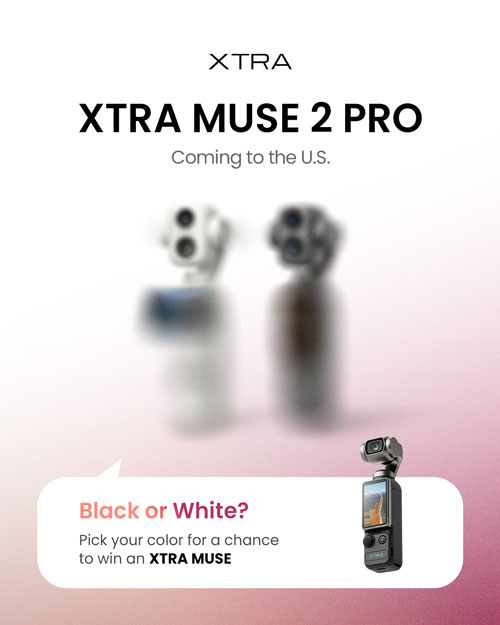
The Xtra brand announcement done Teaser announcement on April 24, 2026, on their official Twitter and Instagram handles, it does confirms that the Xtra Muse 2 Pro is coming. And the best part is the image of the Xtra Muse 2 Pro looks exactly similar to the DJI Pocket 4 Pro camera. As we all know, the Pocket 4 series and other DJI products ( latest Lito drones and gimbal cameras) are facing hurdles in the United States of America, but thankfully, we have options like the Xtra Muse brand, which does give us an excellent alternative to buy those cameras that we love, specifically from DJI, under the Xtra Muse brand name.
So again, if you are willing for an upgrade over the Pocket 3 camera, not satisfied with the Pocket 4, or you are thinking that the Pocket 4 Pro is coming but you are not able to buy it due to the ban issues and all that stuff, then you should wait for the Xtra Muse 2 Pro camera announcement.
Xtra Muse 2 Pro Specifications
Let’s explore the core specification of the upcoming XTRA Muse 2 Pro Camera for pro creators in the United States of America, but before we jump into the core specification keep in mind the the Muse 2 Pro (it’s still in the teaser phase), multiple insider reports, industry leaks, and direct alignment with the Pocket 4 Pro’s anticipated hardware point to the following key upgrades:
Dual-Module Lens System: 1-inch CMOS sensor main module (for superior low-light, dynamic range, and cinematic quality) + dedicated 3x optical zoom lens module — exactly matching the rumored Pocket 4 Pro configuration for lossless telephoto reach.
Video Capabilities: Expected 4K/120fps or higher, with strong rumors of 4K/240fps slow-motion support for ultra-smooth cinematic effects.
Stabilization: Advanced 3-axis mechanical gimbal (building on the current Muse’s rock-solid performance).
Screen & Controls: 2-inch rotatable OLED touchscreen with dedicated portrait mode for seamless vertical social-media shooting.
Audio & Features: 3 built-in microphones, 10-bit X-Log color, fast autofocus, intelligent face/object tracking, and likely expanded storage (rumors mention up to 128GB built-in).
Design: Ultra-compact pocket-sized form factor (similar to the current Muse’s ~140mm length and 180g weight), available in Black or White.
Additional Perks: Enhanced low-light performance, Wi-Fi/Bluetooth connectivity, USB-C, and full U.S.-optimized firmware with local support.
These specs position the Muse 2 Pro as a true pro-level pocket gimbal camera experience while keeping the fun,
Xtra Muse 2 Pro U.S. Arrival Date and Possible Pricing
Arrival Date: Xtra has officially confirmed the Muse 2 Pro is coming to the U.S. with the April 24 teaser and follow-up replies stating the full Muse 2 series is expected to launch in the U.S. around mid-2026 (June–July window most likely). Pre-orders or early availability could begin as soon as late May.
Possible Pricing: No official price has been announced yet, but based on the current Xtra Muse (which retails around $379–$419 on sale and originally listed near $699), the Muse 2 Pro is expected to land in the $499–$649 range. This premium-yet-accessible positioning would make it a compelling value compared to the Insta360 Luna series or gray-market DJI imports, especially with full U.S. warranty, support, and no import risks.
Pricing will likely be confirmed closer to launch, with possible bundles including extra modules or accessories.
Bottom Line for U.S. Creators
The DJI Pocket 4 and 4P/Pro are fantastic on paper and as an actual product, but we know the “pending authorization” means they’re simply not an option for most Americans right now. Xtra’s timely official tease of the Muse 2 Pro – amplified by voices like Quadro_News (obviously one of the most authentic sources) – feels like a deliberate and smart market move. It gives U.S. buyers the exact hardware combination (1-inch sensor + 3x zoom) they’ve been waiting for, without the wait.
Stay tuned for more updates coming
Source: @Quadro_News (Igor Bogdanov) – April 27, 2026
All images: Courtesy of @Quadro_News – used with permission for editorial purposes.
The article “Xtra Muse 2 Pro: Specifications, Pricing, and U.S. Arrival Date” was written by thenewcamera.com team on 2:13 pm, Monday, 27 April 2026, Greenwich Mean Time (GMT) | You can also follow us on Our Official Social Media HandlesFACEBOOK | TWITTER | INSTAGRAM> get live news — > DJI Rumors
DJI Osmo Pocket 4 Pro has released a major new series of images today, featuring an extensive professional photo-style shoot with the new Pocket 4 Pro camera, with many influencers and models, specifically taking place somewhere in mainland China just before its official launch, so as we were expecting the Pocket 4 Pro Professional.
The leak consists of five separate posts (Parts 1–5) and includes approximately 18 high-quality real-world images — by far the largest and most detailed look at the upcoming pocket gimbal camera so far.
What the New Images Show
Several KOLs and female creators are actively filming with the Pocket 4P in beautiful outdoor locations (turquoise lake with mountain backdrop + sunny rocky coastal area).
Testers using lighting tools (including a large reflector/umbrella) for professional-level shooting.
Group shots of multiple people testing the device together in natural sunlight.
Crisp close-up prototype views of the black Pocket 4P unit, clearly showing the “POCKET” branding, folding gimbal, and build details.
Side-by-side size comparisons with the standard Osmo Pocket 4 and Pocket 3.
One intriguing shot also includes an unidentified new DJI drone next to the Pocket series.
These polished “photo shoot” images confirm that DJI is in the advanced testing phase and has already brought in multiple influencers/KOLs for real-world trials.
Expected Specs & Launch Timeline
We have already discussed the possibility of its announcement sometime from May to June 2026. The Pocket 4 Pro is expected to bring major upgrades, including:
1-inch sensor main camera on the right (promising superior low-light performance and dynamic range)
3x telephoto lens on the left (enabling true optical zoom without heavy digital cropping)
Enhanced creative flexibility for portrait/vertical video, interviews, and cinematic shots
Why This Leak Matters
Seeing the Pocket 4P in a full professional photo shoot with multiple creators shows that DJI is treating this as a flagship product. The quality of these images also suggests the camera itself is performing very well in real-world conditions.
We’ll continue tracking every new development. As soon as official specs or a firm launch date drop, you’ll see it here first.
Source: @Quadro_News (Igor Bogdanov) – April 27, 2026
All images: Courtesy of @Quadro_News – used with permission for editorial purposes.
The article “DJI Pocket 4 Pro Photo Shoot Images Leak Online” was written by thenewcamera.com team on 8:09 pm, 9:17 am, Monday, 27 April 2026, Greenwich Mean Time (GMT)
| You can also follow us on Our Official Social Media HandlesFACEBOOK | TWITTER | INSTAGRAM> get live news — > DJI Rumors
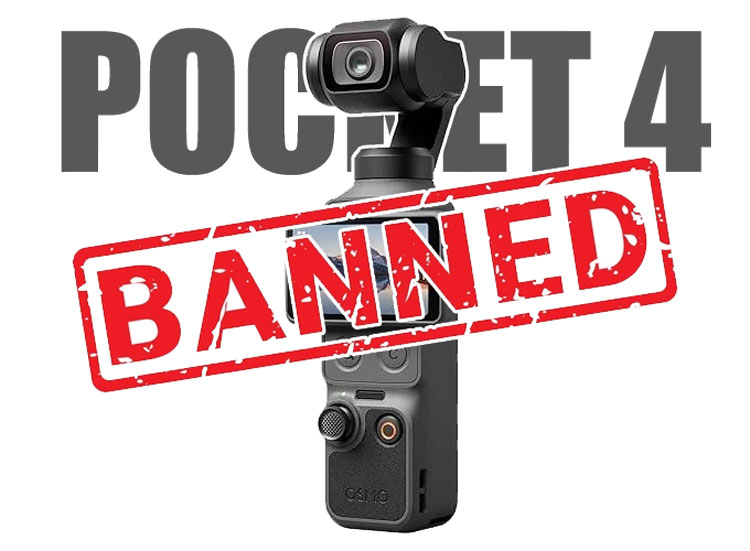
Is it true that the DJI Pocket 4 camera is banned in the USA? Just a few months ago, we saw that the DJI Pocket 4 camera received FCC approval for being sold in the United States of America. It has already received FCC approval, so why has it been banned or is it not available in the United States of America? In this article, we will try to find out the exact reason why the Pocket 4 camera is still not available despite FCC approval, and at the same time, the best alternatives that you can buy right now.
The DJI Osmo Pocket 4 has launched globally with impressive upgrades, but US customers cannot buy it through any official channel.
Let’s see what DJI has recently said officially about the status of the Pocket 4 in the United States of America.
DJI’s Official Statement on US Availability
DJI confirmed directly: “The Osmo Pocket 4 will not be available in the US market at launch due to pending FCC authorisation.”
This quote comes from DJI spokesperson Daisy Kong and was reported by PetaPixel, PCMag, The Verge, Newsshooter, and others in mid-April 2026.
lSO, that’s really a weird thing that even after the approval of the Pocket 4 camera, even after having the registration of the Pocket 4 camera, qualifying all the rules just in time, and most importantly, the Pocket 4 is not a drone. Despite these facts, the Pocket 4 camera still faces issues when used in the United States of America, according to DJI sources. The FCC that was granted to Pocket 4 is now showing as pending. We don’t know the exact reason this was done, since it technically cleared the FCC before the ban.
Why the DJI Pocket 4 Is Blocked in the US
In December 2025, DJI was added to the FCC’s Covered List due to national security concerns. New products from companies on this list now face near-impossible hurdles for FCC equipment authorization – the mandatory approval needed to legally sell any device with Wi-Fi, Bluetooth, or radio transmitters in America.
The Osmo Pocket 4 is the first major DJI consumer camera to be caught by these stricter rules after the cutoff window closed.
Current Retail Situation for American Buyers
As of April 27, 2026:
Major US retailers, including B&H Photo, Adorama, Amazon, and Best Buy are not stocking the DJI Osmo Pocket 4.
Grey-market or third-party imports carry real risks of customs delays, seizure, or no warranty support.
What This Means for US Content Creators and Photographers
If you are in any state of America and planning to buy the Pocket 4 camera, obviously, it’s not a good time for that purchase, but again, we do have alternatives.
Either you can wait for the Insta360 Luna, or we have the previous-generation Osmo Pocket 3, which remains fully available, well supported, and an excellent choice for most vloggers and creators.
Xtramus is now fully compatible with the DJI wireless mic and is available at a lower price point, featuring the exact same core specs as the Pocket 3.
Can You Personally Import the DJI Pocket 4?
Technically, yes — US customs generally allow individuals to bring back up to three units for personal use when traveling abroad. However, you will receive no US warranty, official repairs, or software support, and there is always a risk with non-FCC-authorized wireless devices.
The Ongoing DJI Lawsuit Against the FCC
DJI is actively suing the FCC, arguing that the Covered List process was flawed and lacked specific evidence of a security threat. The lawsuit is still in progress with no quick resolution expected. Until the courts or policy changes, new DJI products with wireless features are effectively blocked from the US market.
Recommendation for newcamera.com Readers in the USA
For now, stick with the DJI Osmo Pocket 3 — it is widely available, proven, and remains one of the best pocket gimbal cameras you can actually buy in America today. We will monitor the FCC situation and the ongoing lawsuit closely and update this article the moment anything changes.
The article “DJI Pocket 4 Banned in the United States” was written by thenewcamera.com team on 7:35 am, Monday, 27 April 2026, Greenwich Mean Time (GMT) | You can also follow us on Our Official Social Media HandlesFACEBOOK | TWITTER | INSTAGRAM> get live news — > DJI Rumors
Sony has registered two new cameras in China, and the total number of cameras now in the announcement pipeline is 3, you already have details about the Sony A7R6, which was already registered earlier this year and the latest two registrations point to a high-end full-frame camera, and an entry-level camera like a successor of the Sony ZV series camera or an updated version of the Sony RX100 series compact camera.
This is shaping up to be one of Sony’s biggest years for US photographers, videographers, and content creators. Here’s the complete breakdown based on the latest certification leaks.
Confirmed Sony Camera Registrations (April 2026 Update)
Registration Code
Factory
Wi-Fi Support
Official Model
Likely Identity
Registration Date
Expected US Announcement
WW847606
Japan
Yes (Wi-Fi 6)
ILCE-7RM6
Sony A7R VI
February 4, 2026
May 2026
WW679476
Shanghai
Yes (Wi-Fi 6)
Not yet public
Sony FX3 II (cinema line)
April 24, 2026
Mid-to-late 2026
WW721795
Wuxi
No Wi-Fi 6
Not yet public
New ZV vlogger or RX100 VIII
April 24, 2026
2026
The latest set of details available via trusted sources, take a look
1. Sony A7R VI (ILCE-7RM6 / WW847606) – High-Res Flagship Coming in May 2026
We have already discussed a lot about the Sony A7R VI camera, and the core specs, which are available to us, show a 67MP Sensor. The announcement of the camera is also expected sometime in May 2026
Rumored Sony A7R VI key specs:
~67MP partially stacked full-frame sensor
BIONZ XR2 processor
Up to 30 fps 14-bit RAW burst
8.5 stops of in-body image stabilisation
Advanced AI autofocus + RAW pre-capture
Improved video capabilities (possible 8K/10K modes)
US Pricing & Availability: Expected at $3,900–$4,500 (body only). Pre-orders will open immediately at B&H Photo, Adorama, and Amazon after the May announcement.
The next camera in the announcement pipeline is the Sony FX3 Mark II camera, the long-awaited FX series camera, which
2. Sony FX3 II (WW679476) – Compact Cinema Camera for US Filmmakers
Registered at Sony’s Shanghai factory with Wi-Fi 6 support, this is widely expected to be the Sony FX3 Mark II.
The original FX3 is already a favourite among indie filmmakers in Los Angeles, New York, and Atlanta. The Mark II is rumoured to bring:
New partially stacked sensor optimised for video
Better cooling for longer recording times
Improved AI autofocus and higher frame rates (possible 6K open-gate or 4K/240p)
Enhanced pro audio and connectivity
Expected US Price: $3,800–$4,500 range.
3. Entry-Level Model (WW721795) – New ZV Vlogger or RX100 Successor
Now it’s time for the entry-level series, the camera registered at the Wuxi factory without Wi-Fi 6, which points to a budget-friendly consumer model – most likely a new ZV-series vlogging camera or the RX100 VIII compact.
The latest Non-WiFi 6 Related camera was Sony ZV-E10 II
Targeted at US TikTok, YouTube, and Instagram creators seeking modern features for $1,000–$1,500.
Why This Trio Matters for US Photographers & Videographers
Sony is finally delivering options across every price point in 2026:
High-end stills photographers → A7R VI
Indie filmmakers & hybrid creators → FX3 II
Content creators & beginners → New ZV / compact model
Keep watching Sony USA, B&H Photo, and Adorama for official announcements. The A7R VI is expected first (May 2026).
What are you most excited about? The high-resolution A7R VI, the FX3 II for video, or an affordable new ZV body? Let us know in the comments – we’ll update this article the moment Sony confirms anything.
Article researched and updated April 26, 2026 for thenewcamera.com. All information is based on current CMIIT certification filings and trusted industry rumors. Official details will be released by Sony.
GET LIVE NOTIFICATION, Select Your Trusted Source GET LIVE NOTIFICATION Click ON Check BOX for Latest NEWS and Rumors
The article “Next Sony Cameras 2026 – A7R VI, FX3 II & ZV Budget Model All in Certification Now” was written by thenewcamera.com team on 6:43 pm, Sunday, 26 April 2026, Greenwich Mean Time (GMT). | You can also follow us on Our Official Social Media HandlesFACEBOOK | TWITTER | INSTAGRAM >see more Sony Alpha Rumor Latest Camera News
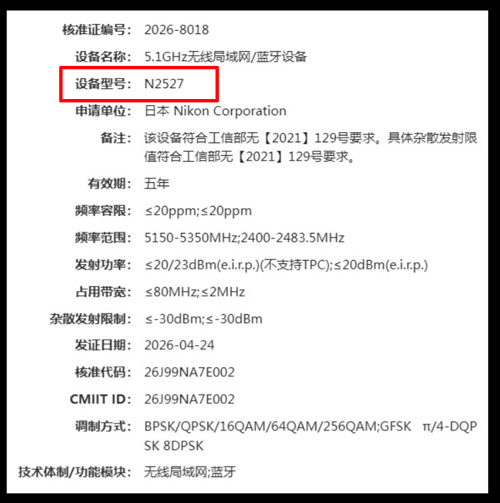
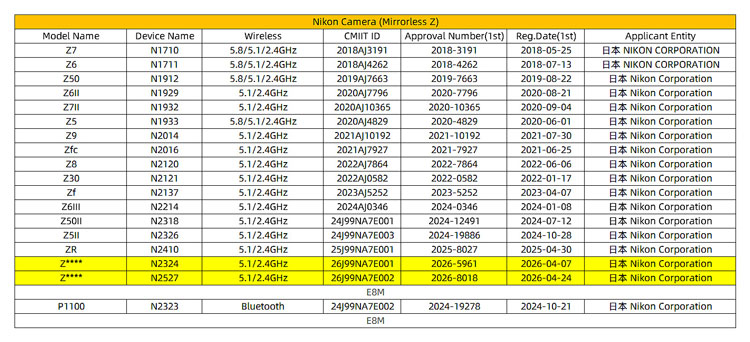
As per the initial report, we have Nikon has recently accelerated its camera roadmap for 2026. Just 17 days after the N2324 camera registry was completed on April 7, 2026, a brand-new entry was added to the CMIIT registration. It received its certificate clearance on April 24, 2026. Well, this is the second unannounced mirrorless Z body camera after the N2324, and, fortunately, both are certified in April 2026.
This is the second unannounced Nikon Mirrorless Z body to clear China’s mandatory wireless certification in under three weeks. Both are still listed as Z** (model name redacted), confirming they remain under strict embargo.
Official CMIIT Details (Fresh from April 24, 2026)
N2527 Certificate Highlights (核准证编号: 2026-8018):
Device Name: 5.1GHz Wireless LAN / Bluetooth Device
(Full certificate screenshot provided in the user leak — identical format to the N2324 filing.)
Full Nikon Z Series CMIIT Table (Latest Snapshot)
Model Name
Device Name
Wireless
CMIIT ID
Approval Number
Reg. Date
Applicant
Z****
N2324
5.1/2.4 GHz
26j99NA7E001
2026-5961
2026-04-07
日本 Nikon Corporation
Z****
N2527
5.1/2.4 GHz
26j99NA7E002
2026-8018
2026-04-24
日本 Nikon Corporation
(Previous recent models like Z50II, Z5II, and ZR are also visible in the same table for context.)
Important Clarification: This Is NOT the Nikon Z9 II
We just published Nikon Z9 II Expected in 3-6 Months + Major ZR Firmware Updates Confirmed on April 23, 2026. That rumor (sourced from Matt famous youtuber and Nikon Pro, the reason he points in that particular video was stock shortages and NAB 2026 comments from Nikon officials) points to the Z9 II arriving July–October 2026 at the latest.
But keep in mind the newly registered gears that we see in the registration agency is completely different, both models point to beginner-level cameras
These N2324/N2527 filings are completely separate:
Flagships like the Z9 II use more advanced wireless (often tri-band or enterprise-grade).
N2324 and N2527 use the same simple 5.1/2.4 GHz module as recent affordable bodies (Z50II, Z5II, Z fc class).
Nikon Rumours and our earlier coverage already describe N2324 as a “sibling to the Z50 II, Z5 II, and P1100” — i.e., an accessible/mid-tier Z body, likely EVF-less or vlogging-focused.
The back-to-back certifications (17 days apart) strongly suggest two parallel affordable models heading into production together.
What These Cameras Most Likely Are (Rumours + Logic)
Let’s discuss the set of possibilities, what would arrive next, as per the initial set of information available via the registered document, the latest set of rumours we have related to the upcoming products,
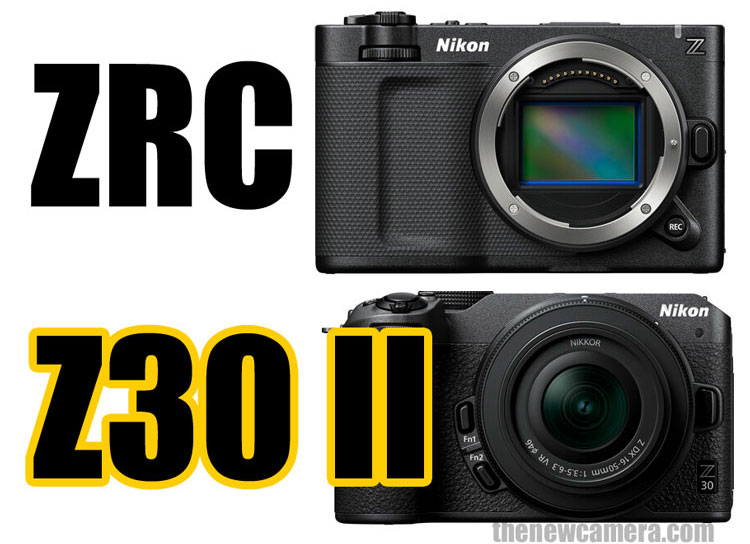
Nikon Z RC (or Z30 II Video Variant) – Direct Canon EOS R50V Competitor
EVF-less, ultra-compact APS-C “brick” design
20.9MP DX sensor + EXPEED 7
4K60p 10-bit N-Log, pro audio, tally lamps, AI AF
Price target: ~$649–$799
Perfect timing: 3–6 months after CMIIT = Q3/Q4 2026 launch
Third EVF-less Full-Frame Photography Body (“ZR Photo” or Z4-style)
Slim full-frame stills camera (no video emphasis)
Designed for maximum portability alongside the cinema-focused ZR
Targets enthusiasts who want FX quality in the smallest possible body
Most analysts believe one of these N23xx/N25xx models is the Z RC (R50V killer) and the other is the compact full-frame photo body.
Logical Next Steps & 2026 Nikon Timeline
Q2–Q3 2026: Announcement of N2324/N2527 bodies (3–6 months after certification is the historical pattern).
Summer/Fall 2026: Z9 II (as per the April 23 leak).
Ongoing: Major ZR firmware updates already confirmed (Log 3G10 + H.265 improvements, focus peaking in red, possible ProRes RAW LT, etc.).
For sure, 2026 is shaping up to be Nikon’s busiest year yet – affordable creator cameras, a new flagship, and cinema enhancements all landing in the same window.
Stay tuned more updates coming soon
source: E88_8888
Stay tuned, browse more Nikon Rumors – We will post an update soon as we get it
The article “Nikon Z RC or Z30 II? N2527 Wireless Approval Drops as R50V Killer” was written by thenewcamera.com team on 7:47 pm, Saturday, 25 April 2026, Greenwich Mean Time (GMT) | You can also follow us on Our Official Social Media HandlesFACEBOOK | TWITTER | INSTAGRAM > get live news + Nikon Rumors 24X7
Buy Canon Lenses, Buy Music CD or Digital Camera at amazon it helps this site, and you do not pay anything extra, it is just a way to help support this site.
New Camera Website, we list all type of new camera information, price review and all type camera rumors, subscribe us or follow us via twitter or facebook.
Disclaimer: We have attempted to select useful information to include on New Camera, and to ensure that the resources we have included on the site -- as well as the way we have described them -- are accurate, fair, and balanced. However, we make no claims, warranties, or other representations concerning the accuracy, completeness, or utility of the information provided, or concerning the abilities or performance of the organizations, agencies, companies, and other resources presented through New Camera