Join More Than 50,000+ Subscribers and get latest camera news and rumors
NEW CAMERA VIDEOS ON YOUTUBE
|
By admin, on August 1st, 2025 
ARRI Alexa 35 XTREME camera has been announced. ARRI is known for making high-end digital cinema cameras, redefining high speeds in cinematography, and the new ALEXA 35 XTREME redefines everything. So, let’s explore the core specifications, price, and major features of the recently announced camera.
ARRI Alexa 35 XTREME Price
The ARRI Alexa 35 XTREME Base Entry Set is priced at $54,590, and even though it is offering a cost-effective entry into the ARRI high-end ecosystem, good news for ARRI Alexa 35 owners — if you want to upgrade your existing setup to the XTREME, then you have to spend approximately $17,300 for that, so your camera will be updated to the 35 XTREME. Now let’s talk about the major core specifications of the camera.
ARRI Alexa 35 XTREME Specifications
The Alexa 35 XTREME uses a Super 35 format sensor. So, for those who are actually mirrorless users, let me help you understand that a Super 35 sensor is actually APS-C size — near about — not a full-frame. Now, jumping to the major core specs of the camera:
- Sensor: The Super 35mm sensor captures 4.6K super videos and delivers up to 17 stops of dynamic range. You can capture 4.6K videos up to 330 frames per second at 11 stops, and in Overdrive mode, the speed scales to 660 fps.
- Recording Formats: 19 ARRI RAW and Apple ProRes formats. The camera records in 422 and high-quality 4444, 4444 XQ, with supporting resolutions up to 4.6K. Also supports MXF/ARRICORE and MXF/Apple ProRes.
- Codec: ARRI CORE RGB codec (beta) that records high-quality videos at lower data rates, compatible with the existing Alexa 35 workflow.
- Pre-Recording Options: The camera records up to 30 seconds of 4.6K Open Gate clips at 24 frames per second in ProRes 4444, or up to 5 minutes in HD.
- ISO Range: EI from 160 to 6400, and in Enhanced Sensitivity Mode you are getting EI 2560 to 6400.
- Storage: Supports Codex Compact Drive (1TB, 2TB) and Codex Compact Drive Express 1TB (ProRes only).
- Lens Mount: LBUS LPL mount with PL-to-LPL adapter for compatibility with a wide range of cine-style lenses.
- Wireless Connectivity: Wi-Fi with 5GHz compatibility, mesh network roaming, and auto-reconnect features.
- Power Consumption: 10% lower than the ALEXA 35, with B-mount battery adapter for 12V/24V accessories.
- Interfaces: Includes 12G SDI outputs, Ethernet, timecode in/out, 12V/24V accessory power, and compatibility with AEM-1 audio module.
- Accessories in Base Entry Set: CCM-1 control monitor, BUD-1 utility dovetail, BPA-6 bridge plate adapter, CCH-4 top handle, UAP-3 plate, B-mount battery adapter.
ARRI Alexa 35 XTREME High-Speed Performance – Features Explained
The camera is able to record 4.6K videos up to 660 frames per second in Overdrive mode, which is literally impossible for pro cinema cameras out there, and at the very same time, it eliminates the need for having dedicated higher frame rate cameras like Phantom Flex. At 330 frames per second, it maintains up to 17 stops of dynamic range, so you will get an exceptional amount of details while shooting even at 330 fps.
With the XTREME 35 edition, ARRI also announced the ARRI CORE codec (beta version). While using this particular codec, it significantly reduces the data rates compared to the traditional codecs that we use, and at the very same time, it doesn’t affect the quality or the flexibility in post-production — by maintaining all its compatibility with the Alexa 35 workflow. That also includes ARRI Textures, metadata, and MXF wrappers. Even though it supports most of the third-party tools, the integration is completely seamless.
The breakthrough technology that arrives with the XTREME version is the pre-recording — 4.6K in ProRes 4444, HD videos up to 5 minutes in ProRes high quality. Now, the thing that I like about the wireless connectivity in this particular edition is the auto-reconnect functionality. If the camera gets disconnected from the network, it automatically tries to reconnect with the network every single minute.
ARRI RAW is Not Free — Neither is Open Gate / Anamorphic or Even Pre-Record
Yes, you heard it right — the Base Entry Set comes with a Base License, and in the Base License, you are only getting ProRes recording up to 60 frames per second in 4K 16:9 format. Now, if you want to record ARRI RAW 120 fps @ 4.6K, or even if you want to record Open Gate / Pre-Record functionality — all these things require subscription. The plans start from 7 days to 30 days, or even they have annual plans and some permanent licenses are also available. But you have to pay extra.
What we have in this particular edition is that it is not very much cost-effective — even if you have invested $54,000 in a camera body, you still have to invest in software subscription to use all the set of features of the camera. And that’s really not a good thing.
Alexa 35 XTREME is a Powerhouse Addition – Without a doubt, it has loads of features that a professional cinematographer may even think to have in their camera. But it comes at a price tag of $54,590 — and it is being called the Base Entry Level model. After that, you have many customizations available here at B&H Store and ARRI Store. You can explore them at different price sets. But as we have discussed, to experience the full core specifications of the camera, you have to subscribe to each and every set of features you require — and that’s going to cost you again, much and much more.
I hope this kind of subscription idea should not reach Canon, Nikon, and Sony in either way — otherwise, using a mirrorless camera will become a nightmare.
Stay tuned for more updates
ABout the author: The article “ARRI Alexa 35 XTREME Price, Specification, and Major Features Explained” written and updated by thenewcamera.com team on 12:13 pm, Friday, 1 August 2025, Greenwich Mean Time (GMT) | Follow us for more updates and Get LIVE RUMORS –> FACEBOOK | TWITTER | INSTAGRAM to get live news — > get live news
By admin, on July 30th, 2025  Early Prototypes of the GoPRO MAX 2 GoPro Max 2 price, specification, release date — yes, we are going to discuss everything in this particular article. The GoPro Max 2 rumor is not new, as we all know it started back in 2023 by CEO Nick Woodman. At the time of the Hero 12 release, he told the press at the event that the company is working on the successor to GoPro Max. Now, once he told the public in September 2023, everyone was expecting the GoPro Max 2 around 2024. But unfortunately, the GoPro Max 2 didn’t arrive in 2024. But now we do have big hope, and the reason is:

GoPro has teased the image of the upcoming GoPro Max 2 camera in one of their latest posts on X, and it was done on July 6, 2025.

Even in the teaser image, it is very clearly visible how the GoPro Max 2 will look.
Release date of GoPro Max 2
The teaser is already making rounds on the Internet, and once the teaser is out, we all know within months the product will get official. The sources suggest the beginning of the fall months in the USA. So we can expect – The GoPro Max 2 will arrive in late August, early weeks of September 2025.
GoPro Max 2 price
The GoPro Max 2 is expected to have a retail price between $400 to $500. We think that at this moment, GoPro will keep the price very competitive, and if you specifically look at the competitor right now — the X5 — which was announced at $549, and is able to record 8K 360 video.
| Camera Model |
Launch Price |
Current Price (2025) |
| GoPro Max (2019) |
$499.99 |
~$400 |
| GoPro Max (2025) |
$400 |
$400 |
| GoPro Max 2 (Expected) |
$400–$500 |
N/A |
| Insta360 X5 |
$549.99 |
$549.99 |
GoPro Max 2 specification
The predecessor was limited to 5.6K 360 video, which was the benchmark at that time (2019). If GoPro wants to compete against Insta360 X5, they have to bring 8K on board at a very competitive price. Other software / app-based features that we are expecting inside the GoPro Max 2:
- AI Auto Framing: Automatically detects the subject and crops and reframes in the best possible way to create more interesting scenes out of a 360 video.
- Object Tracking: Nowadays, advanced object tracking has become quite common, and so we are expecting its presence inside the GoPro Max 2 camera.
- Stabilization: GoPro is already known for its electronic stabilization in all of its products, specifically the action cameras. The enhanced EIS support is expected inside the GoPro Max 2 camera to deliver buttery smooth footage while recording high-intensity activity videos like biking and climbing.
- Other sets of features that we are expecting include Camera FX and Cloud Editing.
So if the GoPro Max 2 camera arrives with the set of core specifications that we have already discussed, it will surely lead the market, if it arrives at a lower price than the available Insta360 X5.
Stay tuned for more updates coming
Follow us on our social pages FACEBOOK | TWITTER | INSTAGRAM, If you have time –>see more Camera News and DJI Rumors


By admin, on July 28th, 2025
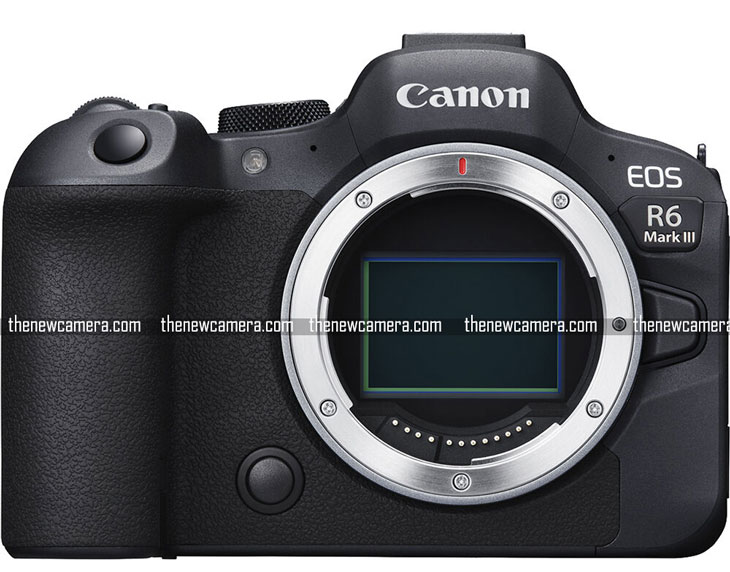
What’s Next from Canon – Canon R6 Mark III, R7 Mark II or R10 Mark II So, first let’s talk about the key points, then we will dive into the details.
- Earlier, it was expected that the Canon R7 Mark II camera would arrive in late August 202,5, targeting sports and wildlife photographers with its advanced set of features. We had a lot of rumours related to that in the past, even the leaked specifications, but for now, the rumour mills are silent on this.
- The second most popular camera, also expected to arrive in the late months of 2025, is the Canon R6 Mark III. As we were the first to tell you, according to the real testers of the prototype, the camera does have a 30+ megapixel sensor inside it.
- The next model is potentially the Canon R10 Mark II camera or the Canon R8 V. While the Canon R8 V is expected to arrive in the first or second quarter of 2026, the Canon R10 Mark II is due for an update. However, as usual, Canon will select only one APS-C camera for its announcement, to avoid cannibalising its sales.
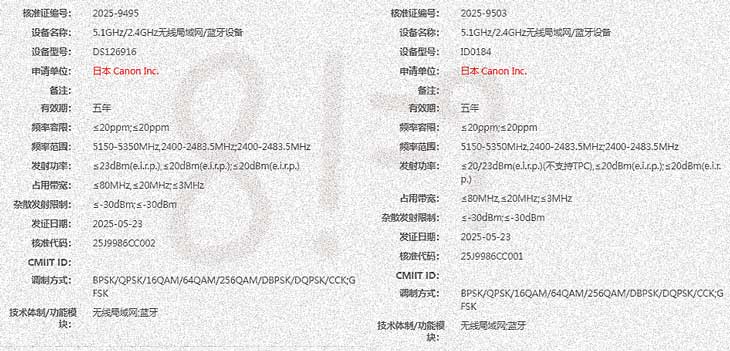
Canon Registered Model and Timelines
- DS126922: EOS R5 II (Dual-band Wi-Fi 6 & Bluetooth)
- DS126928: EOS R1 (Dual-band Wi-Fi 6 & Bluetooth)
- DS126941: EOS R50 V (Dual-band Wi-Fi 5 & Bluetooth)
- DS126904: PowerShot V1 (Dual-band Wi-Fi 5 & Bluetooth)
- ID174: Unknown (Dual-band Wi-Fi 5)
- ID179: Unknown (Dual-band Wi-Fi 5)
- ID0814: Unknown (Dual-band Wi-Fi 5)
- DS126916: Unknown (Dual-band Wi-Fi 5 & Bluetooth)
- DS126936: Unknown (Dual-band Wi-Fi 5 & Bluetooth)
Out of all the registered cameras in 2025, we have 3 cinema cameras and 2 mirrorless models from Canon. We generally keep track of Canon-registered cameras every month, and if you look at our previous two posts of May (May 2025 Update) and July (July 2025 Update), you will find that Canon registered several cameras in those two months. . Both of them have Dual WiFi 5 (we are talking about DS models / Mirrorless only) – Wireless Transfer Unit, generally higher-end cameras like Canon R5 II and Canon R1 use Dual-band Wifi 6, so these two registered models are not High-End full-frame cameras., So we are ruling out the earlier rumored cameras like Canon R1 / R1x variants, OR the Canon R3 Mark II. No, high-end Mirrorless in the announcement pipeline as of now.
As usual, camera makers like Canon typically take at least 3 to 4 months to announce their products once they’re registered in wireless certification agencies. And if they go through the same rule they always follow, we will have at least two Mirrorless announcements from Canon between August and November 2025
Now let’s talk about the Cameras we are expecting next from Canon
Canon Next Mirrorless Announcements
Canon R7 Mark II – The camera that has been registered in May 2025 is expected to be the Canon R7 Mark II with a model code DS126922. The camera is overdue for an update, and we are expecting its arrival from August to November 2025. That’s the initial hint that we have received from the industry experts. The camera is specifically designed for sports and wildlife photography, for those who are looking for a high-performance camera without putting cost to full-frame options.
Canon R6 Mark III – Canon R6 Mark III is another model that we are expecting in 2025. We have already published its rumoured specifications, and we are confirmed that it is coming with a 30+ megapixel sensor. The camera is coming with a significant update for photographers as well as videographers, and its early test phase has been completed. Now we are waiting for its official announcement. As usual, August and September are usually one of the favourite months in the year for Canon for its product announcements, so let’s hope that this August and September, we will witness the arrival of the Canon R6 Mark III camera.
Additional Cameras
Canon R10 Mark II – The Canon R10 Mark II camera was announced in May 2022 and is now due for a refresh. It needs energy and an update, so we are channelising information related to this camera too. As soon as we get any update on it, we will publish it soon.
Canon R8V Camera – The Canon R8V camera is rumoured to arrive in the first half of 2026. If Canon announces it early, it will be a surprise announcement for us.
Stay Updated with TheNewCamera.com
At TheNewCamera.com, we’re dedicated to keeping you informed about the latest camera news. The article “Canon Registered one More Model – DS126936 – July 2025 Update” by thenewcamera.com team | Follow us on our social pages FACEBOOK | TWITTER | INSTAGRAM to get live Camera News + Canon Rumors 24X7.
By admin, on July 28th, 2025 
Finally, a closer view and full video of the upcoming Insta360 Prototype Drone, thanks to Igor Bogdanov, the drones have a 360 camera placed just like we have in the Insta360 camera to capture the 360 view. Although this is an image and video of a prototype under test. The design that you see now will completely change once the drone gets approved for production.
Finally, the first video of the upcoming Insta360 Drone leaked
More Specifications of Insta360 Drones [Read full post here ]
- 360-Degree Camera: Yes, it’s almost confirmed that the Pro model with dual fisheye lenses is designed to capture immersive 360-degree footage and will be a flagship model of Insta360 drones. You can easily reframe the shots as per your requirement.
- Innovative Design: The professional model’s arms and motors are strategically placed to remain completely invisible while recording footage.
- Modular: The drone features a modular design, and it is visible from the pictures. The drone has attachable propeller guards and modular components, suggesting its main focus is on easy repairability and portability.
- Weight: The weight of both drones is expected to fall under the micro category [Under 250 Grams]. This is a critical factor to avoid strict drone regulations in many countries.
- Additional Features: Insta360 already has a lot of technology ready to be implemented in the drone — this includes AI-powered editing tools, advanced image stabilization, and FlowState technology already used in the X5.
Antigravity Drone Price [Updated on September 7, 2025]
| Bundle Tier |
Inclusions |
Estimated Price Range (USD) |
Notes |
| Standard Bundle |
Drone + Grip controller + Vision goggles |
$1,199–$1,399 |
Entry-level |
| Fly More Combo |
Standard bundle + 2 extra batteries + spare props + carrying case |
$1,300–$1,499 |
Mid-tier bundle aligning |
| Creator/Pro Kit |
Fly More bundle + creative mounts + ND filters + editing software voucher + premium case |
$1,500–$1,699 |
Premium consumer bundle |
| Enterprise Add-Ons |
Pro Kit + commercial extras (e.g., SDK access, extended warranty) |
$1,700–$1,999 |
Niche tier for business users |
Follow us on our social pages FACEBOOK | TWITTER | INSTAGRAM, If you have time –>see more Camera News and DJI Rumors
By admin, on July 28th, 2025 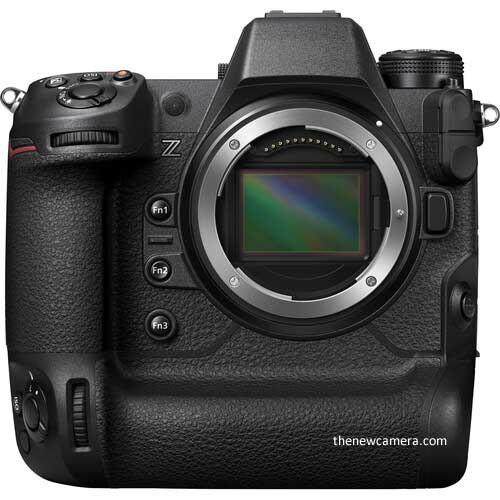
Update on: 6:36 pm, Friday, 26 December 2025, Greenwich Mean Time (GMT)
The Nikon ZR camera has already been mentioned in our earlier article. The Nikon Z9 Mark II is currently expected to arrive in 2026, alongside the Nikon Z7 Mark III camera. The full-frame camera announcement timeline for both models is expected to be almost the same.
The Nikon Z9 Mark II is expected to carry a 45MP enhanced sensor. At this moment, it is still not entirely clear what “enhanced” exactly means, since it is already a stacked sensor, while the Nikon Z7 Mark III is expected to feature a higher-resolution sensor, possibly 61MP or even 80MP. Nikon wants to clearly define and separate its lineup.
If someone wants a higher-resolution sensor for better dynamic range, landscape photography, or commercial work, they can opt for the Nikon Z7 Mark III. On the other hand, if someone wants speed, reliability, resolution, and all-in-one flagship-level performance, they can go with the Nikon Z9 Mark II.
Some unverified YouTube channels are spreading rumors that the Nikon Z9 Mark II will arrive with a higher-resolution sensor, which could overlap with the Z7 series. This is not true. The Nikon Z7 Mark III has its own clear position, and it is expected to arrive in 2026.
It’s already 3 months since the registration of the Nikon N2410 Model (the camera was registered back in April 2025). Generally, camera makers like Nikon announce their products 3 – 4 months after registration in the wireless certification agency, so we can expect the Nikon Camera announcement of August – September 2025
N2410 registration details show that it’s not an entry-level model. It supports 5 gigahertz of Wi-Fi bandwidth, so if a camera supports 5 gigahertz of Wi-Fi bandwidth, then without a doubt, it’s an FX series or DX series premium camera.
Based on Rumors – The Next Announcement: Nikon
If we take a look at the list of upcoming Nikon cameras in 2025 and 2026, then we have two different sets of probabilities:
- Z9 Mark II camera: The first probability is the development announcement of the Nikon Z9 Mark II camera in late 2026. Its announcement is expected to happen before the 2026 Winter Olympics.
- Nikon ZR / Z video camera: The name is not confirmed yet, said to use the same partially stacked CMOS sensor that we have seen in the Nikon Z6 III camera. Right now, check more details about the Nikon ZR
- Nikon Z7 III is long long-rumored camera, and it’s also in the announcement pipeline of Nikon, the camera is also expected to arrive with a 61MP sensor. More details here
So, as per the latest set of rumors, we have all three of these cameras expected to arrive in Q4 of 2025 and Q1 of 2026, as we get any information related to that we will post it soon.
Nikon Next Registration N24XX

One more Nikon camera in the registration pipeline: According to the latest rumours we have from a trusted source E88_8888, Nikon is about to register a new camera in the Chinese wireless certification agency. Once the model code and other details are revealed, we will be publishing a post soon on our website.
Stay tuned for more updates
ABout the author: The article “Nikon Next Announcement in August – September 2025” written and updated by thenewcamera.com team on 9:42 am, Monday, 28 July 2025, Greenwich Mean Time (GMT) | Follow us for more updates and Get LIVE RUMORS –> FACEBOOK | TWITTER | INSTAGRAM to get live news — > get live news + Nikon Rumors 24X7

By admin, on July 27th, 2025 
Canon R6 Mark II versus the Nikon Z5 II — selecting the best camera for your requirements is quite a challenging task, as both are very rich in features. And as we all know, the Nikon Z5 II is an incredible camera, and it was announced in April 2025. On the other side, we have the Canon R6 II, which is a Mid-range Mirrorless camera that was launched back in November 2022. It is a very high-performing hybrid camera. So, in this particular specification comparison, we are going to compare the major specifications of both the cameras — so let’s dive in.
Design Specifications
| Specification |
Canon EOS R6 Mark II |
Nikon Z5 II |
| Lens Mount |
Canon RF |
Nikon Z |
| Media/Memory Card Slot |
Dual Slot: SD/SDHC/SDXC (UHS-II) |
Dual Slot: SD/SDHC/SDXC (UHS-II) |
| Video I/O |
1x Micro-HDMI Output |
1x Micro-HDMI Output |
| Audio I/O |
1x 3.5 mm TRS Stereo Headphone Output
1x 3.5 mm TRS Stereo Microphone Input |
1x 3.5 mm TRS Stereo Headphone Output
1x 3.5 mm TRS Stereo Microphone Input |
| Power I/O |
1x USB-C Input |
1x USB-C Input/Output |
| Other I/O |
1x 2.5 mm Sub-Mini Remote Input
1x USB-C (USB 3.2 / 3.1 Gen 2) Data Output |
1x 3.5 mm Remote Input
1x USB-C (USB 3.2 / 3.1 Gen 1) Data Input/Output |
| Wireless |
2.4 / 5 GHz Wi-Fi 5 (802.11ac), Bluetooth 5.0 |
2.4 / 5 GHz Wi-Fi 5 (802.11ac), Bluetooth 5.0 |
| Mobile App Compatible |
Yes: Canon Camera Connect (Android & iOS) |
Yes: SnapBridge (Android & iOS) |
| Global Positioning |
GPS via Connected Smartphone |
GPS via Connected Smartphone |
| Monitor Size |
3.0″ |
3.2″ |
| Monitor Resolution |
1,620,000 Dot |
2,100,000 Dot |
| Monitor Type |
Articulating Touchscreen LCD |
3-Way Tilting Touchscreen LCD |
| Viewfinder Type |
Electronic (OLED) |
Electronic (OLED) |
| Viewfinder Size |
0.5″ |
0.5″ |
| Viewfinder Resolution |
3,690,000 Dot |
3,690,000 Dot |
| Viewfinder Eye Point |
23 mm |
21 mm |
| Viewfinder Coverage |
100% |
100% |
| Viewfinder Magnification |
Approx. 0.76x |
Approx. 0.8x |
| Diopter Adjustment |
-4 to +2 |
-4 to +2 |
| Battery |
1x LP-E6NH Rechargeable Lithium-Ion, 7.2 VDC, 2130 mAh (Approx. 760 Shots) |
1x EN-EL15c Rechargeable Lithium-Ion (Approx. 380 Shots) |
| Shoe Mount |
1x Intelligent Hot Shoe |
1x Hot Shoe |
| Tripod Mounting Thread |
1x 1/4″-20 Female (Bottom) |
1x 1/4″-20 Female (Bottom) |
| Dimensions (W x H x D) |
5.4 x 3.9 x 3.5″ / 138.4 x 98.4 x 88.4 mm |
5.3 x 4 x 2.8″ / 134 x 100.5 x 72 mm |
| Weight |
1.3 lb / 588 g (Body Only) |
1.5 lb / 700 g (With Battery, Recording Media) |
| Operating Conditions |
Not Specified |
32 to 104°F / 0 to 40°C up to 85% Humidity |
| Package Weight |
2.765 lb |
2.555 lb |
| Box Dimensions (LxWxH) |
11.9 x 8.9 x 4.9″ |
7.9 x 7.8 x 5.1″ |
Design and Build Quality
Both of the camera bodies are made from aluminium alloy, and both of them are weather-sealed cameras. So you can use them in rain/dust environments — don’t have to worry. But yeah, you have to choose weather-sealed lenses too.
The noticeable difference in both of these cameras is the Nikon Z5 II body is slightly heavier and you are getting a 3.2-inch large display screen with a higher-resolution display. Other than that, both of them are professionally built for pro users.
Photography Specifications
| Specification |
Canon EOS R6 Mark II |
Nikon Z5 II |
| Sensor Resolution |
Actual: 25.6 MP
Effective: 24.2 MP (6000 x 4000) |
Actual: 25.28 MP
Effective: 24.5 MP (6048 x 4032) |
| Image Sensor |
35.9 x 23.9 mm (Full-Frame) CMOS |
35.9 x 23.9 mm (Full-Frame) CMOS |
| Sensor Crop |
Crop Factor: 1x
Additional Modes: 1.6x |
Crop Factor: 1x |
| Image Stabilization |
Sensor-Shift, 5-Axis |
Sensor-Shift, 5-Axis |
| TYPE |
FSI |
BSI |
| Capture Type |
Stills & Video |
Stills & Video |
| Shutter Type |
Mechanical Focal Plane Shutter and Electronic Rolling Shutter |
Mechanical Focal Plane Shutter and Electronic Rolling Shutter |
| Shutter Speed |
Electronic: 1/16000 to 30 Seconds
Mechanical: 1/8000 to 30 Seconds |
1/8000 to 30 Seconds |
| Bulb/Time Mode |
Bulb Mode |
Bulb & Time Mode |
| ISO Sensitivity |
Native: 100 to 102,400 (50 to 204,800 Extended) |
Photo Native: 100 to 64,000 (50 to 204,800 Extended) |
| Metering Method |
Center-Weighted Average, Evaluative, Partial, Spot |
Center-Weighted Average, Highlight Weighted, Matrix, Spot |
| Exposure Modes |
Aperture Priority, Manual, Program, Shutter Priority |
Aperture Priority, Auto, Manual, Program, Shutter Priority |
| Exposure Compensation |
-3 to +3 EV (1/3, 1/2 EV Steps) |
-5 to +5 EV (1/3, 1/2 EV Steps) |
| Metering Range |
-3 to 20 EV |
-4 to 17 EV |
| White Balance |
Presets: Auto, Cloudy, Color Temperature, Custom, Daylight, Flash, Fluorescent (White), Shade, Tungsten |
Presets: Auto, Cloudy, Color Temperature, Direct Sunlight, Flash, Fluorescent, Incandescent, Preset Manual, Shade |
| Continuous Shooting |
Up to 40 fps (75 Raw / 190 JPEG) |
Up to 30 fps |
| Interval Recording |
Yes |
Yes |
| Self-Timer |
2/10-Second Delay |
2/5/10/20-Second Delay |
| Aspect Ratio |
1:1, 3:2, 4:3, 16:9 |
1:1, 3:2, 16:9 |
| Image File Format |
C-RAW, HEIF, JPEG |
HEIF, JPEG, Raw |
| Bit Depth |
14-Bit |
14-Bit |
| Focus Type |
Auto and Manual Focus |
Auto and Manual Focus |
| Focus Mode |
Continuous-Servo AF, Manual Focus, Single-Servo AF |
Continuous-Servo AF, Full-Time Servo, Manual Focus, Single-Servo AF |
| Autofocus Points |
Contrast Detection, Phase Detection: 1053 AF Zones |
Phase Detection: 273 |
| Autofocus Sensitivity |
-6.5 to +21 EV |
-10 to +19 EV |
| Built-In Flash/Light |
No |
No |
| Maximum Sync Speed |
1/250 Second |
1/200 Second |
| Flash Compensation |
-3 to +3 EV (1/3, 1/2 EV Steps) |
-3 to +1 EV (1/3, 1/2 EV Steps) |
| Dedicated Flash System |
eTTL |
iTTL |
| External Flash Connection |
Shoe Mount |
Shoe Mount |
Image Quality Comparison
Both of these cameras feature 24MP full-frame CMOS sensors, but we do have technological differences between them. The Canon R6 Mark II camera features an FSI CMOS sensor and the Nikon Z5 Mark II uses a BSI CMOS sensor. Now, if you are going to compare both of them side by side, even in the base ISO range, you will clearly notice the Nikon Z5 Mark II can capture more details in the images, and here is the reason:
First Image Compared at the base ISO 100, in RAW mode. The pencil sketches in the Nikon Z5 II image file is clearly visible

2nd Image Compared at the base ISO 100, in JPEG mode. The pencil sketches in the Nikon Z5 II image file is clearly visible

The Nikon Z5 II does not have an optical low-pass filter, and the camera maker has done very well in controlling the moiré pattern. So the MORE details that you are getting from the Nikon Z5 II at base ISO range are really very noticeable. On the other side, we have the Canon R6 Mark II with an optical low-pass filter over the sensor. Maybe the reason Canon is not able to manage the moiré patterns at the base level, so they use a strong low-pass filter to avoid that, and due to the presence of a strong OPLF (optical low pass filter), the details get lost.

The Nikon Z5 II camera, equipped with BSI technology, can capture clearer images at higher ISO settings. For example, suppose you compare the two cameras at ISO 51200. What we will notice is that the Nikon Z5 II sensor preserves a bit more colour compared to the Canon R6 II, where the colour lines and boundaries merge into each other.
If you are going to compare the image quality of both the cameras, then the Nikon Z5 Mark II is a clear winner since the camera is using a BSI CMOS sensor with a good sensitivity range. At the very same time, due to the absence of optical low-pass filter, the camera can capture a bit more detail at the base ISO range.
Autofocus Performance Comparison
The Nikon Z5 Mark II camera uses a hybrid-style focus sensor manufactured by Sony, designed by Nikon engineers. In the sensor, we have 273 hybrid autofocus points fabricated. With the help of these 273 autofocus points, the camera acquires and tracks its subject.
The Canon R6 Mark II camera sensor uses Dual Pixel CMOS autofocus sensor technology. In Canon’s 24MP sensor, we have 1053 AF zones, which can be divided further into points, and the number of DPAF points you can say is more than 4000.
So even if we technically compare the two cameras, then the Canon R6 Mark II does have an upper hand with the number of autofocusing points. And at the very same time, Canon and Sony are the market leaders in terms of autofocusing performance, but Nikon is not far behind. The new generation Nikon EXPEED 7 image processor helps them to acquire the same AI AF as the Nikon Z8 camera.
So now the Nikon Z5 Mark II camera has a dedicated product review mode just like Sony’s product showcase mode, and at the very same time, we have 9 different types of automatic subject detection modes inside the camera that automatically track subjects.
Autofocus sensitivity — due to the presence of a better low-light handling BSI CMOS sensor, the Nikon Z5 Mark II camera can track subjects up to -10 EV autofocus sensitivity, whereas Canon can detect subjects up to -6.5 EV sensitivity.
The autofocus performance doesn’t end here. The continuous shooting speed of both cameras, the Canon can push its boundaries up to 40 frames per second, whereas the Nikon Z5 II camera remains limited to 30 frames per second in JPEG easy mode. At the very same time, while you are tracking and shooting, Canon’s large number of autofocusing points will surely help you a lot more.
Due to the number of autofocusing points and AF zones, the tracking performance of the Canon R6 Mark II camera will remain better compared to the Nikon Z5 Mark II. But if you are shooting in low-light scenarios without the help of any external light, then the autofocus sensitivity of the Nikon Z5 Mark II will be more helpful to you.
So, if you are more into sports and wildlife photography, then having the Canon R6 Mark II will be more helpful to you.
Video Specifications Comparison
| Specification |
Canon EOS R6 Mark II |
Nikon Z5 II |
| Capture Type |
Video |
Video |
| Internal Recording |
H.264/H.265/MPEG-4 4:2:2 10-Bit
UHD 4K (3840 x 2160) at 23.98/25/29.97/50/59.94 fps [60 to 340 Mb/s]
1920 x 1080 at 23.98/25/29.97/50/59.94/100/150 fps [12 to 270 Mb/s] |
H.264/MOV/MP4
UHD 4K (3840 x 2160) at 23.98/25/29.97/50/59.94 fps
1920 x 1080p at 23.98/25/29.97/50/59.94/100/120 fps |
| Video Output |
Raw via HDMI
6144 x 4032 up to 59.94 fps |
8-Bit via HDMI
UHD 4K (3840 x 2160) up to 29.97 fps |
| Fast-/Slow-Motion Support |
Slow-Motion Only |
No |
| Gamma Curve |
Canon Log 3, HDR-PQ |
NLog, RED Luts |
| Recording Limit |
No |
2-Hour 5-Minute Maximum |
| IP Streaming |
No |
No |
| Built-In Microphone |
Stereo |
Stereo |
| Audio Recording |
LPCM Audio 24 Bit
AAC Audio |
MOV, Raw: 24-Bit 48 kHz AAC Audio
MP4: 16-Bit 48 kHz LPCM Audio |
Video Performance of the Camera
For the video part, we have to prefer Canon R6 Mark II — and the reason is very simple: we are getting uncropped 4K 60 FPS footage from the camera. And the maximum resolution of the Canon R6 Mark II camera goes up to 6K 60 frames per second.
The Nikon Z5 II, being an entry-level camera, remains limited to uncropped 4K 30 FPS recording. And while you are recording 4K 60 FPS videos with the Z5 II, you have to face a 1.5x crop — the DX crop.
Both of the cameras are able to record 10-bit 4K videos, and with Nikon, you’re also getting N-RAW support available at 4K.
So, overall, for high-quality video work, you can prefer the R6 Mark II camera with higher frame rates and resolution.
Price Comparison
If you compare the price of both the cameras, then Canon R6 Mark II camera comes at approx. $2000, and the Nikon Z5 II is approximately available at $1700 with offers. At the very same time, the lenses of both the cameras are a little different, and with the Nikon Z5 II, we get a lot of third-party lens makers. But unfortunately, the R6 Mark II camera (or any other Canon full-frame) third-party lensesn’t have that…
Nikon Z5 II vs Canon R6 II – Pros and Cons
Canon EOS R6 Mark II
Pros:
- Faster continuous shooting (40 fps vs. 30 fps) with larger burst buffers.
- Superior autofocus system with 1053 AF Zones
- No video recording time limit and supports 10-bit 4:2:2 internal recording.
- 6K raw video output via HDMI and advanced gamma curves (Canon Log 3, HDR-PQ).
- Lighter body (588 g vs. 700 g)
- Faster USB-C data transfer (USB 3.2 Gen 2).
Cons:
- FSI Sensor, limited dynamic range, and ISO performance
- Smaller monitor (3.0″ vs. 3.2″) with lower resolution (1.62M vs. 2.1M dots).
- Less flexible exposure compensation (±3 EV vs. ±5 EV).
- Weaker autofocus sensitivity in low light (-6.5 EV vs. -10 EV).
- Slightly lower viewfinder magnification (0.76x vs. 0.8x).
Nikon Z5 II
Pros:
- BSI sensor with improved DR range
- Larger, higher-resolution monitor (3.2″, 2.1M dots) with 3-way tilting LCD.
- Better low-light autofocus sensitivity (-10 EV vs. -6.5 EV).
- More flexible exposure compensation (±5 EV vs. ±3 EV).
- Higher viewfinder magnification (0.8x vs. 0.76x).
- Additional metering mode (Highlight Weighted) and more self-timer options.
- Slightly smaller and lighter packaging.
Cons:
- Slower continuous shooting (30 fps vs. 40 fps) with unspecified burst buffers.
- Fewer autofocus points (273 vs. 1053).
- Limited video capabilities (8-bit HDMI, 2-hour 5-minute recording limit, no slow-motion).
- Shorter battery life (380 shots vs. 760 shots).
- Slower USB-C data transfer (USB 3.2 Gen 1)
Verdict:
Canon R6 Mark II is superior in video core specification and autofocusing performance, but comes at a price. Nikon Z5 II features a subtle core specification with superior image quality, and the lens ecosystem is more affordable than of Canon RF Fullframe.
-
Choose the Canon R6 Mark II if you need top-tier video features, fast autofocus, and extended battery life.
-
Choose the Nikon Z5 II if you’re on a budget and prioritize stills with solid low-light autofocus and Image Quality
Get the Nikon Z5 II camera from B&H Store | Adorama.com | Amazon.com
Follow us on our social pages FACEBOOK | TWITTER | INSTAGRAM to get live Camera News + Nikon Rumors 24X7
Nikon Z5 II vs Nikon Z6 II | Nikon Z5 II vs Canon R8 | Nikon Z5 II vs Nikon Zf | Nikon Z5 II vs Sony A7 III
image credit: dpreview.com


By admin, on July 26th, 2025 
So if you are looking for the best compact camera under the $1000 price range, then we have done a detailed comparison between the recently announced Fujifilm X-Half camera compared with the Canon V1 and the Sony ZV-1 Mark II. We have also included a mirrorless camera that falls under the same price range, with an additional lens to give you a clear understanding of what the difference will be if you opt for a mirrorless camera in the same price range instead of a compact. So you have all the test results in front of you — we will be analysing it as fairly as possible, but you are also free to comment on what you feel is related to the test.
Image Quality Comparison

As we can see from the first image analysis, captured at ISO 200, among the compacts, the ZV-1 Mark II camera, with its one-inch sensor, is performing very well. After that, we also have the PowerShot V1 camera, which is able to capture details in a proper manner. In the third position, we have the Fuji X-Half camera. Although at the top we do have the ZV-E10, since it has the largest sensor in the group and also falls in the same price range or even lower, that’s why we have included it to notice the real difference between them, despite the form factors they are in.

Keep an eye on pencil sketches, the pencil lines are very clearly visible in ZV-E10 image, after that we have the Sony ZV-1 Mk II, and then in the Canon V1 and the Fuji X-Half.
Image Quality TEST at ISO 12800

If we have to rank them accordingly, then of course the top camera is the Sony ZV-E10, after that we have the Sony ZV-1 Mark II, in third we have the Canon V10, and in the fourth position we have the Fuji X-Half.
Best Camera Ranking
| Rank |
Camera Name |
Sensor Type |
Form Factor |
Performance at ISO 200 |
| 1 |
Sony ZV-E10 |
APS-C (largest) |
Mirrorless |
Best performance overall |
| 2 |
Sony ZV-1 Mark II |
1-inch sensor |
Compact |
Very good performance |
| 3 |
Canon PowerShot V10 |
1-inch sensor |
Compact |
Proper detail capture |
| 4 |
Fujifilm X-Half |
Unspecified (small) |
Compact |
Least impressive among the group |
Let’s find out which lens is being used by whom, in the comparison table below, let’s clear up the things.
Lens Comparison Table
| Camera |
Lens Focal Length (Equivalent) |
Maximum Aperture |
Optical Zoom |
Notes |
| Fujifilm X-Half |
33mm (Prime) |
f/2.8-16 |
None |
Fixed focal length, JPEG-only |
| Canon PowerShot V1 |
16-50mm (Zoom) |
f/2.8-4.5 |
3.1x |
Wide-angle zoom, video-focused |
| Sony ZV-1 Mark II |
18-50mm (Zoom) |
f/1.8-4.0 |
2.7x |
Bright, wide-end, compact design |
| Sony ZV-E10 |
Optional / Used 55mm F1.8 Lens during test |
F1.8 |
None / Optional |
APS-C, interchangeable lenses |
From the table, it’s very clear that Fuji has spent less effort in selecting the lens for the X-Half Sensor, despite having a PRIME lens, the aperture value starts from F2.8, which shows how terrible the lens is being used. Sony, having a 2.7X Zoom lens, the aperture range is a lot better despite having a larger number of lens elements, which clearly shows the quality of the zoom lens, and in Canon again, yes, they are using a zoom lens, but the aperture starts from F2.8, showing use of a slower zoom lens.
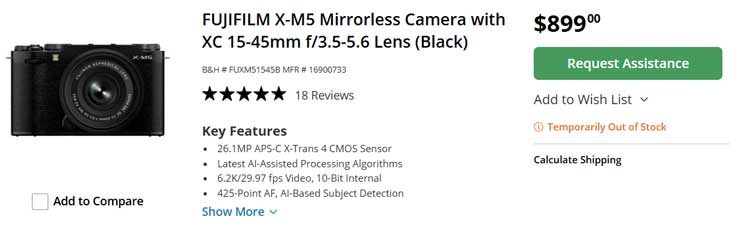
If you are a Fuji lover, then we have a Better Alternative in the Same Price Range
Get LIVE RUMORS –> FACEBOOK | TWITTER | INSTAGRAM to get live news — > get live news + –> See More Fuji Rumors
Imagecredit dpreview.com

|
KEEP THIS BLOG ALIVE - Support New Camera Buy Canon Lenses, Buy Music CD or Digital Camera at amazon it helps this site, and you do not pay anything extra, it is just a way to help support this site.

|