In this article, we will share the best Sony cameras and lenses for 2025. If you are a blogger or a wedding photographer, this curated camera and lens lineup will help you navigate the Sony camera options. I have been a professional photographer for over 10 years. At the start of my career, when I was a student, and for more than 15 years, I have been running TheNewCamera.com. The The New Camera YouTube channel is approximately eight years old, where I regularly test and recommend camera gear. It all started with the Sony A7 III camera back in 2018, and after that, I have tried and tested many Sony cameras. Still, most of the content that we shoot is with the Sony ZV-E10 II and the Sony A7 IV.
So, if you’re looking to buy a Sony camera in 2026, or looking for new lenses, whether you are only a photographer, love to shoot photos, or you are into videography and want a perfect camera to shoot videos, I will take you through my recommendations based on over a decade of professional experience that I have gained through shooting photographs and creating videos.
Best Sony Cameras
So here we are talking about the best cameras available in 2026, specifically within Sony, across different price ranges, as well as a clear set of requirements for photographers and content creators/videographers moving forward, depending upon the type of budget you have.
So before you dive into the guide, the best approach is to narrow down your priorities—the things that you actually need from a camera to complete your workflow. Having a clear idea of what you want will surely help you make a very wise choice within a perfect budget.
Select, read into the guide, and dive into the details of the best Sony cameras available at various budgets in 2026.
Buying Tip for Photographers: Don’t rush to buy APS-C. You can get Fullframe Sensor Under $600
Don’t rush towards new models, specifically within Sony, because the older models are still very capable, especially for photographers. If you are into photography and looking for the best cameras, bodies like the Sony A7 II or Sony A7R are still highly capable, even when paired with a traditional 50mm f/1.8 lens, which is budget-friendly and can deliver next-level performance.
Here, we are specifically talking about photographers. These camera bodies generally become available in the $500 to $600 price range on Amazon.com, obviously in used condition. But the best part is that all these bodies are covered under Amazon’s return policy, so if you are not satisfied, you can return them without any hassle.
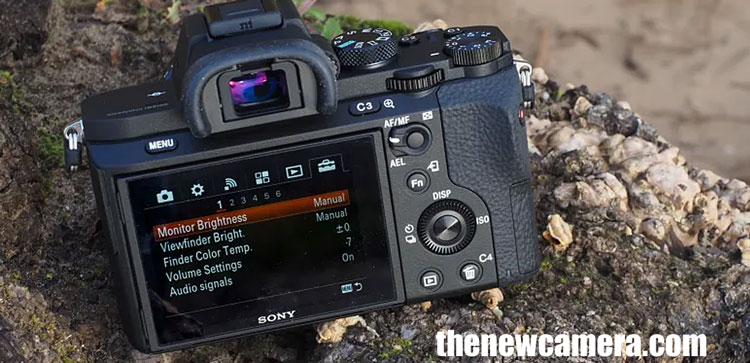
At the time of writing this article, the Sony A7R camera is available at $597, which puts it under the $600 category. This camera uses a 36MP full-frame sensor, with a standard ISO range from 100 to 25,600, and it also supports Full HD video. You need to understand that no other camera delivers this level of image quality at this price range, while still maintaining a full-frame sensor.
Another important point is to invest in lenses. You can start with a 50mm f/1.8 lens from any brand, Like the Meike 50mm f/1.8 with 4.6 rating from 187 customers, which is not very expensive, and then gradually upgrade your lens lineup based on your requirements and budget.
Best Sony Camera of 2026: Sony A1 and A1 II
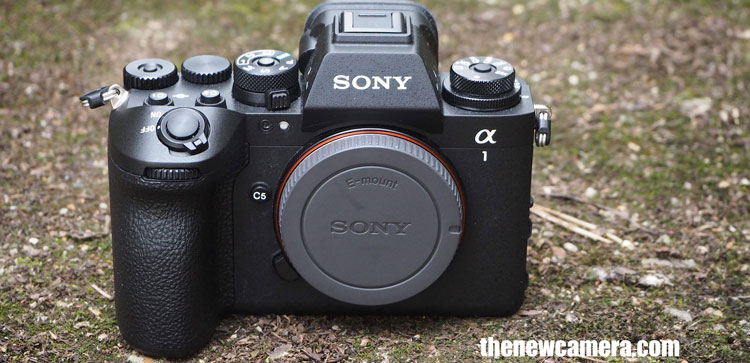
The best flagship camera from Sony is the Sony A1 II. We need to make it very clear that if budget is not an issue, then the Sony A1 is the current flex camera from Sony. It features a 50-megapixel stacked CMOS sensor and is capable of recording 8K video.
This makes it a true flex camera, designed for both videographers and photographers, and ideal for hybrid use cases.
Price: A1 ~$3,999 used; A1 II ~$7,000
Sensor: 50MP stacked full-frame
Key Specs: 8K/30p, 4K/120p, 30fps, AI chip (A1 II).
Sony’s pinnacle: 8K for future-proofing, god-tier AF. A1 II adds ergonomics/AI.
Pros:
Do-everything: 8K video, 50MP stills.
Global shutter vibes (minimal rolling shutter).
Wedding workhorse.
Cons:
Budget-buster.
Overkill for most.
Who It’s For: Pros with deep pockets. My studio A1 nails everything.
Sony A1 Budget Flagship
If you’re looking for budget alternatives, and specifically interested in getting a budget flagship camera, then we do have some good used deals on the Sony Alpha A1 full-frame camera—and here we are specifically talking about photographers.
Since the Sony A1 uses the same 50-megapixel stacked CMOS sensor as the A1 II, and while the A1 II is much improved on the video side with better overheating control and video optimisations, if you are a photographer, believe me, you will get the same image output from the A1 as from the A1 II.
On Amazon.com, you can find used Sony Alpha A1 cameras priced at around $4,094 in very good condition, and they are covered by Amazon’s guarantee, so you can return them if you are not satisfied.
Another good deal is available at B&H, where there are two used Sony A1 cameras listed. One is in like-new condition for $4,199, and the other is available for $3,999.
So, if you’re interested in getting a flagship “flex” camera at a discounted price, these are excellent deals, and once again, this recommendation is specifically for photographers.
Best Sony Camera for High Resolution: Sony A7RV
The super high-end king comes with a 61-megapixel stacked CMOS sensor, and it is the only Sony Alpha-series camera, other than the Sony A1, that can shoot 8K video.
Essentially, the Sony A7R V is the ideal camera for capturing commercial shoots, landscape photography that demands high dynamic range, and extreme detail. If you are a professional photographer, a pixel-peeper, and love to have the best-in-class high-resolution full-frame sensor in your hands, then the Sony A7R V is made for you.
The “R” means resolution: crop-proof landscapes, wildlife, or wedding details. Video’s sharp but not low-light champ.
Pros:
Massive files for heavy editing/cropping.
Flip screen for vlogging.
IBIS + high-res sensor = tack-sharp.
Cons:
Noisy above ISO 3200.
Huge files eat storage.
Who It’s For: Landscape/sports shooters. Paired with A7 V for events.
Budget High Resolution Mirrorless: Sony A7R IV, here are some options
The best part is that the Sony A7R IV uses the same 61-megapixel stacked CMOS sensor, but it cannot record 8K video like the Sony A7R V. So, the point is that if you are a photographer, there is no real need to invest in the Sony A7R V unless you have extra budget. It makes more sense to buy the Sony A7R IV right now.
If you are looking for a more budget-friendly option, the Sony A7R IV (renewed) is available for under $2,000. At the same time,used units are also available below $2,000, but my recommendation is to go with the renewed option, as it has already passed multiple quality checks and is generally more reliable and secure than buying a used unit.
Although both renewed and used options are covered under Amazon’s return policy, so if you find any defect, you can return the product easily and get a refund. In the end, it all depends on your budget—if the budget allows the A7R series, go for it; otherwise, there are plenty of solid alternatives available.
Best Sony for Photo Video Hybrid Shooters: Sony A7V
The Sony A7 V is a recent announcement from Sony and features a newly developed 33-megapixel partially stacked CMOS sensor, paired with the BIONZ XR II image processor. This new image processor carries a built-in, dedicated AI chip, which takes the overall performance and camera intelligence to the next level.
You are getting a very high dynamic range, with an ISO range from 100 to 25,600, especially when using the mechanical shutter, thanks to its dual-gain output (DGO) sensor design, which works not only while shooting video but also when capturing still images.
On the video side, you get oversampled 4K recording, with support for 4K 60p and up to 4K 120p modes, along with 7.5 stops of in-body image stabilization. On top of that, the battery performance is rated for up to 750 shots, or around 1 hour and 20 minutes of 4K 24/30p recording in 10-bit 4:2:2 mode.
Overall, this camera redefines the Sony A7 series lineup quite drastically and brings in multiple meaningful upgrades. While you won’t find fancy 6K or Open Gate recording here—features that are usually reserved for dedicated professional cinema cameras—in terms of real-world usability, this is one of the best hybrid cameras Sony has ever announced to date.
Price: ~$2,900
Sensor: 33MP partially stacked full-frame
Key Specs: 4K/120p (crop), 4K/60p no crop, 30fps burst, AI AF.
Sony’s newest mirrorless blows minds with lightning AF and blackout-free bursts. Half the A1 II price, near-identical performance.
Pros:
No-crop 4K/60p—wide cinematic looks.
30fps photos rival flagships.
Best price/performance in Sony history.
Cons:
No open-gate or internal RAW.
No 6K+ video.
Who It’s For: Serious hybrids. My current favourite—upgraded everything from the A7 IV.
So this is all about the Sony A7 V. If you are looking for a budget solution, you need to understand that in the same price range, you can get the Sony A7R IV for approximately $2,000.
So, instead of investing in the Sony A7 V, if you are a photographer, I would highly recommend getting the Sony A7R IV, which features a 61-megapixel stacked CMOS sensor. As we have discussed already, the Sony A7R IV (renewed) is available for under $2,000. At the same time,used units are also available below $2,000
Coming to budget options, obviously, we have many other camera. $2000 price range, which include the Soni 7C Ma 2 also, but again, if you are a happy shooter, the best fit for you is the Sony A7 R4 camera.
Best Sony Camera for Travel: Sony A7CII
The Sony A7C II is a great travel camera and is roughly the size of an APS-C body, yet it packs a 33-megapixel full-frame sensor, the same sensor we have seen in the Sony A7 IV. Due to its compact and travel-friendly design, it is widely loved by travel photographers and professional content creators.
This is one of the reasons why it is consistently among Sony’s best-selling cameras, especially in the Asian market. Its popularity comes from the fact that it is extremely compact while still being able to record 4K 60p video in 10-bit and 120p in Full HD.
The autofocus system is another major highlight, thanks to AI-based subject recognition, which makes tracking faster and more accurate. On top of that, the up to 7 stops of in-body image stabilisation allow for remarkably smooth handheld shots, and the inclusion of S-Cinetone delivers natural, pleasing skin tones straight out of the camera.
While it does have only a single card slot, the Sony A7C II delivers big performance in a small body, making it a fantastic option for travel shooters, content creators, and photography enthusiasts alike.
Price: Sony A7C II ~$2,200
Sensor: 33MP full-frame
Key Specs: 4K/60p (1.5x crop), 10-bit, AI AF, flip screen.
These share a stellar 33MP sensor for detailed 4K and tack-sharp photos. The A7 IV is the hybrid king (central EVF); A7C II is compact for video (side EVF).
Pros:
Concert/wedding-ready AF—my second body for 100+ gigs.
Gorgeous bokeh and color straight out.
Battery grips for all-day shoots.
Cons:
4K/60p crop kills wide-angle.
No 120fps full-frame.
Who It’s For: First full-frame buyers. A7 IV for photos; A7C II for portability. B-roll from my A7 IV always stuns.
Best Sony Camera APS-C For PROS: Sony A6700
The Sony A6700 camera uses the same 26-megapixel sensor that we have seen in the Sony FX30 and the Sony ZV-E10 Mark II. After using it, I found it to be a real beast and one of my personal favourites, especially if you’re looking for a hybrid camera that excels in both photography and videography.
The major difference you will notice when using the Sony A6700 compared to the ZV-E10 Mark II is that the A6700 has a much better heat-management system. For prolonged video recording, the A6700 body performs more reliably, especially in hot weather conditions, compared to the ZV-E10 II series.
Another big advantage of the Sony A6700 is the built-in EVF and its camera body design, which is clearly aimed at photographers. If you are into photography, prefer a camera with a mechanical shutter, and want a solid hand-grip that makes the entire shooting experience more comfortable, then the Sony A6700 comes highly recommended.
Price: ~$1,400–$1,500
Sensor: APS-C, 26MP (same as ZV-E10 II)
Key Specs: EVF, IBIS, 4K/120p, AI autofocus, weather-sealed.
Sony’s latest A6000-series (successor to the legendary A6000) adds a viewfinder and IBIS for steady handheld shots. It’s a photo-video beast in a tiny body.
Pros:
4K/120p for epic slow-mo without full-frame bulk.
IBIS enables slower shutters for sharp photos.
Underrated gem—best APS-C hybrid value.
Cons:
$300 more than ZV-E10 II for EVF/IBIS.
Menu system is Sony’s typical labyrinth.
Who It’s For: Photographers dipping into video. I used it for concerts—autofocus nailed every beat.
Best Sony Vlogging Camera: Sony ZV10 II
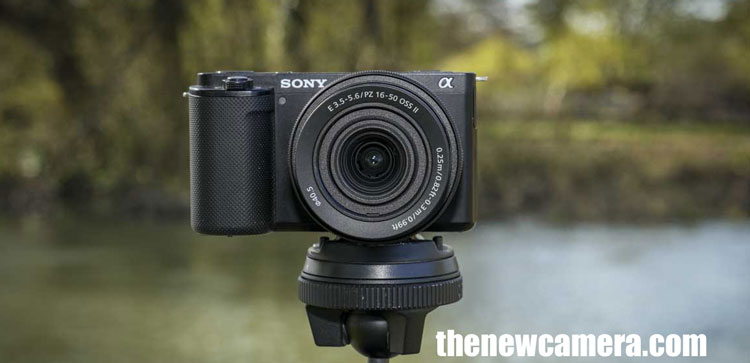
The best part is that Sony has recently upgraded the firmware of the Sony ZV-E10 Mark IIcamera. With this major firmware update, the camera is now able to shoot 4K at 120fps, which was not possible earlier. However, you do have to face a 1.5× crop while shooting 4K 120fps. When shooting 4K 60fps, there is no crop at all.
Yes, the camera is ready for serious use, but the overall heat sink unit and heat management of the ZV-E10 Mark II are not very strong. So, if you are living in a hot and humid country or region, especially during summer conditions, you should definitely consider a different camera.
That said, we have been using this camera for more than 2 to 3 years in our studio, and since we work in an air-conditioned environment, we have never faced overheating issues.
Price: ~$1,000–$1,100
Sensor: APS-C, 26MP (10-bit)
Key Specs: Same as above + 4K/60p, 1k 120p, vertical menu flip, improved touchscreen, better low-light.
Last year’s refresh brings 10-bit color (richer grading) and 4K/60p for silky slow-mo. The sensor matches pricier models, and low-light is a game-changer for night shoots.
Pros:
First Sony with vertical UI—Reels made easy.
4K/120p with 1.5x crop; great for action.
Touch controls feel modern.
Cons:
$300 premium over original—worth it only if you edit heavily.
Still no EVF or IBIS.
Who It’s For: Social creators craving better image quality. In tests, slow-mo b-roll popped—ideal for dynamic content.
Best BUDGET Sony Vlogging Camera: Sony ZV10
If you’re looking for a more budget-friendly option, then we do have a highly trusted camera, the Sony ZV-E10. This camera is being used by many creators worldwide, and we have one in our studio. It has been a very reliable performer from day one.
If you want to shoot 4K 24p or 4K 30p videos for your YouTube channel, the Sony ZV-E10 is still highly usable. Apart from that, even for handheld vlogging, this Sony camera supports gyro-based image stabilisation.
Although the new-generation APS-C cameras like the Sony A6700 feature Dynamic Active IBIS that works directly inside the camera, with the ZV-E10, you need to use Sony Catalyst Browse software later, after shooting, to stabilise your footage using gyro data.
Overall, even in 2026, if you’re looking for a budget content-creator camera, the Sony ZV-E10 remains one of the best beginner mirrorless options available.
Price: ~$700 (body-only)
Sensor: APS-C, 24MP
Key Specs: E-mount (lenses sold separately), 4K/30p, 1080p/120fps, flip screen, no viewfinder, 8-bit color.
Released in 2021 but still a bestseller (our affiliate top pick), the ZV-E10 is the gateway to Sony’s ecosystem. It crushes thumbnails and vlogs with sharp 4K, plus decent photos. Auto modes make it idiot-proof.
Pros:
Affordable entry to E-mount lenses (start with a 16-50mm kit).
No 30-min video limit—perfect for long takes.
Vertical flip for TikTok/Reels.
Cons:
Older 8-bit sensor; colors look dated in log profiles.
Screen-only composition (no EVF).
Who It’s For: Beginners building a kit. I recommend it as your first Sony—invest in lenses, not body.
Best Sony Full-Frame Camera on a Budget: Sony A7II
Maybe you know you want a full-frame sensor but you’re on a budget. Beginners looking for a great budget option should check out TheSony a7 II camera was released in 2014, and currently, most used models in good condition are available foraround $500 on Amazon.com. And as I have said, the best thing with Amazon.com is that you get a replacement warranty with it. If you don’t like the product, you can replace it.
There are multiple sellers there — the reputed ones — who are selling theSony a7 II in good condition. Just look for the ratings, sort it out, and now you have your camera in your hand.
The camera has so many great qualities, including:
24mp full-frame sensor
IBIS (Internal Image Stabilization)
The versatile Sony e-mount
Tilt screen
We are using multiple Sony cameras, starting with the Sony A7 II, as well as the A7 III, and also crop bodies, on our YouTube channel, The New Camera. And when I’m not shooting with my Sony cameras, I am using the iPhone 17 Pro.
The best part is that you can use most of the lenses without any worry since the Sony E-mount is completely open. Mostly in the studio, I use the Sony 50mm f/1.8 with the A7 III, the cheapest prime available for the camera. And specifically with the Sony ZV-E10 II, I am using the Sigma 16mm f/1.4.
The Most Affordable Entry-Level Vlogging Camera: Sony ZV-1F
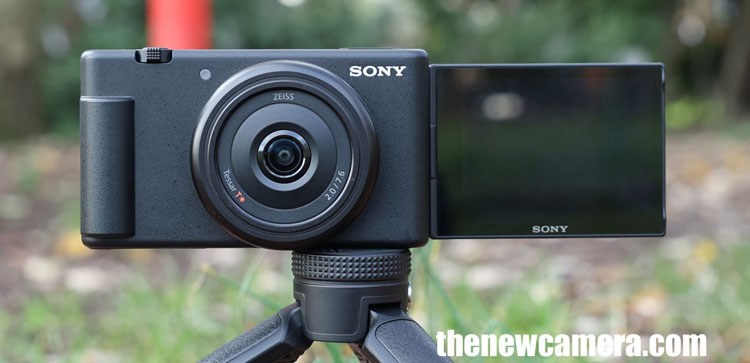
If you are looking for a compact point-and-shoot camera from Sony, then the Sony ZV-1F is the obvious answer. You won’t get the same level of image quality that we usually see from Sony mirrorless cameras paired with prime lenses, but for on-the-go use, it is a lightweight and budget-friendly solution.
Price: ~$500
Sensor: 1-inch, 20MP
Key Specs: Fixed 20mm f/2.0 lens (wide-angle only), 4K/30p video, 1080p up to 120fps, flip-out touchscreen, built-in mic with windscreen, USB-C webcam mode.
Pros:
Pocketable and beginner-friendly—no menu dives required.
Excellent stabilisation for handheld walks.
Product Showcase mode auto-focuses on objects you hold up (genius for reviews).
Cons:
No zoom (digital crop degrades quality).
Autofocus hunts in low light or edges—switch to manual for fixes.
No RAW photos; JPEG-only limits editing.
Who It’s For: Smartphone upgraders or TikTokers. Pair with a $50 grip for run-and-gun. Skip if you need Zoom or pro photos.
So, it’s best to invest in the Sony ZV-E10 with a prime lens. Otherwise, if you are on a very limited budget, you can go with the Sony ZV-1F.
The Sony ZV-1F is Sony’s cheapest new camera in 2026, making it ideal for casual creators who want dedicated camera gear without complexity. Its ultra-wide 20mm fixed lens is perfect for immersive vlogs or talking-head videos, with no extra lenses required. In my testing, the 4K footage looks punchy straight out of the camera, with vibrant colors, making it well-suited for social media content.
So, if you’re looking for a cheap compact camera that can shoot 4K video and allow you to upload videos easily to your vlog or blog, then yes, this is a valid option. However, if you can spend a bit more, I would strongly recommend not investing in 1-inch sensor compact cameras with variable zoom lenses. We have already tested these combinations, and they are not able to deliver the sharpness and image quality that you can achieve even with a Sony ZV-E10 paired with a prime lens.
I hope you found my guide useful, and if you have any questions about a specific camera, leave a comment below! What camera and lenses do you plan to go with? How does the digital viewfinder change the way you shoot?
The big question is which set of products will be affected after the ban (now confirmed in effect as of Dec 23, 2025), and whether the ban is limited to drones only. Or does it also involve action cameras, pocket cameras, as well as gimbals and microphones? So, these are the biggest questions we have right now, and in this article, we will thoroughly discuss the list of products, specifically the DJI product series, that are directly affected by this ban. As of December 23, 2025, the FCC has added DJI to its Covered List, triggering the ban on new approvals for wireless-enabled products.
This will result in an import and certification blackout for DJI, and be assured that this is not a total gear wipeout. Your DJI Mini 4 Pro or the DJI inventory stock that you see will not suddenly vanish from stores. However, since the ban has been imposed, imports will be paused, and these drones will slowly become scarce. Early reports show stock sell-outs at major retailers like Amazon, with resale prices up 20-50% already. And not only drones, but other products will also be affected, since the FCC ban is not limited to drones only. Prices will touch sky-high levels, not only for new products but also in the resale marke t (e.g., Mini 4 Pro listings on eBay now 30% above MSRP). Those who already own or stock DJI drones will sell those units at very high prices, since obviously, there is no true alternative to DJI for now. Approximately 70% of the US drone market is dominated by DJI, so the ban is going to impact the entire drone market of the USA very deeply.
And not only that—the video camera market/camera market will also be affected, since the Pocket series is dominating the entire video camera market for content creators, and a lot of sports and action lovers use DJI Action cameras to record their content on the go. Here at thenewcamera.com. We have analyzed all the facts and figures, and by putting it all together in the article below, you can get a clear idea of which specific series of the DJI are affected by the ban. Let’s dive into the details.
Update: DJI responded on Dec 23, calling the decision ‘misguided’ and committing to fight for exemptions while warning of ecosystem disruptions.
Quick Background: Why the DJI FCC Ban 2025-2026 Hits Drones, Cameras, and Gimbals – And What It Really Means
Is the DJI ban hitting cameras and gimbals too? It comes from two U.S. laws: NDAA Section 817 and the FCC’s “Covered List.” The concern is that DJI (a Chinese company) might secretly send user data to China, posing a risk to U.S. national security. However, audits and security checks have found no proof of spying. Adam Welsh, DJI Head of Global Policy First of all, you have to understand that the government was supposed to fully review DJI by December 23, 2025. Although DJI has gone through some previous audits, and at that time, no flaws were found.
Adam Welsh, DJI Head of Global Policy
But as we all know, no full review has been completed by December 23, and because of that, automatic restrictions are implemented on wireless technology—specifically Wi-Fi, Bluetooth, and other radio transmitters—across approximately 90% of their lineup (now confirmed via FCC’s Dec 22 update). DJI operates within its own ecosystem, and its devices—especially microphones—automatically pair with gimbals. Even smartphone gimbals rely on wireless connections. In short, almost every DJI device contains some form of wireless connectivity or radio transmitter. Although these devices use radio transmission only to connect with other accessories—for example, the Osmo Pocket 3 camera uses wireless transmission to connect with wireless microphones or to transfer data wirelessly to a smartphone— all such wireless transmissions fall under the category of concern because they have not been fully audited. And if a product is not audited, it is treated as if it may contain a flaw under the current regulatory framework. Bottom line: New U.S. sales halt, future models ( Pocket 5, those who not cleared the FCC) get skipped, and future support (firmware, parts) fades with time and as the stock of parts gets exhausted. If you own a product or already have an Existing kit? Yours to use forever – no FAA fines. Confirmed: The ban is non-retroactive, so pre-approved stock remains legal. But for creators, it’s a creative curveball: 70-80% of pros in the USA somehow rely on DJI’s ecosystem. Recent X chatter from police and creators echoes this, with concerns over parts shortages.DJI’s Dec 23 statement echoes ‘time is running out’ for US access; Pocket 4 approvals succeeded pre-deadline. At TheNewCamera.com, we are tracking the FCC leaks closely. Our product list is not only up to date; it also contains the names of products that are expected to arrive in the next 3 to 6 months. So, this guide will give you a complete idea of what and how the ban is going to affect you. As of Dec 30, stock for cleared items is depleting fast—buy soon.
Update: The ban is confirmed non-retroactive (best-case scenario). We’ve retained the tables for context, but the retroactive one is now hypothetical. Here, we have split the information into two separate tables to make it clear what type of ban will be implemented and its expected effects. The non-retroactive ban is now active: Products with pre-Dec 23 FCC grants remain available.
Here, we have split the information into two separate tables to make it clear what type of ban will be implemented and its expected effects. So, if it is a non-retroactive ban, as we have already discussed in our previous article, then obviously those products that have already cleared FCC registration will remain available to U.S. citizens. So, at the very beginning, let’s discuss what a Non-retroactive ban will do. Take a look at the list below.
Update: The ban is confirmed non-retroactive (best-case scenario).
The non-retroactive ban is now active: Products with pre-December 23 FCC grants remain available. Updated as of 4:22 am, Tuesday, 30 December 2025, Greenwich Mean Time (GMT)
1. Non-Retroactive Ban: FCC-Protected Products (Safe for Import & Sale)
As of Dec 30, cleared items like Neo 2 and Action 6 are selling out on Amazon—prices up ~25%. So basically, what we are talking about is that products that have already cleared FCC regulations will remain available in the U.S. market. This is the active scenario—relief for owners, but act fast on stock. But there will be no upcoming future products from DJI that are unable to clear the FCC before December 23, such as the DJI Action 7 camera or the DJI Pocket 4 Pro. (Note: Standard Pocket 4 cleared; Pro variant unconfirmed/blocked post-Dec 23.) Those versions of products that are not able to make it through the FCC will not be able to make it to America. So, it is a slow process, but slowly, DJI becomes obsolete in the market.
Adam Welsh, DJI Head of Global Policy, warned of Retroactive Risks explained to us during an interview with iphonedo channel
2. Retroactive Ban: Everything Hits the Wall
Update: No retroactive activation as of Dec 30, 2025 —Welsh’s warning remains precautionary.
Adam Welsh, DJI Head of Global Policy, warned of Retroactive Risks explained to us during an interview with iphonedo channel In a December 16, 2025, interview with YouTuber Faruk Yalcin (iPhonedo), Welsh described the FCC’s October 28 rule as a “trap door” that could enable retroactivity, potentially wiping out DJI’s entire U.S. catalogue without affecting owned devices’ usability. (This ‘trap door’ risk has not materialized; focus remains on new approvals.) So, it is very easy to understand that during a retroactive ban, all the existing DJI products in the market are going to be wiped out very soon. If you already own DJI products, it is not going to hamper their usage. But if it gets activated in any way or by any chance, then for sure, DJI will be wiped out from all stores, including all of its products.
Product
FCC Grant Date / Rumored Launch
Affected?
DJI Mini 4 Pro
Sep 2023 / Released
Yes
DJI Mavic 3 Pro
Apr 2023 / Released
Yes
DJI Avata 2
Apr 2024 / Released
Yes
DJI Mini 4K
Apr 2024 / Released
Yes
DJI Neo
Sep 2024 / Released
Yes
DJI Air 3S
Oct 2024 / Released
Yes
DJI Neo 2
Nov 2025 / Now on Amazon
Yes
DJI Osmo Action 6
Nov 2025 / Now on Amazon
Yes
DJI Matrice 4T
Jan 2025 / Enterprise release
Yes
DJI Matrice 4E
Jan 2025 / Enterprise release
Yes
DJI Flip
Jan 2025 / Folding design
Yes
DJI Mavic 4 Pro
May 2025 / Cine-grade lenses
Yes
DJI Osmo Pocket 4
Nov 26, 2025 / Cleared FCC
Yes
DJI Avata 360
Nov 19, 2025 / Cleared FCC
Yes
DJI Lito X1
Nov 29, 2025 / Cleared FCC
Yes
DJI RS 5 Pro
Nov 2025 / Cleared FCC
Yes
DJI Power 1000 Mini
Nov 2025 / Cleared FCC
Yes
DJI Mic Mini 2
Dec 3, 2025 / Cleared FCC
Yes
DJI Osmo FrameTap
Dec 17, 2025 / Cleared FCC
Yes
DJI Osmo Mobile 8P
Dec 16, 2025 / Cleared FCC
Yes
DJI Mavic 5
2026 / Post-ban concept
Yes
In this doomsday alternate universe (confirmed not active per FCC rules), prior FCC approvals mean zilch. All DJI imports halt—kiss goodbye to restocks of your DJI Neo 2 or Pocket 4 . U.S. stock sells out fast, then black market prices skyrocket.
With the confirmed non-retroactive ban, 2026 drone/action cam users get a 1-2 year buffer—supply holds for cleared models. Product supply is going to remain active for the next one or two years until DJI gets phased out with its older products and other competitors take over (e.g., Skydio stocks up 20% post-ban announcement), and during that time period, you can still access and buy those products. If there is a non-retroactive ban and all already cleared FCC products remain on the market as they are now, that is also great news.
The best thing to do is to buy your most loved products as soon as possible to avoid workflow issues that you might face without these DJI products, especially if you are already using them in your work. Resale sites report 30%+ premiums—don’t delay. Otherwise, start finding good alternatives, like Skydio 2+ for autonomy or Insta360 X4 for 360° action. The DJI saga underscores the tension in global tech supply chains, but innovation won’t stop. What’s your must-have DJI product amid the ban’s rollout? Drop a comment below or tweet us @TheNewCamera.
GET LIVE NOTIFICATION, Select Your Trusted Source GET LIVE NOTIFICATION Click ON Check BOX for Latest NEWS and Rumors
The article “DJI Osmo Pocket 4 2026 Rumours: Arrival Date, Leaked Prototypes Reveal Standard and Pro Variants” was UPDATED ON by thenewcamera.com team on8:52 am, Sunday, 4 January 2026, Greenwich Mean Time (GMT) | You can also follow us on Our Official Social Media HandlesFACEBOOK | TWITTER | INSTAGRAM to get live news — > DJI Rumors
Nikon Z RC rumours are now heating up, and fresh leaks suggest that the Nikon video powerhouse’s budget entry-level APS-C dedicated expert video camera is set to arrive in 2026. If we discuss the camera ZRC, it carries forward the video-first DNA of the ultra-popular Nikon Z50 II, featuring an ultra-portable body design similar to that of the Nikon Z30. To reduce production costs and simplify the production line, it does not feature any mechanical shutters or electronic viewfinders. The camera is equipped with 4K 60p recording capability, the same as found in the Nikon Z50 II, and supports 10-bit internal recording simultaneously. Red colour profile supports professional recording demands. If the whispers hold, expect a Nikon Z RC release date in Q4 2026, priced at a creator-friendly $649-799 body-only—mirroring the Canon EOS R50V launch tag for maximum market disruption.
Nikon Z RC Design Rumours: Z30 Slimness, No Compromises on Portability
The Nikon Z RC camera body will be approximately the same as what we have already seen with the Nikon Z30, but will be much improved in terms of control, overall design, and heat management, refined for 2026 creators.Better to say it’s a mini ZR,
Nikon ZRC Key rumoured design perks:
Front weather-sealing for light-duty adventures.
ZR-inspired dials and a dedicated video button for intuitive handling.
Front / Rear Tally lamp to signal recording—bye-bye awkward cuts.
SD slot and USB-C PD charging for seamless workflows.
Battery? The same EN-EL25a as the Z50 II, promising ~330 CIPA shots or 75 minutes of 4K video.
Nikon Z RC Sensor and Processor Leaks: 20.9MP DX with EXPEED 7 Muscle
Then the Nikon Z RC is expected to use the same 20.9MP sensor that we have already seen in the Nikon Z50 II, but this time, much much-improved AF by using the Nikon Z9 AF algorithms to process faster AI AF tracking of moving subjects and stick to the subject’s face despite multiple distractions while capturing video.
To make it very clear, it has been reported several times that Nikon is testing prototypes of a 20.0 Mp Dedicated Entry Level Cinema camera to compete against the Canon R50V, as well as 26 – 33MP class DX-format camera for hybrid shooters and photographers (A6700 competitor), which we have also covered in our Nikon Z90 camera post. So, for now, a higher-resolution sensor is expected to arrive in a Nikon Z90 body in 2026, but not in the Z RC
No IBIS (in-body stabilization) per the leaks, but lens VR compatibility covers you. Noise reduction algorithms promise cleaner high-ISO files, making it a steal for low-light environments.
Nikon Z RC Video Specs Rumors: 4K/60p 10-Bit from Z50 II, No Overheating Drama
The report that we are getting from someone who has already used the prototypes of this DX-format camera, but keep in mind these are early prototypes being tested in the wild and are not part of the final production line. Its is yet to be approved by Nikon’s marketing team,
The Nikon Z RC rumours confirm a full transplant of the Z50 II’s cinematic toolkit into this tiny body. Say goodbye to the Z30’s 8-bit limits—hello, 4K UHD 60p (1.5x crop for gimbal stability) or uncropped 30p in 10-bit H.265. N-Log and HLG profiles enable pro grading, while Full HD 120p unlocks 4x slow-mo silkiness.
Nikon ZRC Standout rumoured video features:
125-minute max recording without thermal throttling.
Waveform/zebra monitors and focus peaking for exposure ninjas.
Product Review mode: AI auto-framing for effortless vlogs.
Mic/headphone jacks—no external rig required.
These Nikon Z RC Additonal video specs could make it the go-to for 2026 content creators, outpacing rivals in bit-depth without the bulk.
Nokia OZO Audio (5 Pickup Patterns): Software-driven spatial audio with omnidirectional, cardioid, supercardioid, bidirectional, and figure-8 patterns for immersive soundscapes in H.265/H.264 modes; integrable via app/firmware like existing wind noise reduction.
Breathing Compensation: Automatically corrects lens “breathing” (focal length shifts during focus pulls) for smoother, cinematic focus transitions.
Advanced LUT Management (Up to 10 Custom LUTs): Load and apply multiple 17/33/65-point LUTs for real-time color grading in Log modes (e.g., N-Log, RED Log3G10) at various frame rates.
Dual Base ISO: Two native ISO settings (800/6400) for optimal low-light noise performance in Log profiles, reducing grain in shadows/highlights.
Autofocus and Connectivity: AI Tracking Meets Creator Tools
Nikon’s 209-point hybrid AF with 9-subject detection (people, animals, birds, vehicles)—Eye-Detection locks onto eyes even in video chaos. Touch AF on the flip screen keeps it beginner-proof, while customizable Fn buttons speed up quick tweaks. Using inherited algorithms and deep-learning technology from the Nikon Z9, the Nikon Z RC will also feature an improved 3D-tracking system that seamlessly follows moving subjects, along with the introduction of more vlogging-speci
Nikon Z RC Price and Release Date
The Nikon Z RC price rumour? A body-only $649.99-$799spot-on spot-on with the Canon EOS R50 V’s April 2025 debut. Kit with the 16-50mm VR lens? Around $849. This aggressive pricing slots it below the Z50 II while undercutting Sony and Canon in the APS-C video wars.
As for the Nikon Z RC release date, leaks point to Q3/Q4 of 2026. With bundles including extra batteries.
Still, a lot of things are being kept as a surprise, and it is not the right time to reveal every detail about the camera in public. The information we have now is coming from someone who has tested the prototype; once the review units get distributed among photographers and cinematographers, more information via various leaks and sources is expected to surface across different channels.
About Nikon’s full-frame camera lineup, our sources say that two more professional full-frame cameras are currently being developed inside Nikon’s labs, and most probably we may see a glimpse of one at the very end of 2026. It could come in the form of a teaser, not an official announcement, but yes, after the successful market response of the Nikon ZR, Nikon has decided to expand its cinematography lineup.
The article “Nikon Z RC Rumors 2026: Leaked Specs, Price, and Arrival Time” was written by thenewcamera.com team on 9:01 am, Sunday, 21 December 2025, Greenwich Mean Time (GMT) | You can also follow us on Our Official Social Media HandlesFACEBOOK | TWITTER | INSTAGRAM > get live news + Nikon Rumors 24X7
Creative Image: Starting from Pocket 4 PRO, Standard Pocket 3, and Standard Pocket 4
The DJI Osmo Pocket series has revolutionised handheld content creation, and many professional content creators today utilise the Osmo Pocket 3 camera, which features a 1-inch sensor and 4K video recording capabilities, along with advanced AI autofocus tracking.
According to recent leaked images, the DJI Osmo Pocket 4 appears to show two different prototypes being tested in the wild alongside the Pocket 3. Now, these two distinct variants of the Pocket 4 appear to have two different types of cameras.
One variant features the long-rumoured dual-lens setup, a larger camera module with a heavier head, which can be clearly seen and noticed. The other variant has a single camera module with clearly visible buttons below the display screen and appears to be less portable.
If you remember the leaked picture from the Barcelona shoot, it actually resembles the single-lens Pocket 4 variant, which features a single camera unit with dual buttons below the display.
As of December 19, 2025, no official announcement has been made by DJI; however, leaks suggest a potential announcement in early 2026.
Recently shared image of Pocket 4 / Pro
Leaked Prototypes Spotted: Pocket 3 Next to Two Pocket 4 Variants
The Leaked image provides the clearest picture of the DJI Pocket 4 camera yet, but interestingly, we are witnessing two different variations of the Pocket 4 camera, which are very clearly visible. Both prototypes are being tested in the wild, as seen above.
The Middle Device (Reference): It is very clearly visible that the middle camera is the Pocket 3, and we can clearly identify it by the rotating mechanism, the type of screen, and the standard camera unit that we have seen multiple times before. However, the two different variations on the left and right sides are clearly new and do not have any logo, trademark, DJI, or Osmo name on their bodies, which also suggests that they are prototypes, not production-line models.
The Left Prototype (The Rumoured “Pro”): The next model is the most discussed and most talked-about, mainly because of its dual-lens setup and heavier head, which is obviously and significantly bulkier than the previous-generation Pocket 3 gimbal. This specific Pocket 4 Pro clearly resembles multiple previous leaks that were reported by trusted leakers like Jasper Allen. Without a doubt, DJI’s dual-lens Pocket 4 model is already in the announcement pipeline, and we are almost certain to witness its official announcement in 2026.
The Right Prototype (The “Standard” Successor): This unit closely resembles the Pocket 3 form factor but appears to house a larger lens element. This fits the description of the rumoured single-camera setup featuring an upgraded sensor / Image processor.
Whether we look left or right, both Pocket 4 prototypes feature a redesigned gimbal. The Pocket 4 standard upgrade, located on the extreme right side of the image, features a slimmer gimbal design with additional buttons below the display, as previously mentioned. On the extreme left side, we see the Pocket 4 Pro, possibly the most advanced and heaviest upgrade of the Pocket 3, featuring a heavier gimbal, a single button below the display, which is clearly visible, along with a larger size, a heavier gimbal head, and a bigger camera unit.
So overall, not only are the camera units different, but we also see variations in the chassis and gimbal design of the camera.
Image of Standard Pocket 4 Standard edition – leaked images surfaced on the web, and according to the source, the picture is coming straight out from a promotional video shoot in Barcelona. The image you see below is a screenshot of a behind-the-scenes (BTS) video. The image is really one of the clearest pics of the Pocket 4 prototype and also hints at some refinements in the design and overall layout of the camera, as you can notice the button control layout has been changed slightly
Latest DJI Pocket 4 Standard Retail BOX Leaked – Announcement is expected soon
DJI Osmo Pocket 4 (Standard Version): Rumored Specifications and Features
The DJI Osmo Pocket 4 Standard camera is expected to feature a single-sensor-based camera module, possibly using the same 1-inch sensor with approximately 50-megapixel resolution that we have already seen in the Pocket 3.
However, apart from that, it is expected to receive major upgrades in the internal core specifications of the camera. Take a look at the rumoured specifications of the Pocket 4 Standard upgrade.
Key rumoured specifications for the DJI Osmo Pocket 4 (standard):
Sensor: Upgraded 1-inch CMOS loaded with 50 million pixels for superior detail and low-light performance.
Video Capabilities: Features 6K video recording, 4K at 120 frames per second, and advanced slow-motion options.
Weight: Approximately 190 grams, maintaining portability.
Battery: Around 20% larger capacity than the Pocket 3 for extended shooting sessions.
Other Upgrades: Improved stabilization, 10-bit D-Log M color profile, and Wi-Fi 6 connectivity.
This variant aims to deliver flagship image quality in a simpler, more affordable package without the complexity of multiple lenses.
DJI Osmo Pocket 4 Pro: Dual-Lens Setup for Optical Zoom and Versatility
The DJI Osmo Pocket 4 Pro camera module, featuring a dual-lens setup, is being referred to as “Pro” since it is very clear from testing that DJI is evaluating two different Pocket-series camera variants for release. There is a high probability that we may see a standard model followed by a Pro model announcement, one after another.
The dual-camera setup appears to be very similar to that of the DJI Air 3S drone. Take a look at the specifications of the DJI Osmo Pocket 4 Pro camera.
Dual-Lens System: A primary wide-angle lens paired with a telephoto lens for true optical zoom (potentially 2x-4x without quality loss).
Sensor Details: Primary 1-inch sensor combined with a secondary sensor (possibly 1/1.3-inch or square format optimized for Ultrawide shoot).
Video Enhancements: Up to 4K at 120fps for ultra-slow-motion, alongside 6K/60fps options.
Potential Accessories: Rumors point to a new remote control accessory (similar to a “frame tap” style handler) designed for the Pro model. This would allow remote operation of the longer focal length telephoto lens from a distance, ideal for vlogging or dynamic shots where holding the gimbal isn’t practical.
The dual-lens approach addresses a common Pocket 3 limitation: reliance on digital zoom. It could enable seamless switching between wide and telephoto perspectives, making the Pro variant a game-changer for professional creators.
For Now, Only 1 Pocket 4 Coming on Jan 2026: Here is why
Before we discuss the announcement timeline of the DJI Osmo Pocket 4 / Pocket 4 Pro, which have appeared during field testing, first of all, we must make it clear, as we have already said earlier, that a company tests several prototypes before a product enters the production line.
The FCC ID 2ANDR-OP04 is tied to the grantee SZ DJI Osmo Technology Co., Ltd. So, for now, we have only 1 (one) FCC registration related to the DJI Osmo Pocket 4 series camera. As I am writing this post on December 19, 2025, and while keeping this data fully up to date, we have not found any separate Pocket 4 Pro registration so far.
Retailer leaked the Stock of Pocket 4, they are just waiting for the DJI green flag / Announcement to start selling the Pocket 4 camera
DJI Pocket 4 Arrival Date
This sets a very clear indication that, as of now, there is only one Pocket 4 camera in the pipeline. So, it is up to DJI which camera variant they are about to introduce. Sources suggest that the Standard Pocket 4 Edition will arrive early, before the PRO at the end of Feb-March 2026.Its confirmed now only single lens varient based camera is coming the standard version and the Dual Lens version varient is not coming anytime soon for now
There are some rumors that the PRO Edition of Pocket 4 will arrive after April 2026, not in April 2026. And we are also tracking that rumor/information, and will post an update as soon as we get any new information.
Announcement is Delayed, here’s why
A full DJI Pocket 4 release in December 2025 is off the table. And the announcement is delayed till Feb-March of 2026. It’s really a bit disappointing for all of us who were waiting to pre-order Pocket 4 before Christmas.
Why the delay?The exact reason, as mentioned by photorabz, is that the Accessories are the culprit (One Frame TAP?). As we all know, the Pocket 3 depends on a lot of external accessories, which include wireless mics, extra batteries, and modular mounts – DJI’s ecosystem thrives on these add-ons, and rushing them could lead to quality issues.
Stay tuned to thenewcamera.com for the latest updates – an official announcement could drop soon. If you’re in the market now, the Osmo Pocket 3 remains an outstanding choice with deep discounts amid these rumors.
GET LIVE NOTIFICATION, Select Your Trusted Source GET LIVE NOTIFICATION Click ON Check BOX for Latest NEWS and Rumors
The article “DJI Osmo Pocket 4 2026 Rumours: Arrival Date, Leaked Prototypes Reveal Standard and Pro Variants” was written by thenewcamera.com team on 9:49 am, Saturday, 20 December 2025, Greenwich Mean Time (GMT) | You can also follow us on Our Official Social Media HandlesFACEBOOK | TWITTER | INSTAGRAM to get live news — > DJI Rumors
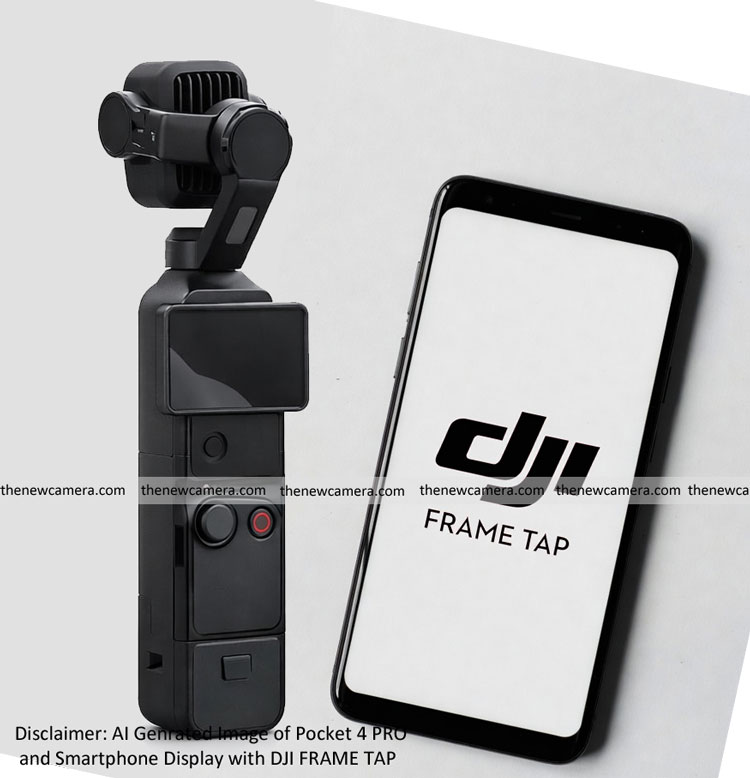
The DJI Osmo Pocket 4/Pocket 4 Pro camera is arriving with some additional accessories, one of which is the Osmo FrameTap. What is this? A fresh FCC filing spotted today reveals the DJI Osmo FrameTap, a kind of mysterious wireless remote control that is soon going to be introduced inside the DJI ecosystem. Specifically, it has been built for the DJI Osmo Pocket 4, as well as to be integrated with other action cameras and 360 cameras available.
DJI is still trying to clear out its products in the FCC ID days before it enters a potential U.S. import ban deadline. In this article, we are going to cover all the details related to the Osmo FrameTap FCC ID filing, as well as some of the leaks related to it, so let’s dive into the details.
What Is the DJI Osmo FrameTap? Unpacking the Latest FCC Surprise
Now, the DJI Osmo FrameTap was actually spotted on December 17, 2025, and it has been confirmed after recent findings that it is a kind of unreleased accessory from the DJI Osmo Division (SZ DJI Osmo Technology Co., Ltd.). This isn’t a standalone camera, but a compact wireless remote control (FCC ID: 2ANDR-RC508) designed for seamless integration with portable imaging devices like gimbals and action cameras.
The registered document shows compliance with FCC Part 15 rules for intentional radiators; it likely leverages Bluetooth and Wi-Fi for low-latency pairing, making it ideal for on-the-go creators.
AR The DJI FrameTap is clearly intended to expand the ecosystem in a much larger manner, at the very same time just before the U.S. ban is imposed on new FCC ID registrations. This is an attempt to make sure the to-be-announced Pocket 4 / 4 pro gear, as well as its related accessories, get clarification from the registration agency.
These are post-ban attempts, and if the retroactive ban does not apply to them, there is a chance that Pocket 4, alongside its accessories, may get approved after the official announcement.
One thing is for sure: when you have a camera phone in your pocket, you will need an extra remote accessory to control your camera from a distance, and that is a quite obvious requirement. So, for that, yes, FrameTap is coming.
Before we wrap up the DJI FrameTap, we are continuously looking for further updates and information, and as soon as we get any related details on FrameTap, we will be updating it on TheNewCamera.com.
Creator Tip: Stock up on Pocket 3 bundles now – check Amazon deals or our best DJI drones under $500 guide. The ban won’t kill DJI overnight, but it could reshape availability.
Wrapping Up: DJI’s 2025 Legacy and What’s Next for Creators
So this is not just regulatory paperwork. It’s an attempt by DJI to make sure all these products and related accessories clear their FCC IDs before the official ban, so they remain relevant and ahead of the competition going into 2026 or even 2027, before DJI potentially finds another way to revoke or bypass the ban.
But even in the best-case scenario, DJI would still not be allowed to announce new products in the United States of America after Dec 23, 2025. So again, this raises a big question: even if DJI is clearing FCC ID registrations, it does not solve the problem alone, that they must officially announce these products before December 23, 2025, to remain eligible to release them in the United States?
What do you think—will the ban stick? Drop your thoughts in the comments, subscribe for real-time alerts, and follow us on X @thenewcamera for leak drops.
Images: FCC screenshot courtesy @Saracool_drone (alt: “DJI Osmo FrameTap FCC label December 2025”); Pocket 4 render (alt: “Leaked DJI Osmo Pocket 4 dual-camera design”). All rights reserved. Affiliate links may earn commission.
The article “DJI Osmo FrameTap Leaked via FCC – Wireless Remote Coming with Osmo Pocket 4?” was written by thenewcamera.com team on8:04 am, Friday, 19 December 2025, Greenwich Mean Time (GMT). | You can also follow us on Our Official Social Media HandlesFACEBOOK | TWITTER | INSTAGRAM to get live news — > DJI Rumors
Okay, we all know the DJI ban is coming, but what exactly will happen after December 23, and what type of trouble will DJI consumers face after the ban? Most importantly, what type of ban will be imposed? Is it a retroactive style ban? We will answer all these questions clearly in this post, as the answers are directly provided by DJI itself. Thanks to Faruk from iPhonedo for conducting an exclusive interview with DJI’s Head of Global Policy, Adam Welsh. This analysis breaks down the post-ban scenarios, real-world impacts, and steps you can take. Searching for NDAA DJI audit update, DJI covered list effects, or US drone ban consequences? Here’s your roadmap.
As I write this article on December 17, 2025, DJI’s pleas to agencies like the NSA, FBI, and DHS have gone unanswered, meaning the trap door has been widely open, and now DJI is left with no option. So that’s a really disappointing thing that, even without an audit or anything related to that in a country like the United States of America, DJI has to face such a worst-case kind of situation.
Best-Case Scenario: No New DJI Drones, But Existing Gear Stays Airborne
I have heard they are discussing the best-case scenario. Adam says that when there is no retroactive ban imposed, it means that if added to the FCC’s Covered List on December 24 without retroactive enforcement, then there will be some cosy atmosphere, and the existing DJI products—those which are already listed for sale—will remain available to consumers out there. That means, even after the ban, you can still buy the already announced DJI products in the United States of America. Let’s have a clear look at what he has said during the interview
Adam Welsh (from our interview): “We would no longer be able to launch new products because the FCC certifies new products… every new product we launch that has any kind of radio frequency certifications… would require a new FCC certification. That would no longer be available to us… our currently certified product ranges would still be allowed for sale, and so you would still be able to buy those products and you would still be able to get those products serviced through us.”
So now you know what a regular ban will do to DJI if it is not a retroactive ban. So even after the ban, the atmosphere will remain a bit okay for DJI users, and you can still buy the already announced drones from DJI, as well as their other products, from online or offline stores.
Servicing holds initially via imported parts, but Adam Welsh warns: “If a product is fixable, we can potentially… bring parts in… But quite often if a product is not fixable, we replace it with a new product. And so if that had been retroactively removed, we weren’t able to bring those products into market… then we would have a problem.”
Economic ripple? $116 billion in US activity at risk, with 460,000 jobs tied to DJI ecosystems. Two-thirds of drone service providers say they’d shutter without DJI.
Retroactive Ban: Worst-Case Scenario
Getting into the deeper details, yes, a retroactive ban on DJI, meaning revoking the FCC licenses of every product DJI has ever announced in the United States of America. So the result will not be so good if the retroactive ban is imposed, and DJI products will get removed online and offline in any stores at the very same time. So, let’s make it clearer what Adam said about the retroactive ban
Adam Welsh: “There is a rule change the FCC voted on on October 28th that allows the FCC to make the covered list retroactive… that would not mean that they would retroactively… descertify the products you have… if you own a DJI product, you would still be able to fly it. But… they could… remove the certifications that we need to market and sell those products… that would basically remove potentially all of DJI products from the US market if they went through that process.”
Retroactive but not for owners: Yes, that’s the best part—if you already own a DJI product, you do not need to worry. If you are going to buy any of the products before December 23, you don’t have to worry a bit, since whatever type of ban is imposed on DJI, it is not going to affect the product that you already own in any way.
Correct – revocation would only impact importation, marketing, and sales (for example, blocking new stock or advertisements). Existing DJI products that are already owned, imported, and certified will remain fully operational. You can continue flying, using, and even repairing them without any issue; there will be no “descertification” or grounding of personal gear.
Aspect
Best-Case Scenario (No Retroactive Ban)
Retroactive Ban
New Products
Cannot launch or certify new DJI drones/products
Cannot launch or certify new DJI drones/products
Existing Products Sales
Still available for sale (already certified stock)
Removed from market; no sales or importation of stock
Owned Products Use
Fully operational; can fly/use/repair
Fully operational; can fly/use/repair
Servicing/Parts
Possible via imported parts; replacements may be limited
Possible for repairs; no new replacements available
Market Impact
Continued availability of current lineup; milder economic hit
Complete removal from US shelves; severe economic ripple
Security Myths Busted: Why the Ban Feels Like Protectionism, Not Protection
Adam said: “Nobody… has found any kind of smoking gun… if you really think there’s something wrong with DJI, then you should want the audit to take place.”
I was really surprised to hear when he said that there has been no evidence, and clearly he has said no evidence of spying, despite years of scrutiny. Nobody was able to discover any type of law or security breach in several of the audits that have already been made.
Yes, I am with DJI, specifically at TheNewCamera.com. We also ask people to help DJI by signing or filling out the form on the website and tweeting in favour of DJI, and whatever you can do from your side to make your voice heard by the US congressmen.
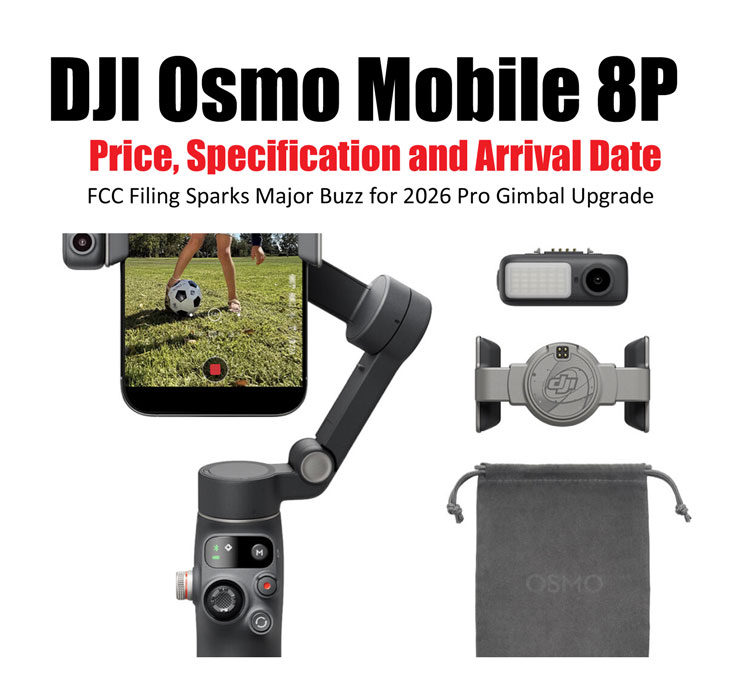
The DJI Osmo Mobile 8P has been spotted in a fresh FCC filing, confirming that the next-generation 8P gimbal is on its way. Most importantly, if you are a content creator, blogger, or a smartphone filmmaker and you always have the itch to get the next big thing in your hand, or the best gimbal, better to say the budget gimbal available in the market, then obviously the most advanced upgrade with some Pro twist is finally coming.
A brand-new FCC certification has been uncovered for the DJI Osmo Mobile 8P (model DS508, FCC ID: 2ANDR-DS508), so the best part is that the 8P has already crossed the biggest hurdle – FCC ID registration. Now, after clearing the registration, DJI has approximately 180 days to announce the gimbal.
Now that you have the timeline, let’s dive into the details to explore everything further. And let’s unpack the DJI Osmo Mobile 8P rumors, specs, leaks, expected price, and release date based on the latest intel. If the Osmo Mobile 8 already wowed with 360° pans and pet tracking, the 8P could be the ultimate upgrade for creators.
Breaking Down the Leak: DJI Osmo Mobile 8P FCC Filing – What Does It Mean?
Just after having the details via the FCC ID, thanks to SaraCool_Drone for finding it out. Now, as we all know, no juicy external photos are available yet. Obviously, we can see only some parts of the gimbal, and now I’m waiting for sources to bring out the real and clear pictures of the upcoming gimbal.
The most important thing is that we have already seen with the DJI Osmo Mobile 8, a 360° rotating arm for a full swing shot. Now what’s next? What set of major improvements can we expect to witness in the Osmo Mobile 8P gimbal? Let’s see in the rumored specification list
Expected Specifications of the DJI Osmo Mobile 8P Gimbal
Based on October–December 2025 rumors from leaks and DJI patterns, the 8P isn’t a full redesign but focuses on pro-level refinements for vloggers/creators.
We have already seen a lot of improvement in the Osmo Mobile 8’s blueprint (360° rotation, ActiveTrack with pet smarts, and 10-hour battery). The latest rumoured specs of the DJI Osmo Mobile 8P are below. No full teardown specification yet,
Stabilisation & Motors: Fine-tuned/upgraded 3-axis gimbal with enhanced torque for heavier phones (170–300g, compatible with 6.9–10mm thickness, matching the Osmo Mobile 8). Buttery-smooth handling of high-frame-rate video like 4K/120fps slow-motion via the DJI Mimo app,
Tracking Tech: Full ActiveTrack 8.0 rollout with LiDAR integration (teased for a 7 Pro and then for Osmo 8 and then held back) for depth-aware, low-light precision. Gesture controls, multi-subject (humans, pets, even vehicles)
Battery Life: A massive 12 hours of runtime, with fast charging and phone passthrough.
Build & Design: Lighter at ~320g, foldable with a magnetic 250mm extension rod for selfies or overheads. Forward-tilt pan for epic low-angle shots, plus a beefier magnetic clamp. Colors? Pro dark gray, natch.
So these are the initial set of core specifications that we are expecting from the upcoming Osmo Mobile 8P gimbal, and we are going to update this list as soon as we get any newly added information.
DJI Osmo Mobile 8P Expected Release Date – When Can You Get Your Hands on It?
Timing is everything, and DJI loves syncing with big tech waves, and if that really matters, then we should have it in and around CES 2026. But if DJI follows its previous pattern of gimbal announcements, then accordingly, the base Osmo Mobile 8 dropped on November 5, 2025, post-July filings (about 4 months). The Osmo Mobile 7 series? Filed in November 2024 and announced in February 2025 (around 3 months).
With this December 16, 2025, FCC filing, expect the DJI Osmo Mobile 8P announcement in late March to early April 2026 – perfect for spring sales and iPhone 18 hype.
DJI Osmo Mobile 8P Expected Price – Affordable Pro
Without a doubt, DJI always creates pocket friendly gimbals, and the 8P should follow suit. The base 8 retails at $149 (bundled with module/rod), up from the 7’s $75/$109 split. Leaks from TheNewCamera peg the DJI Osmo Mobile 8P price at $159–$179 USD – a $10–$30 bump for Pro perks like LiDAR and extended battery.
Base Osmo Mobile 8: $149
Base Osmo Mobile 8P (Expected): $159–$179
These are the initial set of information we have related to the upcoming DJI Osmo Mobile 8P smartphone gimbal. If we get anything new related to the same, we will update this post. Stay tuned
The article “Best Pro Cameras to Buy in 2026 Under $500: Full Frame, APS-C, and Micro Four Thirds for Savvy Shooters” was written on 8:26 am, Saturday, 13 December 2025, Greenwich Mean Time (GMT)
Buy Canon Lenses, Buy Music CD or Digital Camera at amazon it helps this site, and you do not pay anything extra, it is just a way to help support this site.
New Camera Website, we list all type of new camera information, price review and all type camera rumors, subscribe us or follow us via twitter or facebook.
Disclaimer: We have attempted to select useful information to include on New Camera, and to ensure that the resources we have included on the site -- as well as the way we have described them -- are accurate, fair, and balanced. However, we make no claims, warranties, or other representations concerning the accuracy, completeness, or utility of the information provided, or concerning the abilities or performance of the organizations, agencies, companies, and other resources presented through New Camera






 BOX for Latest NEWS and Rumors