The DJI Pocket 3 camera has created a gold standard in terms of solo content creation, with its 1-inch sensor, 4K/120fps capabilities, buttery-smooth 3-axis gimbal stabilization, rotatable touchscreen, and advanced tracking features—making it a go-to tool for vloggers, travelers, and content creators, and we are not just saying this. The stats also say the same. As we have seen in the previous year, the Pocket 3 camera has covered more than 50% of the video camera market sales in Asian countries, so the Pocket camera, with each new version, is becoming excessively popular among content creators.
A true competitor, Xtra Muse – a powerhouse gimbal camera that’s strikingly similar in design and performance but comes at a fraction of the cost.
So let’s dive deep into the details and explore why Xtra Muse is better for you or why you should pick the DJI Pocket 3. We are talking about the cameras from different perspectives, putting all the facts in front of you so that you can decide the best one for yourself. And if you’re looking for an alternative, obviously the Xtra Muse is not going to disappoint, so let’s go through the details first before making a quick decision.
Whether you’re a vlogger, traveler, or content creator, this article breaks down the key factors to help you choose. We’ll cover build quality, video performance, battery life, and more, backed by the latest reviews and specs from 2026.
What Makes the DJI Osmo Pocket 3 So Popular (And Why People Seek Alternatives)
The DJI Pocket 3 camera was released back in 2023, and just after its announcement, due to its larger sensor and high-quality video recording, it became aggressively popular among content creators. Because of that, people became more inclined toward the Pocket camera, especially when comparisons were made with the latest iPhone 16 at that time. The results were surprisingly good with the Pocket 3, and specifically, the AI tracking was also enabled.
With the DJI ecosystem, you can also connect a microphone directly with the camera. There is no need for an extra receiver module — you just need a microphone. Trust me, it fits right in your pocket.
So overall, the Pocket 3 became extremely impressive, gained a lot of popularity in a short time, and became one of the market leaders in terms of solo content creation worldwide, not only in the United States of America.
Creators love it for vlogging, travel diaries, product reviews, and even professional B-roll. However, drawbacks include its higher cost, potential regional restrictions or supply chain issues for DJI products in some markets (like the US in recent years)
Introducing the Xtra Muse: The Closest DJI Pocket 3 Clone in 2026
If someone is extra concerned about the DJI ban, then for sure the Xtra Muse pocket gimbal is the best solution for you since specification-wise both the Xtra Muse and Pocket 3 exactly match each other. That clearly indicates… obviously DJI is trying to hide the Xtra Muse gimbal too.
Now take a look at the core specifications of the Xtra Muse. After we discuss the specifications, we are going to compare the gimbal with the Pocket 3. Yes, we do have some differences, and we are going to explain them after the comparison so you have a very clear idea before you make your purchase about what the differences are and how they are going to affect your content creation.
A 1-inch CMOS sensor (same size as the Pocket 3) for superior image quality over smaller-sensor competitors.
4K video recording at up to 120fps, enabling smooth slow-motion and detailed footage.
Advanced 3-axis gimbal stabilization for shake-free walking shots, pans, and handheld cinematography.
Fast autofocus with face and object tracking.
A rotatable touchscreen interface for intuitive control.
Support for log profiles (X-Log, comparable to DJI’s D-Log M) for color grading flexibility.
$499 or less someimes
Priced around $449 (often lower during sales), it’s positioned as a budget-friendly rival. Reviews and side-by-side tests from creators show it delivers remarkably close performance in real-world scenarios like vlogging, travel, and everyday content creation.
DJI Pocket 3 vs Xtra Muse: Detailed Specs Comparison
To help you decide, here’s a side-by-side comparison based on official specs and reviews. We’ve focused on core differences while highlighting similarities.
Feature
DJI Osmo Pocket 3
Xtra Muse
Sensor
1-inch CMOS
1-inch CMOS
Video Resolution
4K/120fps (Slow Motion), 10-bit D-Log M
4K/120fps, HLG and LOG profiles
Stabilization
3-Axis Mechanical Gimbal
3-Axis Mechanical Gimbal
Screen
2-inch Rotatable OLED (556×314 pixels)
2-inch Articulating OLED
Battery Life
Up to 166 min (1080p/24fps)
Up to 161 min
Charging Time
32 min full (with 65W charger)
35 min full
Weight/Dimensions
179g / 5.5 x 1.7 x 1.3″
180g / 5.5 x 1.7 x 1.7″
Audio
Stereo, DJI Mic 2 Compatible
AAC 16-bit, USB-C Mic Support (no DJI Mic)
Storage
microSD (up to 512GB)
microSD (up to 512GB)
App Compatibility
DJI Mimo (Android/iOS)
Xtra App (limited features)
Price (2026)
$519+
$449
Other
ActiveTrack 6.0, Webcam Mode
Smart Tracking, Time-Lapse
Data sourced from official sites and comparisons. As seen, the hardware is nearly identical, with the Xtra Muse saving on cost by skipping DJI’s ecosystem perks.
Pros and Cons: DJI Pocket 3
Let’s discuss the pros and cons of the cameras, which one is better, and why. As we all know, the core specifications of both cameras remain the same. Both carry a 1-inch sensor and approximately the same hardware that we have already seen in the DJI Pocket 3, so technically, you will be getting the same video quality as well as hardware performance as the Pocket 3 camera with the Xtra Muse.
Now, the limitation is actually the integration of DJI’s native microphones with the Pocket 3 camera, which is easily possible, and that’s why we call it a cohesive DJI ecosystem. But in the Xtra Muse, we do not have any dedicated mic — yes, I am talking about the wireless mic from Xtra. So you have to use an external receiver with the gimbal if you want to add high-quality audio from a distance.
All the internal mics from both cameras are very good, but yes, this is the key difference we have with the DJI Pocket 3. You don’t have to use any additional external receiver; you just need the transmitter part of the microphone, and the work is done.
Pros
Ecosystem Integration: Seamless with DJI Mic 2 for pro audio;
Cons
High Price: Starts at $519, plus accessories push it over $700.
Pros and Cons: Xtra Muse
Pros
Affordable Pricing: At $449, it’s $70-200 cheaper than the Pocket 3, making it accessible.
Identical Core Performance: Same sensor and gimbal for stunning 4K footage and stabilization.
US-Friendly: No trade restrictions; easy availability on Amazon and B&H.
Cons
Limited Ecosystem: No DJI Mic compatibility; relies on wired mics via USB-C.
App and Software: Xtra’s app lacks the polish of DJI Mimo; fewer advanced features.
Accessory Availability: Fewer official add-ons compared to DJI.
Why Xtra Muse is the Best Alternative to DJI Pocket 3
If cost is a barrier but you crave Pocket 3-level quality, the Xtra Muse wins hands-down. Reviews show side-by-side footage is nearly identical, with the Xtra Muse excelling in value – especially for solo creators who don’t need wireless audio all the time. It’s particularly appealing in 2026 amid DJI’s pricing hikes and availability woes.
For advanced users, DJI might edge out, but for 99% of vloggers, the Xtra Muse delivers “insane value” without compromise.
Other DJI Pocket 3 Alternatives Worth Mentioning
While Xtra Muse is our top pick, consider these:
Insta360 Ace Pro 2: Waterproof, AI editing; great for action but bulkier ($449).
Sony ZV-1F Vlogging Camera with Accessory Kit (Black)
Canon PowerShot V10 Vlog Camera
Final Verdict: Switch to Xtra Muse for Savings and Similarity
The Xtra Muse isn’t just an alternative – it’s the best DJI Pocket 3 alternative for most users in 2026, offering near-identical specs at a lower price. If you prioritize affordability and core performance over brand ecosystem, grab it now. For die-hard DJI fans, stick with the original, but expect to pay more.
Ready to buy? Check the latest deals on Amazon or B&H. What are your thoughts on this matchup? Share in the comments!
The article “DJI Pocket 3 Best Alternative: Why Xtra Muse Tops the List in 2026” was written by thenewcamera.com team on 4:43 pm, Saturday, 31 January 2026, Greenwich Mean Time (GMT) | You can also follow us on Our Official Social Media HandlesFACEBOOK | TWITTER | INSTAGRAM to get live news — > DJI Rumors
So finally, we have a new DJI Mic Mini 2S transmitter, which the TheNewCamera.com team recently spotted. The FCC ID for the Mic Mini 2 registration was also published on December 3rd, 2025, but today, on January 31, 2026, we have spotted another listing for the DJI Mic Mini 2S transmitter. The big thing is that even the DJI Mic Mini 2 hasn’t been announced yet, and we now also have the DJI Mic Mini 2S. So let’s explore the specs and other details we have for the upcoming Mic Mini 2S transmitter via the FCC ID, the possible pricing, and the potential arrival time.
FCC Filing Details: What the Documents Reveal About DJI Mic Mini 2S
Public FCC records, dated around December 23, 2025, explicitly name the device as the “DJI Mic Mini 2S Transmitter” under model DMMT03. Filed by SZ DJI Osmo Technology Co., Ltd., Obviously, this is a clear attempt to make a possible way to announce the DJI Mic Mini 2S in the United States of America in 2026, and this will be one of the continuous efforts of DJI to keep their products available and updated in the United States marketplace. That’s why they completed the registration just before the December 23, 2025, ban.
Key specs and features highlighted in the filings:
Wireless Technology: Operates on a 2.4GHz band with proprietary Software-Defined Radio (SDR) for stable, low-latency audio transmission. It also supports standard Bluetooth connectivity, using modulation schemes like GFSK, π/4-DQPSK, and 8DPSK for interference resistance in crowded environments.
Antenna Design: Features a custom Inverted-F Antenna (model DM203 BT Ant) weighing just 1 gram, with a peak gain of 0.73dBi and over 40% efficiency. This compact setup underscores the “Mini” branding, ideal for body-worn use without bulk.
Safety Compliance: Rigorous Specific Absorption Rate (SAR) testing confirms safety for close-body operation. The max 1g SAR value for the 2.4GHz SDR band is 1.358 W/kg, well below the FCC’s 1.6 W/kg limit, making it suitable for extended wear during shoots.
Additional Components: Separate filings hint at a complementary receiver (model DMMR03), suggesting a full wireless system rather than just a standalone transmitter. This could mean kits with single or dual transmitters, expanding DJI’s audio ecosystem.
The initial details that you see here are coming directly from the FCC ID, which means every specification is 100% confirmed. These details position the DJI Mic Mini 2S as an evolution of the DJI Mic 2 and Mic Mini series, focusing on a smaller form factor for mobile creators. Unlike bulkier systems, this appears to be tailored for seamless integration with DJI Osmo Pocket, DJI Action cameras, or DJI gimbals.
Expected Launch Timeline: On or Before June 2026?
Frankly speaking, FCC registrations are one of the most reliable indicators of release timing. As usual, what we do know is that the FCC allows any company a 180-day grace period to announce their product, and if they fail to do so within that specific time period, all the external and internal images of the product will be published publicly.
So in general, what DJI does is use around 120 days to announce a registered product. But in this specific scenario, the situation is quite different, since they had to register the DJI Mic Mini 2 as well as the DJI Mic Mini 2S within the same period of time because the ban was about to happen in December.
Now it all depends on DJI and how they handle this situation—are they going to announce the DJI Mic Mini 2 before May 2026, or are they going to delay it, ignoring the FCC ID time limitation? The only consequence they would face is that the images of the unannounced product will be made public.
Historical Patterns: DJI products often launch 3-6 months post-FCC filing. For instance, the original DJI Mic hit markets shortly after similar certifications.
Imminent Signs: The “grant” status and cleared SAR tests suggest production is advanced. A January 2026 update in related reports reinforces a Q2 2026 rollout.
Potential Delays: While 180 days is the max, DJI could unveil sooner if marketing aligns with events like CES or NAB Show. Expect an official announcement by May-June 2026 at the latest.
Creators eager for the DJI Mic Mini 2S release date should monitor DJI’s official site and forums—leaks often precede launches by weeks.
DJI Mic Mini 2S Expected Price: More Affordable for Entry-Level Creators
Pricing remains speculative without official confirmation, but the “Mini 2S” naming and single-transmitter focus suggest a budget-friendly positioning compared to the premium DJI Mic 2 (starting at $349 for dual kits).
Market Comparison: The original DJI Mic Mini launched at around $89 for a basic 1 TX + 1 RX setup and $169 for dual with case. Competitors like Rode Wireless Go II single kits retail for $199.
Predicted Pricing: As an “S” variant (often denoting refined, cost-optimized iterations in DJI’s lineup), expect lowered entry points:
Single Transmitter + Receiver Kit: $79-$99
Dual Transmitter Bundle with Charging Case: $149-$179
Strategy Insight: DJI’s push into accessible audio aims to capture solo users and undercut rivals. With features like internal recording and noise cancellation inherited from predecessors, this could offer premium value at a reduced cost, appealing to YouTube vloggers and TikTok creators.
Factors like global supply chains and inflation could influence final MSRP, but DJI’s history favours aggressive pricing to dominate segments. DJI is preparing to cover the audio mic market with a wide range of options. Also, adding more budget microphones to their ecosystem will make the overall DJI ecosystem more user-friendly and better diversified. So, it’s not just another lavalier mic from any manufacturer – it’s designed for interference-free performance in urban shoots, with potential upgrades like better battery life and app integration.
Target Audience: Solo journalists, podcasters, and mobile videographers who need lightweight gear.
Competitive Edge: Vs. Rode or Sennheiser, DJI offers creator-focused extras like magnetic clips and easy smartphone pairing.
Broader Context: This fits DJI’s expansion beyond drones, as seen in recent filings for the DJI RC Mini controller.
If you’re in the market for a compact wireless microphone 2026, the Mic Mini 2S could redefine affordability without sacrificing quality. Stay updated on FCC databases or sites like The New Camera for more leaks. What features are you hoping for in the DJI Mic Mini 2S? Share in the comments!
GET LIVE NOTIFICATION, Select Your Trusted Source GET LIVE NOTIFICATION Click ON Check BOX for Latest NEWS and Rumors
The article “DJI Mic Mini 2S Transmitter: FCC Filings Reveal Upcoming Compact Wireless Mic Launch in 2026” was written by thenewcamera.com team on11:09 am, Saturday, 31 January 2026, Greenwich Mean Time (GMT)
| You can also follow us on Our Official Social Media HandlesFACEBOOK | TWITTER | INSTAGRAM to get live news — > DJI Rumors
DJI Lito 1 and the DJI Lito X1 are the two drones that are already registered in FCC ID and are expected around the second and third quarter of 2026. These are the entry-level drones set to be the direct replacement of the existing DJI Mini 4K and DJI Mini 5 Pro. Now, before writing this article, we have done cross verification across multiple sources, which confirms a lot of things related to the Lito 1 and the Lito X1 are the drones. And guess what, we also have an exact timeline when these are coming, so we are going to discuss the details in detail — let’s jump into the content.
DJI Lito 1 and X1 Drone at FCCID:
November 27, 2025: FCC Approval for DJI Lito X1 Signals Official Development: The first concrete evidence of the DJI Lito X1 emerged with its FCC certification under ID SS3-DGP14 (models DGP14C and DGP14D). This approval confirms the drone’s compliance with US wireless standards, including Wi-Fi 6, Bluetooth Low Energy, and SDR transmission for low-latency video. Weighing under 250 grams, the Lito X1 is designed as a foldable, entry-level model exempt from registration in regions like the US and EU.
On December 11, the FCC approved the Lito 1 under ID SS3-DGN12, establishing it as the entry-level variant. That same day, insider Igor Bogdanov (@Quadro_News) posted on X about the Lito 1, sharing an image and confirming its existence alongside the X1
DJI Lito X1 Variants: Lito X1 vs. Lito 1
Initially, it started with FCC ID leaks, which confirmed the arrival of the Lito Series in the United States of America. Some specific components of Lito action drones were also leaked (and yes, these parts make us sure, yes, they are the drones which come under the LITO branding). Well, it may be DJI’s strategy; they could have leaked it intentionally to create pre-announcement buzz about which product is actually coming under the branding of Lito.
What they have done is they also leaked a drone which very closely resembles the arms of the DJI Mini 4K drone, and that was more than enough to confirm that DJI, as well as the Lito X1, is nothing other than the upcoming entry-level drones.
The design might look a bit different from what you’d expect because the handle being held in the leaked images isn’t the final version. DJI still needs to complete the internal wiring in that section, and the drone motors will be attached right at the very end of the arms. Right now, this is essentially a modular shell/prototype of the Lito X1 – early development hardware focused on form and fit. That’s why it appears slightly different from the DJI Mini 4K. This is completely normal in the drone development process.
DJI Lito X1 Variants: Lito X1 vs. Lito 1
Now we have technically two different drones coming, and it’s already a lot of data to prove that yes, these are two drones only and nothing else. Many Asian websites started listing the Lito X1 drone even on their webpages.
But even before that, we do know which specific model is coming to replace which one, so let’s discuss that.
DJI Lito 1: Positioned as a successor to the 2024 Mini 4K, it’s geared toward beginners with basic features but solid performance.
DJI Lito X1: The higher-end variant, potentially replacing models like the Mini 5 Pro, with enhanced imaging for content creators.
Both variants have been cross-verified through global certifications, ensuring a worldwide rollout.
Specification” Flight Features and Sensors
Obstacle Avoidance: 360° detection via fisheye optics, LiDAR-like sensors (10m range), and infrared for altitude.
Transmission: O5 for 20km+ range; Wi-Fi up to 500m. Compatible with RC-N3/RC2.
Control Modes: Autonomous, voice (“Hey fly”), motion, app-based.
Wind Resistance: Level 5 with efficient motors.
Other: Front display, LEDs, SDR anti-interference.
Why do we think O5 will be in X1 – Since after deep analysis of FCCIF document of X1 Drone we found that, it mentions “SDR Transmission 2 Transceiver” (Dec 20, 2025 entry), which aligns with OcuSync’s SDR roots but adds 5G cellular integration—positioning it as a true “next-gen” leap for unlimited range beyond line-of-sight.
O4 achieves 20km (12.4 miles) in ideal conditions (FCC mode), far beyond Wi-Fi’s 1-2km limit. With SDR 2’s 5G integration (as in the FCC), range becomes virtually unlimited via cellular networks, enabling beyond-visual-line-of-sight (BVLOS) flights for inspections or search-and-rescue—crucial amid regulations like the US FCC bans on non-compliant tech.
Battery and Storage
Battery: Standard (~30 min, <250g); Plus (~50 min, >250g). Compatible with Mini batteries.
These features position the Lito X1 as a versatile, value-driven drone. As soon as we get confirmed specifications, we will be updating here at TheNewCamera.com.
DJI Lito 1 & X1 Price: What to Expect
Leaked estimates align with Mini pricing:
Lito 1: ~$330 base; ~$490 combo.
Lito X1: ~$759 base; ~$NA
Cross-verified with market trends and predecessors, it’s competitive against alternatives like the HoverAir X1.
DJI Lito X1 Release Date: Announcement Before May 2026
As of January 28, 2026, the Lito X1 remains unreleased, but leaks suggest an early 2026 launch—likely late February to early April. Global availability is confirmed via FCC and other certifications.
FCC Registration’s Role in Timeline
The FCC approved ID SS3-DGP14 on November 27, 2025. FCC rules permit confidentiality up to 180 days (or shorter, e.g., 120 days) for sensitive info like photos and manuals. A 180-day period ends May 25, 2026; a 120-day period ends March 27, 2026.
The article “DJI Lito 1 and X1 Drone: Release Date, Specs, Price, Variants, and Latest Leaks – 2026 Update” was written by thenewcamera.com team on 4:21 pm, Friday, 30 January 2026, Greenwich Mean Time (GMT) | You can also follow us on Our Official Social Media HandlesFACEBOOK | TWITTER | INSTAGRAM to get live news — > DJI Rumors
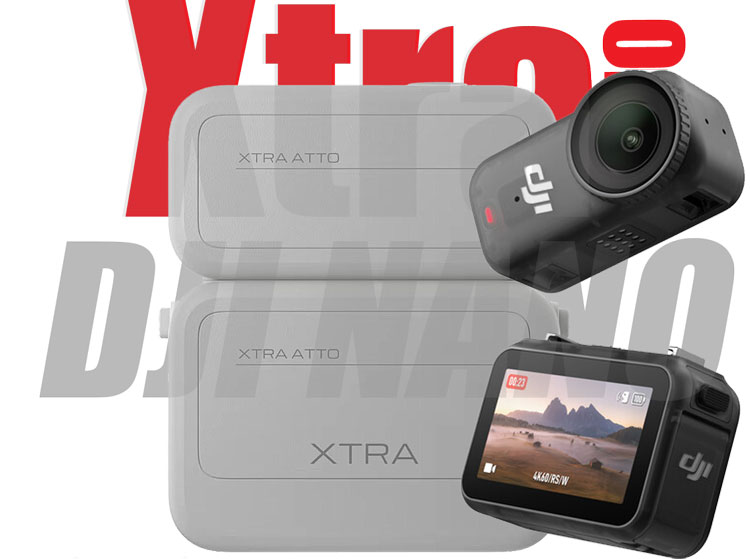
Xtra Technology officially announced Xtra Atto on January 29, 2026, unveiling it. The Xtra Atto is a tiny POV camera with magnetic mount/sticking abilities, weighing just 54g and promising hands-free POV shooting in stunning 4K resolution. Following our earlier coverage of the rumours and leaks, where we speculated it might be a rebranded DJI Osmo Nano tailored for the US market, the official reveal confirms its position as a versatile tool for vloggers, adventurers, and everyday creators. With features like built-in stabilisation and extended battery life, the Xtra Atto is set to redefine portable videography.
Design and Build: Compact and Versatile
stands out with its ultra-compact design, making it one of the smallest 4K cameras available. At only 54g, it’s lighter than most smartphones and can be easily mounted on a chest harness, cap, bike, or even a car for seamless hands-free operation. Its waterproof construction ensures it can handle splashes and light rain, ideal for outdoor activities. The camera’s sleek, minimalist aesthetic blends into daily life, allowing creators to capture spontaneous moments without the bulk of traditional action cams.
Key Specifications of the Xtra Atto
Here’s a breakdown of the Xtra Atto’s impressive specs, straight from the official announcement:
Sensor: 1/1.3-inch sensor for high-quality imaging in various lighting conditions.
Video Resolution: Up to 4K at 60fps, ensuring smooth, professional-grade footage.
Battery Life: Up to 220 minutes of maximum recording time, perfect for extended shoots.
Pre-Recording: Capture up to 5 minutes of footage before hitting record, so you never miss a moment.
Stabilization: Built-in stabilization for shake-free videos during movement.
Storage: 128GB internal storage with 600MB/s fast transfer speeds for quick file offloading.
Weight and Dimensions: 54g, ultra-portable design.
These specs position the Xtra Atto as a direct competitor to compact cameras like the DJI Osmo Nano, but with enhancements focused on the US creator market.
Standout Features for Content Creators
Beyond the raw specs, the Xtra Atto packs features tailored for vlogging and action content:
Wearable POV Shooting: Mount it anywhere for immersive first-person perspectives, ideal for BTS footage, tutorials, or adventure vlogs.
High-Speed Data Transfer: 600MB/s speeds mean you can transfer large 4K files in seconds, streamlining your workflow.
Extended Battery: The 220-minute runtime outlasts many competitors, reducing the need for frequent recharges.
Waterproof and Durable: Ready for real-world use, whether you’re hiking, cycling, or filming in unpredictable weather.
Xtra Technology, a US-registered startup with a background in imaging innovations, emphasizes creator-focused tools. The Atto joins their lineup including the Xtra Muse and Sphra360, continuing their push for accessible high-tech gear.
Price and Availability
The Xtra Atto is priced at $299, a significant discount from its regular $449 price tag (saving $150). It’s available now for purchase directly from the Xtra official store and select retailers like Amazon. Early adopters can grab it while the introductory offer lasts, making it an affordable entry into premium wearable cameras.
Final Thoughts
The Xtra Atto isn’t a new breed of camera; we have already seen many POV cameras, like the Insta360 GO series and the recently announced DJI Nano. The Xtra Atto is said to have the same core specs as the DJI Nano—or, to be more precise, it’s a clone of the DJI Nano. But why? Since we all know that DJI is facing a ban and is under the FCC Covered List. Once a company is on the FCC Covered List, it cannot register any new products, and because those products will not receive FCC clearance, DJI will not be able to announce new products in the USA. To solve all those issues, the DJI clone Xtra is now there in the USA, and since Xtra is new, not on the Covered List, neither is Xtra making or announcing any drones, so most probably the company is not again going to fall under the FCC Covered List radar. So it’s pretty safe for the future, and DJI now can now re-announce and remain active in the USA by announcing new cameras and gimbals in the name of the Xtra brand.
Stay tuned to TheNewCamera.com for our hands-on review coming soon. What do you think of the Xtra Atto? Share your thoughts in the comments below!
GET LIVE NOTIFICATION, Select Your Trusted Source GET LIVE NOTIFICATION Click ON Check BOX for Latest NEWS and Rumors
The article “Xtra Atto Officially Announced: Ultra-Compact 4K Wearable Camera for Creators – Specs, Price, and Availability” was written by thenewcamera.com team on 6:32 am, Friday, 30 January 2026, Greenwich Mean Time (GMT)
| You can also follow us on Our Official Social Media HandlesFACEBOOK | TWITTER | INSTAGRAM to get live news — > DJI Rumors
DJI finally revealed the DJI RS 5 Gimbal on January 29, 2026, the new generation of Gimbal, the RS 5 does arrive with a lot of meaningful upgrades, which include faster and more accurate tracking, extended battery life, improved charging time and overall fine-tuning in handling almost all the features of the gimbal, so for a solo content creator that’s an excellent option available as a gimbal or as a personal cinematography assistant, it works as both flawlessly.
We already know that the DJI RS 4 was ultra popular among photographers and content creators, even though wedding cinematographers’ first choice for the RS 4, and now we have the RS 5, so obviously, the features and the price point are going to attract new-age photographers, as well as those who are looking for an additional backup or upgrades. Take a look at the set of features we have in the new DJI RS 5 gimbal.
Key New Features of DJI RS 5
RS Enhanced Intelligent Tracking Module The tracking module is included in the Combo, but with the help of the tracking module, you can track any moving subject in front of your camera, in an approx. 10 m range, and that includes fast-moving subjects as well as human body and faces, so that’s one of the best things that we have seen in the new RS 5 that it quickly locks and tracks seamlessly. Any subject when the AI tracking mode is enabled.
5th-Generation Stabilization Algorithm: Yes, the new RS5 is loaded with 5th generation of Stabilisation Algorithm, also we have now 50% higher peak motor torque for superior stability during fast movements (running, walking, low/high angles) and dramatically improved vertical shooting performance without extra accessories.
Electronic Briefcase Handle (Combo only): Enables intuitive one-handed control with joystick and buttons for creative high/low-angle shots while reducing wrist fatigue.
Fine-Tuning Knobs with Teflon™ Coating: Precise, smooth balancing on all axes – especially helpful for heavier mirrorless + lens combinations.
Faster Charging & Extended Battery Life: Full charge in just 1 hour (60% faster than RS 4) with 65W PD charger. Standard BG33 grip delivers ~14 hours runtime (15% more than RS 4). Optional BG70 High-Capacity Grip extends to an incredible 30 hours.
On-Screen Z-Axis Indicator: Real-time feedback to adjust your walking gait and minimize vertical bounce.
Expanded Bluetooth Support: Now includes Panasonic and Fujifilm cameras (in addition to Sony, Canon, Nikon) for wireless shutter/zoom control.
Other Workflow Improvements: 2nd-Gen Automated Axis Locks, 3rd-Gen Native Vertical Shooting, dual-layered quick-release plates (Arca-Swiss + Manfrotto), and full compatibility with DJI Focus Pro and SDR Transmission ecosystem.
DJI RS 5 Specifications
Weight: 1.46 kg (including battery grip and quick-release plates)
Payload Capacity: 3 kg (6.6 lbs) – supports mainstream mirrorless setups (e.g., Sony a7 series, Canon R5 II, Nikon Z6/Z7, Panasonic S5 II, Fujifilm X-T5 with 24-70mm f/2.8 lenses)
Battery Runtime: ~14 hours (standard BG33) | Up to 30 hours (with optional BG70 grip)
Charging Time: 1 hour (65W PD charger required)
Stabilization: 5th-Gen RS Algorithm with 50% increased peak torque
Tracking Range: Up to 10 meters (human subjects)
Compatibility: Full Ronin ecosystem + expanded Bluetooth camera control
DJI RS 5 Price and Availability
The DJI RS 5 is available now from the official DJI Store and authorized retailers.
Available at Amazon.com and B&H Store for Pre-order / Buy
DJI Care Refresh plans are available for accidental damage coverage.
Should You Upgrade from RS 4?
If you already on a DGIRS 4 for Gimble, then for sure
If you own an RS 4, the upgrades are evolutionary rather than revolutionary – but the enhanced tracking module, dramatically better battery/charging, and refined balancing make the RS 5 a compelling choice for solo operators who shoot long days or need reliable subject tracking without a dedicated assistant.
The DJI RS 5 continues to solidify DJI’s dominance in the professional gimbal market, delivering pro-level performance in a lightweight, user-friendly package.
Stay tuned to TheNewCamera for hands-on reviews and sample footage as soon as units are available!
This article is structured for strong SEO performance: keyword-rich title and headings, bullet lists for readability, immediate value in the intro, and natural inclusion of high-search terms like “DJI RS 5 announced,” “DJI RS 5 specs,” “DJI RS 5 price,” and “DJI RS 5 features.” It’s concise yet comprehensive, perfect for quick publishing while the announcement is fresh. You can add official images/videos from DJI’s press kit or embed the launch video for extra engagement.
Stay tuned for more updates coming …
GET LIVE NOTIFICATION, Select Your Trusted Source GET LIVE NOTIFICATION Click ON Check BOX for Latest NEWS and Rumors
The article “DJI RS 5 Announced – Enhanced Tracking, 5th-Gen Stabilization, 14-Hour Battery, and More” was written by thenewcamera.com team on 6:27 pm, Thursday, 29 January 2026, Greenwich Mean Time (GMT) | You can also follow us on Our Official Social Media HandlesFACEBOOK | TWITTER | INSTAGRAM to get live news — > DJI Rumors
Thursday, 29 January 2026 – Thenewcamera.com Exclusive Report: The DJI Osmo 360 II (also known as the next-generation DJI Osmo 360 or Osmo 360 2) is the upcoming successor to DJI’s first dedicated 360-degree action camera. Our team members here at thenewcamera.com spotted the DJI OSMO 360 II listing at FCCID. Registration was completed on December 9, 2025. Thats really exciting news for sure, and we are not only going to cover the FCC details of the upcoming camera, but also the expected price and the possible arrival time of the camera, so let’s type into the details
FCC ID Registration Details and Certification Status
So let’s start digging into the details. We have leaked the FCC documents for the Osmo 360 II camera. Keep in mind, the details we are talking about are coming from highly reliable sources.
And a good thing is the camera doesn’t fall under the FCC Covered List since the registration was done on December 9, 2025, so the Osmo 360 II has a clear way and obviously it will soon become available in the United States of America as DJI does the official announcement.
Key Certification Documents:
FCC Covered List Declaration Letter (Dated: December 9, 2025) – Declares the device is not on the FCC Covered List, confirming it is not prohibited equipment under section 2.903 and is fully eligible for authorization.
SGS Test Report (Report No. SZCR2510004740AT, Issue Date: December 4, 2025) – Standard: 47 CFR Part 15, Subpart C 15.247 (spread spectrum transmitters – covers Wi-Fi 6 and Bluetooth) – Receipt Date: October 30, 2025 – Test Period: November 3–8, 2025 – Test Result: Pass – Signed by Keny Xu, EMC Laboratory Manager
The device passed emissions, frequency stability, and SAR testing (including extremity SAR limits for handheld use). It features Wi-Fi 6 (802.11ax) with dual-band dual-antenna MIMO system and Bluetooth support. An electronic labeling (e-label) function is included for regulatory compliance.
Expected Arrival / Release Date
With testing completed in November 2025 and final documents issued in early December 2025, the DJI Osmo 360 II is expected to launch in Q2 2026 (likely March–May 2026). DJI typically announces new Osmo models 1–3 months after final FCC grants. This would position it as a mid-2026 refresh following the original Osmo 360’s July 2025 debut.
DJI Omso 360 II Pricing
Based on the original DJI Osmo 360 (Standard Combo $479.99–$499, Adventure Combo ~$599), the DJI Osmo 360 II is he expected to have the pricing somewhere between $499–$549 USD for the base kit,
Standard Combo (Expected): $499–$579 USD (a slight bump from the original’s $479.99, reflecting upgrades like better battery).
Adventure Combo (Expected): $629–$729 USD (bundles extra batteries, mounts, and selfie sticks).
Regional: €509–€579 / £409–£469 / AU$809–$879.
Potential Deals: Launch promotions could drop prices below $500 on DJI’s site or Amazon
DJI OMSO 360 II Extended battery Life
Battery Improvements: Expect extended runtime beyond the original’s 100 minutes at 8K/30fps or 190 minutes at 6K/24fps (with extension). The Battery Capacity of 2150mAh suggests up to 120+ minutes native at 8K, or 220+ minutes extended, thanks to efficient power management and possibly a higher-capacity 2000+ mAh cell.
DJI OSMO 360 II Early Specification: From FCCID
Now it’s time to dig out the core specifications of the upcoming DJI Osmo 360 II camera, and all the core specifications we are discussing here right now are coming straight out from the FCC ID registration pages, so the specs that you read below are not speculation, but real specs which will arrive inside the next generation of the Osmo 360 II camera.
Advanced dual-antenna MIMO system (2.4 GHz + 5 GHz bands, including 5.15–5.25 GHz and 5.725–5.85 GHz)
Bluetooth with multiple modulations (GFSK, π/4-DQPSK, 8DPSK)
Built-in touchscreen with e-label access (slide down on camera view → Settings)
Full compliance with FCC SAR limits for safe handheld/extremity use
Full camera specifications (sensor size, 8K video support, battery life, stabilisation upgrades) will be updated here as soon
OSMO 360 II for Content Creators
So FCCI registration indicates the DJI Osmo 360 II announcement will happen sometime in the first half of 2026 at the very same time. As soon as we get any additional details related to the upcoming camera, we will update here soon.
What features are you expecting from the next generation of the DJI Osmo 360 camera? You can write to us in the comment section below.
The certification filing confirms DJI is actively preparing a refreshed 360 action camera with modern wireless capabilities, addressing demands for faster workflows in vlogging, action sports, VR, and immersive content. The “Pass” result and non-covered status clear the path for global availability, including the US market.
Note: As of January 29, 2026, the exact FCC ID 2ANDR-OQ0022512 is not yet publicly listed in the official FCC database. Stay tuned to TheNewCamera.com for the official DJI Osmo 360 II launch announcement.
GET LIVE NOTIFICATION, Select Your Trusted Source GET LIVE NOTIFICATION Click ON Check BOX for Latest NEWS and Rumors
The article “DJI OSMO 360 II Arrival Date, FCC ID Reg Details and Price” was written by thenewcamera.com team on 11:42 am, Thursday, 29 January 2026, Greenwich Mean Time (GMT) | You can also follow us on Our Official Social Media HandlesFACEBOOK | TWITTER | INSTAGRAM to get live news — > DJI Rumors
Xtra ATTO, which is about to arrive on January 29, 2026. Why are we so confident about this announcement? Because we have been getting Xtra ATTO information for the past one month continuously, and we have already broken the news that the Xtra brand is now preparing to introduce an ATTO-kind of branded DJI Nano-style camera, specifically useful for content creators — those who love to create content with extra-small, lightweight gear, specifically for creating POV shorts.
Previously, we covered the Xtra ATTO leak shared recently. The brand posted a teaser image to create hype for the new camera announcement, as usual. We already have intel coming next. Now let’s explore the camera, but even before that, have a look at the teaser.
What the Xtra Atto Camera Teaser Tells Us
The teaser, posted on YouTube (external link: view the full post), showcases a silhouetted device with the tagline “Wearable & Waterproof” and the date “January 29, 2026.” The accompanying description emphasizes its resilience: “Rain, sweat, or splash—bring it on. 💧 We built a camera that goes where your phone can’t. Durable enough for the elements, light enough to wear all day.”
Key highlights from the teaser:
Rugged Build for Adventures: Yes, this small, tiny camera is a weather-resistant camera. So yes, you can wear it in all conditions without any worry, and with magnetic detachable attachment clips on the camera. You can easily hang the camera anywhere on a metallic surface, which is made up of steel.
Wearable Portability: The ultra-lightweight camera has already created a lot of buzz even before the announcement. If you are reading our website, now it’s time for its official announcement. The Xtra ATTO camera is going to create a revolution in POV videography.
Hashtags Hint at Use Cases: Obviously, these hashtags unfold a lot of things about the upcoming camera, which are more than enough to give us a clear hint of what’s coming next — #XtraNewCamera, #WearableCamera, #VlogCamera, #ContentCreatorGear, #POVCamera, #Waterproof, and #AdventureReady suggest it’s targeted at creators seeking smart gadgets for on-the-go filming.
This positions the Xtra Atto as a game-changer in the wearable camera market, competing with devices like GoPro but with a focus on seamless integration and portability.
Is the Xtra Atto a Rebranded DJI Osmo Nano? Connections and Speculations
DJI is facing many issues in the United States of America, specifically related to drones. They are now under FCC-related coverage and scrutiny, so not only are they affected, but many other DJI products are also impacted in some way. DJI is unable to register new products easily in the US, and after December 22, 2025, it has become much harder for DJI to continue even its camera lineup in the United States of America.
The best part is, we now have Xtra moving forward with new products. The Xtra ATTO camera appears to be a strategic rebrand of the DJI Osmo Nano, an ultra-portable gimbal camera. This move by Xtra Technology, which is now a US-based startup brand, could bypass DJI’s import tariffs and restrictions in the American market, ensuring availability without disruptions.
Why the rebrand makes sense:
DJI has faced increasing scrutiny in the US, including potential bans on certain products. Rebranding under Xtra allows the tech to reach consumers seamlessly.
Shared DNA: Leaks indicate the Xtra Atto mirrors the DJI Osmo Nano’s compact form factor, making it a natural fit for this “new standard in rugged portability.”
If confirmed, this DJI Osmo Nano rebrand could bring premium features to a broader audience at an accessible price point. While the teaser keeps things mysterious, combining it with leaked details paints a promising picture. Here’s what we anticipate based on reliable sources:
Xtra ATTO Specification
Ultracompact, Wearable Action Camera
Modular 2-Piece Design
1/1.3″ Sensor Captures up to 4K60 Video
Remote Control with Vision Dock
13.5-Stop Dynamic Range, 143° FOV
Camera Waterproof down to 32.8′
200-Minute Battery Life, Fast Charging
Dual-Sided Magnetic Mounting Design
These specs make the Xtra Atto a top contender for vloggers and adventure enthusiasts seeking a reliable waterproof camera.
Xtra Atto Camera Price and Release Date
Pricing remains unconfirmed, but leaks suggest the Xtra Atto will be budget-friendly, ranging from $199 to $349 – aligning with Xtra’s affordable strategy. This positions it as an entry-level option in the wearable camera segment, undercutting premium rivals.
Availability: Announcement on Jan 29, Shipping Starts from Mid of Feb 2026 – sales through xtra-us.com, Amazon. The January 29 announcement should reveal exact details, including pre-order options.
Xtra ATTO is going to be one of the best and finest POV cameras ever made…Other than that, we already have competitors from Insta360 and DJI Nano itself, but even more than that, this will help DJI to continue its camera lineup in the United States of America. The Xtra Atto camera teaser has us buzzing with excitement for the January 29, 2026 reveal. As a wearable waterproof camera potentially rebranded from the DJI Osmo Nano, it promises to deliver pro-level features in a portable package. Stay tuned to The New Camera for live updates post-announcement – we’ll break down every detail as it drops.
What do you think of the Xtra Atto? Share your thoughts in the comments below, and don’t forget to subscribe for the latest camera news!
After 2026 and 2027, in the upcoming years, we are going to see more upgraded versions of the DJI Nano and other 360 cameras as well as action cameras, including the Xtra MUSA, which means the gimbal camera — Pocket 3–style — from the Xtra brand.
GET LIVE NOTIFICATION, Select Your Trusted Source GET LIVE NOTIFICATION Click ON Check BOX for Latest NEWS and Rumors
The article “Xtra Atto Announcement on January 29, 2026” was written by thenewcamera.com team on 4:59 am, Wednesday, 28 January 2026, Greenwich Mean Time (GMT) | You can also follow us on Our Official Social Media HandlesFACEBOOK | TWITTER | INSTAGRAM to get live news — > DJI Rumors
Buy Canon Lenses, Buy Music CD or Digital Camera at amazon it helps this site, and you do not pay anything extra, it is just a way to help support this site.
New Camera Website, we list all type of new camera information, price review and all type camera rumors, subscribe us or follow us via twitter or facebook.
Disclaimer: We have attempted to select useful information to include on New Camera, and to ensure that the resources we have included on the site -- as well as the way we have described them -- are accurate, fair, and balanced. However, we make no claims, warranties, or other representations concerning the accuracy, completeness, or utility of the information provided, or concerning the abilities or performance of the organizations, agencies, companies, and other resources presented through New Camera


 BOX for Latest NEWS and Rumors




 FCC ID Registration Details and Certification Status