Join More Than 50,000+ Subscribers and get latest camera news and rumors
NEW CAMERA VIDEOS ON YOUTUBE
|
By admin, on September 17th, 2026 
A 50mm f/1.4 that weighs 255 grams and sells for about $129 is not a joke product. It is Pergear doing what they do well: a compact metal prime, a fast aperture, and a price that makes it easy to say yes. I used the L-Mount version on a Panasonic Lumix S5 II. The same optical formula ships for Sony E, Nikon Z, and Canon RF. No adapter required.
This is a manual-focus lens. If you need autofocus for moving subjects, the native 50mm f/1.8 on your mount is still the daily driver. If you want a small, tactile f/1.4 50 that actually leaves the house, this one earns a look.
Specs
|
|
| Lens |
Pergear 50mm f/1.4 full-frame, manual focus |
| Mounts |
Sony E, Nikon Z, Canon RF, L-Mount |
| Aperture |
f/1.4–f/16, clicked, 12 blades |
| Optics |
6 elements in 6 groups |
| Minimum focus |
0.6 m / 2 ft |
| Angle of view |
46° |
| Filter |
52 mm |
| Size / weight |
66 × 43.5 mm, 255 g |
| Electronics |
No contacts / no EXIF |
| Weather sealing |
No |
| US price |
$129 list, often around $116 at Pergear.com and Amazon US |
Design and handling
The first thing you notice is the size. On the S5 II it sits short and balanced. That is the point of this lens. It is easy to carry, easy to leave on the camera, and easy to forget until you need f/1.4.
Build is all metal. The diamond-pattern focus ring has good grip and a useful throw of about 135°. Most of that travel is between 2 feet and 6 feet, which is exactly where a fast 50 gets used for portraits and street work. The last stretch to infinity is shorter, so zone focusing works better than hunting a distant sign.
The aperture ring is clicked in full stops from f/1.4 to f/16. It sits close to the mount, so you learn its place quickly. It is not de-clicked, which is the right call for stills and a limitation if you want a silent iris for video.
There are no electronic contacts. Set in-body stabilization to 50 mm in the menu. Use focus peaking and magnification. Focus at the aperture you plan to shoot; like many simple fast primes, this one can shift focus if you rack wide open and then stop down.
Minimum focus is 2 feet. That is not a close-up lens. It is a people-and-places 50, and it is honest about that.
Image quality
 Captured with Peargear 50mm L Lens at F2 : Camera used S5II Center sharpness. At f/1.4 the look is softer and lower in contrast — the classic fast-50 glow. On a 24MP S5 II that is usable when the subject is centered and focus is nailed. Stop to f/2 or f/2.8 and the middle of the frame gains bite. For most of the photos I wanted from this lens, f/2–f/2.8 felt like the sweet spot.
Edges and distance. Corners at infinity need f/8 to f/11 before they settle down. This is not the landscape 50 in the kit. It is the portrait and everyday 50.

Bokeh. Twelve blades at this price is the standout spec. Out-of-focus highlights stay rounder as you stop down than they do on many cheaper 7- or 9-blade primes. Close and mid-distance backgrounds can look smooth and calm. Busier backgrounds at longer distances show a bit more structure. No onion-ring texture, because the formula stays simple.

Color and aberrations. Color is natural. Lateral chromatic aberration is there and easy to clear in Lightroom. Some green/magenta fringing can linger a little past f/2.8. Normal for this class.
Flare and sunstars. Pointed into strong backlight at f/1.4, contrast can dip and you can pick up ghosts. That is part of the rendering, and it settles down by f/2. A 52 mm hood or filter is a smart, cheap add. Stopped down on night lights, the 12-blade diaphragm makes clean sunstars.
Distortion and vignetting. Mild pincushion, easy to correct. About 2.4 stops of falloff wide open, typical for a 50mm f/1.4, and it eases as you stop down.
How it fits a US kit
| Lens |
AF |
Typical US price |
Role |
| Pergear 50mm f/1.4 |
No |
$116–$129 |
Compact character 50 |
| Sony FE 50mm f/1.8 |
Yes |
~$250 |
Everyday E-mount 50 |
| Canon RF 50mm f/1.8 STM |
Yes |
~$200 |
Everyday RF 50 |
| Nikon Z 50mm f/1.4 |
Yes |
~$550 |
AF speed on Z |
| Panasonic S 50mm f/1.8 |
Yes |
~$429 |
Everyday L-Mount 50 |
| Sigma 50mm f/1.4 DG DN Art |
Yes |
~$849 |
Maximum correction |
| TTArtisan 50mm f/1.4 ASPH |
No |
~$225–$280 |
Manual, a bit more glass |
The Pergear is not trying to replace those AF lenses. It sits beside them: smaller, cheaper, and more about feel.
Who should buy it
This lens makes sense if you already shoot full-frame, you are comfortable with peaking, and you want a fast 50 that does not add bulk.
It is less ideal as the only 50 in a kit that has to cover events, kids, or anything moving toward the camera. It is also not the pick if your main work is edge-to-edge landscapes.

Verdict
Pergear shipped a small, well-made 50mm f/1.4 at a price that invites you to try manual focus on modern mirrorless. The center cleans up nicely by f/2. The 12-blade iris gives you rounder highlights and proper sunstars. The limits — no AF, no EXIF, 2-foot close focus, glow wide open, flare into the sun — are the same limits you accept on any simple fast prime.
I would keep this in the bag as the 50 that actually gets used on walks. I would still keep an AF 50 for the days that need it.
Scores
- Carry and size: 9
- Build and controls: 7
- Focus feel: 7
- Center quality f/2–f/4: 7
- Corners at distance: 5
- Bokeh: 7
- Flare control: 5
- Value: 8
Bottom line: A $129 full-frame 50mm f/1.4 that is easy to like, easy to carry, and clear about what it is.
Affiliate line for under the specs table: Get the Lens from Amazon.com and B&H Store
Pergear 50mm f/1.4 for Sony E, Nikon Z, Canon RF, and L-Mount — available at Pergear.com and Amazon US, typically $116–$129.
By admin, on September 15th, 2026 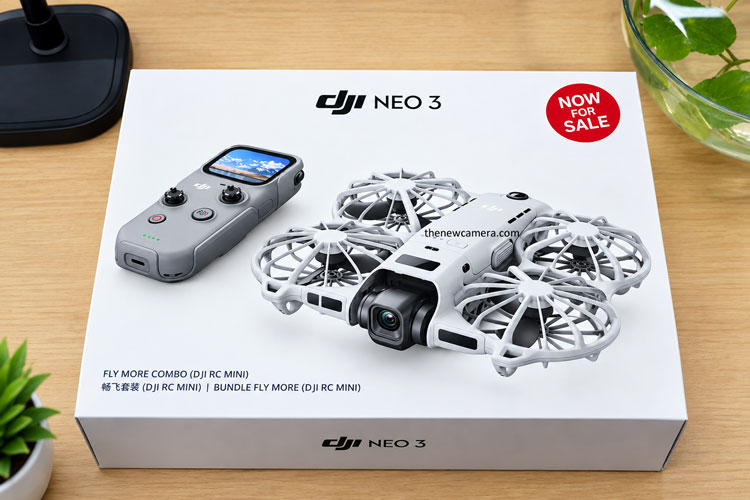
So, finally, we have the official retail packaging box of the upcoming DJI NEO 3 Drone. One of the most trusted and reputed drone leakers, Igor Bogdanov (@Quadro_News) posted a photo of retail packaging labelled DJI Neo 3. The carton is a Fly More Combo with DJI RC Mini, and it carries a red NOT FOR SALE sticker. That clearly indicates that the drone samples have already been sent to influencers to create content prior to the announcement of the drone.
That is the strongest evidence so far that Neo 3 is real, named, and close to its official announcement.
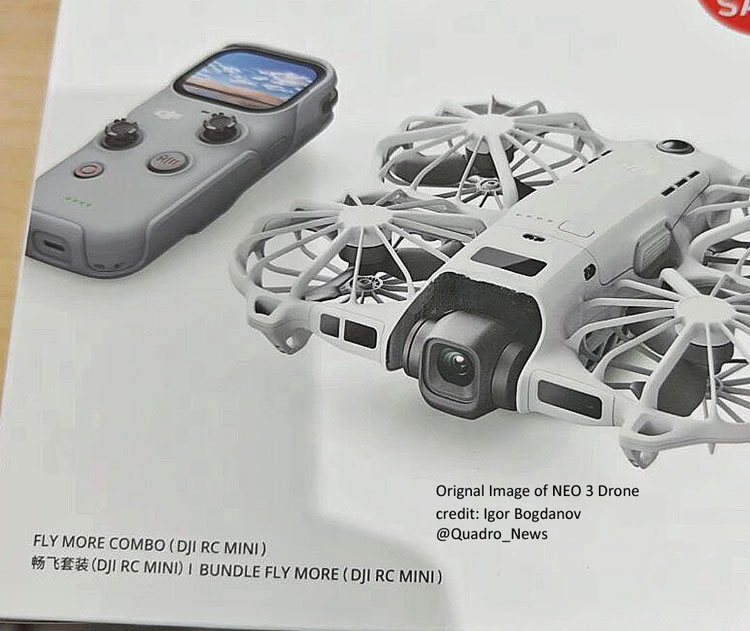
What the leaked box shows
The front of the box prints:
- Product name: DJI NEO 3
- Bundle: Fly More Combo (DJI RC Mini)
- A compact white drone with full propeller-guard cages
- A small remote with a built-in screen
- Multilingual text, including English and Chinese
BTW, this is not the first time we are looking at the NEO 3 drone, in April month we published a post DJI Avata 3 or DJI Neo 3? Mysterious Dual-Guard Prototype Leaked
And that time we were a little bit confused about the drone, but now this clear image answers all our questions.
Second, the controller is new. Neo and Neo 2 Fly More kits used the RC-N3, a phone-clamp remote. This box shows DJI RC Mini, a smaller controller with its own display. If that holds, the main combo will not need a phone clipped to the remote.
The drone itself still looks like a Neo: palm-sized, caged props, single front camera. The camera unit on the artwork looks more prominent than the original Neo, which is consistent with Neo 2’s visible gimbal — but the box does not print sensor size, video mode, weight or flight time.
When should DJI Neo 3 arrive?
Since the Sample package is already being distributed for review.purpose, and that does mean the announcement is not too far from us. This should happen within next 2 – 3 Months
And even if we go through the DJI scheduled announcement timeline of NEO series drones then we have the following inputs .
The Neo generation cycle is about 14 months.
| Model |
China launch |
Global launch |
Gap |
| DJI Neo |
5 September 2024 |
5 September 2024 |
— |
| DJI Neo 2 |
30 October 2025 |
13 November 2025 |
13.8–14.3 months |
On that cycle alone, Neo 3 would land in December 2026 or January 2027.
A finished carton with a NOT FOR SALE sticker usually means units are already produced and moving to reviewers. That is a about to be announced type of Situation and, not early rumour.
Best current window: October–November 2026.
If DJI sits on it, December is the slip month. After this leak, a 2027 launch looks less likely.
Estimated DJI Neo 3 price
These are estimates, not leaked figures. The new RC Mini screen remote is the reason the Fly More guess sits above a plain +€50 step.
| Bundle |
Likely launch range |
Best single guess |
| Drone only |
€269–289 / £239–259 / $249–279 |
€279 |
| Batteries + hub, no RC |
€359–389 / £319–349 |
€369 |
| Fly More + DJI RC Mini |
€449–499 / £389–449 |
€469 |
| Motion / FPV combo |
€599–649 / £529–579 |
€629 |
If Neo 3 is only a small refresh, expect the low end. If it adds a better camera and the new screen remote, expect the high end.
A return to $199 at launch is unlikely. Mini 4 Pro / Mini 5 Pro pricing is also unlikely. Neo stays the door-price drone. Street prices will fall later — the original Neo later sold near $139.
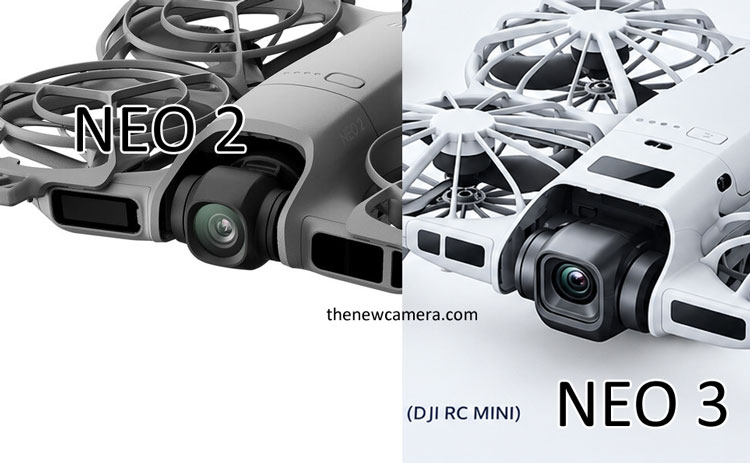
Neo 3 Bigger Camera module vs Neo 2
The leaked Neo 3 carton shows a heavier-looking camera unit than Neo 2. That is visible on the box. Treat it as a larger camera assembly, not a published sensor size.
On the artwork, the Neo 3 module:
- sits in a deeper nose bay
- sticks out farther from the body
- has a wider-looking front glass than Neo 2’s small round lens
That usually means a stronger gimbal, more glass, or a slightly larger sensor. It does not by itself confirm 1/1.3-inch or 1/1.1-inch.
| Item |
Neo 2 (official) |
Neo 3 (from box art) |
| Camera housing |
Small 2-axis chin gimbal |
Larger, blockier, more forward |
| Front element |
Small circular lens |
Wider-looking front glass |
| Sensor |
1/2-inch, 12MP, f/2.2 |
Not printed on the box |
| Vertical / horizontal |
4K 16:9 + 2.7K 9:16 crop |
Unknown |
| Best sensor guesses |
Confirmed 1/2-inch |
Same 1/2-inch, or a step to 1/1.3. 1/1.1 square is possible but unproven |
A 1/1.1-inch square sensor would be the clean way for Neo 3 to do proper horizontal and vertical from one chip — the same idea DJI used on Osmo Action 6. The leaked unit looks larger than Neo 2, but not large enough to confirm that sensor.
Until DJI prints the sensor size, the honest spec is: bigger-looking camera unit, sensor TBA. The more conservative upgrade is 1/1.3-inch. The default is still Neo 2’s 1/2-inch.
What DJI RC Mini likely means
If RC Mini is a built-in-screen controller, the Neo 3 Fly More Combo becomes a better travel kit. You fly without parking a phone on the remote. That is the clearest product change visible so far. DJI will almost certainly still sell a cheaper drone-only kit for palm takeoff and phone-app flyers. The leaked box is just one combo, not the whole lineup.
Quick verdict / TNC Take
DJI Neo 3 looks real. The 15 September 2026 packaging leak is late-stage evidence, not a wild rumour.
- Arrival: October–November 2026
- Price: modest step up from Neo 2 — about €279 for the drone, about €469 for the RC Mini Fly More Combo
- Specs: name, combo and controller are confirmed by the carton. Sensor size, flight time and video modes are not
Until DJI publishes a spec sheet, ignore the loudest 1-inch headlines.
Image credit: Igor Bogdanov / @Quadro_News. This article is independent analysis and is not affiliated with DJI
The article “DJI Neo 3 Price, Specs and Release Date” was written by thenewcamera.com team at 7:42 pm, Tuesday, 15 September 2026, Greenwich Mean Time (GMT)
| You can also follow us on Our Official Social Media Handles FACEBOOK | TWITTER | INSTAGRAM to get live news — > get live get live Camera News + Insta360 Drone Rumors 24X7.

By admin, on September 12th, 2026
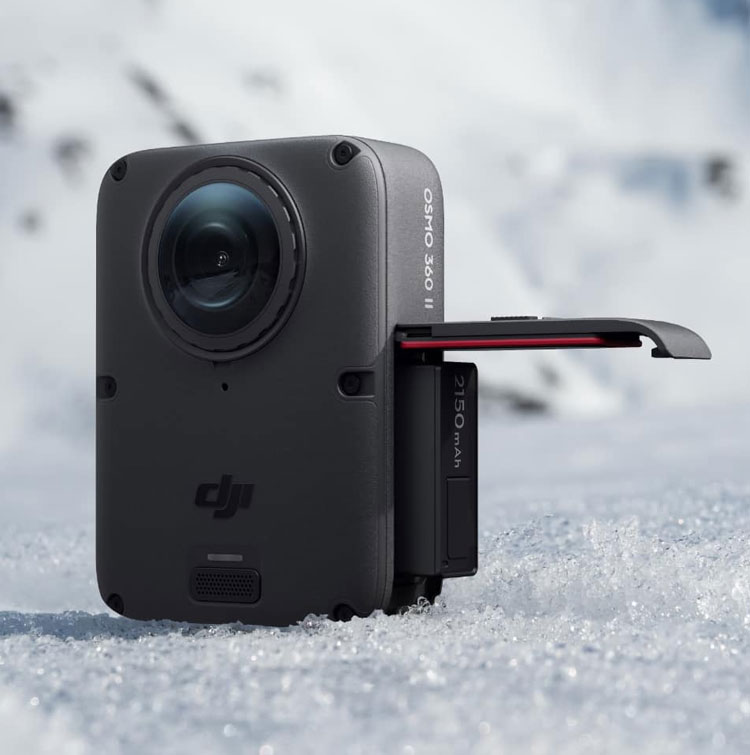
A lot of people are waiting to get their hands on the DJI 360 Mark II, but despite it being announced globally. The camera isn’t officially available in DJI stores across the United States of America due to the clearance issue; better to Say Ban over DJI Drones… these cameras are also deeply affacted, so it’s not just drones. Most of the newly announced cameras from DJI are also deeply affected now. If you really want to buy the camera and you are in the United States of America, then yes, there are a few options available specifically at Amazon.com, and the most popular option right now is SECUREX Shop, which is not only selling the Osmo 360 Mark II, they are already selling the Pocket 4P camera also for a while, and you can see the ratings said by users in the Pocket 4P camera listing.

But before you jump and buy the OSMO 360 II camera at Amazon, kindly read the full article for a detailed set of information
One current example is a SECUREX page using “Standard” and “internal storage” language. The same storefront also lists “for DJI Pocket Four Pro (4P)” kits at camera prices — about $980 for a 103GB “Standard” combo and $1,250 for a “Vlog Creator” combo.
Official US status has not changed
- No Osmo 360 II product page on DJI’s American store
- No official US price
- Europe ships 15 September 2026 at £509 / €589 for the Standard Combo
- Insta360 X6 remains the only new 360 flagship with a live US checkout, at $699.99
We first reported the Osmo 360 II FCC grant on 14 August 2026. That part is still correct. The camera is authorized. DJI still has not listed it in the United States.
About Osmo 360 II and Pocket 4P at Amazon
Okay, one thing I can tell you from my experience is that this is the same seller who has been listing the Pocket 4P camera on Amazon.com. I have also seen—and you can check it too—that Pocket 4P camera buyers in the United States of America have given positive feedback and ratings. So first, check that, and make sure you are buying the DJI Osmo 360 Mark II camera from the same seller, SECUREX; that’s something you can trust. If you are buying Osmo 360 II from Amazon, other than that, always keep an eye on sellers. Those who have positive feedback ratings above four are always good to go.
FCC ID 2ANDR-OQ0022512, granted 21 December 2025 – one day before DJI went on the Covered List. Previously authorized equipment can still be imported and sold. DJI is choosing not to put this camera on the US store.
How to read the Amazon listing in 30 seconds
- The brand field must say DJI. “SECUREX for DJI…” is search language, not the manufacturer.
- Check Sold by. DJI or Amazon.com is one thing. A random storefront is another.
- Official EU pricing for Osmo 360 II starts at about €589. A much cheaper “8K 360 Standard” price is a warning.
- 103GB and 105GB in the title are copied from DJI spec sheets. Gray sellers and lookalike brands use those numbers because they rank.
- Look for an FCC label in the product photos. Osmo 360 II is 2ANDR-OQ0022512.
- A new ASIN with almost no real reviews is not a launch. It is new inventory.
This matches a marketplace pattern we have already seen: DJI model names in the title, a different brand in the product data, and camera pricing on the buy button. The FCC has already gone after companies it says were moving DJI-shaped cameras under other names. We are not calling SECUREX a proven front company. We are saying US buyers should not treat that cart as store.dji.com.
What US buyers should do
Buy now on an official path: Insta360 X6. US stock, US warranty, 8K50, $699.99.
Wait: If you want Osmo 360 II with DJI Care, wait for a DJI US page or an authorized dealer such as B&H or Adorama. The FCC door is open. The store door is not.
Avoid unless you accept the risk: SECUREX and other “for DJI” Amazon kits. Even a real Osmo 360 II from that cart has no DJI US warranty. A Pocket 4P from that cart is the higher-risk product, because that model was never cleared for a normal US sale.
Bottom line
Osmo 360 II is searchable on Amazon US. It is still not officially on sale in the United States.
The article “DJI Osmo 360 II Amazon US Listings Appear — Official Store Still Empty” was written by thenewcamera.com team on 12 September 2026.
The article “How to Buy DJI Osmo 360 II in USA? Here is your answer” was written by thenewcamera.com team on 7:52 pm, Saturday, 12 September 2026, Greenwich Mean Time (GMT)
| You can also follow us on Our Official Social Media Handles FACEBOOK | TWITTER | INSTAGRAM to get live news — > get live get live Camera News + Insta360 Drone Rumors 24X7
By admin, on September 11th, 2026
iPhone 18 Pro has been announced, and as an iPhone 17 Pro user, I was thinking of upgrading the smartphone, but before that I wanted to do a little bit of research about the upgrade, specifically in the camera division. Most of my content is created with full-frame cameras or crop bodies, or sometimes I also use the recently announced Insta360 Luna Ultra for creating my content. But at the very same time, the iPhone 17 Pro was also an integral part of my content creation before the arrival of the Insta360 Luna Ultra, and most of my content was from it whenever I had to produce a quick news byte. Generally, I was using and still use, the iPhone 17 Pro front camera as my primary camera for shooting content.
Now, after the announcement of the iPhone 18 Pro and its variants, a big question was on my mind: does it come with a major upgrade, as many social media influencers and Apple’s marketing team have advertised? So I wanted to do a bit of research to find out where I’d see that upgrade, and whether the upgrades are really worth it, or if my existing iPhone 17 Pro is still as good as the iPhone 17 Pro successor. The 18 Pro and the variants didn’t receive that many updates, which mainly inclined me to purchase a new phone.
So, I’m just putting down the summary, the major parts of my analysis, what I have done before making the decision, and at the end, I’m going to discuss what I have decided. I’m going for an update. I will stick with my iPhone 17 Pro unless an update arrives in the front and rear cameras, which I use the most. So, let’s analyse what update actually arrived inside the iPhone 18 Pro.

The one-sentence version
Apple upgraded only the rear main camera (the Main (1X) camera module, not the telephoto or ultrawide). The ultra-wide, telephoto, and the front camera are the same hardware as iPhone 17 Pro. The new trick is a mechanical variable aperture on the 1x main lens, plus real manual controls in the stock Camera app.
Phones reach stores on 18 September 2026, so this is based on Apple’s official specs, the launch event, and early analysis — not long-term owner reviews.
What changed vs iPhone 17 Pro
Hardware
| Camera |
iPhone 17 Pro |
iPhone 18 Pro |
Did it change? |
| Rear main (1x) |
48MP, fixed f/1.78 |
48MP, variable f/1.48 / f/1.8 / f/2.8 / f/4.0. Apple calls the sensor new |
Yes — this is the upgrade |
| Rear ultra-wide (0.5x) |
48MP, 13mm, f/2.2 |
48MP, 13mm, f/2.2 |
No |
| Rear telephoto (4x / 8x) |
48MP, 100mm / 200mm, f/2.8 |
48MP, 100mm / 200mm, f/2.8 |
No |
| Front / selfie |
18MP Center Stage, f/1.9 |
18MP Center Stage, f/1.9 |
No |
Pro and Pro Max use the same camera hardware.
The main camera now has a mechanical iris. Apple said on stage it uses six laser-cut blades, each thinner than a human hair. They move between four stops: f/1.48, f/1.8, f/2.8 and f/4.0. Last year that lens was stuck wide open at f/1.78.
Opening to f/1.48 lets in about 45% more light than f/1.78. That lines up with Apple’s claim of around 50% better low-light performance at the widest setting. Closing to f/4 keeps more of a group photo or landscape sharp with optics, not only software blur.
Do not read “new sensor” as a bigger sensor. Apple’s spec sheet still lists the same pixel size as last year: 2.44 µm quad-pixel / 1.22 µm individual.
Software
| Feature |
What it does |
Who notices it |
| Pro Controls |
Manual aperture, shutter speed, white balance and a histogram in the built-in Camera app |
People who used Halide or other third-party apps |
| Photographic Styles 3 |
Adds texture and grain, including skin texture |
Anyone who dislikes the default smooth-skin look |
| Updated main-camera processing |
Apple says the main camera pipeline is updated for sharper stills |
1x / 2x / 3x shooters |
| Cinematic after capture |
Add the shallow-depth video look after you shoot. Rear Cinematic now goes to 4K60. Front stays 4K30 |
Video creators |
| 4K HDR time-lapse |
Spec sheet now lists time-lapse up to 4K Dolby Vision |
Video creators |
| Smart focus tracking |
Locks a subject and keeps focus even if they leave and re-enter the frame |
Kids, sports, talking-head video |
| Apple Reference Image |
Signed original of what the main camera sensor captured |
People who care about proving a photo is authentic |
| Better Audio Mix |
Cleaner voices plus music isolation |
Video, not stills |
Front camera Pro Controls include shutter speed, white balance and histogram. They do not include aperture, because the selfie lens is still fixed.
Which module fires at which zoom
| You pick |
Focal length |
Module used |
What it actually is |
| 0.5x |
13mm |
Ultra Wide |
Full ultra-wide lens |
| 1x |
24mm |
Main |
Full main lens |
| 2x |
48mm |
Main |
Center crop of the 48MP main sensor |
| 3x |
about 72mm |
Main |
Slider between 2x and 4x. Still the main camera. The tele lens cannot shoot wider than 4x |
| 4x |
100mm |
Telephoto |
Full telephoto lens |
| 8x |
200mm |
Telephoto |
Center crop of the 48MP tele sensor |
| 10x–40x |
— |
Telephoto |
Digital zoom. Quality drops |
Apple’s preset buttons are 0.5x, 1x, 1.2x, 1.5x, 2x, 4x and 8x. There is no dedicated 3x button. 3x is the in-between slider.
Remember it this way:
0.5x = ultra-wide.
1x / 2x / 3x = main.
4x and above = telephoto.
So which module actually got the upgrade?
| Module |
Used at |
Hardware update? |
| Main (wide) |
1x, 2x, 3x |
Yes — variable aperture. Apple also cites a new sensor and updated processing |
| Ultra Wide |
0.5x |
No — same as 17 Pro |
| Telephoto |
4x, 8x and higher |
No — same as 17 Pro |
| Front / selfie |
Selfies and video calls |
No — same as 17 Pro |
What that means for your photos
| If you mostly shoot… |
Will 18 Pro look better? |
| Normal photos at 1x |
Yes. This is the real upgrade |
| 2x portraits (main-camera crop) |
Slightly yes. Same upgraded main sensor |
| 3x slider between 2x and 4x |
Slightly yes, especially in lower light |
| 4x portraits, concerts, distant subjects |
No hardware gain. Same tele lens as 17 Pro |
| 8x and tighter zoom |
No hardware gain. Same tele crop as 17 Pro |
| Ultra-wide / landscapes at 0.5x |
No hardware gain |
| Selfies |
No hardware gain |
What the new aperture actually does
Every iPhone main camera from the 14 Pro through the 17 Pro shot at a fixed f/1.78. The phone could not physically open or close the lens. Exposure was handled with shutter speed, ISO and software.
iPhone 18 Pro can physically change the opening:
| Aperture |
Lets in |
Best for |
| f/1.48 |
Most light |
Night, indoor, creamier background blur |
| f/1.8 |
A bit less |
Everyday shots |
| f/2.8 |
Less light |
More of the scene in focus |
| f/4.0 |
Least light |
Groups, landscapes, sharper backgrounds |
The phone can pick the stop automatically. In Pro Controls you can pick it yourself. Apple also opened an API so third-party camera apps can drive the iris.
Be honest about depth of field. This is still a small phone sensor. Moving from f/1.48 to f/4 is useful, but it is not the same as stopping down a full-frame 24mm lens. The more useful everyday wins are extra light at f/1.48, and being able to close the iris in bright sun so video shutter speed stays natural.
Should you upgrade from iPhone 17 Pro?
It all depends on whether you’re using the main camera module too much, which ranges between 1x, 2x and 3x, as we have explained already in the above part of the article, that 1x is the original 24mm focal length that the camera module is using, and other than that, when you are switching to 4x, then ur using the 100mm dedicated portrait camera module that didn’t get any upgrade like the 0.5x ultra-wide camera module.
Skip if your favourite shots are 4x / 8x zoom, ultra-wide, or selfies.
Those modules did not change. Last year’s jump — the 48MP telephoto — was the zoom upgrade. This year is a main-camera year.
iPhone 18 Pro is not a new triple-camera system. It is last year’s triple-camera system with a faster, mechanically adjustable main lens and a Camera app that finally behaves like a tool.
If you understand that 1x / 2x / 3x share one upgraded module, and 4x / 8x share one unchanged module, you already understand the camera story better than most launch coverage.
Notes: Specs checked against Apple’s iPhone 18 Pro pages and iPhone 17 Pro spec sheet, 11 September 2026. Independent lab photo tests were not widely available at the time of writi
he article “iPhone 18 Pro Camera Upgrade, Explained Simply” was written by thenewcamera.com team on 8:02 pm, Friday, 11 September 2026, Greenwich Mean Time (GMT) | You can also follow us on Our Official Social Media Handles FACEBOOK | TWITTER | INSTAGRAM > more live Camera News + Canon Rumors 24X7
By admin, on September 10th, 2026 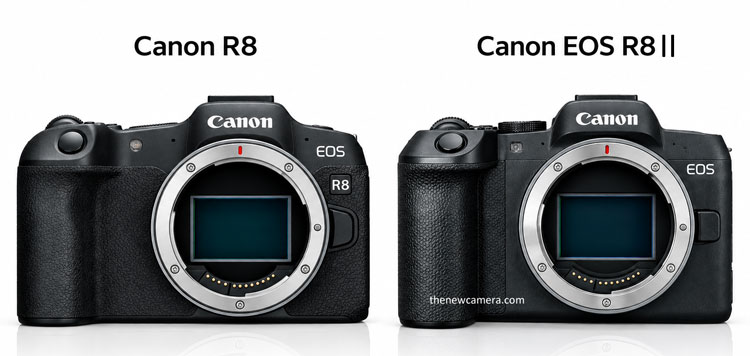
Canon R8 versus Canon R8 Mark II camera: We are comparing both of these cameras since we have almost confirmed a specific set of information about the camera, and we are just comparing the things that have actually been improved inside the Canon R8 Mark II camera that would be beneficial if you are thinking of upgrading your camera or buying the R8 Mark II. If you’re also interested in a comparison with the Canon R6 Mark II or Canon R6 Mark III, let me know in the comment section below.
The real comparison
The R8 already had the important imaging pieces: a 24.2MP full-frame sensor, Dual Pixel AF II, DIGIC X, 40 fps electronic shooting, and 4K/60p oversampled from 6K. What it did not have was in-body stabilisation, a rear joystick, or a card door that did not share the battery compartment. Those three absences are why a lot of buyers paid more for an R6 Mark II even when they liked the R8’s pictures.
The leaked Mark II tries to close two of those gaps and leaves the third almost untouched. That is the whole story.
1. IBIS is the Major difference Between R8 and R8 II
|
EOS R8 |
EOS R8 Mark II |
| In-body stabilization |
None |
5-axis, claimed up to 7.5 stops |
| Practical fallback |
Lens IS and digital movie IS |
Body and lens working together, if Canon implements it properly |
The sensor-shift image stabilization system is literally very helpful not only with the prime lenses, but also with the lenses that already have optical image stabilization inside it. Most Canon prime lenses, like the 24mm, 35mm, and 85mm f/2, have built-in optical image stabilisation, but lenses like the 16mm and 50mm don’t. So if you are buying a Canon Mark II camera with a sensor-shift image stabilisation mechanism, lenses without OIS will be even more useful. At the same time, the lenses that already have OIS inside it will pair up with the camera’s sensor-shift image stabilization system to give you more stability in each and every shot that you capture or the video you create.
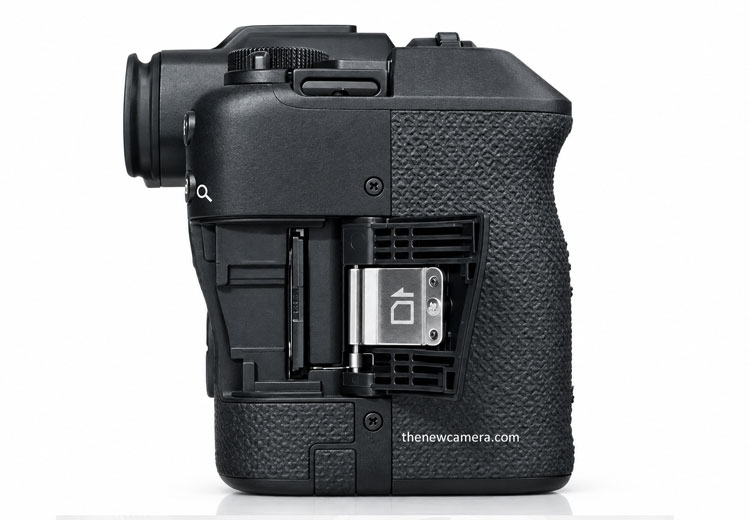
2. Handling: joystick and card door versus a shallower grip
|
EOS R8 |
EOS R8 Mark II (from Product Shots) |
| Rear joystick |
No |
Yes, high beside the EVF |
| SD access |
Shared battery door |
Dedicated side door |
| Shape |
Softer compact |
Squarer, slightly thicker, narrower grip span |
Moving an AF point with your eye in the finder is the difference between a body you operate and a body you poke. The R8 can do the job from a touchscreen. It cannot do it quickly in cold weather, with gloves, or while a subject is moving. A joystick is the correct fix.
The photos complicate the win. The stick sits in a high position, close to the viewfinder. That layout works for some hands and crowds others. The body also looks thicker through the middle and tighter between grip and lens mount. The card door is an unambiguous improvement. The grip is not. Anyone who already found the R8 small should wait to hold the Mark II before calling the ergonomics solved.
An optional add-on grip is rumored for the same announcement. That is an admission as much as an accessory: the compact brief still fights large hands.
Upgrade weight: high for control, unresolved for comfort.
3. Design: modern compact, not a tribute body
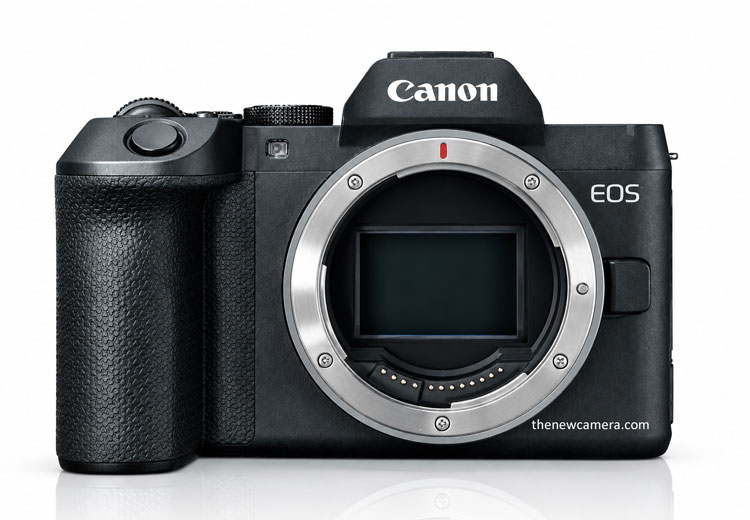
A silver, dial-led, AE-1-flavored R8 was the romantic version of this camera for most of 2026. The leaked body is not that product. It is a squared contemporary shell with a clean left shoulder and controls stacked on the right.
That will please people who wanted the R8 to look current. It will not please people who were waiting for an object to wear. Those are different purchases. The Mark II, as photographed, is a tool refresh. Judging it as a failed heritage camera misses what Canon appears to be building: room for IBIS inside a small RF body.
Looks will not decide the upgrade for anyone who already owns an R8 and loses frames to shake. Looks will decide it for anyone who wanted a retro Canon and now has to look elsewhere.
Upgrade weight: emotional, not technical.
4. The sensor did not move – and that is a strategy, not an accident
|
Mid-2026 expectation |
Confirming information |
| Resolution |
32.5MP class |
24MP, same generation as R8 / R6 Mark II |
| Dual cards |
Often assumed |
Still one SD card |
| Burst |
“Newer chip” |
Still 40 fps electronic |
A 32.5MP compact full-frame would have been a different camera: more crop for wildlife, more print headroom, a reason to skip the R6 line on resolution alone. The leak says Canon kept the known, fast 24MP chip and spent the engineering on stabilization and the body.
That is conservative and coherent. The R8 was never the resolution body. It was the body that made R6-class files in a smaller shell. Repeating that formula keeps price and readout in a familiar place. It also means the Mark II does not steal the R6 Mark II’s remaining advantages: dual cards, the larger battery, three control dials, and a deeper grip.
If the reason you waited was megapixels, this leak is not your camera.
Upgrade weight: low as a stills quality jump; high as a signal of what Canon refuses to put in this slot.
5. Battery and price: the half of the R8 problem Canon will not fix
|
EOS R8 |
EOS R8 Mark II (leaked) |
| Battery |
LP-E17 |
LP-E17 |
| Cards |
One UHS-II SD |
One SD, better door |
| Launch price |
$1,699 |
About $1,799 / €1,879 |
The R8’s other long-term limit was never mysterious. The cell is small. A long afternoon still means a spare. Putting IBIS on that same cell makes the spare more necessary, not less.
Keeping LP-E17 is how Canon protects the size claim. A grown-up battery would force a grown-up grip and collapse the “lightest full-frame” line. The product is being held in its slot on purpose.
Price sits on that choice. A hundred dollars above the R8’s original sticker looks modest until you compare it with current R8 street prices, or with a used R6 Mark II that already has IBIS and a battery that lasts. The Mark II has to be clearly better in the hand to justify that spread. On paper it is better. On a hike, the spare batteries still travel with you.
Upgrade weight: the constraint that keeps this from being an R6 killer.
6. The quieter upgrades – real, not the reason to switch
Pre-capture at 20 fps for half a second is the best stills extra on the sheet. Street and wildlife shooters will use it immediately. A sensor curtain is grown-up housekeeping. New LUTs and downloadable color filters are useful if the implementation is not buried in menus.
Most of the video list is already on the R8: 4K/60 from 6K, Full HD 180p, Canon Log 3. The Mark II is not a cinema bump. The open question is heat and runtime once IBIS is drawing power in a small shell. Until record-time tests exist, ignore slogans about “warm-up.”
The 2D-to-3D video line is a launch-day talking point, not a purchase reason.
Which camera wins which buyer
Keep the R8 if you already own one, shoot from a tripod, or live on stabilized lenses. You would be paying for thickness, a new grip angle, and a modest price bump to solve a problem your glass already handles.
Wait for the Mark II if most of your work is handheld, you want a joystick, and you accept 24 megapixels plus a small battery. That is the buyer this leak is written for.
Buy neither as an R6 Mark II replacement. Dual cards, LP-E6 power, and a proper grip still live one tier up. A 24MP Mark II with LP-E17 does not move that line.
Do not wait for a retro AE-1 in this shell. The leaked body ended that version of the camera.
Do not sell an R8 this week. Six days to a rumored announcement is not a reason to take a used-market loss on a camera that still takes the same picture.
Conclusion
The major difference is not 40 fps versus 40 fps, and it is not 4K versus 4K. It is whether Canon will put stabilization and a real AF controller into the cheap full-frame body without giving that body a real battery.
The leaks say yes to the first half and no to the second.
That produces a narrow, honest verdict. The Mark II, if it ships as photographed and as listed, is the R8 finished — not the R8 replaced, and not the R6 shrunk. Handheld shooters get the two parts they have needed since 2023. Everyone else is being asked to pay more for a thicker compact that still drinks spares and still writes to one card.
Believe the announcement, then believe a battery test. Until both exist, the upgrade is obvious in theory and incomplete in the kit bag.
The article “Canon R8 vs R8 Mark II: The Differences That Decide the Upgrade” was written by thenewcamera.com team on 7:44 pm, Wednesday, 9 September 2026, Greenwich Mean Time (GMT) | You can also follow us on Our Official Social Media Handles FACEBOOK | TWITTER | INSTAGRAM > more live Camera News + Canon Rumors 24X7
By admin, on September 6th, 2026 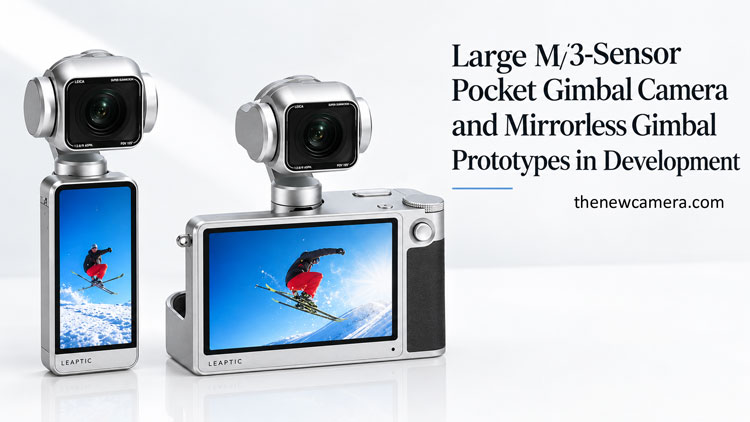
How about a pocket gimbal camera with a 100MP Micro Four Thirds format sensor to access as much quality as possible at the same time, with the same 100MP Micro Four Thirds sensor camera with a gimbal head that not only stabilises your shot in a very unique way, but is primarily built for content creators to solve their quality and mobility issues.
Well, the world is about to change dramatically since after the popularity of DJI Pocket gimbal cameras, a lot of camera makers as well as smartphone makers have entered into the race, and now we have cameras like Insta360 Luna Ultra, which is obviously one of my favourite gimbal cameras as of now, and I am using it for more than two months, creating content for my channel. At the same time, not only DJI, but other brands like HONOR have also entered the smartphone pocket gimbal camera world; based on the latest set of information, HONOR is also interested in announcing a standalone gimbal camera like the DJI Pocket. Other than that, based on the previous year’s report, OPPO has been intensively testing their prototypes of pocket gimbal cameras, and they are about to release them next year.
LEAPTIC (Leptic) is Dreame’s camera brand. President Yuan Qian, formerly P&G and vivo, built it with CTO Yang Sheng, Dreame employee No. 23. Parent: Dreame, founder Yu Hao.
They already sell one working camera — LEAPTIC Cube, a 56 g 8K thumb cam in China since May 2026, West from October at €399 / $449.
That is the short intro. The IFA 2026 story is the upcoming gimbal line: a pocket gimbal that claims a large Micro Four Thirds sensor, and a retractable mirrorless gimbal.
Same clock as Cube, one year later. Cube was first shown at IFA 2025 and went on sale in China in 2026. These IFA concepts were first shown in 2026. If they keep that gap, the gimbals go on sale in China in 2027.
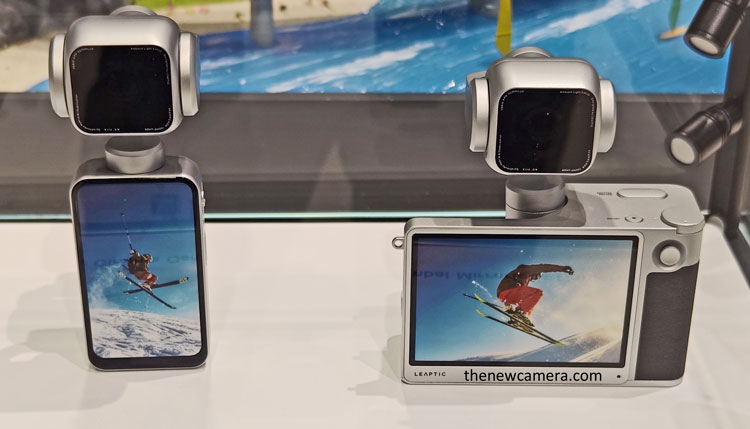
When the gimbals could actually reach shops
| Stage |
Cube (done) |
IFA gimbals (this week’s prototypes) |
| First booth |
IFA 2025 |
IFA 2026 |
| Named debut + price |
CES Jan 2026 |
CES Jan 2027 — if they copy the script |
| China sale |
2026 |
2027 |
| West sale |
Oct 2026 |
late 2027 |
So the planning line is simple. Timeline here:
- 2026 = show year for the pocket / M/3 / mirrorless gimbals
- 2027 = first year you might buy one in China
- West usually follows China by a few months → autumn 2027 abroad
That is best case. A physical gimbal is harder than Cube (motors, heat, claimed MFT glass). If CES 2027 is still unnamed mock-ups, China slips to late 2027 and the West to 2028. There is no gimbal SKU in 2026.
Watch CES Las Vegas, January 2027.
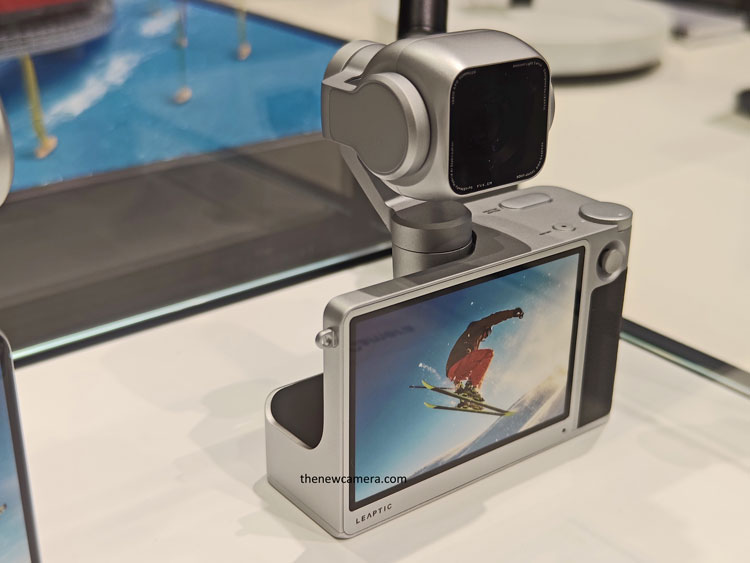
The upcoming cameras M4/3 Gimbal Cameras
Four concept bodies were on the Berlin stand. All use a physical gimbal. Three are tall-handle Pocket clones. One hides the gimbal inside a compact body. None have a price. PCMag treated them as concepts that may never all ship.
Pocket gimbal with large M/3 sensor — Cinema model
Stand card:
- Micro Four Thirds compatible
- 100 megapixels
- 3nm AI chip
- Variable aperture
- Single large lens, ProRes promised
If the M/3 chip is real, this is not another phone-sensor Pocket. If is doing a lot of work. Dreame has not named the sensor. Xiaomi showed a 100MP Type 4/3 “Light Fusion X” phone module in 2025 – same format class, not a confirmed shared chip. Do not write that LEAPTIC is using Xiaomi’s sensor.
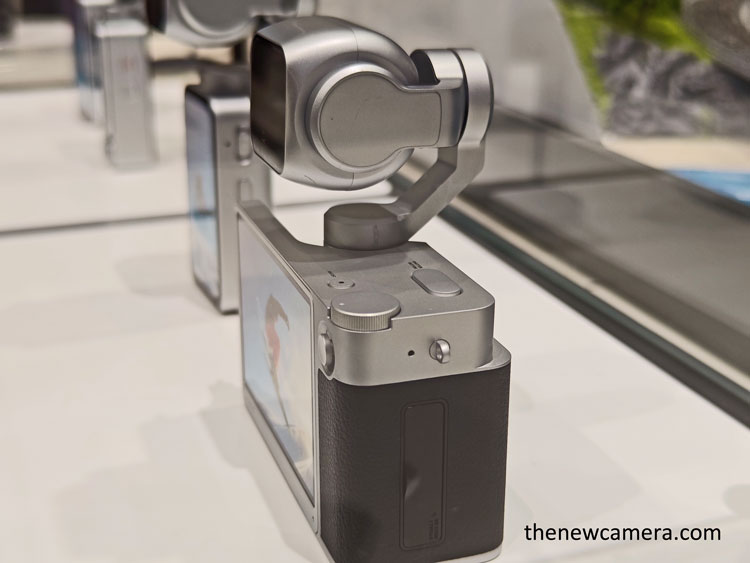
Mirrorless gimbal prototype
Same claimed internals, different shell.
- Compact “mirrorless” body
- Same M/3 + 100MP + 3nm + variable aperture claims
- Gimbal retracts into the body
This is the screenshot prototype. It is also the hardest to manufacture.
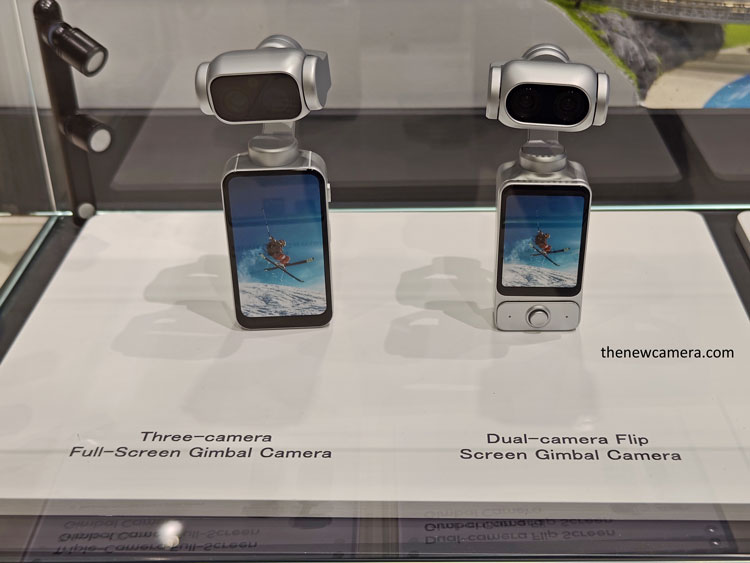
Three-lens pocket gimbal
- Ultra-wide to super-tele on one handle
- 16–800mm equivalent claimed
- Tele module 200MP claimed
- AI ambient light sensor, large display
Luna Ultra silhouette. The 16–800mm and 200MP tele lines are booth numbers until a production chart exists.
Two-lens entry gimbal
- Compact dual camera
- 4nm chip
- Two lenses, wide range
If only one prototype becomes a 2027 product, this is the likely one.
Yuan Qian has already said handheld gimbals / 云台微单 are on the roadmap, on the same app as Cube. The category is intended. These four shells are not a catalogue.
LEAPTIC Cube is the only finished product and already available for sale
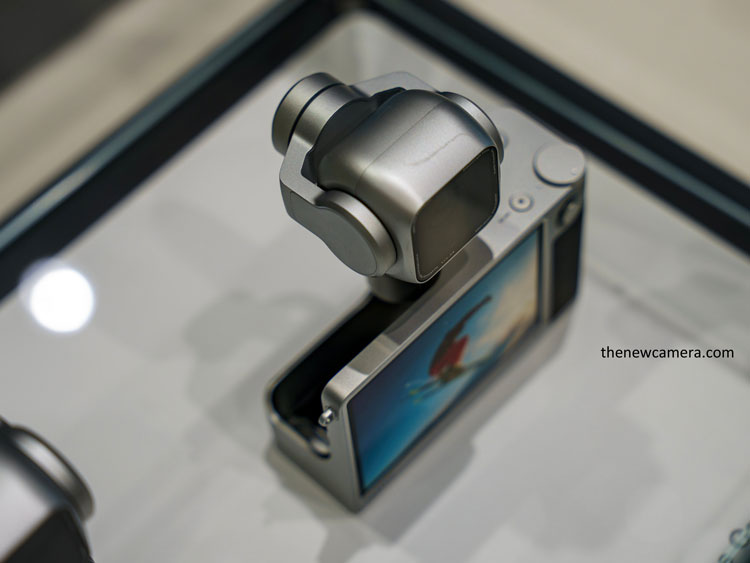
Bottom line
Shown 2025 → sold China 2026 was Cube.
We do personally believe this is not just a show-off. Since the founder of the company has already launched a working camera in China, and now they are planning to introduce a series of pocket gimbal cameras to hit the core of the market where the maximum consumer base exists, with the highest quality possible and with a nominal price range. Since the manufacturing unit/production line will remain in China to cut down the production cost.
CES 2027 event will bring more live details to the topic at the very same time. Canon, Nikon, and Sony scale/upgrade their approach and reconsider and rethink about what consumers are actually looking for in a camera right now, specifically for content creation, we have seen Canon is actively working on their pocket series, gimbal camera, and they have applied a patent for it also, but as usual, Canon moves at its own pace and it will take approximately 2 to 3 years that their pocket gimbal camera is coming now earlier than 2027.
Other than that, it would be highly interesting to see what LEAPTIC makers can offer us out of the box.
The article “Pocket Gimbal Camera With Large M/3 Sensor and Mirrorless Gimbal Prototypes Coming” was written by thenewcamera.com team on 3:22 pm, Sunday, 6 September 2026, Greenwich Mean Time (GMT) | You can also follow us on Our Official Social Media Handles FACEBOOK | TWITTER | INSTAGRAM to get live news — > get live get live Camera News + Insta360 Drone Rumors 24X7
By admin, on September 3rd, 2026 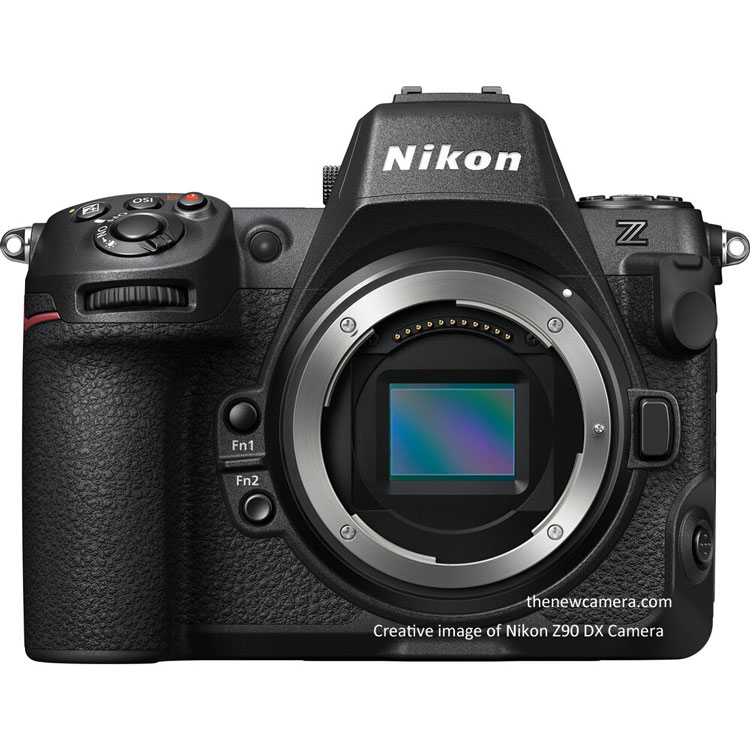 We have just received a fresh confirmation from a source regarding Nikon’s long-rumoured professional APS-C camera.
According to the latest information shared with us, Nikon’s pro-level APS-C / DX camera is now lined up for a September 2026 announcement. The same source also said that no other Nikon camera announcement is expected this year besides this one.
That last part is important. Nikon has already gone through 2026 without launching a new interchangeable-lens body; they are too busy in … (yes, we do have information that will be revealed soon).
This update is 100% accurate; the professional APS-C camera is the one product Nikon is holding back for later this month. Production Line body sent to pros, and more bodies are about to be sent to infulencers before the 2nd week of Sep.
The source was hesitant about the name
The source used the name. Keep the name Nikon Z90. As usual, since he is also deeply connected with Nikon, hesitated before sharing details.
That matches what we have been seeing for months.
For a long time, this camera has been circulating under different names:
- Nikon Z90
- Nikon Z70
- Nikon Z80
- Nikon Z500
- Mini-Z9 / Mini-ZR / D500 successor
As we all know, that the Z70 name became much stronger after Apple briefly listed an unreleased Nikon Z70 on its official ProRes / ProRes RAW authorised products page in August. That listing was later removed.
So we are treating this as a professional APS-C Nikon Z-mount body coming in September-October 2026, not as a locked official name. Z90 is the name the source used. Z70 is still the name with the strongest public leak so far.
What kind of camera is this?
This is not another Z50 II or Z30-class body.
The camera being described is Nikon’s flagship APS-C / DX model — the one D500 users have been waiting for since Nikon moved fully into mirrorless.
Based on the current rumor picture, this is expected to sit clearly above the existing DX lineup:
- Professional APS-C body
- High-speed shooting
- Strong autofocus
- Built more like a compact Z8 / mini-Z9 than a beginner DX camera
- Video features closer to the ZR family
Nikon still has no true flagship APS-C mirrorless camera. Canon already has the R7 class, and Sony has the A6700 class. That gap is exactly why this rumor has never died.
Lenses are also in the pipeline
The same source confirmed that lenses are also in the pipeline.
That part is easier to believe. Nikon already added two important DX lenses in late 2025:
- NIKKOR Z DX 16-50mm f/2.8 VR
- NIKKOR Z DX MC 35mm f/1.7
A professional APS-C body only makes sense if Nikon also has more DX glass coming behind it. We expect at least some additional DX lenses to be tied to this launch, even if Nikon does not announce the full lens set on the same day.
Why September makes sense
A September window has already been floating around for this camera. Nikon has also scheduled server maintenance on September 15, which rumor sites usually watch closely because those windows often sit near product announcements.
If the source is right, this could be the first real Nikon body announcement of 2026.
TNC Take
We are more confident about the product than the name.
A professional APS-C Nikon camera in September 2026 now looks very possible. The source saying “this is the only Nikon announcement left this year” also fits Nikon’s unusually quiet 2026 calendar.
Until Nikon publishes the press release, we will keep calling it Nikon’s pro APS-C camera, with Z90 as the name used by the source and Z70 as the strongest leaked designation so far.
Stay tuned. If September is the month, we should not have to wait much longer.
Stay Tuned. Stay Updated.
The article “Nikon Z70 / Z90 – A Pro APS-C Camera Expected Before September 2026” was written by thenewcamera.com team on 1:51 pm, Thursday, 3 September 2026, Greenwich Mean Time (GMT) | You can also follow us on Our Official Social Media Handles FACEBOOK | TWITTER | INSTAGRAM > get live news + Nikon Rumors 24X7
|
KEEP THIS BLOG ALIVE - Support New Camera Buy Canon Lenses, Buy Music CD or Digital Camera at amazon it helps this site, and you do not pay anything extra, it is just a way to help support this site.

|