Finally, we have more information related to the upcoming DJI Pocket 4 camera. The announcement is getting very close to us, and from multiple sources, but we are getting the announcement timeline window is filing somewhere in the second half of December 2025, so not only that we have also squeezed a kind of a razor, thin window where we will have the pocket for announcement in the later part of the article, we have described this how we are getting this specific timeframe of the pocket for camera announcement, so let’s dive deep into the leaks.
Drawing from our deep dive into DJI leaks—including prototype tests, supply chain whispers, and insider teases—this guide unpacks the DJI Osmo Pocket 4 announcement date, potential specs, design evolutions, and the high-stakes FCC drama driving it all. (For context on earlier buzz, revisit our coverage of the Shenzhen store tests and 2025 confirmation, where we first flagged mass production signals.)
Leaked DJI Pocket 4 Timeline: December 18–23 Reveal to Sidestep FCC Deadline
Ok, we have collected a lot of information from multiple sources and are putting it down here one by one. So, you get a clear idea of when exactly the Pocket 4 Camera is coming, starting from a tweet of @hakasushi, which was posted on November 10, 2025
The Osmo Pocket 3 was announced on October 24, 2023. That timeline pinpoints December 2025—exactly 26 months later—for the Osmo Pocket 4 upgrade (we can also say it’s a scheduled update).
The above information aligns with Photorabz’s insider email tip of a December 18, 2025, Pocket 4 arrival, but the This aligns with YouTuber Photorabz’s insider email tip of a December 18, 2025, announcement, but the real pressure cooker is the FCC’s December 23 deadline under the 2025 National Defence Authorisation Act (NDAA). Now, as we know that if None of the U.S. national security agencies agree to audit DJI, then DJI will be added automatically to the FCC backlist. DJI derives 40% of its revenue from the USA; a post-23 announcement will put the best-selling DJI video camera at greater risk.
Supply chain source has already hinted Thenewcamera.com that mass production has already kicked off, we have also posted an update related to Barcelona promo shoots already underway.
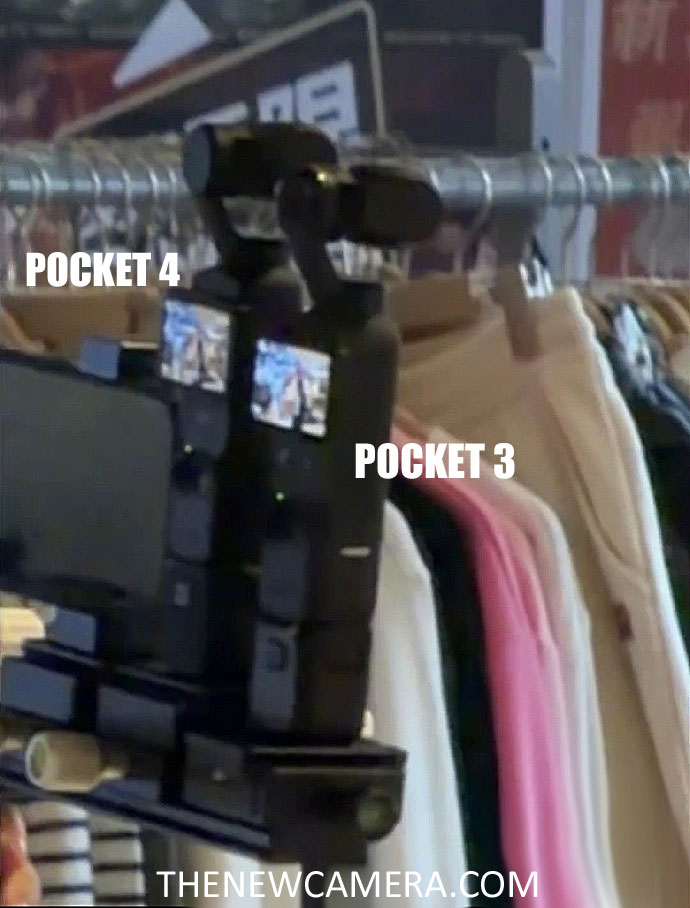
The DJI POCKET 4 camera leaks are now rolling up in high speed. According to the fresh update we have, actually, it’s coming from the heart of DJI’s world: As Source, the Employees are testing the Osmo Pocket 4 camera head-to-head with the Pocket 3 in a nearby Shenzhen store in China.
As we can see, one of the DJI employees or maybe a Beta Tester/reviewer of products is preparing reviews to be published on the announcement day, testing out the Pocket 4 camera against the Pocket 3 in a true candid urban testing ground, to bring out the real output of the low-light performance of the new Pocket 4 camera.
DJI Osmo Pocket 4 Release Date and Price: Timeline Tease
Osmo pocket 4 release date is near to us, we have two different sets of intel, all this intel is pointing to the Dec-Jan Announcement of the Pocket 4 camera.
Pricing lands at $699–$799 base, maybe $899 for a zoom-heavy Pro in early ’26. Meanwhile, Pocket 3’s dipping to $529—tempting if you’re not holding out.
The article “DJI Pocket 4 Announcement Date: Narrow December 18–23 Window to Beat the FCC Ban?” was written by thenewcamera.com team on 6:05 am, Wednesday, 12 November 2025, Greenwich Mean Time (GMT) | You can also follow us on Our Official Social Media HandlesFACEBOOK | TWITTER | INSTAGRAM to get live news — > getlive Drone news + DJI Rumors
Finally, we have more information and leaks about the DJI Avata 360 drone. We covered a lot of information earlier about the Avata 360 drone. The Avata 360 is a DJI FPV (First-Person View) drone with 360 video recording capability. DJI Avata 360 drone is coming to compete against the Antigravity A1 drone, which will also become publicly available from January 2026, although it was announced back in August 2025.
We are tracking the Early leaks, updates, and prototypes to confirm rumours related to the DJI Avata 360 drone since June 2025. Today, trusted leaker Igor Bogdanov (@Quadro_News) has dropped some of the marketing material, product shots of the DJI Avata 360 drone,
One of the most important things here is the images we have seen, is part of the marketing material of the DJI Avata 360 drone. This indicates that the announcement is around the corner. These aren’t blurry TEST prototypes (obviously, we have spotted many earlier ); they’re polished, high-res images straight out of DJI’s playbook, complete with branding. If you’re new here then you can gain more information by reading our previous post: DJI Avata 360 Confirmed: What It Means for FPV Fans and DJI Avata 3 or 360? Early Leaks Compared.
The biggest difference between the two in terms of camera placement is that the Antigravity A1 uses twin fisheye lenses and which are fixed on the drone, but in the DJI 360 Drone, the camera is placed on a rotating gimbal.
The leaked DJI 360 Drone images are no coincidence; we were actually waiting for that after the Insta360 Antigravity event announcement back in July 2025, which is set for January 2026 release, so it is quite obvious that the DJI 360 Drone will arrive on or before January 2026.
DJI 360 Drone Camera Specification [Rumoured]
8K/50fps panoramic video for ultra-high-resolution immersive footage.
120MP panoramic photos with 10-bit D-Log M color grading for professional post-production.
Up to 25-32 minutes of continuous recording at 8K/30fps, adapted for aerial battery constraints
Pricing Expectations
We are keeping the price figure of the DJI 360 Drone very competitive, according to the Insta360 Antigravity A1 Price.
Bundle Tier
Inclusions
Estimated Price Range (USD)
Standard Bundle
Drone + Grip controller
$1,099–$1,299
Fly More Combo
Standard bundle + 2 extra batteries + spare props + carrying case
$1,299–$1,399
Creator/Pro Kit
Fly More bundle + creative mounts + ND filters + editing software voucher + premium case
$1,400–$1,599
Enterprise Add-Ons
Pro Kit + commercial extras (e.g., SDK access, extended warranty)
$1,600–$1,899
But let’s be real: US regulations loom large. Will the DJI Avata 360 launch stateside amid bans? Early signs say yes, with workarounds like local servers.
When Is the DJI Avata 360 Dropping?
These marketing-grade leaks? They’re DJI’s not-so-subtle wink that the DJI Avata 360 announcement is imminent—maybe November December 2025, Stay glued to The New Camera for updates; we’ll be first to dissect the specs.
What do you think—game-changer or gimmick? Drop your takes in the comments.
The article “DJI Action 6 Leak: First Look Video Revealed” was written by thenewcamera.com team on 3:51 pm, Wednesday, 5 November 2025, Greenwich Mean Time (GMT | You can also follow us on Our Official Social Media HandlesFACEBOOK | TWITTER | INSTAGRAM to get live news — > getlive Drone news + DJI Rumors
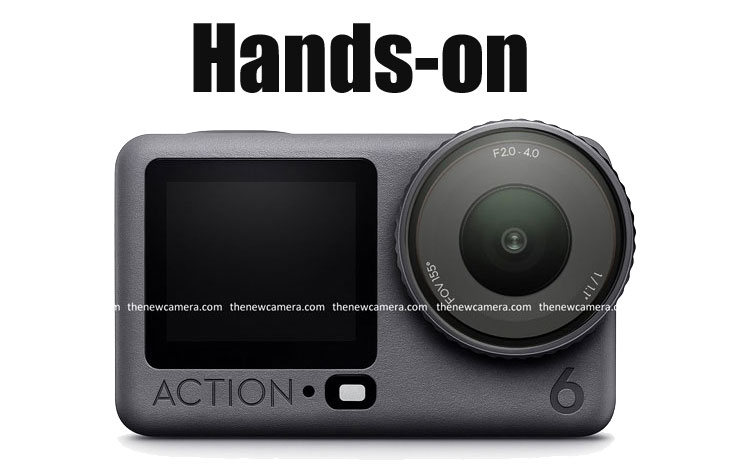
First DJI Action 6 video is now Live, So we have all the possible information related to the upcoming DJI Action 6 camera, but recently we got a surprise surprise by one of the most trusted tech sleuths @Quadro_News on X (formerly Twitter), the short video hands-on clip teases a sleek, black-bodied design with familiar DJI hallmarks—and a few intriguing upgrades. Yes, it’s the Action 6 camera first time in Action.
As you can see below, the DJI Action 6 camera has its 360° view. How does it all look? Are you impressed with the new look? Let me know in the comments, but even before this, we posted a comparison of the design of the Action 9 camera versus the Action 5 Pro, so you can get a clear idea. How does the design differ between the two? Well, as we know, the Announcement is very near to us (on November 18, 2025), and the date has already been declared by DJI itself by posting a teaser of the camera.
What the DJI Osmo Action 6 Leak Reveals: Key Design Highlights
Let’s see and try to re-imagine everything with the words that we see in this Action 6 video. The leak is a quick 10-second pan-around video of the camera mounted on a standard action cam rig (think GoPro-style quick-release mount). No subtitles or voiceover—just pure, unfiltered prototype footage set against a casual wooden table backdrop. Here’s what stands out:
Compact Rugged Body: The DJI Action 6 camera may seem very compact and ultralight-weight, but that’s not the truth. We have seen the side-by-side comparison images compared to the Action 5 Pro, where the difference is clearly visible.
The star feature? Obviously, the new 1/1.1 inch square sensor and variable Lens are coming alongside the camera. But, the body design of the camera remains the same in terms of display units, no vari-angle display like we have in the inta360 Ace series cameras.
Lens and Branding: A wide-angle lens (probably 155° FOV) sits front and centre, protected by a Gorilla Glass dome. Subtle “DJI” etching on the side confirms authenticity, and a yellow accent (possibly a power button) adds that premium touch.
Mount Compatibility: It snaps effortlessly onto a GoPro Hero mount, hinting at backward compatibility for accessories. No bulk— this thing is adventure-ready out of the box.
The video’s “boredom” caption from @Quadro_News? A cheeky nod to the slow-burn leak season. But with 2K+ views already, the hype is building fast.
DJI Action 6: A Visual Breakdown of the Upgrades
Not only the leaked images. We also have the confirmed specifications of the Action 6 Pro camera alongside its pricing. So let’s compare side-by-side and find out very quickly which one is the best for you.
Feature
DJI Osmo Action 5 Pro (2024, Official)
Lens Aperture
Variable F2.0-4.0 (world’s first for action cams; adjustable for low-light/daylight) (Confirmed via leak markings; see our iris deep-dive)
Sensor Size
1/1.1-inch Square CMOS Sensor:
Video Resolution
8K at 30fps (with HDR and ProRes codec), 5.3K at 60fps, 4K at 120fps, and 1080p at 240fps.
Stabilization
RockSteady 3.0+ / HorizonSteady
Screen
Dual OLED: 1.4″ front (LCD fallback), 2.25″ rear touch
Dimensions/Weight
70.5 x 44.2 x 32.8mm / 145g
Dive Rating
20m (no case)
Other Notes
47GB internal storage; WiFi 6
Pricing Breakdown: Standard vs. Adventure Combo
The DJI Action 6 camera is coming in different options. The first one is the Standard Bundle, which includes the camera itself, and the other one is optimized for adventure use. Check out the official pricing (Euro/GBP confirmed; USD estimated and pending final adjustments due to tariffs):
Bundle
Europe (€)
UK (£)
US ($) (Estimated)
Standard Combo
379
329
379
Adventure Combo
479
419
479
The DJI Action 6 release date was confirmed yesterday by the DJI official teaser itself, which is about to arrive on November 18, 2025, and since it’s a global teaser, we are expecting a global rollout of the camera, not a China-first announcement. That is something we have seen in the past from DJI, starting from the DJI Neo 2 drone as well as the Osmo 8 Gimbal — both of them were China first. Once the global announcement rolls out, the pre-order links will get activated for B&H Store and Amazon.com.
The article “DJI Action 6 Leak: First Look Video Revealed” was written by thenewcamera.com team on 3:51 pm, Wednesday, 5 November 2025, Greenwich Mean Time (GMT | You can also follow us on Our Official Social Media HandlesFACEBOOK | TWITTER | INSTAGRAM to get live news — > getlive Drone news + DJI Rumors
Insta360 is expanding its horizons. Now they are about to announce their own Polaroid-style camera, but wait, it’s not completely new, we have the Ace Pro 2 body, with a Polaroid grip attached with an instant Printer that allows you to quickly print your memories on the go, very similar to all the other Polaroid-style OR Fuji instant cameras. We have already seen the teaser (below). The official announcement is about to happen on November 12, 2025. It’s better to say it’s an accessory or an extension of your existing Pro two camera, which will allow you to use it as a Polaroid camera/an instant camera..
The Insta360 Polaroid Teaser: Restart of a Golden Era
Insta360 just dropped a teaser on November 6, 2025, on its official X account, with a caption stating that the action cameras are not for extreme sports. Anymore brand-new Insta360 S Pro two bundles on November 12, so this particular line of saying completely explores Insta360’s intention by not limiting itself to the action camera category. They want to expand their range as much as possible, and specifically in 2026, we have already seen that they are about to introduce a new range of consumer 360 drones in the market is starting with the antigravity A1, following up with the antigravity new/nano drone.
Visuals in the teaser reveal a modular grip that ergonomically cradles the Ace Pro 2, complete with a tactile knurled dial ( exposure or mode selector), a dedicated shutter button, and a rocker switch for quick zoom or focus adjustments. The printer module, integrated into the grip’s base, hums to life post-capture, dispensing square-format prints approximately 2×3 inches—thinner and sleeker than traditional film, hinting at Zink (zero-ink) technology rather than chemical-based Polaroid or Instax media. No audio narration beyond ambient “heat” effects and upbeat music underscores the print ejection, but overlaid text promises “enhanced control” and “exciting new accessories,” building hype without spoiling specs.
This isn’t Insta360’s first foray into grips – the earlier Xplorer Grip Kit (launched mid-2025) added basic handles and buttons—but the instant-print option elevates it to full “cosplay as a street photography camera” territory, as one analyst put it.
Insta360 Instant / Polaroid Style Camera Key Features: Expected
Take a look at the specification of the Insta360 Polaroid edition, : Let’s explore the specification now
Core Compatibility: The Creator grip is designed exclusively for Insta360 Ace Pro 2, the camera features 8K recording capability, and resolution of 50 Megapixel (8192 x 6144), which is more than enough to print high-quality instant images on the go. We have 13.5 stops of dynamic range and the camera’s 1/1.3-inch sensor for sharp, vibrant stills before instant output.
Printing Tech: The printer is Zink-based, prints via heat-activated colour crystals embedded in special paper. Prints emerge in seconds, with visible text and colours developing in real-time (as glimpsed in the teaser). Expect “print-only-what-you-want” functionality, allowing post-capture selection via the Ace Pro 2’s flip screen.
Ergonomic Upgrades: The Content creator grip features a premium knurled dial for intuitive settings tweaks. In the grip, we are also getting a responsive shutter release and a zoom rocker. Sure, it will add some bulk weight over the camera, which will be estimated at 200-300g.
Creative Modes: Sure will have AI integration for auto-enhancing prints, the Ace Pro 2 camera, and optimise for the prints. In the near future, we will have multi-size options like Instax Evo hybrids. Waterproofing might extend to the grip, but the printer could be splash-resistant only.
Battery and Storage: Our Ace Pro 2 features a large 1800mAh battery; Zink paper refills sold separately, ensuring recurring revenue like Instax film packs.
Pricing remains under wraps, but expect $150-250 for the kit, positioning it as an affordable add-on to the $400 Ace Pro 2 body. No standalone “Polaroid camera” branding yet – it’s framed as an Ace Pro 2 bundle to leverage the action cam’s ecosystem.
Feature
Details
Comparison to Instax Mini Evo
Sensor/Resolution
8K video, 48MP stills (Ace Pro 2 base)
16MP hybrid sensor
Print Tech
Zink (dry, durable)
Instax film (chemical, vintage look)
Print Size
~2×3 inches (square)
2.1×2.1 inches (credit-card style)
Controls
Knurled dial, shutter button, rocker
Touchscreen + dials
Price (Est.)
$150-250 kit
$200 camera body
Unique Edge
AI editing + action cam ruggedness
Pure analog charm
Taking on the Instax Empire: Why This Matters
Insta360 is selecting its competitor very wisely; they are entering into a space of high revenue with less competition or a set of investments. They have started with Antigravity A1 series 360 drones, since they already have mastered 360 camera tech, and now it’s time to conquer 360 space with the A1 series. Fujifilm’s Q2/H1 FY2025 earnings (released November 6, 2025). The table projected a full FY2025 Instax revenue of ¥160-170 billion. The Instax and Polaroid series have a very large consumer base, even though the fact is that the biggest part of Fuji Imaging division revenue comes from Instax series cameras and print papers, and not from their pro mirrorless camera range.
Do, Finally, Insta360 is expanding its wings, although we are waiting for the Insta360Ace Pro 3 camera. of our sources tipped us close group of pro content creators and reviewers already have the Ace Pro 3 camera. Although as we get more information on the Ace Pro 3, like. Leaked images, announcement date, or specs will post a separate update here on thenewcammera.com
Till then, let’s enjoy the polaroid-style camera from Insta360
GET LIVE NOTIFICATION, Select Your Trusted Source GET LIVE NOTIFICATION Click ON Check BOX for Latest NEWS and Rumors
The article “Insta360 Polaroid Camera Kit: Teasing Instant Prints for the Ace Pro 2 Action Cam” was written by thenewcamera.com team on 11:35 am, Sunday, 9 November 2025, Greenwich Mean Time (GMT) | You can also follow us on Our Official Social Media HandlesFACEBOOK | TWITTER | INSTAGRAM to get live news — > get live get live Camera News + Insta360 Drone Rumors 24X7
Excitement at its highest peak. Since we have confirmations related to the upcoming Sony A7V camera, it’s coming with the same 33 am sensor that we have seen in the Sony A7 IV, obviously it’s an subtle update, we do have the core specification of the upcoming camera that we have mentioned below in the article, but just before that we have recently witnessed the first hands-on images of the Sony A7 V camera leaked via, reliable source, Sonyalpharumors.com
Top-down view highlighting the EVF hump, mode dial, and dual-slot compartment.
Sony A7V image Credit: SonyAlphaRumors.com
Rear panel with flip-out screen and updated button array—no C5, enhanced grip texture.
Sony A7V: Confirmed & Rumored Specs
Finally we have the core specification of the camera. The sensor of the camera is said to remain the same as we have seen in the Sony A7 IV camera, overall the update in not revolutionary its an evolutionary upgrade. For those who already have the Sony A7 IV camera may get a little bit disappointed with the latest update,
Drawing from insider leaks, the A7V promises evolutionary upgrades for creators, balancing photo and video workflows. Here’s the latest breakdown:
Feature
Details
Sensor
33MP Full-Frame BSI CMOS (same as A7 IV? Or Tweaked or partially stacked—TBD)
Autofocus/Processor
New AI chip (like A1 II) for advanced subject detection (humans, animals, vehicles, insects)
Burst Rate
Up to 15 FPS (mechanical; improved from A7 IV’s 10 FPS)
Screen: First articulating display in the A7 series—game-changer for vertical content.
Potential drawback vs. A7 IV:
Sensor: The Sensor remain the same as that of the A7 IV, at the end user will get the same image quality as of predecessor
Basically, we are getting the same sensor, a new AI processor, and Bionz X working in full throttle mode, by extending the limited capabilities we have already faced in A7 IV in terms of continuous shooting mode
With hands-on images now confirmed, the Sony A7V is no longer just a rumour — it’s real, imminent, and packed with pro-grade tech. As per the latest updates, the camera is coming out in December. Rumour mill says, maybe Dec 5, so we are still waiting for a legit date
DJI customer pockets for the lakes are rolling up quickly. A fresh leak shows DJI employees testing the Osmo Pocket 4 alongside the Pocket 3 at a nearby Shenzhen store in China. We are spotting the pocket 4 camera rumours from the very beginning. Credible sources like drone insider Igor Bogdanov (@Quadro_News on X) posted an NDA (Non-disclosure agreement). Just after that, a leaked image surfaced on the web, and according to the source, the picture is coming straight out of a promotional video shoot in Barcelona. On October 27th, 2025, Source confirmed that the DJI Pocket 4 has already entered production and is scheduled for release in a few months. And with this set of information, the source also dropped the chassis of the Pocket 4 vs the Pocket 3. All these sets of information do give strong hints that the DJI is finally preparing to announce the Pocket 4 in the next 2 to 3 months. That is sometime in between December – January 2025, the Pocket 4 Camera will officially arrive. Now let’s talk about the Latest leak we have
The Shenzhen Leak: Candid Testing in DJI’s Backyard
The DJI POCKET 4 camera leaks are now rolling up in high speed. According to the fresh update we have, actually it’s coming from the heart of DJI’s world: As Source, the Employees are testing the Osmo Pocket 4 camera head-to-head with the Pocket 3 in a nearby Shenzhen store in China.
As we can see, one of the DJI employees or maybe a Beta Tester/reviewer of products is preparing reviews to be published on the announcement day, testing out the Pocket 4 camera against the Pocket 3 in a true candid urban testing ground, to bring out the real output of the low-light performance of the new Pocket 4 camera.
What the Photos Spill on the Osmo Pocket 4 Design
The Pocket 3 camera is easily recognisable, as you can notice the boxy style design, very familiar black chassis, 1-inch sensor, and rotatable touchscreen glowing live. But keep in mind that the Pocket 4 camera is just slightly taller than the Pocket 3 since, test rig angles are one taller and the other shorter for that side-by-side illusion. So, don’t get confused at first glance that the Pocket 4 is much taller than the Pocket 3. Overall, the Pocket 4’s sleeker profile (hinted at -116g, a 35% drop from 179g) optimises for shooting.
The DJI Pocket 4 inherits a sleek design and features a more refined body. As you can see, the Pocket 4 is on a diet, meaning it is slimmer and slightly away from the Boxy design we saw on the Pocket 3 camera.
That said, image quality’s got limits here. While writing this article, my main concern is the image quality of the shared images. I am not able to find out exactly, the new buttons below the display are what we have seen multiple times in Barcelona street snaps or earlier NDA renders.
DJI Osmo Pocket 4 Release Date and Price: Timeline Tease
Osmo pocket 4 release date is near to us, we have two different sets of intel, all this intel is pointing to the Dec-Jan Announcement of the Pocket 4 camera.
Pricing lands at $699–$799 base, maybe $899 for a zoom-heavy Pro in early ’26. Meanwhile, Pocket 3’s dipping to $529—tempting if you’re not holding out.
Why the Osmo Pocket 4 Leaks Have Creators Hyped
We have seen multiple prototypes of the Pocket 4 camera till now. The Pocket 4’s recent set of leaks and information looks very promising. For,
If the Pocket 4 delivers on the hype – larger sensor for buttery bokeh, extended battery for all-day shoots, and that elusive 8K tease – it could redefine pocketable cinema. Imagine run-and-gun docs in a mall like this, with zero post-stab hassle. But caveats: This is unverified footage from an anonymous tipster, consistent with leaks but not gospel. DJI could slap an NDA takedown faster than you can say “gimbal lock.”
What do you think – game-changer or incremental glow-up? Drop your takes in the comments, and keep your eyes peeled for more Shenzhen surprises. We’ll update as this unfolds.
The article “DJI Osmo Action 6 First Hands-On Leak: Side-by-Side with Action 5 Pro Reveals Bold Design and F2.0-4.0 Lens Innovation” was written by thenewcamera.com team on 3:51 pm, Wednesday, 5 November 2025, Greenwich Mean Time (GMT | You can also follow us on Our Official Social Media HandlesFACEBOOK | TWITTER | INSTAGRAM to get live news — > getlive Drone news + DJI Rumors
Yesterday, we had the official teaser of the DJI Action 6 camera; just after that, we had the confirmed pricing of the Action 6 in Europe and the UK. Now, finally, we have a fresh hands-on image of the highly anticipated DJI Action 6 camera, alongside comparing it side by side. The images show the DJI Action 5 Pro. It is very clear that the person is holding a kind of prototype of the Action 6, but that will give you a very clear idea of the size and the shape of the new DJI Action 6 camera compared to the old one. Although the announcement is about to happen on November 18, and we already have a sort of the product, the DJI Action 6 camera, this is a unique image where we are able to witness the side-by-side comparison and the hands-on look of the upcoming Action 6 camera.
So, DJI fans know the fact that we are tracking the Action 6 camera rumours very closely at TheNewCamera.com, starting from September with its smartwatch integration teases to yesterday’s official teaser confirmation for the November 18 reveal.
The Image is altered by the source, but it does give a clear idea of Size Comparison between the two
Action 6 vs. Action 5 Pro: A Visual Breakdown of the Upgrades
Not only the leaked images. We also have the confirmed specifications of the Action 6 Pro camera alongside its pricing. So let’s compare side-by-side and find out very quickly which one is the best for you.
20 meters without a case and 60 meters with a case.
Other Notes
47GB internal storage; WiFi 6
Modular ports (mic/USB-C 3.2); 64GB base storage
The Action 6 camera is coming with major upgrades that include a 1/1.1-inch sensor, which will obviously be free from horizontal and vertical shooting issues. Users can now select the type of shot they want to do with the square sensor without physically moving the camera. Another big advantage of having a square sensor in a larger size with a variable aperture range lens starting from F2.0-4.0 is that the overall light efficiency of the camera increases to 40% when compared to the Action 5 Pro.
So, finally, we have all the possible updates related to the Action 6 Camera, now we are waiting for first impressions of pros and consumers about the camera. Stay tuned. Stay updated
The article “DJI Osmo Action 6 First Hands-On Leak: Side-by-Side with Action 5 Pro Reveals Bold Design and F2.0-4.0 Lens Innovation” was written by thenewcamera.com team on 3:51 pm, Wednesday, 5 November 2025, Greenwich Mean Time (GMT | You can also follow us on Our Official Social Media HandlesFACEBOOK | TWITTER | INSTAGRAM to get live news — > getlive Drone news + DJI Rumors
Buy Canon Lenses, Buy Music CD or Digital Camera at amazon it helps this site, and you do not pay anything extra, it is just a way to help support this site.
New Camera Website, we list all type of new camera information, price review and all type camera rumors, subscribe us or follow us via twitter or facebook.
Disclaimer: We have attempted to select useful information to include on New Camera, and to ensure that the resources we have included on the site -- as well as the way we have described them -- are accurate, fair, and balanced. However, we make no claims, warranties, or other representations concerning the accuracy, completeness, or utility of the information provided, or concerning the abilities or performance of the organizations, agencies, companies, and other resources presented through New Camera


 BOX for Latest NEWS and Rumors