Join More Than 50,000+ Subscribers and get latest camera news and rumors
NEW CAMERA VIDEOS ON YOUTUBE
|
By admin, on August 6th, 2025

According to the latest rumors, Olympus, also known as OMDS, is now shaking up the opportunities in the medium format camera market. They are working over the possibility of a new line of medium format cameras from Olympus. How far this rumor is correct, we don’t know, but let’s dive in detail to explore it further.
History Behind the Olympus OM Digital Medium Format Camera
What we know so far about the Olympus medium format digital camera — before we talk about what exactly the source said to the rumor mill — in 2011, Olympus filed a patent for medium format camera that we have covered on our website. The design was quite a bit different from the existing mirrorless bodies of Olympus. It was a box-style design. As you can see in the image below, it is directly coming straight out from the Olympus December 2011 patent, published on our website.

From the patent image, it is quite clear that Olympus at that time was very much interested in the development of their medium format mirrorless line and that was quite evident from the patent that they filed.
Now, back to August 2025 — take a look at what the source of the rumor mill has said
- There are engineering samples testing regarding a new line from OMDS.
- The camera has a large stacked sensor in 4:3 ratio format. It looks like a medium format sensor.
- It looks like OM picked up the unfinished medium format project in 2018, which was finally canceled by Olympus executives.
- The EM1X prototype body was originally designed for medium format.
- My info came from two sources: OMDS and another tech person.
- The new format is an ongoing project which I was told could be part of OM System product.
Why Medium Format Camera?
Medium format camera is always known for their superior image quality over the full frame or the APS-C bodies, and it’s always a first love of pro photographers, seeking the highest possible image quality in their workflow. An Opportunity for OMDS Olympus, Major players in the medium format like Sony, Canon, and Nikon are absent from this competition. Fujifilm, Hasselblad, and Phase One are dominating the market right now. So the competition is not as tough as we have in the APS-C or the full frame camera market segment. But what about the market size? Let’s further analyze.
Medium Format Camera – Market Size and Growth Trends
Why does Olympus suddenly seem interested in the medium format cameras? The medium format is a very niche market, and North America appears to have a very clear dominance over the sales — or you may say the market share — of the medium format camera. If you look at the stats:
Medium Format Market Size and Growth Trends
Recent data indicates the global medium format camera market reached USD 163.3 million in 2024, with projections estimating growth to USD 210.5 million by 2033, at a compound annual growth rate (CAGR) of 2.72% from 2025 to 2033, as per IMARC Group.
M4/3 Camera market is shrinking and has reached to lowest point now
We did research related to the size of M4/3 Mirrorless camera, the stats are very limited to Japan only take a look what our editors were able to find
The Micro Four Thirds (M4/3) camera market is shrinking, particularly in Japan, with a significant drop in market share from 21.7% in 2020 to less than 5% in 2023.
Statistical Data of M4/3 camera market share in Japan
| Year |
Market Share in Japan |
| 2019 |
19.8% |
| 2020 |
21.7% |
| 2023 |
< 5% |
What We Know So Far About the Olympus Medium Format Camera
- Overall the M4/3 format camera market share has reached to lowest point. To evolve and survive company has to explore new sensor bodies and formats to appeal to a larger consumer base.
- Olympus started working on the medium format camera system and development back in 2018.
- They have published a patent related to the medium format camera on 2011 that we have also covered on our website.
- The plan was halted — maybe due to the financial condition of the company or the transition of ownership.
- According to the source, the Olympus OM-1X body was initially designed to house a medium-format camera sensor.
- The source also suggests the project is still in an exploratory phase, so no confirmation over the arrival of a final product hinted by the source at the moment.
We have also analyzed the market space and growth opportunity of medium format mirrorless cameras. Since the competition is less and the growth is very much clearly visible, if Olympus enters into the competition, it will be a great benefit for Olympus.
Medium Format and Olympus OMD Ecosystem
Yes, they have to work on lenses, since they are completely dedicated right now on Micro Four Thirds (M4/3) format-based interchangeable mirrorless cameras and lenses. And it will be a major step for the company itself to support such a plan.
As we have already seen in the statistics, the medium format market is a niche but growing. The brands like Fujifilm are gaining slower attention from the professionals, but the growth is very clearly visible in this various space. If Olympus enters with a proper set of lenses — either of their own or with the help of third-party manufacturers having the compatibility with their system camera — they can create a very good consumer base, since they are already a known and reputable brand from the DSLR to mirrorless.
As smartphone hardware is posing sensor size up to 1 inch, it has become necessary for Micro Four Thirds camera makers to enter into a new zone that should offer a very unique solution to professional photographers or videographers. Fuji already did that – they have entered directly from APS-C to Medium format. Due to the Shrinking M4/3 market, Panasonic is now updating its M4/3 format Lumix series at a much lower frequency and they’re putting all their attention on the recent S1 series with full-frame sensors based cameras.
It’s a very welcome step if Olympus is entering a medium format space that has lower competition and a good growth opportunity.
Track the Latest Camera News on TheNewCamera.com
At TheNewCamera.com, we’re dedicated to keeping you informed about the latest camera news. The article “Olympus OMD Medium Format Camera – Latest Rumors” was published on 6:17 pm, Wednesday, 6 August 2025, Greenwich Mean Time (GMT) by thenewcamera.com team | Follow us on our social pages FACEBOOK | TWITTER | INSTAGRAM to get live Camera News + Canon Rumors 24X7.
source of the rumor – Mirrorlessrumor.com


By admin, on August 5th, 2025
The Insta360 Antigravity drone is spotted in the wild. The official announcement was already made on July 29, 2025 (read the official press release here), and the final release is expected in late August 2025. Thanks to Quadro News for sharing their pics on X., we now have some high-resolution pics of the same. Let’s explore the Insta360 in a closer view.
The Latest Leak – Testing Out the Insta360 Drone in Wild Scenarios
Just a few hours ago, these images surfaced on the X platform, which include:
Field Test Image – It looks like the tester of the Insta360 drone is wearing VR goggles. He can be seen in a natural setting with green scenery, having a controller in his hand, and even the design of the goggles he is wearing is clearly visible.

In-Vehicle Shot – The Antigravity drone can be clearly seen in the vehicle trunk, sitting alongside multiple accessories. On the drone part, it can be clearly seen that the propellers are black in colour, and big kind of casual guards are protecting the propellers from both sides.

The leaks align with the early prototype images of the drone that we have already covered on our website in our previous post — you can check here. But right now, the design of the drone is very neat and clearly visible. Now, the only thing that excites me is whether this particular drone will fall under the sub-249-gram lightweight category or not, since the shape of the drone looks slightly bulky. Let’s explore more…
What Does This Leak Exactly Tell Us
- 360-Degree Immersive Capture – Since the drone pilot is wearing VR goggles, this suggests the pilot can experience real-time 8K 360-degree footage from the drone, and that’s really exciting. And if this feature is coming inside the Insta360 drone, then for sure it’s kind of a world-first feature to be highlighted for the Insta360 Antigravity.
- Rugged Design – The outdoor use indicates the drone has a rugged build, and it does have LiDAR and advanced obstacle avoidance features.
- Ease of Use – After looking at the DJI-style controller and goggles, it seems that the use of the Insta360 Antigravity drone will be as easy as operating DJI drones.
 Image of one more prototype under test – The mini is also expected to arrive alongside with pro Take a look at the rest of the core specifications that are expected to arrive inside the Insta360 Antigravity drone
- 360-Degree Camera: Yes, it’s almost confirmed that the Pro model with dual fisheye lenses is designed to capture immersive 360-degree footage and will be a flagship model of Insta360 drones. You can easily reframe the shots as per your requirement.
- Innovative Design: The professional model’s arms and motors are strategically placed to remain completely invisible while recording footage.
- Modular: The drone features a modular design, and it is visible from the pictures. The drone has attachable propeller guards and modular components, suggesting its main focus is on easy repairability and portability.
- Weight: The weight of at least one drones is expected to fall under the micro category [Under 250 Grams]. This is a critical factor to avoid strict drone regulations in many countries.
- Additional Features: Insta360 already has a lot of technology ready to be implemented in the drone — this includes AI-powered editing tools, advanced image stabilization, and FlowState technology already used in the X5.
For the best and latest updates, keep checking our website — thenewcamera.com.
Follow us on our social pages FACEBOOK | TWITTER | INSTAGRAM, If you have time –>see more Camera News and DJI Rumors
source Igor Bogdanov @Quadro_News


By admin, on August 5th, 2025

If you are looking for the best drone for 2025, then we have selected the top 10 selling drones available in October 2025, and all these drones are 4+ star-rated drones with more than 1000 reviews by their buyers. So, depending upon your specifications, buy any of these top 10 best-selling drones available in October 2025.
Why Choose a Drone from Amazon’s Best Sellers in 2025?
Most of the drones listed in our list feature 4K Ultra HD recording with GPS navigation and long-range FPV transmission. Out of these, approximately 7 to 8 of them are under 249g, and we are going to specifically list the lightweight drones in the List below. The entire list comprises budget to premium models, making it perfect for both beginners and professionals.

1. DJI Mini 4K – The Best Budget 4K Drone for Beginners in 2025
The DJI Mini 4K is currently the top-selling drone on Amazon USA, with more than 1800+ 4.5-star reviews by its users. The drone is under 249 grams, so you don’t have to get any extra access permit or install any of those USA government-based apps to get airspace clearance. You can fly this right away without thinking of anything else, since under-249-gram drones don’t require any specific permission. As for the specs, the DJI Mini 4K offers 4K Ultra HD recording, 3-axis gimbal stabilization for smooth video recording, up to 10 km of radio transmission, up to 31 minutes of flight time, and intelligent flight modes. A perfect drone for beginners.
- Key Features: 4K UHD camera, 10km transmission, auto return, wind resistance
- Rating: 4.5/5 (1,812 reviews)
- Price: Starting at $299.00 Amazon.com
- Why Buy?: Affordable, lightweight, and packed with professional-grade features.
2. DJI Mini 3 Fly More Combo – Longest Flight Time
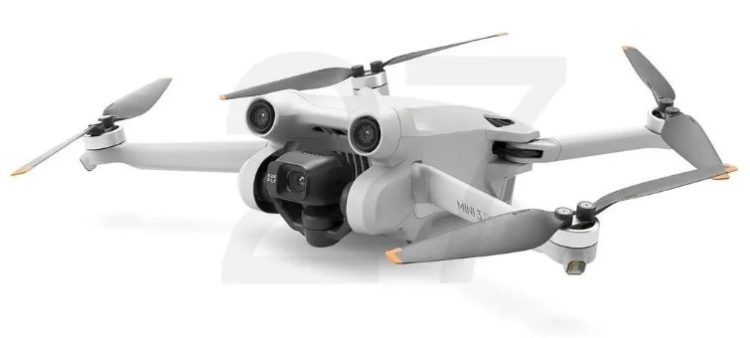
The DJI Mini 3 Fly More Combo is one of my favorite drones. It offers approximately 140 minutes of total flight time with three batteries and allows you to record 4K Ultra HD video and vertical shooting. Specifically, if you want your drone to stay in the air for a longer period, then this is an ideal travel vlogging and content creator drone for extended aerial sessions. The best part is even this drone falls under the 249g lightweight category, so you can easily fly this without needing any permission.
- Key Features: 4K camera, 114-minute flight time, vertical shooting, lightweight
- Rating: 4.5/5 (4,724 reviews)
- Price: Starting at $719.00 at Amazon.com
- Why Buy?: Extended battery life and robust features for creative professionals.

3. DJI Neo – The Best Selfie Drone for Vloggers
Why is the DJI Neo called the best selfie drone for vloggers? The big reason is the drone weighs only 135 grams and it’s a kind of self-flying drone. It can easily take off from your palm, and most importantly, it has a built-in subject tracking feature, so it will track you wherever you go while recording 4K Ultra HD videos — without the need for any controller. Whether you are riding a bike, in a car, or just walking nearby, this drone follows you and records your activities in a cinematic way.
- Key Features: 4K camera, palm takeoff, subject tracking, built-in propeller guard
- Rating: 4.4/5 (6,475 reviews)
- Price: Starting at $197.01 at Amazon.com
- Why Buy?: Ultra-lightweight and user-friendly for social media content creation.
4. 1080P Full HD Foldable Drone – Best Budget Drone for Beginners
The 1080P Full HD Foldable Drone is the 4th most popular drone on Amazon.com. If you are a beginner and looking for a drone under $50, then this one is the best find for you. At this price, more than 2000+ users have reviewed this drone with a 4.2-star positive rating, which is quite high for a drone at this price point.
- Key Features: 1080P camera, one-key takeoff/landing, 3-speed modes
- Rating: 4.2/5 (2,380 reviews)
- Price: Starting at $40.49 at Amazon.com
- Why Buy?: Budget-friendly with fun features for new pilots.
5. DJI Mini 4 Pro Fly More Combo – The Best Premium Lightweight Drone
The DJI Mini 4 Pro Fly More Combo gives you 102 minutes of flight time with its three batteries and built-in 4K HDR mode. It weighs under 249 grams. So, if you’re looking for a professional-quality drone that doesn’t require any sort of permissions before flight, the DJI Mini 4 Pro Fly More Combo is the best premium lightweight drone. The drone also features advanced omnidirectional obstacle avoidance as well as smart return-to-home — all the features you would see in a professional-grade drone.
- Key Features: 4K HDR, 102-min flight time, obstacle avoidance, RC 2 controller
- Rating: 4.5/5 (5,822 reviews)
- Price: Starting at $1,645.00 Amazon.com
- Why Buy?: Premium features in a lightweight, regulation-friendly package.

6. DJI Flip (RC-N3) – The Best Drone for Long-Range Transmission
The DJI Flip RC-N3 features approximately 13 km of video transmission range and records 4K Ultra HD video. It is so small that it can easily take off from your palm. It also has an auto-return feature. More or less, this is one of the best ultra-lightweight drones for long-range transmission purposes. You’ll get approximately 31 minutes of total flight time.
- Key Features: 4K camera, 13km transmission, palm takeoff, 31-minute flight
- Rating: 4.5/5 (898 reviews)
- Price: Starting at $434.61 Amazon.com
- Why Buy?: Exceptional range for capturing distant landscapes.
7. 1080P Full HD Camera Drone for Beginners
This under-$50 drone is quite popular and appears a second time in our list. We have to keep it since it is again one of the best popular drones among beginners who want to try out drones without spending a chunk of money. The Full HD drone features voice control, gesture selfie, and altitude hold — and obviously, it falls under the lightweight category.
- Key Features: 1080P camera, voice control, 3D flips, two batteries
- Rating: 4.2/5 (3,471 reviews)
- Price: Starting at $44.99 Amazon.com
- Why Buy?: Simple controls and affordable for first-time flyers.
8. Q9s Drone for Kids – The Best Drone for Young Pilots
The Q9s Drone is a kid-friendly quadcopter. It’s available for approximately $31.98. At the same time, you are also getting propeller guards for safety. A very good drone for young pilots.
- Key Features: Altitude hold, headless mode, propeller guards, two batteries
- Rating: 4.3/5 (5,766 reviews)
- Price: Starting at $31.98 Amazon.com
- Why Buy?: Safe and fun for kids learning to fly.
9. Holy Stone Mini Drone – The Best Indoor Drone for Kids
Holy Stone Mini – As the name suggests, it features auto hovering, 3D flips, and uses 3 batteries for flying. It is a mini drone that is perfect for indoor flying and playing with kids. A beginner-level drone available at a superb budget range with a 4-star rating and 1200+ reviews on Amazon.
- Key Features: Auto hovering, 3D flips, headless mode, kid-friendly design
- Rating: 4.0/5 (1,236 reviews)
- Price: Starting at $34.13 Amazon.com
- Why Buy?: Ideal for safe indoor fun.
10. 2K HD FPV Drone – The Best Beginner FPV Drone for Adults
The 2K HD FPV Drone offers brushless motors, gesture selfie, and waypoint flight. It has a foldable design and uses two batteries. It’s a solid mid-range maneuvering drone that can be used by hobbyists. The 10th drone in our list is very unique, not made by DJI.
- Key Features: 2K HD camera, brushless motors, waypoint flight, 3D flips
- Rating: 4.3/5 (746 reviews)
- Price: Starting at $49 Amazon.com
- Why Buy?: Balances advanced features with affordability.
Key Considerations When Choosing a Drone in 2025
- Camera Quality: Opt for 4K or higher for professional-grade footage. Models like the DJI Mini 4K and Mini 4 Pro excel here.
- Flight Time: Longer flight times (e.g., DJI Mini 3’s 114 minutes) are ideal for extended shoots.
- Weight: Drones under 249g (e.g., DJI Neo, Mini 4K) avoid FAA registration in the USA.
- Features: Look for GPS, auto return, and obstacle avoidance for safer flights.
- Budget: Prices range from $31.98 (Q9s) to $1,645.00 (DJI Mini 4 Pro Combo).
This is the list of top-selling drones in the USA for October 2025. The list contains something for everyone, from the best budget drone for kids to bduget premium ones like DJI Mini 4 Pro. At the very same time, if you are a creator, the best drone for you is the DJI Neo. So, now, depending upon your set of requirements — either your priority is camera quality, flight time, or ease of use — you can select any of the highest-rated drones from our list above.
Post Update Log:
- This post was last updated on October 7, 2025, at 7:32 AM GMT (2025-10-07T07:32:00Z), which is 1:02 PM IST.

By admin, on August 4th, 2025
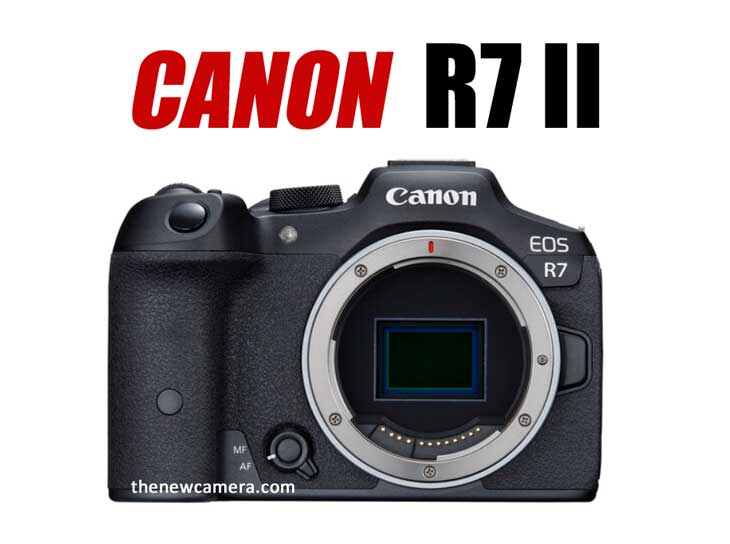
The Canon R7 Mark II camera is one of the most rumoured Canon cameras of 2025. Yes, as much as I am waiting for the Canon R6 Mark III, a lot of APS-C users love to get the R7 Mark II asap. However, we have to accept the fact that the R7 was overdue for an update. The original Canon R7 camera was announced back in 2022 — a prosumer-grade camera with high-end core specifications at that time. However, in 2025, the Canon R7 requires an urgent update as soon as possible. Let’s talk about the different sets of sources that are sharing information related to the Canon R7 Mark II camera’s arrival date.
Canon R7 Mark II Camera Arrival Date
Before we jump to conclusions and give you a time frame when the Canon R7 Mark II is actually coming, let’s discuss the most updated set of information we have related to the announcement date of the Canon R7 Mark II camera from the two most trusted sources.
Source 1 – Jan Wegener – As we have discussed in the previous article, the trusted source, Mr. Wegener, said – I’ve reached out to my sources again, but no one has really heard anything about the camera just yet. That doesn’t mean it’s not coming soon, but it makes it less likely that a release is imminent. Wegener’s use of “not imminent” clearly means not in the next one to two months—that is, August and September. However, “that doesn’t mean it’s not coming soon”. It certainly leaves room for a possible announcement in Q4 of 2025—that is, from October to December 2025.
Source 2 – According to CanonRumors – One of the most trusted names in the rumor industry, and their sources, the Canon R7 Mark II camera will arrive at the IBC trade show in September 2025. It’s a major product event, and historically, Canon has used the IBC platform to showcase video cameras and announce cinema-related products. BUT, the chances look less likely since the IBC trade show has always been a platform for video-centric and video-related announcements. Yes, Canon does showcase their cameras in their booth, but that’s not the standard platform for Canon Mirrorless cameras-related announcements. One more thing, if we look at the previous 5-year pattern, Canon generally avoids the August and September months of the year for their mirrorless camera-related announcements.
Between September to December 2025
If we create a timeline of possible arrival dates from all the latest sets of information we have – from CanonRumor to Jan Wegener – everyone is pointing out the announcement of the Canon R7 Mark II camera between September to December 2025. That indicates that the R7 Mark II camera is coming for sure in the next few months; it’s just a matter of time and information. We will soon get the exact date of its arrival.
Canon R7 Mark II Camera Price
- The Canon R7 Mark II camera body is likely to cost around $1799 to $1999 USD
- Paired with a kit lens (18–150mm), the price is expected to range somewhere around $2100 to $2500 USD
Two factors affect the price of the Canon R7 Mark II camera:
- So the primary factor that will affect the Canon R7 Mark II camera price is the massive upgrade inside the body. Canon will surely bring a new sensor and image processor inside the R7 Mark II camera body. Rumours suggest the camera may potentially include a 33 to 40 megapixel sensor, which may have a stacked design integrated inside it to improve the overall performance. So it’s quite obvious to expect the price hike in the Canon R7 series camera body price if the R7 Mark II camera is coming with a massive update.
- The second factor that potentially impacts the cost or the pricing of the Canon R7 Mark II camera is the tariff imposed by the USA on Japanese-manufactured products, including cameras. So historical trends suggest a possible price hike that we are expecting approximately somewhere in between 10 to 15% for the affected products. So that’s also a reason that will surely impact the Canon R7 Mark II camera price.
Considering these two basic factors, the price of the Canon R7 Mark II camera body and kit lens is expected to have a higher price tag compared to its predecessor.
Canon R7 Mark II Camera Core Specification
There’s a 75% or more chance that we will have a 33 MP stacked sensor. But at the very same time, as we have discussed, there have also been some rumors in the past related to a 40MP sensor. So we are considering both. Here is the rumored specification table of the Canon R7 Mark II camera:
Rumored Specification Table of Canon R7 Mark II Camera
The EOS R7 Mark II is rumored to feature significant upgrades, positioning it as a premium APS-C camera. Here are the key specifications based on recent leaks:
| Feature |
Details |
| Sensor |
33MP to 40MP APS-C stacked CMOS sensor, offering faster readout and reduced rolling shutter. |
| Processor |
DIGIC X with DIGIC Accelerator for enhanced autofocus and processing speed. |
| Stabilization |
Up to 8.5 stops of in-body image stabilization (IBIS) for low-light and video. |
| Viewfinder |
2.36M-dot OLED EVF, potentially with improved refresh rates. |
| Shutter |
40 FPS electronic shutter, possibly no mechanical shutter. |
| Video |
4K 120FPS with Canon Log 3, potential up to 6k 120FPS / 8K 60 FPS recording. |
| Form Factor |
Larger body with EOS R5 Mark II-like ergonomics, improved grip, and AF joystick. |
| Memory Slots |
Likely dual slots: CFexpress Type B and UHS-II SD. |
| Additional Features |
Pre-continuous shooting, in-camera upscaling. |
These specs suggest Canon is aiming for a flagship APS-C camera, potentially rivaling Fujifilm’s X-T5
Canon R7 Mark II: APS-C Powerhouse Like the Canon R1, Canon’s 7D series has always been called the Mini 1D / 1DX series in Canon. So, from that POV, we can say Canon R1 Mini is coming next. Canon always creates a big leap between the core specifications of two flagship cameras, so we are expecting a massive update over the specs of the existing Canon R7 Camera. Finally, even if it arrives at a higher price point with a major upgrade, photography professionals will feel it is reasonable to pay that price.
Track Canon R7 Mark II News on TheNewCamera.com
At TheNewCamera.com, we’re dedicated to keeping you informed about the latest camera news. The article “Canon R7 Mark II Camera Price, Release Date, and Specifications” was published on 1:34 pm, Monday, 4 August 2025, Greenwich Mean Time (GMT) by thenewcamera.com team | Follow us on our social pages FACEBOOK | TWITTER | INSTAGRAM to get live Camera News + Canon Rumors 24X7.
source – canonrumor.com
By admin, on August 3rd, 2025

Thanks to the misprinted box, we now have the major core specifications of the DJI Mini 5 Pro drone confirmed 100%. The drone is coming with the large 1-inch sensor for high-quality video as well as LiDAR-based obstacle avoidance techniques and a big 36-minute flight time. Overall, the new DJI Mini 5 Pro is expected to carve out its own niche in the consumer market. Now let’s see the specifications in detail:
DJI Mini 5 Pro Major Specifications – 7 Key Features Confirmed
- Ultralight weight and foldable – the drone is perfect for travel photographers and those who love to do some kind of aerial photography or videography with a lightweight drone.
- 1-inch main sensor with 4K 120FPS video capability – that sounds really fascinating. The DJI Mini 5 Pro drone is getting a large 1-inch sensor and video capability up to 4K 120 frames per second, so you can record super slow-motion cinematic aerial videos with the drone. No need to invest in expensive, heavy setups.
- Vertical shooting with 225 degrees of gimbal rotation – this set of new features will upscale the overall production quality of your video.
- 48mm mid-tele mode – for telephoto shots, including high-quality lossless zoom, the drone has a dedicated 48mm tele mode.
- Nightscape omnidirectional obstacle avoidance with forward-facing LiDAR – you can move your drone in worry-free way since it is loaded with LiDAR, but keep in mind it’s for advanced safety, since it’s forward sensing only.
- Active tracking for running, cycling, and more – this is one of the most loved features of DJI drones: the ActiveTrack, which is being intensively used by fitness and travel content creators nowadays.
- 36 minutes of flight time – that’s a long session, specifically for a drone. If you are into running or if you are going somewhere with your bike and specifically if you also want to shoot aerial photography, then 36 minutes of flight time is more than enough to capture the beauty of the entire landscape.
DJI Mini 5 Pro Price
- Base Model (DJI Mini 5 Pro with Standard Controller): $899–$999 USD – So we are expecting a 15 to 30% increase over the price of the base model since it carries 1-inch large sensor and enhanced LiDAR tech.
- Fly More Combo (with DJI RC 2 or RC-N3): $1,199–$1,499 USD – Similarly, we are also expecting a better price increase in the Fly More Combo with the account of all enhanced capabilities.
Expected Release Date: September 2025
Based on the 2-year refresh cycle of the Mini 4 Pro series or whatever, the DJI Mini 5 Pro release date is expected to be sometime in September 2025.
By the way, you can stay tuned to TheNewCamera.com for future updates.

Is the DJI Mini 5 Pro Leak Legitimate?
The DJI Mini 5 Pro leaks are coming from a misprinted box, said by sources. Since it’s coming from an authenticated source, we are almost 100% confirmed that all the specifications that we have discussed above are authentic.
The Missing 249 Gram Label – Should We Be Concerned About It?
In the box, “Less than 249 grams” label specifically featured in the DJI Mini 4 Pro is not visible in the 5 Pro packaging, which is the matter of concern to many, since if it exceeds the 249-gram threshold, it will become a big problem to use, specifically in countries like UK and Australia. So how can a DJI drone with the name culture of Mini series exceed the weight of 249 grams? Experts are saying the inclusion of the large 1-inch sensor and bigger battery pushed the weight of the drone.
By the way, we are waiting for more confirmation over this and as soon as we get any update related to the weight or any other specs related to the same drone, we will update this page.
Follow us on our social pages FACEBOOK | TWITTER | INSTAGRAM, If you have time –>see more Camera News and DJI Rumors
source image credit x.com/JasperEllens

By admin, on August 3rd, 2025

The compact camera demand has been raised significantly, according to the BCN+R report from last year November 2024, they are witnessing a huge surge in compact camera unit sales, that made camera makers like Canon rethink to enter into the traditional compact manufacturing once again.
Kodak PIXPRO FZ55 – The Top Selling Compact Camera of 2025
From February 2025 to June 2025, the Kodak PIXPRO FZ55 remained the top-selling budget compact zoom camera of 2025 if we analyze the BCN+R report. People are highly inclined towards this particular compact zoom camera.
- The total number of unit sales rose by 112.7% compared to June 2024, that’s really unbelievable.
- Another thing is the sales value which surged by 134%, reflecting a very strong demand from budget to premium compact buyers.
But there is bad news for interchangeable lens cameras since the unit sales are down to 80% and the overall sales value is down to 78.1%, so that’s really a big matter of concern — why people are not preferring to have mirrorless cameras nowadays.

Panasonic LUMIX TZ99 (ZS 99) – Just After Kodak PIXPRO FZ55
The Panasonic TZ99 (Known as ZS 99 in USA) covers approximately 11.2% market share of June 2025 and it is also dominating in the entire list alongside the FZ55. The TZ99 is a compact zoom camera that features a 180-degree tilting display screen so you can also create vlogs with the camera. At the very same time, the camera features a 30x extendable zoom lens.
It’s ideal for those who love high-magnification zoom photography. TZ99 is a perfect fit for those who love to have quality content over digital zoom.
Fuji X100VI & X-Half camera also appears in the list sometimes, and that’s one of my favourite compact cameras with high high-quality 23mm F2 lens and the super-resolution 40-megapixel X-Trans 5 sensor — a perfect street photography camera that a photographer can ever have after the Leica Q3, obviously, but that’s not on the list.
Below is the sales volume share data for lens-integrated digital cameras in June 2025, based on BCN+R rankings.
| Rank |
Manufacturer |
Product |
Sales Volume Share (%) |
Average Unit Price (Thousand Yen) |
| 1 |
KODAK |
PIXPRO FZ55 |
11.8 |
20.5 |
| 2 |
Panasonic |
LUMIX TZ99 |
7.3 |
59.6 |
| 3 |
KODAK |
PIXPRO FZ45 |
4.6 |
18.4 |
| 4 |
Kenko Tokina |
KC-AF11 |
4.4 |
8.2 |
| 5 |
KODAK |
PIXPRO WPZ2 |
4.3 |
23.8 |
| 6 |
Fujifilm |
instax mini Evo |
4.1 |
25.0 |
| 7 |
Canon |
PSG7X MARKII |
3.1 |
121.4 |
| 8 |
Fujifilm |
instax mini LiPlay |
3.0 |
20.7 |
| 9 |
Ricoh Imaging |
WG-1000 |
3.0 |
29.7 |
| 10 |
Fujifilm |
FUJIFILM X-Half |
2.6 |
107.3 |
Source: BCN+R, June 2025
Why Compact Cameras Like Kodak PIXPRO FZ55 and Panasonic LUMIX TZ99 Are Popular?
Let’s discuss the exact reasons behind the popularity of these compact cameras:
- Budget is the most important factor. The affordability of these compact cameras makes them highly popular among its users. Other than that, not only affordability, the features that have been packed inside these small compacts by the manufacturers are the more important ones. No other compact maker is able to give such features in this price point, and that’s why these two models are always on top since November 2024.
- Portability is another most important factor, since most of the buyers love to have a pocket-sized, high-quality compact camera that has an optical capability better than their existing smartphone. And that’s why the demand for the TZ99 camera is high in the market.
- Canon SX740 HS is hard to find – literally, there is no competitor there for the TZ99. Although we have several options for FZ55, but due to the absence of a perfect competitor, TZ99 has become the most popular compact in the pocket zoom series.
- As interchangeable lens cameras are becoming more pricey, people are now preferring to have a compact camera which is cost-effective.
The BCN+R ranking is exactly the source of what people are looking for and interested in buying, and that’s why many of the major camera makers are now putting their attention towards the development and announcement of traditional compact cameras.
ABout the author: The article “KODAK PIXPRO FZ55, Panasonic LUMIX TZ99 Lead 2025 Compact Camera Sales Rankings ” written and updated by thenewcamera.com team on 5:09 pm, Sunday, 3 August 2025, Greenwich Mean Time (GMT) | Follow us for more updates and Get LIVE RUMORS –> FACEBOOK | TWITTER | INSTAGRAM to get live Camera News 24X7.
source BCN+ R


By admin, on August 3rd, 2025
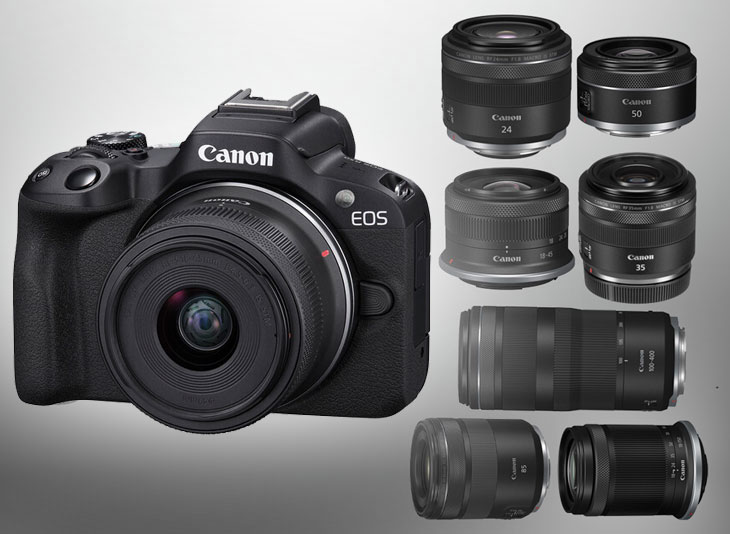
The best lenses for the Canon R50 Camera are here. We have selected some of the best available lenses for the Canon R50 camera. The article was updated in October 2025, and we have added all the latest Native as well as the best third-party lens option available for the Canon R50. One of the most updated and best guides where you will find the best available lenses for the Canon R50. The features excellent core specs and an advanced AF system similar to the Canon R10 camera. With the Canon R50 camera, you can shoot oversampled 4k videos up to 30fps (10 BIT HDRPQ also available), and when shooting still images, the Camera is able to capture a full-time burst speed of 15FPS with full-time AF/AF support. A total of 4,503 manually selectable AF points are also available for precise autofocusing. One of the best entry-level Mirrorless cameras ever made by Canon, with excellent internal still and video core specs.
In this post, we have selected some of the best lenses available for the Canon R50 camera. These lenses are best for Canon R50, as well as u can use these lenses for Canon R10, R50V, and R7. We have selected the native RF and RF-S Lenses for the Canon R10 camera. And at the end of the article, we have also added third-party lenses for the Canon R10 camera, with a focus on Sigma options. This guide covers the best zoom lenses, prime lenses, bird photography lenses, video lenses, and budget-friendly options, many of which are available at Amazon (www.Amazon.com). Whether you’re shooting landscapes, portraits, wildlife, or vlogs, this guide will help you find the perfect lens for your Canon EOS R50.
Table of Contents
- Canon RF-S 18-45mm f/4.5-6.3 IS STM
- Canon RF 18-150mm f/3.5-6.3 IS STM
- Canon RF 16mm f/2.8 STM
- Canon RF-S 10-18mm f/4.5-6.3 IS STM
- Canon RF 24mm f/1.8 Macro IS STM
- Canon RF 35mm f/1.8 Macro IS STM
- Canon RF 50mm f/1.8 STM
- Canon RF 85mm f/2 Macro IS STM
- Canon RF 100-400mm f/5.6-8 USM
- Lens Comparison Table
- Third-Party Lenses for the Canon R50: Sigma and More
- Canon R10 vs. Nikon Z50 and Sony A6400
- Frequently Asked Questions (FAQs)
- Conclusion
1. Canon RF-S 18-45mm f/4.5-6.3 IS STM – The Best Budget Zoom Lens
The body of the Canon R50 costs $799 with the 18-45mm kit lens, and without the lens, the cost of the camera body is $679. The actual cost of the lens is $269 when purchased separately from B&H. You are only paying $120 extra compared to $269 when u purchase it separately.
The 18-45mm IS STM Lens from Canon is versatile. The focal length you are getting is perfect for landscape, nature, and family-friends photography. The biggest advantage of the kit lens is the price factor and compactness. And at this price, ur also getting Image stabilization (OIS) and STM motors, which are useful for both photography and videography. You can also click some decent portraits at 50mm.
Image stabilization in the 18-45mm Lens works very effectively. As we know, the Canon R50 camera doesn’t have a built-in sensor-shift image stabilization system, so this lens will help you with its Optical Image stabilization feature. up to 4 stops of shake correction or up to 6 stops of Coordinated IS with a compatible camera body
The RF-S18-45mm f/4.5-6.3 IS STM has a Center Focus Macro function that captures close-up images with up to 0.26x magnification at 45mm (MF). Achieve up to 0.16x magnification at 45mm focal length with autofocus. When you are using the lens in Manual Focus mode at 35mm focal length, it gives a maximum magnification of 0.59x.
.The Lens also features Canon STM Motor, which is extremely helpful while shooting videos; the STM motors generate minimal noise.
Why Choose This Lens?
- Budget-friendly at $269 (or $120 extra with the kit).
- Compact and lightweight, ideal for travel and everyday use.
- Versatile focal range for landscapes, portraits, and family photography.
- Optical image stabilization (OIS) for steady shots in low light.
- Silent STM motor, perfect for video recording.
Best For: Beginners, travel photographers, and budget-conscious users looking for a versatile all-purpose lens.
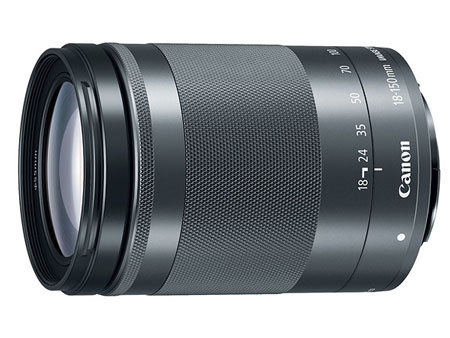
2. Canon RF 18-150mm f/3.5-6.3 IS STM – The Best All-in-One Zoom Lens
The Canon’s 8.3x APS-C zoom Lens for Canon R50 packs in a useful 29-240mm (35mm equiv.) focal length range. When you feel your kit lens has limited zoom and you need a more versatile lens, the 18-150mm lens is made for you.
This lens is an all-in-one lens for the Canon R10 camera. Perfect for those who don’t want to change the lens every time they need an all-in-one solution. The Lens also acts as a coverage lens when you are into wedding photography and helps you a lot when u are on travel, covers a wide range of 18mm to tele-end 150mm.
The lens features an STM motor, and stepping drive motors are as fast as well as as silent as autofocus work. Perfect for recording videos and shooting still images too. The OIS in this lens is highly effective and works up to 4.5 Stops, or up to 6.5 stops with Coordinated IS when paired with a compatible camera. Making it a perfect choice for shooting sharp images in low light.
The price of this lens is $499 (B&H Store and Amazon.com) You can use this lens as a default lens for your Canon R50 camera.
 Canon RF-S18-150mm F3.5-6.3 IS STM SAMPLE IMAGE – credit – Chris metcalfe https://tinyurl.com/yvv7pnus Why Choose This Lens?
- Wide 29-240mm equivalent focal range for diverse shooting scenarios.
- Ideal for weddings, travel, and event photography.
- Fast and silent STM motor for smooth autofocus in video and stills.
- Optical image stabilization for low-light performance.
- A do-it-all zoom lens, available at Best Buy.
Best For: Photographers and videographers needing a single, versatile zoom lens for multiple scenarios.
3. Canon RF 16mm f/2.8 STM – The Best Wide-Angle Prime for Vlogging
The Lens is a 16mm F2.8 Prime Lens (25mm equivalent), The 16mm Lens is the most affordable Canon wide-angle prime lens for the Canon R50 camera with a bright F2.8 aperture and STM motor. The Lens is very compact as well as fast, a perfect lens for everyday use.
Perfect Lens for Handheld Vlogging: If you want to create handheld content, consider using a Canon R50 camera. The RF 16mm F2.8 STM is highly recommended. The Auto Focus of the lens and very smooth and fast, at the same time the F2.8 aperture helps you to create subject separation while filming, and it also helps to capture perfect vlogs even in uncontrolled light conditions. Overall, the RF 16mm F2.8 STM is highly recommended for content creators.
If you want to extract, maximum sharpness you have to stop down to f/5.6, which will give you sharpness in the extreme edges and corners of the image frame. Highly essential while shooting Landscapes, architecture, or interiors with the Canon RF 16mm Prime Lens. The chromatic aberration is also very well controlled, even with automatic in-camera correction switched off. Vignetting is quite noticeable at f/2.8 but in-camera correction is also available for this. Once active, the in-camera correction, then the RF16mm F2.8 Lens becomes a perfect lens without any issues.
The lens is priced at $279 (B&H Store and Amazon.com), the most affordable wide-angle prime lens in Canon RF-Mount, and must have lens for hand-held content creators.

Why Choose This Lens?
- Affordable at $279, available at Best Buy.
- Bright f/2.8 aperture for low-light shooting and subject separation.
- Compact and lightweight (165g), ideal for handheld vlogging.
- Fast and silent STM motor for smooth autofocus.
- Excellent for vlogging, landscapes, and architecture photography.
Best For: Vloggers, content creators, and photographers shooting wide-angle scenes.
4. Best Ultra-Wide Zoom Lens: Canon RF-S 10-18mm f/4.5-6.3 IS STM
The Canon RF-S 10-18mm f/4.5-6.3 IS STM is an affordable ultra-wide zoom designed specifically for APS-C cameras like the R50. The full-frame equivalent focal length we are getting from the lens is 16-29mm, which is highly suitable for content creation and vlogs. When should you prefer the 10-18mm over the Canon RF 16mm F2.8 Lens?, the Canon RF 16mm F2.8 doesnt give you ultrawide coverage like the 10-18mm Lens, it gived more depth and getter for low-light, if ur into solo content creation for daily lifestyle vlog and most of the shoot is about to happen in-door then get the RF 16mm F2.8, otherwise the 10-18mm Lens will rock for Travel vloggging and Lifetysle or Street food vlogs. Also, keep in mind the Canon RF 16mm F2.8 is a Canon full-frame lens, and the 10-18mm is made for APS-C Cameras.
The Canon RF-S 10-18mm f/4.5-6.3 IS STM was released in late 2023. And features built-in stabilization up to 4 stops, Optical Image Stabilization (OIS), or 6 stops when paired with a + Hybrid IBIS sensor like the Canon R7, ensuring sharp handheld images in low light. For Vloggers and content creators, the built-in STM motor provides smooth video recording capabilities inside as well as Rack-Focusing with quiet autofocus. The minimal distortion is due to the Canon Digic X processor in-camera or post-processing / Lens correction. Close-focusing capabilities allow for creative foreground elements in wide shots. Priced at $329,
Why Choose This Lens?
- Affordable at $329, available at Amazon.com.
- Ultra-wide 16-29mm but slow aperture
- Compact and lightweight (150g)
- Optical image stabilization, perfect for travel vlogs
- Silent STM motor and Rack Focusing for Video
Best For: Landscape photographers, real estate shooters, vloggers, and anyone needing broader coverage than the standard 18-45mm kit lens
5. Canon RF 24mm f/1.8 Macro IS STM – Versatile Prime for Street and Macro
If you own a Canon R50 camera, then for sure the most usable prime lens for you is the 24mm F1.8 Macro STM lens, the RF 24mm F1.8 Macro IS STM Lens equivalent focal length of this lens is 38mm which is near the standard focal length of 35mm. A perfect focal length for shooting landscape and street photography. This 24mm lens can be used for shooting family and friends’ portraits in a home in a low-light environment. Also perfect for capturing macro images due to its 1:2 magnification ratio and close-up shooting distance of 5.5 inches.
Perfect lens for YouTubers: The 24mm lens is a perfect tool for creating office and room vlogs, and also perfect for food photography and close-ups of your fav dish. You have to just maintain a 3 to 5 feet distance from your camera/rest your camera on a tripod, and start making your online content with excellent sharpness and creamy bokeh in the background.
The 24mm Lens is loaded with optical image stabilization. For the first time, I have seen Canon giving us OIS features in Prime lenses like 24mm. The OIS is effective up to 5 stops, or 6.5 stops with coordinated IS, to better enable working handheld in low-light conditions and with slower shutter speeds. Whether you are creating videos with the lens or shooting still images the OIS helps all the time. We also have a full-time manual control option with the Configurable Control Ring of the lens, which can be used to adjust a variety of exposure settings, including aperture, ISO, and exposure compensation.
The lens is available at $499 (B&H Store and Amazon.com) You will feel the price is high. But also think twice that it’s a fullframe lens and will remain compatible with your camera even if you upgrade your camera to full frame. And despite being a 24mm Prime lens, the lens also features OIS and macro Capability, none of such features are available even in competitors’ prime lenses.
 Canon RF 24mm F1.8 sample image – Image credit – Martin Moucha https://tinyurl.com/4ucfsfxu Why Choose This Lens?
- Versatile 38mm equivalent focal length for street, landscape, and portraits.
- Bright f/1.8 aperture for low-light performance and creamy bokeh.
- Optical image stabilization for handheld shooting.
- Macro capability with 1:2 magnification for close-up photography.
- Full-frame compatibility, available at Best Buy.
Best For: YouTubers, street photographers, and those needing a versatile prime lens with macro capabilities.
6. Canon RF 35mm f/1.8 Macro IS STM – The Best Prime for Professional Portraits
Perfect for professional-quality portraits with a Canon R50 camera. The Canon RF 35mm F1.8, when paired with the Canon R50, gives you an equivalent focal length of 50mm Lens in full-frame format (due to Canon APS-C 1.6x crop factor) So it actually will act as a 50mm F1.8 with optical image stabilization and macro capability. A perfect lens for wedding pros, models & fashion photographers.
The size of this lens is slightly larger than the 24mm F1.8. It measures 74.4 x 62.8 mm and weighs 305g. However, this is still relatively light and compact, and very easy to carry for the shoot. The lens pairs very comfortably with the Canon R50 camera and has a sleek look and feel. There is a focus switch on the side of the lens; the lens does support full-time manual focus. That is, you can manually focus the lens by adjusting the focus ring even when the camera is set to autofocus.
With the Canon RF35mm F1.8 lens, you get an aperture range of f/1.8 – f/22. When the Max aperture when used helps to isolate the image from the environment with creamy background blur, it all helps you to generate a perfect cinematic output. With the additional Macro capability of the lens, you get tack-sharp images. The lens features Super Spectra coating that has been applied to individual elements to reduce the ghosting and flare for greater contrast and color neutrality when working in strong lighting conditions.
$499 (Amazon.com | B&H Store) is the price of a 35mm F1.8 IS STM Macro lens, this is a very reasonable price lens if you look at its features. The lens is a full-frame lens and features Macro capability as well as optical image stabilization. We highly recommend this lens for the Canon R50 camera.
 Canon RF 35mm f/1.8 Macro IS STM Why Choose This Lens?
- 50mm equivalent focal length, ideal for professional portraits.
- Bright f/1.8 aperture for cinematic bokeh and low-light performance.
- Optical image stabilization for steady handheld shots.
- Macro capability for detailed close-ups.
- Full-frame compatibility, available at Best Buy.
Best For: Wedding photographers, portrait photographers, and those seeking a professional-grade prime lens.
7. Canon RF 50mm f/1.8 STM – The Best Budget Prime Lens
Best budget lens for photographers, if you want to shoot portraits with your camera a want a budget prime lens, then the nifty-fifty Canon RF50mm F1.8 Lens is best for you. The RF 50mm lens is equivalent to 85mm when paired with a Crop sensor camera like the Canon R50.
The telephoto prime lens measures 69 x 40 mm and weighs 160 g. This makes it the lightest lens on our list of prime lenses, balancing well with the weight of the camera. To suppress spherical aberrations, Canon has introduced one precision-molded (PMo) aspherical element inside this lens, it also upscales the sharpness and accurate subject rendering. Very light to carry around and excellent for beginners, great view and clear pictures!
The overall image quality is fantastic. You’ll love how easy it is to snap incredibly sharp, beautiful photos using this lens, and your subjects will love it even more. Although the lens has a limited Macro capability of 50cm, so if you want a better macro-performing lens you have to buy the other two primes (24mm and 35mm) mentioned above in the list.
With a price tag of $199 (B&H Store | amazon.com) Canon RF 50mm, F1.8 STM Lens is the most affordable prime lens in the RF lineup. The reason behind that is the lens doesn’t have the OIS like the other prime lenses as well as macro capability.

Why Choose This Lens?
- Affordable at $199, available at Amazon.com
- 85mm equivalent focal length for stunning portraits.
- Lightweight and compact, ideal for beginners.
- Bright f/1.8 aperture for excellent low-light performance and bokeh.
- High image quality with minimal aberrations.
Best For: Beginner photographers and those focused on portrait photography on a budget.
8. Canon RF 85mm f/2 Macro IS STM – The Best Prime for Portraits
The ultimate portrait lens for professionals, Canon 85mm F2 Macro Lens features optical image stabilization, Macro capability as well as a stepping drive motor for smooth yet fast focusing transitions. The equivalent focal length of an 85mm lens on the Canon R50 body will be 136mm. It reminds me of Canon’s popular 100mm F2.8 Macro Lens. The lens can be used effectively when you want to capture wildlife’s beauty without disturbing them. 85mm (136mm on R50) will allow you to work from a distance and also 5 stops of Optical Image stabilization within. So, you can also take some amazing macro shots or portraits of models handheld.
The tele–prime lens measures 78 x 90.5 mm and weighs 500 g. This makes it the largest and the heaviest lens on our list. The Configurable Control Ring can be used to adjust a variety of exposure settings, including aperture, ISO, and exposure compensation. The rounded nine-blade diaphragm contributes to a pleasing bokeh quality.
The lens creates creamy bokeh at F2 and is perfect for portraits, I have used this lens with a Canon R5 camera, and at F3.5 to 5.6 the lens produces razor-sharp images with an exceptional amount of details resolved through the sensor. With its macro capability, the lens is able to do 1:2 maximum magnification along with a minimum focusing distance of 1.15. And the Configurable Control Ring on this lens can be used to adjust a variety of exposure settings, including aperture, ISO, and exposure compensation.
The price tag $549 (B&H Store | amazon.com) makes this lens one of the most costly prime lenses on our list. Although with Optical image stabilization, Macro capability, a Steeping drive motor, and a rounded nine-blade diaphragm make this lens the perfect choice for professional photographers.

Why Choose This Lens?
- 136mm equivalent focal length for professional portraits with super background blur.
- Optical image stabilization for handheld shooting.
- Macro capability with 1:2 magnification for detailed close-ups.
- Creamy bokeh and sharp images at f/3.5-5.6.
- Configurable Control Ring, available at Amazon.com
Best For: Professional photographers shooting portraits, birds, and macro photography.
9. Canon RF 100-400mm f/5.6-8 USM – The Best Zoom for Bird and Wildlife Photography
Prime lenses do give the best quality possible since they have minimal moving lens elements inside them, optimized for the best performance. However, zoom lenses like the 100-400 are also a worthwhile investment.
With prime lenses, if you want to have an optical crop, you have to physically move toward your subject. This isn’t always possible, depending on what or where you’re shooting. So, we have lenses like the 100-400mm (equivalent focal length 160mm – 640mm).
The resolving power of this lens is just amazing even when paired with the Canon R5 camera, lens features Max magnification up to .41X @ 400mm. So, it’s worthwhile to say the lens also has macro capability. To reduce the chromatic aberrations and color fringing throughout the zoom range, the lens has one Ultra-Low Dispersion element. The lens features a built-in optical image stabilization system effective up to 4 stops when used with R10, and up to 6 stops of camera shake and Nano USM AF to promote faster focusing performance.
You have to pay $599 (B&H Store | Amazon.com) to get this lens. It may look pricy to you. But the sharpness, OIS, Bokeh, and AF performance are highly impressive. Equivalent to equivalent focal length 160mm – 640mm when used with an APS-C body and 100-400 mm when used with a full-frame body.
 100-400mm Lens @ 400mm F9 – Credit John Sim Why Choose This Lens?
- Massive 160-640mm equivalent focal range, ideal for bird and wildlife photography.
- Optical image stabilization for steady shots.
- Macro capability with 0.41x magnification at 400mm.
- Fast and accurate Nano USM autofocus.
- High resolving power, available at Best Buy.
Best For: Wildlife and bird photographers needing a versatile telephoto zoom lens.
Canon R10 vs. Nikon Z50 and Sony A6400: Lens Ecosystem and Camera Comparison
We have also made some comparison which includes Canon R50 vs Nikon Z50 and Canon R50 vs Sony A6400. Compared to the Nikon Z50, the R50 offers a higher number of AF points (4,503 vs. 209) and slightly better video capabilities with 10-bit HDRPQ. Against the Sony A6400, the R50’s oversampled 4K and faster burst speed (15FPS vs. 11FPS) give it an edge for hybrid shooters.
Lens Ecosystem Comparison:
- Canon RF/RF-S: Canon’s RF-mount ecosystem is growing, with versatile options like the RF 16mm f/2.8 STM and RF 100-400mm f/5.6-8 USM. RF-S lenses are designed for APS-C cameras like the R50, offering compact and affordable options. Sigma and Tamron now provide RF-S lenses, enhancing choices.
- Nikon Z (DX): Nikon’s Z-mount DX lenses are limited, with options like the Nikkor Z DX 16-50mm f/3.5-6.3 VR. The selection is smaller than Canon’s RF lineup.
- Sony E (APS-C): Sony’s E-mount has a robust APS-C lens lineup, including the Sony E 16-55mm f/2.8 G. However, Canon’s RF lenses often provide better stabilization and macro capabilities.
Frequently Asked Questions (FAQs)
Q: Where can I buy the best lenses for the Canon EOS R50?
A: Many of the recommended lenses, such as the Canon RF-S 18-45mm, RF 16mm f/2.8, RF 50mm f/1.8, and RF 100-400mm, are available at Best Buy. You can also check B&H Photo and Amazon.com for competitive pricing and availability.
Q: What are the best zoom lenses for the Canon R50?
A: The Canon RF-S 18-45mm f/4.5-6.3 IS STM ($269) is the best budget zoom for everyday use, while the Canon RF 18-150mm f/3.5-6.3 IS STM ($499) offers a wider 29-240mm range for travel and weddings. For bird and wildlife photography, the Canon RF 100-400mm f/5.6-8 USM ($599) provides a 160-640mm reach. The Sigma 18-50mm f/2.8 DC DN Contemporary ($549) is a top third-party zoom with a bright aperture for video and low-light shooting.
Q: What are the best prime lenses for the Canon R50?
A: The Canon RF 50mm f/1.8 STM ($199) is the best budget prime for portraits, offering an 85mm equivalent focal length. The Canon RF 35mm f/1.8 Macro IS STM ($499) is ideal for professional portraits and macro, with a 50mm equivalent. The Canon RF 16mm f/2.8 STM ($279) excels for vlogging and landscapes. The Sigma 56mm f/1.4 DC DN Contemporary ($429) is a fantastic third-party prime for portraits and low-light video.
Q: What are the best lenses for bird photography with the Canon R50?
A: The Canon RF 100-400mm f/5.6-8 USM ($599) is the top choice for bird photography, offering a 160-640mm equivalent focal length and OIS. The Canon RF 85mm f/2 Macro IS STM ($549) is a prime option for closer bird shots with a 136mm equivalent. For budget-conscious shooters, the Canon EF 75-300mm f/4-5.6 III ($199) with an EF-EOS R adapter is a viable option, though less sharp.
Q: What are the best video lenses for the Canon R50?
A: The Canon RF 16mm f/2.8 STM ($279) is the best for vlogging due to its wide 25mm equivalent and fast aperture. The Canon RF 24mm f/1.8 Macro IS STM ($499) is great for YouTube and cinematic shots with OIS. The Sigma 18-50mm f/2.8 DC DN Contemporary ($549) offers a versatile zoom range and bright aperture for professional video. The Canon RF 35mm f/1.8 Macro IS STM ($499) is also excellent for video with its stabilization and cinematic bokeh.
Q: What are the best Sigma lenses for the Canon R50?
A: The Sigma 18-50mm f/2.8 DC DN Contemporary ($549) is a versatile zoom lens with a constant f/2.8 aperture, ideal for video and low-light photography. The Sigma 56mm f/1.4 DC DN Contemporary ($429) is a top prime lens for portraits and low-light video, offering a 90mm equivalent focal length. Sigma’s RF-S lenses are optimized for the R50’s APS-C sensor.
Q: What are the best cheap lenses for the Canon R50?
A: The Canon RF 50mm f/1.8 STM ($199) is the most affordable prime for portraits. The Canon RF-S 18-45mm f/4.5-6.3 IS STM ($269 or $120 with kit) is a budget-friendly zoom. The Canon RF 16mm f/2.8 STM ($279) is a cost-effective wide-angle prime for vlogging. For adapted lenses, the Canon EF 75-300mm f/4-5.6 III ($199) with an EF-EOS R adapter is a cheap telephoto option.
Q: Can I use EF lenses with the Canon R50?
A: Yes, Canon EF and EF-S lenses are compatible with the Canon R50 using the Canon EF-EOS R Mount Adapter ($99). This expands budget options, such as the Canon EF 75-300mm f/4-5.6 III for bird photography.
The Canon R50 is one of the best entry-level mirrorless cameras ever made by Canon with excellent internal still and video core specs. Whether you’re a beginner, a vlogger, or a wildlife enthusiast, there’s a lens on this list to suit your needs. For budget-conscious users, the Canon RF-S 18-45mm f/4.5-6.3 IS STM ($269) and Canon RF 50mm f/1.8 STM ($199) offer incredible value. For versatile zoom, the Canon RF 18-150mm f/3.5-6.3 IS STM ($499) is ideal. Vloggers will love the Canon RF 16mm f/2.8 STM ($279), while professionals can rely on the Canon RF 35mm f/1.8 Macro IS STM ($499), Canon RF 85mm f/2 Macro IS STM ($549), and Canon RF 100-400mm f/5.6-8 USM ($599) for top-tier performance. Sigma lenses like the 18-50mm f/2.8 DC DN Contemporary ($549) and 56mm f/1.4 DC DN Contemporary ($429) provide excellent third-party options for video and portraits. For bird photography, the RF 100-400mm and RF 85mm f/2 are standout choices.
What’s Your Favorite Canon R50 Lens? Let us know in the comments which lens you’re using or planning to buy for your Canon R50. Share this guide with fellow photographers and check out our other Canon R50 tips and reviews!
Post Update Log:
- This post was last updated on October 7, 2025, at 4:23 PM GMT (2025-10-07T16:23:00Z).
- Written by thenewcamera.com team
|
KEEP THIS BLOG ALIVE - Support New Camera Buy Canon Lenses, Buy Music CD or Digital Camera at amazon it helps this site, and you do not pay anything extra, it is just a way to help support this site.

|