Join More Than 50,000+ Subscribers and get latest camera news and rumors
NEW CAMERA VIDEOS ON YOUTUBE
|
By admin, on January 27th, 2026
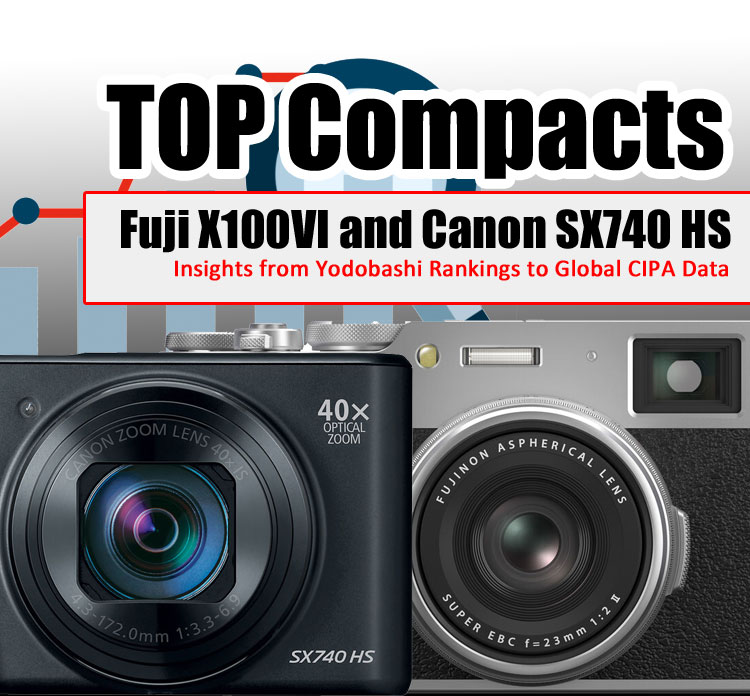
The digital camera market grew by approximately 114.8% in 2025, and you’re not going to believe the figures: a total of 72.6% of units sold were fixed-lens cameras. That means we are talking about compact cameras, which accounted for more than 70% of total sales in 2025. So the data is obviously surprising us. The sales data that we are getting from BCN+R’s market-wide data and CAPA CAMERA WEB’s Yodobashi retailer rankings of Japan reveal how affordable models like Kodak cover approximately 25% of the total compact camera market sales with their different sets of models available at variable budgets.
Again, you will be surprised to know that the best-selling compact camera of 2025 is the Fuji X100VI (and not a budget camera), and in the second position, we have the Canon PowerShot SX740 HS. Now this camera is nearly out of production, and very few copies are available. Most of them are renewed or after-sales units, but despite that, it is still the second most popular camera in the market.It is available at a bit higher cost, but yes, people are still buying it. Now it time to explore the entire list

BCN+R Market Trends: Compacts Dominate with 70%+ Share, Kodak Takes the Lead
The overall digital camera market grew 114.8% year-over-year in 2025, fueled by integrated lens cameras surging 127.4%. These compacts claimed 72.6% of units sold, dwarfing mirrorless (26.5%) and SLRs (0.9%), which declined 93.5% and 45.6%, respectively.
- Top Performers by Share: Kodak led with 24.0% (up 144.6%), thanks to easy-to-use budget models. Fujifilm followed at 13.9%, driven by the Instax mini EVO (60% of their sales). Kenko Tokina hit 13.3% with the KC-AF11 series.
- Key Insight: This unit-based data highlights low-cost appeal, but average prices stayed modest, raising questions about profitability amid the compact camera boom.
Yodobashi’s Top 20 Best-Selling Compacts: Premium Models Shine Despite Shortages
Now it’s time to explore the best-selling compact cameras, and the list really impressed me since the number 1, 2, and 3 cameras are not budget cameras out there. So the entire market selection is shifting from value-based compacts to premium compact cameras. Obviously, the Fujifilm X100VI is always facing supply chain issues, and we all know that most of the time the camera remains out of stock. But again, due to its popularity and despite all these issues, the camera is able to maintain the number one position in the best-selling compact camera list.
 Canon SX740 HS camera Just after that, we have the Canon PowerShot SX740 HS, then we have the Panasonic LUMIX TZ99, and then the Ricoh GR IV camera. Even in the fifth position, we have the Fujifilm X Half. I’m taking all these names to make sure that none of the cameras are budget ones. You can explore the table below. Data from Jan 1 to Dec 31, 2025, reveals:
 Fuji X100 VI Camera Tops Camera Ranking
| Rank |
Model |
Brand |
Notes |
| 1 |
Fujifilm X100VI |
Fujifilm |
Out of stock, but backorders boosted it to #1. |
| 2 |
Canon PowerShot SX740 HS |
Canon |
High-zoom favorite, strong traveler pick. |
| 3 |
Panasonic LUMIX TZ99 |
Panasonic |
Versatile zoom compact. |
| 4 |
Ricoh GR IV |
Ricoh |
Premium street shooter, often sold out. |
| 5 |
Fujifilm X half |
Fujifilm |
Hybrid appeal. |
| 6 |
Sony VLOGCAM ZV-1 II |
Sony |
Vlogging powerhouse. |
| 7 |
Ricoh GR IIIx |
Ricoh |
Compact pro option. |
| 8 |
OM SYSTEM Tough TG-7 |
OM SYSTEM |
Rugged for adventures. |
| 9 |
Sony VLOGCAM ZV-1 II Shooting Grip Kit |
Sony |
Enhanced vlog setup. |
| 10 |
Kodak PIXPRO C1 |
Kodak |
Budget entry. |
| 11 |
Fujifilm GFX100RF |
Fujifilm |
Medium-format compact. |
| 12 |
Canon IXY 650 |
Canon |
Simple point-and-shoot. |
| 13 |
Sony Cyber-shot RX1R III |
Sony |
Full-frame premium. |
| 14 |
Leica D-LUX8 |
Leica |
Luxury compact. |
| 15 |
Canon PowerShot G7 X Mark III |
Canon |
Creator-focused. |
| 16 |
Canon PowerShot V1 |
Canon |
Entry-level. |
| 17 |
Nikon COOLPIX P950 |
Nikon |
Superzoom. |
| 18 |
Leica Q3 |
Leica |
High-end full-frame. |
| 19 |
Nikon COOLPIX P1100 |
Nikon |
Bridge camera. |
| 20 |
Sony Cyber-shot RX100 VII |
Sony |
Long-time favorite. |
- Brand Breakdown: Fujifilm and Ricoh each had two in the top 10; Sony had three (including kits); Canon, Kodak, Panasonic, and OM SYSTEM one each.
- Challenges: Half the top 10 were discontinued, with rankings influenced by backorder shipments. Models like X100VI and GR IV were out of stock but still topped due to demand.

The compact camera sales worldwide 2021-2025
Now, the list above we have discussed is Japan-specific, but after digging out the latest details of compact camera sales worldwide and with the help of CIPA data and statistics available on their website, we have found that the compact camera boom is not limited to Japan only. Its Worldwide, we are looking at a major comeback of compact camera sales with major brands like Canon, Fujifilm, Nikon, Panasonic, Ricoh, and Sony.
Although most of the manufacturers are not even manufacturing many compact cameras right now, and above all they have also discontinued a lot of active compact camera models they had in the past, despite all these hurdles and supply chain issues, even with the existing compact cameras like the Fujifilm X100VI, the global demand for compacts is rising.
We have also added historical data from 2021 to 2024 by cross-verifying with all the datasets available to us, so let’s have a look at the global compact camera sales trend in the stats below.
| Year |
Compact Units (Millions) |
Compact YoY Change (%) |
Compact Market Share (%) |
Mirrorless Units (Millions) |
Mirrorless YoY Change (%) |
Mirrorless Market Share (%) |
| 2021 |
1.28 |
N/A |
15.3 |
4.58 |
N/A |
54.8 |
| 2022 |
1.57 |
+22.7 |
20.8 |
4.40 |
-3.9 |
58.2 |
| 2023 |
1.72 |
+9.6 |
22.3 |
4.83 |
+9.8 |
62.6 |
| 2024 |
1.88 |
+9.3 |
22.1 |
5.61 |
+16.1 |
66.1 |
| 2025 |
2.41 |
+28.2 |
25.7 |
6.28 |
+12.0 |
66.9 |
Key Notes on Trends (Worldwide):
- Total DSC shipments: 2021 (5.35M), 2022 (7.18M), 2023 (7.01M), 2024 (8.49M), 2025 (~8.58M estimated, up 1% YoY but on pace for higher based on strong late-year performance).
- Compact growth accelerated in 2025 due to demand for models like the Fujifilm X100VI and budget options, reversing earlier smartphone competition erosion.
- Mirrorless remains the leader, with APS-C/smaller sensors making up ~61% of shipments in late 2025.
- DSLRs are negligible (~0.6M in 2025, down 27-30% YoY), so mirrorless effectively represents most interchangeable lens growth.
And you will be surprised to know that these stats do not cover action cameras, pocket gimbal cameras, or 360 cameras that are generally being used by moto lovers and travel content creators. In terms of stats, I published an article a while ago that clearly shows that the DJI Pocket 3 gimbal camera covered more than 50% of the Japanese video camera market share.
So I’m just adding an example here that a lot of other compact-style cameras are still left out that could be included in the data, and if included, then for sure the mirrorless camera market share will face a rock-bottom position in the graph. Well, that’s the reality. A lot of tiny compact cameras with high-quality video recording capability are still not counted as in the compact category.
GET LIVE NOTIFICATION, Select Your Trusted Source GET LIVE NOTIFICATION Click ON Check  BOX for Latest NEWS and Rumors BOX for Latest NEWS and Rumors
The article “Fuji X100VI and Canon SX740 HS Lead 2025 Compact Sales – Insights from Yodobashi Rankings to Global CIPA Data” was written by thenewcamera.com team on 1:24 pm, Tuesday, 27 January 2026, Greenwich Mean Time (GMT) | You can also follow us on Our Official Social Media Handles FACEBOOK | TWITTER | INSTAGRAM to get live news — > DJI Rumors

By admin, on January 26th, 2026

Is the Insta360 Pocket camera coming with a dual-lens setup? Well, that’s a really interesting thing, and yes, we are getting a lot of reports from multiple authentic sources that the first generation of the Insta360 Pocket camera is about to carry a dual-lens system. In this article, we are going to discuss the things that made us believe the news is true. So let’s discuss in detail.

Breaking Down the Insta360 Pocket Camera Leak
Yesterday, a new post from one of the trusted source Igor Bogdanov, where he shared his personal thought: the said image is not of the DJI Pocket Pro. It is Insta360. According to him, the image that is shared by the Reddit user with the caption of DJI Osmo Pocket 4 Pro is not actually the DJI Osmo Pocket 4 Pro camera. He has shared side-by-side images of the actual DJI Osmo Pocket 4 Pro and the latest model, which the user is sharing. And yes, you can notice quite a bit of difference between the camera images. Bogdanov’s insights are drawn from reliable industry sources. By providing side-by-side comparisons of the DJI Osmo Pocket 4 Pro, he highlights discrepancies that savvy observers might miss at first glance.

Insta360 CEO’s Tease on Weibo Sparks Speculation
And just after that, we have a post from Insta360’s CEO. —Insta360’s CEO, JK, reposted these pics on Weibo and teased, “What if it’s not from DJI?” That got people guessing it might be a new Insta360 Pocket camera. Some folks also think it could bring new Zoom capabilities.
Most importantly, both highly reputable persons of the industry are telling us the same thing, the Dual camera lens-based camera is the Insta360 pocket camera and nots DJI pocket 4 PRO

Confirmation of Dual Lenses for Insta360 Pocket Camera
The Insta360 Pocket camera is coming with dual lenses—a trusted source, Igor Bogdanov, already confirmed it yesterday, and now Insta360’s CEO has confirmed it. Confirmed this by sending us the clear hint via social post on Webio.
Thenewcamera.com Take – And at this moment, I am not able to have a second thought or doubt about that picture. So yes, if it is true, then it is really a very exciting thing for sure that the Pocket camera and its first version from Insta360 is going to have a DUAL camera setup.
That’s a really remarkable thing, and if it arrives under a budget, it is giving us much more than what the Pocket 3 has offered us, and Obviosuly Dual Camera Lens based camera is said to DJI Pocket 4 Pro — which is about to arrive in later part of the year, and may not arrive in USA under DJI branding due to FCC issue, since DJI is now in FCC Covered list. Yes, there may exist some variation in the sensor size and specifications. We are going to elaborate and explore them also, as soon as we get them, but for now, that’s the information we have.
Details on sensor size and full specifications remain under wraps, but variations from the DJI lineup are expected. As more information emerges, we’ll dive deeper into comparisons, including image quality, stabilization, and battery life. For now, the dual-lens reveal positions Insta360 as a strong contender in the pocket camera space.
Stay tuned to TheNewCamera.com for the latest updates on camera leaks, reviews, and releases.
GET LIVE NOTIFICATION, Select Your Trusted Source GET LIVE NOTIFICATION Click ON Check BOX for Latest NEWS and Rumors
The article “Insta360 Pocket Camera: Dual Lenses Confirmed by CEO and Trusted Sources – Not DJI Osmo Pocket 4 Pro” was written by thenewcamera.com team on 7:39 pm, Monday, 26 January 2026, Greenwich Mean Time (GMT)| You can also follow us on Our Official Social Media Handles FACEBOOK | TWITTER | INSTAGRAM to get live news — > DJI Rumors

By admin, on January 26th, 2026
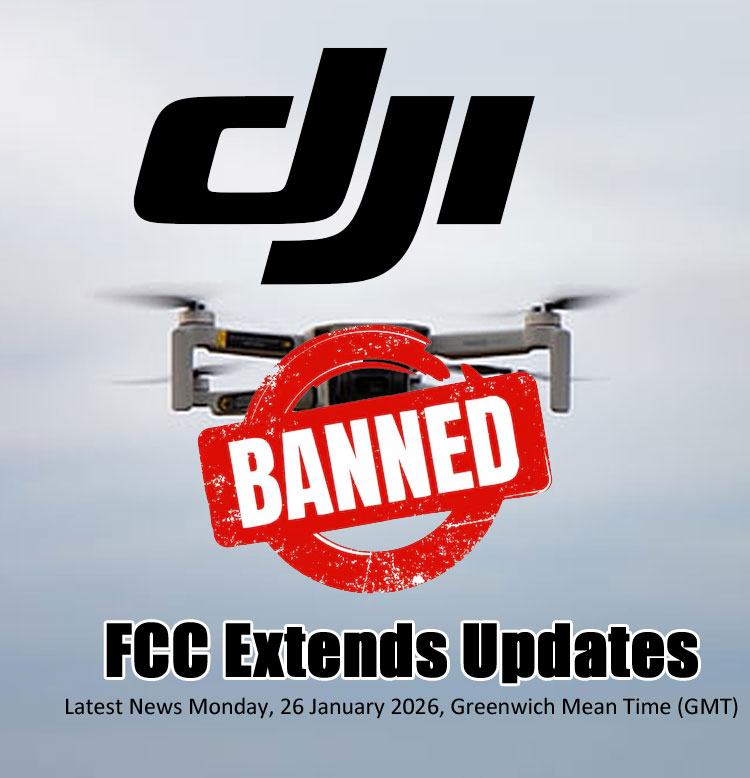
January 2026 DJI Ban News: Firmware Updates — so there we have another update related to the 2026 DJI ban, and the good thing is that DJI is able to update their drones’ firmware till January 1, 2027, that’s the extension given to DJI for now. It may get extended, may not get extended. That’s a different matter, but initially, all drones were previously announced to be announced before Dec 23 Ban or have the FCC clearance, are eligible to get the Firmware update till Jan 1, 2027.
See Here – Approved DJI Drones: Full List of Models Eligible to Buy in 2026
This extension is especially important if you want to see new features or improvements rolled out to existing drones via firmware. If you feel that the drone that you are flying is well capable and doesn’t need any further firmware support, then why do so, since as a photographer, updating firmware is always a hassle, and apart from all this hassle and mess, if something goes odd, then obviously, DJI Care is absent in the United States of America. Update goes wrong and bricks your drone, recovery can be painful and expensive. You have to restart everything, so you know what I am saying. My advice: only update if you truly need the new features or fixes. Always wait for a stable release
so just use it if you like, and if you feel the announcement firmware is really important and people are using it and none of them are having any issues, then update yours. So never do an early update. Always look for users’ feedback. It’s an iPhone or a camera or a drone, anything.
At TheNewCamera.com, we’ve covered the DJI ban extensively, from its initial proposals to impacts on camera-integrated drones. This article dives deeper into the FCC’s latest decision,
Understanding the FCC’s Waiver on Drone Firmware Updates
The FCC’s Office of Engineering and Technology (OET) issued a waiver (DA 26-69) to allow these changes specifically for security patches and functionality enhancements. The goal? To “mitigate harm to U.S. consumers” by ensuring drones remain secure and compatible with devices like smartphones running iOS or Android. This applies to all UAS and critical components authorized before the Covered List addition, covering popular models used in photography.
Timeline of FCC Drone Regulations and Updates
Yes, to simplify everything, we have created a table that is going to help you understand how things were working. Obviously, the decision to keep the drone updated is a nice and welcome step.
| Date |
Key Event |
Impact on Drone Users |
| Dec 22, 2025 |
Foreign UAS added to Covered List |
Potential ban on firmware updates for security and functionality. |
| Jan 2026 |
FCC issues waiver (DA 26-69) |
Updates allowed until Jan 1, 2027, focusing on vulnerability fixes. |
| Jan 1, 2027 |
Waiver expiration |
Possible new review processes, like source code submissions, for future updates. |
This table distills the regulatory journey into key milestones, emphasizing the temporary nature of the relief.
Effects on DJI Users and Aerial Imaging Professionals
While DJI and only a few others regularly provide firmware updates for their drones, the rule that we are talking about here is implemented for all foreign-made drones, which includes Chinese and other manufacturers. Those who are not present in the Blue UAS List are affected. The Blue UAS List is a list that has already gone through the approval process.
So the list includes some drones from companies like Skydio and a majority of drones being manufactured in the United States of America. The biggest issue is that the drones that have cleared the Blue UAS List are not affordable. They come at a price of $5,000–$7,000, and obviously, they are not consumer drones.
So what we hope and expect is that until 2027 or so, we are going to have some consumer drones in that list at a budgetary level at the very same time, those which have the same good flying experience and camera capability of the ecosystem that we have seen in DJI.
So let’s just hope that other than that, the drones that are already announced by DJI, those that already have the FCC certification, are fully eligible to fly, with no issues over those drones.
Future Outlook: Navigating Drone Regulations in 2027 and Beyond
Looking ahead, the FCC’s waiver buys time but doesn’t resolve underlying issues.
Obviously, the consumers are in trouble, and specifically, the good drone makers are under budget. Those are specifically making a transfer for a consumer under a thousand dollar of $500, really great bill. Since we are providing one of the finest technologies available at GPS price, but if you’re going to buy a Seeker vision, FPV drone, which is able to capture, 4K footage is available at $3399, and the cheapest road we have in the List again. We have run from a parrot in the third budget, drone List TANAFIUSA, and the drone cost $7000. So the list, which is approved by the US administration, contains rooms that are not usable for consumers, obviously, due to the price factor.
Blue UAS Cleared List, 14 appear to be available for consumers to purchase in the USA based on retail availability through public drone shops and manufacturer sites without apparent restrictions to government or enterprise only.
| Platform |
Manufacturer |
Price (USD, base/starting) |
| Stinger Vision FPV |
ModalAI |
3,399 |
| Seeker Vision FPV |
ModalAI |
4,999 |
| ANAFI USA GOV/MIL |
Parrot |
7,000 |
| Edge 130 |
FlightWave Aerospace Systems |
10,000 |
| eBee VISION |
AgEagle Aerial Systems |
13,500 |
| eBee TAC |
AgEagle Aerial Systems |
13,500 |
| Spirit |
Ascent AeroSystems |
13,999 |
| Osprey (Free Flight Version) |
Easy Aerial |
14,550 |
| Teal 2 |
Teal |
15,000 |
| IF800 |
Inspired Flight Technologies |
19,950 |
Drone enthusiasts should monitor updates from the FCC—contact points like Katherine Nevitt at the OET (katherine.nevitt@fcc.gov) could provide more clarity. At TheNewCamera.com, we’ll continue tracking how these changes affect camera drones, including tips on optimizing your DJI setup for professional shoots.
The article “List of Approved DJI Drones, Pocket Series Models and Action Cameras: DJI USA Ban Update 2026” was updated by thenewcamera.com team on 2:37 pm, Monday, 26 January 2026, Greenwich Mean Time (GMT) | You can also follow us on our official social media handles: Facebook | TWITTER | INSTAGRAM to get live news — > DJI Rumors


By admin, on January 25th, 2026
 Image shared by Reddit user – According to him, he accidentally spotted the Dual camera look alike Prototype of DJI Pocket 4 at an indoor ski resort, shenzhen – China Recently, an intriguing image surfaced on Reddit, sparking widespread speculation about the DJI Osmo Pocket 4 Pro. But is it really the next flagship Pocket gimbal from DJI, or could it be something else entirely—like an upcoming Insta360 Pocket camera? At TheNewCamera.com, we’ve dived deep into the details to separate fact from fiction. This article breaks down the leak, compares it to known designs, and explores what this could mean for content creators searching for the best pocket gimbal camera in 2026.

The Reddit Leak: A First Look at the Mysterious Camera
A Reddit user has recently leaked the camera. First, I have to say that it is very similar to the DJI Osmo Pocket 4 camera, but it is not exactly same as the DJI Osmo Pocket 4 Pro. We are going to explain it later. First of all, this was captured at an indoor ski resort in Shenzhen. As usual, after capturing this camera pic, he shared the image on the Reddit forum with the caption DJI Osmo Pocket 4 Pro.
It’s quite usual for anyone to spot a camera like this, and obviously, based on the latest set/trends of rumors, we are going to name it the DJI Osmo Pocket 4 Pro without a doubt, but let’s have a look at another perspective.
This sighting in Shenzhen—a hub for tech innovation—adds an air of authenticity to the leak. Reddit users often share unfiltered glimpses into upcoming gadgets, and this one quickly gained traction among DJI Osmo Pocket enthusiasts. But as we’ll see, initial assumptions can be misleading. For those tracking pocket camera leaks 2026, this image has fueled debates across forums and social media.
Expert Analysis: Not the DJI Osmo Pocket 4 Pro?
Thanks to the trusted source Igor Bogdanov (@Quadro_News), and according to him, the image that is shared by the Reddit user with the caption of DJI Osmo Pocket 4 Pro is not actually the DJI Osmo Pocket 4 Pro camera. He has shared side-by-side images of the actual DJI Osmo Pocket 4 Pro and the latest model, which the user is sharing. And yes, you can notice quite a bit of difference between the camera images. Bogdanov’s insights are drawn from reliable industry sources. By providing side-by-side comparisons of DJI Osmo Pocket 4 Pro, he highlights discrepancies that savvy observers might miss at first glance. This isn’t just another DJI leak; it’s a potential misidentification that could point to a competitor’s device. As written in his post, Igor Bogdanov believes the leaked camera is insta360 Pocket camera, and not a DJI Pocket 4 Pro.
Spotting the Key Differences: A Detailed Breakdown
Now, how to spot the difference between the two: as you can see, the gimbal arm which is holding the camera of the DJI Osmo Pocket 4 Pro is attached to the camera module in a different manner. The image shared by the person recently in the edited form has a bit different setup. Although both are dual-camera and spaced camera designs, the setup—specifically the arm position which holds the camera—is completely different from each other.
To make it easier for readers searching for DJI Osmo Pocket 4 Pro vs Insta360, here’s a clear comparison:
- Gimbal Arm Attachment: In the authentic DJI Osmo Pocket 4 Pro, the arm connects seamlessly in a compact, integrated fashion. The leaked image shows a more modular or offset design, suggesting a different engineering approach.
- Camera Module Layout: Both feature dual-camera setups, ideal for HQ 4K video capture with Optical Zoom or enhanced stabilization. However, the spacing and overall ergonomics differ, with the leak appearing bulkier or more adaptable.
- Overall Build: The DJI model prioritizes portability, while the mystery device hints at modularity, possibly for professional upgrades.
So that sparks debate that yes, the unit shared recently from the resort is not the DJI Osmo Pocket 4 Pro camera. It can be an Insta360 Pocket camera with a wireless module setup, who knows—we are going to discuss it later. But as per the trusted source, he is thinking that this is the upcoming Insta360 Pocket camera, not the DJI Osmo Pocket 4 Pro.
These differences aren’t minor—they could indicate a shift in pocket gimbal technology, emphasizing customization over one-size-fits-all designs.

Exclusive Leaked Images: Insta360 Pocket Camera Insights
Now it’s time to add some sort of leaked images of the Insta360 Pro camera. The images of the upcoming Insta360 Pro camera were shared by us exclusively at TheNewCamera.com a few weeks ago, and here you can see again the design difference of the camera module, which is quite a bit different from the design that is being shared by the source recently in the forum. Again, we are having some sort of design difference between the two.
At TheNewCamera.com, we’re proud to have been among the first to reveal Insta360 Pocket camera leaks. Our exclusive images showcase a robust camera module with advanced features, setting it apart from the Reddit leak. For those comparing Insta360 vs DJI pocket cameras, these visuals are essential.
But with the Insta360 Pocket camera, there is one more thing that we have to keep in mind: multiple camera units/modules are visible in a pic where we have heavy camera modules without gimbal, with a possibly larger sensor, and specifically made for dedicated professional content creators who would love to capture high-quality low-light videos.
This modularity is a game-changer. Imagine swapping modules for different scenarios:
- Low-Light Performance: Larger sensors for superior night shots.
- Professional Video: Options for high-res footage without the need for a full gimbal.
- Budget Flexibility: Choose modules based on your needs, from entry-level to pro-grade.
So one thing is very clear: Insta360 is testing a multiple of camera modules for their upcoming Pocket series camera, and possibly they are going to give us options to buy the best camera module as per our requirement and budget.
What This Means for the Future of Pocket Cameras
There is a very high probability that, since the Insta360 Pocket camera prototype is set to launch with multiple interchangeable camera modules, the image shared by the Reddit user is not the DJI Osmo Pocket 4 Pro. Instead, it is most likely the upcoming Insta360 Pocket camera. That said, if you examine the clearly visible module design in the image (as shared by a trusted source above), we cannot deny its authenticity. At the same time, the initial prototype design referenced earlier appears slightly different from what’s shown here. So once again, there is a very high probability that multiple pro-level camera units are still out in the wild, being actively tested by professional users and photographers. We don’t yet know exactly which version will make it to the final production line, but yes—very soon, we’ll have exciting, versatile options for content creation.
GET LIVE NOTIFICATION, Select Your Trusted Source GET LIVE NOTIFICATION Click ON Check BOX for Latest NEWS and Rumors
The article “DJI Osmo Pocket 4 Pro: Exclusive Insights on the Mysterious New Pocket Camera” was written by thenewcamera.com team on12:26 pm, Sunday, 25 January 2026, Greenwich Mean Time (GMT)| You can also follow us on Our Official Social Media Handles FACEBOOK | TWITTER | INSTAGRAM to get live news — > DJI Rumors
source: Igor Bogdanov

By admin, on January 23rd, 2026

DJI Pocket 4 detail box leaked today, and the information is coming from one of the highly trusted sources, Igor Bogdanov (@Quadro_News). The packaging box reveals that the gimbal camera announcement is very near to us. A few days ago, we shared with you the screenshot of the DJI China retailers’ smartphone screenshots, where they have the stock of the Pocket 4 camera. Other than that, just a few days ago, one of our subscribers shared an Amazon Germany premature listing of the DJI Pocket 4 camera, where we also saw leaked specs of the upcoming camera. Now we are going to discuss all together below in a very short and concise way, so let’s jump into the content.
Decoding the DJI Osmo Pocket 4 Packaging Leak
The retail box shows us the standard version and not the Pro ( one carrying the dual-lens module setup), and since the image is shared by a trusted source, we do not believe it is anything silly. The standard version is coming.
Shared via X post ID: 2014597722104349118, the packaging showcases the DJI Osmo Pocket 4 in its Creator Combo variant:
- Eye-catching “DJI OSMO POCKET 4” text with the signature pocket-sized design, featuring a rotating touchscreen displaying a stunning landscape.
- Intuitive NEW controls for zooming in, including a joystick, record button, and microphone grille.
- Multilingual “Creator Combo” branding (English, French: “Bundle Créateur”, Chinese: “全能套装”) for worldwide appeal.
- Warehouse clues like the “Do Not Open Till Confirmation” sticker signal pre-launch inventory.
You have clearly seen that all these things written above are clearly visible on the packaging box of the upcoming Pocket 4 camera, and yes, I am really disappointed that only a single-lens-module-based Pocket 4 camera is coming. I was actually expecting that we were going to have the dual-camera-module-based Pocket 4, but later on, for sure, we are going to have the Pro Pocket 4 series camera announcement in the future. But let’s discuss the core specifications of the upcoming Pocket 4 camera that we have already seen via the Amazon Germany listing. Let’s have a roundup of the upcoming Pocket 4 camera core specifications.

Confirmed Specs for the DJI Osmo Pocket 4 Standard Model – Amazon Listing Verified
The Pocket 4 camera seems like a subtle upgraded version of the Pocket 3, not much of a difference that we were actually expecting. The standard DJI Osmo Pocket 4 builds on the Pocket 3 with targeted enhancements, and the now-verified Amazon Germany listing (pulled shortly after surfacing) nails the details we’ve covered extensively. This accidental reveal described a vlogging-optimised camera, and recent leaks corroborate it as accurate for the base model:
- Sensor: 1-inch equivalent CMOS (listed as 2.5 cm), optimized for superior low-light performance and dynamic range—matching the evolutionary upgrade from the Pocket 3.
- Video Recording: 4K/120fps for buttery-smooth slow-motion and high-frame-rate footage, a clear step up from the Pocket 3’s 4K/60fps standard.
- Stabilization: Advanced 3-axis gimbal for rock-steady shots, refined for even better handling.
- Focusing and Tracking: Fast autofocus with intelligent face/object detection, ensuring sharp subject lock during dynamic vlogs.
- Additional Features: Seamless YouTube integration for live streaming and uploads via the DJI Mimo app, plus extended battery life (20-30% boost to over 200 minutes).
The Creator Combo is poised to include creator essentials:
- Wide-angle lens attachment
- Battery handle for prolonged shooting
- Mini tripod/grip
- Protective carrying case
- New accessories like the “FrameTap” from FCC documents
For a quick comparison:
| Feature |
DJI Osmo Pocket 3 |
DJI Osmo Pocket 4 (Standard) |
| Sensor |
1-inch CMOS |
1-inch CMOS (enhanced, 2.5 cm equiv.) |
| Video Resolution |
4K/60fps |
4K/120fps |
| Screen |
2-inch OLED |
2-inch OLED (brighter, higher refresh) |
| Battery Life |
Up to 166 minutes |
Up to 200+ minutes |
| Stabilization |
3-axis gimbal |
Enhanced 3-axis |
| Focusing |
Standard AF |
Fast AF with face/object tracking |
| Price (Est. Combo) |
$669 |
$699–$749 |
As from the initial set of comparison, you can see there are not big differences between the two models, the DJI Osmo Pocket 3 and the DJI Osmo Pocket 4. So if you ask someone who already owns the DJI Osmo Pocket 3 camera, then it’s not the best time to upgrade your camera. You should wait for the DJI Osmo Pocket 4 Pro. It’s going to be a new variant with extra features. Let’s wait for that. But yes, for now, this is a very little subtle change in the core specifications of the upcoming DJI Osmo Pocket 4 camera.

Dual-Camera DJI Osmo Pocket 4 Pro: Specs Confirmed, But Delays and US Availability Issues
Before we move forward, let’s have a look at the leaked core specifications of the upcoming DJI Osmo Pocket 4 Pro camera. Some people are waiting for the Pro version, but at the very same time, initially what we are getting from DJI is the standard version with a single camera module. Obviously, and here in the standard version, we are going to have some subtle updates, but not a major one that we are actually expecting from the Pro version.
- Camera System: Dual 1/1.1-inch sensors (wide-angle + telephoto) with 2x–4x optical zoom, variable aperture (f/1.7–f/2.8), and Hasselblad color science for pro-grade depth, portraits, and low-light prowess.
- Why It’s Exciting: Instant lens switching and enhanced versatility, bridging the gap to drone-level filming in a handheld device.
- Verification: Backed by X posts from @djirumor and reports from Digital Camera World, including prototype images.
Delays are the catch:
- Global Timeline: First, we have to understand that the Pro version is not coming soon, since DJI is going to allow the standard version to get some space. If they announce the Pro alongside the standard, obviously, it is going to affect the sales cycle, and there is a strong possibility it may also cannibalise the sales of the standard Pocket variant. So what we are expecting is that the standard model and the Pro model will maintain a gap of at least 4 to 6 months between their announcement dates.
- US-Specific Challenges: The standard model got FCC approval (ID: 2ANDR-OP041) before the December 23, 2025 deadline. The biggest issue is that, till now, we haven’t seen any FCC registration details of the DJI Osmo Pocket 4 Pro variant. That clearly means that even if the Pro version arrives after a long gap or even a short gap, it may not become available in the United States of America, since the DJI brand is banned and no further FCC registrations are allowed from the brand after the December 23 ban. So yes, we already have the standard DJI Osmo Pocket 4 FCC ID/certificate, but we don’t have additional registration details, which clearly indicates the Pro variant will remain limited to other countries of the world, not the United States of America.
DJI Osmo Pocket 4 Release Date
Now, since the retail box of the DJI Osmo Pocket 4 camera is leaked, and we have already seen retailers worldwide stocking the DJI Osmo Pocket 4 camera gear, the announcement is very near to us. Most probably, we are going to have the official announcement of the DJI Osmo Pocket 4 camera in the month of February – March 2026. The exact date of announcement is not known yet, but yes, as soon as we get that, we will be updating the content. So keep an eye on TheNewCamera.com for further updates.
One thing is for sure: this year, we are also going to have very strong competitors for the Pocket series cameras, starting from the Insta360 Pocket camera. Other than that, we also have the Huawei Robo Cam, But as we all know, Huawei is already banned in the United States of America. But at least we are going to have the Insta360 Pocket camera for sure, and as we have seen in the recently leaked information, which has been exclusively published at TheNewCamera.com, the Insta360 Pocket camera will have multiple camera modules, which you can switch very easily, and for sure they are going to approach every type of photographer as well as content creator out there. So let’s wait for that.
Also, if you’re not heavily interested in the DJI Osmo Pocket 4 camera, or if you think that the DJI Osmo Pocket 4 upgrade is not worth it and you were actually waiting for the dual-lens-module-based best Pocket Pro camera, then for sure you should wait for the Insta360 Pocket Cam and then decide which camera you should buy.
Apart from all these, we are very excited, and let’s see what happens next. Stay tuned while we are going to cover all the possible updates of upcoming DJI and other pocket-style cameras from different brands.
GET LIVE NOTIFICATION, Select Your Trusted Source GET LIVE NOTIFICATION Click ON Check BOX for Latest NEWS and Rumors
The article “DJI Osmo Pocket 4 Retail Box Leak: Creator Combo Revealed with Confirmed Specs” was written by thenewcamera.com team on 10:24 am, Friday, 23 January 2026, Greenwich Mean Time (GMT) | You can also follow us on Our Official Social Media Handles FACEBOOK | TWITTER | INSTAGRAM to get live news — > DJI Rumors
source: Quadro_News

By admin, on January 23rd, 2026

So finally, we have the annual ranking from CAPA CAMERA WEB, and this highly anticipated annual ranking reveals the top 20 best-selling interchangeable-lens digital cameras for 2025. I am really surprised to see the list. First of all, this list is based on the sales data from January 1 to December 31, 2025, which means it covers a full year of sales, and the list comes straight from Yodobashi Camera in Japan, so it clearly shows what Japanese people preferred for their photography gear at this major retailer. It can be for any purpose, maybe for content creation, photography, or anything else, but yes, let’s jump into the top-selling cameras of 2025 at Yodobashi.
And here is the king: the Sony α7C II. The Sony α7C II dominates the entire chart and secures both the first and second positions with the kit lens and body-only variants. That clearly indicates how much Japanese people preferred the Sony α7C II in 2025. One more important thing—the success of the α7C II is not limited to 2025. It was also one of the most popular cameras of 2024, consistently holding the top spots.
Top 20 Best-Selling Interchangeable Lens Digital Cameras at Yodobashi in 2025
Here’s the complete ranking, showcasing a mix of full-frame, APS-C, and even medium-format options from leading brands like Sony, Canon, Nikon, Fujifilm, and Hasselblad. The data highlights a strong preference for APS-C sensors in the top tiers, reflecting demand for affordable yet capable gear.
| Rank |
Camera Model |
| 1 |
Sony α7C II Zoom Lens Kit |
| 2 |
Sony α7C II Body |
| 3 |
Fujifilm X-M5 XC15-45mm Lens Kit |
| 4 |
Nikon Z50II Double Zoom Kit |
| 5 |
Canon EOS R5 Mark II Body |
| 6 |
Canon EOS R50 Double Zoom Kit |
| 7 |
Canon EOS R10 RF-S18-150 IS STM Lens Kit |
| 8 |
Nikon Z5II Body |
| 9 |
Sony VLOGCAM ZV-E10 II Double Zoom Lens Kit |
| 10 |
Canon EOS R6 Mark III Body |
| 11 |
Sony VLOGCAM ZV-E10 II Power Zoom Lens Kit |
| 12 |
Nikon Zfc 16-50 VR Lens Kit |
| 13 |
Hasselblad X2D II 100C Body |
| 14 |
Nikon Z8 Body |
| 15 |
Sony α7 IV Body |
| 16 |
Canon EOS R6 Mark II with RF24-105 L IS USM Lens Kit |
| 17 |
Sony α1 II Body |
| 18 |
Canon EOS R50 with RF-S18-45 IS STM Lens Kit |
| 19 |
Sony α7R V Body |
| 20 |
Sony α7 V Body |
This ranking is derived from actual sales at Yodobashi Camera, one of Japan’s largest electronics retailers, and cross-verified against monthly trends reported by CAPA CAMERA WEB throughout 2025. Monthly reports consistently showed the Sony α7C II in the top positions, with models like the Fujifilm X-M5 and Nikon Z50 II also performing strongly in various periods.
Key Insights: Sony’s Dominance and APS-C Surge
Yes, the Sony α7C II has faced some issues in the past, but apart from Sony, Fujifilm and Nikon are also popular options. The big surprise is that the Sony α7C II body and kit remained in the top 10 every month, never dropping out, and often in the top five—with the kit securing 1st place 7 times and the body 4 times. Take a look at the other camera rankings. Apart from Sony, we have other models that consistently appear in the top 10 or 20.
Breaking it down by manufacturer in the top 10:
- Canon: Four models (EOS R5 Mark II, EOS R50, EOS R10, EOS R6 Mark III), emphasizing their strong APS-C lineup.
- Sony: Three models (α7C II kit, body, and ZV-E10 II), showcasing hybrid appeal for photographers and vloggers.
- Nikon: Two models (Z50II and Z5II), highlighting entry-level full-frame and APS-C options.
- Fujifilm: One model (X-M5), proving the draw of retro styling and film simulations. Before the α7C II’s rise, top performers varied, but the α7C II has now held strong for two years.

Why the Sony α7C II Continues to Lead
The Sony success may not surprise us due to the core specifications the camera offers at its price range. It features a 33MP full-frame sensor with advanced AI autofocus and 4K video recording capabilities, impressing both photographers and content creators. The camera remained a top choice from 2024 into 2025, leading the rankings consecutively. Still confused between the Sony α7 IV and Sony α7C II? Well, we have done a comparison here: Sony α7C II vs. α7 IV.
Trends to Watch in 2026
Well, it will be very interesting to see which camera remains on top in 2026. Since the α7C II is getting a bit older and we are getting a lot of new options in the mid-range full-frame segment, starting from Nikon Z6 III, Nikon ZR, Canon EOS R6 Mark III, as well as the recently launched Sony α7 V, with all these options, obviously, people’s choices will differ. It will be really interesting to see what comes out as one of the favorite creators’ and photographers’ tools in 2026.
What do you think of this year’s top sellers? Share your thoughts in the comments below, and stay tuned to The New Camera for the latest photography news and reviews. If you’re shopping, remember to support us by using our affiliate links—it helps keep our content free!
GET LIVE NOTIFICATION, Select Your Trusted Source GET LIVE NOTIFICATION Click ON Check BOX for Latest NEWS and Rumors
The article “Sony A7C II Claims Top Spot: Yodobashi Cameras Best-Selling Interchangeable Lens Cameras of 2025” was written by thenewcamera.com team on 7:27 am, Friday, 23 January 2026, Greenwich Mean Time (GMT) | You can also follow us on Our Official Social Media Handles FACEBOOK | TWITTER | INSTAGRAM to get live news — > DJI Rumors
 source of the news
By admin, on January 22nd, 2026

Dive deep into the latest leaked image by the Insta360 CEO. The big thing — the elephant in the room — that everyone has noticed is the white camera that you see in the frame, with a lot of physical controls above the display screen. You can clearly see two buttons where you can switch from video to photo mode, along with a few additional physical buttons.
 The CEO and founder of Insta360 is Jingkang Liu, often referred to as JK Liu posted an teaser image of his upcoming cameras in his Chinese social media account webio Take a look at the First Camera: Insta360 Upcoming cameras #1
Yes, we are talking about the main white camera that you see on the screen (below). The camera being held by a single right hand features a large display screen with a lot of physical controls over the display unit. Also, the most important part of this leaked image is the notes, display screen, settings, and controls; the controls on the display screen closely resemble the Insta360 Ace Pro series cameras’ controls. Obviously, just after posting this image, deep speculation started about whether Insta360 is working on a fixed-lens compact camera. Since you can see the f/1.8 marking, most probably, they will start entering the fixed-lens compact camera segment later. They may also join the interchangeable-lens mirrorless camera system in the future.

Promising Features of the New Insta360 Compact Camera
But the camera looks very, very promising, potentially having a larger-format sensor, maybe a Micro Four Thirds sensor or APS-C. We do not know at the moment, but this is a completely new physical camera, and none of our team members can identify the model name, that’s cleary hints it a kinda of brand new prototype he his holding. Most of the white cameras we have seen till now are from Sony, and Sony cameras do not have such physical controls. Not only that, the display screen icons highly resemble the Insta360-style UI, which we generally see in the Pro series cameras. So this is a completely brand-new thing.
Hidden Gem: The Pixelated Insta360 Pocket Series Camera
Apart from this, the picture that the camera has captured includes something that almost no one noticed, and this is what we are discussing right now on TheNewCamera.com. The pixelated or intentionally blurred image that you see is of the upcoming Insta360 Pocket series camera, which we already showed you a few days ago, thanks to our sources who shared very clear images of the camera.
One thing is for sure: we have already done a detailed analysis of the upcoming pocket series camera from Insta360, with some exclusive leaked images.
 The Hidden Gem – The Pixelated camera in the screen is actually the upcoming Insta360 pocket camera CEO’s Intentional Tease for Insta360 Pocket Camera Launch
But the big hint related to the Insta360 Pocket camera is that the Insta360 CEO intentionally blurred and pixelated the Insta360 Pocket camera that you see in the frame. Most probably, he intended to showcase both of his gems — one in prototype format, and the other being the Insta360 Pocket camera, which is ready to be announced. Most likely, Insta360 Pocket will arrive in February or March 2026. Although we do not have any authentic information related to a compact camera with a large display, btw both of them captured By using his iPhone 15 Pro.
These are the latest updates related to the leaked image by the CEO. A lot of websites are confused about which camera to focus on, and many websites remain limited in analyzing the camera the CEO is holding, while not talking about the pixelated camera, which is very clearly visible on the screen.
We have done a detailed analysis of both, and let’s hope and expect more in the future. As soon as we get any update related to these cameras, we will post it here on TheNewCamera.com.


|
KEEP THIS BLOG ALIVE - Support New Camera Buy Canon Lenses, Buy Music CD or Digital Camera at amazon it helps this site, and you do not pay anything extra, it is just a way to help support this site.

|