Join More Than 50,000+ Subscribers and get latest camera news and rumors
NEW CAMERA VIDEOS ON YOUTUBE
|
By admin, on February 11th, 2026

Getting a lot of scattered posts online about the arrival of the Sony α7R VI camera, and there are also articles claiming the Sony FX3 Mark II is coming next.
The claim about the Sony FX3 Mark II camera’s arrival comes from one of the trusted rumour mills, SonyAlphaRumors, while other websites we consider trusted names in the industry, like PhotoRumors, are reporting that the Sony α7R VI camera announcement is on its way. They have also published the possible core specifications of the upcoming A7R VI camera. So in this article, we are going to discuss the probability of arrival of both cameras and the facts we have so far.

Starting from the FCC ID registration details of a flagship camera WW847606, which have been revealed recently in February 2026, the registered model code of the camera is being linked either to the Sony FX3 Mark II, which is expected to arrive sometime in April 2026, or to the Sony α7R VI. The registered model uses the same Wi-Fi unit that we have seen in the Sony α7 IV camera, and it is being manufactured in Japan. We all know that generally Japan is the place where Sony manufactures high-end mirrorless cameras, and that clearly indicates that among the Sony α7 series, it can be one of these two cameras.
Now the big question is why the entire internet is divided between these two cameras. Why are we not talking about any other Sony flagship full-frame mirrorless camera or APS-C camera for now?
Looking at Sony’s scheduled announcement pattern and their mirrorless camera update timeline, obviously, the Sony FX3 Mark II and the Sony α7R VI are due for an update. Other than that, we have the Sony α6900 camera, the Sony α6200 camera on the list, and the Sony α7S series is also overdue. People are waiting for the Sony α7S IV camera, but we have very few rumours related to it.
Upcoming Sony Mirrorless and Compact Cameras (2026-2027)
Based on Sony’s historical announcement patterns—such as refreshing full-frame mirrorless lines every 3-4 years (e.g., A7R series gaps lengthening from 20-39 months), APS-C models every 2-4 years, Note that Sony often announces high-end cameras in Q1-Q2 or Q4, with major pushes expected mid-2026 onward as part of a broader “offensive” in product launches.
| Model |
Type |
Expected Year |
Rumored Release Notes and Features |
| Sony FX3 II |
Mirrorless (Full-Frame Cinema Hybrid) |
2026 (March/April) |
Update to the 2021 FX3 with a partially stacked low-resolution sensor for improved readout speeds and low-light performance; WiFi 6 support; positioned to compete with Nikon Zr and Canon C50; registered in China as a high-end model. |
| Sony A7R VI |
Mirrorless (Full-Frame High-Resolution) |
Late 2026 or 2027 |
Successor to the 2022 A7R V; expected 61MP or higher sensor with partial stacking for reduced rolling shutter and better ISO; aligns with 4-year refresh cycle; focus on AI autofocus enhancements. |
| Sony A6900 |
Mirrorless (APS-C) |
2026 |
High-megapixel APS-C update (possibly 40MP+); improved sensor, EVF, burst rate, and ergonomics; follows 2023 A6700, targeting mid-range photographers; may merge features from A6100/A6400 lines. |
| Sony A6200 |
Mirrorless (APS-C Entry-Level) |
2026 |
Potential budget APS-C model combining A6100 and A6400 features; $1000 price point; no major updates rumored beyond standard refreshes. |
| Sony A7S IV |
Mirrorless (Full-Frame Video/Low-Light) |
2026-2027 |
Update to 2020 A7S III with 24MP stacked sensor, triple base ISO, and 6K video; rumors mixed on timing, possibly tied to broader video line refresh; not imminent per some sources. |
| Sony A7C III |
Mirrorless (Full-Frame Compact) |
2026-2027 |
Compact rangefinder-style update; improved autofocus and connectivity; low-priority rumor but fits Sony’s pattern of niche refreshes. |
| Sony ZV-E1 II |
Mirrorless (Full-Frame Vlogging) |
2026 |
Vlogging-focused update with better stabilization and AI features; alternative to FX3 II in some leaks. |
| Sony RX100 VIII |
Compact (Point-and-Shoot) |
2026 |
Successor to 2019 RX100 VII; simpler body with modern autofocus, better connectivity, and sensor updates; revival amid compact camera trend. |
Sony’s major camera announcement before July 2026
if anyone knows the announcement pattern of Sony and their mirrorless camera system, then obviously the two cameras that can be there are the Sony FX3 Mark II as well as the Sony α7R VI, which are on the top priority list for the 2026 and 2027 announcements. Other than that, the set of information we have received from the FCC ID also points toward the same.
But the most important part of the FCC ID process is that it gives 180 days of time to announce their product, since after 180 days, the external and internal test images of the product registered with the FCC ID go public. That clearly indicates the camera that Sony has registered in the month of February 2026 will officially arrive sometime before July 2026.
Sony A7R VI specification
- It uses a full-size stacked sensor with an effective pixel count of 80 million.
- The A7RVI is currently in a small-scale testing phase and is equipped with a BIONZ XR2 processor and boasts 8.5 stops of image stabilization.
- It is capable of continuous shooting in 14-bit RAW at 30fps.
- Equipped with RAW pre-capture function.
- 60fps with AE/AF tracking.
- Equipped with a high-resolution shooting function that combines 16 images.
- Noise-reducing composite shooting is possible by combining up to 32 images.
- The grip has been redesigned, with a deeper handle shape like the α1II.
- The maximum brightness of the rear LCD monitor is 50% higher than that of the α1II.
- This camera is considered a big step up from the A7V, and is positioned more like the A7RIII and A7III did back then.
- Does not support open gate, RAW video, or 6K HEVC.
- Supports 8K30p with 10.9K oversampling in full frame, 4K60p with 7.1K oversampling in APS-C, and 4K120p with 5.5K (pixel binning) oversampling in full frame.
- Stills can be shot at 30fps, but there is a strict limit on the number of shots that can be taken.
- The dynamic range is superior to that of the mechanically shuttered α7RV even when using the electronic shutter, achieving a dynamic range of over 16 stops when the mechanical shutter is enabled.
- The LCD monitor on the rear panel has more pixels than the α7V. The electronic shutter readout speed is slightly faster than before, but it is still only about one-third the speed of the α1II.
Well, these specification is coming from websites like Photorumors, but there’s no mention of the source or its authenticity, so it’s hard to say how reliable it is, but if it really does use an 80-megapixel stacked sensor, the α7RVI will likely be a big leap forward from the current α7RV. While the pixel count has increased, continuous shooting, video, and dynamic range have also been significantly improved, making it an impressive spec if true. However, despite being a stacked sensor, the electronic shutter speed is only one-third that of the α1II, which raises some questions. Is it a partial stacked sensor? Price-wise, expect it to land around $4,000-$4,500, positioning it as a premium stills monster. Sony’s clearly ramping up for a big year, so keep an eye on those certification deadlines—whatever drops before July will set the tone for the rest of 2026.
The article “Canon G7 X Mark III 30th Limited Edition in High Demand, Shipping Starts from April 28, 2026” was written by thenewcamera.com team on 6:46 am, Sunday, 8 February 2026, Greenwich Mean Time (GMT) | You can also follow us on Our Official Social Media Handles FACEBOOK | TWITTER | INSTAGRAM to get more live Camera News + Canon Rumors 24X7
source: sonyalpharumor | Photorumor

Canon G7 X Mark III 30th Limited Edition in High Demand, Shipping Starts from April 28, 2026

By admin, on February 9th, 2026

If you’re searching for the best camera drones for photographers in 2026, you’ve come to the right place. Our editors have crafted this list after intensive testing of multiple models, selecting top options for photography and advanced cinematography. In the list below, you’ll find standout DJI drones alongside strong alternatives, all focused on exceptional image quality and available in the United States.
There’s plenty of misinformation about the DJI ban, but to clarify: it’s not retroactive, so you can still buy products announced or registered by DJI before December 23, 2025.
The drones featured here are fully legal to buy, sell, and fly in the U.S., even post-ban. Our selected DJI models for photographers and cinematographers are FCC ID-approved and 100% compliant. We’ve also included highly capable alternatives. Consider your budget, needs, and options when choosing—the list is updated for February 2026.
Table of Contents
- Why Invest in a Camera Drone for Photography in 2026?
- Navigating the DJI Ban and USA Regulations
- Best Budget Camera Drones for Photographers ($100-$300)
- Best Mid-Range Camera Drones for Photographers ($300-$500)
- Best Higher-End Camera Drones for Photographers ($500-$1000)
- DJI Alternatives: Top Non-DJI Drones for USA Buyers
Why Invest in a Camera Drone for Photography in 2026?
A lot has changed in 2026. A lot of announcements have been made post-2025 that led to upscaling in camera sensor technology (yep we have added all the latest announcements in the post), resulting in better dynamic range, more depth, and the introduction of 1-inch sensors, which have better dynamic range and higher resolution up to 48 to 50 MP for taking pictures. Most of the drones which have been recently announced in the $1000 range support 4K video recording at 120 FPS, so if you are thinking of buying a drone, this is the best time to grab it.
Obviously, when we are talking about DJI, the ban keyword automatically enters our brain, and a lot of confusion arises about whether we should invest our hard-earned money in DJI or not. The next paragraph will clarify all your doubts really clearly.
Navigating the DJI Ban and USA Regulations in February 2026
Implemented by the FCC on December 23, 2025, and before that, any drone that has been announced or registered at the FCC by DJI remains eligible to be sold and used in the United States of America. Since the type of ban they have implemented is non-retroactive, that means all the drones that have been announced till now from DJI are eligible for sale. Now here is a little breakdown so you can understand it very clearly.
- DJI Mini 5 Pro: This model was FCC-approved on May 21, 2025 (ID: SS3-MT5MFND25), well before the ban’s cutoff. As a result, it’s unaffected—pre-ban stock and units are still available for purchase and use in the US. No restrictions apply to flying it, though standard FAA rules (like registration for drones over 250g) remain in effect.
After reading the above, you got an idea that FCC-approved models are 100% eligible to be sold, and we have created a list of eligible models. You can read them here.
Non-USA-based as well as unregistered models – allowing all the drones which are prior FCC registered, means before the December 23 cutoff—will remain in the market, and their production will continue. Yes, they have also done some temporary actions in early 2026, especially related to foreign-made drones, still till the year end, meaning till the beginning of 2027, but that doesn’t broadly change the core restrictions that have been implemented.
Best Budget Camera Drones for Photographers ($100-$300)
Thee DJI Mini 4K is a compact, lightweight drone under 249 grams. If you want a hassle-free drone without the trouble of getting approvals every time you fly your high-quality 4K drone, this one fits best. And the budget factor is key — it’s available under a $300 price tag. So let’s look at its features and why we think this is the best available at under $300.
Entry-level options deliver solid 4K photos without complexity, ideal for hobbyists testing aerial photography.

1. DJI Mini 4K – Best Entry-Level for Beginners (~$299)
Compact with 4K HDR photos and 12MP RAW, 31-minute flight, and QuickShot modes for automated bracketing.
Key Features of the DJI Mini 4K
- High-Quality 4K Ultra HD Camera – Captures stunning 4K 30 fps video with a 1/2.3-inch sensor and supports RAW photos for advanced editing.
- 3-Axis Gimbal Stabilizer – Ensures super smooth footage even in windy conditions.
- 31 Minutes of Flight Time – DJI claims this, but real-world usage often yields 25 to 28 minutes.
- 10 km Transmission Range – Fly up to about 6.2 miles with full HD live video feed via DJI’s O2 system.
- Other Intelligent Features – Includes auto return, QuickShots, and no FAA registration required since it falls under 250 grams.
Pros:
-
- Under 250g – no FAA registration.
- Wind-resistant for USA outdoors.
- Affordable with great low-light shots.
Cons:
-
- Limited zoom.
- Basic obstacle avoidance.
Latest DJI Mini 4K Deals on Amazon USA in 2026
Key bundles include the standard kit, a dual-battery combo for longer sessions, and the Fly More Combo for max runtime. All are from trusted sellers like Amazon or authorized partners with fast shipping.
| Bundle Name |
Current Price |
Amazon Link |
| DJI Mini 4K (Standard) |
$225 |
Buy Now |
| DJI Mini 4K Camera Drone Combo (2 Batteries, 62-Min Flight) |
$389 |
Buy Now |
| DJI Mini 4K Fly More Combo (3 Batteries, 93-Min Flight) |
$449 |
Buy Now |
These bundles often come with extras like a charging hub, propeller holder, and carrying bag in the Fly More option. Prices are current Amazon USA listings; open to US residents, with Prime offering free shipping.
Why It’s Great for Photographers: Excellent for quick HDR panoramas; rivals pricier models in stability.
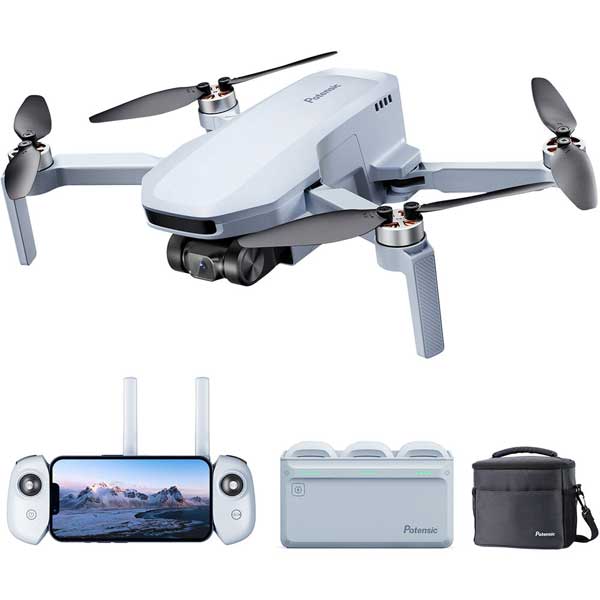
2. Potensic Atom SE – Top Affordable Alternative (~$199)
If you are not interested in getting a DJI drone and are looking for a super-budget option, obviously the Potensic Atom SE is an affordable one. At the same time, it doesn’t deliver the same performance as DJI. Potensic is also a Chinese brand, and we don’t yet know whether newer batches will always have clear FCC status after December 23 or not.
But for sure, if you can add around $50 extra, then you can get a far better drone — which is from DJI, mentioned below.
4K EIS photos, 31 minutes flight, GPS return-to-home, and quiet operation for discreet wildlife shots.
Pros:
-
- Shake-free bracketing.
- Bundle with extras.
- No DJI ban issues.
Cons:
-
- No 360° avoidance.
- App occasional bugs.
Why It’s Great: Budget DJI rival with strong RAW support.
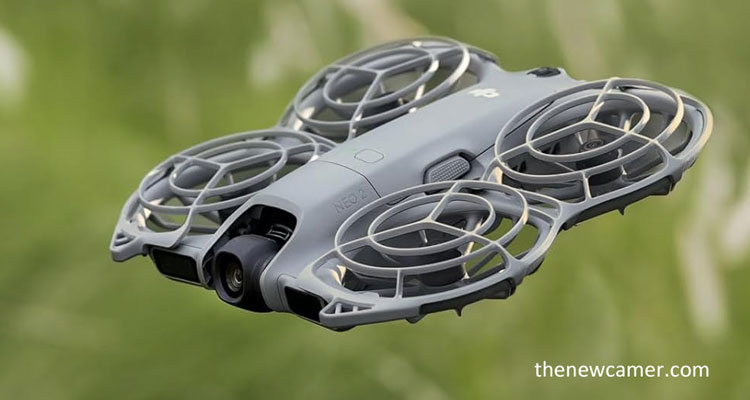
3. DJI Neo 2 – Best for Selfies and Portraits (~$259)
If you are a solo creator, then the DJI Neo 2 drone is more usable for solo content creators, vloggers, and casual shooters since it offers palm launch without any controller required, and it easily follows you with simple gesture movements and again lands on your palm safely by recording your activity for approximately 20 minutes.
The DJI Mini 4K drone is more of a commercial drone and offers a longer 31-minute flight time, but it is recommended to use it outdoors. Obviously, it does not offer gesture control over the drone like we have in the DJI Neo 2. At the very same time, we have Level 5 wind resistance compared to the Level 4 of the Neo 2.
More or less, if you are into wedding cinematography or love to shoot outdoors, it is recommended to use the DJI Mini 4K, but if you are a solo content creator and love to have a compact drone that flies off and lands in your palm, then Neo 2 is the best.
Pros:
-
- Discount Dream: $239 entry matches Mini 4K value.
- Beginner Bliss: Palm takeoff + gestures = zero learning curve.
- 4K Magic: Stabilized slow-mo for viral content.
- Safe & Smart: Avoids obstacles like a pro.
Cons:
-
- Battery Shortfall: 19 min – grab extras for $129.
- Low-Light Limits: Daylight champ, dusk needs work.
- Ban Risk: US stock may vanish soon.
The DJI Neo 2 actually packs more advanced and improved AI algorithms inside. With the help of newly added omnidirectional LiDAR and infrared sensors for the first time in the Neo series, the drone not only becomes crash-proof but also obeys your gestures, almost like your personal flying pet.
At the very same time, the drone is able to capture 4K videos up to 100 fps, with a lot of built-in solo content creator modes, which include QuickShots, Dronie, Helix, AutoCraft, Reels, etc., to make autonomous aerial filmmaking more and more easy for solo content creators.
Get the DJI Neo 2 for Maximum Discount: Step-by-Step Savings Guide
Unlock Instant Off with Amazon Store Card: In the DJI Neo 2 order page, you have to select “Get instant savings: Pay $239 upon approval.” Via the link, you have to apply for the no-annual-fee Amazon Store Card – which means it’s completely free and guess what – instant decision, and if approved, boom: $199 total. ( Even if denied, you still get the base $259 with free Prime shipping. Ur still getting a 48% discount over the MSRP.
| Model |
Price |
Photo Resolution |
Flight Time |
Key Photography Feature |
| DJI Mini 4K |
~$299 |
12MP RAW |
31 min |
HDR Bracketing |
| Potensic Atom SE |
~$199 |
12MP EIS |
31 min |
GPS Stability |
| DJI Neo 2 |
~$259 |
12MP |
20 min |
AI Tracking |
Best Mid-Range Camera Drones for Photographers ($300-$500)
Step up to better sensors and gimbals for pro-level photos without premium prices.
 Get the Latest ongoing Discount at Amazon.com Get the Latest ongoing Discount at Amazon.com
1. DJI Mini 3 – Versatile for Landscapes (~$419)
core specifications of the DJI Mini 3 drone once again, in case you forgot. The main advantage of this drone is that you can capture HDR videos in 4K at up to 30 fps, which is not even possible with the DJI Mini 4K.
Other than that, the biggest advantage you can see in the specifications is that on a single battery charge, you can fly longer, especially with the Fly More Combo.
Having said that, obviously, the DJI Mini 4K drone is available at a much lower price. Still, again, under the $500 price bracket, the DJI Mini 3 is available for beginners and even professionals who want a backup drone.
- Camera and Imaging: Equipped with a 1/2.3-inch CMOS sensor and f/1.7 aperture, the Mini 3 captures stunning 4K/30fps video and 12MP photos. It supports true vertical shooting for social media-ready content, HDR video (up to 30fps), and creative modes like 180° panoramas and sphere shots. The gimbal stabilisation ensures smooth footage even in windy conditions.
- Flight Performance: With a maximum flight time of 38 minutes on the standard battery (extendable to 51 minutes with the optional Intelligent Flight Battery Plus), you can cover more ground without constant recharges. It boasts a 10km (32,800ft) video transmission range in ideal conditions and can withstand winds up to 38 kph (Level 5 resistance).
- Design and Portability: Weighing under 249g, it doesn’t require FAA registration for recreational use in the USA. The foldable design makes it easy to pack, and features like GPS Auto Return and precise hovering add safety for new users.
- Intelligent Features: QuickShots modes (Dronie, Helix, Rocket, etc.) automate cinematic flights, while the DJI Fly app provides intuitive controls. Compatible with the DJI RC remote for a screen-integrated experience without needing your phone.
Compared to its predecessor, the Mini 2, the Mini 3 offers improved video quality and vertical shooting, making it a worthwhile upgrade for content creators focusing on TikTok or Instagram Reels.
Current DJI Mini 3 Deal on Amazon
The deal we have running right now on Amazon.com is open to anyone who lives in the United States of America. For the standard package, you only have to pay $335, down from $419. That’s a straight $84 discount,
Pros:
-
- Superior dynamic range.
- Under 250g.
- Extended battery.
Cons:
-
- No full avoidance.
- Older but reliable.
Why It’s Great: Ideal for bracketing in varied light.
If you’re debating between the Mini 3 and the newer Mini 4K (which offers 4K UHD at a lower price point but similar specs), consider your needs: the Mini 3 excels in vertical shooting and has a proven track record, while the Mini 4K is even lighter on the wallet.
| Feature |
DJI Mini 3 |
DJI Mini 4K |
| Price (Current Deal) |
$335 |
$225-$239 |
| Camera |
4K/30fps, HDR 12MP |
4K UHD, Similar Gimbal |
| Flight Time |
38 min |
Up to 31 min |
| Weight |
<249g |
<249g |
| Best For |
Vertical Shooting, Beginners |
Budget Entry-Level |

2. DJI Flip – Compact Cinema Option for Travellers (~$369)
DJI Flip is another excellent portable drone specifically made for travelers, but it does not compromise on the core specifications that a drone offers. It weighs only 249g and offers 31 minutes of flight time on a single charge. It features a 1/1.3-inch CMOS camera sensor and captures images of 48 megapixels. It does have optical sensors for forward and downward movement. Other than that, it features OcuSync 4, and the range is up to 30 km according to FCC registration. It does offer palm takeoff technology and voice control.
Overall, you have to pay around $379 if you wish to get it right now while using Amazon VISA Store card discount Other than that, the regular price of this drone is $439.
Pros:
-
- Pro footage in pocket size.
- AI automation.
- Great for vlogs.
Cons:
-
- Learning curve.
- Wind sensitive.
Why It’s Great: Portable power for travel photographers.
| Feature |
DJI Flip |
DJI Mini 3 |
| Weight |
Under 249 g |
Under 249 g |
| Flight Time |
31 minutes |
38 minutes (standard battery) |
| Camera Sensor |
1/1.3-inch CMOS |
1/2.3-inch CMOS |
| Video Resolution |
4K/60fps HDR |
4K/30fps HDR |
| Photo Resolution |
Up to 48 MP |
12 MP |
| Obstacle Sensing |
Forward and downward (3D IR) |
Downward only |
| Propeller Guards |
Built-in, full-coverage |
Optional accessory |
| Transmission |
O4, up to 13 km (FCC) |
O3, up to 10 km (FCC) |
| Notable Features |
Palm takeoff, subject tracking, voice control |
True vertical shooting, intelligent flight modes |
| Price (starting) |
USD $439 |
USD $419 |
Best Higher-End Camera Drones for Photographers ($500-$1000)
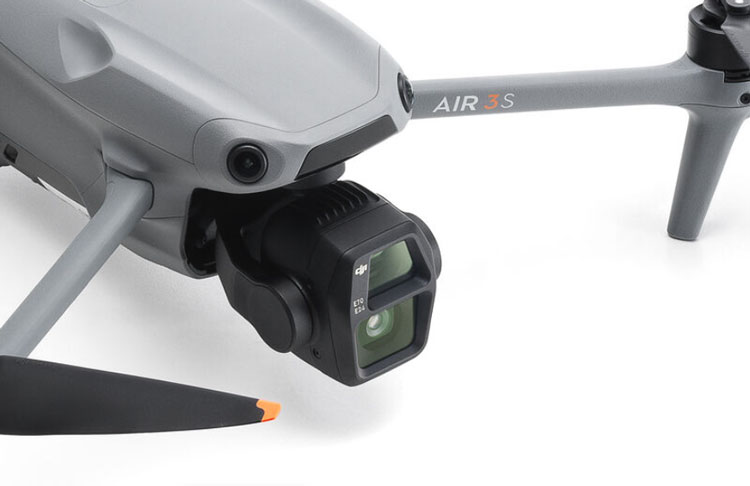
1. DJI Air 3S – Best All-Rounder (~$999)
The DJI Air 3S is an absolute triumph in the mid-range drone market, delivering a potent blend of performance, safety, and exceptional image quality that will impress both beginners and seasoned professionals alike.
One of the standout features is its superb dual-camera system. The main camera, boasting a 1-inch 50MP CMOS sensor, captures breathtakingly detailed stills and stunning 4K video at up to 60fps. I really praise its improved low-light performance and the ability to pull incredible detail from shadows and highlights, thanks to its wide dynamic range. The addition of a 48MP telephoto lens provides fantastic versatility, allowing you to compress perspective for dramatic shots or safely capture distant subjects with its impressive zoom capabilities.
The inclusion of a forward-facing LiDAR sensor significantly enhances obstacle avoidance, providing an extra layer of security, especially in challenging environments or low-light conditions. The upgraded ActiveTrack 360 intelligently follows subjects, offering more fluid and reliable tracking around obstacles.
Flight performance is equally impressive.The extended battery life, offering up to 45 minutes of flight time, provides incredible convenience for longer shoots and multiple flights. Its robust build and strong wind resistance (up to 12 m/s) ensure stable and reliable flights even in less-than-ideal weather conditions. The O4 transmission system delivers a stable and clear 1080p/60fps live feed to the controller, with an impressive control range.
Beyond its core features, the Air 3S offers a range of intelligent flight modes like Waypoint, QuickShots, and MasterShots, making it easy to capture cinematic footage with minimal effort. The inclusion of 42GB of internal storage is a thoughtful addition, providing ample space for your photos and videos, giving peace of mind when you forget an external memory card.
While it sits above the sub-250g regulatory weight, the DJI Air 3S strikes an excellent balance between portability and professional-grade features. It’s a versatile powerhouse that’s equally adept at capturing sweeping landscapes, detailed urban environments, and dynamic action shots. If you’re serious about aerial photography and videography and want a drone that delivers exceptional results with ease of use, the DJI Air 3S is an outstanding choice and a worthy investment.
Dual lenses (1-inch sensor), 4K/60fps, 46 minutes, LiDAR avoidance for low-light night photography.
DJI Air 3S: The Best New Mid-Range Drone For Photography?
Pros:
-
- Exceptional low-light.
- Long flight.
- Dynamic range.
Cons:
-
- Over 250g (register).
- Pricey.
Why It’s Great: Pro results for landscapes and events.

2. DJI Mini 5 Pro – Budget PRO Photography Powerhouse (~$700)
1-inch 50MP sensor, 4K RAW, 34 minutes, 90° rotation for versatile bracketing. – The DJI Mini 5 Pro, we have already published an article — this is the world’s first drone that features a 1-inch large CMOS sensor under a 249-gram body. Excitement at its peak, the drone is able to record 4K videos up to 60 frames per second and also features an advanced set of LiDAR sensor technology that protects the drone during flight. Apart from these features, we are also getting extended flight time, and obviously, the price of the drone is also known and you can use our smart links to preorder the drone on September 18 at the B&H Store.
DJI Mini 5 Pro Camera specification and functions:
- 50 MP 1″ CMOS sensor and f/1.8 aperture — better low-light performance.
- 4K/60fps HDR video (up to 14 dynamic stops in Auto) and 4K/120fps for slow-motion.
- 10-bit recording (H.265) and D-Log M and HLG modes for advanced post-production.
- True vertical shooting + gimbal with 225° rotation for creative shots.
- Nightscape Omnidirectional Obstacle Sensing with LiDAR and vision sensors.
- Improved 360° ActiveTrack (Standard and Cycling modes) with tracking up to 15 m/s in open environments.
- O4+ 10-bit video transmission and up to 20 km in range (FCC mode). Persistent Bluetooth for fast pairing.
- Flight time with smart (normal) battery: up to 36 minutes.
If this DJI Mini 5 Pro Unboxing Video has you hooked, pre-orders are expected to begin immediately after the announcement from September 18, with shipping scheduled for late September or early October. These are search Links, and will get activated on September 18
Pros:
-
- High-res prints.
- Compact.
- Under 250g.
Cons:
-
- Wind issues.
- Limited stock.
Why It’s Great: Best for detailed aerial art.
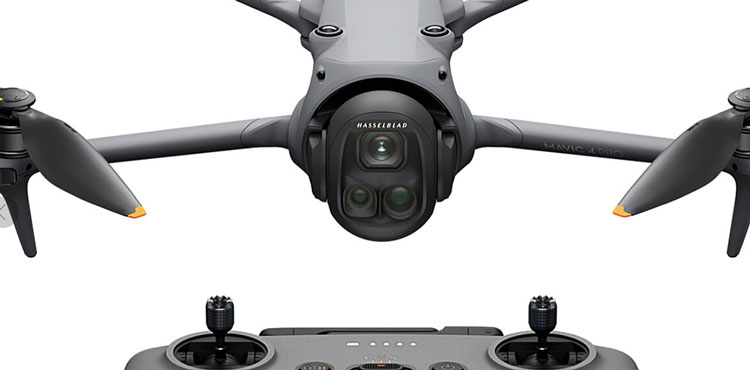
3. DJI Mavic 4 Pro – Premium Choice (~$999)
Triple cameras (25MP MFT), 6K/60fps, 51 minutes, variable aperture for creative control. – Best pro portable drone on the market—nothing comes close. It offers 6K shooting with a Micro Four Thirds (M43) sensor on the main camera, plus a 70mm lens and a 168mm super telephoto. The 168mm telephoto delivers incredibly cinematic shots; it’s truly unbelievable. The 4K and 6K footage from the M43 sensor is outstanding. The drone is solidly built and remarkably easy to launch and take off. This drone is incredible. End of story.
Pros:
-
- Cinema-quality.
- Wind stable.
- Parallel charging.
Cons:
-
- Heavy (1063g).
- Strict regs.
Why It’s Great: For pros needing telephoto options.
| Feature |
DJI Air 3S |
DJI Mavic 4 Pro |
DJI Mini 5 Pro |
| Weight |
724 g |
1063 g |
249.9 g |
| Flight Time |
45 minutes |
51 minutes |
36 minutes (52 with Plus battery) |
| Camera Sensor |
Wide: 1″ CMOS; Tele: 1/1.3″ CMOS |
Wide: 4/3″ CMOS; Med Tele: 1/1.3″ CMOS; Tele: 1/1.5″ CMOS |
1″ CMOS |
| Video Resolution |
Up to 4K/120fps |
Up to 6K/60fps HDR |
Up to 4K/120fps |
| Photo Resolution |
Up to 50 MP |
Up to 100 MP |
Up to 50 MP |
| Obstacle Sensing |
Omnidirectional with LiDAR |
Omnidirectional Nightscape |
Nightscape Omnidirectional |
| Transmission |
O4, up to 20 km |
O4+, up to 30 km |
O4+, up to 20 km |
| Notable Features |
Dual cameras, 42GB storage, enhanced low-light |
Triple cameras, Infinity Gimbal 360° rotation |
225° gimbal rotation, true vertical shooting |
| Price (starting) |
~USD $1099 |
~USD $2099 |
~USD $769 |
DJI Alternatives: Top Non-DJI Drones for USA Buyers
Avoid ban risks with these, if you are interested in DJI alternatived then we have two options: Autel EVO Nano+ and Skydio 2+, btw even Autel is banned, so the only option for now is Skydio 2+. although we have compared both the drone so you can have an idea, what’s the major difference between them
| Feature |
Autel EVO Nano+ |
Skydio 2+ |
| Weight |
249 g |
790 g |
| Flight Time |
28 minutes |
27 minutes |
| Camera Sensor |
1/1.28-inch CMOS, RYYB |
1/2.3-inch CMOS |
| Video Resolution |
4K/30fps HDR |
4K/60fps HDR |
| Photo Resolution |
50 MP |
12 MP |
| Obstacle Sensing |
3-way (forward, backward, downward) |
Omnidirectional (360°) |
| Transmission |
Up to 10 km |
Up to 6 km (with controller) |
| Notable Features |
PDAF + CDAF autofocus, no geo-fencing, noise reduction |
AI tracking, superior avoidance, American-made |
| Price (starting) |
~USD $799 |
~USD $999 |
In February 2026, the best camera drones for photographers in the USA blend innovation with practicality. The DJI Air 3S stands out for versatility, but alternatives ensure future-proofing. Prioritize your needs – budget, portability, or pro features – and elevate your photography today. Shop at Amazon or B&H for deals!
Follow us on our social pages FACEBOOK | TWITTER | INSTAGRAM, If you have time –>see more Camera News and DJI Rumors
By admin, on February 8th, 2026
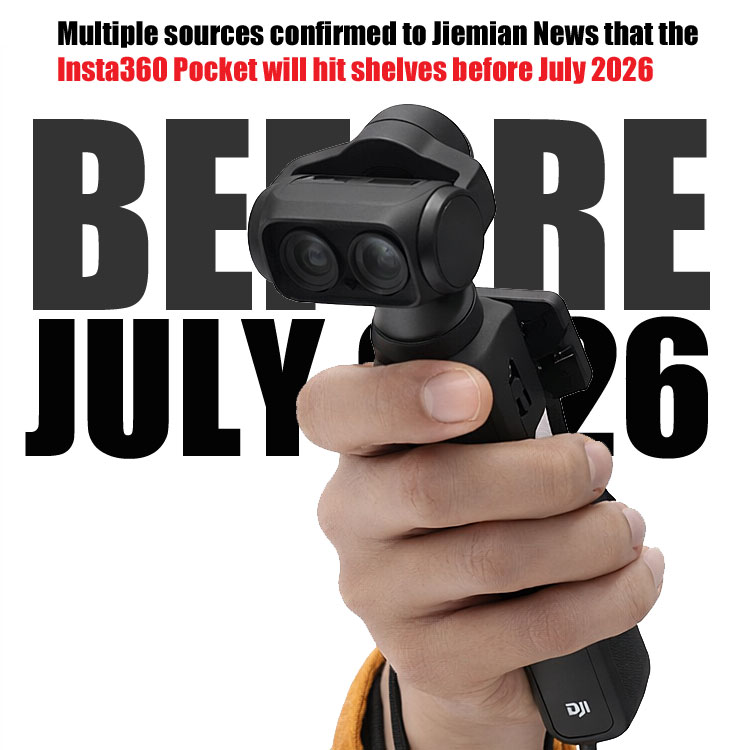
Breaking: Insta360 is set to drop its Pocket camera in the first half of 2026, packing modular magic and telephoto firepower to take on DJI head-on. Fresh insider confirmations from Jiemian News on February 6 spill the beans on release timing, color options, and game-changing features that could make this the vlogger’s dream tool. Building on our earlier exclusives—as the leaked prototypes and CEO’s dual-lens tease—here’s everything you need to know about the Insta360 Pocket 2026 release date and specs.
Insta360 Pocket 2026 Rumours Update: First-Half Launch, Colours, and Industry-First Telephoto

Multiple sources confirmed to Jiemian News that the Insta360 Pocket (from Shadowstone/影石) will hit shelves before July 2026,
We have covered a lot of details related to the Insta360 Pocket camera, and one of the most important factors is that the announcement timeline is matching up with the upcoming DJI Pocket 4 standard edition. Other than that, we are also expecting, not only the standard edition but even the professional (Pocket 4 PRO) model before June 2026 from DJI, which will have a Dual Lens Module like the Insta 360 pocket camera. It is due to the fact we all know that the Insta360 standard edition has been registered with an ADAPCC ID in November 2025, and the professional model was registered on December 22, 2025. So, the timing of the announcement is expected to be a little different between the Pro and the standard model.
Following the same trend and stats, the Insta360 Pocket camera with a dual-lens setup that we have already confirmed in our previous post is about the arrival before July 2026. That would be a very, very interesting thing, as we have seen how this Insta360 Pocket camera will compete against the standard and the Pro model of DJI. Also, Insta360 has developed its own ecosystem.
Now, the only thing that matters is video quality and the performance of the camera. In statistics, the Insta360 Pocket camera is going to satisfy consumer needs out there. Those who have already used or are interested in the DJI Pocket camera before will see if the Insta360 camera is able to create a space in the market in front of DJI. That would be a very interesting thing to see.
 Close inspection of the prototype parts reveals something even more revolutionary — Insta360 is developing two interchangeable camera heads: Compact Gimbal-Less Head with Leica Lens One of the most interesting things about the Insta360 Pocket camera, which completely makes it different from the DJI Pocket camera, is that it isn’t just another gimbal cam — it’s rumored to sport a modular build for swappable parts and a dual-camera setup with telephoto zoom, marking a first for handheld gimbals.
Standout details from the latest leak:
- Insta360 Pocket Release Date 2026: Q1 or Q2 rollout, potentially as early as March based on our CEO accidental reveal coverage.
- Color Variants: Multiple shades for personalization—think beyond basic black to appeal to creators.
- Modular and Dual-Camera Design: Interchangeable modules (e.g., lenses, grips) echo our prototype photo exclusive, with telephoto for long-range shots without losing stabilization.
This evolves from the dual-lens confirmation we reported on Jan 26, adding telephoto as a killer feature for distant vlogging or action capture.
Insta360 Pocket vs DJI Osmo Pocket: Feature Breakdown and Why It Matters
With DJI’s Osmo Pocket 3 still ruling the roost (and Pocket 4 whispers ongoing—check our warehouse leak update), Insta360’s entry could disrupt the market. Here’s a quick comparison:
| Feature |
Insta360 Pocket (Leaked) |
DJI Osmo Pocket 3 |
| Design |
Modular with dual cameras + telephoto |
Fixed 3-axis gimbal, single wide lens |
| 2026 Release Date |
First half (Q1/Q2) |
N/A (2023 model) |
| Colors |
Multiple customizable options |
Basic variants only |
| Video Specs |
Speculated 8K/30fps 360° or 4K/60fps |
4K/60fps HDR |
| Standout Edge |
Telephoto zoom in a gimbal-first |
AI tracking, wireless mics |
| Price Guess |
$499–$699 starter kit |
$519 current |
The modular twist could give Insta360 an edge for pros needing flexibility, especially if it integrates with their 360° ecosystem.
Expected Insta360 Pocket Specs: Updated from Latest Leaks
Drawing from our ongoing coverage and new intel:
- Sensors and Lenses: Dual setup with potential 1-inch sensor for epic low-light; telephoto for 3x+ optical zoom.
- Stabilization Tech: 3-axis gimbal plus Insta360’s AI tracking, building on Ace Pro roots.
- Build and Durability: Waterproof (IPX8 speculated), modular for extended battery via grips.
- Connectivity: App integration for seamless editing; possible 360° mode hybrids.
- Pricing and Kits: Entry at $499, with bundles for modules—watch for global availability post-announce.
This positions the Insta360 Pocket as a 2026 must-have amid rivals like vivo’s vlog cam.
Wrapping Up: Ready for Insta360 Pocket Hype in 2026?
No official word from Insta360 yet, but these confirmed details crank up the excitement. If you’re eyeing a DJI alternative, this modular beast with telephoto could be it—stay locked to TheNewCamera.com for more leaks and reviews.
What’s your take on the Insta360 Pocket 2026 release? Drop comments below!
GET LIVE NOTIFICATION, Select Your Trusted Source GET LIVE NOTIFICATION Click ON Check BOX for Latest NEWS and Rumors
The article “Exclusive Leak: Insta360 Pocket Camera Prototype Photos Revealed” was written by thenewcamera.com team on 4:51 pm, Tuesday, 20 January 2026, Greenwich Mean Time (GMT) | You can also follow us on Our Official Social Media Handles FACEBOOK | TWITTER | INSTAGRAM to get live news — > DJI Rumors
Insta360 Pocket Camera: Dual Lenses Confirmed by CEO and Trusted Sources – Not DJI Osmo Pocket 4 Pro


By admin, on February 7th, 2026

DJI continues to push boundaries; they are working on the next generation of connectivity tech. Stronger connectivity between their drones and the RC remote controller – with the help of 5G- will extend beyond visual range, offering more than 30km+ connectivity and transmission beyond what we already have in Pro DJI drones.
OcuSync 5 isn’t just in rumours anymore. Our team here at TheNewCamera.com has spotted an FCC ID registration for the DJI SDR Transmission 2 transceiver, with the model code DST-2, FCC ID: 2ANDR-DST2501. Now, this could be the game-changer and the foundation for the upcoming OcuSync 5 tech.
Text from FCCID analyst
OcuSync 5 is said to have 30 kilometre-plus range connectivity, made possible by integrating 5G technology. So let’s dive deep into what OcuSync 5 actually is, and also the expected set of models that are going to have this tech.
The filings detail a device named the “DJI SDR Transmission 2 Transceiver,” which is not just an incremental update to the company’s renowned OcuSync technology, but a revolutionary step forward, packing integrated 5G cellular connectivity alongside a powerful new Software Defined Radio. This move signals a future where DJI devices could have virtually unlimited range, enabling live streaming and control from anywhere with a cell signal.

What We Know About DJI OcuSync 5+
In the DJI drones we’ve seen so far, the current transmission powerhouse is OcuSync 4—often styled as O4 or OcuSync 4+ in models like the Mavic 4 Pro. It delivers reliable, low-latency video feeds up to 30 kilometres in ideal conditions, which is basically the max range most consumers would ever need.
But SDR Transmission 2 actually represents a seismic shift in technology, connectivity, and video transmission. What DJI is doing here is integrating 5G cellular connectivity. So, the drone connects to the RC controller over cellular networks. Technically, even if the drone flies way beyond the visual line of sight or past that twenty-kilometre mark, the RC controller and drone stay linked through 5G tech. That’s the next big step for next-generation OcuSync 5.
With 5G-connected drones, the range can basically be unlimited wherever there’s coverage. And technically, OcuSync 5 looks like one of the best innovations DJI has made recently in connectivity—way better than OcuSync 4+ that we saw in the Mavic 4 Pro, which launched in May 2025. Although there’s no official statement yet about OcuSync 5, the FCC ID makes it crystal clear they’re working on it.

The Hybrid Power: Local RF Meets Cellular for Unbreakable Links
Building on this foundation, OcuSync 5’s rumoured hybrid mode blends software-defined radio (SDR) for short-range, interference-resistant flights (think dual 2.4/5 GHz bands with MIMO antennas and ~35 ms latency) with seamless 5G failover. This setup supports high-bitrate 1080p/60fps streams up to 20 Mbps, making it perfect for urban BVLOS ops or remote inspections where cell towers are your best friend. Safety stays front and center too—FCC-compliant SAR levels under 1.0 W/kg ensure it’s worry-free.
DJI Mavic 5 Series: Expected to arrive with OcuSync 5 Integration
The Mavic 4 Pro was released in May 2025 with OcuSync 4 and a triple-camera setup that really impressed professional drone users. Sales were exceptionally high, and even now, demand for the DJI Mavic 4 Pro remains strong.
What we’re expecting now is that, with the arrival of OcuSync 5, the upcoming Mavic 5 – or Mavic 5 Pro – will integrate SDR Transmission 2. This tech will power both the controller and the drone itself, enabling 5G-enhanced BVLOS connectivity (beyond visual line of sight), live streaming, hybrid modes, and a solid 30+ km range.
U.S. import hurdles are already a reality, especially after the ban took effect on December 23, 2025. It’ll be interesting to see whether the Mavic 5 series actually reaches the United States, but globally, it’s definitely coming packed with seriously upscale tech. Recent FCC updates confirm that pre-2026 models like the Mavic 4 Pro remain supported through 2027, while new entries will face “Covered List” scrutiny—potentially delaying U.S. availability as other markets get first access.
Expected 2026 Models Featuring OcuSync 5 Tech
As teased, OcuSync 5 isn’t stopping at the Mavic flagship. Leaks point to a broader rollout across DJI’s lineup, emphasizing pro and enterprise drones first. Here’s a quick breakdown of rumored integrations:
| Drone Model |
Rumored Release |
Key OcuSync 5 Features |
Price Estimate |
| Mavic 5 Pro |
Q3-Q4 2026 |
5G BVLOS hybrid, 60GHz radar, upgraded sensors |
$1,800–$2,200 |
| Air 4 |
2026 |
Unlimited cellular streaming in compact form |
$1,200–$1,500 |
Why OcuSync 5 Could Redefine Drone Flying in 2026
This isn’t just about distance—it’s about ditching range anxiety for creators, pros, and hobbyists alike. Imagine glitch-free live streams from mountain peaks or seamless swarm ops in crowded skies, all powered by adaptive firmware and cloud tie-ins. With no fresh teases at CES 2026 yet (as of early February), the NAB show could drop the bomb. What’s your take: Will 5G make drones truly “unlimited,” or is the ban the bigger buzzkill? Drop your thoughts below, and stay tuned to TheNewCamera.com for the latest drops.
The article “DJI Pocket 4 PRO Coming to USA: Pocket 4 PRO FCCID Leaks” was written by thenewcamera.com team on 4:50 pm, Thursday, 5 February 2026, Greenwich Mean Time (GMT)| You can also follow us on Our Official Social Media Handles FACEBOOK | TWITTER | INSTAGRAM to get live news — > DJI Rumors

By admin, on February 5th, 2026

The DJI Pocket 4 Pro camera is well on its way to the United States of America, as the FCC ID for this new camera has been spotted clearly, signalling a new model code other than the registered model code of the DJI Pocket 4 that we have already published on our website. The new model code is the DJI Pocket 4P, and it’s not only the difference in the name—we also have a different FCC ID, and the registration dates of both the cameras are also different. So in this article, we are going to tell you the exact differences we have between the FCC ID of the DJI Pocket 4 camera and the DJI Pocket 4P, and obviously, being registered in the FCC ID clearly means the Pocket 4 Professional camera is also on its way to the United States of America.
Yes, DJI does register multiple variations of the same camera or product line with the FCC when they release distinct models, such as standard and Pro versions in series like the Mavic or Mini drones or the Osmo 7 and 7p camera gimbals.
Finally we have spotted the FCCID Reg details of the upcoming Pocket 4 PRO Camera and here it is

DJI Pocket 4 Pro Camera Leaks and FCC Certification Details
You already have very clear leaked images of the DJI Pocket 4 Pro camera, as you can see above—the Pocket 4 Pro is said to feature a dual lens system inside it. Obviously, it will come at an elevated price range, but again, the camera module matches very closely with the DJI Air 3S drone camera system. The DJI Pocket 4 Pro camera rumour is not new; it has been circulating on the web for more than 6 months, and not only one—we have seen at least two different prototypes of the DJI Pocket 4 Pro camera till now.
The biggest disappointment for me was that, before this leak happened, I was expecting that only one Pocket 4 series camera was going to be announced since we had only the one FCC ID details of the Pocket 4 camera, which surfaced back on another date in December 2022. Just before the FCC ID ban or something similar, DJI registered the Pocket 4P camera, and here the P stands for Pro.
From the freshly leaked FCC documents, we can confirm the model is listed as “Osmo Pocket 4P” with the specific model number PP-041. The FCC ID is 2ANDR-PP041, granted under the applicant SZ DJI Osmo Technology Co., Ltd., with the declaration signed by Niki Fang, Certification Supervisor, on 2025-12-15. This certification covers compliance with FCC rules under 47 CFR Part 2, including equipment authorisation, labelling requirements, and post-market surveillance obligations. The documents emphasise that the device complies with technical rules, and DJI agrees to provide samples for testing upon request by SGS, FCC, or ISED.

Key Differences Between DJI Pocket 4 and Pocket 4 Pro FCC IDs
Diving into the specifics, the standard DJI Pocket 4 (which we’ve covered extensively) has its own FCC ID, but the Pocket 4P stands out with FCC ID: 2ANDR-PP041. The registration date for the Pocket 4P is more recent, aligning with the 2025-12-15 declaration, compared to the earlier Pocket 4 filings. This isn’t just a rebrand—the documents highlight unique aspects like the E-Label access instructions, where users can view compliance info by sliding down on the camera view, tapping the settings icon, and scrolling to “Compliance Info.” The label itself shows the model as PP-041, with additional certifications like IC: 23060-PP041 and CAN ICES-003 (B)/NMB-003 (B), plus warnings for indoor use only (except for 5.2GHz connections) and battery specs (7.4V, 1545mAh, 11.96Wh).
Moreover, the SAR (Specific Absorption Rate) Test Report from SGS-CSTC Standards Technical Services Co., Ltd. Shenzhen Branch (Report No.: SZCR251100526406, dated 2025/12/15) confirms the device’s safety for body-worn and extremity use. Key SAR values include:
- Wi-Fi (2.4GHz): Body-worn 0.12 W/kg, Extremity 0.35 W/kg
- Wi-Fi (5GHz): Body-worn 0.48 W/kg, Extremity 2.59 W/kg
- BT: Body-worn <0.10 W/kg, Extremity 0.35 W/kg
- Maximum Simultaneous Transmission: Sum SAR Body-worn 0.56 W/kg, Extremity 2.93 W/kg (well under limits of 1.6 W/kg and 4.0 W/kg respectively)
These SAR results were tested under FCC 47 CFR §2.1093, with the device passing all configurations. This Pro variant seems tuned for higher performance, possibly explaining the elevated SAR in 5GHz Wi-Fi, but still safely within limits.
DJI Pocket 4 PRO Arrival Time
DJI Pocket 4 Pro is registered/granted FCC certification on December 22, 2025, the standard 180-day short-term confidentiality period (which often applies to exhibits like internal photos, block diagrams, schematics, and user manuals) would end on June 20, 2026 (a Saturday).
This means confidential details could become publicly visible shortly after that date, though DJI might request extensions in some cases. Launches frequently happen before the full 180 days expire, as the basic grant allows sales once approved.
What Does This Mean for the DJI Pocket 4 Pro Release in the USA?
With the FCC ID 2ANDR-PP041 now public, the DJI Osmo Pocket 4P is cleared for sale in the USA, paving the way for an imminent launch. This leak confirms the Pro model’s existence separate from the standard Pocket 4, likely featuring that rumoured dual-lens setup inspired by the Air 3S drone for superior imaging. Expect enhanced specs like better stabilisation, higher resolution video, and pro-level features that justify the “P” designation.
Stay tuned to TheNewCamera.com for more updates on DJI Pocket 4 Pro specs, price, release date, and hands-on reviews. What do you think—will the dual lenses make it worth the upgrade? Drop your thoughts in the comments!
The article “DJI Pocket 4 PRO Coming to USA: Pocket 4 PRO FCCID Leaks” was written by thenewcamera.com team on 4:50 pm, Thursday, 5 February 2026, Greenwich Mean Time (GMT)| You can also follow us on Our Official Social Media Handles FACEBOOK | TWITTER | INSTAGRAM to get live news — > DJI Rumors
By admin, on February 5th, 2026

Just after the release of the Z9, it has created new standards in the mirrorless camera industry. Now we have a fresh set of rumours confirming that the Z9 II camera will come with groundbreaking technology updates. And if these rumours hold, then for sure the Z9 Mark II camera is going to redefine the meaning of flagship cameras again, and why we are saying this since the sensor will have upgraded image quality, as of todays medium format camera with its 45 megapixel of resolution and will be 3.5 X faster than the existing z9 camera sensor, obviously with more superior autofocus capability and high-end professional-level RED flagship–level video capabilities, which means a perfect camera for both worlds.
Let’s dive into the latest Nikon Z9II rumours, including speculated specifications, release date, and how it stacks up against the original Z9.
Rumoured Nikon Z9II Specifications: A Leap Forward in Sensor Technology
According to recent leaks, the Nikon Z9II is set to feature a brand-new 46-megapixel stacked CMOS sensor. This isn’t just a minor upgrade—it’s rumoured to offer a readout speed that’s 3.5 times faster than the original Z9’s sensor.Take a look at the set of rumored specification of the upcoming camera
Key sensor highlights include:
-
- 46MP Stacked CMOS Image Sensor: Instead of using a global shutter, it uses a new stacked sensor that is 3.5 times faster than the Z9, with a maximum sync speed of 1/720 seconds, achieving performance close to that of a global shutter camera.
- New EXPEED processor.
- Low minimum normal sensitivity of ISO 32: This makes it possible to provide image quality that is “medium format camera-like.”
- New AF system: Tracking performance and focusing accuracy have been significantly improved.
- RAW continuous shooting: up to 60fps at full resolution, 120fps in DX format.
- Video Performance: Supports 12-bit R3DNE RAW video up to 8.3K 3:2 Open Gate 60p.
- New Film Simulation LUTs: Nikon is introducing several new film simulation LUTs for the Z9II and older models that deliver more natural and appealing visuals in both photos and videos.
- RED Video Features: The Z9II will come with a host of new RED video features.
- 5.76 million dot EVF: Same as the Nikon Z6 III.
- Content Authentication: Nikon has already mentioned this.
- It is scheduled to be released in 2026-2027.
These specs position the Z9II as a powerhouse for still photographers seeking top-tier resolution and speed. keeping in mind that early leaks are usually not 100% accurate.
Enhanced Autofocus and Burst Shooting for Pro Performance
Nikon was not known for its autofocus system before the Z9 system. Obviously, Nikon system cameras are always admired by professionals for their excellent image detail and better dynamic range, and the reason is quite obvious: Nikon system cameras don’t come with an optical low-pass filter. The most interesting thing that we are seeing in the core specifications is not that the camera can capture full-resolution RAW at 60 frames per second, but that in DX format, you can switch up to 120 frames per second in RAW, which was not possible with the Z9, and it was limited to JPEG only.
Obviously, the camera will be powered by the next-gen EXPEED 8 image processor, and we do hope and expect that after it comes in the Z9 Mark II, the EXPEED 8 will flow up to the lower variants as well, like the Z8 II, as well as the upcoming Z7 III.
Video Capabilities: 8.3K RAW and RED Integration
Nikon Z9 does have the capability to record 8K video at 30 and 60 FPS, and the RAW recording option is also available, but the big issue was that the camera was not able to utilise its entire sensor area, which means no open-gate recording option. But here, in the case of the Z9 II, with a faster sensor as well as a faster image processor, the camera can now support open-gate 8K recording in 3:2 format (8.3K 3:2 open gate recording at 60p in 12-bit R3DNE RAW format.)
For sure, this will open up creative possibilities for cinematic workflows, especially with the inclusion of many new RED video functions—likely a nod to Nikon’s acquisition of RED Digital Cinema.
Additional video enhancements:
- New film simulation LUTs for more natural and appealing colors in both photos and videos.
- Compatibility with older Nikon models for these LUTs, ensuring a seamless ecosystem.
If accurate, these features could make the Z9II a hybrid monster, rivaling dedicated cinema cameras while excelling in stills.
Nikon Z9II Release Date and Price Expectations
As we have already said, Nikon Z9 II is delayed and will arrive sometime at the end of 2026., aligning with Nikon’s typical flagship update cycle. Pricing details haven’t leaked yet, but expect it to be in the premium range, similar to the Z9’s launch price around $5,500. As with all rumors,.
Why the Nikon Z9II Could Be Worth the Wait
The specifications above do paint the larger picture of the upcoming Nikon Z9II camera that’s not just an incremental update but comes with a revolutionary upgrade. With its 3.5X faster New Sensor, AI advanced AF, and pro video tools, it could appeal to sports photographers, wildlife enthusiasts, wedding pros, and filmmakers alike. Features like content authentication (already teased by Nikon) add value for journalists and content creators needing verifiable media.
Compared to the original Z9, the Z9II seems focused on refining speed and quality without reinventing the wheel—perfect for those invested in the Nikon Z ecosystem. Stay tuned to TheNewCamera.com for more updates on Nikon Z9II specs, leaks, and official announcements.
What do you think of these Nikon Z9II rumours? Share your thoughts in the comments below!
The article “Nikon Z9II Specifications Leaked: 46MP Stacked Sensor, 8.3K Video, and Blazing Fast Performance” was written by thenewcamera.com team on 11:10 am, Thursday, 5 February 2026, Greenwich Mean Time (GMT) | You can also follow us on Our Official Social Media Handles FACEBOOK | TWITTER | INSTAGRAM > get live news + Nikon Rumors 24X7


By admin, on February 4th, 2026

Canon G7X Mark III is one of the most popular compact cameras of all time from Canon, and again it looks like Canon is about to re-release the G7X Mark III compact camera in a Limited Edition format. In this article, we will discuss in detail the upcoming Canon G7X Mark III camera, including its availability and pricing.
Why the Canon G7X Mark III Continues to Dominate in 2026
Just not a regular compact camera; it is a powerful content creator tool that is being loved by professionals out there. Since its announcement, the G7X Mark III has become one of the favourite cameras for content creators, and the popularity is mainly due to its crisp and clear 4K footage as well as the live streaming capabilities in a compact camera.
It’s really interesting – the G7X camera was announced back in 2018, and Canon discontinued the model in early 2026. Despite its discontinuation and the very limited amount of stock available in the market, its demand continuously remains the same, and the result is that its price has increased from $899 to around $1,200 right now on Amazon.com, even for refurbished or renewed bodies. People are still buying it, which clearly indicates there is a huge demand for this camera even in 2026, despite its discontinuation.So many 0options we have, people are still searching for the G7X Mark III camera, and most of them are buying it even in 2026. So Canon is doing the best thing right now—yes, they are not announcing the successor, but they are introducing a Limited Edition of the original G7X Mark III camera. So let’s waste less time on the details and explore.
Possible Announcement Date for the Canon G7X Mark III Limited Edition
Rumors have been swirling about a refreshed take on the Canon G7X Mark III, and it looks like an announcement is imminent. According to reliable sources, Canon is set to unveil a “Limited Edition” version of the Canon G7X Mark III this week—specifically on February 4, 2026. This timing aligns with Canon’s strategy to kick off the year with exciting releases, capitalizing on the camera’s enduring demand.
Why now? The original Canon G7X Mark III has seen a resurgence in popularity, with prices fluctuating due to supply shortages and high interest from creators. An announcement on February 4 would position the limited edition as a must-have for early adopters, potentially shipping shortly after. While this isn’t a full successor (rumors point to a Canon G7X Mark IV or replacement later in 2026), it’s a strategic move to refresh the lineup without overhauling the core product.
Colours Available for the Canon G7X Mark III
Yes, it is confirmed now—the Limited Edition Canon G7X Mark III camera is coming. At the very same time, we have already seen the black and silver versions of the camera, but this time it has been said that Canon is about to introduce a new graphite grey colour version of the same camera.
Finally, that’s the good news—we have the G7X Mark III camera coming again in a premium look and colour, and it will be available first-hand in most of the day-one stores in the United States of America as well as in Europe, but in limited quantity.
Specs of the Canon G7X Mark III: Why They’re Staying the Same
Specifications of the upcoming camera: The big question is, will the specifications be changed in the upcoming camera, or will they remain the same as we have seen in the Canon G7X Mark III camera? Well, the answer is very clear—the specifications of the Limited Edition G7X Mark III camera are going to remain the same as those of the G7X Mark III. It is just a limited edition for a limited audience. Canon is not in the mood to alter the core specifications of its best-selling camera; instead, they’re focusing on cosmetic and availability tweaks to extend the model’s lifespan.
Here’s a detailed breakdown of the core specifications that define the Canon G7X Mark III:
- Sensor and Image Quality: 20.1-megapixel 1-inch stacked CMOS sensor paired with the DIGIC 8 image processor. This combo delivers sharp, vibrant photos with excellent low-light performance, rivaling entry-level mirrorless cameras.
- Lens: Built-in 4.2x optical zoom lens (24-100mm equivalent) with a bright f/1.8-2.8 aperture. Ideal for portraits, landscapes, and everything in between, with optical image stabilization for steady shots.
- Video Capabilities: 4K UHD video recording at 30fps, Full HD at 120fps for slow-motion, and vertical video support. The Canon G7X Mark III also excels in live streaming directly to YouTube, a feature that’s boosted its popularity among content creators.
- Autofocus and Shooting Speed: 30fps continuous shooting in RAW burst mode, with reliable autofocus featuring face detection and eye AF—perfect for vlogging or action shots.
- Display and Controls: 3-inch tilting touchscreen LCD that flips up 180 degrees for selfies and vlogs. Intuitive controls make it user-friendly for beginners while offering manual modes for pros.
- Connectivity: Built-in Wi-Fi, Bluetooth, and USB-C charging. Easy file transfer to smartphones via the Canon Camera Connect app.
- Battery and Build: Compact body weighing just 304g, with battery life for about 235 shots (extendable with power-saving modes).
These specs have kept the Canon G7X Mark III competitive, and by not altering them, Canon ensures backward compatibility with accessories
Updated Price for the Canon G7X Mark III
Pricing for the Canon G7X Mark III has seen fluctuations due to demand and market dynamics. The standard model currently retails around $879.99 to $1,314.99, depending on the retailer and bundle. Recent price hikes—up to $1,439 at some outlets—reflect shortages and resale markups, with the camera often selling for $500 above MSRP due to hype.
For the limited edition Canon G7X Mark III, expect a premium: around $1,299. This updated price accounts for the exclusive graphite grey finish and limited production. Bundles with extras like memory cards or grips could push it to $1,674.95. Keep an eye on promotions, as Canon often offers free shipping or discounts during launch periods.
Where the Limited Edition Canon G7X Mark III Will Be Available
Availability for the standard Canon G7X Mark III is widespread, through major retailers like Amazon, Best Buy, Target, and Canon’s official site. However, the limited edition will be more exclusive. It’s confirmed for North America, with potential global rollout. In Europe, it’s restricted to just one retail chain, making it a rare find.
Announcement anytime soon, expect stock at authorised Canon dealers and online platforms. Due to “limited edition” status, it may sell out quickly – similar to how demand has driven up prices for the base model. For international buyers, check Canon’s regional sites or trusted resellers like Adorama or B&H Photo.
Stay tuned, we will be beginningthe update here soon
About the author

|
KEEP THIS BLOG ALIVE - Support New Camera Buy Canon Lenses, Buy Music CD or Digital Camera at amazon it helps this site, and you do not pay anything extra, it is just a way to help support this site.

|