The camera industry evolved too much in the last 4 decades. After the film era, Digital SLRs ruled the world. And giant filmmakers like kodak who failed to evolve crushed brutely. Now, after the Digital SLRs, the entire industry is now shifting to the Mirrorless zone. Even, today’s giant DSLR camera makers want to shift their existing consumer base to Mirrorless and applying the DSLR cannibalization policy. Now, a completely new generation of cameras coming up that uses Artificial intelligence and computational photography techniques to make better images. Let’s have a look at Alice.
Alice – Micro Four/third + Smartphone AI Algo
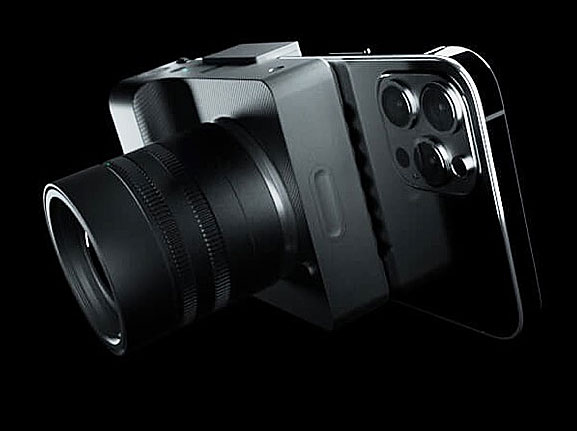
Alice is a camera that pairs up with a smartphone and delivers high-quality video captured by a GH5s 10MP M4/3 Sensor and processed by Smartphone AI Algorithms. The camera uses AI AF technique to acquire AF, the rest of the controls are similar to ones you see in your iPhone Or google camera app.
Alice Camera Press Release
The AI Camera content creators have been waiting for is officially available for pre-order
Alice Camera combines the experience of a smartphone with the quality of a DSLR.
February 9th 2021, London, UK: Photogram, the organisation behind the eagerly awaited Alice Camera has today announced that you can pre-order the AI-accelerated computational camera now for a super early bird price via its online pre-order campaign. The Alice Camera is what content creators have been lacking. As content platforms evolve, the camera market needs to adapt – the Alice Camera brings together the experience of a smartphone with the quality of a DSLR camera to shoot, edit and share high-quality 4K content instantly.
In Europe alone, there are 20 million income-generating content creators, which include Photographers, Videographers, YouTubers, Instagrammers, TikTokkers and Twitch streamers to name a few, yet most are working with devices that do not maximise their potential – smartphone sensors are not up to spec, yet DSLR or mirrorless cameras lack computational photography capabilities.
But all that is about to change. The Alice Camera gives total control to the user and works with their smartphone to shoot and share better content in a fraction of the time – simply point, shoot and share or live stream to your audience on social media in high-quality full-width 4K video.
Its sleek design mounts to the back of most smartphones (although it can also work unattached) and its native iOS and Android app will connect to and control the camera via the touchscreen interface, giving users a smooth user experience and a faster production workflow. Fast wireless data transfer between camera and phone gives users a seamless real-time viewfinder on their smartphone screen.
Alice’s unique selling point is that it harnesses the computational photography that you see in the latest smartphones but applies it to professional quality optics. The Alice Camera also offers:
A 4/3 image sensor, eight times bigger than the ones in smartphones. The sensor’s dual native ISO and quad-bayer structure gives users excellent low-light performance, high dynamic range and exceptionally low noise;
The ability to attach your favourite Micro Four Thirds lens, the most flexible and compact interchangeable lens system around, with over 50 professional-quality lenses available, or attach an adapter to use lenses with different mounts too;
A dedicated AI-chip will run the company’s patent-pending end-to-end deep learning pipeline on-device for innovative computational photography features to automate scene capture and enhance image processing.
Being a computational camera, Alice will be regularly updated via software updates, meaning that content creators can stay on top of their game without constantly purchasing new devices – just lenses of their choice. In addition, Alice’s open-source software can be customised like no other camera — others will be free to build add-ons and features that will benefit all Alice Camera users. An open-access environment means creators can deeply customise their creative process, encouraging collaboration and software development.
The Alice Camera will be shipped to pre-order customers in the Autumn when the RRP will be £750 for the body only. However, content creators can order the Alice Camera via the Indiegogo campaign which launched today and benefit from a special pre-order price starting from £550 (26% discount).
Vishal Kumar, CEO and Co-founder of Photogram said, “Today’s announcement comes after 18 months of liaising with over a thousand content creators, taking part in extensive accelerator programmes and building prototype Alice cameras. We are so pleased that we can bring to market a product that has been built from the ground up by creators for creators.”
“Over the next decade, the creator economy driven by the passion economy is set to grow rapidly. Creators are growing at 15% annually and the market for digital photography more broadly will reach $150bn by the end of 2026. Creators need a tool more suitable for our new world of content creation; imagine the future for creators and the industry with the Alice Camera’s features and functionality?”
About Photogram
Photogram was founded in June 2019 when it’s co-founders Vishal Kumar and Dr Liam Donovan met on the Entrepreneur First London 12 cohort. The company secured a £175k innovation grant from Innovate UK, the UK government’s innovation agency, and joined the Micro Four Thirds System standard run by Olympus and Panasonic. The Alice Camera will be manufactured in Britain and is the first device launched by Photogram.
Follow Alice Camera:
Twitter: @thealicecamera
Instagram: @thealicecamera
YouTube: The Alice Camera
Facebook: The Alice Camera
Photogram founders
Vishal Kumar is a cultural data scientist at The Bartlett, UCL and he is one of a handful of people in the world pioneering the application of data science and machine learning for art and culture. A content creator himself, Vishal has over 30,000 followers on social media. He previously worked at Sotheby’s auction house as one of the company’s first Data Scientists.
Dr Liam Donovan is an experienced engineer with particular expertise in building AI-accelerated embedded hardware and software for creatives. After completing his PhD Liam did a year-long fellowship at Royal Academy Engineering looking at building a business around selling computational hardware to the creative industries.
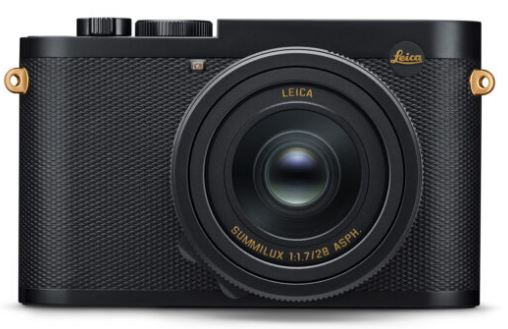
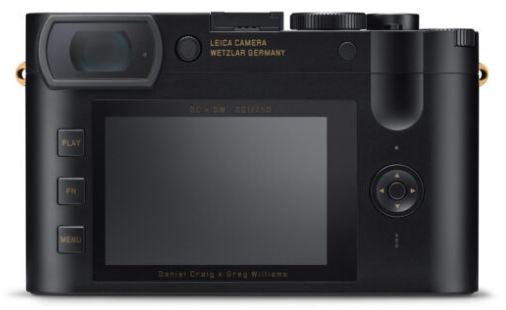
Leica to announce one more limited edition of the Leica Q2 camera, The camera is coming again with some enhanced gold graphics to give users a more premium feel. The Q2 is an advance compact camera with a 47.3MP Full-Frame CMOS Sensor paired with Summilux 28mm f/1.7 ASPH. Lens. The Camera features an amazing ISO range ISO 50-50000, Manual Focus, up to 10-fps Shooting. But, wait… you can also record DCI 4K24p, UHD 4K30p, Full HD 120p Video with this camera.
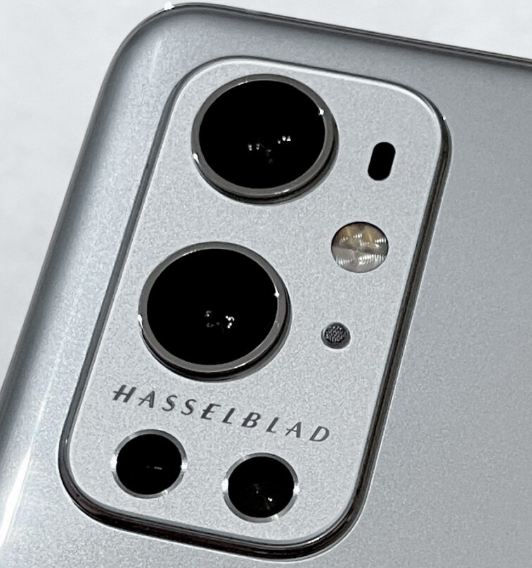
Hasselblad Smartphone camera module spotted behind the OnePlus 9 Pro. As you can notice, we have a total of 4 cameras with the branding of Hasselblad on it. Will post more details once we have the specs of the camera.
We are getting more confirmation about the Nikon Z30 camera design. As per the latest rumors surfaced over the web over rumor mills, Nikon Z30 will arrive in the first half of 2021 without EVF. We have already shown you the design that surfaced from patents 1 year ago
Nikon Mirrorless camera design without EVF. Take a look at the Nikon Z30 rumored specification.
Nikon Z30 Rumored Specification
24.2MP DX-Format CMOS Sensor
4k 24p, 30p
Full HD 1080p Video Recording at 60 fps
3.2″ 1.04m-dot LCD screen
HDMI CABLE HC-E1 / USB is Type-C. / Compatible with stereo microphone ME-1,
Single SD memory card slot (UHS-I )
Stay with us. We will post leaked images and Full specifications of the Nikon Z30 as soon as we get it.
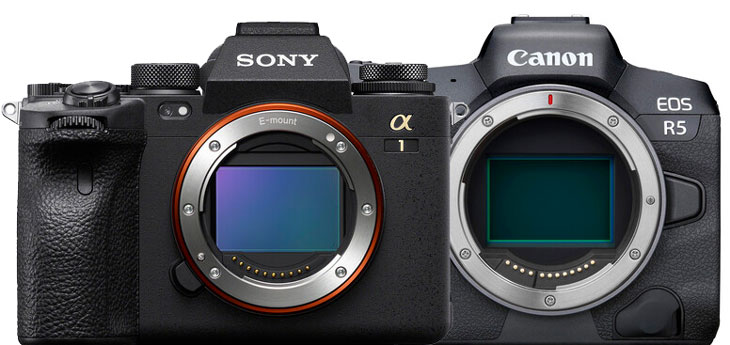
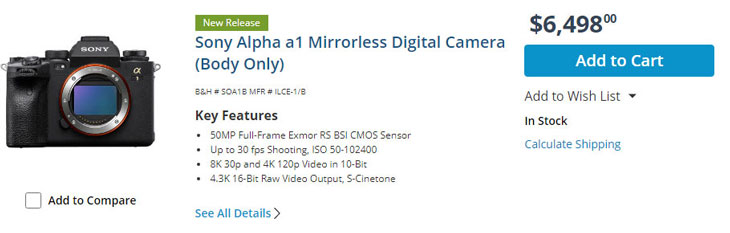
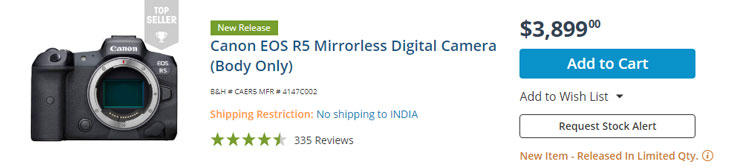
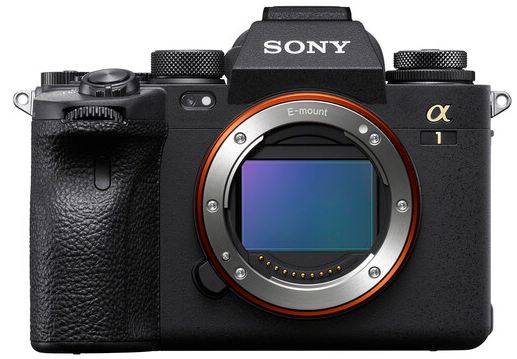
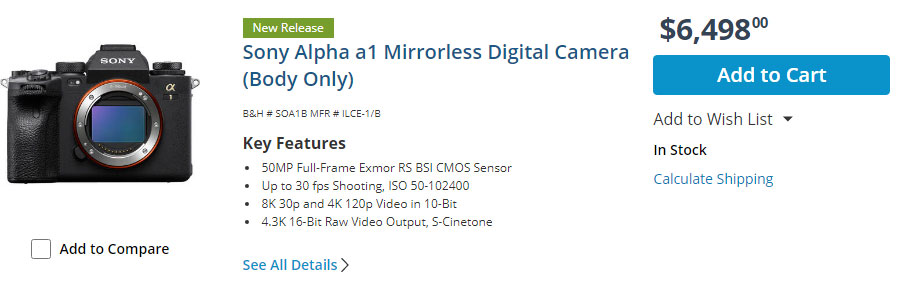
Sony A1 vs Canon R5 Specification Comparison – Sony announced a brand new Sony A1 Mirrorless camera with a newly developed 50MP sensor. We are comparing the core specification of the Sony A1 and the Canon EOS R5 camera.
1. Sony A1 Camera Image Sensor with Stacked BSI CMOS tech
Sony A1 camera features a newly developed 50MP Stacked BSI Hybrid CMOS sensor. The Canon EOS R5 uses a 45MP Conventional DPAF CMOS sensor. We have very little difference in resolution of both the camera. As you all know, BSI sensors are known for better low-light performance. However, we will soon publish the High ISO test between the two cameras and will also update this article.
Sony A1
Canon EOS R5
Lens Mount
Sony E
Canon RF
Camera Format
Full-Frame (1x Crop Factor)
Full-Frame (1x Crop Factor)
Sensor Resolution
Actual: 50.5 Megapixel
Effective: 50.1 Megapixel
Actual: 47.1 Megapixel
Effective: 45.0 Megapixel
Aspect Ratio
1:1, 3:2, 4:3, 16:9
1:1, 3:2, 4:3, 16:9
Sensor Type
BSI CMOS
CMOS
Sensor Size
35.9 x 24 mm
36 x 24 mm
Image File Format
JPEG, Raw, HEIF
JPEG, Raw, HEIF
Bit Depth
14-Bit
14-Bit
Image Stabilization
Sensor-Shift, 5-Axis
Sensor-Shift, 5-Axis
2. ISO Range, Shutter, Metering Method, and much more…
THE standard ISO sensitivity of the Canon R5 camera is more than that of the Sony A1 camera. But, with the Sony A1 camera you can push the base ISO up to 50. Which will bring an enormous amount of details inside the camera, and really very helpful for professional Landscape shooters.
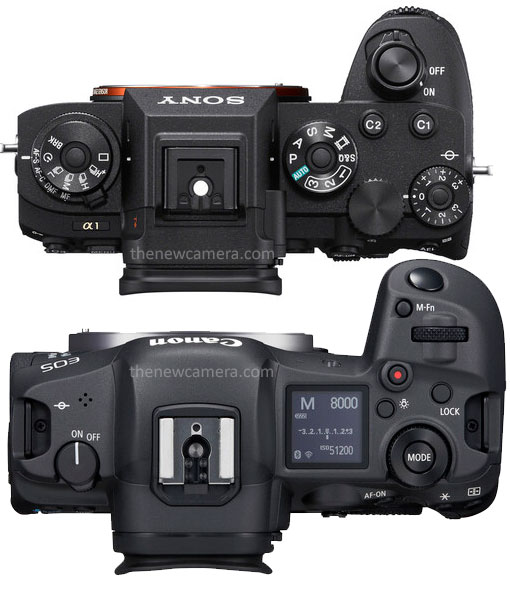
Canon EOS R5 features TOP LCD display panel and DSLR styled body controls
3. Best Camera for Sports Photography Sony A1
The Canon R5 brings AF support to 20 fps continuous shooting mode. Now, moving a step forward Sony captures 30FPS while maintaining the Full 50MP sensor resolution.
High-Speed Shooting up to 20 fps in Canon EOS R5. The EOS R5 can capture fast-moving subjects in high-speed burst. At up to 12fps with a mechanical shutter and up to 20fps with a silent shutter, the EOS R5 can capture the split-second details between a subject’s movement.
Sony A1 offers 50.1 megapixels at up to 30 frames/second – The α1 offers an extraordinary combination of high resolution and blazing speed. Ultra-fast readout from the 50.1-MP sensor allows continuous bursts at up to 30fps with AF and AE tracking using the electronic shutter. Perfect for sports or any situation where the critical action is over in an instant.
New Features added inside the Sony A1 camera
Anti-distortion Shutter
The newly developed algo of Fast sensor readout minimizes still-image distortion when using the electronic shutter2. The BIONZ XRTM engine and a large buffer achieve about 1.5x less distortion than the α9 II.
Flash sync with the electronic shutter
For the first time in an α camera, electronic shutter flash sync is possible thanks to high readout speed from the stacked CMOS sensor. All electronic shutter advantages remain available for flash shooting.
Dual driven shutter drive for flash sync up to 1/400 s.
The world’s first5 dual driven shutter system allows flash sync up to 1/400 s., making it easier to capture dynamic action, and opening the door to new creative possibilities.
Sony A1
Canon EOS R5
ISO Sensitivity
Auto, 100 to 32000 (Extended: 50 to 102400)
Auto, 100 to 51200 (Extended: 100 to 102400)
Shutter Speed
Mechanical Shutter
1/8000 to 30 Second
Bulb Mode Electronic Shutter
1/32000 to 30 Second
Bulb Mode
1/8000 to 1/4 Second in Movie Mode
Mechanical Shutter
1/8000 to 30 Seconds Electronic Front Curtain Shutter
1/8000 to 30 Seconds Electronic Shutter
1/8000 to 0.5 Seconds
Electronic Shutter
Up to 30 fps at 50.1 MP for up to 155 Frames (Raw) / 165 Frames (JPEG)
Up to 20 fps at 50.1 MP for up to 238 Frames (Raw) / 400 Frames (JPEG)
Up to 15 fps at 50.1 MP
Up to 5 fps at 50.1 MP Mechanical Shutter
Up to 10 fps at 50.1 MP (Raw) / (JPEG)
Up to 8 fps at 50.1 MP
Up to 6 fps at 50.1 MP
Up to 3 fps at 50.1 MP
Mechanical Shutter
Up to 12 fps at 45 MP for up to 180 Frames (Raw) / 350 Frames (JPEG) Electronic Shutter
Up to 20 fps at 45 MP for up to 83 Frames (Raw) / 170 Frames (JPEG)
Interval Recording
Yes
Yes
Self-Timer
2/5/10-Second Delay
2/10-Second Delay
4. Auto Focus, Canon still Lead with DPAF II
Canon features a total no of 5940 AF points in its sensor. These overall AF points are grouped into 1053 AF zones. In Sony A1 camera we have a total of 759 AF points in the sensor supported by 425 contrast-based AF points.
AF coverage has been expanded to approximately 100% × 100% of the image area of Canon EOS R5 whereas in Sony we have 92% coverage and less density of AF points compared to the R5 sensor.
Focus Type
Auto and Manual Focus
Auto and Manual Focus
Focus Mode
Continuous-Servo AF (C), Direct Manual Focus (DMF), Manual Focus (M), Single-Servo AF (S)
Continuous-Servo AF (C), Manual Focus (M), Single-Servo AF (S)
Autofocus Points
Phase Detection: 759
Contrast Detection: 425
Phase Detection: 1053
Autofocus Sensitivity
-4 to +20 EV
-6 to +20 EV
5. 8k Video Capable Mirrorless Camera saga
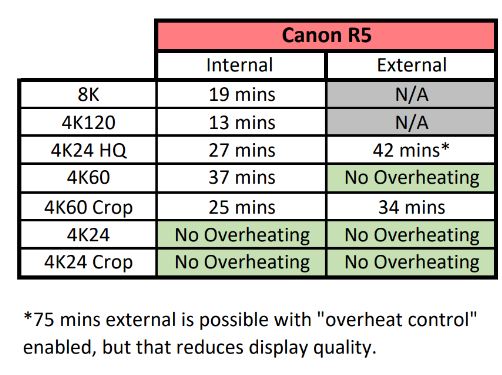
Canon EOS R5 knows of overheating issue in its 8k video mode, however, after the latest firmware update, the camera now allows you to record 2X more time in a single run. Canon EOS R5 overheating chart below
Sony A1 uses an A7S III Heat sink unit, Now the Sony A1 camera down samples 8.6K footage from a 50MP sensor whereas the Sony A7S III uses a 12MP sensor. So. how much capable the Sony A1 heat sink unit is capable of we will know soon once the camera reached in the hand of real-world users. There are now a few confirmed reports by the first Sony A7S III reviewers that the camera has an overheating problem in the bright midday sun.
4k from 8k (Canon R5) and 5.8k (Sony A1): As you can see, the HQ 4k footage of Canon EOS R5 is being created from an 8k oversampled file, so it contains an enormous amount of fine details captured by the sensor. Sony A1 uses 5.8k oversampled footage to create 4k video.
Sony A1
Canon EOS R5
Recording Modes
H.265/XAVC HS 4:2:2 10-Bit
UHD 4K (3840 x 2160) at 23.976p/25p/29.97p/50p/59.94p/100p/119.88p [50 to 280 Mb/s] H.265/XAVC HS 4:2:0 10-Bit
UHD 8K (7680 x 4320) at 23.976p/25p/29.97p [200 to 400 Mb/s]
UHD 4K (3840 x 2160) at 23.976p/25p/29.97p/50p/59.94p/100p/119.88p [30 to 200 Mb/s] H.264/XAVC S-I 4:2:2 10-Bit
UHD 4K (3840 x 2160) at 23.976p/25p/29.97p/50p/59.94p [240 to 600 Mb/s]
Full HD (1920 x 1080) at 23.976p/25p/29.97p/50p/59.94p [89 to 222 Mb/s] H.264/XAVC S 4:2:2 10-Bit
UHD 4K (3840 x 2160) at 23.976p/25p/29.97p/50p/59.94p/100p/119.88p [100 to 280 Mb/s]
Full HD (1920 x 1080) at 23.976p/25p/29.97p/50p/59.94p/100p/119.88p/200p/239.76p [50 Mb/s] H.264/XAVC S 4:2:0 8-Bit
UHD 4K (3840 x 2160) at 23.976p/25p/29.97p/50p/59.94p/100p/119.88p [60 to 200 Mb/s]
Full HD (1920 x 1080) at 23.976p/25p/29.97p/50p/59.94p/100p/119.88p/200p/239.76p [16 to 100 Mb/s]
Raw 12-Bit
DCI 8K (8192 x 4320) at 23.976p/24.00p/25p/29.97p [2600 Mb/s] H.265 4:2:2 10-Bit
DCI 8K (8192 x 4320) at 23.976p/24.00p/25p/29.97p [680 to 1300 Mb/s]
UHD 8K (7680 x 4320) at 23.976p/25p/29.97p [680 to 1300 Mb/s]
DCI 4K (4096 x 2160) at 23.976p/24.00p/25p/29.97p/59.94p/100p/119.88p [170 to 1880 Mb/s]
UHD 4K (3840 x 2160) at 23.976p/25p/29.97p/50p/59.94p/100p/119.88p [170 to 1880 Mb/s]
Full HD (1920 x 1080) at 23.976p/25p/29.97p/50p/59.94p [28 to 230 Mb/s] H.264 4:2:0 8-Bit
DCI 8K (8192 x 4320) at 23.976p/24.00p/25p/29.97p [470 to 1300 Mb/s]
UHD 8K (7680 x 4320) at 23.976p/25p/29.97p [470 to 1300 Mb/s]
DCI 4K (4096 x 2160) at 23.976p/24.00p/25p/29.97p/50p/59.94p/100p/119.88p [120 to 1880 Mb/s]
UHD 4K (3840 x 2160) at 23.976p/25p/29.97p/50p/59.94p/100p/119.88p [120 to 1880 Mb/s]
Full HD (1920 x 1080) at 23.976p/25p/29.97p/50p/59.94p [12 to 180 Mb/s]
External Recording Modes
Raw 16-Bit
4.2K (4264 x 2408) up to 59.94p 4:2:2 10-Bit
UHD 4K (3840 x 2160) at 23.976p/25p/29.97p/50p/59.94p
Full HD (1920 x 1080) at 23.976p/50p/59.94p
Full HD (1920 x 1080) at 50i/59.94i 4:2:0 8-Bit
UHD 4K (3840 x 2160) at 23.976p/25p/29.97p/50p/59.94p
Full HD (1920 x 1080) at 23.976p/50p/59.94p
Full HD (1920 x 1080) at 50i/59.94i
4:2:2 10-Bit
DCI 4K (4096 x 2160) up to 59.94p
UHD 4K (3840 x 2160) up to 59.94p
Viewfinder of the new Sony A1 camera feature 9 Million resolution , Sony uses class leading viewfinder display in it’s A1 camera.
Viewfinder Type
Electronic (OLED)
Electronic (OLED)
Viewfinder Size
0.64″
0.5″
Viewfinder Resolution
9,437,184 Dot
5,760,000 Dot
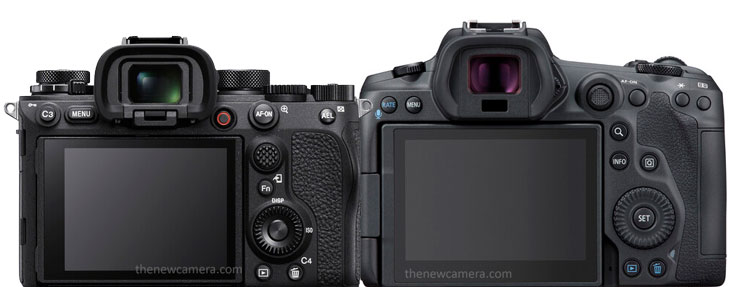
The weight same but physically Canon EOS R5 is highly large compared to Sony A1.
Battery
1 x NP-FZ100 Rechargeable Lithium-Ion, 7.2 VDC, 2280 mAh (Approx. 430 Shots)
1 x LP-E6NH Rechargeable Lithium-Ion
Dimensions (W x H x D)
5.07 x 3.81 x 2.74″ / 128.9 x 96.9 x 69.7 mm
5.43 x 3.84 x 3.46″ / 138 x 97.5 x 88 mm
Weight
1.6 lb / 737 g (Body Only)
1.62 lb / 738 g (Body with Battery and Memory)
6. Verdict
Sony has better sensor technology, a usable AF system (not as good as Canon EOS R5), and faster continuous shooting speed. On the video side, we do have better heat management (as promised by the camera maker) with 8k video capability. The only difference now left is the price, if you’re ok with the Sony price tag then go and buy the Sony A1. Otherwise if you are a photographer and with limited video requirements, you can go with Canon EOS R5.
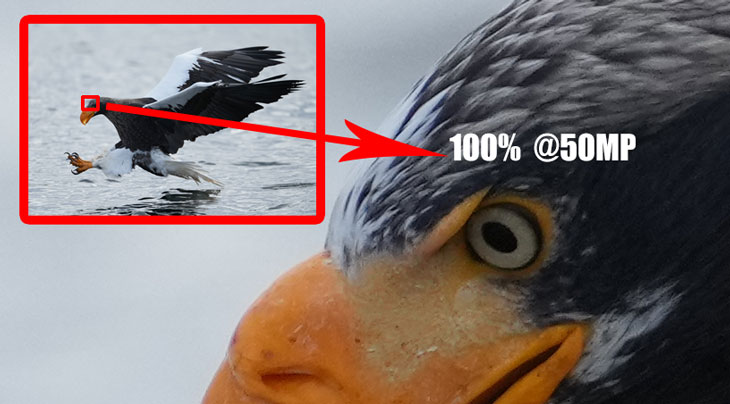
Official sample images of the Sony A1 is now available. As you can see above the 100% pixel peeper view of the Sony A1 bald eagle image. The noise level of the camera is very well controlled by BSI CMOS sensor.
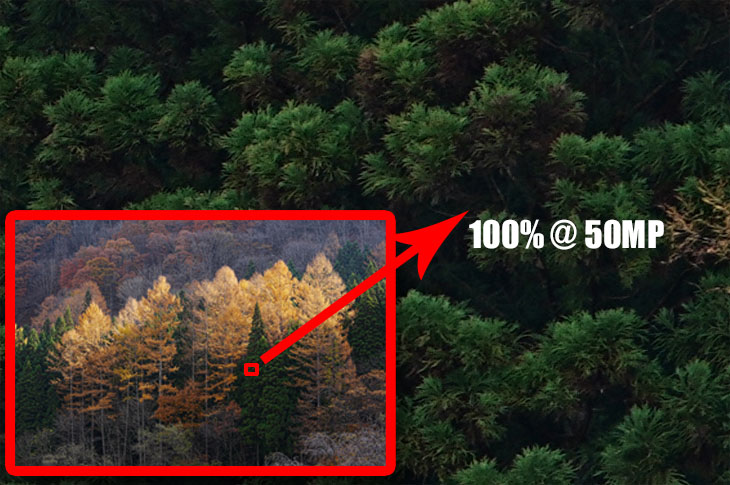
One more 100% scale view of the Sony A1 sample image.
Sony A1 Studio Test Sample
In-Studio sample image of Sony A1, you can see the enormous amount of details and sharpness we are getting when we have a controlled light environment with us.
Sony A1 8k Offical Sample video is now available. The Sony A1 official press Release is here with full specs. The Sony A1 is the world’s first full-frame camera to feature a 50MP stacked BSI CMOS sensor. To Enable 8K video recording Sony added a dual BionXR image processor to manage the 8k video files. Not, only that the camera also offers 16bit RAW video via HDMI. Take a look at the 4K sample video of Sony A1.
Buy Canon Lenses, Buy Music CD or Digital Camera at amazon it helps this site, and you do not pay anything extra, it is just a way to help support this site.
New Camera Website, we list all type of new camera information, price review and all type camera rumors, subscribe us or follow us via twitter or facebook.
Disclaimer: We have attempted to select useful information to include on New Camera, and to ensure that the resources we have included on the site -- as well as the way we have described them -- are accurate, fair, and balanced. However, we make no claims, warranties, or other representations concerning the accuracy, completeness, or utility of the information provided, or concerning the abilities or performance of the organizations, agencies, companies, and other resources presented through New Camera