Finally, we have some good for Sony Mirrorless camera users, According to Nikkei Shimbun, Sony is moving already moved 90% of its Camera Production line from China to Thailand. So, now the Thailand plant working in a much larger capacity, this was really very important to ensure the steady supply of camera units worldwide.. We already faced big issues in the past when almost all the new models of Sony cameras were available in very limited quality, so undoubtedly it was an excellent move form, Sony.
Yes, the Mirrorless camera production line now shifted to Thailand, but still the Gmaster series lenses we are using, most of them are made in china.
It’s not the first time a camera maker closed its camera production plant in china. Just before Sony, Nikon shut down its digital camera factory in the Jiangsu province of China Canon also closed its major plant located in China – the Zhuhai factory. The 32-year plant is the only production base for digital cameras, sensors, And now finally Sony.
The confirmation arrived from Yamane-san from Panasonic recently mentioned in an interview that they will adopt the best autofocus method (obviously they are talking about the PDAF) depending on the target users and customer benefits, and they will consider installing PDAF on the camera based on its characteristics (means starting from the pro-MFT like GH series and then moving downwards). This particular piece of information adds more credibility to the set of information we have shared with u guys a while ago.
Actual Parts of the interview
As for future cameras, we will adopt the optimal autofocus method each time, while assessing the target users and customer benefits. We will consider installing PDAF depending on the characteristics of the model, not only for full size but also for MFTs, so please look forward to it.
About future 2023 products:
We will continue to support creators and develop products that creators want. And we will also consider the need for higher-end products to meet the future needs of creators. I can’t give you details about future products, but Johnnie’s high-end model for video production professionals may take a little more time. Anyway, please look forward to that day.
A part of the Text from our article published on January 22nd, 2023
One of the most highly-anticipated features of the GH7 is its hybrid AF sensor, yes we do believe this time we will have a Hybrid CMOS AF inside. This sensor will be a combination of both contrast-detection and phase-detection autofocus technologies just like we have seen in the recently announced Panasonic’s S5 Mark II camera and has received positive feedback from users. The inclusion of this technology in the GH7 camera will allow for faster and more accurate autofocus, making it a more attractive option for professional photographers and videographers who require high-performance cameras. The only Major Upgrade I Wish for inside the upcoming GH7 camera.
However, it is important to note that while Yamane-san’s comments provide some support for the speculations in the article, it is still important to wait for official announcements from Panasonic regarding their upcoming GH7 camera
According to the latest rumors surfaced over the rumor mill, Fuji X-20 will be the NEXT announcement from Fuji. That’s all the latest information we have from the rumor mill.
end of rumor
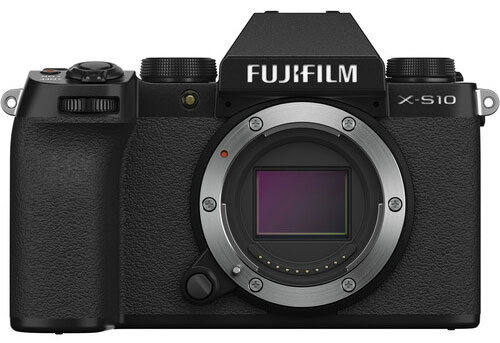
BTW, in one of our previous articles Fuji Upcoming Cameras 2023 [Expectations], we discussed that Fuji X-S20 is expected to arrive in the year 2023. And we have also published expected core specs too, but in that set of specs we didn’t jump into the details of why we have written X-20 will arrive with a 26MP sensor since actually many of my subscribers are expecting that the X-S20 should arrive with a Fuji Latest 40MP APS-C X-Trans sensor.
It is certainly possible that if Fujifilm were to add all of the features of the X-T5 to the upcoming X-S20 camera, it could potentially lower the sales of the X-T5.
First, it’s important to note that the X-T5 and X-S10/X-S20 are different camera models that are targeted at different types of the consumer base. The X-T5 is a more advanced camera with more advanced features and more direct control over settings, while the X-S10/X-S20 are more entry-level / mid-range cameras with more simplified controls for beginners.
Another consideration is that adding both a 40 MP sensor and a New Image processor, would also increase the cost of the X-S20 and would not be the same price as the X-S10, which could also affect its own sales too, those who are waiting to upgrade to X-S10 may select a different camera if its price is increased.
Content creators vs Photographers?
According to market analysis, the trend of content creation is increasing day by day, and more and more people are interested in creating video content. As per the data, the number of YouTubers with more than 1 million subscribers has grown by more than 75% since 2018, and the number of TikTok users has grown by more than 50% in the same period. Hence, launching a camera that is content creator-friendly would be a great move for Fujifilm to capture a significant portion of this growing consumer base.
As you can see most of the entry-level and mid-range cameras from camera makers are coming out with more content creator-friendly cameras, so we do expect that the upcoming X-S20 will have a major update in the video part of the camera compared to the still side.
The Specs that we expect from Fuji X-S20
26.1MP APS-C X-Trans BSI CMOS 4 Sensor
X-Processor 5 Image Processor
5-Axis In-Body Image Stabilization
DCI/UHD 4K at 60 fps, Full HD at 240 fps
425-Point Hybrid AF System
2.36m-Dot 0.62x OLED EVF
3.0″ 1.04m-Dot Vari-Angle Touchscreen
Bluetooth and Wi-Fi Connectivity
Overall, Fujifilm’s decision to upgrade or not to upgrade the X-S20’s features will depend on the market demand, competition, and production cost. However, considering the increasing consumer base of content creators, it would be a great idea for Fujifilm to launch a camera that is content creator-friendly, and as I have mentioned, upgrading the image processor, AF system, and video specs of the camera would be a good start.
Fuji X-S20 Coming on April 2023?
We don’t know when it will be out yet, but some people think it might be announced in April at an event called the X Summit. We will have to wait and see if Fujifilm says when it will be out.
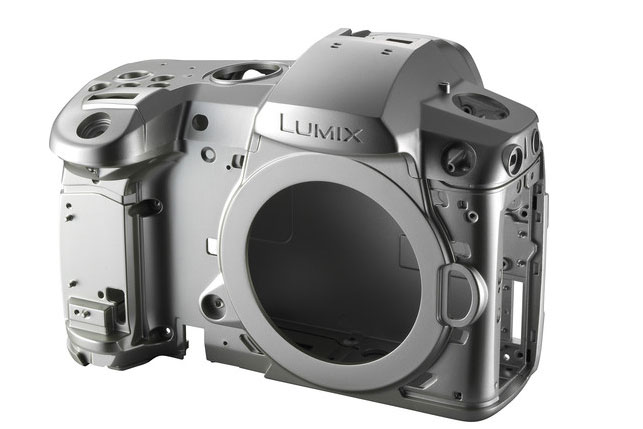
Panasonic has been one of the leading manufacturers of mirrorless cameras for many years, and the company’s GH series has been highly popular among professional photographers and videographers. In this article we will discuss the set of specs that may appear inside the Panasonic GH7 and its arrival date, we do hope and expect the upcoming GH series flagship camera is set to be a game-changer in the mirrorless camera market.
Panasonic GH Series announcement pattern
GH1: March 2009
GH2: September 2010
GH3: September 2012
GH4: February 2014
GH5: January 2016
GH5s: January 2018
GH6: Feb 2022
GH7: 2023 [Expected]
Live MOS Micro Four Thirds Sensor with Hybrid Auto Focus
One of the most highly-anticipated features of the GH7 is its hybrid AF sensor, yes we do believe this time we will have a Hybrid CMOS AF inside. This sensor will be a combination of both contrast-detection and phase-detection autofocus technologies just like we have seen in the recently announced Panasonic’s S5 Mark II camera and has received positive feedback from users. The inclusion of this technology in the GH7 camera will allow for faster and more accurate autofocus, making it a more attractive option for professional photographers and videographers who require high-performance cameras. The only Major Upgrade I Wish for inside the upcoming GH7 camera.
Well, that’s a topic of discussion, pixel peepers (like me) do love higher-resolution sensors at the same time some do believe that having a higher-resolution sensor means compromising with low-light performance of the camera. As we know the M4/3 formats-based sensors are 2X smaller than full frame sensors, so loading up more resolution won’t be feasible this time. A 40 MP higher resolution M4/3 format sensor should be preserved for Panasonic GH8 with 8K video resolution 😉
Rest Everything looks good inside the Panasonic GH series, which already features class-leading core specifications. If we talk about burst speed of 75fps of GH6 camera, 5.8K / 29.97p and 4K DCI / 119.88p RAW video data over HDMI that can be recorded as Apple ProRes RAW on the Atomos NINJA V and NINJA V+, and after the firmware v2.2 GH6 able to work with external SSDs with a capacity of up to 2TB, offering users fast storage at a fraction of the cost of CFexpress cards. This external storage is not only available for filmmakers or those shooting in ProRes, as all video formats can be saved to an SSD – as can still images. So, I think these features are already class-leading and don’t need that much improvement or upscaling, the only thing I am waiting for now is a massive upgrade in the AutoFocus system of the camera.
Do share your thoughts with us about the upcoming Panasonic GH7 camera.
According to Yosuke Yamane, the Director of Panasonic’s Imaging business, Micro Four Thirds cameras can deliver a “compact and lightweight system that enables hand-held photography in combination with a telephoto lens, which is not possible with full-frame.” He believes that this combination of size and portability makes Micro Four Thirds cameras an “indispensable system” for achieving a compact body that can be easily carried, and that this is what differentiates it from full-frame cameras.
Possibility of Panasonic G100 Mark II?
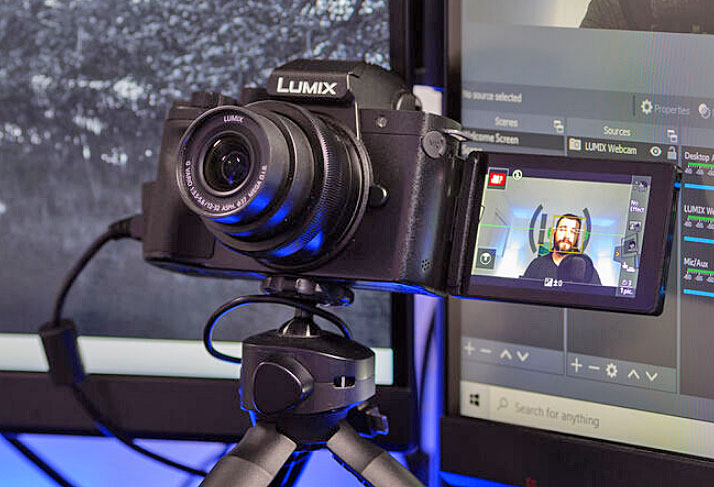
content creators the new consumer base, Yosuke Yamane mentions that the company specifically wants to target “social media creators” with their camera offerings. With the growth of platforms like YouTube, there are increasing opportunities for independent producers to share their work and gain a following. As a result, there is an expanding market for video production equipment, and Yosuke Yamane believes that Micro Four Thirds cameras with their compact size, good video capabilities, and easy portability can be well-suited for this market. The reason behind the Panasonic G100 market failure was the slow DFD AD system, possibly what now they have the Phase AF technology and sure they will try their luck again.
List of upcoming Nikon Mirrorless Lenses According Nikon Lenses Roadmap are
NIKKOR Z 12-28mm DX PZ lens
NIKKOR Z 24mm DX lens
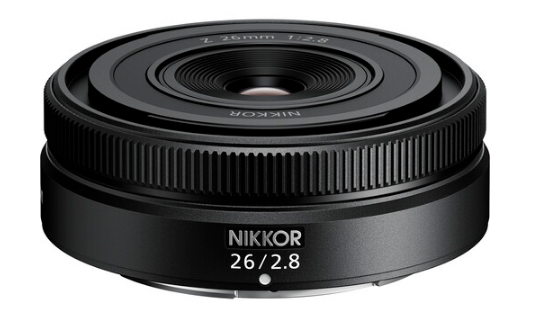
NIKKOR Z 26mm f/2.8 pancake lens (development announcement below)
NIKKOR Z 35mm f/1.2 S lens
NIKKOR Z 70-180mm f/2.8 lens (non-S)
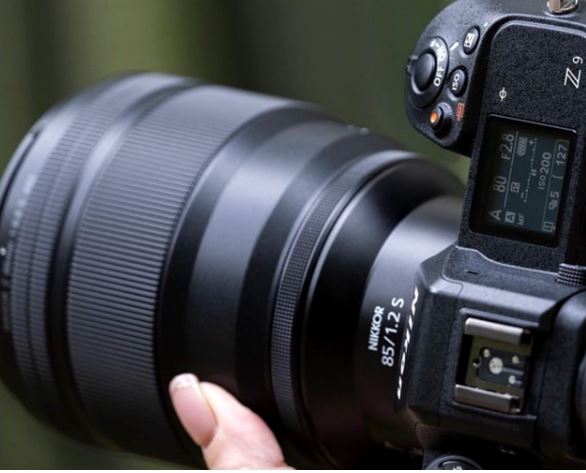
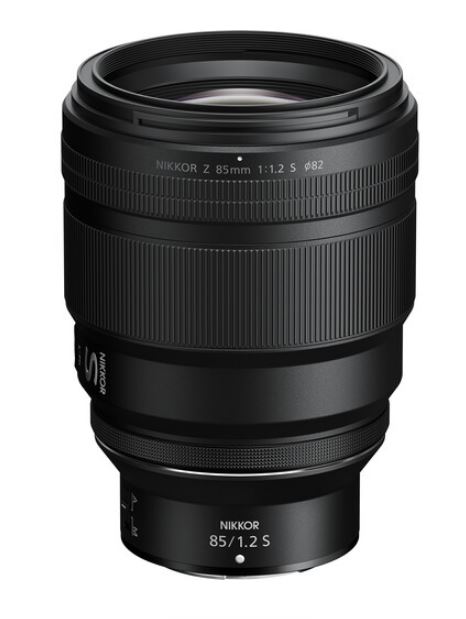
NIKKOR Z 85mm f/1.2 S lens (development announcement below)
NIKKOR Z 135mm f/1.8 S lens
NIKKOR Z 200-600mm f/6.3 lens (non-S)
NIKKOR Z 26mm f/2.8 pancake lens
Details about Nikon 26mm Pancake Lens
The Nikon NIKKOR Z 26mm f/2.8 Lens is a must-have for advanced amateur photographers. This slim wide-angle prime lens is specifically designed for Nikon Z-series mirrorless cameras with full-frame sensor (FX format Lens). The lens boasts an impressive design that is both lightweight and compact, making it an excellent choice for photographers who are always on the go. With this lens, you’ll be able to capture stunning wide-angle shots without sacrificing portability. Additionally, its high rendering performance ensures that every photo will come out with stunning clarity and detail. Don’t miss a moment and take your photography to the next level with the Nikon NIKKOR Z 26mm f/2.8 Lens.
The to-be-announced Nikon Z 85mm f/1.2 S Lens is a top-of-the-line option for professional photographers and cinematographers. This ultra-fast, mid-telephoto prime lens is specifically designed for full-frame Nikon Z-series mirrorless cameras, and is part of Nikon’s elite S-Line of lenses. The lens has tremendous resolving power and is also compatible with upcoming higher-resolution sensors in the Nikon line-up ( Nikon Z8). The wide aperture of f/1.2 provides super smooth creamy bokeh, making this an ideal lens for portrait photography. Additionally, the lens offers excellent low-light performance and depth-of-field control. The lens is also built with advanced operability, making it easy to adjust focus, aperture, and other settings. If you’re looking for a premium lens that will take your portrait photography to the next level.
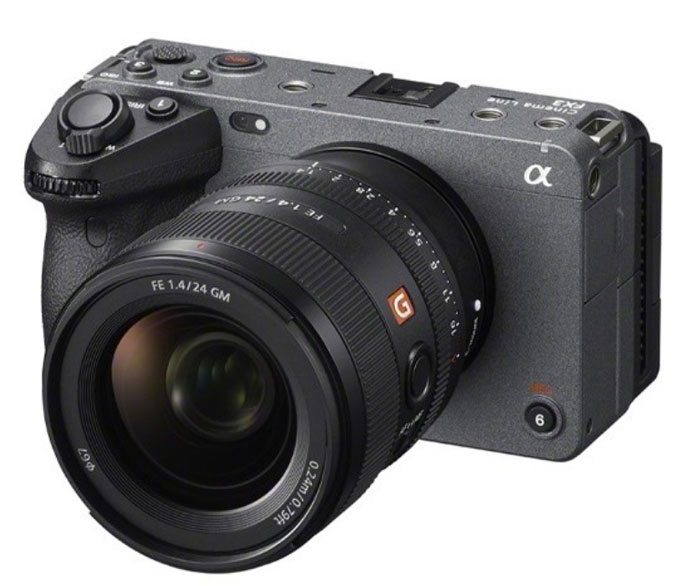
After the latest firmware update of the FX3 camera, users could not find the old Slog2 option in the menu. But, why this happened? The reason is very simple, the Slog 2 is limited to 8bit and Sony is no more interested in keeping the old recording 8bity format inside their camera.
Sony Slog 2 vs Slog 3
See, we have to understand this, S-LOG2 and S-LOG3 are both color spaces developed by Sony for use in their camera systems. But, S-LOG2 is the previous generation of the color profile and has some limitations,
One of the main differences is the dynamic range that each color space can capture. S-LOG3 has a dynamic range of approximately 14 stops, which is wider than S-LOG2 which has a dynamic range of approximately 12 stops. This wider dynamic range allows for greater flexibility when grading and editing footage. Additionally, S-LOG3 has improved color accuracy and less noise in the shadows, which makes it a better option for professional videographers and photographers looking for the highest image quality.
Another Major difference between the two is the bit depth. S-LOG2 is an 8-bit color space, while S-LOG3 is a 10-bit color space.
S-LOG2 also has a gamma curve of 2.4, while S-LOG3 has a gamma curve of 2.8. A higher gamma curve like 2.8 of S-LOG3 allows for more room to work with in the highlights and shadows, less chance of clipping, more tonal gradations and subtle color variations, more precise representation of the scene’s brightness, and more control over the final look of the image or footage.
Latest Genrations of Slog 3
The first Sony camera to feature S-LOG3 was the Sony Alpha 7S II. It was announced in September 2015, but you also have to note that the Sony A7S II was using the first generation of Slog3, after that, we have two major updates over the original one and those are S-LOG3C, and S-LOG3G.
So, the S-LOG3C (sometimes written as SG3C ) is an updated version of S-LOG3, it’s a color space that is used in consumer cameras, a wider color gamut than S-LOG3 and it also includes a color matrix that is optimized for consumer cameras. The S-LOG3G is the latest version of S-LOG3, it’s a color space that is used in professional cameras and it’s been optimized for 8k resolution and high-frame-rate recording.
Sony FX3 Latest Fimrware Update
Before installing the update, please note and check the following:
Precautions when updating from Ver. 2.00 and Ver. 2.01 Updating to version 2.02 will delete the LUT (Look-Up Table) settings in the camera. Re-register the LUT settings after the update is complete.
Precautions when updating from Ver. 1.01 or earlier
After updating to Ver. 2.00 or later, the camera settings will be reset to the default values. Note: Since this update adds functions and makes major specification changes, the camera settings will be initialized as part of the update process. It is recommended that you make note of all the camera settings before proceeding. Even if you have saved the settings using the various save features available (such as Save/Load Settings and Save/Load FTP Settings) the settings before Ver. 1.01 cannot be read by the camera after the upgrade to Ver. 2.00 or later.
With the addition of the log shooting mode, the picture profiles were reviewed and the gamma setting S-Log2 is no longer included. After the update, you will need to use the gamma setting S-Log3.
You will be able to connect to the Imaging Edge Mobile app more easily. After pairing the app with the camera, you can transfer images and shoot remotely just by operating the app. Refer to Pairing the camera with a smartphone (Smartphone Regist.) in the Help Guide for detail. Along with this, the NFC one-touch connection function used up to Ver. 1.01 of the camera will no longer be available. Note: You will also need to update the Imaging Edge Mobile app to Ver. 7.7 or later, and register as a new camera after the update.
Buy Canon Lenses, Buy Music CD or Digital Camera at amazon it helps this site, and you do not pay anything extra, it is just a way to help support this site.
New Camera Website, we list all type of new camera information, price review and all type camera rumors, subscribe us or follow us via twitter or facebook.
Disclaimer: We have attempted to select useful information to include on New Camera, and to ensure that the resources we have included on the site -- as well as the way we have described them -- are accurate, fair, and balanced. However, we make no claims, warranties, or other representations concerning the accuracy, completeness, or utility of the information provided, or concerning the abilities or performance of the organizations, agencies, companies, and other resources presented through New Camera