Creative Image: Starting from Pocket 4 PRO, Standard Pocket 3, and Standard Pocket 4
The DJI Osmo Pocket series has revolutionised handheld content creation, and many professional content creators today utilise the Osmo Pocket 3 camera, which features a 1-inch sensor and 4K video recording capabilities, along with advanced AI autofocus tracking.
According to recent leaked images, the DJI Osmo Pocket 4 appears to show two different prototypes being tested in the wild alongside the Pocket 3. Now, these two distinct variants of the Pocket 4 appear to have two different types of cameras.
One variant features the long-rumoured dual-lens setup, a larger camera module with a heavier head, which can be clearly seen and noticed. The other variant has a single camera module with clearly visible buttons below the display screen and appears to be less portable.
If you remember the leaked picture from the Barcelona shoot, it actually resembles the single-lens Pocket 4 variant, which features a single camera unit with dual buttons below the display.
As of December 19, 2025, no official announcement has been made by DJI; however, leaks suggest a potential announcement in early 2026.
Recently shared image of Pocket 4 / Pro
Leaked Prototypes Spotted: Pocket 3 Next to Two Pocket 4 Variants
The Leaked image provides the clearest picture of the DJI Pocket 4 camera yet, but interestingly, we are witnessing two different variations of the Pocket 4 camera, which are very clearly visible. Both prototypes are being tested in the wild, as seen above.
The Middle Device (Reference): It is very clearly visible that the middle camera is the Pocket 3, and we can clearly identify it by the rotating mechanism, the type of screen, and the standard camera unit that we have seen multiple times before. However, the two different variations on the left and right sides are clearly new and do not have any logo, trademark, DJI, or Osmo name on their bodies, which also suggests that they are prototypes, not production-line models.
The Left Prototype (The Rumoured “Pro”): The next model is the most discussed and most talked-about, mainly because of its dual-lens setup and heavier head, which is obviously and significantly bulkier than the previous-generation Pocket 3 gimbal. This specific Pocket 4 Pro clearly resembles multiple previous leaks that were reported by trusted leakers like Jasper Allen. Without a doubt, DJI’s dual-lens Pocket 4 model is already in the announcement pipeline, and we are almost certain to witness its official announcement in 2026.
The Right Prototype (The “Standard” Successor): This unit closely resembles the Pocket 3 form factor but appears to house a larger lens element. This fits the description of the rumoured single-camera setup featuring an upgraded sensor / Image processor.
Whether we look left or right, both Pocket 4 prototypes feature a redesigned gimbal. The Pocket 4 standard upgrade, located on the extreme right side of the image, features a slimmer gimbal design with additional buttons below the display, as previously mentioned. On the extreme left side, we see the Pocket 4 Pro, possibly the most advanced and heaviest upgrade of the Pocket 3, featuring a heavier gimbal, a single button below the display, which is clearly visible, along with a larger size, a heavier gimbal head, and a bigger camera unit.
So overall, not only are the camera units different, but we also see variations in the chassis and gimbal design of the camera.
Image of Standard Pocket 4 Standard edition – leaked images surfaced on the web, and according to the source, the picture is coming straight out from a promotional video shoot in Barcelona. The image you see below is a screenshot of a behind-the-scenes (BTS) video. The image is really one of the clearest pics of the Pocket 4 prototype and also hints at some refinements in the design and overall layout of the camera, as you can notice the button control layout has been changed slightly
Latest DJI Pocket 4 Standard Retail BOX Leaked – Announcement is expected soon
DJI Osmo Pocket 4 (Standard Version): Rumored Specifications and Features
The DJI Osmo Pocket 4 Standard camera is expected to feature a single-sensor-based camera module, possibly using the same 1-inch sensor with approximately 50-megapixel resolution that we have already seen in the Pocket 3.
However, apart from that, it is expected to receive major upgrades in the internal core specifications of the camera. Take a look at the rumoured specifications of the Pocket 4 Standard upgrade.
Key rumoured specifications for the DJI Osmo Pocket 4 (standard):
Sensor: Upgraded 1-inch CMOS loaded with 50 million pixels for superior detail and low-light performance.
Video Capabilities: Features 6K video recording, 4K at 120 frames per second, and advanced slow-motion options.
Weight: Approximately 190 grams, maintaining portability.
Battery: Around 20% larger capacity than the Pocket 3 for extended shooting sessions.
Other Upgrades: Improved stabilization, 10-bit D-Log M color profile, and Wi-Fi 6 connectivity.
This variant aims to deliver flagship image quality in a simpler, more affordable package without the complexity of multiple lenses.
DJI Osmo Pocket 4 Pro: Dual-Lens Setup for Optical Zoom and Versatility
The DJI Osmo Pocket 4 Pro camera module, featuring a dual-lens setup, is being referred to as “Pro” since it is very clear from testing that DJI is evaluating two different Pocket-series camera variants for release. There is a high probability that we may see a standard model followed by a Pro model announcement, one after another.
The dual-camera setup appears to be very similar to that of the DJI Air 3S drone. Take a look at the specifications of the DJI Osmo Pocket 4 Pro camera.
Dual-Lens System: A primary wide-angle lens paired with a telephoto lens for true optical zoom (potentially 2x-4x without quality loss).
Sensor Details: Primary 1-inch sensor combined with a secondary sensor (possibly 1/1.3-inch or square format optimized for Ultrawide shoot).
Video Enhancements: Up to 4K at 120fps for ultra-slow-motion, alongside 6K/60fps options.
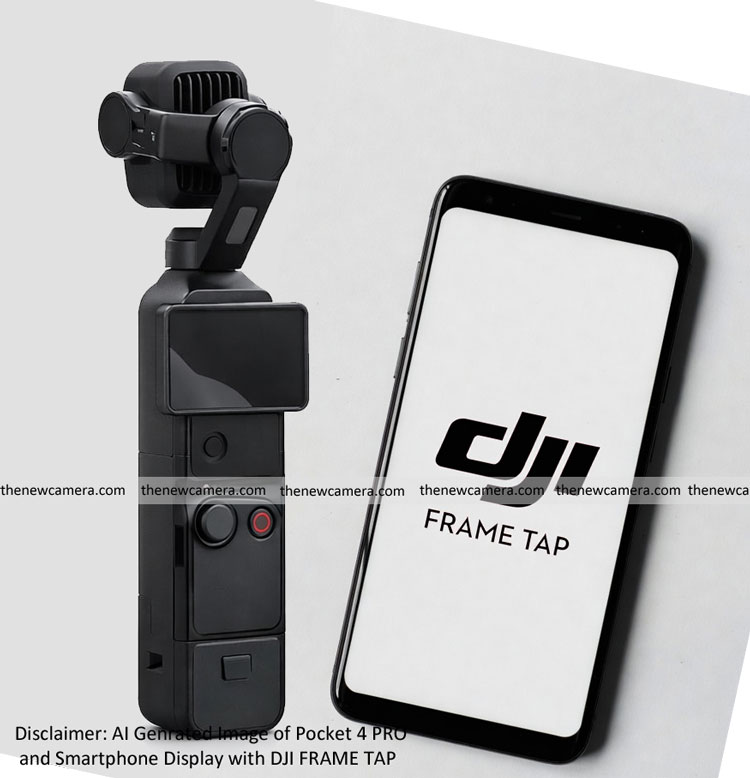
Potential Accessories: Rumors point to a new remote control accessory (similar to a “frame tap” style handler) designed for the Pro model. This would allow remote operation of the longer focal length telephoto lens from a distance, ideal for vlogging or dynamic shots where holding the gimbal isn’t practical.
The dual-lens approach addresses a common Pocket 3 limitation: reliance on digital zoom. It could enable seamless switching between wide and telephoto perspectives, making the Pro variant a game-changer for professional creators.
For Now, Only 1 Pocket 4 Coming on Jan 2026: Here is why
Before we discuss the announcement timeline of the DJI Osmo Pocket 4 / Pocket 4 Pro, which have appeared during field testing, first of all, we must make it clear, as we have already said earlier, that a company tests several prototypes before a product enters the production line.
The FCC ID 2ANDR-OP04 is tied to the grantee SZ DJI Osmo Technology Co., Ltd. So, for now, we have only 1 (one) FCC registration related to the DJI Osmo Pocket 4 series camera. As I am writing this post on December 19, 2025, and while keeping this data fully up to date, we have not found any separate Pocket 4 Pro registration so far.
Retailer leaked the Stock of Pocket 4, they are just waiting for the DJI green flag / Announcement to start selling the Pocket 4 camera
DJI Pocket 4 Arrival Date
This sets a very clear indication that, as of now, there is only one Pocket 4 camera in the pipeline. So, it is up to DJI which camera variant they are about to introduce. Sources suggest that the Standard Pocket 4 Edition will arrive early, before the PRO at the end of Feb-March 2026.Its confirmed now only single lens varient based camera is coming the standard version and the Dual Lens version varient is not coming anytime soon for now
There are some rumors that the PRO Edition of Pocket 4 will arrive after April 2026, not in April 2026. And we are also tracking that rumor/information, and will post an update as soon as we get any new information.
Announcement is Delayed, here’s why
A full DJI Pocket 4 release in December 2025 is off the table. And the announcement is delayed till Feb-March of 2026. It’s really a bit disappointing for all of us who were waiting to pre-order Pocket 4 before Christmas.
Why the delay?The exact reason, as mentioned by photorabz, is that the Accessories are the culprit (One Frame TAP?). As we all know, the Pocket 3 depends on a lot of external accessories, which include wireless mics, extra batteries, and modular mounts – DJI’s ecosystem thrives on these add-ons, and rushing them could lead to quality issues.
Stay tuned to thenewcamera.com for the latest updates – an official announcement could drop soon. If you’re in the market now, the Osmo Pocket 3 remains an outstanding choice with deep discounts amid these rumors.
GET LIVE NOTIFICATION, Select Your Trusted Source GET LIVE NOTIFICATION Click ON Check BOX for Latest NEWS and Rumors
The article “DJI Osmo Pocket 4 2026 Rumours: Arrival Date, Leaked Prototypes Reveal Standard and Pro Variants” was written by thenewcamera.com team on 9:49 am, Saturday, 20 December 2025, Greenwich Mean Time (GMT) | You can also follow us on Our Official Social Media HandlesFACEBOOK | TWITTER | INSTAGRAM to get live news — > DJI Rumors
The DJI Osmo Pocket 4/Pocket 4 Pro camera is arriving with some additional accessories, one of which is the Osmo FrameTap. What is this? A fresh FCC filing spotted today reveals the DJI Osmo FrameTap, a kind of mysterious wireless remote control that is soon going to be introduced inside the DJI ecosystem. Specifically, it has been built for the DJI Osmo Pocket 4, as well as to be integrated with other action cameras and 360 cameras available.
DJI is still trying to clear out its products in the FCC ID days before it enters a potential U.S. import ban deadline. In this article, we are going to cover all the details related to the Osmo FrameTap FCC ID filing, as well as some of the leaks related to it, so let’s dive into the details.
What Is the DJI Osmo FrameTap? Unpacking the Latest FCC Surprise
Now, the DJI Osmo FrameTap was actually spotted on December 17, 2025, and it has been confirmed after recent findings that it is a kind of unreleased accessory from the DJI Osmo Division (SZ DJI Osmo Technology Co., Ltd.). This isn’t a standalone camera, but a compact wireless remote control (FCC ID: 2ANDR-RC508) designed for seamless integration with portable imaging devices like gimbals and action cameras.
The registered document shows compliance with FCC Part 15 rules for intentional radiators; it likely leverages Bluetooth and Wi-Fi for low-latency pairing, making it ideal for on-the-go creators.
AR The DJI FrameTap is clearly intended to expand the ecosystem in a much larger manner, at the very same time just before the U.S. ban is imposed on new FCC ID registrations. This is an attempt to make sure the to-be-announced Pocket 4 / 4 pro gear, as well as its related accessories, get clarification from the registration agency.
These are post-ban attempts, and if the retroactive ban does not apply to them, there is a chance that Pocket 4, alongside its accessories, may get approved after the official announcement.
One thing is for sure: when you have a camera phone in your pocket, you will need an extra remote accessory to control your camera from a distance, and that is a quite obvious requirement. So, for that, yes, FrameTap is coming.
Before we wrap up the DJI FrameTap, we are continuously looking for further updates and information, and as soon as we get any related details on FrameTap, we will be updating it on TheNewCamera.com.
Creator Tip: Stock up on Pocket 3 bundles now – check Amazon deals or our best DJI drones under $500 guide. The ban won’t kill DJI overnight, but it could reshape availability.
Wrapping Up: DJI’s 2025 Legacy and What’s Next for Creators
So this is not just regulatory paperwork. It’s an attempt by DJI to make sure all these products and related accessories clear their FCC IDs before the official ban, so they remain relevant and ahead of the competition going into 2026 or even 2027, before DJI potentially finds another way to revoke or bypass the ban.
But even in the best-case scenario, DJI would still not be allowed to announce new products in the United States of America after Dec 23, 2025. So again, this raises a big question: even if DJI is clearing FCC ID registrations, it does not solve the problem alone, that they must officially announce these products before December 23, 2025, to remain eligible to release them in the United States?
What do you think—will the ban stick? Drop your thoughts in the comments, subscribe for real-time alerts, and follow us on X @thenewcamera for leak drops.
Images: FCC screenshot courtesy @Saracool_drone (alt: “DJI Osmo FrameTap FCC label December 2025”); Pocket 4 render (alt: “Leaked DJI Osmo Pocket 4 dual-camera design”). All rights reserved. Affiliate links may earn commission.
The article “DJI Osmo FrameTap Leaked via FCC – Wireless Remote Coming with Osmo Pocket 4?” was written by thenewcamera.com team on8:04 am, Friday, 19 December 2025, Greenwich Mean Time (GMT). | You can also follow us on Our Official Social Media HandlesFACEBOOK | TWITTER | INSTAGRAM to get live news — > DJI Rumors
Okay, we all know the DJI ban is coming, but what exactly will happen after December 23, and what type of trouble will DJI consumers face after the ban? Most importantly, what type of ban will be imposed? Is it a retroactive style ban? We will answer all these questions clearly in this post, as the answers are directly provided by DJI itself. Thanks to Faruk from iPhonedo for conducting an exclusive interview with DJI’s Head of Global Policy, Adam Welsh. This analysis breaks down the post-ban scenarios, real-world impacts, and steps you can take. Searching for NDAA DJI audit update, DJI covered list effects, or US drone ban consequences? Here’s your roadmap.
As I write this article on December 17, 2025, DJI’s pleas to agencies like the NSA, FBI, and DHS have gone unanswered, meaning the trap door has been widely open, and now DJI is left with no option. So that’s a really disappointing thing that, even without an audit or anything related to that in a country like the United States of America, DJI has to face such a worst-case kind of situation.
Best-Case Scenario: No New DJI Drones, But Existing Gear Stays Airborne
I have heard they are discussing the best-case scenario. Adam says that when there is no retroactive ban imposed, it means that if added to the FCC’s Covered List on December 24 without retroactive enforcement, then there will be some cosy atmosphere, and the existing DJI products—those which are already listed for sale—will remain available to consumers out there. That means, even after the ban, you can still buy the already announced DJI products in the United States of America. Let’s have a clear look at what he has said during the interview
Adam Welsh (from our interview): “We would no longer be able to launch new products because the FCC certifies new products… every new product we launch that has any kind of radio frequency certifications… would require a new FCC certification. That would no longer be available to us… our currently certified product ranges would still be allowed for sale, and so you would still be able to buy those products and you would still be able to get those products serviced through us.”
So now you know what a regular ban will do to DJI if it is not a retroactive ban. So even after the ban, the atmosphere will remain a bit okay for DJI users, and you can still buy the already announced drones from DJI, as well as their other products, from online or offline stores.
Servicing holds initially via imported parts, but Adam Welsh warns: “If a product is fixable, we can potentially… bring parts in… But quite often if a product is not fixable, we replace it with a new product. And so if that had been retroactively removed, we weren’t able to bring those products into market… then we would have a problem.”
Economic ripple? $116 billion in US activity at risk, with 460,000 jobs tied to DJI ecosystems. Two-thirds of drone service providers say they’d shutter without DJI.
Retroactive Ban: Worst-Case Scenario
Getting into the deeper details, yes, a retroactive ban on DJI, meaning revoking the FCC licenses of every product DJI has ever announced in the United States of America. So the result will not be so good if the retroactive ban is imposed, and DJI products will get removed online and offline in any stores at the very same time. So, let’s make it clearer what Adam said about the retroactive ban
Adam Welsh: “There is a rule change the FCC voted on on October 28th that allows the FCC to make the covered list retroactive… that would not mean that they would retroactively… descertify the products you have… if you own a DJI product, you would still be able to fly it. But… they could… remove the certifications that we need to market and sell those products… that would basically remove potentially all of DJI products from the US market if they went through that process.”
Retroactive but not for owners: Yes, that’s the best part—if you already own a DJI product, you do not need to worry. If you are going to buy any of the products before December 23, you don’t have to worry a bit, since whatever type of ban is imposed on DJI, it is not going to affect the product that you already own in any way.
Correct – revocation would only impact importation, marketing, and sales (for example, blocking new stock or advertisements). Existing DJI products that are already owned, imported, and certified will remain fully operational. You can continue flying, using, and even repairing them without any issue; there will be no “descertification” or grounding of personal gear.
Aspect
Best-Case Scenario (No Retroactive Ban)
Retroactive Ban
New Products
Cannot launch or certify new DJI drones/products
Cannot launch or certify new DJI drones/products
Existing Products Sales
Still available for sale (already certified stock)
Removed from market; no sales or importation of stock
Owned Products Use
Fully operational; can fly/use/repair
Fully operational; can fly/use/repair
Servicing/Parts
Possible via imported parts; replacements may be limited
Possible for repairs; no new replacements available
Market Impact
Continued availability of current lineup; milder economic hit
Complete removal from US shelves; severe economic ripple
Security Myths Busted: Why the Ban Feels Like Protectionism, Not Protection
Adam said: “Nobody… has found any kind of smoking gun… if you really think there’s something wrong with DJI, then you should want the audit to take place.”
I was really surprised to hear when he said that there has been no evidence, and clearly he has said no evidence of spying, despite years of scrutiny. Nobody was able to discover any type of law or security breach in several of the audits that have already been made.
Yes, I am with DJI, specifically at TheNewCamera.com. We also ask people to help DJI by signing or filling out the form on the website and tweeting in favour of DJI, and whatever you can do from your side to make your voice heard by the US congressmen.
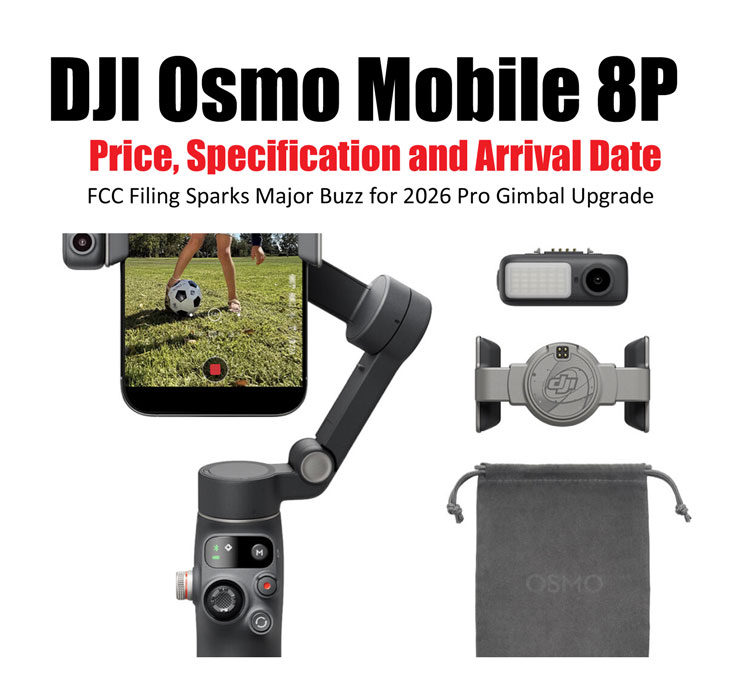
The DJI Osmo Mobile 8P has been spotted in a fresh FCC filing, confirming that the next-generation 8P gimbal is on its way. Most importantly, if you are a content creator, blogger, or a smartphone filmmaker and you always have the itch to get the next big thing in your hand, or the best gimbal, better to say the budget gimbal available in the market, then obviously the most advanced upgrade with some Pro twist is finally coming.
A brand-new FCC certification has been uncovered for the DJI Osmo Mobile 8P (model DS508, FCC ID: 2ANDR-DS508), so the best part is that the 8P has already crossed the biggest hurdle – FCC ID registration. Now, after clearing the registration, DJI has approximately 180 days to announce the gimbal.
Now that you have the timeline, let’s dive into the details to explore everything further. And let’s unpack the DJI Osmo Mobile 8P rumors, specs, leaks, expected price, and release date based on the latest intel. If the Osmo Mobile 8 already wowed with 360° pans and pet tracking, the 8P could be the ultimate upgrade for creators.
Breaking Down the Leak: DJI Osmo Mobile 8P FCC Filing – What Does It Mean?
Just after having the details via the FCC ID, thanks to SaraCool_Drone for finding it out. Now, as we all know, no juicy external photos are available yet. Obviously, we can see only some parts of the gimbal, and now I’m waiting for sources to bring out the real and clear pictures of the upcoming gimbal.
The most important thing is that we have already seen with the DJI Osmo Mobile 8, a 360° rotating arm for a full swing shot. Now what’s next? What set of major improvements can we expect to witness in the Osmo Mobile 8P gimbal? Let’s see in the rumored specification list
Expected Specifications of the DJI Osmo Mobile 8P Gimbal
Based on October–December 2025 rumors from leaks and DJI patterns, the 8P isn’t a full redesign but focuses on pro-level refinements for vloggers/creators.
We have already seen a lot of improvement in the Osmo Mobile 8’s blueprint (360° rotation, ActiveTrack with pet smarts, and 10-hour battery). The latest rumoured specs of the DJI Osmo Mobile 8P are below. No full teardown specification yet,
Stabilisation & Motors: Fine-tuned/upgraded 3-axis gimbal with enhanced torque for heavier phones (170–300g, compatible with 6.9–10mm thickness, matching the Osmo Mobile 8). Buttery-smooth handling of high-frame-rate video like 4K/120fps slow-motion via the DJI Mimo app,
Tracking Tech: Full ActiveTrack 8.0 rollout with LiDAR integration (teased for a 7 Pro and then for Osmo 8 and then held back) for depth-aware, low-light precision. Gesture controls, multi-subject (humans, pets, even vehicles)
Battery Life: A massive 12 hours of runtime, with fast charging and phone passthrough.
Build & Design: Lighter at ~320g, foldable with a magnetic 250mm extension rod for selfies or overheads. Forward-tilt pan for epic low-angle shots, plus a beefier magnetic clamp. Colors? Pro dark gray, natch.
So these are the initial set of core specifications that we are expecting from the upcoming Osmo Mobile 8P gimbal, and we are going to update this list as soon as we get any newly added information.
DJI Osmo Mobile 8P Expected Release Date – When Can You Get Your Hands on It?
Timing is everything, and DJI loves syncing with big tech waves, and if that really matters, then we should have it in and around CES 2026. But if DJI follows its previous pattern of gimbal announcements, then accordingly, the base Osmo Mobile 8 dropped on November 5, 2025, post-July filings (about 4 months). The Osmo Mobile 7 series? Filed in November 2024 and announced in February 2025 (around 3 months).
With this December 16, 2025, FCC filing, expect the DJI Osmo Mobile 8P announcement in late March to early April 2026 – perfect for spring sales and iPhone 18 hype.
DJI Osmo Mobile 8P Expected Price – Affordable Pro
Without a doubt, DJI always creates pocket friendly gimbals, and the 8P should follow suit. The base 8 retails at $149 (bundled with module/rod), up from the 7’s $75/$109 split. Leaks from TheNewCamera peg the DJI Osmo Mobile 8P price at $159–$179 USD – a $10–$30 bump for Pro perks like LiDAR and extended battery.
Base Osmo Mobile 8: $149
Base Osmo Mobile 8P (Expected): $159–$179
These are the initial set of information we have related to the upcoming DJI Osmo Mobile 8P smartphone gimbal. If we get anything new related to the same, we will update this post. Stay tuned
The article “Best Pro Cameras to Buy in 2026 Under $500: Full Frame, APS-C, and Micro Four Thirds for Savvy Shooters” was written on 8:26 am, Saturday, 13 December 2025, Greenwich Mean Time (GMT)
What’s inside the Sony a7 V camera? In a fresh teardown of the Sony a7 V, a camera expert reveals the real story. By keeping the budget factor in mind, Sony has introduced numerous innovations. Specifically, the overheating system and internal panels have been improved, addressing a major pain point that was a serious issue with its predecessor.
Why the Sony A7 V Teardown Matters: From Plastic to Pro-Grade Build
The teardown done by carefully peeling out layer by layer of the Sony a7 V camera, and extensive engineering done by Sony engineers was clearly visible, which is really amazing to see how well they have added each layer of circuitry one after another.
Teardown specialist verdict: “Solid.”
Let’s break down the top five highlights, complete with direct quotes from the teardown.
1. Full Magnesium Alloy Body: Turning the Chassis into a Heat-Dissipating Beast
Sony has ditched the older model design previously used in the Sony A7 series. Earlier, the Sony A7-series cameras featured a mix of plastic and metal construction across most models. However, while unlocking the body, it has been found that the camera now uses a full magnesium alloy chassis, built to deliver uninterrupted performance without the fear of overheating..
Quote: “The back cover material is different—previous M-series used mostly plastic, but now it’s magnesium alloy, finally on par with the S and R series: full magnesium alloy body! The back shell has thermal conductive silicone pads attached, positioned right over the processor. This means the entire metal back cover acts as a massive ‘heat sink.'”
The experts’ take: enhancement of the overall heat management unit inside the camera was actually required in the Sony A7 series. As we all know, many Sony A7 IV -camera users are in deep trouble after purchasing the camera, specifically cinematographers who are unable to record 4K videos for more than 20 minutes. This upgrade, paired with thermal pads glued precisely over the CPU, transforms the camera’s back panel into an active, cooling system. No more Sony a7 IV–style thermal throttling after 20 minutes of 4K video
2. BIONZ XR2 Processor: Integrated AI That Rivals Apple’s M1 in a Mid-Range Body
Sony a7 V is the only camera right now that is using the BIONZ XR2 image processor, which has an integrated AI chip, the XR2 processor itself (up to 30% better than the Alpha 7 IV), and is more energy-efficient than the BIONZ XR image processor + AI chip used inside the A7 IV camera.. This results in up to 21% better battery life via EVF (630 shots vs. 520 on the a7 IV) or 29% via LCD (750 vs. 580)
Well, I am not getting into too much technical detail. What the teardown expert has said is that the overall improvement in the new camera looks impressive.
Quote: “The processor and Micron’s LPDDR5 memory are PoP stacked together. The AI processing unit is integrated into the main processor—more advanced than the external AI chip in the A7R5, similar to Apple’s M1: a full-featured SoC… already ahead of their own flagships.”
Why it matters for you: Having a major improvement in the image processor directly results in upscaling in the autofocus algorithms, as well as the overall performance of the camera, which is also greatly improved.
Flagship AI features (think real-time subject tracking for birds in flight or human pose detection), and the best part is that under $2,500 for the body, you are getting a boosted autofocus accuracy by up to 30% over the Sony a7 IV—without jumping to a $6,000 Sony a1.
3. Smartphone-Level Mainboard: AT&S Craftsmanship for Bulletproof Reliability
I’m really glad to know that the Sony a7 Vmotherboard cover is actually manufactured by the same AT&S, which also makes iPhone motherboards. So, when it comes to reliability and build quality, we can obviously trust the Sony a7 V camera, since it’s coming from the world of top-tier PCB manufacturers.
Quote: “The PCB comes from AT&S… a world-top PCB manufacturer that also makes iPhone motherboards… The A7M5 is fully ‘smartphone-ized’ high-performance, representing the highest craftsmanship in the current camera industry.”
It’s densely packed with high-density interconnects, ditching messy traces for iPhone-like efficiency.
4. Partially Stacked CMOS Sensor: Crushing Rolling Shutter with 7.5-Stop IBIS
Yes, that’s the star upgrade we have inside the camera. A partially stacked 33MP full-frame sensor, which was exclusive to Nikon and Panasonic till now, has been further improved by Sony. Since it is a partially stacked sensor, it also preserves dynamic range just like a normal BSI CMOS sensor.
As a result, neither are you going to face the infamous “jello” distortion effect, nor are you going to lose essential shadow and highlight details while capturing images from your camera.
Quote: “This is the legendary ‘partially stacked CMOS’ with 7.5-stop stabilization… double-speed partially stacked CMOS… genuinely fix the previous gen’s… obvious rolling shutter.”
Why it matters for you: Sony a7 IV owners know the frustration: electronic shutter shots of sports or drones turning into wavy messes. Having a sensor readout speed slower than 25 ms really disturbs the frame captured at higher frame rates, so it was really very much essential for Sony to introduce a faster readout–based sensor in the Sony a7 V camera, and they have clearly done that in a very beautiful manner, even while preserving the dynamic range of the sensor at the very same time.
The continuous shooting speed of the camera has also been pushed to 40 frames per second, plus 10 FPS of mechanical burst, so overall it’s an excellent upgrade that we have seen inside the Sony a7 V.
Additionally, with 7.5 stops of IBIS, handheld gimbal-free footage rivals dedicated rigs. It’s the fix that makes the Sony a7 V a versatile full-frame camera for wildlife or event coverage, with no pricier body required.
5. Flagship Tech Trickle-Down: Wireless, Stabilization, and More in One Package
Tying it all together, the A7 V borrows elite features like 2×2 MIMO Wi-Fi (for A1-speed transfers) and refined IBIS, all on that premium AT&S board.
Quote: “Full magnesium alloy body for heat sharing, trickle-down flagship wireless transfer and stabilization, and speed flip-doubled partially stacked CMOS, AT&S top-tier mainboard with BIONZ XR2 fully integrated SoC… These internal pile-ups of materials genuinely solved the previous generation’s pain points of poor heat dissipation, slow image transfer, and obvious rolling shutter effect.”
It’s a value bomb: internals that outpace some Sony flagships in efficiency.
Final Verdict: The Sony A7 V Is the Smart, “Solid” Choice for 2025 Creators
That was really kind of an eye-opener teardown, where we can very clearly see the parts and improvements that have been rightly done inside the Sony A7 series camera. This set of improvements not only brings us more reliability and peace of mind when buying this camera, but also lets us purchase it without a second thought.
Obviously no .” No revolutionary redesign, but fixes to overheating, lag, and distortion make it soar. If you’re eyeing the top mirrorless camera under $3,000, this is it—especially with firmware updates promising even more AI magic.
Score by teardown expert: 9.2/10 for internals alone. Grab one before stock dips, and pair it with our recommended Sony A7 V lenses for peak performance.
What’s your biggest A7 V question—heat, AF, or video? Drop it in the comments! Subscribe to TheNewCamera.com for weekly updates
DJI RS5 camera gimbal announcement is very near to us, since just a few days ago, we saw the price leak of the DJI RS5. DJI RS5 Australian price leak hinting at a $838 AUD (~$553 USD) entry-level model gimbal. An Australian retailer has sent us the price tag of the RS5 gimbal. Just after that, we have the product shots coming up from one of the trusted sources. Trusted DJI leaker Igor Bogdanov (@Quadro_News) has dropped the first official leaked images of the DJI RS5 gimbal.
So not one, we have multiple product shots of the gimbal that is expected to be announced soon. Since the product shots are already available, specs are also there, and the pricing is available from retailers, then for sure the product is already in stock worldwide and waiting for a formal official announcement.
DJI RS5 Specification
Modular Arm & Vertical Shooting: Enhanced NATO rails
LiDAR-Ready Focus Module: The side-mounted slot confirms compatibility with DJI Focus Pro, enabling AI-driven autofocus even in low light. The next-generation ActiveTrack Pro can directly read images from the camera built into the Focus Pro LiDAR Autofocus with no need for the Ronin Image Transmitter.
Ergonomic Grip Upgrades: The BG33 handle
Battery & Charging: The new BG33 intelligent handle delivers a 15% battery life increase (up to 13+ hours)
Full charge in just 1 hour via USB-C. No more mid-shoot swaps—ideal for wedding pros or travel vloggers.
Balancing Aid: A built-in Z-axis indicator
Smart Tracking & Composition: Upgraded intelligent composition and tracking algorithms promise smoother ActiveTrack-like following, with AR overlays in the Ronin app for virtual horizons.
Payload Capacity: Sticking to 3kg (6.6 lbs)—same as the RS4—confirming this base model targets mirrorless setups (e.g., Sony A7S III + lens). No jump here, but…
DJI RS5 Pro Bundle Set
What New inside the DJI RS 5 Gimbal
Battery/Charge: +15% life, 1h full vs. RS4’s 2h.
Tracking: Smarter AI for composition vs. RS4’s solid but basic.
Balancing: Z-axis helper absent in RS4.
Payload: Identical 3kg base; Pro upgrades pending.
Confirmed DJI RS5 Specs: Battery Life Jumps 15%, But Load Stays at 3kg
So here we are discussing the confirmed specifications of the upcoming DJI RS5 gimbal. The biggest disappointment that I feel after reading the specifications of the DJI RS5 is its payload. It remains at 3 kg, which is very similar to the DJI RS4 payload. Not even close to the DJI RS4 Pro, which can lift approximately 4.5 kg. So that’s a very clear indication that in the near future, very soon, we are going to have a DJI RS5 Pro gimbal in the lineup.
Since obviously the DJI RS5 isn’t a combined update or a major upgrade over the DJI RS4 Pro at the very same time. If you look at the announcement dates or the DJI scheduled announcement pattern, in the previous year the DJI RS4 and RS4 Pro were announced simultaneously on the same day (DJI’s history backs this: The RS4 and RS4 Pro launched together on April 9, 2024, at NAB—no staggered rollout). So even if the DJI RS5 Pro is not coming alongside the DJI RS5, we are expecting it sometime around or around CES 2026.
Accessory
Description
Why It Matters
DJI RS5 Gimbal Stabilizer
Three-axis unit with 4th-gen algos and Z-axis indicator.
3kg payload for smooth 8K on Sony/Canon hybrids; 15% better battery via BG33.
BG33 Intelligent Battery Grip
1-hour fast charge, 13+ hour runtime.
Powers extended shoots; haptic controls for zoom/focus.
Briefcase Handle & Quick-Release
Foldable carry with NATO plates and vertical adapter.
50% faster setups for dynamic tracking.
Focus Motor & LiDAR Module
Bundled for AI composition upgrades.
Improved subject tracking—solo op magic.
Cables & Mounts
USB-C kit, cold shoe, mini tripod.
App integration for real-time balancing aids.
Breaking Down the Leak: RS 5 Pricing in AUD (and USD Equivalents)
Before we jump into any new set of information, let’s analyse the pricing of the DJI RS 5 Gimbal in the USA/USD. We already have the Australian pricing of the DJI RS 5 Gimbal. We have to adjust a little bit based on the currency exchange factors and the tax we have to pay, and the overall figure that we get. We have added it in the table below.
Product
SKU
Price (AUD)
Approx. USD
RS 4 Equivalent (USD)
Price Delta (vs. RS 4 Base)
DJI RS 5
6738977
838.00
~553
N/A
+$84 (from RS 4’s ~$469)
DJI RS 5 Combo
6738976
998.00
~658
N/A
+$99 (from RS 4 Combo est.)
DJI Ronin RS 4
6189086
678.00
~447
469
Baseline
DJI Ronin RS 4 Combo
6189090
848.00
~559
N/A
N/A
DJI Ronin RS 4 Pro
6189082
1,298.00
~856
869
+$387 (from RS 4)
DJI Ronin RS 4 Pro Combo
6189083
1,598.00
~1,055
N/A
N/A
DJI RS 4 Mini
6702985
538.00
~355
369
Entry-level alt.
DJI RS 4 Mini Combo
6702986
658.00
~434
N/A
N/A
DJI RS BG21 Grip
5573682
119.00
~78
~79
Accessory staple
At $838 AUD (~$553 USD), the base RS 5 represents a modest 12% premium over the RS 4’s $678 AUD launch price, signaling DJI’s intent to keep the series accessible for hybrid shooters balancing cameras like the Nikon ZR, Sony AV or Canon R5 II. The Combo kit—likely bundling essentials like extra batteries, focus motors, and a RavenEye image transmitter—jumps to $998 AUD, offering better value for kit-builders. Compared to the RS 4 Pro’s $1,298 AUD entry, the RS 5 feels like a “Pro-lite” contender, potentially packing enough bells and whistles to lure users away from pricier alternatives like the Zhiyun Crane 5 or Moza AirCross 3.
So this post sums up the entire available set of information related to the DJI RS5, which is just about to arrive officially. And if we get any latest updates related to any upcoming DJI products, then we will be posting them at TheNewCamera.com. Stay tuned.
GET LIVE NOTIFICATION, Select Your Trusted Source GET LIVE NOTIFICATION Click ON Check BOX for Latest NEWS and Rumors
The article “DJI RS5 Gimbal Leaked Images and Price” was written by thenewcamera.com team on 1:54 pm, Wednesday, 10 December 2025, Greenwich Mean Time (GMT). | You can also follow us on Our Official Social Media HandlesFACEBOOK | TWITTER | INSTAGRAM to get live news — > DJI Rumors
According to the latest set of rumours, Chinese lensmaker Viltrox is finally preparing to announce Canon RF-S Mount lenses in 2026, They are going to start announcing lenses for Canon APS-C cameras like the Canon R50, Canon EOS R10, R50, and R7. Viltrox will bring down loads of affordable, high-performance primes to the RF ecosystem. And then Fullframes.
Update: December 21, 2025
So it’s not a rumour anymore; we have now received confirmation just after the post we published that Viltrox RF lenses are coming for Canon in 2026. Our source was 100% correct, and just after this, we received another confirmation that they will be delivering the EPIC series 1.33x anamorphic cine lenses for Canon’s full-frame RF mount. These include the compact 35mm T2.0, 50mm T2.0, and 75mm T2.0 models, designed for widescreen storytelling with a 2x squeeze factor, high resolution, and color matching to legacy Kowa glass. Crucially, all these lenses are coming with full authorization from Canon, which clearly proves that Viltrox has now become an official partner of Canon, and very soon they will be adding RF / RF-S lenses to the system, starting with anamorphic full-frame lenses. The information was confirmed by the Vertran Rumour website Photorumors.com
One of the best parts of Viltrox is that most of their lenses are under $300. So once they start the production of Canon RF-S Mount lenses, the users will get a lot of options to choose from. But again, the Canon licensing practice is very tricky; most of the time, they try to avoid the focal length approval they already made or have in the market. So, most probably, we do have high hopes for the APS-C RF-S Mount; in that space, Canon has the least amount of RF-S lenses. Other than that, in the full-frame zone, it would be interesting to see what Viltrox will have to offer us.
Image of Viltrox 85mm F1.8 II Lens: The Lens 85mm series lenses were announced alongside with Canon R series back in 2018, but later on the 2nd gen of 85mm F1.8 II was banned by Canon. Since Viltrox was creating lenses for Canon via reverse engineering, not by taking proper licenses,- Canon asked Viltrox to STOP selling RF lenses (August 29th, 2022)
Why Viltrox RF-S Lenses Matter for Canon Users
Yeah, I know that Canon does have very tight control over the RF mount, specifically the full-frame lenses, but the APS-C segment (RF-S) has seen some expansion, and lensmakers like Sigma and Tamron are adding lens options for APS-C users starting from 2024. Like Sigma and Tamron are adding lens options for APS-C users starting from 2024. And we do hope and expect that in 2026, Viltrox will join the List of third-party lens manufacturers of the RF-S Mount.
Now, Viltrox already has a very good track record for making excellent optical-quality lenses with very good autofocus performance. A lot of users have been using the Viltrox lenses in Sony E mount as well as Nikon Z mount for more than 7 years without any issues.
Potential Viltrox RF-S Lens Lineup: What Could Be Coming Soon
We have a list of ultra-popular lenses available for multiple brands. These prime lenses start from $200, specifically, we are talking about the Air Series lenses, a total of 12 APS-C lenses are about to arrive, starting from ultra-wide to short telephoto
Viltrox AF 9mm f/2.8 Air: Compact ultra-wide for landscapes and vlogging.
Viltrox AF 13mm f/1.4: Expansive view with creamy bokeh—perfect for astrophotography.
Viltrox AF 15mm f/1.7 Air: Lightweight wide-angle for travel shooters.
Viltrox AF 23mm f/1.4: Street photography staple (EOS M favorite, RF-S inbound?).
Viltrox AF 25mm f/1.7 Air: Everyday normal lens with pancake vibes.
Viltrox AF 27mm f/1.2 Pro: Pro-grade brightness for portraits and events.
Viltrox AF 33mm f/1.4: Versatile normal prime (another EOS M hit).
Viltrox AF 35mm f/1.7 Air: Budget-friendly all-rounder.
Viltrox AF 56mm f/1.4: Portrait perfection with subject isolation.
Viltrox AF 56mm f/1.7 Air: Affordable telephoto alternative.
Viltrox AF 56mm f/1.2 Pro: Bokeh beast for pros on a budget.
Viltrox AF 75mm f/1.2 Pro: Short tele for flattering headshots.
This lineup would really fill some significant gaps in Canon’s RF-S offerings, particularly in the sub-$400 prime category. While Viltrox’s lenses might not take the crown from Sigma or Canon’s L-series glass, their “Pro” models have received a lot of love for their solid build quality and dependable autofocus—think sturdy metal barrels, USB firmware updates, and weather-sealed options in the high
BTW, which one of the Primes do you want to see soon for RF-S Mount Mirrorless cameras?
When Viltrox Lenses Come for Canon RF Mount
If Viltrox really pulls this off, we can look forward to a bunch of affordable RF-S prime lenses that will make pro-level low-light shooting accessible to everyone. Recent Set of Rumours Suggests Viltrox will officially announce New Lenses for Canon RF-S Mount, starting from the First Half of 2026.
Buy Canon Lenses, Buy Music CD or Digital Camera at amazon it helps this site, and you do not pay anything extra, it is just a way to help support this site.
New Camera Website, we list all type of new camera information, price review and all type camera rumors, subscribe us or follow us via twitter or facebook.
Disclaimer: We have attempted to select useful information to include on New Camera, and to ensure that the resources we have included on the site -- as well as the way we have described them -- are accurate, fair, and balanced. However, we make no claims, warranties, or other representations concerning the accuracy, completeness, or utility of the information provided, or concerning the abilities or performance of the organizations, agencies, companies, and other resources presented through New Camera


 BOX for Latest NEWS and Rumors