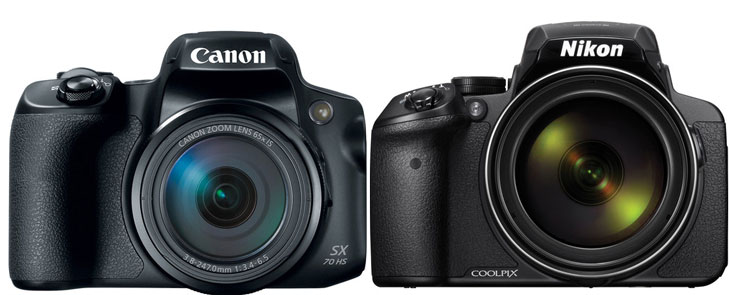
So we have done an in-depth comparison between the Canon SX70 HS camera and the Nikon P950. These are both the best superzoom cameras available right now with DSLR-like functionality without the bulkier design. You can use the megazoom cameras for wildlife, sports, travel, and casual photography.
Nikon P950: Best Super Zoom Compact Camera
The Nikon P950 uses an 83x optical zoom lens, which is the longest zoom bridge camera available right now. If you also count the digital zoom, then the Nikon P950 offers approximately 166x Dynamic Fine Zoom. That makes it the best superzoom camera of 2025.
The Canon SX70 HS offers 65x optical zoom, which is, of course, impressive but not as good as the Nikon’s 83x optical zoom. Now, if you consider the digital zoom also, then in Canon you are getting a maximum of 130x ZoomPlus mode, which is undoubtedlyinferior to the 166x Dynamic Zoom of the Nikon P950.
Verdict: The Nikon P950 is the best among the two if you consider the best superzoom camera with maximum optical reach.
Detailed Specification Comparison of – Canon SX 70 HS vs Nikon P950
here’s a side-by-side comparison of the key specifications for the Canon SX70 HS and Nikon P950:
Image Quality: Canon Wins in Resolution, Nikon in ISO
Canon has the resolution advantage, and Nikon has the better ISO range. Canon uses a 20.3-megapixel CMOS sensor that offers a bit higher resolution when compared to the Nikon P950’s 16-megapixel BSI CMOS sensor. The result is quite visible—if you want to crop your image, then Canon is of course slightly more usable.
Now, the Nikon P950 sensor offers better low-light performance since the ISO range of the Nikon P950 camera is from 100 to 6400, which is further expandable up to 12800. Canon does have some limitations in the ISO range—the standard ISO range of the Canon SX70 HS camera is from 100 to 3200, and the maximum expandable ISO range is up to 6400.
Verdict: Nikon P950 seems to offer better or more optical reach as well as a sensor that performs well in low-light conditions.
Video Performance: 4K Support in Both, Extras Differ
Video performance: Both cameras, Canon SX70 HS and the Nikon P950, offer 4K video recording support up to 30 frames per second. So that’s an amazing thing—that you can use both of these cameras to record beautiful wildlife videos while utilising their maximum optical reach. The Canon also includes a 4K time-lapse capability, so it’s kind of a bonus thing for creative videographers. You have to just set the camera and forget it. After a while, the camera will automatically create a 4K time-lapse movie of the entire scene. However, Nikon offers Full HD mode up to 60 frames per second, which provides smoother slow-motion footage experience. Canon Full HD remains limited to 30fps.
Both cameras offer optical image stabilization, so you get stable handheld shots from both the cameras.
Verdict: Both of them offer 4K videos at 30 frames per second. Canon SX70 HS offers time-lapse video recording capability, whereas Nikon P950 offers slow-motion recording experience.
Continuous Shooting, Viewfinder & Display and more
Canon faster continuous shooting speed: Canon offers a faster continuous shooting speed of 10 frames per second when compared to Nikon P950’s 7 frames per second. So Canon is faster and better suited for action, sports, and wildlife photography.
Viewfinder and display unit: Both cameras feature a 2.36 million-dot electronic viewfinder, which provides a very good viewport, and the display screen of Nikon P950 is slightly larger at 3.2 inches, whereas Canon is limited to 3 inches. Although both of them offer the same display screen resolution of 921k-dot LCD.
Image stabilization: Both of them do have optical image stabilization inside. Canon claims to have 5 stops of image stabilization performance, whereas the Nikon P950 uses Dual Detect Optical Vibration Reduction, which is of course highly effective in handling the superzoom lenses.
Connectivity & GPS tagging: The Nikon P950 offers Wi-Fi, Bluetooth, and GPS tagging in your pics, so you can capture or geotag your photos while you are travelling. Now, Canon SX70 HS remains limited to Wi-Fi and Bluetooth connectivity. So yes, you can transfer your images to the app from both the cameras, but geotagging remains exclusive to the Nikon P950.
Handling and weight: The Nikon P950 is larger and heavier, approximately 1000 grams. The reason is very simple—since you are getting a massive optical zoom lens of 83x, that makes it a quite heavy machine. Now in Canon, the weight remains limited to 610 grams, which is of course lighter and more compact compared to the Nikon.
Conclusion: Nikon P950 Is the Best Zoom Camera
Nikon P950 wins here, since you are getting 83X optical zoom vs 65X of Canon, as well as Nikon offers 166x Dynamic Fine Zoom and Canon remains limited to 130x ZoomPlus mode.
Canon has announced its own V series of cameras, starting from the Canon V1 compact camera. Recently, Canon announced the R50 V camera on March 26, 2025. So they are slowly expanding their V series to compete against Sony.
Now what’s next? We are expecting the arrival of the Canon R8 V camera as part of their expansion to its V series. The Canon R8 is expected to have the same image sensor and image processor, but it will surpass the video capabilities of the R6 Mark II camera.
So let’s discuss the possible specifications, arrival date, and the price of the upcoming Canon R8 V camera. It will be a game-changer camera for professional content creators and beginner filmmakers.
Canon R8V Specifications [Expected]
Sensor: 24.2MP full-frame CMOS (same as EOS R8/R6 II) with fast ~1/68s readout to minimise rolling shutter.
Processor: DIGIC X for advanced autofocus and high-quality video output.
Video Capabilities:
4K/60p uncropped, oversampled from 6K – sharp, detailed footage.
4K/120p (1.2x crop) – better slow motion than R6 II’s Full HD/120p.
Canon Log 3, 10-bit 4:2:2 (H.265), HDR PQ, and 2.35:1 aspect ratio for professional colour grading
Four-channel 24-bit audio – cinema-level sound, inherited from R50V.
6fps stills burst – fine for casual use, not suited for fast action.
Power:
LP-E17 / LP-E6NH battery. We are expecting enhanced battery life
No grip support – a key difference from R6 II.
Lens Mount:
RF mount – works with budget RF lenses and premium L-series optics.
Why Canon R8V is better than the R6 Mark II in video specifications
Since Canon R8 V falls into a different zone, it will not cannibalise the sales of the Canon R6 Mark II camera, even if it has improved video core specifications. People who are interested in content creation and photography will buy the R8 V camera. Otherwise, for photographers and hybrid users, the R6 Mark II will remain a perfect choice.
The cube-style design will protect Canon R6 Mark II camera sales: The R8 V cube-style, EVF-free design, completely inspired by the previously announced R50 V camera, ensures it targets professional video creators and content makers.
No electronic viewfinder: It will surely push photographers and hybrid shooters away from this camera, since most of them love to have an EVF so they can compose their shot even in daylight scenarios very precisely.
Simplified controls: No joystick or top LCD display screen like we have in the Canon R6 Mark II. With limited physical controls, specifically made for video workflow, and having the entire menu design very similar to Canon USA cinema-style cameras.
Limited still capture: Canon will cap the continuous capture cycle to 6 frames per second, preserving all possible advantages of a hybrid camera inside the Canon R6 Mark II.
Canon R8V arrival date
Canon’s 2025 roadmap was already packed with Canon R50 V and PowerShot V1 announcements. We also have a list of rumoured cameras like the Canon R6 Mark III, which will arrive in the 4th quarter of 2025. For details, you must look at the list of Canon’s upcoming cameras in 2025.
Q2 / Q3 of 2026 — somewhere between April to September of 2026 — is the perfect timeline, and it also aligns with Canon R8’s 3-year refresh cycle, which was launched back in April 2023. So, introducing an R8 V in mid-2026 is the best possible timing.
If Canon prioritises the creator market, they may launch it sooner.
Canon R8V Price
The Canon R8 was launched at $1,499 (body only), and the R50V is priced at $649.99, ~$300 below the R10’s $979. If Canon follow the same pricing pattern, the Canon R8V price would be
Body Only: $1,799 [Approx], a $300 premium over the R8 for IBIS, 4K/120p, and creator tools.
Kit Options:
$1,999 with RF 24-50mm f/4.5-6.3 IS STM lens.
Canon R8V with such core specifications and price can directly compete against cameras like Sony ZV-E1 ($2,199, 4K/120p, IBIS) at a higher price range. But, Canon still have to focus in their full-frame RF Mirrorless lineup since people are waiting for more affordable options from third-party lens makers.
At TheNewCamera.com, we’re dedicated to keeping you informed about the latest camera news. The article “Canon R8V: Specification, Arrival Date, and Price Expectations” was first published on 4:53 pm, Wednesday, 25 June 2025, Greenwich Mean Time (GMT) by thenewcamera.com team | Follow us on our social pages FACEBOOK | TWITTER | INSTAGRAM to get live Camera News + Canon Rumors 24X7.
If you were stepping into photography in 2025 and thinking about getting a DSLR camera, while we know that mirrorless cameras dominate the market right now, DSLRs also remain a top choice for beginners due to their affordability, robust build, and access to a vast lens ecosystem.
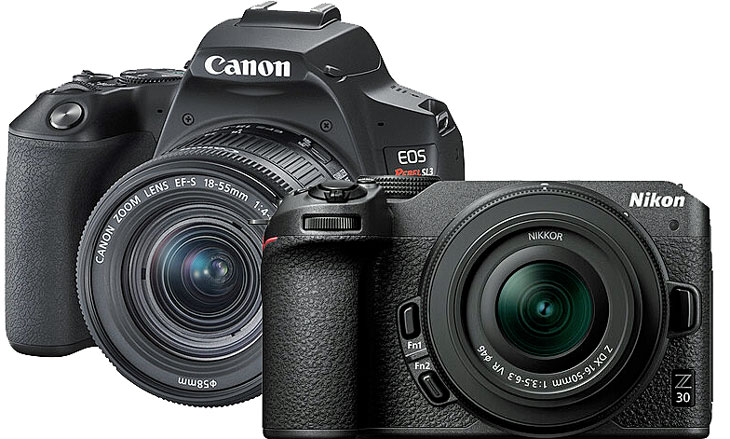
Among all the entry-level DSLRs that I have used from the past 10 years, the Canon SL3 or the 250D or the 200D Mark II—it has several names depending upon the region you are living in—stand out as the best beginner DSLR of 2025.
Why choose a DSLR camera in 2025?
DSLR cameras still have some unique advantages, specifically for beginners—those who are looking for a great solution under budget.
Lens ecosystem: Canon EF and EF-S lenses are widely available, and they are way too cheap compared to the existing mirrorless lenses. Additionally, a wide range of third-party lenses for DSLRs is available on the market, which come at a budget-friendly price.
Battery life: DSLRs like Canon SL3 / 200D Mark II / 250D offer 1070 captures per charge, which is far better than any entry-level or mid-range mirrorless camera of today.
Affordability: Used DSLR cameras are way too cheap—the price starts from $450, compared to entry-level mirrorless cameras. Also, there are several refurbished and open-box deals available, so keep looking for those deals too.
Optical viewfinder: It provides a direct, lag-free view of the scene, and it’s an ideal thing for learning compositions while composing your perfect scene.
What makes the Canon SL3 / 250D / 200D Mark II the best beginner DSLR in 2025?
Using a Dual Pixel CMOS autofocus sensor: Despite being a DSLR, the SL3 camera uses a 24-megapixel DPAF CMOS sensor. The sensor itself has more than 1000 Dual Pixel autofocus points divided into 143 AF zones, which also enable eye autofocus tracking and 3D subject tracking. But the DPAF sensor is active only when you are using the live view display of the camera. If you are using the optical viewfinder or the OVF, you are getting the traditional 9-point autofocus system of the DSLR.
Superior image quality: Despite being a DSLR camera, the Canon SL3 / 250D / 200D Mark II is using a 24.1-megapixel DPAF CMOS sensor paired with DIGIC 8 image processor. Overall, the performance is very much usable and the sensor is still being used inside cameras like the Canon R100 mirrorless camera.
Other factors that impact well: Also, one of the major factors that will affect the purchase is the availability of lenses. With the Canon DSLR camera, we have a huge range of EF and EF-S lenses available, as well as third-party lenses too. At the very same time, the battery life of the camera is very strong, and you can capture up to 1000+ shots with a single charge. This is in no way possible with the new generation of hybrid mirrorless cameras. So literally, this camera is very much capable if you are a beginner photographer and looking for a great budget camera.
Affordability is the biggest factor in having this camera: If you are looking for an old DSLR too, then due to the durability factor, these DSLRs perform very well. At the very same time, the lens ecosystem is affordable, so overall getting your hands into the photography zone is not as costly as entering into the mirrorless zone.
Who should buy the Canon Rebel SL3 / 250D camera?
The Canon SL3 is highly suitable for absolute beginner photographers. If you are looking to have a perfect photography interchangeable lens camera in your hand, then the SL3 has the properties of a mirrorless camera as well as a DSLR camera. So it’s a true hybrid DSLR camera, since with the live view display, you will enjoy the full functionality of a mirrorless camera, and when you are using the OVF, it acts like a DSLR. As you know, it has a lot of budget lenses available, and the battery life is superb, so overall, for a beginner, this is the best camera you can have to practice or learn photography.
Is this camera suitable for recording 4K videos or creating content?
No, this camera is not that much suitable to create 4K content, since we have to face an excessive 1.4x crop while recording in 4K. And when you are recording in 4K, the Dual Pixel CMOS autofocus mode gets deactivated. In 4K mode, you will be getting the support of contrast-detect mode only, so the autofocus becomes slow and sluggish. While when you are using full HD video recording mode up to 60 frames per second, the DPAF sensor is very much active and tracks eyes, faces, and 3D moving subjects very well. So up to full HD video recording, the camera works like a champ.
The Canon SL3 camera is highly suitable for budget-conscious buyers who are interested in buying the best beginner budget DSLR camera.
Other factor that you should note: The lenses in which you are investing your money — the super budget lenses — are still usable with the new generation of Canon EOS R mirrorless cameras with the help of an adapter.
Tips: Verify shutter count (<50,000) using Camera Shutter Count.
Canon EOS Rebel SL3 Pros and Cons Table
Pros
Cons
Compact and Lightweight: At 449g, one of the lightest DSLRs, ideal for travel and extended shoots, with an ergonomic grip for comfort.
Limited OVF Autofocus Points: Only 9 AF points in optical viewfinder (OVF) mode, less effective for fast, erratic subjects like sports compared to Nikon D7500’s 51 points.
Advanced Autofocus in Live View: Dual Pixel CMOS AF (DPAF) with 1057+ zones, covering 88% x 100% of the frame, offers mirrorless-like speed and accuracy, including Eye AF for portraits and vlogging.
4K Video Crop: 1.7x crop in 4K mode narrows the field of view, limiting wide-angle shots compared to 1080p or mirrorless alternatives.
4K Video Capability: Rare for entry-level DSLRs, records 4K/24fps and 1080p/60fps with smooth DPAF, perfect for hybrid shooters.
Basic OVF AF Performance: 9-point AF struggles in low light (-0.5 EV) compared to Live View’s -4 EV, requiring Live View for challenging conditions.
High-Quality Imaging: 24.1 MP APS-C sensor and DIGIC 8 processor deliver sharp, vibrant images with ISO 100-25600 for low-light versatility.
No Weather-Sealing: Unlike Pentax KF, the SL3 lacks dust or moisture resistance, limiting use in harsh conditions.
Long Battery Life: 1070 shots per charge (OVF), outlasting Pentax KF (400 shots) and mirrorless models like Canon EOS M50 Mark II (305 shots).
Slower Continuous Shooting: 5 FPS is adequate for casual action but lags behind Nikon D7500’s 8 FPS for sports or wildlife.
Vari-Angle Touchscreen: 3-inch LCD supports flexible angles for vlogging, selfies, or creative shots, with intuitive touch controls.
Limited Buffer: Small buffer size restricts burst shooting, filling quickly during continuous RAW capture.
Extensive Lens Compatibility: Supports Canon EF/EF-S lenses, with affordable options like the EF 50mm f/1.8 STM (~$125).
Plastic Build: While lightweight, the polycarbonate body feels less premium than metal-bodied DSLRs like the Nikon D7500.
Connectivity: Wi-Fi and Bluetooth for easy photo transfers and remote shooting via Canon Camera Connect app.
No USB-C Charging: Relies on proprietary charger, less convenient than modern USB-C standards in some mirrorless cameras.
Affordable Price: $750 new, $450 used (2025 pricing, B&H Photo, eBay), offering premium features at a budget-friendly cost.
Smaller Lens Ecosystem for Video: Some EF lenses lack silent autofocus, requiring STM/USM lenses for quiet video operation.
Canon is working on a constant aperture-based zoom lens for APS-C mirrorless cameras. According to the latest patent available at the Canon Japan Patent Office, the Canon research and development team of Canon is working on the RF-S 18-50mm F4 IS STM lens. In general, Canon takes 2 to 3 years to turn the patent into a real-world product. So if Canon is planning to bring this lens in the market, even though, we have to wait.
Canon RF-S 18-50mm f/4 IS
Focal length: 18.54-52.02
F-number: 4.10
Half angle of view: 33.06-14.50
Image height: 13.66
Total length: 130.47
Back Focus: 14.72-14.72
Stay tuned for more updates coming
Browse more Canon Patents
Support us – Use or affiliate link Amazon.com | B&H Store for the next purchase u make – it helps us
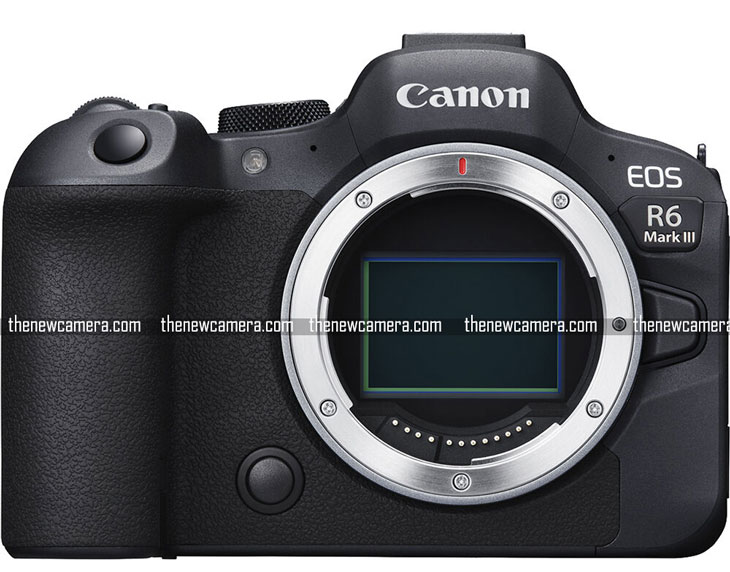
According to Jan Wegener (and he is 95-98% correct all the time), the Canon R6 Mark III camera will arrive in Q4 of 2025. The main surprise is the Megapixel bump in resolution, as per Jan’s expectation, the camera may use a 30.3MP Full-Frame CMOS Sensor. Let’s have a look at the details of what Jan tells us about the upcoming Canon R6 Mark III camera
The leaked specification isn’t much different from what we have said with you in the past Let’s have a look at the specs
Canon R6 Mark III specifications [Updated]
Sensor: Brand new
[approx]30.3MP Full-Frame CMOS Sensor
Readout Speed: Non-Stacked Sensor
Processor: Dual DIGIC X and
DIGIC Accelerator for enhanced performance
Subject Tracking with Deep Learning
Rear LCD: New “flippy” mechanism, likely a tilt-and-flip design similar to Sony and Panasonic models
Video Capabilities:
6K RAW recording at 60 fps
4K recording at 120 fps
Support for C-Log 2 and C-Log 3 for advanced color grading
3.2″ Vari-Angle Touchscreen LCD
CFexpress & SD UHS-II Memory Card Slots
Announcement: Late Aug 2025 – Early Sep, shipping from December 2025
These specs position the EOS R6 Mark III as a powerhouse for hybrid shooters
Here is what Jan Wegener said about the Canon R6 Mark III in his Latest Video
Canon R6 Mark III Release Date and Megapixel Upgrade Rumors
… And interestingly, it seems like that the R6 Mark III is not imminent. There will be an announcement probably in Q4 of 2025. And what I found the most interesting is that it said that the camera would get a megapixel bump. So it wouldn’t be 24 megapixel anymore and something more than that, which I thought was very interesting because that could instantly make the R6 Mark III also an R5 Mark II killer, especially if it’s a cheaper camera with maybe somewhere in the 30 megapixel range.
Why 30 Megapixels Could Be the Sweet Spot for Canon R6 Mark III
Cuz I think for many people that 30 megapixel range still feels like the sweet spot. Would you agree?
Canon R6 Mark III Sensor Technology: Stacked vs Non-Stacked Sensor Debate
But that got me thinking if Canon really gives a megapixel bump to the R6 Mark III and to be able to differentiate it from the R5 Mark II, does Canon then maybe not give the R6 Mark III a stacked sensor and rather a fast readout non-stacked sensor that probably would have a very high image quality even at those high ISO levels.
Pros and Cons of Stacked and Non-Stacked Sensors on Canon R6 Mark III
I can definitely see that being the case and I think I wouldn’t even be totally opposed to it. The stacked sensors are nice, but they also come with some drawbacks, especially when it comes to the image quality. Now, for video, it would be nice to have no rolling shutter at all or very little rolling shutter. But if it’s true that the camera gets more megapixels, I think it not being a stacked sensor would be a lot more likely.
Would you actually be happy with an R6 Mark III that has more megapixels but a non-stacked sensor?
Canon R6 Mark III Price Expectations
I think for many people this could actually make it a super interesting camera, especially if it still comes in below that $3,000 price point because it would suddenly give us such a great all-round camera that would also be fantastic for nature photography and would have a little bit more scope for cropping.
When Will Canon R6 Mark III Be Announced? Rumored Q4 2025 Launch
An announcement in Q4 2025 would be exactly 3 years after the R6 Mark II was announced and I think that would make a lot of sense even if the camera only starts shipping maybe in 2026.
At TheNewCamera.com, we’re dedicated to keeping you informed about the latest camera news. The article “Canon R6 Mark III Actual Specification by Jan Wegener” was published on 4:33 pm, Monday, 2 June 2025, Greenwich Mean Time (GMT) by thenewcamera.com team | Follow us on our social pages FACEBOOK | TWITTER | INSTAGRAM to get live Camera News + Canon Rumors 24X7.
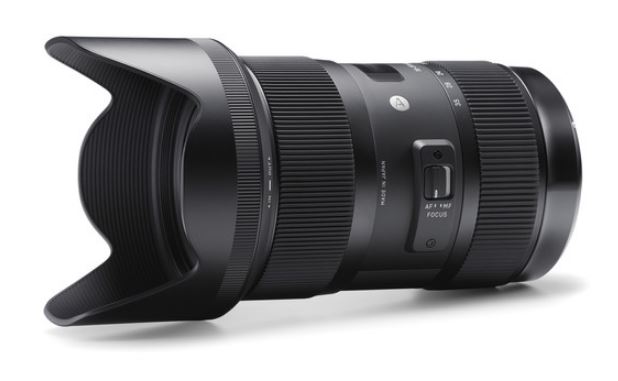
According to the latest rumour coming from the rumour mill on June 17, 2025, Sigma is going to announce two new lenses for Canon APS-C mount cameras, that is the RF-S mount, and the two lenses are:
Sample image of Sigma 18-35mm F1.8mm Lens
Sigma 17-40mm F1.8 DC DN ART
Do you remember the 18-35mm F1.8 lens that was available in the DSLR time? Of course, I missed that lens very badly, and I wondered why Sigma isn’t announcing any alternative to that lens, which was popular among professional APS-C users then. Now, finally, we have a solution. We have a brand new RF-S lens with the same F1.8 constant aperture and a slightly broader focal length.
The lens has a 27-64mm (35mm equivalent) focal length, and without a doubt, it will deliver exceptional image quality to the users. Just imagine pairing the Sigma 17-40mm F1.8 lens with the recently announced Canon R50 V camera—for wedding cinematography or for professional content creation, it will deliver, as I have said, exceptional results to the user.
The expected price of the Sigma lens is somewhere around $1200—that is what I am expecting. I will update this post once the price information is available to us.
Now, the next lens, which is also coming for the RF-S mount:
Sigma 12mm F1.4 DC DN Contemporary lens
So this particular lens will become very popular among handheld content creators—those who love to have an ultra-wide lens with a bright maximum aperture to deliver the finest quality possible.
Stay tuned for more updates coming
The article “6:34 pm, Friday, 30 May 2025, Greenwich Mean Time (GMT)” was published at 4:24 pm, Tuesday, 27 May 2025, Greenwich Mean Time (GMT). By thenewcamera.com Team. You can Follow us on our social pages FACEBOOK | TWITTER | INSTAGRAM to get live Camera News + Canon Rumors 24X7.
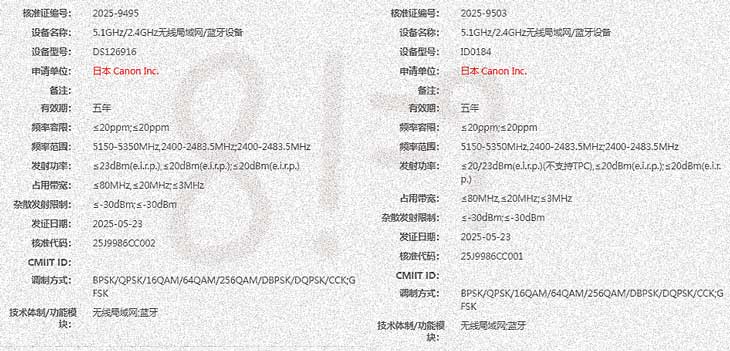
Canon registered two new cameras with the wireless certification agency. Based on the model codes of the two cameras, it’s distinguishable that one is from their Cinema EOS line and the other is the RF mount, consumer mirrorless camera.
Canon Upcoming Cameras Model Code 2025 [Updated]
DS126922: EOS R5 II (Dual-band Wi-Fi 6 & Bluetooth)
DS126928: EOS R1 (Dual-band Wi-Fi 6 & Bluetooth)
DS126941: EOS R50 V (Dual-band Wi-Fi 5 & Bluetooth)
Both are very new and support 2.4GHz and 5.1GHz Wi-Fi. Products beginning with “DS” tend to be still digital cameras, while those beginning with “ID” tend to be Cinema EOS cameras.
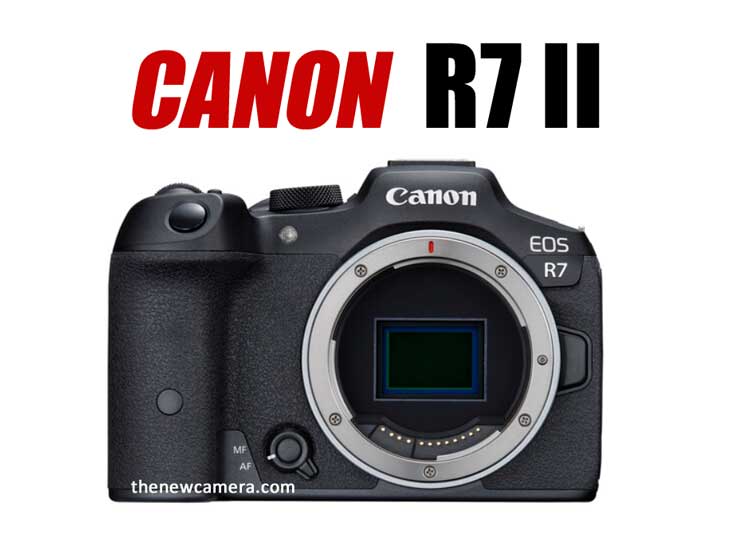
Some EOS or Cinema EOS cameras are planned for the future, and may be announced in the coming months. Rumor has it that they will be the Canon R6 Mark III or EOS R7 Mark II, but as we can see here, Canon is preparing for only one Consumer Mirrorless camera and the other is Cinema EOS.
Canon Camera Announcement in the 4th Week of August or Early September 2025
Canon registered both cameras in the 4th week of May 2025, roughly the camera maker takes 3 months to make it official, so expect a Canon announcement sometime in the 4th Week of August or Early September 2025.
Stay Updated with TheNewCamera.com
At TheNewCamera.com, we’re dedicated to keeping you informed about the latest camera news. The article “Canon Registers Two New Cameras May 2025 Update” was updated on 4:39 am, Wednesday, 28 May 2025 Greenwich Mean Time (GMT). by thenewcamera.com team | Follow us on our social pages FACEBOOK | TWITTER | INSTAGRAM to get live Camera News + Canon Rumors 24X7.
Buy Canon Lenses, Buy Music CD or Digital Camera at amazon it helps this site, and you do not pay anything extra, it is just a way to help support this site.
New Camera Website, we list all type of new camera information, price review and all type camera rumors, subscribe us or follow us via twitter or facebook.
Disclaimer: We have attempted to select useful information to include on New Camera, and to ensure that the resources we have included on the site -- as well as the way we have described them -- are accurate, fair, and balanced. However, we make no claims, warranties, or other representations concerning the accuracy, completeness, or utility of the information provided, or concerning the abilities or performance of the organizations, agencies, companies, and other resources presented through New Camera