Join More Than 50,000+ Subscribers and get latest camera news and rumors
NEW CAMERA VIDEOS ON YOUTUBE
|
By admin, on June 25th, 2025

If you were stepping into photography in 2025 and thinking about getting a DSLR camera, while we know that mirrorless cameras dominate the market right now, DSLRs also remain a top choice for beginners due to their affordability, robust build, and access to a vast lens ecosystem.
Among all the entry-level DSLRs that I have used from the past 10 years, the Canon SL3 or the 250D or the 200D Mark II—it has several names depending upon the region you are living in—stand out as the best beginner DSLR of 2025.
Why choose a DSLR camera in 2025?
DSLR cameras still have some unique advantages, specifically for beginners—those who are looking for a great solution under budget.
Lens ecosystem: Canon EF and EF-S lenses are widely available, and they are way too cheap compared to the existing mirrorless lenses. Additionally, a wide range of third-party lenses for DSLRs is available on the market, which come at a budget-friendly price.
Battery life: DSLRs like Canon SL3 / 200D Mark II / 250D offer 1070 captures per charge, which is far better than any entry-level or mid-range mirrorless camera of today.
Affordability: Used DSLR cameras are way too cheap—the price starts from $450, compared to entry-level mirrorless cameras. Also, there are several refurbished and open-box deals available, so keep looking for those deals too.
Optical viewfinder: It provides a direct, lag-free view of the scene, and it’s an ideal thing for learning compositions while composing your perfect scene.

What makes the Canon SL3 / 250D / 200D Mark II the best beginner DSLR in 2025?
Using a Dual Pixel CMOS autofocus sensor: Despite being a DSLR, the SL3 camera uses a 24-megapixel DPAF CMOS sensor. The sensor itself has more than 1000 Dual Pixel autofocus points divided into 143 AF zones, which also enable eye autofocus tracking and 3D subject tracking. But the DPAF sensor is active only when you are using the live view display of the camera. If you are using the optical viewfinder or the OVF, you are getting the traditional 9-point autofocus system of the DSLR.
Superior image quality: Despite being a DSLR camera, the Canon SL3 / 250D / 200D Mark II is using a 24.1-megapixel DPAF CMOS sensor paired with DIGIC 8 image processor. Overall, the performance is very much usable and the sensor is still being used inside cameras like the Canon R100 mirrorless camera.
Other factors that impact well: Also, one of the major factors that will affect the purchase is the availability of lenses. With the Canon DSLR camera, we have a huge range of EF and EF-S lenses available, as well as third-party lenses too. At the very same time, the battery life of the camera is very strong, and you can capture up to 1000+ shots with a single charge. This is in no way possible with the new generation of hybrid mirrorless cameras. So literally, this camera is very much capable if you are a beginner photographer and looking for a great budget camera.
Affordability is the biggest factor in having this camera: If you are looking for an old DSLR too, then due to the durability factor, these DSLRs perform very well. At the very same time, the lens ecosystem is affordable, so overall getting your hands into the photography zone is not as costly as entering into the mirrorless zone.
Who should buy the Canon Rebel SL3 / 250D camera?
The Canon SL3 is highly suitable for absolute beginner photographers. If you are looking to have a perfect photography interchangeable lens camera in your hand, then the SL3 has the properties of a mirrorless camera as well as a DSLR camera. So it’s a true hybrid DSLR camera, since with the live view display, you will enjoy the full functionality of a mirrorless camera, and when you are using the OVF, it acts like a DSLR. As you know, it has a lot of budget lenses available, and the battery life is superb, so overall, for a beginner, this is the best camera you can have to practice or learn photography.
Is this camera suitable for recording 4K videos or creating content?
No, this camera is not that much suitable to create 4K content, since we have to face an excessive 1.4x crop while recording in 4K. And when you are recording in 4K, the Dual Pixel CMOS autofocus mode gets deactivated. In 4K mode, you will be getting the support of contrast-detect mode only, so the autofocus becomes slow and sluggish. While when you are using full HD video recording mode up to 60 frames per second, the DPAF sensor is very much active and tracks eyes, faces, and 3D moving subjects very well. So up to full HD video recording, the camera works like a champ.
The Canon SL3 camera is highly suitable for budget-conscious buyers who are interested in buying the best beginner budget DSLR camera.
Other factor that you should note: The lenses in which you are investing your money — the super budget lenses — are still usable with the new generation of Canon EOS R mirrorless cameras with the help of an adapter.
Where to Buy
-
New: B&H Photo (~$750), Amazon (~$740).
-
Used: eBay (~$450), MPB (~$460).
-
Tips: Verify shutter count (<50,000) using Camera Shutter Count.
Canon EOS Rebel SL3 Pros and Cons Table
| Pros |
Cons |
| Compact and Lightweight: At 449g, one of the lightest DSLRs, ideal for travel and extended shoots, with an ergonomic grip for comfort. |
Limited OVF Autofocus Points: Only 9 AF points in optical viewfinder (OVF) mode, less effective for fast, erratic subjects like sports compared to Nikon D7500’s 51 points. |
| Advanced Autofocus in Live View: Dual Pixel CMOS AF (DPAF) with 1057+ zones, covering 88% x 100% of the frame, offers mirrorless-like speed and accuracy, including Eye AF for portraits and vlogging. |
4K Video Crop: 1.7x crop in 4K mode narrows the field of view, limiting wide-angle shots compared to 1080p or mirrorless alternatives. |
| 4K Video Capability: Rare for entry-level DSLRs, records 4K/24fps and 1080p/60fps with smooth DPAF, perfect for hybrid shooters. |
Basic OVF AF Performance: 9-point AF struggles in low light (-0.5 EV) compared to Live View’s -4 EV, requiring Live View for challenging conditions. |
| High-Quality Imaging: 24.1 MP APS-C sensor and DIGIC 8 processor deliver sharp, vibrant images with ISO 100-25600 for low-light versatility. |
No Weather-Sealing: Unlike Pentax KF, the SL3 lacks dust or moisture resistance, limiting use in harsh conditions. |
| Long Battery Life: 1070 shots per charge (OVF), outlasting Pentax KF (400 shots) and mirrorless models like Canon EOS M50 Mark II (305 shots). |
Slower Continuous Shooting: 5 FPS is adequate for casual action but lags behind Nikon D7500’s 8 FPS for sports or wildlife. |
| Vari-Angle Touchscreen: 3-inch LCD supports flexible angles for vlogging, selfies, or creative shots, with intuitive touch controls. |
Limited Buffer: Small buffer size restricts burst shooting, filling quickly during continuous RAW capture. |
| Extensive Lens Compatibility: Supports Canon EF/EF-S lenses, with affordable options like the EF 50mm f/1.8 STM (~$125). |
Plastic Build: While lightweight, the polycarbonate body feels less premium than metal-bodied DSLRs like the Nikon D7500. |
| Connectivity: Wi-Fi and Bluetooth for easy photo transfers and remote shooting via Canon Camera Connect app. |
No USB-C Charging: Relies on proprietary charger, less convenient than modern USB-C standards in some mirrorless cameras. |
| Affordable Price: $750 new, $450 used (2025 pricing, B&H Photo, eBay), offering premium features at a budget-friendly cost. |
Smaller Lens Ecosystem for Video: Some EF lenses lack silent autofocus, requiring STM/USM lenses for quiet video operation. |

Canon SL3 Comparison
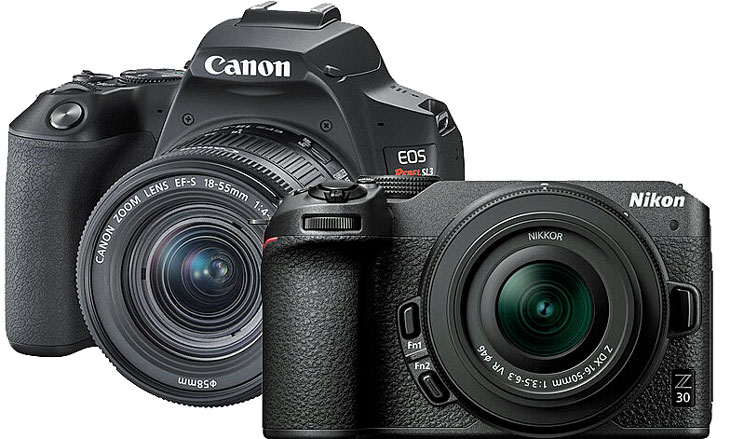

Browse More – The Best Beginner Camera
By admin, on June 25th, 2025
 Canon’s new patent for slow-shutter bracketing, aka Live ND Filter powered by AI, could make long-exposure photography a breeze. Instead of tweaking your shutter speed, for each shot, the camera would automatically fire off a series of images at different slow-speed settings in one go. Think light trails streaming behind cars or water flowing silky-smooth over rocks, this feature would handle the adjustments behind the scenes—so you get a variety of creative effects in a single burst, automatically saved in your camera. We can expect the arrival of the feature in Canon’s future cameras. Canon’s new patent for slow-shutter bracketing, aka Live ND Filter powered by AI, could make long-exposure photography a breeze. Instead of tweaking your shutter speed, for each shot, the camera would automatically fire off a series of images at different slow-speed settings in one go. Think light trails streaming behind cars or water flowing silky-smooth over rocks, this feature would handle the adjustments behind the scenes—so you get a variety of creative effects in a single burst, automatically saved in your camera. We can expect the arrival of the feature in Canon’s future cameras.
Patent overview
- [Publication number] P2025093064
- [Release date] 2025-06-23
- [Title of Invention] Imaging device and its control method and program
- [Application date] 2023-12-11
- [Applicant]
[Identification number] 000001007
[Name or company name] Canon Inc.
- An imaging device capable of obtaining a plurality of images with different slow shutter expressions in response to a single shooting instruction, and a control method and program for the same are provided.
- [Background technology]
[0002]
As a photography technique using long exposure, there is slow shutter photography, which captures the movement of a moving subject such as a waterfall or water flowing in a river. In slow shutter photography, the expression and impression of the photograph that can be taken changes depending on the length of the exposure time, so it is necessary to repeatedly shoot until a photo that is satisfactory to the user is captured. However, when repeatedly shooting while changing the exposure time, it is not possible to record images with different slow shutter expressions for the same scene.
- [0003]
On the other hand, there are conventional techniques that realize pseudo long-second exposure. For example, Patent Document 1 discloses a method of synthesizing images taken repeatedly at specific intervals to achieve a specific brightness. Patent Document 2 discloses a method of recording images with different exposures of the same scene as bracket images by repeatedly aligning and additively synthesizing multiple taken images and storing the images.
- [0005]
However, in the prior art of Patent Document 1, the brightness of the image changes, so images with different slow shutter expressions cannot be recorded. Also, in the prior art of Patent Document 2, the positioning is performed between the captured images, so images with slow shutter expressions that capture the movement of a moving subject cannot be recorded.
- [Patent Document 1] JP 2022-125117 A (OM Digital)
- [0006]
The present invention has been made in consideration of the above-mentioned problems, and aims to provide an imaging device and a control method and program thereof that can obtain multiple images with different slow shutter expressions with a single shooting instruction.
- EFFECTS OF THE PRESENT EMBODIMENTS
[0008]
According to the present invention, a single shooting instruction can obtain a plurality of images with different slow shutter expressions.
See more Canon Patent

Get LIVE RUMORS –> FACEBOOK | TWITTER | INSTAGRAM to get live Camera News + Canon Patent 24X7
source – asobinet.com
By admin, on June 24th, 2025

According to the latest rumours coming out from the rumour mill, Nikon is working on N-Log 2 — an advanced version of its existing N-Log video profile. Nikon is leveraging the expertise of RED Digital Cinema colour profiles, which they acquired last year, in their personal or very own Z-mount mirrorless camera system. Although they have not officially confirmed the N-Log 2, as the rumors suggest, they are almost at the horizon of its announcement.
Background of the N-Log 2
An advanced Nikon Log profile — that’s as simple as you read it. And if you want to extract the maximum quality out of your camera sensor, you have to use the Log profile of your camera. Take a look at the comparison table below, so you will get an idea of how the N-Log 2 will improve the overall video performance of the camera:
Comparison Table: N-Log vs. N-Log 2
| Feature |
N-Log |
N-Log 2 |
| Bit Depth |
Suitable for 8-bit or 10-bit |
Optimised for 12-bit or higher |
| Shadow Performance |
More prone to noise in shadows |
Better shadow detail, less noise |
| Highlight Roll-off |
Moderate highlight retention |
Superior highlight roll-off |
| Grading Flexibility |
Limited due to lower DR |
High flexibility, more data for grading |
| Use Case |
Entry-level or less demanding shoots |
Professional cinema, high-DR scenes |
| Compatibility |
Widely supported in Nikon cameras |
Available in higher-end models |
Nikon N-Log 2 Rumours: What We Know So Far
Development with RED expertise
Nikon is reportedly working with RED Digital Cinema’s advanced technology for their upcoming N-Log 2 video profile. RED is already known for its high-end cinema cameras — we all know Komodo-X, Raptor, and all those. So the professional-grade video expertise will help to officially scale the overall performance of Nikon’s consumer and prosumer Z-mount mirrorless cameras.
Improved Dynamic Range
N-Log 2 will also hit a new baseline ISO range in the cameras. At the same time, it will extract more and more detail as we have seen in 10-bit video recording. N-Log 2 will be more suitable for 12-bit and 16-bit videos. It will exceed competitors like C-Log 3, which is limited to 14 stops of dynamic range.
Which Nikon Cameras Will Get the N-Log 2 Update?
No official confirmation from Nikon yet, but rumor mills believe that the Expeed 7 image processor is able to handle the N-Log 2 update. So, cameras using the Expeed 7 image processor will enjoy the update.
Compatible Nikon Cameras
N-Log 2 is expected to be compatible with the following Nikon mirrorless cameras:
| Camera Model |
N-Log Support |
N-RAW Support |
Notes |
| Nikon Z9 |
Yes |
Yes |
Flagship model, professional-grade |
| Nikon Z8 |
Yes |
Yes |
High-end hybrid camera |
| Nikon Z6 III |
Yes |
Yes |
Mid-range, video-focused |
| Nikon Z5 II |
Yes |
Yes |
Entry-level full-frame |
This broad compatibility ensures that N-Log 2 will benefit a wide range of users, from professional videographers using the Z9 to hobbyists with the Z5 II.
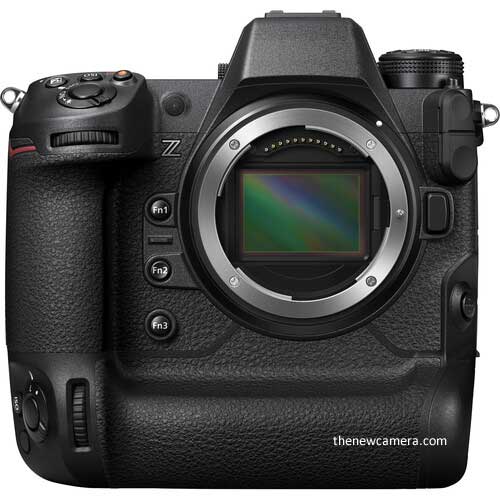
Future Prospects: Nikon ZR and Beyond
As we all know, Nikon is working on the Nikon ZR series cinema models, which will have compact cage-like designs similar to the Sony FX3. These will feature large rear display screens, and the design will be mostly inspired by RED Digital Cinema cameras. It will use the Nikon Z6 III camera sensor, making it a perfect tool for professional cinematography. While still unconfirmed, we are expecting the Nikon ZR to bring N-Log 2 inside it.
And just after that, we are expecting the arrival of the Nikon Z9 Mark II camera before the Winter 2026 Olympics — and even in that, we are expecting the presence of N-Log 2.
The article “Nikon N-Log 2: Latest Rumors and Updates” written and updated by thenewcamera.com team on 4:55 pm, Tuesday, 24 June 2025 Greenwich Mean Time (GMT)| Follow us for more updates and Get LIVE RUMORS –> FACEBOOK | TWITTER | INSTAGRAM to get live news — > get live news + Nikon Rumors 24X7
source / credit nikonrumor.com
By admin, on June 24th, 2025

Most of us as photographers or content creators own a lot of cameras—some of them are in use and some of them are on our shelves or of no use. So the straightforward thing is, if you want to exchange your old or existing middle-aged cameras or lenses, the best thing is to enter into the trade-in old camera gear program and exchange your old gear for a new one by getting the best price possible.
Here is the step-by-step guide and detailed overview on trading in your old gear at B&H store. Also, there are some tips on how to maximize your old camera trade-in value. So let’s jump into the content.
How to Trade in Your Old Camera Gear or Lenses at B&H Store
This is very simple. The entire program is highly user-friendly and offers multiple methods to initiate the process. Whether you go for an online approach or you prefer an in-store visit, all options are open.
Online Quote Form: Once you visit the B&H trade-in page and fill out the online quote form and you provide all the possible details of your equipment—which may include cameras or lenses—the B&H team will respond promptly with an offer that you can accept or decline. So it is completely hassle-free, and at least you will know the best possible refund or the money you will get for your existing camera or lenses. Now, if you accept the offer, you will receive instructions on how to ship your gear with free shipping provided within the USA. However, the trade-in program is not possible for people living outside the USA at this moment.
Email: Send a detailed description of your gear if you don’t want to fill the form. In your email, include all the possible details with images captured from the front, back, top, and rear side of the camera or lenses to the B&H trade-in email address. A representative will reply to you with the quote shortly.
Phone: You can directly call the B&H Used Department at 800-606-6969 and you can discuss your equipment details during the call. You can also take their help on how to proceed further and what will be the overall value of your equipment once you share the details and images with them.
The best thing is an in-person visit to the B&H New York City store at 366 W. 34th Street. An onsite evaluation is the best, where you can also do some negotiation and ask them to increase the value if you are not satisfied. An in-person visit or meeting is the best thing you can do for your old gear.
So once you accept the quote, the B&H team inspects the gear to ensure it matches the described condition and the images or details that you sent are real. Once the check-in process is completed, the payment is issued to you via a B&H gift card or check—whatever mode of payment you selected. If you want to buy new gear, you can opt for the B&H gift card. If you want cash, you can choose the check method.
Click here to visit the B&H Trade-in Program
Tips to Maximize Your Trade-In Value of Old Gear
These are the best possibilities that can increase or maximize the value of your old gear you are about to list in the trade-in program:
- Ensure the gear is in good condition: Clean your equipment thoroughly. Remove all dust, smudges, and fingerprints. Ensure all the gear functions properly and include the original accessories like lens caps, battery, charger, and strap if available.
- Be honest about the condition of your gear: While submitting the details, be honest with the condition of your gear. Always submit the right details with images.
- Time the trade-in with a purchase: When you are planning to buy new gear from the B&H store, the trade-in program will be the best way to clear up your old stock of cameras that you are not using.
- Compare the quotes: While B&H representatives are known for offering the best value for your products via the trade-in program, I would recommend you also try the KEH Store or MPB. These stores also offer trade-in programs, so you can have a clear idea where your product is being valued the best.
- Consider selling privately if your gear is in mint condition: For example, if you purchased the camera or lenses for review purposes only and then had to buy another set for the next review season, then the best thing is to sell your products to your subscribers with a little discount—since they know the gear is in mint condition and not overused.

Additional Considerations
Inspection Process: B&H inspects all traded gear within 3 business days, so it will take approximately 48 to 72 hours to test the submitted equipment thoroughly. Although you will get a quote at the beginning, the overall inspection is a key factor. If they find something that is not as described, they can put a revised quote in front of you or they may decline the trade-in and return the gear to you.
Payment Options: Once your gear is approved in the trade-in program, you can choose to receive payment via a B&H gift card, store credit, or a check. But at the end, you have to give them a government-issued photo ID before they deposit the payment into your account.
Customer Experience: A lot of our subscribers, who are regular visitors to our website, have participated in the trade-in program and their experiences were very good. You can also read feedback from open and independent sources like Reddit forums. Many of them praise B&H for their fair pricing and smooth processing experience. So you’ll get a good idea of the correct state of pricing for your product.
Professional Offers: B&H occasionally runs pro-special trade-in promotional offers, so always keep an eye on them. If one is running right now, you can take advantage of it to get more discounts and maximize your return.
B&H Photo and Video’s trade-in program accepts old gear, and it is a very reliable and efficient way to trade your old gear for cash or credit for new equipment—whatever you wish. So if you follow the steps we have recommended, you can easily replace your old gear with new ones or get cash in hand.
The article “How to Trade In Old Camera Gear at B&H Photo Video for Maximum Value” was published at 9:23 am, Tuesday, 24 June 2025, Greenwich Mean Time (GMT). By thenewcamera.com Team. You can follow us on our social pages FACEBOOK | TWITTER | INSTAGRAM to get live Camera News + Sigma Rumors 24X7.
By admin, on June 23rd, 2025
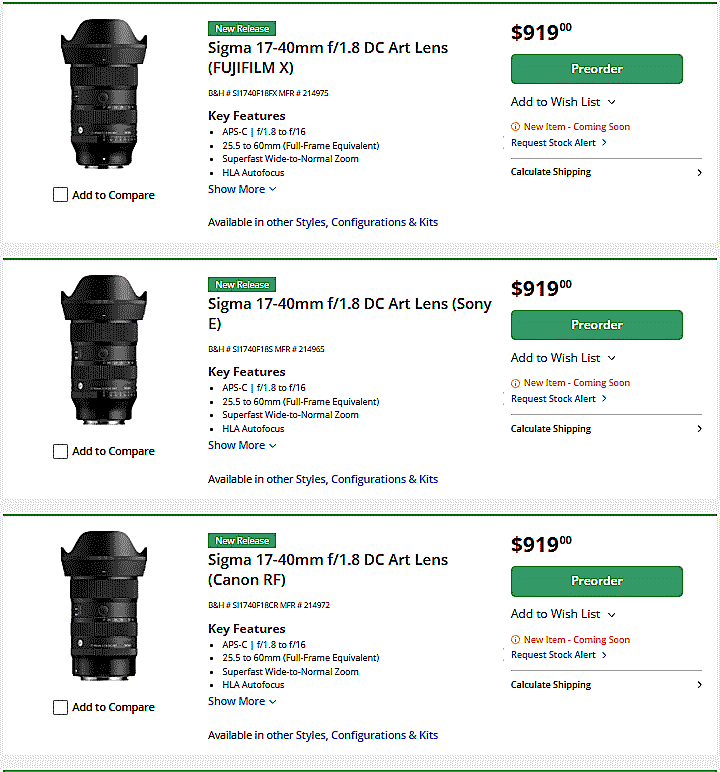
This was completely expected. Pre-orders for the Sigma 17-40mm F1.8 DC began on June 19th. The next day, the company announced a supply shortage. They said that production was unable to keep up with demand, and that delivery times may be longer.
Apology regarding the supply status of the “Sigma 17-40mm F1.8 DC | Art
Thank you for your patronage of Sigma products.
We have received more orders than we expected for the “Sigma 17-40mm F1.8 DC | Art” which is scheduled to be released on Thursday, July 10, 2025, and production is unable to keep up with demand. As a result, some customers may experience delays in receiving their products.
We apologize to our customers and other parties involved who have been waiting for the product for any inconvenience caused, but we are currently working hard to produce the product, so we ask that you please wait for a little longer.
We appreciate your continued patronage of our company and our products.
Product name: Sigma 17-40mm F1.8 DC | Art
Product code:
- For L mount: 0085126 214692
- For Sony E-mount: 0085126 214654
- For Fujifilm X-mount: 0085126 214753
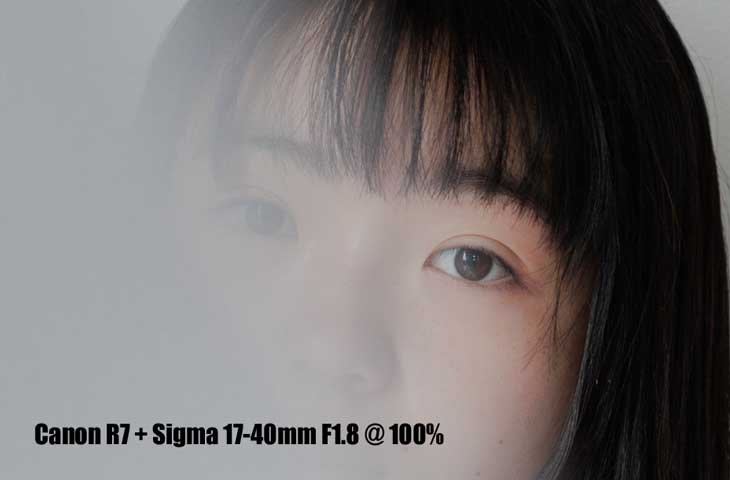
The article “Sigma announces supply shortage of 17-40mm F1.8” was published at 6:21 am, Monday, 23 June 2025, Greenwich Mean Time (GMT). By thenewcamera.com Team. You can follow us on our social pages FACEBOOK | TWITTER | INSTAGRAM to get live Camera News + Sigma Rumors 24X7.
By admin, on June 23rd, 2025

The Tamron 16-30mm lens is about to arrive. The leaked images and specifications are now available on the web., Look at the spec list of Tamron’s new wide-angle zoom, the 16-30mm F2.8 Di III VXD G2. Tamron will soon announce the 16-30mm F/2.8 Di III VXD G2 for the Z mount. Tamron currently has seven Z-mount lenses. Here is the information about this lens:
Tamron 16-30mm F2.8 Di III VXD G2 Lens for Nikon Z Mount Specification
– Lens construction: 12 elements in 16 groups
– Image stabilization: None
– Lens hood: HA064
– Total length: 104mm
– Aperture blades: 9
– Compatible sensor size: Full size
– Minimum shooting distance: 19cm
– Weight: 450g
– Dust and water resistance: Compatible (with sealing)
– Product number: A064Z
– Filter diameter: 67mm
It seems that Tamron will release a new wide-angle zoom lens. It is interesting to note that the model name Tamron is expanding its constant-aperture-based FF lenses by adding variable options in front of users. We already have lenses like the Tamron / Nikkor Z 17-28mm F2.8 Lens
The specs are slightly larger and heavier than the 17-28mm F/2.8, but considering that the wide-angle side is 1mm wider and the telephoto side is 2mm wider, this is probably within the acceptable range.

Detailed Technical Specifications:
- Mount type: Nikon Z
- Optical zoom: 1.88x
- Minimum focal length: 16 mm
- Maximum focal length: 30 mm
- Focal length (35mm equiv.): 16-30 mm
- Zoom lens aperture: 2.8
- Lens aperture – shortest focal length (F): 2.8
- Lens aperture – longest focal length (F): 2.8
- Maximum aperture (F): 16
- Lens construction: 16 elements / 12 groups
- Optical stabilizer: No
- Lens hood type: HA064
- Lens length: 104 mm
- Number of aperture blades: 9
- Suitable for genre: Landscape, Architecture / Interior
- Division by focal length: Wide-angle
- Suitable for sensor format: Full Frame
- Lens type: Zoom
- Minimum focusing distance: 19 cm
- Weight: 450 g
- Sealing (Dust/Moisture): Yes
- Product Number: A064Z
- Brand: Tamron
- Filter Diameter: 67 mm
- Send feedback
Tamron 16-30mm F2.8 Di III VXD G2 Official Press Text
Building on the success of the highly acclaimed TAMRON 17-28mm F/2.8 Di III RXD (model A046), the second generation G2 lens comes in the form of the advanced 16-30mm F/2.8 Di III VXD G2 (model A064), this time also for users of Nikon Z-mount mirrorless cameras. While expanding the zoom range, it maintains a compact and lightweight design and delivers exceptional image quality. In addition, it offers improved autofocus performance and has been updated to the latest lens design, improving overall operability. It is also compatible with TAMRON Lens Utility, allowing you to customize convenient functions for both stills and video shooting.
A Trio of Lenses with a Universal Range
With the introduction of the ultra-wide-angle 16-30mm F2.8 G2, the G2 is now a great addition to the standard zoom 28-75mm F/2.8 G2 (model A063). Together, these lenses cover a versatile range of 16mm to 75mm, making them ideal for most scenes. Experience the perfect combination of performance and functionality that makes professional photography more accessible than ever before.
Lightweight and Compact
Lightweight, compact and designed for mobility – it’s ideal for travel and everyday photography and video content creation. Despite the major improvements, the new lens retains the incredibly lightweight and compact design of its predecessor. This highly portable zoom can be used to capture high-quality photos in a variety of situations. The AF drive uses TAMRON’s fastest and most precise VXD linear motor mechanism. It excels at tracking fast-moving subjects, making it ideal for skateboarding and other dynamic scenes.
G2 Second Generation
A new generation of lenses with improved performance, faster focusing, better image stabilization, and a higher-quality finish. All G2 lenses are compatible with the TAP-IN bracket.
Di III – Mirrorless Systems
These lenses are designed exclusively for mirrorless cameras and cannot be used with digital SLR cameras.
VXD
The VXD autofocus is a world premiere: It is the first linear focus motor developed by Tamron for superior autofocus performance. Two VXD modules, operating in a floating system and controlled by electronic pulses, ensure fast and precise focusing on both near and far subjects. The new motor also ensures improved AF tracking, for example when shooting sports. The autofocus operates so quietly that you can shoot even in situations that require complete peace and quiet.
MR – Splashproof
Tamron lenses have a weather-resistant casing that optimally protects the sensitive interior from wind and weather. The robust outer casing is effectively sealed against moisture at all critical points (e.g. between the focus ring and the bayonet connection). This ensures reliable operation even in the most adverse outdoor shooting conditions.
Special XLD optical elements
Like LD, it prevents chromatic aberration and other defects. However, XLD is a much more sophisticated system that is mostly used in telephoto zooms.
Special LD optical elements
Color aberration is a common optical defect that manifests itself in many ways. We often talk about the so-called chromatic aberration, which occurs more often in wide-angle lenses. LD elements are made of special optical glasses with extremely low light dispersion, which effectively compensate for chromatic aberration, which is especially noticeable when using telephoto lenses at the extreme position.
IF – Internal Focusing
With lenses with internal focusing, the length of the lens does not change during focusing and the filter ring does not rotate with it. This makes handling easier, especially with longer telephoto lenses, and also for shooting with polarizing and gradation filters. Other advantages include a shorter focusing distance throughout the focus area and less light loss in the corners of the image (vignetting) and less focus-related aberrations.
BBAR / BBAR G2
The BBAR coating prevents reflection and scattering of light hitting the lens surface. This avoids loss of brightness and contrast and prevents “ghosting”. The BBAR coating also contributes to natural color reproduction. Since 2019, the advanced BBAR G2 coating has been used.
FLR
The fluoride coating permanently protects the front lens from contamination. Oil and water droplets do not adhere to the surface, which is therefore very easy to clean.
Tamron Lens Utility
The new “TAMRON Lens Utility” software has been specially developed for configuring compatible lenses. TAMRON Lens Utility can be operated from a computer by connecting the lens from its connector port via TAMRON’s USB-C cable. Users can customize functions and update firmware via the lens. With individual settings, the lens can be optimally adapted to the respective shooting situation, such as still photography or video recording.
Firmware Update
Focus A-B: Set 2 focus positions (A and B) and automatically shift the focus between A and B.
Focus Preset: Set the desired focus position and press the button to move the focus to the recorded point.
AF/MF Select: Select the AF and MF function using the focus adjustment button
Focus / Iris: Switch the function of the focus ring from focus adjustment to aperture adjustment.
Astro Focus Lock (Astro FC-L) supports precise astrophotography: The focus is automatically set to infinity to maintain the focus point for astrophotography. The focus ring is disabled until Astro FC-L is released to prevent focus deviation due to incorrect operation.
Follow us on our social pages FACEBOOK | TWITTER | INSTAGRAM to get live Camera News + Nikon Rumors 24X7.
Source / Content / Image credit – Nikonrumor.com

By admin, on June 21st, 2025

Panasonic’s Major firmware update is coming to the LUMIX S1RII, S1II, and S1IIE cameras. The Major update will become available for download on June 24, 2025. Panasonic Japan’s social media handles initially posted a teaser for the upcoming major update.
Key Features of the Firmware Update
This is not the first time. One month ago, in May 2025, Lumix teased the updates, so let’s have a look at the set of updates coming for the LUMIX S1R II camera, while specific details for the S1II and S1IIE remain partially undisclosed.
- 8.1K/7.2K video recording across the entire sensor range
- Direct backup of data recorded on SD cards/CFexpress cards to SSD
- Supports Bluetooth timecode synchronization
- HLG View Assist parameters can be changed
- Multi-frame marker display
- The color of the AF frame can be changed
- Supports the update function of the smartphone app “LUMIX Flow”
- Supports DJI wireless control
Advanced workflow features
- Direct transfers from the CFexpress Type B or SD memory card to an external SSD are possible, offering more workflow options and greater flexibility.
- Supports recording proxy files to the internal memory card while outputting HDMI RAW video data.
- Supports data transfer via Wi-Fi and wired LAN (USB-LAN conversion) with Capture One
- Compatible with timecode synchronization via Bluetooth ® .
- Connectivity with UVC/UAC devices is supported.
- Compatible with DJI Gimbals 2 via Bluetooth ® .
- HLG View Assist will be available for precise gradation and exposure controls on the camera monitor or viewfinder, as well as on external monitors that do not support HLG.
Advanced customization options
- The focus ring can be used as Control Ring 3 and allows button functions to be assigned. It also allows you to select the focus rotation direction in MF mode.
- The color of the AF frame can be selected from 10 colors for better usability.
LUMIX S1II and LUMIX S1IIE Firmware Version 1.1 Updates
- ARRI LogC3 will be available with the DMW-SFU3A Software Upgrade Key (sold separately) and allows color matching to ARRI 1 digital cinema cameras .
- The aspect ratio options are expanded from 10 to 17 and allow up to three frame markers to be displayed simultaneously.
- The color of the AF frame can be selected from 10 colors for better usability.
- The focus stacking function allows images taken at multiple focus positions to be combined into a single image with a large depth of field and consistent sharpness.
- Supports data transfer via Wi-Fi and wired LAN (USB-LAN conversion) with Capture One
This update shows the commitment of Lumix to its consumers. Just like Nikon, they are also providing major updates for free for professional camera users. Other camera makers, specifically Canon and Nikon, should learn from this—that companies are putting in so much effort to keep already announced cameras updated without putting any pressure on the pockets of photographers or cinematographers.
The firmware updates will be available for free download
Stay tuned to TheNewCamera.com for more updates
Follow us on our social pages FACEBOOK | TWITTER | INSTAGRAM, to get LIVE News and Panasonic Rumor
source Lumix Japan
|
KEEP THIS BLOG ALIVE - Support New Camera Buy Canon Lenses, Buy Music CD or Digital Camera at amazon it helps this site, and you do not pay anything extra, it is just a way to help support this site.

|