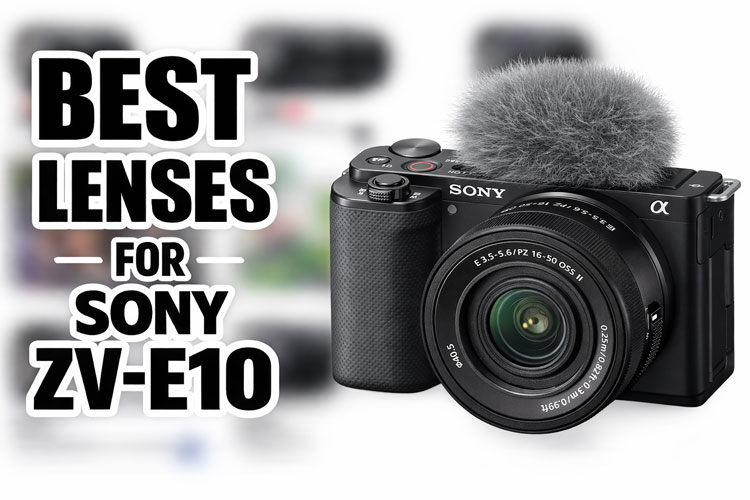
The Sony ZV E10 is a powerhouse camera for vloggers, photographers, and content creators. The camera features a 24-megapixel APS-C BSI CMOS sensor, 4K video recording, and a lot of new features, along with E-mount support. But to unlock its full potential, you have to use the right lens when you are shooting cinematic vlogs or portraits, or vibrant travel photos. Choosing the best lenses for the Sony ZV-E10 in 2026 will make a real difference. In this guide, we have tested out several lenses and, having used the ZV10 camera for more than 2 years, we have selected the best lenses for every use case, from wide-angle prime lenses to versatile zoom lens with the detailed reviews and some sort of comparison tables we have below, you will get the best available lens for the ZV-E10 camera.
Table of Contents
Why does the right lens matter?
Best prime lens for Sony ZV-10
Best zoom lens for Sony ZV-10
Best budget lenses for Sony ZV-10
Comparison table
How to choose a lens for your Sony ZV-10
FAQ
Why does the right lens matter?
Sony ZV-E10 camera and its successor, Sony ZV10 II, are designed for content creators, specifically those who want the highest quality output possible without sacrificing quality. The Sony 24-megapixel BSI CMOS sensor delivers excellent, crisp, and clear oversampled 4K video footage, but the lens that you pair with the camera determines the overall output of your content. A wide-angle prime lens is ideal for vlogging with the camera, and a versatile zoom lens covers multiple scenarios. I am using the Sony ZV-E10 camera in my creator studio for more than 2 years and also it is one of my primaries for photography also, so the lenses that we have mentioned below are being tested in real-world conditions and if you are blogging in a street, shooting landscape images or capturing portraits these lenses will help you to get the maximum output from your camera.
Best Prime Lenses for Sony ZV-E10
Prime lenses offer unmatched sharpness, low-light performance, and background blur, which is not possible with zoom lenses. So for vlogging purposes, for portraits, and also for cinematic shots, here are our top picks:
Price: ~$550 (Check Price at B&H Store and Amazon.com).
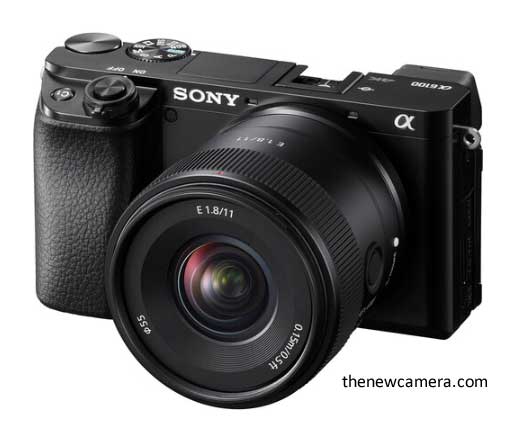
Sony 11mm f/1.8 is the best lens for Sony ZV-E10 vloggers, those who need maximum coverage of the frame. The 11mm lens is highly required, which will act as a 16.5mm lens in 35mm format, making it very ideal for handheld vlogs and for dramatic indoor and landscape. The Sony silent dual linear autofocus motor always keeps tracking the subject without any issue. The lens is very lightweight with 181 grams and pairs up perfectly for ZV-E10 and handheld vlog shooting.
Pros:
Ultra-wide for maximum scene coverage.
Fast f/1.8 aperture for low-light and bokeh.
Lightweight and weather-sealed.
Cons:
No optical stabilization (use ZV-E10’s digital IS).
Some edge distortion (correctable in post).
Best For: Vloggers needing wide coverage, travel creators, and architecture photographers.
Now, if you want a super-low-light-sensitive ultra-wide lens, then we have the Viltrox 13mm F1.4
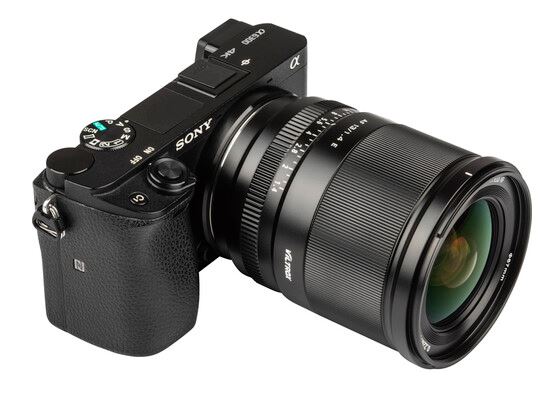
2. Viltrox 13mm F1.4 Lens: The Viltrox 13mm F1.4: If you are a content creator who creates most of your videos in an office or home setting, then you should consider the 16mm F1.4 lens. However, if you want extra coverage of your surroundings, for example, if you want a super-wide view or if you want to capture everything around you, especially for travel bloggers who want a bit more coverage than normal, then in that specific situation, I would suggest you go with the Viltrox 13mm F1.4 lens for the E-mount.
In terms of build quality, the lens is made up of a solid metal casing and has multiple weather seals, which makes it perfect to carry around in adverse weather conditions. The cherry on top is that you get a large manual focus ring which you can easily use to provide a smooth focusing experience. You can also do manual override while using autofocus.
The lens features an F1.4 aperture which makes it an ideal ultra-wide-angle prime lens to capture videos and even images in extremely low light conditions. The lens can also be used for astrophotography due to the nature of its high-grade optics.
A lot of effort has been put into optimizing this lens to perform perfectly while shooting videos. The lens features an STM motor, also known as a stepping drive motor, which helps to focus quickly without creating any noise.
Check the Latest Price of Viltrox 13mm F1.4 lens at Amazon | B&H Store
Pros:
Impressive performance
Solid metal casing
Good handling
Fast and accurate autofocus
Affordable
Cons:
No AF/MF focus mode switch
If you are a travel blogger and want to have super-wide coverage with a 13mm lens, you can go with this one
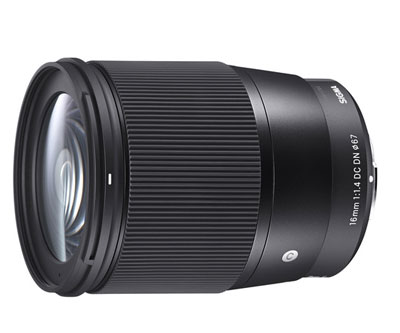
3. Sigma 16mm f/1.4 is a top choice for vlogging with a slightly tighter frame than the Sony 11mm.. The prime is designed for APS-C-format Sony E-mount mirrorless cameras and provides a 24mm equivalent focal length. A perfect focal length for creating content by putting ur camera just 2 to 3 feet away, and yes u can sometimes do handheld vlogs too.
The best part of the lens is the F1.4 aperture. Bright f/1.4 maximum aperture excels in low-light conditions. Shooting at Night and creating nightlife vlogs is now very easy with F1.4 aperture. And as usual, it also affords increased control over depth of field for achieving selective focus effects.
The AF is very fast, and the Sigma uses a stepping AF motor optimized for both photographers and videographers with its fast, precise, and near-silent performance.
The lens is an amazing bargain – super sharp, very fast, beautiful bokeh, and auto-focus. There is pretty much nothing not to like. The construction is rock solid, and rubber sealing is incorporated in the mount design to render it dust- and splash-resistant.
Pros:
Sharp at f/1.4.
Compact for a fast prime.
Affordable for the performance.
Cons:
No optical stabilization (use ZV-E10’s digital IS).
Slightly heavy for long handheld shoots.
Best For: Vloggers, low-light shooters, and travel creators.
Price of Sigma 16mm F1.4 – Buy this lens from Amazon.com | B&H Store
Sample: View sample vlog shot with Sigma 16mm.
The Sigma 16mm F1.4 lens is an excellent companion for the Sony ZV-E10 Camera, specifically when you want to keep the camera very close to you, the lens genrates the best output.
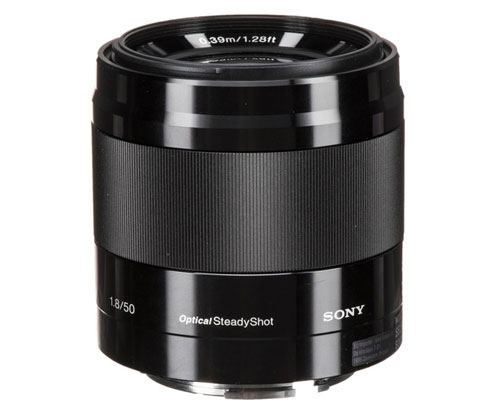
4. Best Budget portrait Prime Lens for Sony ZV-E10 – Sony 50mm F1.8 – The best portrait prime lens ever made for Sony APS-C Mirrorless cameras. The lens features Optical SteadyShot image stabilization, so you can get sharper imagery when shooting handheld with slower shutter speeds. The OSS helps really a lot while shooting in low-ligh conditions.
One of the only portrait prime lens that features built-in OSS
An internal focus mechanism is really fast and responsive, with a minimum focus distance of 1.3′, and easier handling as the lens does not change in length during use. So, you can use this lens very easily with gimbals also.
The only downside, this lens isn’t weather-sealed, but also keep in mind the lens is made for an APS-C Mirrorless camera and not a Full frame camera. If you use it with a camera like Sony A7 III, the camera will work in DX mode, and you will get a 10MP file.
Best zoom lens for Sony ZV-E10
Now here is the list of Best Zoom Lenses for the Sony ZV-E10 camera, that will help you extract the best possible output from ZV-E10’s 24MP BSI CMOS sensor.
1. Tamron 17-70mm F2.8 RXD – At $799 you are getting a pro lens, Tamron 17-70mm f/2.8 Di III-A VC RXD is a 25.5-105mm-equivalent lens for APS-C-format Sony E-mount mirrorless cameras. It’s an engineering masterpiece, incredibly versatile everyday zoom ideal for everyday shooting, and the fast f/2.8 constant maximum aperture suits working in difficult lighting conditions and offer improved control over depth of field. This lens delivers outstanding image quality even when shooting wide open, it is beautifully sharp throughout the frame.
The lens features built-in IS, which helps you to shoot with slower shutter speeds in low-light conditions without adding any motion blur or camera shake to your image. Altought the F2.8 aperture helps a lot while shooting in low-light.
Autofocus is very fast, accurate, and silent. For video users, there is almost no focus breathing throughout the range and focus pulls look incredible. VC of course makes handheld shots very smooth. And the controls on the lens are very smooth and do allow you to rather cleanly zoom in and out.
Buy Tamron 17-70mm F2.8 Lens fro m Amazon.com | B&H Store
This lens is awesome. For many shooters and videographers, this could be a one-and-done lens. The only downside, there are no physical controls on this lens for stabilization or focus modes, so you’ll have to change them through the menu system in your camera.
Now let’s talk about a lens with an extra wide coverage and a constant F2.8 aperture
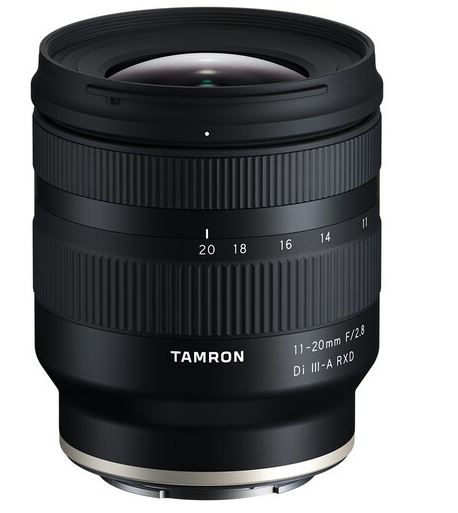
2. The Tamron 11-20mm F2.8 is an APS-C lens with a constant F2.8 aperture. This lens is designed for content creators, covering a vital range from 11mm to 20mm. It can go super wide and then up to a normal wide mode which is 20mm. So, if you want to cover the entire environment, you can adjust the lens up to 11mm and depending on your set of requirements and taste, you can adjust its focal length. It’s not a prime lens, so you don’t have to worry about buying a 13mm lens or 16mm lens. It covers from 11mm to 20mm with a constant F2.8 aperture and is built with RXD motors, so the autofocus is super fast and silent.
The lens features a steel construction and lightweight design, so you don’t have to worry about handling it for a long time. You can also use this lens in adverse weather conditions. rock-solid in the hands and features a dust- and splash-resistant design. An excellent lens for outdoors.
Price: ~$550 (Check Price at B&H Store and Amazon.com).
A compact, lightweight all-purpose zoom with constant f/2.8 for better low-light performance than kit lenses. Sharp optics and fast AF make it a budget-friendly rival to the Tamron 17-70mm for travel and daily vlogging.
Pros:
Constant f/2.8 for versatility.
Extremely portable.
Affordable and sharp.
Cons:
No stabilization (use camera IS).
Shorter range than Tamron 17-70mm.
Best For: Beginners, travel vloggers, and all-around use.
Price:~$700 (Check Price at B&H Store and Amazon.com). (New release June 2025)
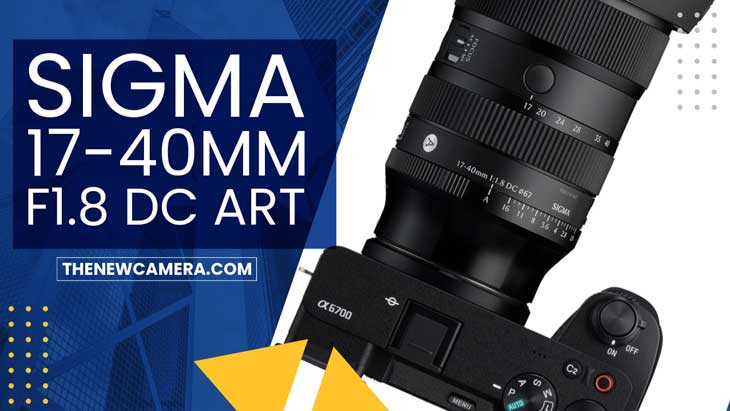
This new professional-grade zoom offers an ultra-fast constant f/1.8 aperture for exceptional low-light and bokeh control. Sharp Art-series optics with weather-sealing make it ideal for creative vlogs and photography.
Pros:
Bright f/1.8 throughout zoom.
Professional build and sharpness.
Versatile standard range.
Cons:
No built-in stabilization.
Slightly heavier than contemporaries.
Best For: Low-light vloggers, event shooters, and pros seeking premium performance.**
Quick Guide
Lens Name
OIS
Weight
Price
Best Use Case
Sony E 11mm f/1.8
No
181g
$550
Lightweight / Vlogging/Wide Coverage
Viltrox AF 13mm f/1.4
No
420g
$430
Low-Light Vlogging / Wide Coverage
Sigma 16mm f/1.4
No
405g
$400
Vlogging/Low-Light
Sony E 35mm f/1.8
Yes
54g
$450
Portraits/Street
Tamron 17-70mm f/2.8
Yes
525g
$800
All-Purpose/Travel / Wedding / Event
Sony E PZ 10-20mm f/4
No
178g
$750
Wide-Angle Vlogs
Sony E 50mm f/1.8
Yes
202g
$300
Portraits/Budget
Tamron 11-20mm f/2.8
No
335g
$500
Budget Vlogging / Street Food / Travel
Best Macro Lens
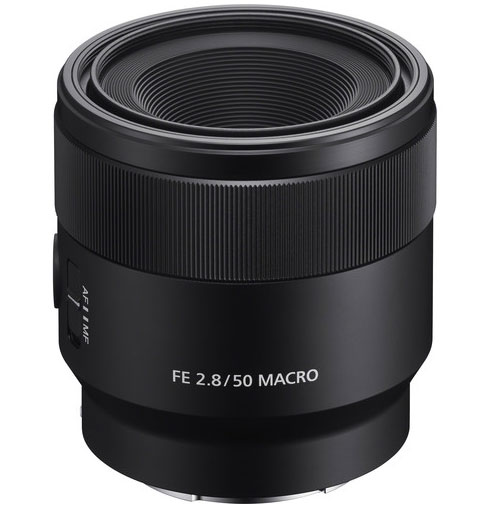
Sony FE 50mm F2.8 Macro G OSS is designed for full-frame E-mount cameras, this telephoto macro can also be used on APS-C systems, where it provides a 75mm equivalent focal length. The lens is affordable and perfect for APS-C Mirrorless cameras, this is a true 1:1 Macro Lens so you will be getting life-size images from the lens. Later on, once you have upgraded you can use this lens on the A7 series camera too.
Get 50mm F2.8 Macro Lens from Amazon.com | B&H Store
The true macro design affords a life-size, 1:1 magnification ratio along with a 6.3″ minimum focusing distance for working with close-up subjects. A focusing distance and magnification scale are also printed on the top of the lens to aid in more technical applications.
One extra-low dispersion element is featured in the lens design and helps to reduce chromatic aberrations and color fringing for improved clarity and color neutrality.
Best telephoto zoom
One of the best investments for APS-C users, it is a full-frame Tamron 70-180mm F2.8 VXD G2 lens so you will get a 105-270mm equivalent focal length range. The best lens when you do have some flans of getting a Sony full-frame camera.sue to fast aperture and being a full-frame lens the overall quality of this lens is just amazing.
Bright constant f/2.8 maximum aperture affords consistent brightness throughout the zoom range and offers improved control over depth of field. Two VXD (Voice-coil eXtreme-torque Drive) linear motors deliver impressively quiet, quick, and precise focusing performance to suit both stills and video applications. This focusing system offers a minimum focusing distance of 2.8′ at all focal lengths, and a 1:4.6 maximum magnification at the 180mm focal length for working with close-up subjects. Full-time manual focus override is also possible, and it is compatible with Sony’s Direct Manual Focus function or fine-tuned manual control.
We highly recommend you tet the Tamron 70-180mm lens, so will get max output from your camera, and later on ,you can use this lens for your future full-frame cameras.
How to choose the right lens for your Sony ZV-E10 camera?
See choosing the right lens actually depends on one’s shooting style, the set of requirements you have and your budget. All these factors decide the best lens for you.
1. Finding out the right focal length
Ultra wide lenses (10-15mm) The lenses falling in the range of 10 to 15 mm are the best lenses for vlogging. These lenses provide maximum coverage even in tight spaces and some of the examples are Sony 11 mm f/1.8 and the Viltrox 13mm f/1.4.
Wide Angle lenses from 16 to 20 mm 16 to 20 mm lenses are highly suitable for desk vlogs. When you want to keep your camera really close to yourself, just after the screen of your desktop, then having lenses like Sigma 16 mm f/1.4 is really usable. Occasionally, you can also do handheld vlogging.
Standard lenses from 24 to 50 mm The standard lenses need a good working distance from the subject. So, if you are sitting in a room or office and your camera is at a good distance from you, then you can use lenses like 35 mm from Viltrox or Sony, or a 56 mm lens from Sigma, or a 50 mm lens from Sony—any of these. So it all depends on how far you’re sitting from your camera.
Telephoto / Zoom lenses 70 mm+ If you are interested in sports and wildlife—which is really very less common with ZV-E10 users—then you have to invest in 70 mm+ lenses. Otherwise, most of the work can be done easily with lenses below this focal length.
2. Aperture
Fast aperture lenses with f/1.4 to 2.8 range For better low light performance and shallow depth of field, you will need lenses with bright or max aperture value f/1.4—like we have the Viltrox 13 mm f/1.4 or the Sigma 16 mm f/1.4. Now just after that, we have f/1.8 lenses like the Sony 11 mm f/1.8.
Slower aperture f/4+ focal length The f/4 or f/4+ lenses are more budget friendly but less effective in low light scenarios.
3. Optical Image Stabilization (OIS)
Since the camera does not have any sensor-shift image stabilization, it’s very important to select lenses with OIS (Optical Image Stabilization) if available. Otherwise, you have to use your camera on a gimbal to get highly stable output. Aur as a content creator, you can also use the camera’s gyro-based image stabilization, which is very effective.
4. Budget-friendly lenses
Under $500 lenses: If you are really looking for budget-friendly lenses, then I will recommend you to get Viltrox Air Series lenses. Even some lenses that we have recommended here like 50 mm f/1.8, Viltrox 30 mm f/1.4 and Tamron 11-20mm f/2.8 are some budget-friendly lenses.
Budget range $500 to $1000: Higher priced lenses include Sony 11 mm f/1.8 and Tamron 17-70 mm f/2.8.
Practical tips
Vlogging with coverage: Choose an extra wide-angle lens while you are vlogging, like Sony 11 mm or at least Viltrox 13 mm. With the extra coverage, you can easily apply Active IS stabilization that will do a digital fine crop. As well as, you can also apply gyro-based image stabilization. These extra wide-angle lenses help a lot when you want to implement digital zoom in your camera or in your software.
Low light vlogging: Ultra-bright lenses like—for vlogging purpose—you can have the Viltrox 13 mm f/1.4 or you can also have the Sigma 16 mm f/1.4. When you are shooting in your room or in your bedroom, these f/1.4 lenses are really very helpful when you are shooting in available light.
Portraits: For getting excellent results, I will highly recommend you to get 50 mm f/1.8 or 56 mm f/1.4 lens.
Travel Lens: The Tamron 17-70 mm covers most of the scenarios.
FAQ
What is the best lens for Sony ZV-E10 vlogging? The Sony 11 mm f/1.8 is our top pick for vlogging. The lens covers an ultra-wide range of 16.5 mm in terms of full-frame equivalence. A perfect lens that covers the entire environment along with you, and also helps you to implement Active IS without any significant loss of frame. The second-best alternative to 11 mm f/1.8 is the Viltrox 13 mm f/1.4 which actually shines with its ultra-bright f/1.4 aperture—best for low-light scenarios.
Can I use full-frame lenses on the Sony ZV-E10? You can use Sony E-mount full-frame lenses, as those are compatible with the ZV-E10 camera, but as we all know, the Sony ZV-E10 uses an APS-C CMOS sensor. For example, a 24mm lens will act as a 36mm lens on your camera, and the advantage of getting a crop lens is the size of the lens, like we have the Viltrox 13mm f/1.4, which is lighter as well as cheaper in its category.
What’s the best budget lens for Sony ZV-E10? The Sony 50mm f/1.8 is the best budget lens for capturing portraits. The next best lens to it is the Viltrox Air 35mm f/1.8. Such lenses are lighter and cheaper for the ZV-E10 camera.
Do I need stabilisation for ZV-E10 in lenses? Stabilisation, either mechanical or electronic, is needed for handheld vlogging. Now, if you are using a gimbal, which of course makes your setup a bit heavy, then you are getting very clean and smooth footage. But if you are not using any gimbal, then it’s highly recommended to use either Active Image Stabilisation mode inside your camera or completely turn off all the in-camera modes and later stabilise your footage in the Catalyst Browse software provided free by Sony.
Which is the best lens for low-light photography or vlogging? The Viltrox 13mm f/1.4 is the best or the top choice for low light. These lenses maximise light capture and create a very creamy background blur. So, for available light, these two are the best lenses. Now, if you want a lightweight solution that’s easy to carry all the time, then with a bit of sacrifice, you can have the Sony 11mm f/1.8.
Are third-party lenses like Viltrox or Sigma good for the Sony ZV-E10? Yes, third-party lenses like Viltrox and Sigma or even Tamron have the same autofocus algorithm inside them, which is being provided by Sony itself to the third-party lens makers. And the best part is that they give the best performance at lower prices. Like we have the Viltrox 13mm f/1.4 and the Sigma 16mm f/1.4, which are prime examples of lenses offering the surface-level optics with fast autofocus and great value for content creators and vloggers.
ABout the author: The article “Best Lenses for Sony ZV-E10 in 2025: Top Picks for Vlogging & Photography” updated by thenewcamera.com team on 4:43 am, Friday, 27 February 2026, Greenwich Mean Time (GMT) | Follow us for more updates and Get LIVE RUMORS –> FACEBOOK | TWITTER | INSTAGRAM to get live news — > –>see more Sony Alpha Rumor
According to the latest rumours, Sony will be announcing a new product in May 2025. At this very moment, the only thing we know from a tipster’s hint is to consider it as a cine-style FX camera from Sony. Take a look at what the tipster has said to us in the previous post.
It’s a camera made for video users. I already have the review unit and am impressed with its overall performance. The only feature I wish this camera had is open-gate recording. However, the IBIS is the new unit that works like a charm for handheld usage.
Also, take a look at what the Sony Alpha Rumor website (Link) has said.
I am now 100% sure that there will be a new Sony announcement in May! I’m not sure yet what the name of the camera will be… but I’ll say this: I’m not buying the FX3 or the a7CII right now. I’ll have more to say next week.
PS: Btw, I was waiting for the Sony A7V camera announcement.
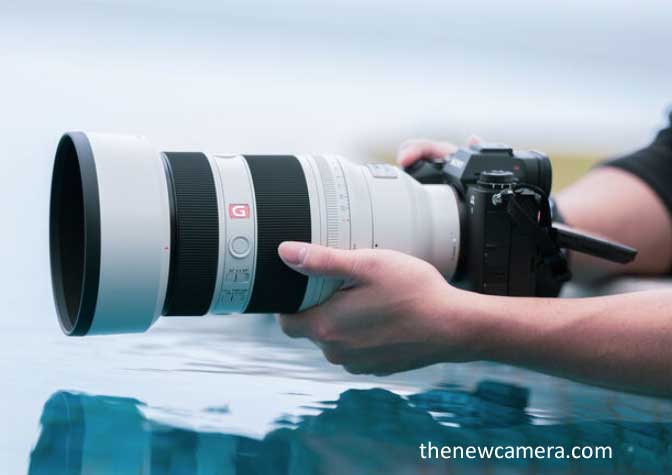
Sony has announced the FE 50-150mm f/2.0 GM lens. Sony has never announced such a lens before with a focal range from 50 to 150 and having a constant f/2.0 aperture range.
This is the best professional portrait lens a photographer can ever have in a Sony FE Mount camera. It will give unparalleled performance during a professional partner shoot, a wedding event, or even in sports photography.
Pre-order / Buy Sony FE 50-150mm f/2.0 GM Lens from B&H Store
Specification
Details
Focal Length
50-150mm
Maximum Aperture
f/2.0 (constant)
Weight
1340g
Length
200mm
Minimum Focus Distance
15.8 inches (0.4m) at 50mm, 29.1 inches (0.74m) at 150mm
Maximum Magnification
1:5 (0.2x)
Filter Thread
TBD
Mount
Sony E-mount (full-frame)
Price
~€4400 / ~$4000 USD
Shipment Start
Early June 2025
Let’s explore the key features of the 50-150mm f/2.0 GM lens.
Constant f/2.0 aperture: So it offers the best low light performance in its focal range, and at the same time, it gives you flexibility of 50 to 150mm. So it’s a kind of very unique combination of multiple prime lenses you are getting in a single zoom lens.
G Master optics: Sony has used the finest optical elements possible, which include extreme aspheric XA lenses that deliver edge-to-edge sharpness while holding minimal chromatic aberrations.
Fast and accurate autofocus: With the implementation of 4 XD Linear autofocus motors for rapid and silent focusing, the lens takes no time to lock autofocus on the moving subject.
Compact and lightweight: Why are we saying compact and lightweight for a lens that weighs 1340 grams? We are saying from a perspective—if you are buying a 135mm f/2 lens of Sigma for Sony E-mount, you have to carry approximately the same weight and the size too. In approximately the same weight and size, you are getting an amazing zoom lens in your hand which is capable of zooming in/zooming out from 50 to 150mm at f/2 aperture.
Rugged design: It’s completely weather-sealed so you can shoot in dusty and moist environments.
Why is this lens a game changer?
See, it is one of the unique and it’s better to say a revolutionary lens for many reasons. If we consider a single reason, that we are getting an f/2.0 aperture in a daily-use zoom lens which covers approximately 50–150mm distance, which was never possible before.
Tamron 35-150mm f/1.8–2.8 vs Sony 50-150mm F2.0
The Tamron 35-150mm f/1.8–2.8 lens. That’s the budget alternative, Sony 50-150mm F2.0. Centre sharpness-wise, Tamron will produce a great result. But if you want to have corner-to-corner sharpness and best-in-class optics, + brighter aperture at tele-end F2.0 vs F2.8, then for sure Sony is the best option.
The other major difference is the price tag. The Tamron 35-150 f/1.8–2.8 is available at $1599 at the B&H Store, whereas the Sony premium lens will cost you $4000. So if you can pay the price, then it’s completely okay. But if it matters, then Tamron is the best.
Who is this lens made for?
Sony 50-150mm f/2.0 lens is tailored for professional photographers—those who are into:
Wedding photography: So in wedding photography, it actually replaces the requirement of multiple prime lenses in your camera bag. Once you have this, it’s perfect and good to go for all kinds of candid and professional-looking portrait shots.
Portrait photographers: A portrait photographer generally carries lenses like 50mm, 85mm, and 135mm, and they pick and use the lenses depending upon the situation they are shooting in. So this lens will literally eliminate the requirement of having multiple prime lenses in your bag, and it will give you prime-like quality.
Event and concert photographers: If you do event or concert photography, specifically in dim light or low-light environments, then this lens is the best and the most versatile zoom lens available to you.
Indoor sports photographers: Compatible with teleconverters as well as features 4X linear autofocus motors, for blazing fast autofocus performance + AF tracking.
And finally, our Tamron 35-150mm—if you don’t want to spend that much, of course, Tamron is an excellent choice.
The article was published at 3:46 pm, Tuesday, 22 April 2025. By thenewcamera.com Team. You can follow us on our social pages FACEBOOK | TWITTER | INSTAGRAM, –>If you have time –>see moreSony Alpha Rumor Latest Camera News
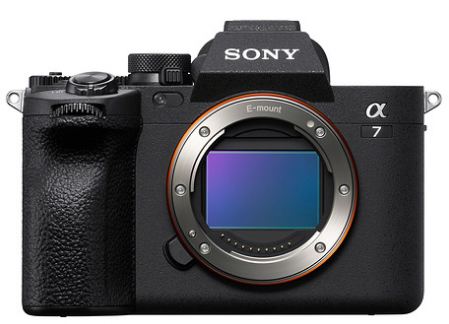
If you are waiting for a massive discount on the Sony A7 series full-frame mirrorless camera or searching for the best deal on Sony A7 IV in 2025, this is the best time to grab the deal. B&H Photo Video is currently offering a massive discount of $500 on the Sony A7 IV camera body, bringing it down to the lowest price ever for Sony A7 IV.
This sudden price cut raises a big question: Is Sony preparing to announce the Sony A7V camera, the next-generation upgrade to the A7 IV? In general, before a camera successor or next-gen mirrorless model is announced, retail stores and online stores put a huge discount on old camera models to clear stock and make space for new Sony full-frame camera releases.
Since there is no sales season going on, it looks completely weird when you see a major Sony camera discount in 2025 without any ongoing sales event. So this is a very clear indication that with this random price drop on the Sony A7 IV, Sony is about to replace its 3+ year-old Sony A7 IV camera, the Sony A7V is about to arrive. Canon EOS R6 Mark III also about to arrive, so Sony has to be quick with their move in the competitive full-frame mirrorless camera market.
The article “Sony A7V Launch Near? Massive $500 Discount on Sony A7 IV at B&H” was published at 12:24 pm, Tuesday, 22 April 2025 GMT. By thenewcamera.com Team. You can Follow us on our social pages FACEBOOK | TWITTER | INSTAGRAM, If you have time –>see moreSony Alpha Rumor
Sony has registered a new model codeWW934774 in Shanghai Suoguang, China, as we now know most of the A7 series cameras / full-frame models have now shifted to Thailand. And now, mainly Sony is manufacturing the ZV series APS-C and Compacts in China. So, with the registration of Model Code WW934774.
Update May 2025: Finally, we got confirmation that the upcoming Model Code WW934774 is the Sony FX2 Camera.
Previous registration Full information – WW277226 (registered in Indonesia, manufactured in Thailand, possibly the Sony A7V or another E-mount camera) Sony registered a New Camera WW277226
The article “Breaking News: Sony Registered one More Camera – Model Code WW934774” was first published on thenecamera.com website, at 3:41 pm Monday, 21 April 2025, by the new camera team Follow us on our social pages FACEBOOK | TWITTER | INSTAGRAM, If you have time –>see moreSony Alpha Rumor
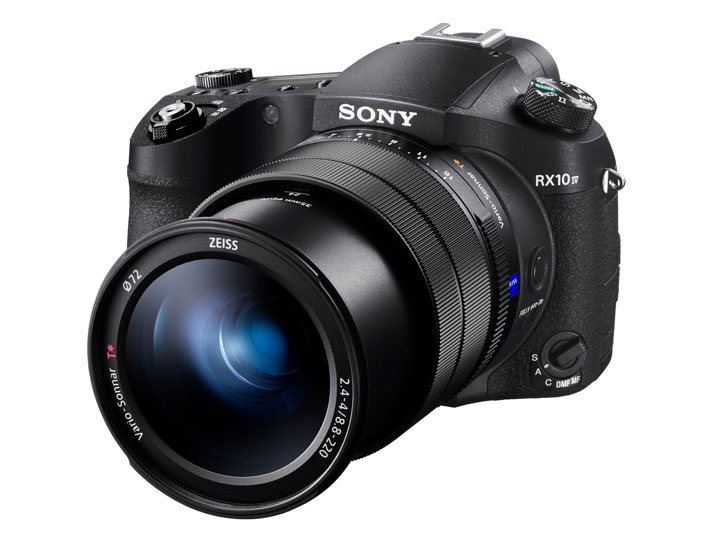
One of my fav megazoom cameras, the Sony RX10 IV has officially been discontinued. As a large-zoom fixed-lens camera in Sony’s lineup, it offered 25x optical zoom, enabling shooting needs from 24-600mm equivalent focal length, making it a top choice for many Sony users. However, this model has now been officially listed as discontinued by some Japanese e-commerce sites (although it is still in stock on overseas platforms like Amazon and B&H). According to current information, Sony has not announced any successor to this model. However, with the increasing popularity of large-zoom fixed-lens cameras from Panasonic and Nikon, whether Sony will release a new model remains to be seen. Are you looking forward to a new model in this series?
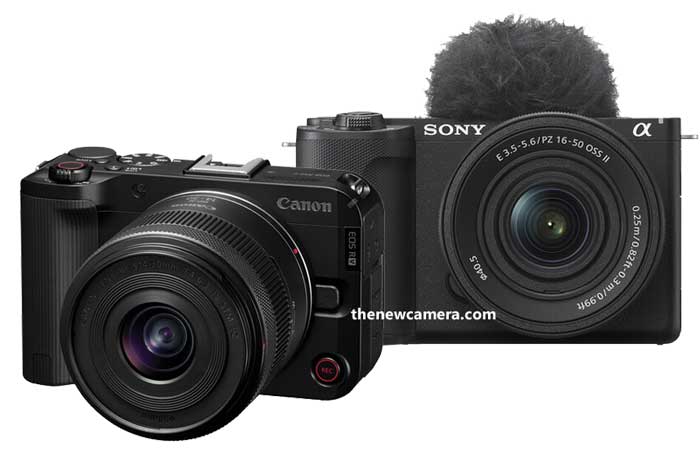
Canon R50V vs Sony Z10 Mark II. Let’s discuss the major differences between the two, then we will do some deep core specification analysis so you can understand very clearly which camera you should buy.
Canon R50 V Specifications and Pricing
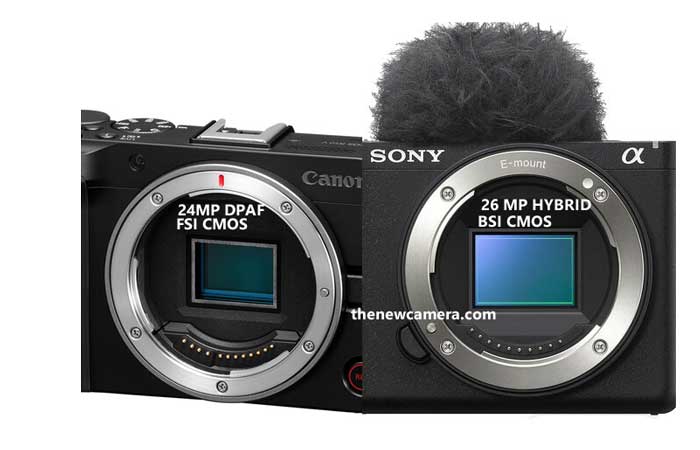
Initially, the Canon R50 V camera is available with a 24-megapixel DPAF CMOS sensor, the same sensor that is being used by entry-level cameras such as Canon R50 and Canon R10. If you buy it with a kit lens, you have to pay approximately $849, and when you are buying the body only, you have to pay approximately $649.
Sony Z10 Mark II Specifications and Pricing
Now, the Sony Z10 Mark II camera was released on July 10, 2024, and uses a 26-megapixel APS-C BSI CMOS sensor from FX30 or Sony A6700 camera, meaning it’s a flagship sensor. With a kit lens, you have to pay $1,099, and without a kit lens, you have to pay only $999.
So, the Canon body is a lot more affordable compared to the Sony Z10 Mark II camera. Now, let’s dive deep into the detailed core specifications of both cameras.
Key Differences in Sensor Technologies
So, initially, we have some basic differences between the two. The Canon uses an FSI CMOS sensor with a resolution from entry-level models, and the Sony Z10 Mark II uses a BSI CMOS sensor from higher-end models. Along with that, we also have a price difference between the two.
Best Camera for Recording 4K 60p Video
Crop Factor Comparison
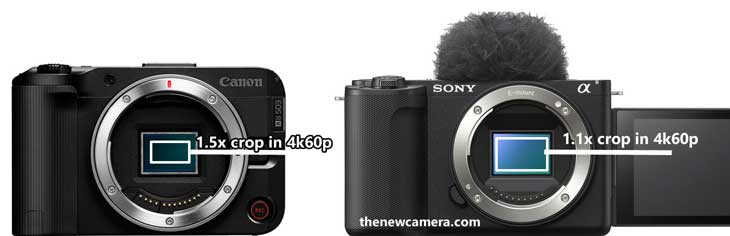
If you compare both the Canon R50 V and Sony ZV-E10 Mark II, the advantage of the Sony ZV-E10 Mark II camera is clearly visible as it does only a 1.1x crop while recording 4K 60p video. On the other side, we have the Canon R50 V camera, which does a 1.5x crop while recording 4K 60p video. Both cameras allow you to record 10-bit videos at 4K 60p, but at the same time, you have to face a crop in Canon.
Usability and Stabilization
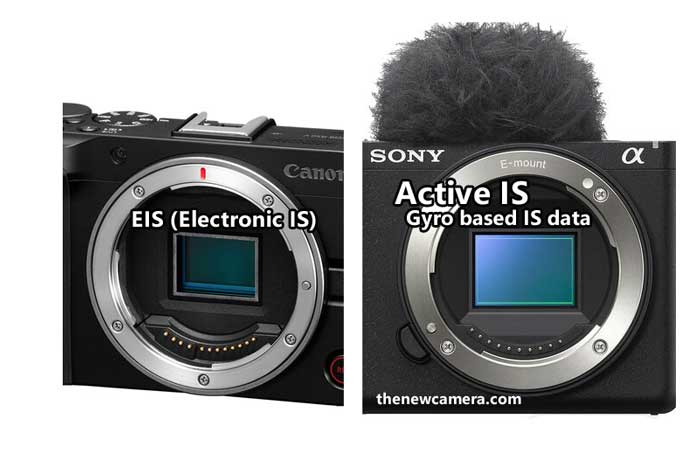
Usability-wise, the Sony ZV-E10 Mark II camera is more usable since, even while recording 4K 60fps with a crop, we can utilize the Active SteadyShot mode as well as the gyro-based image stabilization mode. If you are shooting handheld videos, that will, in turn, help you get stable footage without a gimbal. The electronic image stabilization (EIS) is very effective when you are using it at 30fps or 24fps recording. However, since it already has a very significant 1.5x crop, it doesn’t work that well.
Final Recommendation Best Camera for high-speed 4k videos
So, overall, for 4K 60fps recording, we highly recommend you to get the Sony ZV-E10 Mark II camera. Codec and Color Depth in Both Cameras
Video Codecs
Canon R50 V Video Capabilities
Now, with a 24-megapixel FSI CMOS sensor, our recently announced Canon R50 V camera is able to record 10-bit 4:2:2 videos in H.265 or H.264 codec. You can also record your videos in Canon Log 3 as well as in HLG HDR modes—all these features are available in this entry-level model.
Sony Z10 Mark II Video Capabilities
With a 26-megapixel BSI CMOS sensor, Sony does the same. It also records 10-bit 4:2:2 videos in XAVC HS (H.265) and XAVC S (H.264). Additionally, it supports S-Log2, S-Log3, and Hybrid Log Gamma (HLG), offering up to 14 stops of dynamic range.
Video codec – Comparison and Conclusion
So, in terms of video codec, both cameras record the same 10-bit videos, and neither of them has any limitations over log profiles or any other video codec restrictions. In terms of usability for beginners, videographers, and content creators, both cameras perform well. We are not discussing professional use at this moment.
Detailed Video Specifications Comparison Table
Feature
Canon R50V
Sony ZV-E10 Mark II
Max Video Resolution
4K 60p (cropped, crop factor unspecified), 4K 23.98p (assumed uncropped based on preview)
4K 60p (1.1x crop), 4K 30p/24p (uncropped, oversampled from 5.6K)
Full HD Capabilities
1080p up to 120p (implied from slow-motion options)
1080p up to 120p
Video Codecs
H.265, H.264 (10-bit 4:2:2 internal with log)
XAVC HS (H.265), XAVC S (H.264) (10-bit 4:2:2 internal)
Color Profiles
C-Log, custom picture profiles from Canon cinema series
Cropped in 4K 60p (extent unspecified), uncropped in 4K 23.98p (assumed)
1.1x crop in 4K 60p, uncropped in 4K 30p/24p
Best Camera for Live Streaming
Canon R50 V Live Streaming Capabilities
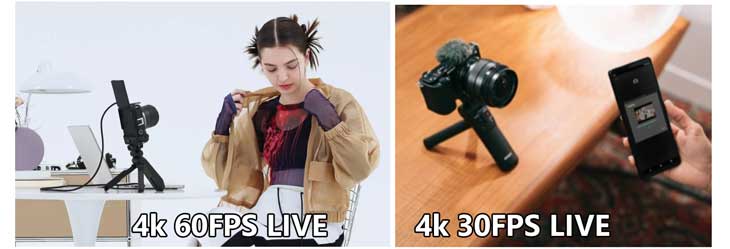
The recently announced Canon R50 V supports streaming up to 4K 60fps via USB-C, but at the same time, you have to consider the fact that it still has a 1.5x crop. This means you need to use ultra-wide-angle lenses when placing the camera in front of you.
Sony ZV-E10 Mark II Live Streaming Capabilities
On the other hand, in the Sony ZV-E10 Mark II, video streaming or USB streaming remains limited to 4K 30fps via UVC/USC.
Best Camera for Live Streaming
So, you can consider the Canon R50 V as a clear winner in terms of streaming capability, but it also suffers from a crop limitation, which you need to keep in mind while choosing between these two cameras.
Canon R50V Autofocus Capabilities
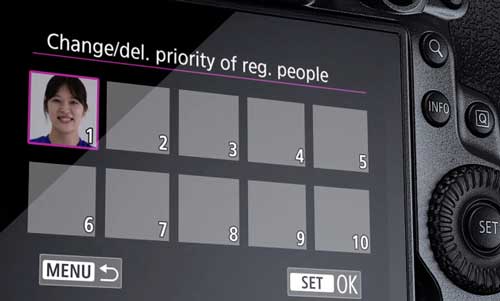
Canon R50V camera uses a Dual Pixel CMOS autofocus sensor paired with DIGIC X image processor, and according to Canon’s official press release, they are using the same autofocus AF algorithm as they have used in the Canon R5 Mark II camera. The camera also includes subject tracking modes, which include birds, animals, airplanes, moving vehicles, as well as one of the most important modes that has been added to this camera—face registration. Here, you can technically register one, two, or multiple faces, and even in a crowd when you are creating a video sequence, like when you’re doing wedding cinematography. Then, even in a crowd, if you have already registered the bride and groom’s faces in the camera, it will track only those two.
Sony ZV-E10 Mark II Autofocus Capabilities
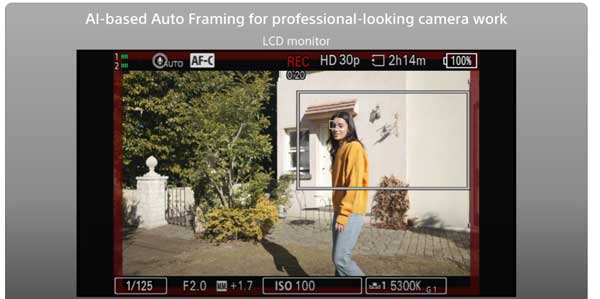
Now, in the Sony ZV-E10 Mark II camera, we have an advanced video autofocus tracking mode, which is directly coming from the Sony A7R V. It does have predictive AI tracking, just as we have seen in higher-end Sony models, so it is also very good at predicting human faces, human bodies, animals, birds, and eyes. Moreover, the camera also has a built-in AI auto-framing mode, which, in turn, the Canon R50 V doesn’t have. This particular AI auto-framing mode helps content creators, especially solo content creators—those who create cooking videos in a single room. The camera will automatically track them and crop them in a frame, like the way a professional cinematographer shoots their movement.
Best Camera with Usable AF in Video
So, each of these cameras does have brilliant autofocus tracking capability and some specialized modes. The Canon R50 V is more suitable for wedding cinematography, where you can register people’s faces for autofocus tracking, whereas in the Sony ZV-E10 Mark II camera, we have AI auto-framing mode, which is more useful for content creators.
Canon R50 V Image Stabilization
Canon R50 V camera is a base model, and we are not able to expect too much out of it. Since the absence of sensor-shift image stabilization looks a bit logical to me, any camera maker out there is not offering any sort of IBIS mechanism in that price range. Although the camera does have EIS (Electronic Image Stabilization), which is effective for video, you have to use ultra-wide-angle lenses when you are using EIS in the camera for creating content or shooting any sort of videos. But keep in mind that EIS is only effective in shooting videos, not in still photography.
Sony ZV-E10 Mark II Image Stabilization
Sony ZV-E10 Mark II camera comes at a higher price, and at least we were expecting the presence of some sort of IBIS feature inside it. But for video recording purposes, we do get Active I.S. inside this camera, supported with a gyro-based image stabilization system. So, specifically, when you are using gyro, you get very stable footage with minimal crop, but you have to post-process it on your laptop or PC using Sony Catalyst Browse software. Other than that, we have Active I.S. mode, where Sony does crop significantly, but we do get gimbal-like stable footage from the camera.
Best camera for Handheld Video
So overall, none of the cameras feature sensor-shift image stabilization systems, but in the Sony ZV-E10 Mark II camera, we do have gyro-based image stabilization as well as Active Mode, which is very effective.Price-wise, what we are getting in Canon R50 V also looks very logical to me, specifically if you are into content creation. So, it’s very obvious that if you are paying a bit higher price for a camera body like the Sony ZV-E10 Mark II, you will get better image stabilization performance, which is specifically made for videographers and cinematographers.
Audio Specifications
Feature
Canon R50V
Sony ZV-E10 Mark II
Microphone Port
Yes (3.5mm)
Yes (3.5mm)
Headphone Port
Yes (3.5mm)
Yes (3.5mm)
Onboard Microphone
Standard stereo mic (not emphasized as vlogging-specific)
Directional 3-capsule mic with windscreen (optimized for vlogging, improved over original)
Digital Audio Support
Digital hot shoe (24-bit, 4-channel audio with compatible Canon mics)
Multi-interface shoe (digital audio with compatible Sony mics, e.g., ECM-W2BT)
Body Design & Battery Life
Body design-wise, both cameras are the same, and even the weight is almost equal, at under 400 grams. However, in the Sony ZV-E10 Mark II camera, we get a deeper hand grip as well as a battery life similar to that of a full-frame camera. The NP-FZ100 battery is capable of giving you approximately 610 shots and more than 2 hours of continuous 4K 30p video recording.
Body Design
Feature
Canon R50V
Sony ZV-E10 Mark II
Dimensions
116 x 86 x 69 mm
121 x 68 x 54 mm
Weight
Not specified (likely ~375g with battery, based on R50)
377g (with battery and SD card)
Viewfinder
None (EVF omitted to reduce cost)
None
Screen
3-inch vari-angle LCD (lower resolution than R50, exact dots unspecified)
Digital hot shoe (24-bit, 4-channel audio support)
Multi-interface shoe (digital audio support)
Wireless
Wi-Fi (version not specified), Bluetooth (assumed based on R50)
Wi-Fi (2.4 GHz), Bluetooth 5.0
Battery and Storage
Feature
Canon R50V
Sony ZV-E10 Mark II
Battery Type
LP-E17 (same as R50)
NP-FZ100 (larger capacity than original ZV-E10’s NP-FW50)
Battery Life (CIPA)
Not specified (likely ~230 shots based on R50)
610 shots (significant improvement over ZV-E10’s 440 shots)
Charging
USB-C charging supported
USB-C charging supported (faster charging with PD support)
Storage
Single SD slot (UHS-II)
Single SD slot (UHS-II support, faster than ZV-E10’s UHS-I)
In contrast, the Canon R50 V camera uses the regular LP-E17 battery, which offers approximately 230 shots and around 1 hour and 20 minutes of 4K 30p video recording.
Still Photography & Sensor Comparison
For still photography, the Canon R50 V camera uses a 24-megapixel FSI CMOS sensor and supports up to 12 FPS with an Electronic First Curtain Shutter (EFCS) and approximately 15 FPS with an electronic shutter.
Whereas in the Sony ZV-E10 Mark II camera, we have a 26MP BSI CMOS sensor with a maximum continuous shooting speed of 11 FPS, limited to an electronic shutter only.Technically, having an EFCS sensor-based camera is a better option if you’re planning to shoot sports or wildlife photography.
As we all know, Canon’s 100-400mm lens is also available at a budget-friendly price, making it a great pair for those into sports and wildlife photography, as well as content creation. However, at the same time, we must consider the advantage of a 26MP BSI CMOS sensor.
Feature
Canon R50V
Sony ZV-E10 Mark II
Resolution
24MP
26MP
Burst Shooting
15 fps (electronic), 12 fps (electronic first curtain)
11 fps (mechanical/electronic)
RAW Support
Yes
Yes (Compressed/Uncompressed)
Image Stabilization
None (lens-based only)
None (lens-based only)
Best Camera for Still Shooters
If you are not into sports and wildlife photography and are looking for higher detail, better low-light performance, and enhanced dynamic range, then getting a 26MP sensor will be a better decision.
Final Conclusion: Which Camera is Best for You—Canon R50 V or Sony ZV-E10 Mark II?
Tailored for Videographers & Content Creators
Both of them are custom-tailored for videographers or content creators, and the best part is Canon is offering us a 10-bit video recording mode in a budget body. But at the same time, we do have some limitations, like having a 1.5x crop in 4K 60 FPS mode. Other than that, we also have limitations in the Canon RF mount, which actually limits us in selecting budget lenses.
Canon Lens Availability & Limitations
So even if you have purchased a budget body from Canon, then it will be a bit hard to find a usable prime lens within budget. Specifically, if you have purchased the Sony ZV-E10 Mark II camera by paying a bit higher price, you can use lenses like Viltrox Air series, which come at a very low price with usable high-grade optics.
Choosing Based on Personal Requirement
But again, it all depends upon your own personal requirement and usage. If you have already sorted out the best lenses that you are going to use for the Canon R50 V camera and having a crop in 4K 60 FPS mode doesn’t bother you, then without a doubt, the R50 V is much more usable for you.
Advantages of Sony ZV-E10 Mark II
Similarly, in the Sony ZV-E10 Mark II camera, we are getting uncropped 4K 60 FPS mode, we are getting active image stabilization as well as AI autofocus and ZV-E10’s in-body stabilization, plus some extra features and extra battery life in the Sony camera. The most important factor is the range of lenses available for the ZV-E10 Mark II.
Final Verdict
So for me, the best budget camera is the Canon R50 V, but if you consider lens availability, then you have to spend a lot more to get perfect Canon lenses for your camera.
Decision-Making Pros and Cons Table: Canon R50V vs Sony ZV-E10 Mark II
Buy Canon Lenses, Buy Music CD or Digital Camera at amazon it helps this site, and you do not pay anything extra, it is just a way to help support this site.
New Camera Website, we list all type of new camera information, price review and all type camera rumors, subscribe us or follow us via twitter or facebook.
Disclaimer: We have attempted to select useful information to include on New Camera, and to ensure that the resources we have included on the site -- as well as the way we have described them -- are accurate, fair, and balanced. However, we make no claims, warranties, or other representations concerning the accuracy, completeness, or utility of the information provided, or concerning the abilities or performance of the organizations, agencies, companies, and other resources presented through New Camera