Let’s compare the specifications of the Canon R50V and Sony ZV-E10 cameras. We are also focusing on their video graphics features. Both specifications are up to date as of March 26, 2025. Enjoy the specs comparison between the two.
Specification Comparison Table: Canon R50V vs Sony ZV-E10
Category
Canon R50V
Sony ZV-E10
Release Date
March 26, 2025
July 27, 2021
Sensor
24MP APS-C CMOS
24.2MP APS-C Exmor CMOS
Processor
DIGIC X
BIONZ X
Lens Mount
Canon RF-S (compatible with RF lenses)
Sony E-mount
Native ISO Range
ISO 100-32,000, extendable to 51,200
ISO 100-32,000 (expandable to 50-51,200)
Video Specifications
Feature
Canon R50V
Sony ZV-E10
Max Video Resolution
4K 60p (cropped), 4K 23.98p (assumed uncropped based on preview footage)
4K 30p (1.23x crop), 4K 24p (uncropped, oversampled from 6K)
Full HD Capabilities
1080p up to 120p (implied from slow-motion options)
1080p up to 120p
Video Codecs
H.265, H.264 (10-bit 4:2:2)
XAVC S (H.264, 8-bit 4:2:0)
Color Profiles
C-Log3, custom picture profiles from Canon cinema series
S-Log2, S-Log3, HLG
Internal Recording
10-bit internal recording with C log
8-bit internal recording S Log
Streaming
4K 30p via USB-C (dedicated quick streaming button)
720p via USB-C (requires software setup, no 4K streaming natively)
Slow Motion
1080 120p Supported with option to bake in or exclude audio (specific frame rates not detailed)
1080p 120p (no audio baking options specified)
Recording Limit
Not specified / No limit
No recording time limit
Autofocus in Video
Dual Pixel AF II (fast, reliable tracking, eye detection)
Fast Hybrid AF with Real-time Eye AF, Tracking, Product Showcase mode
Stabilization
No IBIS, relies on lens IS (e.g., 14-30mm PZ) or digital stabilization (crops further)
No IBIS, Active SteadyShot (digital, ~1.44x crop in Active mode), lens OSS support
Cinematic Features
“Peter McKinnon mode” (baked-in cinematic bars)
No SCinetone mode
Audio Specifications
Feature
Canon R50V
Sony ZV-E10
Microphone Port
Yes (3.5mm)
Yes (3.5mm)
Headphone Port
Yes (3.5mm)
Yes (3.5mm)
Onboard Microphone
Standard stereo mic (not emphasized as vlogging-specific)
Directional 3-capsule mic with windscreen (optimized for vlogging)
Digital Audio Support
Digital hot shoe (24-bit, 4-channel audio with compatible Canon mics)
Multi-interface shoe (digital audio with compatible Sony mics)
Body Design
Feature
Canon R50V
Sony ZV-E10
Dimensions
116 x 86 x 69 mm
115 x 64 x 45 mm
Weight
~375g with battery
343g (with battery and SD card)
Viewfinder
None (EVF omitted to reduce cost)
None
Screen
3-inch vari-angle LCD 1.04 Mdot
3-inch fully articulated LCD (921k dots)
Tally Light
Yes (front-facing, with red box on screen)
Yes (red tally light on front)
Vertical Video Support
Quarter-20 mount on side for vertical tripod/gimbal use
No dedicated vertical mount
Weather Sealing
None
None
Ergonomics
Compact, lightweight, minimal grip
Compact, lightweight, minimal grip
Ports and Connectivity
Feature
Canon R50V
Sony ZV-E10
USB
USB-C (supports streaming and charging)
USB-C (supports streaming and charging)
HDMI
Micro HDMI
Micro HDMI
Microphone Port
Yes (3.5mm)
Yes (3.5mm)
Headphone Port
Yes (3.5mm)
Yes (3.5mm)
Remote Port
Yes (2.5mm)
No
Hot Shoe
Digital hot shoe (24-bit, 4-channel audio support)
Multi-interface shoe (digital audio support)
Wireless
Wi-Fi 5
Wi-Fi (2.4 GHz), Bluetooth 4.1
Battery and Storage
Feature
Canon R50V
Sony ZV-E10
Battery Type
LP-E17
NP-FW50
Battery Life (CIPA)
270 shots per charge
440 shots
Charging
USB-C charging supported
USB-C charging supported
Storage
Single SD slot UHS-II
Single SD slot UHS-I
Still Photography
Feature
Canon R50V
Sony ZV-E10
Resolution
24MP
24.2MP
Burst Shooting
15 fps (electronic), 12 fps (electronic first curtain)
11 fps (mechanical/electronic)
RAW Support
Yes
Yes
Image Stabilization
None (lens-based only)
None (lens-based only)
Price and Kit Options
Feature
Canon R50V
Sony ZV-E10
Body Only
$649
$699
Kit Option
$849 with RF-S 14-30mm f/4-6.3 PZ IS STM (22-48mm equiv.)
$799 with E PZ 16-50mm f/3.5-5.6 OSS (24-75mm equiv.)
Lens Ecosystem
RF-S (limited native APS-C lenses, full RF compatibility)
E-mount (extensive native APS-C and full-frame options, third-party support)
Additional Features
Feature
Canon R50V
Sony ZV-E10
Vlogging Features
Tally light, vertical mount, quick streaming button, cinematic bars, Canon’s own product showcase mode, and many new features
Product Showcase mode, Background Defocus button, directional mic
Customizability
Custom picture profiles from the cinema series
SCinetone Missing
Firmware Updates
Not applicable yet (preview model)
Regular updates (e.g., improved streaming with firmware v2.00)
Conclusion: Canon R50V vs Sony ZV-E10
The Canon R50 V camera features updated video recording capability, including 10-bit 4:2:2 internal recording and 4K video recording up to 60 frames per second (1.5x crop). However, the Sony ZV-E10 remains limited to 8-bit, and 60 FPS 4K mode is unavailable. Even in the live streaming option, the Canon R50 V can live stream up to 4K 60 FPS. Additionally, in the body, you get a vertical mount to record vertical videos for YouTube Shorts, Instagram, or other media networks.
The only reason Sony excels now is the vast lens found in the E-mount. We have a range of options, and nowadays, even Viltrox Air series lenses are available at very affordable prices and can be easily purchased for the Sony ZV-E10 camera. On the other side, in Canon R50 V, we have a very limited number of lenses, so you have to choose wisely—either go with a higher-priced Sony body like ZV-E102 and later buy affordable lenses or get the R50 V and pay for pricier lenses.
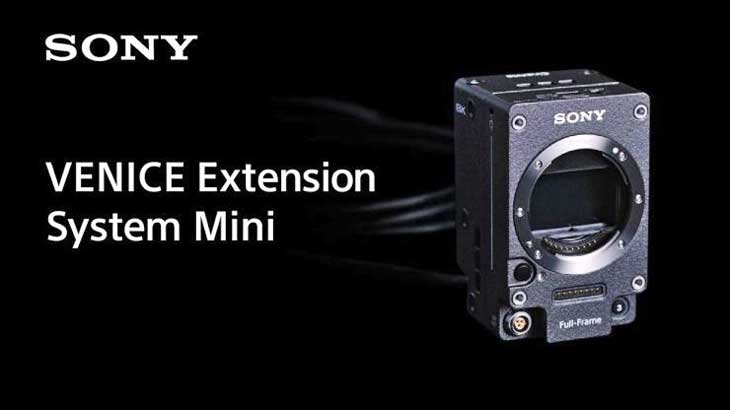
Sony has finally announced the VENICE Extension System Mini. The main highlight is its form factor—as usual, it is very portable and able to record 8K videos, weighs approximately 0.54 kg, and is very easy to carry for some special kinds of shoots where portability is the main factor.
This system Mini is compatible with VENICE 2 6K and 8K models, and most importantly, the VENICE 2 6K model is now able to capture 8K resolution with this system, although it will require a system software update.
The improvement that has been made in the System Mini is that you are now getting approximately 4.5m (14 feet) of cable, allowing you to move a greater distance while keeping the head unit of the camera along with the lens only.
The System Mini is based on E-mount, and you can easily use E-mount lenses. It also supports hybrid autofocus with Eye AF tracking. Additionally, you can use PL-mount lenses with the help of an adapter, which in turn also transfers the lens metadata through the input port.
The VENICE 2 System Mini will be showcased at the upcoming NAB 2025 show in Las Vegas, beginning on April 6, 2025. The camera is now available for pre-order at B&H stores.
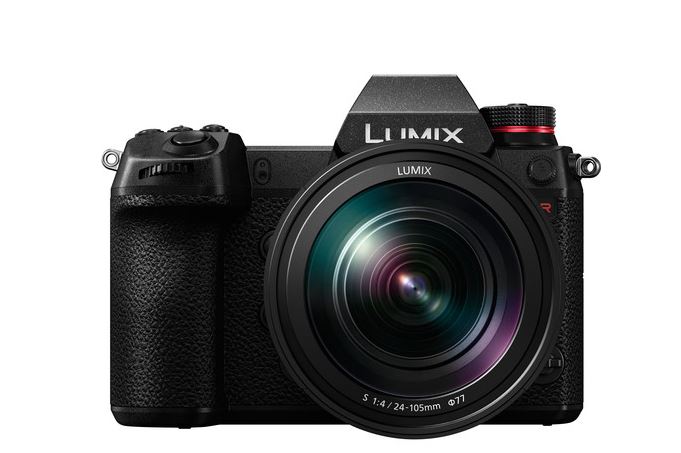
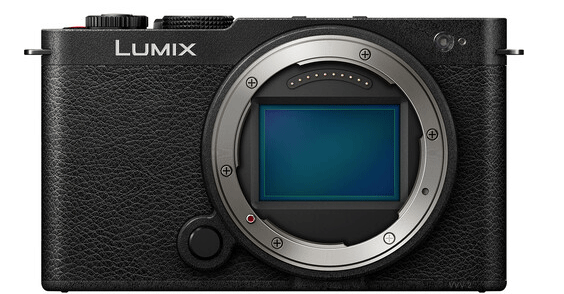
The LUMIX DC-S1R Mark II is a mirrorless camera from the LUMIX S series, announced at the end of February 2025. It is equipped with a newly developed 44MP BSI sensor and a processor that supports high-speed processing using L2 technology. It supports 40 frames per second continuous shooting and 8K 30p video recording. As an alternative to expensive stacked CMOS sensors, it has high-speed performance.
At the same time, it is significantly smaller and lighter than the previous model, and the selling price, at least in North America, is cheaper. Furthermore, it has a high-resolution EVF and a tilt + vari-angle monitor, but the body size is close to that of the S5II.
Key points of Panasonic S1R II Test Results
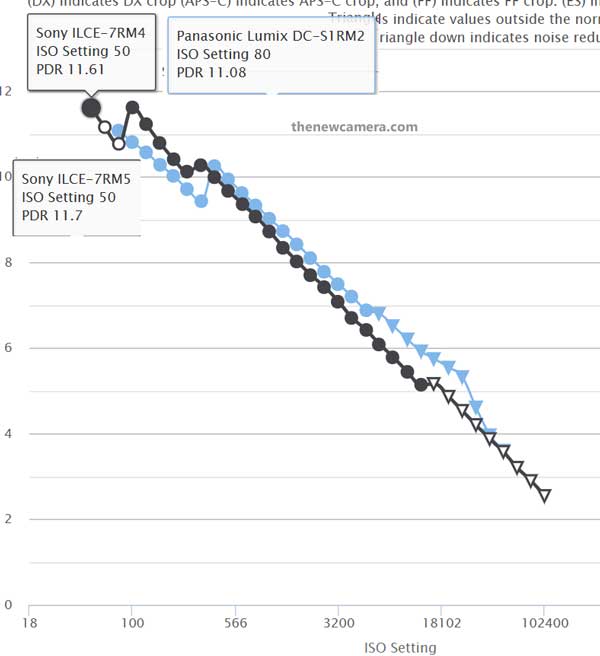
According to the Photons to Photos test results, NOISE REDUCTION is applied to RAW from ISO 6400 onwards, which results in higher test scores, but caution is advised if you value detail over noise. The results are very similar to DPReview’s studio scene test.
On the other hand, unlike the previous model, which applied noise reduction even at base ISO, it seems that the noise reduction process is not applied at low ISOs. If you are shooting stars, etc., it seems that there will be no problem if you keep the ISO up to around 5000.
While the peak values are lower than other high-resolution sensors, the difference in performance is not surprising, and in comparison, the results are better from ISO 6400 onwards (thanks to noise reduction).
Maximum PDR
Low Light ISO
Low Light EV
S1RII
11.08
8139
11.35
S1R
11.37
4522
10.50
α7R V
11.70
5244
10.71
α1 II
11.61
5768
10.85
α1
11.36
5215
10.70
R5 II
11.45
4846
10.60
R5 II ES
10.92
4392
10.46
Z 7II
11.60
4157
10.38
Z9
11.30
4144
10.37
Please note that the DC-S1R only performs better where the noise reduction is performed on the RAW data.
One of the best budget cameras to record 6K open-gate recording, earlier or when it was announced, there was a 4K 15-minute recording limit in the camera, and for which it was criticized at the time of announcement. But Panasonic listened to us, and on October 9, 2024, they released their first firmware update, version 1.1, and they removed the recording limit. Now, it does not have any recording limit in 4K 30fps mode or even in open-gate recording as long as your memory card isn’t full or the camera doesn’t face any kind of overheating issues.
But again, practically, the overheating performance of this camera is very good, and users are quite happy with the usage of this camera. Just keep in mind the camera is using the first generation of hybrid autofocus similar to what was used with the Panasonic S5, S5II, and S5IIX, so autofocus tracking is not on par with Canon and Sony cameras.
In the latest firmware update, version 1.3, they have again tried to optimize the overall operational speed of the camera. Additionally, they fixed a problem where when connecting to a Wi-Fi network, the password was always required. Now, it has become a one-time entry, so overall connectivity performance has been improved along with the operational speed of the camera.
– When directly connecting the camera and smartphone via Wi-Fi, the connection has been changed to always require password authentication. (The [Wi-Fi Password] menu has been removed.)
– The [TKIP] encryption method is no longer supported when connecting to Wi-Fi via an access point.
– The [No Encryption] option in network authentication is no longer supported when connecting to Wi-Fi via an access point.
– The image transfer feature to PC via Wi-Fi has been removed. (Only European/Ukrainian models)
Other improvements
– The startup speed when powering on has been improved.
Finally, we have the Fuji X-E5 camera from Fuji on summer, now we have a bunch of more Fuji cameras waiting to be announced next, let’s explore the list of the upcoming Fuji Cameras.
Upcoming Half-Frame Camera with a 1-Inch Sensor
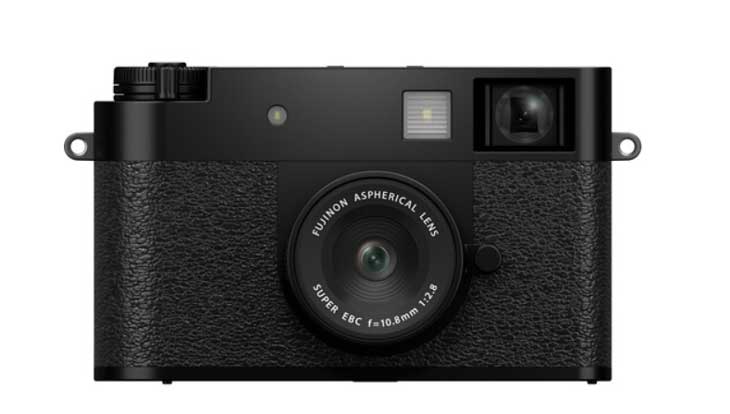
Just before the Fuji X-E5 in 2025, the X-Half camera also becomes official, now let’s explore in the table below the list of cameras announced and expected to arrive in 2025.
Wrap-Up of 2025 – 2026 Announcements
So now, that wraps up the 2025 announcements, and now we will move forward and talk about the possibilities of 2026.
elow is the corrected table, organized by year, showing announced and expected Fujifilm cameras based on historical patterns and current information.
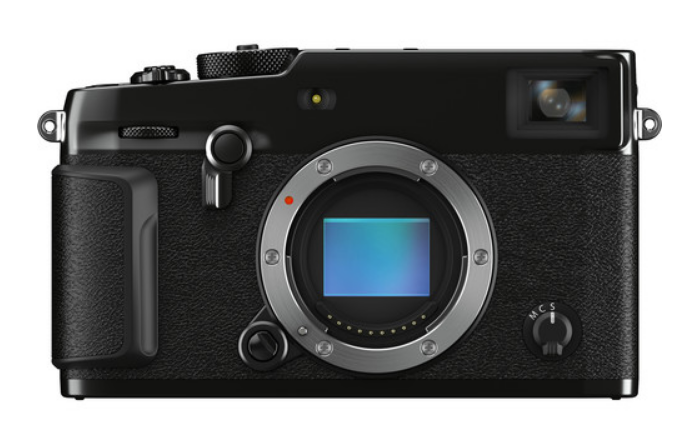
Previous reports suggest that the upcoming X-Pro series camera will be called X-Pro 6 since Fuji will sync the name of the X-Pro series camera with others in 2026. It has been almost six years since the Fuji X-Pro 3 was released. The camera was announced in October 2019, and now it feels too old. Fuji has taken too much time, considering that even flagship cameras from other brands receive regular updates every four to five years. However, we have been waiting for more than six years now. Read full article here
We got confirmation from the general manager of Fuji Film Professional Imaging Group that the Fuji X-Pro 4 is under development. In a recent interview with PetaPixel, he clearly stated that.
In the recent interview, the general manager has said, “Of course, we can put the X-Processor 5 and the new X-Trans sensor in an X-Pro3 and call it X-Pro4, but that’s boring,” Igarashi says.
That clearly indicates they are either planning a brand new sensor for the new X-Pro series. Since it’s a flagship series, it may introduce a new X-Trans 6 sensor or X-Processor 6 in the upcoming X-Pro 6 camera.
And if this happens, then Fuji will allow the Fuji X-Pro 6 camera to gain as much market share as possible, and in that time span, they will not announce another camera with the same sensor in a lower price range (peak sales period of a camera is generally considered for 6 to 7 months).
So, if Fuji X-Pro 6 arrives with a new X-Trans VI sensor, then for sure Fuji X-T6 scheduled announcement plan will get delayed.
Fuji X-T6 to be Delayed
The Fuji X-T5 camera was announced in November 2022. Based on the online pattern of the X-T series camera, which has been quite consistent for the past 6 to 7 years, the next X-T series camera, the Fuji X-T6, will be announced in late 2025 or early 2026.
Yes, there is a high possibility that we may have the Fuji X-T6 camera next, if Fuji goes as per schedule. But, chances are low, since they have to protect the sales of the recently announced X-E5 camera, and on the other hand, do they have to keep new pieces of technologies like a new sensor and image processor ready for X-PRO and X-H series announcement in 2026. So, even if X-T6 arrives in 2025, it will be a subtle update. Otherwise, the best thing for Fuji is to break the announcement pattern or update cycle of 33 months and announce it sometime in Q4 of 2026 or Q1 of 2027 with a major update.
Fuji X-E5 has been announced recently, which falls almost in the same price range X-T series camera (+ $200 for body), Fuji will never allow itself to cannibalize the sales of other models by announcing the X-T6 with enhanced core specification, which almost matches the X-H2 under budget.
Recent GFX Camera Announcements
Recently, we witnessed the announcement of the GFX 100 RF camera as well as GFX Eterna, the medium-format cinema camera. So now, Fuji has introduced both a compact camera with a 28mm F4 fixed lens for photographers and a cinema camera. Both of them use the102-megapixel medium-format sensor.
No Further 102MP GFX Announcements for 2026
That means there will be a pause in further GFX series announcements for7 to 8 months. So, for next year, we are certain that no further 102-megapixel medium-format camera is coming.
Before We Move Forward to 2026, let understand the development and announcement pattern of X-Trans CMOS sensors
If we look at historical trends, Fuji uses flagship models to introduce new new sensor generations, like the X-H or X-Pro series, such as X-Trans V with X-H2S and X-H2. Thus, it’s plausible that X-Trans VI could appear in a new X-Pro 6 or X-H3 or X-T6, expected in early 2026
Generation
Introduction Date
First Camera
X-Trans I
January 9, 2012
X-Pro1
X-Trans II
January 7, 2013
X100S
X-Trans III
January 15, 2016
X-Pro2
X-Trans IV
September 6, 2018
X-T3
X-Trans V HS
May 31, 2022
X-H2S
X-Trans V HR
September 8, 2022
X-H2
X-Trans VI
Predicted: Late 2025 – Early 2026
Fuji will use Flasghip models like X-Pro6, X-T6 or X-H3
HS for speed and HR for resolution
Research suggests that Fujifilm’s X-Trans VI sensor is likely to arrive in late 2025 to early 2026, based on historical intervals of 2.5 to 3 years between generations and the introduction of X-Trans V in 2022
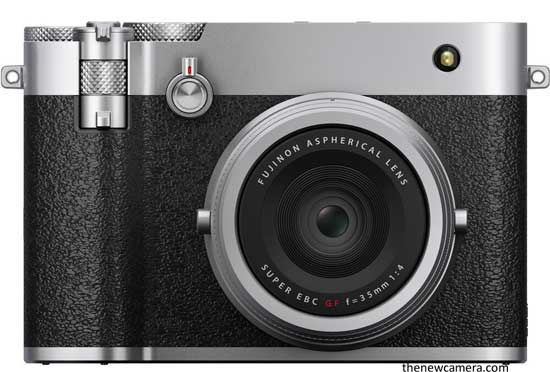
Fuji Fullframe Compact Camera Fuji FX 100 with 40mm F2 Lens – A Leica Q3 Compatitor
Back in June 2025, Japanese website ASOBINET spotted something intriguing in Fujifilm’s patent filings: alongside new GF 20mm f/2.8 and XF 15mm f/2.8 designs, there was a 40mm f/2 lens specifically laid out for a full-frame sensor. That little detail is probably the strongest hint yet that Fuji is toying with the idea of a full-frame compact. A 40 mm normal-view optic makes perfect sense here—it’s roughly the classic field of view you’d get with Leica’s Q3 at 43 mm f/2.
As recently as 2023, during INTERVIEWS, they have CLEARLY SAID that they have no plans to enter the crowded full-frame interchangeable-lens mirrorless market dominated by Canon, Nikon, and Sony. Their reasoning is clear: APS-C (X Series) offers a compact, cost-effective alternative, while medium format (GFX Series) provides superior resolution and dynamic range for professionals. Building a FULLFRAME interchangeable LENS system from scratch means designing new mounts and glass, then convincing photographers to invest in yet another lineup, possibly at the expense of their current X and GFX customers. It’s a risky move that could or may end up cannibalising their lineup of GFX and Z series cameras.
That said, Fujifilm isn’t ruling out playing in the full-frame sandbox entirely—a fixed-lens full-frame compact camera, as we have discussed above the Fiji FX100, would not contradict Fujifilm’s stance. It would be a distinct product category, akin to the Leica Q3 (60MP full-frame sensor, 28mm or 43mm f/1.7-2 lenses) or Sony RX1R II (42MP full-frame, 35mm f/2 lens): FX100 will let them dip a toe into full-frame territory without overhauling their entire lens portfolio
The Fujifilm GFX 100 RF is a newly announced medium-format camera. It features a 102-megapixel medium-format sensor and a fixed lens of 28mm F4, which is equivalent to a 35mm lens—maybe a 35mm F5.6 lens when used in a full-frame camera. Compared to other medium-format cameras in the market, it has a rangefinder design and a compact body.
The camera was announced on March 20, 2025, with a price tag of $4,899. Shipping will start on April 24, 2025, and it will be available in black and silver. We have already covered the Fujifilm GFX 100 RF Press Release here.
The rangefinder-style body also includes an offset electronic viewfinder and the most attractive thing in the body design is the new aspect ratio dial with 9 options that include 4:3, 2:2, and even 16:9. This allows you to compose your images in a very different way, making landscape and architectural photography more intuitive.
This aspect ratio dial will give you a new dimension to capture and preserve your compositions. You can check our best aspect ratio guide to understand how different ratios impact composition.
A Compact Medium Format Camera for Professionals
The camera was announced in a very unique niche that blends traditional medium format photography with a compact body. Some photographers who strive for high image quality but don’t want to carry the traditional bulky GFX models with interchangeable lenses will find this specific design inspiring.
Samples of GFX 100 RF
Jonas Rask Photography Blog: The blog post “Impossibly Possible – The Fujifilm GFX100RF review” (Jonas Rask Review) offers an in-depth look with sample images from real-world use. The author, involved in early testing.
DPReview Sample Gallery: DPReview’s initial review of the GFX100RF (DPReview Initial Review) includes a sample gallery.
Official Fujifilm Pages: The official product page for the GFX100RF (FUJIFILM GFX100RF Product Page) does not directly host a sample image gallery but credits photographers like Lee-Ann Olwage and Yukio Uchida.
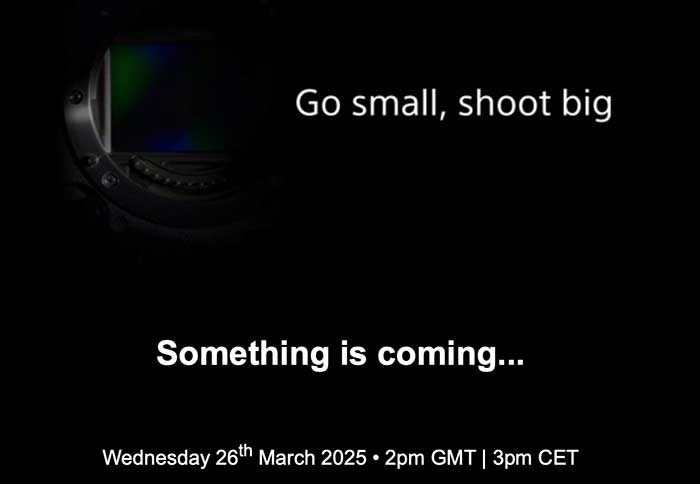
Sony just posted an teaser of their upcoming Fullframe cinema camera announcement, as per the leaked image its visible its scaled-down VENICE expansion module on March 26, 2025,
More over this – Sony itself accicxently leaked upcoming VENICE Extension System in a video which was removed later, the image you see below is The VENICE Extension System Mini (model CBK-3621XS) has a built-in 8.6K full-frame CMOS sensor that retains the image quality of VENICE 2
VENICE Extension System Mini
Approximately 70% smaller than the VENICE Extension System 2 (image block volume ratio). Flexibility is built into every corner of the compact design. A slim, soft, detachable cable brings greater freedom to filmmaking, while also opening up XR content creation and stitching shooting. The PL mount adapter supports more lens selection and metadata recording. Assignable buttons and numerous mounting holes allow photographers to mount and shoot to their preferences. This compact system is ideal for handheld, gimbal, and POV shooting.
Buy Canon Lenses, Buy Music CD or Digital Camera at amazon it helps this site, and you do not pay anything extra, it is just a way to help support this site.
New Camera Website, we list all type of new camera information, price review and all type camera rumors, subscribe us or follow us via twitter or facebook.
Disclaimer: We have attempted to select useful information to include on New Camera, and to ensure that the resources we have included on the site -- as well as the way we have described them -- are accurate, fair, and balanced. However, we make no claims, warranties, or other representations concerning the accuracy, completeness, or utility of the information provided, or concerning the abilities or performance of the organizations, agencies, companies, and other resources presented through New Camera