We have the first set of official images of the DJI Pocket 4 camera, shared by Igor, one of the most trusted sources for DJI news and information. He has published a three-part photo set on his social media account, and we are covering all the images in this article. Specifically, the Pocket 4 camera doesn’t seem much different from the Pocket 3. Typically, if we look at some of the new controls, like the dedicated zoom button, we have it just below the screen, so we notice fewer changes there. Technically, the camera module remains the same as that of the Pocket 3.
DJI Pocket 4 Core Specification
Feature
DJI Osmo Pocket 4 (Leaked)
Sensor
1-inch CMOS
Dynamic Range
14 stops
Video Resolution
4K/120fps (maximum)
Color
10-bit D-Log
Zoom
2x lossless zoom (hardware)
Internal Storage
107 GB (800 MB/s transfer speed)
Tracking
ActiveTrack 7.0
Audio
OsmoAudio 4-channel
Stabilization
3-axis mechanical gimbal
Screen
Rotatable touchscreen (brighter/larger than Pocket 3)
Battery
~1545 mAh (~200 minutes recording time)
Weight
~116 g (35% lighter than Pocket 3)
DJI Osmo Pocket 4: Key Design Changes vs Pocket 3
Larger, brighter rotatable touchscreen
Refined body with better textured grip
Repositioned controls for easier one-handed use
Still ultra-compact and pocketable
6 Things Most People Still Don’t Know About the DJI Osmo Pocket 4
These fresh details from Igor’s leaks and the official retail packaging are the real surprises:
35% lighter than the Pocket 3. The new Pocket 4 weighs just ~116 g (compared to 179 g on the Pocket 3). It feels noticeably more pocketable — perfect for all-day travel and vlogging.
No microSD slot — 107 GB built-in storage + 800 MB/s transfer. All footage records straight to super-fast internal memory. No delay, lag or overheating. Offloading 4K files is now lightning quick.
The magnetic removable Fill Light in the Creator Combo is one of the most interesting add-ons, allowing you to fill space with light when required. It is a brand-new clip-on LED floodlight that magnetically attaches. Excellent for low-light vlogs, night selfies, or indoor content — one of the most useful new accessories DJI has added.
Dedicated physical zoom button + programmable “C” button. New hardware zoom rocker and custom shortcut button mean faster, more intuitive one-handed control while walking or filming on the move.
OsmoAudio 4-channel recording + ActiveTrack 7.0 Upgraded 4-channel audio (big step up from the Pocket 3) and the latest ActiveTrack 7.0 for smoother subject tracking. Combined with the improved sensor, low-light performance, and following should feel significantly better.
Igor’s honest reaction + Pocket 4 Pro tease. Even Igor called it “just an evolution”… but he immediately followed up saying the Combo set looks more interesting and openly hopes the Pocket 4 Pro will be much more exciting. Perfect FOMO fuel.
Official Announcement Date – April 16, 2026
This is 110% confirm that since DJI has itself posted on the Twitter account, the promotional Valley put down before any announcement, and obviously, the April 16 date is not far away
Will the DJI Osmo Pocket 4 Be Worth Upgrading?
For Osmo Pocket 3 owners:
The changes look incremental (screen, ergonomics, minor internals).
If you already own the Pocket 3, you may want to wait for the Pro version.
For new buyers or vloggers:
This remains one of the best pocket-sized 4K gimbal cameras on the market.
Expect the same excellent stabilization, 4K/120fps video, and active tracking that made the previous model a favorite.
The article “DJI Pocket 4 Press Images Leaked” was written by thenewcamera.com team on 1:00 pm, Sunday, 12 April 2026, Greenwich Mean Time (GMT) | You can also follow us on Our Official Social Media HandlesFACEBOOK | TWITTER | INSTAGRAM> get live news — > DJI Rumors
Now, just after a week of the unboxing video being dropped. Or better to say, top DJI leaker @Quadro_News (Igor Bogdanov) has published high-quality product shots of the upcoming DJI Pocket 4 camera alongside. These are among the clearest design images yet of the upcoming Pocket 4, showing updated branding, external accessories like a flash and a tripod.
All these images are coming from the DJI product shots page, which is about to go live on April 16, 2026, when the official announcement of the 4-camera will happen. Latest Leaks from Quadro_News –
Latest Leaked Images of DJI Pocket 4
A single clean render highlighting the standalone package for Content creators
Another four images focusing on the top module and side profile.
Now, these images that you have seen above are not renders. These are the real products of the DJI Pocket 4 camera and its accessories. The New Pocket 4 camera as a device looks noticeably more premium and travel-friendly than the Pocket 3, with smoother lines and what many are calling a “mini Osmo Action” vibe.
Note from the leaker himself: In a follow-up post on April 10, @Quadro_News wrote (in Russian): “К сожалению, новая osma скучная” – which translates to “Unfortunately, the new Osmo is boring.” He also added in Part 1: “I hope the 4 Pro will be much more interesting.” This suggests the standard Pocket 4 is a safe,
For those who already have the Pocket 3 camera, it looks like the Pocket 4 is a standard evolutionary upgrade, not a revolutionary one. If you are expecting a major video quality upgrade, you may get a disappointing change. The overall hardware seems to be the same, specifically if we talk about the camera module of the Pocket 4 when compared to the Pocket 3. Yes, the image processing engine and the AI algorithms have been improved, alongside the battery life and controls, so you can have a kind of better, more effortless workflow while creating your content. And if you’re looking for a major scaling in hardware performance, then you should wait for the Pocket 4 Pro camera.
What to Expect on April 16
DJI typically launches in China first, followed by global availability within 1–2 weeks. We expect a Creator Combo bundle with the new case, extra battery, and possibly a mini tripod or ND filter kit.
Stay Ahead of Every DJI Launch
We are tracking every Osmo Pocket 4 rumor, spec, and leak in real time.
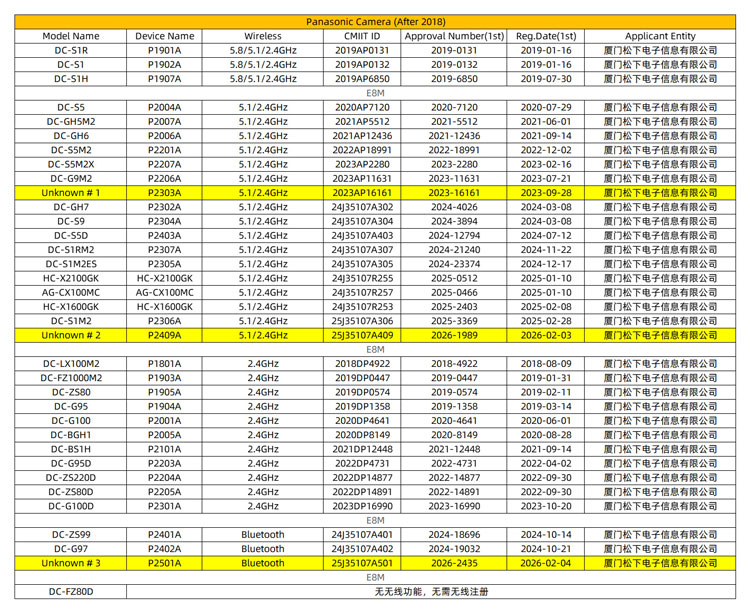
We have a list of cameras that are about to arrive within the next two to three months. Yes, we have already published details about the upcoming Canon R7 Mark II camera a few months ago. But recently, more details have emerged from a reputable source, E88_8888. who has uncovered new models registered with the China CMIIT wireless certification agency and is expected to arrive in the upcoming months.
Before we begin, we can be quite confident about two upcoming models: the Sony A7R VI (officially registered) and the Fujifilm X-T6.
For Nikon and Panasonic, there are several rumored models in the pipeline (such as various Z-series updates for Nikon and potential S1H II / S5R-style bodies for Panasonic), but we do not have clear, confirmed registration details or solid timelines for them yet.
2026 Camera Release Calendar – What’s Next?
Yes, as we have said, the Canon R7 II is already on the horizon, expected to arrive before June. The announcement may happen in May 2027. Other than R7 Mk II, the next set of cameras that are confirmed and loaded in the announcement pipeline are
Brand
Model
Key Feature
Expected Announcement
Status
Fujifilm
X-T6 (FF260001)
X-Processor 6 + Wi-Fi 6
September 2026
Certified
Sony
A7R VI (ILCE-7RM6)
67–80 MP stacked sensor
May 2026
Certified
Nikon
N2324 (Z****)
Affordable Z-series
Q2–Q3 2026
Certified
Panasonic
P2409A / P2501A
Mid-range + entry-level
Spring–Summer 2026
Certified
Why These CMIIT Certifications Matter: 100% Legit Early Signals
CMIIT (China MIIT) and SRRC filings are required before any camera with wireless features can enter the Chinese market. Historical accuracy exceeds 90% – these leaks have correctly predicted launches for years. So once the camera name appears here, rest assured the camera is in the announcement pipeline, and although sometimes, like with Nikon, we’re not able to clarify the model name, but with the help of sources and repeated rumours, you will soon find out what’s coming next from Nikon.
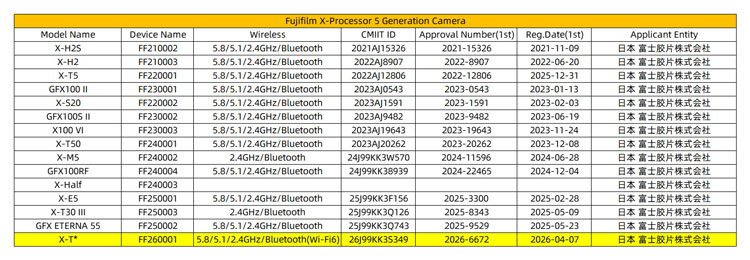
Fujifilm FF260001: First X-Processor 6 model with tri-band Wi-Fi 6 (2.4/5.1/5.8 GHz).
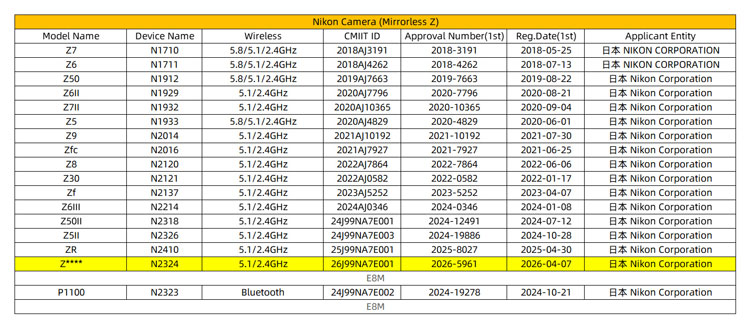
Nikon N2324: Dual-band wireless sibling to recent affordable Z bodies.
Panasonic P2409A & P2501A: Dual-band and Bluetooth-only entries (registered earlier in Feb 2026).
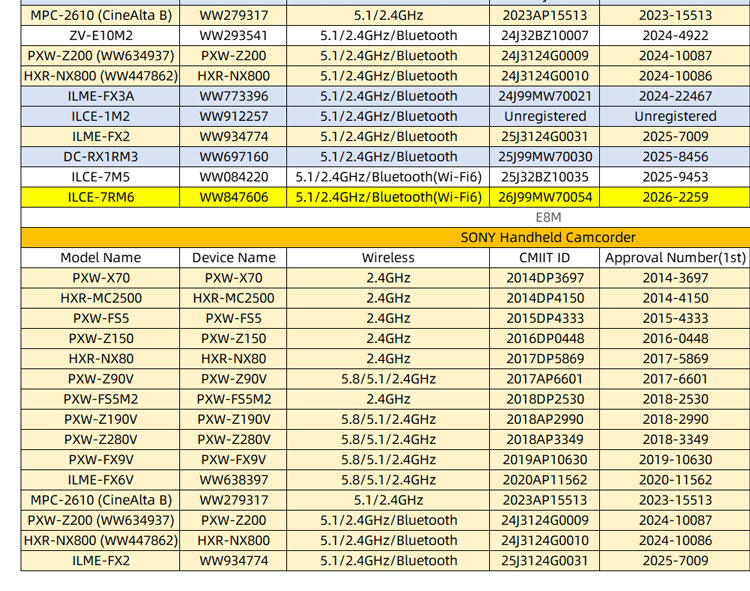
Sony ILCE-7RM6: Wi-Fi 6 high-res flagship.
These are not speculation — they’re official regulatory approvals dated April 7, 2026 (Fujifilm & Nikon) and February 2026 (Panasonic & Sony).
1. Sony ILCE-7RM6: The A7R VI High-Res Flagship
The Sony A7R VI camera is rumored to feature a 67-megapixel sensor. Not only that. The A7R VI is likely to arrive in Q4 of 2026.
Model Code: WW847606 (ILCE-7RM6)
Certification: 2026-2259 | CMIIT ID 26j99MW70054 | Reg. Date: Feb 4, 2026
According to rumors, Sony is about to introduce a 67-megapixel stacked CMOS sensor in the next-generation A7R VI camera, which is able to record up to 10k, which sounds really very interesting. Let’s dive deep into the details.
If the specs hold, this could be the sensor that finally lands in the Sony A7R VI (or a high-end A7R VI body) and gives hybrid photographers and videographers the ultimate stills + cinema tool.
Wireless: 5.1/2.4 GHz + Bluetooth (Wi-Fi 6)
Sony’s next high-resolution beast is already in the pipeline. Consistent leaks point to:
67–80 MP stacked sensor
8K–10K video
Near-zero rolling shutter
Vastly improved AI tracking
8.5+ stops IBIS
New body design
Timeline: Strong rumors suggest a May 2026 announcement — possibly alongside new GM lenses. Sony’s pattern of flagship drops every 2–3 years fits perfectly after the A7R V.
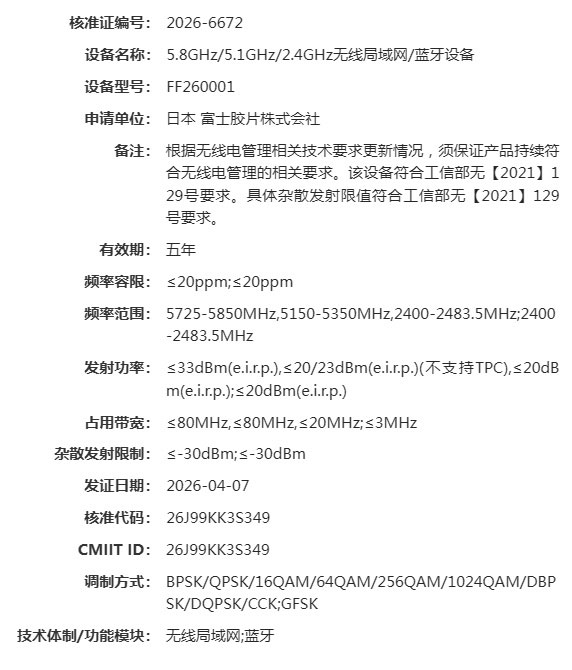
2. Fujifilm FF260001: The X-T6 Arrives with X-Processor 6 and Wi-Fi 6
Model Code: FF260001 (listed internally as X-T*)
Certification: 2026-6672 | CMIIT ID 26j99KK3S349 | Reg. Date: April 7, 2026
Wireless: 5.8/5.1/2.4 GHz + Bluetooth (explicit Wi-Fi 6 for the China region)
This is the first camera on Fujifilm’s brand-new 6th-generation platform. The jump from X-Processor 5 (X-T5) to X-Processor 6 is expected to bring massive gains in autofocus, video, and processing speed. Already registered and about to arrive means we have 100% percent about them
Apart from this, there are also some strong rumours related to the next generation of X pro camera, which is expected to arrive this year, but in this article, we are only concentrating on those cameras that are already registered and about to arrive, which means we have one hundred percent certainty about them
Rumored X-T6 Specs (Consistent Across Rumor Mills):
40MP partially-stacked X-Trans VI sensor (or higher-res HR variant)
8K video capability (30p or higher, with oversampled 4K)
AI-driven subject detection and tracking
8+ stops IBIS
Up to 200MP Pixel Shift mode
Fully articulating screen (upgrade over X-T5’s 3-way tilt)
Faster burst rates and dramatically improved rolling-shutter performance
Release Timeline: Multiple sources (FujiRumors, KF Concept, Vietnamese retailer leaks) point to a September 2026 announcement. This aligns perfectly with Fujifilm’s historical pattern of major X-series bodies in spring/summer.
The X-T6 is shaping up to be Fujifilm’s “full-frame killer” APS-C flagship — exactly what enthusiasts have been waiting for since the X-T5 launched in late 2022.
3. Nikon N2324: New Affordable Z-Series Body Incoming
Model Code: N2324 (listed as Z****)
Certification: 2026-5961 | CMIIT ID 26j99NA7E001 | Reg. Date: April 7, 2026
Wireless: 5.1/2.4 GHz (dual-band only)
NikonRumors also confirmed this filing immediately. E88_8888 describes it as a “sibling to the Z50 II, Z5 II, and P1100” — meaning it’s an accessible/mid-tier Z body, likely without an EVF or aimed at vloggers/entry-level users. But, basically, we have to wait for more confirmation on this before jumping specifically to a camera name. Although we do have published an article “Nikon ZRc, Nikon Z500, Nikon ZFC II and Z30 II Specs & Release Rumors Revealed by Matt”, so you can have a clear glimpse of upcoming DX format cameras from Nikon by Nikon PRO Matt itself
Timeline: Q2–Q3 2026 announcement expected (typical 3–6 months after certification).
4. Panasonic P2409A & P2501A: Two New Lumix Models Certified
P2409A (Unknown #2)
Dual-band Wi-Fi (5.1/2.4 GHz)
CMIIT ID 25j3S107A409 | Approval 2026-1989 | Feb 3, 2026
P2501A (Unknown #3)
Bluetooth only
CMIIT ID 25j3S107A501 | Approval 2026-2435 | Feb 4, 2026
Panasonic Next camera, we do have some rumours about the arrival of the Panasonic S1H Mark II camera, and the update is overdue, and the fans are waiting restlessly for the S1H Mark II. Let’s see if the recent camera fulfils the fan demand. All we are keeping an eye on the registration details as well as the latest Panasonic rumours from sources, and we will be updating.
Panasonic 2026 Outlook: Focused on full-frame S-series updates and occasional compacts. Rumors mention possible S1H II, G100 II, or new affordable point-and-shoot models. Panasonic typically announces 3 – 6 months after foreign certifications.
2026 Camera Release Calendar – What’s Next?
Brand
Model
Key Feature
Expected Announcement
Status
Fujifilm
X-T6 (FF260001)
X-Processor 6 + Wi-Fi 6
September 2026
Certified
Sony
A7R VI (ILCE-7RM6)
67–80 MP stacked sensor
May 2026
Certified
Nikon
N2324 (Z****)
Affordable Z-series
Q2–Q3 2026
Certified
Panasonic
P2409A / P2501A
Mid-range + entry-level
Spring–Summer 2026
Certified
Overall 2026 Outlook: A blockbuster year. Fujifilm and Sony are delivering generational leaps first, Nikon is refreshing its accessible lineup, and Panasonic continues steady updates with a possible compact revival.
These certifications mean the hardware is locked in — expect official teasers and announcements within weeks to months.
Stay tuned to TheNewCamera.com for full specs, hands-on previews, and price details as they drop. Which of these upcoming cameras are you most excited about — the Fujifilm X-T6, Sony A7R VI, or something else? Drop your thoughts in the comments below!
GET LIVE NOTIFICATION, Select Your Trusted Source GET LIVE NOTIFICATION Click ON Check BOX for Latest NEWS and Rumors
The article “Upcoming Cameras 2026: Sony A7R VI, Fuji X-T6, Nikon Z and Panasonic Models Get Official CMIIT Green Light” was written by thenewcamera.com team on 3:48 pm, Thursday, 9 April 2026, Greenwich Mean Time (GMT) | You can also follow us on Our Official Social Media HandlesFACEBOOK | TWITTER | INSTAGRAM to get live news — > DJI Rumors
Finally, we have the first unboxing video of the DJI Pocket 4 camera, sent to us by our source, and it is the first you’ll see uploaded to YouTube. Other than that, we have a lot of information and images of the Pocket camera. Although we are not going to complete the app at the store’s request, they will be made public immediately. The official release date of the Osmo Pocket 4 camera is set to be April 16, 2026, and as we have published earlier, on April 20, 2026, retail stores in Mainland China are going to start the delivery of the Pocket 4 camera. Other than that, in the United States of America, it is said to become available in the last week of April 2026.
We’ve been tracking every leak, and this matches the pattern we saw with the Pocket 3: early units and accessories hit the market right before the big global rollout.
Early DJI Pocket 4 Pre-Sale Pricing from Guangzhou Supplier
A verified multispecialty supplier in Guangzhou has opened pre-sale for the DJI Osmo Pocket 4 at €420.47 (approx. $455 USD at current exchange rates) with a minimum order of 2 pieces.
Keep in mind that he is selling multiple units in a combo (bulk seller). Anyone needs to order at least 2 to become eligible, and the price has been converted from the Mainland China price. So this pricing in the United States of America may have some differences, so we have concluded the US pricing based on the bulk pricing order of the store listed in the channel. We need to wait for the final pricing for the Pocket 4 camera. Btw, this gives American buyers the clearest pricing signal yet ahead of official US pre-orders.
The first unboxing video has surfaced — and it includes a clear claim that the Osmo Pocket 4 will be officially launched on April 16, 2026.
First Unboxing Video & Official Launch Date Claim
Our team just uploaded the world’s earliest unboxing of the DJI Osmo Pocket 4 to TheNewCameraUSA channel.
In the video, the unboxer states (translated from the original audio):
“After more than 2 years of design, the Osmo Pocket 3 product was launched, and on April 16th, the Osmo Pocket 4 was officially launched, everyone.”
The box contents shown include the camera body, extension arm, stand, extra light, ND filters, mic cradle, cables, charger, strap, and two carrying bags — exactly what early buyers can expect.
Closup images of the image shared by the source
What This Means for US Buyers
If the April 16, 2026 launch date is accurate, US pre-orders and availability could drop as early as the following week — right in time for spring content shoots. The Osmo Pocket 4 is shaping up to be the must-have compact gimbal camera for American travel vloggers, YouTubers, and hybrid creators who want pro-level stabilization in a true pocket-sized package.
We’ve seen consistent signals pointing to mid-April global rollout, and this unboxing + pre-sale activity strongly supports that timeline.
We’ll update this article the moment DJI confirms US pricing, full specs, and pre-order links. If you’re in the USA and planning to buy, grab a protection bundle now so you’re ready on day one.
The article “DJI Osmo Pocket 4 First Unboxing Video Drops – Official Launch Claimed for April 16, 2026” was written by thenewcamera.com team on 2:48 pm,Tuesday, 7 April 2026, Greenwich Mean Time (GMT) | You can also follow us on Our Official Social Media HandlesFACEBOOK | TWITTER | INSTAGRAM to get live news — > DJI Rumors
The official DJI LITO X1 retail box has been leaked, and this is one of the most authentic confirmations that the new X1 drone is coming, and the ultra-light drone weight under 249 g has been clearly mentioned in the packaging. You can see the exact DJI LITO X1 Fly More Combo Plus (DJI RC 2) contents, so here we are going to break down all the set of information which is available to us specific related to the DJI LITO X1 drone, so let’s explore the X1 in detail to us specific related to the DJI LITO X1 drone, so let’s have a look at it in detail.
So, with this official retail packaging box, we are getting the clearest set of information possible for the LITO X1 drone that also confirms that retail boxes are ready and will reach the retailers very soon, so after the DJI Pocket 4 camera announcement, most probably very soon, we will have the drones from DJI.
These leaked DJI LITO X1 box images (sourced from Igor Bogdanov) reveal critical details straight from the manufacturer — perfect for anyone researching the DJI LITO X1 drone, its variants, or the upcoming Fly More Combo Plus.
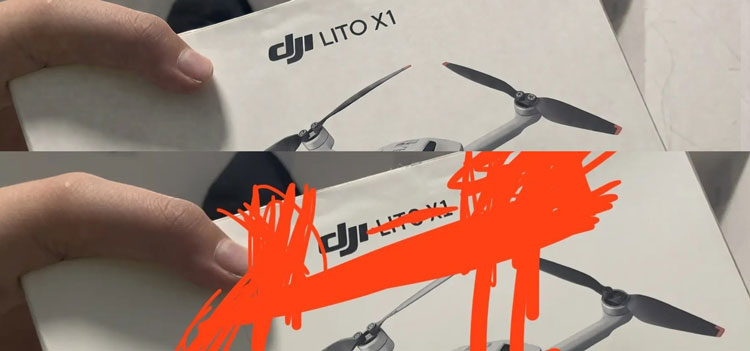
The source (retailer) didn’t want to reveal the image to the public for now. Although he is comfortable sharing images with us. While respecting his words of request, we are also hiding the image shared with us using the image published by our favorite veteran leaker, Igor Bogdanov images
DJI LITO X1 Confirmed as Ultra-Light Drone (Under 249g)
The most important detail visible on the packaging is the clear “Ultra-léger” (French for “Ultra-light”) branding. So what we can see right now is that this particular term is being used by DJI for referencing ultra-lightweight drones, specifically those that fall under 249 g, and this specific text does confirm to us that the LITO X1 will fall under the same ultra-lightweight category of under 249 g drones. Business advantage generally for having an ultra-lightweight drone.
Why this ultra-light confirmation matters in 2026:
No drone registration required in most countries (US, EU, UK, India, and more)
Ideal for travel vloggers, beginners, and content creators
Easier compliance with FAA and EASA rules
This solidifies the DJI LITO X1 as the next major player in the ultra-portable drone category, sitting alongside (and likely replacing parts of) the popular Mini series.
Exact Model Name: DJI LITO X1 Fly More Combo Plus (DJI RC 2)
The side panel of the box explicitly labels the product as:
DJI LITO X1 Fly More Combo Plus (DJI RC 2)
This confirms the premium bundle includes the advanced DJI RC 2 screen remote controller. It also aligns with earlier reports of two distinct variants — the more affordable LITO 1 and the higher-spec LITO X1.
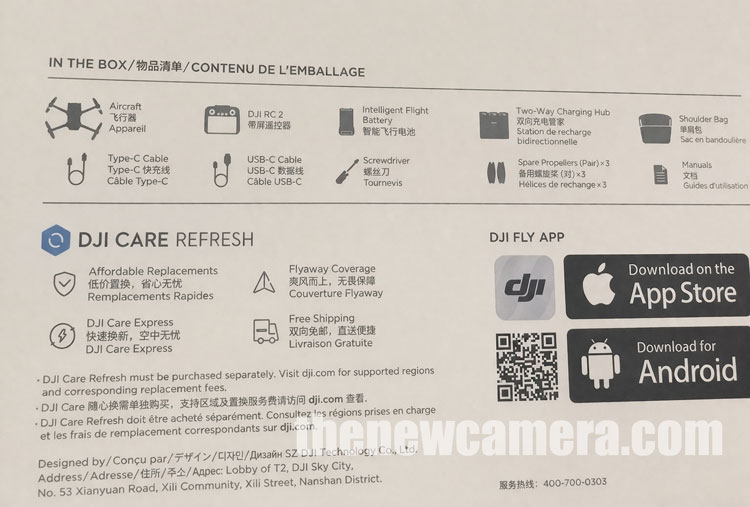
Complete “IN THE BOX” Contents (Direct from Packaging)
The multilingual “IN THE BOX” section lists everything included in this Fly More Combo Plus edition:
Aircraft (DJI LITO X1 drone)
DJI RC 2 (screen remote controller)
Two-Way Charging Hub
Shoulder Bag
Type-C Cable (charging)
USB-C Cable (data)
Screwdriver
Spare Propellers (Pair) × 3
Manuals / Guides
One accessory icon is heavily redacted with marker in the leaked photos — most likely the intelligent flight battery or batteries, which is standard for Fly More Combo packaging.
It also includes QR codes for the DJI Fly App (direct links to Apple App Store and Google Play). Additional notes mention compatibility with iMovie and Final Cut Pro X on Mac (HEVC support).
Other confirmed detailswhich was clearly visible in the pack:
Age rating: 16+
Marked as a BETA UNIT – NOT FOR SALE (pre-production sample)
“Made in China” by DJI Technology Co., Ltd.
Extensive multi-language safety warnings
What This Means for Buyers & Creators
The combination of confirmed ultra-light weight (under 249g) and the premium DJI RC 2 controller in the Fly More Combo Plus makes the LITO X1 look like an extremely travel-friendly yet pro-level drone. It should appeal strongly to vloggers, travel photographers, and anyone wanting high-quality aerial footage without heavy regulatory hurdles.
While the box does not list full camera specs, flight time, or sensor details (those will likely appear closer to launch), these official packaging images give us the strongest real-world confirmation of the drone’s positioning yet.
Stay Tuned for More DJI LITO X1 Updates
These retail box leaks follow closely on the heels of earlier product images and continue to build excitement for the DJI LITO X1 and LITO 1 lineup. We expect full specifications, pricing, and official announcement very soon.
Images: Courtesy of Igor Bogdanov (retail packaging photos) – Article updated: April 6, 2026, by thenewcamera.com team
Follow us on Facebook | Twitter | Instagram for instant DJI Rumors and the latest LITO X1 updates.
What do you think of the DJI LITO X1’s ultra-light confirmation? Drop your thoughts in the comments below!
The article “Official DJI LITO X1 Retail Box Leak: Full List of Products Inside the Fly More Combo Bundle Revealed” was written by thenewcamera.com team on 8:02 pm, Monday, 6 April 2026, Greenwich Mean Time (GMT) | You can also follow us on Our Official Social Media HandlesFACEBOOK | TWITTER | INSTAGRAM to get live news — > DJI Rumors
The wait for the Pocket 4 camera is almost over, and as of April 2026, many authorised sellers—specifically from mainland China—have started taking offline pre-orders for the DJI flagship handheld vlogging camera.
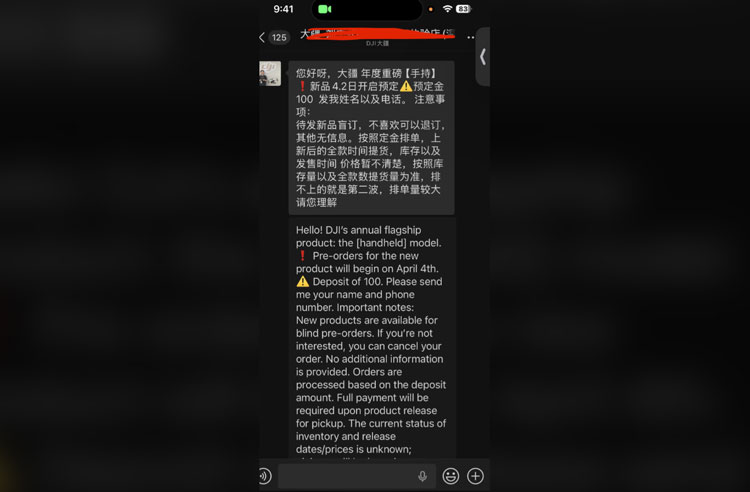
The latest developments are coming from authentic sources, and in support of that, subscribers and WeChat images have surfaced, showing retailers asking for pre-orders. While cross-verifying the information with other users, we came to know that yes, the pre-orders have started in first come first served basis. Take a look at the sort of information provided by our subscribers.
Snap from Chat – Retailers asking of pre-oders for the DJI POCKET 4 Camera
Blind Pre-Orders Live in China: What the Seller’s Message Says
A WeChat message from a DJI-authorised dealer (showing the official “DJI大疆” branding) confirms that pre-orders for the new “年度重磅【手持】” (annual flagship handheld) model opened on April 4, 2026.
Key points from the seller notification:
Blind order policy: No full specs or pricing shared yet. You can cancel if not satisfied once more details are revealed.
Ordering process: First-come basis. Full payment required upon product release and pickup.
Inventory note: Pricing, exact stock levels, and final sales timing are still unknown. High demand may push late orders to a second wave.
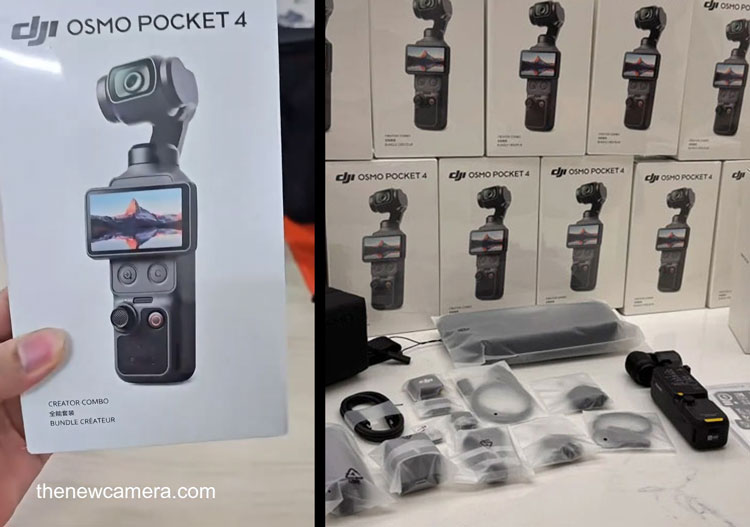
Physical retail boxes (including the Creator Combo) are already in warehouses or stores, signalling that the launch is imminent.
Expected Global Launch:
A few days back, we got confirmation from our subscribers that retail stores out there are processing the delivery of their stock on April 20, 2026 – Yes, we are talking about the Pocket 4 camera stock lot of retailers across China.
So technically, by analyzing the scenario at that time, what we have concluded is that the announcement of the DJI camera is on or before April 20, 2026, which seems to be quite reasonable given the type of situation.
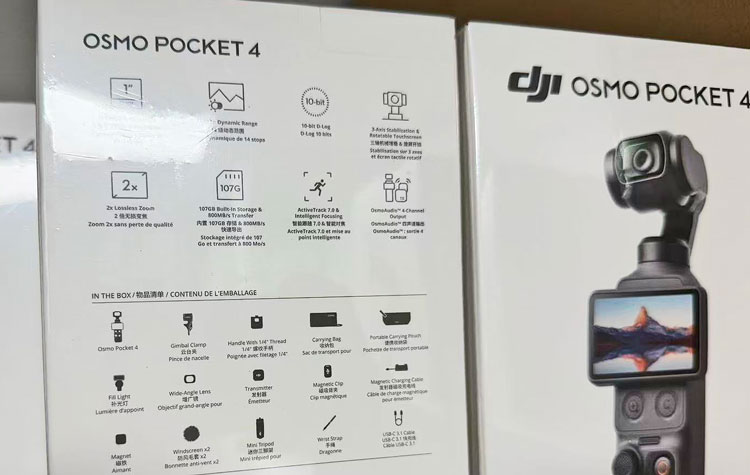
Confirmed Specs from Creator Combo Packaging Leak
These are the 100% confirmed set of core specifications which we have published in our previous post. All these core specs are clearly visible in the DJI Pocket 4 BOX
1-inch CMOS sensor with 14 stops of dynamic range — a huge improvement for low-light performance and HDR-style video.
10-bit D-Log color support for professional grading.
107GB high-speed internal storage with up to 800MB/s transfer speeds (eliminates slow microSD bottlenecks and potential corruption issues).
2x lossless zoom — new hardware capability for flexible framing without quality loss.
ActiveTrack 7.0 with improved intelligent subject tracking.
OsmoAudio™ 4-channel output for richer, directional audio.
3-axis stabilization + rotatable touchscreen.
The Creator Combo is expected to include the camera plus essential accessories (ND filters, extra batteries, microphones, etc.). Pricing rumors suggest:
Standard model: ~$499–$599
Creator Combo: ~$649–$749
These features make the Pocket 4 a practical upgrade focused on workflow efficiency, color science, and usability rather than just chasing higher resolution.
Video Specs Clarification: No 6K on Standard Model? Only 4K120p
One of the most heated debates we have right now is that some of the early rumors revealed the camera is able to record 6K video. Sometimes it was also linked with a 50MP sensor and faster readout capability, but multiple sources, including hands-on demo photos shared by insiders, suggest a better and clearer ground reality for the standard Pocket 4 camera.
According to a reliable source who provided early sample footage labeled “DJI Osmo Pocket 4”:
The base/standard model supports 4K at 120fps (excellent for smooth slow-motion) but does not include 6K recording.
The much-discussed 6K capability appears tied to hype around a potential Pocket 4 Pro variant (possibly with dual-camera setup) or early overstated leaks.
The packaging leak you covered does not advertise 6K, which further supports this clarification. For most creators, 4K120p + 14-stop DR + 10-bit D-Log will deliver far more usable footage than chasing 6K with potential heat or battery trade-offs.
Why These Updates Matter for Buyers
No more storage headaches: 107GB at 800MB/s is a game-changer for long vlogs or high-bitrate recording.
Better image quality: 14 stops of dynamic range and strong 1-inch sensor performance should shine in challenging lighting.
Creator-friendly: 2x lossless zoom, 4-channel audio, and ActiveTrack 7.0 make it ideal for solo vlogging and run-and-gun shooting.
When DJI Pocket 4 Standard Model Pre-order will Start in the USA
As we all know, the official announcement is about to happen soon, and most probably from , mid-to-late April 2026. The pre-order lines will become available on websites like B&H Store and Amazon.com in the United States of America.
And since the Pocket 4 camera has already cleared the FCC, then obviously, there is no issue related to this device being sold in the United States of America. Be ready for the standard edition coming soon in the US marketplace.
If you’re in mainland China or have access to local dealers, the current blind pre-order is a low-commitment way to get in early. Compared to the Pocket 3, the Pocket 4 looks like a refined, more practical evolution — focusing on real-world usability upgrades rather than flashy spec jumps.
What do you think? Will the combination of 107GB storage and 14-stop DR make you upgrade? Or are you holding out for a possible Pocket 4 Pro with 6K? Drop your thoughts in the comments.
Stay tuned for more updates
The article “DJI Pocket 4 Pre-Orders Live in China: US & Global Expected Mid-to-Late April 2026” was written by thenewcamera.com team on 9:50 am, Sunday, 5 April 2026, Greenwich Mean Time (GMT) | You can also follow us on Our Official Social Media HandlesFACEBOOK | TWITTER | INSTAGRAM to get live news — > DJI Rumors
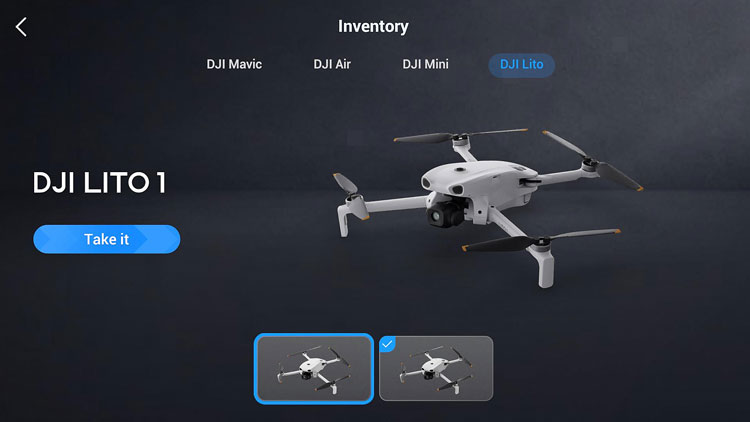
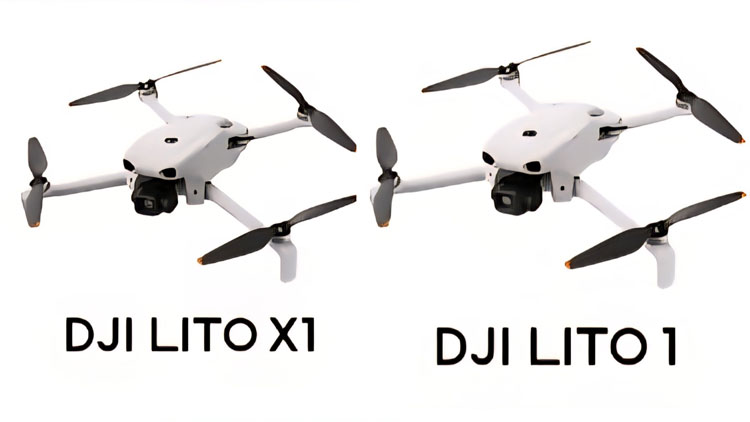
Yes, we have been tracking down the Lito drones for months, and today we have the most exciting news about Lito. Finally, we have the official pictures of the upcoming Lito drone. This is now all over the place, starting with veteran DJI insider Igor, who shared two neat, clean images of the upcoming drone. Later on, we have more images and videos of the same. We’ve compiled all the recent updates we have received about the upcoming drones in this post, so let’s explore them.
So if you are following our website, then you do know that DJI has cleared the Lito and Lito X1 registration before the ban took place. And these two sub-250 drones are ready to be sold in the United States of America. Those media publications who were claiming that the DJI Avata 360 is the last drone that DJI has cleared in the FCC listing were not correct, and that’s why we have not added any input to that claim. Since we do know that the Lito 1 and the Lito X1 are still in the company’s announcement pipeline.
First Look: What the New Leaked Images Reveal
Let’s explore the details of what we can get here from these two drone images, the possible set of specs that we can extract from these two
Foldable, ultra-compact design — The arms are folded in inward just like the current Mini series, making them pocketable and travel-friendly. The overall silhouette looks even sleeker than the Mini 5 Pro.
Prominent 3-axis gimbal camera — Clearly visible underneath the body, with a slightly more integrated housing that suggests improved stabilization and possibly a larger sensor module on the X1 variant.
Four quick-release propellers — Mounted on extended arms that appear modular (consistent with earlier component leaks we covered back in January).
Clean labeling — Both drones are clearly marked “DJI LITO X1” and “DJI LITO 1” right on the body, leaving zero doubt about the naming.
Subtle LED indicators and battery compartment — The top surface shows refined button layout and what looks like an improved battery latch system.
So, for now, it is very clear that the images that we have seen are not blurry images or CAD renders. These are the actual images of the Lito 1 and Lito X1 drones. The source, Igor’s track record (Avata 360, Pocket 4, Neo 2, etc.) makes these images extremely credible.
Interesting insight by user who found this – One thing I find really interesting is that when I check the transmission settings, nothing shows up at all. It makes me think DJI is already transitioning to the new O5 transmission system. Looks like we can officially say goodbye to our RC2 controllers.
We have already pointed out this in our January Post
Why do we think O5 will be in X1 – Since after deep analysis of FCCIF document of X1 Drone we found that, it mentions “SDR Transmission 2 Transceiver” (Dec 20, 2025 entry), which aligns with OcuSync’s SDR roots but adds 5G cellular integration—positioning it as a true “next-gen” leap for unlimited range beyond line-of-sight.
O4 achieves 20km (12.4 miles) in ideal conditions (FCC mode), far beyond Wi-Fi’s 1-2km limit. With SDR 2’s 5G integration (as in the FCC), range becomes virtually unlimited via cellular networks, enabling beyond-visual-line-of-sight (BVLOS) flights for inspections or search-and-rescue—crucial amid regulations like the US FCC bans on non-compliant tech.
Specification” Flight Features and Sensors
Obstacle Avoidance: 360° detection via fisheye optics, LiDAR-like sensors (10m range), and infrared for altitude.
Transmission: O5 for 20km+ range; Wi-Fi up to 500m. Compatible with RC-N3/RC2.
Control Modes: Autonomous, voice (“Hey fly”), motion, app-based.
Wind Resistance: Level 5 with efficient motors.
Other: Front display, LEDs, SDR anti-interference.
Quick Recap: Everything We’ve Already Published About the Lito Series
We’ve been all over this story since the first whispers:
November–December 2025 FCC filings — Lito X1 cleared under SS3-DGP14, followed by the entry-level Lito 1 under SS3-DGN12.
January 30, 2026 deep-dive— We analyzed leaked modular arm prototypes, Asian market listings, and early pricing rumors.
Component and bundle leaks — Igor previously shared close-ups of the arms, gimbals, and Fly More Combo packaging.
Today’s images perfectly tie all those loose ends together. The modular arms we saw months ago are now fully integrated into these finished-looking units.
Both models are expected to retain the no-drone-license appeal that made the Mini series so popular while adding modern features like full 360° obstacle avoidance (a first for this weight class) and DJI’s latest O5 video transmission system.
What These New Images Mean for Consumers
Design Evolution — The white colorway feels fresh and premium. The more integrated gimbal and refined arm hinges suggest better wind resistance and smoother flight compared to older Mini models.
Market Positioning — DJI is clearly segmenting the sub-250g market. Lito 1 will be the affordable “daily driver” for beginners, while the Lito X1 targets serious creators who want flagship-level performance without crossing the 250g threshold.
Competition — With Insta360’s Antigravity drone already out and other brands pushing lightweight FPV options, the Lito series looks poised to dominate the “fun + safe + cinematic” segment in 2026.
Launch Timeline — Given how polished these shots look, we’re likely weeks (not months) away from official announcement. Expect a global launch sometime in Q2 2026, possibly with pre-orders opening immediately.
Final Thoughts
These two clean product images of the DJI Lito 1 and DJI Lito X1 are the strongest confirmation yet that DJI’s next compact drones are basically ready for prime time.
We’ll continue updating this page as more details emerge—pricing bundles, exact camera specs, and full comparison tables will follow. In the meantime, drop your thoughts in the comments: Will you be upgrading from your current Mini to the new Lito series? Which model are you leaning toward—the budget Lito 1 or the feature-packed Lito X1?
Stay tuned to TheNewCamera.com for the fastest DJI Lito updates, hands-on impressions (once available), and full review coverage the moment these drones drop.
Sources & Previous Coverage
Igor Bogdanov (@Quadro_News) – Latest product shots (April 3, 2026)
The article “DJI Lito 1 and Lito X1 Drones Update April 2026: Brand-New Leaked Product Images” was written by thenewcamera.com team on 1:11 pm, Saturday, 4 April 2026, Greenwich Mean Time (GMT) | You can also follow us on Our Official Social Media HandlesFACEBOOK | TWITTER | INSTAGRAM to get live news — > DJI Rumors
Buy Canon Lenses, Buy Music CD or Digital Camera at amazon it helps this site, and you do not pay anything extra, it is just a way to help support this site.
New Camera Website, we list all type of new camera information, price review and all type camera rumors, subscribe us or follow us via twitter or facebook.
Disclaimer: We have attempted to select useful information to include on New Camera, and to ensure that the resources we have included on the site -- as well as the way we have described them -- are accurate, fair, and balanced. However, we make no claims, warranties, or other representations concerning the accuracy, completeness, or utility of the information provided, or concerning the abilities or performance of the organizations, agencies, companies, and other resources presented through New Camera




 BOX for Latest NEWS and Rumors