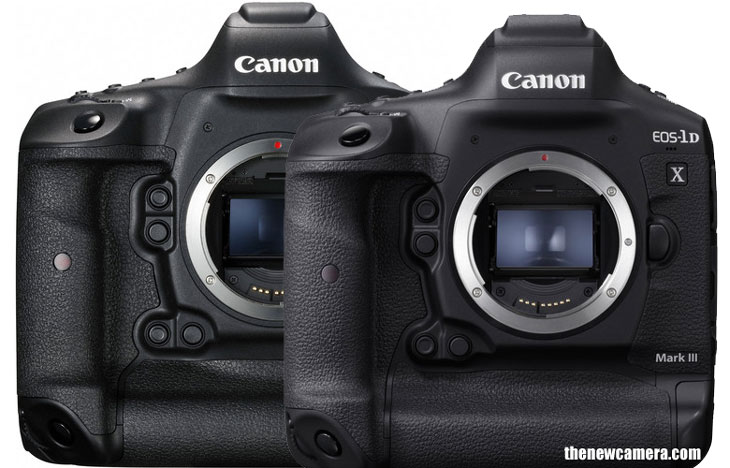
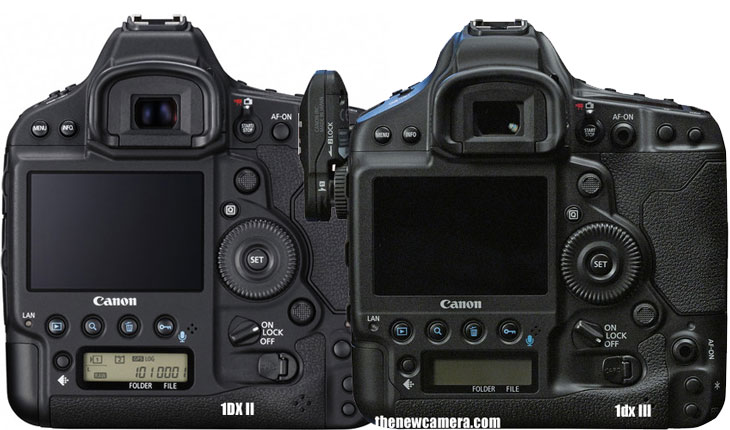
TNC Exclusive – We are the first website to published detailed specification comparison review between the two camera.
Let’s have a specification comparison between the two flagship camera. The long rumored Canon 1DX Mark III camera finally arrived just before 2020 Olympic. Canon Took more than 4 years of time to create a brand new flagship camera and not only that consumers have to spend more than $6000+ to get the new body. In general Canon flagship camera arrives with lot of modifications from inside-out. Now, in this comparison we have compared each and every core specification of the camera to find out the best one.
1. Does Canon 1DX Mark III have new sensor ?
The short answer in no. They are using the same old 20MP CMOS technology they have used in the Canon 1DX Mark II camera. The sensor is redesigned to have better AF performance. So, you will be getting almost same image quality from both the camera.
2. Does Canon 1DX Mark III Have Better Image Quality than Canon 1DX Mark II ?
Slightly better (Upto 1 stop). We are getting slightly better image quality in the new Canon 1DX Mark III camera due to the introduction new Dual-Digic 6 image processor inside the camera we are getting 1 stop more ISO range in extended mode compared to the Canon 1DX Mark II camera. Not only that Canon 1DX Mark III also features new image decoding algorithm and with the help of the that we may notice some betterment in the DR, performance of the camera.
3. Sensor Details Comparison – Canon 1DX Mark III vs Canon 1DX Mark II
Lens Mount
Canon EF
Canon EF
Camera Format
Full-Frame (1x Crop Factor)
Full-Frame (1x Crop Factor)
Pixels
Actual: 21.5 Megapixel
Effective: 20.2 Megapixel
Actual: 21.5 Megapixel
Effective: 20.2 Megapixel
Maximum Resolution
5472 x 3648
5472 x 3648
Aspect Ratio
3:2
3:2
Sensor Type
CMOS
CMOS
Sensor Size
36 x 24 mm
36 x 24 mm
Image File Format
JPEG, RAW
JPEG, HEIF, Raw
Bit Depth
14-Bit
14-Bit
Image Stabilization
None
None
Having a 20MP sensor isn’t a bad thing for sports shooter, but not updating it even after 5 years of gap is bad. We do know that Sony is using BSI and Stacked CMOS sensor in their flasghip A7 and A9 cameras. But, in Canon we are still sicked to plain CMOS Tech that’s really embarrassing in 2020. ISO range of the camera extended upto 1 stop in MAX range thanks to the new image processor and image decoding algorithms.
ISO Sensitivity
Auto, 100 to 51200 (Extended: 50 to 409600)
Auto, 100 to 51200 (Extended: 50 to ISO 819200)
Shutter Speed
Electronic Front Curtain Shutter
1/8000 to 30 Seconds
Bulb Mode
Electronic Front Curtain Shutter
1/8000 to 30 Seconds
Bulb Mode
Up to 14 fps at 20.2 MP for up to 170 Exposures (Raw)
Up to 20 fps at 20.2 MP for up to 1000+ Exposures (Raw)
Interval Recording
No
No
Self-Timer
2/10-Second Delay
2/10-Second Delay
Mirror Lock-Up
Yes
Yes
4. Best Canon Video DSLR 2020 ?
Undoubtedly Canon 1DX Mark III is the best Canon DSLR camera of 2020. The Canon 1DX Mark III camera does full sensor readout and uncroopped 4K Video recording with DPAF support upto 24 and 30 FPS. The camera is also able to record 5.4K Video, which is really a amazing thing for a DSLR camera. But, unfortunately we do have some limitations like now DPAF in RAW video mode as well as no DPAF in 4K Video mode at 60p/50p. See the list of DPAF limitations here
Recording Modes
DCI 4K (4096 x 2160) at 50p/59.94p [800 Mb/s]
DCI 4K (4096 x 2160) [500 Mb/s]
Full HD (1920 x 1080) at 100p/119.88p [360 Mb/s]
Full HD (1920 x 1080) at 50p/59.94p [180 Mb/s]
Full HD (1920 x 1080) at 23.976p/24.00p/25p/29.97p [90 Mb/s]
Full HD (1920 x 1080) at 50p/59.94p [60 Mb/s]
Full HD (1920 x 1080) at 23.976p/24.00p/25p/29.97p [30 Mb/s]
Full HD (1920 x 1080) at 50p/59.94p [60 Mb/s]
Full HD (1920 x 1080) at 23.976p/24.00p/25p/29.97p [30 Mb/s]
Full HD (1920 x 1080) at 25p/29.97p [12 Mb/s]
Full HD (1920 x 1080) at 100p/120p
Full HD (1920 x 1080) at 50p/59.94p
Full HD (1920 x 1080) at 23.976p/24.00p/25p/29.97p
Full HD (1920 x 1080) at 25p/29.97p
Recording Limit
Up to 29 Minutes, 59 Seconds for DCI 4K (4096 x 2160)
We have to accept the fact Canon done lot of improvement in Canon 1DX Mark III camera compared to its predecessor. Canon New 1DX Mark III camera features
Brand New Phase AF Sensor (191 AF point)
New Eye AF Tracking Modes in Still and Video (III / 3rd gen DPAF Tech finally in flagship )
Continuous AF upto 16FPS (MAX 20 FPS)
AF Sensitivity range improved (Upto 1 Stop)
525 AF Zones added to redesigned 20MP Sensor (More dense AF)
6. AF System Comparison – Canon 1DX Mark III vs Canon 1DX Mark II
Focus Type
Auto and Manual Focus
Auto and Manual Focus
Focus Mode
Continuous-Servo AF (C), Manual Focus (M), Single-Servo AF (S)
Continuous-Servo AF (C), Manual Focus (M), Single-Servo AF (S)
Autofocus Points
Phase Detection: 61 (41 Cross-Type)
Up to 191 points (cross type AF point: up to 155 points)
Autofocus Sensitivity
-3 to +18 EV
-4 to +21 EV
7. Viewfinder / Display Unit – Canon 1DX Mark III vs Canon 1DX Mark II
Canon used more dense display this time, and not only that we also have illuminated buttons.
Viewfinder Type
Optical (Pentaprism)
Optical (Pentaprism)
Viewfinder Eye Point
20 mm
20 mm
Viewfinder Coverage
100%
100%
Viewfinder Magnification
Approx. 0.76x
Approx. 0.76x
Diopter Adjustment
-3 to +1
-3 to +1
Monitor Size
3.2″
3.2″
Monitor Resolution
1,620,000 Dot
2,100,000 Dot
Monitor Type
Fixed Touchscreen LCD
Fixed Touchscreen LCD
8. Flash Memory – Canon 1DX Mark III vs Canon 1DX Mark II
Introduction of DUAL CFexpress memory card lot is a welcome edition.
The new camera have exactly same body size compared to its predecessor. But, weigh 300gm less than Canon 1DX Mark II.
Battery
1 x LP-E19 Rechargeable Lithium-Ion, 11.1 VDC, 2750 mAh (Approx. 1210 Shots)
or 1 x LP-E4N Rechargeable Lithium-Ion, 11.1 VDC, 2450 mAh
or 1 x LP-E4 Rechargeable Lithium-Ion, 11.1 VDC, 2300 mAh
1 x LP-E19 Rechargeable Lithium-Ion, 11.1 VDC, 2750 mAh (Approx. 1210 Shots)
or 1 x LP-E4N Rechargeable Lithium-Ion, 11.1 VDC, 2450 mAh
or 1 x LP-E4 Rechargeable Lithium-Ion, 11.1 VDC, 2300 mAh
Dimensions (W x H x D)
158 x 167.6 x 82.6 mm
158.0 x 167.6 x 82.6 mm
Weight
1530 g (Body with Battery and Memory)
1,250 g (Body with Battery and Memory)
10. Canon 1DX Mark III vs Canon 1DX Mark II Verdict
Canon does updated the camera, but in a limited way. If you are a sports shooter and if you think the new AF system will help you than you can sure invest $6000+ in the camera body. If you are someone who already own Canon 1DX Mark II camera and thinking for and upgrade, I will recommend you should wait, Canon EOS R professional on its way and it will sure surprise us with its core specification.
We are getting lot of questions related to the video mode of Canon 1DX Mark III camera. So, here is your answer
Does Canon 1DX Mark III Camera have AF in 4K Video Mode ?
Yes it do full DPAF support when you are shooting 4K Videos at 24fps and 30fps mode. But, when you are shooting videos in 4K 60p/50p you won’t get DPAF then. Similarly, when you are recording Videos on RAW mode you don’t have DPAF.
Canon 1DX Mark III Video AF Details
RAW 5.4K (59.94p / 50.00p) 2,600 Mbps – No DPAF
RAW (29.97p / 25.00p / 24.00p / 23.98p) – 1800 Mbps – No DPAF
We have a brand new announcement from Canon, the new Canon 1DX Mark III camera. Lets, find out the set of new features we have in the new camera OR the set of specs which remained same as of its predecessor. Let’s find out
Finally we have the detailed specification of the to be announce Canon 1DX Mark III camera. Have a look.
Canon EOS-1D X Mark III Major features
20.1mp
16fps/20fps
ISO 100-102,400
4K at 60p (No DPAF in 4K)
Dual CFexpress card slots
Canon EOS-1D X Mark III Full Specifications:
Digital single-lens reflex AF / AE camera
Memory Card: Dual CFexpress
Image sensor size: 35.9 x 23.9 mm
Lens mount: Canon EF Lens Family
* Except for EF-S lens and EF-M lens (effective field of view is almost the same as the effective field of view of the lens focal length)
Image Sensor Type: CMOS
Image Sensors Resolution: 20 million pixels
* Rounded to 100,000 units
Aspect ratio: 3: 2
Dust removal function
Auto / Manual, Dust Delete Data Attached
Record format: DCF 2.0
Image format
JPEG (8bit), HEIF (10bit), RAW (14bit Canon original)
RAW + JPEG simultaneous recording is possible
RAW + HEIF simultaneous recording possible
* 12-bit A / D conversion processing is applied to RAW images taken with the electronic shutter
Record Pixels
JPEG
L Approx. 20 million pixels (5472 × 3648)
M1 Approx.12.7 million pixels (4368 × 2912)
M2 Approx.8.9 million pixels (3648 × 2432)
S approximately 5 million pixels (2736 × 1824)
HEIF L Approx. 20 million pixels (5472 × 3648)
RAW RAW / C-RAW Approx. 20 million pixels (5472 × 3648)
Storage function: Still photo / video split, Still photo save option, Movie save option, Still photo save / playback, Save / play video
Create and select folder possible
Filename: Default setting, user setting 1, user setting 2
File number: Continuous, auto reset, manual reset
Image processing during shooting
Picture style
Auto, Standard, Portrait, Landscape, Fine Detail, Neutral, Faithful, Monochrome, User Def. 1–3
White balance
Auto (Atmosphere Priority), Auto (White Priority), Preset (Sunlight, Shade, Cloudy, Tungsten, White, Fluorescent light, flash),
User setting, color temperature setting (approximately 2500-10000 K)
White balance correction and white balance bracketing
Flash color temperature information can be sent
White balance correction
Blue / amber correction: ± 9 levels
Magenta / Green Correction: ± 9 Levels
White Balance Bracketing
± 3 stops in 1-stop increments
Automatic Image Brightness Correction
Auto brightness optimization
Noise reduction
Applicable for high ISO speed shots and long exposures
AF point: Up to 191 points (cross-type AF point: up to 155 points)
Number of available AF points, number of dual cross-type AF points and cross type AF
The number of points depends on the lens used.
Dual cross-type focusing at F2.8 with center AF point
Focus brightness range: EV -4 – 21 (F2.8 compatible center AF point, One-Shot AF, Room temperature, ISO 100)
Focus action: One-Shot AF, AI Servo AF, Manual Focus (MF)
AF area selection mode: Manual selection: Spot AF, Manual selection: 1 point AF, AF area extension: Landscape / Portrait, AF area extension: Surround,
Manual selection: Zone AF, Manual selection: Large zone AF, Auto selection AF
Subject Recognition AF
EOS iTR AF settings (color information, face and head can be identified)
iTR: Intelligent Tracking and Recognition
AF Microadjustment (All lenses by same amount, Adjust by lens)
AF assist light
Flash from external flash for EOS camera
[Live View Shooting / Movie Recording]
Focus method
Dual Pixel CMOS AF * AF is not available when recording RAW or 4K 59.94 p / 50.00 p (NTSC / PAL) movies.
AF method: Face + Tracking, Spot AF, 1 Point AF, AF Area Expansion (Horizontal / Vertical), AF Area Expansion: Ambient, Zone AF,
Large Zone AF: Vertical, Large Zone AF: Horizontal
Available AF Frame Position Up to 3,869 locations
* When selected with multi-controller
AF areas available for auto selection
Up to 525 points
Eye detection AF support
Magnified view: 5 times / 10 times
AF area
Horizontal: Approx. 90%, Vertical: Approx. 100%
Horizontal: Approx. 80%, Vertical: Approx. 80%
* Depends on the lens used.
Manual focus (MF)
MF peaking, focus guide [Live View Shooting]
AF operation
One-Shot AF, Servo AF, Continuous AF possible
Focus brightness range: EV -6 – 18
(F1.2, center AF point, room temperature, ISO 100, One-Shot AF)
Focus brightness range: EV -4 – 18
(f/1.2, center AF point, room temperature, ISO 100, One-Shot AF, 29.97 fps)
Video Servo AF support
Video Servo AF Characteristics
Tracking Sensitivity, AF Speed
Exposure control
Metering mode
Viewfinder shooting: 216-division (18×12) TTL using approximately 400,000-pixel RGB + IR metering sensor
Open metering
Live View shooting / Movie recording: 384 split (24×16) metering using signals from the image sensor
Metering mode
Viewfinder shooting:
Evaluative metering
Partial metering (approximately 6.2% of screen)
Spot metering (approximately 1.5% of screen)
* AF point-linked spot metering and multi-spot metering options included.
Center-weighted average metering
Live View shooting: Evaluative metering, partial metering (approximately 5.8% of the screen), spot metering (approximately 2.9% of the screen)
Video recording: center-weighted average metering, evaluative metering
* Automatically set according to shooting conditions.
Focus brightness range
Viewfinder shooting: EV 0 – 20 (room temperature, ISO 100)
Live View shooting / Movie recording: EV -3 – 20 (at room temperature, ISO 100)
Shooting mode
Taking still photos:
Program AE, Shutter-Priority AE, Aperture-Priority AE, Manual Exposure, Bulb
Exposure, Custom Shooting Mode
(C1 / C2 / C3)
Video recording:
Program AE, Shutter-Priority AE, Aperture-Priority AE, Manual Exposure,
Custom Shooting Mode (C1 / C2 / C3)
ISO sensitivity (recommended exposure index)
Taking still photos:
ISO Auto (automatic setting in the range of ISO 100 – 102400),
Manual setting in ISO 100 – 102400 range (in 1 / 3- or 1-stop increments), L (equivalent to ISO 50),
Sensitivity extended to H1 (equivalent to ISO 204800), H2 (equivalent to ISO 409600), and H3 (equivalent to ISO 819200)
possible
* When highlight tone priority setting: ISO 200 – 102400
Video recording:
Program AE / Av / Tv: ISO Auto (automatically set within the range of ISO 100 – 25600), H1 (ISO 204800 equivalent)
M: ISO Auto (automatically set within the range of ISO 100 – 25600),
Manual setting in ISO 100 – 25600 (in 1 / 3- or 1-stop increments), H1 (ISO 204800
Sensitivity can be extended
* When highlight tone priority setting: ISO 200 – 25600
ISO sensitivity settings
Taking still photos:
SO speed setting range, auto range, minimum shutter speed
Video recording:
ISO sensitivity setting range, automatic maximum value
Exposure compensation
Manual: ± 5 stops in 1 / 3- or 1 / 2-stop increments (viewfinder shooting),
± 3 stops in 1 / 3- or 1 / 2-stop increments (Live View shooting, movie recording)
AEB: ± 3 stops in 1 / 3- or 1 / 2-stop increments (can be combined with manual exposure compensation)
AE lock
Still photo shooting:
Auto: AE lock with Custom Function when focus is achieved in each metering mode can be set on / off
Manual: using the AE lock button
Movie recording: using the AE lock button
Flicker Reduction
Available (when viewfinder shooting)
Multiple exposure
Function / operation priority, continuous shooting priority
Multiple exposures: 2 – 9 times
Multiple exposure control
Increase, average, brighten, darken
HDR shooting (still picture HDR PQ)
Record format
HEIF
Bit depth
10bit
Color sampling
YCbCr 4: 2: 2
HDR specification
ITU-R BT.2100 (PQ)
Electronically controlled focal plane shutter
Shutter method
Viewfinder shooting: mechanical
Live View shooting: mechanical, electronic curtain, electronic
Mechanical / electronic curtains: 1/8000 sec – 30 sec, bulb
Electronic setting: 1/8000 sec – 0.5 sec
Maximum shutter speed during flash synchronization: 1/250 sec.
* The setting range is different for movie recording.
Drive modes: Single shot, high speed continuous shooting, medium speed continuous shooting, low speed continuous shooting, one soft shooting, soft continuous shooting
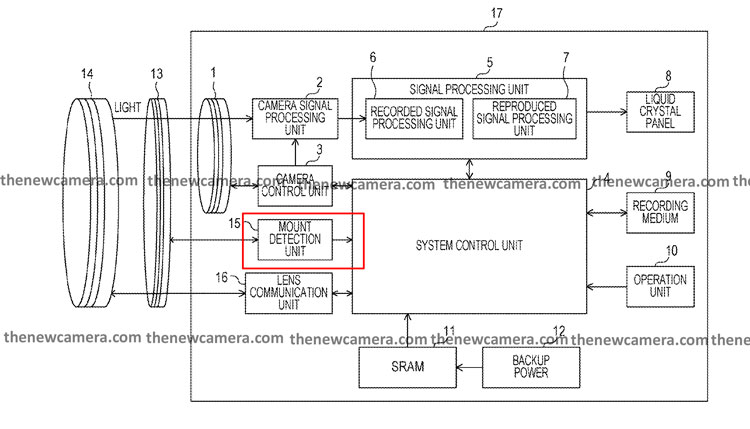
We have spotted a patent were you can clearly see Canon working on a hybrid Mount Video aka Cinema Camera. Let’s go step by step to understand how the Canon Hybrid Mount Camera works
1. Canon Hybrid Mount Camera is Reality and Not-Just a Rumor
Yes, We have discovered patent that clearly shows Canon is working on Hybrid Mount camera. But, as per the patents Canon is initially working on Cinema camera with Hybrid Mount. In near future they may also implement the same technology to Canon Mirrorless Cameras or DSLRs.
2. How Canon Hybrid Mount Camera Work ?
Once use attaches the lens camera power – ON the camera, the Mount detection unit gets activated.
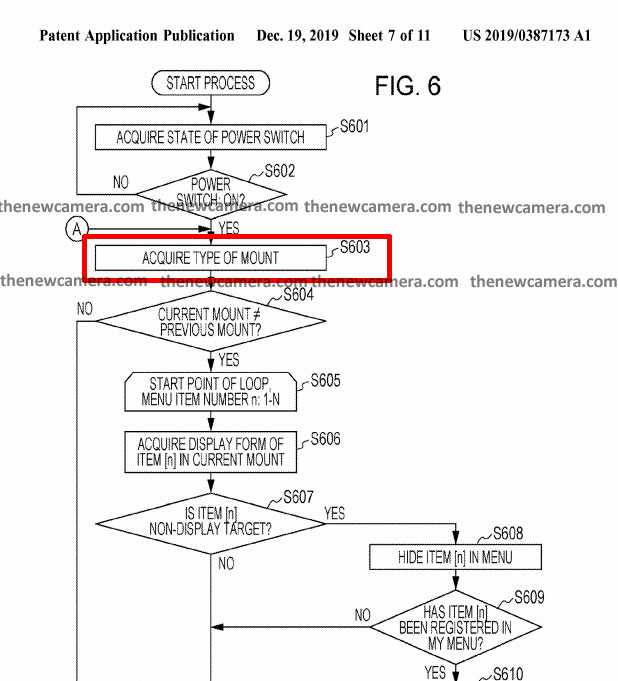
Once the camera detects the type of Lens used in the camera, it opens up it’s dedicated user-interface options for particular lens mount.
From the flow-chart below you can understand the mode of operation of a Hybrid Mount camera once the lens is attached to it.
So, finally we have the Hybrid camera patents. And in general once a patent get registered it roughly take two or three years to become a reality. So, if everything goes well we may see a hybrid mount camera sometime in 2022 or may be 2023.
We will update you soon as we get any new information.
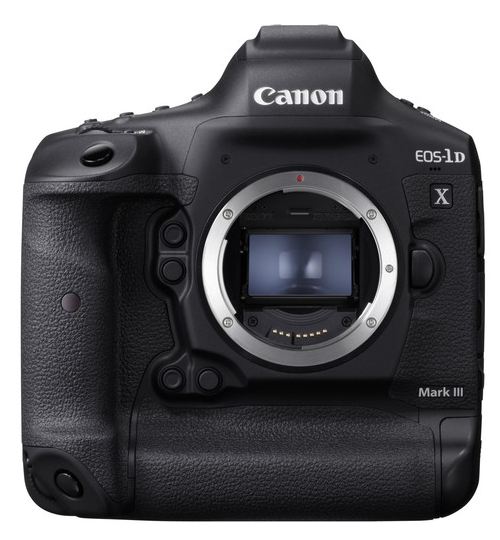
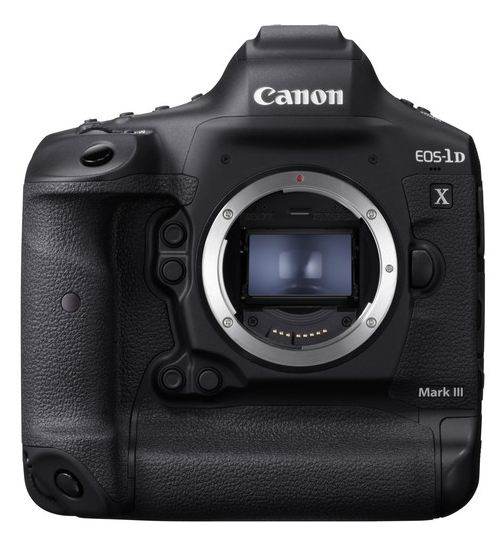
Finally, we have the full specification of the Canon 1DX Mark III camera. Take a look at the official high-resolution images of the Canon 1DX Mark III camera. The camera do have a option to record 4K video at 60p, plus the options of capturing RAW video or 10-bit 4:2:2 video with Canon Log, both recorded internally to CFexpress cards. The new Sensor have 525 AF Zones and completely new AF algorithm, which is more fast and accurate than Canon 1DX II camera.
EOS-1DX Mark III – The next level in pro DSLR quality and performance
A new era in autofocus speed and accuracy
The EOS-1D X Mark III will feature a brand-new AF sensor with 28x more resolution than its predecessor, using advanced AF algorithms with deep learning technology for incredible focus tracking in any situation. And in Live View and video there will be the added advantage of Dual Pixel CMOS AF across approximately 90×100 percent of the sensor with 525 AF areas. With AF over a wider EV range focusing with an EOS DSLR truly will never have been more accurate and versatile.
Outstanding stills and video
With a new Canon CMOS sensor and powerful new DIGIC processing, image quality even at high ISO will be taken to even greater levels along with 4K video at 60p, plus the options of capturing RAW video or 10-bit 4:2:2 video with Canon Log, both recorded internally to CFexpress cards. A new bright viewfinder will help connect you to your subject in real time.
High speed camera communications
Delivering captured content quickly is the vital next step for a professional. This is why the EOS-1D X Mark III will feature Wi-Fi and Bluetooth low Energy connectivity and GPS capability for seamless communication. With double the transfer speeds of the EOS-1D X Mark II, via the built-in Ethernet port or through the optional WFT-E9, and with a revised user interface for simpler and more intuitive operation, the new EOS-1D X Mark III will be designed to get the job done faster than any EOS ever before.
Always ready to perform, whatever the situation
The EOS-1D X Mark III will be radically upgraded for superb performance. Not only will it offer a blistering frame rate with the optical viewfinder including AE and focus tracking, but also dramatic improvements in Live View mode with the same level of accuracy, plus the ability to shoot using an electronic shutter. The camera will be engineered to excel in all areas, with dramatically improved battery life using the LP-E19 battery, new illuminating buttons and an all-new AF point selection control within the AF-ON button in addition to the multi-controller. All in a magnesium alloy weather-sealed body.
Canon 1DX Mark III Major Features
A new era in autofocus speed and accuracy
Outstanding stills and video
High speed camera communications
Always ready to perform, whatever the situation
Enhanced DIGIC Processor
New CMOS Sensor
16 fps Mechanical Shutter, with Optical Viewfinder
20 fps Mechanical or Electronic Shutter, During Live View
Backlit buttons
We will update you soon as we get any new information.
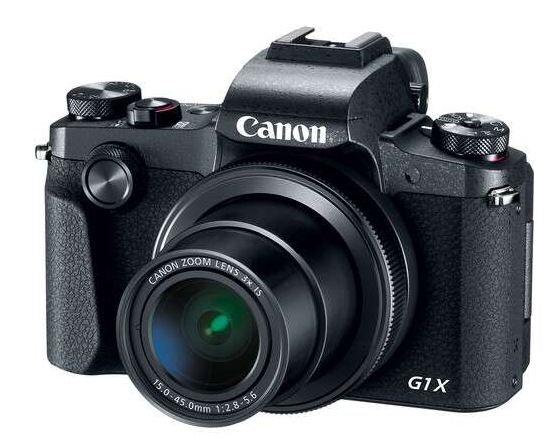
According to the latest rumors surfaced over the web, Canon G1X Mark IV camera is coming with Blazing fast AF (comparatively better than G1X Mk III) and an option to record 4K videos. The camera is rumored to feature the latest 24MP DPAF sensor and expected to arrive in Q1/Q2 of 2020. It looks like Canon do have several prototypes of the Canon G1X Mark IV camera.
Update: Most of the Canon camera announcements delayed due to production line issues of 2020. We are now expecting the arrival of Canon G1X Mark IV sometime in 2021. We will post an update soon as we get the latest information about the G1X Mark IV camera.
Buy Canon Lenses, Buy Music CD or Digital Camera at amazon it helps this site, and you do not pay anything extra, it is just a way to help support this site.
New Camera Website, we list all type of new camera information, price review and all type camera rumors, subscribe us or follow us via twitter or facebook.
Disclaimer: We have attempted to select useful information to include on New Camera, and to ensure that the resources we have included on the site -- as well as the way we have described them -- are accurate, fair, and balanced. However, we make no claims, warranties, or other representations concerning the accuracy, completeness, or utility of the information provided, or concerning the abilities or performance of the organizations, agencies, companies, and other resources presented through New Camera