Join More Than 50,000+ Subscribers and get latest camera news and rumors
NEW CAMERA VIDEOS ON YOUTUBE
|
By admin, on April 22nd, 2026

Sony already has their dedicated ZV series lineup of camera strating from ZV-E10 to ZV-E1. Canon were far behind in this race, but they have started their journey by introducing V10, later on R50V for beginners and entry-level cinematographers. Just after the announcement of the Nikon ZR Camera, we have received strong hints from a highly reliable source that Canon has already started planning to announce something better to compete with the existing Nikon ZR.
Well, we have to admit that our website, TheNewCamera.com, is the first site in the world to publish what we say – First complete concept of Canon Fullframe V series camera back on June 2025, take a look exactly what we have written in that groundbreaking exclusive report we wrote verbatim:
“We are expecting the arrival of the Canon R8 V camera as part of their expansion to its V series… It will be a game-changer camera for professional content creators and beginner filmmakers.”
But, the information was very limited, the only thing that was certain at that time is an Fulframe V series camera was under development.

Why did we select the Canon R8 V camera name back in 2025?
The reason behind selecting the Canon R8 V camera name is that Canon already has a dedicated cinema lineup of cameras, the V series is a beginner’s series, for those who create content or have just started their cinematography journey, and want to have everything under budget. And that’s why we have decided to air the Canon R8V article, a name that never existed before in the media.
If we look at the entry-level lineup, Canon has already selected the R50 series to introduce cinema-style cameras for beginner content creators and cinematographers. In the very same manner, we thought that Canon may pick the R8V camera with primary specifications to introduce a budget cinema camera among photographers, content creators, and beginner cinematographers.
But, at the same time, they have to compete with Nikon ZR, and they have to make it future-proof for the upcoming Sony A7C III, and maybe that’s the reason we are now having Strong Rumors related to Canon R6V arrival instead of Canon R8V.
And that’s why back in 2025, nearly ten months later, the latest CanonRumors updates (April 19 – 20, 2026) have validated almost every core element of our original analysis, while introducing a fascinating wrinkle regarding the final model name.
Canon R6V vs R8V: Intelligent Breakdown of the Latest Naming Rumours
Early leaks and model-code registrations left room for interpretation. CanonRumors initially described the new full-frame V-series camera as something “you’d expect for an EOS R6 V or EOS R8 V,” with the admin leaning toward R8 V as the most logical fit alongside the popular APS-C EOS R50 V. However, in a dedicated follow-up article titled “We’re Getting an EOS R6 V, not an EOS R8 V” (updated April 20, 2026), founder Craig Blair issued a clear correction, stating:
“It’s going to be an EOS R6 V, not R8 V… ‘EOS R6 V’ should give a much clearer picture of what to expect this week.”
From a market-strategy perspective, both names remain plausible until the official announcement. An R8 V would emphasise its accessible creator positioning, while an R6 V would borrow prestige from the respected R6 series and better signal hybrid capabilities closer to the R6 Mark III. CanonRumors now strongly favors R6 V after reviewing internal mockups and NDA information. We are continuing to cross-verify every new registration and leak — model naming has surprised the industry before – but the latest reporting points firmly toward the EOS R6 V as the most probable designation.
We have already published the Canon R8V camera core specification in the past. We still believe those specs to date, now it’s time to explore the core specification of the Canon R6V
Canon R6V Expected Specification
Every major source now agrees on the following core features for the upcoming full-frame V-series hybrid:
Sensor & Core Imaging
- 32.5-megapixel full-frame CMOS sensor (shared architecture with the EOS R6 Mark III and upcoming Cinema EOS C50) — a significant upgrade over the 24MP class we initially anticipated in 2025.
- Upgraded stills performance that will feel familiar to R6-series users while delivering excellent detail for both photography and hybrid workflows.
Video Performance (Major Creator Leap)
- 12-bit RAW video recording — a professional-grade format that dramatically improves color-grading flexibility.
- 7K 60p 12-Bit Internal RAW Light Video
- Open Gate 7K 60p, High-Speed 4K 120p
Body Design & Ergonomics (Creator-Optimised)
- Vented body (side vents) for improved heat management and longer continuous recording — not actively cooled, keeping costs and weight in check.
- No built-in EVF — a deliberate decision that keeps the camera ultra-compact and lightweight, ideal for gimbal, vlogging, and run-and-gun use (mirroring the R50 V philosophy).
- 3-inch LCD with higher resolution than the R50 V’s 1.62-million-dot screen for sharper field monitoring.
- Thicker and heavier than the R50 V, with button placement very similar to the Cinema EOS C50 and an additional main dial for better control.
- Full-size HDMI port and dual card slots ( CF Express Type B + SD for cost and size efficiency).
Why This Camera Matters: Deep Market Analysis
Canon is executing a very deliberate V-series expansion strategy — one that TheNewCamera.com first mapped out in June 2025. By bringing true full-frame depth-of-field, superior low-light performance, 12-bit RAW video, and improved heat dissipation into a compact, creator-optimized body, Canon is targeting the exact gap between Sony’s ZV-E1-style creator tools and its own higher-end Cinema EOS / R5 II lineup.
Whether it ultimately launches as the EOS R6 V or EOS R8 V, this model is clearly designed for the huge community of APS-C V-series owners ready to step up without jumping into pro-level pricing or bulk. The vented design and larger LCD directly address real-world pain points (overheating and monitoring precision) that hybrid creators complain about daily.
Canon R6V Coming on May 13, 2026
Canon is expected to officially unveil the new full-frame V-series camera very soon (originally teased for this week, but CanonRumors now notes NDAs are signed and the exact date is imminent but not yet confirmed – latest update pins it to on or around May 13, 2026 with the RF 20-50mm f/4L IS USM PZ lens). A separate retro-inspired EOS R8 Mark II is also in the pipeline shortly afterwards.
TheNewCamera.com has been covering this story since day one — months before it became mainstream. As soon as the official press release lands, we will deliver the complete hands-on analysis, full specifications, pricing details, and real-world creator impact right here.
Stay tuned — because when it comes to accurate Canon V-series intelligence and being first with the full-frame V-series concept, TheNewCamera.com remains the source serious creators trust.
The full-frame hybrid you’ve been waiting for is finally arriving — and we told you about it first.
Stay tuned to TheNewCamera.com — we’ll keep you updated
The article “Canon Really Wants to Bring These Retro Compacts to Life?” was written by thenewcamera.com team on2:01 pm, Wednesday, 22 April 2026, Greenwich Mean Time (GMT). | You can also follow us on Our Official Social Media Handles FACEBOOK | TWITTER | INSTAGRAM > more live Camera News + Canon Rumors 24X7
source Canonrumor.com


By admin, on March 16th, 2026

Is the Canon PowerShot G7 X Mark III camera discontinued in 2026? The answer is no, but it’s really hard to find the top-of-the-line G7 X Mark III anywhere in the world right now. Whether you are in the United States or Japan, it’s really hard to find the G7 X camera in retail outlets or online stores. Yes, renewed and second-hand models are available at higher price points, but brand-new models are rarely seen in the market despite the crazy demand for the camera.
The issue reached its peak when Canon announced the Limited-Edition Graphite model of the Canon PowerShot G7 X Mark III, but, despite its April release date, the camera is already on “Notify Me” status. Even B&H Photo Video has clearly stated on the product page that it will be served to the first customers in the queue due to very high demand and limited supply.
In this article, we have tried to find out the exact reasons why the Canon PowerShot G7 X Mark III camera has been delayed and is not in stock, so the reasons…

Why Canon is failing to keep the camera in stock worldwide
(exact reasons based on official statements, retailer data, and production reports as of March 2026):
1. Explosive viral demand far exceeding production capacity —
Starting in 2019, compact camera models went mega-viral over Instagram and TikTok. Content creators and bloggers started preferring a compact camera that could record 4K videos in high quality, and guess what the best solution was at the time—and even now—the Canon PowerShot G7 X Mark III, with its image quality and overall performance.
Demand spiked globally (especially among Gen Z for its pocketable size, 4K video, and vlog mode), turning it into a “must-have” compact. Sales far outpaced Canon’s expectations for a 7-year-old camera.
2. Repeated component shortages and production suspensions
Suddenly, despite excessive demand, in March 2025, Canon Japan suspended new orders for the G7 X Mark III (and SX740 HS) due to parts shortages (likely the 1″ stacked CMOS sensor and DIGIC 8 processor, although they continue to fuel the production of new compact like Canon V10, which uses almost all the core specs as of G7X Mk III. [11 May 2023 — The PowerShot V10 V] So, if they can fuel up the production V10, then for sure G7X Mk III product continuation isn’t a major issue for Canon.
Although G7X Mk III Production resumed in September 2025, Canon explicitly stated they were only fulfilling existing backorders and would take “a long time for delivery” with no new orders accepted at that time.
3. Canon closed back-to-back 2–3 factories worldwide (reported by Petapixel [1][2] and thenewcamera.com)
Canon never scaled manufacturing for this old model, due to low demand for compact cameras and in the market, Canon closed back-to-back 2-3 Factories worldwide, Petapixel [1] [2] and we [thenewcamera.com].
-
- Petapixel coverage. In January 202,2 they reported Canon partially then fully closing its Zhuhai, China plant — Canon’s only mainland China camera factory, which primarily assembled small/compact digital cameras
- thenewcamera.com coverage: They reported the same Zhuhai closure (alongside Nikon/Sony moves) and earlier Canon sensor factory shutdown in Ayase, Japan (2020)
- More detailed research and analysis showed Canon had temporary shutdowns of 5 factories after 2020 worldwide due to low product demand specifically most of them were related to compact camera manufacturing units.

So, technically, even if V10 demand rose, [atlought its an Flop products and despite three + years of its announcement, it has received only 18 reviews, whereas 500 reviews we have both the colours of G7X Mk III camera – a total of 1000 + reviews, despite such a limited supply ] . The G7X Mark III (2019 model) still outsells/engages far more despite its age and past supply constraints. The V10’s much lower review volume after nearly 3 years reinforces low demand
Yes, Canon missed the Compact Camera Boom because it closed a major Chinese Factory in 2020 – 2022. Although back in Jan 2025 Canon chairman and CEO Fujio Mitarai says the company may reorganize its manufacturing efforts, potentially moving additional camera production outside Japan. Means as they have said they will be Outsourcing compact Camera Manufacturing to third-party manufacturers who can fulfill the demand of Canon compacts to the market while maintaining the lowest production cost possible, “We want to go fabless with the printers and lower-end digital cameras we manufacture in Asia,” Mitarai told Nikkei Asia in an interview,
However, even these measures appear insufficient at present. As of March 2026, none of the popular compact models — including the G7 X Mark III and the Canon PowerShot SX740 HS — are readily available in stock at authorised retailers worldwide. The industry is still waiting for a sustainable solution. This represents a clear opportunity for Canon to lead the global compact camera market, yet the company appears to be missing it.
Stay tuned for news and updates
About the author
-
- Written By thenewcamera.com team
- The article “Why the Canon G7 X Mark III Is Still Out of Stock Worldwide in March 2026 (Not Discontinued – Real Reasons)” was written on 6:48 am, Monday, 16 March 2026,Greenwich Mean Time (GMT)
- Follow us for more updates and get LIVE RUMORS –> FACEBOOK | TWITTER | INSTAGRAM –>see more live Camera News + Canon Rumors 24X7


By admin, on February 28th, 2026

Canon is hinting at major upgrades in the upcoming compact camera segment. So, the compacts will not just be polished re-announcements carrying old technology inside. We will see some major changes inside the cameras.
Why are we saying this? In a recent interview by dpreview.com, Go Tokura, Executive Vice President and Head of the Imaging Group at Canon, revealed plans for their upcoming compact cameras. This may include major updates to the ultra-popular Canon PowerShot G7 X lineup, such as a highly advanced Canon PowerShot G7 X Mark IV in the near future, and obviously, a vlogging-focused camera. There is a strong probability of significant upgrades.
So, in this article, we are going to detail what Canon’s President and Head of the Imaging Group said at the CP+ 2026 event.
Key Highlights from Canon’s CP+ 2026 Compact Camera Tech Showcase
CP+ 2026, held in Yokohama, Japan, served as a platform for Canon to signal a revival in the compact camera segment.
“The current customers of compact cameras are not really our past customers. These are totally new customers,” said Go Tokura, Executive Vice President, Head of the Imaging Group and Chief Executive of Imaging Business Operations. “So it is going to be the role of the next camera we release that can offer new technologies or a new use case. That’s the new role of the next compact camera.”
This statement underscores Canon’s strategy to target new demographics with advanced technologies and innovative use cases, moving beyond traditional compact models.
Rumoured Canon Compact Cameras Arriving in 2026 or 2027
Based on leaks and industry predictions, Canon is poised to refresh its compact lineup. These are speculative but grounded in reliable rumours.
PowerShot G7 X Mark IV (Expected Late 2026): According to the latest rumours we have covered, the Canon G7X Mark III successor, the Canon G7X Mark IV, is expected to arrive in late 2026. And if we believe what Go Tojura said, then for sure, we are about to witness a massive change in the core specification of the upcoming camera. Initial rumours suggest that the upcoming camera. Rumours suggest a 2026 release with upgraded 4K video (possibly 60fps), improved low-light performance, AI autofocus, and a faster processor. It could build on the Mark III’s success by adding features such as improved battery life and enhanced stabilisation for vloggers.
PowerShot V10 Mark II (Expected 2026): Canon V10 was announced back in May 2023; an update is expected this year from Canon, the V10 Mark II with better video resolution, expanded connectivity (e.g., direct social media integration), and modular accessories. It’s part of Canon’s V-series expansion for vloggers.
PowerShot V3 or V100 (Rumoured 2026-2027): These could introduce APS-C sensors for superior image quality in a compact body, and here is the rumoured core specification, which surfaced a while ago here at thenewcamera.com
Canon V3 Rumoured core specification
-
- 1.4-inch, 22.4MP sensor.
- 20x optical zoom lens (approx. 24-480mm or 24-500mm, 35mm equivalent).
- Built-in electronic viewfinder (EVF).
- Photography-oriented design with a deep hand grip, robust build, and no side vents.
| Model |
Key Features |
Expected Release |
Target Audience |
| G7 X Mark IV |
20MP+ sensor, 4K 60fps, AI AF |
Late 2026 |
Vloggers & Travelers |
| V10 Mark II |
Improved 4K, Weatherproofing |
2026 |
Content Creators |
| Canon V3 |
APS-C Sensor |
2026-2027 |
Entry-Level Vloggers |
Why Canon Compact Cameras Are Making a Comeback in 2026
It looks like Canon is about to push the compact camera market to the next level. If you truly believe what Canon’s marketing head is saying at this moment, they are preparing to take compact camera technology to the next level.
After a long gap, the demand for compact cameras in the market has risen again, and many companies, including Canon, are benefiting from this trend. However, as we know, Canon had technically slowed down research and development of its older-generation G-series compact cameras and shifted more attention toward the V-series lineup.
Despite that, the demand for cameras like the Canon PowerShot G7 X Mark III and the Canon PowerShot SX740 HS is still at an all-time high. People are even paying double the MSRP to get a copy of these cameras.
As Go Tokura hinted at CP+ 2026, this isn’t just about refreshing old models; it’s about innovating for a whole new generation of users. We’re keeping a close eye on official announcements, so stay tuned to thenewcamera.com for the latest leaks, reviews, and hands-on insights on Canon’s upcoming compact cameras.
About the author
source – dpreview.com

By admin, on February 19th, 2026

Canon is working on a wireless microphone; we now have the images of the microphone as well as the core details. Originally, the Mic and the transmitter were registered back in 2024; the code name of the wireless Mic is WM-E1-R. It is a compact Bluetooth device tailored for Canon EOS RF cameras. Typically, it has been developed for the expansion of Canon’s wireless microphone system for content creators, giving an excellent alternative option to the existing third-party wireless mic options available in the market. So let’s explore the set of features that are known, as well as the pricing that you may have to pay, and obviously,y the images.

What We Know About the Canon WM-E1-R Wireless Microphone
We now have the leaked image of the wireless mics. The leaked images show a sleek, black, oval-shaped device with the Canon logo and “WM-E1-R” labeling, alongside a square-shaped companion unit that is actually an advanced receiver. These align with FCC IDs AZD250 and AZD251, corresponding to models DS586233 (master unit) and DS586234 (slave unit). Filed by Canon Inc. in Japan, the certifications were granted on June 10, 2024. As we have mentioned earlier, the Receiver is fully compatible with the Canon Multifunctional hotshoe of RF system cameras.

Key highlights from the FCC documentation include:
- Device Type: Wireless Lavalier Microphone, suitable for audio-visual equipment, broadcast, and consumer use.
- Technology: Bluetooth with GFSK modulation for reliable, low-power wireless communication.
- Antenna: Integrated PCB pattern antenna for compact design.
- Power Source: Battery-powered, with transmission ceasing during USB charging to comply with regulations.
- SAR Compliance: Tested for Specific Absorption Rate (SAR) with values of 0.13 W/kg (AZD250) and 0.37 W/kg (AZD251), well below the 1.6 W/kg limit.
- Testing Standards: Passed FCC Part 15 Subpart C for emissions, bandwidth, output power, and more.
- Labelling: Due to the small size, the FCC ID is in the user manual and packaging, not on the device itself.
The overall design of the transmitter looks very similar to the Rode Wireless Mic design. And typically, the receiver, the WM-E1-R, is designed for the Canon Multi-Function Shoe of Canon EOS R cameras, but at the very same time, it also has a 3.5mm jack input port. In case you want to plug and play in a traditional way with other cameras, too, it remains compatible.
Features and Potential Use Cases for Canon Wireless Microphones
Based on the filings and leaked photos, the Canon WM-E1-R promises professional-grade audio in a portable form factor. Here’s what stands out:
- Wireless Freedom: Bluetooth LE ensures low latency and stable connections up to a reasonable range, perfect for filmmakers, podcasters, and YouTubers who need mobility.
- Compact Design: The microphone’s small size makes it discreet for lavalier use, clipping onto clothing without bulk.
- Compatibility: Tailored for Canon’s ecosystem, it could pair seamlessly with cameras like the EOS R5, R6, or R10, enhancing video audio quality over built-in mics.
- Battery Life and Charging: USB connectivity for charging, with smart power management to avoid interference.
- Industry Applications: Listed for consumer, broadcast, and commercial use, it’s versatile for everything from home videos to professional shoots.
For videographers as well as professional content creators, those who are typically looking for a native Canon integration, reducing setup time and improving reliability. For sure, the WM E1 R will work the best.

Why Hasn’t Canon Announced the WM-E1-R Yet?
Despite the FCC approval in mid-2024 and now in Q1 of 2026, it’s really interesting to see why Canon has remained silent on the WM-E1-R and delayed its announcement. Certifications like 3C (China) and FCC often precede launches by months, so an announcement could come in 2026. Canon’s current microphone lineup on their official site includes wired options like the DM-E1D and DM-E100, leaving a gap for wireless solutions.
The wireless mic of Canon will help to expand the ECO system of the Canon Mirrorless camera. With strong and reputable competitors like DJI, Hollyland and Rode already dominating the wireless mic market, Canon might be positioning the WM-E1-R as a premium, ecosystem-specific alternative. Although nowadays a lot of budget option has become available
Pricing and Availability Speculations
Take a look what we expect the priccing of the upcoming wireless mic should be
- DM-E100 retails around $160.
- The WM-E1-R could land between $200-$300,
depending on whether it’s sold as a kit with receiver and transmitter. Availability might align with Canon’s next camera announcements, potentially bundled with models like the EOS R series.
Stay tuned to TheNewCanera.com for updates. If you’re in the market for Canon gear, check out our reviews of the best Canon microphones and EOS cameras.
The leaked Canon WM-E1-R wireless microphone excites with its Bluetooth tech, compact build, and FCC-backed compliance. Though not yet announced, it fills a need for high-quality, wireless audio in Canon’s ecosystem. For photographers and videographers, this could elevate content creation without third-party hassles. Bookmark TheNewCanera.com for the latest on Canon releases, leaks, and reviews—your go-to source for camera news!
About the author
Canon R3 Mark II Rumors February 2026: Dual Native Resolution Sensor Tested at Milan Winter Olympics

Best Mirrorless Cameras Under $500 in 2026
By admin, on February 17th, 2026

Reports are buzzing that the Canon EOS R3 Mark II camera has popped up in testing at the Milan Winter Olympics. It’s not positioning itself as just a high-res version of the EOS R1—instead, it’s more of an experimental beast, packing the industry’s first dual native resolution back-illuminated stacked CMOS sensor as its big innovation.
These updates are coming from the Chinese social media handle Camera Beta. Now, according to this handle, they have seen or witnessed the presence of the Canon R3 Mark II camera during the Olympics, and in the page, they have also shared the core specifications of the camera.

Understanding the Dual Resolution Feature
One thing is really very confusing that the upcoming camera can capture 24MP images as well as 54MP images handheld, so he is confused about this feature and he has been concerned that it has a dual native resolution capability of the sensor, but why I personally think that Canon is doing their expertise in handheld higher resolution capturing capability, and with that they can push resolution up to 2X, means from 24MP they can jump to 54MP without putting your camera on a tripod or anything which is stable, you can do it handheld.
Analysis of Canon’s Handheld High-Resolution Technology: So instead of naming it as dual gain resolution or whatever the term they have pointed for it, it is better to say Canon has enhanced the handheld higher resolution shooting capability which can be doubled for the sensor resolution with the help of a new image processor. But this is the sort of analysis we are able to do with the available set of information what the source is claiming about the R3 Mark II camera.
Key Innovations in Sensor Technology: This new camera lets you switch between two native resolutions: 54 million pixels or 24 million pixels. That means you can crank out high-speed continuous shooting at 40 frames per second in the higher res mode, or bump it up to a blistering 90 frames per second in the lower one. It uses an upgraded Bayer array that smartly merges adjacent pixels when you’re in 24MP mode, giving about an 80% sensitivity boost over the original EOS R3. Throw in triple native ISO tech, and you’ve got killer high-ISO performance that stands out.
Advanced Autofocus System On the autofocus front, it’s got a four-pixel CMOS AF system with four photodiodes per pixel. That setup delivers dual cross-type autofocus across every single one of those 54 million pixels, handling phase detection in horizontal, vertical, and even diagonal directions for super-precise tracking.
Video Capabilities for Professionals: For video shooters, it’s a dream: in-camera recording of 9K at 60p or 6K at 120p in RAW format, all while keeping full-pixel autofocus locked in.
So for now, take a look at what they have said, and we have also organised the entire core specification of the camera, according to the information shared by Camera Beta itself.
Canon EOS R3 Mark II Specifications Breakdown
Based on the provided details, here’s a breakdown of the key specs extracted and organized for clarity. Note that this is derived from reports and rumors, so official confirmation from Canon would be needed for accuracy.
| Category |
Specification |
Details |
| General |
Model Name |
Canon EOS R3 Mark II |
| General |
Status |
In testing (spotted at Milan Winter Olympics); experimental product, not a high-res version of EOS R1 |
| Sensor |
Type |
Dual native resolution back-illuminated stacked CMOS sensor (industry first) |
| Sensor |
Resolutions |
Switchable: 54 megapixels (high-res mode) or 24 megapixels (speed mode) |
| Sensor |
Bayer Array |
Upgraded; merges adjacent pixels in 24MP mode for ~80% sensitivity boost over original EOS R3 |
| Sensor |
ISO Technology |
Triple native ISO for exceptional high-ISO performance |
| Shooting Performance |
Continuous Shooting |
40 fps at 54MP; 90 fps at 24MP |
| Autofocus |
System |
Four-pixel CMOS AF with four photodiodes per pixel |
| Autofocus |
Coverage |
Dual cross-type AF across all 54 million pixels |
| Autofocus |
Detection |
Phase detection in horizontal, vertical, and diagonal directions for precise tracking |
| Video Capabilities |
Recording |
In-camera 9K 60p RAW and 6K 120p RAW |
| Video Capabilities |
Autofocus |
Full-pixel autofocus maintained during video recording |
These are the initial updates we have related to the upcoming Canon EOS R3 Mark II. If we get any new info, we will be updating it here
As usual, Camerabeta isn’t always counted among the list of highly trusted sources, so take it with a grain of salt till we get further confirmation about the information.
About the author
-
- Written By thenewcamera.com team
- The article “Canon R3 Mark II Rumors February 2026: Dual Native Resolution Sensor Tested at Milan Winter Olympics” was written on 7:48 pm, Tuesday, 17 February 2026, Greenwich Mean Time (GMT)
- Follow us for more updates and get LIVE RUMORS –> FACEBOOK | TWITTER | INSTAGRAM –>see more live Camera News + Canon Rumors 24X7
source: Camerabeata
DJI Pocket 4 Video Leaked

Canon R10 Mark II Rumors: 2026 Release Date, Specs, and FCC Insights

By admin, on February 15th, 2026

One of the most important things that people want to know is when the Canon EOS R10 Mark II camera is actually coming. The question seems to be logical. Also, since the Canon EOS R10 is now as old as an R7 mirrorless camera, and the Canon EOS R7 was announced together on 24 May 2022.
But right now, we do have some strong rumours related to the Canon EOS R7 Mark II camera. The reason behind those rumours is a Canon FCC ID registration of a pro mirrorless camera, which seems to be highly identical to an APS-C flagship camera, considering the core specifications, the battery the camera is using and all that stuff.
So, the big question is actually when the R10 Mark II camera will arrive. Will it arrive before the R7 or after that? Let’s discuss it first.
Canon EOS R7 Mark II vs R10 Mark II: Which Comes First?
If you compare the two, then for sure, according to the recent FCC ID filing, the Canon R7 Mark II camera announcement looks more prominent. For now, no other FCC IDs have emerged till February 2026, so even if Canon registers a camera after March or April, the announcement is expected sometime in the second half of 2026.
During the DSLR time, the mid-range camera update cycle was approximately two years, and obviously, the flagship APS-C cameras were taking approximately four years of time. But right now, both the mid-range Canon EOS R10 and the Canon EOS R7 were announced approximately four years back. Due to uncertainty in the market and a bit lower demand for hybrid cameras, as people are putting more focus on video-oriented compact mirrorless solutions, as well as photographers preferring full-frame high-end hybrid cameras, in that context, it seems like Canon is about to update the Canon EOS R7 instead of the R10 for now.

FCC ID Analysis: No New Camera Filings Until February 2026
A key piece of evidence comes from FCC ID listings, which often foreshadow camera announcements. As of February 2026, Canon has no new “Digital Camera” registrations beyond the December 17, 2025, filing for AZD260 (model code DS126933 / HVIN DS126933). This filing is widely linked to the Canon EOS R7 Mark II, thanks to leaked certification documents from UL Verification Services.
- Recent FCC Entries:
- AZD260: Digital Camera (Dec 17, 2025) – Tied to the R7 Mark II.
- AZD30387-2: Wireless LAN Module (May 15, 2025) – For Wi-Fi/Bluetooth integration.
- AZD30400: Wireless LAN Module (Mar 13, 2025) – Similar module for host products.
The absence of fresh camera-specific FCC IDs suggests that if Canon registers a new one in early 2026 (e.g., February or March), the Canon EOS R10 Mark II announcement wouldn’t hit until Q4 2026 or later. FCC certifications typically require 3-6 months of lead time for testing and disclosure
Expected Specs for Canon EOS R10 Mark II
Since there has been a lot of delay in the mid-range level series camera, Canon EOS R10, we are now expecting a bigger jump in the core specifications of the upcoming camera. While official details are under wraps, Canon EOS R10 Mark II specs rumours point to evolutionary upgrades rather than revolutionary changes.
Let’s discuss what we are expecting from Canon R10 Mark II
- Sensor: Expected to reuse the 32.5MP APS-C sensor from the original R7, ensuring sharp images without the premium price tag.
- Performance: Faster continuous shooting mechanical up to 15 fps, improved autofocus, and enhanced video capabilities, but no in-body image stabilisation (IBIS) or weather sealing to keep it compact and budget-friendly.
- Design: Retains the single card slot and lightweight body of the R10, ideal for entry-level users upgrading from DSLRs.
- Other Features: Better battery life, 4K video improvements, and seamless integration with Canon’s RF-S lenses.
- That’s what we are least expecting from R10 Mark II, since the competitors like A6700 and ZV-E10 II now using 26 MP APS-C BSI CMOS sensor, it seems to be quite an bit logical update from the existing 24 MP sensor.
Why the Delay? Canon’s 2026 Strategy Explained
It all depends upon the Canon marketing team. It was quite obvious that the entry-level models, the Canon EOS R50 and the Canon EOS R100, were taking over the market (July 2025) even in the USA. We have reported several times that the R50 is leading the market, so without a doubt, the R10 camera sales are not at that point. It is better to say the market response wasn’t as strong, and that’s why they have intentionally delayed the updates.
If a series becomes more popular, they are going to add more variants and obviously schedule updates to it. For example, the R50 series now has the Canon EOS R50V, and possibly this year or next year, we will have the R50 Mark II. But again, it all depends on market popularity and sales. If a model doesn’t perform as much as expected, then it gets delayed.
Other than that, that is the only reason why a camera maker decides to delay or discontinue a model.
The article “Canon R10 Mark II Rumors: 2026 Release Date, Specs, and FCC Insights” was written by thenewcamera.com team on 5:05 am, Sunday, 15 February 2026, Greenwich Mean Time (GMT) | You can also follow us on Our Official Social Media Handles FACEBOOK | TWITTER | INSTAGRAM to get more live Camera News + Canon Rumors 24X7

By admin, on January 9th, 2026
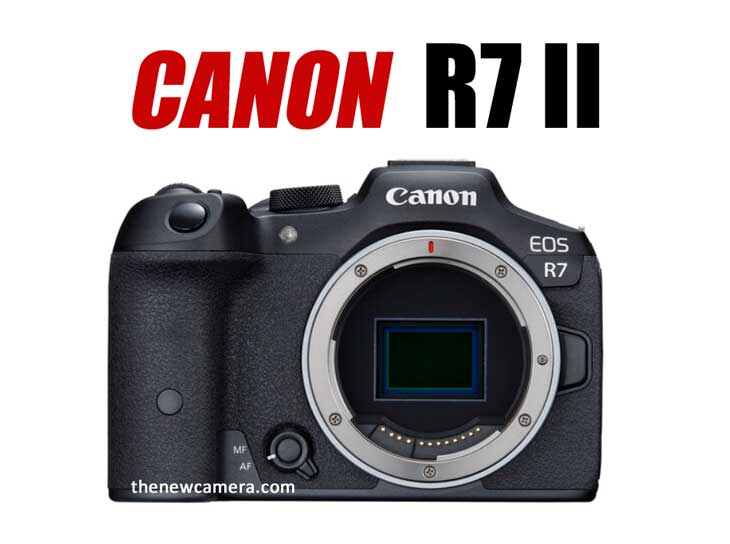
We have already discussed the possibility of the Canon EOS R7 Mark II camera with a 40MP stacked BSI CMOS sensor in our previous post. We have already shared the latest leaked core specifications of the upcoming Canon R7 Mark II camera, which provided a strong hint that a 40MP BSI CMOS sensor will be included in the Canon flagship APS-C camera body.
Now, a fresh rumour is coming from the rumour mill, and according to that, the upcoming Canon R7 Mark II camera will use a 39-megapixel APS-C BSI CMOS sensor (with conflicting info on whether it’s stacked), and this rumour was published on CanonRumors.com. It has been mentioned that the sensor is 39 megapixels with BSI tech, but there’s uncertainty around stacking, and the information is coming from a new/unverified source. Canon Rumours has published a detailed report, and here are the specifications below. Note: These specs are unverified and subject to change, as per Canon Rumors.
Rumoured EOS R7 Mark II specs
- 39MP
- BSI sensor (conflicting stacked sensor information)
- DIGIC accelerator (conflicting previous information)
- 8.5-stop IBIS (5-axis)
- 40fps electronic shutter
- Best AF of any APS-C camera
- RAW video (resolution unknown)
- CFexpress/SD card slot
- High-resolution EVF
- Larger form factor (R6 size)
- LP-E6P battery
We do know that camera makers test several prototypes of a camera before announcing their final product. Meanwhile, that’s why in the past, we have already received strong rumours related to a 40MP stacked BSI CMOS sensor. I personally believe Canon will use a stacked CMOS sensor, potentially around 40MP, for the upcoming Canon R7 Mark II camera.
Canon EOS R7 Mark II Price Rumours
No official pricing yet, but leaks suggest around $1,799 body-only—similar to the original R7’s launch price. Kits with RF-S lenses could range from $1,999 to $2,299. This positions it as an affordable pro-APS-C camera, undercutting full-frame models like the EOS R6 Mark III ($2,499).
These are the latest updates we have related to the Canon R7 II as of January 09, 2026. Bookmark this page for updates, and subscribe to TheNewCamera.com for the latest camera news, reviews, and deals.
What do you think of these Canon EOS R7 Mark II rumors? Share in the comments below!
source Canonrumors.com
About the author

|
KEEP THIS BLOG ALIVE - Support New Camera Buy Canon Lenses, Buy Music CD or Digital Camera at amazon it helps this site, and you do not pay anything extra, it is just a way to help support this site.

|