Join More Than 50,000+ Subscribers and get latest camera news and rumors
NEW CAMERA VIDEOS ON YOUTUBE
|
By admin, on July 11th, 2026
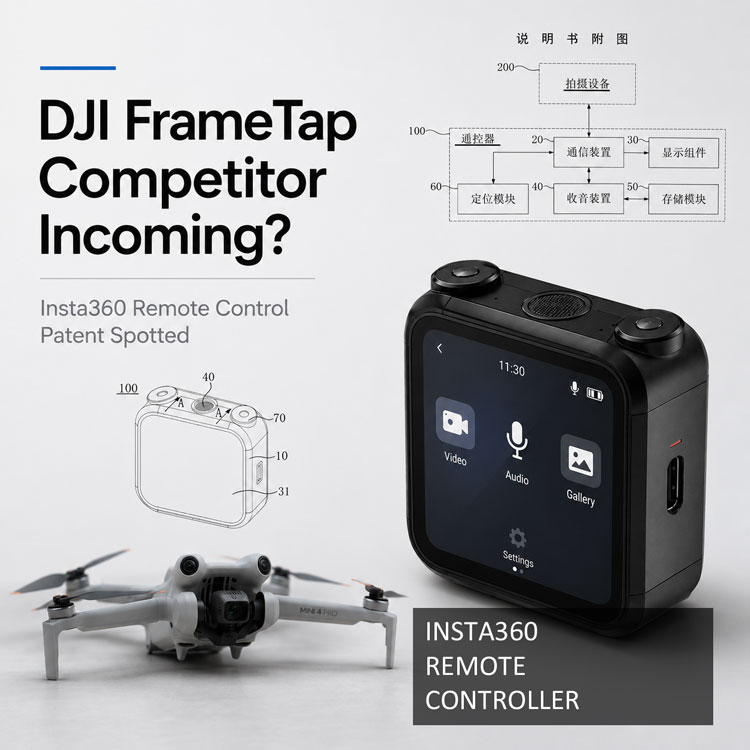
Insta360 is quietly working to introduce a very tough competitor to DJI’s FrameTap Remote Controller. Obviously, we were the first to report when DJI was working on the FrameTap Remote Controller, and now we are here to report that Insta360 is working on a very similar type of device, which has a square design and a display unit with a high-quality built-in microphone, which helps you remotely control the camera as well as add high-quality studio-style audio to the device, even if you’re shooting from a distance.
Insta360 has quietly filed a detailed utility model patent (CN 224054326 U) for a new remote control system that integrates a display for live preview, high-quality audio recording, wireless connectivity, and positioning features. This appears to be the core intellectual property behind the highly praised detachable touchscreen remote already shipping on the Insta360 Luna Ultra.
For American vloggers, YouTubers, and solo creators who rely on flexible shooting setups, this patent signals that Insta360 is serious about building a stronger wireless ecosystem – directly challenging DJI’s recent FrameTap remote on the Osmo Mobile 8P.
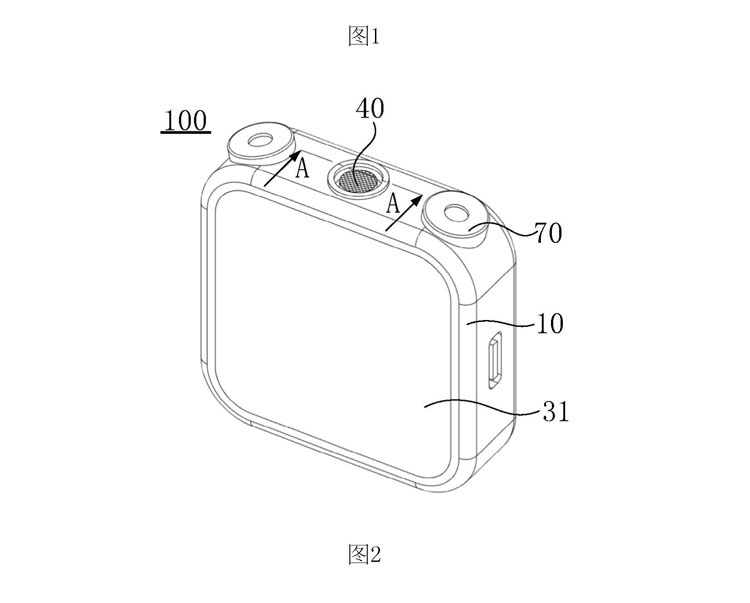
What the Patent Actually Describes
The patent outlines a standalone remote control (independent of the main shooting device) that includes:
- Communication module (Bluetooth and/or Wi-Fi) for bidirectional data transfer with cameras or gimbals.
- Display component for real-time camera feed preview and on-device adjustment of shooting parameters (mode, exposure, gimbal angle, etc.).
- Advanced microphone system with multiple protective layers — waterproof/breathable membrane, wind-noise-reducing porous layer, buffer, and protective mesh — designed to capture clean audio that syncs perfectly with video.
- Storage module so the remote can record audio independently.
- Positioning module (GPS and other satellite systems) for location tracking or anti-loss features.
- Physical buttons (shutter, power, mode switch, volume) plus mounting options (magnet, clip, threaded hole, lanyard).
In short: a compact, versatile remote that lets you preview, control, and capture synchronised audio from a distance without needing your phone or extra mics.
Insta360 Luna Ultra Gimbal Camera Features & Accessories. – Freewell Gear
Already in Your Hands: The Luna Ultra Detachable Remote
Yes, we already have a remote controller from Insta360, and that was very good. That is the Insta360 Luna Ultra display screen with an easily detachable compartment, so you can take it in your hand and vlog wherever you want. The display screen also has a high-quality built-in microphone to capture clear audio.
The patent likely provides broad legal protection for this technology, allowing Insta360 to extend it to future cameras, gimbals, or standalone accessories.
Head-to-Head: Insta360 Patent vs DJI FrameTap
| Feature |
Insta360 Patent / Luna Ultra Remote |
DJI Osmo FrameTap (Osmo Mobile 8P) |
| Live Preview |
Yes (OLED touchscreen) |
Yes (1.4″ touchscreen, 60Hz) |
| Built-in Mic |
Yes – multi-layer wind & moisture protection |
No (uses phone/gimbal mics) |
| Audio Storage on Remote |
Yes |
No |
| Positioning/GNSS |
Yes |
Yes |
| Mounting Flexibility |
Magnet, clip, lanyard, threaded |
Magnetic dock on gimbal handle |
| Best For |
Action cams, gimbals, rugged vlogging |
Phone gimbal + ActiveTrack workflows |
| US Availability |
Luna Ultra widely available now |
Tied to Osmo Mobile 8P |
DJI’s FrameTap excels at seamless phone-gimbal integration and subject tracking. Insta360’s approach shines for creators who want better on-board audio and more versatile mounting options.
DJI Osmo Mobile 8P Announced – FrameTap Wireless Remote, ActiveTrack 8.0, and More | CineD
When Will We See a Standalone Version?
The Luna Ultra (priced at $769.99 in the US) already delivers this technology today and is available at Insta360’s store, Amazon, and Best Buy.
A broader standalone remote (sold separately for use with other Insta360 cameras like the X-series or future models) is the logical next step.
Insta360 Luna Ultra is not the only camera which is coming under the pocketable gimbal camera range of Insta360. We have seen the Insta360 Pro with a single camera lens module, maybe a non-detachable camera body design. So this is a thing for future products as well, and it will have full synchronization with the existing Insta360 Pocket gimbal cameras like Luna Ultra.
When it’s coming/arrival time
Given typical timelines from patent filing to accessory release, we could see an expanded or standalone version sometime in 2027. Since a patent takes 1 or 2 years to become a final product.
Insta360 has a history of moving quickly once core tech is proven – the GPS Preview Remote and other accessories launched relatively fast after similar innovations.
Patent (CN 224054326 U) – This is not primarily a GPS Preview Remote
Do not get confused that it’s the Insta360 GPS Preview Remote that we have seen earlier as a product. There is a very clear difference between the two, and this has been designed to get in sync with other intelligent products.
Patent literature clearly mentions – This disclosure relates to the field of shooting equipment technology, and in particular to a remote control and shooting system.
Why This Matters for US Creators
Since the DJI FrameTap is not available in the United States of America due to the DJI ban, this is a kind of golden opportunity for Insta360 to introduce a very similar system/alternative to the DJI ecosystem, where people can buy pocket gimbal cameras like the Luna Ultra. Although it does have an attached display screen, we do have several other Insta360 cameras where we can easily synchronise this upcoming remote controller. Other than that, future gimbal cameras like the Insta360 Luna Pro and several others like the Ace Pro 3 as well as the X6 will also benefit. All these cameras will have complete deep synchronisation with this remote controller.
Final Thoughts
Insta360 isn’t just copying DJI’s FrameTap playbook – they’re adapting the “detachable smart remote with live view” and giving a perfect alternative to USA-based buyers.
For US buyers looking for flexible shooting tools right now, the Insta360 Luna Ultra is the best way to experience this technology today. A more widely compatible standalone remote could arrive within the next 6–12 months.
Would you like to see Insta360 release a cheaper standalone version of this remote for their action cameras? Drop your thoughts in the comments – we read every one.
Stay tuned to thenewcamera.com for the latest on Insta360 developments, comparisons, and buying guides tailored for US creators.
The article “Insta360 True DJI Neo 2 Competitor Emerges: Foldable Drone Prototype Patent Details Surface” was written by thenewcamera.com team on 9:38 am, Saturday, 11 July 2026, Greenwich Mean Time (GMT)| You can also follow us on Our Official Social Media Handles FACEBOOK | TWITTER | INSTAGRAM > get live news — > DJI Rumors
By admin, on July 11th, 2026
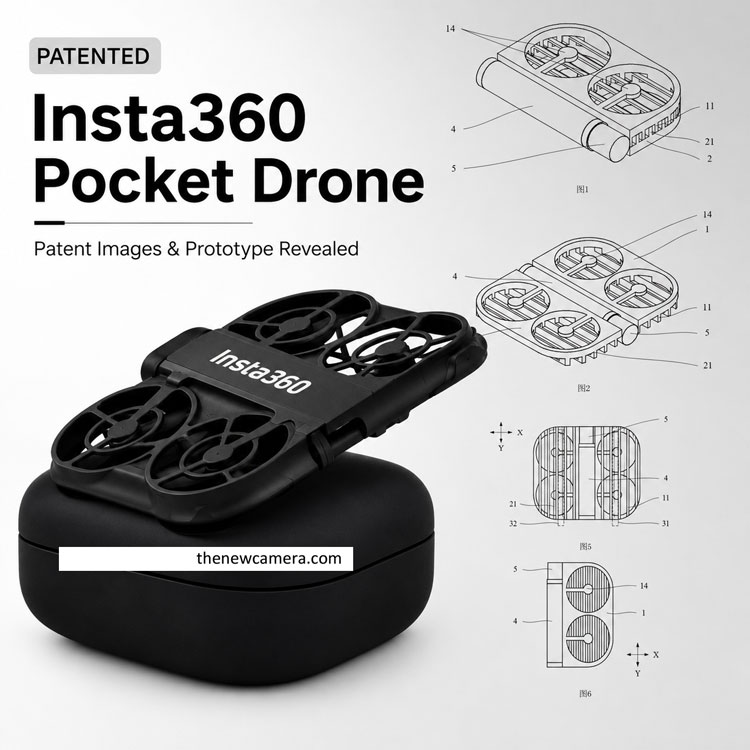
We have been covering this news since August 2025, and now we have another interesting update to share with you. Insta360 developers were testing two different types of drones before the Antigravity A1 announcement. The first one was the Antigravity A1, but the second one is the one that we shared pictures of with you back on August 19, 2025, and even before that, multiple times. It looks very similar to the DJI Neo drone. Still, recently we have seen a patent of Insta360 with this specific drone that we had seen back in August 2025, featuring a foldable design, so anyone can easily carry the drone when he or she is traveling.
And the patent is really very new, so it looks like Insta360 wants to create a one-to-one solution for the DJI Fold as well as the DJI Neo series drones. It does not necessarily mean the little drone is intentionally designed for capturing the 360° world only, just like the Antigravity A1. We can have a kind of hybrid mini drone, or maybe a direct competitor to the DJI Neo.
In the middle of all this, there is also a very strong possibility of a mini 360 drone, a kind of budget version of what we have in the Antigravity A1, limited to 4K and being within the reach of a wider consumer base due to its compact design, portable size, as well as affordability.
Including the official CN223865117U patent and prototype images – confirm this is shaping up to be a true compact foldable competitor to the DJI Neo / Neo 2.
The Leaked Prototype Image
Compact black drone with clear Insta360 branding, foldable arms, ringed propeller guards, and protective design. The shoe provides excellent scale showing how portable it is.
This prototype was spotted during wild testing alongside the Antigravity A1.
In-Depth Comparison: Insta360 Antigravity Second Model vs DJI Neo Series
| Feature |
Insta360 Antigravity Second Model |
DJI Neo / Neo 2 Series |
| Design |
Foldable arms, black body, ringed props + clearance spaces |
Foldable arms, enclosed props |
| Weight |
Estimated 150-250g (based on leaks) |
~135g (ultra-light) |
| Camera |
Highly likely 360° integration (Insta360 core strength) |
4K single camera |
| Folding Mechanism |
Patent-backed nesting system for ultra-compact storage |
Standard folding |
| Key Advantage |
Better component protection + 360 reframing potential |
Excellent beginner-friendly controls |
| Target Audience |
Content creators, vloggers, outdoor enthusiasts |
Beginners & casual users |
Now take a look at the images and the details that we have found in the recent patterns of the Insta360 unannounced, mysterious drone
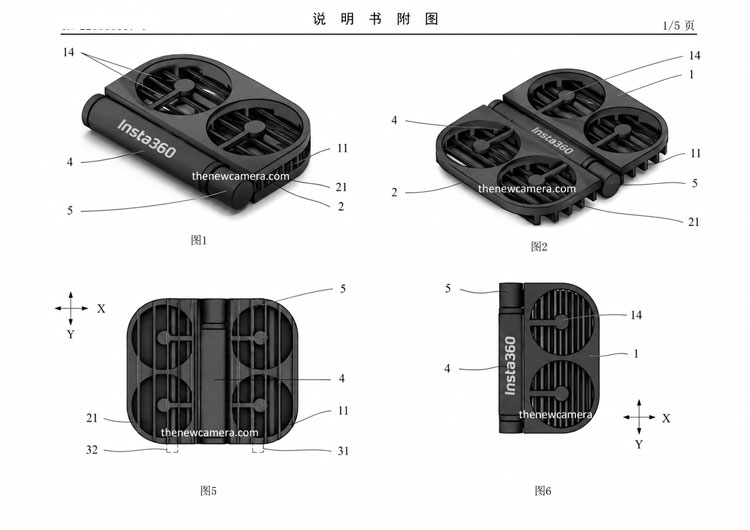
Insta360 Drone Patent CN223865117U: Technical Confirmation
This utility model patent, filed by 影石创新 (Insta360), directly supports the prototype design:
- Two structural members (arms) that move relative to each other via a shaft.
- Clearance spaces allowing parts to nest inside each other in folded mode.
- Goals: Significant size reduction for storage/transport, protection of propellers and arms, and overall miniaturization.
- Includes locking mechanisms for safe transition between folded and flight modes.
This is not just any foldable drone — it is engineered for practicality and durability, exactly what a real-world Neo competitor needs.
Why This is Significant
Insta360 is not restricting itself to gimbals or pocket cameras. Neither are they putting all their attention into only and specifically making 360 products. They are expanding, and expanding in a very beautiful manner. They have just covered the pocket gimbal camera market.
With the Antigravity A1 already delivering 8K 360° aerial footage, this second model targets the high-volume entry-level compact drone segment dominated by DJI’s Neo series.
Expect features such as:
- Insta360’s class-leading 360 stitching and reframing
- FlowState stabilization
- Palm takeoff and intuitive controls
- Excellent portability for creators on the go
Insta360 Upcoming drone: Arrival Date / Launch Timeline
Likely Q4 2026 or Q1 of 2027, positioned as a more affordable companion to the flagship A1 to avoid sales overlap.
Insta360 was very busy with their pocket gimbal camera announcement just after the Antigravity A1 drone. Now they are busy, as we all know, and we have covered that also, with the Insta360 X6 camera announcement, one of their flagship 360 cameras, and after that, they have the scheduled Insta360 Pro 3 announcement before the 2026 wrap-up. So, the compact mysterious Neo competitor’s expected arrival timeline lies somewhere between Q4 2026 and the first quarter of 2027.
What are your expectations?
Will you prefer this Insta360 Neo-style drone over the DJI Neo 2 for its potential 360 features? Share your thoughts in the comments below.
We will continue tracking this project and update with any new leaks, official specs, India pricing, or availability details.
The article “Insta360 True DJI Neo 2 Competitor Emerges: Foldable Drone Prototype Patent Details Surface” was written by thenewcamera.com team on 9:38 am, Saturday, 11 July 2026, Greenwich Mean Time (GMT)| You can also follow us on Our Official Social Media Handles FACEBOOK | TWITTER | INSTAGRAM > get live news — > DJI Rumors
By admin, on July 10th, 2026
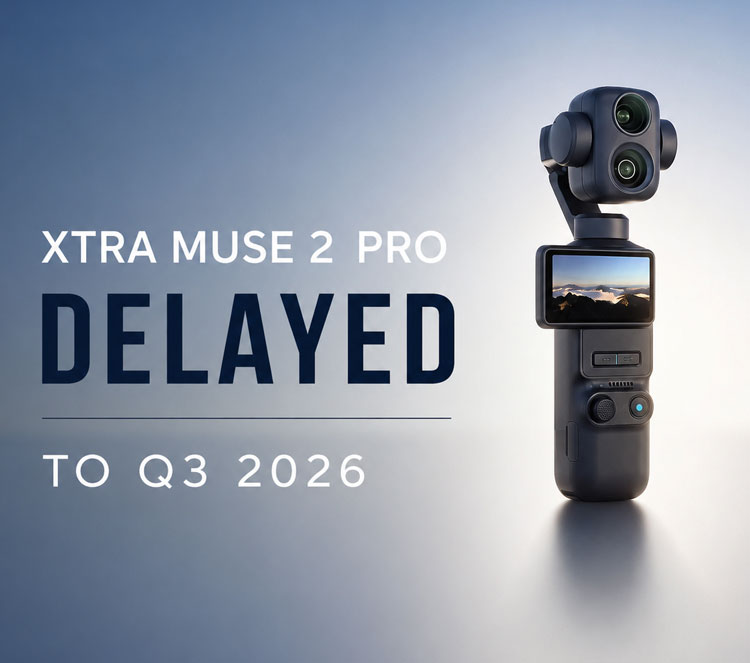
The best alternative for the DJI Osmo Pocket 4 Pro, the Xtra Muse 2 Pro, a kind of US edition of the DJI Pocket 4 Pro, has been delayed, and we are going to explain why, and how we came to know that it has been delayed, and what is the possible announcement window of the camera. So, let’s explore all the facts, one by one.
Why Was the Xtra Muse 2 Pro Delayed?
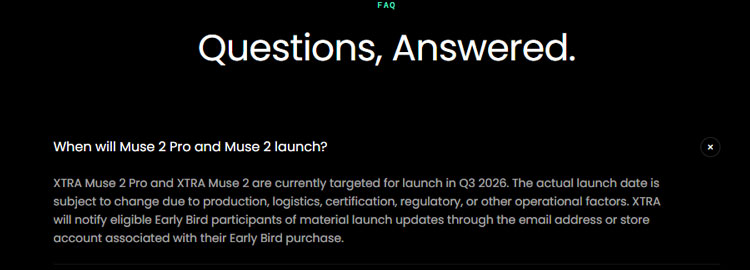
Xtra did not issue a dramatic “we are delaying” press release. They have smartly updated their faq section where the announcement date has changed from earlier “mid-2026 / summer” expectations to a confirmed Q3 2026 target.
Official Reasons (Direct from Xtra’s FAQ)
Xtra states the launch is subject to change due to:
- Maybe due to the Production line issue, scaling up the production line for the new dual-lens system (1-inch sensor + dedicated 3x zoom module)
- Logistics, supply chain and clearing up old stocks to make space for new one
- Certification and regulatory requirements
- Other operational factors
This is standard language for complex new gimbal cameras. The Muse 2 Pro is a significantly more ambitious product than the original Muse
It packs a high-quality dual-lens camera capable of shooting 4K at 240 fps, something that is not possible with existing competitors featuring a dual-lens camera setup. Other than that, a lot of Xtra Muse 2 Pro camera bodies have been distributed among influencers and content creators for final testing purposes, and after user reports and hands-on testing, they will finally put the Xtra Muse 2 Pro into the production line for the masses by updating and implementing the final set of changes suggested by the pro users, content creators, and influencers who are using it extensively right now before the official announcement.
The broader context: DJI continues to face US availability challenges with the Pocket 4 Pro. Xtra is stepping in to fill that gap with a very similar product, but building a reliable dual-lens pocket gimbal at scale takes time.
How Did We Find Out About the Timeline Change?
We tracked this directly from official sources:
- Xtra’s Own Early Access Page (Current FAQ) — This is the primary source. They explicitly list Q3 2026 as the target and list the possible reasons above.
- Previous Official Statements — In April 2026, Xtra said the Muse 2 series was “expected to launch in the U.S. around mid-2026.” By mid-June, the Early Access page had shifted the language to the broader Q3 window.
- Community & Media Tracking — Reddit (r/osmopocket), PetaPixel, and creator discussions noted the move from optimistic summer dates to Q3. No major red flags — just normal product development caution.
In short: This wasn’t hidden information. It came straight from Xtra updating their own official FAQ as they got closer to production.
What’s the Next Possible Announcement or Update Date?
Here are the key upcoming milestones:
- Late July – Early August 2026 — Most likely window for final announcement date teasers, more concrete updates on pre-order dates, final pricing confirmation, and shipping estimates.
- Q3 2026 (July–September) — Official targeted launch window. Many expect pre-orders or initial shipping to begin in this period, with broader availability following.
Xtra has committed to notifying Early Bird participants directly via email when there are material updates.
Why Xtra Muse 2 Pro Is the Best DJI Alternative (Especially If You Don’t Want Insta360 Luna Ultra)
Many US creators are choosing between:
- Waiting indefinitely for official DJI Pocket 4 Pro availability
- Paying premium grey-market prices with support risks
- Already connected to the DJI ecosystem
- A little bit more affordable than the competition
- Warranty and Service Support
Here’s why the Xtra Muse 2 Pro stands out as the strongest practical choice right now:
- Much Better Price Positioning
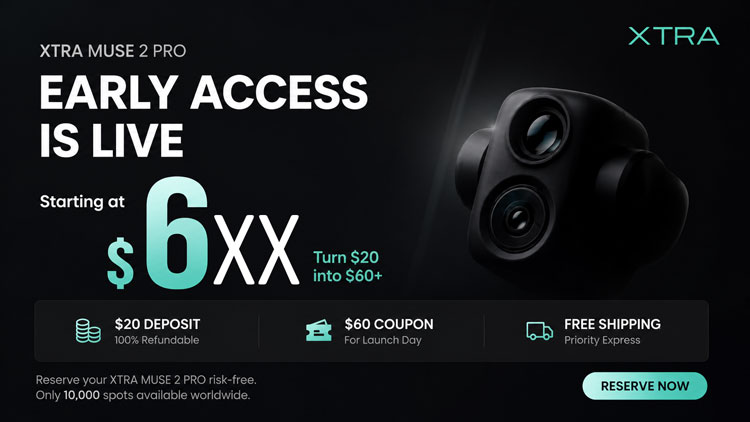
Expected ~$649 to 699 (additional Early Access $60 coupon). That’s noticeably cheaper than the Luna Ultra while delivering very similar dual-lens + 1-inch sensor performance.
4th generation of DJI pocket gimbal camera; they do know what they are making at the very same time the pocket gimbal camera series from DJI is a time-tested thing, and the same hardware config we are getting in Xtramuse 2 Pro
- True US Availability & Support
Xtra is a US-registered brand with local shipping, Early Access perks (free Priority Express Shipping), and easier warranty/support paths. No grey-market uncertainty.
- Practical Design Advantages Over Both DJI and Luna Ultra
- Native 1/4″-20 tripod thread built-in (huge for vloggers and run-and-gun shooters)
- Bi-directional flip screen (more versatile than many competitors)
- Slightly lighter than the DJI Pocket 4 Pro
- Specs That Match What DJI Fans Want
- 1-inch sensor + dedicated 3x zoom module
- Up to 17 stops dynamic range + 10-bit X-Log 3
- 4K/240fps slow motion
- 103GB internal storage
- Strong low-light performance (already shown in official teasers)
- Avoids the “Upgrade Tax” of Luna Ultra
If you like the DJI Pocket form factor and ecosystem feel but don’t want to spend extra for Insta360’s specific features or ecosystem, the Xtra Muse 2 Pro gives you the closest experience at a better price with faster US access.
Final Verdict for US Creators
The shift to Q3 2026 is a normal production timeline adjustment for a complex new dual-lens camera — not a major setback. Xtra has been transparent through their official channels, and the product remains one of the best ways for American creators to get DJI-like pocket gimbal performance without the availability headaches or the higher cost of the Insta360 Luna Ultra.
If you want a reliable, well-specced dual-lens pocket camera this summer or early fall, the Xtra Muse 2 Pro (with the low-risk $20 Early Access deposit) is currently the smartest move.
Reserve your spot here: Xtra Muse 2 Pro Early Access
Would you rather wait for more concrete shipping dates, or are you planning to secure Early Access now? Let us know in the comments – we’re tracking this closely and will update as soon as new information drops.
The article “Xtra Muse 2 Pro Delayed to Q3 2026” was written by thenewcamera.com team on 9:28 am, Friday, 10 July 2026, Greenwich Mean Time (GMT) | You can also follow us on Our Official Social Media Handles FACEBOOK | TWITTER | INSTAGRAM > get live news — > DJI Rumors

By admin, on July 10th, 2026
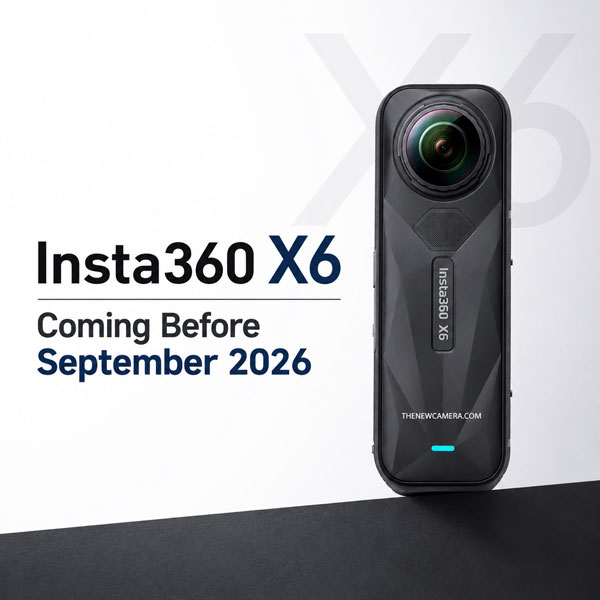
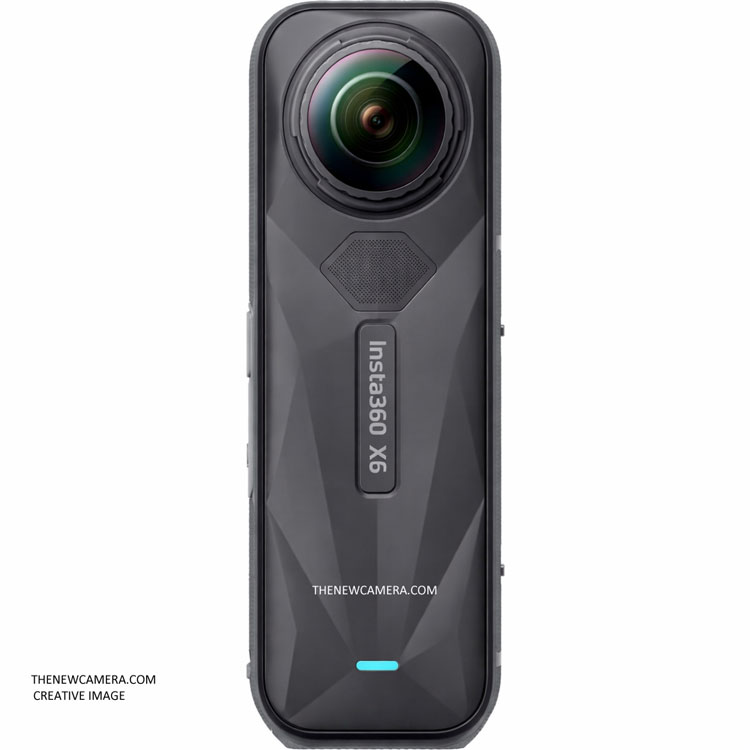
The Insta360 X6 rumours are heating up fast after the camera cleared full FCC certification on July 3, 2026. With our previous coverage on the certification details and tightening launch window, many US creators are now asking the practical question: Should I buy the X5 now, or wait for the X6? So let’s explain here why the camera is coming before Sep of 2026, and should you wait for it or not, depending on price factor and features or X5 is still a better option.
Historical launch pattern of the Insta360 X series
| Model |
Regulatory / FCC Timeline |
Official Announcement |
Gap |
| Insta360 X3 |
FCC cleared in August 2022 |
September 8, 2022 |
~3–5 weeks |
| Insta360 X4 |
FCC & regulatory approvals in March 2024 |
April 16, 2024 |
~4–6 weeks |
| Insta360 X5 |
FCC & global certifications in March 2025 |
April 22, 2025 |
~4–6 weeks |
| Insta360 X6 |
FCC Grant: July 3, 2026 |
Predicted: Late August – Early/Mid September 2026 |
~6–10 weeks (estimated) |
Why the Insta360 X6 Is Expected Before September 2026 – Detailed Timeline Analysis
Let us, explain step by step why the Insta360 X6 is coming in late August to early/mid-September 2026. Let’s start with the FCC grant, and then we will move forward.
- FCC Grant Date: July 3, 2026. The filing includes detailed test reports for Wi-Fi (2.4 & 5 GHz), Bluetooth, and SAR (Specific Absorption Rate) compliance — everything needed for legal US sales.
- Historical Precedent from Insta360:
- Both the X4 and X5 followed a very consistent pattern: FCC certification → announcement in 4–8 weeks → shipping shortly after.
- This timeline has held steady across recent flagship releases.
- Multi-Region Certification Pattern: Clearances in the USA, China (March), UAE (March), and India, followed by the US in early July, mirror the exact sequence used for previous models. This coordinated approach usually signals a global launch is weeks away, not months. As usual, they need to clear up the stock of the existing models to make the new ones.
- Industry Norms: Consumer electronics companies (like Insta360) rarely sit on FCC-approved products for long. From the Date of Registration of the product, they generally announce the product within the FCC Deadline period.
- Current Consensus Across Sources: Photography sites, Reddit communities (r/Insta360), and YouTube analysts all align on a late August to September 2026 window. No major delays have been reported.
Bottom line for US readers:
Insta360 X5 is, without a doubt, one of the best 360 cameras for Moto bloggers and for those who love to capture everything while they are moving. The next-generation X6 will have a drastic set of improvements, as usual for Insta360′s products. And since we do have confirmation about the arrival of the product, that clearly indicates the announcement is near. As soon as the announcement date approaches, we will have more and more information, for example, images as well as the detailed core specifications of the upcoming camera.
Insta360 X5 vs X6 Rumored Specs Comparison
| Feature |
Insta360 X5 (Shipping Now) |
Insta360 X6 (Rumored) |
| 360 Video |
8K at 30fps |
8K at 60fps |
| Single Lens Video |
5.7K60fps |
5.7K120fps (expected) |
| Sensors |
Dual 1/1.28-inch |
Larger (1-inch or improved) |
| Still Photos |
72MP |
100MP+ |
| Low Light & HDR |
Very Good |
Significantly Better (rumored) |
| Battery Life |
Excellent (~3 hrs) |
Similar or slightly better |
| US Launch Price (est.) |
$499–$549 street |
$549–$599 MSRP |
Who Should Buy the X5 Right Now
- You have shoots, vacations, or client work in the next 6–10 weeks.
- You want immediate access to a fully mature camera with widespread accessories and proven performance.
- You prefer saving money — the X5 is widely available at competitive prices today.
Who Should Wait for the X6
- You shoot a lot of fast-action or low-light 360 content where 8K60 and better sensors will make a real difference.
- You don’t mind waiting until late August or September.
- You want the newest flagship with future-proof features.
Final Recommendation
If you need a 360 camera this summer, buy the X5 now — it’s an outstanding product that won’t disappoint.
If you can wait 6–10 weeks and want maximum performance, hold for the X6.
We’ll update this article the moment Insta360 makes the official announcement. Drop your plans in the comments — are you buying the X5 or waiting for the X6?
Last updated: July 10, 2026
Sources: Official FCC database, Insta360 historical patterns, cross-verified industry reports.
The article “Insta360 X6 Coming Before September 2026” was written by thenewcamera.com team on 9:28 am, Friday, 10 July 2026, Greenwich Mean Time (GMT) | You can also follow us on Our Official Social Media Handles FACEBOOK | TWITTER | INSTAGRAM > get live news — > DJI Rumors
By admin, on July 9th, 2026
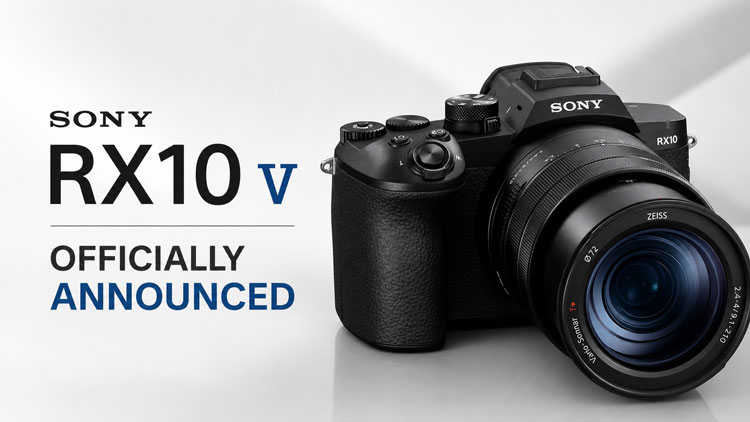
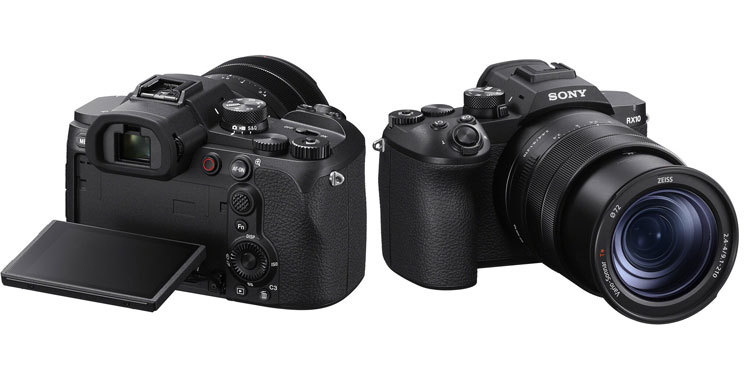
Finally, after 9 years, Sony has announced a new update to its MegaZoom camera, the RX10 V. The fifth generation of Sony’s prosumer bridge camera. The new camera is loaded with the BIONZ XR + AI Processing Unit for faster, seamless AF while capturing your moving subjects, as well as 4K video up to 120 FPS (cropped). Let’s have a look at the set of core specifications the Sony RX10 V camera offers to us.
Sony RX10 V Key Specifications
- Sensor: 20.1MP 1-inch stacked Exmor RS CMOS
- Lens: ZEISS Vario-Sonnar T* 24-600mm f/2.8-4.0 (25x optical zoom)
- Processor: BIONZ XR + AI Processing Unit
- Burst: 30 fps blackout-free with AF tracking
- AF: Real-time Recognition AF (Humans, Animals, Birds, Vehicles, Planes + Human Pose Estimation)
- Video: 4K 120p (cropped), 4K 60p full width, 10-bit, S-Log3, S-Cinetone, LUT support
- EVF: 3.68M-dot OLED
- LCD: 1.62M-dot tilting screen
- Battery: NP-FZ100 (~630 shots)
- Price: $2,300 USD (expected India price: ₹1,95,000 – ₹2,20,000)
Availability: Early August 2026 globally. India launch expected shortly after.
Major Upgrades Over RX10 IV (Quick Comparison)
| Feature |
RX10 IV (2017) |
RX10 V (2026) |
Improvement |
| Processor |
BIONZ X |
BIONZ XR + AI |
Huge |
| Burst Shooting |
24 fps |
30 fps blackout-free |
Better |
| AF System |
Good |
Advanced AI Subject Recognition |
Major |
| Video |
4K 30p |
4K 60/120p + 10-bit |
Massive |
| Battery |
NP-FW50 |
NP-FZ100 |
2x+ life |
| Price (Launch) |
~$1,700 |
$2,300 |
Inflation-adjusted |
Pros & Cons
Pros:
- Incredible 24-600mm reach in one lens
- Modern AF performance for wildlife & sports
- Excellent video capabilities for vloggers/creators
- Much better battery life
- Improved ergonomics and menus
Cons:
- Premium pricing
- Mechanical shutter limitations in bright conditions
- Still relatively bulky
- No in-camera Raw processing
Should You Buy the Sony RX10 V in USA?
- Yes, if: You want a true do-it-all camera for travel, wildlife, events, or family without carrying multiple lenses. Perfect for creators who also shoot video.
- Wait/Skip if: Budget is tight — the older RX10 IV is still excellent and much cheaper now.
- Alternatives: Nikon Coolpix P1000 (more zoom, smaller sensor), Sony A6700 + telephoto lens, or Canon PowerShot options.
What do you think of the RX10 V? Are you planning to upgrade or sticking with your current gear? Comment below!
Preorder | Buy from here – B&H Strore – Amazon.com
Stay tuned for more updates and sample images
GET LIVE NOTIFICATION, Select Your Trusted Source GET LIVE NOTIFICATION Click ON Check BOX for Latest NEWS and Rumors
The article “Sony RX10 V Officially Announced: 24-600mm Superzoom Gets Massive 2026 Upgrade After 9 Years!” was written by thenewcamera.com team on 7:03 pm, Thursday, 9 July 2026, Greenwich Mean Time (GMT). | You can also follow us on Our Official Social Media Handles FACEBOOK | TWITTER | INSTAGRAM >see more Sony Alpha Rumor Latest Camera News
By admin, on July 9th, 2026

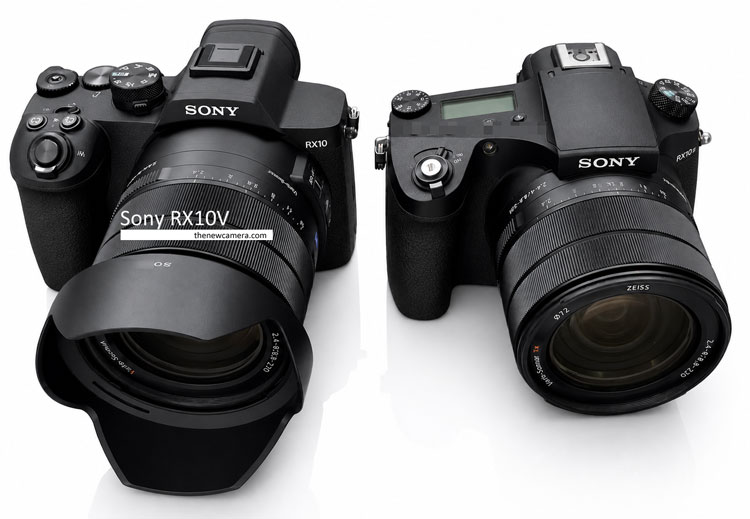
We have a leaked image of the upcoming camera and the confirmed announcement date. The leak shows a significant update in the body design of the RX10 camera. Earlier, in the RX10 IV, the design was quite conventional, but in the new RX10 V, we have a brand-new body with extensive manual controls on the top and multiple control dials/jog dials on the rear and front end of the camera to customize as much as possible.
Design changes include a modern Alpha-style grip, removal of the top LCD, a new AF/MF switch, a custom button, and an updated lens barrel. This confirms Sony is giving the long-dormant RX10 series a proper modern update.
Nearly nine years after the RX10 IV, the Sony RX10 V is finally coming in July 2026. Here is our detailed analysis of what US photographers and content creators can expect.
Leaked Image
Detailed Rumored Specifications & Analysis
| Feature |
RX10 IV (2017) |
RX10 V (Rumored 2026) |
| Sensor |
20.1MP 1″ Stacked |
20MP 1″ Stacked (minor refresh) |
| Lens |
Zeiss 24-600mm f/2.4-4 |
Same Zeiss 24-600mm f/2.4-4 |
| Processor |
BIONZ X |
BIONZ XR2 + AI Unit |
| Autofocus |
315 PDAF |
Advanced AI Real-time Eye AF (Birds/Animals/Humans) |
| Video |
4K 30p |
4K 60p / 120p, S-Log3, LUTs |
| Connectivity |
micro-USB |
USB-C |
| Ergonomics |
Older grip |
Alpha-style grip + custom controls |
If you really require a compact megazoom camera, the Sony RX10 V is one of the best options right now, as it combines a 600mm-equivalent optical zoom with the same sensor’s unparalleled performance.
In-Depth Analysis: Is the RX10 V Worth Upgrading?
Strengths:
- The combination of 600mm reach + 1-inch sensor remains unique in 2026. No other bridge camera matches this optical performance.
- AI Autofocus upgrade will be the biggest real-world difference — previous model felt dated in subject tracking.
- Improved video specs finally make it competitive for YouTube creators and hybrid shooters.
- Likely excellent battery life and weather sealing (typical for the series).
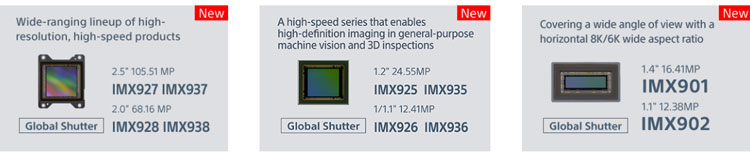
Sony Imaging’s decision to have one of the most advanced global shutter sensors like the IMX 925 1/1.1-inch sensor, this new generation of sensors excels in quality and performance compared to the previous generation of sensors. With a massive update in body design, an improved processor, and the new integrated BIONZ XR chip. If they have updated the sensor, it would be a massive update. But, unfortunately, the sensor remains the same as of a 9-year-old Sony RX10 IV.
Potential Weaknesses:
- Same base, even after 9 years? Why? Sony imagine devsison is one of the most advanced semiconductor sensor of the world.
- Supplying latest generation of 1 and lens means image quality leap won’t be dramatic compared to RX10 IV. Will remain almost the same
- Price increase to ~$1,900 range may make some buyers consider used RX10 IV + newer mirrorless + telephoto instead.
- No IBIS mentioned in rumors (a common request).
Who Should Buy in the US?
- Serious wildlife/bird photographers who value reach and simplicity.
- Travel photographers who hate changing lenses.
- Hybrid creators needing a capable all-rounder.
- Current RX10 IV owners: Worth upgrading only if AF and video are major pain points.
Expected US Pricing & Availability
- Predicted MSRP: $1,899 – $1,999
- Street Price at Launch: $1,799 – $1,949
- Strong stock expected at B&H Photo Video, Amazon.com, Adorama, and local camera stores.
This pricing keeps it premium but competitive against high-end alternatives.
Final Verdict
The Sony RX10 V appears to be a smart, focused evolution rather than a revolution. Sony is keeping the legendary Zeiss lens + 1-inch sensor combo while fixing the two biggest complaints (AF and connectivity). For many US users, this could be the best all-in-one superzoom camera in 2026.
We will update this article within hours of the official announcement with full specs, real US pricing, sample images (if released), and detailed buying recommendation.
What are your thoughts on the RX10 V? Would you upgrade from the RX10 IV? Drop your comments below.
The article “Sony RX10 V First Leaked Image, Rumored Specs & Expected US Price Analysis – July 2026” was written by thenewcamera.com team at9:18 am, Thursday, 9 July 2026, Greenwich Mean Time (GMT) | You can also follow us on Our Official Social Media Handles FACEBOOK | TWITTER | INSTAGRAM > get live news — > DJI Rumors
By admin, on July 8th, 2026
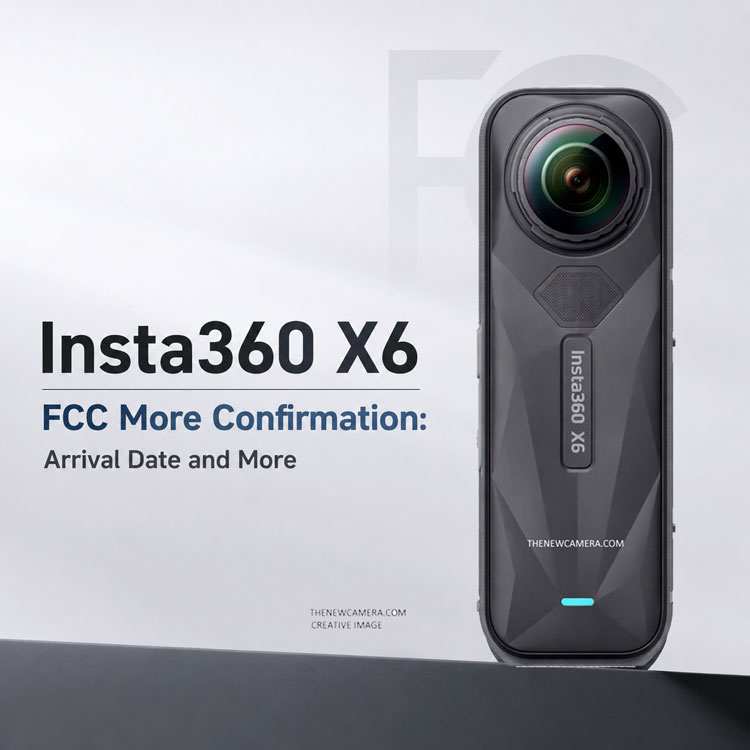
We have more confirmation related to the upcoming Insta360 X6 camera. We have just reported that the camera has received the full FCC certification grant from the United States of America, and now one of the most trusted sources and influencers has provided some sort of additional confirmation that strengthens the timeline for the next generation of the Insta360 flagship camera. So, let’s dive into the details and explore the set of the most authentic information we have related to the upcoming camera.
More Confirmation from trusted sources
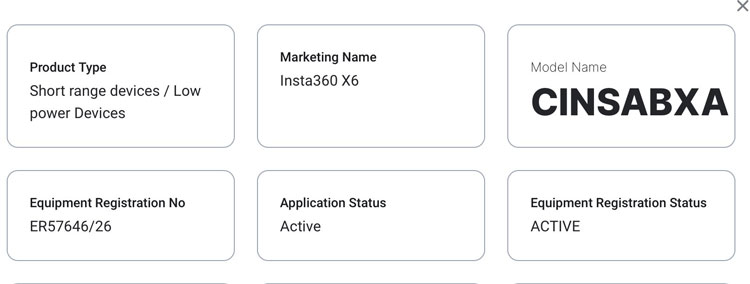
Italian creator and long-time Insta360/DJI specialist Mauro Tandoi – known for his deep dives into HLG workflows and early product insights related to DJI as well as intsa— posted fresh details aligning perfectly with the recent regulatory filings. This comes on the heels of the FCC ID 2AWWH-CINSABXA receiving full approval on July 3, 2026.
Mauro’s update adds credibility to what we already reported: the Insta360 X6 (model CINSABXA) is production-ready and targeting a global launch, including official US availability.
Cross-Verified Regulatory Timeline
We continue to track multiple official sources:
- USA (FCC) — Full grant issued July 3, 2026. Includes comprehensive testing for Wi-Fi (2.4/5 GHz), Bluetooth, SAR, and antenna performance.
- China — Initial registration appeared on March 23, 2026.
- UAE — Active filing (ER57646/26) on March 31, 2026, explicitly naming “Insta360 X6”.
- India — Additional certifications reported in community channels.
This multi-country pattern mirrors the successful pre-launch process of the Insta360 X4 and X5.
Expected Announcement & Release Window
So, let’s discuss the expected announcement and release window of the upcoming Insta360 X6 camera now. Since we have details about the registration period of the camera, if we conclude arrival time of the camera on the previous pattern of Insta360 product announcements after the registration, then the announcement window falls somewhere between August and September 2026.
Current Consensus (July 2026):
Official announcement likely in late August to September 2026, with shipping to follow shortly after. This positions the X6 as a strong competitor to DJI’s Osmo 360 series.
Rumored Insta360 X6 Specifications
Take a look athe at the rumoured specifications of the upcoming camera,
- Video: 8K60fps 360° recording (big jump from X5’s 8K30fps), with possible 10-bit colour and enhanced HDR.
- Sensors: Larger sensors (rumours of 1-inch or dual 1/1.28″ class) for significantly better low-light performance.
- Photo: Over 100MP resolution with improved stitching algorithms.
- Battery & Build: Larger capacity (2,600–3,000mAh), maintained waterproofing and rugged design.
- New Features: Advanced AI tracking, faster processing, and deeper app integration.
Pricing Expectations (US)
- US MSRP: $549 – $599 for the standard bundle (camera + basic mounts and lens guards). Street price likely around $579 at launch.
Why This Matters for Creators
Insta360 has already created a huge subscriber base in the United States of America as well as among 360 camera users worldwide, especially moto bloggers and content creators, who love to have a 360 camera to capture everything everywhere and later focus on anything important that they have captured. Are you people waiting for the new generation of cameras to elevate your content production quality? The Insta360 X6 will be the only 8K 360 camera option, right now, available to US-based professional content creators.
The X6 is shaping up to be Insta360’s biggest hardware leap yet as competition in the 360° space heats up.
What do you think? Drop your predictions for specs, price, or exact launch date in the comments below!
Sources: Official FCC database, UAE Equipment Registration, Mauro Tandoi (@MauroTandoi), prior thenewcamera.com coverage, and community analysis (as of July 7, 2026).
Previous articles for reference:
Insta360 X6 Coming to USA – FCC Certification Confirmed
Insta360 X6 Latest News – Expected US Price & Arrival

|
KEEP THIS BLOG ALIVE - Support New Camera Buy Canon Lenses, Buy Music CD or Digital Camera at amazon it helps this site, and you do not pay anything extra, it is just a way to help support this site.

|