Join More Than 50,000+ Subscribers and get latest camera news and rumors
NEW CAMERA VIDEOS ON YOUTUBE
|
By admin, on December 11th, 2024 
Nikon Z9 will get the Expeed 8 image processor. That means we will get a massive update in the processing power of the existing Z9 camera, which will directly affect the autofocusing algorithms, specifically 3D object tracking, continuous shooting speed, video recording resolution, and frame rate. So for sure, we will have a massive update in the camera’s core specifications. The camera is expected to arrive in the fourth quarter of 2025.
List of FX Bodies to be announced with Expeed 8 Image processor in the near future
- 2028 — Z50 III, Z6 IV
- 2027 — Zf II [Late 2026 or early 2027], Z8 II
- 2026 — Z30II [Q1 of 2026 or Late 2025]
- 2025 — Z9 II, ZfcII (bold indicates likely EXPEED8 cameras)
- overdue: Z5II, Z7III
If we closely study the announcement pattern of Nikon then after the Z9 II, the most eligible FX-format Mirrorless body is the Nikon Zf II waiting for an update.
Stay tuned will will bring more updates soon.
Follow us on our social pages FACEBOOK | TWITTER | INSTAGRAM to get live Camera News + Nikon Rumors 24X7.
source
By admin, on December 8th, 2024  Sigma is working on a telephoto lens that has never existed before, , so that is statement is very deep, Sigma already has a bunch of telephoto zoom lenses and Primes that also include the recently announced 60 to 600 mm lens, 150 to 600mm lenses for Mirrorless cameras, and we also have telephoto prime like the 500mm F5.6 (Sony E and Leica L), so we have a huge range of telephoto lenses from Sigma already. So that would be a very interesting thing to look forward to what’s coming next from Sigma.

A part of interview
Question by the interviewer (Tell us a bit about the new products you have coming up.)
We are currently working on many projects, all of which we are very excited about. One product that I am particularly excited about is a telephoto lens that has never existed before. I think this lens will be very attractive to sports and wildlife photographers. I can’t tell you the exact time of its release, but we are currently working very hard on the product.
It seems that Sigma is developing a telephoto lens with unprecedented specifications. What exactly is “unprecedented” about it? Lets wait and watch…
Get LIVE RUMORS –> FACEBOOK | TWITTER | INSTAGRAM to get live news + Sigma Rumors
By admin, on December 7th, 2024 
According to the latest rumors from one of the most popular sources, the next Sony camera will have no front digital nameplate, only the Alpha logo. So what exactly does that mean, and how reliable is this information? Yes, we are going to analyze it below.

Source of the Rumor
The information is coming from one of the most popular Weibo handles, E88_888. If you talk about the source, it continuously shares information related to Sony’s upcoming sensors and camera registrations. In the past, even the recent Sony A7 V camera details were leaked by the same source. If you check the previous leaks, they have been accurate most of the time. But again, since it’s the rumor world, we can always have some space for incorrect information. More or less, the sort of information we generally get from this particular source is perfect and true.
Possibility 1: Retro-Style Camera
Let’s analyze what type of camera we can have from Sony if it only includes the Alpha logo and not a model name or a model code.
A retro-style Sony camera is missing from the entire lineup. None of the Sony cameras feature extensive manual controls over the body or a retro design.
So, there is a high possibility that in early 2025, we will see a retro-style Sony camera specifically made for photographers, which carries approximately 70 to 80% of the core specifications we have already seen in the Sony A7 IV camera, paired with the advanced Bionz XR image processor as well as an AI chip. Such a camera can directly compete against the Nikon Z f camera, which has been quite popular among its users, specifically wedding photographers in the Asian region.
Possibility 2: Exclusive Branding for a Flagship Camera
The second option we have is exclusive branding for a flagship or a special edition camera. Since we already have the Sony Alpha A1 Mark II camera, expecting another flagship camera with exclusive branding might be too much to expect from the brand.
Possibility 3: Limited Edition Camera
Another option is a special edition camera limited to 100 or 500 units, with specific signatures, color modules, or color themes. Other camera makers have done this in the past. Specifically, Leica and Hasselblad are very common with this.
Possibility 4: Prototype Misunderstanding by the Source itself
The main point we are completely missing here is that there is a possibility that Sony is currently testing a prototype, and someone who has just witnessed or seen that particular model without any specific model code has started thinking that a new breed of camera is about to arrive. So, there might be some confusion related to the existing prototypes, which do not have any sort of branding on their bodies..
Let me know in the comments, what do you think. what could be the next Sony camera with only the Alpha Logo and no model code name?
Follow us on our social pages FACEBOOK | TWITTER | INSTAGRAM, If you have time –>see more Sony Alpha Rumor
source E8M_8888
By admin, on December 6th, 2024 
Let’s go to the best lenses for the Nikon Z50 Mark II camera, starting from the wide-angle lenses to primes and then telephoto primes. We will discuss each and every lens and their uses, so let’s begin the guide.
1. Wide-angle lenses for Vlogging and Photography
Travel Bloggers or Indoor Architecture Photographers
If you are a travel blogger or an indoor architecture photographer, you need an ultra-wide prime lens with a bright aperture that will allow you to produce exceptional-quality videos as well as images.

Best Lens for shooting handheld vlogs under any light | Also perfect for shooting landscape and architecture
Get Viltrox 13mm F1.4 Lens from B&H Store and Amaon.com
Viltrox 13mm f/1.4
One of the best ultra-wide prime lenses with the brightest aperture possible. This lens is highly recommended for travel vlogging or for those who want to capture an entire environment along with themselves. The f/1.4 bright aperture will allow you to capture ultra-low-light footage even in the darkest situations.
So, without a doubt, if you are a travel blogger or an architecture photographer who loves to grab ultra-wide indoor or outdoor architecture shots, the Viltrox 13mm f/1.4 is highly recommended for you.

Get Sigma 16mm F1.4 Lens from Amazon.com and B&H Store
Sigma 16mm f/1.4
The Sigma 16mm f/1.4, which wasn’t available a year ago, is now an option.
This lens isn’t as ultra-wide as the Viltrox 13mm f/1.4. The 13mm is better when you want to showcase the entire environment along with yourself in a broader manner, despite the slight ultra-wide lens distortion. You can also use E-VR effectively.
However, if you are a daily life content creator or blogger who prefers an ultra-wide lens that captures in a proper manner without introducing much wide-angle distortion in video footage, then the Sigma 16mm f/1.4 is a great choice.
This lens is not only recommended for vlogging but also for creating talking-head videos by keeping your camera close to you. It is highly usable.
For photographers, this ultra-wide-angle lens, with its high-quality optics, can be used for astrophotography as well as capturing wide and vivid landscapes.
2. Street Photography, Vlogs & Portrait Lenses
Now let’s talk about the best lens for street photography — a perfect 35mm equivalent prime lens for your Nikon Z50 Mark II camera.
We have three different options for street photography, including one from Sigma.

Get Viltrox 20mm F2.8 Z Mount Lens form B&H Store and Amazon.com
Viltrox 20mm f/2.8
If you love to shoot street photography on a budget, the Viltrox 20mm f/2.8 is highly recommended. Priced at just $158, it’s great in terms of budget and quality.
The 20mm lens is a full-frame lens, so you can use it later on with full-frame cameras. On the Nikon Z50 Mark II (with a 1.5x crop factor), the equivalent focal length is about 30mm. This makes it an excellent everyday street photography lens for most daylight shots.

Get Viltrox 27mm F1.2 PRO Lens from Amazon.com and B&H Store
Viltrox 27mm f/1.2 PRO
If your budget allows, the Viltrox AF 27mm f/1.2 lens is one of the best lenses for street photography. With this lens, you will get a 40mm equivalent focal length on the Nikon Z50 Mark II, providing exceptional image quality with the brightest aperture in this range.
For daytime shots, dramatic effects can be achieved using the maximum f/1.2 aperture, though a neutral density (ND) filter may be required.
This lens is also suitable for creating talking-head videos with maximum depth of field.

Get Sigma 30mm F1.4 Lens from B&H Store and Amazon.com
Sigma 30mm f/1.4
The Sigma 30mm f/1.4 is a popular lens among content creators and portrait shooters. On an APS-C format camera like the Nikon Z50 Mark II, it offers exceptional quality optics for professional portraits or street photography.
It is often referred to as the modern “nifty fifty.” If you’re a YouTube content creator, this is the best lens for talking-head videos, provided you maintain a 4 to 5-foot distance from the camera. Tight framing may occur if space is limited.
3. Wedding Photography Lenses
For wedding photographers, you need two types of lenses:
- A portrait prime lens for pre-wedding shoots and capturing candid moments.
- A coverage lens to document the entire event and rituals.
Portrait Lens for Weddings
The Sigma 30mm f/1.4, discussed earlier, is excellent for portraits and candids.
Coverage Lens for Weddings
In situations where the Sigma 18-50mm f/2.8 or the Tamron 17-70mm f/2.8 isn’t available for Nikon Z mount, the only viable option is:

Best coverage lens for wedding photographers | Get 18-140mm Lens from Amazon.com | B&H store
Nikon Z DX 18-140mm f/3.5-6.3 VR
This is the best coverage lens currently available for the Nikon Z50 Mark II. It’s recommended for wedding photographers and travel enthusiasts who need an all-in-one zoom lens.
However, for cinematic videos, prime lenses are always preferred over zoom lenses with variable apertures.
As you all know, the Nikon Z50 Mark II camera now supports bird-eye autofocus tracking, animal-eye autofocus tracking, and 9 different types of autofocus subject tracking modes. So, this is a perfect camera to be used as wildlife photography gear after the Z6 Mark III camera in Nikon. So, let’s discuss the best available wildlife photography lenses for the Nikon Z50 Mark II camera.
4. Budget Wildlife Photography Lens

Get DX 50-250mm Lens from Amazon.com and B&H Store
The most affordable wildlife photography lens for beginners and entry-level users who don’t want to spend thousands of bucks on a lens should buy the DX 50-250mm f/4.5-6.3 VR lens.
This is a very small, lightweight, and sharp lens, handy for beginners. It also has a quiet and fast autofocus system.
Two Best Wildlife Photography Lenses Available at a Very Reasonable Price

Get 200-500mm f/5.6E ED VR Lens B&H Store and Amazon.com
Nikon AF-S NIKKOR 200-500mm f/5.6E ED VR Lens
This lens is a DSLR lens and needs an FTZ adaptor to work with the Nikon Z50 Mark II camera.
This is one of the best budget wildlife photography lenses available, with such a high resolving capacity that it can even resolve the Z9 or Z8 40+ megapixel sensors.
Autofocus is really very fast and supports the latest generation eye autofocus tracking in mirrorless cameras. At the same time, you have a constant f/5.6 aperture throughout the zoom range.
This gives you an amazing creamy background blur if you shoot portraits at 200mm or 300mm with this lens.
I have also used the Tamron 150-500mm lens, but I was not satisfied with the optical performance I was getting with the Z-mount mirrorless lens made by Tamron. After using it for a while, I switched back to the AF-S 200-500mm with my Nikon ZF camera.
So, I will recommend this lens as one of the most budget-friendly wildlife photography lenses available, giving you 500mm reach. You can easily capture birds in flight at a very reasonable cost.

Get the 180-600mm lens B&H Store and Amazon.com
NIKKOR Z 180-600mm f/5.6-6.3 VR Lens
Another excellent lens we recommend is a mirrorless lens made by Nikon. Its optical performance is phenomenal, and you will never regret spending your bucks on this lens.
If your budget allows, this lens gives you 100mm more reach than the previous recommendation. The good thing is it is made for mirrorless cameras. Its autofocus motor has been optimized for both photography and videography use.
At the same time, the optical performance of this lens is top-class, and it provides clear shots even when hand-holding your camera, thanks to its highly effective optical image stabilization.
This particular lens is in such high demand right now that, at the time of writing this article, most units are out of stock in the retail stores I know in my personal hometown area.
If you can get this lens, it would be the best investment within the budget you’ve ever made for a wildlife photography lens.
Support us – Use or affiliate link Amazon.com | B&H Store for the next purchase u make – it helps us 🙂
By admin, on November 30th, 2024 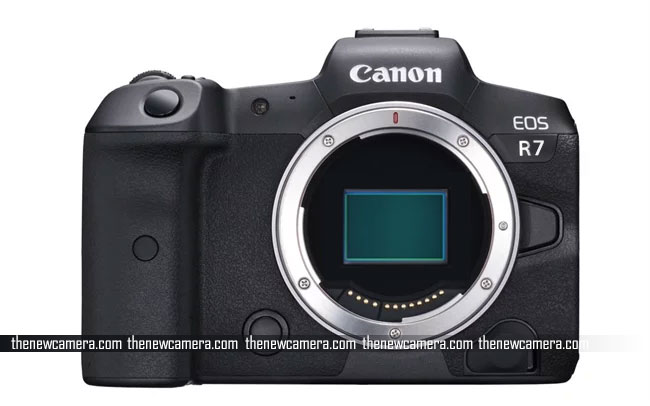
Canon will add 4K 120fps video recording capability to Canon R6 III as well as Canon R7 Mark II in 2025. According to the latest rumors, Canon is testing out the Canon R7 Mark II camera body prototypes, here is what surfaced over the web a while ago. “Despite the tech. designed to maintain DR and low-light performance, the sensor readout speed is impressively fast. With the Digic accelerator, it supports 4K at 120 FPS, but cropping happens in HQ mode. However, is that when you enable pixel binning, you can record 4K at 120 FPS without any cropping.”
One thing, if the above is true then the Canon R7 Mark II, without a doubt a video beast, even Sony FX30 does crop at 4k 120fps.
Stay tuned we will update you as soon as we get any new information
Get LIVE RUMORS –> FACEBOOK | TWITTER | INSTAGRAM to get live Camera News + Canon rumors 24X7
By admin, on November 27th, 2024 
According to the latest information on the web, Nikon engineers are working rigorously to bring out the next generation of Red cinema cameras under Nikon’s branding with 8K recording capability paired with the Z-mount / optional PL-Mount. The Working Prototypes of the cameras are under extensive testing, Design wise its inspired by the RED V-Raptor. The Camera is scheduled to arrive sometime in Q4 of 2025, but again, if it gets delayed due to issues occurring in the final production line model, then the announcement will get shifted to Q1 of 2026. So now we have the exact time frame for the next Nikon Red cinema camera.
Also see – Nikon KOMODO Z – What Can We Expect from Nikon?
Follow us on our social pages FACEBOOK | TWITTER | INSTAGRAM to get live Camera News + Nikon Rumors 24X7.
The post “Nikon RED Cinema Camera Coming in Q4 2025 – Latest Rumor” appeared first on thenewcamera.com
By admin, on November 23rd, 2024 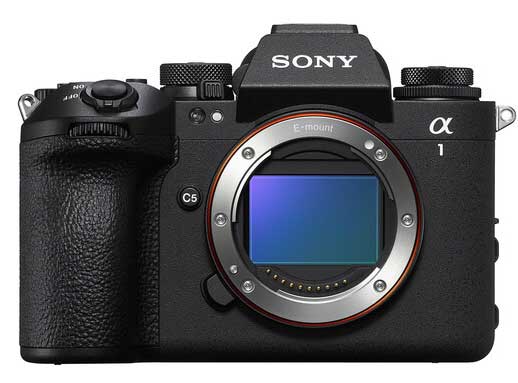
Sony A1 Mark II camera has been updated, and many new features have been added to it. In this particular article, we are going to discuss the set of updated features one by one. The total number of updates we have in the newest version of this camera is 15. So, let’s start with a comparison table that will let you know the type of updates and the differences we have between the first and second generation of this camera. Later on, we will discuss it briefly so you can understand it properly.
Comparison Table: Sony A1 vs. Sony A1 II
| Feature |
Sony A1 |
Sony A1 II |
| Processor |
Dual BIONZ XR |
Dual BIONZ XR + Dedicated AI Chip |
| Autofocus System |
Real-Time Tracking (Human, Animal, Bird) |
Advanced AI AF (Human, Animal, Bird + Insects) |
| Continuous Shooting |
30 FPS with compressed RAW |
120 FPS JPEG (crop mode), 30 FPS full-res RAW |
| Sensor |
50.1 MP Stacked CMOS |
50.1 MP Updated Stacked CMOS |
| Image Stabilization (IBIS) |
5.5 stops |
8 stops |
| Video Capabilities |
8K 30p, 4K 120p |
8K 30p, 4K 120p, [Better heat sink] |
| Dynamic Range |
15 stops |
15+ stops |
| LCD Display |
Tilting 3.0″ LCD (1.44M dots) |
4-axis Multi-Angle 3.2″ LCD (2.1M dots) |
| EVF Resolution |
9.44M dots, 240Hz refresh rate |
9.44M dots, 240Hz with improved optics |
| Ports |
USB-C 3.2 Gen 1, HDMI Type-A |
USB-C 3.2 Gen 2, HDMI Type-A (Full-Size) |
| Memory Card Slots |
Dual CFexpress Type A/SD |
Dual CFexpress Type A/SD |
| Subject Recognition |
Eye AF (Human, Animal, Bird) |
AUTO AF + Car, Motorcycle, Insect, Drone |
| Battery Life |
~530 shots (CIPA) |
~670 shots (CIPA) |
| Body Design |
Magnesium alloy |
Magnesium alloy with improved ergonomics |
| Price |
Approx. $5,498 B&H Store |
Approx. $6,498 B&H Store |
1. Sony A1 Mark II: AI Chip Upgrade
Sony has added the AI chip inside the Sony Alpha A1 Mark II camera, which Sony missed at the time of the original announcement. Not just that, the Sony FX3 Mark II also doesn’t have the AI chip, and the Sony A7 IV update is still due with any AI chip integration. All these cameras are the ones that need AI chip integration to enhance their performance. Fortunately, the Alpha A1 Mark II camera now has it, and it upscales the overall performance of the camera. The design has been inspired by the A9 III, which we will talk about in detail.
2. New Heat-Sink Unit
The design has been inspired by the Sony A9 Mark III camera. It has been said very clearly during the press that the heat sink mechanism of the camera has been improved in a way that ensures while shooting 8K video even in uncontrolled weather environments, it wouldn’t have any problem. As well as You will also get extended periods of high-quality 4K 120 FPS Recording.
3. Sony A1 Mark II AI-Powered Burst Mode
We now have an Enhanced 120 FPS AF/AE refresh cycle even when the camera is shooting at 30FPS RAW mode. in the A1 Mark II camera.
4. Sony also UPSCALED buffer memory up to 2X.
With this, you can now capture up to 240 RAW files at 30 frames per second and 400 frames of JPEGs. Earlier, RAW was limited to 155 frames, and JPEGs were limited to 165 frames in the Alpha A1 camera.
4. Sony A1 Mark II Image Stabilization Upgrade
The image stabilization hardware has also been improved compared to the Sony Alpha A1. Earlier, it was limited to 5.5 stops; now, the hardware has been upscaled to an 8.5-stop rating. It’s the maximum physical limit available in any camera out there, so now you have a significant improvement compared to the original A1 camera.
5. Video – AI Chip and New Design, Bring a lot of improvement
The resolution and frame rates remain the same as those of the Sony A1, the predecessor. Still, there are many other noticeable improvements in the camera’s video core specification, Thanks to the new AI chip and improved body design.
Major advantages include a 20% improvement in the dynamic active image stabilization mode due to 8.5 Stops of IBIS, so we all know that Sony’s dynamic active image stabilization mode works flawlessly, which means it will stabilize footage, with the help of improved Active IS and Gyro now you can get gimbal-like footage from your hand. The AUTO-FOCUS improvement is not just limited to still mode. Even in video, you have automatic subject detection and algorithms active (Sony A1 doesn’t have that), Auto subject detection works wonderfully in video mode and now it can detect on-the-fly running wildlife animals and even birds more perfectly and accurately based on the advanced AI-based tracking mechanism. Most importantly, the eye autofocus tracking performance has been improved by 30%, as well as the human pose estimation tracking is also improved by the same ratio. Now you also have a NEW framing stabilizer (ensure that your frame maintains the same composition as much as possible when shooting handheld) as well as improved focus breathing compensation. Now you can shoot 4k 120fps and 8K 30fps for an extended period thanks to the new heatsink unit of A9 III.
6. Now you have 15+ plus stops of dynamic range
It’s a matter of tests. When independent agencies like Photons to Photos or DxOMark test the sensor, we will find out. That’s the only way we have right now. Sony claims that with the introduction of the new AI chip and improved image recording algorithm implemented in the Mark II camera body, the dynamic range of the camera has improved, and it’s now more than 15 plus stops, which is really amazing. The 3.2-type touchscreen is slighter higher resolution (2.1 million dots versus 1.44 million dots)
7. Content creator-friendly
The Sony A1 Mark II camera has now become content creator-friendly and adopts a kind of multi-aspect display screen, which is even more perfect than a vari-angle display. It was first seen in the Sony A7R V camera, and the same screen has been adapted for the A1 Mark II. Now photographers have more compositional freedom, and professional content creators can use this camera to create content for their channels.
8. The electronic viewfinder has been redefined.
The electronic viewfinder has been redefined. All the hardware remains the same, but with the help of the AI chip, the refresh rate can be tested up to 240 Hz with a loss in quality. Sony says you can now run in 120fps mode with display quality set to ‘high,’ though you will still see a drop in resolution if you go up to 240fps.
9. Expanded subject recognition
Sony promises to bring more updates in the future regarding the autofocus performance of the camera, and the continuous shooting speed could reach 120 frames per second in future updates, as per the rumors related to the A1 Mark II camera. However, at the same time, Sony has added cars, motorcycles, and drones mode to the camera, which was absent in the Sony Alpha A1. Most importantly, the camera now automatically selects subjects while shooting stills or video. You no longer need to select animal, bird, or human modes manually—the camera does it for you. With this, autofocus performance is much improved and is expected to improve even more in future updates.
10. New Noise Reduction Composite RAW Mode as well as in JPEG
A new noise reduction composite RAW mode has been introduced. It’s an expansion of the Sony Alpha A1 Pixel Multi-Shift mode. Now, with the addition of this noise reduction mode, the camera stacks between 4 to 32 RAW images and creates a composite together using the help of a desktop computer and the company-provided free software Imaging Edge. So with the help of the free software and multiple composites, you can generate very neat and clean images captured in extremely dark environments.
Cameras are using noise reduction algorithms from ages, but for the first time, they have introduced enhanced noise reduction with the help of AI algorithms limited to JPEGs only, and this will enhance image quality to a next level with next-generation firmware updates.
11. Introduction of 16 Custom LUTs for S-Log
Initially, in the Alpha A1 Mark II camera, Sony has provided 16 custom LUTs that you can use to preview what your log footage will look like when it’s graded. So you can use these LUTs alongside while recording with your camera to view the final look easily. There are 16 LUTs available, and in the future, more LUTs will become available to you through Sony’s customer download library.
12. Pre-Capture Mode Added
Pre-Capture functionality has been added to the Sony Alpha A1 Mark II camera, which was completely absent in the Sony Alpha A1. With a time frame of 0.03 seconds, 0.05 seconds, and 1 second, you can record up to 30 JPEGs in a row before you press the shutter.
13. Redesigned Menu System
Sony has also updated the menu system of the camera. They have also updated the button layout for more user-friendly controls, but at the very same time, along with it, they have also updated the menu and navigation inside the camera, which is now inspired by Sony cinema cameras like the FX3 and FX6. The interface has become much easier compared to the previous generation of Sony cameras when we compare it with the Sony A1.
14. Hand Grip Design Similar to A9 Mark III Body
Along with the updated menu design, the hand grip of the camera also has been redesigned. It has been made deeper, which is exactly the same as we have in the A9 Mark III camera, to hold out more heavier lenses easily. The photographers who have used this camera were very happy with the design improvement that they have experienced.
15. Focus bracketing
which was completely absent in the first generation of the Alpha A1 camera, has now been introduced in the Sony Alpha A1 Mark II. And what exactly is that? The camera captures multiple shots with incremental focus adjustments one after another, and it’s saved in a separate folder. Later on, you can merge them together or choose your focus point as per your wish or requirement in the Imaging Edge software.
Ethernet port speed has been upscaled to 2500 Mbps, enabling faster transfer of files through the Ethernet port. So now, it makes studio setups more fast and reliable.
Support us – Use or affiliate link Amazon.com | B&H Store for the next purchase u make – it helps us 🙂
Follow us on our social pages FACEBOOK | TWITTER | INSTAGRAM to get live Camera News + Sony Alpha Rumor
|
KEEP THIS BLOG ALIVE - Support New Camera Buy Canon Lenses, Buy Music CD or Digital Camera at amazon it helps this site, and you do not pay anything extra, it is just a way to help support this site.

|