So it’s time for a new drone; possibly Insta360 is preparing for a compact drone announcement to give us a perfect alternative to NEO 2?, As we all know, due to recent events, possibly sarting from September to the 1st half of 2027, the United States of America will wipe out all available LiDAR-based drones from the market, which also includes the recently announced DJI Neo 2. We have already posted a detailed article on the list of drones that are about to be banned very soon after this September.
UPDATED CONTENT: AUG 26 2026
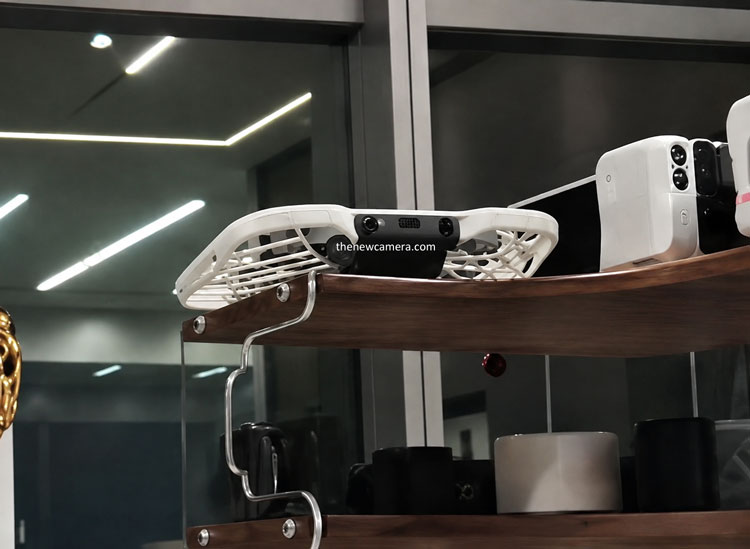
The image seen above was shared by Liu (insta 360 CEO) . And the image did not originate as a fresh Reddit retail shot. Igor Bogdanov posted the same office on 31 May 2026. It is Liu Jingkang’s official desk. That confirms the location. It does not, by itself, confirm the white lattice-cage unit is an Insta360 NEO Style prototype. Liu has previously kept competitor drones on his desk as references, and this cage geometry still matches HoverAir more closely than Insta360’s published compact-drone patents. We are treating the Insta360 identification as Igor’s working theory, not as a confirmed product.
Here is a catch: recently, a new image surfaced on the web from Reddit. A post titled “Current state of 360 and action cameras” with a description in the image: “Insta360 next drone, foldable under 250g have ” and are now circulating widely. The images show a white compact flying camera with a continuous lattice protective cage sitting on a retail shelf next to dual-lens 360 cameras. While the unit has sparked speculation that it could be linked to Insta360’s rumoured second drone, a closer look at the evidence is required.
The Photos Raise Questions, Not Confirmation
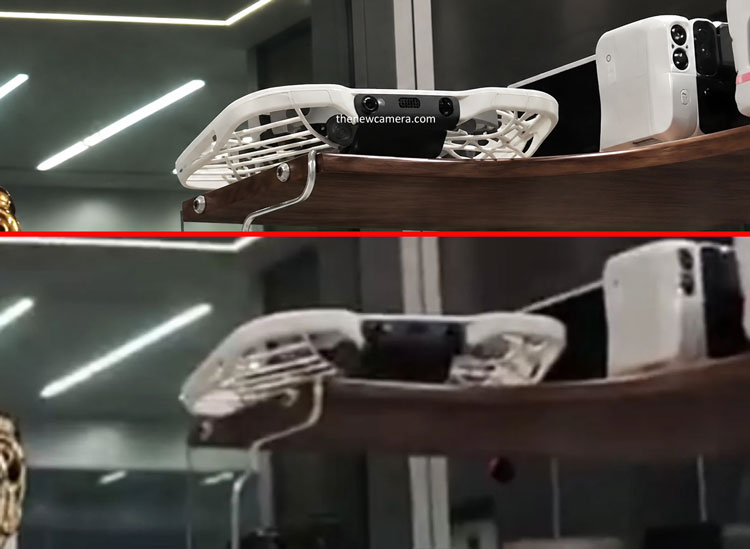
The clearest versions of the images reveal a white continuous lattice-style cage wrapping around a black central camera module.
By clearing up the image, we are able to notice two different sets of camera modules.
The form factor is low and wide when the cage is open. It is placed directly beside white dual-lens 360 cameras, which has fueled the Insta360 connection in community discussions.
However, this continuous full-cage design currently matches the already-released HoverAir X1 more closely than any publicly available Insta360 prototype imagery.
What We Actually Know About Insta360’s Second Drone
Insta360 is developing more than one flying camera platform:
The Antigravity A1 (launched under the incubated Antigravity brand) focuses on 8K 360 immersive capture with dual top-and-bottom lenses.
A separate compact Neo-style project has been in development since at least mid-2025.
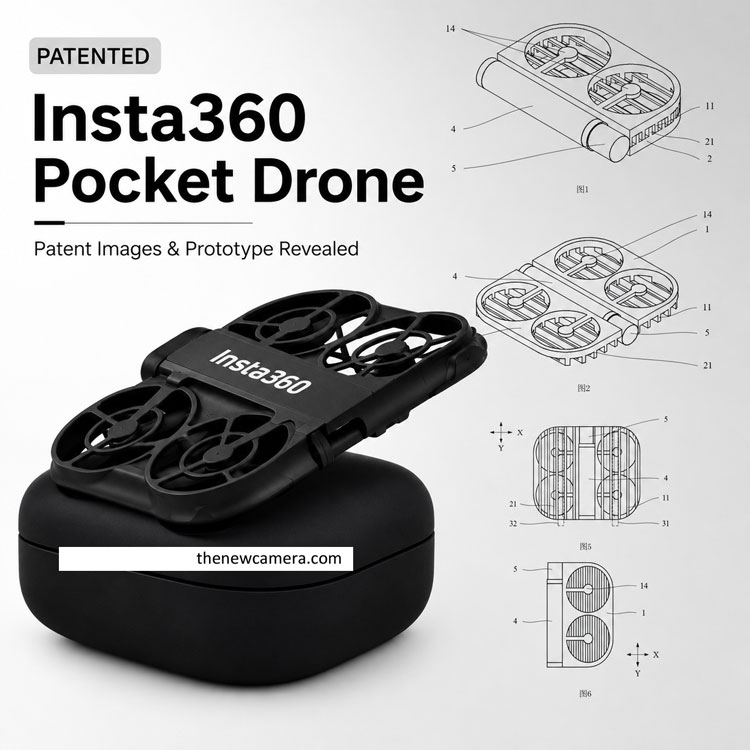
In July 2026 we covered Chinese utility model CN223865117U. That patent describes a highly foldable sub-250g drone with arms that fully retract into the body and individual ring-shaped propeller guards. Early prototype photos from August 2025 (first reported on thenewcamera.com) showed black units with ring guards being tested alongside Antigravity development mules.
None of the confirmed patent drawings or 2025 prototype images shows the continuous white lattice cage visible in the new photos.
Sub-250 g is a big market, specifically in the USA
DJI has created a very large market in the United States of America, specifically in the sub-250 g drone category, and now it has been left empty. No updates are coming. DJI has been banned, and the roles will become vacant and will get swiped out of the market.
This is really a very huge opportunity for any drone maker. Those who can increase the number of options available to consumers and make an attractive drone will finally have a new series.
Strategic Context
Btw, the good news is Insta360 already dominates consumer 360 cameras. These images are interesting and worth watching, but they do not yet constitute confirmed evidence of an Insta360 prototype.
The continuous cage design aligns more strongly with existing products on the market. Until higher-resolution images, official confirmation, or updated patent filings appear, the safer reading is that this remains speculative.
We will continue monitoring for clearer photos, additional patent activity, and any official statements. The compact Neo-class segment is heating up, and Insta360’s next move in this space will be significant whenever it arrives.
Stay tuned for updates.
Source updated: Igor Bogdanov, 31 May 2026, Liu Jingkang’s office — not a new Reddit retail shot.
The article “Insta360 Compact Drone Rumours Heat Up: New Cage-Style Images Surface” was written by thenewcamera.com team on 7:50 pm, Tuesday, 25 August 2026, Greenwich Mean Time (GMT). | You can also follow us on Our Official Social Media HandlesFACEBOOK | TWITTER | INSTAGRAM> get live news — > DJI Rumors | Insta360 News
A detailed analysis of the latest reliable information on Canon’s upcoming full-frame mirrorless camera for the US market
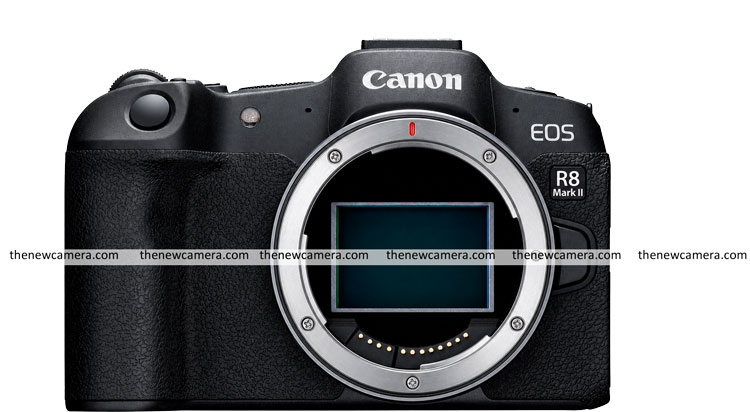
This is a possible set of information we have related to the Canon R8 Mark II camera before we begin. Let me clarify that we have very strong and reliable information related to the arrival date of the camera, which is September 15, 2026, so if everything goes on schedule, then obviously the announcement will be done on that day.
And as usual, well, just before the announcement, a lot of documents, product shots generally surface on the web, and as we get our hands on them, we will be going to publish them out very soon.
Let’s discuss a detailed analysis and report of the upcoming Canon R8 Mark II camera.
Confirmed Announcement Timeline
Expected Announcement Date: 15 September 2026
Current EOS R8 body-only inventory has already been discontinued at several major US retailers — a classic pre-launch signal.
Sensor & Image Quality
Canon trust its highly reliable 24.2MP full-frame CMOS sensor, already being used by the Canon R8 camera and also in the Semi Pro Canon R6 Mark II. Although the readout speed is not that great, for an entry-level model like the Canon R8 Mark II, it is more than enough. Alongside that, there are strong rumours- and almost we have to say, are there– about the integration of a sensitive image stabilisation system, so the overall pair will give the exact result that we have seen in the pro-level body, which is the Canon R6 Mark II.
Key Performance Specs (Latest Reports)
Feature
EOS R8 Mark II (Rumored)
Original EOS R8 (US Launch)
Notes
Sensor
24.2MP Full-Frame
24.2MP Full-Frame
Same resolution
Continuous Shooting
40 fps (electronic)
40 fps (electronic)
Unchanged
In-Body Stabilization
Yes (IBIS)
No
Biggest practical upgrade
Card Slot
Single SD
Single SD
Confirmed single slot
Battery
LP-E17
LP-E17
Same battery
Expected US Body Price
$1,799 – $1,899
$1,699
Modest increase
The Most Important Upgrade: IBIS
The addition of in-body image stabilization is the single most meaningful improvement over the original R8
The lack of IBIS in the Canon R8 almost looked like a trap for beginner shooters, where IBIS is one of the most important things in a camera, either creating videos or capturing still images.
At the very same time, the IBIS is the same as we have seen in the Canon R6 Mark II. It is designed to fit in a small, compact body of the R8 Mark II, to be decided once the official announcement happens and we get more and more details about the internals of the camera. At the very same time, as we all know, the Canon R8 battery life was too short; the battery is still expected to be the LP-E17, so battery life is a real concern once IBIS is added.
Adding an IBIS will result in a complete fast drainage of the existing E17, so it would be very interesting to see whether Canon is also updating the battery of the camera or not. Although we do hope and expect it arrives with an updated battery – larger battery (LP-E6P) like we have in the Canon R6 Mark II or the Canon R6 Mark III.
The lack of IBIS was the most frequent complaint from US reviewers and users. Even a moderate IBIS system (likely in the 5–6 stop range when combined with RF lens IS) will make the camera far more usable for handheld shooting, travel, and low-light work.
Body, Handling & Other Details
Physical size and weight are expected to remain very close to the original R8.
Single SD card slot is retained.
Continues to use the compact LP-E17 battery.
A new optional small grip accessory is expected to improve vertical handling.
Expected US Pricing
Current reliable reports point to a US body-only price in the $1,799 to $1,899 range.
For context:
Original EOS R8 launched at $1,699 in February 2023.
Current street price of the original R8 body has dropped to around 1,100–1,300 depending on promotions.
A 1,800–1,900 launch price for the Mark II would represent a modest increase while adding IBIS — a reasonable premium in the current market.
We expect Canon USA to offer the usual body-only and kit options (likely with the RF 24-50mm or a new kit lens).
Accompanying Product
Canon is also expected to announce a new Speedlite EL-5 Mark II on the same day.
What This Camera Is Positioned For
The EOS R8 Mark II looks like a focused, practical update aimed at:
First-time full-frame buyers
Travel and everyday photographers who want IBIS in a compact body
Existing R8 owners who felt limited by the lack of stabilization
It is not expected to challenge the R6 Mark III in resolution, dual card slots, or advanced video features. Instead, it continues the original R8’s role as Canon’s most accessible full-frame camera with excellent autofocus and high-speed shooting.
Bottom Line for US Buyers
As of 24 August 2026, the most reliable picture of the EOS R8 Mark II is:
24.2MP full-frame sensor
IBIS (the key upgrade)
40 fps electronic shutter
Single SD card slot
LP-E17 battery
Expected US body price: 1,799–1,899
Official announcement: 15 September 2026
This appears to be a sensible, user-focused refresh that fixes the original R8’s biggest weakness while keeping the camera relatively compact and affordable for the full-frame market.
We’ll update this article with official specifications, exact US pricing, and availability details as soon as Canon announces the camera on 15 September.
The article “Canon EOS R8 Mark II: Everything We Know So Far – Specs, Features & September 15 Announcement” was written by thenewcamera.com team on 8:09 pm, Monday, 24 August 2026, Greenwich Mean Time (GMT). | You can also follow us on Our Official Social Media HandlesFACEBOOK | TWITTER | INSTAGRAM> get live news — > DJI Rumors | Insta360 News
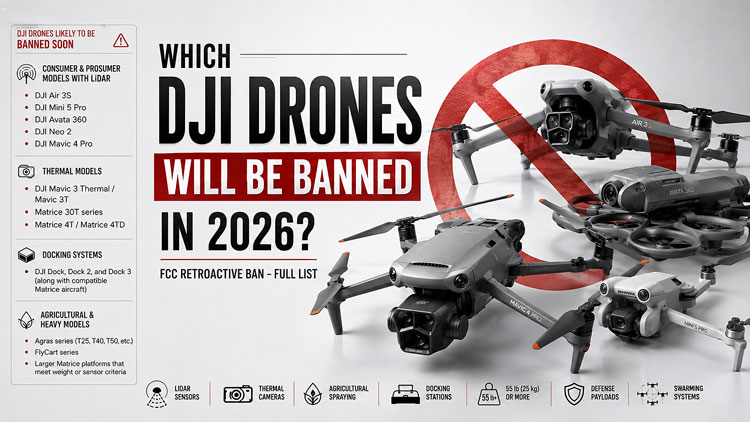
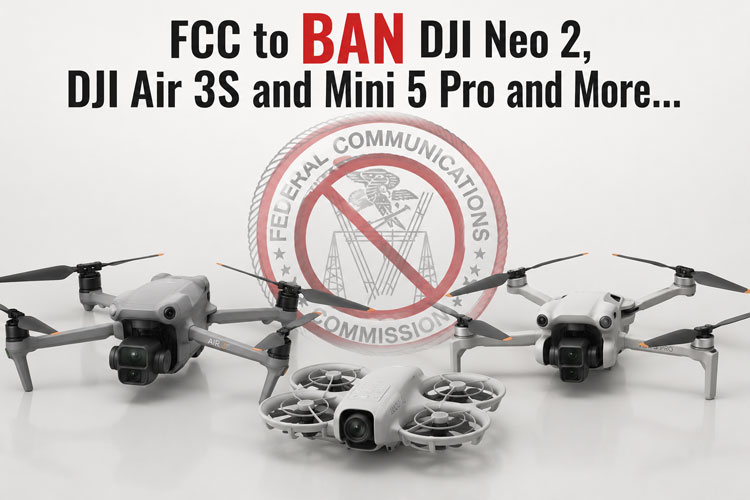
The second wave of the ban is coming, and we have created a list of drones that are going to be banned soon and a list of drones that will remain active in American airspace, and you can buy them whenever you want to for now, at least based on the rules. Since back from the December ban, we know that new drones of DJI are not allowed to be sold in the United States of America. Not only that, with the latest development that happened back in July, they have updated the military drone specifications, and in that, they have added LiDAR, and due to that specific addition, a lot of consumer drones, including the budget drone like Neo 2, have also been added to the Covered List. So, we have created a complete list of drones that are going to be banned soon by the United States of America and the list of those that will remain available even after the second wave of the ban that is about to happen after September 2026.
Public comments close on September 2, 2026. After that, the FCC will decide whether to adopt the restrictions.
What Exactly Is the FCC Proposing?
In Public Notice DA 26-758, the FCC is seeking to prohibit the continued importation and marketing of previously authorized foreign-made drones that fall into these categories:
To simplify it, we have added the entire list of updates in the table below, so you have a clear idea of when the public comment period will be called off. Specifically, the date is September 2, and after, obviously, the FCC will put a ban that will take a bit of time to make it properly effective at the ground level.
Important Timeline
Event
Date
Details
Proposal published
August 3, 2026
FCC Public Notice DA 26-758
Last date for public comments
September 2, 2026
Final day to submit comments
FCC Final Decision
After September 2 (no fixed date yet)
FCC decides, not DJI
Sales restriction (if approved)
~180 days after final decision
Import and marketing of affected models stop
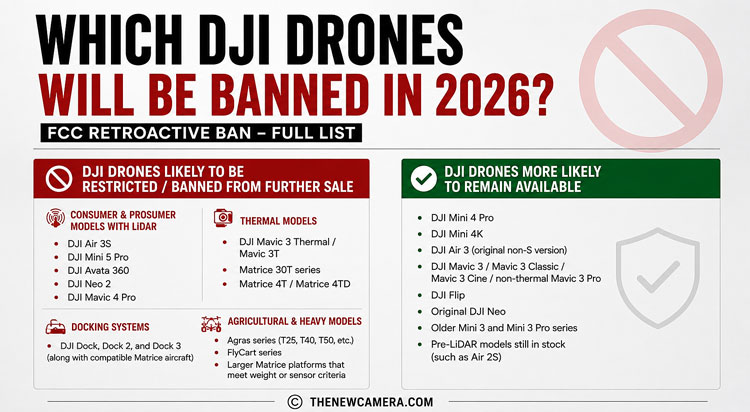
DJI Drones Likely to Be Restricted / Banned from Further Sale
Now here is the MOST IMPORTANT PART – List of drones that are about to be BANNED SOON
If the proposal is adopted as written, these models are at highest risk of no longer being sold new in the US:
Consumer & Prosumer Models with LiDAR
DJI Air 3S
DJI Mini 5 Pro
DJI Avata 360
DJI Neo 2
DJI Mavic 4 Pro
Thermal Models
DJI Mavic 3 Thermal / Mavic 3T
Matrice 30T series
Matrice 4T / Matrice 4TD
Docking Systems
DJI Dock, Dock 2, and Dock 3 (along with compatible Matrice aircraft)
Agricultural & Heavy Models
Agras series (T25, T40, T50, etc.)
FlyCart series
Larger Matrice platforms that meet weight or sensor criteria
DJI Drones More Likely to Remain Available
These models do not currently fall under the main restricted categories (no LiDAR, no thermal, under 55 lb, no docking or spraying):
DJI Mini 4 Pro
DJI Mini 4K
DJI Air 3 (original non-S version)
DJI Mavic 3 / Mavic 3 Classic / Mavic 3 Cine / non-thermal Mavic 3 Pro
DJI Flip
Original DJI Neo
Older Mini 3 and Mini 3 Pro series
Pre-LiDAR models still in stock (such as Air 2S)
What This Means for Current Owners
You can continue flying any DJI drone you already own.
Firmware and security updates for previously authorized models remain allowed (currently through at least January 2029).
Private second-hand sales stay legal.
Official spare parts and service for restricted models may become harder to obtain over time.
Buying Advice Right Now
The only buying advice I would like to give the readers at this moment is that if your business depends on drones, specifically those that are on the list that are going to be banned soon, and by business, I mean anything—either you are a wedding photographer or a cinematographer who would love to add high-quality, stabilized aerial shots to your project, as well as if you are a content creator who loves to capture themselves with a drone, specifically their recently announced To Capture, a creator-on-the-go with gesture controls only. So, technically, if your workflow is in any way associated with drones, and if they become unavailable or your existing drones may get disabled for any reason, then the entire workflow of your business/content creation will be deeply affected. So, the best thing is to have a backup. Have a proper backup of parts; have a proper backup of different units of drones. Otherwise, it would be a big mess.
The FCC proposal represents a serious escalation. Many of DJI’s most capable current models face a real risk of being cut off from new sales in the US market. At the same time, several solid and popular models without the restricted features should remain available while existing inventory lasts.
The comment window closes on September 2, 2026. After that, the FCC will make its decision. Until a final order is issued, the situation remains fluid.
We will update this article as soon as the FCC announces its final decision.
The article “Which DJI Drones Will Be Banned in 2026? FCC Retroactive Ban – Full List” was written by thenewcamera.com team on 7:38 pm, Thursday, 20 August 2026, Greenwich Mean Time (GMT). | You can also follow us on Our Official Social Media HandlesFACEBOOK | TWITTER | INSTAGRAM> get live news — > DJI Rumors | Insta360 News
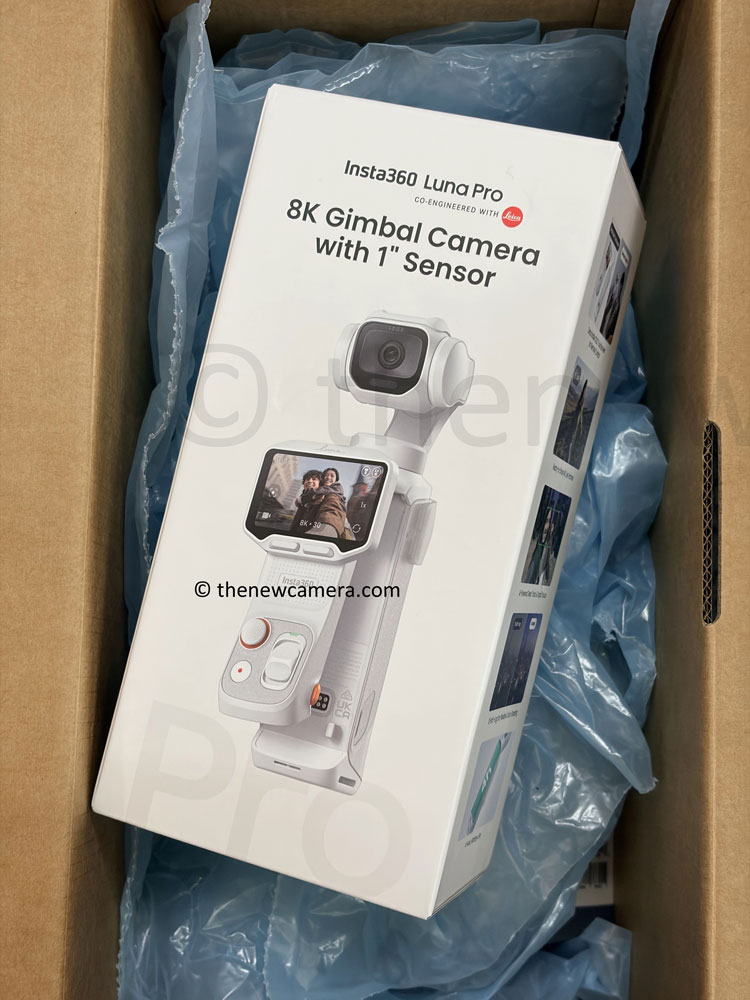
Finally, we have the unboxing video of the Luna Pro camera. The Luna Pro announcement is very close, and we have already seen images of retailers receiving boxes of the Luna Ultra Pro camera to keep in stock just before the announcement.
It’s time to watch the camera’s unboxing video, and at the same time, we will discuss the advantages you get with the Luna Pro compared to the Pocket 4 series in the United States of America. Since, as we all know, DJI has been banned, so not only has productavailability become an issue, but the warranty coverage is also not there if anything happens. It’s really hard to make sure your DJI Pocket 4P or any other related items from DJI will get service and repair, so it’s not only about the specifications. It’s also about the after-sales service, and if you have an option, then obviously I have to take some decision. Let’s have a quick look at the features of the Pro, and then the video we have (below post).
Unboxing Details
Inside the box you’ll find the camera, protective case, 1/4″ thread handle, wrist strap, USB-C cable, and documentation. The protective case fully covers the gimbal head and lens, which is a practical improvement over many competing pocket gimbals.
The camera itself feels solid and well-built. The single-lens design makes the head more compact than the Ultra, while the detachable 2-inch OLED touchscreen remote remains one of the most useful features in this category.
Why the Luna PRO is Currently the Better Option for Most US Buyers
For creators in the United States, the Luna PRO currently holds several practical advantages over the DJI Osmo Pocket 4 series:
Full official availability and support in the USA: Insta360 products are fully authorised and available through official channels (Insta360 Store, Amazon, B&H, Best Buy). There are no import or authorisation issues.
Clear and reliable warranty coverage Buying the Luna PRO through official US retailers means you get standard Insta360 warranty support without complications. This is currently a significant advantage compared to newer DJI products.
No uncertainty around future service or parts With ongoing regulatory pressure on DJI in the US market, long-term service, spare parts, and warranty claims for newer DJI models carry more uncertainty. Insta360 does not face the same restrictions.
Strong core features at a more accessible price You still get a 1-inch Leica-tuned sensor, 10-bit i-Log, excellent stabilization, and the detachable screen — without paying for a second telephoto camera you may not need every day.
If you are a US-based creator looking for a compact, high-quality pocket gimbal in 2026, the Insta360 Luna PRO currently offers a more reliable ownership experience than the DJI Osmo Pocket 4 series. You get strong image quality, a very useful detachable screen, and — most importantly — clear warranty and service coverage without the current regulatory uncertainty surrounding DJI products in the United States.
We will follow up with more detailed sample footage and real-world testing soon.
You can watch the full retail unboxing here:
Stay tuned; more updates are coming
We will update this page as soon as any official U.S. pricing, store listing, or availability announcement appears.
The article “Insta360 Luna PRO Unboxing Video ” was written by thenewcamera.com team on 2:05 pm Sunday, 16 August 2026, Greenwich Mean Time (GMT) | You can also follow us on Our Official Social Media HandlesFACEBOOK | TWITTER | INSTAGRAM> get live news — > DJI Rumors | Insta360 News
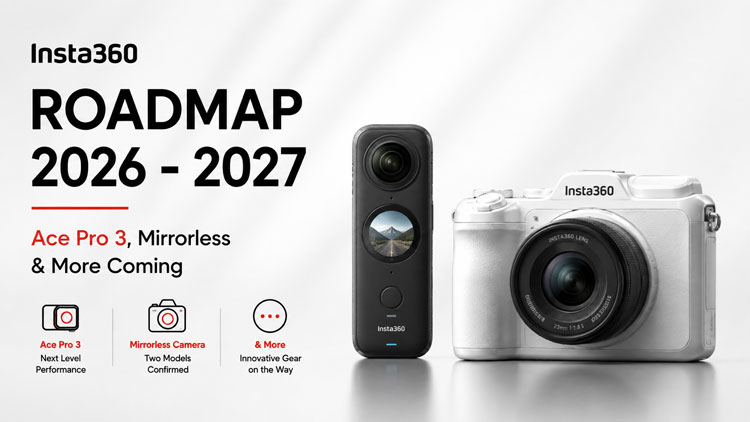
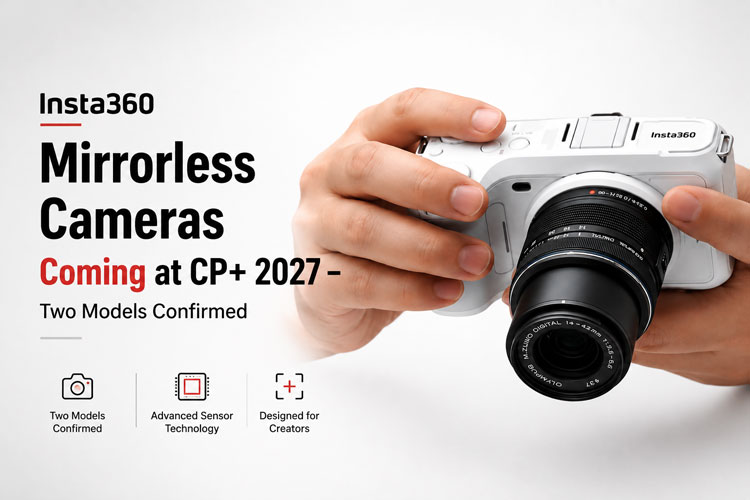
Insta360 Founder and CEO JK Liu confirmed that the company is working on TWO (2) brand-new mirrorless cameras. One we have already seen back in April 2026 (the Z 1): the camera used an M4/3-format sensor and an M4/3rd Olympus 14-42mm Lens. That clearly indicates Insta360 is about to target mainstream mirrorless cameras and camera giants like Canon and Sony with their latest tech.
The most interesting part is CEO JK Liu has also said that one of the cameras has a completely unconventional form factor that Liu described as “a shape no one has ever thought of before.”
The confirmation came during an interview with Japanese publication Mynavi News on the sidelines of the opening of Insta360’s first Japanese flagship store in Asakusa, Tokyo.
Official Confirmation from JK Liu
When asked about long-standing social media rumors of Insta360 entering the mirrorless camera segment, Liu stated:
“At this point, there are limited things I can talk about, but we are developing two types of mirrorless cameras.”
He further revealed that the two models have completely different characteristics. Regarding one of them, he said:
“One of them has a surprising shape that you have never thought of before.”
In the article title and reporting, Mynavi also highlighted the key phrase:
“It will be a shape that no one has ever thought of.”
Liu suggested this unusual design could change the traditional way people use cameras – the conventional process of framing, focusing, and pressing the shutter button. The camera is expected to incorporate Insta360’s expertise from its 360-degree and gimbal products, along with advanced AI features aimed at making photography more automated and accessible.
Prototype Possibility at CP+ 2027
On the timeline, Liu offered a cautious but clear indication:
“I think we can show you a prototype at next year’s CP+.”
This points to the possibility of a prototype display at CP+ 2027 in Japan. No commercial release date or official product announcement timeline was shared. Any speculation about a late-2027 launch remains unconfirmed.
Background and Context
Rumours about Insta360 working on a traditional or interchangeable-lens camera have circulated for several months in 2026. Earlier leaks and a January 2026 Weibo post by Liu showing unfamiliar camera bodies had already fueled speculation, including possible Micro Four Thirds designs. However, this is the first time the company’s founder and CEO has publicly confirmed active development of two distinct mirrorless models.
The statement aligns with Insta360’s broader long-term vision of creating cameras that behave more like intelligent “cameramen” — devices that can see, understand scenes, and assist users so they can stay more present in the moment rather than constantly managing framing and settings.
What We Know About Upcoming Z Series Mirrorless Cameras from Insta360
Sensor size or type – M4/3 Mirrorless Sensor
Lens mount – M4/3 Mount / L mount compatible
Details remain limited, as Liu himself noted that only restricted information can be shared at this stage.
Insta360 is officially entering the mirrorless camera space with two models. One will feature a radical new form factor that the company believes could redefine how people shoot. A prototype may appear at CP+ 2027, but a full commercial product is still further down the road.
This marks a significant expansion for a brand best known for 360-degree and action cameras. The camera industry will be watching closely when CP+ 2027 arrives.
GET LIVE NOTIFICATION, Select Your Trusted Source GET LIVE NOTIFICATION Click ON Check BOX for Latest NEWS and Rumours
The article “Insta360 Mirrorless Prototype Coming at CP+ 2027 – Two Models Confirmed” was written by thenewcamera.com team at 3:34 pm, Wednesday, 12 August 2026, Greenwich Mean Time (GMT). | You can also follow us on Our Official Social Media HandlesFACEBOOK | TWITTER | INSTAGRAM> get live news — > DJI Rumors | Insta360 News
The U.S. Federal Communications Commission is moving to stop further sales of the DJI Mini 5 Pro in the United States. The ban is expected to take effect in mid-to-late March 2027.
Why is the ban coming in March 2027, and why should you worry if you’re really interested in a DJI Mini 5 Pro, whether you already own one or are planning to buy one?
Why the Mini 5 Pro Is Affected
If you want to own a Mini 5 Pro, you should buy it before March 2027. We’re going to explain exactly why. And if your business depends on this particular drone. Especially if you’re a wedding cinematographer or create a lot of aerial content, then you should seriously consider keeping one, two, or even three extra units before the commercial sales ban takes effect.
It’s time to explain why the ban is expected in March 2027. As per the latest July update, the FCC has proposed updating the definition of “military-grade” drones. Under this proposal, any foreign-made drone that carries LiDAR sensors is now classified as military-grade and will no longer be allowed for further sale or import. That same LiDAR sensor is also widely used for high-precision 3D mapping, which is one of the main reasons the FCC is targeting it.
The FCC’s own explanation for targeting LiDAR is clear. According to the public notice, these systems offer:
“enhanced capability to conduct detailed three-dimensional terrain mapping, penetrate dense foliage to reveal hidden structures, assist in autonomous navigation in GPS-denied environments, and conduct covert reconnaissance under a range of environmental conditions.”
Because of this, the agency is classifying LiDAR-equipped foreign drones as “military-grade” and seeking to cut off further sales.
Official Timeline
Stage
Date
Proposal released
21 July 2026
Published in Federal Register
3 August 2026
Public comments close
2 September 2026
Expected final FCC decision
First week of September 2026
180-day period starts
Mid-September 2026 (after final rule is published)
Sales ban expected to take effect
Mid-to-late March 2027
The proposal specifically states that, if adopted, all parties must cease importation and marketing activities 180 days after the final decision is published in the Federal Register.
We all know what happens with public comments. They generally go into the trash bin. DJI has done a lot of campaigning during the first ban, which happened back in December 2025. They did a lot. They initiated paid campaigns and opened dedicated pages for collecting public comments. Nothing worked at that time. So, it clearly indicates that they don’t care about public opinion. They have already taken the decision when they implemented the rule, and they just have to follow the procedure to make sure it happens.
What DJI Says
DJI has strongly opposed the move. In its official statement, the company called the proposal a “total reversal” from the FCC’s previous position.
DJI stated:
“Although the proposal is framed as targeting ‘military-grade’ drones, the FCC’s definition could include drones with thermal imaging or LiDAR capabilities… People could continue using DJI products they already own, but the same models in use today might no longer be available to purchase in the future.”
The company also emphasised that it does not design or manufacture military-grade equipment and has consistently opposed the weaponisation of civilian drones.
Summary
Current Mini 5 Pro owners can keep flying their drones. The proposal does not ban ownership or operation.
Buyers still looking to purchase have a limited window. Remaining stock can continue to be sold until the ban takes effect around March 2027.
After that date, new Mini 5 Pro units (and other LiDAR-equipped foreign models such as the Air 3S) are expected to disappear from legal U.S. retail channels.
We will update this article immediately after the FCC issues its final decision in early September.
GET LIVE NOTIFICATION, Select Your Trusted Source GET LIVE NOTIFICATION Click ON Check BOX for Latest NEWS and Rumours
The article “DJI Mini 5 Pro Ban Coming in March 2027” was written by thenewcamera.com team at 4:26 pm, Tuesday, 11 August 2026, Greenwich Mean Time (GMT). | You can also follow us on Our Official Social Media HandlesFACEBOOK | TWITTER | INSTAGRAM> get live news — > DJI Rumors | Insta360 News
DJI July 2026 Ban Proposal That Changes Everything – The next wave of ban is again coming over DJI. The first ban was implemented back in December 2025, which halted new announcements from DJI, but the second wave, which is about to be implemented in the next 180 days from the time we are writing the article, will hit DJI at its core.
Meaning, the drones that we see available in the market today will vanish in the next 2 to 3 months from the official DJI channel, although they may become available in the grey market with a higher price tag, but officially all the drones which carry LiDAR sensors inside them are about to get wiped out, specifically if it is made by DJI.
DJI is the only company who has a scale and mastered the area of consumer drones, and almost 80 to 90% of the market share was covered by DJI before December 2025 in the United States of America, and why not so since DJI is the only drone maker which gives us a high-quality video capturing ability if you want to have an aerial footage of a wedding/event or the best favourite places you are visiting in.
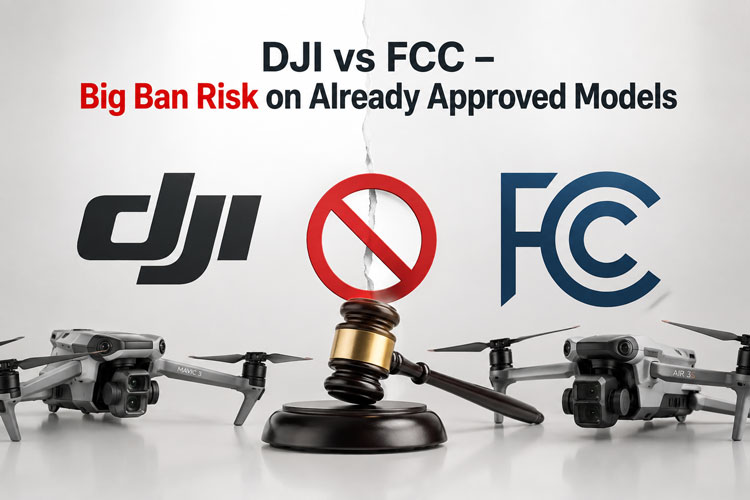
In late July 2026, the Federal Communications Commission’s Public Safety and Homeland Security Bureau and Office of Engineering and Technology issued a significant Public Notice (referenced as DA 26-758 / related PS Docket proceedings). The notice seeks public comment on a proposal that would prohibit the continued importation and marketing of certain previously authorized foreign-produced unmanned aircraft systems (UAS) that the agency now classifies as “military-grade.”
One of the explicit categories listed is:
“UAS that contain or integrate sensors capable of Light Detection and Ranging (LiDAR), a remote sensing technology that measures distance by illuminating a target with a laser and analyzing the reflected light.”
But why has the second wave of bans been initiated against DJI??
The answer is not that straightforward. They have to wipe it out from the US market anyway, (exact reason not known) and that’s why they have changed the parameters of a military-grade drone, and according to the new parameters that have been updated, any drones which have a built-in LiDAR sensor inside it, which is specifically being used by drones for self-obstacle avoidance at the time of flight to protect against crash and proper landing, the FCC and other committee members have now updated the military list, and all the drones manufactured by DJI in the past that carry LiDAR sensors are about to get banned in upcoming months and the decision has been taken. Although it is open for public comments and public opinions, as we have seen from the past two or three bans, public opinions don’t matter at all. Whatever the public opinion is, that decision has been taken by the committee; we have never seen it get changed afterwards.
Official Language and DJI’s Response
DJI has publicly characterized the move as a “total reversal” of the FCC’s previous position. In its ViewPoints response, the company stated:
“Although the proposal is framed as targeting ‘military-grade’ drones, the FCC’s definition could include drones with thermal imaging or LiDAR capabilities… It could even include consumer models used by hobbyists simply because they use LiDAR to improve positioning and obstacle avoidance – a safety feature, not a military capability.”
DJI further emphasized that it does not design or market military-grade equipment and has consistently opposed the weaponization of civilian drones. The company argues the proposal would raise costs, reduce choice, and limit access to tools used by first responders, farmers, infrastructure inspectors, and content creators.
Models at High Risk of Being Wiped from US Sale
Based on confirmed LiDAR integration (forward-facing solid-state LiDAR used for obstacle sensing, particularly in low light), the following consumer and prosumer models fall squarely within the proposed “military-grade” category:
Enterprise models with LiDAR, thermal imaging, docking stations, or aerosol/spraying capability (Agras series, certain Matrice configurations, FlyCart, etc.) are also clearly in scope.
Models That Remain Safe (For Now)
These models do not integrate LiDAR and therefore fall outside the specific “LiDAR sensing” category of the proposal:
DJI Mini 4K — Downward vision + infrared only
DJI Mini 4 Pro — Omnidirectional binocular vision system + bottom 3D infrared sensor (no LiDAR)
These two remain the clearest “safe” options among current Mini-series drones for US buyers concerned about future availability.
Finally, LiDAR-equipped consumer drones that previously enjoyed FCC authorisation are now under direct regulatory threat of being removed from the US retail channel. The combination of the explicit language in the Public Notice, the 180-day implementation window, and the broader policy trajectory makes this one of the most consequential developments for the consumer drone market in 2026.
If you need a drone that is currently outside the LiDAR targeting criteria, the Mini 4K and Mini 4 Pro stand as the lowest-risk options among recent Mini-series models.
We will update this article as soon as the FCC issues a final decision or any material change occurs.
GET LIVE NOTIFICATION, Select Your Trusted Source GET LIVE NOTIFICATION Click ON Check BOX for Latest NEWS and Rumours
The article “DJI vs FCC: Big Ban Risk on Already Approved Models – August 2026 Update” was written by thenewcamera.com team on 2:32 pm, Monday, 10 August 2026, Greenwich Mean Time (GMT). | You can also follow us on Our Official Social Media HandlesFACEBOOK | TWITTER | INSTAGRAM> get live news — > DJI Rumors | Insta360 News
Buy Canon Lenses, Buy Music CD or Digital Camera at amazon it helps this site, and you do not pay anything extra, it is just a way to help support this site.
New Camera Website, we list all type of new camera information, price review and all type camera rumors, subscribe us or follow us via twitter or facebook.
Disclaimer: We have attempted to select useful information to include on New Camera, and to ensure that the resources we have included on the site -- as well as the way we have described them -- are accurate, fair, and balanced. However, we make no claims, warranties, or other representations concerning the accuracy, completeness, or utility of the information provided, or concerning the abilities or performance of the organizations, agencies, companies, and other resources presented through New Camera